Home Blog Page 2683

DoLE grants don’t provide pathway to sustainable work — UP academic

THE Department of Labor and Employment’s (DoLE) various livelihood grants exacerbate underemployment instead of providing a path to sustainable, quality jobs, a University of the Philippines academic said.

University of the Philippines Diliman School of Labor and Industrial Relations (UP SOLAIR) Assistant Professor Benjamin B. Velasco said the program, known as TUPAD, is “broken” and “dysfunctional.”

The Tulong Panghanapbuhay sa Ating Disadvantaged Workers (TUPAD) also “enables patronage politics and exacerbates underemployment instead of providing sustainable work for informal workers and the long-term unemployed,” he told BusinessWorld via Messenger chat.

He urged government entities to delink public employment from patronage politics.

He cited the need “to establish a central registry of people outside the labor force, unemployed and underemployed. Cross-reference with the Social Security System registry of laid-off workers. Beneficiaries should be picked from a central registry and kept out of the hands of politicians.”

TUPAD, a cash-for-work program that has disbursed over P5.65 billion in wages, aided over one million workers from April to June 2024, DoLE said in a statement Thursday.

The temporary jobs offered under the TUPAD program include maintenance and roadside cleaning of public facilities and infrastructure, community vegetable gardening under Project LAWA at BINHI, setting up and maintening KADIWA sites, beautification of public roads, dredging of canals, tree planting, and coastal clean-up.

TUPAD is  compenent of the DoLE Integrated Livelihood and Emergency Employment Program (DILEEP), which provides livelihood assistance and emergency employment. DILEEP beneficiaries have received over P6.36 billion in grants.

Beneficiaries in the Bicol Region topped 141,000, followed by CALABARZON (Cavite, Laguna, Batangas, Rizal, Quezon) with over 83,000, and Central Luzon with over 83,000.

“If about P6 billion was spent for one million TUPAD beneficiaries, it means just P6,000 was given per beneficiary. This implies short-term work of 10 days to sweep the streets,” Mr. Velasco added.

“Public employment must be for a minimum of 100 days in a year. Don’t create more underemployed. Provide gainful and decent employment. Prioritize climate jobs, not roadside sweeping,” he said.

The DoLE Integrated Livelihood Program or the Kabuhayan Program component under DILEEP provides grant assistance for the startup, enhancement, or restoration of lost livelihood for disadvantaged people or groups in the informal sector. — Chloe Mari A. Hufana

BSP sets rules on compensation of NSSLA officials

BW FILE PHOTO

THE BANGKO SENTRAL ng Pilipinas (BSP) has issued guidelines on the compensation of trustees, officers, and employees of nonstock savings and loan associations (NSSLAs).

The Monetary Board in Resolution No. 1012 dated Aug. 29 approved amendments to its Manual of Regulations for Non-Bank Financial Institutions to add new sections containing rules on how these NSSLA personnel are compensated, according to BSP Circular No. 1200 Series of 2024 dated Sept. 6 posted on its website.

The guidelines are meant to ensure that NSSLAs operate “on a sound, stable, and efficient basis, and to curtail or prevent acts or practices which are prejudicial to their members’ interest.”

The rules also outline the minimum requirements and the standards under which NSSLAs may organize and operate.

The BSP said compensation and per diem shall be considered “reasonable or not excessive” when the amounts paid are proportionate to the services performed and in consideration of an individual’s qualifications, scope of work, compensation history, the financial condition of an NSSLA, and economic conditions, among others.

An NSSLA’s board of trustees shall establish a “sound” policy on compensation and per diem that the association can use to recruit or retain their workforce.

“Said policy shall appropriately motivate personnel and discourage excessive risk taking. This can be achieved through timely assessment of individual work performance and competencies based on set standards,” the BSP said.

“Results of the individual work performance assessment/appraisal and not merely the number of loans made or on the interest of fees collected thereon can be used in the NSSLA’s compensation related decisions,” the central bank added.

Under the guidelines, increases in the compensation of an NSSLA trustee and trustee-officer of above 10% annually will require BSP approval.

Only NSSLAs that meet prudential criteria set by the BSP can apply for an increase in annual compensation of above 10%, including: having a composite rating of at least three “stable” in the latest central bank examination report; a capital-to-risk assets ratio of at least 10%; not incurring continuous losses from operations for the past two years; and having no major supervisory concerns, among others.

These associations’ trustees and trustee-officers are not allowed to be part of the determination of their own per diems or compensation, the BSP added.

The total annual accumulated compensation of all NSSLA board members received in their capacity as trustees should not exceed 10% of the association’s net income before tax for the preceding year.

An NSSLA’s board of trustees should also be transparent to its members about all compensation and per diem received.

The BSP said the Monetary Board may regulate or restrict the payment of compensation “to protect the funds of depositors and creditors” if circumstances warrant, such as if an NSSLA is found engaging in acts prejudicial to the interest of its members, if compensation packages are not reasonable, and if an NSSLA is in an “unsatisfactory” financial condition.

NSSLAs will have one year to comply with the new guidelines. — AMCS

TIFF 2024: Denzel Washington and sons bring haunting family drama to screen

IMDB
IMDB

TORONTO — Award-winning actor Denzel Washington joined his two sons on the red carpet this week at the Toronto screening of The Piano Lesson, a collaboration that tells a story of an African-American family and its legacy.

Denzel Washington was executive producer of the Netflix movie, and his son Malcolm directed the feature, his first. His other son, John David, plays one of the lead roles.

Adapted from the Pulitzer Prize-winning play by August Wilson, The Piano Lesson is a story about a disagreement between a brother and sister about what to do with an heirloom piano carved by a great-grandfather that is haunted by a ghost from the family’s enslaved past.

“We wanted to make a movie that gave audiences who did not know there was a story like this access to it and open a window to this story,” said Malcolm Washington, who also directed a Broadway staging of the play that starred his brother.

The brother, played by John David Washington, wants to sell the piano to buy the land where his ancestors worked as slaves. For the sister, played by Danielle Deadwyler, it is an irreplaceable connection with the past. Samuel L. Jackson plays their uncle who tries to mediate.

The film, set in Pittsburgh in 1936, is the third adaptation by Denzel Washington from the 10-part “Pittsburgh Series” of plays by Wilson, following Fences and Ma Rainey’s Black Bottom.

“The Wilson estate came to me 10 years ago and allowed me to take charge, or to shepherd, the making of these August Wilson plays,” he said.

He told reporters at the Toronto International Film Festival that his team intends to make all of them into films, and discussions about the work on the next movie had already begun, although he declined to reveal the title.

Deadwyler, whose acting credits include 2021’s The Harder They Fall told Reuters that it was a gift to be able to work with Malcolm Washington.

“From our first conversation, I realized we are similar in ideas, themes and modalities of arts are integral to how we are reared,” she said. “We came in over-prepared and we did the play.” — Reuters

NGCP defends higher transmission rate for September

BW FILE PHOTO

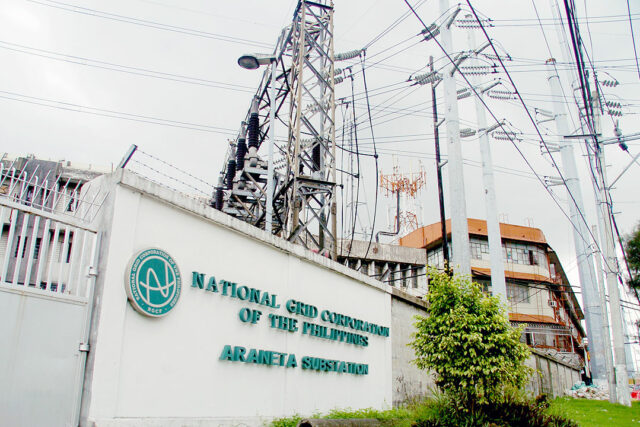
THE NATIONAL Grid Corp. of the Philippines (NGCP) said the increase in transmission rates, which is part of the monthly electricity bill for September, was due to higher ancillary services (AS) following the resumption of the reserve market.

In a statement on Thursday, the grid operator said it did not earn nor benefit from the increase in ancillary services — part of the transmission rate — as these are pass-through costs and are collected for generation companies.

“NGCP clarifies that while consumers may notice an increase in transmission charges, this is a result of the resumption of the AS (ancillary service) Reserve Market,” the company said.

“In compliance with directives from the Department of Energy and the Energy Regulatory Commission (ERC), NGCP contracts 50% of its AS requirement from firm agreements and 50% from the AS Reserve Market,” it added.

In fact, the transmission wheeling rate, or what NGCP charges for its primary service of delivering power, dropped by 5.5% to P0.4761 per kilowatt-hour (kWh) in the August supply period from P0.5038 per kWh previously.

“As regards the transmission wheeling rates, we are under a revenue cap. So for the year, [the charges] that go to NGCP will not increase nor decrease. It’s just divided into 12 months,” NGCP Spokesperson Cynthia P. Alabanza said at a briefing.

Meanwhile, ancillary service rates for the August supply period rose by 125.92% to P0.6127 per kWh from P0.2712 per kWh previously. These are sourced from the reserve market which resumed on Aug. 5.

Ancillary services are deployed by grid operators to support the transmission of power from generators to consumers to maintain reliable operations. These are pass-through charges billed by the grid operator and remitted directly to generation companies.

In January, the Independent Electricity Market Operator of the Philippines (IEMOP) commenced the full commercial operations of the reserve market.

The reserve market allows the system operator to procure power reserves from the Wholesale Electricity Spot Market, the trading floor of electricity, to meet the reserve requirements of the energy system.

The ERC issued a suspension order in March after the IEMOP observed a significant increase in reserve costs for March compared to February.

Earlier, Manila Electric Co. announced an increase in electricity rates for September due to a higher transmission charge, which increased by P0.2913 per kWh. — Sheldeen Joy Talavera

Big Tech’s easy ride is coming to an end

FIRMBEE.COM-UNSPLASH

TECH COMPANIES of a certain size have long expected an easy ride from authorities, and for good reason. They always got it. Apple, Inc. for years abused loopholes to pay virtually zero tax in the European Union (EU) while generating record profits there, thanks to special treatment from Ireland, where it bases its European headquarters. Alphabet, Inc.’s Google for years was able to entrench its dominance in search thanks to the special treatment the company gave its own shopping service over competitors.

Now Google and Apple are getting slapped for those blatantly unfair advantages. The EU is forcing Apple to pay €13 billion ($14.4 billion) in back taxes to the Irish government, and Google to pay a €2.4-billion fine for rigging its platform. For both, it’s the end of the line on appeals. Of course, the payments are just a cost of doing business — pocket change, really — and the companies can pat their lawyers on the back for dragging the cases out in court for years with endless appeals.

But the era of protracted cases is fading. The EU is transitioning to a period where its trust busters can be quicker and, as much as you can use the word to describe regulators, nimble, harnessing a more efficient legal framework to combat anticompetitive behavior from the likes of Alphabet, Apple, Meta Platforms, Inc., Amazon.com, Inc., Microsoft Corp., and Nvidia Corp.

Until now, regulators had to be clever about how they used old, outdated rules to pursue their court cases. It’s why proceedings took so long to play out. The European Commission based Apple’s Irish tax case on a misuse of state aid, deploying laws that typically don’t have anything to do with tax. Legally, “it was a very creative approach,” says Anne Witt, a professor at EDHEC Business School’s Augmented Law Institute. At the heart of the case was figuring out how to prove Ireland was giving Apple selective aid, which was also technically challenging to calculate, Witt adds.

But from this year onward, Europe’s authorities have a whizzy new tool, a regulatory innovation as meaningful to antitrust policy as ChatGPT was to generative artificial intelligence. It’s the Digital Markets Act (DMA), a law that large tech platforms had to start complying with in March. With any luck, the EU won’t be caught on the back foot quite as much, chasing after wrongdoing with investigations that run longer than it takes to put a child through school.

Now the big tech platforms have clear rules they must follow upfront. For instance, the DMA states that Apple and Google must allow their users to uninstall default apps on their devices like Apple Maps and Gmail, to promote competition. Google searches also don’t highlight results on Google Maps as easily as they did before.

Instead of drawn-out legal battles and appeals, the DMA should also lead to swifter resolution: fines of as much as 10% of a company’s worldwide earnings, for instance. And instead of narrow investigations like the Google shopping case, the law covers far more ground, applying to everything from app stores to social media.

Spokespeople for Apple and Google both said the companies were “disappointed” with the court decisions this week. But Margarethe Vestager, the EU’s outgoing competition chief for whom these cases are a validating swan song, said they showed even the most powerful tech companies can be held accountable.

That’s a growing sentiment across the Atlantic, where a US judge ruled last month that Google had rigged the search engine market and was a monopolist — and where for the first time in history, the prospect of breaking up a big tech firm (Google) is looking possible. The goal is to eventually create some more room for smaller companies to innovate and enter markets dominated by the giants and reduce the pressure to sell to those firms.

For the tech monoliths, the payoff for lobbying lawmakers and keeping watchdogs tied up in court is looking less certain as regulations gather momentum. The DMA is one of the most radical approaches yet for keeping monopolistic practices in check, giving Europeans more control than anyone else in the world over what apps they can put on their smartphones and how their data is shared.

How smoothly that transpires through the end of this year and into 2025 is still an open question, but it’s clear that Apple, Google, and other big players will have to start waving goodbye to the advantages they’ve clung to for far too long.

BLOOMBERG OPINION

Boeing Co. says it bargained in good faith for labor deal with machinists’ union

REUTERS

BOEING bargained in good faith with one of its biggest unions for a new labor contract and “did not hold back with an eye on a second vote,” its chief operating officer (COO) said in a letter to employees seen by Reuters.

A tentative deal with The International Association of Machinists and Aerospace Workers has upset many workers who were hoping for higher wage hikes and better pensions, its lead negotiator, Jon Holden, told Reuters Monday.

In the letter, COO Stephanie Pope reiterated “unprecedented commitment” to the terms of the proposed deal, which include a general wage increase of 25% and a commitment to build its next commercial airplane in the Seattle area.

Mr. Holden said many members wanted to hold out for a 40% pay rise over the contract period and a reinstatement of the defined-benefit pension plan they reluctantly gave up during a round of negotiations a decade ago.

If the union workers vote down the deal and decide to strike, it would be a blow to new Boeing CEO Kelly Ortberg, who took up his role last month with a mandate to improve safety and ramp up production of the company’s best-selling 737 MAX passenger jet. — Reuters

Banking challenges: Focusing on compliance

A McKinsey report on global banking in 2023 has an important revelation. “One aspect of banking hasn’t changed: the price-to-book (P/B) ratio, which was at 0.9 in 2022. This measure has remained flat since the 2008 financial crisis,” it said. The price-to-book ratio reflects some of the long-term systemic challenges the sector is facing.

In the Philippine banking sector, only a handful of banks breach the P/B level of 1.0. So, are the banks’ shares worth less than liquidation value? The market may be of the opinion that the return on equity of the banks could be less than the cost of equity, and the assets are worth less than current balance sheet values. There is an upside, though. Once market sentiment improves, a slight improvement in the P/B ratio would cause major price appreciation for bank stocks.

The outlook for banks relies a lot on global trends that are continually changing. Primarily, higher interest rates and inflation figures are observed. Technological progress continues to accelerate with digital and technology-driven consumer demands and the emergence of generative artificial intelligence. One must also factor in rising geopolitical tensions that increase volatility and impose constraints on the real economy.

The stress and risk from macroeconomics, technology and geopolitical drivers are forcing governments to broaden and deepen their regulatory scrutiny of the banking sector. Higher capitalization requirements for banks and increasing regulatory costs are anticipated.

While outsiders view banking ownership as glamorous and lucrative, these trends highlight how banking remains a challenging industry. I remember Philippine Business Bank, Inc. Chairman Emeritus Alfredo Yao discussing the straightforward nature of product transformation in the manufacturing sector, where raw materials are converted into a product to satisfy a consumer need. In contrast, banking is making money out of money, and it requires a totally different discipline. It is in the resource transformation business, which demands astute management of uncertainty. The business of banking involves taking risks in various forms — credit, treasury, fund transfers, operations and distribution.

We focus on one major challenge and cost driver: the expenses that banks incur to adhere to legal, regulatory and supervisory requirements set by the Bangko Sentral ng Pilipinas (BSP) and other relevant authorities. These costs include investments in technology, personnel, training, reporting, audits and other expenses to meet regulatory standards.

Investments in technology and systems upgrades vary depending on a bank’s size and complexity of operations, but generally range from millions to hundreds of millions for the medium-sized to large banks. Banks need to invest in advanced technology and software for regulatory reporting, transaction monitoring, data privacy, cybersecurity, anti-money laundering/counter-terrorist financing (AML/CTF), and risk management. Banks may also need to upgrade core banking systems to meet new regulatory standards, such as those for digital banking and financial inclusion.

Salaries for qualified compliance officers, legal experts, auditors, and risk managers can also be substantial. Ongoing training programs for employees to keep them updated on new regulations, compliance procedures, and risk management practices are also mandatory.

Regular internal audits, compliance checks, and monitoring programs ensure adherence to regulations. Internal audit and monitoring costs can be large, especially for big banks with expansive operations. Aside from employing internal audit teams, hiring third-party auditors or using specialized compliance software are often done.

Reporting and documentation requirements can be labor-intensive and require sophisticated data management systems. The reports include financial statements, risk assessments, stress test results, AML/CTF reports, consumer protection compliance, and other disclosures.

Banks also need to engage external legal advisors and consultants to interpret new regulations, provide guidance on compliance strategies, and assist with regulatory filings. Then, there are penalties and remediation costs. These are costs incurred from non-compliance, such as fines, penalties, legal costs, and remediation expenses (e.g., strengthening controls, compensating affected customers). These costs are difficult to predict but can be substantial if the bank faces regulatory breaches.

Finally, compliance requirements may limit a bank’s ability to engage in certain profitable activities, delay product launches, or require additional capital reserves, which could have been used for business growth. Opportunity costs are less tangible but can impact the bank’s overall profitability and competitive position.

All of these costs are needed to comply with key regulatory requirements. The following are the major ones: AML/CTF; data privacy and cybersecurity; Basel III requirements; consumer protection regulations; stress testing and risk management mandates of the BSP; corporate governance standards (including establishment of board committees); and digital banking and financial technology regulations.

Compliance costs are often viewed as high, especially for smaller banks and rural banks that may lack the economies of scale to absorb these expenses. Larger banks can spread these costs over a broader revenue base, making them more manageable. However, these costs are deemed as necessary to ensure the benefits of financial stability, consumer protection, risk mitigation, and long-term trust in the banking system. Balance is needed, though, against overly burdensome regulations that may stifle innovation, hinder sustainability, or limit growth.

Compliance is just one of the many challenges in banking. In a very competitive environment, bankers must identify and exploit their comparative advantage to generate returns that will allow better valuation by the market against book values.

The views expressed herein are his own and do not necessarily reflect the opinion of his office as well as FINEX.


Benel Dela Paz Lagua was previously EVP and chief development officer at the Development Bank of the Philippines.  He is an active FINEX member and an advocate of risk-based lending for SMEs. Today, he is independent director in progressive banks and in some NGOs.


BoE eyes growth with lighter capital reforms for UK lenders

WIKIMEDIA.ORG

LONDON — The Bank of England (BoE) aims to roll out revised new rules on how much capital UK banks must set aside to cope with future crises, as it juggles efforts to shock-proof lenders without hurting their global commercial interests.

In a speech published on Thursday, the regulatory arm of the central bank said it would make “substantial amendments” to several earlier proposed Basel bank capital reforms in response to consultation and evidence, which had highlighted “too much conservatism” and excessive costs or challenges to implementation.

The changes outlined on Thursday will come into force on Jan. 1, 2026, instead of on July 1.

Financial regulators crafted the Basel III rules after the 2007-2009 global banking crisis forced taxpayers to bail out several undercapitalized banks.

The bulk of the Basel package is already in force across major lenders, with some remaining elements still to be implemented into national rulebooks.

“In terms of the capital impact, we think there will only be a very small impact on requirements, on average, across UK firms,” Phil Evans, director of prudential policy, said in the speech.

The BoE is planning to lower its proposed capital requirements for lending to small and medium-sized businesses and for infrastructure projects.

It also plans to streamline the approach banks can take to mortgage lending, chiefly by simplifying how they value residential property.

Taking into account its new proposals, the BoE’s Mr. Evans estimates the impact of the new proposed changes will be less than 1% in aggregate on capital requirements phased in over four years.

“This is smaller than for our consultation proposals, and is clearly very small compared with the roughly 300% increase we needed over the decade from the global financial crisis to COVID. It is a smaller impact than in other major jurisdictions,” Evans added.

REEVES MEETING INDUSTRY
Finance minister Rachel Reeves welcomed the reforms, saying they would deliver certainty for the banking sector to “finance investment and growth in the UK.”

Together with Bank of England Governor Andrew Bailey, Ms. Reeves is due to meet chief executives from across the banking industry later on Thursday to discuss the changes.

“Today marks the end of a long road after the 2008 financial crisis,” Reeves said in a statement.

“Britain’s banks have a vital role to play in helping businesses to grow, getting infrastructure built and supporting ordinary people’s finances.” 

News of the BoE’s revised approach to implementing Basel rules comes two days after the United States Federal Reserve’s regulatory chief outlined a plan to also significantly reduce capital demands on big US banks following intense Wall Street lobbying against the Basel rules.

Fed Vice Chair for Supervision Michael Barr said a watered-down plan will raise capital requirements at banks with more than $100 billion in assets by 9% compared with 19% originally.

But critics say hoarding such a vast volume of extra capital is unnecessary and the reforms will mean banks have less capital to lend or to support healthy functioning of global markets.

The United States is unlikely to finalize its own version of the rules until after its November presidential election.

The European Union has already delayed a core part of the regulation relating to banks’ trading books until January 2026, but is pressing ahead with introducing the bulk of the remaining rules in January 2025. — Reuters

Meralco upgrades substation in Quezon City

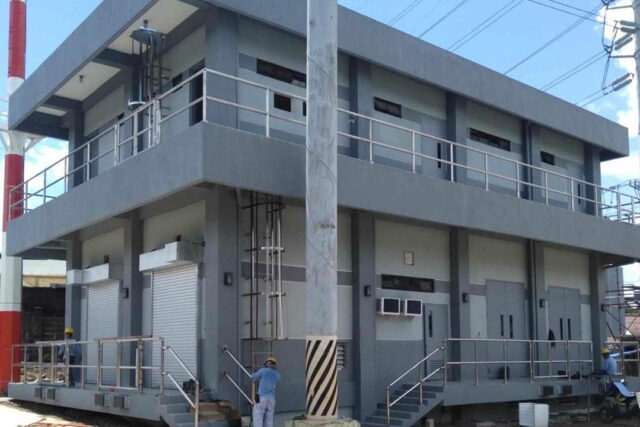
MANILA Electric Co. (Meralco) has invested P48.43 million to upgrade the control house at its Novaliches Substation in Quezon City.

The project aims to improve operational efficiency and flexibility of the substation that serves customers in Novaliches in Quezon CIty and Caloocan City, the power distributor said in a statement on Thursday.

The company said that the project involved the replacement of a 44-year-old control house with a new building equipped with a switchgear room.

It contains “critical equipment and devices” such as 34.5-kilovolt switchgears, protection relay panels, SCADA equipment, station service, and telecommunications equipment, among others essential to the substation’s daily operations.

“Meralco pours in investments for new projects and upgrades to improve its electricity distribution system to ensure safe, stable and reliable electricity service,” the company said.

In May, Meralco energized a P450-million new substation in Batangas City to cater to the existing energy demand of the city.

Meralco’s controlling stakeholder, Beacon Electric Asset Holdings, Inc., is partly owned by PLDT Inc.

Hastings Holdings, Inc., a unit of PLDT Beneficial Trust Fund subsidiary MediaQuest Holdings, Inc., has an interest in BusinessWorld through the Philippine Star Group, which it controls. — Sheldeen Joy Talavera

TIFF 2024: Inspiring Emilia Perez defies easy categories 

IMDB
IMDB

TORONTO — Selena Gomez and her co-stars in Emilia Perez — a genre-bending mix of pop opera, off-beat comedy, and crime drama — set the Toronto International Film Festival abuzz this week, walking the red carpet in support of a movie that already took top honors at Cannes.

Set in modern-day Mexico, the Spanish-language film by French director Jacques Audiard tells the story of a drug cartel kingpin, played by Karla Sofia Gascon, who enlists a flashy lawyer played by Zoe Saldana to help him undergo gender-reassignment surgery and disappear.

Years later, the former drug lord re-emerges as Emilia Perez, posing as a sister and hoping to reunite with her children and wife, as portrayed by Gomez.

Gomez, who over the years has evolved from a teen idol to a singer and actress with a long list of accolades to her credit, told Reuters she was grateful to work with Audiard, whose directorial credits include 2012’s Rust and Bone and A Prophet in 2009.

“I just really was dying to work with someone who would take me out of my comfort zone but in a way that was through storytelling,” Gomez said.

The former Disney star said she hoped audiences would find inspiration in Perez, the character portrayed by Gascon, and from the Spanish actress herself, who became the first transgender actor to win a major award at Cannes.

Gascon shared the prize with her Emilia co-stars Gomez, Saldana, and Adriana Paz.

“You walk through life, you want it to be as strong as you can and represent yourself with all your heart,” said Gomez. “All of us are Karla, in a way.”

For Gascon, Perez is a lesson in the capacity of everyone to reinvent themselves.

“The only thing that I want the public to receive is that we can change for the better,” Gascon said.

Emilia, Audiard’s 10th feature film, fetched two major awards at Cannes and received a nine-minute standing ovation. — Reuters

DBM clarifies PhilHealth issue

We, in the Department of Budget and Management (DBM), respectfully write to respond to Mr. Juan Antonio Perez III’s “Yellow Pad” column titled, “Patronage politics has caused the loss of health insurance coverage for millions of Filipinos,” which was published in the BusinessWorld on Sept. 9, 2024.

We wish to shed light on the comments which Mr. Perez raised, in the interest of accuracy and balanced views to avoid unnecessary alarm to the public, perpetuated by false, fear-mongering, and misleading news reports such as this.

Thus, we wish to clarify the following inaccurate details in the said column:

1. “To make things worse, PhilHealth’s budget for premiums was reduced by 50%, leaving at least 11 million indirect members and 18 million dependents without health coverage this year.”

“PhilHealth’s budget for premiums was reduced by 50%” — If this pertains to 2024 (“this year”), the 2024 General Appropriations Act (GAA) budget for PhilHealth is P61.5 billion, of which P40.3 billion is for the premium of indirect contributors. Compared to FY 2023 GAA, the PhilHealth budget was P100.2 billion, of which P79 billion is for the premium subsidy for indirect contributors. As in the FY 2023 GAA, the PhilHealth’s budget in the FY 2024 National Expenditure Program (NEP) for premium subsidy was the same as that of the FY 2023. However, there was a reduction made by Congress, as can be gleaned from the FY 2024 NEP vs. FY 2024 GAA.

“…leaving at least 11 million indirect members and 18 million dependents without health coverage this year — It may be pointed out that the PhilHealth already issued a press statement that clarifies that all Filipinos, being automatic members of the National Health Insurance Program, are assured of immediate eligibility to their health insurance benefits anytime they are in need of medical treatment at any accredited health facility in the country. This is clearly mandated in Sections 5 and 6 of the Universal Health Care (UHC) Act of 2019, regardless of the level of appropriation that the Congress provides to the program every year.

2. “For 2025, DBM must explain why it has recommended a reduction of indirect contributors from 25,229,037 to 14,157,910. The slide included here clearly shows a reduced member count. This effectively removes 10,981,036 indirect contributors. With an average of two dependents per indirect member, that will mean over 30 million Filipinos without health insurance coverage next year.”

Allow us to note that the computation shown is the difference between the PhilHealth’s proposal and the FY 2025 NEP. Thus, the DBM did not reduce the number of beneficiaries but rather was only able to consider the coverage of a certain number of beneficiaries given the level of subsidy that could be provided to PhilHealth. Nevertheless, as rightly pointed out by PhilHealth, no one will be left without coverage because it is mandated to automatically provide coverage to all Filipinos. Additionally, there is a budget provision for the point of service program for those indirect contributors that are not yet clearly identified.

In the same article, the said author also wrote:

3. “DBM has also recommended a premium of P3,000 for the poor individual covered by the 4Ps (Pamilyang Pilipino Pantawid Program) and P5,000 for each senior citizen in 2025, which is below the P6,000 annual premium to retain membership. This will reduce coverage to only six months for 4Ps and 10 months for senior citizens. This could actually lead to even lower coverage for 4Ps members and seniors compared to 2024.”

This statement is utterly erroneous and deceptive since the basis used by the author is the PhilHealth data. The DBM already provided P5,000 premium rate for all indirect contributors in 2025. This premium rate is already 4.17% of the income floor of P10,000 of direct contributors. Moreover, this amount is aligned with the UHC law which provides that there should be a gradual increase in the premium subsidy. We would like to emphasize that the amount of P6,000 is the proposed rate of PhilHealth and not a condition to retain membership.

This will reduce coverage to only six months for 4Ps and 10 months for senior citizens. This could actually lead to even lower coverage for 4Ps members and seniors compared to 2024.” — This is a false assumption because there is no such thing as a coverage of only six months and this can be confirmed by the PhilHealth. The premium subsidy provided by the national government is for the full-year coverage of indirect contributors. Without sounding like a broken record, there will be NO lower coverage for indirect contributors, as reassured by PhilHealth.

4. “No one can predict who will need healthcare at any given time, which is why universal coverage is essential. The fact that only 15% of indirect members made claims in 2022 should not be used as a justification to deny coverage to everyone, particularly the poor and elderly. In a year, public health planners usually presume that 20% of the population will get sick, and 5% may require hospitalization. By proposing to cover with inadequate coverage only 14 million indirect members in 2025, has the DBM pre-determined who will get sick next year?”

This is a logical fallacy.

While it is understandable to be concerned about reduced coverage, it is more important to avoid making assumptions about the intent behind such decisions. Those who will get sick are obviously unpredictable. Coverage for indirect members based on estimates, rather than actual numbers, is likely based on budgetary policies, as well as constraints, and the need to allocate limited resources. This does not imply a deliberate targeting of specific individuals. Moreover, PhilHealth is mandated to cover all Filipinos, thus, indirect contributors, in addition to those that have already been provided with premium subsidy, may be covered by PhilHealth using the Point of Service provision. Furthermore, Section 37 of the UHC Act provides that the Department of Health (DoH), in coordination with PhilHealth, may request Congress to appropriate supplemental funding to meet targeted milestones, which could include additional funding to meet targeted milestones of the said Act. Should there be a need for funding, this provision may be invoked by the DoH. We hope this letter clears up the misleading column.

Hence, we would like to request BusinessWorld to publish the DBM’s response in the spirit of transparency and fairness.

Nevertheless, rest assured that the DBM continues to hold the BusinessWorld in high esteem as a pillar of responsible journalism. We are certain that we share the same belief that accuracy is paramount; our reports shape public perception and influence critical decisions. Failing to present correct information can have far-reaching consequences, undermining not only our credibility but also the very fabric of informed discourse.

Thank you very much and more power.

Very truly yours,

Goddes Hope O. Libiran
Undersecretary and Supervising Senior Official
DBM Media Affairs and Community Relations Office

BDO sweeps Cash Management Services awards

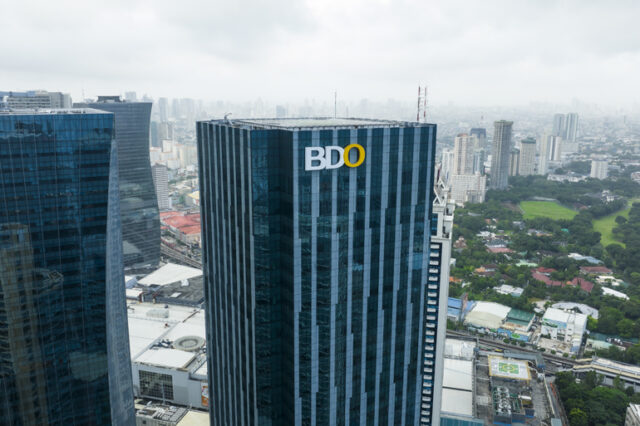
BDO Unibank Inc. (BDO) was recognized as the Philippines’ Best in Cash Management Services by The Asset Triple A Treasurise Awards in Hong Kong, Asian Banking & Finance Awards and Alpha Southeast Asia Best Financial Institution Awards in Singapore.

BDO received its sixth consecutive win as the Best Cash Management Service Provider in the Philippines at The Asset Triple A Treasurise Awards 2024 in Hong Kong. This recognition underscores BDO’s unwavering commitment to delivering innovative and reliable cash management solutions tailored to the needs of its diverse clients. 

BDO was also honored as the Philippines’ Domestic Cash Management Bank of the Year at the Asian Banking & Finance Awards 2024 in Singapore. This award highlights BDO’s comprehensive suite of cash management services, which have consistently met the evolving demands of businesses across the country. 

Furthermore, BDO received the Best Cash Management Bank in the Philippines award for the ninth consecutive year at the Alpha Southeast Asia Best Financial Institution Awards 2024 in Singapore. This distinction signifies BDO’s sustained excellence and its pivotal role in driving financial innovation in the region.

“Engaging in regular dialogues with our clients is key to understanding their requirements. We provide solutions to support their businesses in effectively managing their cash flow, liquidity, and financial resources,” said Carlo Nazareno, Senior Vice-President and head of BDO Unibank’s Cash Management Services.

These multiple international awards reinforce BDO’s position as the premier cash management services provider in the Philippines, a testament to its strategic vision, customer-centric approach, and steadfast dedication to service excellence.


Spotlight is BusinessWorld’s sponsored section that allows advertisers to amplify their brand and connect with BusinessWorld’s audience by publishing their stories on the BusinessWorld Web site. For more information, send an email to online@bworldonline.com.

Join us on Viber at https://bit.ly/3hv6bLA to get more updates and subscribe to BusinessWorld’s titles and get exclusive content through www.bworld-x.com.

ADVERTISEMENT
ADVERTISEMENT