Home Blog Page 2629

Thailand’s same-sex marriage bill gets royal endorsement

CHANDLERVID85-FREEPIK

 – Thailand’s King has endorsed a marriage equality bill passed by parliament earlier this year, officially making the kingdom the first country in Southeast Asia and third place in Asia to recognise marriages of same-sex couples.

The royal endorsement was published in the official royal gazette late on Tuesday, meaning the bill will come into force in 120 days, which would be Jan 22, 2025.

The law, the culmination of two decades of efforts by activists, was approved by the Senate in June.

Thailand, one of Asia’s most popular tourist destinations, is already known for its LGBT culture and tolerance. – Reuters

From trash to treasure: Cura Furn makes upcycled furniture

Cavite City-based Cura Furn is furthering its sustainability advocacy by turning discarded pieces into upcycled furniture, helping businesses reduce their carbon footprint.

“Imagine more businesses will do upcycling, taking away truckloads of discarded furniture, upcycling them, and giving them new home. That would be truckloads of waste being reused and repurpose,” Guiliana B. Anastacio, owner and creative head of Cura Furn said.

Interview by Edg Adrian A. Eva
Editing by Jayson John D. Marinas

Discounts and delights: A thrilling new shopping experience at SM Supermarket and Savemore Market

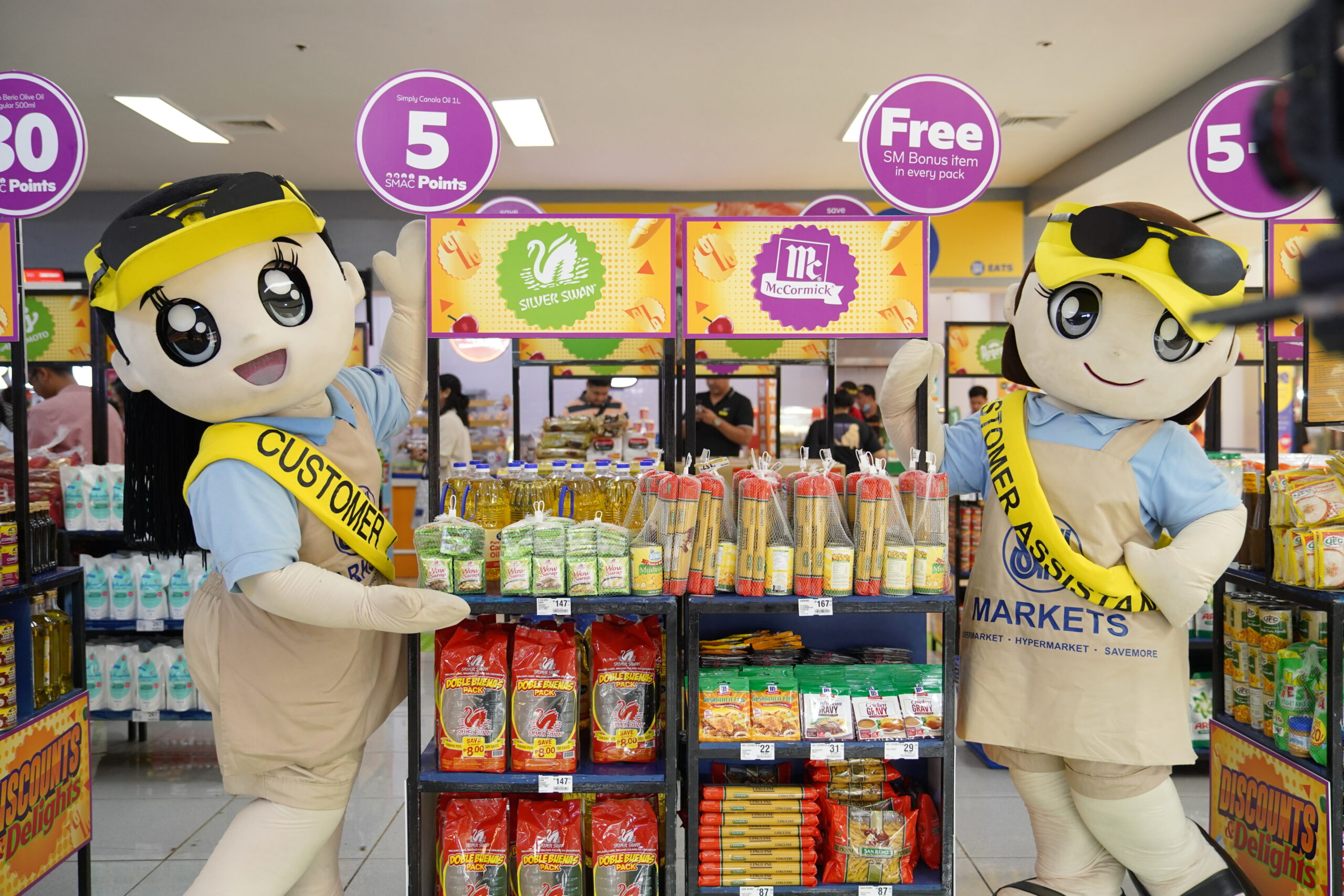
Get ready to elevate your shopping experience with Discounts and Delights at SM Supermarket and Savemore Market! From Aug. 1 to Sept. 30, 2024, shoppers can enjoy incredible discounts, exclusive promo offers, and a chance to win amazing raffle prizes. With fun activities and massive savings, Discounts and Delights promises to make your shopping trips more rewarding than ever.

Whether you’re restocking your pantry, preparing for celebrations, or simply grabbing your daily essentials, SM Supermarket and Savemore Market have got you covered. Enjoy unbeatable discounts on a wide range of products that will help you shop smarter and save big.

Unlock Exclusive Discounts and more at the Grand Expo

Mark your calendars for the Discounts and Delights Grand Expo, happening every weekend of September! This special event will take place at select SM Supermarket and Savemore locations, offering a thrilling blend of interactive activities, exclusive deals, and exciting prizes.

  • Play, Win, and Have Fun with these game modules

Prize Catcher: Test your luck and grab fantastic prizes with the Prize Catcher machine! Simply spend a minimum of P1,000 on any Discounts & Delights participating items with your SM Advantage Card (SMAC) to play.

Basketball Challenge: Show off your shooting skills and score amazing rewards! Spend a minimum of P500, including any Discounts & Delights participating items with your SMAC, to take your shot.

  • Expo-exclusive Offers and Freebies

Free Treat Bag: The first 50 customers each day with a minimum purchase of P2,000 worth of Discounts & Delights participating items using SMAC, will receive a special Treat Bag.

Free Gift Certificates: Spend at least P500 on groceries, including a minimum of P200 on Nutri Asia products, to receive a raffle coupon and a chance to win up to P3,500 e-GC.

  • Catch the Discounts and Delights Grand Expo at these locations: SM Supermarket Fairview from Sept. 7-8, Savemore Festival Mall from Sept 14-15, SM Supermarket San Lazaro from Sept, 21-22 and SM Supermarket SouthMall from Sept. 28-29.

This exciting event is made possible with the support of our esteemed brand partners, including Purefoods, Knorr, Argentina, Century Tuna, Angel, Hunts, Rebisco, Milo, Nestlé, Ensure, Pediasure, Similac, Jack ‘n Jill, Ajinomoto, UFC Sauces, Barrio Fiesta, Del Monte, McCormick, Alaska, Filippo Berio, Silver Swan, Lotte, Delimondo, Old English Simply, Ariel, EQ, and Johnson’s.

Don’t miss out on the first salvo of Discounts and Delights! Visit your nearest SM Supermarket or Savemore Market to be part of this exciting debut. Enjoy exclusive deals, play engaging games, and walk away with fantastic prizes. This is definitely one shopping experience you won’t want to miss!


Spotlight is BusinessWorld’s sponsored section that allows advertisers to amplify their brand and connect with BusinessWorld’s audience by publishing their stories on the BusinessWorld Web site. For more information, send an email to online@bworldonline.com.

Join us on Viber at https://bit.ly/3hv6bLA to get more updates and subscribe to BusinessWorld’s titles and get exclusive content through www.bworld-x.com.

ADB maintains growth forecast for Developing Asia

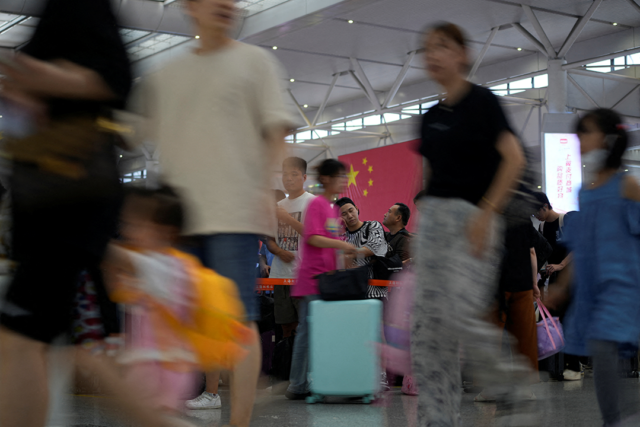
People wait to board trains at the Shanghai Hongqiao railway station in Shanghai, China Sept. 28, 2023. REUTERS/Aly Song

MANILA – Developing Asia is on track to grow 5% this year, supported by strong consumption and high demand for tech exports, the Asian Development Bank (ADB) forecast on Wednesday, and said China was expected to roll out more economic support measures.

In an update to its Asian Development Outlook report, the ADB left most growth projections for economies in the region unchanged from its July report, maintaining its growth outlook for developing Asia at 5.0% this year and 4.9% next year.

It revised down its inflation forecasts for developing Asia, which groups 46 countries in the Asia-Pacific, to 2.8% for this year and 2.9% for next year from previous forecasts of 2.9% and 3.0%, respectively.

The Manila-based lender highlighted some downside risks to its outlook, including rising protectionism, escalating geopolitical tensions, adverse weather conditions, and a deterioration in China’s property market.

China, the world’s second-largest economy, is battling deflationary pressures, and struggling to lift growth despite a series of policy measures aimed at spurring domestic spending.

On Tuesday, China’s central bank announced broad monetary stimulus and property market support measures as authorities look to restore confidence in the economy.

“Whether that will work remains to be seen because a lot of the structural problems in the property sector remain persistent,” ADB Chief Economist Albert Park said at a briefing.

“It may take more effort and work by their government” to alleviate concerns of consumers and investors, Mr. Park said, adding “more proactive government policy would be helpful.”

Park also said the ADB was not so concerned about deflation in China as it sees prices recovering.

Last week, the U.S. Federal Reserve kicked off its own easing cycle with a hefty half-percentage-point rate cut.

“With the Fed’s 50 basis point rate cut, central banks have more space to ease, and we expect more of them to do so,” Mr. Park said.

The ADB kept its 2024 growth forecast for China at 4.8%, below the government’s official target of about 5%. Growth for 2025 is still forecast at 4.5%.

“The PRC (People’s Republic of China) growth forecast is retained despite the prolonged downturn in the property sector, on the assumption that further fiscal and monetary easing will help sustain the economy,” Mr. Park said.

Sept. inflation likely eased to 2.5% — Recto

Vegetables are on display at a stall in Quinta Market, Quiapo, Manila, Sept. 6, 2024. — PHILIPPINE STAR/EDD GUMBAN

PHILIPPINE INFLATION would likely ease to 2.5% this month, giving the central bank room to cut interest rates more than expected, Finance Secretary Ralph G. Recto said on Tuesday.

But the government remains cautious as the escalating conflict in the Middle East could lead to a spike in global oil prices, he said.

“Inflation is on a downward trend,” Mr. Recto, fresh from a Cabinet meeting on managing food and nonfood inflation, said at a Palace briefing. “We expect inflation to go down to 2.5% by September.”

September inflation data will be released on Oct. 4.

Mr. Recto said the Bangko Sentral ng Pilipinas (BSP) can further reduce interest rates and match the size of the US Federal Reserve’s jumbo rate cut.

“The Fed cut by 50 basis points (bps) or half a percent, I think, we can also do half a percent,” he said in mixed English and Filipino.

BSP Governor Eli M. Remolona, Jr. earlier said that they could cut by another 25 bps in the fourth quarter.

Easing inflation had prompted the BSP to begin its easing cycle at its Aug. 15 meeting. The Monetary Board cut rates by 25 bps, bringing the benchmark rate to 6.25% from the over 17-year high of 6.5%. This was the first time the BSP reduced rates since November 2020.

Headline inflation slowed year on year to a seven month low of 3.3% in August, from 4.4% in July, due to a moderate rise in food prices and a decline in transport costs.

Year to date, inflation rose by 3.6%, slower than 6.6% a year ago.

Mr. Recto said inflation could average 3.4% this year, and further ease to 2.9-3.1% in 2025.

The BSP last month adjusted its baseline inflation forecasts to 3.4% for 2024 (from 3.3% previously), 3.1% for 2025 (from 3.2% previously), and 3.2% for 2026 (from 3.3% previously).

“The beauty about reducing inflation is that your gross domestic product (GDP) growth goes up and more jobs can be created, your borrowing cost goes down,” Mr. Recto said.

He said the possible rate cut will boost the Philippines’ chance of hitting its 6.5-7.5% growth target for 2025.

However, Mr. Recto said the tensions in the Middle East threaten the government’s inflation expectations, noting that global oil prices could spike if a war breaks out.

“Our biggest challenge is external headwinds. One is the war in the Middle East, and we don’t want that to go out of hand and possibly lead to oil price increases,” Mr. Recto said, referring to the escalation in the conflict between Israel and Lebanon’s Hezbollah.

“There is also a pressure for electricity prices to go up,” he added.

Meanwhile, Diwa C. Guinigundo, country analyst for the Philippines of GlobalSource Partners, said geopolitical conflicts “could trigger a possible escalation in oil prices, energy and food prices and ultimately, inflation.”

“With inflation showing some easing trend, within-target inflation forecasts and the balance of risks tilting to the downside, there is definitely some scope for further accommodation by the BSP,” he told BusinessWorld.

Asked to comment on Mr. Recto’s statements, the former BSP deputy governor said: “I would expect our fiscal authorities to avoid speaking on monetary policy especially on matters of inflation forecasts and the likely direction of monetary policy, as well as providing some sort of forward guidance to the market.

Security Bank Corp. Chief Economist Robert Dan J. Roces said external threats, particularly conflicts in the Middle East and global oil prices, are still “significant concerns.”

“While these projections signal effective anti-inflation measures, the true test lies in translating lower inflation into tangible benefits for ordinary citizens through job creation, improved social services, and sustainable economic practices,” Mr. Roces said in a Viber message.

Leonardo A. Lanzona, who teaches economics at Ateneo de Manila University, said the government appears to be forgetting that the recent inflation has been fueled by food prices, not external factors.

“This has to do more with internal management of the economy. Unless food, especially rice, prices are controlled, the inflation risks remain,” he said in a Facebook Messenger chat.

At the Tuesday briefing, Agriculture Secretary Francisco Tiu Laurel said the pressure on pork prices will likely ease as the government rolls out vaccines for African Swine Fever, which has forced producers to cull hogs.

The government has tested the vaccines locally with 10,000 doses, he noted, adding that the next 450,000 doses will be awarded next month.

“We hope to complete the procurement of 600,000 doses by the end of December this year,” he said.

EXCESS LIQUIDITY
Meanwhile, Mr. Guinigundo said the government should keep a close eye on the potential excess in liquidity following the lifting of banks’ reserve requirement ratio (RRR) by 250 bps.

“(This) could add nearly P500 billion in domestic liquidity. With a small negative output gap, we would not want to dissipate that window and risk a potential resurgence in inflation due to additional liquidity injection,” he said.

“What is supporting this monetary stance by the BSP is the favorable inflation expectations even following the recent reduction in both the policy rate and the RRR,” he added.

At the Palace briefing, Mr. Recto, a member of the Monetary Board, said the BSP had considered the RRR cut’s potential impact on inflation.

“We’ve considered that when we decided on the policy in the last BSP meeting. This will be good for the economy. It will improve the capital markets,” he said. “We’re injecting roughly P380 billion into the system. It will be good for banks. And then, it will have a lag effect.”

The BSP will reduce the RRR for big banks and nonbank financial institutions with quasi-banking functions by 250 bps to 7% from 9.5% previously, effective Oct. 25.

It will also reduce the ratio for digital banks by 200 bps to 4%, thrift banks by 100 bps to 1%, and rural banks and cooperative banks by 100 bps to 0%. — Kyle Aristophere T. Atienza

Weak economic growth to persist in near term

People browse through racks of clothing at a mall in Quezon City, Sept. 18, 2024. — PHILIPPINE STAR/MIGUEL DE GUZMAN

By Luisa Maria Jacinta C. Jocson, Reporter

PHILIPPINE ECONOMIC GROWTH is seen to remain subdued in the near term amid slow fiscal consolidation and weakening remittances, Capital Economics said.

“GDP (gross domestic product) growth in the Philippines slowed again in the second quarter of the year, and we expect the economy to remain weak over the coming quarters,” Capital Economics Senior Asia Economist Gareth Leather and Economist Placement Student Harry Chambers said in a report.

Capital Economics expects GDP to grow by 5.1% this year and 5.5% in 2025, which would both miss the government’s 6-7% and 6.5-7.5% targets, respectively.

The Philippine economy grew by 6.3% in the April-to-June period, the fastest in five quarters.

In order to meet the lower end of the government’s target, the economy would need to grow by at least 6% in the second half.

“Tighter fiscal policy and weakening remittances will weigh on economic growth in the Philippines,” it added.

Latest data from the central bank showed that cash remittances rose by 2.9% to $19.332 billion in the first seven months. The BSP expects remittances to grow by 3% this year.

“Fiscal policy is also likely to hold back growth. The government is aiming to reduce government debt, which shot up during the pandemic, to more sustainable levels,” Capital Economics said.

Capital Economics also cited other risks to its growth outlook, including the tensions between China and the Philippines.

“The worsening relationship between the Philippines and China poses a downside risk to the outlook. However, the fact that the Philippines is not closely integrated into China’s economy means the fallout should be limited.”

For 2026, Capital Economics sees Philippine growth to average 6.5%, which is at the low-end of the government’s 6.5-8% target.

Meanwhile, S&P Global Ratings in a separate report said it “nudged down” the Philippines’ growth forecast.

It trimmed its GDP projection for the Philippines to 5.7% this year from 5.8% previously.

“Southeast Asian growth has remained generally solid, benefiting from the export recovery and robust domestic demand,” S&P Global Ratings Asia-Pacific Chief Economist Louis Kuijs and Asia-Pacific Senior Economist Vishrut Rana said.

S&P’s growth forecast for the Philippines this year makes it the third-fastest economy in the Asia-Pacific region, after India (6.8%) and Vietnam (6.2%).

However, it raised the Philippines’ growth forecast for 2025 to 6.2% from 6.1% earlier. This still places it as the country with the third-fastest projected growth, after India (6.9%) and Vietnam (6.8%).

“Asia-Pacific growth remains largely intact, driven by a continued export recovery and, in most emerging markets (EMs), solid domestic demand,” it said.

The credit rater now also sees Philippine growth averaging 6.4% in 2026 and 6.5% in 2027.

LOWER INFLATION
Meanwhile, Capital Economics noted that easing inflation and lower interest rates should give a boost to domestic demand.

“We expect inflation to remain subdued over the coming months, helped by a combination of weak growth, beneficial base effects and government efforts to boost the supply of agricultural goods,” Capital Economics said, as it sees inflation settling at 3.3% this year.

Meanwhile, S&P Global expects inflation to average 3.4%, in line with the central bank’s own projection.

Capital Economics also expects the Bangko Sentral ng Pilipinas (BSP) to further reduce interest rates.

“With economic growth set to struggle and inflation likely to stay subdued, we expect further rate cuts by the central bank over the coming months,” it added.

The Monetary Board delivered a 25-basis-point (bp) rate cut last month, its first time reducing rates in nearly four years. There could be another 25-bp cut in the fourth quarter, BSP Governor Eli M. Remolona, Jr. earlier said.

Capital Economics forecasts the BSP to cut by 75 bps this year and end the policy rate at 5.75%. It also sees 100 bps worth of cuts next year to bring the key rate to 4.75%.

Meanwhile, S&P Global expects the benchmark rate to end at 5.5% this year and 4.25% in 2025.

“Regional central banks have nevertheless generally refrained from lowering policy rates. The Philippines, New Zealand, and Indonesia have been exceptions; rate setters there have recently agreed on cuts of 25 bps,” S&P Global added.

RRR
Meanwhile, HSBC Global Research said that the recent reserve requirement ratio (RRR) cut will not impact the BSP’s policy easing cycle.

“Though the RRR cut does increase the funding flexibility of banks (which may be understood as a form of easing), we don’t think the RRR cut significantly alters the monetary policy outlook, nor does it tilt the chances of an October rate cut,” HSBC economist for ASEAN (Association of Southeast Asian Nations) Aris D. Dacanay said in a report.

“We don’t think this is a change in the BSP’s monetary stance since the liquidity injected can be re-absorbed by the BSP through its bill issuances.”

HSBC expects the RRR cut to inject P450 billion into the economy initially.

Starting Oct. 25, the BSP will reduce the RRR for banks and nonbank financial institutions with quasi-banking functions by 250 bps to 7% from 9.5%.

Mr. Dacanay noted that the BSP’s recent signals show they are not in a rush to loosen monetary settings.

“This has also been our long-held view. But with the Fed cutting by 50 bps (last week), we think the risk of the BSP cutting by 50 bps in 4Q 2024 also increased,” he said.

“What matters still for monetary policy is inflation and growth. We continue to expect the BSP to follow a data-dependent approach. With risks to inflation tilted to the upside for September due to Typhoon Yagi, we expect the BSP to keep its easing cycle at a gradual pace, only cutting by 25 bps in December.”

Palay production may decline due to La Niña

Farmers inspect rice crops affected by floods in La Union in this Oct. 12, 2021 file photo. — PHILIPPINE STAR/MICHAEL VARCAS

By Adrian H. Halili and Luisa Maria Jacinta C. Jocson, Reporters

THE ANTICIPATED La Niña weather pattern is expected to pull down the Philippines’ palay (unmilled rice) production for the rest of the year amid risks of heavy rains and intense flooding, analysts said.

In a report, Fitch Solutions’ unit BMI said the impact of La Niña on rice production in Southeast Asia “will be shaped via the precise timing of the onset of La Niña conditions (and the extent to which it overlaps with critical stages of crop development) as well as the eventual duration and severity of the event itself.”

“The likelihood of a La Niña event posing headwinds to regional rice production will increase with both the duration and severity of the event,” it added.

Latest data from the Philippine Atmospheric, Geophysical and Astronomical Services Administration (PAGASA) showed that there is a 66% chance of La Niña occurring from September to November and will likely persist until the first quarter.

BMI said the impact of La Niña-linked above-average rainfall on farming in Southeast Asia would depend on the severity of the weather event.

Aside from intense rainfall and flooding, BMI said there is also the risk of rain-induced waterlogging.

PAGASA earlier said that the La Niña heightens the likelihood of tropical cyclones, low-pressure areas, and the Intertropical Convergence Zone (ITCZ), and intensifies the Southwest Monsoon.

Former Agriculture Secretary William D. Dar said he expects a drop in annual palay production this year due to La Niña.

“The number one problem is the impact of La Niña coupled with the late distribution of agricultural inputs provided by the National Government. There will be a decline of production from the 20 million MT (metric tons) last year,” he said in a text message.

In 2023, palay production reached 20.06 million MT.

The Department of Agriculture (DA) earlier trimmed its palay production estimate to 20.1 million MT for 2024 from 20.44 million MT previously.

Fermin D. Adriano, a former Agriculture undersecretary, said in a Viber message that palay production would likely drop to between 19.3 million MT and 19.5 million MT this year.

“With El Niño and then recent flooding in rice growing areas of Central Luzon, I don’t know whether DA will get 1% to 2% growth rate (for agricultural production),” Mr. Adriano said in a Viber message.

The DA had set a 1-2% growth target for agricultural production this year, taking into account the impact of the El Niño and La Niña weather events.

“The possibility of an increase in output for 2024 is bleak, given the 500,000 (MT) drop in palay harvests in the first semester, plus the potential impact of La Niña on standing crops in the coming months,” Federation of Free Farmers National Manager Raul Q. Montemayor said in a Viber message.

Mr. Montemayor said that the projected drop in palay production may be attributed to delayed planting by rice farmers. This would push back the palay harvest to the fourth quarter, he added.

PAGASA has so far logged nine tropical cyclones which have entered the Philippine Area of Responsibility this year.

Farm damage from weather disturbances was estimated at P23.19 billion from January to Sept. 4, according to the DA. This includes the effects of the El Niño, shearline, Southwest Monsoon, Typhoon Aghon, Typhoon Carina, and the Severe Tropical Depression Enteng.

The estimated volume loss for rice was at 373,000 MT, during the nine-month period. The DA projects an average of 500,000 MT to 600,000 MT in rice losses every year.

“The damage reports don’t sound so bad, I’m not surprised if we hit 20 million MT (this year),” Roehlano M. Briones, a senior research fellow with the Philippine Institute for Development Studies, said in a Viber message.

Samahang Industriya ng Agrikultura (SINAG) Executive Director Jayson H. Cainglet said that the country’s rice supply would remain sufficient given the increase in rice imports.

“Those damaged by Habagat (Southwest Monsoon) and heavy rain, farmers just need to be assisted immediately to replant,” he said in a Viber message.

“What we are worried about is the big drop in farmgate price of palay during these lean months — an indication there is a lot of rice in the market, and this would further decrease once the harvest season begins,” Mr. Cainglet added.

Philippine rice imports have totaled 3.09 million MT as of Sept. 19, data from the Bureau of Plant Industry showed.

Meanwhile, BMI said above-average rainfall in the region can either be beneficial or detrimental to rice production, BMI said.

The La Niña event increases the likelihood of excess rainfall, which poses a threat to rice cultivation, BMI said.

“Land that is subject to drought or an extended period of below-average rainfall could also be more at risk of wildfires during Southeast Asia’s fire season. Conversely, low soil moisture levels accumulated during the El Niño period can be vulnerable to water logging in the event of intense rainfall,” it added.

PAGASA in its latest farm weather advisory also called on farmers to “prepare for wetter conditions.”

“Wet weather promotes fungal development and can cause damage to stored farm products, reduce the quality, viability and market price of the grains. Thus, it is advised to keep barns and crop storage rooms in good, dry, and well-ventilated condition,” the state weather service said.

BMI also noted that many agricultural producers in Southeast Asia continue to feel the impact of El Niño through “low soil moisture levels and depleted irrigation water reservoirs.”

“Moreover, several areas of Southeast Asia remained in drought conditions as of July 2024, including parts of Cambodia, Myanmar, Malaysia, the Philippines, Thailand, and Vietnam.”

The latest PAGASA bulletin showed that four provinces in Luzon, 12 provinces in the Visayas, and 10 provinces in Mindanao experienced meteorological drought; 17 provinces in Mindanao were under dry spell, and six provinces in Luzon experienced dry conditions.

However, BMI data also showed that the impact of La Niña on rice production “tends to be weaker” than the El Niño.

“We find that the El Niño Southern Oscillation (ENSO) events pose a downside risk to rice production in Southeast Asia, but that El Niño events tend to have a more significant impact on observed rice yield anomalies than La Niña events,” it said.

“In addition, we find that the relationship between La Niña events and regional rice production is not unidirectional, with weak events tending to support output levels and strong events posing headwinds to output.”

Certain countries in the region are also more vulnerable to La Niña than others, it added.

The right to a roof

The EY Entrepreneur Of The Year 2024 Philippines has concluded its search for the country’s most visionary leaders shaping opportunities and transforming industries. It is a program of the SGV Foundation, Inc., with co-presenters: the Asian Institute of Management, the Department of Trade and Industry, the Philippine Business for Social Progress, and the Philippine Stock Exchange.

Jacinto Ng, Jr.
Group Executive Officer
Raemulan Lands, Inc.

JACINTO “JUN” NG, JR. has always considered architecture as a passion. Growing up, he learned about mass housing developments through his father’s business.

This early knowledge and experience would eventually serve him working with the partner company, Raemulan Lands, Inc., which builds socialized housing for the low-income market. Raemulan Lands is the partner company of Extraordinary Enclaves, Elanvital Enclaves and Everyhome Enclaves of the Joy~Nostalg Group, which includes various companies in property development, power, hospitality and culinary, and leasing.

While in college, Mr. Ng apprenticed under architect C.Y. Lee in 1991. He then came home to the Philippines and started working for Extraordinary Development Corp., a residential development company, partly owned by his father. He remembers coming up with the idea for mass low-income housing during this time.

“I wanted to find joy in what I should be doing next, while connecting it with my High School motto of being a Man for Others and being a UP Iskolar ng Bayan,” he recalled.

Mr. Ng then started looking into socialized housing. He discovered that there was a housing backlog of around four million houses and knew there was a market there.

When he started housing development in 2016, the appraised value of one house was P630,000. He priced the housing to match the Pag-IBIG Fund’s (Home Development Mutual Fund) ceiling price, which at the time was at P450,000. This made it highly affordable for minimum wage earners since the monthly amortization would be cheaper.

“There’s a small margin,” Mr. Ng said. “And that’s when I decided my challenge is to figure out how to make it work with that margin.”

He said they followed Pag-IBIG’s rule where buyers do not have to pay any equity if the appraised value of the house is equal to or higher than Pag-IBIG’s ceiling price. Under the Pasinaya Homes brand, their first groundbreaking socialized housing project, Raemulan Lands was able to develop more than 30,000 homes in eight years.

Presently, the price of a house is P750,000, which is still below the Department of Human Settlements and Urban Development’s (DHSUD) ceiling price of P850,000.

Mr. Ng believes in uplifting the social welfare of every Filipino, and central to this is the empowerment of communities and protecting the homeless. Through the Joy~Nostalg Foundation, Inc. (JNF), Raemulan Lands has implemented successful programs on values and skills development. These include the Home Empowerment Learning Program (HELP), a financial and housing literacy initiative that has educated over 106,000 individuals and expanded into the digital platform HOPEFUL.PH.

“The mission is to home the homeless, which means that it is our intention and our goal to really build communities,” he said. The master-planned communities they establish are designed to promote sustainability and to have a long-term positive impact on the residents.

By also leveraging the synergy between Raemulan Lands and Joy~Nostalg Solaris, Inc. (JNSI), the solar energy company of the Joy~Nostalg Group, Mr. Ng has created a sustainable energy solution. He came up with the idea of installing rooftop solar panels on the houses in their projects since they already own the land.

To get the homeowners to allow the usufructuary rights of the roof, JNSI subsidizes the cost of the house to enable the developer to sell the socialized housing unit and for the buyer to purchase that unit without need for equity. On top of that, JNSI monetizes the would-be daytime energy use and aggregates it as a fund for annual community improvement projects in the socialized housing development and donates it for the community’s use.

JNSI’s renewable energy initiative, NING*NING, has installed 5 megawatts (MW) of rooftop solar energy in Pasinaya Homes Prime Central, Cavite composed of over 2,000 rooftops. This will be the first Utility-Grade Socialized Housing Rooftop Solar Energy in the Philippines and in the world.

Raemulan Lands is currently looking to expand its housing developments to different provinces. They are participating in the Pambansang Pabahay Para sa Pilipino Program with their first project being an eight-story condominium called Pasinaya Heights in Cabuyao, Laguna. For their energy projects, JNSI is currently building a 65-MW solar farm in Iloilo. They are also planning to participate in the government’s Green Energy Auction Program (GEAP) to install more rooftop solar panels on their houses and are also researching on the installation of 35-MW rooftop solar panels in future socialized housing projects.

For his part, Mr. Ng believes minimum wage earners should be recognized for their resilience and valuable role in society. He sees them as individuals who, despite challenges, make meaningful contributions to their communities, the nation, and the world at large.

Media sponsors are BusinessWorld and the ABS-CBN News Channel. Gold Sponsors are SteelAsia Manufacturing Corp., Uratex, and Converge ICT Solutions, Inc. Silver Sponsor is International Container Terminal Services, Inc. Bronze sponsor is Lausgroup Holdings, Inc.

The winners will be announced on Oct. 23, 2024. The EY Entrepreneur Of The Year 2024 Philippines will represent the country in the World Entrepreneur Of The Year 2025 in Monte Carlo, Monaco in June 2025. The EY Entrepreneur Of The Year program is produced globally by Ernst & Young (EY).

SMC power unit eyes $100-M securities offering for projects

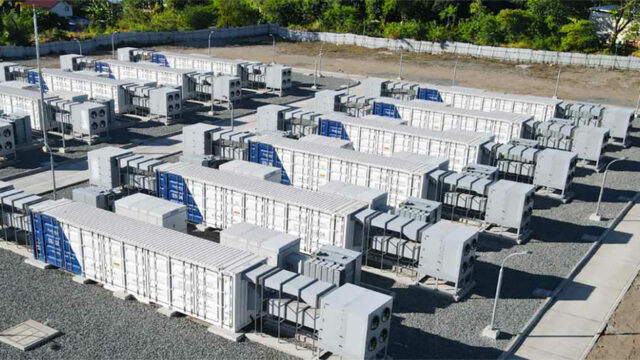
BATTERY Energy Storage System of the Masinloc Power Plant — SMCGLOBALPOWER.COM.PH

SAN MIGUEL Global Power Holdings Corp. (SMGP), the power arm of conglomerate San Miguel Corp. (SMC), is eyeing to offer up to $100 million in senior perpetual capital securities.

The company’s board of directors has approved the offer and issuance of additional senior perpetual capital securities worth at least $100 million, SMGP told the Philippine Dealing & Exchange Corp. (PDEx) on Tuesday.

The energy company said the amount of the new securities is subject to “prevailing market conditions and as may be advantageous to the corporation.”

“The net proceeds of the additional securities shall be applied primarily for pre-development costs of solar energy projects and capital expenditures related to battery energy storage projects,” SMGP added.

The proposed securities issuance will be listed on the Singapore Exchange (SGX) for trading.

SMGP appointed Standard Chartered Bank as sole lead manager, DB Trustees (Hong Kong) Limited as trustee, Deutsche Bank AG (Hong Kong Branch) for multiple agent roles, and Latham & Watkins as listing agent.

Last month, the company told PDEx that its board had approved the offer and issuance of up to $300 million in senior perpetual capital securities to finance solar power projects.

It issued $492.11 million in senior perpetual capital securities in November 2019, and another $723.9 million in October 2020.

As of end-June, SMGP and its affiliates have a combined capacity of 5,207 megawatts, including natural gas, coal, hydroelectric power, and battery energy storage systems. — Sheldeen Joy Talavera

How mWell fosters women in leadership for innovation

Chaye Cabal-Revilla

BY FOSTERING women in leadership roles and ensuring equal opportunities in the workplace, a company can drive inclusive growth and innovation, according to Chaye Cabal-Revilla, chief executive officer of mWell, the digital healthcare arm of Metro Pacific Investments Corp. (MPIC).

“Nothing beats hard work. We women have to just show what we’ve got and show them that we are equal, or sometimes even better, in the responsibilities that we are given,” Ms. Cabal-Revilla, who also serves as MPIC’s chief finance, risk, and sustainability officer, told Editor-in-Chief Cathy Rose A. Garcia during an episode of BusinessWorld One-on-One online interview series themed “The Reinvention of Business.”

Despite ongoing gender parity issues, Ms. Cabal-Revilla noted that more women are joining the board, particularly at mWell, which is a women-dominated space.

“I am actually blessed to be part of the MVP group, which provides equal opportunities for men and women,” she said, adding that being in a male-dominated industry helps shape her approach in leadership.

“Still, it is about being able to know the business intimately, the ins and outs. I think given the mWell leadership, equal opportunities should be there and just picking the good people to be given the chance to lead teams and to foster innovation,” she said.

According to a report by McKinsey & Company and LeanIn.Org, women’s representation in the C-suite has reached its highest level ever, showing encouraging gains at the top levels of organizations.

The Philippines ranked 19th out of 146 countries in the 2022 Global Gender Gap Index by the World Economic Forum, making it the top gender-equal nation in Southeast Asia. The Gender Gap Index measures gender equality in economic participation, education, health, and political empowerment.
mWell also aims to expand its platform to address the healthcare needs of Filipinos, particularly in underserved communities, Ms. Cabal-Revilla said.

“Our mWell platform has been developed and designed on a scalable basis. It’s like Lego blocks. It can expand at any point in time. We are not just catering to consumers or individuals, we want to be like Grab or Uber for everything and anything that is healthcare,” she said.

The company is working to expand its digital healthcare offerings by integrating self-care tools and counseling services into its product suite.

“We have started this push for Filipinos to do preventive health, we have launched this campaign, and it is very fitting for the Filipinos… We’re building more platforms that will support our Metro Pacific hospitals in the country,” Ms. Cabal-Revilla said.

The mWell app provides online consultations, daily health tracking, financial wellness tools, laboratory services, pharmacy options, home care, and emergency response. It also includes the Mind Health Score feature, which tracks users’ emotional well-being.

MPIC is one of the three key Philippine units of Hong Kong-based First Pacific Co. Ltd., the others being Philex Mining Corp. and PLDT Inc.

Hastings Holdings, Inc., a unit of PLDT Beneficial Trust Fund subsidiary MediaQuest Holdings, Inc., has a majority share in BusinessWorld through the Philippine Star Group, which it controls. — Ashley Erika O. Jose

Airbus plans facility expansion in Philippines

AIRBUS.COM

EUROPEAN aircraft manufacturer Airbus SE plans to expand its operations in the Philippines, seeing the country as a promising market, a company official said.

“Very much so, [the Philippines is an attractive market] for Airbus. We see, on the commercial aviation side, the massive growth in passenger numbers,” Airbus Chief Representative for the Philippines Jussi Hoikka said during a briefing on Tuesday.

“We see that with the activity of the airlines and on the defense and security side,” he added.

Airbus is expected to help bolster the Philippines’ air defense and is in talks with the Philippine Air Force to expand its fleets, Mr. Hoikka said.

“We are always in close discussions with the Air Force, we are in collaboration to meet their requirements,” he said.

Mr. Hoikka said Airbus is “well-placed” to support the Armed Forces of the Philippines’ military modernization initiative, which has a budget of about P2 trillion.

“Airbus relationship extends across commercial aircraft, defense, space, and helicopters. As the geopolitical landscape in the Asia-Pacific region becomes more complex, it is vital that nations like the Philippines are equipped with the tool to protect their sovereignty,” he said.

He noted that Airbus completed the Philippine Air Force’s order of seven C295 aircraft in 2021, originally placed in 2014.

‘’Airbus is confident of meeting the Philippines’ future military needs with our cutting-edge technologies and aircraft to help the AFP (Armed Forces of the Philippines) fulfill their missions to protect [the Philippine] sovereignty and ensure the safety of its citizens,” he said.

Airbus is also considering expanding its facility at the Ninoy Aquino International Airport.

“If the market demands it and obviously for an archipelagic nation like the Philippines, you can imagine that there are many places around the country that would need such services,” he said.

Airbus dominates the fleets of Philippine Airlines and Cebu Pacific.

In July, Cebu Pacific announced that it had agreed to buy up to 152 A321 new engine option (NEO) aircraft from Airbus, valued at P1.4 trillion or $24 billion, marking the largest aircraft order in the Philippines. — Ashley Erika O. Jose

Gov’t port repurposing boosts BuhaWind’s offshore wind plans

BUHAWIND.COM.PH

OFFSHORE wind energy developer BuhaWind Energy Philippines will advance its four-gigawatt (GW) projects after the government announced plans to repurpose three strategic ports as logistics hubs, a company official said.

“Repurposing these ports is a game-changer for the Philippine offshore wind industry,” PetroGreen Energy Corp. President and Chief Executive Officer Francisco G. Delfin, Jr. said in a statement on Tuesday.

“The Currimao Port’s involvement in the BuhaWind project is crucial for establishing the Philippines as a significant player in the regional and global offshore wind market,” he added.

BuhaWind is a joint venture between Denmark’s Copenhagen Energy and PetroGreen, the renewable energy arm of the Yuchengco group.

The company is developing the 2,000-megawatt (MW) BuhaWind offshore wind farm in Northern Luzon.

The Currimao Port will play an important role in the construction and operation of the wind project, it said.

BuhaWind is developing two additional 1,000-MW offshore wind projects in Northern Mindoro and East Panay, set for completion by 2031 and 2033.

The Sta. Clara port in Batangas will support the Northern Mindoro project.

The Department of Energy (DoE) has announced that the Philippines Ports Authority is crafting detailed engineering designs and repurposing three priority ports: Currimao in Ilocos Norte, Batangas in Sta. Clara, and Jose Panganiban in Camarines Norte, due to their proximity to high-potential offshore wind energy sites.

The DoE plans a green energy auction for offshore wind in mid-2025. So far, it has awarded 92 contracts to 38 developers, totaling 66.101 gigawatts of potential capacity. — Sheldeen Joy Talavera

ADVERTISEMENT
ADVERTISEMENT