Home Blog Page 2627

Peso advances on bets of further US rate cuts

BW FILE PHOTO

By Aaron Michael C. Sy, Reporter

THE PHILIPPINE PESO appreciated against the dollar on Wednesday amid weaker US consumer confidence and bolstered market expectations of another aggressive rate cut by the US Federal Reserve at its November meeting.

It closed at P55.88 a dollar, 36.5 centavos stronger that its close on Tuesday, Bankers Association of the Philippines data showed.

The peso opened at P55.95 against the dollar, appreciated to as much as P55.83 and weakened to as much as P56 against the greenback. Dollars exchanged fell to $1.54 billion from $1.8 billion a day earlier.

“The dollar-peso closed lower due to the lower consumer confidence data and aggressive Fed cut bets,” a trader said by phone.

US consumer confidence dropped by the most in three years in September amid mounting fears over the labor market, though more households planned to buy a home in the next six months, Reuters reported.

The Conference Board survey on Tuesday also showed consumers expected inflation to quicken in the coming year, clouding their views of the economy before the Nov. 5 presidential election. The US economy could determine the outcome of the vote.

The Conference Board’s consumer confidence index dropped to 98.7 this month from an upwardly revised 105.6 in August. The decline was the largest since August 2021. Economists polled by Reuters had forecast the index rising to 104 from 103.3.

Meanwhile, Federal Reserve Bank of Chicago President Austan Goolsbee on Monday said he expects “many more rate cuts over the next year” as the US central bank seeks a soft landing for the economy, where it controls inflation without crashing the labor market.

Inflation is “way down” from its peak and in recent months has been coming in at the Fed’s 2% target, Mr. Goolsbee said in remarks prepared for delivery to the National Association of State Treasurers annual conference.

“Basically, we would love to freeze both sides of the Fed’s dual mandate right here,” he said. “Yet rates are the highest they’ve been in decades. It makes sense to hold rates like this when you want to cool the economy, not when you want things to stay where they are.”

The Fed last week cut its policy rate to 4.75%-5%, delivering a bigger-than-usual half-of-a-percentage point cut.

“I am comfortable with a starting move like this — the 50-basis-point (bp) cut in the Federal fund rate announced last Wednesday — as a demarcation that we are back to thinking more about both sides of the mandate,” Mr. Goolsbee said. “If we want a soft landing, we can’t be behind the curve.”

The peso also followed the dollar’s recent decline due to the US consumer confidence data, Michael L. Ricafort, chief economist at Rizal Commercial Banking Corp., said in a Viber message.

The dollar index was at 100.3, near its year-to-date lows, weighed by a rising possibility that the Fed will deliver a 50-bp rate cut at its November meeting. Weak US consumer confidence data on Tuesday prompted investors to push up the odds of a rate cut of that size to more than 60%, Reuters reported.

The trader expects the peso to trade at P55.60 to P56 a dollar, while Mr. Ricafort expects it at P55.80 to P56.
PSEi snaps 4-day rally as investors take profits

BW FILE PHOTO

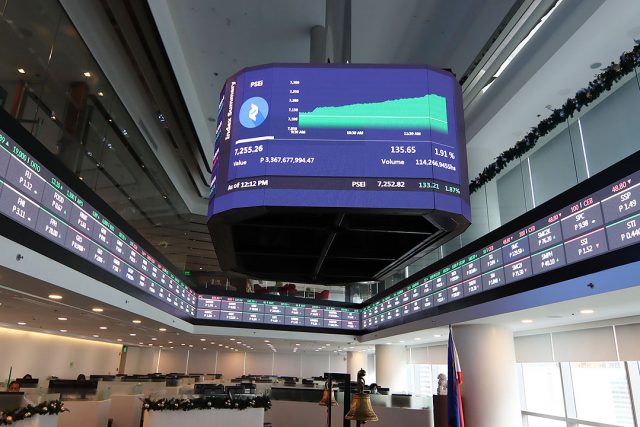
PHILIPPINE STOCKS closed lower on Wednesday as investors took profits after a four-day rally.

The benchmark Philippine Stock Exchange index (PSEi) fell by 0.93% or 69.59 points to close at 7,362.62. The broader all-share index shed 0.6% or 23.86 points to 3,939.64.

“The market pulled back as investors took profits from its recent rallies,” Japhet Louis O. Tantiangco, senior research analyst at Philstocks Financial, Inc., said in a Viber message. “Prior to the decline, the market was on a four-day gaining streak.”

The PSEi reached as high as 7,441.99 intraday before settling at the 7,300 level. The market recently received a boost after the recent policy easing by the US Federal Reserve, which could be matched by the local central bank.

“Profit taking occurred in the local equity market after several days in the oversold region, as traders adopted a cautiously optimistic stance amid expectations that China’s recent policy measures may have stemmed its stock market slump, with hopes for additional fiscal support on the horizon,” Luis A. Limlingan, head of sales at Regina Capital Development Corp., said in a Viber message.

On Tuesday, China’s central bank announced its biggest stimulus since the coronavirus pandemic to bring the country’s economy back toward the government’s growth target.

People’s Bank of China Governor Pan Gongsheng told a news briefing the central bank would in the near future reduce the reserve requirement ratios (RRR) — the amount of cash banks must hold as reserves — by 0.5 percentage point. The move is expected to free up about 1 trillion yuan ($142.4 billion) for new lending.

He also hinted that the RRR could be slashed by 0.25-0.5 percentage point later this year depending on liquidity conditions.

Back home, almost all of the market’s sectoral indices fell. Financials went down by 2.02% or 48 points to 2,324.48, while services shed 0.71% or 16.04 points to 2,234.75. Holding companies lost 0.54% or 34.34 points to 6,261.62, while property shed by 0.42% or 12.56 points to 2,977.40. The industrial index dropped by 0.16% or 16.44 points to 9,739.89.

On the other hand, mining and oil rose by 2.82% or 241.07 points to 8,773.20.

Value turnover reached P8.05 billion covering 1.07 billion shares, lower than P11.79 billion covering 1.02 billion stocks traded on Tuesday.

Decliners beat advancers 99 to 97, while 57 stocks were unchanged.

Net foreign buying decreased to P921.22 million compared with the P2.99 billion worth of net foreign inflows on Tuesday. — Revin Mikhael D. Ochave

ERC acting chairman takes up post as full operations resume

ANDREY METELEV-UNSPLASH

THE Energy Regulatory Commission (ERC) said it has returned to “functional and unhampered” operations with the installation of an acting chairperson.

“Frontline services of the ERC will continue to be fully operational, ensuring that the concerns of consumers are promptly addressed and assistance is readily provided to the public,” the commission said in a statement on Wednesday.

The ERC announced the formal assumption of office of former Justice Undersecretary Jesse Hermogenes T. Andres as the officer-in-charge chairperson and chief executive officer of the commission.

In a memorandum dated Sept. 20, the Office of the Executive Secretary designated Mr. Andres to temporarily lead the ERC.

“I will perform my functions as ERC Officer-in-Charge Chairman with utmost fairness and independence. ERC will act expeditiously on all pending matters with a view to foster competition and ultimately drive down the price of electricity and protect consumers,” Mr. Andres said.

Mr. Andres convened the management committee and impressed upon it the need for expeditious action on all pending ERC matters.

Mr. Andres is a lawyer and holds a bachelor’s degree in economics from the University of the Philippines.

He is a career executive service officer eligible since 2009 and completed his directorship training with the Institute of Corporate Directors.

Mr. Andres took his post more than two weeks after suspended chair Monalisa C. Dimalanta vacated her office.

Ms. Dimalanta said that the OIC appointment is “a welcome development” that will allow the commission to resume the performance of its statutory duties, according to a statement following the announcement from the Presidential Communications Office last week.

The Ombudsman suspended Ms. Dimalanta for six months over a complaint filed by the National Association of Electricity Consumers for Reforms, Inc. regarding the commission’s alleged failure to act on the rate reset of power distributor Manila Electric Co.

Ms. Dimalanta faces investigation for alleged grave misconduct, grave abuse of authority, and gross neglect of duty and conduct prejudicial to the best interest of the service.

Ms. Dimalanta has said she remains hopeful that the Ombudsman will resolve her motion for reconsideration and lift the preventive suspension “at the soonest time possible.”

The ERC is an independent regulatory body performing quasi-judicial, quasi-legislative and administrative functions in overseeing the electric industry. — Sheldeen Joy Talavera

July NFA palay procurement hits 10,045 MT

THE National Food Authority (NFA) said on Wednesday that it procured 10,045 metric tons (MT) of palay, or unmilled rice, in July, equivalent to 224,252 bags of 50 kilograms each.

It said farmers were attracted to the high purchase price offered by the NFA, which buys from domestic farmers to maintain an emergency reserve of rice.

The NFA inventory of milled rice was 3,013,048 bags or 150,652 MT in the seven months to July.

“It should be noted that NFA’s inventory is 6.88% of the country’s national rice inventory,” it said.

The NFA Council increased the buying price for palay to P23 to P30 per kilogram (kg) for dry and clean palay and P17 to P23 per kg for fresh palay, depending on location and grade.

“This success is largely attributed to the ongoing PRICERS program, which has effectively encouraged more farmers to deliver and sell their palay harvests to the NFA, particularly in regions experiencing sporadic harvests,” the NFA said in its monthly procurement report.

In April, the NFA changed its procurement strategy to allow it to offer a range of prices depending on the prevailing market price in a given province. The new policy is intended to make the NFA more competitive with private traders in obtaining palay.

The NFA added that the year-earlier procurement for July was only 7,672 bags of palay or about 383 MT.

The July 2024 target had been 200,900 bags.

The NFA is targeting a rice reserve of 495,000 MT by the end of the year. It is required by law to maintain a buffer stock equivalent to about nine days’ demand.

The NFA said it distributed 53,730 bags (2,686.5 MT) of milled rice in July, well below target.

“Sales were calibrated due to the low inventory level of rice,” it added. — Adrian H. Halili

Energy dep’t seeking up to $250M to derisk exploration for geothermal investors

FIRSTGEN.COM.PH

THE PHILIPPINES may need to obtain an initial $250 million to derisk projects for potential geothermal developers, the Department of Energy (DoE) said.

“The de-risking facility is about $250 million,” Energy Assistant Secretary Mylene C. Capongcol said on the sidelines of a conference organized by the National Geothermal Association of the Philippines (NGAP) on Wednesday.

She said that eligible geothermal developers will be entitled to claim 50% of the exploration and drilling costs from the de-risking facility.

“It would be cost shared on the drilling and exploration stage which is the riskiest,” she said.

The DoE has tapped the Asian Development Bank for technical assistance to develop and implement the geothermal de-risking facility.

The funding sources are still being evaluated, with Ms. Capongcol saying the DoE is in talks with the Land Bank of the Philippines, the Philippine Guarantee Corp., and the Department of Finance for potential partnerships.

The DoE has also initiated a meeting with the International Monetary Fund and other international institutions.

“The de-risking facility will surely boost interest in undertaking exploration drilling in the years to come, and eventually lead to the development of more geothermal projects,” NGAP President Jaime Jemuel C. Austria, Jr. said in a speech.

Mr. Austria said the geothermal companies continue to test and commission new geothermal power plants.

Marvin S. Bailon, vice-president and head of the business development group at Energy Development Corp., said that the Philippines could unlock its geothermal resources by streamlining permit processing.

“Being able to apply for permits in parallel help not just the geothermal development but all renewable energy and energy projects,” he said.

Mr. Bailon said that the capital needed for exploration and drilling is about P1.5  billion to P2 billion.

The DoE is planning to hold a third green energy auction this year for geothermal, pump-storage hydro, run-of-river hydro, and impounding hydro with a combined capacity of 4,399 megawatts (MW).

The Philippines’ installed geothermal energy capacity was 1,952 MW in 2023, making the country the third biggest geothermal producer.

As of July, 35 geothermal service contracts are being monitored by the DoE. Among these, 20 are in the pre-development stage and 15 are in the development or commercial stage.

Separately, the DoE added that it is planning to establish an independent nuclear regulatory authority that will oversee the safe and secure development of the nuclear energy program.

“The independent nuclear regulatory commission is expected to be fully operational by 2026 including the determination of the government’s role in policy and/or legislation,” the DoE said in its Philippine Nuclear Energy Program 2024-2050 unveiled on Wednesday.

The accompanying laws on the nuclear legal and regulatory framework are targeted to be in place by 2025, followed by the implementing rules and regulations.

“By 2027, legal framework for the mechanism for power contracting should be established,” the DoE said.

The industry plan seeks to establish safety, security and safeguards and will cover licensing, construction, and operations up to the plant’s decommissioning.

The DoE aims to have commercially  operational nuclear power plants by 2032 with at least 1,200 MW, gradually increasing to 4,800 MW by 2050. — Sheldeen Joy Talavera

Waste-to-energy seen as balancing act between disposal, increased emissions

REUTERS

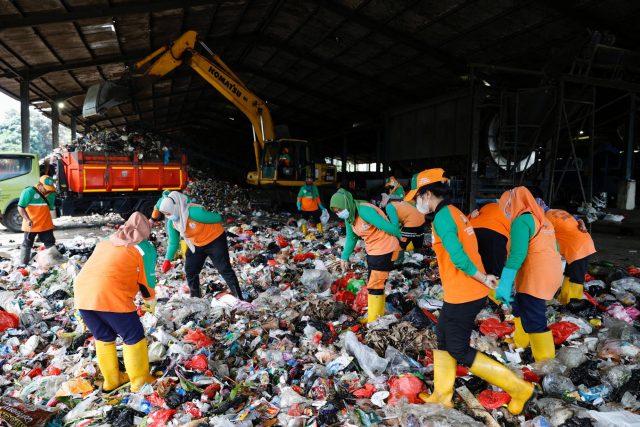
WASTE-TO-ENERGY (WTE) projects involve trade-offs between disposing of waste and raising emissions levels, though the severity of the Philippines’ energy problems means all technologies must be considered, analysts said.

“Any legislation that seeks to increase the number of technologies which can respond to our energy demand needs to be supported,” Terry L. Ridon, a public investment analyst and convenor of InfraWatch PH, said via Viber.

Mr. Ridon said that allowing waste incineration facilities may “impact the country’s commitments to the Paris climate accord,” and is not consistent with the government policy of not allowing new coal-fired power plants.

“Waste incineration facilities produce significant emissions. This contradicts the policy direction of limiting emissions made by coal-fired power plants,” he said.

Gerry C. Arances, convenor of Power for People Coalition, said that WTE is “the wrong way to address the problem of solid waste.

“It encourages more waste for fuel use while ignoring the urgency of improving waste management and reduction,” he said via Viber.

“Pollution from incineration is also concerning, and would be a step backward in the global fight to curb emissions and improve air quality,” he added.

Pedro H. Maniego, senior policy advisor of Institute for Climate and Sustainable Cities, said that the Philippines needs to harness WTE projects “to address the twin problems of garbage and lack of power supply.”

He noted, however, that ”the emissions and pollutants of WTE plants must conform to global standards and not only the current limits” in Republic Act (RA) 8749 or the Clean Air Act of 1999.

Mr. Maniego said RA 9003 or the Ecological Solid Management Act of 2000 was supposed to solve the garbage problem, but most local government units (LGUs) failed to implement the plans and programs called for under the law.

He added that there were several WTE projects that were able to avail of incentives under the RA 9513 or the Renewable Energy Act of 2008 but “many projects did not go ahead due to the ban on incineration imposed” under RA 8749 and “failure to secure approval from LGUs.”

“Biomass is considered a renewable energy source because its inherent energy comes from the sun, and because it can regrow in a relatively short time. Its net GHG (greenhouse gas) emissions is zero compared to when the biomass are allowed to just decay,” he said.

The Department of Energy (DoE) described waste-to-energy as “an energy system with a process of converting WTE feedstock with various technologies, usually the conversion of non-recyclable waste materials into usable heat, electricity, or fuel through a variety of processes.”

A waste-to-energy bill is among the priority bills identified by the Legislative-Executive Development Advisory Council.

In 2023, Senate Bill No. 2267 or the proposed Waste-to-Energy Act reached the Senate plenary.

The DoE supports the objectives of the proposed law and intends to draft a framework by which WTE technologies may be harnessed for energy while generating revenue.

The DoE cited the need to strengthen and provide legislative structure to attract more investors, addressing both the need to manage disposal of municipal solid waste and add to the available sustainable energy sources.

“The DoE encourages the development of WTE technologies, provided that toxic emissions coming from WTE plants are properly addressed through state-of-the-art emission control and capture technologies with continuous emission monitoring system and ensure compliance to relevant environmental laws, rules and regulations set for the establishment and operation of WTE facilities,” the DoE said. — Sheldeen Joy Talavera


This article has been updated to clarify the context in which the source made his remarks.

US grant prepares PHL for CHIPS Act investments

REUTERS

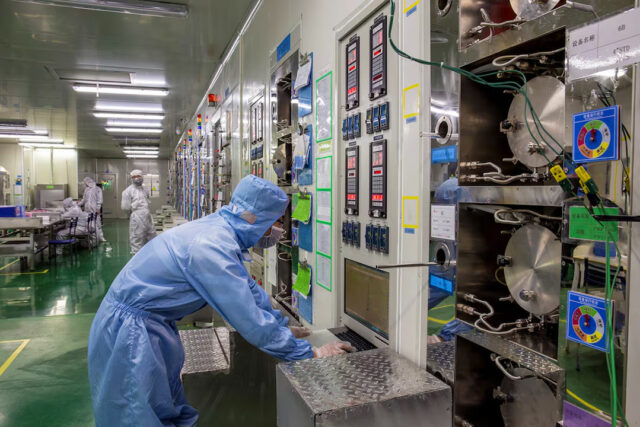
THE PHILIPPINES is among six beneficiaries of a US-funded program to prepare the workforce and the regulatory environment ahead of the overhaul of US electronics supply chains under the CHIPS and Science Act.

Given funding of $13.8 million, Arizona State University (ASU) was chosen by the US to be the implementing partner for the Diversifying Semiconductor Supply Chains project.

“The Philippines is one of six strategic countries selected for this initiative, along with Costa Rica, Mexico, Panama, Indonesia, and Vietnam,” ASU said.

Running for two years, the project aims to improve the business environment, expand the skilled workforce, and refine regulatory frameworks to establish a resilient and diverse global assembly, testing, and packaging (ATP) supply chain in partner countries.

Earlier this year, US Commerce Secretary Gina M. Raimondo, said the US hopes to help the Philippines double its semiconductor ATP facilities.

“The key goal here for us is to support greater sector growth and encourage new semiconductor investments in the Philippines,” US Embassy Deputy Chief of Mission Y. Robert Ewing said.

“ASU programs are designed to expand semiconductor chip ATP operations in partner countries. And the program here has a goal of workforce development and reducing regulations that hinder ATP expansion,” he added.

Part of the program is the ITSI Workforce Accelerator, in which the ASU will give Filipino students the opportunity to obtain credentials in semiconductor packaging, processing, and testing.

“Those certificates and badges are offered not only by ASU but by other US universities as well, such as the University of Illinois, Purdue University, and others,” Jeffrey Goss, principal investigator of the ITSI Program at ASU, said.

“Students will have the opportunity to complete credentials through this. We’ve targeted initially in the Philippines around 6,000 students over the next two years,” he added.

Mr. Goss said ASU will also partner with the semiconductor industry association and Boston Consulting Group to work with policymakers to review industry rules.

“We are also working on an ATP National Playbook. The first draft will be published probably in December,” he said.

“That will outline opportunities and recommendations for policy and regulation reforms or changes in those policies or new policies and incentives to help the Philippines be more competitive in the region to attract investment,” he added.

Earlier this year, the Board of Investments announced a plan to produce 128,000 engineers for the semiconductor industry.

Trade Undersecretary and BoI Managing Head Ceferino S. Rodolfo said that the ITSI program will help the Philippines achieve this target.

“This will be in ATP first but eventually we will work on IC design … because we need to shore up first the advantage that we already have in ATP,” he said.

At a separate event, Advanced Manufacturing Workforce Development Alliance (AMDev) Program Chief-of-Party Danilo C. Lachica said the program has so far trained 5,478 individuals.

“That is as of yesterday because we ran a class in the Hermosa Ecozone (Industrial Park). The program’s goal was to train 300 for year 1 and another 1,000 in year 2,” Mr. Lachica said on the sidelines of a forum on Wednesday.

“We were able to grow the training base because of our training partners and their commitment,” he added.

AMDev is a five-year public-private partnership that aims to improve the capacity of the education system to meet changing industry requirements, particularly in Industry 4.0.

It was initiated by the United States Agency for International Development (USAID) and Unilab Foundation in 2022.

By the fifth year, the AMDev program is targeting to onboard 11,000 trainees.

Mr. Lachica said that the program also exceeded its year 2 targets in terms of advanced manufacturing institutes.

“That’s the goal over five years, and we are finishing our second year in September. So, we have three more years to go … and we are making good progress,” he said.

So far, the program has a network of four advanced manufacturing institutes, double the program’s second-year target of two such facilities. — Justine Irish D. Tabile

2024 decline in electronics exports could be single-digit only — SEIPI

REUTERS

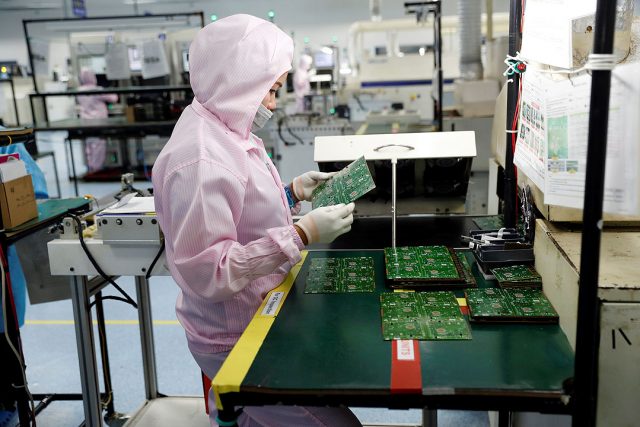
EXPORTS of semiconductors and electronics could contract less than 10% this year, better than expected, as the industry’s inventory correction runs its course, an industry group said. 

Semiconductor and Electronics Industries in the Philippines Foundation, Inc. (SEIPI) President Danilo C. Lachica said the association “had projected a 10% contraction, but there is a possibility, and I am seeing a glimpses” the contraction could moderate, Mr. Lachica told reporters on the sidelines of the 2nd Advanced Manufacturing Workforce Development Alliance Stakeholder Forum on Wednesday.

He said that the contraction could be smaller than expected due to improving demand.

“The two main reasons for the contraction are inventory correction and our product mix in the Philippines,” he said, noting that the industry is making progress in adjusting inventory levels.

He said however that officially, the 10% contraction forecast remains unchanged.

Electronic products remained the top Philippine export in the first seven months, totaling $23.88 billion. This was 2.5% ahead of the year-earlier pace.

In 2023, the Philippines exported $41.91 billion worth of electronic products. A 10% decline this year equates to an export total of around $37.72 billion.

Mr. Lachica said that the Philippines is somewhat disadvantaged in terms of product mix because some companies are not as aggressive in switching to new products and technologies due to the incentives rationalization carried out by the previous government.

Mr. Lachica has lobbied for the restoration of the 5% gross income earned (GIE) incentive that locators of the Philippine Economic Zone Authority used to enjoy before the Corporate Recovery and Tax Incentives for Enterprises (CREATE) Act took effect.

The 5% GIE was paid in lieu of all national and local taxes.

Meanwhile, the Senate adopted and ratified a bicameral conference committee report on a bill that seeks to amend the CREATE Act, which the President is expected to sign soon. — Justine Irish D. Tabile

Bangko Sentral says gold sales triggered by favorable prices

ZLATAKY CZ-UNSPLASH

THE central bank said its gold sales took advantage of favorable prices and were consistent with its strategy for managing its reserves.

In a statement late Tuesday, the Bangko Sentral ng Pilipinas (BSP) said the first-half sales are “part of its active management strategy of the country’s gold reserves, which form part of the country’s gross international reserves (GIR).”

The central bank said it “took advantage of the higher prices of gold in the market and generated additional income without compromising the primary objectives for holding gold, which are insurance and safety.”

BSP Governor Eli M. Remolona, Jr. told reporters separately that the bank was pursuing a defined investment strategy.

Mr. Remolona also noted that the proportion of gold to the GIR is around 9%.

The BSP reported that GIR stood at $107.9 billion at the end of August. The BSP said that its dollar reserves have remained “robust” even with the gold sales.

Reserves in the form of gold were valued at $10.22 billion at the end of August, the BSP reported.

“The GIR level provides adequate external liquidity buffer and is equivalent to 7.8 months’ worth of imports of goods and payments of services and primary income,” the BSP said.

“It also represents about 6.0 times the country’s short-term external debt based on original maturity and 3.8 times based on residual maturity.”

The central bank reported that at the end of 2023, the bulk of the Philippines’ reserves was held in foreign investments (84.7%), followed by gold (10.2%).

Last year, gold purchases rose 26% to 298,203.4 troy ounces.

Meanwhile, good delivery bar (GDB) production increased 11.4% last year.

The BSP produced 737 GDBs, with an average gold assay of 99.6%. — Luisa Maria Jacinta C. Jocson

Xanadu Agri touts improved yields with its liquid fertilizer

DA.GOV.PH

XANADU Agriproducts, Inc. said its liquid fertilizer promises improved yields for rice and corn farmers at reduced cost.

“(Our product is) cost efficient and produces healthier and more profitable harvests,” Xanadu Agriproducts Executive Director Hazel R. Loreto-Murphee told reporters on Wednesday.

Xanadu Agriproducts is the exclusive importer of the liquid fertilizer, which is made in Thailand. It has a partnership with UNAHCO, Inc., the animal nutrition and healthcare subsidiary of United Laboratories, Inc., as the national distributor.

“The past seven years were spent ensuring we can confidently introduce Xanadu Maxpower Liquid Fertilizers to the market, with data speaking for itself,” Xanadu Agriproducts Chairman and President Wellington C. Soong said.

According to the company’s field trials, farmers have reported higher average rice and corn yields per hectare. Maxpower also has applications for onion and sugarcane cultivation.

“We have seen this consistently in our data that Xanadu can lower farming costs… even if the cost of other fertilizers goes down, (Maxpower) is still more cost efficient,” Ms. Loreto-Murphee added.

According to the Fertilizer and Pesticide Authority, the average price for granular Urea was P1,652.86 per 50-kilogram bag.

Xanadu said in its field trials, a rice farm in Oriental Mindoro achieved a yield of 7.75 metric tons (MT) per hectare, more than double the yield of the farm serving as the control, which did not use Maxpower.

Corn trials were also conducted at a farm in Sultan Kudarat which achieved a yield of 6.73 MT per hectare against the 2.35 MT for the control crop.

Palay or unmilled rice production is expected to drop 11.4% during the third quarter to 3.36 million MT, according to the Philippine Statistics Authority.

On the other hand, corn production was expected to increase 2.4% to 2.52 million MT during the three months to September. — Adrian H. Halili

Bangsamoro tax collection plan being drafted

PHILSTAR FILE PHOTO

THE Department of Finance (DoF) said it and the Bangsamoro Government have started drafting the region’s tax administration plan to help the latter improve its revenue generation.

In its Sept. 3 meeting, the Intergovernmental Fiscal Policy Board (IFPB) approved the creation of an Operational Working Group to lead the drafting of the Tax Administration Transition Plan.

This plan aims to ensure efficient tax collection system for Bangsamoro Autonomous Region in Muslim Mindanao (BARMM), which would be necessary to generate funds for the region’s growth and development projects.

Under Republic Act No. 11054 or the Bangsamoro Organic Law, BARMM enjoys fiscal autonomy and is empowered to generate its own revenue.

“BARMM holds a unique advantage by building a comprehensive digital system as they are starting from scratch. They can learn and skip all the mistakes that the National Government encountered. They can go straight to digital,” Finance Secretary Ralph G. Recto was quoted as saying.

The IFPB is co-chaired by Mr. Recto and Bangsamoro Minister of Finance, Budget and Management Ubaida C. Pacasem.

The DoF’s Revenue Operations Group, which heads the tax study group for the BARMM, is leading the discussions on the Tax Administration Transition Plan, it said.

The plan covers the transition of tax administration functions from the Bureau of Internal Revenue (BIR) to the Bangsamoro Revenue Office. It also includes the sharing of the BIR’s registration and other systems.

To date, the group reported that it has completed 80% of its deliverables under RA 11054, the DoF said.

This includes the creation of guidelines on the share of the Bangsamoro Government in national taxes, fees and charges collected in the BARMM; and the implementing rules and regulations on the payment of national internal revenue taxes by corporations, partnerships or firms. — Beatriz Marie D. Cruz

Lessons from the 2024 PwC MAP Philippine CEO Survey

Each year, our firm carries out a survey targeting Philippine CEOs to prepare for the Management Association of the Philippines’ (MAP) annual International CEO Conference. With this year’s theme being Business in Five Movements: Wisdom, Passion, and Inspiration Across Five Generations, we gathered insights from 168 CEOs worldwide on business threats, leadership transitions, and workforce composition.

This year showed a marked improvement in optimism, with 86% of CEOs expressing confidence in their industry’s outlook for the next 12 months and 85% anticipating revenue growth for their companies within the same period. This surge in optimism is largely fueled by our country’s economic growth. Globally, we experienced a sluggish start due to lingering effects from the Russia-Ukraine conflict and China’s real estate crisis. Additionally, economies like the US were bracing for a potential recession driven by high interest rates and volatile market conditions. In contrast, our economy expanded 6.3% in the second quarter. This puts us on track to meet the government’s target of 6-7% growth. Our expected annual growth rate outpaces global GDP, which is expected to remain flat at 3.2% in 2024 and 2025.

While CEOs are generally optimistic about their business prospects, our survey revealed several concerns that need attention. Geopolitical uncertainty is a significant worry for many of them. Only 25% have a succession plan for all senior executives, and nearly half have not communicated their succession plan to the next generation of senior leaders. Over 50% of CEOs also reported not maintaining a shareholders’ agreement or a dividend policy, and almost 50% lack emergency and contingency procedures. Last, most CEOs find managing a multigenerational workforce in today’s environment to be challenging.

LESSON 1: DIVERSIFIED PRODUCTS AND MARKETS
When asked about the main concern that keeps them up at night, CEOs identified geopolitical uncertainty as the leading threat. Although we were not directly affected by the ongoing conflicts between Russia and Ukraine and Israel and Hamas and Hezbollah, businesses experienced significant impact due to disruptions in supply chains, fluctuating fuel prices, and revenue losses. The continuous crises since the pandemic have demonstrated that global issues can also affect purely domestic businesses. Focusing solely on local markets is no longer viable. To mitigate potential threats, businesses should consider diversifying both their supplier and client bases to avoid dependency on specific markets.

LESSON 2: TRANSPARENT SUCCESSION PLANNING
Our survey also shows that nearly half of the respondents intend to make changes in their senior leadership within the next three to five years. However, only 25% have a comprehensive succession plan for all senior executives, and just 52% have communicated these plans to their future leaders. This is concerning because succession planning involves more than just choosing the next leader — it’s about developing a pipeline of talent throughout the organization. The lack of transparency can impede the growth of potential successors, causing them to miss out on crucial opportunities to prepare for future roles. Open communication fosters confidence, clarifies expectations, and ensures smooth transitions. By prioritizing transparency, organizations can cultivate a more prepared and engaged next generation of leaders, thereby strengthening their leadership pipeline.

LESSON 3: ROBUST GOVERNANCE STRUCTURES
While 61% of our respondents are from large corporations, over half reported lacking a shareholders’ agreement and dividend policy, and nearly 50% have no emergency and contingency procedures. In our country, many businesses start as family-run or entrepreneur-driven ventures and are not initially managed with professional structures. Over time, these businesses expand, but some outdated practices, such as the absence of formal documentation, persists. Today, businesses of all sizes should recognize the importance of maintaining proper structures and policies.  A shareholders’ agreement is crucial as it outlines the management, operation, and control of the business. More importantly, it addresses the rights of both minority and majority shareholders. Likewise, having emergency and contingency procedures is essential given the increased vulnerability of businesses to various threats in recent years.

LESSON 4: VALUE EACH GENERATION
CEOs have identified the main challenges of managing a multigenerational workforce as stemming from the differences in management styles, communication approaches, and work-life balance expectations. Currently, many organizations employ professionals from Generation X, Millennials, and Generation Z. Each of these generations has distinct priorities: Gen X values control over their work and development opportunities; Millennials prioritize flexibility, appreciation, and teamwork; and Gen Z emphasizes mental health and work-life balance. To effectively manage today’s diverse teams, business leaders need to reassess their organizational strategies and adapt their practices to accommodate these varying dynamics. Despite these differences, it’s essential to recognize that each generation contributes uniquely to the organization. Senior members should appreciate the fresh ideas and energy from Millennials and Gen Z, while the younger generation should respect the wisdom and experience that Gen X leaders have accumulated over the years.

TRANSFORMATIONAL LEADERSHIP
Managing a business in today’s environment has never been more challenging. We are constantly confronted with rapid technological advancements, geopolitical issues, healthcare crisis, and climate change. Given these circumstances, organizations require transformational leaders who can understand the changes that need to be made and are able to guide their organizations through the implementation process. The era of transactional leaders, who concentrate solely on achieving limited goals through performance management, is behind us. Instead, we need transformational leaders who can reimagine their organizations and effectively lead their teams on this journey.


Karen Patricia Rogacion is a partner with the Deals and Corporate Finance group of Isla Lipana & Co., the Philippine member firm of the PwC global network.

karen.patricia.rogacion@pwc.com

ADVERTISEMENT
ADVERTISEMENT