Home Blog Page 2535

Han Kang’s Nobel spurs hope of global recognition for Korean literature

PAIK DAHUIM — COURTESY OF NATUR & KULTUR

SEOUL — Han Kang, South Korea’s first winner of the Nobel Prize in Literature, was slow to secure global acclaim, getting her first big international prize nine years after her best-known novel was published, once it had finally been translated into English.

The long wait for the translation of The Vegetarian, which won the 2016 Man Booker International prize, seemed to prove the observation of Ms. Han’s father, himself an award-winning novelist, that it was the kind of book that “goes straight into the drawer.”

Although the novel went on to be translated into dozens of languages, The Vegetarian had sold fewer than a million copies back home before Thursday’s announcement by the Swedish Academy, largely because of relatively low readership of literature among South Koreans and a languishing publishing industry.

Ms. Han’s compatriots were making up for lost time on Friday, mobbing bookstores for her novels, poetry, and short stories.

For some, Thursday’s surprise announcement — Ms. Han had not been on any of the major lists of likely Nobel winners — fueled hope that literature might get an injection of life in the land of K-pop and Squid Game. Despite a rich history, Korean literature is far less known abroad than Japanese or Chinese works.

“I grew up with Korean literature, which I feel very close to,” Ms. Han told an Academy official after the award was announced. “I hope this news is nice for Korean literature readers and my friends, writers.”

HAN KANG’S WORKS EXPLORE RECENT KOREAN HISTORY
Literary critic Oh Hyung-yup, a professor at Korea University, said Ms. Han’s award was a win for long-standing efforts to translate Korean literature for a global audience already familiar with South Korea’s buoyant pop culture.

Ms. Han, 53, the 18th woman to win the Literature Prize, was born in Gwangju, where she lived until age 10, when her father, Han Seung-won, moved the family to the capital Seoul.

She was not in Gwangju to witness the massacre of hundreds of students and unarmed civilians by the military in May 1980, after a coup d’etat. But she explored the historical trauma of the crushed democratic uprising in her novel Human Acts.

The events carved a searing impression in her of the “conundrum” that people can be harrowingly violent but also risk their lives to help others, she said in 2021.

“When I try to talk about human beings, I think I have to get through Gwangju in May and, as always, there’s no way to get through it other than writing,” she said.

Asked to describe Ms. Han as a writer in one sentence, her father said: “She is a good young novelist who writes with poetic sensibility.”

Besides her father, a prolific writer whose novels are often set in his coastal hometown, her brother is also a novelist.

PRAISE FOR HAN KANG FROM K-POP STAR
After graduating from Yonsei University with a major in Korean literature, Ms. Han worked for a literary journal before making her debut in 1993 with a collection of poems, followed by a collection of short stories.

Private but not reclusive, the soft-spoken Ms. Han became a constant presence on South Korea’s literary scene, publishing novels as well as short-story collections and children’s books.

“It also surprised me that warm congratulations came like huge waves throughout the day. I am deeply grateful,” Ms. Han said in a statement issued late on Friday by her publisher, Changbi.

A representative said she did not plan to hold a press conference.

Ms. Han’s latest novel, We Do Not Part, published in Korean in 2021 and due out in English next year, is a chronicle of the pain and torment that followed another massacre — one carried out in the late 1940s to early 1950s in the name of rooting out communists on Jeju island.

Published in French last year, it won France’s Prix Medicis for foreign literature. Besides the Booker prize, Ms. Han has received Italy’s Premio Malaparte for Human Acts and Spain’s Archbishop Xoan de San Clemente Prize for The Vegetarian.

In a further sign that her books are gaining wider appeal, K-Pop supergroup BTS member V posted on Thursday: “I read Human Acts during military service … Congratulations!” — Reuters

Financial system resources grow 9.2% as of Aug.

THE TOTAL RESOURCES of the Philippine financial system grew by 9.2% as of August, driven by the increase in resources held by banks, preliminary data from the Bangko Sentral ng Pilipinas (BSP) showed.

Based on central bank data, the resources of banks and nonbank financial institutions stood at P32.14 trillion as of August, up from P29.43 trillion as of the same month last year.

These resources include funds and assets such as deposits, capital, as well as bonds or debt securities.

Broken down, banks’ resources jumped by 10.6% to P26.81 trillion at end-August from P24.24 trillion in the comparable year-ago period.

Total resources held by universal and commercial banks stood at P25.09 trillion, 10.6% higher than the P22.69 trillion recorded in the previous year, BSP data showed.

Thrift banks’ resources increased by 7.6% to P1.13 trillion as of August from P1.05 trillion in the same period in 2023.

Resources held by digital banks climbed by 29.8% year on year to P110.3 billion from P85 billion. Only consolidated data from March 2023 are available for digital banks.

Lastly, rural and cooperative banks’ resources reached P478.9 billion as of August, up by 15.3% from P415.5 billion a year prior.

On the other hand, nonbanks’ resources went up by 2.5% to P5.33 trillion as of end-March from P5.2 trillion as of August 2023.

Nonbanks include investment houses, finance companies, security dealers, pawnshops and lending companies.

Institutions such as nonstock savings and loan associations, credit card companies, private insurance firms, the Social Security System and the Government Service Insurance System are also considered nonbank financial institutions. — Luisa Maria Jacinta C. Jocson

NPC sees lower generation rate for missionary areas due to hybridization

PHILSTAR FILE PHOTO

By Sheldeen Joy Talavera, Reporter

STATE-RUN National Power Corp. (NPC) expects a reduction in the true cost of generation rate (TCGR) of around P2 to P3 per kilowatt-hour (kWh) with the implementation of its hybridization program in missionary areas.

“In terms of the true cost of energy, it will go down to P2 to P3,” Rogel T. Teves, NPC’s vice-president for corporate affairs group, said during a Senate budget hearing on Tuesday.

TCGR refers to the full efficient cost of generating power in an area.

NPC is currently implementing two types of hybridization programs. One is internal, while the other is called the Accelerated Hybridization Project (AHP), which seeks to allow the private sector to enter off-grid areas and set up renewable energy generation plants or facilities.

This is intended to supplement, augment, or replace the existing capacities in the operations of its Small Power Utilities Group (SPUG) diesel power plants.

“Our initial estimates for 2025 are that we can save up to P1.3 billion in fuel costs if we are able to hybridize all,” NPC President and Chief Executive Officer Fernando Martin Y. Roxas said.

Mr. Roxas said that the firm has completed three hybridization projects while seven are ongoing. For 2025, 16 hybrid systems are slated for implementation by NPC across the country.

Mr. Roxas pointed out that NPC is responsible for 30% of the energy market share in missionary areas, while 70% is the private sector.

“But of course, our 30% will make an impact,” he said.

AHP aims to reduce Universal Charge for Missionary Electrification (UCME) subsidies, reduce the use of diesel fuel and its cost, and increase loads of electric cooperatives from renewable energy resources.

As authorized by Republic Act No. 9136, or the Electric Power Industry Reform Act, the UCME is collected from on-grid electricity end-users to fund Napocor’s electrification programs and projects, particularly in remote areas not connected to the grid.

“UCME has been going up; it has gone up dramatically since 2015 [which was] P7.3 billion. Now, we’re hitting P24 billion in terms of subsidies, and all of us in the on-grid areas pay for this,” Sen. Sherwin T. Gatchalian said.

“I would assume this P24 billion, probably the majority of this goes to diesel payments. So, whenever diesel costs go up, UCME will go up. Now, since we’re hybridizing, we’re now consuming less diesel, so theoretically, UCME will go down,” he said.

Napocor is mandated to provide electricity to all far-flung areas not connected to the main grid through SPUG plants.

As of June, Napocor operates 165 SPUG plants in 155 areas across 140 islands.

“By 2025 yearend, we would like to increase our total SPUG plants from 165 to 201… increase our service areas from 150 to 191 areas and from 140 to 176 islands,” said Crisanto V. Hilario, NPC’s vice-president for administration and finance.

Meanwhile, Mr. Hilario said that the firm is seeking the endorsement of the Senate finance committee in highlighting the urgency of obtaining approval from the Energy Regulatory Commission for the approval of at least P11.54 billion in pending true-up applications.

“For every billion pesos that NPC is not able to reimburse by the year-end of 2024, to be used to pay primarily for fuel expenses, NPC will be constrained to curtail electricity service by 2.1 hours beginning March 2025 next year, affecting close to 1.78 million households,” Mr. Hilario said.

Of the P3.035-billion proposed national government subsidy for NPC, P1.61 billion will be allotted for the Total Missionary Electrification Program, where it is committed to providing power access to households in remote areas.

NPC aims to provide access to electricity to 6,000 to 11,170 households out of 500,000 households as of March that are deemed economically unviable by electric cooperatives and private distribution utilities.

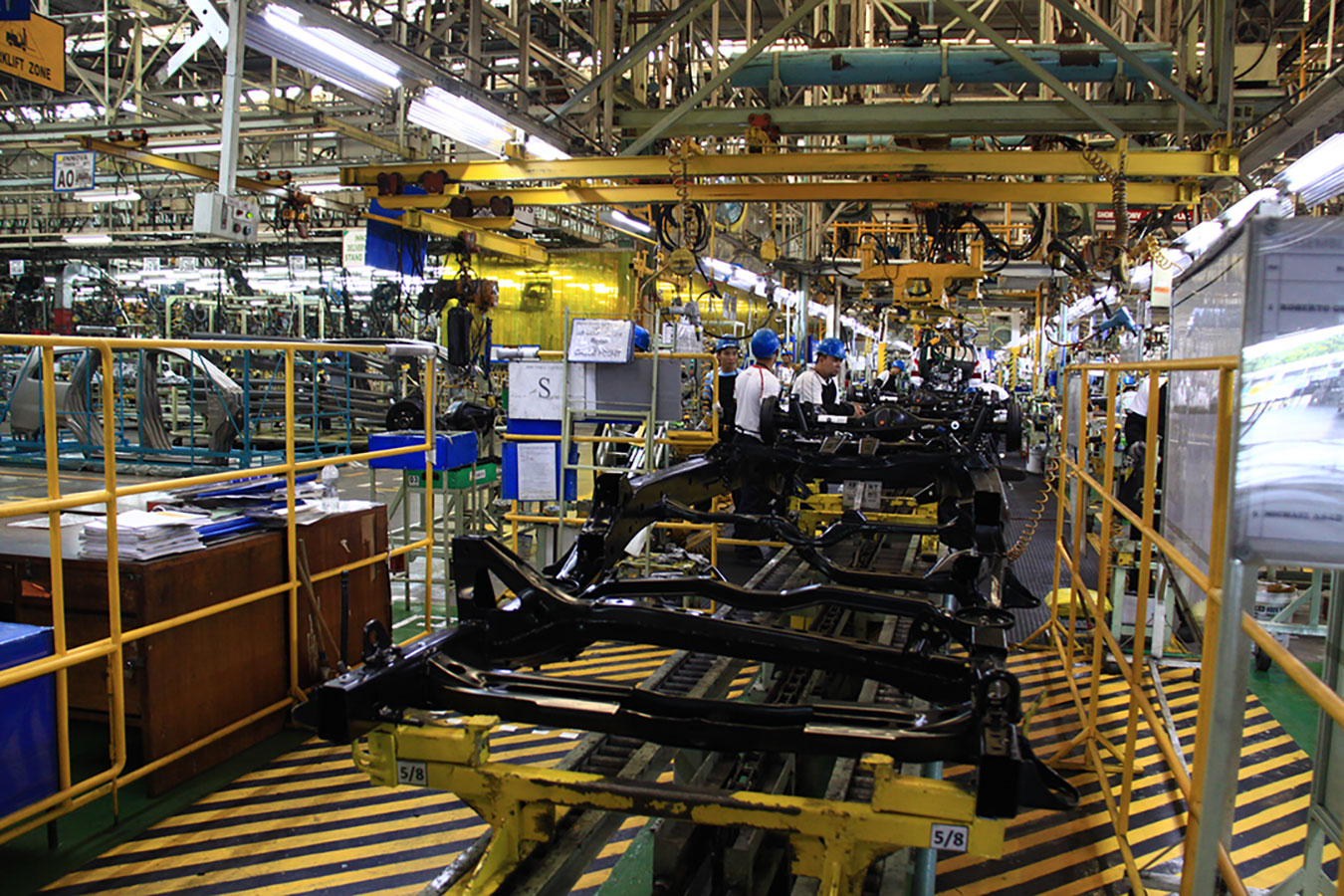
AI-driven manufacturing may unlock more growth in PHL

BW FILE PHOTO

By Aubrey Rose A. Inosante, Reporter

PHILIPPINE MANUFACTURERS should adopt regenerative processes driven by artificial intelligence (AI) to capture growth opportunities more effectively, according to global management consulting firm Kearney.

“Regenerative manufacturing presents an opportunity to optimize cost advantages and tap into the expanding domestic market, reinforcing the country’s position as a key player in regional manufacturing,” Keat Yap, a partner and Asia-Pacific co-lead for Operations and Performance at Kearney, told BusinessWorld on Tuesday.

He noted that while the Southeast Asian nation is in track for strong manufacturing growth, it lags peers like Vietnam and Malaysia in capturing macroeconomic trends including avoiding investing only in China.

Regenerative manufacturing is a strategy that not only tries to lower the ecological footprint of production but also seeks to restore ecosystems, communities and economies.

Mr. Yap, who co-wrote a report on the strategy for the Southeast Asian region released on Tuesday, said a product design-led value chain and faster adoption of AI would help Philippine manufacturers maximize opportunities.

“Our view is that ASEAN (Association of Southeast Asian Nations) manufacturers, including those in the Philippines, should think of AI beyond manufacturing automation, but also leverage AI to reimagine and optimize value chains to best yield benefits of regenerative manufacturing,” he said in an e-mailed reply to questions.

Kearney expects the Philippines’ gross manufacturing output to reach $400 billion by 2030 or 5% growth, compared with 6% growth for ASEAN to $1.2 trillion.

“It is imperative for ASEAN manufacturers to use their competitive advantages and capitalize on the favorable tailwinds to capture this growth opportunity,” according to the report.

Mr. Yap said AI forms the basis of the operating model for any company aiming to adopt regenerative manufacturing.

Kearney said ASEAN companies are nonleaders or followers in AI, which is unsurprising given its cost and novelty. “However, it is promising to see that 41% of the Philippines’ manufacturers recognize the criticality of AI implementation, which can lead to further investment in the future,” he added.

A quarter of Philippine industry leaders in manufacturing rated their companies as “leading” in AI adoption, the highest in the region, surpassing Indonesia (22%), Singapore (21%), Vietnam (20%), Thailand (20%), and Malaysia (18%).

MISSING OPPORTUNITIES
“Our study revealed that despite only 23% of ASEAN manufacturers rating their businesses as leading in AI, AI implementation was the topic at the top of their minds, with nearly 50% of them identifying it as the most crucial manufacturing trend they see today,” Kearney said in the report.

Mr. Yap said regenerative manufacturing is a “mid-to-long-term play,” especially when it comes to AI adoption. It takes time for companies to identify and invest in areas that will benefit from AI.

Except for Singapore at $68 per capita, ASEAN nations lag global peers in terms of AI investment — $2 per capita versus $155 per capita in the US and $21 per capita in China, Kearney said.

Karthik Chandrasekaran, principal for client engagement at IBM Technology, said the Philippine manufacturers lag in AI adoption compared with countries like Singapore, which leads with advanced integration driven by strong government support and a robust digital infrastructure.

“Without proactive measures, there is a risk of missing significant opportunities presented by AI advancements that other countries are already capitalizing on,” he said in an e-mailed reply to questions.

Mr. Chandrasekaran cited the skill gap and limited technological resources that hinder Philippine progress, even as he expects a considerable rise in AI adoption in manufacturing next year. “As organizations recognize technology’s critical role in maintaining competitive advantage, there will be an increased focus on strategic investments in AI.”

In the report, Kearney urged ASEAN manufacturers to think beyond production floor automation and explore how AI can drive product design and transform the entire supply chain.

By embedding AI from the beginning, manufacturers can achieve “significant improvements in processes and outcomes to meet the growing regulatory demands for sustainability and climate action,” it said.

John Paolo R. Rivera, a senior research fellow at the Philippine Institute for Development Studies, said AI adoption should be reinforced.

“This may be due to lack of full understanding on how to leverage the technology,” he said in a Viber message. “Ethical concerns in the use of AI also add to the hesitation.”

He said adequate capacity-building, information dissemination and proof of AI’s benefits could speed up its adoption. “Adoption cannot be forced. Instead, it can be facilitated through evidence-based research, effective information dissemination, and appropriate training on its ethical use,” he added.

AI will transform philanthropy, too

FREEPIK

IN AN AGE of accelerating progress in artificial intelligence (AI), everyone is debating AI’s implications for the labor market or national security. There is far less discussion of what AI could or should mean for philanthropy.

Many (not all) insiders now say AGI — artificial general intelligence — stands a good chance of happening in the next few years. AGI is a generative AI model that could, on intellectually oriented tests, outperform human experts on 90% of questions. That doesn’t mean AI will be able to dribble a basketball, make GDP grow by 40% a year or, for that matter, destroy us. Still, AGI would be an impressive accomplishment — and over time, however slowly, it will change our world.

For purposes of objectivity, I will put aside universities, where I work, and consider other areas in which philanthropic returns will become higher or lower.

One big change is that AI will enable individuals, or very small groups, to run large projects. By directing AIs, they will be able to create entire think tanks, research centers or businesses. The productivity of small groups of people who are very good at directing AIs will go up by an order of magnitude.

Philanthropists ought to consider giving more support to such people. Of course that is difficult, because right now there are no simple or obvious ways to measure those skills. But that is precisely why philanthropy might play a useful role. More commercially oriented businesses may shy away from making such investments, both because of risk and because the returns are uncertain. Philanthropists do not have such financial requirements.

Another possible new avenue for philanthropy in a world of AI, as odd as it may sound: intellectual branding. As quality content becomes cheaper to produce, how it is presented and curated (with the help of AI, naturally) will become more important. Some media properties and social influencers already have reputations for trustworthiness, and they will want to protect and maintain them. But if someone wanted to create a new brand name for trustworthiness, and had a sufficiently good plan to do so, they should receive serious philanthropic consideration.

Then there is the matter of AI systems themselves. Philanthropy should buy good or better AI systems for people, schools, and other institutions in very poor countries. A decent AI in a school or municipal office in, say, Kenya, can serve as translator, question-answerer, lawyer, and sometimes medical diagnostician. It’s not yet clear exactly what those services might cost, but in most very poor countries there will be significant lags in adoption, due in part to affordability.

A good rule of thumb might be that countries that cannot always afford clean water will also have trouble affording advanced AI systems. One difference is that the near ubiquity of smart phones might make AI easier to provide.

Strong AI capabilities also mean that the world might be much better over some very long time horizon, say 40 years hence. Perhaps there will be amazing new medicines that otherwise would not have come to pass, and as a result people might live 10 years longer. That increases the return — today — to fixing childhood maladies that are hard to reverse. One example would be lead poisoning in children, which can lead to permanent intellectual deficits. Another would be malnutrition. Addressing those problems was already a very good investment, but the brighter the world’s future looks, and the better the prospects for our health, the higher those returns.

The flip side is that reversible problems should probably decline in importance. If we can fix a particular problem today for $10 billion, maybe in 10 years’ time — due to AI — we will be able to fix it for a mere $5 billion. So it will become more important to figure out which problems are truly irreversible. Philanthropists ought to be focused on long time horizons anyway, so they need not be too concerned about how long it will take AI to make our world a fundamentally different place.

For what it’s worth, I did ask an AI for the best answer to the question of how it should change the focus of philanthropy. It suggested (among other ideas) more support for mental health, more work on environmental sustainability, and improvements to democratic processes. Sooner rather than later, we may find ourselves taking its advice.

BLOOMBERG OPINION

Michael Jackson, Hendrix, Oasis items on sale at Propstore music auction

RICKMANSWORTH, England — From Michael Jackson’s jackets to Noel Gallagher’s guitars, music memorabilia will head to auction next month in a sale estimated to raise around £2 million ($2.61 million).

Entertainment memorabilia auctioneer Propstore is offering more than 350 music items used by or that once belonged to megastars at its Nov. 15 sale, as part of a four-day event that will also sell film and television props and costumes.

Highlights from the music lots include a Jimi Hendrix master tape featuring four unreleased demo recordings in a box on which the musician wrote their titles.

Framed “Beat It” lyrics, handwritten by Jackson, will also go under the hammer, as will some of his jackets. A black and gold military style one has a price estimate of £200,000–£400,000 ($261,000–$522,000), while his red “Thriller” tour rehearsal jacket comes complete with multiple famous signatures.

“It has been not only signed by Michael, but on the inside, on the back lining, it’s signed by John Landis, who… directed the ‘Thriller’ video, and his wife, Deborah Landis, who designed the jacket for Michael to wear,” Propstore’s music specialist Mark Hochman told Reuters.

“(At the) end of the day, it’s a ‘Thriller’ jacket that Michael’s worn.”

Also for sale are 15 guitars previously owned and played by Noel Gallagher, in what Propstore says is the largest collection of Oasis guitars to come to auction. This includes his first while with the band, a cream Hohner JT60 (estimate £25,000–£50,000 pounds), it said.

“Oasis guitars do come up for auction… primarily they’re Noel’s guitars and they’re hugely sought after by collectors,” Mr. Hochman said.

“The (Oasis) reunion has taken that interest to a different level.”

Other lots are John Lennon’s 1962 Fawn JMI Vox AC15 Twin amp (£100,000–£200,000) and a synthesizer Prince used during the recording of “Purple Rain” (£50,000–£100,000 pounds). — Reuters

Regulator tells UBS to strengthen crisis plans

REUTERS

ZURICH — UBS must improve its emergency plans following its takeover of Credit Suisse to ensure the bank can be wound down or sold without risking financial stability and taxpayer cash, Swiss regulator FINMA said on Tuesday.

FINMA said it had suspended the annual approval of UBS’ recovery and emergency plans while Switzerland’s last globally systemically important bank develops its approach as it integrates Credit Suisse.

“Based on the experience of the Credit Suisse crisis, additional options for action are required to further strengthen crisis preparations and resolution planning for systemically important banks,” FINMA said in a statement.

UBS said it had already begun work on further developing its existing emergency plans “in a targeted manner.”

“As FINMA confirmed in its press release, UBS meets the current requirements to be resolvable in accordance with the preferred restructuring strategy in the event of a crisis,” the Swiss bank said in a statement.

FINMA said UBS’ emergency plan must ensure the Swiss entity can continue to operate without interruption even if there were a risk of insolvency.

“In its emergency plan, UBS must in particular revise the liquidity planning and the refinancing of the Swiss entity when the emergency plan is activated,” the regulator said.

The Credit Suisse crisis had highlighted problems related to the speed and extent of deposit withdrawals, and there needed to be a stronger focus on measures to generate liquidity, it added.

UBS bought Credit Suisse in an emergency rescue in March 2023 after the latter a liquidity crisis.

The collapse of the country’s second-largest lender prompted deep soul-searching among Swiss financial authorities and promises to make the system more robust.

FINMA has repeatedly called for greater powers to oversee banks, after it was accused of doing too little to prevent the implosion of Credit Suisse. — Reuters

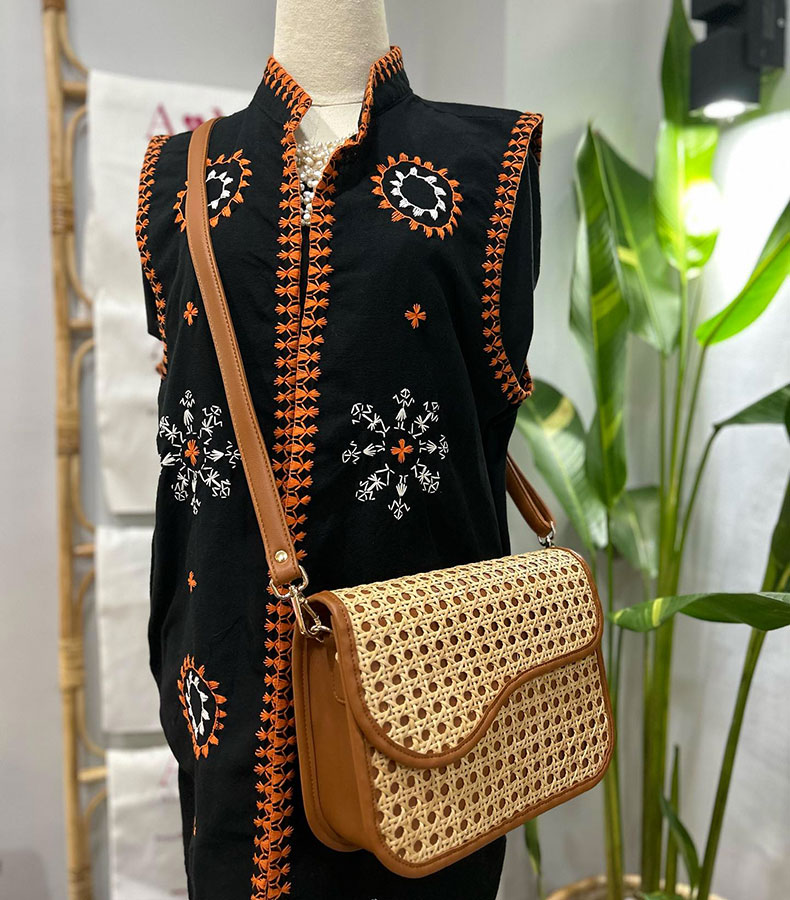
Alixia Marie PH creates modern fashion using weaves from Filipino craftsmen

FACEBOOK.COM/ALIXIAMARIE.PH

By Edg Adrian A. Eva

ALIXIA MARIE PH, a young Filipino fashion brand, is supporting local artisans by using indigenous weaves from various regi ons in modern casual fashion.

“One of our taglines is ‘Carry your culture,’” company owner Alixia Mercado said in an interview. “We want to bring their weaves into the spotlight.”

Alixia Marie PH started as a thesis project in 2022, aiming to gain profit while helping local weavers. The startup curates pieces that embody Filipino craftmen’s rich heritage and skill, offering a platform for their work to shine.

The company started creating fashion pieces using solihiya — thin strands of rattan woven into sunburst patterns which, when used as the backrest and seat of chairs, lets air through, providing comfort from the heat.

Alixia Marie PH is working with local weavers from Cebu to source solihiya and turn it into trendy bags.   

The company also gets indigenous weaves from other provinces including Yakan from South Cotabato, Binakol from Ilocos, T’nalak from Mindanao to create women’s tops and dresses.    

They have also partnered with Marikina artisans to assemble their custom-designed shoes and bags.   

“Our goal is to focus not only on one local community but also on different communities altogether,” Ms. Mercado said. “We want to showcase a different community that has their cultural weaves.”

In her work with local weavers, she noticed that some of the weaving traditions are at risk of dying out due to threats from counterfeiting and lack of interest among the youth, primarily due to their unprofitability.

“Local weaves were dying at some point, so brands like us help revive the local weave industry and help them continue it for the future generation,” she said. 

In the preservation of Filipino indigenous weaving culture, Ms. Mercado hopes that more brands will support local weavers. 

“It should not stop here. We want our next generation to celebrate our culture and to celebrate Filipino identity in terms of Filipino weaves,” she added.

Ms. Mercado sees a silver lining in state initiatives to revive indigenous weaves through trade fairs organized by the Department of Trade Industry.

These efforts could be bolstered with more funding and support for weavers to elevate their craftsmanship, she added.

Philippine Seven Corp. opens 4,000th 7-Eleven branch

BW FILE PHOTO

LISTED Philippine Seven Corp. (PSC) has opened the 4,000th 7-Eleven store in the country.

The new store is in Newport District, Pasay City, the company said in a statement on Tuesday.

PSC is the exclusive licensee of the 7-Eleven convenience store brand in the Philippines.

PSC opened its first 7-Eleven store in February 1984, located at the corner of EDSA and Kamias Road in Metro Manila.

PSC also opened another store in Angeles City, Pampanga on Tuesday.

On Tuesday, PSC shares rose by 0.42% or 30 centavos to P72.30 apiece. — Revin Mikhael D. Ochave

VAT meets the Cloud: RA 12023 redefines the digital economy in the Philippines

FREEPIK

The Filipinos’ growing reliance on online platforms has driven massive growth in the Philippine digital economy. This is evident in the 7.7% increase in the gross value added to the country’s Gross Domestic Product (GDP). More Filipinos now engage with digital services, such as streaming, e-commerce, and online banking. Platforms like Netflix, Lazada, and GCash are now integral to their daily lives, making digital services a lifeline for education, work, and retail. The COVID-19 pandemic only accelerated this trend.

With this surge in digital services, the Government found the opportunity to raise tax revenues. It was also necessary to provide similar treatment between local and foreign-based digital service providers. These laid the foundation for the enactment of RA 12023 imposing VAT on digital services. It stands as a significant response to the evolving digital landscape.

Digital giants like Netflix, Amazon, and Google are now subject to VAT on their services. The law describes them as service providers through the “Internet or other electronic networks with the use of information technology and where the supply of the service is essentially automated.” Online educational services are not covered provided they are accredited by the Department of Education, the Commission on Higher Education, or the Technical Education and Skills Development Authority. Banks and non-bank financial intermediaries remain exempt from VAT even on their online services.

The law brings up an interesting nuance on the services abroad rendered by foreign businesses. Are digital services a subset of the controversial cross-border services, which the Bureau of Internal Revenue (BIR) coined early this year? The BIR, in its issuances, refers to activities performed abroad. RA 12023, in turn, refers to services that are digital in nature. Only services that are essentially automated and delivered through the Internet are subject to VAT. For instance, consulting services delivered through the Internet may be considered cross-border services but these are not digital services.

A significant feature of RA 12023 is how it handles VAT collection, especially for foreign-based service providers. Their clients who are VAT-registered must withhold and remit VAT. The service providers must remit the VAT on their services to clients that are not subject to VAT. If they are e-marketplace operators, they must remit the VAT on the transactions coursed through their platforms. To incur this obligation, they must, however, have control over the key aspects in the conclusion of the transactions, specifically in the setting of terms and conditions for the supply of goods, or in the placing of orders or delivery of such goods.

So, how exactly will they remit VAT? The answer lies in a forthcoming innovation. The BIR is set to roll out a simplified, automated registration system specifically for them. This streamlined process will play a crucial role in easing compliance for foreign-based service providers.

Both foreign and local-based service providers should register as VAT taxpayers. They face the possibility of being temporarily prevented from engaging in their activities should they fail to comply with this obligation. The BIR may block these digital services through the National Telecommunications Commission. The regulations need to clarify if foreign-based providers still need to register if their clients are VAT-registered.

What makes RA 12023 even more intriguing is its stance on how digital services by foreign-based service providers are considered to be performed in the Philippines if they are consumed in the Philippines. However, this opens a lot of questions: what exactly defines “consumption”? Is it the residence of the consumer or the location of payment? The law remains vague on this point, leaving us in suspense until the regulations clarify things.

Beyond VAT, this raises another critical issue — will this definition of consumption influence where income tax is levied? Under Section 42 of the Tax Code, services are taxable where they are performed. Now that digital services are subject to VAT, does this mean the income earned will also be subject to income tax? The courts have ruled that tax statutes should be interpreted strictly against the government and in favor of taxpayers, meaning tax statutes should be clear when a tax is imposed. Until then, income tax and VAT should remain distinct unless otherwise specified.

At present, RA 12023 only amends the VAT provisions of the Tax Code, leaving the income tax provisions unchanged. But as the digital economy continues to evolve, this balance may shift if Congress decides to amend the income tax provisions in the future. Until then, the law sits at the crossroads of VAT and income tax, leaving us to wonder what the future holds for the digital tax landscape in the Philippines.

As we wait for further regulations, the digital tax landscape feels like it is awaiting a major software update — until then, we will be watching closely to see how this new feature will function in practice.

The views and opinions expressed in this article are those of the author. This article is for general informational and educational purposes only and not offered as and does not constitute legal advice or legal opinion.


Jill Eileen P. Cabais is an associate of the Tax Department of the Angara Abello Concepcion Regala & Cruz Law Offices (ACCRALAW).

(632) 8830-800

jpcabais@accralaw.com

How PSEi member stocks performed — October 15, 2024

Here’s a quick glance at how PSEi stocks fared on Tuesday, October 15, 2024.


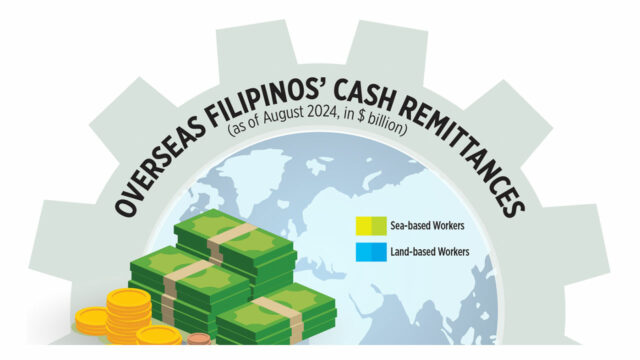
Overseas Filipinos’ Cash Remittances

CASH REMITTANCES from overseas Filipino workers (OFW) rose by an annual 3.2% in August, the Bangko Sentral ng Pilipinas (BSP) said. Read the full story.

Overseas Filipinos’ Cash Remittances

ADVERTISEMENT
ADVERTISEMENT