Home Blog Page 2526

The mighty dollar

PRECONDO-UNSPLASH

“Russians lined up to purchase US dollars after the Moscow Exchange enforced an immediate suspension of trading in dollars and euros in response to fresh US sanctions,” Newsweek reported. Russia’s central bank announced on June 12 that exchange trading and settlements of deliverable instruments in US dollars and euros were suspended effective June 13 “due to the introduction of restrictive measures by the United States against the Moscow Exchange Group.” It added that over-the-counter trading data would be used to set official exchange rates for the currencies.

This retaliatory reaction of Russia follows the US Treasury’s expansion of an executive order issued by President Joe Biden in December that allows Washington to directly sanction foreign banks facilitating significant transactions for Russia. The US threatened to block banks that conduct business with firms that support Russia’s defense industry from its financial system, Newsweek explains.

It could be with sardonic humor, and some sadistic triumph that some pro-West readers took to the news of the Russian common folk still believing in the US dollar, despite their leaders now fighting bared teeth against America in the Russian grab of Ukraine’s territories.

With the rapid escalation of Russia’s invasion of Ukraine, the US and a large coalition of states, including the EU, Canada, and the UK, among others, had agreed on Feb. 26, 2022, to ban select Russian banks from the Society for Worldwide Interbank Financial Telecommunications (SWIFT) international payment messaging. The SWIFT system in over 200 countries facilitates the exchange of interbank messages containing secure payment and transfer information for settling international transactions (foreignpolicy.com).

Professor Peter C. Earle of the American Institute for Economic Research (AIER) sees the “Weaponizing of the dollar” as an unfair practice, detrimental to the operative concept of the US dollar as an unbiased global settlement and reserve system. “Shortly after its invasion of Ukraine, Russia had most of its links to the dollar-based trading network SWIFT severed, as well as seeing some $300 billion in US dollar reserves frozen. Those sanctions — unwittingly, I believe — provided a cautionary tale even to current and long-time allies of the United States. The risk that getting on the wrong side of a US policy position could result in a nation’s being effectively shut out of global commerce” (aier.org, June 19, 2023).

Further, Earle describes the “mismanagement” of the US central bank. “In the early phase of the COVID pandemic, the Fed unleashed a multi-trillion dollar deluge in which rates of money creation briefly exceeded 25% annualized at one point. They then watched as inflation broke out, wasting precious months on inaction while calling the rise in the general price level ‘transitory.’”

What the US does, and what happens in its economy, affects the world that trades and transacts in the Mighty Dollar.

The Observer Research Foundation (ORF) of India points out that “while the dollar-led international monetary system has morphed over the years to accommodate the changing dynamics of globalization, it continues to feed a cycle of inter-country inequality and amplifies business cycle fluctuations in developing and emerging economies. Particularly during times of monetary tightening, currency values collapse against the greenback and capital flees emerging economies’ shores. Asian governments are increasingly taking action to stop the fall of their currencies that have been battered this year by the mighty US dollar” (asia.nikkei.com, May 13).

The threat of losing the ability to do business in an interconnected world has further pushed countries to consider a shift from the dollar, as well as develop alternatives to US-controlled clearing and communication systems like the Clearing House Interbank Payments System (CHIPS) and SWIFT. Prof. Earle of the AIER cites sizeable trade deals like that between China and Brazil, denominated and settled in the renminbi (RMB) and the real (BRL) instead of, as it customarily has been, the US dollar. India and Malaysia settled trades in rupees, and France has reported successfully executing a natural gas trade with China settled in renminbi. Some 19 nations settled trades with India in rupee, like Russia, Sri Lanka, and Bangladesh, including the United Kingdom, Germany, New Zealand, and Israel. Last year the government of Iraq made the use of the US dollar illegal. The United Arab Emirates currency, the dirham, is seeing an increase in use throughout the Middle East.

But perhaps the most direct challenge to the mighty dollar for global transactions is from the “BRICS plus” coalition, an economic club that started with Brazil, Russia, India, China, and South Africa, and which expanded with the inclusion of Iran, the United Arab Emirates, Ethiopia, and Egypt this January.

After its 2009 Yekaterinburg summit, the BRICS nations announced the need for a new global reserve currency, which would have to be “diverse, stable and predictable.” Although the statement that was released did not directly criticize the perceived “dominance” of the US dollar — something that Russia had criticized in the past — it did spark a fall in the value of the dollar against other major currencies, the AIER paper said.

During the fifth BRICS summit in 2013 in Durban, the member countries agreed to create a global financial institution, the $100-billion New Development Bank to cooperate with the western-dominated IMF and World Bank. At the 2015 BRICS summit in Russia, ministers from the BRICS states initiated consultations for a payment system that would be an alternative to the SWIFT system. A major development in the 2022 summit was the creation of a new, basket-type reserve currency. The currency, which is challenging US dollar, combines BRICS currencies and is backed by precious metals.

“For countries seeking to mitigate the economic risks of intensifying US-China competition, joining BRICS is an attempt to straddle some of those tensions. In Southeast Asia, many nations depend economically on trade with China while also simultaneously welcoming the security presence and investment Washington provides. But BRICS membership is also a way of signaling increasing frustration with the US-led international order and key institutions that remain firmly in the control of Western powers, like the World Bank and International Monetary Fund” (bloomberg.com, Aug. 23, 2022).

But it is China and Russia who are keen to expand BRICS into a coalition to counter the US. Brazil and India, however, are reluctant, an analysis in The Diplomat says (Aug. 8, 2023). “The current turmoil in international politics has direct consequences for all the countries in the group, which are expressed in varied ways of intra- and extra-BRICS competition. In addition to the growing rivalry between China and India over border disputes and a military standoff on the so-called Line of Actual Control, as well as India’s concerns about China’s projection in its immediate surroundings, the BRICS are also dealing with the consequences and economic repercussions of the Russian invasion of Ukraine. For the first time, Russian President Vladimir Putin was not able to attend the summit last year, due to the possibility of being arrested since South Africa is party to the International Criminal Court. The ICC has issued a warrant for President Vladimir Putin’s arrest, due to allegations of war crimes in Ukraine.”

BRICS’ economic arm, the New Development Bank (NDB), is also facing complications from the Russia-Ukraine war. As of March 2022, Russia has had all trading within the NDB frozen, representing a total exposure of $1.8 billion to entities domiciled in Russia, The Diplomat noted. Political motivations of the bigger countries contradict the noble declarations of equality and fairness in this economic coalition. Although BRICS Plus presents a platform for developing countries, enabling them to increase their representation in global governance, this expansion process is also part of China’s broader economic and geopolitical interests, The Diplomat says. “Beijing’s objective in defending the expansion of the BRICS would be the formation of a coalition of countries in opposition to the G-7 bloc and its attempts to curb China’s global growth.”

So, the same sins of politicizing the global economic system and weaponizing the clearing and exchange transactions for foreign trade will predictably be committed (knowingly or unwittingly, let’s say) by whoever dominates the BRICS or any alternate system to the Mighty Dollar. The Mighty Yuan, perhaps?

The Chinese currency’s use surged to a record amount in the first quarter of 2023. Foreign exchange swaps referencing the yuan, in fact, saw their second largest surge ever in March owing to growing use of the currency. The dollar’s share in Chinese trade fell from 83% to 47% between 2010 and this year.

But Prof. Earle of the AERI says that “The idea that the death of the dollar is either imminent or inevitable is highly unrealistic, however. None of the currently proposed replacements are viable for several reasons:

“The Chinese yuan or renminbi is, at present, completely inappropriate owing to its closed capital account (capital controls) and the fact that the yuan is pegged to the dollar and manipulated in value to positively impact its exports.

“Any nation or group of nations wanting to capture the role of global reserve currency would additionally have to be willing (and able) to run current account deficits and have a wide variety of debt issues outstanding — IOUs called Treasury bills, notes, and bonds — in US dollars still trusted as the ‘safe haven’ for the end-user, the investor/saver.”

Thus do the Russian common folk still trust the US dollar.


Amelia H. C. Ylagan is a doctor of Business Administration from the University of the Philippines.


ahcylagan@yahoo.com

Ayala Land Premier breaks ground for LEED-registered Park Villas project

AYALA Land Premier, Inc. said it has broken ground for its 51-storey exclusive residential project Park Villas in Makati City.

In a statement on June 21, the property developer said Park Villas would feature 45 villas, with each villa occupying the entire floor and located inside the Ayala Triangle Gardens.

Park Villas is LEED (Leadership in Energy and Environmental Design)-registered, reflecting Ayala Land Premier and the Tagle Group’s commitment to environmental stewardship, it said. “This aligns with their vision to create extraordinary living spaces that harmonize with sustainable principles.”

“Together with the new Mandarin Hotel, the Park Central Towers and now, the iconic Park Villas, we are committed to setting a new benchmark in contemporary living and sustainability,” Ayala Land Premier President Joseph Carmichael Z. Jugo said in a statement.

The company said the villas, spanning 610 square meters fitted with floor-to-ceiling windows that showcase the view of Ayala Triangle Gardens and the Makati City Skyline to the northwest and Urdaneta Village and the Bonifacio Global City Skyline to the southeast.

Among the amenities are thermal protective glass, strong data support, expansive service areas, a lounge, pool complex and a 2,400 sq.m wellness facility.

Park Villas pushes the boundaries of urban living while honoring the city’s legacy, said Marc Louie Tagle, president and chief executive officer at the Tagle Group of Companies.

“It embodies the shared vision and uncompromising commitment of Ayala Land Premier and the Tagle Group, bringing a new high-rise that will continue the Makati redevelopment story,” he said in the same statement.

Ayala Land Premiere said the design of Park Villas was credited to Skidmore, Owings & Merrill for the architecture and Yabu Pushelberg for the interiors.

The company said Park Villas, Ayala Land Premier’s signature development, touts to be a landmark addition to the Makati skyline.

“This iconic project is posed to contribute significantly to the city’s narrative of urban sophistication and progress and mark a new chapter in the city’s vibrant history,” he said. — ARAI

Mercedes-Benz PHL adds EQE SUV to pure-electric choices

Flanking a newly revealed Mercedes-Benz EQE SUV are (left) Inchcape Philippines Finance Director Vincent Mansilla and Inchcape Philippines GM for Mercedes-Benz Passenger Cars Rhomel Franco. — PHOTO BY KAP MACEDA AGUILA

IC STAR AUTOMOTIVE, INC., official distributor of Mercedes-Benz vehicles in the Philippines, recently debuted the Mercedes-Benz EQE SUV at its dealership in Bonifacio Global City, Taguig.

Aside from “further solidifying (the) Mercedes-Benz commitment to electrification, innovation and sustainability,” the release of the EQE SUV is a testament to the increased readiness or openness of the market to the format.

The SUV version of the EQE (whose sedan iteration has already been launched here) is the latest electric import from IC Star Automotive, under the aegis of Inchcape Philippines. The newest model joins the EQA, EQB, EQS, and the aforementioned EQE, and carries the signature look of its electric siblings, while purveying a “perfect blend of style, comfort, and sustainability,” insisted the distributor.
Based on WLTP-standardized testing, Mercedes-Benz reported a single-charge range of 536km to 628km — which could promise a drive from Manila to Baguio and back. Output numbers are 292hp and 565Nm, made possible by the EQE SUV’s lithium-ion battery with a 96-kWh capacity, and which accepts charging of up to 170kW. The sole 350+ AMG Line variant carries an introductory price of P7.19 million.

The all-new EQE SUV’s sleek, aerodynamic lines are not merely for aesthetics but play a crucial role in enhancing the vehicle’s efficiency and performance, reported Mercedes-Benz. Fitted onto the EQE SUV are 21-inch AMG multi-spoke light-alloy wheels, and seamless door handles and black panel grille with three-dimensional star patterns. Fringing the grille are advanced headlamps — so-called Digital Light with Ultra Range high beam, featuring the “lighting strike band” of the EQ series. The LED taillights, on the other hand, are designed in the shape of a curved illuminated 3D helix. These are topped off with an illuminated strip.

Inside, the EQE SUV is said to offer ample legroom and headroom for both driver and passengers.

“The all-new EQE SUV boasts an elegant design complemented by cutting-edge technology seamlessly integrated to elevate (the) driving experience,” IC Star Automotive said in a release. The vehicle gets a 15-speaker Burmester 3D surround sound system dishing out up to 710W of sound, and Active Ambient Lighting allows for the customization of the light strips within.

On the dash is a large 56-inch “high-tech glass” called the MBUX Hyperscreen, which tucks in three displays within a curved glass surface. Mercedes-Benz said that the system, powered by advanced AI, “learns preferences and habits to provide tailored suggestions, transforming every drive into a highly personalized journey.” It is effectively the EQE’s brain — communicating “with all systems to optimize both performance and enjoyment.” Zero Layer feature “prioritizes essential information, minimizing distractions and ensuring that the most important data is always within easy reach.”

As for cargo capacity, with the rear seatbacks up, the EQE serves up 580 liters of space — growing to 1,675 liters with the seatbacks folded.

In an interview, IC Star Automotive Assistant Vice-President for Product and Training Benjie Bautista said, “For the past three or four years, I’ve seen the EV awareness growing, and with that awareness also comes the (sales growth) in electric vehicles.” EVs comprise some 15% of Mercedes-Benz Philippines sales, he revealed, and that share is projected to go up to 20% this year.

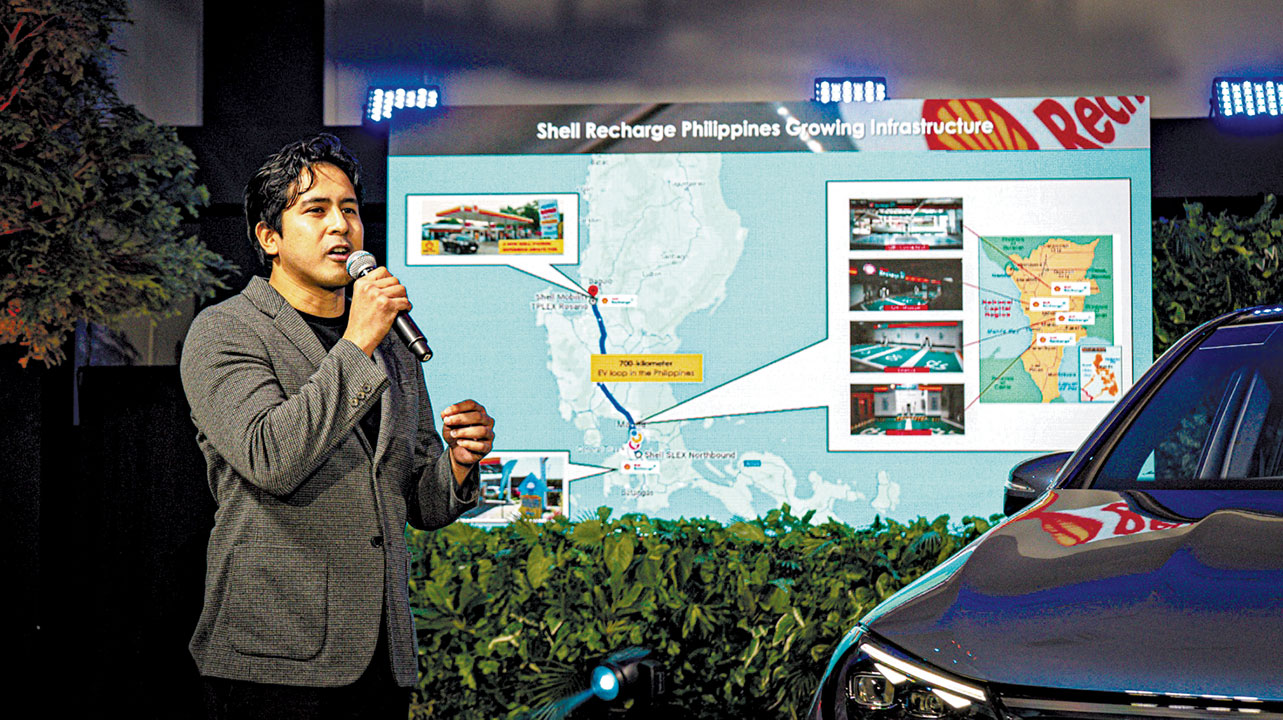
He added that the “vital thing” is the continued support of government, along with the expansion of charging infrastructure. “It can’t be not just situated in Metro Manila, but also to the north and south of it. And that’s why we are partnering with Shell e-Mobility to speed up the infrastructure rollout. Of course, this is all for our customers to enjoy a better driving experience, with our EVs — without range anxiety.” — Kap Maceda Aguila

PHL coffee imports seen falling 3.7% this year

ALFRED KENNEALLY-UNSPLASH

PHILIPPINE coffee imports are expected to fall 3.7% this year, according to the US Department of Agriculture (USDA).

In a report, the USDA estimates that imports of soluble coffee to the Philippines would amount to 6.3 million 60-kilogram bags, against 6.5 million bags in 2023.

The Philippines imports most of its coffee requirement as domestic production cannot meet demand. Philippine-grown coffee can service about 38% of market requirements.

Most imports are soluble or instant coffee.

The Philippines is the fourth-largest coffee importer after Japan, the US, and the European Union.

The USDA reported that its global coffee export estimate in 2024 was downgraded to 119.5 million bags following lower output from major coffee producers.

“Central America and Mexico are reduced to 12.9 million on reduced exportable supplies. Indonesia is down 700,000 bags to 4.3 million on lower output,” it said.

On the other hand, the USDA raised its export forecast for Vietnam to 29.1 million bags as farmers reported improved yields through better irrigation, mitigating the effects of drought and high temperatures.

The Philippines imports most of its coffee requirement from Vietnam.

It added that domestic consumption is expected to drop 1.8% to 6.95 million bags this year.

The global coffee production forecast this year was downgraded to 169.2 million bags, likewise, due to lower production from Central America, Mexico, and Indonesia.

“Central America and Mexico are reduced… to 16.4 million bags due to higher-than-anticipated incidents of coffee cherry borer insect infestation as well as coffee rust. Indonesia is revised to 8.2 million as drought conditions in Southern Sumatra lowered Robusta yields,” it said.

Philippine coffee production was estimated at 450 thousand 60 kilo bags, against the 475 thousand bags in 2023. — Adrian H. Halili

Banks seen to remain robust this quarter

BW FILE PHOTO

BANKS could continue to post strong performances this quarter after mostly recording higher earnings in the first three months of 2024, analysts said.

“So long as nonperforming loans remain manageable and loan growth continues to be stable, then second quarter earnings should still perform within or above market expectations,” Regina Capital Development Corp. Head of Sales Luis A. Limlingan said in a Viber message.

The Philippine banking industry’s net profit rose by 2.95% to P92.107 billion in the first quarter from P89.47 billion in the same period last year, latest data from the Bangko Sentral ng Pilipinas (BSP) showed.

“Macroeconomic indicators such as economic growth, inflation rates, and employment figures provided a backdrop for banks’ performance,” Mr. Limlingan said.

He added that lenders’ profitability on the first quarter was affected by high interest rates and changes in central bank policies.

He noted that Bank of the Philippine Islands (BPI) and China Banking Corp. (Chinabank) were top performers during the period, posting robust loan growth, improved asset quality, diversified revenue streams, and effective cost management.

BPI saw its net income grow by 25.8% year on year in the first quarter to P15.3 billion as higher revenues helped offset increases in loan loss provisions and operating expenses.

Meanwhile, Chinabank saw an 18% increase in its net profit to P5.9 billion in the same period on the back of robust core business growth.

For her part, First Metro Investment Corp. Head of Research Cristina S. Ulang said in a Viber message that banks could see easing margins in the coming months amid higher funding costs.

There is “competitive pressure to rise and prompt banks to seek bigger business volumes, lending and fee income,” she added.

Banks could also struggle in the third quarter due to elevated overhead costs, Ms. Ulang said.

Meanwhile, lenders that have invested in technology could see reduced costs, resulting in enhanced efficiency, she added.

Banks could offset elevated costs through trading income if the Bangko Sentral ng Pilipinas (BSP) implements a rate cut in the third quarter, Ms. Ulang said.

BSP Governor Eli M. Remolona, Jr. has said the central bank could begin its easing cycle with a 25-basis-point (bp) cut as early as the Monetary Board’s Aug. 15 meeting, and could slash borrowing costs once or twice within the second semester.

The BSP raised borrowing costs by a cumulative 450 bps from May 2022 to October 2023, bringing its key interest rate to a 17-year high of 6.5%. — Aaron Michael C. Sy

Top 5 in National Costume chosen at Bb. Pilipinas

MS. ABRA

THE BINIBINING Pilipinas pageant released its top five picks for its National Costume category after a fashion show at Quezon City’s New Frontier theater on June 11. The fashion show also served as the pageant’s preliminary round, where the candidates walked the runway in evening gowns.

The pageant’s winner will be sent to the Miss International and Miss Globe international pageants.

Binibining Pilipinas Charities, Inc., which operates the pageant, was founded by the world’s first Miss International Stella Marquez Araneta, the spouse of Araneta Group chair Jorge Araneta.

The top five candidates for the National Costume category — which gives them a boost in points for the Grand Coronation Night on July 7 at the Araneta Coliseum — are Myrea Caccam from Oriental Mindoro, Joyce Ann Garduque of Quezon Province, Monica Acuno from Laguna, Zianah Famy representing Cavite, and Myrna Esguerra, representing Abra.

The candidates provided their own voiceovers to describe their dresses, making it easier for viewers to understand their costumes.

Ms. Caccam said that her dress, a silver number with flared-out fins on her shoulders, represented Lake Naujan in her hometown, and was designed by Michael Jayzon Dela Cruz. “The skirt is a true work of art, crafted from recycled plastic bottles collected from the coastal area of Naujan. This innovative use of materials not only showcases the commitment to sustainability but also highlights the importance of protecting the environment,” she said.

Meanwhile, Misses Garduque and Acuno, from Quezon Province and Laguna, respectively, appeared back-to-back on the runway, as candidates No. 23 and 24.

Ms. Garduque said that her dress was a celebration of Quezon’s coconut crop, with the base fabric of the dress woven from coconut husks which are usually used to make sacks. The dress was designed by Roy Aquino and featured a headdress made from corn husks. “This is a testament to the creativity and resourcefulness of Quezon Province’s people, showcasing a beautiful blend of tradition and innovation,’ she said.

Meanwhile, Ms. Acuno, who hails from the town of Kalayaan, appeared in a neat and simple traje de mestiza designed by Patrick Isorena, complete with a tapis overskirt and bearing a basket of fruits and vegetables. “Growing up as a daughter of a farmer, I am honored to showcase the enduring legacy of strong Filipina women through my National Costume,” she said.

Ms. Famy of Cavite wore a dress with a bodice made from the traditional woven mat, the banig, designed by Karl Balao. The dress was designed to recall Cavite’s Kawayan Festival, which was why noisy kawayan (bamboo) tassels made up her skirt.

Ms. Esguerra was the last to appear on the runway (as candidate No. 40). Representing Abra, she wore a basket shaped like a terno with panels on the sides of the “skirt” made with indigenous textiles. The dress, designed by Richard Stranz, was meant to represent Dulimaman, a heroine from the tales of the Tinguian people of Abra. As a tribute to another strong woman, she dedicated the dress to her mother, a basket weaver and single mother of 13 children.

“It honors her remarkable journey and the cultural heritage she embodies. Mama, this one’s for you,” she said. — Joseph L. Garcia

Dengue Awareness Month

BRGFX-FREEPIK

There were 67 deaths due to dengue in the country from January to February alone, according to the Department of Health (DoH). With this number, it is crucial to put spotlight on the Dengue Awareness Month, held every June to highlight the importance of multi-sectoral collaboration among the government, civil society, and private sector in the prevention and control of dengue.

Dengue is a viral infection transmitted to humans through the bite of infected female mosquitoes, primarily the Aedes aegypti mosquito, which are active during daytime.

Most people with dengue have mild or no symptoms and will get better in one to two weeks, according to the World Health Organization (WHO). If symptoms occur, they usually begin four to 10 days after infection and last for two to seven days. Symptoms may include high fever (40°C), a severe headache, pain behind the eyes, muscle and joint pains, nausea, vomiting, swollen glands, and a rash.

According to the WHO, it’s important for people who develop dengue to rest; drink plenty of liquids; take acetaminophen (paracetamol) for pain; avoid non-steroidal anti-inflammatory drugs, like ibuprofen and aspirin; and watch for severe symptoms and seek medical care as soon as possible if such symptoms develop.

In rare cases, dengue can be severe and lead to death, the WHO warns. Individuals who are infected for a second time are at greater risk of severe dengue. Severe dengue symptoms often come after the fever has gone away. These include severe abdominal pain, persistent vomiting, rapid breathing, bleeding gums or nose, fatigue, restlessness, blood in their vomit or stool, severe thirst, pale and cold skin, and feeling weak. People with these severe symptoms should seek emergency treatment at the nearest hospital immediately.

Studies have shown that in the past 50 years, the number of reported cases of dengue fever increased more than 30 times, with transmissions mainly occurring in tropical regions that have warm and wet climates.

In addition to rapid population growth and frequent national travel that accelerate dengue fever transmission, climate change is also a potential contributor to the increased incidence of dengue fever and its geographical expansion, as global warming could create more favorable environments for mosquito breeding and the spread of the disease, according to a Brazilian study published in 2021.

The results of a 2023 modeling study indicate that climate change is expected to increase the risk of dengue fever transmission in tropical areas of South and Southeast Asia. Limiting greenhouse gas emissions could be crucial in reducing the transmission of dengue fever in the future, the study concluded.

A local study published in 2015 found that the level of dengue virus isolated and detected in Aedes aegypti mosquitoes in selected sites in Cebu City was higher during the dry season than in the wet season. On the other hand, the study showed that dengue transmission among people is higher during the wet season, most especially during the early months of the wet season.

A local study published in 2022 mirrors the findings of the 2021 Brazilian study, as it found that Aedes aegypti mosquito eggs survive longer in environments affected by global warming. In light of the study’s findings, the authors recommended that the DoH dengue prevention and control program, particularly the enhanced 4S strategy, be implemented year-round rather than just during the dengue epidemic wet season, with a particular focus in the Visayas and Mindanao.

4S stands for “Search and destroy” mosquito-breeding sites, employ “Self-protection measures” (i.e., wearing long pants and long-sleeved shirts, and daily use of mosquito repellent), “Seek early consultation,” and “Support fogging/spraying” only in hotspot areas where increase in cases is registered for two consecutive weeks to prevent an impending outbreak.

The authors also recommend the reduction of breeding sites, covering of water storage containers, and hygiene and sanitation around households as constant components of a community-based, integrated approach, combined with educational programs to increase knowledge and understanding of best practices. They also recommend the installation of pipelines for the water supply system in rural highlands to decrease potential breeding sites.

For individuals and families, there are effective ways to prevent dengue and control the mosquitoes that carry the dengue virus. Wear clothes that cover as much of your body as possible. Install or repair window and door screens in your house. Apply mosquito repellents and use mosquito coils and vaporizers, when appropriate.

It is also recommended to dispose of solid waste properly and remove artificial man-made habitats that can hold water. Cover, empty, and clean domestic water storage containers weekly. And apply appropriate insecticides to outdoor water storage containers.


Teodoro B. Padilla is the executive director of Pharmaceutical and Healthcare Association of the Philippines (PHAP). PHAP represents the biopharmaceutical medicines and vaccines industry in the country. Its members are in the forefront of research and development efforts for COVID-19 and other diseases that  affect Filipinos.

Stake sale deal, buybacks lift shares of Aboitiz Equity Ventures

By Andrea C. Abestano, Researcher

ABOITIZ EQUITY VENTURES, Inc. (AEV) shares rose last week, backed by a modest rally spurred by a share-sale agreement and consecutive share buybacks.

Data from the Philippine Stock Exchange (PSE) showed that from June 18 to 21, 11.79 billion shares worth P458.61 billion were exchanged on the trading floor.

The holding company’s stocks climbed 0.91% to P38.80 each on Friday from P38.45 on June 14. Year to date, the stock price has fallen by 13% from P44.60 on Dec. 29.

“AEV’s stock movements this week were largely driven by flows, with a notable modest rally in the days following the disclosure of its 50% stake sale,” Rastine Mackie D. Mercado, research director at China Bank Securities Corp., said in an e-mail.

On Monday last week, Aboitiz Equity Ventures disclosed a share sale deal with Ayala Land, Inc. (ALI). Ayala Land bought AEV and AboitizLand’s 50% interest in Cebu District Property Enterprise, Inc.

The transaction involved 18.1 million shares at P100 apiece and gave Ayala Land full ownership of Cebu District Property.

“We think the move aims to capitalize on an improving outlook for its property business,” Mr. Mercado said. He added that investors might view the stake sale as positive since AEV could use the proceeds to fund projects in the pipeline.

“[Despite] the initial positive sentiment, the market also perceived potential negative impacts on AEV’s future earnings from this divestiture, leading to mixed reactions from investors,” Mark Crismon V. Santarina, a trader at Globalinks Securities and Stocks, Inc. said in a Viber message.

“The divestiture may be strategic for resource reallocation but also raises questions about AEV’s long-term growth in the Visayas region,” he added.

AEV shares at P38.80 on Friday from P39.25 a day earlier, ending the stock’s short-term rally.

Mr. Santarina attributed the price volatility to investors’ concern about potential revenue losses from the Cebu District Property stake sale.

After the sale agreement, Aboitiz Equity Ventures held three consecutive share buybacks.

AEV used excess cash to buy 3.66 billion shares at P38.40 to P39.25 each. The company said in a separate disclosure on April 25 said the repurchase program aims to optimize the company’s market position.

Both analysts said these transactions positively influenced market sentiment on the stock last week.

“[Buybacks] typically indicate that the company has a strong balance sheet and expects future growth, thus positively influencing investor sentiment and providing support to the stock price amid market fluctuations,” Mr. Santarina said.

Mr. Mercado said “transactions related to its share buyback program may buoy investor sentiment as this reinforces confidence towards the stock given its first-quarter performance and positive business outlook over the balance of the year.”

For January to March, Aboitiz Equity’s net income attributable to its parent rose by 22.38% to P4.9 billion from a year earlier. Consolidated revenues fell by 8.98% to P69.1 billion.

Mr. Mercado pegged AEV’s support and resistance levels at P38.30 and P39.70, respectively.

“Immediate support level is anticipated around P35, given recent buyback activities bolstering investor confidence,” Mr. Santarina said. “The resistance level is expected near P42.”

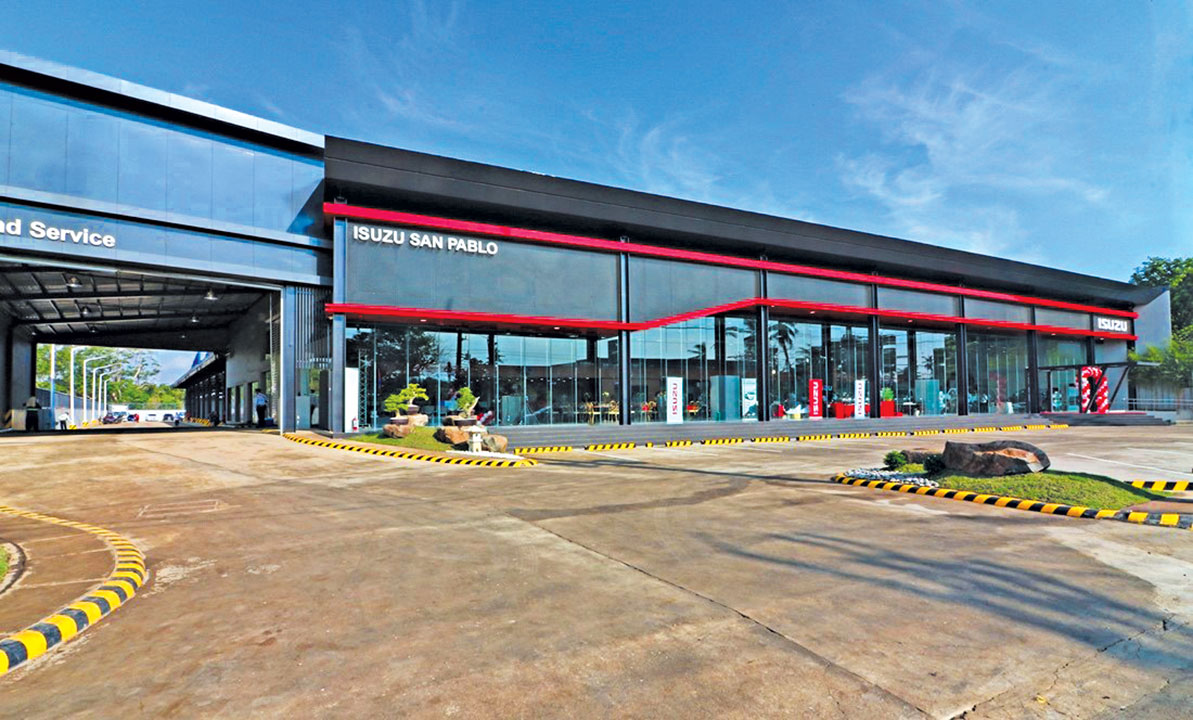
Isuzu San Pablo turns 23, unveils ‘IOS’ dealership

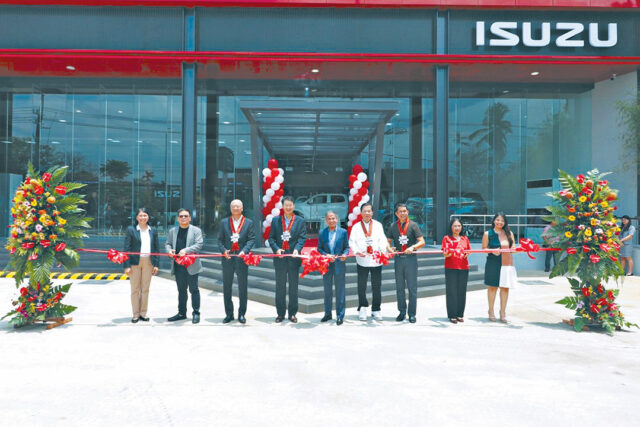
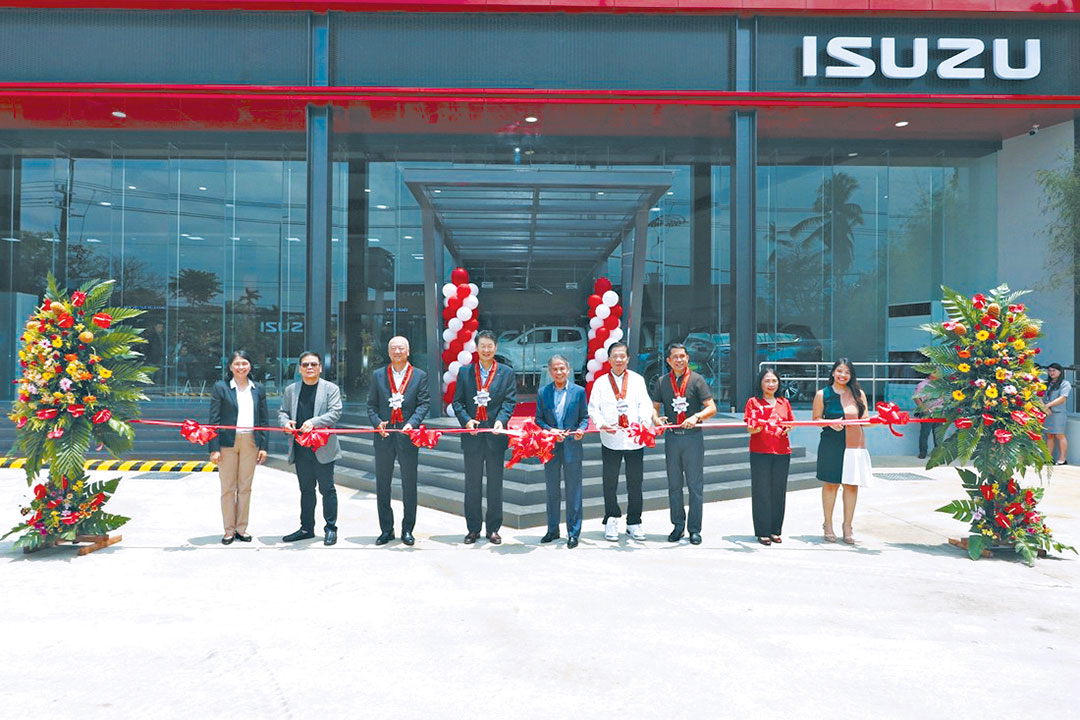
From left are Isuzu San Pablo GM Evangeline Garcia, Arch. Rafael Dalmacio B. Tecson, Gencars Chairman Edgard Cabangon (center), San Pablo Mayor Vic Amante, Office of the Governor’s Public Affairs Executive Assistant Rommel Palacol, Gencars President Lerma Nacnac, and Gencars Operations Executive Giannina Eunice A. Cabangon. — PHOTO FROM ISUZU PHILIPPINES CORP.

Coinciding with the 23rd anniversary of Isuzu San Pablo, Gencars, Inc. inaugurated its new, state-of-the-art dealership in San Pablo City. The grand opening event, led by Gencars Chairman Edgard Cabangon, marked the unveiling of the largest Isuzu showroom to date.

Strategically relocated to Km 85 of Maharlika Highway, Brgy. San Ignacio, the new Isuzu San Pablo dealership is designed in accordance with the Isuzu Philippines Corp. (IPC) new Isuzu Outlet Standard (IOS). This modern design aims to elevate customer satisfaction and enhance both sales and after-sales experience.

Spanning a total area of 10,000 sq.m., with over 8,000 sq.m. dedicated to the showroom and service shop, the facility is said to set a new benchmark for Isuzu dealerships. The 753-sq.m. showroom, the largest in the Isuzu network, can display up to seven light commercial vehicles and two trucks, while still offering ample space for customer transactions, a waiting lounge, and accessories display.

The dealership’s expansive service shop is equipped with multiple bays, lifters, and other advanced repair equipment. It is capable of simultaneously servicing nine light commercial vehicles (LCVs), two light-duty trucks, and one heavy-duty truck simultaneously. This upgrade ensures that “both individual and fleet customers will receive timely and efficient service,” according to IPC in a release.

“As San Pablo City continues to flourish with new infrastructure and business developments, it’s fitting that our dealership evolves alongside the city. This new IOS facility, strategically relocated, allows us to meet the increasing demand and adapt to the changing needs of the market, offering excellent service to all of our customers,” said IPC President Tetsuya Fujita.

Meanwhile, Gencars said it remains committed to its core values, “maintaining its reputation for exceptional customer care, ensuring that customers get the same warm welcome and personalized service” in all of their dealerships. This continued dedication to customer satisfaction was highlighted by IPC, citing that this is the reason why Gencars has been continuously bagging the Dealer of the Year awards.

“We are very grateful for Isuzu Philippines for all the support. We at Gencars, Inc. are committed to continue to provide even better customer service to our customers here in San Pablo, especially now with our new bigger and better IOS dealership,” said Mr. Cabangon.

With the inauguration of the new Isuzu San Pablo dealership, IPC said it remains confident about strengthening its presence in the region, securing its number-one position in the truck market and boosting sales in the LCV segment.

For more information, visit www.isuzuphil.com or follow Isuzu Philippines on Facebook.

Yields on gov’t debt end mostly flat amid policy hints

By Abigail Marie P. Yraola, Deputy Research Head

YIELDS on government securities (GS) traded in the secondary market ended mostly flat last week amid bets on the next policy moves of central banks at home and abroad and following the results of the Treasury bureau’s bond auction.

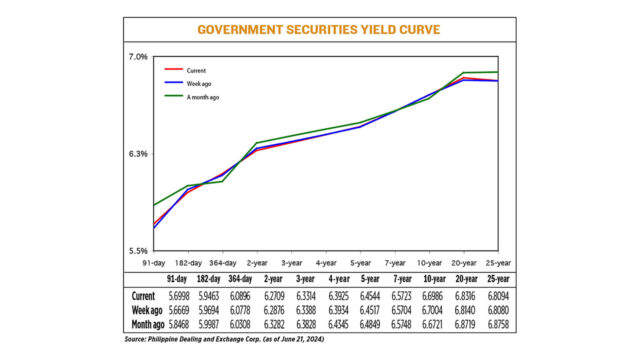
GS yields, which move opposite to prices, inched up by 0.17 basis point (bps) on average week on week, based on PHP Bloomberg Valuation Service Reference Rates data as of June 21 published on the Philippine Dealing System’s website.

Rates were mostly mixed last week. Yields on the 91- and 364-day Treasury bills (T-bills) increased by 3.29 bps and 1.18 bps week on week to 5.6998% and 6.0896%, respectively. Meanwhile, the 182-day T-bill fell by 2.31 bps to yield 5.9463%.

At the belly of the curve, yields on the two-, three-, and four-year Treasury bonds (T-bonds) declined by 1.67 bps (to 6.2709%), 0.74 bp (6.3314%), and 0.09 bp (6.3925%), respectively. On the other hand, the five- and seven-year T-bonds went up by 0.27 bp and 0.19 bp to fetch 6.4544% and 6.5723%, respectively.

At the long end, the 20-, and 25-year debt papers saw their rates increase by 1.76 bps (to 6.8316%) and 0.14 bp (6.8094%), respectively, while the 10-year bond inched down by 0.18 bp to yield 6.6986%.

GS volume traded reached P8.24 billion on Friday, lower from the P28.55 billion recorded a week earlier.

Debt yields moved sideways this week as market participants assessed the latest policy signals from both the Bangko Sentral ng Pilipinas (BSP) and the US Federal Reserve, a bond trader said.

“[This assessment comes] amid mixed signals from weak US economic data and hawkish policy signals by the BSP,” the bond trader said in an e-mail. “The recent economic data from the US bolstered hopes that an eventual US policy rate remains on the table.”

The first trader added that this optimism has been dampened by the cautious policy remarks from various Fed officials, who have urged patience over the timeline of these expected rate cuts.

The BSP’s policy-setting Monetary Board has kept its benchmark rate steady at a 17-year high of 6.5% since October 2023 following increases worth 450 bps to bring down inflation.

Its next meeting is on Thursday, June 27.

Headline inflation picked up to 3.9% year on year in May from 3.8% in April, but marked the sixth straight month that inflation settled within the BSP’s 2-4% target band.

From January to May, the consumer price index averaged 3.5%, matching the central bank’s full-year forecast.

The BSP expects inflation to continue quickening and possibly breach their 2-4% annual target until July due to base effects.

BSP Governor Eli M. Remolona, Jr. has said the central bank can begin easing their policy stance as early as August, with a total of 25-50 bps in cuts likely within the second half as they have become “less hawkish.”

Mr. Remolona said the BSP does not need to wait for the Fed to begin cutting rates. The Fed held interest rates steady for a seventh straight meeting this month, with expectations of the start of rate cuts being pushed to as late as December.

Meanwhile, Finance Secretary and Monetary Board member Ralph G. Recto said it is “highly probable” that the BSP will only begin easing its policy stance once the Fed does so.

Mr. Recto previously said the Monetary Board could cut rates by as much as 150 bps in the next two years.

A second bond trader said that the Bureau of the Treasury (BTr) has been capping bond yields at certain levels during its past few auctions, which means they have been willing to cut the volume of borrowing to keep rates low.

This will likely benefit markets, as yields have increased significantly amid uncertainty over the Fed’s next move, the trader added.

“It provides some relief to market participants because the [BTr] has been relatively keeping rates at bay over the past few auctions,” the second bond trader said in a phone interview.

The BTr has made partial awards at its last two T-bond auctions despite strong demand for its offerings as it sought to keep rates low.

Last week, the Treasury raised only P24.003 billion via the reissued 20-year bonds it auctioned off, below the P30-billion program, despite total bids reaching P46.331 billion.

The bonds, which have a remaining life of 14 years and seven months, were awarded at an average rate of 6.781%. Accepted yields ranged from 6.72% to 6.82%.

The average rate of the reissued bonds went down by 16.9 bps from the 6.95% fetched for the series’ last award on May 14.

However, this was 3.1 bps above the 6.75% coupon for the issue. This was likewise 1.2 bps higher than 6.769% quoted for the 15-year bond, the tenor closest to the remaining life of the papers offered, and 1.5 bps above the 6.766% seen for the same bond series at the secondary market before the auction.

For this week, GS yields may increase due to potentially hawkish policy signals from the BSP following its policy meeting on Thursday, the first bond trader said.

“Traders might also take cues from the direction of revisions to the medium-term BSP inflation outlook, which might provide clues over the future actions of the domestic central bank,” the first bond trader added.

Yields will likely continue to consolidate as the BSP’s first rate cut remains far off, the second bond trader said.

“The market will be watching for further leads when it comes to their tone — if it’s on the dovish or the hawkish side. So, if they continue on the dovish side, we might see a further drop in rates in the next few weeks,” the second trader said.

Style (06/24/24)


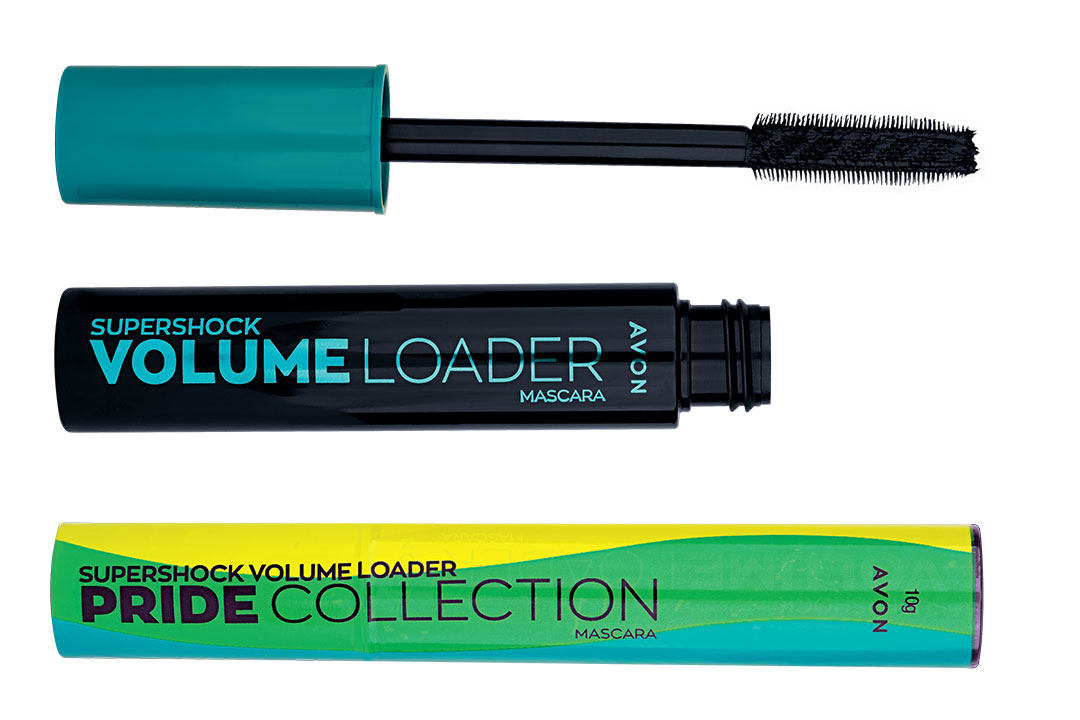
Avon releases Pride Collection

FOR PRIDE Month, Avon has released a limited-edition Pride Collection that features the Supershock Volume Loader Mascara, and an expanded lineup of the Glimmerstick Eyeliner in four new shades. The Supershock Volume Loader Mascara is enriched with vitamin E for healthier-looking lashes. Its helix brush ensures flawless application, delivering a water-resistant, smudge-proof, flake-proof, and clump-free formula from root to tip, with an intense black color, packaged in vibrant limited-edition Pride packaging. Meanwhile, Avon’s Glimmerstick Eyeliner Pride Collection is infused with nourishing rosehip oil and vitamin E. Available in four limited-edition shades — Azure Blue, Daring Citrine, Emerald Glow, and Cosmic Obsession. They are designed to achieve a bold and playful look that will last all day. To further show support to the LGBTQIA+ community, Avon sponsors products for LGBTQIA+ organizations such as Home for the Golden Gays, Bahaghari, PANTAY, and LoveYourself, providing useful body care, apparel, make-up, fragrance, and skincare items for its members to appreciate. Each Supershock Volume Loader Mascara purchase will come with a P10 donation to Avon’s partner support groups. The Pride Collection can be found at www.avonshop.ph, through Avon Representatives, Lazada, Shopee, and TikTok Shop.


Gap collaborates with Dôen

GAP has collaborated with California clothing label Dôen for a collection of women’s apparel and accessories. It features Dôen’s feminine take on Gap’s iconic styles. “Gap partners with brands that champion originality and use fashion as a powerful form of self-expression,” said Mark Breitbard, President and CEO of Gap, in a statement. Said Katherine Kleveland, Co-Founder and CCO of Dôen in the same company statement: “As with all our Dôen designs, the collaboration pieces were designed to be loved, worn in, and passed down — and we’re beyond excited to partner with Gap to be able to offer this to an engaged global community.” In the Philippines, Gap is exclusively distributed by Specialty Lifestyle Concepts, Inc. (formerly Casual Clothing Retailers, Inc.), a member of SSI Group, Inc. Gap is available at Ayala Malls Manila Bay, Glorietta 4, Shangri-La Plaza, SM Mall of Asia, Trinoma, Alabang Town Center, SM Megamall, and Abreeza Davao.


Ikea wants you to sleep

IN ITS new campaign, “Wake up! It’s time to sleep,” Ikea features three different Ikea customers falling asleep at their showroom. The campaign aims to call on Filipinos give more attention to having better sleep, and encourages Filipino customers to experience Ikea sleep solutions themselves before they purchase them at the IKEA Pasay City showroom. According to Ikea Life at Home Report 2023, 44% of Filipinos consider sleeping the main driver of nurturing at home. Ikea’s sleep offerings include the soft Åfjäll foam mattress (starts at P3,990) and the firm Valevåg Pocket spring mattress (starts at P7,990). There’s also a wide selection of ergonomic pillows like the ergonomic Mjölkklocka pillow (P1,990) which has memory foam for full comfort whether the user is a side or a back sleeper. Light also comes into play with the dimmable Tärnaby table lamp (P990) and the Trådfri remote control kit (P1,290). The sleep solutions are available at Ikea Pasay City and online at IKEA.ph.

Philippines lands at 168th out of 180 in Yale’s environmental sustainability ranking

The Philippines placed 168th out of 180 countries in the 2024 edition of the biennial Environmental Performance Index (EPI) by the Yale Center for Environmental Law & Policy. Countries are ranked based on their progress toward mitigating climate change, improving environmental health, protecting ecosystem vitality, and reaching established environmental policy targets. The country got an overall EPI score of 32 out of 100, the fifth-lowest in the region and below the Asia-Pacific median EPI score of 41.8.

Philippines lands at 168<sup>th</sup> out of 180 in yale’s environmental sustainability ranking