Home Blog Page 2492

DBP says capital hike to boost financing for its priority sectors
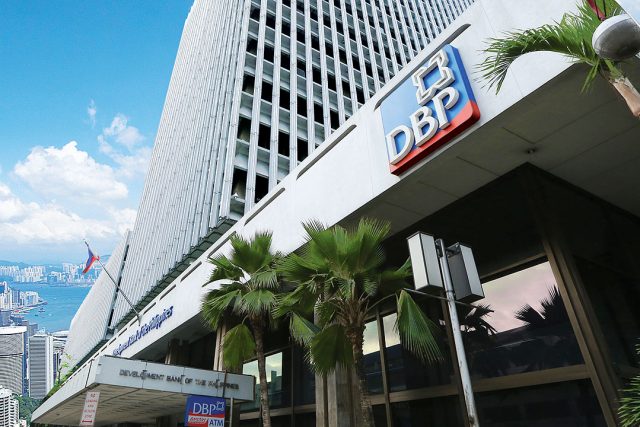
COURTESY OF DBP FACEBOOK PAGE

THE PROPOSED HIKE in Development Bank of the Philippines’ (DBP) capital stock to P300 billion from P35 billion will help it fund more state projects to boost the economy, its top official said.

“Other banks in our country have much more capital than we do,” DBP President and Chief Executive Officer Michael O. de Jesus said during a Senate banks committee hearing on a bill that seeks to amend its charter. “The more capital we have, the more we can finance, do business, and promote development in the country.”

“As a general rule, when there is more capital in the bank, it has more resources to lend out money to be able to comply more with its mandate to finance development projects,” Mr. De Jesus added.

End-2023 data from the DBP discussed during the hearing showed 55% of the bank’s loan portfolio went to the infrastructure and logistics sectors, with 21% being allocated for social projects such as social services, public education and healthcare.

Under Senate Bill No. 2761, which Senate President Francis “Chiz” G. Escudero filed this month, the National Government shall own 70% of the total outstanding capital stock of DBP at all times. Meanwhile, P32 billion or 10.67% of the authorized capital stock of the bank, shall be subscribed to and fully paid by the National Government.

“The Board, upon the recommendation of the Secretary of Finance and with the approval of the President of the Philippines, may increase the capitalization of the bank up to such an amount as may be necessary to attain the objectives of this Charter, and may allocate part or all of the bank’s unrestricted retained earnings towards paying for the increase in capital,” it said.

The amended DBP Charter will also let the bank conduct an initial public offering to expand its resources to increase financing for its mandated sectors.

The bill also expands DBP’s mandate to include the development of infrastructure; expansion of businesses, particularly micro, small, and medium enterprises; and education, healthcare, housing, and the environment.

It seeks to grant the state-run lender a “perpetual” corporate existence and give two seats in its board to ex officio members from the Department of Finance and the National Economic and Development Authority, with the President appointing the seven other board members.

Senator Mark A. Villar, who heads the committee, backed the proposal to raise DBP’s capital stock.

“It is crucial that our institutions are equipped with proper funding that will enable them to pursue growth initiatives which in turn will help expand local capital markets and create more opportunities for the public and private sectors to access development financing,” he said at the same hearing.

“Amending the DBP Charter will lead to an increase in funds to assist the government in pursuing economic growth and development, promoting economic empowerment and inclusivity…”

Mr. Villar referred the measure to a technical working group to refine it before it is sponsored before the Senate plenary. — J.V.D. Ordoñez


Tapping into strengths, maximizing opportunities

PRESSFOTO-FREEPIK

The Stratbase team went to Cebu and Cagayan de Oro last week to hold our Stratbase Business Roundtable Discussions with business leaders and chambers of commerce in the Visayas and Mindanao. We believe it is important to know the sentiments of businesses in other parts of the country. It is they who know best what is happening in their respective spheres.

What we gathered was this: local businesses believe that the Philippines has distinct strengths and competencies, that there are specific opportunities available to us that we can maximize, that challenges remain, but that we could act on and address these challenges. They share the belief that the Philippines can be a premiere destination for both local and foreign investors.

The strengths are many, but it is these three that emerge: we have a young and dynamic population, we are rich in natural resources, and we have a strategic location at the heart of the Indo-Pacific region.

Our population of 118 million has a median age of 25 — this is a huge pool of actual and potential talent, eager to learn and participate in the economy. This makes for a booming and large consumer market, as well as a dynamic workforce. According to the think tank ASEAN+3 Macroeconomic Research Office (AMRO), the Philippine population is expected to be among the youngest in the region, with the number of working-age individuals seen to peak by 2051 — the latest among Southeast Asian economies.

The Philippines is also rich in natural resources. There is a huge potential to grow our blue economy, an industry identified by business leaders to be “untapped” especially since we are first and foremost, a maritime nation. We also have huge reserves of critical minerals such as copper and nickel which are essential components as we transition into clean energy.

The Philippines’ strategic location makes it a vital gateway for over 600 million people in the ASEAN market and a natural entry point to East Asian economies. It is positioned at a key junction for international shipping and airlines. For example, business leaders from Cebu talked about how the city is the gateway between Visayas and Mindanao. Their international airport also provides easy access to different parts of Asia. Hence, Cebu leaders are confident that the province and the region has huge potential to make the area very competitive, not just in the Philippines, but in Southeast Asia.

This location of the Philippines at the heart of the Indo-Pacific region also offers boundless opportunities. The region is said to be a key growth driver for the global economy in the coming years. In light of the recent geopolitical tensions, major global economies have been looking to derisk and decouple to shift investments to countries that share the same values that they hold.

Notwithstanding this, there are roadblocks in making the Philippines a premier investment destination, both for foreign and domestic businesses. According to the Visayas and Mindanao business leaders, while there has been interest by foreign investors to enter their region, they are having difficulty doing so due to inadequate infrastructure, the high cost of electricity, and bureaucratic concerns in starting a business. There are also misconceptions that foreigners have on the security risks in the Mindanao region — even though certain cities of the region are peaceful and have thriving business environments.

The business leaders also said that given new technologies and the world’s entry into Industry 4.0, investing in the education of the Filipino youth to upskill and reskill them is a must. They are concerned that manpower in the country is decreasing — many Filipinos are seeking jobs abroad and many also lack the skills necessary to do certain jobs.

We need to strengthen the technical and vocational education and training (TVET) program of the government and equip and train the young population to be industry ready.

Business leaders also said they need greater support to boost competencies in the following sectors: trading, agriculture, manufacturing (furniture, food, steel, light materials such as food packaging and garments), arts, the creative industry, and Information and Communication Technologies (business process outsourcing or BPO and knowledge process outsourcing or KPO), among others.

To address these concerns, business leaders from Cagayan de Oro and Cebu urge the government to listen to the concerns of the business sector and work closely with them. They also propose developing more renewable energy sources and constructing physical infrastructure, modernizing the agriculture sector, investing in connectivity, and increasing exports, since the country is importing more than we are exporting.

The business leaders affirmed the private sectors’ commitment and willingness to work with the government to develop a more attractive business environment in the region for both domestic and foreign corporations.

Our macroeconomic fundamentals are sound, with GDP growing by 6.3% in the second quarter of 2024. The Philippines remains on track to be the fastest-growing economy in the Southeast Asian region. We build on our innate strengths and on the dynamic consumption patterns of our population. But this is not enough. The economy can grow further if investments come into the country, which would create more quality, secure, green jobs for the people.

Local businesses, with their exposure to the economic realities of our country and their respective regions, have shared their grounded, realistic, and more importantly actionable insights.

We hope the administration is listening.


Victor Andres “Dindo” C. Manhit is the president of the Stratbase ADR Institute.

Edamama targets underserved parenting market

EDAMAMA.PH

By Patricia B. Mirasol, Multimedia Producer

MANILA-BASED parenting platform Edamama wants to capitalize on the country’s underserved market as it continues to build an online-to-offline retail experience for its target market.

“We really want to be where the customer is, and 90% of retail in the Philippines today is still offline, so our goal is really to build the leading omnichannel in the country,” Bela Gupta D’Souza, one of Edamama’s founders, said in an interview on Aug. 1.

The company started in May 2020 as an online platform selling third-party childcare and mother care products. It now also sells 95,000 wares including in-house brands in its four brick-and-mortar stores in Manila, with another one set to open this month.

Edamama sells online only through its app and its website to give parents a curated shopping experience, according to co-founder Nish D’Souza.

“When you go to a horizontal marketplace, you have millions of products,” he told BusinessWorld. “When you come to Edamama, that experience is curated… You can find what you need very easily, even curated down to the age and gender of your baby.”

The company, which was No. 1 out of nine Filipino startups that landed on the Forbes Asia 100 to Watch list of 2023, also has its own in-house fleet for deliveries within the capital “to have more input on the delivery experience of the customer,” he said.

The children’s apparel market in the Philippines is projected to experience grow by 1.94% from 2024-2028, according to Statista.

The Hamburg-based web portal in a separate study in April said the size of the global parenting app market is expected to surpass $900 million (P51.4 billion) by 2030.

In June, Edamama partnered with KonsultaMD to open a pilot clinic at its Ayala Malls Feliz outlet.

Mr. and Ms. D’Souza, who are parents to three children, said it could sometimes take an hour to see a pediatrician.

“Healthcare is a friction point for some parents,” Ms. D’Souza told BusinessWorld. “The parent is seeking out not just products, but also solutions and services to help simplify their parenting journey.”

“Can we help reduce the friction in accessing healthcare by integrating a healthcare clinic in our stores?”

The reality of setting up at the height of the coronavirus pandemic brought in a lot of agility, she said.

“Everybody saw that shift to online very quickly once the lockdown came into effect,” she said. “It was very easy to work with seller-partners to onboard them quickly onto the platform, given that a lot of them knew that online was the future.”

Edamama has raised $35 million from its Series A funding round, according to Mr. D’Souza.

“The Philippines is one of the biggest markets in Southeast Asia, with high fertility rates, and one of the largest under-10 and under-14 populations globally, yet the parents here are underserved in terms of affordable quality options,” he said.

“At the end of the day, when you have a market size that big, that attracts the attention of investors,” he added.

Van Gogh’s Starry Night recreated as park in Bosnian hills

VISOKO, Bosnia and Herzegovina — Amid the green hills and meadows of central Bosnia, a local businessman has realized his long-held dream: recreating one of Vincent van Gogh’s most famous paintings, The Starry Night, in the form of a nature park.

Halim Zukic from the town of Visoko decided to create a park after buying some land and a cottage in a nearby village 20 years ago, but he had no clear idea of what it should look like.

Then, six years ago, as he stood on a hill watching tractors in a hay meadow, he noticed their spiral-shaped wheel tracks in the earth, which reminded him of the swirling motifs in Van Gogh’s canvas from 1889.

“From that moment, I was no longer in doubt,” Mr. Zukic told Reuters. But his vision took time, money and effort to realize.

Mr. Zukic wanted the 10-hectare Starry Night park to be part of a larger complex offering a retreat to visitors. He planted more trees and created 13 lakes using existing natural streams.

To match the painting, 130,000 bushes of lavender in six different shades were planted, as well as other medicinal and aromatic herbs such as sage, echinacea, wormwood and chamomile, forming colorful circles, spirals, and natural amphitheaters.

Mr. Zukic did all the landscaping himself. He said recreating the painting had helped him understand artists and the creative challenges they face.

“This is the largest representation of The Starry Night, and the result of 20 years of dreams, of living those dreams to make them real,” he said.

The Starry Night park will focus on art programs and the promotion of central Bosnia’s cultural heritage, Mr. Zukic said. — Reuters

Cosco Capital Q2 profit rises 21% to P3.55B on recovering demand

LUCIO L. CO-led retail holding company Cosco Capital, Inc. recorded a 21% increase in its consolidated net income for the second quarter to P3.55 billion from P2.94 billion last year, led by growth across all its business segments amid recovering consumer demand.

Consolidated revenue jumped by 9.6% to P55.55 billion from P50.7 billion last year, Cosco Capital said in a regulatory filing on Tuesday.

For the first half, Cosco Capital saw a 15.5% jump in consolidated net income to P6.97 billion from P6 billion last year.

Consolidated revenue surged by 8.4% to P106.4 billion from P98.2 billion a year ago.

“The group continued to benefit from the economic recovery amidst the prevailing macroeconomic challenges by way of sustained and stronger revenue growth across all its business segments, which indicates the recovering consumer demand,” Cosco Capital said.

Among segments, the grocery business group led by Puregold Price Club, Inc. and S&R Membership Shopping Club contributed 71% of total net income, followed by the liquor distribution business with 20%, the commercial real estate business with 7%, the energy and minerals business with 1.5%, and the specialty retail business with 0.5%.

First-half net income of the grocery retail group rose by 12.5% to P4.95 billion from P4.4 billion. Net sales increased by 8% to P98.5 billion on store expansion and higher comparative sales.

“During the period, the enterprise experienced positive same-store sales growth of 1.9% from Puregold Stores driven by higher traffic and 2.4% from S&R Warehouse clubs driven by higher ticket size. The company continues to see a buoyant trajectory in top line growth for the second half of 2024,” Cosco Capital said.

Cosco Capital’s liquor distribution business led by The Keepers Holdings, Inc. saw a 23% jump in its first-half net income to P1.43 billion due to the better sales performance of imported brandy, spirits, wines, and specialty beverages.

Consolidated revenue surged by 19% to P7.7 billion, carried by the 22% growth in the volume of cases sold.

The commercial real estate segment grew its January-to-June net income by 5% to P486 million from P463 million last year. Rental revenue increased by 9.4% to P613 million, led by the improved business operations of tenants, as well as the full resumption of rental rates based on contracts. 

In the specialty retailing segment, Office Warehouse, Inc. increased its net income by 10.5% to P39 million, while revenue declined by 4.3% to P994 million.

The energy and minerals segment generated a P98 million net income, while revenue reached P172 million.

Cosco Capital stocks were unchanged at P4.80 per share on Tuesday. — Revin Mikhael D. Ochave

PERA contributions climb by 24%

PHILSTAR FILE PHOTO

PERSONAL Equity and Retirement Account (PERA) contributions jumped by 24.3% in the first half of the year, data from the central bank showed.

Contributions to PERA rose to P457.6 million in the first semester from P368 million in the same period a year ago, according to data from the Bangko Sentral ng Pilipinas’ (BSP) website.

The total number of contributors likewise rose by 5.3% to 5,688 in the period from 5,402 a year earlier.

Broken down, ​​the bulk or 69% of the total were employee contributions, equivalent to P315.7 million.

This was followed by overseas Filipino worker (OFW) contributions at P78.8 million, and self-employed contributions at P63.1 million.

Launched in 2016, the PERA is a voluntary fund scheme meant to supplement retirement benefits from the Government Service Insurance System or the Social Security System, as well as private employers.

Contributors aged 18 and above and have a tax identification number are allowed to open a PERA account. Self-employed and locally employed contributors can make an annual contribution of P200,000 while OFWs can invest up to P400,000.

The PERA Law also offers various incentives to contributors, such as tax exemptions on earnings from PERA investments, a 5% income tax credit on contributions that can be used for paying income tax liabilities, and a tax-free distribution on qualified withdrawal of PERA investments.

In 2020, the BSP launched the digital platform for PERA to make it more accessible, allowing Filipinos to open PERA accounts, choose different accredited products, and settle transactions online.

Central bank officials said last month that PERA take-up has been slow despite the scheme’s digitalization. They said wider use of PERA can help increase government savings, foster investment and capital market development, which would support economic growth.

The BSP is also working to incorporate open finance in the PERA program, they said. — L.M.J.C. Jocson

Crypto startups raised more VC money during market slowdown

TRAXER-UNSPLASH

CRYPTO STARTUPS raised more money but closed fewer deals in the most recent quarter, mirroring the broader slowdown seen in the digital-asset world.

Venture capital (VC) investment in crypto companies totaled $2.7 billion in the three months ended in June, a 2.5% increase from the first quarter and a 9.8% decrease from the year-earlier period, PitchBook data show. The number of deals closed dropped 12.5% from the first quarter.

Overall, the crypto market faced a more challenging period after prices reached all-time highs in the first quarter amid the exuberance over the introduction of US exchange-traded funds (ETFs) being allowed to hold Bitcoin for the first time. Investor inflows into the ETFs slowed to $2.8 billion in the second quarter, down 80% from $13.7 billion in the quarter before, based on Bloomberg’s estimates.

“While still far below the 2021 and early 2022 highs, VC investing in crypto reached somewhat of a fever pitch in March and April,” said Rob Hadick, a general partner at crypto venture fund Dragonfly. “Later stages have continued to be soft and as the market turned in late April and into May, the VC market slowed again.” 

Crypto market bellwether Bitcoin fell 13% in the second quarter, and has been little changed so far this quarter.

It was the third sequential quarterly increase in the total value of investment. The broader recovery this year in token prices and continued institutional adoption of digital assets suggests that fund raising will grow, Robert Le, senior analyst at PitchBook, wrote in a report on Monday.

The rise in valuations of projects in the second quarter came “as founders tried to capture the more rosy secondary market,” said Jason Kam, a founder of crypto venture firm Folius Ventures.

Investment continued to be focused on infrastructure projects such as new blockchains, while venture capitalists remained leery of consumer-focused applications. Shuyao Kong, co-founder of blockchain startup MegaETH, raised $20 million in a seed funding round in June, saying the fundraise came as the market remained “hungry” for high-performance blockchains.

The only large funding round that closed in the past quarter for a crypto application was for the social media platform Farcaster, which raised $150 million in May. Venture capitalists said there’s growing fatigue in infrastructure investment, and more VCs are looking for investment opportunities in applications, which has also contributed to the slowdown in the second quarter.

“It is a rebalancing of private investments away from infrastructure to applications,” said Tarun Chitra, a partner at Robot Ventures. “People are looking for applications and there are just fewer of those that are private market investable at the moment.”

At the same time, exit activities — the process by which investors realize returns on their investments by selling stakes in a company, increased to the most since the first quarter of 2022. There are 26 exits in the second quarter, including the acquisition of Bitstamp by Robinhood Markets, Inc. PitchBook expects exit activities could extend throughout the rest of the year.

“We expect more consolidation among crypto exchanges, custodians, and infrastructure providers as the market matures and smaller players seek strategic exits,” the PitchBook report said. — Bloomberg News

Finance for the net-zero transition must maximize and share benefits equitably

MARCIN JOZWIAK-UNSPLASH

THE ASIA AND PACIFIC REGION stands at a critical juncture, positioned both as a significant contributor to global greenhouse gas emissions and a potential leader in transformative climate action. The Asian Development Bank (ADB), alongside our member countries, is steering the region towards a sustainable future through support for a just transition. Our vision aims to reorient economic and social frameworks to foster low-carbon, climate-resilient growth that enhances prosperity and inclusion.

The need for a just transition, one that puts people at the center of the shift to net zero, cannot be overstated. Asia and the Pacific account for over half of the world’s annual greenhouse gas emissions, driven by its dependence on fossil fuels. At the same time, more than 200 million people in the region are impoverished, with many lacking access to basic electricity and relying on traditional biomass for cooking and heating. Women are particularly affected, and often face disproportionate impacts.

As Asia and the Pacific’s climate bank, ADB prioritizes an inclusive approach to ensure that the costs and benefits of the transition to net zero are fairly distributed. Achieving net zero requires us to restructure our economies and change the way we live and work. It is paramount that in this process, the burdens of change are not imposed on the most vulnerable and that the benefits of a low-carbon economy are both maximized and shared equitably. Ensuring that all segments of society, including women, share in these benefits is critical to the success of our just transition efforts.

To create opportunities for inclusive and sustainable growth, ADB works with partners to implement robust policy frameworks, enhance institutional capacities and engage stakeholders through participatory processes. These just transition efforts align with global commitments such as the Paris Agreement, and at the country level we support our developing members in crafting policies and programs that respond to their unique climate challenges and development needs.

At COP27, ADB launched a Just Transition Support Platform to help drive a just transition within our developing member countries. This platform focuses on supporting countries to incorporate just transition into their institutional and policy frameworks and identify innovative financing approaches that attract public and private capital for a just transition. The platform also supports the mainstreaming of just transition in ADB’s operations.

Moreover, at COP28, ADB launched an inclusive process to design a Just Transition Finance Facility that will provide targeted finance to address the socio-economic challenges of the transition to net zero. It will help countries realize the economic and social benefits of the transition and ensure these benefits are inclusive and widespread, ultimately supporting a robust and equitable shift to low-carbon and resilient economies.

Just transition is also a core part of ADB’s Energy Transition Mechanism (ETM). Developed in partnership with ADB member countries, ETM is a scalable initiative that has the potential to be one of the largest carbon-reduction programs in the world. Under it, public and private investments —  governments, multilateral banks, private sector investors, philanthropies, and other long-term investors — finance country-specific ETM funds. These funds are designed to retire or repurpose coal power assets on an earlier schedule compared with a business-as-usual timeline.

Just transition principles are a cornerstone of ETM’s implementation, helping us to ensure that potential negative socio-economic impacts are minimized through policies and programs. For example, retraining and reskilling programs provide new opportunities in emerging industries for women and vulnerable workers.

The importance of managing the social impacts associated with the transition to net zero can be seen through ADB’s work on the Cirebon 1 coal-fired power station in Indonesia. This plant serves as an ETM pilot, for which ADB completed a preliminary just transition assessment earlier this year — the first of its kind for ADB and for the region. The assessment utilized a comprehensive methodology to identify impacts along the coal value chain and within the community and surrounding areas. It also established a process to further assess and develop a plan to manage impacts at the appropriate project stages.

Just transition offers a compelling vision for green and inclusive development across Asia and the Pacific. Its promise lies not only in avoiding the worst impacts of climate change, but in creating a more equitable social order that values well-being and gender equality, provides decent work, and ensures sustainable economic growth.

We must encourage optimism and concerted effort from all sectors of society to embrace the principles of justice and inclusivity that will be needed for a low-carbon, climate-resilient future. This journey faces challenges but is also filled with opportunities for transformative change that can forge a healthier, more equitable and prosperous world. The path we chart now will determine the climate legacy we leave for future generations.


Masatsugu Asakawa is president of the Asian Development Bank. This article was first published in the OECD Development Co-operation Report 2024: Tackling Poverty and Inequalities through the Green Transition [https://doi.org/10.1787/357b63f7-en].

Entertainment News (08/14/24)


We Play Here school tour kicks off at UP

AT the UP College of Science Amphitheater at the University of the Philippines Diliman, the We Play Here school tour will be returning for the second year in a row. The first was held in April last year in celebration of Warner Music Philippines’ 30th anniversary. On Aug. 23 at 3 p.m., the second iteration will feature a star-studded lineup: SB19’s Stell, English singer-songwriter Griff, bands Dilaw, Sugarcane, and PLAYERTWO, and Filipino soloists Arthur Miguel and Paul Pablo. Tickets for We Play Here at UP Diliman are priced at P750 and are available here.


Edwin Hurry, Jr. releases new single

FILIPINO singer-songwriter Edwin Hurry, Jr., known for his soothing melodies, is back with another heartwarming track, “Himlay.” Following the success of his single “Dito Ka Lang,” the new love song is dedicated to the tireless efforts of breadwinners. It is a touching reminder of the importance of rest and relaxation, according to Mr. Hurry, who said in a statement that “it is crucial for our well-being.” “Himlay” is now available on all digital streaming platforms.


NIKI releases new album

JAKARTA-born, LA-based singer-songwriter and producer NIKI has dropped her new album, Buzz, via 88rising. Accompanying the release is the music video for title track “Buzz,” directed by Isaac Ravishankara. The video, a cheeky line-by-line depiction of the lyrics, encapsulates the rush of raw emotion and bittersweet nerves of a budding romance. Across 13 tracks on the album, the singer encapsulates the feeling of being on the precipice of something undiscovered. Buzz is out now on all digital music streaming platforms.


Ely Buendia solo concert at Newport World Resorts

FILIPINO rock icon Ely Buendia will be performing his greatest hits at the Newport Performing Arts Theater in September. The one-night solo concert will feature tracks from his Eraserhead days as well as recent hits. His repertoire includes “Pare Ko,” “Toyang,” “Tindahan ni Aling Nena,” “Ligaya,” “Kailan,” “Magasin,” “Alapaap,” “With a Smile,” and “Huling El Bimbo.” Mr. Buendia is also known as the frontman of rock band Pupil, rock supergroup The Oktaves, and soul outfit Apartel. Tickets for the show on Sept. 14 at 8 p.m. are priced from P1,500 to P8,800. They are now available via TicketWorld.


SB19, Gloc-9 join forces on new single

P-POP boy group SB19 and rapper Gloc-9 have dropped their joint single “Kalakal” via Sony Music Entertainment. The collaboration finds both blending their different styles together. According to SB19, they reached out to Gloc-9 for a potential partnership after performing together on the well-received PAGTATAG! Finale concert, which was held at the Araneta Coliseum a few months ago. All members of SB19 and Gloc-9 contributed individual songwriting parts and verses to the song. “Kalakal” is out now on all digital music streaming platforms.


BTS’ Jimin and Jung Kook star in travel reality show

THE TWO youngest members of Korean boy group BTS are part of a travel reality show that has taken them across New York in the United States, Jeju in South Korea, and Sapporo in Japan. The Disney+ series Are You Sure?! centers on Jimin and Jung Kook, who spend time unwinding together across multiple scenic destinations. The eight-part series follows the duo as they eat, shop, cook, camp, canoe, and go on a road trip together. The first-ever travel show starring two BTS members on vacation, the newly released series gives fans an insight into the duo’s friendship. Two episodes are now out on Disney+, with a new episode to be released every Thursday through Sept. 19.

Vivant’s Q2 profit falls 26.6% amid increased service, operating costs

CEBU-BASED company Vivant Corp. posted a 26.6% decline in its second-quarter (Q2) attributable net income to P652.18 million, driven by higher costs of services and operating expenses.

Gross revenues grew by 59.2% to P3.63 billion from P2.28 billion, the company said in a stock exchange disclosure on Tuesday.

Sales of power increased by 88.2% to P2.86 billion. Revenues from management and service fees rose by 15.7% to P23.3 million, while engineering services income increased fourfold to P7.59 million.

The company’s gross expenses soared by 95.2% to P2.85 billion. Operating expenses climbed by 51.8% to P350.3 million, while the cost of services nearly doubled to P2.5 billion.

For the six months ending in June, Vivant posted an attributable net income of P877.39 million, lower by 40.2% from P1.47 billion a year ago.

Gross revenues increased by 41.8% to P5.56 billion.

Power sales grew by 77% to P4.39 billion, led by the improved revenue contribution of the company’s investments in oil-fired power plants, retail electricity supply, and solar rooftop businesses.

Management and services declined by 47.8% to P23.45 million, and engineering service income went up by more than three times to P9.59 million.

Meanwhile, the company’s gross expenses increased by 91.9% to P4.49 billion.

Operating expenses soared by 46.8% to P647.83 million, while the cost of services doubled to P3.84 billion.

Higher costs of services and operating expenses were attributed to increases in generation costs, salaries and employee benefits, taxes and licenses, outside services, professional fees, travel expenses, among others.

Vivant said in June that it plans to invest P15 billion in its renewable energy projects until 2030.

At the local bourse on Tuesday, shares in the company fell by 12.25% to close at P14.04 each. — Sheldeen Joy Talavera

High cost of living threatens Filipinos’ financial confidence

IRFAN HAKIMUNSPLASH

FILIPINOS are growing more concerned about their financial well-being due to higher cost of living, according to The Manufacturers Life Insurance Co. (Phils.), Inc. (Manulife Philippines).

The 2024 Manulife Asia Care Survey showed that while Filipinos want to be financially secure, increased cost of living will have impact on their confidence, the insurer said in a statement on Tuesday.

“Many Filipinos are grappling with a number of challenges that are impacting their ability to feel secure about their overall well-being within the next decade, including their financial confidence,” Manulife Philippines Chief Health and Products Officer Grace M. Mallabo said.

“It goes to show that a holistic approach to health and wellness — one that addresses physical and mental well-being, as well as financial preparedness — is very important.”

The survey, which included more than 1,000 respondents from the Philippines, showed that more Filipinos are ensuring they have financial safety nets.

The majority or 43% are depending on passive income, followed by building emergency savings (39%), finding ways to attain financial freedom after retirement (32%), having enough savings for healthcare needs (31%) and finding ways to be debt free (26%).

However, respondents are worried about rising healthcare costs (82%), threats of inflation (81%), economic slowdown and recession (78%), increasing interest rates (78%) and health trending down (73%).

“Women are more concerned about rising healthcare costs and inflation (85%) impacting their financial goals than men (80% and 78%, respectively),” Manulife Philippines said.

“Filipinos aged 50-60 have more concerns on the rising healthcare costs (86%) and health trending down (75%) than younger segments,” it added.

Manulife Philippines’ premium income stood at P15.54 billion in 2023. Its net income was at P1.899 billion. — AMCS

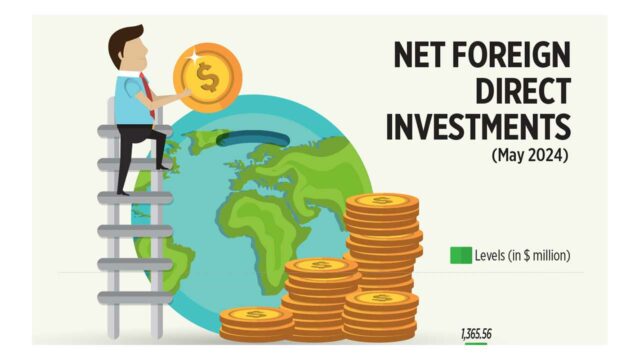
Net Foreign Direct Investments (May 2024)

NET INFLOWS of foreign direct investments (FDI) slipped to a 16-month low in May amid a decline in investments in equity capital, the Bangko Sentral ng Pilipinas (BSP) reported. Read the full story.

Net Foreign Direct Investment (May 2024)