Home Blog Page 2493

Peso strengthens to new one-month high

BW FILE PHOTO

THE PESO logged a fresh over one-month high against the dollar on Tuesday amid growing hopes for a US Federal Reserve rate cut by September.

The local unit closed at P58.44 per dollar on Tuesday, strengthening by 6.2 centavos from its P58.502 finish on Monday, Bankers Association of the Philippines data showed. This was the peso’s best finish since its P58.42-a-dollar close on May 29.

The peso opened Tuesday’s session slightly weaker at P58.54 against the greenback. Its weakest showing was at P58.56, while its intraday best was at P58.43 versus the dollar.

Dollars traded rose to $1.18 billion on Tuesday from $1.07 billion on Monday.

The peso strengthened as the market expects the US central bank to cut interest rates by September, the first trader said by phone.

The local unit rose against a generally weaker dollar due to Fed easing bets, Rizal Commercial Banking Corp. Chief Economist Michael L. Ricafort likewise said in a Viber message.

Some players also sold dollars ahead of Fed Chair Jerome H. Powell’s two-day testimony before the US Congress scheduled to begin overnight, the second trader added.

The US dollar index was last up 0.1% at 105.06, rising from an overnight low of 104.80, a 3-1/2-week trough, Reuters reported. The index slumped nearly 1% last week, exacerbated by Friday’s payrolls report, which boosted bets for the Fed to soon start cutting rates.

For Wednesday, the second trader said the peso may continue to strengthen on expectations of dovish signals from Mr. Powell. The trader sees the peso moving between P58.30 and P58.55 per dollar on Wednesday, while the first trader expects it to range from P58.30 to P58.70. Mr. Ricafort gave a forecast range of P58.35 to P58.55. — AMCS with Reuters

PSEi extends rally on BSP chief’s dovish comments

REUTERS

PHILIPPINE SHARES extended their rally on Tuesday on positive market sentiment as the Bangko Sentral ng Pilipinas (BSP) chief reiterated that they could begin their easing cycle as early as next month.

The bellwether Philippine Stock Exchange index (PSEi) went up by 0.41% or 27.23 points to end at 6,556.66 on Tuesday, while the broader all shares index increased by 0.39% or 13.82 points to close at 3,538.24.

“The local market rose… as rate cut hopes were strengthened due to the dovish comments from Bangko Sentral ng Pilipinas Governor Eli M. Remolona, Jr.… The rate cut narrative seems to boost investors’ confidence as many have been anticipating it since the start of the year,” Philstocks Financial, Inc. Research and Engagement Officer Mikhail Philippe Q. Plopenio said in a Viber message.

“This performance indicates that investors are optimistic about the BSP potentially implementing a rate cut this quarter, especially with inflation remaining within target. This price action reflects strong investor confidence in favorable upcoming monetary policy adjustments,” Seedbox Securities, Inc. Equity Sales Trader Moses Frando likewise said in a social media message.

On Monday, Mr. Remolona said the BSP should not “wait too long” to begin policy easing as this would dampen economic growth.

The BSP has kept its policy rate at a 17-year high of 6.5% for six straight meetings after it raised borrowing costs by a cumulative 450 basis points (bps) from May 2022 to October 2023 to help tame red-hot inflation.

The BSP chief said they are still “on track towards reducing rates” despite lingering risks to the inflation outlook. He earlier said that the central bank can cut by 25 bps in the third quarter, and by another 25 bps in the fourth quarter.

“Philippine shares resumed their climb as the market inched closer to the 6,600 level, getting a boost from the overnight performance of US markets. Stocks across the region have been bought up under the assumption that the US Federal Reserve could start cutting its benchmark interest rates soon,” Regina Capital Development Corp. Head of Sales Luis A. Limlingan added in a Viber message.

Most sectoral indices rose on Tuesday. Holding firms climbed by 0.9% or 50.02 points to 5,579.54; property went up by 0.71% or 18.19 points to 2,567.95; services rose by 0.56% or 11.45 points to 2,029.61; and industrials increased by 0.53% or 49.04 points to 9,172.52.

Meanwhile, financials fell by 0.77% or 15.58 points to 2,003.30, and mining and oil dropped by 0.14% or 12.23 points to 8,595.76.

Value turnover climbed to P6.74 billion on Tuesday with 767.99 million shares changing hands from the P5.63 billion with 447.35 million issues traded on Monday.

Advancers outnumbered decliners, 97 to 90, while 56 names closed unchanged.

Net foreign selling stood at P16.77 million on Tuesday versus the P143.69 million in net buying recorded on Monday. — Sheldeen Joy Talavera

Ports authority plans P16B in infra spending until 2028

REUTERS

THE Philippine Ports Authority (PPA) is setting aside about P16 billion for its infrastructure projects until 2028, including its 14 big-ticket projects scheduled to be completed during the period.

“We implement around 30 to 40 projects a year. Our infrastructure projects are worth around P3.5 billion to P4 billion a year. So for the next four years until 2028, we are earmarking around P16 billion,” PPA General Manager Jay Daniel R. Santiago told reporters on the sidelines of a briefing on Tuesday.

The PPA said that it plans to enhance and develop ports to improve efficiency and capacity, while also preparing some of them to receive cruise ships.

Luzon has a total of five flagship projects: the Port of Capinpin expansion in Orion, Bataan; the Currimao Port expansion and restoration in Ilocos Norte; the Jose Panganiban Port upgrade in Camarines Norte; the development of Balogo Port in Camarines Sur; and a Wharf in Claveria Port in Cagayan province.

The six projects for the Visayas are the construction of a wharf and operational area in Catacbacan Port, Loon, Bohol; Tapal Port Expansion in Ubay, Bohol; the development of a new port in Lavezares, Samar; upgrades to Babatngon Port; Leyte; the improvement of Banago Port, Negros Occidental and the expansion of Ormoc Port.

The Mindanao big-ticket projects such as the construction of a cargo ship port in Dapa, Surigao del Norte; the upgrading of the general cargo berth in Davao City’s Sasa Port; and the expansion of Plaridel Port in Misamis Occidental. 

Mr. Santiago said these flagship projects will be subject to feasibility studies, with consultants being sought to conduct the studies. 

“We’re engaging consultancy services for the feasibility studies. We are doing it on a cluster basis,” he said, referring to the Luzon-Visayas-Mindanao port groupings.

For now, the PPA said it will not go the public-private partnership (PPP) route for its flagship projects and will implement the projects on its own.

“I am not discounting PPP. In the immediate term, our focus is to implement the projects on our own. The project size and cost (do not require) outside funding,” he said. — Ashley Erika O. Jose

La Niña boost to agri output seen producing ‘aggressive’ rate cuts

PHILIPPINE STAR/WALTER BOLLOZOS

LA NIÑA is expected to lead to improved agricultural production, thereby bringing down food prices and strengthening the hand of central bankers seeking “aggressive” rate cuts, Capital Economics said.

“A La Niña could bring with it favorable growing conditions for crops in Southeast Asia, and help to put downward pressure on food prices across the region,” Capital Economics Assistant Economist Ankita Amajuri said in a report.

“It adds to the reasons to think the upcoming rate-cutting cycle in the region will be more aggressive than what is currently priced in by financial markets.”

The government weather service estimates a 55% probability of La Niña emerging in the Philippines in the October to December period, lingering until the first quarter of next year.

“Our view is that central banks in the region will begin cutting interest rates later this year. La Niña increases the odds that easing cycles will be even more aggressive than our forecasts, which are already more dovish than the consensus,” Capital Economics said.

Bangko Sentral ng Pilipinas (BSP) Governor Eli M. Remolona, Jr. has signaled potential rate cuts by August.

He said the central bank can cut by up to 50 basis points (bps) for the full year, with a 25-bps cut each in the third and fourth quarters.

“The latest inflation data from across the region paint an encouraging picture, with the headline rate falling back in almost every country that has so far published figures for June,” Ms. Amajuri said.

Philippine inflation eased to 3.7% in June from 3.9% in May, the seventh straight month that inflation has kept within the BSP’s 2-4% target range.

“We expect inflation to fall a little further in most places. Our forecast is that global oil prices will fall back again over the coming months, which should result in a decline in fuel price inflation,” Ms. Amajuri said.

“Meanwhile, subdued economic growth will help to keep a lid on underlying price pressures. We also expect food price inflation to drop back further, helped by better growing conditions now that the recent El Niño has come to an end.”

The report cited the World Meteorological Organization, which forecasts a 70% chance of La Niña emerging between August and November.

“La Niña typically brings wetter weather to Southeast Asia and is likely to provide a boost to producers of rice, coffee and sugar, who have been adversely affected by dry conditions over the past year. An increase in production would help bring down agricultural prices, which remain elevated,” it said.

Capital Economics said moderate-to-severe La Niña events in the past have been tied to falling rice prices.

“Rice is a staple food across much of the region, accounting for around 5-10% of the CPI basket in many countries.”

In June, Philippine rice inflation eased to 22.5% from 23% a month earlier. Rice accounted for 45.2% of overall inflation, equivalent to 1.7 percentage points of the headline rate.

“It is possible that the positive impact of La Niña will be less pronounced than the negative effects of the preceding El Niño because of climate change. While global warming amplified the heat and droughts caused by El Niño, it is likely to counter the cool weather brought by La Niña,” it said.

“However, it won’t be until the final quarter of the year that we will know for sure how severe this La Niña will be, and our commodities team are not making any changes to their agricultural price forecasts at this stage.” — Luisa Maria Jacinta C. Jocson

Budget release rate at 92% in 1st half

BW FILE PHOTO

THE Department of Budget and Management (DBM) said it released 91.8% of this year’s spending plan as of the end of June.

Citing its Status of Allotment Releases report, the DBM said it released P5.3 trillion out of the government’s P5.768-trillion budget for the year.

Leaving around P472.29 billion undistributed.

The pace of releases was ahead of the 89.9% year-earlier rate.

At the end of June, releases to government agencies and departments stood at P3.42 trillion, equivalent to 97.7% of their allocations.

Special Purpose funds released amounted to P310.67 billion, representing 61.2% of their allotted funds.

Automatic appropriations released at the end of June amounted to P1.39 trillion, for a release rate of 78.9%.

The DBM also released P792.36 million for the Retirement and Life Insurance Premiums of several government offices and P10 billion for the Rice Competitiveness Enhancement Fund.

This year’s spending plan is 9.5% higher than last year’s, and is equivalent to 21.7% of gross domestic product.

In a separate report, the DBM said P11.21 billion in calamity funds were released to various agencies as of the end of June.

This leaves around P11.53 billion out of this year’s P22.74 billion in calamity funds left unreleased.

At the end of June, around P6.52 billion in calamity funds had been released to the Department of Public Works and Highways (DPWH).

This was followed by the departments of Social Welfare and Development (DSWD) with P3.76 billion, Human Settlements and Urban Development with P374.97 million, and National Defense with P100 million.

The DSWD and DPWH received P875 million and P1 billion to replenish its respective Quick Response Funds, a stand-by fund to support relief and rehabilitation efforts during calamities.

Some P94.32 million was given to the DPWH to repair infrastructure in the Ilocos, Cordillera, and Mimaropa regions, due to damage caused by typhoons Paeng in 2022 and Egay in 2023.

The DPWH also received P458.3 million to rehabilitate food control structures in Oriental Mindoro.

To reconstruct various slope protection projects in Balungo, Pangasinan, P270.48 million was also distributed to the DPWH, the DBM said. — Luisa Maria Jacinta C. Jocson

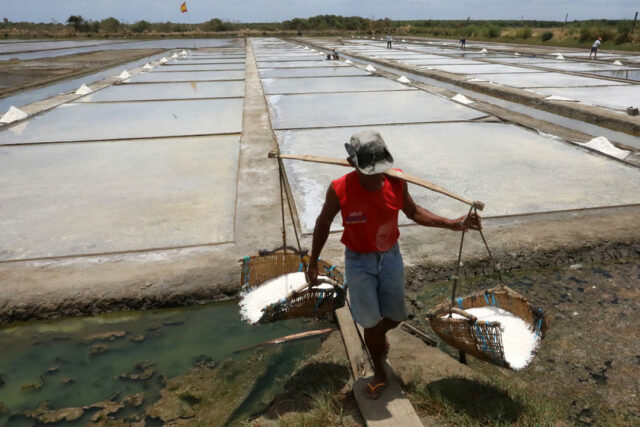
Tech working group formed to study salt industry dev’t

PHILIPPINE STAR/EDD GUMBAN

THE Department of Agriculture (DA) said it formed a technical working group (TWG) to evaluate projects to modernize the salt industry via the adoption of new technology.

In a special order, the DA said the TWG will develop, validate and verify the latest available technology used in salt production, particularly methods that allow “year-round production of salt even under erratic weather patterns.”

The TWG has also been tasked to study ways for the industry to mechanize the entire process of salt-making from pre- to post-harvest.

It has also been assigned to find “cost-effective techniques” for production.

In March, President Ferdinand R. Marcos, Jr. signed Republic Act No. 11985, or the Philippine Salt Industry Development Act, which seeks to revive the neglected salt industry. — Adrian H. Halili

Bioplastics roadmap due for completion by fourth quarter

CHEIL JEDANG

THE Board of Investments (BoI) said the Philippine Bioplastics Industry Roadmap is expected to be completed by the fourth quarter.

According to the BoI, the roadmap is one of the outputs of a zero-waste initiative known as “Building Plastic Circularity through Biodegradable Plastic to Ensure Zero Waste in the Philippines.”

The Philippines’ partners in the project are the Global Green Growth Institute and the Korea Export-Import Bank.

On Tuesday, the BoI announced that it led an eight-member Philippine delegation on a five-day industry familiarization activity in South Korea to gather input for drafting the roadmap.

The delegation was joined by representatives from the Department of Science and Technology, the Climate Change Commission, the Philippine Plastics Industry Association, Inc. (PPIA), the Philippine Alliance for Recycling and Materials Sustainability (PARMS), and the Sustainable and Compostable Horizons Industry Group, Inc.

The BoI said that bioplastics applications in South Korea include fishing nets and gear, packaging, single-use plastics, textiles, and other uses.

“This industry benchmarking and capacity-building activity included lectures on bioplastics testing, certification labeling, and research and development (R&D) strategy,” it added.

During the visit, the delegation visited the KTR testing laboratory and the KRICT biodegradable R&D facility to hear presentations on best practices and policy options.

The visit also led to a discussion with Cheil Jedang (CJ), which has made overseas investments in Indonesia to make the biopolymer PBAT (polybutylene adipate terephthalate).

“This activity allowed the BoI to develop strategies for positioning the Philippines as an attractive destination for future investments from not only CJ but also other major Korean companies like LG Chem, SK Chemical, and Lotte Chem, which are actively engaged in biopolymer and bioplastic manufacturing,” it said.

“Additionally, both PARMS and PPIA have pledged their proactive support for the strategic application of bioplastics in the Philippines,” it added.

Quoting Ministry of Economy and Finance Director General Taekon Kim, the BoI said that South Korea is closely monitoring Southeast Asia for potential investment partnerships in bioplastics. 

“He noted the region’s comparative advantages in biomass and feedstock production, as well as the growing demand for bioplastics,” it added. — Justine Irish D. Tabile

Party-list legislator to propose higher alcohol tax

A man arranges bottles inside a liquor store in Quezon City, March 15, 2021. — PHILIPPINE STAR/MICHAEL VARCAS

A BILL seeking to increase excise taxes on alcoholic beverages will be filed in Congress by the time it returns from recess, a party-list legislator said.

“Once we get the numbers, hopefully even before the State of the Nation Address (SONA), we will actually have a bill ready,” AnaKalusugan Party-list Rep. Ray T. Reyes said at a briefing on Tuesday.

“We wanted to do the number crunching first to find the optimal tax structure. If the government is going to be concerned about revenue generation, then I think they are willing to listen to find out the right tax structure to maximize their revenues at the soonest possible time without any effect on our economic productivity,” he added.

To reduce alcohol consumption, the government will have to raise prices by 6.5% every year, Action for Economic Reforms Fiscal Policy Program Officer Adolfo Jose A. Montesa said.

The Sin Tax Coalition has a target to bring alcohol consumption down to 2.9 liters per capita by 2030.

Citing data from the Bureau of Internal Revenue, Mr. Montesa said per capita consumption is currently 5.4 liters per capita, up from 3.6 liters in 2010.

Aside from raising the alcohol tax, Mr. Reyes said other bills will also seek to penalize improper alcohol sales, regulate the marketing, labeling, and packaging of such beverages, and put more teeth in the rules against drunk driving.

The Department of Health (DoH) said it supports the general intent of the bills, which is to deter excessive drinking.

“We will await the filing of the bills. The DoH reaffirms our commitment to advocate… alcohol use prevention and control policies and forge partnerships that will facilitate a collaborative effort to reduce alcohol use,” Health department Director III Rodley Desmond Daniel M. Carza said.

Meanwhile, Mr. Montesa said the government can afford to increase the alcohol tax without worrying about inflation, contrary to the Finance department’s reluctance to introduce new taxes, adding that alcohol is not a basic need.

Finance Secretary Ralph G. Recto has expressed a preference to improving tax collection efficiency.

“We’d like to differentiate between excise taxes on tobacco, alcohol, products which are harmful to people, versus other kinds of taxes… We’d like to appeal to (Mr. Recto) to reconsider his stance on alcohol taxes because as the data show, there is not just a harm that needs to be addressed, but (also) a greater benefit that can be derived from raising alcohol taxes,” Mr. Montesa said.

Increasing alcohol tax could also boost economic growth as alcohol-related deaths in the younger demographic will fall, ensuring the steady entry of young people entering the workforce, he added.

“Raising alcohol taxes will (reduce the rate of) disease and death, which will reinvigorate our economy because you’ll have more healthy people who can participate in the labor force. At the same time, you are generating revenue to fund social programs,” he said. — Aaron Michael C. Sy

Census-takers to start headcount in mid-July

PHILIPPINE STAR/ MICHAEL VARCAS

THE Philippine Statistics Authority (PSA) said it will start deploying census-takers in the middle of this month, with an eye towards improving government data on welfare beneficiaries.

The PSA announced on Tuesday the launch of its 2024 Census of Population (POPCEN) and Community-Based Monitoring System (CBMS), which will start on July 15.

“To optimize government resources and to avoid fatigue to respondents, the PSA deems it necessary to integrate the POPCEN with the CBMS operations ahead of its original schedule in 2025,” it said.

President Ferdinand R. Marcos, Jr. had ordered the PSA to conduct a new census to “ensure that the government’s anti-poverty efforts are responsive and effective.”

The PSA hopes to survey 27 million households for the census, employing 70,000 census-takers to conduct household interviews across 1,634 local government units.

National Economic and Development Authority (NEDA) Secretary Arsenio M. Balisacan said that the census is a “crucial tool of national and local governance.”

“It provides vital information about population size and spatial distribution, as well as population socioeconomic demographic characteristics down to the barangay level,” he said in a pre-recorded message.

“By law, it is the basis for resource allocation of all local government units or LGUs. The census data are helpful for businesses, development partners, researchers, and individuals.”

The CBMS focuses on health, education, and employment data.

“The data derived from this CBMS will also help identify the vulnerable sectors and communities that require immediate support and tailor our socio-economic interventions to be responsive to their specific needs,” Mr. Balisacan added.

Census participation is a legal obligation, though census-takers will issue consent forms to participants in the CBMS.

Those failing to cooperate with census-takers could face penalties of one years’ imprisonment or fines of up to P100,000.

By December, the PSA said it will release the national headcount while submitting the CBMS data to NEDA.

The CBMS data will be shared with local governments by the first quarter of 2025.

The overall budget for the POPCEN-CBMS is P5.2 billion, the PSA said. — Luisa Maria Jacinta C. Jocson

NAIA ranks 199th in 2024 global airport ranking

PHILIPPINE STAR/MIGUEL DE GUZMAN

The Ninoy Aquino International Airport (NAIA) placed 199th out of 239 in the 2024 global airport ranking report released by passenger rights and flight compensation company, AirHelp. 

According to the company, it combined its own extensive database and passenger insights and experiences to establish its “AirHelp Score” to rank airports from 69 countries. 

From May 1, 2023, to April 30, 2024, three categories – on-time performance, customer opinion, and food and shops, were established to give fair ratings. 

  • On-time performance: 60% of the scores came from flight arrival within 15 minutes of the published arrival time. Higher scores equate to a higher percentage of on-time flights.  
  • Customer opinion: 20% of the score came from surveys with random airport users regarding airport staff, wait times, accessibility, and cleanliness.  
  • Food and Shops: 20% of the score came from passengers’ ratings on airport shops and restaurants. 

Doha Hamad Airport in Qatar led the list with an 8.52 score, followed by the Cape Town Airport in South Africa with 8.50, and Chubu Centrair Airport in Japan with 8.49.  

Other airports that made it into the top ten were Osaka Itami Airport, Brasília–Presidente Juscelino Kubitschek Airport, Johannesburg OR Tambo Airport, Muscat Airport, Salt Lake City Airport, Belém/Val-de-Cans Airport, Tokyo Narita Airport. 

Japanese airports such as Chubu Centrair Airport, Osaka Itami Airport, Tokyo Narita Airport, Nagasaki Airport, Sapporo New Chitose Airport, Hiroshima Airport, and Tokyo Haneda Airport dominated the top ten best airports in Asia. 

“(We gave) precedence to on-time performance, as we believe this should outweigh the importance of service quality and food and shops,” the company said on its website. 

With a 7.19 AirHelp Score, NAIA scored 7.2 in on-time performance, 6.7 in customer opinion, and 7.7 in food and shopping. 

Back in 2023, it was cited that NAIA suffered from both passenger and runway congestion, according to a study by the Philippine Institute for Development Studies (PIDS). 

Department of Transportation (DOTr) Secretary Jaime J. Bautista, in an interview with government-owned PTV4 on July 5, acknowledged that congestion is still a pressing issue at the international airport. 

“Pag pupunta ka rito sa MIA ay makikita mo na napakacongested. Mahaba ang pila, kung minsan walang maupuan, [MIA is really congested. The lines are long, and the seats are insufficient],” he said. 

Mr. Bautista said that travelers using NAIA grew from 32 million to 50 million per year from. 


Improvements in NAIA 

As passengers continued to flock to the airport, travelers shared on social media NAIA’s faulty facilities and maintenance issues. 

Mr. Bautista assured the public that preparations for the renovation are ongoing. 

“As early as now nagstart na mag-order ng mga parts ang winning bidder, [As early as now, the winning bidder has already started ordering parts for the renovation,”] he said on the improvement and repair of elevators, escalators, travelator after receiving complaints online. 

“By early next year, dapat makakita na tayo ng reform, ng improvement [we should already see reform and improvement].”Almira Louise S. Martinez

Philippines belies China’s claim of reef damage from rusted warship

FILE PHOTO of BRP Sierra Madre taken March 29, 2014. — REUTERS

By John Victor D. Ordoñez, Reporter

THE PHILIPPINES on Tuesday belied China’s claim that its military outpost at Second Thomas Shoal in the South China Sea has damaged the area’s marine and coral reef ecosystem.

“It is China who has been found to have caused irreparable damage to corals,” Jonathan E. Malaya, spokesman of the country’s task force on the South China Sea and assistant director-general of the National Security Council, said in a statement.

“It is China that has caused untold damage to the maritime environment and jeopardized the natural habitat and livelihood of thousands of Filipino fisherfolk,” he added.

The Chinese Embassy in Manila did not immediately reply to a Viber message seeking comment.

Chinese state media Global Times published a report on Monday that said the BRP Sierra Madre at Second Thomas Shoal “seriously damaged the diversity, stability and sustainability” of the coral reef ecosystem in the area.

The Philippines has a handful of soldiers at the shoal, where it grounded the World War II-era ship in 1999 to bolster its sea claim.

The “illegally grounded” warship had caused concentrations of heavy metals such as dissolved inorganic phosphorus in the seawater, it said, citing Chinese marine scientists.

“By ruling out these potential natural causes, Chinese researchers are confident that the damage and degradation of the coral reef ecosystem at Ren’ai Jiao can be attributed primarily to the grounded military vessel and related human activities,” Hu Yuwei and Zhao Juecheng said in the report.

“The accusation against the Philippines by so-called Chinese experts is false and a classic misdirection,” Mr. Malaya said.

The shoal is about 200 kilometers from the Philippine island of Palawan and more than 1,000 kilometers from China’s nearest major landmass, Hainan Island.

China claims more than 80% of the South China Sea based on a 1940s map, which a United Nations-backed arbitration court voided in 2016 for being illegal.

The Philippines has failed to enforce the ruling and has since filed hundreds of protests over what it calls encroachment and harassment by China’s coast guard and its vast fishing fleet.

The Center for Strategic and International Studies in a December study said China’s dredging and giant clam harvesting have damaged at least 21,000 acres of coral reefs in the South China Sea. The Chinese Embassy has questioned the study’s results, saying it only relied on satellite imagery.

Last week, the Philippines and China resumed talks to ease tensions in the waterway, days after a standoff at Second Thomas Shoal.

Aside from the Philippines and China, Brunei, Malaysia, Taiwan and Vietnam also have claims to parts of the sea.

Meanwhile, the recently signed defense pact between the Philippines and Japan that eases entry of equipment and troops for combat training is unlikely to ease Chinese aggression at sea, according to security and political analysts.

“China would likely show that the reciprocal access agreement does and would not deter it from its activities, whether in the East or South China Seas,” Lucio B. Pitlo III, a research fellow at the Asia-Pacific Pathways to Progress Foundation, said in a Facebook Messenger chat.

“As in the case of the Enhanced Defense Cooperation Agreement expansion with the US, China may even double down on its pressure against the Philippines,” he added.

Manila and Tokyo signed the military pact in Manila on Monday in time for the visit of Japanese Foreign Minister Yoko Kamikawa and Defense Minister Minoru Kihara for a 2+2 ministerial meeting.

JAPAN ‘COLONIAL RULE’
Beijing is likely to double down on its aggression, Hansley A. Juliano, who teaches political science at the Ateneo de Manila University, said in a Facebook Messenger chat.

“They take everything as a provocation these days, but that doesn’t mean we shouldn’t do what we must,” he said.

At a news briefing late Monday, Chinese Foreign Ministry spokesman Lin Jian said the Asia-Pacific region does not need a military bloc, adding that Japan should “reflect” on its colonial rule over the region during World War II.

“Japan needs to reflect on that part of history and act prudently in fields related to military and security,” he said.

“Any move that undermines regional peace and stability, and harms regional solidarity and cooperation will be met with vigilance and opposition from people in regional countries.”

Japan, which last year announced its biggest military build-up since World War II in a step away from its post-war pacifism, does not have any claims to the South China Sea, but has a separate maritime dispute with China in the East China Sea, where they have repeatedly faced off.

It has supported the Philippines’ position in the South China Sea and has expressed serious concern over China’s actions, including recent incidents that resulted in damage to Philippine vessels and injured a Filipino sailor.

The defense partnership is not targeted against any party, but is crucial to maintain peace and stability in the Indo-Pacific region, Ms. Kamikawa told a news briefing in Taguig City on Monday.

“Japan in particular is emerging and is asserting itself as a regional security leader, which will be crucial for deterring Beijing’s aggressive moves,” Raymond M. Powell, a fellow at Stanford University’s Gordian Knot Center for National Security Innovation, said in an X message.

Senators will scrutinize the defense deal like “other treaties that the Senate is asked to ratify by the Executive, regardless of whether it agitates another country,” Senate President Francis G. Escudero on Tuesday told reporters in a Viber message on Monday.

Senator Maria Imelda “Imee” R. Marcos, who heads the foreign relations committee, said senators would go through every line in the treaty to ensure it does not go against national interests.

“We welcome having stronger security ties with our neighbors in the Asia-Pacific region,” she said in a statement on Monday.

The Philippines has a visiting forces agreement with the United States and Australia. Tokyo, which hosts the biggest concentration of US forces abroad, has a similar deal with Australia and Britain, and is negotiating another with France.

The reciprocal access agreement will take effect after it is ratified by both countries’ Parliaments.


Marcos asked to ban POGOs given state’s ‘flawed’ regulation

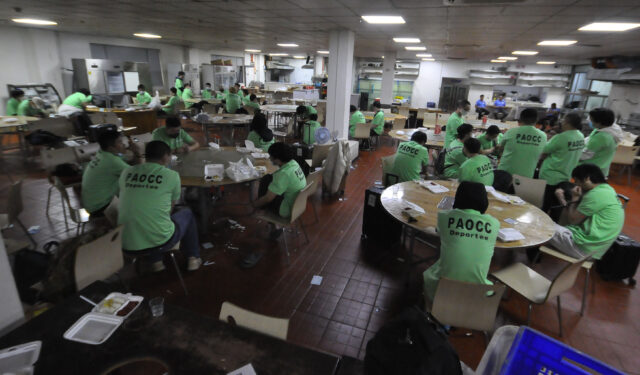
PRESIDENTIAL ANTI-ORGANIZED CRIME COMMISSION

PHILIPPINE senators on Tuesday urged President Ferdinand R. Marcos, Jr. to ban offshore gaming operators in the country given the host of crimes linked to them despite state regulation.

“Some really did not have licenses or permits from the very start but got their foreign managers and workers from authorized Philippine Offshore Gaming Operators (POGO),” Senate Minority Floor Leader Aquilino Martin L. Pimentel told reporters in a Viber message.

“Hence, the entire system that allows POGOs (to operate) has become the problem because the system has been ‘gamed.’”

He was commenting on Finance Secretary Ralph G. Recto’s remarks that he was open to recommend the ban of these gambling operators, mostly Chinese firms that operate online casinos, to Mr. Marcos.

The Philippine Amusement and Gaming Corp. (Pagcor) earlier said the government could lose P20 billion in yearly revenues if POGOs are banned.

“We tried regulating them, but our experience shows that a POGO is not one that can be regulated,” Senator Mary Grace N. Poe-Llamanzares said in a statement. “It is time to drop POGOs and attract the right investors in the country.”

Last week, the Presidential Anti-Organized Crime Commission (PAOCC) said it was looking into more offshore gaming operations across the country including those that are near key military facilities.

Manila and Beijing have agreed to boost cooperation against transnational crimes including those linked to POGOs after Executive Secretary Lucas P. Bersamin, who heads the commission, met with Chinese Ambassador to the Philippines Huang Xilian on July 3.

Under an executive order issued by ex-President Rodrigo R. Duterte in 2017, only Pagcor and three investment promotion agencies — Cagayan Economic Zone Authority, Aurora Pacific Economic Zone Free Port Authority and Authority of the Freeport Area of Bataan — can give a license to online gambling operators.

Philippine authorities have raided POGOs allegedly linked to crimes including human trafficking.

Senators are looking into cases of human trafficking, torture and other crimes committed at POGO hubs after a raid resulted in the rescue of hundreds of workers in Bamban, Tarlac.

Congress under Mr. Duterte passed a law taxing POGOs to legalize them, despite concerns about their social costs. Chinese President Xi Jinping had asked him to ban their operations.

“It is up to the Executive branch if they will continue to allow it or not since it was not allowed by a law to begin with,” Senate President Francis G. Escudero told reporters in a Viber message. — John Victor D. Ordoñez