Home Blog Page 2394

Kouame among 15 players called up for Gilas training

ANGE KOUAME — FIBA

WHILE Justin Brownlee is the main naturalized player, coach Tim Cone would prefer to have backup Ange Kouame in every Gilas Pilipinas training camp and hopefully, naturalization prospect Bennie Boatwright soon.

The Ivorian-born Kouame, who is currently playing for Meralco in the East Asia Super League, was among the 15 players called up for the sessions at Inspire Academy in Laguna that starts today ahead of next week’s FIBA Asia Cup Qualifiers.

“Ange (Kouame) is very important to us and we need him there so he can be ready to step in immediately (in the naturalized player slot), if necessary,” said Mr. Cone.

“Plus he is one of a few guys who can throw a body at June Mar (Fajardo) and get June Mar ready playing against bigger players. He has a very important role for us but he will most likely not be in the lineup because we expect Justin (Brownlee) to play both games (against New Zealand on the 21st and Hong Kong on the 24th).”

The 6-foot-11 Mr. Kouame, he shared, would have been a part of Gilas’ previous camp in the runup to the FIBA Olympic Qualifying Tournament in Latvia last July if he was not tied up with his club in France then.

“We hope he’ll always be available,” said Mr. Cone.

“If, God forbid, something happens to Justin, we would be able to bring in Ange and he would know the system and what we ask of him. It’s important to have him as part of the program as much as possible as that backup as we wait for Bennie Boatwright to go through the process of his naturalization.”

While waiting for the wheels of the Philippine naturalization process to move, Mr. Boatwright is also recuperating from an Achilles injury.

“His papers got delayed because of issues that were going on in the government. And so he got put on the back burner. And so he’s not eligible yet,” said Mr. Cone.

“But we’re still waiting for him. And in the meantime, Ange (Kouame) is our backup. Bennie still can’t play until December anyway as he’s coming off an injury. But he is definitely a candidate for the February window. And we’ll take a look at that and see what happens then.” — Olmin Leyba

CSB Blazers eye top seed against LPU Pirates in NCAA

COLLEGE OF ST. BENILDE BLAZERS — FACEBOOK.COM/NCAA.ORG.PH

Games on Friday
(Filoil EcoOil Arena)
12 noon – LPU vs CSB
2:30 p.m. – EAC vs JRU

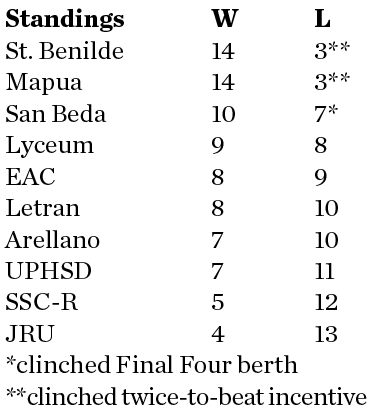
WITH an eye at avoiding defending champion San Beda University in the Final Four at all cost, College of St. Benilde (CSB) will go all out to hurdle Lyceum of the Philippines University (LPU) today and claim that No. 1 seed in NCAA Season 100 at the Filoil EcoOil Arena.

The Blazers currently share the top spot with the Mapua University Cardinals on 14-3 slates but the former would seal No. 1 with a win over the Pirates in their 12-noon match up even if they eventually end up tied again after the elimination round due to a higher quotient.

Mapua clashes upset-conscious Arellano University Saturday at the Cuneta Astrodome in the final play date of the eliminations.

If CSB succeeds, it will battle either LPU (9-8) or Emilio Aguinaldo College  (EAC) (8-9) in the semis next week at the Cuneta Astrodome.

And, of course, the No. 2 Mapua would eventually battle San Beda, which will be a dangerous team in the stage of that magnitude.

“I told them, ‘if you want to play San Beda in the semis, it’s fine with me. But you guys decide who you want to play,’” said CSB coach Charles Tiu.

“But for me, we want to compete every game, we want to improve every game,” he added.

But LPU is doing everything it can to snatch that win too as if it does so, it will claim the final Final Four ticket outright.

Mercifully, the Pirates could afford to lose that one as the least that could happen is a playoff for that last semis berth against EAC assuming the latter hurdles Jose Rizal U at 2:30 p.m. also today. — Joey Villar

Mitchell powers up Meralco Bolts against Korean champ Busan KCC Egis in East Asia Super League

NEW import Akil Mitchell provided the main power source as Meralco Bolts nipped Korean champ Busan KCC Egis, 81-80, for its second win in the East Asia Super League Season 2 Wednesday at the PhilSports Arena.

Mr. Mitchell punched in 33 points and grabbed 22 rebounds plus four assists as he led the reigning PBA Philippine Cup titlists to the great fightback from a nine-point deficit en route to solo second in Group B at 2-1.

The Panamanian big man capped his error-free debut over 36 minutes with 11 points in the fourth period including the go-ahead free throw in the last 6.4 seconds that turned out to be the game-winner.

“Just proud of the guys,” said Meralco coach Luigi Trillo after his charges bounced back from their 74-77 road loss to Japan’s Ryukyu last time.

“It’s hard for us. We’ve had one month where we haven’t had games and for the other side they’ve had nine, 10 games in the span of 20 days and they’re in their flow.  But our guys didn’t give up and Akil led us with his big rebounds.”

Mr. Mitchell took over import duties from Meralco resident Allen Durham and will man the fort both in the EASL and the coming PBA Commissioner’s Cup.

“I think the nice thing about bringing Akil is he’s a professional, he’s been around, he knows how to win, just like our former import also (Durham),”said Mr. Trillo. “But big for us is this is the first time that we’ve gotten two wins (in an EASL tournament) and obviously (we have) more games ahead of us.”

The Bolts, who also won their opening assignment at the expense of the Macau Black Bears, 97-85, moved closer to unbeaten pacesetter Ryukyu (2-0) with this home verdict while sending Busan spiraling to 0-2.

Second import DJ Kennedy produced 14 points, eight rebounds, and five assists to back up Mr. Mitchell as Chris Newsome, naturalized player Ange Kouame and Bong Quinto shot eight apiece.

Mr. Quinto’s last basket from the three-point was huge as it drew Meralco level at 80-all with 31 seconds left. After that, the Bolts made one big defensive stop that eventually led to Mitchell going to the line after drawing a foul from Leon Williams. — Olmin Leyba

Ailing Alcaraz outclasses Andrey Rublev to revive ATP Finals bid

TURIN, Italy — Spain’s Carlos Alcaraz made light of feeling under the weather as he dispatched Russia’s Andrey Rublev in impressive fashion to revive his ATP Finals hopes on Wednesday.

The Spanish four-time Grand Slam champion has been suffering with respiratory issues in Turin and wore pink nasal tape against Mr. Rublev in a resounding 6-3 7-6(8) victory.

In the late match in the John Newcombe group, two-time former champion Alexander Zverev, the world number two, underlined his superb late-season form to beat Norway’s Casper Ruud 7-6(3) 6-3 for his second victory of the week.

None of the eight men’s singles matches so far at this year’s season-ender have gone to three sets.

Third seed Mr. Alcaraz, bidding to win the title for the first time, looked far sharper than during his opening group match which ended in a straight-sets defeat by Mr. Ruud.

After sharing the opening six games, Mr. Alcaraz broke Mr. Rublev’s serve with a scorching forehand winner and reeled off five successive games to seize control of the match. — Reuters

Darius Garland, Cavaliers remain perfect as 76ers can’t keep up

DARIUS Garland scored 25 points and Donovan Mitchell took over down the stretch as the Cleveland Cavaliers remained undefeated with a 114-106 road victory over the short-handed Philadelphia 76ers on Wednesday.

Mitchell finished with 23 points, 13 rebounds and nine assists for Cleveland (13-0), which is off to the NBA’s best start since the Golden State Warriors’ record-setting 24-game winning streak to begin the 2015-16 season. The Cavaliers scuffled through much of the first half in this one before making a variety of big shots when it mattered most.

Philadelphia fought hard without Joel Embiid (knee), Paul George (knee) and Tyrese Maxey (hamstring) but still lost for the ninth time in 11 games this season. The 76ers were playing on back-to-back nights, having lost to the New York Knicks on Tuesday.

Rookie Jared McCain took advantage of the available playing time by scoring a career-high 34 points, while Kelly Oubre Jr. had 20 and Caleb Martin chipped in 18.

With Cleveland clinging to a 103-100 lead with under three minutes to play, Mitchell drained 3-pointers on consecutive possessions to put the Cavaliers ahead 109-102. He added a step-back 3-pointer with 1:18 remaining and then drove for a layup to make it 114-104 with about a minute left.

Both teams made five 3-pointers in the first quarter — the Cavs needed only eight attempts to do so — as Cleveland led 31-27 after one period.

The Sixers began the second quarter with a 12-1 run. Reggie Jackson scored eight of those points for the hosts, while Martin had the other four. Philadelphia led by as many as eight points in the second quarter and held a 54-48 lead going into the locker room.

Early in the third quarter, Cleveland scored 10 straight points, punctuated by Garland’s floater, to turn a seven-point deficit into a 62-59 lead. Garland scored 13 third-quarter points for the visitors, who led 82-78 after three periods.

Mitchell found Ty Jerome for a 3-pointer on the first possession of the fourth quarter and then drained a jumper on the next trip to grow Cleveland’s cushion to 87-78. Philadelphia chipped away, however, closing within 95-93 on Oubre’s layup with 6:47 to play. — Reuters

Rubio pick signals a Trump China policy that could go beyond tariffs

MARCO RUBIO — REUTERS FILE PHOTO

WASHINGTON — With his nomination of China hardliner Marco Rubio for secretary of state, U.S. President-elect Donald Trump has signaled his policy toward Beijing could go beyond his focus on tariffs and trade to a more hawkish stance towards China as the United States’ top strategic rival.

Mr. Rubio’s selection on Wednesday came along with other cabinet picks that might upset China, such as Representative Mike Waltz as national security adviser and John Ratcliffe to lead the Central Intelligence Agency (CIA).

Taken together, the choices suggest Mr. Trump wants to upend the Biden administration’s approach of “managing competition” with Beijing on issues ranging from support for Taiwan to China’s role in the US fentanyl crisis.

Republicans have criticized the Biden position as too conciliatory.

Mr. Rubio “believes in his heart that China is an enemy of the United States,” said David Firestein, a former U.S. diplomat with expertise on China.

“That’s going to color everything he does with respect to China,” said Mr. Firestein, adding that Mr. Rubio’s belief in existential zero-sum competition with China would “raise the decibel level” of US-China relations.

As secretary of state, Mr. Rubio would help carry out, not set, Mr. Trump’s foreign policy, but his selection will put a China antagonist with significant foreign policy experience at the center of his cabinet debates.

Mr. Trump has pledged to end China’s most-favored-nation trading status and slap tariffs on Chinese imports in excess of 60% — much higher than those imposed during his first term.

Mr. Rubio is almost certain to be confirmed by the U.S. Senate, where he is a senior member of both the foreign relations and intelligence committees.

The staunchly anti-communist Cuban-American’s support for Hong Kong democracy protesters earned him Chinese sanctions in 2020.

It would be the first time China would have active travel restrictions on a US secretary of state, presenting an early test of how Beijing might engage with the new Trump administration.

For his part, Mr. Rubio has been an advocate for US visa sanctions on Chinese officials, and pushed the State Department to bar Hong Kong’s chief executive, John Lee, from traveling to San Francisco for the 2023 APEC summit.

China’s embassy in Washington did not comment on the Rubio sanctions or his nomination, but spokesperson Liu Pengyu said Beijing looked forward to working with the new administration to promote ties “in a stable, healthy and sustainable direction.”

FOCUS ON HUMAN RIGHTS
China’s record on human rights, historically a contentious issue between the countries, has been a focus for Mr. Rubio.

He co-sponsored the Uyghur Forced Labor Prevention Act, giving the US government a new tool to bar Chinese imports over concerns of rights abuses of Muslim minorities in China, claims that enrage Beijing.

Hong Kong activists see Mr. Rubio, who has sponsored legislation including the Hong Kong Human Rights and Democracy Act of 2019, as a champion of their cause.

“We’re obviously really excited and look forward to working with him on these issues,” said Frances Hui, an activist in Washington with the Committee for Freedom in Hong Kong Foundation for whose arrest China has offered a bounty.

Mr. Rubio has also proposed a bill now being considered to let the Secretary of State strip certification from Hong Kong’s economic and trade offices in the United States.

He has argued that the near complete erosion of the Chinese financial hub’s autonomy from Beijing means it does not merit separate government privileges.

It is unclear what leeway Mr. Trump, who has praised China’s leader Xi Jinping at times, would give his new top diplomat to adopt restrictions on China, particularly those clashing with other goals of his administration.

“(Trump’s foreign policy) lineup is conspicuously hawkish on China, but can be counted on to follow the leader if he shifts from confrontation with Beijing to the art of the deal,” said Daniel Russel of the Asia Society Policy Institute.

During Mr. Trump’s first term, the United States and China struck a trade deal after a series of tit-for-tat tariffs, but many analysts say China has not lived up to its terms.

EXPORT CONTROLS AND TAIWAN SUPPORT
Mr. Rubio has also focused on China as a perceived threat to national security.

He has led calls to blacklist Chinese industrial battery company CATL, revoke capital gains tax rates for US companies investing in China, tighten export restrictions on US technology to China, and end tariff loopholes for small packages shipped from China, many used to carry fentanyl precursor chemicals.

Perhaps most grating to Beijing is Mr. Rubio’s full-throated support for Taiwan, the democratically governed island China claims as its own, including calls for a free trade deal and unfettered interaction between US officials and Taiwan counterparts.

Already, analysts are anticipating Taiwan will make large and early new arms purchases after Trump takes office, calls likely to fall on receptive ears at Rubio’s State Department, which reviews and approves foreign weapons sales.

During his first term, Mr. Trump approved more than $18 billion in arms sales for Taiwan, compared to Mr. Biden’s $7.7 billion.

Some analysts believe Beijing may try to sidestep Mr. Rubio and seek engagement directly between Mr. Xi and Mr. Trump, or with other senior US officials.

“If that doesn’t work, then I think we’re going to get into a much more regular escalation of a bad relationship,” said Steve Tsang, director of the China Institute at London’s School of Oriental and African Studies. — Reuters

Indonesian president says he will safeguard sovereignty in South China Sea

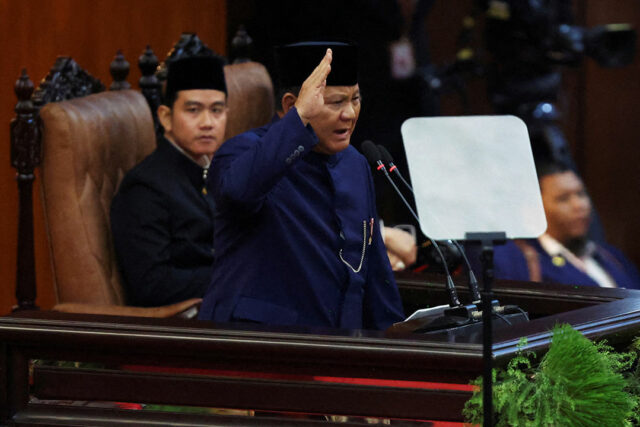
INDONESIA’S new president, Prabowo Subianto, shouts after being inaugurated at the House of Representative building in Jakarta, Oct. 20, 2024. — REUTERS

JAKARTA — Indonesian President Prabowo Subianto said he would “always safeguard our sovereignty” when asked about the issue of the South China Sea, adding partnerships are better than conflicts and that “we respect all powers.”

Prabowo’s comments, made while he was in Washington on Wednesday, came after his foreign ministry stressed that Indonesia does not recognize China’s claims over the South China Sea despite signing a maritime deal with Beijing last weekend.

Beijing has long clashed with Southeast Asian nations over the South China Sea, which it claims almost in its entirety, based on a “nine-dash line” on its maps that cuts into the exclusive economic zones (EEZ) of several countries.

“We respect all powers, but we will always safeguard our sovereignty. But I choose to always find possibilities of a partnership,” said Prabowo, who has repeatedly said he will pursue a non-aligned foreign policy.

“Partnerships are better than conflicts,” he told reporters.

Prabowo, who is on his first trip since taking office last month, met with Chinese President Xi Jinping in Beijing on the weekend. A maritime development deal signed by China and Indonesia said they had reached common understanding “on joint development in areas of overlapping claims.”

That wording sparked concern in Indonesia, with analysts saying it could be interpreted as a change in Jakarta’s long-held stance as a non-claimant state in the South China Sea, and risked compromising Indonesia’s sovereign rights to exploit resources in its EEZ.

Prabowo did not directly refer to the joint statement in his comments to reporters, but said he had discussed the South China Sea with President Joseph R. Biden in a meeting the day before.

Prabowo will also travel to Peru for the Asia-Pacific Economic Cooperation summit and Brazil for the G20 summit. — Reuters

Ben & Jerry’s says Unilever silenced it over Gaza stance

Ice cream brand Ben & Jerry’s — COURTESY OF BEN & JERRY’S WEB

NEW YORK — Ice cream brand Ben & Jerry’s said in a lawsuit filed Wednesday that parent company Unilever has silenced its attempts to express support for Palestinian refugees, and threatened to dismantle its board and sue its members over the issue.

The lawsuit is the latest sign of the long-simmering tensions between Ben & Jerry’s and consumer products maker Unilever. A rift erupted between the two in 2021 after Ben & Jerry’s said it would stop selling its products in the Israeli-occupied West Bank because it was inconsistent with its values, a move that led some investors to divest Unilever shares.

The ice cream maker then sued Unilever for selling its business in Israel to its licensee there, which allowed marketing in the West Bank and Israel to continue. That lawsuit was settled in 2022.

In its new lawsuit, Ben & Jerry’s says that Unilever has breached the terms of the 2022 settlement, which has remained confidential. As part of the agreement, however, Unilever is required to “respect and acknowledge the Ben & Jerry’s independent board’s primary responsibility over Ben & Jerry’s social mission,” according to the lawsuit.

“Ben & Jerry’s has on four occasions attempted to publicly speak out in support of peace and human rights,” according to the lawsuit. “Unilever has silenced each of these efforts.”

Unilever did not immediately respond to a request for comment.

Ben & Jerry’s said in the lawsuit it has tried to call for a ceasefire, support the safe passage of Palestinian refugees to Britain, back students protesting at US colleges against civilian deaths in Gaza, and advocate for a halt in US military aid to Israel, but has been blocked by Unilever.

The independent board separately spoke out on some of those topics, but the company was muzzled, the lawsuit says.

Ben & Jerry’s said that Peter ter Kulve, Unilever’s head of ice cream, said he was concerned about the “continued perception of anti-Semitism” regarding the ice cream brand voicing its opinions on Gazan refugees, according to the lawsuit.

Unilever was also required under the settlement agreement to make a total of $5 million in payments to Ben & Jerry’s for the brand to make donations to human rights groups of its choosing, according to the lawsuit.

Ben & Jerry’s selected the left-leaning Jewish Voice for Peace and the San Francisco Bay Area Chapter of the Council on American-Islamic Relations, among others, the filing says.

Unilever in August objected to the selections, saying that Jewish Voice for Peace was “too critical of the Israeli government,” according to the lawsuit.

Ben & Jerry’s has positioned itself as socially conscious since Ben Cohen and Jerry Greenfield founded the company in a renovated gas station in 1978. It kept that mission after Unilever acquired it in 2000.

In March, Unilever said it will spin off its ice cream business, which includes Ben & Jerry’s, by the end of 2025 to simplify its holdings.

Unilever’s dozens of products include Dove soap, Hellmann’s mayonnaise, Knorr bouillon cubes, Surf detergent and Vaseline petroleum jelly. — Reuters

More than 800 million adults have diabetes globally, study suggests

SWEET LIFE-UNSPLASH

LONDON — More than 800 million adults have diabetes worldwide – almost twice as many as previous estimates have suggested — and more than half of those aged over 30 who have the condition are not receiving treatment, according to a new study.

In 2022, there were around 828 million people aged 18 years and older with type 1 and type 2 diabetes worldwide, the study published in The Lancet found. Among adults aged 30 years and older, 445 million, or 59% of them, were not receiving treatment, the authors said.

The World Health Organization (WHO) has previously estimated that around 422 million people have diabetes, a chronic metabolic disease involving blood sugar levels, which can damage the heart, blood vessels, nerves and other organs if untreated.

The global diabetes rate has doubled since 1990 from around 7% to 14%, the study suggested, driven largely by rising cases in low- and middle-income countries. But although there are far more cases, treatment rates in those regions have barely increased, the authors said, while things have improved in some higher-income countries — leading to a widening treatment gap.

In parts of sub-Saharan Africa, for example, only 5-10% of those estimated to have diabetes were getting treatment, said Jean Claude Mbanya, professor at the University of Yaounde I in Cameroon. Treating diabetes, either with insulin or drugs, can be expensive.

“A huge number [are] at risk of serious health complications,” he said.

The study was done by the NCD Risk Factor Collaboration and the WHO, and is the first global analysis to include rates and treatment estimates for all countries, the authors said. It is based on more than 1,000 studies involving more than 140 million people.

Diabetes was defined as having high fasting plasma glucose levels and high glycated hemoglobin, both common diagnostic criteria for the condition, or taking medication for diabetes. The authors said both tests were used to avoid underestimating rates in parts of the world, particularly South Asia, where using fasting plasma glucose alone missed cases.

While the study could not separate out type 1 and type 2 cases, previous evidence has suggested that most diabetes in adults is type 2, which is linked to obesity and poor diet, the authors said. — Reuters

Fed officials wary of inflation risks as they weigh more rate cuts

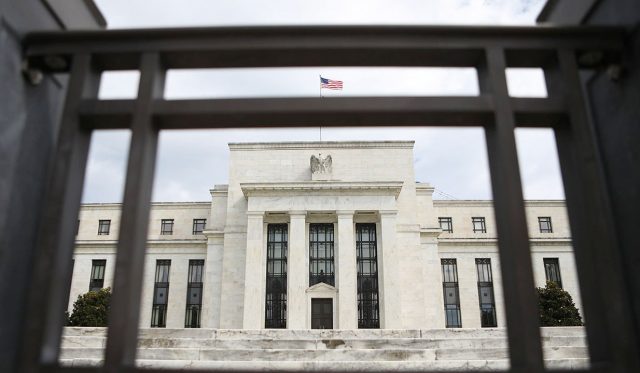
REUTERS

After a scare earlier this year that the U.S. labor market might be cooling too fast, some Federal Reserve policymakers are shifting their attention back to inflation risks as they weigh when, and how fast and far, to cut interest rates.

Government data released on Wednesday showed consumer prices rose 2.6% in the 12 months through October, above the U.S. central bank’s 2% goal but in line with economists’ expectations. 

Traders in financial markets piled into bets that the Fed’s policy-setting Federal Open Market Committee, fresh from last week’s quarter-percentage-point rate cut, will go ahead with another reduction in borrowing costs at its Dec. 17-18 meeting. 

It’s not clear if Fed Chair Jerome Powell will ratify that market view when he provides an update on his economic outlook to business leaders in Dallas on Thursday, just over a week after voters decided to send Donald Trump back to the White House. Powell has said that the Republican president-elect’s pledges of tax cuts and increased tariffs on imports would have no “near-term” impact on U.S. monetary policy. 

Fed policymakers on Wednesday held open the door to a go-slower approach, in the face of data showing the labor market remains healthy, even as price pressures remain. 

“In my baseline scenario, based on current information, I expect inflation to converge toward 2% over the medium term,” St Louis Fed President Alberto Musalem said at an Economic Club of Memphis luncheon, allowing the central bank to “judiciously and patiently” evaluate data in considering further rate cuts. 

But he also said, while the risk of unwelcome deterioration in the labor market may have fallen, recent data shows “the risk of inflation ceasing to converge toward 2%, or moving higher, has risen.” 

Dallas Fed President Lorie Logan struck a similar tone in remarks to an energy conference at her regional bank. 

“I anticipate the FOMC will most likely need more rate cuts to finish the journey” of bringing inflation toward the Fed’s goal.

But, she added, it’s “best to proceed with caution,” noting that “if we cut too far, past neutral, inflation could reaccelerate and the FOMC could need to reverse direction.” 

Kansas City Fed President Jeffrey Schmid, speaking at the same conference, said “it remains to be seen how much further interest rates will decline or where they might eventually settle.”

The Fed cut its policy rate by half a percentage point in September after a sharp slowdown in job growth and a rise in the unemployment rate raised concerns about a potential recession. Subsequent stronger labor market data suggested those fears were overblown, and with inflation continuing to fall – by the Fed’s targeted measure it registered 2.1% in September – the central bank cut its benchmark overnight interest rate by a quarter of a percentage point last week. 

The policy rate is now in the 4.50%-4.75% range. And that, Dallas Fed’s Logan said, is now “right at the top” of the estimated range of the neutral rate of interest where the cost of money acts neither as a headwind nor a tailwind for economic growth.

Logan did not speak directly to her view on the appropriateness of a rate cut at the Fed’s meeting next month, but her remarks suggest she is among the policymakers who would prefer to slow down on cuts sooner rather than later.

She noted upside risks to inflation, including from a possible post-election surge in business investment, as well as from consumer spending. Logan said she feels the labor market, with an unemployment rate of 4.1%, is cooling but not deteriorating materially. 

And while she said a recent rise in Treasury yields could slow the economy more than the Fed intends, posing a downside risk to employment, Logan also said that because the neutral rate has likely risen in recent years, U.S. monetary policy may not be braking the economy as much as it might appear.

RIGHT DIRECTION
Minneapolis Fed President Neel Kashkari, in an interview with Bloomberg TV, likewise noted the possibility that the neutral rate has risen, which suggests the Fed will not need to cut rates as much as it otherwise would.

The consumer price index data released on Wednesday, he said, seems to show that inflation is headed in the right direction. 

“I’ve got confidence about that, but we need to wait,” he added. “We’ve got another month or six weeks of data to analyze before we make any decisions.” 

Kashkari earlier this week said it would be unlikely that the labor market could weaken enough to affect the Fed’s policy decision at its next meeting. Opting to hold rates steady instead of cutting at that meeting, he said, would hinge on inflation data. 

Analysts saw the latest inflation data as no barrier to a rate cut in December, particularly because some of the strength in prices came from housing inflation, which Fed officials, pointing to a continuing decline in new leases, have expressed confidence will ebb. 

The Fed will get one more CPI reading before the December meeting. — Reuters

Asia’s airlines blame supply chain woes for disrupted operations

BANDAR SERI BEGAWAN, Brunei – Asia-Pacific travel demand has recovered from the pandemic, but earnings at the region’s airlines are under pressure from supply chain problems disrupting operations and exposing them to strengthening consumer protection rules, industry executives say.

A shortage of parts, labour and new planes as the aviation industry emerged from the pandemic has coincided with higher-than-expected repairs needed on the latest-generation engines.

“The supply chain issue is the biggest challenge the industry is facing,” Subhas Menon, the director general of the Association of Asia Pacific Airlines (AAPA) said at the trade body’s annual meeting in Brunei this week.

Turnaround times for engine maintenance are at record lengths, with airlines having to cut flights, move parts around and lease stop-gap engines or planes to keep operations ticking.

Thai Airways CEO Chai Eamsiri said servicing the Rolls-Royce RR.L engines on its Boeing 787 jets used to take around three months, but that has blown out to about six.

“We have to stretch the aircraft. We used to operate 12.5 hours a day, now we have to stretch it to 13 plus,” he told Reuters on the sidelines of the gathering.

SUPPLY CHAIN FRUSTRATION
The heads of major carriers including Thai Airways, Singapore Airlines, Malaysia Airlines and Kazakhstan’s Air Astana expressed frustration with maintenance times and said governments trying to improve consumer protections should stop placing the blame on airlines for delays.

“The root cause is coming from the supply chain…But we are the one facing the customer,” Eamsiri told the meeting.

Malaysia, Australia, Thailand and the Philippines are among the countries beefing up airline consumer protections to require refund options in the case of delays and cancellations, as is the United States, though the rules are not as onerous as EU regulations requiring payments to affected passengers.

Aviation manufacturers “have to get their act together”, Air Astana CEO Peter Foster said.

Amid a shortage of planes, labour and parts, Malaysia Airlines suffered a string of service disruptions this year and cut its network capacity by 20% from September.

Malaysia’s civil aviation regulator cut the duration of the carrier’s air operator certificate to one year from three years after an investigation.

“All airlines are wringing the neck of our suppliers,” Malaysia Airlines CEO Izham Ismail told attendees.

Engine servicing used to take around 55 days before the pandemic, but now it needs 100 or more, Ismail said.

Representatives of Airbus and Rolls-Royce said separately they were working to resolve supply chain snags, including improving suppliers’ access to financing.

AIRFARES FALLING
Travel in the Asia-Pacific region, which accounts for around 32% of global passenger traffic, recovered later than other parts of the world due to a belated lifting of pandemic travel restrictions, particularly in China.

In September, passenger volumes for 40 Asia-Pacific based carriers averaged 97.5% of the corresponding month in 2019, according to AAPA data.

Airlines globally have been seeing stable demand but airfares are declining as a post-pandemic travel boom abates and most planes are back in the skies.

Singapore Airlines, seen as a bellwether for the region, last week posted a 48.5% plunge in interim net profit, reflecting stiff competition, and flagged its earnings would stay under pressure despite robust travel demand. — Reuters

Trump taps loyalists with few qualifications for top jobs

RAWPIXEL

U.S. President-elect Donald Trump chose loyalists with little experience for several key cabinet positions on Wednesday, stunning some allies and making clear that he is serious about reshaping – and in some cases testing – America’s institutions.

Mr. Trump’s choice of congressman Matt Gaetz, 42, for U.S. attorney general, America’s top law enforcement officer, was a surprising pick. The former attorney has never worked in the Justice Department, or as a prosecutor, and was investigated by the Justice Department over sex trafficking allegations. His office said in 2023 that he had been told by prosecutors he would not face criminal charges.

Mr. Trump tapped Tulsi Gabbard as director of national intelligence. The former Democratic congresswoman-turned-Trump-ally has in the past spoken out against military intervention in the civil war in Syria under former President Barack Obama and implied that Russian President Vladimir Putin had valid grounds for invading Ukraine, America’s ally.

“I know Tulsi will bring the fearless spirit that has defined her illustrious career to our intelligence community, championing our constitutional rights and securing peace through strength,” Mr. Trump said in a statement.

Ms. Gabbard has little direct experience with intelligence work and had not been widely expected to be tapped for the post, which oversees 18 spy agencies.

She was deployed in Iraq from 2004 to 2005 as a major in the Hawaii National Guard and is now a lieutenant colonel in the U.S. Army Reserves.

On Tuesday, Mr. Trump chose Pete Hegseth, a Fox News commentator and veteran, to be his secretary of defense. Hegseth has opposed women in combat roles and questioned whether the top American general was promoted to his position because of his skin color. He also lobbied Mr. Trump during his 2017-2021 term to pardon servicemembers who allegedly committed war crimes.

Sprinkled in with those personnel choices were more conventional selections. Mr. Trump said on Wednesday he would nominate Senator Marco Rubio, who is a hardliner on China, as his new secretary of state.

But on the whole, his selections signal a radical shift in the way the U.S. government conducts its business and in the role America will play in the world over the next four years.

Mr. Trump has said he wants to end the “weaponization” of the Justice Department, which he said brought politically motivated criminal cases against him to hurt his presidential candidacy. The department says it acts without political bias.

LOYALTY
One common thread for Mr. Trump’s picks: He chose unfailingly loyal people who are unlikely to push back against his most controversial orders, analysts said.

Mr. Trump pledged on the campaign trail to go after his political enemies, including Democratic President Joe Biden, a pledge that Mr. Gaetz, his attorney general-designate, is unlikely to stand in the way of.

“Gaetz will do exactly as Trump says, which is why he was picked I guess,” said a source close to Mr. Trump, after Mr. Gaetz’s selection as was announced.

A half dozen sources close to Trump world, including donors, consultants and fundraisers, said privately that they were shocked by the choice of Gaetz because of his limited qualifications and past DOJ investigation into him.

“I was shocked that he has been nominated,” Republican senator Susan Collins, a moderate from Maine, told reporters about the Gaetz selection. “The president obviously has the right to nominate whomever he wants. But I think this is an example of why it’s so important that we have the advice and consent provisions in the Constitution.”

Some of Mr. Trump’s other nominees also lack any meaningful qualifications. Mr. Hegseth, while a decorated combat veteran, is best known in recent years as a media personality. He will now oversee the better part of 3 million employees and the world’s largest fighting force.

“Being secretary of defense is a very serious job, and putting someone as dangerously unqualified as Pete Hegseth into that role is something that should scare all of us,” said Tammy Duckworth, a Democratic senator from Illinois who sits on the armed services committee.

SENATE GUARDRAIL
Not only are Mr. Trump’s national security and foreign policy nominees universally skeptical of helping Ukraine fend off Russia’s invasion, some of their statements have been outright hostile toward Kyiv.

Ms. Gabbard, who will oversee America’s sprawling foreign and domestic intelligence apparatus, has portrayed Mr. Putin as a defender of his own nation’s vital national security interests. Ukraine, she has said, is a corrupt kleptocracy.

One potential guardrail that Mr. Trump and his nominees still face: the Senate.

While Mr. Trump’s Republicans control the Senate and most Republican lawmakers will support his nominees for top jobs, the slate the president-elect put forward will likely give the party’s remaining moderates pause and test just how loyal elected Republicans are to him and his vision.

The choice of Mr. Rubio as secretary of state could come as a relief to U.S. partners worried that the Trump administration could pull back from its global network of alliances, including NATO, given Trump’s “America First” emphasis during his campaign to return to the White House.

“He will be a strong Advocate for our Nation, a true friend to our Allies, and a fearless Warrior who will never back down to our adversaries,” Mr. Trump said of Rubio in a statement.

In additional to being a China hawk, Mr. Rubio, 53, is an outspoken critic of Cuba’s Communist government and strong backer of Israel.

He has in the past advocated for a more assertive U.S. foreign policy with respect to America’s geopolitical foes, although recently his views have aligned more closely with those of Trump’s approach to foreign policy.

Some analysts questioned whether Rubio would stand up to Trump, noting the president-elect’s inclination to make personal loyalty a central requirement for administration posts.

Aaron David Miller, a senior fellow at the Carnegie Endowment for International Peace, who served in both Democratic and Republican administrations, said it is essential for any president’s advisers to stand up to him when necessary, given the wide array of foreign policy challenges Mr. Trump will face.

“I’m trying to keep an open mind here,” Mr. Miller said, noting that Mr. Rubio, because of his experience in Congress, has a better grasp of foreign policy than any of Trump’s other appointees. — Reuters


ADVERTISEMENT
ADVERTISEMENT