Home Blog Page 231

China conducts patrol in South China Sea, accuses Philippines of ‘disrupting’ peace

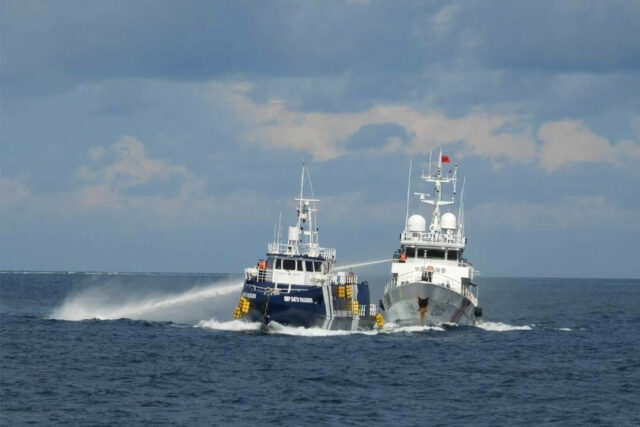
FILE PHOTO of a China Coast Guard vessel fires a water cannon at the BRP Datu Pagbuaya near Thitu Island, in the latest flare-up between Manila and Beijing in the disputed South China Sea. — PCG

BEIJING — China’s military said on Friday it conducted a routine patrol in the South China Sea from February 23 to 26, and accused the Philippines of “disrupting” peace and stability by organizing joint patrols with countries outside the region.

The military’s Southern Theatre Command will “resolutely safeguard China’s territorial sovereignty and maritime rights and interests, and firmly uphold regional peace and stability,” spokesperson Zhai Shichen said in a statement.

The navies of the Philippines, the US, and Japan trained alongside each other in the South China Sea this week to ramp up cooperation among the military allies, the Philippines’ armed forces said on Friday. — Reuters

[B-SIDE Podcast] Where the Digital World Converges: Conversations on Cloud | Ep 1 | Why the Philippines Needs an In-Country Cloud Now

Follow us on Spotify BusinessWorld B-Side

Data has the ability to power a nation when it can store data within its shores.

In the Philippines, however, 90% of government data is stored abroad, costing taxpayers around P12 billion annually, according to the Department of Information and Communications Technology.

In the first episode of “”Where the Digital World Converges: Conversations on Cloud,”” a collaboration of BusinessWorld B-Side with Converge Global Business, Converge Studios CEO James Mendoza and National Privacy Commission Deputy Commissioner Atty. Jose Belarmino II share insights on how crucial an in-country cloud is for the Philippines and what stakeholders here should do to secure this cloud.

Interview by Beatriz Cruz
Audio editing by Jayson John Marinas

Follow us on Spotify BusinessWorld B-Side


World’s top money managers favor emerging markets, Citi says

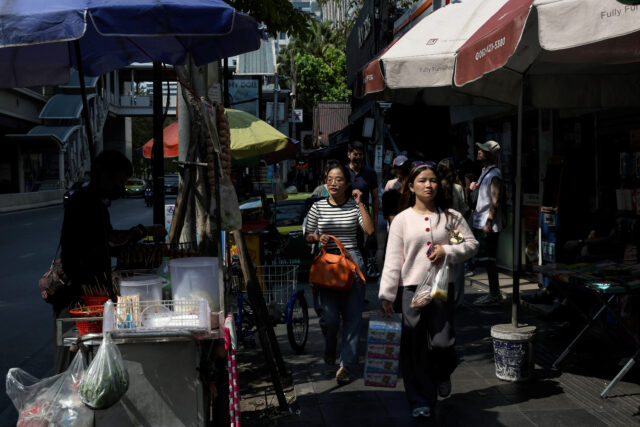
Pedestrians walk past food stalls in Bangkok, Thailand. / BLOOMBERG

Global asset managers who collectively oversee more than $20 trillion of assets have grown more bullish across emerging-market equities, currencies, domestic bonds and credit, potentially offering fresh momentum to the sector’s record-busting rally.

Citigroup Inc., which reviewed the published outlooks of some of the world’s biggest asset managers, found that funds had added to long positions in markets across Asia, Latin America, as well as Europe, the Middle East and Africa. The findings came as MSCI’s main emerging equity index trades close to record highs. The gauge rose 0.2% on Thursday and nearly 15% year to date, helped by tech-heavy bourses in Seoul and Taipei.

Asian tech shares have shrugged off the scare that swept through Wall Street this week, after a report suggested artificial intelligence would disrupt swathes of the economy. That’s because Korean and Taiwanese companies produce the hardware used for building AI networks. South Korean stocks added another 3.8% on Thursday, with Samsung Electronics Co Ltd. up 9%, for its longest winning streak since 1986.

The South Korean bourse, which recently leapfrogged France to become the ninth largest in size globally, has helped drive the emerging stock index 6% higher this month alone.

The S&P 500, meanwhile, is set to end February flat. US stocks were trading lower on Thursday as Nvidia Corp.’s solid forecast failed to inspire investors seeking reassurances about prospects for artificial intelligence.

The over-arching bullishness on emerging markets is a consequence of increased US policy uncertainty and a blowout fiscal deficit, that’s weighing on the dollar. While that’s forcing more investors to try and diversify exposure away from the greenback, concerns are also mounting over spending increases in Japan, Germany and other developed nations.

Developing nations saw an increase in interest “as managers search for diversification in non-US assets and see opportunities in EM due to improved fundamentals and a weak USD,” Citi analysts told clients.

CAUTIOUS SESSION
Most emerging-market currencies were weaker on Thursday even as the dollar was little changed. Some Asian currencies posted gains, with Taiwan’s dollar rising 0.3% on strong foreign investment flows, while China’s yuan and Indonesia’s rupiah also advanced.

Still, broader sentiment toward developing-world FX turned cautious during the session, with most Latin American currencies posting losses against the dollar on a day when commodities also declined.

The Colombian peso saw particularly sharp losses, shedding nearly 4% — its biggest one-day drop since March 2020 — after a new poll showed leftist Senator Iván Cepeda holding a wide lead in the presidential race. Neighboring Ecuador also raised tariffs on Colombian imports, escalating a trade dispute and adding to negative sentiment toward Colombian assets. The peso was by far the worst-performing emerging-market currency on Thursday.

Colombia’s dollar bonds declined across the curve and were among the weakest performers in the EM debt universe. Longer-dated dollar-denominated bonds fell by more than a cent.

“March 8 elections are right around the corner and local yields are spiking,” said Alvaro Vivanco, EM Macro Strategist at Wells Fargo. While the trend reflected in the poll is not entirely new, he added that approval ratings for incumbent President Gustavo Petro have seen a “big jump” recently, providing a “higher ceiling” for Cepeda at the ballot box.

Other Latin American currencies were also under pressure. The Chilean peso fell nearly 1%, while Argentina’s peso dropped 0.6%, retreating from four-month highs reached earlier in the week. Brazil’s real declined about 0.3%.

In Brazil, Flavio Bolsonaro’s presidential bid is gaining momentum, surprising skeptics who initially dismissed his decision to run as a tactic to secure amnesty for his father, jailed former President Jair Bolsonaro, rather than a serious campaign. Many centrists had feared his candidacy would split the right-leaning vote and hand October’s election to President Luiz Inacio Lula da Silva. His recent rise in polls, however, is challenging that view.

Elsewhere in the region, Latin American equities lagged, with a regional stock gauge down 0.7%, diverging from the broader MSCI Emerging Markets Index, which traded slightly higher.

Still, Latin American stocks remain among the top performers globally this year, up nearly 20% in 2026 and outpacing the roughly 15% gain in emerging markets overall.

There are notable outliers, however. Argentine stocks have missed the broader Latin American rally as earlier euphoria surrounding President Javier Milei’s election victories has faded amid concerns over weak corporate earnings. The benchmark Merval index has flattened and is down about 8% this year. — Bloomberg

Reform in action: Dizon, Almirol named PeopleAsia ‘People of the Year’

Photo courtesy of PeopleAsia

Two key government reformers have been named “People of the Year” by PeopleAsia, underscoring a broader push for accountability and digital transformation in the public sector.

Department of Public Works and Highways (DPWH) Secretary Vince Dizon was recognized for institutional reforms aimed at restoring integrity in one of the country’s largest implementing agencies. Since assuming office, Mr. Dizon has prioritized transparency, launching a public Transparency Portal, ordering asset freezes against implicated personnel, dismissing erring officials, and introducing structural reforms to strengthen oversight of infrastructure projects.

“The President asked me to do three things. Hold those responsible to account wherever the evidence leads. Get the people’s money back. Reform the DPWH so that this never happens again,” Mr. Dizon said.

He described corruption within the agency as systemic and deeply embedded, stressing that reform requires confronting long-standing practices and reinforcing internal controls.

At the Department of Information and Communications Technology (DICT), Undersecretary for e-Government David Almirol, Jr. was cited for accelerating digital reforms designed to make government services faster, simpler, and more accessible.

Framing digital transformation as a matter of public service, Mr. Almirol said the push to innovate government systems is rooted in a simple goal: make services easier, faster, and more accessible for every Filipino.

“The mandate was clear: to give Filipinos a government that is accessible. And President Ferdinand Marcos’ tagline expresses it succinctly: Walang pila, walang red tape, walang corruption (No lines. No red tape. No corruption),” Mr. Almirol emphasized, underscoring the President’s direction.

“Why join a long queue when you can process papers from the comfort of your home? Why get stuck in traffic or file a leave to get a document? Why can’t government transactions be done while you’re having your morning coffee? Technology will make all these possible,” Mr. Almirol said. “Once processes are automated, everything will become simple. Government should not be complicated — it should help people, not make things harder for them.”

Under his leadership, the DICT advanced the eGovPH Super App and the digital National ID, integrating services into unified digital platforms. Mr. Almirol emphasized that both initiatives were developed internally by government teams, resulting in significant savings.

“We didn’t get the services of a contractor for the eGovPH Super App. Same with the digital National ID — my staff made it. The government saved a lot,” he said. “Now we can transact with the government in a single app. It’s a major shift.”

Before entering public service, Mr. Almirol served as chief executive of Multisys Technologies Corp. His early career included working in Iraq in 2003 as an illegally recruited janitor, where he learned hard coding skills from American soldiers. After returning to the Philippines, he ventured into business but later lost his savings due to rapid expansion.

“My biggest mistake was that I overexpanded. I had seven computer shop branches in Isabela and nearby provinces. I spent all my savings from Iraq and lost money. It was the most painful experience,” he said, noting that the setback shaped his focus on efficiency and fiscal discipline in government projects.

Also honored was Ramon S. Ang, chairman and CEO of San Miguel Corp., who received the magazine’s Lifetime Achievement Award for his contributions to nation-building. Eduardo Jose Aliño, chairman and administrator of the Subic Bay Metropolitan Authority, was recognized for generating P6 billion in committed investments for the economic zone.

Veteran broadcast journalist Jessica Soho of GMA Network and music icon Martin Nievera were likewise cited for their lasting contributions to media and entertainment.

Entrepreneur Nikki Tang, Dr. Hayden Kho, Jr. of Belo Medical Group, designer Francis Libiran, and Anna Cabrera of the Philippine Animal Welfare Society were also recognized for leadership in business, design, and advocacy.

The recognition of Messrs. Dizon and Almirol highlights how government reform today is being driven on two fronts: enforcing accountability within institutions and leveraging technology to modernize public service delivery.


Spotlight is BusinessWorld’s sponsored section that allows advertisers to amplify their brand and connect with BusinessWorld’s audience by publishing their stories on the BusinessWorld Web site. For more information, send an email to online@bworldonline.com.

Join us on Viber at https://bit.ly/3hv6bLA to get more updates and subscribe to BusinessWorld’s titles and get exclusive content through www.bworld-x.com.

South Korea’s President Lee to visit the Philippines on March 3

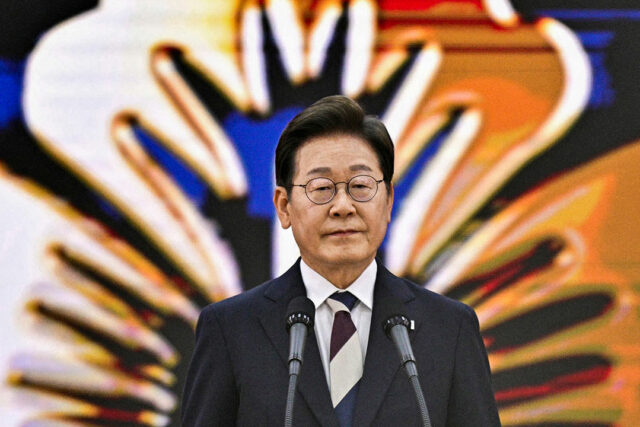
SOUTH KOREA’S President Lee Jae-myung delivers a speech after taking his oath during his inauguration ceremony at the National Assembly in Seoul on June 4, 2025. — REUTERS

SEOUL — South Korean President Lee Jae Myung will make state visits to Singapore and the Philippines in early March and discuss cooperation in artificial intelligence and nuclear energy, according to his office on Friday.

Mr. Lee will hold a summit with Singaporean Prime Minister Lawrence Wong in Singapore during his visit between March 1 to 3. South Korea hopes to expand existing strong investment and trade ties to AI and nuclear energy, Mr. Lee’s office said.

He will then visit the Philippines and meet with President Ferdinand R. Marcos Jr. between March 3 to 4, the presidential Blue House said in a statement.

Defense industry cooperation, infrastructure projects, nuclear energy and critical minerals will be on the agenda for the summit, it said. — Reuters

Philippines should work with China on stalled gas project, tycoon says

Manuel V. Pangilinan / Photographer: Anthony Kwan/Bloomberg

A Philippine tycoon said partnering with China may be an option in the development of a new gas field in an area of the South China Sea where the two nations have competing maritime claims.

“My personal view is we should engage China,” PXP Energy Corp. Chairman Manuel V. Pangilinan told reporters on Wednesday. “Look at what Mark Carney did for Canada.”

Shares of PXP Energy jumped more than 13% on Thursday, the most in a month, with traded volume at over 400% of the daily average in the past three months.

Manila-listed PXP’s exploration work in the Reed Bank in the South China Sea has been on hold for years amid persistent tensions between Manila and Beijing over the resource-rich waterway that have led to clashes between their ships.

Mr. Pangilinan said PXP needs the expertise and capital if it were to proceed with the development of the Reed Bank. The company had estimated in 2014 that it would cost $6 billion to develop it, which PXP can’t afford, he said.

“Whether it’s China or somebody else, you have to partner with somebody who’s got the experience,” he said. “It’s a very complicated business.”

Mr. Pangilinan said he last met with representatives of state-owned China National Offshore Oil Co. in 2019, when the administration of former Philippine President Rodrigo Duterte pushed for joint oil and gas development in the South China Sea amid a broader effort to forge closer economic ties.

The Southeast Asian nation is working to secure its energy supply with the near depletion of its main Malampaya gas field. While the discovery last month of a new gas source in that area would help extend the dwindling field, the country would still need more energy sources to meet its growing power demand.

Mr. Pangilinan said his position on the matter has been relayed to the Philippine government, which he said has the final say. “It’s up to them, because this is all caught up in geopolitics. And that’s beyond our pay grade,” he added. — Bloomberg

Chinese influence operation sought to influence politics in Japan, US and Philippines

Chinese and Philippine flags and a sign reading "Influence campaign" are seen in this illustration taken Oct. 3, 2025. -- REUTERS/Dado Ruvic/Illustration

In the days surrounding Japanese Prime Minister Sanae Takaichi’s February election win, several dozen X accounts linked to a Chinese misinformation campaign attacked her deeply conservative views and hawkish approach to China, said a US research institute focused on national security and foreign policy.

The 35 accounts, along with nine channels on the microblogging site Tumblr, pushed corruption allegations and portrayed Takaichi as illegitimate and militaristic. The accounts suggest the prime minister is a reckless “cult-backed” leader driving Japan toward war, said Maria Riofrio, a researcher with the Foundation for Defense of Democracy’s Center on Cyber and Technology Innovation.

The accounts, part of a network of at least 327 X and other social media accounts, have since December or earlier attacked adversaries of Beijing or pushed pro-China policy positions, and targeted human rights organizations and sought to influence domestic politics in Japan, the United States, the Philippines and Latin America, according to a new analysis by Riofrio.

A spokesperson for Takaichi said her office is aware of suspicious foreign social media accounts that have posted content related to Japan’s elections.

“We consider this to be a national security threat that undermines the very foundations of democracy, including the fairness of elections and freedom of the press. We believe that countermeasures must be urgently prioritized.”

Spokesperson Liu Pengyu for the Chinese Embassy in Washington said the “analysis” by the FDD was “groundless.”

“The Chinese government consistently opposes and combats the use of fake accounts and other tactics to manipulate public opinion or spread disinformation,” Liu said in a statement to Reuters.

“We urge the relevant parties to stop making unfounded accusations and smearing others based on speculation.”

Riofrio identified the most recent campaign as a distinct cluster based on its pro-China narratives that has coordinated on messaging content containing overlapping hashtags and other similarities. The cluster is likely part of long-running Chinese information operations that internet security analysts have dubbed Spamouflage or Dragonbridge, she said.

Although engagement with the material is low, users do see the content in social media feeds and the operators work algorithms to boost the content. One tweet that accused Takaichi of being in a cult, for example, received only two likes but was viewed more than 1,000 times.

The activity demonstrates “China has the political will to interfere in Japanese elections and internal affairs,” Riofrio said, noting that the overall cluster has similar operations targeting other countries, including the United States.

The FDD is a Washington-based nonprofit focused on “strengthening US national security and reducing or eliminating threats posed by adversaries and enemies of the United States and other free nations,” according to its website.

ATTACKS ON TRUMP, ASIA-PACIFIC NATIONS
The Nikkei newspaper reported earlier this week on another set of suspected foreign-backed online operations attacking the Japanese elections.

Riofrio said nearly half of the 327 accounts attacked US President Donald Trump, pushing the narrative that his drug and border policies have worsened America’s fentanyl crisis, reversing gains made during the Biden era, while also deflecting blame from China, according to the FDD analysis.

In a coordinated sequence of messaging in early February on Trump and fentanyl, six accounts, despite having fewer than 10 followers each, attracted hundreds of likes, retweets and replies and nearly 18,000 views as of February 12, Riofrio said.

One account in the network, FentanylFreeA, created in December 2025, Riofrio said, seemingly seeks to emulate the US Drug Enforcement Agency’s Fentanyl Free America campaign, using a similar name and identical imagery. The account attacks both the US and India, which it blames as the source of fentanyl precursor drugs.

Neither the White House or the DEA responded to a request for comment.

The operations known as Spamouflage or Dragonbridge have been active since at least 2017 and have repeatedly targeted audiences around the world over the years, according to experts.

A spokesperson for Google’s Threat Intelligence Group said Dragonbridge is the most prolific pro-PRC information operations operator that it tracks as of early 2026 based on “its massive scale and assertive narrative agenda.”

Dragonbridge, while maintaining a foundational focus on targeting the US, overseas dissidents, government critics and international NGOs, has become notably more assertive in the Asia-Pacific, the Google spokesperson said, including by targeting the political leadership of Japan, Japan-Taiwan relations, Vietnam over its South China Sea activities, India and the Philippine administration.

OpenAI on Wednesday reported that it had disrupted attempts in mid-October by a Chinese law enforcement official to help plan a multi-stage information attack on Takaichi. — Reuters


Doctors push for a unified national registry on rare diseases

Medical experts and health advocates gathered at AstraZeneca’s Agham Kapihan to celebrate the National Rare Disease Week.—ALMIRA S. MARTINEZ

Health experts said a unified national registry for rare diseases in the Philippines will raise more awareness and support for Filipinos diagnosed with rare conditions.

“The policy makers don’t have [data] that points to what we need. They can decide better, they can craft policies better if they get a better landscape of what rare conditions are,” pediatrician and clinical geneticist Maria Melanie Liberty B. Alcausin told BusinessWorld in an interview on Thursday.

“If there’s no registry, there’s no data. Without data, there’s no policy, so the registry is really important; that’s why it’s at the top of our concern,” she added.

The lack of centralized data on rare diseases in the Philippines resulted in medical societies storing records individually.

“For example, I have a registry of my own patients with osteogenesis imperfecta because we’re the only ones who can manage it,” she said. “But, it shouldn’t be like that. The registry should be unified, and right now, we don’t have that.”

Loudella Calotes-Castillo, a child neurologist and neuromuscular specialist, echoed the same concern, underscoring how this gap could further isolate patients with rare diseases.

“Rare diseases are not always the first disease that doctors or medical professionals think of,” she told BusinessWorld on the sidelines of an event. “As you know, some of these rare diseases might be tagged as infectious, so they are more likely to be stigmatized by the community.”

“One of the gaps is identifying who the patients with rare diseases are and how to cover for them? Because each system… are covering rare diseases,” she added.

On a global scale, Rare Diseases International found that 300 million people live with such conditions, and over 7,000 types of diseases fall under this category.

The group also noted that people with rare diseases often face financial burden brought by hospital bills and treatments.

To further support Filipinos diagnosed with such conditions, the Philippine Health Insurance Corp. (PhilHealth) also aims to expand its Z-benefits to ten rare genetic diseases this year.

The conditions covered by the benefits are Maple Syrup Urine Disease, Methylmalonic Acidemia/Propionic Acidemia, Galactosemia, Phenylketonuria, Gaucher Disease, Pompe Disease, Fabry Disease, MPS II (Hunter Syndrome), MPS IV (Morquio Syndrome), and Osteogenesis Imperfecta.

“They are just polishing those ten, and what processes are involved, because there are more diagnostics and consultations since it’s a genetic condition,” Ms. Alcausin said.

“So there are a lot of processes, it’s very complicated, but at least you’re making some headway,” she added. — Almira Louise S. Martinez

US-Iran talks end with no deal but potential signs of progress

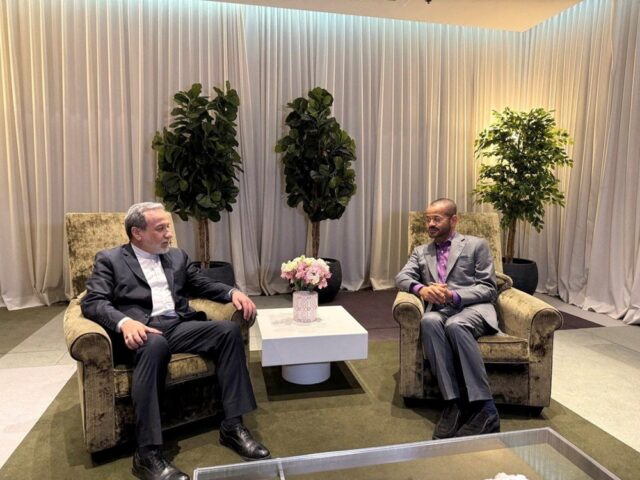
Iranian Foreign Minister Abbas Araqchi meets with Omani Foreign Minister Sayyid Badr Albusaidi in Geneva, Switzerland, February 25, 2026.—REUTERS

GENEVA — The United States and Iran made progress in talks over Tehran’s nuclear program on Thursday, mediator Oman said, but hours of negotiation ended with no sign of a breakthrough that could avert potential US strikes amid a massive military buildup.

The two sides plan to resume negotiations soon after consultations in their countries’ capitals, with techical-level discussions scheduled to take place next week in Vienna, Omani Foreign Minister Sayyid Badr Albusaidi said in a post on X after the day’s meetings in Switzerland.

Any substantial move toward an elusive agreement between longtime foes Washington and Tehran could reduce the imminent prospects for US President Donald Trump to carry out a threatened attack on Iran that many fear could escalate into a wider war.

But Tuesday’s indirect talks wrapped up without a deal, still leaving the region on edge.

The Omani minister’s upbeat assessment followed indirect talks between Iranian Foreign Minister Abbas Araqchi and US envoys Steve Witkoff and Jared Kushner in Geneva, with one session in the morning and the second in the afternoon.

“We have finished the day after significant progress in the negotiation between the United States and Iran,” Mr. Badr Albusaidi said.

But with many analysts seeing the latest diplomacy as the last chance before Mr. Trump could decide to go to war, Mr. Badr Albusaidi provided no details and stopped short of saying the two sides had overcome their biggest stumbling blocks to a deal.

Describing the talks as some of the most serious that Iran has had with the US, Mr. Araqchi told Iranian state television: “We reached agreement on some issues, and there are differences regarding some other issues.”

“It was decided that the next round of negotiations will take place soon, in less than a week,” he said. The Iranians, he added, had clearly expressed their demand for lifting of US sanctions, which Washington has long insisted will only come after deep concessions from Tehran.

There was no immediate comment from the US negotiating team on the outcome of the talks. But Axios quoted a senior US official as saying the Geneva negotiations were “positive.”

The discussions about the decades-long dispute over Iran’s nuclear work come as fears grow of a Middle East conflagration. Mr.  Trump has repeatedly threatened action if there is no deal, and the US military has amassed its forces in waters near the Islamic Republic.

‘INTENSE AND SERIOUS’ TALKS
A senior Iranian official told Reuters earlier on Thursday that the US and Iran could reach a framework for a deal if Washington separated “nuclear and non-nuclear issues.”

The Trump administration has insisted that Iran’s ballistic missile program and its support for armed groups in the region must be part of the negotiations.

After the morning session, Mr. Badr Albusaidi said the two sides had exchanged “creative and positive ideas”.

But a senior Iranian official said at the time that some gaps still had to be narrowed.

Washington, which believes Tehran seeks the ability to build a nuclear bomb, wants Iran to give up all uranium enrichment, a process that makes fuel for atomic power plants but that can also yield material for a warhead.

Iran has long denied wanting a bomb and said earlier on Thursday it would show flexibility at the talks. Reuters reported on Sunday that Tehran was offering undefined new concessions in return for removal of sanctions and recognition of its right to enrich uranium.

US Secretary of State Marco Rubio said on Wednesday that Iran’s refusal to discuss its ballistic missile program was a “big problem” which would have to be addressed eventually.

The missiles were “designed solely to strike America” and pose a threat to regional stability, he said, but offered no proof to back the claim that US territory could be targeted.

TRUMP THREATENS ‘REALLY BAD THINGS’
Mr. Trump said on February 19 that Iran must make a deal in 10 to 15 days, warning that “really bad things” would otherwise happen.

He briefly laid out his case for a possible attack on Iran in his State of the Union speech on Tuesday, underlining that while he preferred a diplomatic solution, he would not allow Tehran to obtain a nuclear weapon.

In June, the US joined Israel in hitting Iranian nuclear sites and has been ramping up the pressure on Tehran again since January, when Mr. Trump threatened to intervene over its crushing of nationwide protests with thousands killed.

Since then, Mr. Trump has deployed fighter jets and aircraft carrier strike groups in the region.

Iran responded to last summer’s strikes by firing fusillades of missiles at Israel and has threatened to retaliate fiercely if attacked again, raising fears of a wider regional conflict that has alarmed Gulf oil producers.

Within Iran, Supreme Leader Ayatollah Ali Khamenei faces the gravest crisis of his 36-year tenure, with an economy buckling under tightened sanctions and renewed protests following the major unrest and crackdown in January.

President Masoud Pezeshkian said on Thursday that Mr. Khamenei has banned weapons of mass destruction, which “clearly means Tehran won’t develop nuclear weapons,” reiterating a religious decree issued in the early 2000s. — Reuters

Stellantis CEO vows profit rebound after 20 billion euro EV writedown hit

MEDIA.STELLANTIS.COM

MILAN — Stellantis CEO Antonio Filosa promised a profitability comeback this year, after the automaker reported on Thursday a massive earnings hit linked to multi-billion euro charges caused by its scaled-back electric-vehicle ambitions.

The net loss of 20.1 billion euros ($23.8 billion) for the second half of 2025 was in line with preliminary ranges the carmaker provided on February 6 when it announced the charges, sending its shares reeling.

Its reported second-half 1.38 billion euro adjusted operating loss was also in line with the preliminary estimate.

With that effect factored in, market focus appeared to shift to the outlook for the Jeep-to-Peugeot carmaker and its Milan-listed shares were best performers among Italy’s blue chips, up 5.2% by 1615 GMT.

Asked during a post-earnings analyst call whether Stellantis’ two largest regions, North America and Europe, would come back to a positive adjusted operating income, Mr. Filosa said “the answer is very easy, it is yes”.

“North American and European order books, both finished in 2025 at three months of sales,” Mr. Filosa told analysts.

A Milan-based trader said Mr. Filosa sounded convincing enough about a return to profitability this year, in Stellantis’ two largest regions, to encourage some purchases on the stock, after its recent fall.

OVERESTIMATED EV TRANSITION
Stellantis said on Thursday it booked a total of 25.4 billion euros in writedowns last year, including 22.2 billion euros for the second half it announced earlier this month.

The charges underscore the financial burden auto groups face globally because of a slower-than-expected and more complex shift to electric vehicles, as both the United States and Europe relax their EV targets.

Mr. Filosa said last year’s results were “reflecting the cost of overestimating the pace of the energy transition.”

Before Thursday’s rebound, Stellantis shares lost about 20% since February 6, when they hit 5.73 euros, their lowest since the automaker was created in January 2021 through the merger of Fiat Chrysler and Peugeot maker PSA.

The writedowns – also caused by vehicle quality problems that Mr. Filosa attributed to cost-cutting under former boss Carlos Tavares – include about 6.5 billion euros in cash payments, expected to be spread across four years from 2026.

The company on Thursday reiterated its 2026 forecasts, including a mid-single-digit percentage increase in net revenues and a low-singe-digit adjusted operating margin. It sees industrial free cash flows returning positive only in 2027.

Stellantis, which confirmed it would not pay a dividend this year, will hold a capital market day on May 21.

The group said it expected costs related to US tariffs to rise to 1.6 billion euros this year from 1.2 billion euros in 2025. ($1 = 0.8462 euros) — Reuters

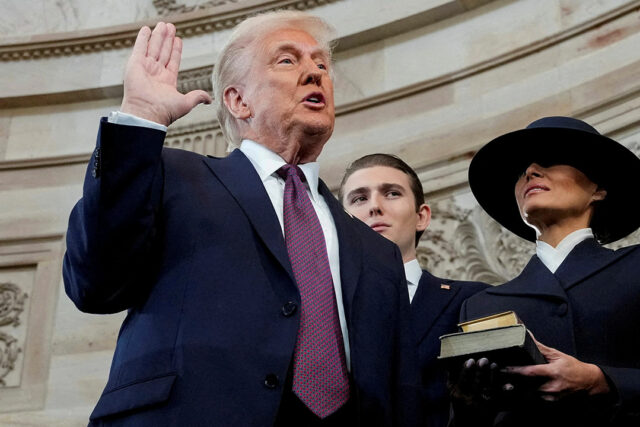
Melania Trump to chair a meeting of the UN Security Council, White House says

DONALD TRUMP is sworn in as the 47th President of the United States by Chief Justice John Roberts as Melania Trump holds the Bible during the 60th Presidential Inauguration in the Rotunda of the US Capitol in Washington, US, Jan. 20, 2025. — MORRY GASH/POOL VIA REUTERS

WASHINGTON — First lady Melania Trump will chair a meeting of the United Nations Security Council on Monday as the US takes over the monthly rotating presidency, the White House said.

Her office said in a statement on Wednesday she will emphasize education as a way to advance tolerance and world peace in her remarks at the meeting, titled “Children, Technology, and Education in Conflict.”

A UN spokesperson said it would be the first time a spouse of any serving world leader has chaired a meeting of the 15-member Security Council.

US President Donald Trump has been a vocal critic of the United Nations since his first White House term, saying the 193-member world body was ineffective and needed reforms. The United States is billions of dollars behind in its contributions to the UN budget.

Asked at a regular briefing if Melania Trump’s appearance was a positive sign for UN-US relations, UN spokesperson Stephane Dujarric said it showed “the importance that the United States feels towards the Security Council and the subject at hand,” referring to the meeting’s agenda.

The first lady has stayed out of the public eye for much of Mr. Trump’s presidencies but has been an advocate for children’s causes in the past, including by writing a letter to Russian President Vladimir Putin in 2025 calling for the return of Ukrainian children taken to Russia during the war.

She was the subject and executive producer of a big-budget documentary film released in January.

The president struck a more conciliatory tone toward the UN last week at the first meeting of his Board of Peace, an initiative he said aims to resolve conflicts globally but one that many world leaders worry was designed to replace the United Nations.

“The Board of Peace is going to almost be looking over the United Nations and making sure it runs properly,” Mr. Trump said on February 19. “We’re going to strengthen up the United Nations. We’re going to make sure its facilities are good…. We’re going to help them money-wise.”

The United Nations last week said it received about $160 million this month of the more than $4 billion in US dues arrears to the United Nations. That amount appears to have grown substantially during Mr. Trump’s presidency.

Historically, the US has been the biggest contributor to the UN budget. But under Mr. Trump, it has refused to make mandatory payments to regular and peacekeeping budgets and slashed voluntary funding to UN agencies.

The Security Council is the UN body charged with maintaining international peace and security and has the power to make legally binding decisions. — Reuters

PHL economy still strong, says S&P

The Ortigas business district is seen in this file photo. — PHILIPPINE STAR/MIGUEL DE GUZMAN

By Katherine K. Chan, Reporter

S&P GLOBAL RATINGS continues to see strong credit rating prospects for the Philippines as it remains optimistic on the country’s growth fundamentals despite drags from the recent flood control corruption scandal.

Speaking at a webinar on Thursday, Yee Farn Phua, director for sovereign and international public finance ratings at S&P Global Ratings, said the Philippine economy will likely rebound immediately once the flood control controversy wanes.

“Because of the slowdown in many infrastructure projects, there has been (an) economic growth slowdown in the Philippines quite considerably in the last few months,” Mr. Phua said.

“However, we don’t think this is a structural problem in the Philippines’ economic growth story. We think that the fundamentals of the Philippine economy continue to be strong. This investigation, we think that once it passes, we could see growth rebounding quite quickly,” he added.

In November 2025, S&P affirmed the Philippines’ long-term “BBB+” and short-term “A-2” credit ratings. It also maintained its “positive” outlook on the country, indicating a potential rating upgrade over the next one to two years if improvements in credit fundamentals are sustained.

“Now, when we put the Philippines on (a) positive outlook one year plus ago, it wasn’t just because of improvement in climate metrics overnight,” Mr. Phua said. “It was really an observation of the fact that institutional settings in the Philippines have strengthened quite considerably over the last decade or so. And that has led to very good growth outcomes and at the same time sustainable public finance.”

Still, Mr. Phua noted that political concerns emerging from the flood mess could slow some of the country’s credit improvement.

However, he added that the economic spillover from the corruption allegations against several Public Works officials, lawmakers and private contractors as well as the impeachment complaints against the President due to the flood control issue may only be “temporary.”

Last year, the Philippines missed its growth target for a third straight year after gross domestic product (GDP) slowed to a post-pandemic low of 4.4% as weak confidence dampened investments, household consumption and government spending. 

Despite this, S&P sees the economy rebounding to a 5.7% growth this year. If realized, the government will meet its 5%-6% goal for the year.

“For this year, I think our growth forecast for the Philippines is still relatively strong at 5.7%,” Mr. Phua said. “So, despite the economic slowdown of late, the Philippines continues to be an outperformer when compared to peers at a level of similar income.”

This, he added, comes on the back of a projected narrowing of the country’s fiscal and current account deficits over the next year or two, which could boost the case for a higher credit rating.

“Interestingly, because of the slowdown in infrastructure spending in the last few months, it is possible that you will start to see (the) fiscal deficit actually be lower than what was originally budgeted for,” Mr. Phua said.

“The other thing also is because of the slowdown in the projects and also the reduction in capital goods import, we are also starting to see that the current account deficit could come down to be narrower than before as well,” he added.

Based on latest data, infrastructure spending declined for the fifth consecutive month after falling by 45.2% year on year to P48 billion in November.

Meanwhile, the country’s budget deficit sharply narrowed during the same month, shrinking by 26.02% to P157.6 billion from P213 billion a year earlier.

However, single-digit growth in spending and revenue collection led the gap to widen to P1.26 trillion in the 11-month period.

The government wants to cap the fiscal deficit at P1.56 trillion by end-2025.

Meanwhile, the Philippines’ current account balance stood at a $12.5-billion deficit by the end of the third quarter, latest Bangko Sentral ng Pilipinas (BSP) data showed. This was equivalent to -3.6% of the GDP.

The BSP expects the current account gap to end at $15.5 billion in 2025 or -3.2% of GDP, before narrowing to $15.3 billion or -3% of GDP this year.

Still, Mr. Phua said S&P will keep monitoring how further developments in the flood control scandal would impact the Philippines’ long-term credit rating prospects.

ADVERTISEMENT
ADVERTISEMENT