Home Blog Page 231

State Visit

PHOTO BY RYAN BALDEMOR

Flags of the Philippines and South Korea can be seen along Ayala Bridge in Manila on Sunday ahead of the state visit of the President of the Republic of Korea Lee Jae Myung, and First Lady Kim Hea Kyung on March 3-4.

Editor’s note: In the March 2 issue of BusinessWorld, the featured photo incorrectly identified the First Lady Kim Hea Kyung as former First Lady Kim Keon Hee. We deeply regret the error.

Investors brace for a bigger backlash from Middle East war

MODELS of oil barrels and a pump jack are displayed in this illustration photo taken on Feb. 24, 2022. — REUTERS

LONDON — From being just a fringe risk, conflict in the Middle East has become a top worry for investors unsettled by the prospect of a power struggle in Iran and a protracted regional war, with ramifications for everything from global trade to inflation.

US-Israel strikes killed Iranian Supreme Leader Ayatollah Ali Khamenei on Saturday, sowing chaos as Iran struck back at Gulf cities, airlines halted flights, and tankers carrying oil and other products suspended transit through the key Strait of Hormuz.

The first risk for markets is the uncertainty over what happens next in Iran, given the complexities of the Islamic Republic’s ruling system, the ideological nature of its support base, and the power of its Revolutionary Guards.

That then complicates the outlook for oil prices which have been rising for weeks, but are now hostage to what oil-producing countries do and how passage of tankers through the Middle East is affected, with big implications for inflation worldwide and even the safety of bonds hitherto deemed havens.

“Middle East tail risks have increased. Markets will reprice from geopolitical shock to regime risk shock, prolonged conflict, not just retaliation, unless Iran says it wants to negotiate,” said Rong Ren Goh, a portfolio manager in the fixed income team at Eastspring Investments in Singapore.

A bigger risk, analysts said, is complacency in markets that have assumed the fallout would be limited, like it was during last June’s “12-Day War” in Iran or during Russia’s numerous attacks on Ukraine, and dismissive of any comparisons to Iran’s 1979 regime change.

Brent crude jumped around 8% on Monday for a gain of nearly 30% so far this year, and investors have already purchased US Treasuries and gold as hedges for a variety of risks, including Middle East tensions and President Donald Trump’s erratic policies.

Gold had a record run last year and is up 24% so far in 2026. The main US stock index is up just 0.5%.

“History argues strongly in favor of selling geopolitical risk premium when hostilities start,” Barclays analysts said in a note on Saturday. “What worries us is that investors have now learned this pattern and might be underpricing a scenario where containment fails.”

Barclays analysts point to other factors that could exacerbate a selloff should the conflict escalate, such as existing concerns around the artificial intelligence boom and private credit markets.

“We would recommend not buying any immediate dip – risk-reward doesn’t seem compelling. If equities pull back enough, say over 10% in the S&P 500, there is likely to come a time to buy. But not yet,” they wrote.

WHAT’S SAFE?

Early on Monday, as oil gained, safe assets rose – with the dollar broadly higher, gold up about 1.6% and a bid for Treasuries. Benchmark Brent crude futures were up about 8.5% at $79.05 a barrel and S&P 500 futures fell 1%.

“The markets are prepared for a limited surgical strike. What is not priced in is a major strike to decapitate the regime,” said Charles Myers, chairman and founder of Signum Global Advisors, a geopolitical investment consulting firm. He was speaking before the weekend US-Israel strikes.

William Jackson, chief emerging markets economist at Capital Economics, expects a prolonged conflict affecting supply could cause oil prices to jump to around $100, potentially adding 0.6-0.7 percentage points to global inflation.

“In my view, the market has already been overestimating inflationary forces, so I don’t think this will change much. There will be more impact on Europe than US given the closer proximity of Hormuz oil and gas post-Russia,” said Tariq Dennison, a wealth adviser at Zurich-based GFM Asset Management.

“Maybe a slight short term uptick on gold, but gold has already priced in maximum geopolitical uncertainty.”

Eastspring’s Goh pointed to the steady drop in US yields, which has brought 10-year yields to below 4%.

“I’m not sure if buying US Treasuries here is a good trade, especially if oil prices spike and induce inflation, if this thing drags,” he said.

On the other hand, some analysts expect Iran will not be able to disrupt trade in the Gulf region and the impact on oil prices will be contained.

“We wouldn’t be surprised if any selloff in the S&P 500 on Monday morning turns into a rally, driven by expectations of lower oil prices once the latest Middle East war ends,” said Ed Yardeni, president of New York-based Yardeni Research.

“The price of gold might also round-trip on Monday. Bond yields might fall due to both safe-haven demand and post-war prospects for lower oil prices,” he said. — Reuters

Israel hits Tehran again after killing Khamenei, leadership council takes over

AN EXPLOSION caused by a projectile impact after Iran launched missiles into Israel following Israel and the US launched strikes on Iran, in Tel Aviv, Israel, Feb. 28, 2026. — REUTERS/GIDEON MARKOWICZ

JERUSALEM/TEL AVIV/DUBAI — Israel launched a new wave of strikes on Tehran on Sunday and Iran responded with more missile barrages, a day after the killing of Supreme Leader Ali Khamenei pitched the Middle East and the global economy into deepening uncertainty.

US and Israeli strikes – and Iranian retaliation – sent shockwaves worldwide through sectors from shipping to air travel to oil, amid warnings of rising energy costs and disruption to business in the Gulf region.

US President Donald Trump said the attack was intended to ensure Iran could not have a nuclear weapon, to contain its missile program and to eliminate threats to the United States and its allies. The US has hit more than 1,000 Iranian targets since the start of the campaign, US Central Command said.

In a video statement posted to his Truth Social site, Mr. Trump vowed military strikes will continue until “all our objectives are achieved.” He said the assault had wiped out Iran’s military command and destroyed nine Iranian navy ships and a naval building.

Mr. Trump said the Iranian military and police should lay down their arms, promising immunity for those who surrender and threatening “certain death” for those who resist. He reiterated calls for the Iranian people to revolt against the government.

“I call upon all Iranian patriots who yearn for freedom to seize this moment, to be brave, be bold, be heroic and take back your country,” Mr. Trump said in the pre-recorded video. “America is with you.”

Earlier in an interview with the Atlantic magazine, Mr. Trump said Iran’s leadership wanted to talk to him and he had agreed.

In a separate interview with the Daily Mail, he said the military campaign against Iran could continue for the next four weeks.

But the Republican president is yet to lay out his longer-term aims in Iran, which faces a power vacuum that could leave it in chaos, with unforeseeable consequences for the region.

The first US casualties of the campaign, including the deaths of three service personnel, were confirmed on Sunday.

Mr. Trump paid tribute to the three killed as “true American patriots” but warned that there will likely be more casualties. “That’s the way it is,” he said.

With the vital Strait of Hormuz closed and the Gulf cities of Dubai, Abu Dhabi, and Doha under bombardment, the scale of the risk taken by Mr. Trump in attacking Iran months before US midterm elections that will decide control of Congress is becoming clearer.

Only around one in four Americans approve of the operation, according to a Reuters/Ipsos poll on Sunday. And if Hormuz – the passage for about 20% of world oil supplies – remains closed for more than a few days, US consumers will start to feel the pressure on prices at the pumps.

EXISTENTIAL CHALLENGE FOR IRAN

The Israeli military said late on Sunday that its air force had established aerial superiority over Tehran, and that a wave of strikes across the capital had targeted intelligence, security, and military command centers.

Israel’s present focus is to undermine the Iranian government so that it collapses, an Israeli official said on condition of anonymity, adding that Israel “is acting in its own ways” to get Iranians to take to the streets.

Iran’s Revolutionary Guards said on Sunday they had hit three US and UK oil tankers in the Gulf and the Strait of Hormuz, and attacked military bases in Kuwait and Bahrain with drones and missiles. Shipping data showed hundreds of vessels including oil and gas tankers dropping anchor in nearby waters with traders expecting sharp jumps in crude oil prices on Monday.

Global air travel was also heavily disrupted as continued air strikes kept closed major Middle Eastern airports, including Dubai – the world’s busiest international hub – in one of the biggest aviation interruptions in recent years.

In Iran, facing its biggest existential challenge since the 1980-88 war with Iraq, President Masoud Pezeshkian said a leadership council composed of himself, the judiciary head and a member of the powerful Guardian Council had temporarily assumed the duties of Supreme Leader.

Oman’s foreign ministry said Iranian Foreign Minister Abbas Araqchi had indicated Tehran was open to de-escalation. But in a post on X, Mr. Araqchi suggested Iran was ready to keep fighting.

“We’ve had two decades to study defeats of the US military to our immediate east and west,” he wrote. “Bombings in our capital have no impact on our ability to conduct war.”

It remained unclear what the longer-term prospects were for Iran to rebuild its leadership and replace the 86-year-old Mr. Khamenei, who had held power since the death of the founder of the Islamic Republic, Ayatollah Ruhollah Khomeini in 1989.

Russian President Vladimir Putin denounced Mr, Khamenei’s death as a cynical murder and China’s Foreign Minister Wang Yi described it as “blatant killing”.

Israel, which has pressed successive US administrations to take action against Iran, claimed responsibility for killing Mr. Khamenei while he was in his central leadership compound in Tehran, and showed no signs of curbing its attacks.

“We have the capabilities and the targets to keep going on for as long as necessary,” Israeli military spokesperson Lieutenant Colonel Nadav Shoshani said.

IRAN HITS BACK

As Iran fired renewed missile barrages across the region, air raid sirens sounded across Israel late on Sunday, warning of the latest incoming attack, including in Tel Aviv, where projectiles were seen streaking across the night sky.

Israel’s ambulance service said nine people were killed in the town of Beit Shemesh, the United Arab Emirates said Iranian attacks killed three people, and Kuwait reported one dead.

Inside Iran, some grieved for Mr. Khamenei while others celebrated his death, exposing a deep fault line in the stunned country.

Thousands of Iranians were killed in a crackdown authorized by Mr. Khamenei against anti-government protests in January, the deadliest wave of unrest since the Islamic Revolution of 1979.

Mr. Khamenei, who built Iran into a powerful anti-US force and spread its sway across the Middle East during his 36-year iron-fisted rule, was working in his office at the time of Saturday’s attack, state media said. The raid also killed his daughter, grandchild, daughter-in-law, and son-in-law.

Experts said that while his death and those of other Iranian leaders would deal Iran a major blow, it would not necessarily spell the end of Iran’s entrenched clerical rule or the sway of the elite Revolutionary Guards over the population.

His death sparked protests among Shi’ites in neighboring Pakistan, where police clashed with demonstrators who breached the outer wall of the US consulate in Karachi, leaving nine people dead. In Iraq, police fired tear gas and stun grenades to scatter hundreds of protesters who gathered outside the Green Zone in Baghdad, where the US Embassy is located. — Reuters

Filipina killed in Israel airstrike, Marcos says

https://www.facebook.com/share/r/1E5S3qRkMB/?mibextid=wwXIfr

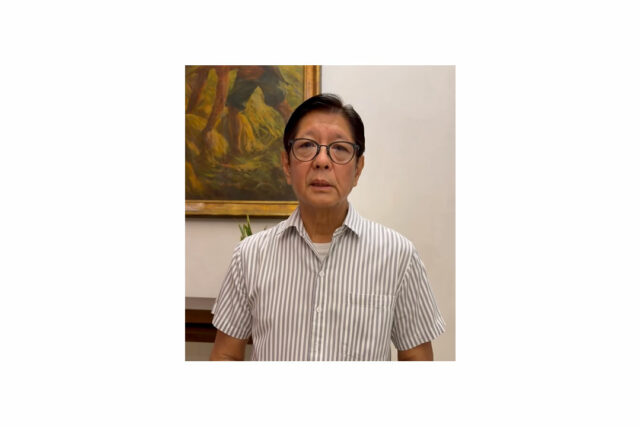
A caregiver working in Israel is the first reported Filipino fatality in the escalating conflict in the Middle East, President Ferdinand R. Marcos, Jr. confirmed late Sunday evening.

According to the president, Mary Ann Velasquez De Vera, who hails from Pangasinan, was assisting her elderly ward to a bomb shelter when she was hit by shrapnel from falling explosives before they could reach safety.

Her identity was confirmed by her husband, who is also an overseas Filipino worker in Israel.

The government said it would extend all necessary assistance to Ms. De Vera’s family and continue to monitor the situation of Filipinos in the region, vowing to provide updates as developments unfold.

“We continue to monitor the situation of our fellow Filipinos who are in the midst of this war, as tensions persist in the Middle East,” Mr. Marcos said in Filipino in a video statement.

“Rest assured that as soon as we have information to report, I will update you immediately.”

The region is home to over 2.4 million migrant Filipino laborers, which sends a steady stream of remittances back to the Philippines each year, underpinning household consumption and supporting the broader economy.

US and Israeli forces carried out coordinated airstrikes on Iranian targets on Saturday, an operation President Donald J. Trump said was aimed at neutralizing threats to the US and stopping Tehran from advancing its nuclear weapons capabilities. – Chloe Mari A. Hufana

Poll: Inflation likely picked up in Feb.

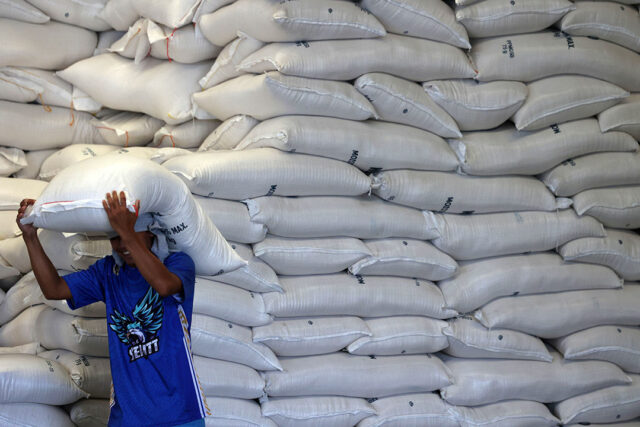
A worker carries a sack of rice at a National Food Authority warehouse in Valenzuela City, Feb 16, 2026. — PHILIPPINE STAR/MIGUEL DE GUZMAN

By Katherine K. Chan, Reporter 

PHILIPPINE INFLATION may have hit its fastest pace in over a year as price pressures from higher costs of electricity, oil and rice pushed up the headline print in February, analysts said.

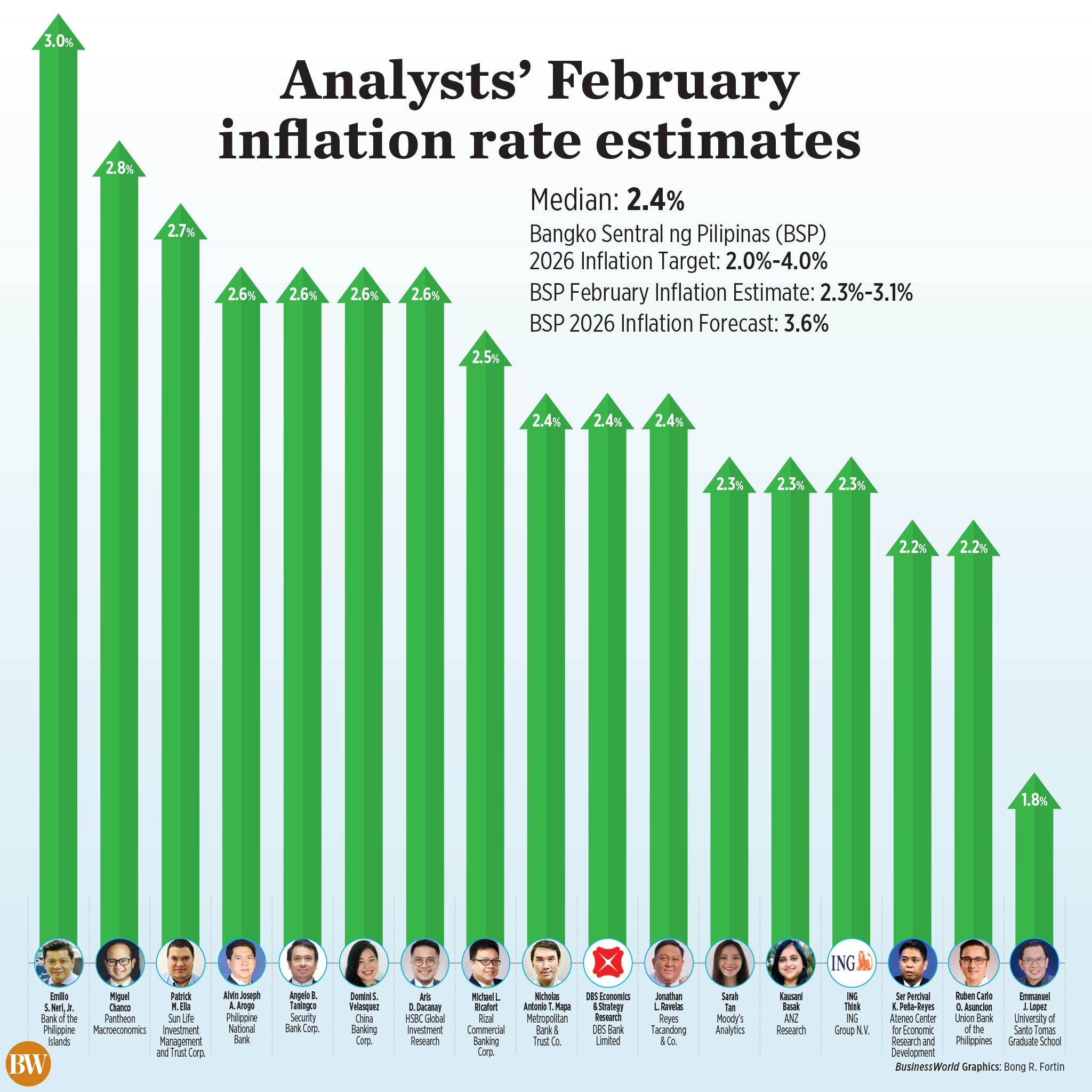
The consumer price index (CPI) likely settled at 2.4% in February, the fastest clip in 13 months or since the 2.9% in January 2025, based on a median forecast of 17 analysts polled by BusinessWorld.

If realized, the latest headline inflation would also be faster than the 2% recorded in January and the 2.1% in February 2025.

“February inflation risks were less about a shock and more about persistent cost pressure, with oil quietly amplifying the print. (I) am looking at February (inflation) at 2.4%,” Jonathan L. Ravelas, a senior adviser at Reyes Tacandong & Co., said in a Viber message.

This means February could mark the second month in a row that inflation hit the Bangko Sentral ng Pilipinas’ (BSP) 2%-4% target, with the median estimate likewise falling within the central bank’s 2.3%-3.1% forecast for the month.

The Philippine Statistics Authority (PSA) will release the February inflation data on Thursday, March 5.

China Banking Corp. Chief Economist Domini S. Velasquez likewise attributed the potential inflation uptick to recent price hikes in fuel, liquefied petroleum gas (LPG) and electricity.

“The uptick was driven by continued month-on-month gains in the prices of rice and fish, along with higher energy costs,” Ms. Velasquez said in an e-mail. “Domestic pump prices have now increased for seven straight weeks, while LPG costs and electricity rates in Meralco-serviced areas were also higher compared with January.”

Pump price adjustments in February stood at a net increase of P3.20 a liter for gasoline, P4.40 a liter for diesel and P3.50 a liter for kerosene.   

National Statistician Claire Dennis S. Mapa said last week that he sees oil prices adding pressure to February inflation, citing the consistent weekly increases in oil prices.    

LPG prices were also higher last month, with the majority of oil companies in the country implementing a P1.50- to P1.55-per-kilogram (kg) increase.

This brought the price of a household-standard 11-kg LPG tank to between P836.50 and P1,137.05 last month, based on data from the Department of Energy.   

Meanwhile, Manila Electric Co. (Meralco) hiked electricity rates in February amid higher transmission charges after two straight months of reductions.

It raised the rate by 22.26 centavos per kilowatt-hour (kWh) to P13.1734 per kWh last month from P12.9508 per kWh in January, translating to an additional P45 in the monthly electricity bill of households consuming an average of 200 kWh.

COSTLIER RICE
Meanwhile, analysts noted that rice deflation likely slowed in February as retail price of rice continued to pick up on a monthly basis, which may have also fueled the headline print.   

“The uptick reflects a low base effect as last year’s declaration of a food security emergency on rice, which authorized the release of buffer stocks at subsidized prices, dampened price pressures,” Moody’s Analytics Assistant Director and Economist Sarah Tan said in an e-mail. “As a result, declines in rice prices over the past few months will lose momentum.”

Aris D. Dacanay, ASEAN economist at HSBC Global Investment Research, also noted that the cost of the staple grain has climbed by 3%-4% month on month since January “with supply conditions tight.”

Data from the PSA showed that the average price of local regular milled rice fell by 2.5% to P46.01 per kilo in the second half of February from P47.19 per kilo a year ago but inched up by 5.14% from P43.76 in January.

Well-milled rice was also 0.7% cheaper year on year at P53.54 per kilo from P53.90 but climbed by 5.04% from P50.97 in January. On the other hand, the cost of special rice edged down by an annual 1.22% to P61.55 per kilo from P62.31 but went up by 2.57% month on month from P60.01.

In January, the Department of Agriculture said that the levy on imported rice will remain at 15% until March, but noted that they could bring the rate up to 20% if the benchmark price of the staple grain slides to $367 per metric ton.

Mr. Dacanay also noted that core inflation may have also picked up further in February.

“With food components having a heavy weight in the Filipino consumer basket, the inflationary pressures in headline inflation may have also spilled over to core CPI,” he said.

Core inflation, which excludes volatile prices of food and fuel, was at its fastest in one-and-a-half years at 2.8% in January.   

RISKS TO BSP EASING
Inflation could continue to quicken in the coming months, a trend that could weigh on the BSP’s policy path going forward, analysts noted.

“Uptick in inflation is expected to continue in coming months which could mean the window for BSP to consider easing again remains open for only a little longer,” Metropolitan Bank & Trust Co. Chief Economist Nicholas Antonio T. Mapa said in a Viber message.

Last month, the central bank trimmed the key interest rate by 25 basis points (bps) for a sixth straight meeting to an over three-year low of 4.25% as it sought to regain lost confidence amid the flood control corruption scandal.

The Monetary Board has now delivered a total of 225-bp reductions since it began easing in August 2024.

BSP Governor Eli M. Remolona, Jr. said the policy path ahead is now less certain as they see “tentative” signs of recovering confidence, while also noting that further monetary policy easing may not be enough to boost the sluggish economy. 

Bank of the Philippine Islands Lead Economist Emilio S. Neri, Jr. said they are also reconsidering their outlook for one more rate within the year as they see inflation potentially breaching the central bank’s target band by April.   

In a Viber message, he said the February print could come in at 3%, which “if realized, headline inflation could approach or breach 4% as early as April, largely contingent on the rice demand-supply dynamics in the coming months, which we continue to monitor closely.”

The BSP now expects inflation to settle at 3.6% by yearend, faster than its initially expected average of 3.2%.

If the BusinessWorld poll’s February inflation estimate materializes, it would bring the two-month average to 2.2%.

Mr. Remolona earlier said that he is more worried about inflation exceeding their 3% target than it falling below 2%.

BSP Deputy Governor Zeno Ronald R. Abenoja has said headline inflation could breach the 3% mark by the second half of the year before stabilizing around the midpoint of the target band, with electricity rate adjustments, costlier oil and the impact of the government’s flexible rice tariff scheme on local rice prices likely to bring “temporary” inflationary pressures.

Michael L. Ricafort, chief economist at Rizal Commercial Banking Corp., also said inflation might approach 3% in the coming months due to rising global oil prices amid ongoing global geopolitical tensions.

“For the coming months, higher global crude oil prices, (which was) among five-month highs recently, and also higher prices of some industrial metals and other global commodity prices amid the recent geopolitical risks in Iran, Venezuela, Greenland, among others, could lead to some pick up in importations costs and in overall inflation,” he said in a Viber message.

The Monetary Board is set to hold its second policy meeting this year on April 23.

Oil price hikes loom after US attacks Iran

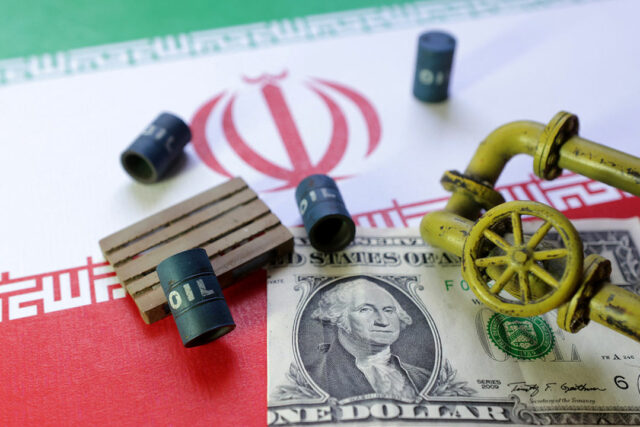
AN IRANIAN FLAG, a US dollar banknote and miniatures of oil pipes and barrels are seen in this illustration taken on June 23, 2025. — REUTERS/DADO RUVIC/ILLUSTRATION

By Sheldeen Joy Talavera, Reporter

LOCAL PUMP PRICES may spike after the US and Israel launched strikes on Iran, which may cause a major oil supply disruption in the Middle East, according to industry players and analysts.

“The latest developments are seen to push prices much higher, despite the hefty risk premiums that were already factored in, because of the latest developments in the Middle East,” Leo P. Bellas, president of Jetti Petroleum, Inc., told BusinessWorld.

On Saturday, the US and Israel launched a wave of attacks on Iran, which resulted in the death of the latter’s supreme leader Ayatollah Ali Khamenei, Reuters reported. (Related stories on S1/9 and S2/3)

In retaliation, Iran launched missiles and counterattacks against Israel and US bases across the Gulf region including Bahrain, Qatar, and the United Arab Emirates, which are oil-producing countries.

As a net importer of crude oil, the Philippines is vulnerable to global crude price swings, which are triggered by geopolitical tensions.

Initial estimates from the Department of Energy (DoE) on Friday showed a potential increase this week of around P1.10 per liter in gasoline, P0.50 per liter in diesel, and P0.90 per liter in kerosene, based on the four-day trading of the Mean of Platts Singapore last week, a benchmark used for refined oil products.

Rodela I. Romero, an assistant director at the DoE-Oil Industry Management Bureau, said on Friday that reports of massive US military buildup in the Middle East had contributed to expectations of price hikes this week.

Jetti’s Mr. Bellas said that this week’s oil price hikes may be higher than initial estimates as “it can be influenced by the much larger freight and premium that will be used in the cost buildup.”

He added that oil-producing countries hosting US military bases may be affected as well from energy infrastructure damage from Iran’s counterattacks.

“Early market reactions suggest that the US-Israel-Iran tensions could put upward pressure on oil prices, especially if the Strait of Hormuz becomes less stable, affecting oil trade routes,” Brigitte Carmel C. Lim, senior vice-present and chief operating officer, at Top Line Business Development Corp., said via Viber.

Ms. Lim said that this may translate to higher prices in the near term in the Philippines since local pump prices tracks international benchmarks.

She said Top Line is managing the volatility by “maintaining adequate inventory levels complemented with our price hedging strategies to lock in prices as a buffer against sudden market fluctuations.”

Reuters reported that several tanker owners, oil majors and trading houses have suspended crude oil, fuel and liquefied natural gas shipments via the Strait of Hormuz, citing trading sources.

Tehran had also closed navigation in the Strait of Hormuz. Around 20% of global oil, including from Saudi Arabia, the United Arab Emirates, Iraq, Kuwait and Iran, passes through the strait.

“With (Hormuz) being a critical chokepoint that can easily debilitate oil resources, then we can expect spikes on oil prices if a way forward will not be devised,” Raphael J. Cortez, diplomacy lecturer at De La Salle-College of St. Benilde, said.

Former Albay Rep. Jose Maria Clemente “Joey” S. Salceda said President Ferdinand R. Marcos, Jr. should give the go signal for the fuel subsidy program before the next round of pump price hikes.

“Every week of delay means billions of pesos in additional costs that fall disproportionately on jeepney drivers, tricycle operators, farmers, and fisherfolk,” he said in a post on Substack.

Mr. Salceda also urged the Congress to suspend or reduce the excise tax on diesel and kerosene under the Tax Reform for Acceleration and Inclusion Law to provide immediate relief to the transport and agriculture sectors, which he deemed were most exposed to fuel price shocks.

Last week, gasoline prices increased by P0.60 per liter, while diesel and kerosene went up by P1.20 per liter each. Year-to-date, price increases stand at P4.80 per liter for gasoline, P8.20 per liter for diesel, and P6.20 per liter for kerosene.

SPILLOVER EFFECT
Aside from higher oil prices, the US-Iran conflict could slow deployment of overseas Filipino workers (OFWs) to the Middle East, analysts said.

“The US-Israel-Iran war will have a serious negative impact on the Philippines, especially if it engulfs the entire Middle East and is more prolonged than the surgical strike against Venezuela’s Maduro,” Foundation for Economic Freedom President Calixto V. Chikiamco said in a Viber message.

“It will definitely raise oil prices and slow down the deployment of OFWs to the Middle East,” he added.

Mr. Chikiamco said that the event is also likely to impact the already shaken consumer confidence back home.

“It was already shattered by the public works scandal, and therefore (could) further slow down gross domestic product growth and increase unemployment,” he added.

Reyes Tacandong & Co. Senior Adviser Jonathan L. Ravelas said that the country should closely monitor oil prices, global risk sentiment, and foreign exchange.

“This is a major geopolitical escalation, and markets are reacting the usual way — higher oil, a stronger dollar, and more volatility. For the Philippines, the risk isn’t direct conflict but spillovers: higher fuel prices, imported inflation, and pressure on the peso,” he said in a Viber message.

“If tensions drag on, volatility stays; if there’s quick de‑escalation, markets can stabilize just as fast. It’s a global shock — but one we need to manage carefully at home,” he added.

Francis M. Esteban, who teaches international studies at the Far Eastern University, said that the ongoing conflict should prompt the Philippines to diversify energy sources.

“This might be an opportunity for us to further explore renewable sources of energy, and other sources such as the ones newly discovered in Malampaya,” he said in a Facebook chat.

Last month, the Philippine government announced that it had discovered natural gas at Malampaya East-1, located 5 kilometers east of the existing Malampaya gas field off Palawan province.

The discovery is seen to bolster the country’s domestic energy supply, amid rising power demands. — with Justine Irish D. Tabile and Adrian H. Halili

DoE narrows down potential sites for nuclear energy projects

REUTERS/ROMEO RANOCO

By Sheldeen Joy Talavera, Reporter

THE DEPARTMENT of Energy (DoE) has identified four potential sites in Luzon and Visayas that may house the country’s planned nuclear power projects, an official said.

Patrick T. Aquino, director of the DoE-Energy Utilization Management Bureau, said they have narrowed down potential sites from nine to four in consideration of the requirements of the International Atomic Energy Agency.

“The list has been narrowed to three to four sites: two on-grid in Luzon and two off-grid in Palawan and Masbate,” Mr. Aquino told BusinessWorld.

He said that these areas were considered due to its proximity to the available transmission point and the demand.

Under the Philippine Energy Plan, the country aims to integrate nuclear energy into the national power mix with at least 1,200 megawatts (MW) of capacity by 2032, doubling it to 2,400 MW by 2045 and to 4,800 MW by 2050.

The government sees the potential role of nuclear energy in diversifying the energy mix to meet emission reduction targets and enhance energy security.

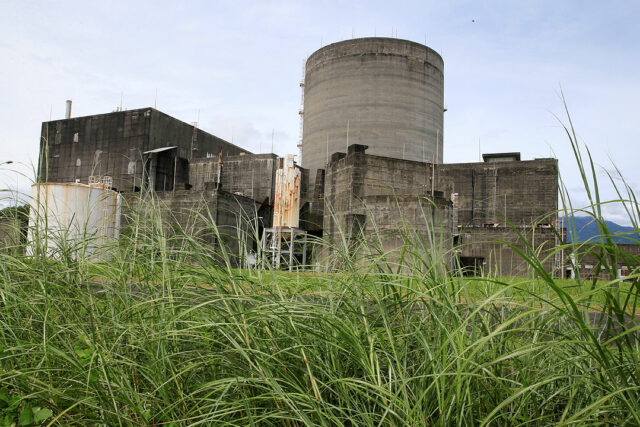
While nuclear energy seemed to be relatively young in the Philippines, the country built the Bataan Nuclear Power Plant but it has remained idle since 1986.

At present, the government is banking on the private sector to push the integration of nuclear energy into the country’s power generation mix. Last year, Energy Secretary Sharon S. Garin said the agency plans to accept applications for nuclear energy proposals by 2026.

In line with the goal, major energy players have already set their sights on this breakthrough.

According to Mr. Aquino, some of the energy firms that have expressed intent to develop nuclear energy technologies are Pangilinan-led Manila Electric Co. (Meralco), Aboitiz Power Corp. (AboitizPower), Razon-led Prime Infrastructure Capital, Inc., and Ang-led San Miguel Global Power Holdings Corp.

“They have attended meetings and participated regarding nuclear (energy development),” he said.

At the forefront, Meralco has already outlined its plans this year, including an adoption study for small modular reactors (SMRs) — a technology smaller than conventional nuclear plants.

Meralco recently secured a $2.8-million grant from the United States Trade and Development Agency to advance its feasibility study on SMR.

AboitizPower, on the other hand, has entered into a public-private partnership to support workforce development.

These are among the deals the Philippines has secured in partnership with US government agencies and companies to support the former in its goal of nuclear power integration.

“We asked them (energy companies) what they need from government or what does the government has to fix and they were all: ‘independence,’” Ms. Garin said during the signing on Feb. 16. “For that, I assure you, our companies are eager to embark on a nuclear program in the Philippines.”

Alpas Pinas Lead Convenor Gayle Certeza said the initiative of major corporations and universities looking into offering nuclear engineering programs is a big step in going into nuclear energy.

“Although all these constitute a big shift, we still have a long way to go. Other countries have been using nuclear energy for decades. We still have to start ours,” she said in an e-mail interview.

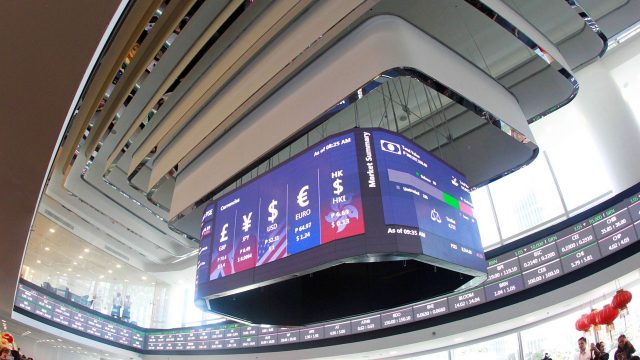
PHL may hit IPO target this year — analysts

PHILIPPINE STAR/KRIZ JOHN ROSALES

By Alexandria Grace C. Magno, Reporter

THE PHILIPPINES is likely to meet its target of four initial public offerings (IPOs) this year as market conditions improve and regulatory hurdles ease, according to analysts.

“I think four IPOs are achievable for the Philippine Stock Exchange, Inc. (PSE) this year, supported by improving market conditions, firmer investor sentiment, and a lower interest rate environment,” DragonFi Securities Equity Analyst Jarrod Leighton M. Tin said in a Viber message.

“We see credible candidates such as Mynt and Hann Holdings potentially moving forward with listings if momentum holds,” he added.

The PSE expects four IPOs in 2026. Some of the most anticipated listings include the electronic wallet platform GCash and PNB Holdings Corp. (PHC), which plans to list by way of introduction.

“It’s possible for PSE to hit its target of four IPOs, especially after today’s news on Securities and Exchange Commission’s (SEC) free float limits for new listings, which could pave the way for the much-awaited GCash IPO,” BDO Securities Corp. President John Tristan D. Reyes said in a Viber message on Wednesday last week. “On the other hand, PNB Holdings is still addressing some regulatory hurdles.”

The SEC has eased minimum free float requirements for large IPOs in the Philippines through Memorandum Circular No. 11, introducing a tiered public ownership framework.

Under the circular signed by SEC Chairperson Francisco Ed. Lim on Feb. 24, companies with an expected market capitalization of over P50 billion at the time of listing must have a minimum public float of 15%, subject to a minimum offer size of P10 billion.

The 15% minimum public float is higher than the 12% proposed in the SEC’s draft circular, but it could enable mega-IPOs such as Globe Fintech Innovation (Mynt) — the parent company of GCash — which earlier said that a 20% minimum public float was too high for its offering that could peg the company’s valuation at at least $8 billion.

“Even though the market bounced from ~5600 to the 6500-6600 range, the environment still feels fragile. Investor confidence remains shaky, and uncertainties around local economic growth, plus global risks like tariffs and geopolitical tensions, could still weigh heavily on valuations,” Mr. Reyes said.

He noted that these factors could affect both the demand and supply sides.

“On the demand side, investors could remain cautious and ask for bigger discounts for these prospective IPOs. On the supply side, companies may hesitate if they think they won’t get the valuation they want,” he added.

Last Thursday, the PSE index (PSEi) closed at 6,625.46, its highest finish in over 14 months, or since it closed at 6,641.35 on Dec. 12, 2024.

“I think we’re still cautiously optimistic for the year. Probably especially after last year,” Unicapital Securities, Inc. Research Head Wendy B. Estacio-Cruz told BusinessWorld on the sidelines of an event.

“For this year, we’re hoping that the four IPOs can be reached. Although, at this point, based on the sentiment, we’re still thinking that probably only half of them might push their listings,” she added.

In 2025, the PSE missed its IPO target, recording only two listings out of the projected six.

The companies that went public last year were Cebu-based fuel distributor and retailer Top Line Business Development Corp., which debuted in April, and West Zone water concessionaire Maynilad Water Services, Inc., which completed its offering in November.

Hann Holdings, Inc., SM Prime Holdings’ real estate investment trust, and Razon-led Prime Infrastructure Capital, Inc. were among several companies that shelved their IPO plans.

“For IPOs, if the market stays strong, that will be helpful for IPOs,” COL Financial Group, Inc. Chief Equity Strategist April Lynn Lee-Tan said in a Viber message. “I’m also optimistic regarding the amendment to the real estate investment trusts (REITs) law as we could see more REIT IPOs.”

SEC Memorandum Circular (MC) No. 1, Series of 2026, revises the definition of income-generating real estate assets.

These include assets with regular or predictable cash flows from leases, rentals, tolls, user fees, ticket sales, parking, and storage fees. They also cover toll roads, railways, airports, ports, information and communications technology and energy infrastructure, data centers, parking facilities, malls, warehouses, fixtures, and real rights such as usufructs, easements, and leases.

The SEC said the amendments are aligned with the objectives of the REIT Act by expanding eligible income-generating assets and allowing unlisted special purpose vehicles (SPVs) and incorporated joint ventures (JVs), consistent with global practices.

Meanwhile, Jesus Mariano P. Ocampo, president and chief operating officer of Investment & Capital Corp. of the Philippines (ICCP), said Philippine fundraising totals remained solid last year despite falling short of IPO targets.

He noted that the PSE saw strong activity overall despite limited IPOs.

In 2025, the PSE saw total capital raised from primary and secondary share sales and warrants jump 75% to P144.14 billion, from P82.37 billion the prior year.

The PSE hosted two IPOs that year, along with eight follow-on offerings and 14 private placements.

Mr. Ocampo also cited potential listings such as GCash as prospects that could broaden market participation, particularly if marketed to everyday retail users.

“We really hope that GCash will go public and they will market it at the grassroots level,” Mr. Ocampo told BusinessWorld on the sidelines of an event.

“What the issuers are really looking for is market participation. Will market participation improve? Will risk appetite return? Will investors go for risky assets again? I believe that’s what issuers want to see before they do the IPO,” Philstocks Financial Research Manager Japhet Louis O. Tantiangco told BusinessWorld.

He said net value turnover is currently volatile and has been tepid over the past week, expressing hope that it returns to pre-pandemic levels. “If you can see that return in the market, then perhaps you can see more IPOs again,” he said.

In 2025, the stock market declined as a corruption scandal involving flood control projects shook public and investor confidence.

The PSEi closed 2025 at 6,052.92, down 7.29% from end-2024. On Nov. 14, the PSEi plunged to 5,584.35, its weakest close in nearly five and a half years, or since the 5,570.22 close on May 28, 2020.


Meralco awaits ERC decision on P8-B cost recovery

PHILSTAR FILE PHOTO

POWER DISTRIBUTOR Manila Electric Co. (Meralco) said it is awaiting a decision from the Energy Regulatory Commission (ERC) on its application to collect P7.98 billion in under-recoveries filed nearly three years ago.

“Since [the decision] on the P31-billion [pass-through charges] has already been released, we’re hoping the ERC will soon decide on that because those costs have already been paid to the generators, transmission provider, government, etc.,” Jose Ronald V. Valles, Meralco’s senior vice-president and head of its regulatory management, said on the sidelines of an event last week.

In 2023, Meralco filed an application seeking to recover P8.01 billion for the costs incurred in generation, transmission, system loss, and pass-through taxes from January 2022 to December 2022.

The costs translate to an increase of around 21.91 centavos per kilowatt-hour (kWh), which is proposed to be collected over a 12-month period.

At the same time, the power distributor saw over-recoveries amounting to a total of P30.62 million from lifeline subsidy, senior citizen discounts and subsidy and local franchise tax, equivalent to a refund of around 0.09 centavos per kWh to consumers.

The company cited time lag between when costs are incurred and when they are billed to consumers, as well as the discrepancies between actual costs and taxes paid and the revenues collected.

After offsetting the refunds against the recoveries, Meralco proposes to collect P7.98 billion or an equivalent increase of 21.81 centavos per kWh in the consumers’ electricity bills.

The company filed its second urgent omnibus motion last month to resume proceedings in the case and grant provisional authority and/or interim relief.

In January, the ERC approved the fuel cost recovery claims sought by power generators, allowing to collect P31 billion from Meralco customers up to three years starting March.

While waiting for a decision on its under-recovery claim, Meralco is also looking ahead to its rate reset application for the first regulatory period covering the years 2027-2030.

“Around June to July we expect a decision from the ERC,” Mr. Valles said.

Under its filing, the company seeks a tariff adjustment of P2.34 per kWh to help fund its proposed capital expenditure program amounting to P247.14 billion and attain its revenue requirement over the four-year period.

POWER SUPPLY PROCUREMENT
Alongside pending decisions on rate adjustments, Meralco is also awaiting the go signal from the Department of Energy (DoE) to pursue its bidding process for the procurement of nearly 2 gigawatts for its power supply requirements.

“My concern right now is because of the delay and the timing of the filing of our revised power supply procurement plan, there might be some changes already,” Mr. Valles said.

Meralco intends to carry out a competitive selection process (CSP) for its power supply needs, including a 900-megawatt (MW) baseload, 600-MW baseload, and 450-MW mid-merit, all of which were scheduled last year.

Mr. Valles said that the DoE is still waiting for the comments from the Philippine Competition Commission (PCC) on the CSPs.

“We were supposed to have concluded the CSP for those three last year. So we’re almost a year delayed already. So that means the COD (commercial operations date) will also have to be adjusted by at least a year,” he said.

Meralco is the country’s largest private electric distribution utility, serving more than 8.2 million customers in Metro Manila and nearby provinces, including Bulacan, Cavite, Rizal, and parts of Laguna, Batangas, Pampanga, and Quezon.

The company reported a 14% year-on-year increase in its consolidated core net income to P50.6 billion for 2025, driven by power generation growth and contributions from its distribution business.

Meralco’s controlling stakeholder, Beacon Electric Asset Holdings, Inc., is partly owned by PLDT Inc. Hastings Holdings, Inc., a unit of PLDT Beneficial Trust Fund subsidiary MediaQuest Holdings, Inc., has an interest in BusinessWorld through the Philippine Star Group, which it controls. — Sheldeen Joy Talavera

Power move

PHOTO BY KAP MACEDA AGUILA

UAAGI showcases multi-brand offerings, reveals 2026 plans at roadshow

By Joyce Reyes-Aguila

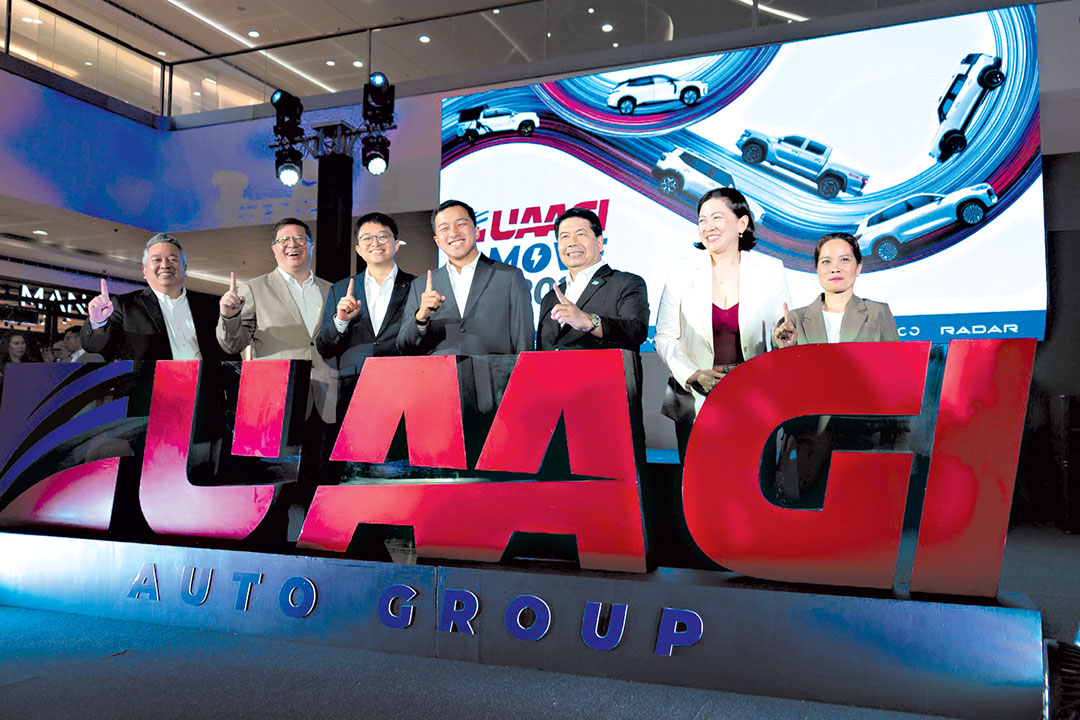
THE UNITED ASIA Automotive Group, Inc. (UAAGI) recently held the first leg of the year’s roadshow series “UAAGI On the Move” at the SM Mall of Asia Central Atrium in Pasay City. The four-day showcase from Feb. 26 to March 1 featured the company’s complete lineup of brands: BAIC, Chery, Foton, Jetour, Lynk & Co, and Radar. UAAGI Chairman Rommel Sytin described the event as his group’s way of bringing “brands closer to customers while showcasing not only the quality of our vehicles but also the strong after-sales and customer support system that comes with every purchase.”

A “one-stop-shop” roadshow, UAAGI On the Move offered test drive opportunities for over 20 turbocharged internal combustion engine models, hybrids, and electric vehicles from all UAAGI brands, event-exclusive promotions such as cash discounts of up to P100,000, on-the-spot bank approvals with onsite financing partners, and access to a second-hand-car appraisal facility to allow customers have their vehicles assessed and exchanged for cash to be used to fund their brand-new car from UAAGI.

“It’s the first time we’ve offered appraisals,” explained UAAGI Auto Group Executive Director Timothy Sytin. “UAAGI aims to provide simple, seamless, and easy access to new cars to Filipinos. We will be steadfast and dedicated in serving the Filipino with our world-class mobility solutions.”

“We are leading the market with competitive products and, more importantly, top-notch after-sales service geared toward total customer satisfaction,” said Foton Motor Philippines, Inc. Deputy Sales Director Joshua Sytin. “Our group’s strength lies in our ability to provide our customers with the power of choice. UAAGI combines mobility solutions that fit specific needs.”

At the opening of the roadshow, executives revealed 2026 plans for each brand that customers can look forward to. BAIC Philippines Brand Head Timothy Sytin promised to bring in “better, new vehicles — specifically SUVs (sport utility vehicles) this year.” He added, “You can expect to see more BAIC vehicles on the road. It continues to be a very aggressive brand that will deliver on its promise of driving big, delivering big cars, big offers, and with bigger value.”

Joined Chery Auto Philippines, Lynk & Co Philippines, and Radar Philippines Brand Head Franz Decloedt, “Chery will blossom this year with a number of updated vehicles and two more energy vehicles,” he announced. “We will be also launching the REV app that lets owners see the charging status of their vehicles and control these via their phones remotely.”

Lynk & Co will also bring in two new energy vehicles, according to the executive. “We will be doing a lot of marketing efforts and curated premium customer experiences for our clients.” Radar will be “solidifying its presence nationwide with the opening of the 10 locations.”

Jetour Auto Philippines will have an “exciting year,” according to Managing Director Miguelito Jose. “We are very happy to announce the launch of our premium SUV, the Jetour G700 (and) the highly anticipated Jetour F700 (a pickup). Our T1 lineup now also includes its top version, the Lightning Panther edition. These vehicles offer intelligent technologies with a perfect blend of innovation, performance, efficiency, and safety (features).”

Foton Motor Philippines General Manager Levy Santos shared that the brand will “accelerate its electric vehicle transition” this year by “combining proven durability and forward-looking (technology).” He revealed, “Our strong push toward electrification begins with the display of the Traveller Siera EV, signaling our commitment to sustainable transport. Customers and dealers can expect expansion in the EV segment, as new EV models are scheduled for launch in the coming months. Our product offerings are tailored for public transport and corporate shuttle service, offering fuel savings, reduced maintenance, and more.”

PLDT’s data center REIT plan seen to attract strong interest

STOCK PHOTO | Image by Wirestock from Freepik

By Ashley Erika O. Jose, Reporter

PLDT INC.’s plan to list its data center business as a real estate investment trust (REIT) is expected to attract strong investor interest, with the Philippine equity market primed for such an offering, analysts said.

“I think PLDT’s data center REIT offering will generate a lot of interest from the local investor community. PLDT has been an established data center operator even before the boom in interest in that sector due to digital transformation and now AI (artificial intelligence), and they have been expanding their capacity,” Colliers Philippines Senior Director and Head of Capital Markets and Investment Services Julius Guevara said in a Viber message on Friday last week.

Last week, Pangilinan-led telecommunications company PLDT Inc. announced that it is pursuing a REIT listing for its data center business, VITRO Inc.

VITRO manages and operates the group’s data center business. It is a wholly owned subsidiary of ePLDT, Inc., the ICT holding company of PLDT Inc.

The move comes after negotiations with potential investors failed to advance because they preferred majority control rather than the minority stake PLDT was willing to sell.

The move also comes as the company plans to raise funds to pay some loans and obligations. PLDT’s net debt rose to P284.7 billion as of end-2025.

For COL Financial Group, Inc. Chief Equity Strategist April Lynn C. Lee-Tan, pursuing a REIT listing for PLDT’s data center business will be favorable, especially with the revised REIT Law.

“I think the market will be receptive given that demand for data centers is growing and is still expected to grow further. Plus investors will get income through cash dividends, which seems to be what’s important right now,” she said in a Viber message.

In January, the Securities and Exchange Commission (SEC) issued amended rules on REITs as part of its initiatives to help develop and spur investments in the capital market.

The amendments are aligned with the objectives of the REIT Act by expanding eligible income-generating assets and allowing unlisted special purpose vehicles (SPVs) and incorporated joint ventures (JVs), consistent with global practices.

Under SEC Memorandum Circular (MC) No. 1, Series of 2026, REITs may own income-generating real estate directly or indirectly. For indirect ownership, a REIT may hold shares in an unlisted SPV formed primarily to own real estate, provided it owns at least two-thirds of the SPV’s voting stock, including through incorporated JVs.

The Philippine equities market remains largely concentrated in traditional sectors, with limited exposure to high-growth themes, said Peter Louise D. Garnace, an equity research analyst at Unicapital Securities, Inc.

He said a potential initial public offering (IPO) of a data center business will likely serve as a catalyst by further diversifying sector composition beyond traditional real estate and introducing digital infrastructure as a new asset class.

“This would deepen and broaden the Philippine REIT segment, enhance market liquidity, and attract a wider base of institutional and foreign investors seeking exposure to technology-linked, long-duration cash flows,” he said.

Mr. Garnace said the planned REIT listing of PLDT will expand REITs into tech-related infrastructure, which will likely strengthen the country’s investment landscape.

“[It will] position the Philippines more competitively alongside ASEAN peers that are advancing as digital and data center hubs,” he said.

“Definitely, PLDT would have the data center assets that are REITable, as they have been in this business the longest and probably have the largest coverage,” said Investment & Capital Corp. of the Philippines (ICCP) President Jesus Mariano P. Ocampo.

He said PLDT has a strong data center portfolio to sell into a REIT.

For Colliers’ Mr. Guevara, PLDT’s plan is also strategic as it would unlock value for the business while bringing additional value to the local equities market.

“Developing data centers is quite capital intensive, so there are very few opportunities for retail investors to participate in this growth market. By establishing a data center REIT, PLDT can now offer this opportunity to smaller investors,” he said.

Last year, PLDT inaugurated VITRO Sta. Rosa, its 11th data center. The five-hectare facility in Laguna is described as the country’s largest data center campus, with a capacity of up to 50 megawatts (MW). Across all sites, VITRO has nearly 100 MW of combined capacity.

“As the first tech-heavy REIT locally, the listing is likely to attract huge investor participation, given its novelty and the prevailing worldwide trend of tech-related issues doing well on the global stage,” said Shawn Ray R. Atienza, an equity research analyst at AP Securities, Inc.

China Bank Capital Corp. Managing Director Juan Paolo E. Colet said the market is ready for a data center REIT IPO.

He said there are many strong data center assets in the country, and consumption has also been robust.

“Data center business is a major component of the global infrastructure buildout for the AI revolution… The best listing structure for a local data center portfolio would be a REIT. That has the advantage of offering not just yield but also the potential for total returns growth as the data center portfolio expands,” he said.

The timing of the plan will also be a very important factor in the success of the planned REIT listing, he said, adding that overall equity market sentiment has improved and interest rates are projected to move lower.

“Those are favorable factors for a REIT IPO. To optimize valuations, however, I think we also need an industry-specific catalyst to create a more compelling data center IPO story. One such catalyst could be a definitive and comprehensive policy or regulation mandating data residency or data localization,” Mr. Colet said.

Hastings Holdings, Inc., a unit of the PLDT Beneficial Trust Fund subsidiary MediaQuest Holdings, Inc., holds a majority stake in BusinessWorld through the Philippine Star Group, which it controls.

Electric is ‘inevitable’

Hariphil Asia Resources, Inc. (HARI) Vice-Chairman, President, and CEO Maria Fe Perez-Agudo and Treasurer and CFO Ladislao Avila, Jr. pose with the just-launched Volvo ES90 and EX90. — PHOTO BY KAP MACEDA AGUILA

Volvo PHL unveils ‘flagship’ BEVs

ALL AUTO BRANDS are preparing for full electrification at some future point, according to Hariphil Asia Resources, Inc. (HARI) Vice-Chairman, President, and CEO Maria Fe Perez-Agudo. While data might show a slowdown even for countries like Japan, South Korea, and the United States, the executive posited that the ubiquity of the battery electric vehicle (BEV) is “inevitable.”

Speaking with “Velocity” on the sidelines of a recent launch of two full-electric “flagship models” of Volvo, the ES90 and EX90, Ms. Perez-Agudo continued, “When you do your cost-benefit analysis, (a BEV) provides you with a very minimal cost of ownership.

Still, Volvo’s mantra in the Philippines is about providing choices to car buyers, she insisted. And the ES90 and EX90 represent the most current technologies of the brand known for its safety innovations. In a release, HARI (the exclusive Volvo distributor) said that both vehicles are “engineered with next-level advanced safety innovations, modernized digital features, and passenger comfort.”

The Volvo ES90 Ultra BEV (P5.265 million) is an executive electric sedan exuding “quiet authority, seamlessly blending the elegance of a classic sedan with the versatility of a fastback to deliver refined sophistication.” Engineered for efficiency in addition to safety and convenience, the ES90 gets a low drag coefficient (0.25Cd), made possible by, among other design elements, a flat underchassis, flush door handles, and a closed-off front grille. It banners safety technology such as radar, ultrasonic sensors, and ADAS (advanced driver assistance systems) cameras. An automatic spoiler shutter on the lower half of the fascia helps cool the high-voltage battery.

The sound-insulated cabin, according to HARI, is a Scandinavian-Living-Room-inspired affair, with “natural light from its panoramic electrochromic roof, with power-adjustable, ventilated, heated front seats with massage function and rear reclinable and ventilated passenger seats delivering tailored comfort on every journey.” Interior space is maximized via a 3,102-mm wheelbase.

The Volvo ES90 Ultra BEV is the first sedan of the brand to feature 800-volt EV architecture. This enables faster DC charging, and enhanced thermal efficiency “ensures a reliable and efficient electric driving experience, while a WLTP range of up to 700km provides credible long-distance capability, making the ES90 Ultra BEV an ideal choice for executive travel.”

On the other hand, the EX90 (P5.99 million) is a World Car Awards-winning model positioned as “more than an EV counterpart” of the similarly platformed XC90. The BEV’s Driver Understanding System was named by Time Magazine as one of 2024’s Best Inventions. The three-row, seven-seat family SUV also banners the Scandinavian Living Room interior philosophy along with a flat floor, FSC-certified backlit wood décor, and “sustainable, high-quality materials.”

The EX90 receives individually adjustable first- and second-row seats, cinema-style seating, power-folding rear seats, and USB-C ports in all rows — in addition to advanced LED lighting that “mimics natural sunlight,” four-zone climate control, and PM2.5 air purification. Numerous, generous storage underscores enhanced utility as well.

Safety comes by way of seven cameras, five radar units, and 12 ultrasonic sensors for comprehensive awareness of the road, obstacles, and other vehicles. “At its core, Next-Generation Pilot Assist provides Lane Keeping, Adaptive Cruise Control, and Navigation Support, enhancing situational awareness, reducing driver stress, and ensuring a safer, smoother, and more confident driving experience,” said HARI.

The EX90’s twin-motor AWD drivetrain promises a range of 624km, courtesy of a 111kWh high-voltage battery, and supports ultra-fast DC recharge. At peak charging (at 350kW), it can enable 10% to 80% state of charge in about 22 minutes. A 300kW (456 hp) powertrain produces 770Nm, letting the vehicle sprint from a standstill to 100kph in 5.9 seconds, onto an electronically limited top speed of 180kph. It has a towing capacity of 2,200kg.

“There is a growing confidence when it comes to EV adoption,” continued Ms. Perez-Agudo. “Whether we like it or not, the Philippines has to upgrade its infrastructure in order to also really become global. We cannot be left behind. We may be slow, but in time, we will be able to catch up. So I believe that electrification will happen… The end goal is to really go electric. But as I’ve said, it could take 10 years, 15 years. We’ll see.”

So, for now, HARI is taking the stance that consumers need to have a range of options in powertrains — from the traditional internal combustion engine (ICE), plug-in hybrids, to BEVs. “As I’ve said, it’s just a matter of time. Timing is key,” she concluded.

For more information, visit Volvo Cars Makati on Chino Roces Ave., call 0908-891-4286, or e-mail inquiry@volvocarsph.com to book a test drive.

ADVERTISEMENT
ADVERTISEMENT