Home Blog Page 230

Cardinal found with phone during secret conclave to elect Pope Leo, book says

Pope Leo XIV | Screenshot from Vatican Media Livestream

VATICAN CITY — The secret conclave that elected Pope Leo XIV head of the Catholic Church last May was interrupted when one of the 133 cardinals involved was found carrying a cellphone, a massive security breach, a book released on Sunday revealed.

As the clerics were preparing to take their first vote inside the Vatican’s Sistine Chapel, which was fitted with jamming equipment to prevent outside communications, security officials picked up the signal of an active mobile connection.

The cardinals stared at each other incredulously, then one of the older clerics discovered he had a phone in his pocket and handed it over, according to The Election of Pope Leo XIV, a new book by two long-time Vatican correspondents.

The book does not name the cardinal or suggest he had any motive for keeping his phone, saying the moment left him “disoriented and distressed.”

SECURITY BREACH WAS ‘BETTER THAN FICTION’
The scene was “unimaginable even for a film and never before seen in the history of modern conclaves,” wrote the authors, Gerard O’Connell and Elisabetta Piqué.

One such film, the 2024 hit Conclave, imagined a tangled web of intrigues during the fictional selection of a pontiff. Last year’s unprecedented discovery of a phone was in its own way more startling than anything portrayed in that movie, Mr. O’Connell told Reuters.

“Reality (was) better than fiction,” he said.

Clerics taking part in a conclave take a vow not to communicate with the outside world and surrender their phones and all other communication devices for the duration of the proceedings, which can last for days.

The Vatican press office did not respond to a request for comment about the new book, which offers behind-the-scenes details of one of the world’s most secretive elections.

ONLY TWO LEADING CANDIDATES FOR POPE
The cardinals met in a two-day conclave from May 7-8 under an intense global spotlight to elect a successor to Pope Francis, who died in April after 12 years leading the 1.4 billion member Church.

Much of the speculation at the time focused on the possibility that the cardinals would elect a new pontiff from Asia or Africa, given that the conclave was the most geographically diverse in history, with clerics from 70 countries taking part.

But no candidate from those regions garnered much support, according to the book, which discloses details of the cardinals’ votes for the first time based on information from interviews with participating clerics.

While it is strictly forbidden for cardinals to reveal details of the secret balloting at a conclave without permission from the future pope, it is common for journalists to slowly tease out information from clerics in the years afterward.

Two candidates immediately emerged as frontrunners inside the conclave, the book said.

One was Italian Cardinal Pietro Parolin, a long-time Vatican official identified by many outlets as a leading favorite. The other was US Cardinal Robert Prevost, a figure who was mostly unknown outside Church circles but would emerge as Pope Leo, the first pontiff from the US.

On the first vote in the conclave, held in the evening of May 7, Mr. Prevost already received between 20-30 votes, an unusually large number, according to the book.

Philippine Cardinal Luis Antonio Tagle, who was also seen as a favorite going into the election, only ever received fewer than 10 votes in the conclave.

On the fourth ballot in the afternoon of May 8, Mr. Prevost won with 108 votes. Mr. Tagle was sitting next to Mr. Prevost as the final vote was being tallied and offered the future pope a cough drop to soothe his throat, the book said. — Reuters
Iran crisis threatens worst disruption in gas markets since 2022

REUTERS

A widening Middle East conflict looks set to create the most significant disruption for gas markets since Russia’s invasion of Ukraine upended global trade four years ago.

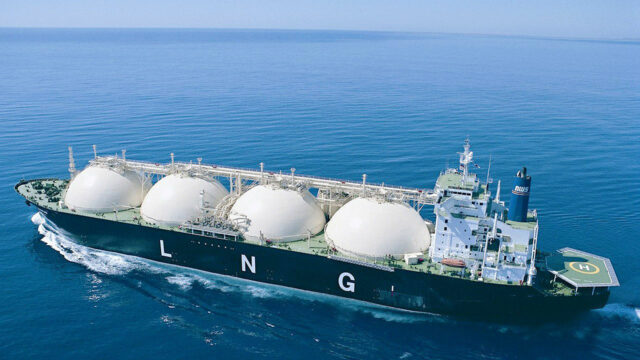
Iran’s neighbors, like Qatar, are some of the world’s most important suppliers, and the region is also a vital supply route, with 20% of liquefied natural gas exports traveling through the Strait of Hormuz, a crucial chokepoint for global energy.

LNG trade through the narrow waterway is now all but halted, according to ship-tracking data. Asian buyers — which take roughly a quarter of their LNG from Qatar, the world’s second-largest exporter — have been calling suppliers to check if alternative cargoes are available, according to traders. Egypt, meanwhile, is trying to bring forward shipments, after supplier Israel shuttered some fields.

“Any naval activity in the Straits of Homuz will be particularly bullish, as will any developments with Qatari LNG production,” said Tom Marzec-Manser, director of Europe LNG and gas at Wood Mackenzie.

Russia’s invasion of Ukraine in 2022 created unprecedented turmoil in the international gas trade, cutting Moscow off from its largest export market, fueling volatility and triggering a record spike in prices in Europe and elsewhere.

Asia is particularly vulnerable to similar ripple effects from the Middle East’s worsening crisis. More than four-fifths of Qatar’s LNG was delivered to Asian buyers last year, with China the biggest purchaser, taking almost a third of its imports from the country. India is the second-largest importer.

Shipments to Asia — and the Europe — must pass through the Strait of Hormuz. So far, at least eleven LNG tankers going to or from Qatar have paused voyages to avoid the waterway, according to ship-tracking data.

Smaller exporter UAE also sends its LNG exports through the Strait.

“There is no replacement,” Anne-Sophie Corbeau, a researcher at Columbia University’s Center on Global Energy Policy, said in a post on LinkedIn.  “Will prices spike more in Asia or in Europe? Europe is less exposed, but has low storage levels. It also depends on how much is diverted to Asia.”

Qatar exported 82.2 million tons of LNG in 2025. One of the production units at Qatar’s Ras Laffan complex was undergoing planned maintenance as of last week, according to the traders, which will contribute to lower flows. They asked not to be named as they are not authorized to speak to the media.

Nippon Yusen, a major Japanese LNG shipowner and manager, has instructed its affiliated ships to avoid the area around the Strait of Hormuz, according to a company spokesperson. Mitsui OSK Lines, another large Japanese LNG shipowner, has instructed vessels to wait in safe waters, while Kawasaki Kisen Kaisha confirmed it had ordered vessels in the Persian Gulf to stand by.

If the conflict drags on and shipping disruptions continue, risks will grow rapidly for LNG output, which requires steady exports to move fuel through the facility — or risk forcing output cuts.

Chinese importers are among those making last-minute calls this weekend to weigh up alternative supplies if Iranian efforts to curb shipping are sustained, traders said, though QatarEnergy has not delayed any shipments to its buyers. QatarEnergy did not immediately respond to a request for comment outside usual business hours.

Traders in India, Japan and elsewhere are also bracing for higher prices, reversing over a year of relatively subdued rates at a time of ample new supply. And it isn’t just spot prices — long-term LNG contracts are usually linked to crude benchmarks, so an increase in Brent oil will also make gas more expensive for Asian consumers.

Another potential pressure point will be Turkey, which imports pipeline gas from Iran. Like Egypt, the country may be forced to buy more LNG if key flows are curtailed as a result of the ongoing conflict, adding more upward pressure to prices for super-chilled seaborne gas shipments.

Iran exports gas to Turkey via a 9.6 billion cubic meters per year contract, even though actual volumes delivered have recently dipped below those quantities, according to Columbia’s CGEP. Supplies from Tehran made up less than 15% of the country’s gas imports in 2024, according to data from the Oxford Institute for Energy Studies. — Bloomberg

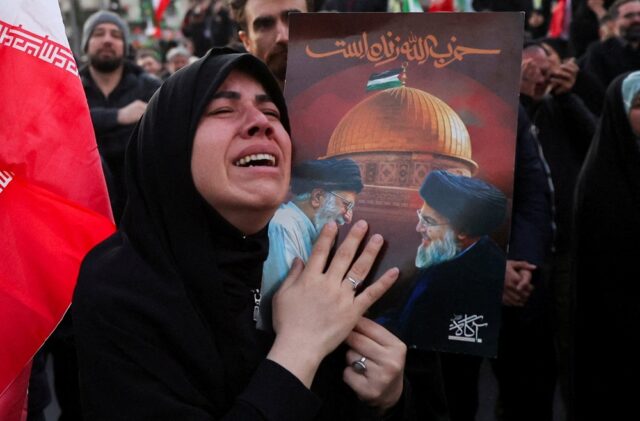
Iranian leader Khamenei killed in air strikes as US, Israel launch attacks

A woman reacts as people gather at the Enghelab Square, after Iran's Supreme Leader Ayatollah Ali Khamenei was killed in Israeli and US.strikes on Saturday, in Tehran, Iran, March 1, 2026. — REUTERS

WASHINGTON/JERUSALEM/DUBAI/DOHA — Iran’s Supreme Leader Ali Khamenei was killed on Saturday, state media confirmed, after the United States and Israel launched the most ambitious attack on Iranian targets in decades.

Iranian state media announced Mr. Khamenei’s death early on Sunday. A senior Israeli official told Reuters earlier that the Iranian leader’s body had been found after a strike and US President Donald Trump said the United States worked closely with Israel to target the man who led Iran since 1989.

Iran has called the strikes unprovoked and illegal and responded with missiles fired at Israel and at least seven other countries, including Gulf states that host US bases.

Mr. Trump, making the biggest foreign-policy gamble of his presidency after campaigning for reelection as a “peace president,” said the strikes were aimed at ending a decades-long threat from Iran and ensuring it could not develop a nuclear weapon.

Intelligence and tracking systems monitored Mr. Khamenei’s whereabouts, Mr. Trump wrote in a Truth Social post, adding that “there was not a thing he, or the other leaders that have been killed along with him, could do.”

Mr. Trump reiterated calls for Iranians to topple the government but warned: “The heavy and pinpoint bombing, however, will continue, uninterrupted throughout the week or, as long as necessary to achieve our objective of PEACE THROUGHOUT THE MIDDLE EAST AND, INDEED, THE WORLD!”

Israeli Prime Minister Benjamin Netanyahu said Mr. Khamenei’s compound had been destroyed.

Three sources familiar with the matter said Iranian Defense Minister Amir Nasirzadeh and Revolutionary Guards commander Mohammed Pakpour were among those killed in the attacks.

Israel’s military said it had confirmed that five other senior military commanders were also dead, including Ali Shamkhani, an adviser to Iran’s supreme leader. Iranian media had said Mr. Khamenei’s daughter, grandchild, son-in-law and daughter-in-law were also killed.

CELEBRATIONS, FEARS AMONG IRANIANS
Witnesses said some Iranians took to the streets in Tehran, the nearby city of Karaj and the central city of Isfahan to celebrate after the reports of Mr. Khamenei’s death. Videos posted on social media, which Reuters was unable to immediately verify, also showed celebrations in other locations.

The explosions during the strikes caused widespread panic across Iran. “We are scared, we are terrified. My children are shaking, we have nowhere to go, we will die here,” mother-of-two Minou, 32, said weeping as she spoke to Reuters by phone from the northern city of Tabriz.

Iran launched hundreds of missiles and drones in response to the attacks, but the Pentagon said there were no US deaths or injuries.

Iran warned that the Strait of Hormuz, the narrow passage through which around a fifth of global oil consumption passes, had been closed. Traders expected a sharp jump in oil prices. Airlines cancelled flights in the Middle East.

Israel’s military said some 200 fighter jets had completed the largest flying mission in its history, hitting 500 targets throughout Iran, including strategic defense systems already damaged in strikes last year.

A girls’ primary school in the southern Iranian town of Minab was hit, killing 85 people, according to a local prosecutor cited by state media. Reuters could not independently confirm the reports. Israel’s military did not immediately respond to a request for comment.

TRUMP CITES ‘IMMINENT THREATS’
In a video message on social media early on Saturday, Mr. Trump said the aim of the military campaign, which the US Department of Defense named Operation Epic Fury, was “eliminating imminent threats from the Iranian regime.”

The Iranian people should “take over” governance of their country, Mr. Trump said in the video. “It will be yours to take,” he said. “This will be probably your only chance for generations.”

Israeli military operations over the past two years had already killed some of Iran’s senior military officials and severely weakened several of Tehran’s once-feared proxy forces across the Middle East.

After Israel pounded Iran in a 12-day air war in June, joined by the United States, the US and Israel had warned they would strike again if Iran pressed ahead with its nuclear and ballistic missile programs.

Negotiations between US and Iranian officials took place as recently as Thursday, but senior US officials said on Saturday that Iran had not been willing to give up its ability to enrich uranium, which the Iranians argued they wanted for nuclear energy but US officials said would enable the country to build a nuclear bomb.

During a United Nations Security Council meeting on Saturday, envoys from Russia and China criticized the US and Israel for launching the strikes while Tehran was negotiating with Washington. Russia’s UN envoy Vasily Nebenzya said Iran had been “stabbed in the back” and disputed the US claim that preventing Iran from acquiring a nuclear weapon justified the attacks.

UN Secretary-General Antonio Guterres called for an immediate cessation of hostilities.

Mr. Trump also faced pushback at home from opposition Democrats, and a few of his fellow Republicans, who said a prolonged campaign against Iran would be illegal without congressional approval and that lawmakers should vote within days.

MISSILES FIRED AT ARAB GULF STATES
Oil markets have been closely watching the standoff. Jorge Leon, head of geopolitical analysis at Rystad Energy, predicted prices could shoot up by $10 to $20 per barrel when markets open on Monday, if there is no sign of de-escalation.

Iran, the third-largest producer in the Organization of the Petroleum Exporting Countries, pumps about 4% of global oil supplies, and a far larger share is shipped past its coast through the strait leading out of the Gulf.

In Israel, sirens and mobile-phone warnings sent Israelis rushing to air raid shelters as Iran launched a series of missile barrages that were mostly intercepted, though some missiles hit.

Emergency teams in Tel Aviv treated at least 20 people hurt by a missile that hit a residential building, Israel’s ambulance service said. Photos from the scene showed one side of the multi-storey building blown out and its roof caved in.

Iran fired missiles at Abu Dhabi, Dubai, and Doha, all key east-west aviation gateways.

Aviation sources had told Reuters that an overnight Iranian attack damaged an airport terminal in Dubai. One of the city’s plush hotel districts was also hit.

Loud explosions sounded in Abu Dhabi, capital of the United Arab Emirates, an oil producer and close US ally.

Nada AlGarhy, 30, said she and her husband had been at the Waldorf Astoria hotel on Dubai’s luxury Palm development for Iftar, the evening meal during the fasting month of Ramadan, when they heard a loud blast.

Bahrain said the service center of the US Fifth Fleet — the base for American naval forces in the region — had been subjected to a missile attack. Video footage showed a thick grey plume of smoke rising from near the island state’s coastline.

Qatar said it had downed all missiles targeting the country and that it had a right to respond. Kuwait confirmed a missile attack on a US military base there.

Tehran promised a stronger response to come, with a senior Iranian Revolutionary Guards commander, Ebrahim Jabbari, saying it had so far used only “scrap missiles” and would soon unveil previously unseen weapons. — Reuters

Robinsons Supermarket to revamp nine more branches in 2026, relaunches Robinsons Magnolia store

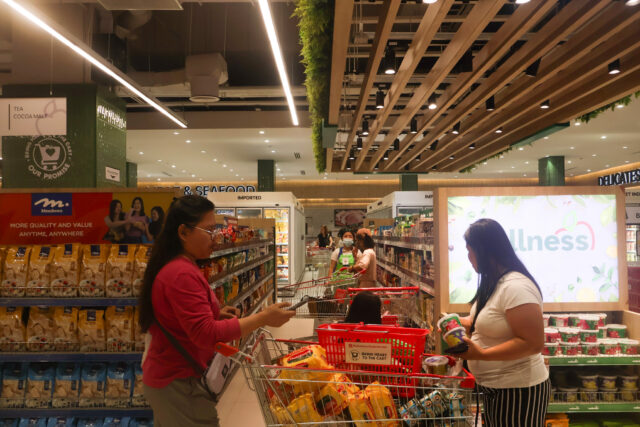
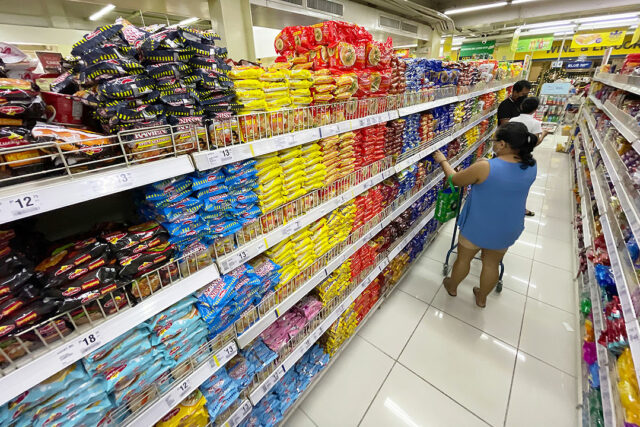
The relaunched Robinsons Magnolia Supermarket has a new modernized design highlighting the wellness section to promote healthy lifestyle choices. — KAELA B. GABRIEL

Robinsons Supermarket has revamped its third branch in Robinsons Magnolia in Quezon City, to be followed by nine more renovations nationwide this year.

Robinsons Retail Holdings, Inc. President and CEO Stanley C. Co said about P200 million has been allocated for the renovation of the supermarkets, which he has deemed an “investment” due to anticipated increase in foot traffic of the renovated grocery stores.

“We’re willing to spend because for us, we know that eventually, there will be a return,” Mr. Co said in an interview during the Robinsons Magnolia Supermarket relaunch on Feb. 27.

Mr. Co said the revamping of their selected supermarkets is an elevation of their branches from “middle” to “affordable premium” market, taking into consideration the shopping habits across different generations from Gen X to Gen Z.

“For the first two stores, we saw improved basket size and transaction count,” said Mr. Co.

In December, Robinsons Supermarket relaunched their branches in Robinsons Nuvali and Robinsons Galleria, the biggest branch according to Robinsons Supermarket Group General Manager Kerwin L. Legarde.

“We’ve experienced not only foot traffic but we saw an uplifted customer spending… We’re achieving our goals,” Mr. Legarde told BusinessWorld.

The revitalized supermarkets bear the same interiors with green tiles, gray walls for the meat and seafood section, and wooden accent.

Mr. Co added that the core of the renovated stores is the wellness section which features new products geared towards healthy living such as milk alternatives, keto-friendly, sugar-free, and gluten-free products, noting the importance of customer experience.

“We do face some headwinds, different headwinds per banner. But supermarkets and drugstores? It’s a staple. People will buy. It’s a question of what will [the] customers buy? Will they downgrade? If they downgrade, we have to be ready for them. We need to have what they’re looking for,” Mr. Co said.

Another branch in Bacolod is scheduled for completion in two weeks.

The Robinsons Supermarket currently has 157 branches nationwide, of which around 10% to 15% have been selected for renovation based on location according to Mr. Co. — Kaela Patricia B. Gabriel

February inflation likely between 2.3% and 3.1% – central bank

BW FILE PHOTO

INCREASED PRICES of rice, fish and fuel and higher electricity rates may have pushed up inflation in February, the Bangko Sentral ng Pilipinas (BSP) said on Friday.

Based on the central bank’s month-ahead forecast, the consumer price index likely accelerated to between 2.3% and 3.1% this month.

If realized, this would be faster than the 2% print in January and the 2.1% clip recorded in the same month last year

It would also mark the second straight month that inflation settled within the BSP’s 2%-4% target.

“Upward price pressures could stem from higher prices of rice and fish, elevated domestic petroleum prices, and increased electricity charges in Meralco (Manila Electric Co.)-serviced areas,” the BSP said.

“These pressures, however, may be partly offset by lower prices of vegetables, fruits, and meat, as well as peso appreciation.” — Katherine K. Chan

Business sentiment stays upbeat, BSP survey says

Photo shows the central business district in Makati City, Dec. 16. — PHILIPPINE STAR/ RYAN BALDEMOR

By Katherine K. Chan, Reporter

BUSINESSES remained optimistic in January as they expect higher consumer demand and better processes, with their outlooks for the quarter and year ahead also becoming more positive, results of the the Bangko Sentral ng Pilipinas’ (BSP) inaugural monthly business expectations survey (BES) showed.

The central bank’s BES for January showed that businesses had an overall current-month confidence index (CI) of 0.9%. A positive CI shows that more respondents are optimistic than pessimistic.

However, this was lower than the 29.7% CI in the fourth quarter of 2025.

“The optimistic sentiment of survey respondents in January 2026 was attributed primarily to expectations of: (a) higher consumer demand for certain products and services (e.g., garments, education services, loan products, mailing and shipping services, and motor vehicle parts), and (b) business process enhancements,” the central bank said.

The survey also showed that businesses showed more optimism for the next quarter and the next 12 months with CIs of 33.3% and 38.6%, respectively.

“Stronger consumer demand and sales, improved domestic economic conditions, and more favorable investment prospects lifted business confidence for the next quarter and over the next 12 months,” the BSP said.

Businesses see the upcoming dry season supporting consumer appetite, while they expect the recovery in government spending and better governance to prop up investments.

The release of the monthly BES marks the start of a more frequent assessment of business sentiment, the BSP said.

“The shift from a quarterly to a monthly survey will allow the BSP to monitor business confidence more closely and respond more effectively to rapidly changing domestic and external developments.”

The central bank earlier said it is also planning to conduct its consumer expectations surveys monthly.

This comes as BSP Governor Eli M. Remolona, Jr. earlier said that they are now putting a greater weight on confidence for their own macroeconomic surveillance as the fallout from a corruption scandal linked to flood-mitigation projects that came to light last year showed the impact of investor sentiment on growth.

TIGHTER FINANCIAL CONDITIONS
Meanwhile, firms said they see tighter cash positions and credit access in the first month of 2026.

Their financial condition index, which reflects a business’ general cash position considering the level of cash and other cash items and repayment terms on loans, stood at -19.2%.

The credit access index was at -0.6% in January. This refers to the environment external to the firm, including the availability of credit in the banking system and other financial institutions.

The latest BES also indicated that the average capacity utilization for the industry and construction sectors was at 69.6%.

“Respondents cited stiff domestic competition, insufficient demand, and high interest rates as major constraints to business activities in January 2026,” the BSP said.

Meanwhile, businesses showed favorable hiring intentions for April until January next year, with the employment outlook index for April at 11.3% and for the 12 months ahead at 23.3%.

“Industry sector expansion may gain momentum over the next 12 months,” the BSP said.

About 14.1% of businesses in the Philippine industry sector plan to expand in April, while 24.3% expect the same for the coming year.

INFLATION EXPECTATIONS
Businesses surveyed said they expected inflation to settle at 2.2% in January. This was faster than the actual 2% headline print recorded during the month.

Meanwhile, for April, they see inflation accelerating to 2.4% and picking up further to 2.6% over the next 12 months.

These are all within the central bank’s 2%-4% annual target.

“Business inflation expectations remain well-anchored,” the BSP said. It expects inflation to average 3.6% this year and 3.2% in 2027.

Firms also said that they expect the peso to weaken against the US dollar over the coming year, the survey showed.

They expect the peso-dollar exchange rate to average at P58.88 for January and April and to weaken to an average of P58.99 in the next 12 months.

The peso traded at the P58 to P59 levels in January, even hitting a new record low of P59.46 per dollar on Jan. 15. Based on BSP data, the peso-dollar exchange rate averaged at P59.1622 during that month.

“Meanwhile, businesses expect that peso borrowing rates may decline in January 2026, but may rise in April 2026 and over the next 12 months,” the central bank said.

IMF approves $8.1 billion loan for Ukraine, with $1.5 billion to go immediately

THE International Monetary Fund (IMF) logo is seen outside the headquarters building in Washington, U.S. — REUTERS

WASHINGTON — The International Monetary Fund’s executive board on Thursday approved an $8.1 billion, four-year loan for Ukraine, with $1.5 billion to be disbursed immediately to help keep the government running as its war against Russia’s invasion drags into a fifth year.

The IMF said the new Extended Fund Facility arrangement for Ukraine would help anchor a $136.5 billion international support package for the war-torn country, which this week marked the fourth anniversary of Russia’s full-scale invasion.

The new loan, which replaces a $15.5 billion program that was approved in 2023, will help Kyiv to maintain economic stability and keep public spending flowing, the IMF said.

Ukrainian Prime Minister Yulia Svyrydenko hailed the IMF loan as part of a broader financial framework that would cover an estimated budget shortfall of $136.5 billion over four years, including a 90 billion euro loan from the European Union.

“It is very important for us that in the fifth year of the full-scale war, against the backdrop of systematic attacks on the energy sector, Ukraine has guaranteed international financial support from partners and the resources for the stable functioning of the state,” she wrote on Telegram.

The World Bank, European Union, United Nations and the Ukrainian government this week issued a new report that put the cost of rebuilding Ukraine at $588 billion over the next decade.

IMF Managing Director Kristalina Georgieva said the IMF loan would resolve Ukraine’s balance of payments problem and restore medium-term external viability, while boosting prospects for reconstruction and growth after the war ended and help to facilitate Ukraine’s steps to join the European Union.

“Ukraine and its people have weathered a long and devastating war for over four years with remarkable resilience,” she said in a statement, lauding work by Ukrainian authorities to maintain overall macroeconomic and financial stability, boost domestic revenues and advance some critical reforms.

She said officials were committed to “tackling longstanding bottlenecks to growth,” including through continued efforts to combat corruption, address tax avoidance and evasion, reform energy markets, and strengthen financial market infrastructure.

The program would be “promptly recalibrated” in the case of successful peace negotiations, she said in a statement.

GROWTH SLOW, BUT INFLATION HALVED
Ms. Georgieva, who paid a surprise visit to Ukraine last month, said the war had taken a toll on economic and social conditions, despite efforts by authorities to stabilize the economy, contain inflation and restructure private sector debt. The new loan aimed to deepen structural reforms, she said.

That meant growth was slowing and the economic outlook remained “subject to exceptionally high uncertainty,” she said.

The IMF now projects that Ukraine’s economy will grow by 1.8% to 2.5% in 2026, after growth of an estimated 1.8% to 2.2% in 2025. Inflation was expected to be around 6.1% this year, half the 12.7% rate recorded in 2025, the IMF said.

Ukraine’s estimated financing gap of $52 billion in 2026 would be filled through disbursements under the newly approved IMF program, European Union arrangements, funds from the Group of Seven advanced economies and bilateral support, the IMF said.

Ms. Georgieva said a large number of IMF members, including the US, Germany, Canada, Britain and Japan, had reaffirmed their recognition of the IMF’s preferred creditor status in respect to the money it owed the Fund, and agreed to “adequate financial support” to ensure Ukraine could repay its debts to the IMF. Other countries backing Ukraine were Austria, Belgium, Denmark, Estonia, Finland, France, Greece, Iceland, Ireland, Italy, Lithuania, Luxembourg, the Netherlands, Norway, Poland, Portugal, Spain and Sweden, she said.

The Group of Creditors of Ukraine, which holds the majority of Ukraine’s official bilateral debt, also agreed to extend the current debt standstill and complete a definitive debt treatment after the resolution of the current state of “exceptionally high uncertainty,” the IMF said in its statement.

Ms. Georgieva said the risks to the loan were exceptionally high and the program’s success would depend on continued international support, as well as the authorities’ “steadfast determination” to implement ambitious structural reforms.

A staff report noted that progress on reforms had been mixed under the previous program, with Kyiv completing some important milestones, but missing two end-December benchmarks related to public investment management and valuation standards.

Ukraine’s progress on the program will be reviewed quarterly, with nine reviews planned over the next four years. — Reuters

Canada’s Carney visits India to boost trade, mend ties on latest ‘middle powers’ trip

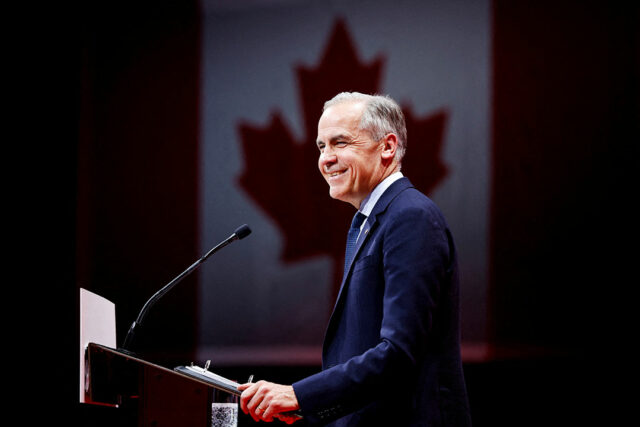
Canada’s Prime Minister Mark Carney — REUTERS

OTTAWA — Canadian Prime Minister Mark Carney arrives in Mumbai on Friday on his first official visit to India, hoping to reset the sometimes fractious relationship with the world’s most populous country as he seeks new global alliances.

Mr. Carney will meet business leaders in Mumbai and start talks on a comprehensive trade agreement, which is expected to be completed by November, his foreign minister told Reuters. He is scheduled to travel on to New Delhi for talks with Prime Minister Narendra Modi.

Mr. Carney has sought closer ties with China and Middle Eastern countries as well as India, as he tries to reduce Canada’s dependence on the United States and forge a new global trading order led by what he calls middle-power countries.

Relations between Canada and India soured several years ago after explosive allegations by then-Prime Minister Justin Trudeau that the Indian government was linked to the assassination of a Canadian citizen who was also a prominent Sikh separatist. India has repeatedly denied any such links.

Unlike several previous Canadian leaders, including Mr. Trudeau, Mr. Carney will not make a stop in India’s Punjab region, a major origin of Indian migration to Canada. Sikh separatists have pushed for an independent state in the Punjab and a visit there risks irking Mr. Carney’s Indian hosts.

Analysts say the move signals a more pragmatic foreign policy that aims to wean Canada away from the United States, spurred by President Donald Trump’s tariff war and annexation threats.

“The Prime Minister has a laser-beam focus on attracting capital to Canada, not playing to the Indian diaspora back home,” said Goldy Hyder, president of the Business Council of Canada.

“This is a business trip aimed at growing the economy to give Canadians more economic sovereignty,” he said, calling the approach a significant shift from the Trudeau era.

Last month, the European Union and India reached a landmark trade deal to cut tariffs on most goods, raising expectations that India might soon sign a similar deal with Canada. India’s high commissioner to Canada told Reuters in January that Mr. Carney will likely sign a 10-year, C$2.8 billion ($2.05 billion) uranium supply deal and smaller agreements on oil and gas, the environment, artificial intelligence, quantum computing, education and culture.

NO BHANGRA DANCING
Mr. Trudeau was mocked for wearing overly elaborate Indian outfits during a 2018 visit and was publicly criticized by Prime Minister Narendra Modi for allowing “anti-India activities,” a reference to vocal Sikh separatists living in Canada.

“Carney has a sense of gravitas and is very strategic,” said Partha Mohanram, a management professor at the University of Toronto. “He’s not going to do a bhangra dance over there.”

But Mr. Carney’s approach to India has drawn criticism from some Sikh groups in Canada.

“The Carney government has failed to hold India accountable or to create any meaningful safeguards to ensure that Sikh Canadians are protected from foreign interference and transnational repression,” the World Sikh Organization of Canada said in a statement on Wednesday.

Canadian Foreign Minister Anita Anand told Reuters there have been conversations between Canada and India at the highest levels regarding concerns about criminal activity with possible links to India. Ms. Anand said there were new measures to track criminal money, digital threats, and surveillance of diaspora communities.

Ms. Anand said Mr. Carney’s foreign policy was driven by the reordering of global trading relationships and that “no country will ever have a pass in terms of the domestic safety and security of this country.”

FENDING OFF AMERICAN HEGEMONY
After India, Mr. Carney will visit Australia, where he will address parliament and discuss military, trade and defense links. En route back to Ottawa, Mr. Carney will meet Japanese Prime Minister Sanae Takaichi and talk about boosting trade in autos, energy, and critical minerals.

Jonathan Kalles, a former adviser to ex-Prime Minister Trudeau, said Mr. Carney’s agenda was defined by the new geopolitical order he outlined in his Davos speech, where he called for middle powers to adopt a “principled and pragmatic” path to fend off American hegemony.

“When the world is nice and calm, you can try to change the world and talk about virtues,” he said. “But when you’re living in uncertain times, the Prime Minister’s job is to advance the country’s interests and Mark Carney knows very well his job is to diversify our trade and strengthen the economy.” ($1 = 1.3684 Canadian dollars) — Reuters

Pakistan bombs targets in Afghan cities, minister calls it ‘open war’

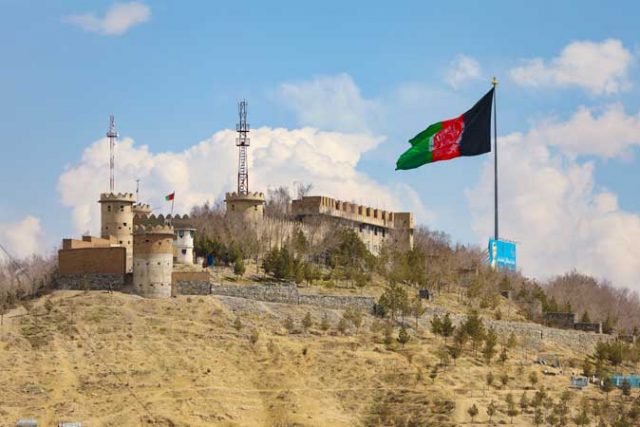
KABUL, AFGHANISTAN — SOHAIB GHYASI-UNSPLASH

KABUL/ISLAMABAD — Pakistan bombed Taliban government targets in Afghanistan’s major cities overnight, officials from both countries said on Friday, with Pakistan’s defense minister calling the conflict “open war”.

Security sources in Pakistan said the strikes involved air-to-ground missile attacks on Taliban military offices and posts in Kabul, Kandahar and Paktia as well as ground clashes in multiple sectors along the border between the Islamic nations.

The Taliban said it launched what it described as retaliatory attacks on Pakistani military installations.

Both sides reported heavy losses, issuing sharply differing figures that Reuters could not independently verify.

“Our cup of patience has overflowed. Now it is open war between us and you (Afghanistan),” Pakistani Defense Minister Khawaja Muhammad Asif said on Friday.

Relations between Kabul and Islamabad have been strained by a long-running dispute over Pakistan’s accusation that Afghanistan harbors militants carrying out attacks across the border. The Taliban have denied the charge and said Pakistan’s security is an internal problem.

The strikes on Taliban government installations are a major escalation, and threaten a protracted conflict along the 2,600-kilometer (1,615-mile) frontier.

Taliban spokesperson Zabihullah Mujahid confirmed Pakistani forces carried out air strikes in parts of Kabul, Kandahar, and Paktia but did not give details.

Kandahar is the headquarters of the Taliban and the city where supreme spiritual leader Haibatullah Akhundzada is based.

Video shared by Pakistani security officials showed flashes of light in the night from firing along the border and the sound of heavy artillery. A video of strikes on Kabul, for which Reuters was able to verify the location, showed thick plumes of black smoke rising from two sites and a massive blaze in part of the capital.

Another video showed a building on fire, which the officials said was a Taliban headquarters in Paktia province.

“Pakistani counter-strikes against targets in Afghanistan continue,” a Pakistani government spokesperson, Mosharraf Zaidi, said in a post on X, describing the action as a response to “unprovoked Afghan attacks.”

Reuters witnesses in Kabul said many ambulance sirens could be heard following loud blasts and the sound of jets.

Mr. Zaidi said 133 Afghan Taliban fighters were killed and more than 200 wounded, with 27 posts destroyed and nine captured.

Mr. Mujahid, the Taliban spokesperson, said 55 Pakistani soldiers were killed and 19 posts seized, while eight Taliban fighters were killed, 11 wounded and 13 civilians injured in Nangarhar province.

HIGH SECURITY
Pakistan’s military capabilities are vastly superior to Afghanistan. However, the Taliban are adept at guerrilla warfare, hardened by decades of fighting with US-led forces, before returning to power in 2021.

Clashes between Pakistan and Afghanistan in October killed dozens of soldiers until negotiations facilitated by Turkey, Qatar, and Saudi Arabia brought an end to the hostilities.

Pakistan and Saudi Arabia’s foreign ministers spoke on Friday to discuss reducing tensions, Riyadh’s foreign office said without providing details on whether Riyadh was involved in brokering a ceasefire.

Russia, the only country to formally recognize the Taliban government, called for an end to hostilities and said it would consider mediating talks if asked by both parties, state media reported citing Moscow’s foreign ministry.

Pakistan has been on high security alert since it launched air strikes earlier this week that Islamabad said targeted camps of Tehreek-e-Taliban (TTP), or Pakistani Taliban, and Islamic State militants in eastern Afghanistan.

Kabul and the United Nations said the strikes killed 13 civilians and reiterated it does not allow militants to operate from its territory. The Taliban also warned there would be a strong response.

The government of Pakistan’s Punjab province said it was on high alert for militant attacks on Friday and had conducted a series of security operations, taking 90 Afghan nationals to holding centers for deportation.

A state-run media outlet from Afghanistan’s Nangarhar, Bakhtar News Agency, shared an image of what it said was a battalion of suicide attackers, and quoted an Afghan security source as saying the bombers were equipped with explosive vests and car bombs and were prepared to strike major targets.

Pakistani officials have said in recent days they feared an escalation of militant strikes in urban centers. — Reuters

NCR retail price growth hit 2-year high in January

PHILIPPINE STAR/ MIGUEL DE GUZMAN

By Pierce Oel A. Montalvo, Researcher

Retail price growth of general goods in the National Capital Region (NCR) grew to its fastest pace in two years in January, fueled by the spike in food prices, the Philippine Statistics Authority (PSA) said in a report on Friday.

Preliminary data from the PSA showed price growth in Metro Manila, as measured by the general retail price index (GRPI), rose by 2.1% year on year in January, faster than the 1.4% seen in the same period last year.

January’s retail price growth was also higher than December’s 1.5% print, and the fastest since the 2.5% reading in January 2024.

“The GRPI rose amid higher price adjustments of utilities, rents, restaurants, accommodation, healthcare, other products and services, and other contract price adjustments usually done at the start of the year,” Rizal Commercial Banking Corp. Chief Economist Michael L. Ricafort said in a Viber message.

He added that higher US dollar/peso exchange rate and global crude oil prices amid geopolitical risks in January 2026 contributed to the uptick.

Marco Antonio C. Agonia, an economist at the University of Asia and the Pacific, said that the uptick may be attributed to the faster increase in food items, which reflects early 2026 pricing adjustments by food retailers.

“Part of the increase in food prices may also be linked to rising fish prices (which occupies an outsized weight in the food component) recently due to fishing bans implemented early in the year,” Mr. Agonia said in an e-mail.

On Feb. 16, the Bureau of Fisheries and Aquatic Resources lifted a three-month ban for sardines and other small species in the Visayan Sea and in waters off the Zamboanga Peninsula.

Under the food subindex, fish & fish preparation accounted for more than a tenth of the GRPI.

The PSA said that the uptrend in the annual growth rate of the GRPI in January 2026 was primarily brought about by the faster annual increase in the heavily weighted index of food at 3.6% from 1.8% in the previous month.

The food subindex accounted for over a third of the GRPI.

Quicker paces were also seen in the subindices for crude materials, inedible except fuels (2.8% from 2% in December), as well as manufactured goods classified chiefly by materials (1.5% from 1.4%)

Meanwhile, the subindex for chemicals, including animal and vegetable oils and fats deflated to 2.1% in January from 2.2% a month earlier.

Likewise, price growth for mineral fuels, lubricants and related materials dipped by 0.4%, reversing its 0.8% growth in December.

Price growth in January was steady in beverages and tobacco (1.4%), miscellaneous manufactured articles (0.8%), and machinery and transport equipment (0.7%).

For the coming months, Mr. Ricafort said year-on-year inflation is expected to moderate initially in 2026 following unfavorable base effects from last year, then potentially rise later in the year, though improved weather conditions could help offset food price pressures.

Philippine inflation quickened to an 11-month high of 2% in January, settling within the Bangko Sentral ng Pilipinas’ 2%-4% target.

“Renewed geopolitical tensions in oil producing regions could provide upward pressure for domestic prices. This may work its way towards general retail prices if retailers have to pass on added costs to consumers,” said. Mr. Agonia.

The GRPI is based on 2012 constant prices.

The PSA uses the GRPI as a deflator in the National Accounts, particularly in the retail trade sector, and serves as a basis for forecasting.

Trade deficit narrows to $4.05 billion in January

A truck is loaded with a container at the Manila International Container Terminal at the Port of Manila in Manila, Philippines, Aug. 11, 2025. REUTERS/Eloisa Lopez

By Matthew Miguel L. Castillo, Researcher

The country’s trade-in-goods deficit narrowed by 17.8% year on year in January as exports growth moderated while imports declined, the Philippine Statistics Authority reported on Friday.

Preliminary data from PSA showed trade balance in goods — the difference between the values of merchandise exports and imports — reached a $4.05-billion deficit that month, narrower than the $4.93-billion gap recorded in January last year.

Month on month, January’s trade deficit widened from the revised $3.99-billion gap logged in December 2025.

The country’s trade balance has been in deficit for over a decade or since it posted a $64.95-million surplus in May 2015.

Cid L. Terosa, a senior economist at the University of Asia and the Pacific, said that the narrower annual trade deficit in January was due to muted import growth.

“While the global trade environment fostered caution and hesitation among importers, the weak domestic economic environment held back stronger demand for capital goods and imports,” Mr. Terosa said in an e-mail.

“The continued use of tariff threats by the US against China, Europe, Canada, and other countries dimmed export prospects in January 2026,” he added.

Outbound shipment of locally made goods grew by 7.9% year on year to $7.09 billion in January, slowing down from the 9.6% expansion in the same month last year. It was the slowest annual export pace in five months or since the 5.5% growth in August 2025.

By value, export receipts in January were the largest in three months or since the $7.45 billion logged in October last year.

Imports, meanwhile, ended two straight months of growth as it fell by 3.1% year on year to $11.14 billion in January. This marked its worst annual decline in 14 months or since imports dropped by 3.3% in November 2024.

Import value that month is also the largest in three months or since the $11.64 billion October a year ago.

On Jan. 14, US President Donald J. Trump imposed a 25% tariff on chips used for artificial intelligence (AI), Reuters reported.

Three days later, amid escalating exchanges with European allies, Mr. Trump threatened to let loose a wave of tariffs on the bloc until the US buys Greenland.

ELECTRONIC PRODUCTS DRIVE EXPORT
“Robust external demand for electronic products — particularly semiconductors driven by surging AI-related needs — continued to underpin overall export growth [in January],” Chinabank Research said in a note.

Manufactured goods comprised more than three-fourths of all exports in January with a value of $5.63 billion, growing by 6.6% from $5.28 billion last year.

Electronic products, which cornered more than 70% of manufactured goods and more than half of January’s total exports, expanded by 18.8% year on year to $4.01 billion.

Semiconductors, which accounted for the bulk of electronic products and more than 40% of total exports, climbed by 21.6% to $3.07 billion in January.

The United States was the main destination of locally made goods in January as exports to the country reached $1.16 billion, accounting for 16.4% of all outbound goods.

It was followed by Hong Kong with $1.12 billion (15.9% share), Japan with $879.73 million (12.3% share), China with $691.80 million (9.8% share), and South Korea with $391.75 million (5.5% share).

Despite the familiar set of export destination countries, Chinabank Research also noted significant growth in exports to the East Asia and European Union economic blocs which reached 22.5% and 11.8% in the month, respectively.

“Renewed uncertainty in US trade policy may further encourage exporters to diversify away from the US market,” it added.

SOFT DEMAND FOR IMPORTS
Raw materials and intermediate goods, which made up the bulk of the country’s import bill (34.7% share), dropped by 8% to $3.87 billion in January.

Capital goods, which accounted for 33.9% of the country’s imports, rose by 16% to $3.77 billion.

Imports of consumer goods, meanwhile, fell by 6.2% to $2.24 billion. Mineral fuels, lubricants and related materials also contracted by 25% to $1.21 billion.

By commodity group, importation of electronic products, which accounted for more than a fourth of total bill in January, went up by 18.6% to $2.99 billion.

Imports of semiconductors jumped by 28.1% to $2.15 billion in January.

China was the top source of imported goods with 29.2% share worth $3.26 billion. South Korea followed with an 11.2% share ($1.25 billion), Japan with 8.3% ($928.05 million), Indonesia with 7.1 ($790.47 million), and the United States with 5.9% ($635.25 million).

WHAT’S NEXT
For the next months, Mr. Terosa expects the country to take advantage of the lower global tariffs imposed by Mr. Trump.

“Since the global tariff rate at 10% is lower than the rate set last year, I expect exporters to aggressively push exports in global markets,” he said.

After the US Supreme Court struck down his previous tariff program, Mr. Trump slapped a new 10% tariff on all imports for 150 days last week, Reuters reported. Less than 24 hours later, said he plans to raise this blanket tariff to 15%.

Mr. Trump in July last year imposed a 19% duty on goods from five Southeast Asian countries — the Philippines, Cambodia, Malaysia, Thailand, and Indonesia.

“During this window, US importers may opt to front-load their orders, especially given President Trump’s threat to raise import duties to 15%,” Chinabank Research said.

On the other hand, Sergio Ortiz-Luis, Jr., president of the Philippine Exporters Confederation, Inc., said that the new tariffs place the country and the globe under a renewed “period of uncertainty.”

“We are in limbo… we do not know what will happen in 150 days, whether the rate will be returned to 19% or set to 15% eventually,” Mr. Ortiz-Luis said in a phone call.

Despite the uncertainty, Mr. Ortiz-Luis said that the government targets for imports and exports growth remain within reach.

The government’s Development Budget Coordination Committee expects exports and imports to grow by 2% this year.

He also forecasted the continuing trend of narrowing trade gaps for the months to come.

Moving forward, Mr. Terosa said that export growth may be maintained above target by reducing both market and commodity concentration.

“Changes in the global trade environment have made it necessary to expand trade relations with as many key trade partners as possible,” Mr. Terosa said.

“The opening of new markets is more likely to take place for nontraditional export products. Infrastructure development and greater ease of doing business can induce stronger export activity,” he added.

“The positive external trade position, if sustained, may continue to provide a welcome buffer for the local economy amid softness in other growth driver,” Chinabank Research said.

BDO net profit hits all-time high of P87.17 billion in 2025

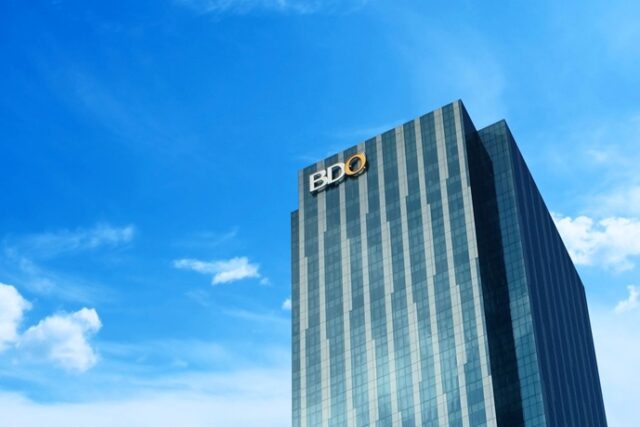
bdo.com.ph

BDO UNIBANK, Inc. saw its net profit rise to another all-time high in 2025 on the strength of its core businesses.

The bank’s attributable net income climbed by 6.28% to P87.17 billion last year from P82.019 billion in 2024, it said in a disclosure to the stock exchange on Friday.

This translated to a return on common equity of 14.4%, down from 15.1% in 2024. Return on average resources slipped to 1.7% from 1.8%.

“BDO’s market leadership and robust business franchise, supported by a strong balance sheet and solid financial performance, position the bank well to capture long-term growth opportunities and emerging prospects,” it said.

BDO’s net interest income increased 8.85% to P203.10 billion from P186.596 billion.

It said this was supported by the 13% rise in its gross customer loans to P3.7 trillion at end-2025 as it saw double-digit growth across all market segments.

Despite its bigger loan book, the bank’s asset quality improved as its nonperforming loan (NPL) ratio dropped to 1.68% from 1.83%. Its NPL coverage was at 133%.

On the funding side, total deposits expanded by 10% year on year to P4.19 trillion at end-2025, with 68% being low-cost current account, savings account deposits.

Net interest margin was at 4.3% last year versus 4.4% in 2024.

Meanwhile, non-interest earnings rose by 8.72% to P77.07 billion from P70.89 billion, while income attributable to its insurance operations went up by 10.45% to P7.56 billion from P6.845 billion.

BDO’s other operating expenses climbed by 12.63% to P165.128 billion from P146.61 billion.

The bank’s resources grew by 11.27% to P5.43 trillion at end-2025 from P4.88 trillion the prior year.

Total equity went up by 11.56% to P644.146 billion from P577.395 billion, supported by its profitability.

Its common equity Tier 1 ratio was at 13.8%, inching down from 14.1% the prior year.

BDO shares went down by P1.20 or 0.87% to end at P137.30 apiece on Friday. — BVR

ADVERTISEMENT
ADVERTISEMENT