Home Blog Page 2264

Maynilad says P62M generated in anti-illegal drive

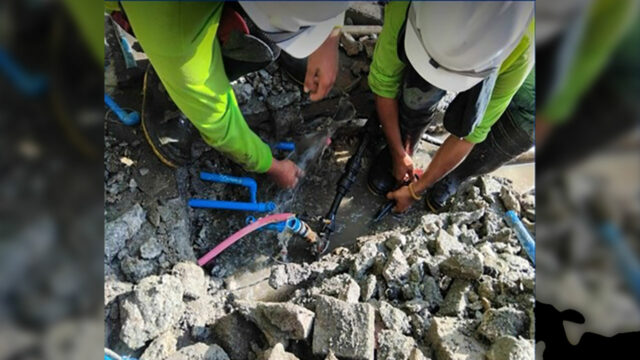
MAYNILAD Water Services, Inc. was able to recover around 560,000 cubic meters of potable water following its eight-month implementation of anti-illegal operations across its service area, the the west zone concessionaire said on Tuesday.

In a statement, Maynilad said it had implemented 6,900 anti-illegal operations from January to August, targeting unauthorized water connections, tampered meters, and unregistered lines.

The company said that the accumulated volume of recovered water is enough to meet the daily needs of around 3,500 water service connections.

This has improved the water supply availability and pressure for legitimately paying Maynilad customers, it added.

The company has generated P62 million in revenues, as violators were required to settle their penalties and reconnect legally to the Maynilad water network, Maynilad also said.

“Our efforts to crack down on illegal water connections not only prevent the possible entry of contaminants in the system but also ensure that all customers receive their fair share of the water supply,” Maynilad Customer Experience and Retail Operations Head Christopher J. Lichauco said.

Since 2016, the company has closed nearly 25,000 illegal water service connections, which enabled it to reduce losses and improve service delivery to its legitimate customers, according to Maynilad.

The closure of illegal connections forms part of Maynilad’s nonrevenue water management program, which aims to reduce “physical” and “commercial” losses.

Around 92% of water losses in the west zone are due to physical losses, while the remaining 8% are due to commercial losses, Maynilad said.

The company serves Manila, except portions of San Andres and Sta. Ana. It also operates in Quezon City, Makati, Caloocan, Pasay, Parañaque, Las Piñas, Muntinlupa, Valenzuela, Navotas, and Malabon.

It also supplies the cities of Cavite, Bacoor, and Imus, and the towns of Kawit, Noveleta, and Rosario, all in Cavite province.

Metro Pacific Investments Corp., which has a majority stake in Maynilad, is one of three Philippine units of Hong Kong-based First Pacific Co. Ltd., the others being Philex Mining Corp. and PLDT Inc.

Hastings Holdings, Inc., a unit of PLDT Beneficial Trust Fund subsidiary MediaQuest Holdings, Inc., has an interest in BusinessWorld through the Philippine Star Group, which it controls. — Sheldeen Joy Talavera

Ancient Peru throne room points to possible female ruler, archaeologists say

PANAMARCA.ORG

LIMA — Archaeologists in Peru have uncovered evidence that could point to a woman ruling in a coastal valley during the ancient Moche culture more than 1,300 years ago, including a stone throne and unique scenes depicted in elaborate wall paintings.

The nature of the ancient murals “could indicate it was a woman who used the space, possibly a ruler,” said Jessica Ortiz, research director for the project at the Panamarca archeological site on Peru’s northwest coast.

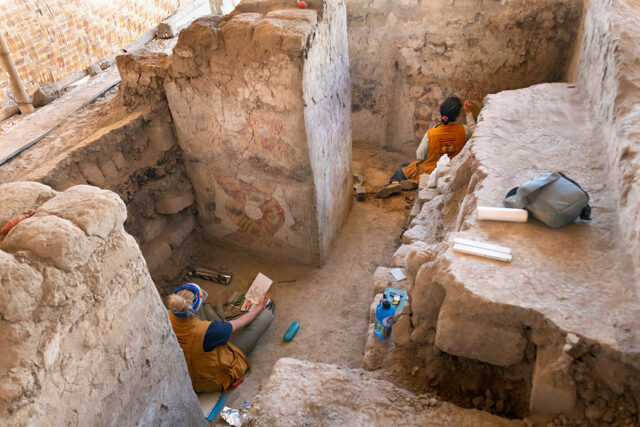
The researchers found a pillared throne room lined with murals showing a powerful woman intertwined with sea creatures and representations of a crescent moon, sitting on a throne and receiving visitors. Evidence such as the presence of human hair and wear on the stone indicated that the throne was used by a person.

“The most exciting thing is the traces of wear,” said archeologist Jose Ochatoma.

“There is not a surface in this area that is bare. Everything is painted and finely decorated with mythological scenes and characters,” Mr. Ochatoma added.

Mr. Ochatoma compared the room to the Vatican’s Sistine Chapel, whose ceiling bears biblical figures and scenes painted in frescoes by Michelangelo. The one in Peru, Mr. Ochatoma said, is “a place where they captured scenes belonging to the Moche ideology.”

Archaeologists believe the throne room dates from the 7th century AD, a time when the Moche culture occupied the coastal valleys of northwestern Peru.

The researchers discovered a nearby room overlooking a square they called the Chamber of the Braided Serpents due to a mural of a figure with legs intertwined with snakes, a motif that has not previously been uncovered. The room has other murals showing warriors, anthropomorphized weapons, and a monster chasing a man.

“We are discovering an iconography that has not been seen before in the pre-Hispanic world,” Mr. Ochatoma said.

The discoveries were made at the Panamarca site near the Pacific coast, known for its colorful murals. The site is located more than 400 km north of the Peruvian capital Lima.

The Andean nation is rich in archeological sites, many dating back thousands of years. It was home more than 500 years ago home to the Inca empire that dominated swathes of South America’s highlands until the arrival of Spanish conquistadors in the 16th century. — Reuters

Can Philippine manufacturing ever recover?

PNA FILE PHOTO

(Part 1)

As there is much talk about the Philippine economy preparing to join Industrial Revolution 4.0 (Artificial Intelligence, Internet of Things, robotics, data science, etc.), there is widespread unease among both local and international economists that the country has not even completed the three previous stages of the industrial revolution, especially those stages in which manufacturing took the lead.

Philippine manufacturing still accounts for such a low percentage of GDP that there is doubt about our really being an industrial nation.  Latest data (2023) show that manufacturing as a percentage of GDP in the Philippines is only 16% vs. 24% of Vietnam, 23% of Malaysia, 26% of China, 24% of South Korea, 25% of Thailand, 19% of Indonesia, and 13% of India.

As regards the labor force composition, it is even worse: manufacturing accounts only for 8% of the total labor force.   Matters seem to be worsening for Philippine manufacturing as factories leaving China are trooping to other ASEAN countries, especially Vietnam.  Our biggest handicaps are very high energy costs, higher wages and inefficient logistics.

As we categorized countries all over the world into levels of development according to their respective per capita incomes, upper middle-income countries — which we are aspiring to become in the next two to three years — have an average percentage of manufacturing to GDP of 22%. It would be reasonable for us to target that level in the next five to 10 years.

What is the possibility of attaining such a goal given prevailing government policies and existing market conditions, both domestically and globally? Will the Luzon Economic Corridor, that the US and Japan are planning to help install, going to reduce our handicaps, especially in the case of chips manufacture? Will our large domestic market finally enable more capital-intensive manufacturing enterprises like vehicle, steel, and chemical production to reach the economies of scale needed to be profitable without huge subsidies from the Government? Will a dramatic increase in the productivity of large-scale growing of agricultural raw materials lead to selling finished food products not only to the large domestic market, made up of mostly young people below 30, but also to the global market as some of our neighboring ASEAN countries, like Thailand, Malaysia, and Vietnam, are already doing?

Before answering these questions, let us clarify some of the important definitions of the various sectors of the economy.

There is the primary sector, i.e., Agriculture, Fisheries and Forestry (AFF).  This accounts for 7.7% of GDP. Then there is the secondary sector called Industry which accounts for 26.5% of GDP made up of the sub-sectors Mining (0.7%), Manufacturing (17.7%), Public Utilities (2.8%) and Construction (5.2%). It is worth noting that a country can still be heavily industrialized even if manufacturing does not loom large in terms of GDP as long as the other industrial sectors are contributing significantly to GDP. The preference for manufacturing by most economists is that it has the highest labor productivity and can, therefore, contribute most to increasing the wages of workers.

The biggest contribution to GDP is from the so-called Tertiary sector, Services, which account for 54.9% of GDP, led by Wholesale and retail and repair of motor vehicles and motorcycles (14.4%), Financial services (10.2%), and Professional and business services (5.2%).

The two largest contributors to GDP (together making up 20% of GDP) are OFW remittances and business process outsourcing-information technology (BPO-IT) which are predominantly part of the Service sector.  In fact, there are those who do not worry about the low level of manufacturing in the Philippines and maintain we can leapfrog into becoming a predominantly service economy, especially if we take seriously our transformation into the digital economy that Industrial Revolution 4.0 connotes.

We shall see, however, later in this discussion that because of our large and growing population and our rich natural resources, it would be unwise for us to skip the first three stages of the industrial revolution that most large nations had to traverse over the last 200 years, starting with England that experienced the first ever industrialization revolution (Industrial Revolution 1.0).

Even small territories that are part of the First World today like Singapore, Hong Kong, and Taiwan, had to start with manufacturing on their road to becoming highly industrialized economies. In the first decade or so after the Second World War, these territories (together with South Korea) capitalized on their demographic dividends back then by establishing labor-intensive, export-oriented factories producing textiles, garments, toys, furniture, and other consumer products for the rich markets of the US and Europe.  In that way, they laid the foundation for more capital- and technology-intensive manufacturing enterprises in their later stages of industrialization. This enlightened strategy helped them reach full employment of their labor force and simultaneously imbibed among their workers an industrial culture. Furthermore, they were able to earn the foreign exchange that they badly needed to import what they could not produce locally.  It is no coincidence that these four economic territories became famous as the East Asian tigers of the last decades of the 20th century.

In contrast, the Philippines followed the opposite path of inward-looking import-substitution and capital-intensive industrialization which kept the vast majority of the working population in low-productivity farming and services. The results were high rates of unemployment, and especially underemployment, and thus very high poverty incidences.

Collateral damage inflicted by the slow growth of manufacturing was that it took much longer for Filipino workers to transition from a rural to an industrial culture. The higher growth rate of the Philippine population back then did little to help the country match the economic growth and industrial progress of its East Asian neighbors. It was not the growing population, however, that was the problem. It was the failure of the government leaders to take advantage of the demographic dividend by encouraging the private sector to invest in the appropriate labor-intensive, export-oriented industries and to give the highest priority to developing the agricultural sector.

These preliminary insights into our lackluster industrial history should already explain to a great extent our present difficulties in improving the share of manufacturing to our total GDP.

At this juncture, I would like to state that in subsequent columns I will be quoting copiously from a blog on the internet posted on Sept. 15, 2018 by Eric Howard entitled “The Evolution of the Industrial Ages:  Industry 1.0 to 4.0.”  It encapsulates for the lay person a whole semester on Economic History that I took under famous Harvard Economics professor Alexander Gerschenkron (1904-1978). I was very fortunate to have learned economic history from this pioneer of quantitative New Economic history who was considered the doyen of economic history in the US.

It would be worthwhile reflecting on the stages of the so-called Industrial Revolution to understand better how the Philippines “missed the boat” because our leaders during the first half century of our independent national development decided to plunge head into what they considered industrialization without first completing some of the pre-requisites to sustainable industrial development of a large nation like ours. As we shall see in subsequent columns, the gravest mistake we made was to try to industrialize without first completing the green or agricultural revolution that preceded the first ever industrialization that happened in England during the period 1770 to 1840. That is why at this late stage of our development, we are still talking about attaining food security and lamenting the very high rate of hunger among our population, especially among the hapless children.

I dedicate this part of this series of articles to the memory of my Harvard professor, Alexander Gerschenkron.

(To be continued.)


Bernardo M. Villegas has a Ph.D. in Economics from Harvard, is professor emeritus at the University of Asia and the Pacific, and a visiting professor at the IESE Business School in Barcelona, Spain. He was a member of the 1986 Constitutional Commission.

bernardo.villegas@uap.asia

IMI closing Japan sales office, downsizing others

INTEGRATED Micro-Electronics, Inc. (IMI) will close its Japan sales office and is currently downsizing its Singapore and Malaysia offices to boost margins, the company announced on Tuesday.

“In a move to better align support costs with current business needs, IMI will… be closing its sales office in Japan and will soon initiate the process of the dissolution of the entity,” the listed company said in a regulatory filing.

“IMI’s extensive sales team, strategically positioned across various regions, will continue to address opportunities in Japan, eliminating the need for a physical office and reducing overhead costs,” it added.

Aside from the Japan office, IMI said it is currently downsizing its Singapore and Malaysia offices.

“These activities are part of IMI’s ongoing commitment to streamline operations and drive improved margins across its global footprint,” it said.

Meanwhile, IMI United States will end prototyping and manufacturing operations by yearend. Its production functions will be transitioned to IMI facilities across North America, Europe, and Asia.

IMI US will also channel prototyping needs of selected customers to California-based XLR8 Corp. as part of a new agreement.

In turn, XLR8 will transition mass production projects to IMI as its preferred manufacturing partner.

IMI is a global electronics manufacturing solutions expert specializing in highly reliable and quality electronics for long product life cycle segments in the automotive, industrial, power electronics, communications, and medical industries.

On Tuesday, IMI stocks rose 1.10% or two centavos to P1.83 apiece. — Revin Mikhael D. Ochave

Sicilian Cathedral’s stunning mosaics regain golden luster

MONREALE, Italy — The mosaics of a medieval cathedral in Sicily, built by the island’s last Norman king, are set to regain their golden luster thanks to careful restoration work and new lighting.

The Monreale Cathedral, erected in 1174–89 near Palermo on the orders of King William II, is a UNESCO World Heritage site that combines Western, Islamic, and Byzantine styles and is home to one of the world’s largest indoor mosaics.

The church is “unique in the world,” and the beauty of its art “is like a dart that strikes you, wounds you, makes you suffer, creates passion and at the same time opens the heart,” local archpriest Father Nicola Gaglio said.

The decorations, covering an area of 6,500 square meters and depicting biblical stories from the Old and New Testament, are believed by experts to have been made using 2.2 tons of pure gold.

Their highlight is the giant depiction of “Christ Pantocrator” (literally “ruler of all”) in the apse, or half-dome, at the back of the cathedral. It is a typical Orthodox Christian icon, also present in the Hagia Sophia in Istanbul.

The glass tiles of the mosaics needed restoring due to damage from water infiltration, regional authorities said last year, adding that work was slated to cost 1.1 million ($1.23 million), covered by European Union funds.

Scaffolding used during the restoration is expected to be fully removed from the cathedral by mid-October, while the new lighting, provided by Austrian company Zumtobel, is undergoing testing and is due to be inaugurated in late November.

“A key focus is to highlight the rich colors of the mosaics, especially the dominant golden tones, while keeping the lighting neutral on other surfaces to create a balanced visual experience,” Matteo Cundari, a Zumtobel executive, said.

According to legend, King William II fell asleep under a carob tree while hunting in the woods near Monreale when the Holy Virgin appeared to him in a dream and suggested building a church on the spot.

The legend also said that after removing the tree a treasure was found in its roots, and its golden coins were used to finance the construction. — Reuters

Gov’t fully awards bond offer as yields drop on rate cut bets

BW FILE PHOTO

THE GOVERNMENT made a full award of the reissued Treasury bonds (T-bonds) it offered on Tuesday at a lower average rate amid strong demand as investors locked in returns amid expectations of further rate cuts by the Philippine central bank.

The Bureau of the Treasury (BTr) raised P15 billion as planned via the reissued seven-year bonds it auctioned off on Tuesday as total bids reached P86.38 billion, or almost six times the amount on offer.

This brought the outstanding volume for the series to P234.7 billion, the Treasury said in a statement.

The bonds, which have a remaining life of four years and seven months, were awarded at an average rate of 5.508%. Accepted yields ranged from 5.5% to 5.525%.

The average rate of the reissued papers fell by 55 basis points (bps) from the 6.058% fetched for the bonds when they were last awarded on Sept. 10. This was also 99.2 bps lower than the 6.5% coupon rate for the issue.

It was likewise 8.8 bps below the 5.596% quoted for the same bond series and 6.3 bps lower than the 5.571% fetched for the five-year bond at the secondary market before Tuesday’s auction, based on PHP Bloomberg Valuation Service Reference Rates data provided by the BTr.

“The 7-year Treasury Bond (07-67) reissuance attracted strong demand, prompting the Auction Committee to fully award the security at today’s auction,” the BTr said on Tuesday, adding that the average rate fetched for the papers was lower than what was quoted for the previous reissuance and the prevailing secondary market rates.

Investors swamped the bond offer as they wanted to lock in relatively higher yields before the Bangko Sentral ng Pilipinas (BSP) eases its policy stance further, a trader said in a text message.

BSP Governor Eli M. Remolona, Jr. last week said the Monetary Board could slash benchmark interest rates by 50 bps more this year and deliver two more 25-bp cuts at its next two meetings scheduled for Oct. 16 and Dec. 19.

The central bank began its easing cycle in August, cutting its policy rate for the first time in nearly four years by 25 bps to 6.25% from the over 17-year high of 6.5%.

On Monday, Mr. Remolona said that while the BSP has the space to reduce borrowing costs by 50 bps in one meeting, this would only be done in a “hard-landing” scenario.

The upcoming reduction in banks’ reserve requirement ratios (RRR) also caused T-bond yields to go down, as this would inject fresh liquidity into the financial system, Rizal Commercial Banking Corp. Chief Economist Michael L. Ricafort said in a Viber message.

The BSP last month announced that it would reduce the RRR for universal and commercial banks and nonbank financial institutions with quasi-banking functions by 250 bps to 7% from 9.5% effective on Oct. 25.

It will also cut the RRR for digital banks by 200 bps to 4%, while the ratio for thrift lenders will be reduced by 100 bps to 1%. Rural and cooperative banks’ RRR will likewise go down by 100 bps to 0%.

The RRR is the portion of reserves that banks must hold onto rather than lending out. When a bank is required to hold a lower reserve ratio, it has more funds to lend to borrowers.

Mr. Remolona on Monday said big banks’ RRR could be brought down to as low as zero before his term ends in 2029. He earlier said the BSP wants to cut this ratio to as low as 5% from a high of 20% in 2018 as the country’s reserve requirements are among the highest in the region.

The BTr plans to borrow P145 billion from the domestic market in October, or P100 billion through Treasury bills and P45 billion via T-bonds.

The government borrows from local and foreign sources to help fund its budget deficit, which is capped at P1.48 trillion or 5.6% of gross domestic product this year. — A.M.C. Sy

Competitive Selection Process operationalizes the principles of transparency, accountability, and fairness

FREEPIK

Contrary to the usual notions, transparency, accountability, and good governance are concepts that are not confined to the public sector. It is not only governments that must be transparent. Private corporations, especially those engaged in businesses that have to do with public trust, must also be upfront about their processes every step of the way.

Energy security is an area in which these principles apply. With the growing population and rising demand for electricity, it is critical to explore alternative sources of energy to meet consumer needs. Electricity is a basic need and utility, providing stability to individuals, businesses, and the nation. It enables individuals to thrive in their respective activities and businesses to operate efficiently. Energy companies must always be mindful of their role in the economic life of the nation.

Achieving energy security is one of the main thrusts of the administration. We are aware that the Philippines has one of the highest costs of electricity in our region. This has hampered our growth in the past and has prevented investments from coming in. As we work toward lowering our energy costs and finding a stable and reliable supply to power our collective needs, we bear in mind that our objective is to make low-cost electricity available across the country — even in geographically isolated and disadvantaged areas.

Securing energy comes in different phases. There is generation, transmission, and distribution. The closest and most immediate to consumers is the business of power distribution through distribution utilities. For Metro Manila and its neighboring areas, for instance, the dominant Distribution Utility (DU) is Meralco which enters into power supply agreements with power generation companies. Meralco then distributes the power from these suppliers to individual homes.

At every step, the objective is to provide better service through reliable supply and low costs and ensuring that price fluctuations are kept to a minimum if not eliminated altogether.

But how does Meralco know from which power supplier it should get its electricity?

The Energy department prescribes a process called Competitive Selection Process, or CSP. This is a process wherein a power supplier is selected to supply electric power requirements to a DU such as Meralco. This process is in keeping with Section 2 of Republic Act No. 9136 or the Electric Power Industry Reform Act. The provision declares that it is the policy of the State “to ensure the quality, reliability, security, and affordability of the supply of electric power; to ensure transparent and reasonable prices of electricity in a regime of free and fair competition and full public accountability to achieve greater operational and economic efficiency and enhance the competitiveness of Philippine products in the global market; and to protect the public interest as it is affected by the rates and services of electric utilities and other providers of electric power,” among others.

In the CSP, the DUs make transparent their process of selecting which power suppliers to choose so that they can provide the best price to their customers. This is a customer-centric approach that puts the customer’s needs front and center in making the procurement decision, letting only transparency and fairness determine the result of the bidding process.

The CSP has ensured the transparent and efficient contracting of power supply agreements from diverse energy sources for the baseload power requirements of approximately 7.7 million Meralco customers using coal and mid-merit renewable energy sources like liquefied natural gas (LNG).

Thus, this approach not only reduces the risks of supply shortages, which can arise from various factors such as geopolitical tensions or market volatility, but also ensures the availability of reliable power to meet the country’s growing energy needs.

According to procedures being enforced by the Department of Energy and the Energy Regulation Commission, the process is conducted in a hybrid format. There are attendees both in-person and online, as the process is streamed live. The bidders are present, of course, and so are representatives of the Department of Trade and Industry-accredited consumer groups, community representatives, and civil society organizations. All of them act as observers.

Yesterday, Oct. 1, was the most recent round of Meralco’s CSP. It featured the bid submission and bid opening of the 400-MW supply of prospective bidders. Six power generation companies participated in the bidding. They were First Gas Power Corp., First Natgas Power Corp., FDC Misamis Power Corp., GNPower Dinginin Ltd. Co., Masinloc Power Co. Ltd., and Sual Power, Inc.

The aim of the CSP is to secure a 15-year Power Supply Agreement/s for Meralco’s mid-merit requirement due to start on Aug. 26 next year. The results will undergo the review and approval process of the Energy Regulatory Commission before any agreements are implemented.

Transparency and accountability are fundamental pillars of governance that both the Government and the private sector must not only uphold but actively embody in their functions. By consistently practicing these values, it fosters a culture of integrity and earns the trust and confidence of the people they serve. Without this foundation, true progress and public faith become impossible, making transparency and accountability non-negotiable for sustainable and ethical operations in any sector.

With CSPs in motion, these principles are taken to heart to guarantee energy security and to ensure that all consumers will reap the economic benefits of reliable and stable power services at the least cost.


Victor Andres “Dindo” C. Manhit is the president of the Stratbase ADR Institute.

PSE seeks to include issuers in blackout rule

By Revin Mikhael D. Ochave, Reporter

THE Philippine Stock Exchange (PSE) is proposing to expand the blackout rule to include issuers as part of its amendments to listing, disclosure, and trading regulations.

“It is proposed that the coverage of the blackout rule be expanded to include the issuer itself so that it cannot sell or conduct a buy-back of its shares during the blackout period,” the PSE said in a consultation paper dated Sept. 30 posted on its website.

“The issuer itself may also be in possession of material nonpublic information when it deals in its own shares,” it added.

Currently, the blackout rule only applies to directors and principal officers of an issuer, excluding the issuer.

The blackout rule is where a company’s directors and principal officers who have obtained material nonpublic information are prevented from trading their company’s shares within a prescribed period.

Material nonpublic information refers to any information, which has not been publicly disclosed and would likely affect the market price of the security after being disseminated. It is also any information deemed important in determining a person’s decision to buy, sell, or hold a security.

“The above proposed amendments are benchmarked against the rules of the Singapore Exchange and Bursa Malaysia,” the PSE said.

The PSE said the proposed amendment ensures a level playing field for all investors, by preventing “information asymmetry” and ensuring that no party can take advantage of material nonpublic information.

Aside from an expanded coverage, the PSE also proposed that the blackout period for earnings results should be 30 calendar days before the earnings pre-announcement or submission of the company’s annual and quarterly reports, whichever is earlier, and up to two full trading days after the posting of the disclosure.

“We always welcome the PSE’s efforts to strengthen its regulatory framework, and in this instance, we are most pleased with the amendments to the blackout rule. Too often, we see huge price movements in share prices of stocks ahead of major disclosures,” AP Securities, Inc. Research Head Alfred Benjamin R. Garcia said in a Viber message after being sought for analyst comment.

“Hopefully, the exchange can also enhance its monitoring of trading participants who have a history of trading ahead of these disclosures,“ he added.

The PSE also proposed that the penalty for trading of unlisted shares be capped at P50 million.

The current penalty for trading of unlisted shares is a fine equivalent to 15% of the market value of the shares at the time of lodgment and a daily fine of P2,000 for each day of continuing violation until addressed.

“If the violation occurred 15 or 16 years ago, the penalty computed based on such formula could reach up to hundreds of millions of pesos,” the PSE said.

The PSE also proposed an amendment to the lock-up rule in relation to related party transactions where the rights or public offering requirement has been waived.

It recommended that shares must be held under escrow via an escrow agent from the time of issuance until 180 days after listing.

“The lock-up requirement aims to prevent related party subscribers from selling the shares immediately or shortly after issuance, which may result in undue advantage over minority stockholders whose shareholdings were diluted because of the related party’s subscription,” the PSE said.

The PSE also proposed to indicate in the rules that actual listing of shares offered under a stock option plan or stock purchase plan shall not take place until issuance and full payment of the shares and compliance with post-approval requirements.

It also recommended that the payment of the listing should be delayed until the shares are actually availed of, as the exercise period for stock option plans and stock purchase plans can be several years from grant.

The PSE also proposed that the listing fee should be computed based on the actual transaction value, and a P50,000 processing fee should be paid upon filing of the listing application.

Meanwhile, the market operator also proposed to remove the one-month liquidation period for error transactions.

“The shares in the error account become the proprietary shares of the trading participant; hence, the trading participant should be able to decide whether, and when, it wants to liquidate the position in its error account,” the PSE said.

“Furthermore, the trading participant already absorbs the consequences of the error transaction by paying for the overbought shares. Requiring the trading participant to dispose of said shares within one month, even if it may incur a loss, is tantamount to penalizing the trading participant twice for the error transaction,” it added.

Interested parties have until Oct. 11 to submit their comments on the PSE’s proposed amendments.

“These are more on administrative issues. Hence, there is not so much impact on market volumes,” COL Financial Group, Inc. Chief Equity Strategist April Lynn Lee-Tan said in a Viber message.

“These would help better protect the interest of the investment public, by creating a more level playing field, as well as greater transparency, in line with global best practices,” Rizal Commercial Banking Corp. Chief Economist Michael L. Ricafort said in a Viber message.

Australian court lifts controversial ban on women’s only art gallery

MONA.NET.AU

SYDNEY, Australia — An Australian court on Friday lifted a ban on a women’s only art exhibit at a gallery in the southern state of Tasmania, saying it did not discriminate against men.

A lower court in Tasmania had banned the Ladies Lounge at the Museum of Old and New Art (Mona), in the state capital Hobart, after a case brought by a male visitor earlier in May, triggering an uproar among museum supporters and artists.

On Friday the state’s Supreme Court overturned that ban, with Acting Justice Shane Marshall ruling the lounge was an attempt to promote equality by highlighting the lack of equal opportunity for women.

Female supporters of the gallery, led by artist and Ladies Lounge curator Kirsha Kaechele, arrived at the court wearing coordinating outfits. They danced and threw paperwork in the air after the verdict was announced.

“This is a big win. It took 30 seconds for the decision to be delivered — 30 seconds to quash the patriarchy,” Ms. Kaechele said.

The museum describes itself as the “playground and megaphone” of professional gambler David Walsh and its best-known exhibits include a large-scale replica of the human digestive system. It encourages patrons to arrive by boat, where they can sit on seats shaped like sheep.

To protest the ban, Mona moved some of the contents of the Ladies Lounge, including what looked like paintings by Pablo Picasso, to a women’s toilet. The paintings later turned out to be fakes painted by Ms. Kaechele.

“The Supreme Court’s finding is a recognition that the Ladies Lounge is an artwork that exists to highlight, and challenge, inequality that exists for women in all spaces today,” Mona’s legal counsel Catherine Scott said following the verdict. — Reuters

Banks’ end-June outstanding foreign currency loans decline by 2.7%

OUTSTANDING LOANS granted by banks’ foreign currency deposit units (FCDU) declined at end-June from the previous quarter, the central bank said, as principal repayments outpaced disbursements.

The Bangko Sentral ng Pilipinas (BSP) in a statement late on Monday said loans granted by the FCDUs of banks dropped by 2.7% to $15.63 billion as of June from $16.07 billion at end-March.

Meanwhile, year on year, outstanding FCDU loans rose by 1.6% from $15.39 billion.

FCDUs are BSP-approved bank units that perform transactions involving foreign currencies, including deposits and loans.

Gross disbursements went up by 3.9% to $19.9 billion in the second quarter from $19.15 billion in the previous quarter.

This was mainly due to the “increase in funding requirements of a foreign bank branch affiliate,” the BSP said.

Meanwhile, loan repayments jumped by 11.5% to $20.33 billion from $18.23 billion. This resulted in an overall net repayment in the second quarter.

The bulk or $11.997 billion of banks’ outstanding FCDU loans was made up of medium- to long-term debt, or those payable in more than a year. This comprised 76.7% of the total, a tad lower than the previous quarter’s 79.1% share.

Meanwhile, short-term debt stood at $3.636 billion, making up the remaining 23.3% share.

By borrower, FCDU loans granted to residents amounted to $9.48 billion or 60.7% of the total loans at end-June. Per sector, the majority of resident loans went to merchandise and service exporters (26.2%); power generation companies (22.4%); and towing, tanker, trucking, forwarding, personal and other industries (17.7%).

Meanwhile, foreign currency loans to nonresidents totaled $6.15 billion as of June.

Local banks accounted for $13.454 billion of total outstanding FCDU loans as of June or 86.1% of the total, with commercial banks disbursing most of these loans, central bank data showed.

On the other hand, banks’ FCDU deposit liabilities declined by 5.9% to $55.16 billion as of end-June from $58.61 billion a quarter prior.

Year on year, foreign currency deposit liabilities climbed by 12.6% from $48.99 billion as of June 2023.

“The bulk of these deposits ($53.85 billion or 97.6%) continued to be owned by residents, essentially constituting an additional buffer to the country’s gross international reserves,” the BSP added.

This resulted in an FCDU loans-to-deposit ratio of 28.3% as of June, up from the 27.4% as of March but lower than the 31.4% logged a year prior. — Luisa Maria Jacinta C. Jocson

Waste not, want not

FREEPIK

When I was a child in Tacloban, the leading national magazine, the Philippines Free Press, blasted on its cover a corruption case that was considered a national scandal. It featured a few hundred thousand pesos worth of office supplies that the courts found overpriced; and some people we knew, including the provincial treasurer who belonged to a respected family, lost their jobs. I do not remember if anyone went to jail.

Later, because no one went to jail for corruption over billions of pesos during the Marcos Sr. era, politicians and bureaucrats became bolder and shameless.

Today, corruption cases run to the billions of pesos, and the taxpaying public has become so desensitized by the prevalence of such stories — such as the P10-billion Priority Development Assistance Fund (PDAF) pork barrel scams — that even those who have been accused, convicted and/or detained for some years, such as Juan Ponce Enrile, Jinggoy Estrada, and Bong Revilla, have been elected to the senate. Bong Revilla was acquitted by the Sandiganbayan, but was ordered to return P124 million to the national treasury; meanwhile his chief of staff died in jail. It seems that former Senate President Enrile’s Chief of Staff, who was convicted, has been released from jail before her sentence ends, in consideration of her “suffering” as a senior. The brilliant lawyer Enrile, who defends himself, is keeping a job as President Marcos Junior’s presidential legal counsel while the Supreme Court deliberates on his demand for a “bill of particulars” on his plunder case in relation to the PDAF scams. Although Janet Napoles, the mastermind and main beneficiary of the PDAF scams, is in jail, too much government money can no longer be recovered. And too many politicians and bureaucrats who benefited from such scams are still in office.

Meanwhile, our fishermen and farmers who produce our food continue to remain poor — their children suffering physical stunting and low IQs due to poor nutrition — even as the PDAF scams cheated them of funds meant for inputs, with fake NGOs and ghost LGUs having been used as supposed distributors.

Aside from corruption, there is waste. Let us look at one instance of wasted taxpayer funds, which civic leader and educator-philanthropist Gus Go has blamed for our nation’s undeserved poverty: Government auditors have uncovered a warehouse full of undistributed computers supposedly intended to be given to public school teachers. These have probably turned obsolete, given trends in IT equipment — if they still work at all. That’s so much waste. Yet another handicap for our overworked teachers and poorly educated students.

Another example of possible waste of money: How many deputy speakers are funded from special allocations by our lower house? Deputy speakers are supposed to take over when the Speaker is absent. Last we checked, there were nine deputy speakers. Congress meets for only three days a week. That is 156 days a year! That means each deputy speaker gets to serve for two days per year, assuming the Speaker is absent once every three weeks. That is an expense funded by millions of pesos in taxpayer’s money.

A newer wasteful scandal, a really horrible one, is the Pharmally procurement of medicines and personal safety equipment as a response to the COVID-19 crisis. The Department of Health allowed the Budget department to set aside special funds from which to issue purchase orders. It turns out that the medicines came short of specifications, the quality of the Personal Protective Equipment or PPE was poor, etc., etc. And now we learn that Tony Yang, a brother of former President Rodrigo Duterte’s economic adviser, the Chinese citizen Michael Yang, was allegedly behind the huge bonanza. Making money at the expense of the people’s health during a pandemic is an unforgiveable crime. We cannot let this go. We must identify the culprits and their friends, and they must be penalized for their horrible deeds.

Our economy is growing faster than most countries in the world today. Thanks in large part to the sacrifice of our overseas workers who send dollars home to their families here. They suffer separation from their spouses and children, and too many families are broken from the long separations. They suffer while a few politicians and bureaucrats enjoy their stolen money. This is adding to the injustices that are more and more prevalent.

Today, when we look at surveys on top senatorial bets for next year’s elections, it is saddening to note that the likely winners are not the kind of people who will initiate reforms. Bong Revilla and Jinggoy Estrada are expected to get reelected. And we are not sure that even one of the good guys in the opposition, including Leila de Lima, Kiko Pangilinan, Bam Aquino, and Chel Diokno, will be able to get elected.

We need miracles. We need to pray and work hard and help them overcome the ignorance of the majority of voters. Reporter Nancy Carvajal of the Inquirer was the one who exposed the investigation of the PDAF scams by the National Bureau of Investigation in 2013. Independent journalists can be a big help in monitoring and exposing the misuse of taxpayers’ money. We must also learn to master social and new media to counter misinformation by corrupt officials.


Teresa S. Abesamis is a former professor at the Asian Institute of Management and Fellow of the Development Academy of the Philippines.

tsabesamis0114@yahoo.com

GCash eyeing overseas listing

By Ashley Erika O. Jose, Reporter

ELECTRONIC WALLET giant GCash is considering listing overseas while it is taking a “wait-and-see” stance on its initial public offering (IPO) locally, a company official said.

“I think with listing overseas, it is a possibility. And again, when the right market conditions are in place,” GCash Chief Marketing Officer Neil Trinidad told reporters on Monday.

The company previously said it was planning an IPO but would wait for a more favorable market.

“GCash’s plan to possibly list overseas… could open the company to a broader pool of investors, particularly those who are more familiar with and eager to invest in emerging market fintech firms,” Toby Allan C. Arce, head of sales trading at Globalinks Securities and Stocks, Inc., said in a Viber message.

Mr. Arce said a foreign listing such in Hong Kong or the US, could also possibly provide GCash with higher valuations due to its “positioning as a high-growth, high-tech company.”

“This is one of the most eagerly awaited IPOs in the country, but there is no particular reason for GCash to rush it. The market tide has started to turn in their favor so they can afford to wait some more for the best timing,” Chinabank Capital Corp. Managing Director Juan Paolo E. Colet said in a Viber message.

Mr. Colet said it is no surprise that GCash is considering listing overseas considering that it would get a higher valuation abroad.

G-Xchange, Inc., which operates GCash, is a wholly owned subsidiary of Globe Fintech Innovations, Inc. (Mynt).

In July, Mynt secured fresh investments from Ayala Corp. and Japan’s Mitsubishi UFJ Financial Group, more than doubling its valuation to $5 billion from $2 billion in the 2021 funding round.

For its planned IPO at the local bourse, Mr. Trinidad said the company is carefully evaluating market conditions.

“We are preparing for the eventual launch. Like any discussion on IPO before, we have always said that we are going to watch for the right market conditions to do it,” Mr. Trinidad said.

“By delaying the IPO, GCash may be attempting to time the market more strategically, waiting for more favorable conditions such as improved investor sentiment, economic stability, or better market valuations,” Globalinks Securities’ Mr. Arce said.

Mr. Arce said that GCash’s decision to go public would be very attractive to investors due to the e-wallet platform’s strong market position, wide user base, and its growth potential in the digital financial space.

GCash services are also available in 16 countries, including the United States, United Kingdom, United Arab Emirates, Italy, Australia, Canada, Germany, and other Asian countries.