Home Blog Page 2220

Trevi Fountain restored in time for Jubilee year

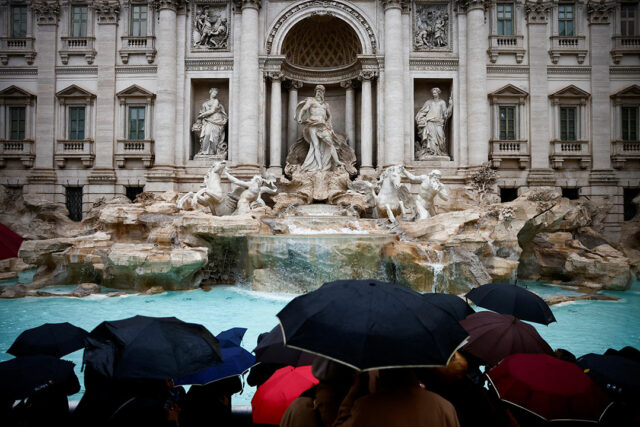
PEOPLE gather on the day the Trevi Fountain reopens to the public after maintenance work in Rome, Italy, Dec. 22, 2024. — REUTERS

ROME — A restored Trevi Fountain was unveiled on Sunday after more than two months of cleaning and restoration, part of Rome’s preparations for the 2025 Roman Catholic Holy Year.

The work, for which the city of Rome set a 327,000 euro budget, included removing dirt, pollution, iron oxide and limescale from the 18th-century monument, one of the best-known of Rome’s many tourist attractions.

During that time, the fountain had been drained but visitors were able to view it from a temporary footbridge.

To avoid a return of the big crowds that customarily engulfed the small square housing the fountain, Rome Mayor Roberto Gualtieri said visitors will have to form a queue with 400 people at a time allowed by the fountain.

Tourists won’t have to rush, with no time limit set to walk from one end of the fountain to the other, but they won’t be permitted to sit on its border. In the future, the city of Rome may consider introducing a ticket for the monument, Mr. Gualtieri added.

The Vatican expects up to 32 million tourists will descend on the Italian capital for the Jubilee, putting Rome’s antiquated infrastructure under enormous strain and adding to the headaches of managing the flow of visitors.

Completed in 1762, the fountain is a late Baroque masterpiece, with statues of Tritons guiding the shell chariot of the god Oceanus, illustrating the theme of the taming of the waters.

Tradition dictates that visitors toss a coin into the fountain to guarantee their return to Rome. During the works, visitors had to throw coins into a temporary pool.

It is also remembered for one of cinema’s most famous scenes when in Federico Fellini’s “La Dolce Vita” Anita Ekberg wades into the fountain and beckons her co-star Marcello Mastroianni to join her: “Marcello! Come here!” — Reuters

Trump says it could be worth keeping TikTok in US for at least a little while

REUTERS

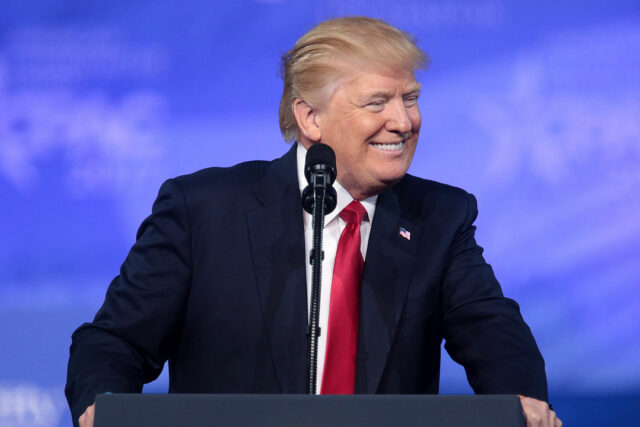
PRESIDENT-ELECT Donald J. Trump indicated on Sunday that he favored allowing TikTok to keep operating in the United States for at least a little while, saying he had received billions of views on the social media platform during his presidential campaign.

Mr. Trump’s comments before a crowd of conservative supporters in Phoenix, Arizona, were one of the strongest signals yet that he opposes a potential exit of TikTok from the US market.

The US Senate passed a law in April requiring TikTok’s Chinese parent company, ByteDance, to divest the app, citing national security concerns.

TikTok’s owners have sought to have the law struck down, and the US Supreme Court has agreed to hear the case. But if the court does not rule in ByteDance’s favor and no divestment occurs, the app could be effectively banned in the United States on Jan. 19, one day before Mr. Trump takes office.

It is unclear how Mr. Trump would go about undoing the TikTok divestiture order, which passed overwhelmingly in the Senate.

“I think we’re going to have to start thinking because, you know, we did go on TikTok, and we had a great response with billions of views, billions and billions of views,” Mr. Trump told the crowd at AmericaFest, an annual gathering organized by conservative group Turning Point.

“They brought me a chart, and it was a record, and it was so beautiful to see, and as I looked at it, I said, ‘Maybe we gotta keep this sucker around for a little while,’” he said.

Mr. Trump met with TikTok’s chief executive officer on Monday. Mr. Trump said at a news conference the same day that he had a “warm spot”  for TikTok thanks to his campaign’s success on the app.

The Justice Department has argued that Chinese control of TikTok poses a continuing threat to national security, a position supported by most US lawmakers.

TikTok says the Justice Department has misstated the social media app’s ties to China, arguing that its content recommendation engine and user data are stored in the United States on cloud servers operated by Oracle Corp., while content moderation decisions that affect US users are made in the United States. — Reuters

Starbucks workers expand strike in US cities, including New York

A Starbucks logo is seen at a Starbucks coffee shop in Seoul, South Korea, March 7, 2016. — REUTERS

Starbucks workers have expanded their strike to four more U.S. cities, including New York, the union representing over 10,000 baristas said late on Saturday.

The five-day strike, which began on Friday and initially closed Starbucks cafes in Los Angeles, Chicago and Seattle, has added locations in New Jersey, New York, Philadelphia and St. Louis, Workers United said in a statement. It did not specify in what New Jersey city the walkout was occurring.

Starbucks said the disruptions from the strike have no significant impact on its operations because only a small handful of U.S. stores have been impacted.

“Workers United proposals call for an immediate increase in the minimum wage of hourly partners by 64%, and by 77% over the life of a three-year contract. This is not sustainable,” the coffee chain said.

The union is striking in 10 cities, also including Columbus, Ohio; Denver and Pittsburgh, during the busy holiday season that may impact the company’s Christmas sales.

The company operates more than 11,000 stores in the United States, employing about 200,000 workers.

Talks between Starbucks and the union hit an impasse with unresolved issues over wages, staffing and schedules, leading to the strike.

Workers United warned on Friday that the strike could reach “hundreds of stores” by Tuesday, Christmas Eve.

Starbucks began negotiations with the union in April. It said this month it had conducted more than eight bargaining sessions, during which 30 agreements had been reached. – Reuters

Trump vows to rename Denali, North America’s tallest mountain, as Mt McKinley

GAGE SKIDMORE-WIKIPEDIA

 – U.S. President-elect Donald Trump said on Sunday he will rename Denali, Alaska natives’ name for North America’s tallest mountain, after William McKinley, the 25th U.S. president who was assassinated in 1901.

Democratic former President Barack Obama in 2015 officially renamed the mountain as Denali, siding with the state of Alaska and ending a decades-long naming battle. The peak had been officially called Mount McKinley since 1917.

“They took his name off Mount McKinley,” Mr. Trump said in a speech to supporters in Phoenix. “He was a great president,” Mr. Trump, a Republican, said, adding that his administration will “bring back the name of Mount McKinley because I think he deserves it.”

The mountain, which has an elevation of more than 20,000 feet (6,100 meters), was named Mount McKinley in 1896 after a gold prospector exploring the region heard that Mr. McKinley, a champion of the gold standard, had won the Republican nomination for president.

The U.S. Department of the Interior, in the 2015 order that was signed by Obama changing the name to Denali, noted that Mr. McKinley had never visited the mountain and had no “significant historical connection to the mountain or to Alaska.”

Denali, the local Athabascan name, meaning “the High One,” was officially designated as the peak’s name in 1975 by the state of Alaska, which then pressed the federal government to also adopt the name.

Since then, Alaska lawmakers had petitioned the U.S. Board on Geographic Names to change the name to Denali officially but it had been blocked for decades.

Alaska Senator Lisa Murkowski, a Republican, pushed back on Mr. Trump’s pledge to rename the mountain.

“There is only one name worthy of North America’s tallest mountain: Denali – the Great One,” Ms. Murkowski wrote in a post on X.

Mr. McKinley, who served two terms as governor of Ohio before becoming president in 1897, led the country to victory in the Spanish-American War and raised protective tariffs to promote U.S. industry, according to the White House website on presidents. – Reuters

Murdoch’s News Corp to sell Foxtel to Britain’s DAZN for $2.1 bln

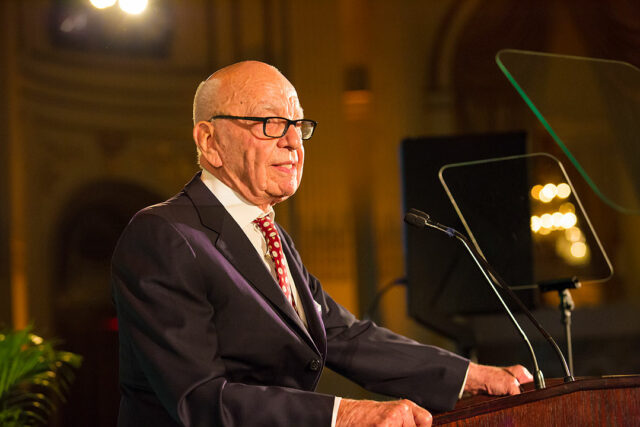
RUPERT MURDOCH — HUDSON INSTITUTE

 – News Corp has agreed to sell its Australian cable TV unit Foxtel to British-owned sports network DAZN for A$3.4 billion ($2 billion) including debt, cutting the Murdoch-controlled media empire’s exposure to a business up-ended by streaming platforms.

News Corp will gain a board seat and hold a 6% stake in DAZN, a London-headquartered global streaming platform available in North America, Europe, and Asia and backed by Ukranian-born billionaire Len Blavatnik.

DAZN is a broadcasting partner for Italy’s Serie A, Spain’s LaLiga, Germany’s Bundesliga and France’s Ligue 1. It competes against traditional TV and satellite channels and provides access to a range of sports content, including American football, boxing and baseball over its streaming platform.

“Australians watch more sport than any other country in the world, which makes this deal an incredibly exciting opportunity for DAZN to enter a key market, marking another step in our long-term strategy to become the global home of sport,” said DAZN co-founder and CEO Shay Segev.

The valuation on Foxtel represents seven times its 2024 earnings before interest, tax, depreciation and amortization (EBITDA), News Corp said in a statement.

As part of the deal, shareholder loans valued at A$578 million outstanding will be repaid in full and Foxtel’s current debt will be refinanced at closing.

Foxtel, launched by News Corp in 1995, has weighed on the media giant’s profits for years as the number of people who pay monthly subscriptions for its broadcast content switched to cheaper streaming options like Netflix.

It has tried to diversify by adding its own streaming services like Kayo, which livestreams local sports Australian Football League (AFL) and the National Rugby League (NRL), to win back sports broadcasting market share. It also shows ESPN.

News Corp chief executive Robert Thomson said the deal would allow the company to focus on its core operations of Dow Jones, digital real estate and book publishing. News owns 61.4% of online real estate platform REA Group and is the parent company of publisher HarperCollins.

The deal is due to be finalized in the second half of 2025 and is subject to regulatory approval, News Corp said. Given the overseas ownership of DAZN, the transaction will need to be cleared by the Foreign Investment Review Board (FIRB).

FIRB did not immediately respond to a request for comment from Reuters.

Blavatnik is a dual U.S. and British citizen and the founder of Access Industries which has an investment portfolio worth more than $35 billion, according to its website.

Australian telecom Telstra has also sold its 35% stake in Foxtel to DAZN and will receive A$128 million in cash for the repayment of shareholder loans and a 3% stake in DAZN.

ASX-listed shares of News Corp gained 2% to A$50.02 on Monday while shares of Telstra traded 0.4% higher against a rising broader benchmark index. – Reuters

Honda, Nissan set to announce launch of integration talks, sources say

 – Honda and Nissan are expected on Monday to announce the start of business integration talks, two people familiar with the matter told Reuters, as the carmakers strive to survive a rapidly changing industry landscape.

The Japanese automakers are hosting board meetings on Monday about the talks and will later hold a joint press conference that Nissan’s alliance partner Mitsubishi Motors 7267.T is also expected to attend, according to the people.

Honda and Nissan aim to finalize the integration talks by June 2025, and, if successful, a joint holding company will list its shares while Honda and Nissan each will go private in August 2026, Japanese broadcaster TBS reported on Monday, citing a source.

A merger of the three Japanese brands would create the world’s third-largest auto group by vehicle sales after Toyota and Volkswagen, in what would be the biggest industry-reshaping deal since the 2021 formation of Stellantis.

Honda and Nissan have been exploring ways to bolster their partnership, including a merger, as they face growing challenges from Tesla and Chinese rivals, Reuters reported last week.

Honda, Japan’s second-biggest automaker, and Nissan, the third-largest, said in March they were considering cooperation on electrification and software development. They agreed to conduct joint research and widened the collaboration to Mitsubishi Motors in August.

Last month, Nissan announced a plan to cut 9,000 jobs and 20% of its global production capacity after its sales plunged in its key China and U.S. markets. Honda also reported a worse-than-expected earnings result due to declining sales in China.

Honda’s market capitalization is more than $40 billion, while Nissan’s is about $10 billion.

Honda will likely appoint the leader and the majority of internal and external board members of the newly established holding company, public broadcaster NHK reported on Monday.

Forms of integration being discussed include Honda supplying hybrid vehicles to Nissan and the joint use of Nissan’s car assembly factory in Britain, Kyodo News reported on Saturday.

French automaker Renault, Nissan’s largest shareholder, is open in principle to a deal and would examine all the implications of a tie-up, sources have said. – Reuters

Inflation, elections and war dominated 2024

A man takes a picture while carrying a shopping bag in Times Square, New York, U.S. — REUTERS/

Inflation dropped in most economies around the world in 2024, but voters didn’t care.

Angered by the hefty ramp-up in prices for everything from eggs to energy over the past few years, they punished incumbent parties at almost every opportunity. The pain of inflation lingers, and ruling parties took the blame in election after election.

In the United States, higher costs helped Donald Trump win a second term as president four years after he was voted out of the White House and then falsely claimed election fraud. His supporters failed in their bid to overturn Trump’s defeat by storming the U.S. Capitol on Jan. 6, 2021. This year, they made their voices heard at the ballot box, ushering in a new American leadership likely to test democratic institutions at home and relations abroad.

The inflation-driven anti-incumbent sentiment also ushered in new governments in Britain and Botswana, Portugal and Panama. South Korean voters put the opposition into power in its parliament, a check on President Yoon Suk Yeol. In early December, the president imposed martial law, a move the National Assembly quickly reversed. Elections also shook up France and Germany, and Japan and India.

One place there was no change: Russia, where Vladimir Putin was re-elected president with 88% of the vote, a record in post-Soviet Russia.

Moscow continued to prosecute its war against Ukraine, grinding out notable territorial gains. The big question is what impact Trump’s return to the White House will have on the conflict. He has promised to end the war in a day. Many in Ukraine and elsewhere in Europe fear that will mean siding with Putin and freezing the status quo.

In the Middle East, Israel continued its war against Gaza and extended it to Lebanon, where it left Iran-backed Hezbollah damaged and in disarray. In Syria, a well-coordinated collection of rebel groups toppled Bashar al-Assad and now seeks to run the country.

In business, companies around the world grappled with how to adapt to artificial intelligence. The dominance of tech companies for investors can be summed up in this simple fact: seven tech firms — the so-called Magnificent Seven — now account for more than one-third of the S&P 500’s market cap.

Elon Musk, who runs one of those companies, Tesla, is an adviser and financial backer to President-elect Trump. Looking ahead, that combination of tech bro mojo and political power could well define 2025. – Reuters

Jollibee, Mang Inasal, Chowking named top 3 most valuable restaurant brands in Brand Finance’s ASEAN 500

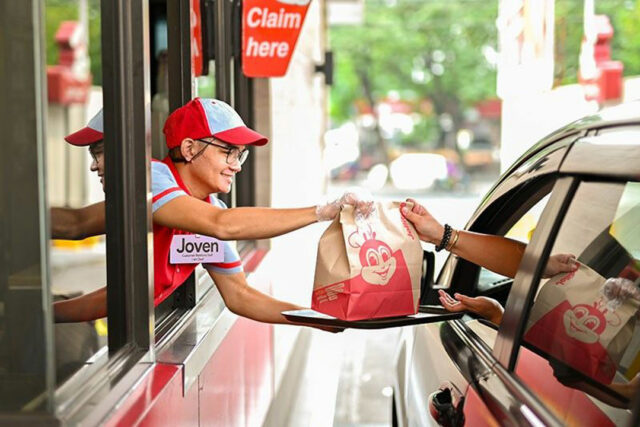
Jollibee Group’s global flagship brand Jollibee continues to make waves, earning the top spot as the most valuable restaurant brand in Brand Finance’s ASEAN 500 2024 Report. In a separate listing, Jollibee has been valuated as the Top 2 fastest growing restaurant brand in the world, outperforming global giants in the industry.

Demonstrating the strength of its brand portfolio, the Jollibee Group continues to make its mark on the global stage, with well-loved brands Jollibee, Mang Inasal and Chowking recognized as the top three most valuable restaurant brands in Brand Finance’s ASEAN 500 2024 report.

Brand Finance is the world’s leading brand valuation consultancy. It conducts more than 6,000 brand valuations, supported by original market research, and publishes over 100 reports which rank brands across all sectors and countries.

The ASEAN 500 2024 report reveals that the region’s food, retail, hospitality and leisure and tourism sectors are spearheading regional economic growth, driven by rising post-pandemic consumer spending and digital innovation.

“The top rankings of Jollibee, Mang Inasal and Chowking as restaurant brands in Brand Finance’s ASEAN 500 2024 report is a testament to our collective commitment to excellence and sustainable growth,” said Ernesto Tanmantiong, global CEO of the Jollibee Group.

“We thank our teams who consistently make every experience at our stores delightful. We also share this recognition with our franchisees, and business partners who share our values and our mission while driving long-term growth.”

Jollibee: Most valuable restaurant brand in ASEAN

Jollibee Group’s iconic flagship brand, Jollibee, recorded an impressive 51% increase in brand value, reaching $2.3 billion. This milestone crowned Jollibee as the most valuable restaurant brand in ASEAN and propelled it 19 places higher to secure the 23rd spot among the region’s most valuable brands across categories.

This significant growth reflects Jollibee’s commitment to customer-centricity, product innovation, aggressive global expansion, strategic partnerships and a stronger focus on sustainability—factors that have propelled its brand value and strength to new heights.

In a separate listing covering restaurant brands across the globe, Brand Finance has assessed Jollibee as the Top 2 fastest growing restaurant brand in the world, outperforming international giants.

Mang Inasal: ASEAN’s fastest-growing brand

Mang Inasal has been cited as the fastest growing ASEAN brand in Brand Finance’s ASEAN 500 2024 Report, with an outstanding 201% surge in brand value. Earlier this year, Mang Inasal was also assessed as the strongest restaurant brand in the Philippines.

Mang Inasal, Jollibee Group’s beloved Filipino casual dining brand celebrated for its signature chicken inasal, was recognized as ASEAN’s fastest-growing brand for 2024 across categories.

With an impressive 201% surge in brand value to $374 million, it soared 136 spots to rank as the 146th most valuable brand in the region. Notably, it also became the second most valuable restaurant brand in ASEAN, following its sister brand, Jollibee.

Brand Finance’s research highlights Mang Inasal’s exceptional scores in Familiarity and Recommendation, underscoring its strong recognition and enduring loyalty among consumers.

Earlier this year, Brand Finance has also cited Mang Inasal as the strongest brand in the Philippines.

Chowking: Top 3 most valuable ASEAN restaurant brand

Chowking earned near-perfect scores in familiarity and consideration metrics, making it the Top 3 most valuable ASEAN restaurant brand.

Chowking, Jollibee Group’s popular brand blending Filipino and Chinese cuisines, demonstrated impressive growth with a 56% increase in brand value, reaching $252 million.

With a strong Brand Strength Index (BSI) score of 75.6 out of 100 and an AA+ brand strength rating, Chowking earned near-perfect marks in familiarity and consideration metrics. It is now recognized as the 22nd most valuable brand in the Philippines and has risen to become the third most valuable restaurant brand in ASEAN.

Alex Haigh, managing director of Brand Finance, Asia Pacific, said in a statement, “As the impact of strategic alignment and shared resources in building consumer loyalty and driving sustained growth, iconic brands like Mang Inasal and Jollibee are growing and excelling within their sector. The collective strength of these brands reflects ASEAN’s unique ability to adapt and thrive, with its sector’s progress amplifying the region’s overall resilience and forward momentum.”


Spotlight is BusinessWorld’s sponsored section that allows advertisers to amplify their brand and connect with BusinessWorld’s audience by publishing their stories on the BusinessWorld Web site. For more information, send an email to online@bworldonline.com.

Join us on Viber at https://bit.ly/3hv6bLA to get more updates and subscribe to BusinessWorld’s titles and get exclusive content through www.bworld-x.com.

South Korean team develops ‘Iron Man’ robot that helps paraplegics walk

Source: https://news.kaist.ac.kr/newsen/

 – South Korean researchers have developed a lightweight wearable robot that can walk up to paraplegic users and lock itself onto them, enabling them to walk, maneuver obstacles and climb staircases.

The Exoskeleton Laboratory team at the Korea Advanced Institute of Science and Technology (KAIST) said their goal is to create a robot that seamlessly integrates into the daily lives of individuals with disabilities.

Kim Seung-hwan, who is himself a paraplegic and part of the KAIST team, demonstrated the prototype which helped him walk at a speed of 3.2 kph (2 mph), climb a flight of stairs and take sideways steps to slide into a bench.

“It can approach me wherever I am, even when I’m sitting in a wheelchair, and be worn to help me stand up, which is one of its most distinct features,” Kim said.

The powered exoskeleton, named WalkON Suit F1, features aluminum and titanium composition to weigh in at 50 kg (110 lb), and is powered by 12 electronic motors that simulate the movements of human joints while walking.

Park Jeong-su, another member of the KAIST team, said he was inspired by the movie “Iron Man”. “After watching Iron Man, I thought it would be great if I can help people with a robot in real life.”

To ensure the user’s balance while walking, the robot is equipped with sensors on its soles and in the upper body that monitor 1,000 signals per second and anticipate the user’s intended movements.

Lenses on the front of the robot work as eyes which analyze its surroundings, identify the height of stairs and detect obstacles to compensate for the lack of sensory ability of users with complete paraplegia, Park said.

Kim Seung-hwan won the gold medal while wearing the WalkON Suit F1 in the exoskeleton category at Cybathlon 2024, which saw developers with varying physical disabilities demonstrate assistive robots in eight categories.

“I wanted to tell my son …. that I also used to able to walk. I wanted to share a diverse range of experiences with him,” said Kim. – Reuters

Trump threatens to retake control of Panama Canal

A container ship crosses the Gulf of Suez towards the Red Sea before entering the Suez Canal, April 24, 2017. — REUTERS

WEST PALM BEACH, Florida (UPDATE) – President-elect Donald Trump threatened to reassert U.S. control over the Panama Canal on Sunday, accusing Panama of charging excessive rates to use the Central American passage and drawing a sharp rebuke from Panamanian President Jose Raul Mulino.

Speaking to a crowd of supporters in Arizona, Trump also said he would not let the canal fall into the “wrong hands,” warning of potential Chinese influence on the passage.

After the event, he posted an image on Truth Social of an American flag flying over a narrow body of water, with the comment: “Welcome to the United States Canal!”

“Has anyone ever heard of the Panama Canal?” Trump said at AmericaFest, an annual event organized by Turning Point, an allied conservative group. “Because we’re being ripped off at the Panama Canal like we’re being ripped off everywhere else.”

Trump’s comments were an exceedingly rare example of a U.S. leader saying he could push a sovereign country to hand over territory. They also underlined an expected shift in U.S. diplomacy under Trump, who has not historically shied away from threatening allies and using bellicose rhetoric when dealing with counterparts.

“It was given to Panama and the people of Panama, but it has provisions,” Trump said of the canal, which was once owned by the United States but was handed over to Panama decades ago.

“If the principles, both moral and legal, of this magnanimous gesture of giving are not followed, then we will demand that the Panama Canal be returned to us, in full, quickly and without question.”

In a recorded message released by Panama’s President Mulino on Sunday afternoon, the nation’s leader said that Panama’s independence was non-negotiable and that China had no influence on the canal’s administration. He also defended the passage rates Panama charged, saying they were not set “on a whim”.

China does not control or administer the canal, but a subsidiary of Hong Kong-based CK Hutchison Holdings has long managed two ports located on the canal’s Caribbean and Pacific entrances.

The United States largely built the canal and administered territory surrounding the passage for decades. But the United States and Panama signed a pair of accords in 1977 that paved the way for the canal’s return to full Panamanian control. The United States handed over control of the passage in 1999 after a period of joint administration.

“Every square meter of the Panama Canal and the surrounding area belongs to Panama and will continue belonging (to Panama),” Mulino said in his statement, which was released on X.

Trump then responded to Mulino: “We’ll see about that!”

The waterway, which allows up to 14,000 ships to cross per year, accounts for 2.5% of global seaborne trade and is critical to U.S. imports of autos and commercial goods by container ships from Asia, and for U.S. exports of commodities, including liquefied natural gas.

It is not clear how Trump would seek to regain control over the canal, and he would have no recourse under international law if he decided to make a play for the passage.

This is not the first time Trump has openly considered territorial expansion.

In recent weeks, he has repeatedly mused about turning Canada into a U.S. state, though it is unclear how serious he is about the matter. During his 2017-2021 term, Trump expressed interest in buying Greenland, an autonomous territory of Denmark. He was publicly rebuffed by Danish authorities before any conversations could take place.

Trump repeated the idea on Sunday, in a statement announcing his pick for ambassador to Denmark, Ken Howery, a former ambassador to Sweden.

“For purposes of National Security and Freedom throughout the World, the United States of America feels that the ownership and control of Greenland is an absolute necessity,” he wrote on Truth Social. — Reuters

Vehicle sales up 8.5% in November

A shopping mall’s parking area is full of vehicles in this file photo taken on June 30, 2024. — PHILIPPINE STAR/MIGUEL DE GUZMAN

VEHICLE SALES in the Philippines jumped by 8.5% year on year in November, mainly driven by demand for commercial vehicles, an industry report.

In a joint report by the Chamber of Automotive Manufacturers of the Philippines, Inc. (CAMPI) and the Truck Manufacturers Association (TMA) showed vehicle sales rose to 40,898 units in November from 37,683 units in the same month in 2023.

Month on month, vehicle sales inched up by 2.2% from the 40,003 units sold in October.

Auto Sales (November 2024)Sales of commercial vehicles, which made up 76% of the industry’s total sales, jumped by 10.5% to 31,062 units in November from 28,114 units a year ago.

Month on month, sales of commercial vehicles grew by 3.7% from 29,959 units in October.

Broken down, light commercial vehicle sales rose by 3.2% year on year to 22,115 units, while sales of Asian utility vehicles (AUV) jumped by 40.7% to 7,890 units and sales of light-duty trucks and buses grew by 2.5% to 665 units.

However, sales of medium-duty trucks and buses dropped by 4.8% to 318 units, while those of heavy trucks declined by 22.1% to 74 units.

On the other hand, sales of passenger cars, which accounted for a fourth of the industry’s total, rose by 2.8% to 9,836 units in November from 9,569 units a year ago.

Month on month, passenger car sales slipped by 2.07% from 10,044 units sold in October.

In the first 11 months of the year, vehicle sales increased by 8.8% to 425,208 units from 390,654 units in the same period in 2023.   

“This growth is reflected in the market share distribution, where passenger cars accounted for 26.02% of the market with 110,645 units sold, an 11% rise from the previous year,” CAMPI-TMA said in a statement.

Sales of commercial vehicles went up by 8.1% to 314,563 units in the January-to-November period from 290,989 units in the same period in 2023, mainly driven by AUV sales.

CAMPI-TMA noted the AUV segment “exhibited remarkable growth” with year-to-date sales of 74,989 units as of end-November, up 37.3% year on year.

Light commercial vehicles, classified under Category II, rose by 1.4% to 229,313 units in the 11-month period.

Sales of heavy-duty trucks and buses plunged by 33.5% to 638 units as of end-November.

Rizal Commercial Banking Corp. Chief Economist Michael L. Ricafort said the annual increase in vehicle sales in November was a good indicator of the Philippine economy’s growth.

“Local vehicle sales and production growth rates (have) sustained above GDP (gross domestic product) growth rate, as seen in recent months… (These) are good signals on the further growth and recovery of the Philippine economy,” Mr. Ricafort said in a Viber message.

“The lack of mass transport system in most parts of the country also increased the need for more Filipinos to purchase vehicles, with more brands and models to choose from amid increased competition from Asian or global automakers,” he added.

In the January-to-November period, Toyota Motor Philippines Corp. remained the market leader with 46.51% share. Toyota sales jumped by 9.6% to 197,756 units as of end-November from 180,480 units a year ago.

Mitsubishi Motors Philippines Corp. ranked second with a market share of 19.14%. Sales of Mitsubishi vehicles rose by 13.3% for the first 11 months to 81,401 units from 71,833 units.

Ford Motor Co. Phils., Inc. ranked third despite a 9.9% decline in sales to 25,770 units as of end-November from 28,586 a year ago. Ford’s sales accounted for 6.06% of the industry.

Rounding out the top five were Nissan Philippines, Inc., whose sales edged lower by 0.9% to 24,516, while Suzuki Phils., Inc. posted an 11% rise in sales to 18,515 units. Nissan had a market share of 5.77%, while Suzuki accounted for 4.35% of the market.

CAMPI-TMA data also showed 16 out of 31 firms saw a decline in sales as of end-November.

CAMPI had earlier set a target of 500,000 units sold for 2024, if realized this would be 16.3% higher than last year’s 429,807 units sold and the vehicle industry’s highest sales to date. — A.H.Halili

Inflation risks could slow BSP easing cycle next year, say analysts

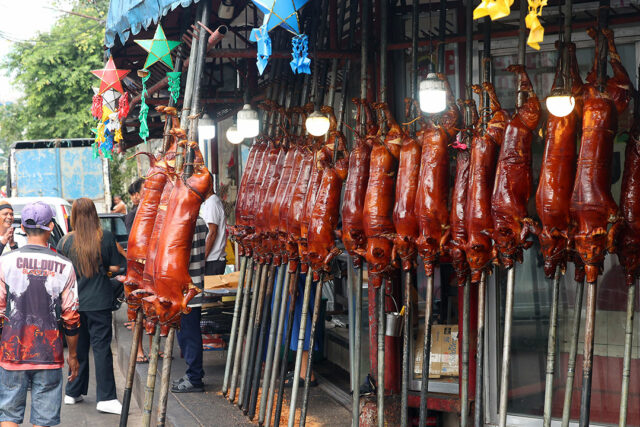
Workers prepare roasted pig at a store in La Loma, Quezon City, Dec. 22. The Philippine central bank raised its baseline inflation forecast to 3.3% for 2025 (from 3.2%) and 3.5% for 2026 (from 3.4%). — PHILIPPINE STAR/MIGUEL DE GUZMAN

By Luisa Maria Jacinta C. Jocson, Reporter

UPSIDE RISKS to the inflation outlook could slow the Bangko Sentral ng Pilipinas’ (BSP) rate-cutting cycle, analysts said.

“Should these upside risks eventuate, we may not be looking at 100-basis-point (bp) reduction for 2025 but perhaps at a more modest 50- to 75-bp reduction. As the BSP would put it, the final decision will continue to be data-driven,” GlobalSource country analyst Diwa C. Guinigundo said in a report.

Last week, the Monetary Board delivered a third straight rate cut at its final policy review for the year. This brought the benchmark to 5.75% from 6%.

The central bank has slashed rates by a total of 75 bps this year since it began its easing cycle in August.

“We think that cumulative rate cuts in 2025 will amount to 75 bps. We will revise this forecast if adverse geopolitical developments result in higher-than-projected inflation,” ANZ Research said, noting that the central bank hinted a “shallower” rate-cutting cycle next year.

BSP Governor Eli M. Remolona, Jr. said that delivering 100 bps worth of cuts next year may be “too much.”

The central bank will likely keep reducing rates in “baby steps” as an “insurance against a possible increase in inflation,” Mr. Remolona added.

Mr. Guinigundo said it was appropriate for the BSP to gradually shift to a less restrictive monetary stance.

“Given the risks, the BSP must be conserving its ammunition and chose to remain data-dependent,” he said.

He noted that the BSP also continued to flag upside risks to the inflation outlook. “This would partly explain the BSP’s decision to go slow in its easing mode,” Mr. Guinigundo said.

The BSP said the balance of risks to the inflation outlook continues to remain tilted to the upside for 2025 until 2026.

It raised several of its baseline and risk-adjusted forecasts for 2025 and 2026, though these all remain within the 2-4% target band. The central bank raised its baseline inflation forecast to 3.3% for 2025 (from 3.2%) and 3.5% for 2026 (from 3.4%). 

Meanwhile, the risk-adjusted forecasts were also increased to 3.4% for 2025 (from 3.3%). The risk-adjusted projection for 2026 was kept at 3.7%.

A report by Nomura Global Markets Research analysts Euben Paracuelles and Nabila Amani showed it expects the BSP to deliver a total of 75 bps worth of cuts before pausing in mid-2025.

“We maintain our forecast of 25 bps in rate cuts in each of the first three meetings in 2025, before pausing from there.”

“As is clear in BSP’s guidance in its last three decisions, the next decision by BSP will largely be driven by the inflation outlook for 2025 and 2026,” Nomura said.

It also noted that if headline inflation continues to ease, the BSP can “look to further remove the restrictiveness in the monetary stance to support a recovery in the growth outlook, which is facing downside risks.”

Meanwhile, Nomura said it also expects the BSP to deliver more rate cuts than the US Federal Reserve.

“As a result, we still think BSP can cut by more than the Fed, and indeed continue to decouple from its regional peers. In our view, BSP’s more orthodox approach is appropriate and provides much-needed clarity when the global environment is highly uncertain, enhancing BSP’s policy credibility,” it said.

Reuters reported that US central bankers now project they will make just two quarter-percentage-point rate reductions by the end of 2025.

That is half a percentage point less in policy easing next year than officials anticipated as of September, with Fed projections of inflation for the first year of the new Trump administration jumping from 2.1% in their prior projections to 2.5% in the current ones.

Capital Economics Assistant Economist Harry Chambers said the Philippines’ economic growth will also allow the central bank to pace its easing.

“A strong economy gives the BSP a platform to keep rate cuts gradual. GDP growth rebounded in the third quarter of the year, and while tight fiscal policy and weaker global demand will weigh on demand, strong consumption should ensure another year of solid growth in 2025,” he added.

Capital Economics expects 100 bps worth of rate cuts next year, bringing the key rate to 4.75% by end-2025.

OTHER RISKS
Meanwhile, Mr. Guinigundo flagged other upside risks that could stoke inflation in the near term.

“The plan to continue bringing down the country’s required reserve ratio may actually result in higher injection of liquidity which, other things being equal, may also turn out to be inflationary,” he said.

“This is one issue that the BSP may have to face in the future given its aggressive stance in reducing it to as low as zero.”

The BSP slashed the reserve requirement ratio for universal and commercial banks and nonbank financial institutions with quasi-banking functions by 250 bps to 7% from 9.5%, effective last Oct. 25.

Mr. Remolona has said big lenders’ reserve requirements could be brought down to as low as zero before his term ends in 2029.

Meanwhile, Mr. Guinigundo also cited geopolitical tensions and fewer-than-expected rate cuts by the US central bank.

He said the Fed may have to also “go slow in its easing stance because of the potential inflationary effects of the incoming Trump administration’s higher tariff policy, more tax cuts and mass deportation.”

“The hit on the peso cannot be dismissed for its pass through to inflation. The US Fed may be constrained from maximizing its flexibility to reduce its own target rate,” he added.

The peso closed at P58.81 a dollar on Friday, strengthening by 19 centavos from its record-low P59 finish on Thursday. This year so far, the peso has sank to the P59 mark thrice.

“Tension could remain elevated given the sustained hostility in the Middle East and Eastern Europe. They could have collateral impact on external trade and capital flows and ultimately, peso depreciation and domestic inflation,” Mr. Guinigundo added.


ADVERTISEMENT
ADVERTISEMENT