Home Blog Page 2220

Demands of holiday season show need to fast-track bills protecting platform workers

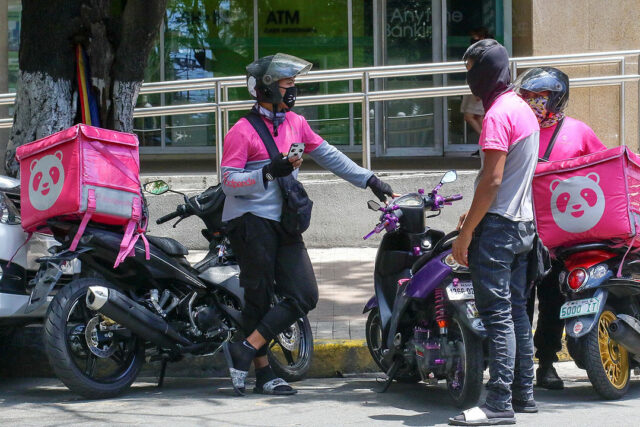
PHILIPPINE STAR/KRIZ JOHN ROSALES

By Chloe Mari A. Hufana, Reporter

THE heightened demands of the holiday season have exacerbated the challenges faced by gig workers in delivery services, prompting calls for urgent legislative action on bills that would safeguard their rights and welfare, according to a labor expert.

Fairwork Philippines Co-Investigator and Professor at the University of the Philippines Diliman School of Labor and Industrial Relations Virgel C. Binghay noted the insufficient protections for gig workers in the delivery sector.

“The government needs to step up and take action. This is not the time for a ‘wait-and-see’ approach,” he told BusinessWorld in a video conferencing interview in mixed English and Filipino.

He added the government, particularly the legislative branch, must expedite its processes as the rise of atypical work in the Fourth Industrial Revolution will continue to emerge.

He cited progress in the United Kingdom and Spain, which have enacted protective laws for the sector.

“There is a growing prevalence of atypical work, and it’s clear that our regulatory framework, labor code, and laws are no longer aligned with the present times,” he added.

The holiday season brings a surge in demand, offering gig workers a short-term opportunity to earn more income, but at a significant cost to their well-being, Mr. Binghay noted.

“This surge in demand takes a toll on their health because they are constantly on the move,” he said, highlighting that the lack of social safety nets leaves gig workers vulnerable, with their well-being not just at risk but inevitably affected.

“This is part of the future of work, and we can never predict what new technologies or atypical forms of work will emerge, but at the core of it all, they are workers. They deserve protection and should not be marginalized.”

According to Fairwork Philippines’ policy brief published in April, there were seven bills in the Senate and six in the House of Representatives in the 19th Congress regulating and providing for the protection of platform workers. As of this writing, the bills remain pending at the committee level in both chambers.

Geoffrey P. Labudahon, national coordinator of RIDERS-SENTRO, a union for delivery riders across major platforms, urged platforms offering incentives during the peak season to not let the riders struggle to claim the incentives.

“We shouldn’t be made to struggle to get the incentive because this is something we’ve worked hard for the whole year. We didn’t just work hard for it on the holidays. So, it should be retroactive,” he told BusinessWorld in Filipino through a telephone call.

While a few platforms offer accident insurance to their riders, Mr. Labudahon added that a majority still leave the riders alone in this area.

“Even if the fare is high, even if we have incentives, it doesn’t matter if we don’t have insurance,” he said, urging companies to prioritize the well-being of their workers. “We need security in case of accidents. Without insurance, we’re left vulnerable, and that’s not right.”

He noted a rise in accidents during the peak season as vehicles inroads surge, as well as the demand for various services from platform workers.

Lastly, Mr. Labudahon called for better bargaining rights for them to have a stronger voice in negotiations.

“It would be better if the union could have a discussion with the different managements because what we’re asking for isn’t wrong. Maybe that could be their Christmas gift to us, so we don’t have to keep on fighting for it.”

Bill eyes death penalty for corruption

FREEPIK

By Kenneth Christiane L. Basilio, Reporter

A BILL seeking to impose the death penalty by firing squad on government officials convicted of graft and corruption by the Philippines’ anti-graft court was filed at the House of Representatives last week.

House Bill No. 11211 proposes to reinstate the death penalty for all public officials convicted of graft and corruption, misuse of public funds and plunder, including the president, barangay officials, appointed bureaucrats and members of the state’s security and police forces.

“The bill emphasizes accountability and deterrence, making it clear that public office is a public trust, and any violation of that trust must be met with the severest consequences,” Zamboanga City Rep. Khymer Adan T. Olaso, who authored the bill, said in its explanatory note.

“This act applies to all public officials, whether elected or appointed, including officials in the executive, legislative, and judicial branches, as well as those serving in constitutional commissions, government-owned and controlled corporations, and other instrumentalities,” the bill stated. “It also applies to members of the Armed Forces of the Philippines and the Philippine National Police.”

The Philippines abolished the death penalty under the 1987 Constitution, but it was reinstated in 1993 by then-President Fidel V. Ramos to address rising crime rates.

The administration of former President Gloria Macapagal-Arroyo terminated the death penalty in 2006, after she signed into law Republic Act No. 9346, which reduced the maximum punishment to life imprisonment.

“While the death penalty was previously abolished under Republic Act No. 9346, the gravity of corruption as a crime against society justifies the reintroduction for specific heinous offenses,” according to the bill’s note.

Mr. Olaso said the bill is not punitive but rather meant to deter corruption and restore trust in government institutions.

The state would only execute public officials whose convictions are affirmed by the Supreme Court and have exhausted all available legal remedies, he added.

“These safeguards aim to uphold the fundamental rights of the accused while ensuring that the imposition of the death penalty is applied only in cases where guilt is conclusively established,” the bill stated.

Five other measures seeking the reinstatement of the death penalty are also pending at the House.

“The Philippines has a strong anti-death penalty position,” Carlos H. Conde, senior researcher at Human Rights Watch, said via WhatsApp. “This bill, if taken seriously, will mean the Philippines would slide backwards.”

Last week, the Philippines supported a United Nations (UN) resolution calling for a moratorium on the death penalty. The resolution was adopted by the UN General Assembly, with 130 member-states in favor, 32 opposed, and 22 abstentions.

“The country also signed and ratified the second optional protocol against the death penalty in the International Covenant on Civil and Political Rights,” said Mr. Conde.

There is also no evidence indicating that the death penalty would deter corrupt practice, he added. “Corruption persists in the Philippines because corrupt government officials are rarely being punished.”

“It seems clear that it is designed for politicking more than anything else,” he said.

Live with purpose — Marcos

PHILIPPINE STAR/WALTER BOLLOZOS

PRESIDENT Ferdinand R. Marcos, Jr. called on Filipinos to live a meaningful and purposeful life, as the predominantly Catholic country marked the Christmas season on Wednesday.

Vice-President Sara Z. Duterte-Carpio, meanwhile, urged Filipinos to offer love to one another, especially to the poor and sick, citing forgiveness and respect.

“As Filipinos take this highly anticipated chance to come home, reconnect with loved ones, and relish the blessings of the past year, I call on everyone to reflect on what is truly important: living a life of meaning and purpose,” Mr. Marcos said in his Christmas message.

“By doing so, may the bustle and spirit of Christmas make love and peace abound in every household and instill in us a deeper appreciation of the strength that comes from our relationship with Christ and each other,” he added.

In a separate message written in Filipino, Ms. Duterte said “we are all called to be forgiving, generous, and loving to our neighbors.”

“More than the material things we will receive this Christmas, we are invited to give understanding, respect, and love to one another, especially to the poor and sick.”

Trust and approval ratings for the two leaders have declined, according to a recent Pulse Asia Survey Research, Inc. poll, in which the Vice-President saw major losses.

The gap between the Marcos camp and the Duterte family has also widened this year, as Congress held probes into Ms. Duterte’s questionable use of confidential funds.

The President, meanwhile, is under scrutiny amid backlash against the Congress-approved spending plan for 2025, particularly the removal of state subsidy for the Philippine Health Insurance Corporation and funding cuts faced by social services including education.

Mr. Marcos, who earlier postponed the budget signing set for Dec. 20 and is now eyeing a Dec. 30 approval, is expected to issue line-veto items. — Kyle Aristophere T. Atienza

Comelec slammed over Quiboloy

PHILSTAR FILE PHOTO

THE Workers’ and Peasants’ Party (WPP) criticized the Commission on Elections (Comelec) for discriminatory practices in determining nuisance candidates as the polls body allowed an alleged criminal to run in next year’s elections.

The WPP and Federation of Free Workers (FFW) President Jose Sonny G. Matula filed a motion for reconsideration challenging the Comelec’s dismissal of their petition to declare embattled televangelist Apollo C. Quiboloy a nuisance candidate for the 2025 national and local elections.

The petition was based on Mr. Quiboloy’s unauthorized use of the WPP as his political party when he filed his certificate of candidacy.

“We are humbly asking the Comelec to be consistent in the application of rules. On the one hand, they disqualify respected candidates without criminal records as ‘nuisance;’ and, on the other, allow those facing serious criminal indictments to run for office,” said Mr. Matula.

Mr. Quiboloy, who is accused of abusing women and children among others, is currently detained in a Pasig City jail following a standoff in the Kingdom of Jesus Christ’s compound in Davao City.

The labor leader pointed out the double standards might undermine the integrity of the electoral process.

“Justice must be impartial, and minorities, especially leaders like Sultan Subair Guinthum Mustapha, deserve fair treatment,” Mr. Matula argued.

Mr. Mustapha is a Moro leader disqualified as a nuisance candidate by the poll body.

The WPP filed a 14-page motion for reconsideration, calling for a review of the Comelec First Division’s December 18 resolution not to disqualify Mr. Quiboloy.

The Philippines will hold midterm elections next year. Filipinos will elect their congressmen, mayors, vice mayors and members of city councils on May 12, 2025. Twelve of the 24-member Senate will also be replaced. — Chloe Mari A. Hufana

More combat weapons surrendered

COTABATO — Residents of a seaside town in Sultan Kudarat province voluntarily surrendered 29 more unlicensed rifles, grenade, and rocket launchers to Philippine Army officials on Monday.

Army Major Gen. Antonio G. Nafarrete, commander of the 6th Infantry Division (ID), told reporters on Wednesday that Palimbang Mayor Joenime B. Kapina, officials of the 37th Infantry Battalion (IB) and their immediate superior, Brig. Gen. Michael A. Santos of the 603rd Infantry Brigade, cooperated in securing the surrender of the firearms in support of the Small Arms and Light Weapons Management Program of the 6th ID and the Office of the Presidential Adviser on Peace, Reconciliation and Unity.

Mr. Nafarrete said he is thankful to the local executives, the Army and police officials in Palimbang for helping disseminate to local residents the objectives of the program, enabling them to peacefully assume custody of the weapons cache from owners, among them members of Moro fronts that now have separate peace agreements with the national government.

Officials of the 37th IB and other units of the 603rd Infantry Brigade in different towns in Sultan Kudarat had collected more than a hundred assault rifles, pistols, 40-millimeter grenade and B40 rocket launchers that owners surrendered in the past three months. — John Felix M. Unson

China approves VAT law taking effect in 2026

PIXABAY

BEIJING — China approved a value-added tax (VAT) law on Wednesday to take effect on Jan. 1, 2026, the official Xinhua said, bringing into one document previous regulations that have included exempting items from the tax.

VAT, the largest tax category in China, accounted for around 38% of national tax revenue in 2023, official data show.

The report did not detail provisions of the law. The latest draft included exemptions for some agricultural products, imported instruments and equipment for scientific research and teaching, some imported goods for the disabled and services provided by welfare institutions such as nursery, kindergarten and nursing institution for the elderly.

To aid specific sectors or businesses, the government could include new items into the scope of tax deductibles.

“With the introduction of the VAT Law, 14 tax categories out of 18 in China have their own laws, covering the majority of tax revenue and marking significant progress of implementing the principle of statutory taxation,” Xinhua said.

The law was passed at the end of a session of China’s top legislature, the National People’s Congress Standing Committee, which began on Saturday.

Last month, China unveiled tax incentives on home and land transactions to support the crisis-hit property market. Residents are exempt from VAT when they sell their homes at least two years after purchase.

In September 2023, the finance ministry said it would extend a VAT refund policy aimed at encouraging domestic and foreign research institutions to purchase Chinese-made equipment until the end of 2027.

China in 2019 cut the VAT rate for manufacturers to 13% from 16%, and to 9% from 10% for the transportation and construction sectors.

With the slowing world’s second-largest economy, VAT revenue in the first 11 months this year dropped 4.7% from the same period last year to 6.1 trillion yuan ($840 billion), as businesses suffered weak domestic demand. For November, VAT revenue rose 1.36%.

“The rebound in VAT reflects improving economic vitality, as sales and business activity recover. It may also indicate a recovery in industrial profits, further supporting economic momentum,” Tommy Xie, head of Asia macro research at OCBC, said in a note on Monday. — Reuters

UK seeks industry views on electric vehicle sales targets after backlash

REUTERS

LONDON — Britain began a consultation on Tuesday to review rules that force automakers to produce more electric vehicles (EV), following industry warnings that the current plan could lead to factory closures and job losses.

The consultation will take views from the industry on changing the so-called Zero Emission Vehicle (ZEV) mandate, which requires automakers to sell a higher proportion of EVs each year, or pay fines.

Carmakers say lower-than-expected EV demand has forced them to spend billions of pounds on discounts to entice customers and meet sales targets, which have hurt Britain’s appeal as a manufacturing hub.

Last month Vauxhall owner Stellantis said it would shut a van factory in southern England, risking more than 1,000 jobs, partly reflecting the impact of the ZEV mandates.

Britain’s Labour government said it would consult to update the targets without compromising the overall direction of the regulations, which form part of Britain’s wider climate goals.

The consultation will seek views on the restoration of a 2030 deadline to phase out new petrol and diesel car sales and whether vehicles such as hybrid cars can be sold alongside ZEVs.

It will also consider measures to boost consumer demand for electric vehicles.

“We are steadfast in our mission to help our world-leading automotive industry thrive, and this consultation will look at how we can support manufacturers, investors, and the wider industry to reach their targets,” Business Secretary Jonathan Reynolds said.

The auto industry welcomed the consultation, which runs until Feb. 18.

“With the 2025 market looking under even greater pressure, it is imperative we get an urgent resolution, with a clear intent to adapt the regulation to support delivery, backed by bold incentives to stimulate demand,” Society of Motor Manufacturers and Traders Chief Executive Mike Hawes said. — Reuters

Global hunger crisis deepens as wealthy donor nations skimp on aid

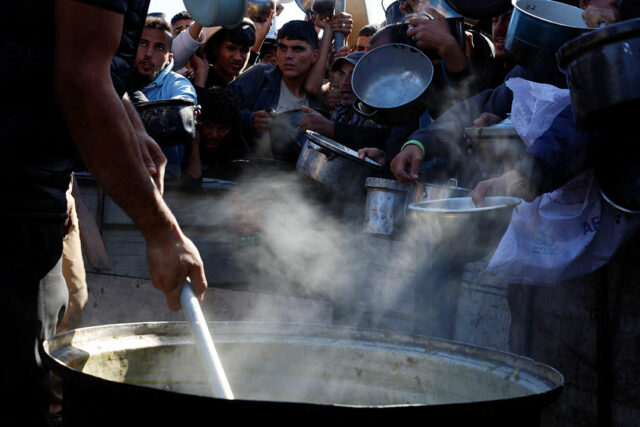
PALESTINIANS gather to receive food cooked by a charity kitchen amid a hunger crisis as the Israel-Gaza conflict continues in Khan Younis in the southern Gaza Strip, Dec. 4, 2024. — REUTERS

IT’S A SIMPLE but brutal equation: The number of people going hungry or otherwise struggling around the world is rising, while the amount of money the world’s wealthiest nations are contributing toward helping them is dropping.

The result: The United Nations (UN) says that, at best, it will be able to raise enough money to help about 60% of the 307 million people it predicts will need humanitarian aid next year. That means at least 117 million people won’t get food or other assistance in 2025.

The UN also will end 2024 having raised about 46% of the $49.6 billion it sought for humanitarian aid across the globe, its own data show. It’s the second year in a row the world body has raised less than half of what it sought. The shortfall has forced humanitarian agencies to make agonizing decisions, such as slashing rations for the hungry and cutting the number of people eligible for aid.

The consequences are being felt in places like Syria, where the World Food Program (WFP), the UN’s main food distributor, used to feed 6 million people. Eyeing its projections for aid donations earlier this year, the WFP cut the number it hoped to help there to about 1 million people, said Rania Dagash-Kamara, the organization’s assistant executive director for partnerships and resource mobilization.

Ms. Dagash-Kamara visited the WFP’s Syria staff in March. “Their line was, ‘We are at this point taking from the hungry to feed the starving,’” she said in an interview.

UN officials see few reasons for optimism at a time of widespread conflict, political unrest and extreme weather, all factors that stoke famine. “We have been forced to scale back appeals to those in most dire need,” Tom Fletcher, UN under-secretary-general for humanitarian affairs and emergency relief coordinator, told Reuters.

Financial pressures and shifting domestic politics are reshaping some wealthy nations’ decisions about where and how much to give. One of the UN’s largest donors — Germany — already shaved $500 million in funding from 2023 to 2024 as part of general belt-tightening. The country’s cabinet has recommended another $1-billion reduction in humanitarian aid for 2025. A new parliament will decide next year’s spending plan after the federal election in February.

Humanitarian organizations also are watching to see what US President-elect Donald J. Trump proposes after he begins his second term in January.

Trump advisers have not said how he will approach humanitarian aid, but he sought to slash US funding in his first term. And he has hired advisers who say there is room for cuts in foreign aid.

The US plays the leading role in preventing and combating starvation across the world. It provided $64.5 billion in humanitarian aid over the last five years. That was at least 38% of the total such contributions recorded by the UN.

SHARING THE WEALTH
The majority of humanitarian funding comes from just three wealthy donors: the United States, Germany and the European Commission. They provided 58% of the $170 billion recorded by the UN in response to crises from 2020 to 2024.

Three other powers — China, Russia and India — collectively contributed less than 1% of UN-tracked humanitarian funding over the same period, according to a Reuters review of UN contributions data.

The inability to close the funding gap is one of the major reasons the global system for tackling hunger and preventing famine is under enormous strain. The lack of adequate funding — coupled with the logistical hurdles of assessing need and delivering food aid in conflict zones, where many of the worst hunger crises exist — is taxing efforts to get enough aid to the starving. Almost 282 million people in 59 countries and territories were facing high levels of acute food insecurity in 2023. Reuters is documenting the global hunger-relief crisis in a series of reports, including from hard-hit Sudan, Myanmar and Afghanistan.

The failure of major nations to pull their weight in funding for global initiatives has been a persistent Trump complaint. Project 2025, a set of policy proposals drawn up by Trump backers for his second term, calls on humanitarian agencies to work harder to collect more funding from other donors and says this should be a condition for additional US aid.

On the campaign trail, Mr. Trump tried to distance himself from the controversial Project 2025 blueprint. But after winning the election, he chose one of its key architects, Russell Vought, to run the US Office of Management and Budget, a powerful body that helps decide presidential priorities and how to pay for them. For secretary of state, the top US diplomat, he tapped Florida Senator Marco Rubio, who has a record of supporting foreign aid.

Project 2025 makes particular note of conflict — the very factor driving most of today’s worst hunger crises.

“Humanitarian aid is sustaining war economies, creating financial incentives for warring parties to continue fighting, discouraging governments from reforming, and propping up malign regimes,” the blueprint says. It calls for deep cuts in international disaster aid by ending programs in places controlled by “malign actors.”

Billionaire Elon Musk has been tapped by Mr. Trump to co-lead the Department of Government Efficiency (DoGE), a new body that will examine waste in government spending. Mr. Musk said this month on his social media platform, X, that DoGE would look at foreign aid.

The aid cuts Mr. Trump sought in his first term didn’t pass Congress, which controls such spending. Senator Lindsey Graham, a South Carolina Republican and close Trump ally on many issues, will chair the Senate committee that oversees the budget. In 2019, he called “insane” and “short-sighted” a Trump proposal to cut the budget for foreign aid and diplomacy by 23%.

Messrs. Graham, Vought, Rubio and Musk did not respond to questions for this report.

OLYMPICS AND SPACESHIPS
So many people have been hungry in so many places for so long that humanitarian agencies say fatigue has set in among donors. Donors receive appeal after appeal for help, yet have limits on what they can give. This has led to growing frustration with major countries they view as not doing their share to help.

Jan Egeland was UN humanitarian chief from 2003 to 2006 and now heads the Norwegian Refugee Council, a nongovernmental relief group. Mr. Egeland said it is “crazy” that a tiny country like Norway is among the top funders of humanitarian aid. With a 2023 gross national income (GNI) less than 2% the size of America’s, Norway ranked seventh among governments who gave to the UN that year, according to a Reuters review of UN aid data. It provided more than $1 billion.

Two of the five biggest economies — China and India — gave a tiny fraction as much.

China ranked 32nd among governments in 2023, contributing $11.5 million in humanitarian aid. It has the world’s second-largest GNI.

India ranked 35th that year, with $6.4 million in humanitarian aid. It has the fifth-largest GNI.

Mr. Egeland noted that China and India each invested far more in the type of initiatives that draw world attention. Beijing spent billions hosting the 2022 Winter Olympics, and India spent $75 million in 2023 to land a spaceship on the moon.

“How come there is not more interest in helping starving children in the rest of the world?” Mr. Egeland said. “These are not developing countries anymore. They are having Olympics… They are having spaceships that many of the other donors never could dream of.” 

Liu Pengyu, spokesman for the Chinese embassy in Washington, said China has always supported the WFP. He noted that it feeds 1.4 billion people within its own borders. “This in itself is a major contribution to world food security,” he said.

India’s ambassador to the UN and its Ministry of External Affairs did not respond to questions for this report.

To analyze giving patterns, Reuters used data from the UN’s Financial Tracking Service, which records humanitarian aid. The service primarily catalogs money for UN initiatives and relies on voluntary reporting. It doesn’t list aid funneled elsewhere, including an additional $255 million that Saudi Arabia reported giving this year through its own aid organization, the King Salman Humanitarian Aid & Relief Centre.

RESTRICTIONS AND DELAYS
When aid does come, it is sometimes late, and with strings attached, making it hard for humanitarian organizations to respond flexibly to crises.

Aid tends to arrive “when the animals are dead, people are on the move, and children are malnourished,” said Julia Steets, director of the Global Public Policy Institute, a think tank based in Berlin.

Ms. Steets has helped conduct several UN-sponsored evaluations of humanitarian responses. She led one after a drought-driven hunger crisis gripped Ethiopia from 2015 to 2018. The report concluded that while famine was avoided, funding came too late to prevent a huge spike in severe acute malnutrition in children. Research shows that malnutrition can have long-term effects on children, including stunted growth and reduced cognitive abilities.

Further frustrating relief efforts are conditions that powerful donors place on aid. Donors dictate details to humanitarian agencies, down to where food will go. They sometimes limit funding to specific UN entities or nongovernmental organizations. They often require that some money be spent on branding, such as displaying donors’ logos on tents, toilets and backpacks.

Aid workers say such earmarking has forced them to cut rations or aid altogether.

The US has a long-standing practice of placing restrictions on nearly all of its contributions to the World Food Program, one of the largest providers of humanitarian food assistance. More than 99% of US donations to the WFP carried restrictions in each of the last 10 years, according to WFP data reviewed by Reuters.

Asked about the aid conditions, a spokesperson for the US Agency for International Development, which oversees American humanitarian spending, said the agency acts “in accordance with the obligations and standards required by Congress.”

Those standards aim to improve the efficiency and effectiveness of humanitarian aid, the spokesperson said, and aid conditions are meant to maintain “an appropriate measure of oversight to ensure the responsible use of US taxpayer funds.”

Some current and former officials with donor organizations defend their restrictions. They point to theft and corruption that have plagued the global food aid system.

In Ethiopia, as Reuters has detailed, massive amounts of aid from the UN World Food Program were diverted, in part because of the organization’s lax administrative controls. An internal WFP report on Sudan identified a range of problems in the organization’s response to an extreme hunger crisis there, Reuters reported earlier this month, including an inability to react adequately and what the report described as “anti-fraud challenges.”

The UN has a “zero tolerance policy” toward “interferences” that disrupt aid and is working with donors to manage risks, said Jens Laerke, spokesperson for the UN Office for the Coordination of Humanitarian Affairs.

Solving the UN’s broader fundraising challenges will require a change in its business model, said Martin Griffiths, who stepped down as UN humanitarian relief chief in June. “Obviously, what we need to do is to have a different source of funding.”

In 2014, Antonio Guterres, now the UN’s secretary-general and then head of its refugee agency, suggested a major change that would charge UN member states fees to fund humanitarian initiatives. The UN’s budget and peacekeeping missions already are funded by a fee system. Such funding would offer humanitarian agencies more flexibility in responding to need.

The UN explored Mr. Guterres’ idea in 2015. But donor countries preferred the current system, which lets them decide case by case where to send contributions, according to a UN report on the proposal.

Mr. Laerke said the UN is working to diversify its donor base.

“We can’t just rely on the same club of donors, generous as they are and appreciative as we are of them,” Mr. Laerke said. — Reuters


Portugal’s property deals hit record, adding to shortage of affordable homes

ANDRE LERGIER-UNSPLASH

LISBON — The value of Portuguese homes that changed hands in the third quarter rose 28% to a record 9.05 billion euros ($1.04 billion), potentially aggravating a shortage of affordable housing, as interest rates in Europe retreated from all-time highs.

The National Statistics Institute said on Monday almost 41,000 homes were sold in the quarter, up 19.4% year-on-year, and that the price of existing dwellings rose more than for new ones.

In the first nine months of the year, the value of homes sold rose 13.5% from the same time a year ago to 23.7 billion euros, slightly below 2022’s record of 24.4 billion.

The country’s chronic shortage of affordable housing has been aggravated by wealthy foreigners lured by residency rights linked to property investment and tax breaks offered by the state.

A tourism boom has also led to a surge in short-term holiday lets, exacerbating the squeeze on the housing market. It has prompted protests in Lisbon and other cities by locals struggling to afford a place to live.

The prices were highest in the densely-populated Lisbon metropolitan area and the wealthy north of the country, Monday’s data showed.

Tax residents in Portugal accounted for 93.5% of property deals, followed by those from other European Union countries, at 3.37%, and non-EU countries, at 3.13%. — Reuters

Saudi executions rose sharply in 2024

A Saudi flag flutters atop Saudi Arabia’s consulate in Istanbul, Turkey, Oct. 20, 2018. — REUTERS

RIYADH — Saudi Arabia executed 330 people this year, the highest number in decades, despite de facto ruler Mohammed bin Salman’s 2022 assertion that the death penalty had been eliminated except for murder cases under his vision for a new open kingdom.

The country is spending billions to transform its reputation for strict religious restrictions and human rights abuses into that of a tourism and entertainment hub under the Vision 2030 plan launched by the crown prince, who is also known as MbS.

The latest execution toll, compiled from execution announcements by human rights NGO Reprieve and verified by Reuters, is a big jump from the 172 total for last year and 196 for 2022. Reprieve said it was the highest ever recorded.

“This reform is built on a house of cards that is built on record numbers of executions,” said Jeed Basyouni, who works with Reprieve.

Saudi Arabia denies accusations of human rights abuses and says its actions are aimed at protecting national security.

More than 150 people were executed for non-lethal crimes this year, according to the tally, which rights groups say is contrary to international law.

Those executions were mainly related to alleged drug smuggling amid a flood of amphetamine-like captagon from Syria under ousted President Bashar al-Assad. They also included people charged with non-lethal terrorism, a charge rights groups say is often used against those who have participated in anti-government protests.

The total includes more than 100 foreign nationals from the Middle East, Africa and Asia.

The Saudi government communications office did not respond to detailed questions from Reuters on the execution figures.

After taking power in a palace coup in 2017, MbS faced international censure for cracking down on dissent and for the killing of Saudi journalist Jamal Khashoggi at the kingdom’s consulate in Istanbul in 2018.

Saudi Arabia has maintained that Mr. Khashoggi’s killing was carried out by a rogue group, although MbS has said that he bears ultimate responsibility because it happened under his watch.

Western governments largely shunned the kingdom following Mr. Khashoggi’s death. US President Joseph R. Biden, during his 2020 candidacy for the office, said he would make Saudi Arabia a “pariah,” but in 2022 visited the kingdom and fist bumped MbS.

Rights groups have accused the country of sentencing minors to death and using torture to extract confessions.

For decades Saudi Arabia held weekly executions by beheading with a sword in a public square; now that same area is dominated by cafés and restaurants with almost no sign of its bloody past.

“Repression is increasing, but you don’t see it,” said Dana Ahmed, MENA researcher at Amnesty International.

Relatives of people on death row, who did not wish to share their names due to security concerns, told Reuters they faced difficulties with the Saudi legal system.

A relative of one foreign national arrested on drug charges said he had simply been fishing near the coast and had no lawyer or representative in Saudi Arabia.

A family member of another defendant said they had heard no evidence against him despite attending sessions in the criminal court for more than three years.

Reuters was unable to verify the accounts independently.

MbS told the Atlantic in a 2022 interview that Saudi Arabia had eliminated the death penalty, except in cases of murder, which he said he was powerless to change since it is punishable by death according to the Koran. — Reuters

PBBM sends well wishes to every Filipino home


Spotlight is BusinessWorld’s sponsored section that allows advertisers to amplify their brand and connect with BusinessWorld’s audience by publishing their stories on the BusinessWorld Web site. For more information, send an email to online@bworldonline.com.

Join us on Viber at https://bit.ly/3hv6bLA to get more updates and subscribe to BusinessWorld’s titles and get exclusive content through www.bworld-x.com.

Nippon Steel’s U.S. Steel bid referred to President Biden for final decision

Source: https://www.ussteel.com/media/video-image-library

 – Nippon Steel’s $15 billion bid for U.S. Steel has been referred to U.S. President Joe Biden, a White House spokesman said, giving the president 15 days to decide on a tie up he has previously said he opposes.

The Committee on Foreign Investment in the United States (CFIUS), which reviews foreign investments in the U.S. for national security risks, referred the bid to Biden after it was unable to reach a consensus.

“We received the CFIUS evaluation and the President will review it,” White House spokesperson said. President-elect Donald Trump, set to retake the office on Jan.20, has also opposed the deal, which was first announced last December.

Nippon Steel said on Tuesday it was informed of the CFIUS letter.

“We urge him (Biden) to reflect on the great lengths that we have gone to address any national security concerns that have been raised and the significant commitments we have made to grow U. S. Steel,” Nippon Steel said in a statement.

Nippon Steel and U.S. Steel have previously said they planned to close the deal before the end of 2024.

The Washington Post first reported the referral to Biden on Monday.

CFIUS said on Monday that allowing Nippon Steel to take over U.S. Steel could result in lower domestic steel production representing “a national security risk”, according to the Washington Post.

Nippon Steel said it could eliminate that risk by appointing U.S. citizens to top management and board of director positions at U.S. Steel, but the committee was divided in its view of whether those remedies would be sufficient, said the newspaper.

The U.S. Treasury Department, which leads CFIUS, and the Commerce Department, declined to comment.

The deal, essential for Nippon Steel’s expansion globally, has also faced opposition from the United Steelworkers, a powerful labor union that was key for both Democrats and Republicans in the swing state of Pennsylvania during the Nov. 5 presidential elections.

The union is concerned Nippon Steel may import steel into the U.S. from its international mills, eroding a company that helped build the Empire State Building and armed allied forces in World War Two.

Nippon Steel has previously denied it will use the deal as cover to import steel and has made a series of pledges to protect jobs and invest in U.S. facilities it sees as key to its future growth.

“The U.S. Steel deal is a once-in-a-lifetime opportunity for Nippon Steel to drive its growth,” said SBI Securities analyst Ryunosuke Shibata.

The U.S. is the only developed nation where domestic steel demand is increasing, with the highest steel prices globally due to production capacity falling short of domestic needs, he added.

With U.S. Steel, Nippon Steel aimed to raise its global steel production capacity to 85 million metric tons per year from 65 million tons now and the asset is core to its goal of lifting production capacity to more than 100 million tons in the long-term.

Nippon Steel faces a $565 million penalty to U.S. Steel if the deal collapses, which would also be a major blow to the Japanese steelmaker’s overseas expansion. It has earlier said it could pursue legal action against the U.S. government if the deal falls apart.

With Japan being the largest foreign investor to the US, Japanese Prime Minister Shigeru Ishiba last month sent a letter to Biden asking him to approve Nippon Steel’s acquisition of U.S. Steel.

“The transaction… enhances U.S. national and economic security through investment in manufacturing and innovation – by a company based in one of the United States’ closest allies – and forges an alliance in steel to combat the competitive threat from China,” U.S. Steel said in a statement. – Reuters

ADVERTISEMENT
ADVERTISEMENT