Home Blog Page 2208

Meralco to top energy sales goal this year

MERALCO.COM.PH

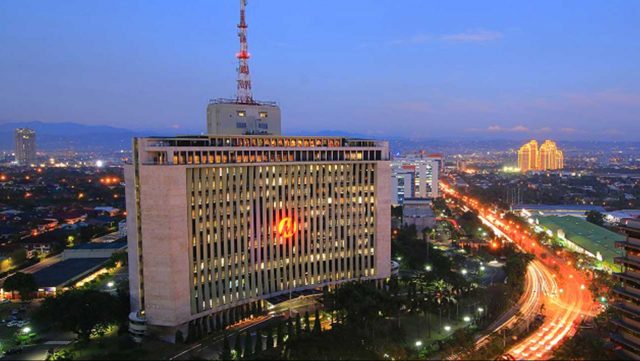
MANILA Electric Co. (Meralco) expects to exceed its sales growth target this year, driven by the residential and commercial segments, according to a high-ranking official.

The company had set a target energy sales volume of 53,473 gigawatt-hours (GWh) this year — 4.8% higher than in 2023 — but it now expects year-end sales at 54,259 GWh or 6.3% growth, Ferdinand O. Geluz, senior vice-president and chief revenue officer at the power distributor, said in a Viber message last week.

“We may surpass our sales volume target for the year by close to 800 GWh,” he said. “Sustained new account energization brought in additional sales, as we surpassed eight million customers in the fourth quarter.”

Energy sales are expected to increase in the commercial sector as retail, real estate, hotels, and leisure businesses continued to expand, he added.

Contributing to the growth in both residential and commercial sectors were the higher per capita consumption due to El Niño.

Meanwhile, industrial sales were flat as the modest increase in semiconductor, food and beverage, and plastic industries were offset by a decline in steel and wheeling from embedded generation.

Meralco’s distribution business accounted for 59% or P20.5 billion of its core net income in the first nine months of 2024, which grew 17% to P35.1 billion.

Meralco expects to surpass its P43-billion profit target for the year on the back of strong performance from its units, Chairman and Chief Executive Officer Manuel V. Pangilinan earlier told a news briefing.

Meralco’s controlling stakeholder, Beacon Electric Asset Holdings, Inc., is partly owned by PLDT, Inc.

Hastings Holdings, Inc., a unit of PLDT Beneficial Trust Fund subsidiary MediaQuest Holdings, Inc., has an interest in BusinessWorld through the Philippine Star Group, which it controls. — S.J. Talavera

Understanding the value of trends

Each year, as December fades into January, the world of business is inundated with articles and reports forecasting the trends that are expected to shape the coming year. From advancements in technology and shifting consumer behavior to evolving workplace dynamics, these insights promise to help leaders anticipate and navigate an ever-changing landscape. But is there real value in immersing oneself in these predictions, or do they merely serve as an annual ritual with limited practical impact?

At its core, the value of reading about upcoming trends lies in fostering preparedness. Businesses do not operate in isolation; they are deeply intertwined with technological, societal, and economic currents. For instance, the rapid adoption of artificial intelligence and automation in recent years has forced companies to rethink not only their operations but also their strategies for talent management and customer engagement. Leaders who fail to recognize or respond to such shifts risk falling behind their more proactive competitors. Trend forecasts, while not infallible, offer a curated glimpse into the potential opportunities and challenges ahead, enabling businesses to position themselves advantageously.

In the realm of strategy, staying informed about trends can serve as a catalyst for innovation. Consider the ongoing emphasis on sustainability and environmental, social, and governance (ESG) initiatives. Ten years ago, such concepts were emerging as niche concerns; today, they are integral to the success of global brands. Companies that paid attention to these nascent trends early — by rethinking supply chains, adopting greener technologies, and embedding ESG principles into their operations — are now reaping the rewards. Reading about potential trends helps managers identify areas where innovation can create competitive differentiation, whether through new products, improved processes, or stronger relationships with stakeholders.

However, not all predictions are created equal. The proliferation of articles and reports about annual trends can sometimes result in an overwhelming and contradictory deluge of information. One publication may emphasize the rise of the metaverse, while another champions the return to human-centric, in-person interactions. Such disparities raise questions about the reliability of these forecasts. In some cases, trends are overhyped or lack the empirical basis needed to justify their prominence. Therefore, the value derived from reading these forecasts depends heavily on the critical thinking skills of the reader. Managers and leaders must assess the credibility of sources, evaluate the alignment of predicted trends with their specific industry, and recognize that not every trend is relevant to their context.

Moreover, it is crucial to acknowledge the inherent uncertainty in predicting the future. Many trends that dominate discussions at the start of the year fail to materialize or unfold in ways that differ significantly from initial expectations. The unpredictability of global events—ranging from economic recessions to geopolitical conflicts—can swiftly render even the most well-informed predictions obsolete. For example, the COVID-19 pandemic disrupted nearly every industry worldwide, challenging previously forecasted trends and accelerating others, such as remote work and digital transformation, far beyond anyone’s expectations. This serves as a reminder that while trend reports are valuable tools, they should not be treated as definitive roadmaps.

Despite these limitations, reading about trends offers an additional benefit: fostering a culture of curiosity and learning within organizations. The act of exploring emerging ideas encourages leaders and teams to think expansively, question established norms, and engage in meaningful discussions about the future. For instance, a company reading about the rise of decentralized finance (DeFi) might not immediately invest in blockchain technologies but could spark internal conversations about how to leverage digital tools for financial operations. Even when a particular trend does not lead to immediate action, the process of engaging with forward-looking ideas can stimulate creativity and long-term strategic thinking.

In the competitive world of business, timing is often a decisive factor in success. Organizations that are quick to identify and act on relevant trends can achieve first-mover advantages, while those that lag may struggle to catch up. Reading about trends at the start of the year provides a temporal edge, enabling businesses to plan ahead, allocate resources effectively, and communicate their vision to stakeholders. For example, a company that anticipated the growing demand for personalized customer experiences in retail might have invested early in data analytics and AI-driven solutions, securing a stronger foothold in an increasingly competitive market.

Nonetheless, it is essential to strike a balance between trend adoption and core business priorities. Overzealous pursuit of every new idea can lead to strategic dilution and resource misallocation. Companies must discern which trends align with their long-term goals, customer needs, and organizational capabilities. This requires a disciplined approach to trend evaluation, combining quantitative analysis with qualitative insights and a firm understanding of the broader industry context.

In the end, there is undeniable value in reading about trends for the coming year, particularly for business and management professionals. These forecasts provide a foundation for preparedness, innovation, and strategic foresight, helping organizations stay relevant in a dynamic world. However, the real utility of such insights depends on how they are interpreted and applied. Businesses must approach trend reports with a critical eye, separating actionable insights from fleeting buzzwords, and remain agile enough to adapt when the unexpected occurs. By doing so, they can harness the power of trends not just as predictions but as tools for thoughtful and effective decision-making.

The views expressed herein are his own and do not necessarily reflect the opinion of his office as well as FINEX.


Reynaldo C. Lugtu, Jr. is the Founder and CEO of Hungry Workhorse, a digital, culture, and customer experience transformation consulting firm. He is a Fellow at the US-based Institute for Digital Transformation. He is the Chair of the Digital Transformation IT Governance Committee of FINEX Academy. He teaches strategic management and digital transformation in the MBA Program of De La Salle University. The author may be emailed at rey.lugtu@hungryworkhorse.com


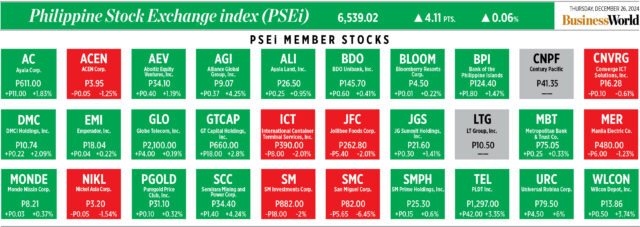
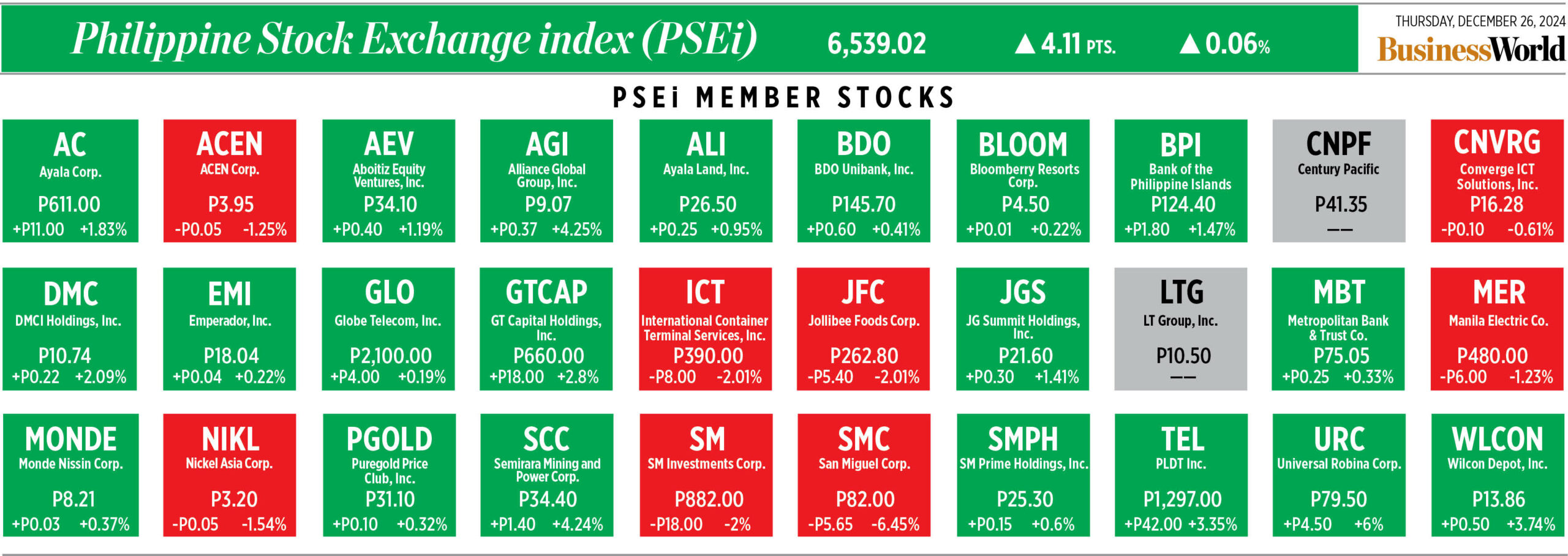
How PSEi member stocks performed — December 26, 2024

Here’s a quick glance at how PSEi stocks fared on Thursday, December 26, 2024.


BoI says 12 projects eligible to switch to CREATE MORE regime

THE Board of Investments (BoI) said it counts 12 registered projects as eligible to transfer to the incentive regime offered by the Corporate Recovery and Tax Incentives for Enterprises to Maximize Opportunities for Reinvigorating the Economy (CREATE MORE) Act.

In an advisory dated Dec. 18, the BoI said the 12 eligible registered business enterrises (RBEs) have current projects with investment capital exceeding P15 billion registered during the effectivity of the CREATE Act, the precursor to CREATE MORE.

BoI Managing Head and Trade Undersecretary Ceferino S. Rodolfo said that the law requires the RBEs to submit a affidavit of intent to transfer and file an application by Dec. 31.

“In our records there are 12 companies that have above P15- billion investments that are registered and they can now transfer to the CREATE MORE regime,” Mr. Rodolfo said in an online briefing Thursday.

“We don’t have the numbers yet for those looking to transfer from CREATE to CREATE MORE, but the discussions are ongoing,” he added.

He said that the enhanced incentives of CREATE MORE will have a greater bearing on those projects whose costs are over P15 billion, as they will need to go through the Fiscal Incentives Review Board (FIRB).

Under the law, FIRB -approved projects can enjoy a longer period of incentives of between 24 to 27 years depending on the industry tier and project location.

The advisory also set the same deadline for pre-CREATE projects seeking to transfer to a CREATE Act regime. According to the BoI, there are 275 pre-CREATE projects that may qualify to adopt a CREATE regime.

Of the 275, 119 RBEs are operating but have not availed of the income tax holiday (ITH) incentive, while 156 RBEs have not yet started operations and therefore have also not availed of the ITH incentive.

Meanwhile, 82 RBEs registered prior to CREATE have signified intent to transfer as of Dec. 19.

In a memorandum circular in May, the BoI said that the pre-CREATE projects with approved transfer of registration to a CREATE regime will need to meet performance standards involving investment capital, job generation, an export threshold, and technology requirements.

Other performance commitments include related-party sales limits, minimum tax payments, domestic purchase requirements, quality of service, and other standards that will be imposed by the investment promotion agency or the FIRB.

Meanwhile, Mr. Rodolfo said the BoI, despite its  aggressive push for investments, will remain prudent in handing out fiscal incentives.

“In pursuing industrial development by using fiscal incentives as one of the tools for attracting investment, we have been a steadfast partner of the Department of Finance and of the FIRB in ensuring that we maintain the government’s fiscal health,” he said.

“In this particular case, the BoI made sure that in implementing the CREATE provisions for the transfer, there will be no double-dipping across incentive regimes, and only those who contemplated CREATE incentives and those who actually need these will be allowed to transfer,” he added. 

According to the BoI, applications with affidavits of intent filed beyond the period will not be considered. It said however that scanned copies may be submitted via e-mail at lcssubmission@boi.gov.ph, pending submission of the original copies. — Justine Irish D. Tabile

Japan expresses hope for success of CREATE MORE

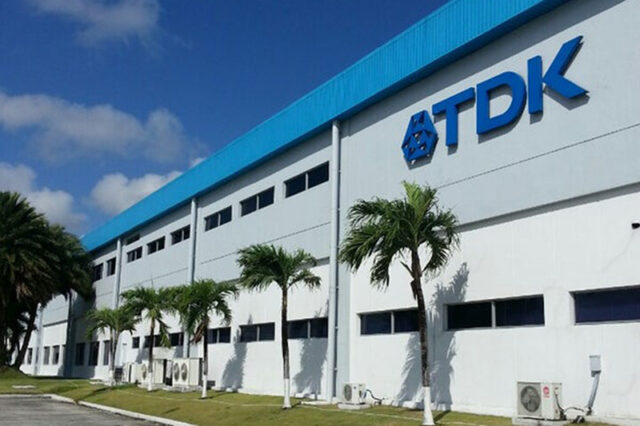
TDK

JAPANESE Ambassador Endo Kazuya said he is hoping fo the effective implementation of the  CREATE MORE Act to draw in more Japanese investment.

In a statement, the Japanese Embassy in Manila said Mr. Endo made the remarks during a Dec. 19 visit to Trade Secretary Cristina A. Roque.

The newly signed CREATE MORE, formally known as the Corporate Recovery and Tax Incentives for Enterprises to Maximize Opportunities for Reinvigorating the Economy Act,  lowers corporate taxes to 20% from 25%, raising the prospect of more Japanese investment, the  Embassy said.

The law also grants registered business enterprises (RBEs) a 100% deduction on power expenses within a taxable year, which the Embassy said will improve business conditions.

“Ambassador Endo noted that Japan is one of the major sources of investment for the Philippines,” it said. “He also expressed his hope that the effective implementation of the CREATE MORE Act, enacted in November, will contribute to an improved business environment.”

The government is expecting to forego about P5.9 billion in tax revenue in the next four years as a result of the new law, which it expects to be offset by an increase in foreign direct investment (FDI) and the taxes collected from the new businesses.

The Bangko Sentral ng Pilipinas has reported that FDI inflows fell to $368 million in September from $577 million a year earlier.

This was the lowest monthly FDI reading since the $314 million posted in April 2020, during the lockdown to curb the spread of the coronavirus disease 2019 (COVID-19).

Senator Juan Miguel F. Zubiri last year said that Japanese companies have threatened to leave the Philippines after encountering value-added tax refund issues after CREATE MORE’s precursor, the CREATE Law, came into force.

Under CREATE MORE, RBEs with capital stock of over P15 billion will be granted VAT zero-rating on local purchases, value-added tax exemptions on imports, and duty exemptions on imports of capital equipment, raw materials, spare parts and accessories. — John Victor D. Ordoñez

Imported rice labeling fools buyers into paying more, Agri dep’t says

A worker arranges sacks of rice. — PHILIPPINE STAR/WALTER BOLLOZOS

THE Department of Agriculture (DA) announced a crackdown on imported rice labeling, saying some retailers are employing deceptive practices to jack up prices.

“After conducting a series of market visits, we now have reason to believe that some retailers and traders are intentionally confusing Filipino consumers with branded imports to justify the high prices of rice,” Agriculture Secretary Francisco P. Tiu Laurel, Jr. said in a statement Thursday.

The DA said the labeling practices are a means of “inflating prices and exploiting consumers.”

Ordering the removal of brand names, the DA also banned the use of marketing terms like “premium” and “special” in the imported-rice trade, which it said were pretexts for charging more.

“Importing rice is not a right but a privilege. If traders are unwilling to follow our regulations, we will withhold permits for rice imports,” Mr. Laurel said.

The DA called a markup of P6 to P8 per kilo from the landed cost of imported rice a reasonable profit beneficial to all.

The DA is also considering other measures to address price volatility, including invoking a food security emergency under the Rice Tariffication Law to allow for the release of rice held in reserve by the National Food Authority.

Mr. Laurel is also considering allowing Food Terminal, Inc., among others, to import significant quantities of rice to provide competition for private importers and to study whether the provisions of the Consumer Price Act can be activated to deal with profiteering.

He also proposed enlisting the departments of Finance and Trade in auditing the financial records of rice traders and in assisting in monitoring rice prices, respectively.

According to the DA, prices of some rice brands have remained stubbornly high despite the reduction of the rice tariff to 15% from 35% in July.

Special imported commercial rice sells for between P54 and P64, while imported premium and well-milled rice fetches P52-P60 and P40-P56, respectively, the DA reported on Dec. 20. — Justine Irish D. Tabile

GEA-3 pricing pending for run-of-river hydro

THE Energy Regulatory Commission (ERC) said it has yet to determine the bid price for run-of-river hydro, an energy technology which will be offered during the third green energy auction (GEA-3) round next year.

In a commission meeting last week, the ERC said it deferred the release of the preliminary green energy auction reserve (GEAR) price for run-of-river hydro, citing the need for further consideration.

A GEAR price is the maximum price in pesos per kilowatt-hour the auction, and is determined by the ERC.

Run-of-river hydro is eligible for the government’s feed-in tariff (FIT) scheme.

GEA and FIT programs are both mechanisms designed to promote renewable energy. GEA uses competitive bidding to determine prices, whereas FIT offers fixed rates set by the government.

Both programs are designed to increase the share of renewable energy in the power generation mix.

“For ROR (run-of-river) hydro, we are clarifying a policy matter with the DoE (Department of Energy),” ERC Chairperson and Chief Executive Officer Monalisa C. Dimalanta said via Viber.

Ms. Dimalanta said at issue is the “parallel implementation” of the FIT and GEA program (GEAP) for ROR.

“We noted there is still unsubscribed capacity for FIT for this technology yet there is additional capacity allocated for GEAP,” she said. “This may confuse stakeholders and may cause one policy to conflict with the other.”

Ms. Dimalanta said that the commission is asking the DoE for a way forward. As soon as the DoE clarifies the matter, the ERC may discuss it in its first meeting for 2025, she said.

The ERC has adopted the pricing mechanism for non-FIT eligible technologies which include geothermal, impounding hydro, and pumped-storage hydro.

The ERC said it has resolved to adopt the revised draft price determination methodology, revised percentage weights, and revised parameters.

The DoE has said that the auction proper is scheduled for January, missing its target of conducting it within 2024.

It hopes to offer 4,475 megawatts (MW) of new renewable energy capacity.

“These projects will play a crucial role in meeting the country’s growing electricity demand while ensuring that future power generation is increasingly sustainable,” the DoE said.

The government held the first GEA in 2022 and attracted a total of 1,996.93 MW worth of renewables, while the second round was concluded last year, with 3,440.756 MW subscribed. — Sheldeen Joy Talavera

Big halal-certification push to position PHL to compete in $7-trillion market

FREEPIK

THE Department of Trade and Industry (DTI) said it plans to strengthen certification bodies for halal products next year to better position the Philippines to compete in the $7-trillion global market.

“Another industry that we’re pushing is halal. It’s something that is going to be a priority for next year. The global market for halal is now $7 trillion, so it is something that we can really push aggressively,” Trade Secretary Ma. Cristina A. Roque said at a briefing last week.

“All we need is to strengthen the certifying bodies for halal. We already have the products and the companies that have these products and are willing to go halal. So we just need to get certifying bodies that are accepted in the Middle East market,” she added.

“Certification is the key to exporting these products to the countries that want them,” she said.

She said the DTI has been inviting halal certifying bodies in the Middle East to establish offices in the Philippines.

“There are also halal trade shows to which we invite local and international buyers because there’s also a market for halal here in Mindanao,” she said.

She said that the DTI is in talks with exporters to include halal products in their offerings, citing the opportunity to break into new markets.

She said she will personally oversee the halal effort.

“Halal will be under the office of the Secretary. It is going to be part of special concerns because I want an aggressive approach and I want to be on top of pushing halal locally and for export,” she said.

She said that there are only 20 halal certifying bodies in the Philippines. — Justine Irish D. Tabile

BCDA warns against ‘illegal’ use of out-of-contract Capas landfill

METRO CLARK WASTE MANAGEMENT FACEBOOK PAGE

THE Bases Conversion and Development Authority (BCDA) on Thursday warned against the “illegal” continued use of the Kalangitan sanitary landfill in Capas, Tarlac.

BCDA said it received reports of continued operations at the 100-hectare landfill, even after the expiry of the 25-year contract between the landfill’s operator and a BCDA subsidiary.

“The BCDA remains firm that the contract for services between Metro Clark Waste Management Corp. (MCWMC) and Clark Development Corp. (CDC) expired on Oct. 5 and cannot be renewed or extended,” the BCDA said.

“Accordingly, the company’s business permit for the Kalangitan landfill site has also expired. With this, the CDC had issued a notice to cease and desist operations and demand to peacefully vacate against MCWMC,” it added.

According to the BCDA, the Regional Trial Court of Capas, Tarlac, denied MCWMC’s petition for a writ of preliminary injunction, with MCWMC seeking to compel CDC to issue a business permit.

It added that the BCDA and CDC are subject to a temporary restraining order issued by the Court of Appeals, which prohibited the agencies from directly or indirectly removing MCWMC from the landfill site.

“Considering CDC has not issued any authority to operate Kalangitan as a waste disposal facility, its continued use as a sanitary landfill would violate Republic Act 9003 or the Ecological Solid Waste Management Act of 2000; hence, its continued use is unauthorized and illegal,” the BCDA said.

The BCDA said local government units, other government agencies, and businesses “are strongly urged to explore other waste management facilities recognized by the Department of Environment and Natural Resources – Environmental Management Bureau for their solid waste management requirements.”

“The BCDA appeals for all stakeholders to uphold the rule of law and make way for peaceful cooperation to ensure the non-disruption of waste management efforts in Central Luzon, as well as neighboring cities and provinces,” it added. — Justine Irish D. Tabile

Grant expected by Jan. for Bangsamoro child learning

PHILSTAR FILE PHOTO

THE World Bank said a P2.75-million project to improving learning outcomes for out-of-school children (OOSC) in Bangsamoro is on track for grant disbursement next month.

The No Bangsamoro Child Left Behind in the Bangsamoro Autonomous Region in Muslim Mindanao project obtained $2.75 million in funding from the Japan Social Development Fund.

It sought to “improve learning outcomes of re-enrolled OOSC and retained at-risk children in pilot elementary schools in project-supported divisions.”

In a document uploaded to its website, the World Bank said the second implementation support mission was conducted between in October.

“The training on sub-grants proposal making and financial management for school representatives is currently ongoing and school grants are expected to be disbursed in January 2025,” it added.

The bank also rated the project “moderately satisfactory” in terms of meeting its development objective, with a similar rating for overall implementation progress.

Currently, $2.5 million has yet to be disbursed.

The project was approved in May 2023 and is set to close by June 30, 2026.

According to the loan document, the project aims to re-enroll 30% of OOSC by the end of the project , or 6,700 over three years, of which 60% are female.

It also seeks to retain 50% of at-risk children annually or 2,600 over three years. — Aubrey Rose A. Inosante

NCR retail price growth picks up in November

A supermarket is seen in Quezon City, March 4 2022. — PHILIPPINE STAR/MICHAEL VARCAS

RETAIL PRICE growth of general goods in the National Capital Region (NCR) accelerated in November, the Philippine Statistics Authority (PSA) said in a report.

Citing preliminary data, the PSA said price growth in Metro Manila as measured by the general retail price index (GRPI) was 1.4% year-on-year in November, against 1.3% in October.

The November reading slowed from 2.9% a year earlier.

The November indicator was the strongest price growth since the 1.9% in July and was level with the pace set in August.

Year to date, GRPI growth averaged 1.8%, significantly lower than the 4.6% growth in the same period in 2023.

Diwa C. Guinigundo, country analyst for the Philippines of GlobalSource Partners, noted general easing from the early October highs in global oil prices, as market participants pondered supply risk concerns, with the health of the global economy weakening oil demand and increasing inventory levels.

Mr. Guinigundo said that as a result, despite the uptick, the increase in prices was muted.

“Retail prices are closer to the experience of our consumers. But one thing we cannot deny is that retail price levels continue to be elevated, pushing people to buy less for every peso of their income,” he said via Viber.

Additionally, he said that while annual percentage changes in consumer or retail prices may look modest,the underlying price levels continue to be unaffordable for many consumers.

Headline inflation in November accelerated to 2.5% year on year from 2.3% in October, though price growth was significantly weaker than the 4.1% posted a year earlier.

Still, the inflation reading for the month settled within the central bank’s 2.2%-3% forecast for November.

The PSA attributed the acceleration in retail prices to the slower decline in the index for mineral fuels, lubricants, and related materials, which fell 3% in November from a 6.4 contraction a month earlier.

Meanwhile, the index of crude materials, inedible except fuels, picked up to 1.1% in November from 1% in October.

Growth in the heavily weighted food index was flat at 2%.

Other commodity groups that remained steady were beverages and tobacco (3.6%), manufactured goods classified chiefly by materials (1.3%), and miscellaneous manufactured articles (1.5%).

Mr. Guinigundo said the government must address the lack of infrastructure and improve supply conditions, while the central bank should focus on demand management.

According to the PSA, the GRPI is used to monitor the condition of retail trade. It is also used as a deflator in the National Accounts, particularly in the retail trade sector, and serves as a basis for forecasting. — Abigail Marie Pelea Yraola

Shares inch up on rate cut hopes, bargain hunting

PHILIPPINE STAR/KRIZ JOHN ROSALES

PHILIPPINE SHARES closed higher on the penultimate trading day of 2024 amid hopes for another interest cut to start 2025 and as investors picked up bargains.

The benchmark Philippine Stock Exchange index (PSEi) inched up by 0.06% or 4.11 points to close at 6,539.02 on Thursday, while the broader all shares index increased by 0.12% or 4.55 points to 3,731.78.

Philippine financial markets were closed on Dec. 24 and 25 for the Christmas holidays.

“The local market managed to close a little above the flat line on the back of last-minute bargain hunting. Hopes of an early 2025 rate cut by the Bangko Sentral ng Pilipinas (BSP) helped in lifting the market,” Philstocks Financial, Inc. Senior Research Analyst Japhet Louis O. Tantiangco said in a Viber message.

BSP Governor Eli M. Remolona, Jr. told Bloomberg last week that the central bank is open to delivering another rate cut at their first review next year. He said the BSP remains in an easing cycle and is “neither more dovish nor less dovish.”

“Adding to this are the strengthening of the local currency and the positive cues from Wall Street,” Mr. Tantiangco said.

On Thursday, the peso jumped by 48 centavos to close at a near three-week high of P57.97 per dollar.

Meanwhile, Asia shares rose slightly in holiday-thinned trade on Thursday, extending gains from earlier in the week with little news or data in the way to alter their direction of travel, Reuters reported.

MSCI’s broadest index of Asia-Pacific shares outside Japan ticked up 0.04% and was headed for a weekly rise of nearly 2%, taking a cue from its counterparts on Wall Street earlier in the week.

S&P 500 futures edged 0.02% higher, while Nasdaq futures advanced 0.13%.

“The local bourse edged higher as investors positioned themselves ahead of the final trading session of the year,” Regina Capital Development Corp. Head of Sales Luis A. Limlingan added in a Viber message.

Majority of sectoral indices closed higher on Thursday. Property climbed by 0.86% or 20.51 points to 2,388.62; financials went up by 0.4% or 8.82 points to 2,188.68; industrials rose by 0.08% or 7.32 points to 9,158.10; and mining and oil increased by 0.05% or 3.97 points to 7,530.26.

Meanwhile, services inched down by 0.43% or 9 points to 2,086.10 and holding firms retreated by 0.4% or 22.68 points to 5,611.25.

Value turnover shrank to P2.8 billion on Thursday with 445.79 million shares traded from the P4.2 billion with 713.21 million issues exchanged on Monday.

Market breadth was positive as advancers overwhelmed decliners, 122 versus 57, while 53 names closed unchanged.

Net foreign buying dropped to P73.098 million on Thursday from P255.38 million on Monday. — Revin Mikhael D. Ochave with Reuters

ADVERTISEMENT
ADVERTISEMENT