Home Blog Page 2205

Philippines pushes to expand bond market with $9 debt offer

THE PHILIPPINES is ramping up the sale of government securities for as low as P500 ($9) in a bid to broaden the investor base and help fund one of Asia’s fastest-growing economies.

The Bureau of the Treasury has tapped a major virtual asset company and the nation’s top e-wallet firm to mainstream bond investing.

“We only have less than half a percent of our country exposed to the bond market. The longer-term vision is to bring that maybe at least to as much as the banking penetration of 60%,” Nichel Gaba, founder and chief executive officer of Philippine Digital Asset Exchange, or PDAX, said in an interview on Thursday.

PDAX, which has over two million users, is providing the technology for the bond registry while its unit Bonds.ph is acting as dealer. Its platform already allows investors to buy Treasury bills for a minimum of P500.

The Treasury bureau has also enlisted fintech company GCash to sell government debt securities on its platform starting next year. A unit of Globe Telecom Inc., GCash has around 94 million users.

Bond sales to retail investors are a big source of financing for the Philippine government, which must raise P2.55 trillion ($43 billion) from foreign and local sources next year. The Treasury bureau offered P310 billion in debt securities in the current quarter.

Before allowing the sale of bonds in units of P500, the government offered debt securities in denominations of as low as P5,000.

Mr. Gaba said the bonds will be maintained in the Distributed Ledger Technology (DLT) Registry, a blockchain-based registry owned by the Bureau of the Treasury. The DLT Registry will run parallel with the National Registry of Scripless Securities or NRoSS.

Last year, the government sold tokenized bonds for the first time to institutional investors, with officials hoping at that time that they would be eventually offered to retail buyers.

“In terms of value, it’s hard to imagine that the mass retail segment will fund the Republic in the short term. But this is probably the most obvious way to start,” Mr. Gaba said. Bloomberg

Renowned theater director Bobby Garcia, 55

BOBBY GARCIA, a director and producer who made his mark on both Broadway and the Philippine theater scene, died on Wednesday, Dec. 18. He was 55.

Mr. Garcia’s passing was publicly announced by talk show host Boy Abunda on Wednesday evening during an episode of his show Fast Talk with Boy Abunda, through a statement from the family.

Kami po ay nakikiramay sa pamilya at sa mga mahal sa buhay ni Bobby Garcia. Bobby was one of those beautiful persons inside and out na nakilala ko po sa tanang buhay ko [We extend our condolences to the family and loved ones of Bobby Garcia. Bobby was one of the most beautiful people, inside and out, that I have ever known in my entire life],” Mr. Abunda, who described him as one of his best friends in the industry, said.

“You will be missed and wherever you are I know you’re in heaven. Bobby, I want you to know that you’re love,” he added.

Mr. Garcia’s family also expressed gratitude to friends for respecting their privacy during this difficult time.

Singer-actress Vina Morales, who described Mr. Garcia as one of her dear friends and the first person to introduce her to the world of theater, also extended her condolences.

“You gave me the opportunity to play Sherrie in Rock of Ages and made me fulfill a lifelong dream of performing on Broadway New York with Here Lies Love. It was a dream come true,” Ms. Morales said in a Facebook post.

“I am so blessed to have known you, not just as my director but as a dear friend. You were such a brilliant artist and an even more incredible person. I love you, Direk. Rest in peace,” she added.

Philstage, an alliance of 16 professional theater companies, also extended their condolences to Mr. Garcia’s family and friends, acknowledging his impact on the theater community.

“His last work, Request sa Radyo, made waves and performed to critical acclaim in the local theater scene. Rest in power Bobby. You will be missed by the theater community,” Philstage said in a Facebook post.

Mr. Garcia co-founded Atlantis Productions in 1999 and co-produced the critically acclaimed musical on Imelda Marcos, Here Lies Love, which received four Tony Award nominations. His most recent co-production, Request sa Radyo, starred actresses Dolly De Leon and Lea Salonga.

Mr. Garcia’s contributions to international theater included serving as Associate Director for Miss Saigon from 2000 to 2001, during which he oversaw casting for Cameron Mackintosh in the Philippines for the musical’s revival and UK tour.

Over his career, Mr. Garcia directed more than 50 plays and musicals across the US, Canada, and the Asian region, some of which received nominations for prestigious awards such as the Tony Awards, Drama League Awards, and Outer Critics Circle Awards.

He first came to the notice of Filipino theater goers in the 1990s when he directed the first local production of the Broadway musical Rent. He subsequently developed a reputation for his reliably excellent productions of English language musicals including How I Learned To Drive, Jesus Christ Superstar, Hedwig & The Angry Inch, Tick,tick…boom!, The Rocky Horror Show, Dreamgirls, Urinetown, Next to Normal, Kinky Boots, In the Heights, Waitress, and Sweeney Todd. He went beyond musicals, directing acclaimed straight theater including Angels in America.

Among his many accolades are three Aliw Awards for Direction. He was inducted into the Aliw Awards Hall of Fame.

He earned a Masters of Fine Arts degree in Directing for Theater from the University of British Columbia and a Bachelors Degree from Fordham University in New York. — Edg Adrian A. Eva

SM Prime plans P25-B fixed-rate bond offering

SM City J Mall in Mandaue City — BW FILE PHOTO

LISTED property developer SM Prime Holdings, Inc. is seeking approval from the Securities and Exchange Commission (SEC) to issue fixed-rate bonds to raise up to P25 billion.

Under its application submitted to the SEC, the oversubscription option of up to P5 billion consists of three-year Series Y Bonds due in 2028, six-year Series Z Bonds due in 2031, and 10-year Series AA Bonds due in 2035, SM Prime said in a disclosure on Thursday.

“This issuance is the second tranche out of the Company’s P100-billion Shelf Registration of Fixed-Rate Bonds approved by the SEC,” SM Prime said, citing a June 6 order by the SEC.

Last week, SM Prime said its board had approved a share buyback program worth between P5 billion and P10 billion as its stock is “currently undervalued.”

SM Prime previously reported an 11% rise in its third-quarter (Q3) net income to P11.8 billion.

Q3 consolidated revenue rose by 7% to P35.1 billion from P32.7 billion in 2023. Operating income improved by 6.4% to P16.6 billion from P15.6 billion last year.

For the first nine months, SM Prime grew its consolidated net income by 12% to P33.9 billion from P30.1 billion last year.

On Thursday, SM Prime Holdings shares closed at P24.90, down by 0.20 or 0.8%. — Beatriz Marie D. Cruz

How cities are reinventing the public-private partnership: Four lessons from around the globe

FREEPIK

Cities tackle a vast array of responsibilities — from building transit networks to running schools — and sometimes they can use a little help. That’s why local governments have long teamed up with businesses in so-called public-private partnerships. Historically, these arrangements have helped cities fund big infrastructure projects such as bridges and hospitals.

However, our analysis and research show an emerging trend with local governments engaged in private-sector collaborations — what we have come to describe as “community-centered, public-private partnerships,” or CP3s. Unlike traditional public-private partnerships, CP3s aren’t just about financial investments; they leverage relationships and trust. And they’re about more than just building infrastructure; they’re about building resilient and inclusive communities.

As the founding executive director of the Partnership for Inclusive Innovation, based out of the Georgia Institute of Technology, I’m fascinated with CP3s. And while not all CP3s are successful, when done right they offer local governments a powerful tool to navigate the complexities of modern urban life.

Together with international climate finance expert Andrea Fernández of the urban climate leadership group C40, we analyzed community-centered, public-private partnerships across the world and put together eight case studies. Together, they offer valuable insights into how cities can harness the power of CP3s.

4 KEYS TO SUCCESS

Although we looked at partnerships forged in different countries and contexts, we saw several elements emerge as critical to success over and over again.

1. Clear mission and vision: It’s essential to have a mission that resonates with everyone involved. Ruta N in Medellín, Colombia, for example, transformed the city into a hub of innovation, attracting 471 technology companies and creating 22,500 jobs.

This vision wasn’t static. It evolved in response to changing local dynamics, including leadership priorities and broader global trends. However, the core mission of entrepreneurship, investment, and innovation remained clear and was embraced by all key stakeholders, driving the partnership forward.

2. Diverse and engaged partners: Successful CP3s rely on the active involvement of a wide range of partners, each bringing their unique expertise and resources to the table. In the UK, for example, the Hull net-zero climate initiative featured a partnership that included more than 150 companies, many small and medium-size. This diversity of partners was crucial to the initiative’s success because they could leverage resources and share risks, enabling it to address complex challenges from multiple angles.

Similarly, Malaysia’s Think City engaged community-based organizations and vulnerable populations in its Penang climate adaptation program. This ensured that the partnership was inclusive and responsive to the needs of all citizens.

3. Robust governance structure: Effective governance is key to ensuring that CP3s operate smoothly and achieve their objectives. For example, in Melbourne, Australia, the City Professorial Chair in Urban Resilience and Innovation includes representatives from the city and a university. It has a formal communication structure where research informs policy and vice versa. It aims to harness the research to better inform and guide policymaking and in turn advance research by putting it into city practice.

In South Africa, the Gauteng City-Region Observatory bridges academia and government to drive urban development. Its governance structure, which includes a diverse board appointed by the province’s premier, ensures that the partnership remains focused and effective. It means that it goes beyond any one organization’s evolving agendas and leadership for longer-term community gains.

4. Commitment to innovation and growth: While we found that securing funding and in-kind support is important, demonstrating economic impact is crucial for the sustainability of CP3s.

Dublin’s Smart Docklands initiative is a prime example of this. By leveraging technology to address community needs, the partnership attracted over €3 million ($3.1 million) in investments and quadrupled the project’s funding.

The initiative not only boosted Dublin’s connectivity and tech infrastructure but also addressed public safety through solutions such as smart ring buoys. The buoys are life preservers with sensors to alert the city when its buoys are tampered with or stolen.

The case studies show that CP3s can be a globally applicable model for urban development, not merely a passing trend. By fostering collective action, sharing risks and leveraging multiple sources of funding, CP3s can be a powerful tool for cities navigating the challenges and opportunities of the 21st century.

THE CONVERSATION VIA REUTERS CONNECT


Debra Lam is the founding director of the Partnership for Inclusive Innovation, Enterprise Innovation Institute at the Georgia Institute of Technology.

World Toilet Day in Alitagtag

I have this long-standing invitation from Gay Santos, regional director of Water Org. for Southeast Asia, to visit her farm. An opportunity came last month when she invited me to the World Toilet Day (WTD) celebration and the groundbreaking ceremony for a blended finance partnership in Alitagtag, Batangas. What is World Toilet Day? WTD, an official United Nations Observance Day. is celebrated on Nov. 19 each year, inspiring action to tackle the global sanitation crises. The 2024 theme is “Sanitation for Peace.”

It was a significant day as it marked the beginning of a transformative journey for the Alitagtag community led by Mayor Ediberto Pongos, Vice Mayor Manuel Abrigo, Richard Ian Bautista and Tameses Garaan, among others, in partnership with Water.Org, Lifebank Foundation, and donor Cargill, to achieve 100% access to improved toilets. Actually, says Gay, “it is about more than just toilets but about dignity, safety, and opportunity.”

We all know how important water is. We can live without food for three weeks but can last no more than three days without water. In 2022, only 57% of global population or 4.6 billion people use a safety-managed sanitation service, while 43% or 3.5 billion people don’t. Of this number, over 1.5 billion people don’t have toilets, and some 419 million really have nothing and “just do it anywhere” resulting in poor sanitation. This is linked to the transmission of many diseases, (e.g., typhoid, intestinal worm infections, diarrhea, etc) and even affects stunting and the spread of antimicrobial resistance.

Secretary of Health Teodoro Herbosa, represented by Assistant Secretary Atty. Paolo Teston, said that over 12.4 million Filipinos still depend on unsafe water sources, while many lack access to basic sanitation facilities. Alarmingly, open defecation remains a widespread practice in many communities. There are many challenges, he said, but in 2022, the Philippines achieved a 69% increase in households with basic sanitation facilities, with 83.6% of families now having access to these services. However, only 32.3% of barangays have achieved Zero Open Defecation certification, which amplifies the need for sustained and innovative action. In 2023, the Philippines recorded almost 7,000 food and waterborne diseases, resulting in more than 40 deaths. Thus, he said the Department of Health places high priority on water, sanitation and hygiene (WASH) strategies such as:

a) updating standards for ensuring water quality — improving drinking water programs and promoting zero open defecation;

b) strengthening monitoring and response to respond quickly to waterborne disease outbreaks; and

c) increasing public awareness by conducting campaigns about sustainable water and sanitation practices.

Gay said something as simple as having a toilet can change lives as it can prevent diseases, protect women and girls, and give families the peace of mind that comes with having safe and proper sanitation. The program also spotlights a critical issue: gender equality in sanitation. Women and girls suffer the most when toilets are inaccessible and unsafe, facing daily risks to their health, privacy and safety. This is unacceptable. Gay stressed that “by ensuring access to proper sanitation, we are not just addressing a basic need, but creating a safe, fair world for women and girls to live, learn and thrive.”

Water Org., founded by Gary White and Matt Damon (yes, the actor!), is an international nonprofit organization committed to help and ensure that people have access to safe water and sanitation. This is done by partnering with local governments, national agencies, financial institutions, and communities, among others, and it has been creating impact in 11 countries across the globe.

Congratulations to Water Org. led by Gay and her team Rachel Pestano, Anne Talosig, Arvin Longcop, Josie Mendoza, Edgar Morbos, and Myrna Peñas, among others, for spearheading this initiative with the the LGU of Alitagtag to make water access affordable and sustainable for families in need.

It was a day well spent to keep all of us safe and free from the spread of diseases. Hopefully, we can replicate this all over the Philippines.

P.S. I do hope we can efficiently collect rainwater during rainy days that just goes to waste and be able to store and utilize so we have enough during the dry season.

The views expressed herein are her own and do not necessarily reflect the opinion of her office as well as FINEX.


Flor G. Tarriela was former PNB chairman and now serves as board advisor. She is Citibank’s first Filipina vice-president and a former undersecretary of Finance. She is director of Nickel Asia Corp., LTG, Inc. and FINEX. An environmentalist, she founded Flor’s Garden in Antipolo.


Entertainment News (12/20/24)


Historical film Jose Rizal set to premiere on Netflix

THE digitally restored and remastered version of the 1998 historical film Jose Rizal will be available for streaming on Netflix Philippines starting Dec. 30, Rizal Day. Produced by GMA Pictures and directed by Marilou Diaz-Abaya, the film, written by Ricky Lee, Jun Lana, and Peter Ong Lim, chronicles the life of the Philippine national hero, with Cesar Montano portraying the title role. Jose Rizal won 17 out of 18 awards at the 1998 Metro Manila Film Festival, including Best Picture, Best Actor, and Best Director. The restoration, completed by Central Digital Lab and GMA Post Production, is part of GMA Pictures’ tribute to Philippine cinema. The remastered version premiered at the 2024 Cinemalaya Independent Film Festival, bringing the cinematic masterpiece to a new audience.


Season 3 of The White Lotus on Max, HBO in February

THE third season of HBO’s Emmy-winning series The White Lotus will premiere on Max and HBO on Monday, Feb. 17. Set at an exclusive Thai resort, the eight-episode season follows the intertwined lives of guests and employees over the course of a week. The new season stars Leslie Bibb, Carrie Coon, Walton Goggins, Sarah Catherine Hook, Jason Isaacs, Lalisa Manobal, Michelle Monaghan, and more. Created, written, and directed by Mike White, The White Lotus has earned critical acclaim, with the first season winning 10 Emmy Awards and the second season receiving five wins. Seasons 1 and 2 are available to stream on Max, with subscriptions starting at P149/month.


2-month free access to Max for new PLDT Home subscribers

FROM Dec. 10 to Feb. 9, new customers to PLDT Home Fiber Unli All Plan 1799 will receive two months of free access to the Max Standard plan, giving them access to a wide range of content from HBO, Warner Bros., Discovery, DC Universe, Cartoon Network, and more. The new subscribers will be able to stream the latest blockbuster movies like Barbie, Aquaman and The Lost Kingdom, Dune: Part Two, and Godzilla x Kong: The New Empire, along with popular series such as Game of Thrones, The White Lotus, The Last of Us, and Friends. Max also features real-life stories from brands like Discovery, TLC, and Food Network, as well as family-friendly content from Cartoon Network. Local originals, including On The Job, are also available for streaming.


Regina Song’s Fangirl: The Tour coming to PHL in January

REGINA SONG, the Singapore-based singer-songwriter, is bringing her concert, Fangirl: The Tour, to the Philippines next month, with shows in key Southeast Asian cities. Her Manila performances will take place on Jan. 24 at Jess&Pat’s in Quezon City for an acoustic solo set, followed by a full-band concert at Sari-Sari Cocktails in Makati City on Jan. 25, featuring guest acts like dwta, syd hartha, Muri, and Clara Benin. The tour follows the success of Ms. Song’s breakout single, “the cutest pair,” which gained traction on TikTok and charted across Southeast Asia. Her debut album, fangirl, was released in June. Tickets for the Manila shows are available at bit.ly/reginasongmanila.

Filinvest REIT eyes 900,000-sq.m. boost to portfolio

FILINVESTREIT.COM

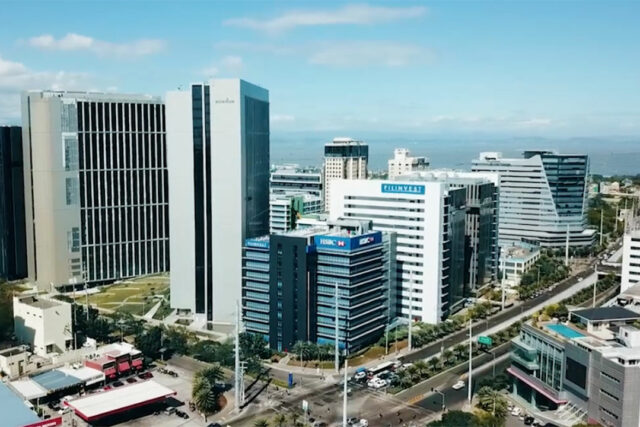
LISTED Filinvest REIT Corp. (FILRT) announced that around 900,000 square meters (sq.m.) of assets from its sponsor, Filinvest Land, Inc. (FLI), and the broader Filinvest group could potentially be added to its portfolio.

“These are Grade A buildings, retail assets under its Filinvest malls and townships portfolio, and hotels under the Crimson and Quest brands already operating in key cities, plus more expected in key tourist destinations,” FILRT said in a stock exchange disclosure on Thursday.

FILRT also plans to acquire assets outside of the Filinvest group.

In addition to potential asset infusions, FILRT plans to reduce the gross leasable area (GLA) contribution of its office sector portfolio to 51% by 2026.

Currently, the company’s office portfolio contributes about 90% of its total GLA.

By 2026, FILRT aims for its retail and hospitality sectors to account for 33% and 16% of its total portfolio, respectively.

FILRT, the real estate investment trust of FLI, has a portfolio comprising 17 buildings and a lot in Boracay, with a total GLA of 330,448 sq.m.

The company previously announced plans to increase the occupancy rate of its office portfolio to 95% by 2026.

As of the end of September, FILRT’s office portfolio had an 83% occupancy rate.

Meanwhile, FLI disclosed in a separate regulatory filing that it had submitted a registration statement to the Securities and Exchange Commission (SEC) for a bond issuance worth up to P12 billion.

The offer will consist of P9 billion worth of fixed-rate peso-denominated retail bonds with an oversubscription option of up to P3 billion, comprising three subseries: five-year bonds due 2030, seven-year bonds due 2032, and ten-year bonds due 2035.

The planned issuance, which will be listed with the Philippine Dealing & Exchange Corp., is the second tranche of FLI’s P35 billion shelf-registered peso-denominated bonds.

FLI has engaged BDO Capital & Investment Corp., BPI Capital Corp., Chinabank Capital Corp., East West Banking Corp., First Metro Investment Corp., Land Bank of the Philippines, RCBC Capital Corp., and Security Bank Capital Investment Corp. to manage the issuance.

On Thursday, FILRT stocks fell by 1.05%, or three centavos, to P2.84 per share, while FLI shares remained unchanged at 67 centavos apiece. — Revin Mikhael D. Ochave

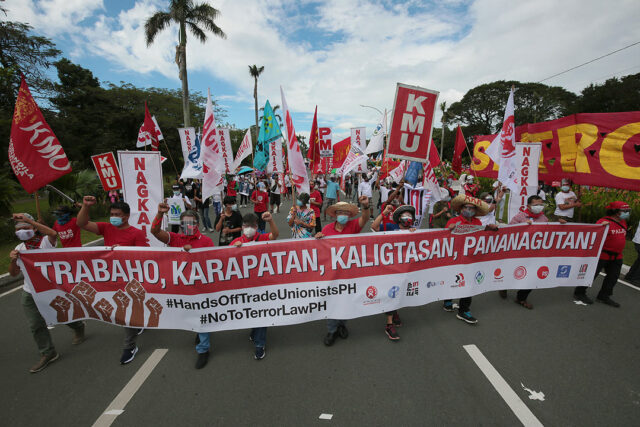
Unions cite need to boost freedom of association

LABOR groups during a Nov. 30, 2020 rally at the UP Diliman campus — PHILIPPINE STAR/ MICHAEL VARCAS

By Chloe Mari A. Hufana, Reporter

IMPROVED collective bargaining rights and robust legal protections for union members topped labor-sector wishlists heading into 2025.

“There is (a) rising number of notices of strike as unions face deadlocks in collective bargaining. This (is) driven by the cost-of-living crisis as unions demand higher wages and benefits but face intransigence by companies,” Benjamin B. Velasco, assistant professor at the University of the Philippines Diliman School of Labor and Industrial Relations, told BusinessWorld via Messenger chat.

He added in some cases, the Department of Labor and Employment (DoLE) has imposed assumption of jurisdiction orders, preventing unions from striking.

“This, however, is a violation of DoLE’s own ordinance on (the assumption of jurisdiction,) which stipulates that these can only be issued upon request by both of the parties or only after calling for a conference,” he added.

“In the face of rising worker discontent, policymakers should look at how the dispute resolution mechanism does not suppress rights but enables social dialogue and negotiations.”

Trade Union Congress of the Philippines Legislative Officer Carlos Miguel S. Oñate also called on the legislature to certify as urgent the “long-pending” freedom of association reforms recommended by the International Labour Organization (ILO), in the form of the proposed Union Formation Act, which will make it easier to organize unions.

Speaking via Viber, he also called for the passage of ILO-backed reforms, including an Assumption of Jurisdiction Act to restrict the Labor Secretary’s authority to avert industrial action in key industries, a Right to Strike Act to decriminalize illegal strikes and extend this right to government workers, and a Public Service Labor Relations Bill to enhance government workers’ freedom of association and organizing rights.

The government this year issued new omnibus guidelines on the freedom of association as a result of the recommendation of an ILO high-level mission.

Mr. Velasco noted that assumption of jurisdiction has been among the longest-running complaints of unions here to the ILO.

“Can we do better this time and ensure that new rules are implemented and not disrespected?” he said.

According to Section 15 of the DoLE Department Order No. 40-H-13, Oct. 21, 2013, the Secretary of Labor can assume jurisdiction when a labor dispute causes or is likely to cause a strike or lockout in an industry important to national interest.

Federation of Free Workers President Jose G. Matula also called for stronger protections for organizing unions and collective bargaining.

“The labor movement in 2025 will face challenges like inflation and inequality but also opportunities to demand reforms. A united labor front is key to pushing for genuine progress,” he told BusinessWorld via Viber.

The Philippines’ score on the Labor Rights Index worsened this year, largely due to an environment that restricts unions, strikes, and collective bargaining deals.

The Amsterdam-based WageIndicator Foundation and the Center for Labor Research in October put the Philippine score at 68 out of 100 this year, down 2.5 points from 2022.

A score of 60.5 to 70 signifies limited access to decent work.

The Philippine score was below the global average of 74.

The biennial report showed that the Philippines maintained its 2022 scores in nine of the 10 indicators in the study, except for Freedom of Association, in which it scored zero out of 100.

Labor leaders have also told BusinessWorld of the need for an across-the-board wage increase and the end of contractualization as among their priorities due to the rising cost of living.

AI robots are coming, and they’ll be made in Asia

FREEPIK

OVER the past year, I’ve noticed an overwhelming theme emerge when Asian tech leaders look at what comes next for artificial intelligence (AI). There has been a marked desire to move beyond chatbots and software, and into the physical realm.

We’ll start to see much more AI-enabled hardware and robotics — and it will be coming from Asia.

The experience I’ve had tuning in to many executive chats and tech conferences could best be summed by Nvidia Corp. Chief Executive Officer Jensen Huang’s proclamation in Taipei in June. “The next wave of AI is physical AI,” he said. “The era of robotics has arrived.”

Historically, a lot of coverage of robot-human interactions in Asia have been filled with futuristic techno-orientalist tropes that often fail to reflect the reality. But there are factors that make the region uniquely primed to propel this next leap forward in integrating AI into the physical world. While the US is the leader in AI advances — and the software and internet revolution emanated from Silicon Valley — Asian tech giants have traditionally been very good at the hardware side of things.

Citigroup, Inc. projects that there would be 1.3 billion AI robots globally by 2035 and 4 billion by 2050, doing everything from household chores to delivering parcels. A lot of the progress will come from China, which accounts for 78% of all robotics patents over the last two decades, the Citi analysts said. Japan and South Korea make up 7% and 5%, respectively, while the US contributes just 3%. This dominance in Asian robotics remained just as strong when the sheer quantity of patents was weighed through a quality-assessment measure.

Moreover, robotics is an extremely expensive and difficult process. But advancing in this sector has emerged as part of China’s top-down priorities for its tech ecosystem, meaning government subsidies in research and development, and other support give it an edge.

There are other societal factors that suggest an embrace of AI robotics makes sense. Researchers have found Japan is poised to be a global leader in deploying technologies that adopt automation, as it confronts an aging population and shrinking workforce. AI-driven software coupled with hardware are being developed and implemented across all types of work, including white and blue collar, agriculture and services. While many US industries have been gripped by fears of robots taking away livelihoods, in Asia, there has been a tendency to welcome automation due to a people shortage.

This is already playing out, although on a small scale, in several creative ways. A Shenzhen startup is using an AI robot to help cook meals. A tool unveiled by Japan’s Fujitsu Ltd. in October teaches Noh, a performance art dating back to the 14th century that is under pressure as there are fewer people who know the techniques to carry on the tradition. Not to mention the countless industrial robots.

While the region may currently be behind the US when it comes to AI now, Asian tech firms have shown great success in finding practical, market applications for technology developed elsewhere. Japanese tech entrepreneurs, especially, have been very good at this. Sony Group Corp. perfected the consumer radio after taking transistor technology invented in the US. (Sony also unveiled the first consumer robot to the mass market in 1999: the beloved Aibo dog.)

There’s been a tendency to overhype the role and value of robots in Asian societies, especially in Western reporting, when the reality is much more nuanced. I’ve yet to meet a real person in Japan who ties Shinto animism beliefs into the embrace of robots. And mounting research suggests that eldercare robotic experiments have not been worth the cost and end up causing more work for caregivers (and that perhaps better immigration policies to address labor crunches would be a more worthwhile solution). Several high-profile robotic ventures launched in recent years have been curtailed.

But AI could serve as a catalyst, especially as investors and company leaders increasingly search for practical and real-world applications for the technology that go beyond just engaging chatbots. Softbank Group Corp. Founder Masayoshi Son said in Tokyo last month that he is “passionate about AI robotics,” stating that like his favorite cartoon, Astro Boy, “you can’t just have the muscle, you have to have intelligence.”

I remain skeptical that we will see the rise of AI robots in the new year, but I have no doubt they’re coming, and that they will likely be coming from Asia.

BLOOMBERG OPINION

BAP inks partnerships with administrators of its Treasury Certification Program

THE BANKERS Association of the Philippines (BAP) has announced the two administrators of its Treasury Certification Program (TCP) for the coming year.

The BAP renewed its partnership with the Ateneo Graduate School of Business Center for Continuing Education through the Ateneo-BAP Institute of Banking (ABIB) for the TCP, it said in a statement on Thursday.

It also inked a new partnership with the Asian Institute of Management (AIM)-School of Executive Education and Lifelong Learning (SEELL).

“The BAP initiative to enhance and revamp the TCP aims to upskill and reskill bankers and develop a new generation of highly analytical, technical, and ethical financial market professionals,” BAP Open Market Committee (OMC) Chairman Paul Raymond A. Favila said.

“The objective of the program redesign is to elevate the TCP to global best practices and international standards while ensuring the quality, professionalism, and integrity of treasury professionals in the interbank market,” he added.

Starting next year, bank treasury personnel may obtain their BAP Certified Treasury Professional (CTP) licenses from ABIB or AIM-SEELL.

Both institutions will be offering a refreshed and updated version of the BAP TCP.

“Successful passers of the BAP TCP are accorded with a CTP certification by the BAP,” it said.

“A special team of banking industry experts worked closely with the BAP OMC to update the TCP curriculum that will enhance the baseline knowledge and developmental needs of financial markets and bank treasury professionals,” BAP OMC TCP and Treasury Education Subcommittee Chairman Felipe Martin F. Timbol said.

The CTP is a license that authorizes a dealer to trade with their counterpart traders in the interbank market. It is a BAP-registered trademark with the Intellectual Property Office of the Philippines. — A.M.C. Sy

Brazilian judge orders Adele song removed over plagiarism claim

Adele’s latest album, 30, was the biggest selling album of 2021

RIO DE JANEIRO — A judge in Rio de Janeiro has ordered the global removal of a 2015 song by British singer Adele due to a plagiarism claim by a Brazilian musician, which Universal Music is fighting on appeal.

The ruling, made public on Monday, came in a case filed this year by Toninho Geraes, whose compositions were made famous by some of Brazil’s most acclaimed samba singers.

Mr. Geraes accused Adele of copying his song “Mulheres,” a national hit since the 1990s. His lawyers uploaded to YouTube a comparison of that song and Adele’s “Million Years Ago.”

“The ruling shows that the Brazilian justice system is strong and that injuries to Brazilian artists won’t be ignored,” said Fredimio Biasotto Trotta, a lawyer for Mr. Geraes.

The decision orders Sony Music Entertainment and Universal Music to immediately cease “using, reproducing, editing, distributing, or commercializing” the song by any means on streaming or sharing platforms, without Mr. Geraes’ consent. It set a fine of 50,000 reais ($8,080.94) if the companies fail to comply with the order.

The Berne Convention, an international treaty, orders other signatory countries, including the US, to comply with legal decisions regarding copyright, Mr. Trotta said.

Mr. Geraes’ lawyers are now notifying streaming services, such as Spotify and Deezer, to withdraw the song in Brazil and globally. On Wednesday morning, the song was still widely available.

Universal appealed the decision on Tuesday, arguing there was no plagiarism, only an “accidental melodic similarity” due to the use of “musical clichés.”

Both Adele and Mr. Geraes have contracts with Universal, but the Brazilian musician has been trying to terminate his contract with the company due to his plagiarism claim, his lawyer said.

“I felt very disrespected,” Mr. Geraes told Reuters. He is asking the courts for compensation of more than $150,000.

Lawyers representing Universal Music declined to comment, and Sony Music did not immediately reply to a request for comment.

Mr. Geraes learned of the similarities between the two songs after a friend, who is also a composer, heard Adele’s “Million Years Ago” at a party in 2021. — Reuters

Figaro Coffee stockholders OK corporate name change

FIGARO.PH

FIGARO COFFEE Group, Inc. (FCG) has secured stockholders’ approval for its planned corporate name change as part of expanding the company’s brand identity.

The stockholders greenlit the company’s plan to change its name to Figaro Culinary Group, Inc. during the annual stockholders’ meeting on Dec. 18, FCG said in a regulatory filing on Thursday.

There will be no change in the company’s stock symbol. The corporate name change was approved by the FCG board on Oct. 10.

“The proposed new name will outline the company’s commitment to quality and innovation as it expands its offerings to include a wide range of culinary products and experiences,” FCG said.

“The board has determined that it is in the best interest of the company to change its corporate name to better reflect its strategic vision and broaden its brand identity,” it added.

FCG saw a 17% increase in its net income for the first quarter of the fiscal year ending June to P103.49 million last year, led by higher volume from its new stores.

Net revenue rose by 6% to P1.39 billion, while system-wide sales rose by 4.2% to P1.49 billion, led by the opening of 11 new stores.

As of the end of September, FCG has 214 stores within its network. Its brands include Angel’s Pizza, Figaro Coffee, Tien Ma’s, Café Portofino, and Koobideh Kebabs.

FCG shares rose by 1.18%, or one centavo, to 86 centavos apiece on Thursday. — Revin Mikhael D. Ochave