Home Blog Page 2116

Maynilad says 2025 capex may reach over P30 billion

MAYNILADWATER.COM

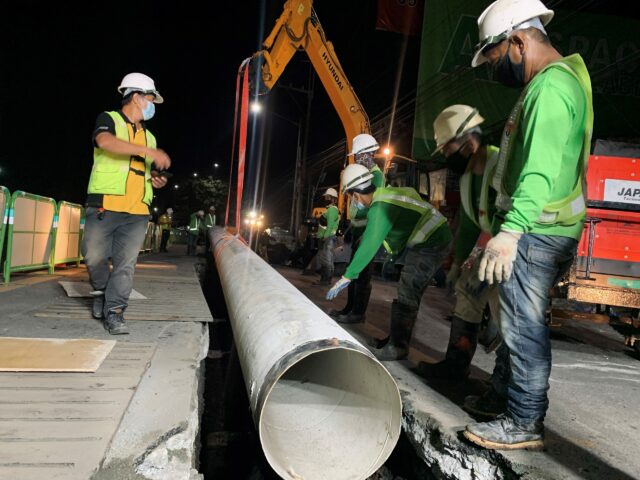
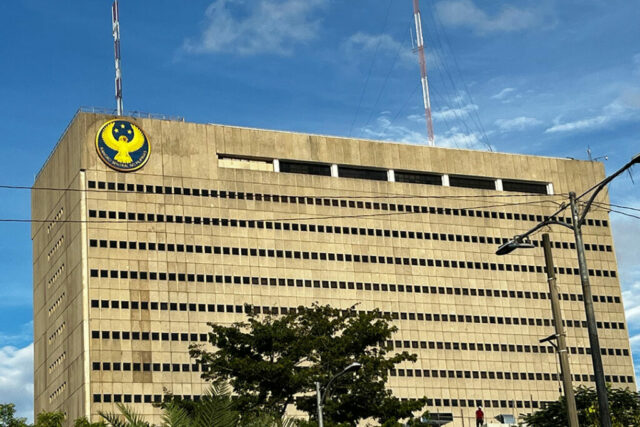
WEST ZONE water concessionaire Maynilad Water Services, Inc. said its capital expenditure (capex) budget for 2025 could be P30 billion or higher as the company sees a better financial year.

“For this year, we’re looking at anywhere between P30 billion and above P30 billion (in capex),” Maynilad President and Chief Executive Officer Ramoncito S. Fernandez told reporters last week.

Mr. Fernandez said the budget will be allocated to water and wastewater projects, non-revenue water management programs and ongoing plant constructions.

Non-revenue water refers to water that is not billed and is lost through leaks or illegal connections.

Last year, Maynilad earmarked P31 billion in capex to fund its water and wastewater developments.

Maynilad is expected to have a better financial performance this year, according to Mr. Fernandez.

“The economy is still growing and definitely demand for water will still continue to grow. Water availability has significantly improved in the past 24 months. We’re looking forward to a much better year,” he said.

“Plus, all of our programs and projects have already started to yield a positive impact on our operations,” he added.

Maynilad Chairman Manuel V. Pangilinan said last week that the water provider was in talks with banks for its initial public offering (IPO). Maynilad’s legislative franchise requires it to list on the stock exchange by January 2027.

In November, Mr. Fernandez said that Maynilad would file its IPO application by the first quarter of 2025.

He added that the water provider was targeting a listing date of either April or July.

Maynilad serves Manila, except portions of San Andres and Sta. Ana. It also operates in Quezon City, Makati, Caloocan, Pasay, Parañaque, Las Piñas, Muntinlupa, Valenzuela, Navotas, and Malabon.

It also supplies the cities of Cavite, Bacoor, and Imus, and the towns of Kawit, Noveleta, and Rosario, all in Cavite province.

Metro Pacific Investments Corp., which has a majority stake in Maynilad, is one of three Philippine units of Hong Kong-based First Pacific Co. Ltd., the others being Philex Mining Corp. and PLDT Inc.

Hastings Holdings, Inc., a unit of PLDT Beneficial Trust Fund subsidiary MediaQuest Holdings, Inc., has an interest in BusinessWorld through the Philippine Star Group, which it controls. — Revin Mikhael D. Ochave

Rates of Treasury bills, bonds may end mixed

BW FILE PHOTO

RATES of the Treasury bills (T-bills) and Treasury bonds (T-bonds) to be auctioned off this week may be mixed after the Bangko Sentral ng Pilipinas (BSP) chief said they have room to further ease their policy stance.

The Bureau of the Treasury (BTr) will auction off P22 billion in T-bills on Monday, or P7 billion each in 91- and 182-day papers and P8 billion in 364-day papers.

On Tuesday, the government will offer P30 billion in reissued 10-year T-bonds with a remaining life of nine years and 14 days.

T-bill rate could track the mixed movements in benchmark short-term papers at the secondary market on expectations of a BSP cut next month, Rizal Commercial Banking Corp. Chief Economist Michael L. Ricafort said in a Viber message.

At the secondary market, yields on the 91- and 182-day T-bills went down by 25.38 basis points (bps) and 19.34 bps week on week to end at 5.4973% and 5.6265%, respectively, based on PHP Bloomberg Valuation Service Reference Rates data as of Jan. 17 published on the Philippine Dealing System’s website.

Meanwhile, the 364-day T-bill saw its rate rise by 3.92 bps to 5.8954%.

BSP Governor Eli M. Remolona, Jr. this month said the Philippine central bank still has room to continue cutting interest rates as inflation is well within its annual goal, adding that current benchmark borrowing costs remain “restrictive.”

The Monetary Board has slashed benchmark borrowing costs by a total of 75 bps since it began its easing cycle in August, bringing its policy rate to 5.75%.

Mr. Remolona previously said that while the BSP remains in an easing cycle, 100 bps worth of cuts this year may be “too much” amid inflation concerns. He added that they will continue to bring down benchmark interest rates in “baby steps.”

The Monetary Board will hold its first rate-setting meeting for this year on Feb. 20.

Meanwhile, the reissued 10-year bonds to be auctioned off on Tuesday could climb to mirror the week-on-week increase in the tenor’s yield at the secondary market amid high global crude oil prices recently and cautiousness ahead of the inauguration of US President-elect Donald J. Trump, Mr. Ricafort said.

A trader said that the bonds could fetch rates ranging from 6.3% to 6.4%, with demand possibly reaching around P45 billion.

“The government securities market was very quiet [on Friday] amid a lack of catalysts. Players were noticeably cautious, and this will likely be the case [this] week,” the trader said in an e-mail.

At the secondary market, the 10-year bond went up by 18.48 bps week on week to end at 6.3333% on Friday.

Last week, the BTr raised P27.6 billion from the T-bills it auctioned off, higher than the P22-billion plan, as total bids reached P93.776 billion, more than four times as much as the amount on offer. This was also higher than the P70.975 billion in tenders seen on Jan. 7.

Broken down, the Treasury borrowed P9.8 billion from the 91-day T-bills, higher than the programmed P7 billion, as tenders for the tenor reached P37.863 billion. The three-month paper was quoted at an average rate of 5.588%, dropping by 19.4 bps from the previous auction, with the BTr only accepting bids with this yield.

The government likewise made a P9.8-billion award of the 182-day securities, above the P7-billion program, as bids reached P31.375 billion. The average rate of the six-month T-bill stood at 5.638%, falling by 27.3 bps, with the BTr only accepting tenders with this rate.

Lastly, the Treasury raised P8 billion as planned via the 364-day debt papers as demand for the tenor totaled P24.538 billion. The average rate of the one-year debt decreased by 4 bps to 5.891%, with bids accepted carrying rates of 5.85% to 5.9%.

Meanwhile, the reissued 10-year bonds to be auctioned off on Tuesday were last offered on Dec. 10, where the government raised just P15 billion as planned at an average rate of 5.89%, lower than the 6.25% coupon.

The Treasury plans to raise P213 billion from the domestic market this month, or P88 billion via T-bills and P125 billion through T-bonds. — Aaron Michael C. Sy

Future shock

PHOTO BY KAP MACEDA AGUILA

What does tomorrow have in store for an industry in rapid flux?

SO HERE we are, midway through the decade of the 2020s. It started turbulently with a pandemic, recovered in 2022 and 2023, and is now back to business as usual.

Almost, that is. Geo-political events like the Ukraine-Russia war, the conflict in Gaza, and the ouster of President Bashar al-Assad in Syria have gotten in the way of sure-footed global economic growth. The election of Donald Trump as the new President of the United States has also sent the world spinning in the face of potentially protectionist trade policies.

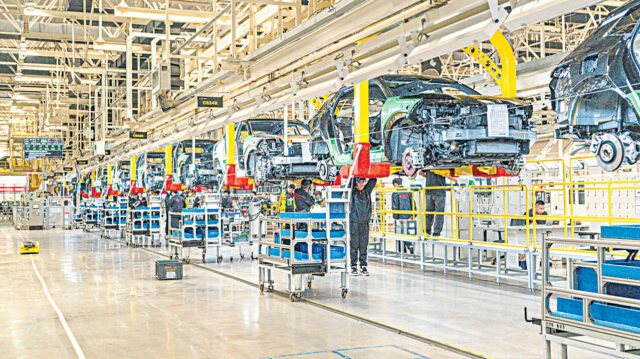
Tectonic shifts are also happening in the automotive field. The biggest, I believe, is the recently announced potential merger of global Honda and Nissan, with Mitsubishi waiting on the sidelines. This is envisioned to create a powerhouse company with combined sales of over eight million units, third only to Toyota and Volkswagen. Opinion is split about the strategic value of the planned merger, but one thing is clear: Nissan is in really dire straits. How the second largest automaker in Japan ended up in this situation will surely be fodder for many case studies and industry analysts for a long time to come.

Industry observers are already contending that the Honda-Nissan tie-up portends other major alliances or mergers. It would not be a surprise, actually. The stakes in this generational shift in mobility, automotive manufacturing and distribution are extremely high — and expensive. Research and development (R&D) for future technologies in the Connected, Autonomous, Shared and Electric (CASE) field needs very deep pockets. First, transformative technology costs a lot more than evolutionary ones. It’s a build-from-zero gambit that includes creating an entire supply chain and ecosystem, not just the technology. Second, the gestation period for R&D is long. That means payback will take many years and valuable capital will be tied up in an era where technology is very rapidly changing.

China is arguably ahead of the curve in the global race to electrified and autonomous mobility. A research article by Yuan Jia-Zheng and Carlo Braso Broggi in Business History chronicles domestic auto production in China as having only started in earnest in the mid-1980s to mid-1990s. In 2009, they report, the country became the largest automotive producer in the world, and in 2020, it accounted for a third of global auto production. As it grew its industry, the Chinese government bet huge on battery electric vehicles (BEV) or what it calls new energy vehicles (NEV). This allowed the state to focus its resources on building the requisite ecosystem to support electrified mobility.

Yuan and Broggi assert that China used “inward internationalization” to grow its capabilities. The authors explain that this may have included “foreign transactions, joint ventures or other activities that occur when firms lack capacity to invest abroad.”

They continued, “Inward internationalization is not so much driven by market mechanisms as by the necessity of acquiring technological skills and foreign market knowledge.” Global automakers had to play by China’s rules because they needed to be represented in the world’s largest auto market. Today, Chinese automakers have developed their homegrown ability to build cars as well as their savvy for international investment. This, in my mind, is what is driving the wave of exports, new Chinese factories and distribution partnerships that we are presently witnessing — in the Philippines and in many countries across the globe.

BYD is taking the fight to Tesla in terms of sales of electric vehicles. In fact, Statista recently reported that BYD already beat Tesla to become the world’s largest EV manufacturer, albeit by a nose. BYD reported 1,777,965 units produced in 2024 versus Tesla’s 1,774,442 units. In terms of sales, BYD reportedly sold 1.765 million BEVs and an additional 2.485 million plug-in hybrid electric vehicles (PHEVs) for a total of 4.3 millions units sold globally. This represents 41% growth versus 2023. China is teeming with car brands and distribution channels. It is not unlikely that a shakedown and consolidation might take place.

For example — even if it seems like a minor blip on the radar — it was announced last November 2024 that Geely would merge its Lynk & Co and Zeekr brands. Nikkei Asia reported that in a conference call, Gui Shengyue, a senior executive at Geely, said that if the two brands did not merge, it would lead to competition between them and result in a redundant investment, which would negatively impact Geely Auto, their major shareholder. “The integration is imperative as competition in the domestic market is heating up. We need to enhance our competitiveness by (increasing) scale,” Nikkei Asia quoted Gui as saying. Could this be a harbinger of what lies in the wings?

In the Philippines, Chinese automakers have entered in force, introducing a slew of many different brands and models. By varying counts, there are supposedly between 20 to 30 such brands. Adding to the mayhem, the Chinese OEs have tied up with different local partners, with some taking over the distribution in short time. Dealer networks have also been established by each brand. If mergers and alliances among the Chinese brands happen, the pregnant question is how the surviving brand will support the cars on the road of the acquired brand. Also, how will the distributor organizations and dealer networks be integrated given the inevitable overlaps in operations? Case in point are the Lynk & Co and Zeekr brands. How will this merger unfold in the Philippines where Lynk & Co is being distributed by the United Asia Automotive Group, Inc (UAAGI) and Zeekr is handled by the Autohub Group? I am certain the parent company of both brands — Geely Auto — has a plan in mind. Presumably, the same question can be asked of the planned Honda-Nissan (and Mitsubishi) merger. We will have to wait and see.

There is much going on in the auto industry and, to be sure, much more is waiting to unfold. The generational transition in mobility will entail a number of upheavals but, ultimately, this will take us to better days ahead.

Semirara Mining and Power sets P6.9-B capex for 2025

SEMIRARAMINING.COM

SEMIRARA Mining and Power Corp. (SMPC) expects its capital expenditure (capex) budget for this year to reach P6.9 billion, with a significant portion going to its coal business.

Around P5.8 billion is allocated to the coal segment for “refleeting initiatives and additional acquisition of mining and support equipment,” the company said.

SMPC’s subsidiary SEM-Calaca Power Corp. accounted for P0.7 billion, while P0.4 billion is allocated to Southwest Luzon Power Generation Corp. Both amounts are for maintenance activities and initiatives to enhance fuel and feed systems.

The 2025 capex would be higher than the budget the company allocated for last year, which amounted to P6.6 billion.

SMPC reported 16.5 million metric tons (MT) in coal shipments for 2024, higher by 4.4% from the previous year, driven by stronger demand from China and domestic markets.

Foreign shipments increased by 4% to 8.4 million MT, while domestic shipments rose by 4% to 8 million MT.

SMPC President and Chief Operating Officer Maria Cristina C. Gotianun said that the company hit its maximum coal production of 16 million MT under its existing environmental compliance certificate for the third consecutive year.

For the third quarter, SMPC’s earnings grew by 8% to P3.1 billion due to reduced contribution from the coal segment amid stabilizing market indices.

“While we anticipate market prices to further normalize in 2025, we remain focused on strengthening our customer network and enhancing operational efficiencies to effectively support national energy security and meet the growing demand from the industrial and cement sectors,” Ms. Gotianun said. — Sheldeen Joy Talavera

Gov’t readies offshore bond issuance

BW FILE PHOTO

THE BUREAU of the Treasury (BTr) is readying an issuance of offshore bonds but will wait for more favorable market conditions amid elevated US benchmark yields.

National Treasurer Sharon P. Almanza told reporters last week that while an offshore issuance within the first half is “still a possibility,” the government is still deciding on the timing.

“We’re doing all the preparatory work so that we can be ready, market permitting,” Ms. Almanza said. “In the past few weeks, US Treasury yields have been going up. That’s what we’re monitoring. The 30-year US Treasury is at almost 4.9%. It’s close to 5%. So, imagine if we’re the one issuing, it would be almost 6%… That’s too high.”

“We want to borrow at the lowest possible cost.”

On Friday, US Treasury yields turned higher as upbeat economic data and earnings appeared to help investors shrug off any jitters ahead of the US presidential inauguration, Reuters reported.

Yields drifted higher in a choppy session after the upbeat housing and industrial production data supported expectations that the US Federal Reserve would slow the pace of rate cuts.

The yield on benchmark US 10-year notes rose 1.5 basis points (bps) to 4.621% from 4.606% late on Thursday while the 30-year bond yield rose to 4.8535% from 4.845%.

The two-year note yield, which typically moves in step with Fed interest-rate expectations, rose 4.5 bps to 4.283%, from 4.238% late on Thursday.

Meanwhile, Ms. Almanza said the government remains “open” to issuing Japanese yen-denominated bonds this year as part of its offshore borrowing program.

The National Government usually frontloads its borrowings to lock in favorable interest rates.

For this year, gross borrowings are expected to reach P2.545 trillion, based on the 2025 Budget of Expenditures and Sources of Financing.

Out of the total, P507.408 billion will come from external sources, while P2.038 trillion will be sourced from the domestic market.

As for local borrowings, Ms. Almanza said the government is also open to doing a peso-denominated Sukuk bond issue.

Meanwhile, the NG’s plan to offer government securities via electronic wallet platform GCash dubbed as GBonds could be launched by next quarter as details are still being ironed out, she added.

Finance Secretary Ralph G. Recto last year said the government was set to launch GBonds in December, allowing retail investors to buy and sell government securities through the GCash app. — ARAI with Reuters

Five stars for Volvo EX30 in Euro NCAP safety tests

PHOTO FROM VOLVO PHILIPPINES

THE VOLVO EX30 battery electric vehicle scored a maximum five-star rating in the latest round of safety testing conducted by the European New Car Assessment Program (Euro NCAP), a leading independent car safety assessment program in Europe that helps customers make informed decisions about the safety performance of cars on the market.

“While we always design our cars to be safe in the real world and not only to excel in safety ratings, this result underscores the strong safety credentials of the EX30,” said Volvo Safety Center Head Åsa Haglund. “With the EX30, we have taken our city safety to the next level.”

The EX30’s safety systems are developed through Volvo’s unique safety knowledge gained from research in real-world accidents for over 50 years, and is designed to help protect its driver and passengers in the event of a crash in real life, said the company.

It does so through modern restraint technology, as well as a structural design that fulfills Volvo’s pioneering in-house safety requirements. These requirements often exceed official testing requirements and are designed to prepare cars for various real-world scenarios which can sometimes be far more complicated than standardized testing. The EX30 also comes with an advanced suite of active safety features designed to help the driver avoid and mitigate collisions or risks. For example, an advanced driver alert system comes as standard and helps to assure safety even when the driver is not at his or her best.

In the city, the EX30’s Intersection Auto Brake is engineered to prevent or lessen accidents at intersections by automatically stopping the car if another vehicle unexpectedly crosses the driver’s path. Additionally, the EX30 features a “door opening alert” that uses visual and audio cues to warn the driver if activated. This is particularly vital when opening the door as a cyclist passes by, helping to reduce the “dooring” incidents that lead to many cycling crashes.

The Volvo EX30 is priced here at P2.99 million. For more information, e-mail inquiry@volvocarsph.com or visit https://www.volvocars.com/ph.

Fighting corruption the managerial way

ORIGINAL PHOTO BY JESUS MONROY LAZCANO-UNSPLASH

On Nov. 25, BusinessWorld published an article entitled, “Economic effects of corruption” written by Benjamin R. Punongbayan, a member of the Board of Governors of the Management Association of the Philippines.

He concluded his article thus:

“I purposely confined myself to analyzing the economic effects of corruption in government, except for a few comments in passing that corruption, in my opinion, is not a part of Philippine culture.

“I avoided commenting on the underlying issue of righteousness regarding the practice of corruption. I do not think I have the right to suggest to anyone to be like Mother Teresa.”

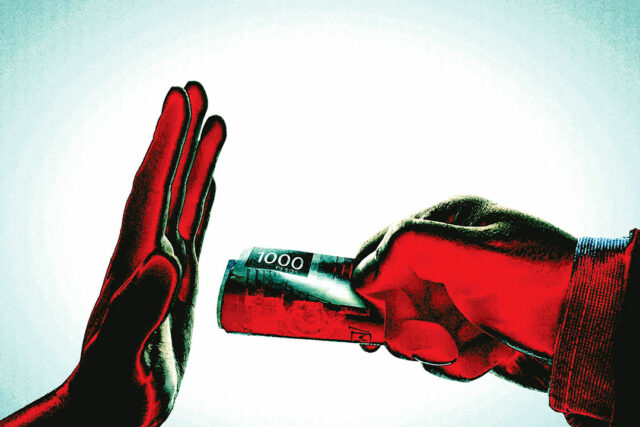
Like, Mr. Punongbayan, I would like to approach corruption as a management rather than a moral issue. How would a member of the Management Association of the Philippines go about fighting corruption, not as a crusader but as a manager?

We suggest the following principles guide his actions:

Bypass the corrupt middleman. In January 2013, the government of India, tired of relying on its corrupt agriculture bureaucrats, decided to bypass them and go directly to the farmers.

The Indian government introduced the Direct Benefit Transfer or DBT scheme to streamline the transfer of government-provided subsidies from various Indian welfare schemes directly into the beneficiaries’ bank accounts. This has been one of the most ambitious financial inclusion initiatives ever seen anywhere in the world, bringing over 330 million people into the formal financial sector. By 2020, 318 subsidy schemes from 53 ministries have been directly transferred to the farmer beneficiaries.

In its May 21, 2022 cover story on India, the Economist noted that the Indian government used a direct, real-time, digital welfare system to pay $200 billion over three years to about 950 million people. And the program is so successful that India is now a wheat and rice exporter.

The Philippines has also successfully bypassed its corrupt middlemen.

As reported by the World Bank, the conditional cash transfer (CCT) program, locally known as Pantawid Pamilya Pilipino Program or 4Ps, is a government program that provides conditional cash grants to the poorest of the poor in the Philippines.

The program has one of the most comprehensive poverty targeting databases in the world today, covering 75% of the country’s population. It has been used extensively to identify poor and near-poor beneficiaries for national and local government programs.

In the past, we have advocated that the excise tax collected on the importation of rice be sent directly to the rice farmers as cash instead of spending it on our corrupt bureaucrats. Additional budgets for the bureaucracies could also be converted into cash and deposited directly in the bank accounts of the intended beneficiaries.

Unfortunately, the present Secretary of Agriculture is pursuing a reverse course.

Government may regulate but never operate. The Department of Agriculture (DA) proposes to set up cold storage and warehousing facilities for the use of farmers. From a management point of view, the DA has neither the expertise nor experience to operate businesses, which is what these facilities are. First of all, constructing these facilities will require compliance with government rules on purchasing, rife as they are with corruption. Secondly, if the facilities do get constructed, the management will be very bureaucratic and not business oriented. Thirdly — and most importantly — the intended users of the facilities, the farmers, will not have the money to pay for the services provided.

Far better is to encourage the private sector to build and operate these facilities with the commitment that the funds earlier earmarked for the construction and operation of these facilities by the government will be issued as vouchers to farmers, who can then use the vouchers for availing of the services of the facilities.

The DA will regulate the operation of these facilities to assure that the farmers are getting a fair deal from the use of their vouchers. This does not eliminate the corruption that may arise in the issuance of the vouchers. But in management terms, these are friction costs, still allowing the system to operate albeit less efficiently rather than fatal costs forcing the system to collapse.

Government should regulate broadly not deeply. Let us take the case of two regulatory bodies in transportation, the Civil Aeronautics Board (CAB) in air transportation and the Land   Transportation Franchising and Regulatory Board (LTFRB) in land transportation.

The CAB regulates the routes for both local and foreign airlines merely by setting the number of passenger seats that will be allowed on each route, i.e. 30,000 weekly passenger seats on the Manila-Seoul route. The airlines then determine the aircraft that will be used, the frequencies that they will offer, the services they will provide, i.e. economy or business class, and the fares they will charge. The CAB’s role is to ensure that there is competition on the routes so the consumer will benefit the most.

Meanwhile, the LTFRB regulates the more than 230 jeepney routes in Metro Manila alone (in addition, the LTFRB regulates all the routes in the entire Philippines). Given these routes, which are more numerous than the air routes, the LTFRB still insists on micro-managing the issuance of franchises; determining the number of vehicles in each route, the type of vehicles for the route, and the fares to be charged. The license issued by LTFRB is for a vehicle for a very specific route. Thus, if a route has a surplus of vehicles, vehicles assigned to that route cannot be transferred to another needier route. In sharp contrast, the CAB allows the airplanes of an airline to fly in any route that they are needed.

You may judge which regulatory agency is more corrupt.

Corruption should be made local. The crusader makes no distinction where corruption is concerned while the manager makes a distinction among different types of corruption.

The manager would seek to devolve most government functions to the lowest level of government, knowing that corruption on the local level is better managed.

Corruption on the national level is more comprehensive. National Government officials can steal not only from the taxes collected but also from the loans obtained by the government through domestic borrowing, i.e. treasury bills, international borrowings, i.e. samurai bonds, and international agencies such as JICA, ADB, and the World Bank. In effect they are also stealing from future taxes that will be collected to pay off the loans. The capacity of the local governments to borrow is more restricted.

Accountability on the local level is more demonstrable and so more effective. In the last election of 2022, the President — who cannot run for re-election after his six years — is not held accountable by the voters while the mayors, who serve three years and can be elected for up to three terms, can be held accountable by the voters. In the Metro Manila local elections, the mayors who performed well won by landslide margins while those who performed badly lost to their challengers.

Corruption should also be made local with respect to the Department of Education (DepEd) by devolving grade schools and high schools to the local government units. Let’s take the specific case of textbooks.

According to EdCom II, despite substantial budget allocations, only 27 textbooks have been procured for Grade 1 to Grade 10 for public schools since 2012. DepEd’s budget utilization data show that from 2018 to 2022 alone, a total of P12.6 billion had been allocated to textbooks and other instructional materials, but only P4.5 billion (35.3%) had been obligated and P952 million (7.5%) had been disbursed.

If the purchase of textbooks is devolved to the local governments, specifically to the school boards, corruption may still occur, but the books will be available to the students. If they are not, the outraged parents can confront the mayor as well as the members of the school board who are from the area and known to the parents. Currently, they cannot even identify the faceless bureaucrats in the head office of DepEd in charge of purchasing the textbooks and so are responsible for the lack of books for our public-school students. As with books, so also with computers and other learning materials.

When corruption is on the national level, citizens who despair of the situation can only emigrate to another country. Citizens who despair of corruption in their town or province can always move to another locality. By voting with their feet, they also exert pressure on their local officials to moderate their greed.

In sum, we argue that another approach towards fighting corruption is to consider it, not as a sin to be cleansed but a management problem to be solved.


Dr. Victor S. Limlingan is a retired professor of AIM and a fellow of the Foundation for Economic Freedom. He is presently chairman of Cristina Research Foundation, a public policy adviser and Regina Capital Development Corp., a member of the Philippine Stock Exchange.


Bounty Fresh committed to supporting contract growers

PHILSTAR FILE PHOTO

By Adrian H. Halili, Reporter

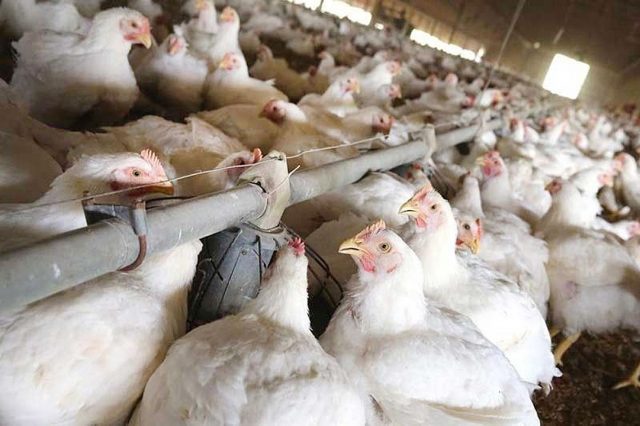
POULTRY integrator Bounty Fresh Group Holdings, Inc. said it will continue to lean on its contract growing program rather than resort to poultry imports, noting that growers need support in the face of rising feed costs and the continued threat of the Highly Pathogenic Avian Influenza (HPAI) or Bird Flu.

“Our focus is on supporting local production, ensuring that the growth benefits local farmers and communities rather than relying on imported chickens,” Bounty Fresh Group Chief Executive Officer Kenneth G. Cheng told BusinessWorld in an email.

Bounty Fresh’s contract growing program provides poultry raisers with feed and other inputs, veterinary care, and technical support.

Mr. Cheng added that partner farmers benefit from a steady income, resources, and expert guidance, which maximizes their productivity while reducing uncertainty.

“The program promotes regulatory compliance, sustainable practices, and innovative farming techniques,” he said. “Through our program, we are also trying to make agriculture an investable market, encouraging financial institutions to lend money to farmers or aspiring farmers.”

Ma. Isabel Ledesma, a contract farmer and owner of Eastvale Farm in La Paz, Tarlac, said contract growing ensures that farms enjoy a predictable income stream.

“It cuts down on financial risks by covering key aspects of the business, like chicks, feed, and medication. This minimizes our initial investment,” she told BusinessWorld via email.

Ms. Ledesma added that contract growers’ partners are a source of guaranteed demand, ensuring that growers no longer need to market to other buyers.

She said Eastvale Farm has taken steps to minimize the risk of a bird flu outbreak.

“We limit access to the poultry houses and ensure that anyone entering follows strict hygiene protocols, like disinfecting hands and shoes. For vehicles entering the farm, we have tire sprayers and wheel baths,” Ms. Ledesma added.

The Philippine poultry industry is still waiting on an approved vaccine, putting biosecurity at the forefront of available measures to curb the spread of the disease.

Some 53 municipalities across nine provinces have active HPAI cases as of Jan 10, according to the Bureau of Animal Industry.

The Department of Agriculture (DA) has said it is seeking to start large-scale trials of an Avian Influenza (AI) vaccine by March. The DA will allocate about P300 million to precure 30 million vaccine doses.

The Philippines has logged its first case of HPAI Type A, Subtype H5N2 in farmed ducks in Talisay, Camarines Norte.

Mr. Cheng said that Bounty Fresh said biosecurity measures can go a long way towards keeping chickens healthy, with “no artificial interventions needed.”

“We’re proud to raise our chickens with no antibiotics ever. That means no antibiotics or steroids at any point in their lifecycle,” he added.

“We also follow strict farm protocols, like requiring showers and clothing changes before anyone enters, to protect our chickens from bacteria,” he said. “These measures allow us to protect our chickens from bird flu and other diseases, ensuring healthier chickens and higher-quality products”

According to the US Department of Agriculture (USDA), Philippine chicken production is expected to increase 3.8% to 1.63 million metric tons (MT) in 2025.

“The poultry industry is still in its growth phase, and we’re optimistic about its potential. Over the next 20 to 30 years, we see promising opportunities for expansion, and we’re excited to play a big part in that journey,” Mr. Cheng added.

He said that strong demand for poultry products is expected to drive growers to improve their productivity.

“There’s strong and consistent demand for poultry, which remains a key protein source for Filipino households. This demand drives producers to innovate and adopt more sustainable practices, aligning with global trends in responsible agriculture,” he added.

However, Mr. Cheng said that the bird flu continues to be a constant threat to the industry.

“The recent H5N2 bird flu outbreak in Camarines Norte highlights the constant threat of disease outbreaks, which disrupt production and require stringent biosecurity measures,” he added.

He said that the influx of imported poultry meat also threatens the competitiveness of the industry.

“(This led) to farmgate prices dropping as low as P80 per kilogram, while retail prices remain high. This disparity puts immense financial strain on farmers,” Mr. Cheng added.

The USDA said Philippine chicken imports this year are expected to rise as the pricing of imported chicken remains attractive compared to domestically produced chicken.

He said that rising production costs and the need for additional investment in biosecurity and climate adaptation measures are drags on the growth of the poultry industry.

“By investing in sustainable farming practices, strengthening biosecurity, and advocating for fairer market dynamics, we aim to overcome these challenges and contribute to the growth and resilience of the Philippine poultry industry,” Mr. Cheng said.

How SolX Technologies aims to bridge energy gaps with tech

SERGIUS SANTOS — LINKEDIN.COM/IN/SERGIUS-SANTOS

By Ashley Erika O. Jose, Reporter

TECH startup SolX Technologies, Inc. is working to bridge gaps in the energy sector through advanced technology, its chief executive officer (CEO) said.

“We are expanding heavily on our technology tools,” Sergius U. Santos, SolX Technologies CEO and co-founder, said in an interview with BusinessWorld.

“SolX has its expansion plans, with a focus on making an impact in the Philippines,” he added.

Founded in 2022, SolX Technologies is a software firm assisting companies in energy management to reduce their energy consumption and electricity rates.

The company provides a platform matching qualified energy suppliers with potential energy buyers, guiding them in the provisions of the retail competition and open access (RCOA) and the green energy option program (GEOP) in different industries.

RCOA introduces retail competition to the energy industry. It allows contestable consumers, or those that have an average of 500 kilowatts of consumption per month, to choose their preferred electricity suppliers.

This program, which was established under the Electric Power Industry Reform Act of 2001, promotes fair competition in the electric power industry by allowing end-users to choose their suppliers, which is expected to result in an affordable and reliable supply of electricity.

With a background in electronic and communications engineering, Mr. Santos said the company plans to leverage technology in navigating the heavily regulated energy industry.

“The energy sector is a very esoteric sector; there is no major course that will actually teach you what is happening in the sector. There are a lot of opportunities and gaps in the market,” he said.

Mr. Santos said the company plans to capture the opportunities in the energy sector while also bridging the gaps in the industry.

He identified these gaps as the lack of systems and processes in terms of allowing consumers to actually see the comparison of offers or transparency to know the right contract for them.

“Those are the two biggest bottlenecks, I would say, the consumer education and the lack of transparency. So, SolX, initially, we started just as a business that allows you to get the best offer,” he said.

SolX leverages a real-time energy monitoring system to determine data and assess their clients’ energy consumption, which allows them to match the right energy supplier using their platform.

Today, SolX is further expanding its business to provide other services in the energy sector, Mr. Santos said.

“Right now, we are slowly expanding into the rooftop solar space,” he said.

“We are young in the sense that the innovation in terms of technologies coming into the energy space in the Philippines is very young. And there’s not a lot of innovation being generated organically from the Philippines. And it’s also young because the regulation for the retail market is new,” he said.

To date, the company is servicing more than 100 facilities nationwide with around 500 megawatts in total capacity, Mr. Santos said, noting that the company is targeting to achieve 300 facilities in the Philippines within its medium to long-term target or within the next three years.

Further, Mr. Santos said the company is also planning to offer its services abroad but would like to further expand its footprint here in the country.

BSP securities met with strong market demand

BW FILE PHOTO

YIELDS on the Bangko Sentral ng Pilipinas’ (BSP) short-term securities ended mixed on Friday, with both tenors still oversubscribed.

The central bank’s securities fetched bids amounting to P256.109 billion on Friday, above the P180-billion offer and the P221.45 billion in tenders for the P120 billion auctioned off a week ago.

Broken down, tenders for the 28-day BSP bills reached P117.382 billion, higher than the P100-billion offer and the P101.477 billion in bids for the P50 billion placed on the auction block in the prior week.

Banks asked for yields ranging from 5.81% to 5.904%, down from the 5.84% to 5.925% band seen previously. This caused the average rate of the one-month securities to inch up by 0.41 basis point (bp) to 5.8659% from 5.8618%.

Meanwhile, bids for the 56-day bills amounted to P138.727 billion, well above the P80-billion offering and the P119.973 billion in tenders for a P70-billion offer the previous week.

Accepted rates for the two-month tenor were from 5.82% to 5.909%, also lower than the 5.875% to 5.99% margin seen in the prior auction. With this, the average rate of the securities fell by 5.16 bps to 5.8923% from 5.9439%.

The central bank increased the volume of the BSP bills (BSPB) offered on Friday compared to the prior auction, BSP Deputy Governor Francisco G. Dakila, Jr. said in a statement.

It made a full award of both tenors amid strong demand, Mr. Dakila said.

“Total tenders received rose to P256.109 billion (from P221.450 billion) and resulted in bid-to-cover ratios of 1.17 times for the 28-day BSPB and 1.73 times for the 56-day BSPB,” he added.

The central bank uses the BSP securities and its term deposit facility to mop up excess liquidity in the financial system and to better guide market rates.

The BSP bills were calibrated to not overlap with the Treasury bill and term deposit tenors also being offered weekly.

Data from the central bank showed that around 50% of its market operations are done through the short-term BSP bills.

Short-term instruments offer more stability and predictability, the BSP earlier said. These are also considered “high-quality liquid assets” and grant more flexibility for banks versus the term deposits, which are not tradable.

The central bank has amended regulations on the participation of trust entities through investment management accounts to access BSP-issued securities, according to a circular posted on its website last week.

In the case of trust entities, only unit investment trust funds and investment management accounts may be invested in central bank securities, the BSP said. — Luisa Maria Jacinta C. Jocson

Auto & Truck Groups: 467k vehicles sold in 2024

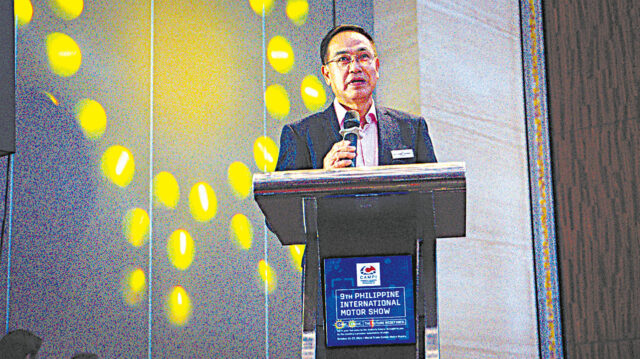
Chamber of Automotive Manufacturers of the Philippines, Inc. (CAMPI) President Atty. Rommel Gutierrez — PHOTO BY KAP MACEDA AGUILA

A RECENT joint report filed by the Chamber of Automotive Manufacturers of the Philippines, Inc. (CAMPI) and the Truck Manufacturers Association (TMA) revealed consolidated sales of their member companies reached 467,252 vehicles in 2024 — up by 8.7% over 2023’s performance (429,807 units). This sum is almost exactly double the sales figure recorded in 2020 (223,793 units), and is the highest-ever for the local auto industry.

INFOGRAPHICS BY THEA MAIRI CASTILLO; CAR IMAGES FROM FREEPIK

In December, 42,044 units were sold — up by 2.8% versus the November figure (40,898). In an accompanying release, CAMPI President Rommel Gutierrez explained that “positive results in December reflect the continued strength of the industry, with strong growth in both passenger cars and key commercial vehicle segments.” He added that “the overall market remains on track to sustain growth into 2025.” In a text message to this writer, Atty. Gutierrez declared that “sales will surpass 500,000 units this year,” underscoring continued bullishness for the auto industry.

Looking at segment share distribution in 2024, CAMPI and TMA revealed that passenger cars “accounted for 25.85% of the market with 120,770 units sold, a 10.5% rise from the previous year. Commercial vehicles, which dominate the market with a 74.15% share, also saw an 8.1% increase in sales (with a) total of 346,482 units.”

The year’s top five auto brands by sales are Toyota with 218,019 units sold (+9% over last year’s figure), cornering 46.66% of the market; Mitsubishi with 89,124 (+13.7%), and 19.07% market share; Ford with 27,997 units sold (-7.29%), getting 5.99% market share; Nissan with 26,774 units (-1.3%) and 5.73% market share, and Suzuki with 20,371 units (+10.4%) and 4.36% share. — Kap Maceda Aguila

The Singson Sin Tax Sabotage Bill: A deceptive attack on our health and revenue

MATHEW MACQUARRIE-UNSPLASH

At the Jan. 14 hearing of the House Ways and Means Committee, a heavy blow to public health and fiscal responsibility was averted. Pro-tobacco legislators had prepared to hijack the Anti-Illicit Tobacco Trade Bill (House Bill 10329, substituted by House Bill 11286) by inserting a provision that would have removed the annual indexation of tobacco excise taxes. This would have sabotaged one of the cornerstone reforms of the Sin Tax Law — the indexation of the excise tax to inflation which preserves its real value.

Thankfully, the insertion did not materialize. The Committee, under the leadership of its chair, Joey Salceda, approved the bill as originally agreed upon, prioritizing strong enforcement against illicit trade without compromising tax policy. We are happy that the Committee decided to uphold the integrity of the bill, which civil society and the bill’s main sponsors worked tirelessly to refine and strengthen.

The bill’s positive features include a digital tracking and tracing system combined with physical tax stamps, stiffer penalties combined with stronger enforcement capability, and a mechanism for coordinated action among government agencies to combat illicit trade.

But the Sin Tax Law still continues to face serious threats in the face of the insistent attempt to remove the provision on annual indexation of rates to inflation. Just days after the Committee meeting, Representative Kristine Singson-Meehan filed a standalone bill (House Bill 11279) that would essentially lower tax rates but deceptively calls it a moratorium. “Moratorium” is not what it is. What Singson-Meehan and company want is a lowering of tax rates.

We call the Singson-Meehan bill the “Sin Tax Sabotage Bill.” It is a direct and brazen rollback of hard-won reforms.

Supporters of the Sin Tax Sabotage Bill claim it is a necessary measure to address the illicit tobacco trade. However, this narrative is misleading, it is deceptive. Let’s be clear: Singson-Meehan’s Sin Tax Sabotage bill will not solve illicit trade. Instead, it would reduce the price of legal cigarettes by a few pesos per pack — which will increase smoking, particularly among price-sensitive groups like the youth and the poor. At the same time, it will NOT dissuade smokers from buying illicit cigarettes, which remain much, much cheaper.

What this Sin Tax Sabotage Bill achieves is boosting the profits of tobacco companies while slashing government revenues. Based on our estimates, this proposal would cost the government at least P27 billion in forgone revenues from 2026 to 2030, undermining funding for essential programs like Universal Health Care (UHC).

The Department of Finance (DoF) and Bureau of Internal Revenue (BIR) themselves cannot guarantee that the proposal would curb illicit trade. They have offered no solid proof in terms of clear data and metrics and projections. Hence, they cannot offer credible assurances. The Singson-Meehan bill only offers the empty promises of the tobacco industry, which history tells us cannot be trusted.

Paradoxically, this attempt to lower Sin Tax rates comes after the DoF’s 2024 “cash sweep” drained PhilHealth funds to avoid raising taxes. Yet now, the same department appears complicit in supporting a revenue-eroding measure that will further weaken the funding for  UHC.

Who benefits from this? Not the government, not the Filipino people, and certainly not public health. The only beneficiary is the tobacco industry.

Finance Secretary Ralph Recto, who once proclaimed “no new taxes,” now stands silent as this revenue-eroding proposal undermines public health funding. Sin Tax indexation is a lifeline for millions of Filipinos, yet Recto seems content to prioritize tobacco industry profits over the people’s welfare. This betrayal of Sin Tax Reform reflects a broader pattern of governance failures, where funds for UHC are diverted to pork-laden appropriations, and laws designed to protect public health are systematically weakened.

Let us not mince words: lowering tax rates in response to illicit trade sends a resounding message that Congress has lost confidence in the BIR’s ability to enforce our tax laws. It insults the BIR.

It rewards non-compliance and undermines public confidence in our institutions. The proper response to illicit trade is not to weaken our tax policies but to strengthen enforcement.

Global best practices — as articulated by the literature and the recommendations of the World Health Organization — show that tackling illicit trade requires a robust tracking and tracing system, shutting down unregistered factories, prosecuting smugglers, and imposing stiffer penalties on offenders. These are the solutions found in House Bill 10329, which was rightly passed without the harmful tax rollback provision now being resurrected in HB 11279.

HB 11279 threatens to sabotage the health and revenue gains from the landmark Sin Tax Reforms. By eroding the real value of tobacco taxes, the proposal is effectively a rollback that would make cigarettes more affordable over time, leading to increased consumption. Our simulation also shows that the Singson-Meehan bill, if passed, would result in an additional 400,000 smokers by 2030.

As more Filipinos, especially those in vulnerable groups, are pushed toward smoking, the burden of tobacco-related diseases will grow, further straining our already underfunded health system.

When the tobacco industry speaks of “breathing room,” they are not referring to relief for smokers or the government — they mean higher profits for themselves at the expense of the public’s welfare. And when legislators like Rep. Singson-Meehan push for a proposal like HB 11279, let’s call them out for serving the tobacco industry, not the people.

This latest attempt to sabotage Sin Tax Reform is nothing short of a betrayal of the Filipino people. It prioritizes corporate greed over public health, fiscal sustainability, and good governance. We must reject outright this dangerous deception.


AJ Montesa is a program officer for research and heads the tax policy team of Action for Economic Reforms.

ADVERTISEMENT
ADVERTISEMENT