Home Blog Page 2096

First months of 2025 likely rainy amid La Niña conditions, says PAGASA

The Philippine Atmospheric, Geophysical and Astronomical Services Administration (PAGASA) shares its seasonal weather outlook for the first months of 2025. Insights from Ana Liza S. Solis, Assistant Weather Services Chief and Chief of the Climate Monitoring and Prediction Section of PAGASA.

Interview by Edg Adrian A. Eva
Video editing by Arjale Queral

Philippine water company Maynilad hires banks for over $500 million IPO, sources say

BW FILE PHOTO

SINGAPORE — Maynilad Water Services has hired banks including Morgan Stanley and UBS to work on a more than $500 million initial public offering in the Philippines, according to two sources with knowledge of the matter.

The IPO is expected to hit the market as early as this year, or in 2026, and would likely value the Philippine water and wastewater services company at more than $3 billion, the sources told Reuters on Wednesday, declining to be named as the matter was private.

“Our legislative franchise requires that we do an IPO no later than January 2027. Accordingly, we are making the necessary preparations to allow us to comply with that listing requirement,” Maynilad said in a statement to Reuters on Thursday, adding that it couldn’t provide any further information for now.

In December 2021, the Philippine government granted Maynilad a 25-year franchise to establish, operate and maintain a waterworks system and sewerage and sanitation services in the west zone service area of Metro Manila and the province of Cavite, according to its website.

Morgan Stanley and UBS declined to comment.

The planned listing adds to a growing pipeline of IPOs in the Philippines, where IPO proceeds surged sharply to $234.1 million last year, from $72.9 million in 2023, LSEG data showed.

Maynilad is the largest private water concessionaire in the Philippines in terms of customer base, according to its websites.

The Quezon City-based company provides water and wastewater services to the 17 cities and municipalities that comprise the west zone of the metropolitan Manila area, its websites showed.

Maynilad is managed by Maynilad Water Holdings Company, a joint venture between infrastructure conglomerate Metro Pacific Investments Corp, construction-to-nickel mining group DMCI Holdings and Japanese trading company Marubeni Corp, according to its website.

The consortium took control of Maynilad in January 2007. — Reuters

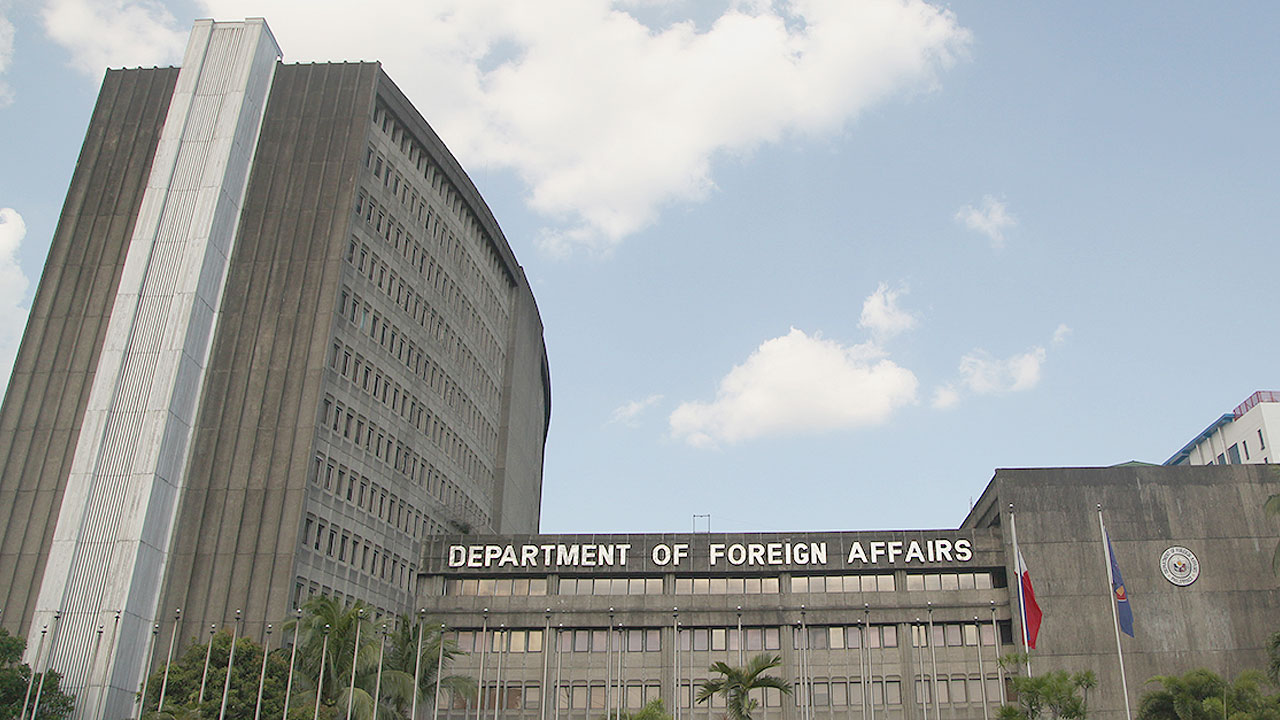
Philippine foreign ministry taking foreign spying reports seriously

OFFICIALGAZETTE.GOV.PH

MANILA — The Philippine foreign ministry said on Thursday it takes any indication of espionage operations by foreign nationals seriously, after the arrest this week of a Chinese national on suspicion of espionage.

Philippine law enforcers said they recovered in the suspect’s possession equipment they believe could be used for spying on military facilities.

Investigators said Deng Yuanqing, who is affiliated with the Army Engineering University of PLA (People’s Liberation Army), was part of a group that authorities had been tracking, based on intelligence indicating they arrived in the Philippines to conduct surveillance on critical infrastructure, including military installations.

“In accordance with its mandate to help protect national security, the department takes any indication of espionage operations by foreign nationals seriously,” the Department of Foreign Affairs said in a statement, adding it is ready to help the investigation.

Authorities did not say how Deng had responded to the spying allegations. Two Filipino alleged accomplices were also detained.

China’s embassy in Manila in a statement on Thursday said it hoped the Philippines would “stop shadow-chasing, stop peddling the so-called ‘Chinese spy’.”

Deng’s arrest comes amid growing suspicion in the Philippines of Chinese activities, including the conduct of its coast guard and fishing militia in Manila’s exclusive economic zone. — Reuters

Unveiling microinsurance secrets: The story behind CARD Pioneer’s success in Covering Nanay

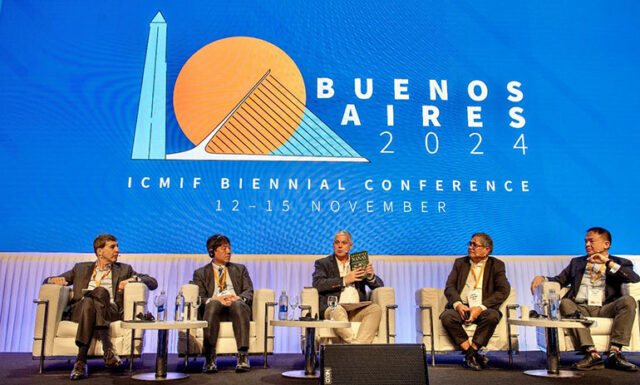
In photo (L to R): Alejandro Simon, Grupo Sancor Seguros CEO (Argentina); Kazunari Takahashi, Zenkyoren (Japan) Senior Managing Director; Shaun Tarbuck, International Cooperative and Mutual Insurance Federation (ICMIF) Chief Executive; Dr. Aris Alip, CARD MRI Founder; and Chairman Emeritus, Lorenzo Chan, Jr., Pioneer, Inc. President and CEO

The transformative power of microinsurance takes center stage in Covering Nanay: The Philippine Microinsurance Journey, a groundbreaking book authored by Dr. Aristotle Alip, Lorenzo Chan, and Pia Benitez Yupangco.

Launched in April 2024, this compelling narrative explores the trailblazing partnership between CARD and Pioneer that reshaped the microinsurance landscape in the Philippines.

Covering Nanay has captured readers’ interest, holding its place on the Top 10 Best-Sellers list for months and prompting a second reprint in December.

Its success underscores the book’s resonance with local and global microfinance and microinsurance communities, highlighting CPMI’s (CARD Pioneer Microinsurance, Inc.) innovative approach to financial inclusion.

Journey on Global Platforms

The authors have taken their story to some of the most prestigious microfinance and insurance events in the world, delivering insights and inspiration to diverse audiences.

Following the book’s initial launch, Messrs. Alip and Chan shared the book’s insights during the Microfinance Council of the Philippines (MCPI) annual conference.

Their session sparked lively discussions on CPMI’s transformative practices and their potential replication in other markets.

Covering Nanay was unveiled globally at the 20th edition of the International Conference on Inclusive Insurance (ICII) held in Nepal, where the authors participated in a 90-minute session moderated by Antonique Koning of the World Bank’s CGAP.

Their engaging discussion of CPMI’s grassroots approach, speedy claims processing, and tech-driven solutions ended with a standing ovation from the global microinsurance community from over 50 countries.

The authors were also interviewed in Buenos Aires by ICMIF Chief Executive Shaun Tarbuck during a session on partnerships fostering resilience in business.

They highlighted CPMI’s unique collaboration model, which fuses grassroots engagement with technology, creating a scalable and sustainable impact.

The session concluded with enthusiastic applause and a round of book signings.

Secrets behind CPMI’s success

Covering Nanay highlights the key elements that set CPMI apart.  First, its rapid claims processing ensures swift and efficient handling, allowing policyholders to recover quickly from unexpected events.

Second, CPMI’s cost efficiency, driven by innovative operational models, enables the company to offer affordable and accessible coverage through its extensive network of nanays.

Finally, the integration of advanced technology with a robust network of nanays enhances outreach and amplifies impact.

These pillars, combined with a partnership-driven approach and shared values, have established CPMI as a global leader in financial inclusion and social transformation.

A Call to Action

Covering Nanay offers invaluable lessons and insights for microfinance practitioners, policy makers, or anyone inspired by stories of resilience and innovation.

It is still available at select Fully Booked branches or online via Amazon.

The book tells the story of how shared vision and innovation have impacted lives, one nanay at a time.


Spotlight is BusinessWorld’s sponsored section that allows advertisers to amplify their brand and connect with BusinessWorld’s audience by publishing their stories on the BusinessWorld Web site. For more information, send an email to online@bworldonline.com.

Join us on Viber at https://bit.ly/3hv6bLA to get more updates and subscribe to BusinessWorld’s titles and get exclusive content through www.bworld-x.com.

Trump campaign against diversity urges government employees to turn informer

RAWPIXEL.COM

The Trump administration on Wednesday urged government employees to inform on each other and their departments in order to root out any attempts to hide diversity programs.

The latest escalation in U.S. President Donald Trump’s campaign against diversity, equity and inclusion (DEI) comes a day after he pressured the private sector to join the initiative and told government employees in offices administering such programs they would be placed on paid leave.

Mr. Trump also issued a series of executive orders to dismantle DEI programs on his first day in office on Monday, marking a complete reversal from his predecessor Democrat Joe Biden, who prioritized DEI programs and initiatives across the federal government.

DEI programs attempt to promote opportunities for women, ethnic minorities, LGBTQ+ people and other traditionally underrepresented groups.

Civil rights advocates have argued such programs are necessary to address longstanding inequities and structural racism. Trump and his supporters say DEI programs end up unfairly discriminating against other Americans and weaken the importance of candidates’ merit in job hiring or promotion.

In a new message distributed on Wednesday, government employees were warned they would face “adverse consequences” if they failed to promptly report any hidden DEI programs.

“We are aware of efforts by some in government to disguise these programs by using coded or imprecise language,” said the memo, which set a 10-day deadline for information.

It was not immediately clear what evidence the administration has of any efforts to conceal diversity programs.

“There will be no adverse consequences for timely reporting this information. However, failure to report this information within 10 days may result in adverse consequences,” the memo said.

The same language was sent to employees of several departments and attributed to different members of Trump’s cabinet – for example it came from Secretary of State Marco Rubio at the State Department and from Acting Attorney General James McHenry at the Justice Department.

Mr. Trump’s latest attack on DEI drew widespread criticism from civil rights advocates.

Psyche Williams-Forson, a professor of American Studies at the University of Maryland, said long-standing resentments among white men were resurfacing and helped enable Trump’s political comeback despite his felony convictions and the civil judgments against him for fraud and sexual abuse.

“This country is fundamentally founded on racist principles. It always has been and it continues to be. There was no way in the world that America was going to allow another Black person to succeed. Obama just totally defied the odds,” Mr. Williams-Forson said.

U.S. Representative Hank Johnson, a Democrat from Georgia, accused Trump of “turning back the clock and dismantling decades of progress made by Black people.”

Noreen Farrell, executive director of Equal Rights Advocates (ERA), a nonprofit group promoting gender equality, said Trump’s executive orders would also impede American competitiveness.

“The message is clear: this administration is willing to sacrifice both civil rights and economic growth to advance an extremist agenda,” Ms. Farrell said in a statement.

Rev. Al Sharpton, founder and president of the National Action Network, formally announced Wednesday the organization and its partners plan to identify two companies in the next 90 days that will be boycotted for abandoning DEI pledges. Reuters first reported the coordinated action ahead of Martin Luther King Jr. Day.

The White House did not respond to a request from Reuters to address criticism from civil rights advocates.

Mr. Trump has also sought to dissuade private companies that receive government contracts from using DEI programs and hiring on the basis of race and sex and asks government agencies to identify private companies that might be subject to civil investigation.

The federal government committed $739 billion to contractors in fiscal year 2023, according to the Government Accountability Office, and the programs Mr. Trump is attacking are intended to ensure minority-led businesses are not overlooked due to discrimination.

Mr. Trump’s actions mark a significant setback to decades-long efforts to ensure equality in federal hiring and contracts.

Tuesday night’s order rescinded a 1965 executive order signed by former Democrat President Lyndon B. Johnson that prohibited federal contractors from discriminating in employment and employed affirmative action to ensure equal opportunity based on race, color, religion and national origin.

Johnson’s order was seen as a significant moment of progress in the civil rights movement, coming at a time when Black Americans faced the threat of violence and “Jim Crow” laws that prohibited them from voting and from living in predominantly white neighborhoods. – Reuters


Rubio says US committed to Philippines in call about China’s ‘dangerous’ actions

CHINA COAST GUARD VESSEL 5901, nicknamed the “monster ship,” off the coast of Capones Island, Zambales on Jan. 4, 2025. — PHILIPPINE COAST GUARD

New U.S. Secretary of State Marco Rubio discussed China’s “dangerous and destabilizing actions in the South China Sea” with his Philippine counterpart on Wednesday and underscored the “ironclad” U.S. defense commitment to Manila.

“Secretary Rubio conveyed that (China’s) behavior undermines regional peace and stability and is inconsistent with international law,” the U.S. State Department said in a statement on his call with Foreign Minister Enrique Manalo.

The Philippines has been embroiled in wrangles at sea with China in the past two years and the two countries have faced off regularly around disputed features in the South China Sea that fall inside Manila’s exclusive economic zone.

Mr. Rubio’s call followed his hosting of counterparts from Australia, India and Japan in the China-focused “Quad” forum on Tuesday, the day after President Donald Trump returned to the White House. The four recommitted to working together.

Quad members and the Philippines share concerns about China’s growing power and analysts said Tuesday’s meeting was designed to signal continuity in the Indo-Pacific and that countering Beijing will be a top priority for Trump.

In the call with Mr. Manalo, Mr. Rubio “underscored the United States’ ironclad commitments to the Philippines” under their Mutual Defense Treaty and discussed ways to advance security cooperation, expand economic ties and deepen regional cooperation, the statement said.

Just ahead of Mr. Trump’s swearing-in, the Philippines and the United States carried out their fifth set of joint maritime exercises in the South China Sea since launching the joint activities in 2023.

Security engagements between the allies have soared under Philippine President Ferdinand Marcos Jr., who has pivoted closer to Washington and allowed the expansion of military bases that American forces can access, including facilities facing the Chinese-claimed but democratically-governed island of Taiwan.

Visiting the Philippines last week, Japanese Foreign Minister Takeshi Iwaya said a trilateral initiative to boost cooperation launched by Japan, the U.S. and the Philippines at a summit last year would be strengthened when the new U.S. administration took over in Washington.Reuters

South Korea’s economy barely grows in Q4 amid political chaos

NIGHT VIEW of Yeouido, Seoul, South Korea — TIRACHARDZ-FREEPIK

 – South Korea’s economy barely grew in the fourth quarter of 2024, missing market expectations, as domestic demand was hurt in part by the country’s worst political crisis in decades, raising bets for more fiscal and monetary support to revive growth.

Gross domestic product (GDP) expanded 0.1% from a quarter earlier on a seasonally adjusted basis, advanced central bank estimates showed on Thursday, compared with increases of 0.1% in the third quarter and 0.2% forecast in a Reuters survey.

In December, consumer and business sentiment dampened amid political chaos, after President Yoon Suk Yeol was impeached and suspended from duties over his short-lived bid to impose martial law, followed by the impeachment of Prime Minister Han Duck-soo.

For the quarter, consumer spending rose 0.2% and corporate investment grew 1.6%, weaker than the previous quarter’s gains of 0.5% and 6.5%, respectively, while construction investment fell 3.2%.

Exports rose 0.3%, recovering from their fall of 0.2% a quarter earlier, led by sales of semiconductors on robust demand for artificial intelligence.

South Korea’s central bank is expected to lower interest rates next month by 25 basis points, and twice more this year to 2.25%, after its unexpected rate-hold decision this month to prevent the won – which weakened the most among Asian currencies last year – from falling further.

“Korea’s economy continued to struggle in Q4 and we suspect that the weakness in activity could persist in the near term due to the ongoing political crisis and the bleak outlook for the construction sector,” said Shivaan Tandon, Markets Economist at Capital Economics.

There are growing calls from economists and opposition lawmakers for the government to draft a supplementary budget to support frail domestic demand, with no less a figure than Bank of Korea Governor Rhee Chang-yong arguing the case last week.

Finance Minister Choi Sang-mok, serving as acting president, said earlier this week the government was willing to discuss it with parliament.

In the October-December quarter, GDP grew 1.2% on an annual basis, weaker than gains of 1.5% the quarter before and 1.4% expected by economists, and marked the slowest pace since the second quarter of 2023.

In 2024, Asia’s fourth-largest economy grew 2.0%, after rising 1.4% in 2023, but its growth is projected to slow again in 2025 to 1.6% or 1.7%, below the estimated potential of around 2%, according to the Bank of Korea. – Reuters

Samsung unveils AI smartphones with Qualcomm chips, teases slimmer Galaxy phones

Source: https://www.samsung.com/ph/smartphones/galaxy-s25-ultra/

 – Samsung Electronics on Wednesday unveiled its newest Galaxy S25 smartphones, powered by Qualcomm’s chips and Google’s artificial-intelligence model, hoping its upgraded AI features can reinvigorate sales and fend off Apple and Chinese rivals.

Samsung also previewed a thinner version of the flagship models at the end of an event in California, aiming to launch the Galaxy S25 Edge in the first half of this year ahead of Apple’s anticipated rollout of its slimmer iPhone.

Samsung was faster than Apple in launching an AI-powered smartphone but failed to regain its crown in the global smartphone market last year, squeezed by competition with the U.S. rival in the premium market and with Chinese firms in the lower-end segment.

“We are one step ahead of the industry in terms of offering AI features. I believe we are going in the right direction,” Park Ji-sun, the executive vice president who leads Samsung’s Language AI team, told Reuters.

Samsung kept the prices of its Galaxy S25 series unchanged at between $799 and $1,299.

Source: https://www.samsung.com/ph/smartphones/galaxy-s25/

The new Galaxy S25 uses Gemini offered by Alphabet’s Google as its default AI engine, and features Samsung’s upgraded in-house voice assistant, Bixby, Park said.

The two tools complement each other, and Bixby plays a key role at Samsung, whose products span mobile phones to TVs and home appliances, he said.

Thomas Husson, an analyst at Forrester, said that differentiating Bixby would be a challenge for Samsung.

“I don’t think there is really a killer application today that you know would convince them (consumers), ‘OK, I’m going to buy this one because it’s an AI smartphone,'” he said.

Mr. Husson added, however, that AI features could create a halo effect around the Samsung brand.

The Galaxy S25 will offer a more personalized AI experience. For example, its “Now Brief” service – which makes recommendations to users based on personalized data that is stored and processed on the phone for privacy reasons – will display a suite of customized items such as calendars, news and bedroom air temperature and carbon dioxide levels, Park said.

The phone will be able to carry out multiple tasks with a single command, such as finding upcoming sporting events and then adding them to users’ calendars.

Samsung shares were down 1.1%, lagging the wider market’s .KS11 0.4% loss.

Samsung used Qualcomm’s Snapdragon 8 Elite Mobile Platform for the entire Galaxy S25 lineup, ditching its own mobile chip Exynos, a major change of strategy for a company that previously used both to have more bargaining power with suppliers.

Using a Qualcomm chip is a setback to the South Korean firm’s chip business, which counts its mobile division as one of its major customers.

Samsung did not say why it decided not to use its own chips in the new model.

A person familiar with the matter said Samsung is looking to use the Exynos chip in its foldable phones to be launched later this year.

“The Galaxy S25 series’ sale is important at a time when Samsung’s foldable phone sales have been stagnating in the face of challenges from Chinese companies,” Lim Su-jeong, associate director at research firm Counterpoint, said.

Samsung’s preliminary fourth-quarter profit, released earlier this month, missed estimates by a large margin due to chip development costs and rising competition in the smartphone market. – Reuters

UK tackles infrastructure ‘blockers’ by cutting legal challenge options

BRITAIN’S PRIME MINISTER KEIR STARMER — POOL VIA REUTERS

 – Britain will make it easier for major infrastructure projects to go ahead by limiting the number of legal challenges that opposition groups can bring, the government said on Thursday.

Since coming to office in July, Prime Minister Keir Starmer has identified planning delays as a major impediment to economic growth. That growth underpins all his government’s plans for the next five years, but has so far proved difficult to generate.

Projects such as nuclear plants, railway lines and wind farms can face years-long delays in Britain, where even legal challenges deemed to have little chance of success can be brought back to the courts three separate times.

Mr. Starmer said new rules would ensure that in the weakest cases only one such challenge can be made, as he pledged to take on NIMBY, or “Not In My Back Yard”, pressure groups.

“For too long, blockers have had the upper hand in legal challenges – using our court processes to frustrate growth,” Mr. Starmer said in a statement.

“We’re putting an end to this challenge culture by taking on the NIMBYs and a broken system that has slowed down our progress as a nation.”

The government said it wanted to strike a balance between ensuring protection for genuine cases while pushing back against a “challenge culture” where small groups use the courts to block decisions taken by elected officials.

It cited a number of examples including the Sizewell C nuclear power plant, which was delayed by two years despite the High Court describing aspects of a legal challenge to it as “utterly hopeless”.

The government will scrap the first legal challenge, known as the paper permission stage. It will also change the law so that in cases where a High Court judge has deemed a challenge “Totally Without Merit”, it will not be possible to ask the Court of Appeal to reconsider. – Reuters

New Zealand will relax rules to woo foreign investment, PM says

STOCK PHOTO | Image by Kerin Gedge from Unsplash

New Zealand will relax rules to lure foreign investment, Prime Minister Christopher Luxon said on Thursday, as his centre-right government tries to spur economic growth and boost jobs.

New Zealand’s economy sank into recession in the third quarter as activity dived far more sharply than expected, leaving the door open for further rate cuts by the central bank.

In his annual state of the nation address, Mr. Luxon said he would set up Invest New Zealand, part of the government’s international economic development agency, as a one-stop-shop for overseas investment.

“Modelled off the success of Ireland and Singapore, Invest New Zealand will roll out the welcome mat – streamlining the investment process and providing tailored support to foreign investors,” Mr. Luxon said.

It will help increase capital investment across banking, fintech, transport, energy and manufacturing, he said.

“I want a country with more start-ups, more IPOs, more investment, higher incomes, and whole ecosystems of growth and innovation. I want the best ideas and the best investments from offshore making a difference here at home,” Mr. Luxon said.

New Zealand’s central bank has cut the official cash rate by 125 basis points since August as inflation eased but economic activity also contracted. The central bank said in November it expected to cut by a further 50 basis points when it meets next month. – Reuters

Philippine laundering risks still seen despite online casino ban

STOCK PHOTO | Image from Rawpixel

By Ditas Lopez and Cliff Venzon, Bloomberg

The Philippines’ ban on online casinos hasn’t eliminated money laundering risks, and any failure to stamp out illegal entities could undercut efforts to permanently exit a global watchlist, according to a Moody’s analyst.

“There are still inherent risks, and it’s not just the underground online gaming,” Choon Hong Chua, head of the financial crime practice group for Asia Pacific and the Middle East at Moody’s, said in an interview. “We’ve seen examples in the past when some of the scam centers were masquerading as call centers and data centers.”

Philippine President Ferdinand Marcos Jr. last year outlawed online casinos catering to foreign bettors, saying they were involved in money laundering, scamming and human trafficking. Still, illegal operators have remained even after the ban took effect at the end of 2024, with authorities this month raiding at least two alleged scam centers and an illegal online gaming facility, according to the Bureau of Immigration’s website.

While eradicating organized crimes that are very profitable is often “challenging,” the Philippines should build on gains in legislation and enforcement as criminal activities evolve, Mr. Chua said.

The Paris-based Financial Action Task Force in October said the Philippines has substantially addressed the issues that had kept the country on a gray list since June 2021. Manila’s reforms include mitigating risks associated with casino junkets, sanctions on unregistered and illegal remittance operators and increased investigations and prosecutions of money-laundering and terrorist-financing cases.

The Philippines could exit the FATF watchlist this year, a move that would lead to faster and cheaper remittances for overseas Filipinos who repatriate billions of dollars, which help fuel consumer spending.

“Across the region and in fact across the world, traditionally the corporate organizations are not as regulated as the financial institutions,” Mr. Chua said. “A lot of these organizations are the ones serving some of the high-risk clients.”

While the Philippines’ anti-money laundering enforcement profile has improved, Chua said consistency and persistence are key. “We’ve seen examples in the past of other countries where they go in and out of the gray list,” he said.

The Philippines’ Anti-Money Laundering Council secretariat did not immediately respond to a request for comment. — Bloomberg

Rise of text hijacking cases in the Philippines

According to the Department of Information and Communications Technology (DICT), text hijacking cases in the Philippines are alarmingly increasing.

“As of late, there’s a rise in the reports of the data in text hijacking,” DICT Assistant Secretary for Legal Affairs Renato A. Paraiso told BusinessWorld in an interview.

Mr. Paraiso reminded the public that practicing good cybersecurity hygiene and being cautious with links can help people avoid becoming victims of such cybercrimes.

Interview by Almira Louise Martinez
Edited by Jayson John Mariñas

Related article: Location tracking manipulation spurs rising text hijacking cases – BusinessWorld Online

ADVERTISEMENT
ADVERTISEMENT