Home Blog Page 2094

DFA to back agencies’ probe into alleged Chinese espionage in PHL
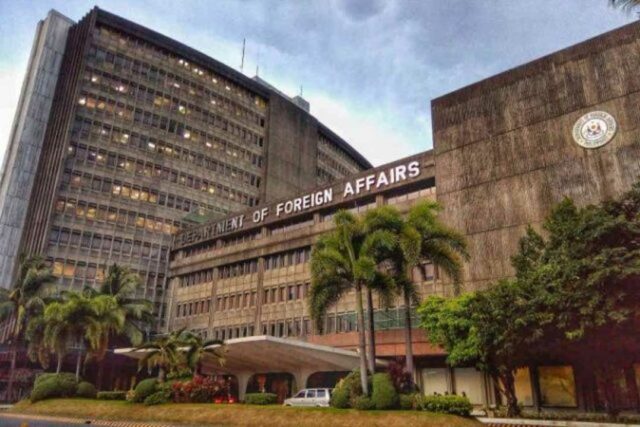
DEPARTMENT OF FOREIGN AFFAIRS FACEBOOK PAGE

THE DEPARTMENT of Foreign Affairs (DFA) on Thursday said it will work with Philippine law enforcement agencies to probe alleged Chinese espionage operations in the country.

“The Department takes any indication of espionage operations by foreign nationals seriously and stands ready to support the Department of Justice, the National Bureau of Investigation (NBI) and the Armed Forces of the Philippines (AFP) and other relevant government agencies…” it said in a statement.

A Chinese national suspected of being a spy was arrested on Tuesday after law enforcers recovered alleged military spying equipment from him.

The Chinese national and two Filipino cohorts were arrested in a condominium in Makati City, with the NBI filing an espionage complaint against them in connection with cybercrime before the Justice department.

AFP Chief of Staff Romeo S. Brawner, Jr. earlier said the material could have been used for military targeting purposes, as the items could create three-dimensional images for guided missile systems.

“The Chinese government as always, asks Chinese nationals overseas to abide by local laws and regulations,” Chinese Foreign Ministry spokesperson Mao Ning told a news briefing in Beijing late Wednesday.

“We hope the Philippines will stick to the facts, stop shadow-chasing, stop peddling the so-called ‘Chinese spy,’ and earnestly protect the lawful rights and interests of Chinese nationals in the Philippines.”

ANTI-ESPIONAGE BILLS
This also prodded a lawmaker to push the House of Representatives to immediately act on pending anti-espionage bills in the chamber, which proposed to expand activities that constitute spying and impose sanctions even in times of peace.

“With this development of arrested spies, [I] will ask [the] House Leadership to fast track these bills,” Cagayan de Oro Rep. Rufus B. Rodriguez, a member of the House national defense and strategic intelligence committees, told BusinessWorld in a Viber message.

The suspected spies were accused of traveling to locations, under the Enhanced Defense Cooperation Agreement, on the main Philippine island of Luzon, using topographical equipment that could map out the structures and provide global positioning coordinates of the military sites.

“The arrest of these suspected Chinese and Filipino spies should prompt Congress to immediately pass bills that would expand the coverage of the crime of espionage,” Mr. Rodriguez said in a separate statement.

Philippine Defense Secretary Gilberto Eduardo C. Teodoro, Jr. and National Security Advisor Eduardo M. Año have separately called lawmakers to pass stiffer penalties against spying, highlighting growing concerns over Manila’s vulnerabilities to espionage by the defense establishment.

“We have not heeded the appeal of our Defense secretary. We have not addressed concerning developments in the area of spying and we have not updated our law since 1941, more than 80 years ago,” said Mr. Rodriguez.

The lawmaker filed last year House Bills (HBs) No. 10983 and 10988, with both seeking to strengthen Philippine regulations against spying.

HB No. 10983 seeks to amend Article 117 of the Revised Penal Code to allow the sanction of prision correccional, which has a duration of one day to six years, even when the act of espionage is committed during peacetime.

Meanwhile, HB No. 10988 expands the coverage of espionage under the 83-year-old Anti-Espionage Act. The bill seeks to include the act of unlawfully obtaining and sharing “classified matter or classified information affecting national defense or national security” of the Philippines as punishable by law. — John Victor D. Ordoñez and Kenneth Christiane L. Basilio
Comelec to print 1.5M ballots daily after delays

PHILIPPINE STAR/ MICHAEL VARCAS

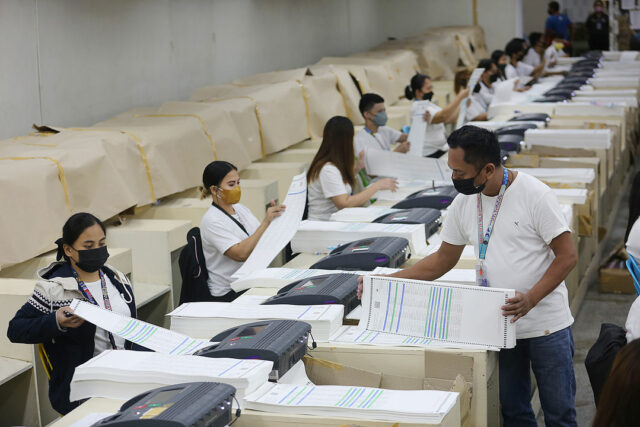
THE Commission on Elections (Comelec) seeks to print about 1.5 million ballots daily starting Jan. 27 by using more printers after multiple delays caused by restraining orders issued by the Philippine Supreme Court.

Comelec is proposing to use two more printers to fast-track ballot printing for the May 12 midterm elections, according to documents from spokesman John Rex C. Laudiangco.

“This committee respectfully proposes to target a 1.5 million official ballots daily output,” Helen G. Aguila-Flores, vice-chairperson of Comelec’s printing committee, wrote in the document. “This gives us more time for reprints and for the initially low-yielding verification process.”

“With a combined daily target output of 1.5 million ballots, the printing committee anticipates completing the printing process in 48 days, excluding verification and reprinting phases,” she added.

To implement the plan, the committee prioritized printing ballots for regions after the dispatch order set by the packing and shipping committee.

Ballots for overseas voting, local absentee voting, midterms and parliamentary elections for the Bangsamoro Autonomous Region in Muslim Mindanao and Cagayan Valley will be printed first. Ballots for Calabarzon, Central Luzon and the National Capital Region will be printed last.

The commission once again rescheduled the printing of official ballots to Jan. 27 from Jan. 24 after a senatorial bet covered by the high court’s latest round of restraining orders withdrew from the race.

Comelec also postponed the scheduled upload of new ballot faces on its website, originally set for Jan. 23.

Comelec started printing official ballots on Jan. 6, but the high tribunal issued five restraining orders on Jan. 14, stopping the production to include additional names in the ballots. About 6 million ballots that cost P22 each got wasted, Comelec said.

Filipinos will choose a new set of congressmen and 12 of the 24-member Senate, along with other local government officials on May 12. The Bangsamoro region will also hold its first parliamentary elections. — Chloe Mari A. Hufana

Marcos keen on closer ties with ADB

PHILSTAR FILE PHOTO

PRESIDENT Ferdinand R. Marcos, Jr. on Thursday said his government is eyeing closer cooperation with the Asian Development Bank (ADB) on the country’s development projects amid the bank’s leadership transition.

“We fully intend to increase those (development) engagements and continue to make them stronger. Again, thank you for all the help,” he told outgoing Masatsugu Asakawa during a farewell call at the Malacañang.

Mr. Asakawa is set to be succeeded by Masato Kanda, who is Japan’s Finance minister and a special advisor to the Japanese prime minister.

Last year, the ADB said it would boost investments in human development, infrastructure and disaster resilience in the next six years to help the Philippines achieve inclusive growth.

Under its Country Partnership Strategy 2024-2029, the multilateral lender committed to leverage partnerships, increase co-financing and help tailor-fit solutions based on the country’s needs.

In 2023, the Philippines got $4.5 billion (P252.8 billion) in sovereign and non-sovereign assistance from the ADB, based on a September ADB report. From last year until 2029, the loans are expected to hit at least $24 billion.

“It was the support of ADB during the pandemic. That was critical,” Mr. Marcos said. “That was absolutely critical for our recovery. Without your help it would have been a much more difficult situation for us.” — John Victor D. Ordoñez

H1 approval of ferry project eyed

PHILIPPINE STAR/EDD GUMBAN

THE TRANSPORTATION department is expecting to get the approval for the Manila Bay-Pasig River-Laguna Lake (MAPALLA) ferry system project by the first semester of the year with the expected completion of the project’s feasibility study.

“We are seeing the completion of the feasibility study by the first half of the year. We are also expecting to secure the approval for this project by the middle of the year,” Transportation Undersecretary for Planning and Project Development Timothy John R. Batan said in a statement.

The Department of Transportation (DoTr) together with the Public-Private Partnership (PPP) Center are working on the project’s feasibility study which will determine ridership forecast, number of ferry stations, and final project cost.

The project is expected to cost between P15 billion and P20 billion, the DoTr said previously.

According to Mr. Batan, the MAPALLA project’s first phase is a 30-kilometer ferry service route stretching from the Marikina River and Pasig River. It will have at least 32 ferry stations.

The project is envisioned to utilize an all-electric ferry fleet or around 40 electric ferries, which can accommodate up to 150 passengers per trip.

“Through a high-capacity, high-quality mass transit ferry, the MAPALLA Ferry System will have intermodal transfers with other transit systems and active mobility networks,” DoTr said.

The PPP Center said the project as envisioned will involve private-sector construction and development of the infrastructure and facilities, including landings and passenger terminals.

The first phase of the project will serve the Pasig and Marikina rivers while the second phase is a possible extension of ferry services into Laguna de Bay and Manila Bay. — Ashley Erika O. Jose

Bill vs patient detention filed

LEVI MEIR CLANCY-UNSPLASH

A BILL seeking to levy stiffer penalties for hospitals that detain patients with outstanding medical bills was filed at the House of Representatives on Wednesday.

House Bill No. 11329 proposes imprisonment for “any officer or employee of the hospital” that detains patients that have unsettled medical bills, while dangling the possibility of revoking a hospital or clinic’s operational permit.

“A hospital is a place for treatment, not a prison. It is not a crime to be sick. It is outrageous for such hospitals to detain patients for non-payment of their bills,” Party-list Rep. Percival V. Cendaña, the bill’s author, said in a statement in Filipino.

Hospitals are also mandated to immediately release the remains of patients despite unpaid bills, the bill added.

“The cadaver shall be released by the hospital, medical clinic or any other similar facility to the relatives and the corresponding death certificate and other documents required for interment, claims for social security, or the institution of criminal proceedings shall be promptly issued,” the proposal stated.

Patients that are active members of the Social Security System, Government Services Insurance System, or the Philippine Health Insurance Corp. could secure a guarantee letter from them, serving as a promissory note for unpaid bills, the bill added.

The Philippines enacted in 2007 a law prohibiting hospitals from detaining patients with unpaid bills, imposing a maximum prison sentence of six months and a P50,000 fine for medical officers found guilty of detaining patients.

“Under the proposed law, any medical officer or employee proven to be guilty may be imprisoned for up to two years and are legally obligated to pay a fine of P100,000 to P300,000,” Mr. Cendaña said. — Kenneth Christiane L. Basilio
High tourist influx expected ahead of Panagbenga

BW FILE PHOTO

BAGUIO CITY — Panagbenga festival organizer — Baguio Flower Festival Foundation, Inc. (BFFFI)—said it is expecting higher tourist arrivals in Baguio City with the flower festival, now on its 29th year, just around the corner.

Panagbenga Media Committee Chairman Andrew Pinero said that since the staging of the 74th January Fil-Am Invitational Golf Tournament in late November up to the middle of December last year, the Baguio Country Club (BCC) and other hotels in the city reached a 90-95% occupancy rate.

This, he said, is already considered high in the hotel industry as there were only a few rooms that were vacant due to sudden cancellations from guests for various reasons.

He added that at the start of the new year, the occupancy rate of the hotels and other accommodation establishments in the city was pegged at around 80-90%, which is still quite high based on industry standards.

The Panagbenga Media Committee chair claimed that with the activities for the 29th edition of the flower festival rolled out, tourists have already started making reservations with accommodation establishments for their visit to the city during the major highlights of the flower festival.

This includes the grand street dancing competition (Feb. 22), the grand floral parade (Feb. 23) and the week-long Session Road in Bloom (Feb. 24 to March 2).

The flower festival formally begins on Feb. 1 with an opening parade as a sneak-peak of the month-long celebration. — Artemio A. Dumlao

PDEA agents seize P9.5-M drugs in Iligan City

PHILSTAR FILE PHOTO

COTABATO CITY — Agents of the Philippine Drug Enforcement Agency-10 (PDEA-10) seized P9.5 million worth of crystal meth (shabu) from two peddlers entrapped in Barangay San Miguel in Iligan City on Wednesday.

Benjamin G. Gaspi, director of PDEA-10, told reporters on Thursday that the suspects, a woman and her male accomplice, are now detained, awaiting prosecution for violation of the Comprehensive Dangerous Drugs Act of 2002.

The duo was immediately detained after selling 1,400 grams of shabu during a tradeoff along a stretch of the Tibanga Highway.

PDEA-10 agents also impounded the Toyota Fortuner of the suspects that they reportedly used in transporting narcotics to contacts in Iligan City and in nearby towns in the adjoining Lanao del Sur and Lanao del Norte provinces.

Mr. Gaspi said the operation that led to their arrest was assisted by the Iligan City Police Office and the Police Regional Office-10. — John Felix M. Unson

2 soldiers dead, 12 hurt in Basilan ambush

STOCK PHOTO | Image by kjpargeter from Freepik

COTABATO CITY — Gunmen attacked on Wednesday afternoon a team of soldiers out on a humanitarian mission in Sumisip town in Basilan, killing two of them and hurting 12 others, now in a hospital.

Brig. Gen. Alvin V. Luzon, commander of the Army’s 101st Infantry Brigade, and the director of the Bangsamoro regional police, Brig. Gen. Romeo J. Macapaz, separately confirmed that the group also deliberately set on fire the KM 450 vehicle of the soldiers as they repositioned a few meters away during the heavy exchange of gunfire.

Mr. Luzon said the team from the 32nd Infantry Battalion (IB) will be helping connect representatives of the United Nations Development Programme to villagers in Barangay Upper Cabengbeng and other areas in Sumisip for potential anti-poverty projects in the area.

The gunmen who attacked the soldiers were positioned along a stretch of the highway in Barangay Upper Cabengbeng.

Mr. Luzon had urged the leadership of the Moro Islamic Liberation Front (MILF) to censure the front members responsible for the atrocity.

Local officials said two of the ambushers, Najal Garib Buena and Oman Hajal Jalis, are known in Sumisip for their involvement in criminal activities.

“We are hoping for the front’s prompt action on this incident,” Mr. Luzon said, referring to the MILF.

Anwar D. Alamada, chairman of the MILF’s ad-hoc ceasefire monitoring group, told reporters on Thursday morning that the deadly encounter could have been avoided had officials of the 32nd IB coordinated with their commanders in Basilan their supposedly non-tactical mission in Barangay Upper Cabengbeng.

“There was no prior coordination at all. There are protocols on that jointly established by the MILF and the national government, set to forestall encounters like that,” he said. — John Felix M. Unson

National ID 36-M backlog may lead to decentralized printing

PHILSTAR FILE PHOTO

THE Philippine Statistics Authority (PSA) said its backlog of 36 million Philippine Identification System (PhilSys) or National ID cards will require a resort to decentralized printing, for which additional funds will be needed.

“We are working on decentralized printing. We will try to wipe out that backlog if given additional funds because the approved funding cannot support the full printing of the 36 million cards,” Deputy National Statistician Rosalinda P. Bautista told reporters on Thursday.

She said there is no new supplier yet for the cards after the contract with AllCard, Inc. was terminated in August.

The PSA reported that as of Dec. 20, it has signed up 91.7 million persons for the National ID, missing the signup target of 92.16 million.

Meanwhile, 55.5 million physical cards have been dispatched.

She also blamed the typhoons that prevented some regions from carrying out on-site registration.

According to the 2025 General Appropriations Act, the PSA has been allotted P8.516 billion for its operations.

Some P1.92 billion was appropriated for the Philippine Identification System to carry out the mandate of Republic Act No. 11055.

“The Philippine Statistics Authority shall set a timetable for the proper implementation of the Philippine Identification System, including the printing and issuance of 115.67 million PhilSys IDs within the agency’s committed timeline of not later than Dec. 31, 2028,” according to the 2025 GAA. — Aubrey Rose A. Inosante

New SIPP to be released in H1

REUTERS

THE Board of Investments (BoI) said it is set to release the 2025-2028 Strategic Investment Priority Plan (SIPP) in the first half, with the new edition expected to rationalize the sector and tier listings of the government’s preferred investments.

At the European Chamber of Commerce of the Philippines Doing Business in the Philippines 2025 Press Launch, BoI Managing Head and Trade Undersecretary Ceferino S. Rodolfo said that the BoI, “in consultation with other investment promotion agencies, government agencies, and stakeholders, is finalizing the 2025-2028 SIPP.”

“The projects identified have a high impact on job creation, value creation through innovation, upgrading, moving up the value chain, and providing essential support to sectors critical to industrial development,” he added.

He said that consultations revealed that some industries have requested that they be reclassified into higher tiers.

“But I think it will be more of the same. If there are any (changes), they may be just articulating further tiers 1, 2, and 3. If there are any industries we are going to look at, we (will focus the review) on the manufacturing sector,” he added.

He said the new SIPP will seek to harmonize with the provisions of the Corporate Recovery and Tax Incentives for Enterprises (CREATE) Act and the CREATE to Maximize Opportunities for Reinvigorating the Economy (CREATE MORE) Act.

“There are guidelines provided under CREATE and CREATE MORE on which items should be classified as Tier 1, 2, and 3. In CREATE MORE, I think it specified that data centers and cyber security are under Tier 3,” he said.

“So we will adjust the tiers. And then looking at the sectors, we will check who need more incentives, who can go without incentives, or who need enhanced incentives,” he added.

Regarding CREATE MORE, he said that the government will be releasing the implementing rules and regulations (IRR) by the end of January.

“But even as we are still to release the IRR within this month, it’s also very important to note that we have already issued the interim IRR. So, you are not prejudiced by not still having the IRR released,” he added.

The interim IRR allow investment promotion agencies to accept applications for registration under CREATE MORE.

As part of the government’s initiatives in highlighting the advantages of CREATE MORE, the BoI, together with other investment promotion agencies, is organizing roadshows.

He said that the roadshow will visit East Asia, particularly Taiwan, Japan, and South Korea, as well as the European Union and the US. — Justine Irish D. Tabile

NGCP reiterates it is Filipino-controlled

PHILSTAR FILE PHOTO

THE National Grid Corp. of the Philippines (NGCP) reiterated that it is Filipino-controlled, allaying concerns about its Chinese shareholder’s role in operations.

“The State Grid Corp. of China (SGCC) does not exercise control over the power grid nor over NGCP,” NGCP Vice Chairman Henry Sy, Jr. told the House committee on legislative franchises in an opening statement, which was delivered by NGCP President and Chief Executive Officer Anthony L. Almeda.

Mr. Sy said domestic corporations Monte Oro Grid Resources Corp. and Calaca High Power Corp. each hold 30%, or a total of 60% of the outstanding capital stock of NGCP.

State Grid, on the other hand, holds a minority share of 40%.

On the matter of NGCP’s partnership with State Grid, he said the Chinese state-owned company was already on board and a shareholder agreement in place when he purchased his shares in 2010.

Mr. Sy also rejected reports that the Chinese can shut down the Philippine grid, saying that “it is NGCP alone, through its Filipino directors and personnel, and not the Chinese, which has control over the system operations.”

“The Chinese do not have control over the grid,” he said, adding “there is no proverbial single red button that can instantly turn off the grid” and there are protocols that actually prevent this.

He also said NGCP’s Supervisory Control and Data Acquisition system is a “secure stand-alone, isolated system not connected to any other network or internet,” thus making it safe from remote hacking.

On the sidelines of the House hearing, NGCP Assistant Vice-President and head of Public Relations Leonor Felipa Cynthia P. Alabanza told reporters that the NGCP system is “not connected to third-party service providers. We have our own system that is not connected to the World Wide Web or any internet service provider.”

All of NGCP’s engineers are Filipinos, she said, adding that “tight” security is enforced at all facilities.

Ms. Alabanza said the NGCP is open to a national security review as authorized by a 2022 law that liberalized foreign ownership in select domestic industries.

The three-year-old Public Services Act allowed full foreign ownership of telecommunications, shipping, airlines, and railway companies, among others. Foreign investments are subject to a national security review if their entry has national security implications, according to the law’s implementing rules and regulations.

“We have never shirked our responsibility to comply with all pertinent laws, rules, and regulations as well as the concession agreement. If that is what the government seeks to do, then we will seek redress elsewhere,” Ms. Alabanza said. “But certainly, we will comply if that is the case.”

Meanwhile, Mr. Sy in his statement said stability is required not just in the power supply, but in law, policy and regulation, for a more robust power industry.

“I strongly urge our DoE (Department of Energy) to look at the problem as a whole. The data are clear — 97% of the power interruptions from 2016 to 2023 were caused by problems in supply,” he said.

“We need stable, affordable baseload power. We need a comprehensive, aligned plan that considers the needs of all sectors.  We are willing to be part of the solution, but transmission should not be the solution to everyone’s problems,” he added.

Mr. Sy sits on the NGCP board, whose other members include Robert G. Coyiuto, Jr., Jose T. Pardo, Francis Chua, Anthony L. Almeda, Zhu Guangchao, Paul P. Sagayo, Jr., Yao Yousheng, Wang Lijin, and Liu Xinhua.

The NGCP officially started operations as a power transmission service provider in 2009, it said.

Under a congressionally granted 50-year franchise, the company has the right to operate and maintain the transmission system and related facilities, and to exercise the right of eminent domain as needed to construct, expand, maintain, and operate the transmission system. — Sheldeen Joy Talavera, Kenneth Christiane L. Basilio

Next subway could rise in Cebu

PHILSTAR FILE PHOTO

THE Department of Transportation (DoTr) said it has embarked on a feasibility study for a new subway project in Cebu.

“We are conducting an assessment to determine demand and a ridership forecast for the Cebu subway,” Transportation Undersecretary for Planning and Project Development Timothy John R. Batan said on Radyo Pilipinas.

The plan to construct an underground rail line in Cebu was first put forward in 2024, Mr. Batan said, adding that the project was designed to help decongest the road network in Metro Cebu.

“The limited roads in (Cebu) make it harder to expand the road network. While there is room for road-based transport like the BRT (bus rapid transit) system and jeepneys, once we reach this kind of situation… the only solution is to build a rail or train system,” he said.

Unlike Metro Manila, Metro Cebu does not have long stretches of wide roads, Mr. Batan said, noting that constructing an elevated rail line is not feasible and might result in a curvy rail alignment.

“When we looked at Cebu, it does not have a long and wide road to construct an elevated rail line,” he said. “The plan is just to construct a subway.”

The country’s first subway in Metro Manila is under construction and is expected to be fully operational between 2030 and 2031, slipping from the initial target of 2029. The DoTr said that the Metro Manila Subway is currently deemed 50% complete.

“We hope the local government will be directly involved in the project,” Mr. Batan said.

According to Cebu’s master plan, the Metro Cebu subway will run for 67.5 kilometers between Danao City and Carcar City.

According to the Cebu Provincial Government website, its Economic Enterprise Council is proposing to execute the project as a public-private partnership (PPP).

Nigel Paul C. Villarete, senior adviser on PPP at the technical advisory group Libra Konsult, Inc., said underground transport infrastructure is more difficult and expensive to construct.

He said the possibility of an elevated rail line should still be considered rather than resorting to underground rail line right away.

“There will be places where elevated structures might be difficult or even impossible, in which case, we need to go underground… Within Metro Cebu, we may have to go a mix of elevated and underground or fully one or the other,” he said.

“Any proposal for a Cebu subway needs further study, particularly a technical, demand and feasibility study, as this appears to be a province-wide rail line,” Terry L. Ridon, convenor of think tank InfraWatch, said. — Ashley Erika O. Jose

ADVERTISEMENT
ADVERTISEMENT