Home Blog Page 2071

Gov’t fully awards dual-tranche bond offer amid heavy demand

BW FILE PHOTO

THE GOVERNMENT made a full award of its dual-tranche Treasury bond (T-bond) offer on Tuesday as both tenors’ rates were below secondary market levels amid strong market interest, a decline in US yields, and expectations of a Bangko Sentral ng Pilipinas (BSP) cut next month.

The Bureau of the Treasury (BTr) raised P35 billion as planned via its dual-tenor T-bond offering as total bids reached P120.917 billion or over three times the amount placed on the auction block.

Broken down, the Treasury borrowed the programmed P15 billion via the reissued seven-year bonds, with total bids reaching P74.593 billion or almost five times the amount on offer. This brought the outstanding volume for the series to P276 billion, the BTr said in a statement.

The bonds, which have a remaining life of three years and two months, were awarded at an average rate of 5.894%. Accepted yields ranged from 5.85% to 5.9%.

The average rate of the reissued papers rose by 224.3 basis points (bps) from the 3.651% fetched for the series’ last award on July 27, 2021. This was also 226.9 bps higher than the 3.625% coupon for the issue.

Still, this was 11.4 bps below the 6.008% seen for the same bond series and 7.8 bps lower than the 5.972% quoted for the three-year bond at the secondary market before Tuesday’s auction, based on PHP Bloomberg Valuation Service (BVAL) Reference Rates data provided by the BTr.

The government likewise raised P20 billion as planned from the new 25-year T-bonds it auctioned off on Tuesday, with total bids reaching P45.964 billion or more than twice the amount on offer.

The BTr said this was its first offering of new 25-year T-bonds since 2015.

The notes were quoted at a coupon rate of 6.375%. Accepted yields ranged from 6% to 6.45% for an average rate of 6.334%.

The coupon fetched for the tenor was 5.9 bps lower than the 6.434% quoted for the 25-year bond at the secondary market prior to the auction, based on PHP BVAL Service Reference Rates data provided by the Treasury.

Following the strong demand for the 25-year tenor, the BTr on Tuesday opened its tap facility window to all 10 government securities eligible dealers and market makers to raise P5 billion more via the bonds at the same coupon rate quoted during the auction proper.

The government fully awarded its T-bond offering amid strong demand, which a trader said in a text message was expected following the drop in US Treasury yields overnight and the similarly well-received Treasury bill (T-bill) auction on Monday.

“Last night’s drop in US Treasury yields was caused by the drop in US stocks amid the flight to safety. Basically, there is less reason for rates to stay high,” the trader said.

“On the domestic end, investors are growing confident on the destination of rates and caring less about the bumps along the way.”

US Treasury yields tumbled to multi-week lows on Monday, tracking steep declines in equities, as investors sought the safety of government bonds, Reuters reported. The benchmark US 10-year yield dropped 7.7 basis points to 4.546%.

On Tuesday, the yield on benchmark 10-year Treasury notes bounced back in Asia time to 4.55% after dropping to a one-month low of 4.561% the previous day.

The decline in T-bond rates also came amid market expectations of a 25-bp cut by the BSP Monetary Board at its Feb. 13 policy meeting amid easing inflation concerns, Rizal Commercial Banking Corp. Chief Economist Michael L. Ricafort likewise said in a Viber message. 

BSP Governor Eli M. Remolona, Jr. earlier said the central bank still has room to continue its rate-cut cycle as current benchmark interest rates remain “restrictive.”

The Monetary Board has slashed benchmark borrowing costs by a total of 75 bps since it began its easing cycle in August, bringing its policy rate to 5.75%.

Tuesday’s T-bond auction was the last one for January. The BTr raised P125 billion as planned via long-term debt this month as it made full awards of all its offerings, and also borrowed an additional P15 billion via tap facility window offers following two T-bond auctions.

In February, the government is looking to raise P203 billion from the domestic market, or P88 billion from T-bills and P115 billion from T-bonds.

The government borrows from local and foreign sources to help fund its budget deficit, which is capped at P1.54 trillion or 5.3% of gross domestic product this year. — AMCS with Reuters


Rebisco eyes double-digit growth despite raw material costs

REPUBLIC BISCUIT Corp. (Rebisco) expects modest double-digit revenue growth despite concerns about rising raw material costs, a company official said.

“We’re looking forward to this year being a good year, especially with the usual support and boost from all our wonderful people in politics,” Rebisco Vice-Chairman Jonathan C. Ng told reporters on the sidelines of the Business Manual CEO Awards 2025 on Monday.

“I think we are looking at a modest double-digit increase in our topline,” he added.

However, he said that the company does not anticipate similar growth for its bottom line this year due to rising cocoa prices. The company imports most of its cocoa from countries such as Malaysia.

“The net income is going to be a little bit difficult this year. I think we’re looking at a little bit of potential price inflation, some cost inflation, especially in our business, as cocoa prices are up again—the raw materials,” he noted.

At the same time, he said the company has plans to expand its factory lines amid growing demand for its products.

“We’re fortunate enough that the market loves our product, so we’re looking at expanding our capacity some more to fill the market requirements. That is more or less adding new lines,” he added.

He said the company is also on the lookout for expansion in international markets.

“In general, our strategy has always been, as I mentioned, the Filipino family. So, basically, where you have a lot or you have a presence of overseas Filipino workers, it’s a very interesting market for us,” he added.

The company already exports to Thailand, Taiwan, the United States, Dubai, the United Arab Emirates, Hong Kong, and Vietnam.

“Those are a few markets that come to mind as good markets for us,” he said.

Internationally, the leading product is Doowee Donut, while domestically, it is Rebisco biscuits.

Mr. Ng also said the company is monitoring measures like the tax on single-use plastics.

“That’s something to look at. It’s something that’s of concern. Because we feel that our product needs it. So, I’m not sure where the government is going to go with this,” he said.

“We will do what we can to see what we can absorb and improve with the way we do things, especially with our plastic use,” he added.

Asked about plans for an initial public offering, he said: “It’s something we always hear people tell us or ask us. It’s maybe something to think about but no real plans.”

Mr. Ng was among the executives from various companies recognized for their exemplary work in their respective fields at the Business Manual CEO Awards 2025. — Justine Irish D. Tabile

The demographic dividend of the Philippines: Let’s talk about sex education

FREEPIK

(Part 9)

If we accept the truth that human sexuality, marriage, and family cannot be analyzed in purely materialistic, hedonistic, or consumerist terms, then sexuality education itself must be an education in the ultimate purposes of life, love, sexuality (manhood and womanhood), and sex itself. This is the approach taken by an 11-volume guidebook for schoolteachers and parents on education in human sexuality, intended for pupils in Grades 5 to 12 written by Antonio Torralba, Chelina de los Trinos-Gutierrez, and Lora Tan-Garcia (together with other alumni of the University of Asia and the Pacific).

With the introductory volume entitled, Sexuality Education 101 (Education in Love, Sex, and Life), this series of textbooks is currently used in hundreds of public and private schools all over the country because the content and approach used by the authors are of universal application across faith (with no reference to religious beliefs), culture, social status, and school type.

This guidebook should be seriously considered as an alternative to materials and approaches being proposed by both Senate Bill 1979 and Department of Education Memo 31 that incorporate very dangerous ideas from the so-called Comprehensive Sexuality Education (CSE) being proposed by such international bodies as the UNESCO and the World Health Organization (WHO), notorious for indulging in what is called “ideological colonization.” Even President Ferdinand “Bongbong” Marcos, Jr. himself has observed that the Senate Bill reeks with the very dangerous “woke mentality” that the Bill’s proponents are “trying to bring into our system.” For example, these international bodies discuss masturbation as normal, not harmful, and in WHO, an explored topic at a very early age. Our legislators should be very careful that they don’t pass laws that incorporate, even subliminally, morally objectional behaviors that some of these international bodies are trying to impose on the developing countries of the world under the guise of modernization and industrialization.

The guidebook seeks to accomplish two objectives:

a. To provide teachers and parents with sound criteria based on both faith and reason to enable children to make good and responsible day-to-day decisions.

b. To provide an easy reference for parents and teachers on the education of pre-teenage and teenage children in living their sexuality with the goal of wholesome lifestyle and well-being.

As we saw in my last column, parents are the first and principal educators of their children, especially on the topic of sex education.

The guidebook was meant by the authors — highly experienced especially in values education or character development — as a response to the mandate of legislation on reproductive health. They recognized the fact that human sexuality is the most deeply personal of all subjects in the basic education curriculum. It is obvious that the subject is not just an academic matter but one that is life directing, since what is primarily studied is the human relationship between man and woman, between husband and wife, and between father and mother. Its teaching must, therefore, be based on objective and universal principles that ought to be more or less understood by the parents and teachers working in close collaboration with one another across the grade levels. And as indicated in the law, the teaching on sexuality has to be age-appropriate both in substance and form, in content and approach.

Let me quote from a chapter of the book entitled “The Bottomline is the Human Person”: “In giving an authentic sexuality education, it is necessary to have a philosophical understanding of the human person. Why? By analogy, a doctor cannot make right diagnoses if he does not have a good grasp of human anatomy. His prescriptions would not work well and could even be fatal. Similarly, without a genuine understanding of the human person, his dignity and the gift of his sexuality, the teacher may unwittingly use methods or impart information that harm the student’s judgement on sexual matters. One student whose teacher taught her and her entire class how to use a condom using a banana said, “On hindsight, this lesson did not teach me to respect my body and the act of sex. It even made me curious about sex and everything else that had to do with it.”

As reported by Kyle Aristophere T. Atienza et al in this paper, the Senate Committee on Basic Education, led by Senator Sherwin T. Gatchalian, is conducting an inquiry into the Department of Education’s implementation of sexual education in response to criticisms of the Bill coming from organizations of parents, educators, and religious leaders. This move was also partly provoked by comments of President Marcos Jr. which linked the Bill to the “woke mentality” especially prevalent in the US during the term of President Joe Biden. Mr. Gatchalian, who worked closely with former Senator Sonny Angara (who is now the Secretary of Education) on issues of basic education, announced: “Amid debates on implementing sex education in schools, where the President emphasized the important role of parents — a stance I completely agree with — the Senate Committee on Basic Education will conduct an inquiry on the DepEd’s implementation of Comprehensive Sexuality Education.”

(To be continued.)


Bernardo M. Villegas has a Ph.D. in Economics from Harvard, is professor emeritus at the University of Asia and the Pacific, and a visiting professor at the IESE Business School in Barcelona, Spain. He was a member of the 1986 Constitutional Commission.

bernardo.villegas@uap.asia

Arts & Culture (01/29/25)


Katrina Cuenca exhibit at Galerie Joaquin

UNTIL Jan. 31, artist Katrina Cuenca is displaying Tetrachromacy, a collection of experimentations in material, form, and color with several pieces on round canvas at Galerie Joaquin. The circular shape, a symbol of wholeness and good fortune, embodies the artist’s desire for new possibilities and creative growth as she enters this season. A particularly striking element of the collection is her use of metal leaf in vibrant new hues. The soft luster of electric blue and blush pink metallic backdrops frame her signature abstract figures, with the goal to invite a sense of tranquility and peace. Tetrachromacy is on view at the Galerie Joaquin in Rockwell, Makati City.


Google celebrates Snake Year with interactive doodle

GOOGLE is ringing in the Lunar New Year with a nostalgic twist. To celebrate the Year of the Snake, the search engine has launched an animated Google Doodle that features a modern take on the classic Snake game. Clicking on the Doodle allows players to personalize their snake, customize the look of its snacks, and enjoy a fresh “daily challenge” each day. The link to the game from the Google Search is http://www.google.com/doodles/lunar-new-year-2025.


CCP Pasinaya 2025 highlights art for all

WITH the theme “Para sa Lahat!,” the Culural Center of the Philippines’ (CCP) Pasinaya Open House Festival is back with even more venues across Metro Manila from Feb. 1 to 2. Following a pay-what-you-can scheme, online registration for CCP Pasinaya is now open via EventBrite at https://bit.ly/CCPPasinayaParaSaLahat. There is also a visit-all-you-can museum program through Paseo Museo, where a free CCP shuttle along Vicente Sotto St. at the CCP Complex in Psay City takes off to explore 20 museums and galleries around Metro Manila. These are: the Adamson University Gallery, the Museo Maritimo, Bahay Tsinoy, Baluarte San Diego, Casa Manila, Centro de Turismo, Museo de Intramuros, Fort Santiago, Galleria Duemila, GSIS’ Museo ng Sining, the Manila Clock Tower Musem, the Metropolitan Theater, Museo Pambata, Museum of Contemporary Art and Design, the National Museum’s Anthropology, Fine Arts, and Natural History museums, PWU-SFAD’s Jose Conrado Benitez Gallery, Bulwagang Roberto Chabet, and Liwasang Kalikasan. The tours start at 9 a.m., with the last trip at 4 p.m. on both days.


Guided tours mark Battle of Manila’s 80th anniversary

TO mark the 80th anniversary of the Battle of Manila, the Nilad Community is hosting guided tours across historic districts, honoring the lives lost, the resilience, and the city’s wartime legacy. With the goal for people to learn, reflect, and preserve history, the collaborative effort involves various organizations: Manila Girls, Don’t Skip Manila, The Heritage Collective, Renacimiento Manila, and WanderManila. Registration can be done via: https://forms.gle/MT6imQqZUKtn7B4S8. The tours are slated for Feb. 8 in Sampaloc, Feb. 9 in Binondo, Feb. 15 in Malate, Feb. 22 in Intramuros, and March 1 in Ermita. The formal launch will be at the Luneta Art Fair on Feb. 1, 4 p.m., at the Rizal Park in Luneta, Manila.


Filipino street artist Sean Go goes to Paris

FRESH from an exhibition in Osaka, Filipino artist Sean Go continues his international artistic journey with a new solo exhibition, We Are the Angels in Marble, at the PAB Aguiar Bianco in Paris. Opening Feb. 6, his latest collection explores the complex relationship between urban life and human transcendence using mixed media, including his piece Fallen Angel, a 48-inch canvas that combines acrylic, leather paint, spray paint, and grease pencil. We Are the Angels in Marble runs at PAB Aguiar Bianco, 19 Rue de Beaune, 75007 Paris, France, from Feb. 6 to 16.


Memorare Manila 1945 commemorates Battle of Manila

THIS year marks the 80th Anniversary of the Battle of Manila, and the 30th Anniversary of the founding of Memorare Manila 1945. The organization, formed with the objective of honoring the memory of the more than 100,000 innocent, non-combatant Manileños who perished during the Battle of Manila, is inviting the public to attend its commemorative event on Feb. 22. Starting at 8:30 a.m. at the Memorare Manila Memorial at Plazuela de Sta Isabel, Luna corner Anda Sts., Intramuros, Manila, there will be a program by the organization where they offer words of inspiration after which they open the exhibit The Battle of Manila on the Memorare grounds.


FEU Theater Guild’s Niyebe set to open in Feb.

THE Far Eastern University Theater Guild (FTG) is staging a Gabriel Garcia-Marquez short story as an experimental play for the opening of its 91st season. Niebe: Isang Musikal features music and musical direction by Vince Lim. Against the backdrop of Europe’s harsh winter, it tells the tragic story of newlyweds Billy Sanchez and Nena Deconte, whose honeymoon turns into a nightmare when Nena suddenly dies and Billy must grapple with solitude, grief, and despair. It will run from Feb. 12 to March 27 at the FEU Center for the Arts Studio. Ticket prices are P100 for the FEU Community, P300 for student guests, and P500 for regular guests. For reservations and inquiries, contact the FTG through their social media pages.


REP restages hit romcom musical

REPERTORY Philippines (REP) is bringing back its successful musical comedy from 2024, I Love You, You’re Perfect, Now Change. The show runs from Feb. 20 to March 9 at the REP Eastwood Theater in Eastwood City Walk, Quezon City. The original cast of Gian Magdangal, Marvin Ong, Gabby Padilla, and Krystal Kane return to reprise their roles as the play’s 40 characters. I Love You, You’re Perfect, Now Change was nominated and cited for 13 Gawad Buhay Awards and two Aliw Awards.


Into the Woods show dates, casts Eugene Domingo

THEATRE Group Asia (TGA) has announced that FAMAS and Aliw award-winning actress, comedian, and host Eugene Domingo will be playing the role of Jack’s mother in its production of Stephen Sondheim’s Into The Woods, set for August this year. The production will be held at the Samsung Performing Arts Theater at Circuit Makati, with show dates from Aug. 7 to 24.


The Mind Museum and 2GO’s Mind Rover project

THE Mind Museum has launched a partnership with 2GO, a logistics solutions provider, to bring STEAM (Science, Technology, Engineering, Arts and Math) learning experiences to kids across the Philippine islands through the Mind Rover. The project is a custom-built museum bus which measures over 12 meters, filled with interactive science exhibits, equipped for workshops and science shows led by The Mind Museum’s team of Mind Movers. It has started visiting communities in the various islands in the archipelago, the first leg of which was in Bacolod. Free of charge to the communities it serves, the Mind Rover is supported by 2GO and other partners of The Mind Museum.

House OKs DBP charter on final reading

COURTESY OF DBP FACEBOOK PAGE

By Kenneth Christiane L. Basilio, Reporter

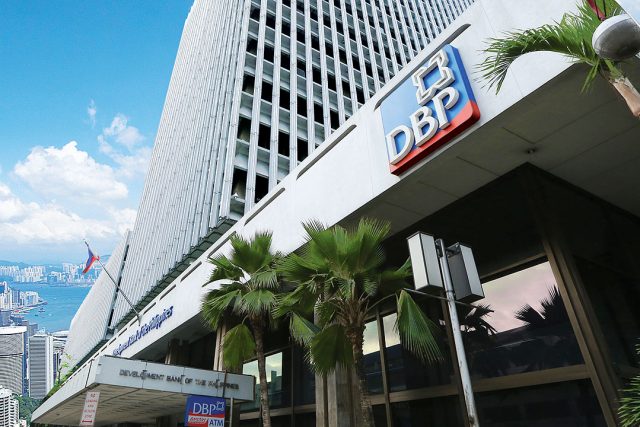
THE House of Representatives on Tuesday approved on third reading a bill that will replace the current charter of state-run Development Bank of the Philippines (DBP) to raise its authorized capital stock and allow it to conduct an initial public offering.

In a 199-3-0 vote, congressmen approved House Bill No. 11230, which repeals DBP’s almost 27-year-old charter to raise its capital stock to P300 billion from the current P35 billion.

The new charter also mandates the state-run lender to promote economic growth by supporting small businesses and “high impact programs,” such as infrastructure and housing developments, among other key provisions.

“This took us about nine years,” DBP President and Chief Executive Officer Michael O. de Jesus told BusinessWorld before the bill’s approval, referring to legislative efforts to update the state lender’s charter.

“This is going to be good for the bank and the country,” he added.

The Finance department has been pushing for congressional approval of DBP’s amended charter that is meant to strengthen its financial position and give it easier access to the capital markets, which would help fund its loans to its priority sectors, including social infrastructure and micro, small, and medium enterprises.

The Senate okayed its counterpart version of the measure in September 2024.

Both House and Senate versions of the measure allow the government to sell DBP shares to the public, provided that it retains a 70% stake. They also mandate that 10.67% or P32 billion of the bank’s shares should be subscribed to and paid by the government.

“We don’t intend to partly privatize right away. We intend to improve the bank, improve the valuations. That could take maybe three to five years,” Mr. de Jesus said.

“But we need to improve many things first. Our information and technology structure and our branches need to be improved.”

The DBP’s net income declined by 8.95% year on year to P4.68 billion in the first nine months of 2024 amid lower foreign exchange gains.

URC earmarks over P8B for 2025 capex

URC.COM.PH

UNIVERSAL ROBINA Corp. (URC) is earmarking over P8 billion for its 2025 capital expenditures (capex) to sustain growth, the company’s president said.

“We expect to be steady in our capex investments. In the past few years, we’ve been spending capex somewhere between P8 billion to P10 billion, including some landbanking for future growth opportunities,” URC President Irwin C. Lee told reporters on the sidelines of the Business Manual CEO Awards 2025 in Taguig City late Monday.

Mr. Lee said URC is eyeing to record single-digit growth in top line and bottom line for this year, as the company is “cautiously optimistic” about its financials.

He added that URC is expected to see “good profit growth” as the company works to recover margins and deal with high prices of inputs due to inflation.

“We’re looking for about mid-to-high single-digit top line growth. That will be driven by the return to growth in the Philippines, but also a continuation of our very good growth internationally. We’ll continue to see good profit growth. We’re going to accept a profit growth that is a few points behind top line growth,” he said.

“A lot of us are sort of very cautiously optimistic. The past three years have been a period of high inflation and therefore high price increases, which have been passed on to the consumers. We’re beginning to see the impact of that over the last year and a half or so,” he added.

With this, Mr. Lee said that URC is focusing on resuming volume growth, led by bolstering the value of its products as well as investing in new infrastructure.

“We’re focusing on best-value interventions, giving more value to the consumers, whether that’s in the form of better prices or just better offerings to consumers,” he said.

“We’re doing a lot of expansions in our infrastructure and capacity. We’re opening up some new factories and some infrastructure developments in the Philippines as well as outside of the country. The combination of these efforts will hopefully lead us to better volume growth,” he added.

However, Mr. Lee said that URC remains affected by inflationary pressures, which resulted in higher prices for its products.

“There are still selected commodities and ingredients that still have high inflationary pressure. Some of those still need to be addressed, both by internal cost savings and with some very selective pricing moves,” he said.

“But seeing what has happened over the last two to three years, I think those will be a little bit more muted and more deliberate in how we execute those so that the priority continues to be top line growth,” he added.

Mr. Lee said the company is also seeing a boost from the elections.

“We generally would expect some degree of help from the elections. Historically, there’s always been a bump whenever there’s an election year,” he said.

“We’re very strong in ready-to-drink with C2. We have a good water business. We have some ready-to-drink chocolates. We have good ready-to-drink coffee. We’re also number one in snacks. We’re strong in biscuits and some confectionery,” he added.

For the first nine months, URC saw a 17.6% drop in its attributable net income to P8.02 billion while sales improved by 1% to P118.88 billion.

URC shares fell by 1.07% or 70 centavos to P64.80 apiece on Tuesday. — Revin Mikhael D. Ochave

Paris’ Louvre museum, in dire state, cries for help

PRESSE.LOUVRE.FR

PARIS — The Louvre, the world’s most-visited museum and home to Leonardo da Vinci’s Mona Lisa, has requested urgent help from the French government to restore and renovate its ageing exhibition halls and better protect its countless works of art.

In a letter to Culture Minister Rachida Dati, revealed by Paris daily Le Parisien and confirmed to Reuters by the Louvre, Louvre President Laurence des Cars warned that the centuries-old building is in a dire state, and pointed at problems with water leaks and “worrying temperature swings which endanger the conservation of works of art.”

Built in Paris in the late 12th century, the Louvre Palace for centuries was the official residence of the kings of France, until Louis XIV — weary of rebellious crowds in Paris — abandoned it for Versailles, after which it became a museum for the royal art collection in 1793.

Last year, the Louvre welcomed 8.7 million visitors, who all entered via the pyramid-shaped western entrance, designed by architect I.M. Pei, which itself has become problematic as its greenhouse effect makes the Louvre’s subterranean reception uncomfortably hot on summer days.

A visit to the Louvre, the museum’s head wrote, has become “a physical ordeal,” with artworks being hard to find due to inadequate signage, lack of space for visitors to take a break, and insufficient food and sanitary facilities.

Designed to receive four million visitors a year, the Louvre saw record attendance of 10.2 million visitors in 2018, but Des Cars — who was appointed in 2021 — has imposed a limit of 30,000 visitors per day in order to avoid overcrowding.

Des Cars’ letter did not mention financing, but French TV news channel BFM said renovation costs could amount to 500 million ($520 million), which would be a challenge for President Emmanuel Macron’s government which has struggled to gets its 2025 budget approved by parliament.

Le Parisien reported that talks are under way between Mr. Macron’s office, the culture ministry, and the Louvre. A source close to Macron’s office confirmed that “the president has followed this issue with attention for several months.”

The culture ministry did not immediately respond to a request for comment.

After his first election in 2017, Mr. Macron gave his victory speech in front of the Louvre, while the Tuileries gardens around the former palace also played a prominent role during the 2024 Paris Olympics.

Besides a top-to-bottom renovation, the museum is also considering building a new wing for the Mona Lisa, as well as a new entrance on the eastern end of the museum, to relieve congestion at the Pyramid entrance. — Reuters

The vast potential of maritime cooperation, from security to economic

PHILIPPINE STAR/ EDD GUMBAN

The potential for maritime cooperation is as vast as the ocean itself — from defense cooperation to economic cooperation. The Philippines and France, as two “Blue Nations,” share similarities and affinities in terms of features and range of maritime resources.

As Blue Nations, both countries face shared challenges thereby opening the doors for strategic collaboration. Key areas that may be explored include environment, biodiversity, blue economy, and maritime defense and security.

This was discussed during the second installment of Stratbase ADR’s Blue Talks series, “Exploring Maritime Cooperation: The Role of International Partnerships on Maritime Security.”

The first thing that comes to mind is the defense and protection of our seas as part of our territory. The challenges that the Philippines is currently facing in the West Philippine Sea highlight the importance of deterring the aggressive actions of countries bent on disrupting the rule of law and upsetting the rules-based international order.

And, indeed, H.E. Marie Fontanel, Ambassador of France to the Philippines, reiterated the many firsts in the Franco-Philippines relations in the maritime domain. These milestones include the Balikatan exercise, the La Pérouse exercise, and the upcoming visit of the French aircraft carrier Charles de Gaulle. These emphasize the shared commitment to regional stability, freedom of navigation, and respect for sovereignty, over and above key initiatives such as the blue talks series.

Apart from France, collaboration with other like-minded partners is essential for ensuring regional maritime security. During the forum Indonesian Ambassador Agus Widjojo underscored the importance of inclusiveness, collective commitment, and trust as key pillars of cooperation. His sentiments were echoed by Vietnamese Ambassador Lai Thai Binh, who emphasized that strong partnerships and a steadfast commitment to the rule of law are crucial in addressing today’s complex challenges.

Japanese Ambassador Endo Kazuya, EU Ambassador Massimo Santoro, and Australian Acting Ambassador Dr. Moya Collett all highlighted the need to uphold international law, particularly in the West Philippine Sea, where illegal, aggressive, and dangerous actions continue to pose significant threats.

For the Philippines, these strategic collaborations play a critical role in safeguarding maritime security. To strengthen its defense posture, Manila is actively pursuing various initiatives, including cross-training programs, bilateral patrols, and other cooperative engagements.

But maritime security transcends physically securing boundaries. It is also about ensuring the economic security of nations. This larger sphere includes the environment, biodiversity, and the blue economy. It is about the efficient functioning of maritime trade and shipping routes, which are vital to global trade and are an important aspect of the Philippine economy.

The French ambassador herself said: “while defense is central to maritime security, it is not the only aspect. For an archipelagic nation like the Philippines, maritime safety is equally critical. Ensuring the safe and efficient transport of people and goods is essential for economic prosperity, just as territorial and maritime sovereignty is crucial for national security.”

This sentiment was echoed by diplomatic representatives of Japan, the European Union, Vietnam, Indonesia, and Australia, all of whom were present in the forum.

Indeed, beyond defending our territorial integrity while upholding peace and being resilient amidst the danger posed by the aggressive actions of external actors, securing vital trade routes that enable global trade, modernizing ports, and ensuring a just management of maritime industries is critical to foster sustained economic growth.

As a maritime and archipelagic country, the maritime industry is a lifeline of the Philippines necessitating increased support for its comprehensive and holistic development.

For one, ensuring maritime safety is crucial for boosting the Philippine economy, as the country’s trade and inter-island connectivity rely heavily on maritime activities. Through strengthened partnerships and comprehensive safety protocols, the Philippines aims to protect its maritime interests while contributing to global trade and sustainability goals.

Secondly, the shipping industry is an important sector for the country. It is a key driver of economic activity through the facilitation of the movement of goods, services, and people. As such, it is important to build the industry, including the modernization of the network of ports in the country. Given the Philippines’ strategic location in the Indo-Pacific region, these are instrumental to economic activity by connecting our islands to both domestic and international markets.

Maritime cooperation knows no bounds. It is a critical area where the President’s “economic security is national security” dictum is clearly illustrated.

All these, taken together, enable us to ensure sovereignty, prosperity, and security, and to uphold the rules-based order. To achieve these, only collaboration will set in motion a broad range of initiatives to address the multifaceted challenges facing the global maritime domain.


Victor Andres “Dindo” C. Manhit is the president of the Stratbase ADR Institute.

GSIS gets $272-million payout from infrastructure fund investment

GSIS FACEBOOK PAGE

THE GOVERNMENT Service Insurance System (GSIS) has received a $272-million (about P15.8-billion) payout from a private equity fund following the sale of its stake in a data center operator.

“As of Dec. 30, 2024, the GSIS received a substantial payout of $272 million from the Macquarie Asia Infrastructure Fund 2 (MAIF2), following the successful sale of the fund’s stake in AirTrunk, a leading data center operator in the region,” the state-run pension fund said in a statement on Tuesday.

“With this latest cashflow into the GSIS, along with previous payouts from MAIF2, the pension fund has now recouped more than its initial investment in the fund managed by the Macquarie Asset Management (MAM).”

The GSIS said the windfall boosted its income and, in turn, its fund life, which will benefit its members. As of the first quarter of 2024, the GSIS’ fund life was up to 2058, while its net income in the same period rose by 21% year on year to P37 billion.

“We have a duty to invest prudently on behalf of our millions of hardworking government employees. Our infrastructure investments through MAM’s funds have delivered excellent results, enhancing retirement security while supporting critical infrastructure,” GSIS President and General Manager Jose Arnulfo A. Veloso said.

The GSIS partnered with MAM in 2012 through an investment in the Philippine Investment Alliance for Infrastructure. It invested in MAM’s regional infrastructure funds in 2017 and 2021 to diversify its portfolio.

Mr. Veloso said the state-run pension fund for government employees has seen “strong” returns from its infrastructure investments in the Philippines and in Asia.

“The GSIS maintains a prudent balance in its portfolio, with 70% allocated to low-risk assets for stability and a strategic portion in higher-yielding infrastructure investments to drive returns and support pension fund growth,” the fund added. “The GSIS remains confident its diversified strategy focused on long-term stability will continue to deliver sustainable returns, securing members’ financial well-being.” — A.M.C. Sy

Vivant completes divestment from Buskowitz Energy

FREEMAN FILE PHOTO

LISTED Vivant Corp. said on Tuesday that the unit of its energy-related holding company Vivant Energy Corp. (VEC) has completed the transaction to divest from solar power provider Buskowitz Energy, Inc. (BEI)

VEC’s wholly owned subsidiary Vivant Renewable Energy Corp. (VREC) has complied with the post-closing requirements following the completion of the transaction documents for the sale of its equity stake in BEI, Vivant said in a stock exchange disclosure.

VREC divested its 32.26% stake, equivalent to 560,000 Common B shares, in BEI.

Aurora Sustainable Energy Pte. Ltd., a Singapore-based private limited company, acquired outstanding Common B shares, through the assignment by BEI of its rights to purchase VREC’s shares under the shareholders’ agreement.

“The transaction is aligned with Vivant Energy initiatives to focus on its core competencies as it concentrates on its investment initiatives on its retail energy supply (RES) and Small Power Utilities Group (SPUG) businesses,” the company said.

BEI has business interests in solar development, engineering, procurement, and construction. It offers solar power purchase agreements, leases and solar loans for companies and individuals to help their switch to renewable energy solutions.

Meanwhile, Vivant has investments in various companies engaged in electric power generation and distribution and retail electricity business. It recently entered the water industry arm, “with a diversified portfolio in the areas of bulk water supply, wastewater treatment and water distribution.”

At the local bourse on Tuesday, shares in the company closed unchanged at P18.80 each. — Sheldeen Joy Talavera

Start-up visas may spur Philippine jobs

STOCK PHOTO | Image from Freepik

By Beatriz Marie D. Cruz, Reporter

START-UP VISAS for foreigners could help generate jobs and increase Philippines competitiveness, but the government should improve the business environment and boost workforce skills to maximize economic benefits, analysts said.

“As we have witnessed how other countries benefitted from granting start-up visas, we expect the same to open up the country to talented innovators,” Divina V. Ilas-Panganiban, a lawyer and partner at Quisumbing and Torres’s IP Data and Technology Practice Group, told BusinessWorld in an e-mailed reply to questions.

“This will lead to the entry of novel ideas, fresh strategies and diverse technologies into the country,” she added.

A start-up visa, which allows a foreigner to set up a business in a host country, is being offered by Canada, Ireland, New Zealand, Singapore and the Netherlands.

Under Republic Act No. 11337 or the Innovative Start-up Act, foreigners who own a start-up may apply for a special visa to operate in the Philippines. The visa is valid for five years and may be renewed for three years.

“What’s good about that is it allows start-ups from other countries to consider the Philippines and it allows the marketplace to become more mature,” according to Alewijn Aidan K. Ong, assistant general manager for investments at National Development Corp. (NDC) “Secondly, it allows the exchange of technology and know-how.”

NDC is working with the Bureau of Immigration in issuing start-up visas.

Similar to a standard visa, a start-up visa facilitates the transfer of skills, knowledge and capital to the country, said Shotaro Akehira, a Master’s candidate at the Hiroshima University in Japan.

“In theory, issuing start-up visas would help attract young and talented entrepreneurs to the country to jumpstart sectors that would otherwise not receive investments,” he said in an e-mail.

Start-ups are also more willing to take risks compared with a traditional business. Its eagerness to innovate allows the economy to explore untapped markets, Mr. Akehira said.

However, allowing more foreign start-ups to enter the country could force local workers to seek opportunities overseas, Ms. Panganiban said.

“If foreign start-ups will be allowed to enter and share the market with local entrepreneurs, there is a risk that Filipino workers will be displaced,” she said. “Some fear that this may lead to a situation where local workers are again constrained to leave the country and look for better opportunities abroad.”

The government should upskill the Filipino workforce by investing in education and training programs, Ms. Panganiban said.

George N. Manzano, who teaches trade at the University of Asia and the Pacific, said developing a start-up culture takes more than issuing special visas.

“There should be a good investment climate, a deep pool of Filipino human resources, perhaps even incentives, good supplier industries and logistics, and more,” he said in a Viber message.

Mr. Akehira said the Philippines lags behind its Southeast Asian neighbors in having an established start-up ecosystem.

“For issuing start-up visas to be economically successful, the Philippines must massively invest in and revamp existing structures to incentivize international talent to enter the country,” he said.

To attract more foreign start-ups, the government should also improve its digital infrastructure and the ease of doing business in the country, Ms. Panganiban said.

“If foreign start-ups find that there are stricter requirements for them here especially compared with other economies, they may be discouraged from pursuing their business in the country,” she added.

Los Angeles artists, collectors reel from wildfires

A PLANE makes a drop as smoke billows from the Palisades Fire at the Mandeville Canyon, in Los Angeles, California, US, Jan. 11, 2025. — REUTERS

AS the Los Angeles area begins the formidable task of rebuilding after the most destructive wildfires in its history, the city’s artists and art collectors are mourning what could amount to billions of dollars in irreplaceable art that went up in flames.

The wildfires have altogether destroyed more than 13,000 structures, with many among those located in the affluent Palisades neighborhood — home to many priceless art collections — and the town of Altadena, which was home to a flourishing artist community.

Some of those art collectors likely lost many of their acquisitions as the fires burned out of control for weeks, while local artists have watched as their studios and homes burned, destroying their work and jeopardizing their livelihoods.

“There’s part of me that’s numb or in shock,” said Brad Eberhard, an artist who ran Altadena’s Alto Beta gallery, which also housed his own studio. Both burned down in the Eaton Fire. “Every half hour I remember another thing gone.”

Alto Beta, a 51-sq-meter space in an Altadena shopping center, hosted exhibits focused on artists who had not had a showing in Los Angeles in the past three years.

Mr. Eberhard lost between 50 and 70 of his own sculptures as well as about two dozen pieces of art from his friends and colleagues.

When he returned to visit the gallery, “all I recognized was an aluminum door frame,” he said.

Just days before the gallery burned down, Alto Beta had opened a show called Quiver exhibiting paintings from Mary Anna Pomonis, a Los Angeles-based artist. Ms. Pomonis described the work in the show as female-centered paintings rooted in devotional imagery.

“It felt like it was an appropriately dramatic response to work that I felt dealt on that scale of an epic narrative,” she said.

Many in the Los Angeles area have heard the fates of their homes but have been unable to return to see what’s left, as tens of thousands of Angelenos remain under evacuation orders.

Kim McCarty, a watercolor painter and owner of the Michael’s Santa Monica restaurant with her husband, lost her home to the Palisades fire. Like many, she has not been able to return to assess the damage in person.

Through their restaurant, which opened in 1979, the McCartys became acquainted with local artists and housed many pieces in their Malibu home from friends such as Roger Herman, a German-born artist who teaches at the University of California, Los Angeles, and Pippa Garner, an American artist who died in Los Angeles in December.

“(I’m) sad to lose that all because it’s such a loving thing,” said Ms. McCarty, who added she was not able to salvage any of her own artwork before she was forced to evacuate.

Experts have estimated that the LA wildfires could be the most expensive disaster in US history. AccuWeather has estimated at least $250 billion in losses due to the fires, although that figure could still change.

It is too early to estimate much of the losses that are art-related, but there were perhaps “billions” of dollars worth of fine art in properties in affected areas, said Christopher Wise, vice-president at Risk Strategies, an insurance broker and risk management consultancy.

“If you take a look at the size of the areas that are under threat or have burned, the scale of it really is staggering,” he said.

Still, Mr. Wise cautioned that the amount of losses remains unclear, as many collectors have yet to return to their homes.

Despite the uncertainty created by the wildfires, the organizers of Frieze Los Angeles made the decision last week to go ahead with the international art fair, scheduled for late February.

Frieze, which also holds annual fairs in London, New York, and Seoul, has presented the Los Angeles edition since 2019, elevating the city’s status as an art capital. The fair attracts galleries and collectors from around the world, especially those from the US West Coast.

“Since the fair’s founding six years ago, Frieze has been proud to support and be part of this vibrant community,” said a Frieze spokesperson. “The challenges the city is currently facing only strengthen our commitment to work alongside the community to rebuild and recover together.”

Frieze Los Angeles, in conjunction with several smaller art fairs, aims to send a message to the local art community by going forward despite the fires, said Marc Selwyn, the owner of Marc Selwyn Fine Art in Los Angeles.

“I think it’s important that people know that LA is open for business and art is something that can be a boost for people in these kinds of times,” the gallery owner said.

The world-famous Getty Museum, which survived the fires, led several major art organizations in standing up a $12 million LA Arts Community Fire Relief Fund, which is set to provide emergency relief to artists and others who work in the arts.

If there is a silver lining to be found in the disaster it may lie in how the Los Angeles artistic community has pulled together to help one another, said Mr. Eberhard. He has already been able to find homes in other galleries for most of the shows that Alto Beta was set to exhibit this year.

“I didn’t know that the artist community was this caring. I really didn’t, because artists are notoriously, and accurately, independent, self-reliant, like little islands,” he said. — Reuters

ADVERTISEMENT
ADVERTISEMENT