Home Blog Page 2070

The potential of nascent industries in the Philippines

Erwin G. Pato, SM Investment Corporation’s executive vice president of Treasury, Finance, and Planning, talks about the country’s nascent industries.

Interview by Almira Martinez
Video editing by Arjale Queral

Inflation likely within target until ’26

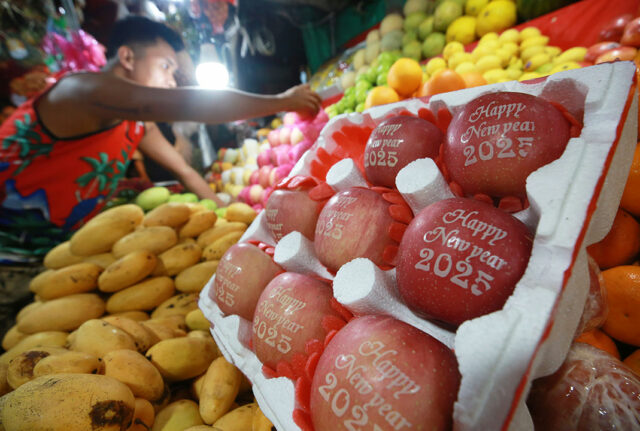
Fruits are displayed at a market in Quezon City, Dec. 29, 2024. — PHILIPPINE STAR/MIGUEL DE GUZMAN

PRIVATE SECTOR economists expect inflation to remain within the central bank’s 2-4% target from this year to 2026, the Bangko Sentral ng Pilipinas (BSP) said.

The BSP’s latest survey of external forecasters in its Monetary Policy Report showed that analysts’ mean inflation forecast for this year stood at 3.1%, lower than the central bank’s 3.3% baseline projection.

The survey showed an 82.6% likelihood that inflation will settle within target this year and an 83.5% probability for 2026.

“Inflation expectations continue to be well-anchored. Risks are broadly balanced, with headline inflation expected to stay low and manageable over the medium term.”

For 2026, economists expect inflation to average 3.2%, also below the BSP’s 3.5% forecast.

Headline inflation averaged 3.2% in 2024, well within the target band. January inflation data will be released on Feb. 5.

The survey showed the within-target inflation outlook is mainly driven by easing rice and oil prices.

“Downside risks to the inflation outlook are seen to emanate largely from lower rice prices, amid the implementation of Executive Order (EO) No. 62 and lower oil prices,” the BSP said,

President Ferdinand R. Marcos, Jr. last June signed EO 62, which slashed rice import tariffs to 15% from 35% until 2028, citing the need to curb rice prices.

Rice inflation has slowed to 0.8% in December from 5.1% in November and 19.6% a year prior. Rice is typically the biggest contributor to overall inflation.

Global crude oil prices are seen to ease further, the BSP said.

“Futures prices have declined due to market expectations of higher US oil production and expectations of weaker global demand as well as the likelihood of global oversupply.”

“This in turn led to a delay in the anticipated increase in oil production by the Organization of the Petroleum Exporting Countries and other partner countries (OPEC+).”

However, the central bank warned that inflation could breach the 2-4% band if Dubai crude oil prices average above $90 per barrel from this year to 2026.

The Development Budget Coordination Committee expects Dubai crude oil to range from $60 to $80 per barrel from 2025 to 2026.

“These oil price scenarios consider only direct effects and do not incorporate potential second-round effects on transport fares, food prices, and wage increases.”

The surveyed analysts also flagged upside risks to the inflation outlook such as supply disruptions due to geopolitical tensions and adverse weather conditions.

“The potential spike in electricity rates, higher-than-expected wage adjustments, and protectionist US trade policies were also identified as upside risks,” it added.

The BSP also noted the possibility of rising electricity rates in the coming months.

“In July 2023, the Supreme Court nullified the previous cap on Wholesale Electricity Spot Market (WESM) prices for November 2013 and December 2013. Electricity rates could rise due to the potential increase in generation charges being passed on to consumers.”

The central bank earlier warned that the balance of risks to the inflation outlook remain tilted to the upside for this year and the next.

The BSP expects inflation to settle at the midpoint of the 2-4% target until the first half of 2025, before accelerating to the upper end of the target from the second half of 2025 to the first half of 2026.

Inflation will ease closer to the midpoint of the target by the second half of 2026, driven by declining global commodity prices, it added.

FURTHER EASING
Meanwhile, analysts surveyed by the BSP also expect further monetary policy easing for this year.

“For 2025, the general view is that the BSP will ease its monetary policy stance by a range of 50-100 basis points (bps). Meanwhile, analysts have mixed views on the target reverse repurchase (RRP) rate for 2026,” the BSP said.

Last year, the Monetary Board cut rates by a total of 75 bps, bringing the key rate to 5.75% by end-2024.

“On balance, there is scope for measured monetary policy easing given the within target inflation, manageable underlying price pressures and well-anchored inflation expectations. However, upside risks to inflation warrant close monitoring,” the BSP said.

“A further cut in the policy rate will help reinforce the impact of the prior monetary easing on market interest rates, lending activity, and aggregate demand.”

BSP Governor Eli M. Remolona, Jr. has said there is room to ease further as the current policy rate is still in “restrictive territory.” However, the central bank is likely to deliver further rate reductions in “baby steps.”

‘BELOW POTENTIAL’
Meanwhile, the BSP expects the Philippine economy to “grow below potential” over the near term due to subdued demand. The government is targeting 6-8% for 2025 to 2026.

“The outlook for domestic growth indicates a more subdued pace of economic activity up to 2026,” it said.

The BSP expected economic growth in 2024 to settle slightly below the government’s 6-6.5% target, after a weaker-than-expected third-quarter gross domestic product (GDP) print.

Fourth-quarter and full-year GDP data will be released today (Jan. 30).

“However, GDP growth is seen to modestly improve and settle close to the low end of the targets for 2025 and 2026,” the BSP said.

“The decline in global oil prices, the easing of BSP’s monetary policy, and the reduction in the reserve requirement ratio are seen to support domestic economic activity.”

Domestic demand is also seen to “remain firm but subdued.” — Luisa Maria Jacinta C. Jocson

PHL on track to exit ‘gray list’ by February

REUTERS

By Luisa Maria Jacinta C. Jocson, Reporter

THE PHILIPPINES is so far on track to achieve its target of exiting the Financial Action Task Force’s (FATF) “gray list” by next month, the central bank’s top official said.

Asked about the progress on the country’s final steps to exiting the gray list, Bangko Sentral ng Pilipinas (BSP) Governor Eli M. Remolona, Jr. told BusinessWorld that it has been “so far so good.”

The FATF recently concluded its onsite visit in the Philippines this month ahead of its plenary and meetings in February, which Mr. Remolona is scheduled to attend.

At its October plenary, the FATF kept the country on its list of jurisdictions under increased monitoring for “dirty money” risks.

The Philippines has been on the list for over three years now or since June 2021.

However, the dirty money watchdog initially determined that the country had substantially completed the recommended action items to improve its anti-money laundering and counter financing of terrorism (AML/CFT) regime.

The FATF’s recent onsite visit and assessment aimed to verify the country’s progress and sustainability of AML/CFT reforms. This is typically the final step before it grants a country an exit from the list.

The Anti-Money Laundering Council earlier said it was positive that the country will be able to exit the dirty money list this year as it has addressed the remaining deficiencies.

However, it cited the need to sustain the progress on these reforms to ensure the country stays out of the list.

Chester B. Cabalza, founding president of Manila-based International Development and Security Cooperation, said the government must fast-track its financial reforms to exit the list.

“If in case it achieves the exodus from the gray list, to draw more investments and be considered a respectable economy in the region, the Philippines is obliged to have a clear-cut monitoring and innovative actions on how to stay buoyant financially without scar from its hits in FATF,” he said.

Filomeno S. Sta. Ana III, coordinator of Action for Economic Reforms, said that reforms should go further than those recommended by the FATF.

“The biggest reform that can deter money laundering and tax evasion is the lifting of the Bank Secrecy Act (BSA),” he said via Facebook messenger.

“Bank secrecy law is a Jurassic institution; only countries that are centers of money laundering have them. But international pressure is forcing this limited number of countries to relax their laws.”

Nueva Ecija Rep. Rosanna “Ria” V. Vergara said being part of the gray list for years now has had “significant consequences for our economy and citizens.”

“While enhanced due diligence is not explicitly required by the FATF, being on the gray list has resulted in a decline in foreign investments, reduced investor trust, and added financial burdens on Filipinos working abroad.”

“Getting off the gray list would have a transformative impact. It would restore global confidence in the Philippines, stimulate economic growth, and attract foreign investors back to our shores,” she added.

This would also be more beneficial for overseas Filipino workers (OFWs), as they face high transaction costs.

“As a result of being on the FATF gray list, they end up going to financial service providers (FSPs) that charge higher fees to send money,” Ms. Vergara said.

“These FSPs take advantage of our being on the list for the higher charges.  Being removed from the gray list will allow our OFW to choose FSPs who do not charge exorbitant fees.”

Monitoring of financial risks should not just be limited to institutions, Ms. Vergara said.

“Most often these unscrupulous individuals use nonfinancial agencies to do their illegal activities — casinos for one. Thus, vigilance is required.”

“Legislation must be passed to criminalize online scamming.  We need to upgrade our government’s capacity to identify and track down these illegal rings that often operate outside our country, defrauding our people of their hard-earned money.”

Last year, the Anti-Financial Account Scamming Act (AFASA) was signed into law. It aims to protect consumers from financial cybercrimes by penalizing violations.

Meanwhile, the Defend NGOs Alliance in a statement raised concern over the “misuse of CFT measures and erosion of civic space in the Philippines.”

It said the government’s efforts to exit the gray list have led to “increasing judicial attacks on nongovernment organizations (NGOs) and people’s organizations (POs).”

The group said the government’s implementation of FATF recommendations have been used to “justify restrictive measures against NGOs it sees as critical of the government under the guise of counterterrorism.”

“Stricter restrictions and regulations on NGOs disrupt their finances, operations and services. The research also points out that trumped-up cases are for ‘paper compliance’ to meet arbitrary quotas for exiting the FATF gray list.”

Data from Defend NGOs Alliance showed that there are at least 69 development workers and 29 NGOs in the country that have been tagged with charges related to terrorism.

In 2002, the FATF blacklisted the Philippines for having no legal anti-money laundering framework. It was removed from the blacklist a year later after the passage of the Anti-Money Laundering Act.

PDEx to launch gov’t bond forward contracts

BW FILE PHOTO

THE PHILIPPINE Dealing and Exchange Corp. (PDEx) will introduce the country’s first peso-denominated interest rate hedge next week as part of efforts to boost activity in the fixed-income market.

PDEx President and Chief Executive Officer Antonino A. Nakpil said the bond trading platform will launch a new derivative product called government bond forward contracts, which will be initially available to banks.

“We’re launching that (government bond forward contracts) next week, Monday (Feb. 3). We’re excited about that because that’s the first purely Philippine peso-denominated interest rate hedge,” he told reporters on the sidelines of a recent Financial Executives Institute of the Philippines event in Makati City.

“It will be available to the banks first, the inter-dealer first, and then later on to clients who may find that useful,” he added.

Mr. Nakpil previously said that the Securities and Exchange Commission approved the market framework and infrastructure to offer the trading of government bond forward contracts on Jan. 2.

According to Mr. Nakpil, bond forward contracts, which designate a fixed price for a debt security on a future date and let market participants hedge interest rate risks, will help provide a new dynamic to the country’s fixed-income markets.

“It’s a derivative, it’s a new thing. It will be settled in a way that is unique. We’re not creating a futures contract like in the traditional sense. It is a forward expression of what has been established as a method of hedging in the futures markets. We’re using an over-the-counter forward expression of that,” he said.

“It’s a first. We’ll see if it works. We think it will work. It’s not a futures contract so there’s no leverage on it,” he added.

Mr. Nakpil said the new product is not meant for retail investors due to its complicated nature.

“We’ll allow only the dealers and then qualified investors. Basically, professionals only. This is not meant for the retail investors.” Mr. Nakpil said.

“Some contracts are not meant for retail investors, especially if there’s leverage involved. Once you involve leverage like futures contracts, it becomes complicated,” he added.

Sought for comment, Rizal Commercial Banking Corp. Chief Economist Michael L. Ricafort said in a Viber message that this will help further develop capital markets in the country.

“This will give greater flexibility to manage interest rate risk in the local market and would give market players the ability to at least hedge their market risks or take trading positions based on their view on interest rate direction,” Mr. Ricafort said.

He noted this would allow local markets to adopt standards in more developed markets to cater to the demands of investors.

The PDEx is aiming to have P600 billion worth of corporate bond listings this year.

The bond trading platform saw P360 billion in 2024, missing its target of P400 billion.

However, Mr. Nakpil said the target could be changed due to geopolitical risks.

“We’re not sure of the P600 billion. We’ll be refocusing. We’ll see whether it’s reachable this year,” he said. — Revin Mikhael D. Ochave

Recovery in consumption seen to fuel PHL growth

Thousands of people flocked to Chinatown in Binondo, Manila to celebrate Lunar New Year, Jan. 30, 2025. — PHILIPPINE STAR/WALTER BOLLOZOS

A RECOVERY in household consumption could drive Philippine gross domestic product (GDP) growth to the 6% range this year, HSBC Global Research said.

“We think household consumption in the Philippines should return, bit by bit, to its regular levels, bringing overall gross domestic product growth back to the range of 6% or more,” HSBC economist for ASEAN Aris D. Dacanay said in a report.

The Philippines’ GDP expanded by 5.2% in the third quarter, its weakest growth in five quarters. This brought the nine-month growth average to 5.8%.

The economy likely grew by 5.8% in the fourth quarter and 5.7% for the full-year 2024, according to a BusinessWorld poll of 18 economists last week. Fourth-quarter and full-year GDP data will be released today (Jan. 30).

The government is targeting 6-6.5% growth for 2024 and 6-8% for 2025 to 2026.

“Consumption should also be boosted over the near term with the recent depreciation in the Philippine peso against the US dollar boosting the purchasing power of every US dollar remitted.”

HSBC also cited a stronger recovery in non-durable consumer goods.

“Non-durable spending may be improving fast, but spending on big-ticket items, such as cars and real estate, will need more time to return to normal.”

“These goods are large expenditures by nature, potentially requiring households to acquire credit. To optimize one’s borrowing costs, households may be waiting for the central bank’s easing cycle to end before eventually deciding whether to borrow money or not.”

Mr. Dacanay said household consumption is unlikely to be affected by the Trump administration’s aggressive tariff policy.

“Remittances, demographics, and services exports — three sectors of the economy that drive consumption — are subject to minimal tariff risks, at best. So, to monitor the Philippine economy in 2025, watching household consumption will be key,” he said.

“The economy does have some layer of insulation; household consumption remains the country’s main growth driver, and no other economy can put a tariff on consumption.”

Markets are pricing in the impact of US President Donald J. Trump’s aggressive tariff proposals. He has pledged to impose tariffs of up to 60% on China, 25% on Canada and Mexico as well as a 10% universal tariff.

Mr. Trump also said he planned to slap tariffs on imported computer chips, pharmaceuticals and steel as part of efforts to encourage manufacturers to make these products in the US.

“With all the headlines on trade and tariffs, there is a sense of relief that the Philippines is the least affected in ASEAN (Association of Southeast Asian Nations),” Mr. Dacanay added.

HSBC noted that household consumption has slowed amid elevated inflation and interest rates, which dampened purchasing power.

Private consumption grew by 5.2% in the third quarter of 2024, improving from 4.7% in the second quarter.

“But all this is already behind us. Inflation is back to within the central bank’s 2-4% target band, while monetary policy is amidst its gradual easing cycle,” Mr. Dacanay said.

Headline inflation averaged 3.2% in 2024. The BSP also expects inflation to remain within the 2-4% target band from this year to the next, as its baseline projections are at 3.3% and 3.5% for 2025 and 2026, respectively.

The central bank began its rate-cutting cycle in August last year, delivering a total of 75 basis points (bps) worth of cuts as of end-2024. This brought the key rate to 5.75%.

The BSP has signaled further rate cuts this year.

HSBC expects the central bank to bring down the benchmark rate to 5% by the third quarter of 2025. — Luisa Maria Jacinta C. Jocson
ADB approves $500-M PHL loan

PHILIPPINE STAR/MIGUEL DE GUZMAN

THE ASIAN Development Bank (ADB) approved a $500-million policy-based loan for the Philippines to boost disaster resilience and response.

In a statement, the ADB said the Second Disaster Resilience Improvement Program is a multiyear contingent disaster financing program.

The loan will provide the Philippines with quick access to financing during natural disasters and health emergencies.

The ADB said there is an option to replenish the loan facility twice, upon approval by the ADB Board. The loan can be renewed if there are unutilized amounts after the first five-year period.

“The Philippines is one of the fastest-growing economies in Southeast Asia but is at high risk for earthquakes, volcanic eruptions, typhoons, rising sea levels, and flooding,” ADB Country Director for the Philippines Pavit Ramachandran said in a statement.

The Philippines ranked the highest in disaster risk out of 193 economies, according to the World Risk Report of the World Economic Forum. The Philippines, which faces an average of 20 typhoons, remained the most disaster-prone country for a 16th straight year.

“With this program, we aim to help boost the country’s capacity for disaster risk reduction and management (DRRM) nationally and locally, including state-owned and -controlled corporations,” he said.

The program would also boost DRRM policies and frameworks as well as long-term resilience in minimizing the impact of disasters.

This new loan supports previous programs such as the Integrated Flood Resilience and Adaptation Project (Phase 1) and the Climate Change Action Plan Subprograms 1 and 2. — Aubrey Rose A. Inosante

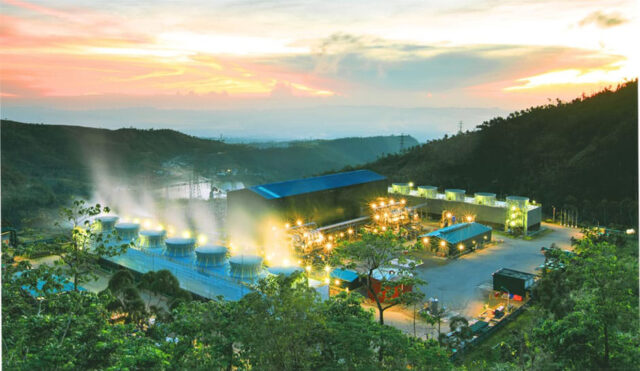
DoE names 12 bidders for 3rd GEA, including First Gen, SMC units

FIRSTGEN.COM.PH

THE DEPARTMENT of Energy (DoE) has identified 12 qualified bidders, including units of First Gen Corp. and San Miguel Corp. (SMC), for the third round of the Green Energy Auction (GEA-3) to be held this year.

In an advisory released on Wednesday, the DoE announced that the registration documents submitted by the qualified suppliers during the registration period from Jan. 9 to 10 were reviewed.

Based on the DoE’s list of qualified bidders, three generation companies are vying for geothermal capacities: Maibarara Geothermal, Inc., Energy Development Corp. (a unit of First Gen), and Bac-Man Geothermal, Inc.

For impounding hydro, the DoE identified Pan Pacific Renewable Power Phils. Corp. (Pan Pacific), Pulangi Hydro Power Corp., and United Hydro Power Builders Corp. as qualified bidders.

Seven generation companies are set to bid for pumped-storage hydropower capacities: Ahunan Power, Inc., First Gen Hydro Power Corp., Olympia Violago Water and Power, Inc., Pan Pacific, San Roque Hydropower, Inc. (under SMC), COHECO Badeo Corp., and Repower Energy Development Corp.

The DoE is set to offer geothermal, impounding hydro, and pumped-storage hydro capacities totaling 4,650 megawatts (MW).

The government will auction off 100 MW of geothermal, 300 MW of impounding hydro, and 4,250 MW of pumped-storage hydro.

The auction proper for GEA-3 is scheduled for Feb. 11, while the issuance of the certificate of award is set for May 20 and June 6, respectively.

The GEA program aims to promote renewable energy as one of the country’s primary sources of energy through competitive selection. The government hopes to increase the share of renewable energy in the power mix to 35% by 2030 and 50% by 2040.

The government first held GEA in 2022, attracting a total of 1,996.93 MW worth of renewables, while the second round concluded in 2023 with 3,440.756 MW.

For 2025, the DoE is set to conduct two more auctions focusing on integrated renewable energy and energy storage systems, and offshore wind power.

“These projects will play a crucial role in meeting the country’s growing electricity demand while ensuring that future power generation is increasingly sustainable,” the DoE said. — Sheldeen Joy Talavera

PHL mobile operators urged to adopt RCS messaging standard

STOCK PHOTO | Image by terimakasih0 from Pixabay

PHILIPPINE MOBILE network operators (MNOs) should consider the adoption of the rich communication services (RCS) standard to provide Filipinos with upgraded and secure messaging options, global cloud communications platform Infobip said.

“I really hope the Philippines will be in the radar because this is a very engaged market when it comes to communications and all activities that are related to the handset or devices,” Infobip Sales Director Cecile Perez Tizon told BusinessWorld in an interview last week.

RCS messaging is not yet adopted in the Philippines as this will depend on MNOs, Ms. Tizon said.

“To my knowledge, we’re targeting 2026, but this will be dependent on the interest and the collaboration of the telecom companies.”

Countries that are now actively using the RCS standard include Singapore, the United States, Belgium, France, Germany, Spain, and Canada.

RCS is an upgraded messaging protocol that has advanced features such as sending high-quality files and images directly into one’s SMS (short message service) inbox.

It addresses the limitations of SMS and MMS (multimedia messaging service) and allows communication via direct or group messaging. This will be managed by MNOs.

Other features of RCS include multimedia messaging, identifying read receipts and typing, group chats, location sharing, and business messaging.

For businesses, rich messaging can help them provide better support to their customers, streamline bookings, deliver personalized offers, and send timely updates, Infobip said.

Rich messaging is also expected to be a critical marketing and support tool to improve customer experience (CX), it said.

Meanwhile, other CX trends that the company expects to be key themes for businesses this year include the need for security in conversational artificial intelligence (AI), human-augmented AI practices, and AI agents in customer services, Ms. Tizon said.

At least of 86% of all generations of expect targeted and relevant communications, Infobip said in its Generational Messaging Trends Report. — Beatriz Marie D. Cruz

FLI targets to increase gov’t office leases

STOCK PHOTO | Image by Adolfo Félix from Unsplash

GOTIANUN-LED Filinvest Land, Inc. (FLI) is eyeing more office space leasing deals with government agencies to boost its commercial segment.

“We’re starting to tap into more government office requirements since they have the budget. Hopefully, we’ll be able to get more this year because there is demand,” FLI President and Chief Executive Officer Tristaneil D. Las Marias told reporters on the sidelines of a media event in Taguig City last week.

FLI recently leased office space in Makati City to the Department of Trade and Industry. It also bagged the contract for office space leasing in Pasay City with the National Bureau of Investigation.

Mr. Las Marias said that FLI has maintained its office space occupancy rate and added more office spaces to meet demand.

“There are many opportunities. Most of our buildings are of grade A quality. If people are moving out of their old offices to upgrade at friendlier rates, then I think we’ll be able to capture that,” he said.

On the residential segment, Mr. Las Marias said FLI is optimistic about its growth prospects despite the oversupply of condominium units in Metro Manila, citing its interest rates and its diversified portfolio.

“We have a lot of projects in the pipeline… I think we’re very optimistic,” he said.

“I think our diversified portfolio and the locations have more or less allowed us to be more resilient given this oversupply in select areas. We remain very confident,” he added.

Property consultancy firm Colliers Philippines said that unsold condo inventory in Metro Manila reached 75,300 units as of the third quarter of 2024.

Colliers added that it could take around 5.8 years to fully sell the units, about five times longer than in the pre-pandemic period.

“Historically, we’re kind of 50-50. If you talk about our National Capital Region and Luzon portfolio compared to the Visayas and Mindanao portfolios, we’re somewhere there. We’re kind of balanced,” Mr. Las Marias said.

Mr. Las Marias said easing interest rates and a stronger dollar would benefit its residential segment.

“Particularly for the residential market, with the interest rate going down, the borrowing rate of home mortgages becomes more affordable. That’s good for us,” he said.

“When the dollar is up, you have more purchasing power. Overseas Filipino workers (OFWs) tend to look at investment as the first priority to put in their mind. At least around 30% of our sales come from OFWs,” he added.

FLI shares were last traded on Jan. 28 at 73 centavos apiece. — Revin Mikhael D. Ochave

PHL rural bank sector liberalization boosts profits

BW FILE PHOTO

PHILIPPINE RURAL BANKS have benefited from the entry of foreign capital following the industry’s liberalization in 2013, with these investments boosting lenders’ incomes and asset quality, according to a Bangko Sentral ng Pilipinas (BSP) discussion paper.

“Empirical analysis reveals that the presence of foreign investors and their capital infusions improved the profitability and asset quality of the recipient rural banks,” the paper said.

The study assessed the impact of foreign equity infusion on rural banks using data from the first quarter of 2010 to the fourth quarter of 2022.

In 2013, the Philippine rural banking industry was liberalized through Republic Act No. 10574, which allowed foreigners to own, acquire, or purchase up to 60% of a rural bank’s voting stocks. The law also allows foreign individuals or corporations to acquire ownership of Philippine rural banks.

As of end-December 2022, rural banks accounted for about 1.5% of the total assets of the banking system.

There were 403 rural banks in the Philippines at end-2022, down from 607 head offices in 2010, the paper said.

Of this total, 13 rural banks had foreign capital, with majority of their foreign equity stockholders coming from Asia, mainly Singapore.

The central bank said the entry of foreign investors and their capital infusion “improved the profitability and asset quality of recipient rural banks,” although the impact was not uniform across the industry.

“Of the 13 rural banks with foreign equity, five experienced improvements in profitability, albeit with some lag after the capital infusion. These improvements stemmed from changes that entailed large short-term costs but were expected to generate long-term benefits,” it said.

“With the capital infusion, these banks underwent capacity building, such as upgrading business processes, information technology, manpower skills, and data management. Additionally, although five rural banks were already operating profitably before the infusion, the foreign capital may have helped them sustain their profitability,” it added.

The discussion paper said Philippine rural banks should consider seeking capital infusion from foreign investors.

“An important caveat of these findings is that the majority of the foreign equity infusion occurred only in the last three years of the study’s sample period. Hence, the full impact on rural bank performance may not yet be fully felt,” it said.

“Another limitation is the small number of rural banks with foreign equity relative to the total number of rural banks, making it difficult to draw generalizable conclusions. Thus, another study is warranted after several years to determine if the results still hold or have changed.”

The paper also recommended that the BSP continuously monitor the performance of rural banks with foreign equity to ensure they are benefiting from foreign capital.

“An annual survey, similar to the one conducted for commercial banks (Survey on the Effects of Foreign Bank Entry into the Philippine Banking System), could be carried out.”

The discussion paper was authored by BSP Research Academy Principal Researcher Hazel C. Parcon-Santos; Researchers Marie Edelweiss G. Romarate and Joan Christine S. Allon-Pineda; Bank Officer Carl Francis C. Maliwat and Research Associate Jose Adlai M. Tancangco; and Laura B. Fermo, deputy group head and senior economist at the ASEAN+3 Macroeconomic Research Office.

Latest BSP data showed that the Philippine rural banking sector’s combined net income rose by 32.6% to P8.34 billion at end-September 2024 from P6.29 billion a year prior.

Total assets stood at P430.396 billion at end-September, up by 16.7% year on year from P368.71 billion.

Meanwhile, the sector’s total capital accounts stood at P77.92 billion as of September, with capital stock at P46.67 billion, central bank data showed.

Its solo capital adequacy ratio was at 17.74% as of September, while the total capital accounts to total assets ratio stood at 18.16%. — Luisa Maria Jacinta C. Jocson

The real MVP: fresh milk

GUESTS ENJOY unique milk-based recipes at the Carmen’s Best Milk Bar.

CARMEN’S BEST, known for its ice cream, will be stocking supermarket shelves with a new line of fresh milk, thus expanding its dairy portfolio and signaling full-fledged dairy operations for its parent, Metro Pacific Agro Ventures (MPAV).

The new line of Carmen’s Best Fresh Milk includes variants Whole Milk, Low Fat Milk, Chocolate Milk, Salted Caramel Milk, and Barista Fresh Milk. Guests tried the milk variants during an event on Jan. 22 at The Fifth at Rockwell.

The brand also boasts of a new dairy facility in Bukidnon in Mindanao, enabling them to serve the Visayas and Mindanao markets. During a group interview, Jovy Hernandez, MPAV and Carmen’s Best president and chief executive officer said that the Laguna plant was able to service all the major island groups when it only made ice cream, a frozen product, but with the thrust towards fresh milk, with a limited shelf life of seven days, “it’s a different story.” Currently, they’re working on solutions with their Israeli partners to prolong the shelf life of their products. “We just have to make sure that what we produce in terms of protocols in Laguna is the same in Bukidnon,” he said. “The expansion opportunities in Bukidnon (are) immense,” he added. The property consists of more than 400 hectares of land. “If the demand is there, and we need to double the herd, we can always do it in Bukidnon.” The facility, acquired from a previous dairy producer, came with 1000 cows, adding to their initial herd numbering about 300. This has increased their production to 1.5 million liters of milk annually (from a video presentation at the event) from an initial 250,000, with the target set this year at two million. Carmen’s Best, founded in 2009 by Paco Magsaysay, was acquired by Metro Pacific Investments Corp. (MPIC), in turn MPAV’s parent, in 2022.

Asked about the difference between their fresh milk and other milks already in the market, Toby Gatchalian, MPAV and Carmen’s Best Chief Commercial Officer said, “It’s 100% fresh, and it’s 100% local,” he said. “You will see, really, the difference between fresh milk and something that, as Jovy says, you burn (undergoing ultra heat treatment, UHT), and it stays in the shelf for a very long time.”

Mr. Hernandez added, “We’re not here to compete with them. We’re just saying that 99% of the dairy demand of this country are all imported. We’re only 1%. That’s not correct in my view. If we can increase the local production, ergo, help the local farmers as well… every time you buy a Carmen’s Best milk product, you think to yourself, ‘This is 100% local, I’m helping the local Filipino farmers, and I’m helping the local dairy industry,’” he said.

“Our forecast by 2026, we will be self-sufficient in terms of milk supply for the demand that we are seeing. That’s roughly 25% of the local dairy production,” he added.

As for other dairy products, the company has a target to have a full line of milk, yogurt, ice cream, cheese, and butter by 2027. “We have formu-lations already for yogurt, which we will launch when the time comes. We have cheeses, butter, cream, and many, many more.” Addressing the trend of plant-based milks, Mr. Hernandez said, “These are in the pipeline. Plant-based milk products are a thing now, it’s a growing industry. We feel that we should be part of it.”

The presence of more cows also raises the question: Will they enter the beef market soon? “We already have the value chain, the barn, the technology on how to care for the cows. Maybe the next logical step would be getting into beef production. Maybe. We’re thinking about it. I can’t confirm to you today that we are. But it makes sense,” he said.

MPIC is one of three key Philippine units of First Pacific, the others being Philex Mining Corp. and PLDT, Inc.

Hastings Holdings, Inc., a unit of PLDT Beneficial Trust Fund subsidiary MediaQuest Holdings, Inc., has a majority stake in BusinessWorld through the Philippine Star Group, which it controls.

Carmen’s Best Milk is soon to be available online at www.carmensbest.com and in stores nationwide. — Joseph L. Garcia

The San Jose countryside: Exploring the bounties of nature

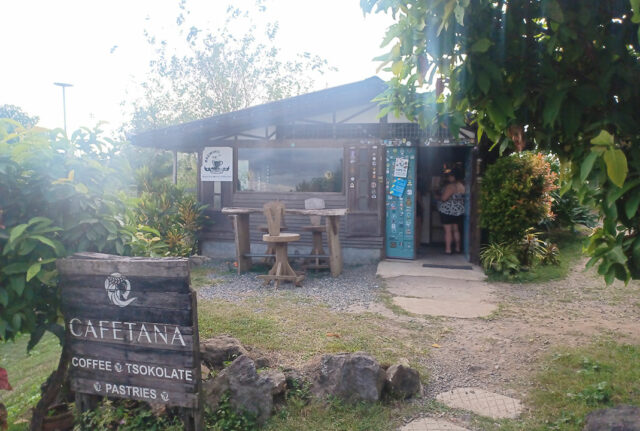
CAFÉTANA at RDC Nature Farm and Campsite. — BRONTË H. LACSAMANA

By Brontë H. Lacsamana, Reporter

IT’S FUN to go on a road trip and seek comfort in the countryside, like a character in a modern adventure fleeing the stresses of the city. San Jose, a municipality in the landlocked province of Tarlac in Central Luzon, is indeed a bucolic refuge from the urban chaos, but it is more than just the lush, green backdrop of an urban dweller’s temporary vacation spot.

What was once a land of thick forests and peaceful farms that one would glimpse on the way to Baguio has gradually grown into a beautiful oasis of ecotourism sites worth a trip of its own. Here are some breathtaking natural destinations and food hubs that BusinessWorld has visited in the area.

TARLAC RECREATIONAL PARK
The athletic and outdoorsy may already be familiar with the Jose V. Yap Recreational Complex since it houses a circuit for motor racing, a track and field oval, football and baseball fields, and basketball and volleyball courts. Built in 2009 to host the 2010 Palarong Pambansa, it has since welcomed both sporting events and families and friends on trips seeking outdoor activities.

The 78-hectare complex, known locally as the Tarlac Recreational Park (TRP), has an Olympic-size swimming pool as well as two large kiddie pools. It has a lake where one can kayak or go fishing. Adventurous visitors can rent mountain bikes, dune buggies, or ATVs to explore the vast fields within the complex.

Many groups opt to sit under the shade of the trees and have a picnic or camp overnight. But TRP also has cottages for eight to 12 people, nestled downhill, which affords one a bit of exercise when walking up towards the rest of the facilities.

Most importantly, the park’s location in the eastern part of San Jose, a short drive away from Tarlac City, makes it a good base camp for exploring the rest of the province.

MUDITA GLAMPING RESORT
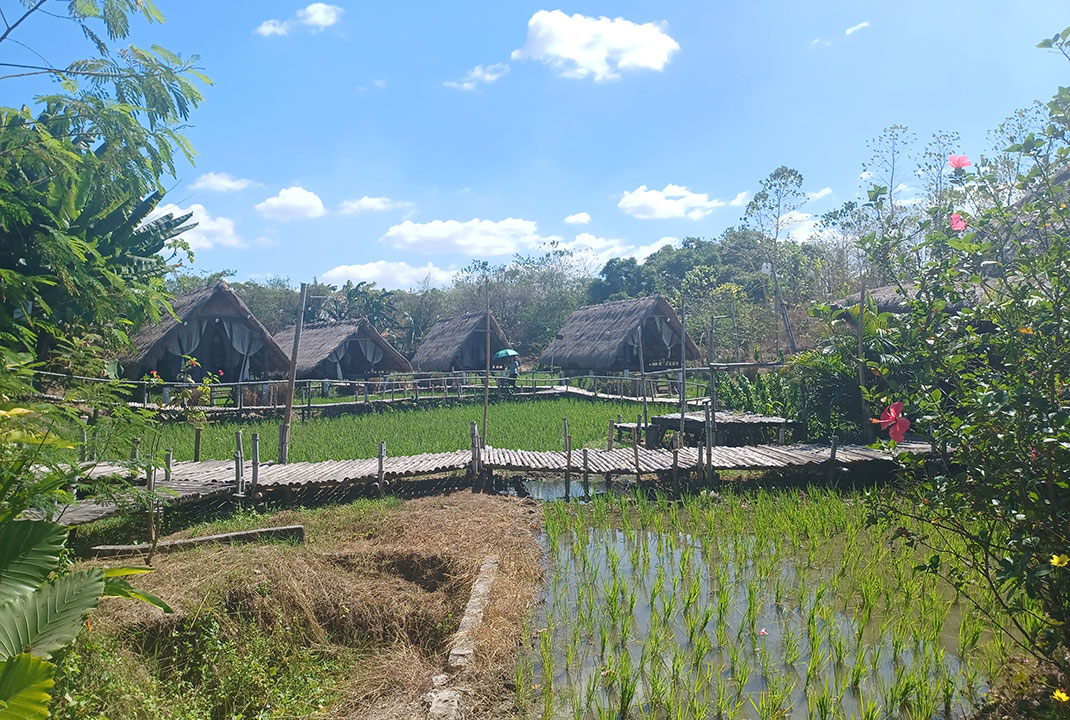
This next suggestion is a hidden gem that offers a luxurious opportunity to reconnect with nature. Located in Brgy. David in San Jose, the five-hectare Mudita Glamping Resort is right in the middle of a rice field, with bamboo walkways and nipa huts on stilts scattered around the property, a memorable sight to behold.

If you decide to try the glam camping (hence, glamping) adventure, you may find yourself reflecting on your relationship with nature. Instead of the usual fancy tents that other glamping sites have, Mudita has raised huts above the paddies, the cool breeze serving as natural air conditioning, but which are also filled with creature comforts like a small dining table and a mini fridge.

Guests can go for a refreshing swim in the outdoor pool or unwind with a relaxing in-house massage while listening to the therapeutic babbling of a nearby brook.

For food, look no further — the best branch of local Italian restaurant Trattoria Altrove is found here, offering a unique dining experience of pizzas, pastas, salads, and risottos amid the tranquil rice fields.

BAKIR CAFÉ
This quaint spot with a view of the rustic scenery of San Jose has a trendy reputation among locals and tourists. Bakir Café boasts of a wooden-and-bamboo structure that contributes to its countryside ambience, and a menu of Filipino café fusion eats, and coffee and milk tea beverages.

People usually order snacks like fried pugo (quail), fried itik (duck), and French fries, but there are also special dishes like mushroom tempura, bagnet (boiled and deep-fried pork belly), and an array of pastas. Bakir’s main draw would be its drinks, though, which are as rejuvenating as the view around the café.

What visitors usually do is get a table for a group and order, then roam the outdoor area while waiting for the food to arrive, taking advantage of the picture-taking opportunities and quiet time admiring the provincial atmosphere.

MT. NGILE OR LUBIGAN RIVERSIDE PICNIC GROUND
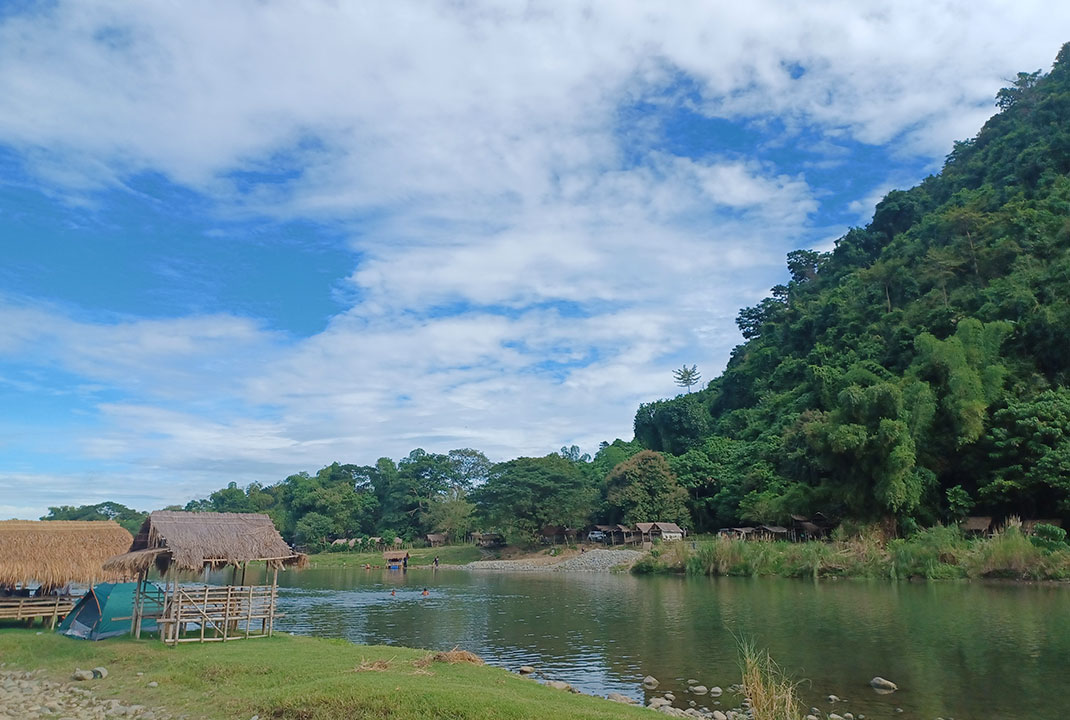
The Tarlac River runs throughout the province, so it has many access points in San Jose for one to bathe in it. The two sites that are easy to visit are the Mt. Ngile Riverside Picnic Ground and the Lubigan Riverside Picnic Ground. Both lie just off the main road and boast stunning views of the river cutting through the lush landscape.

The Mt. Ngile spot is particularly breathtaking since it sits in the shadow of the nearby mountain, as its name suggests. Upon parking at the designated area, the nipa huts beside the river are just a few steps away, available to rent for the day. You can also opt to bring a blanket or banig (a woven straw mat) to set up a small picnic.

While the river has rocky and muddy sections, the water is cold, clear, and refreshing to swim in. It’s a great down-to-earth experience of the waters that run through the town, and a decent stopover close to the next spot on the list.

MONASTERIO DE TARLAC
A trip to the Philippine countryside is incomplete without a visit to a religious landmark. The Monasterio de Tarlac in Brgy. Lubigan is noted for its 30-foot-tall statue of Jesus Christ overlooking the mountains below. It also has a chapel that contains a relic believed to be a fragment of the Holy Cross.

The well-known pilgrimage site has a P50 entrance fee per person for the upkeep of the monastery. While it’s more spiritual than others on this list, this destination is worth visiting even for those who aren’t religious. The view is spectacular, and it offers some affordable street food onsite in case the long drive has made you hungry.

RDC NATURE FARM AND CAMPSITE
The final spot to visit is located in Sitio Baag, known as the Little Baguio of the province as it is part of the Zambales Mountain Range, which is why it enjoys cooler weather compared to the usual flatland heat Central Luzon is known for.

The RDC Nature Farm and Campsite has an entrance fee of P50 per person which goes to the local Aeta community that staffs the farm and campsite.   

Multiple hangout spots make the scenic mountaintop fun to relax in for at least a full afternoon. Cafétana, its resident café, offers delicious locally sourced coffee and hot chocolate perfect for the chilly weather, the chairs and tables scattered outdoors across the green terrain.

Visitors can camp overnight for a fee of P150, but on weekends or holidays, the farm and campsite are often filled with visitors roaming the grounds and taking pictures. Because the area is so vast, the added foot traffic doesn’t mean much, the atmosphere is still light and breezy, and the panoramic view remains almost completely verdant green.

ADVERTISEMENT
ADVERTISEMENT