Home Blog Page 1985

Israel-Iran and the nine stages of how conflicts can escalate and get out of control

FREEPIK

Tensions are running high in the Middle East. The murderous attack by Hamas on Israel on Oct. 7, 2023 kicked off a spiral of violence in the region. That has culminated, a year later, in Israel mounting a ground invasion of Lebanon. The invasion, which Israel says aims to confront and destroy Hezbollah, follows 12 months of tit-for-tat strikes between Israel and Iran, which have gradually escalated in intensity.

Given that Hezbollah is closely associated and supported by Iran, there is mounting concern that this conflict could become a major flashpoint in international relations. The worry is that this war might provide the spark that causes the next global conflict.

To understand how dangerous the situation could be, it’s worth looking at the theory of conflict escalation. In 1997, Austrian economist Friedrich Glasl published his nine-stage model of conflict escalation, which is generally accepted as the most sophisticated study of how conflicts can develop from disputes to all-out conflict (a step he gives the rather ominous name of “Together into the abyss”).

The first level is when a conflict is readily or easily resolved, but when a resolution is not achieved, positions on either side of the argument harden and frustration begin to mount. The next step naturally occurs when conflict parties seek to make their case, hoping to gain advantage in the court of global opinion.

Stage three of the model sees the adversaries beginning to take action. Neither side wants to yield advantage to the other, while any sense that discussion might mitigate the conflict has disappeared in mutual antagonism and mistrust. Accordingly at stage four, the conflict parties resort to an “us vs them” rhetoric in an attempt to build coalitions and attract support. Stage five, described as “loss of face,” is when one or other of the antagonists feels they have become tarnished in the eyes of the community as a whole. Reputation no longer matters as much as achieving their ends. Sometimes one side or the other commits an act that it feels has isolated it, which only serves to harden its position.

In stage six, threats or ultimatums are issued. This can lead to hostilities spiraling as the conflict parties seek credibility by putting a timescale on a threat, which in turn will heighten the pressure on both sides. This can also bind another of the warring parties to a course of action from where there is little opportunity to retreat. This facilitates the move to stage seven, where the antagonists begin to trade the first limited blows in response to the threats they have made.

In stage eight, the offensive blows intensify, with the focus on trying to injure — or even destroy — the adversary’s capacity for response or call into question the legitimacy of the other side’s leader. Often this can lead to one or another of the parties fragmenting into warring factions, making the situation increasingly uncontrollable.

As the conflict hurtles into stage nine, the threat to one or another of the parties has become existential, who are now falling “together into the abyss.” All sense of caution is abandoned as the only goal is the total annihilation of the adversary. A state of total war.

WHAT STAGE ARE WE AT?
After years of animosity and denunciation on both sides, the conflict between Israel and Iran has now progressed to the stage that both sides have exchanged limited blows against each other. Reports have linked Iran to the planning of the Hamas attack on Oct. 7. Tehran has recently denied having any part in the massacre. Hezbollah, which is more closely linked to the Islamic Republic, has carried out a year-long barrage of rockets from Lebanon into northern Israel. In response, Israel has now directly struck against Iran’s proxy, invading southern Lebanon to engage and attempt to destroy Hezbollah.

Both sides clearly want to demonstrate their power and influence in the region. But the stakes could rise if Iran feels an urgent need to protect its proxies. For Israel, its leaders have long argued that its very existence is at stake.

In terms of Glasl’s stages of escalation, the two countries appear to have reached stage seven, where they are launching limited blows against each other while avoiding direct confrontation. Both want to make their adversary consider whether the cost of continuing is worth the potential rewards that can be gained.

Iran’s air attacks on Israel suggest that while Iran can see that its regional position is being threatened and is still seeking to support the non-state actors in Gaza and Lebanon, the way in which they have conducted their attacks suggest that Tehran does not feel itself powerful enough to escalate further than it already has.

The only direct blows the two powers have launched against each other have been from the air. Iran has now launched two (large) barrages of rockets against Israel, one in April this year and again at the end of September. Both bombardments were announced in advance and neither has resulted in Israeli casualties.

Israel responded in April with a targeted strike against an Iranian airbase close to one of the country’s nuclear installations. It has yet to directly respond to the latest Iranian barrage, but Netanyahu has said Israel would target Iran’s military installations “based on Israel’s national security needs.”

Analysts believe that both sides — so far at least — are using these limited strikes to signal their unwillingness to escalate. But there is a great deal at stake. Iran will feel its position as a regional power threatened by Israel’s ground campaign in Lebanon. Meanwhile Israel has repeatedly declared that it is fighting for the security of its people. Neither appears to want a wider conflict – and their allies certainly wouldn’t encourage them if they did.

So it’s clear that — up to now at least — neither Israel nor Iran wants to venture any further down the road to “the abyss” as envisaged by Glasl’s nine-stage model.

THE CONVERSATION VIA REUTERS CONNECT


Matthew Powell is a teaching fellow in Strategic and Air Power Studies at the University of Portsmouth.


Manila Water subsidiary completes sale of Bulacan utilities

PHILIPPINE STAR/IRRA LISING

MANILA WATER Co., Inc.’s subsidiary Filipinas Water Holdings Corp.  has completed the P1.02-billion divestment of Bulakan Water Co., Inc. and Obando Water Co., Inc., the water utility company said on Tuesday.

The transaction between Filipinas Water and SMC Bulacan Water Services Corp. has satisfied the closing conditions, according to a regulatory filing by the east zone concessionaire.

This move follows Filipinas Water’s decision five months ago to sell its 90% stake in Bulakan Water, totaling 135 million shares, and its 90% stake in Obando Water, totaling 88.2 million shares.

“The proceeds will be used to fund other strategic initiatives of [Manila Water],” the company said.

Bulakan Water is a joint venture with Bulacan Water District to operate the concession for the provision of water and sanitation services in Bulakan town.

Meanwhile, Obando Water is a joint venture corporation with Obando Water District to operate the concession in the municipality of Obando.

With the divestment, SMC Bulacan replaces Filipinas Water as the joint venture partner of the water districts.

Manila Water serves the east zone network of Metro Manila, covering parts of Marikina, Pasig, Makati, Taguig, Pateros, Mandaluyong, San Juan, portions of Quezon City and Manila, and several towns in Rizal province. — Sheldeen Joy Talavera

ADVANCE.AI credit bureau secures $4-M seed funding

ADVANCE.CBP, the credit bureau of Singapore-based tech startup ADVANCE.AI, has secured $4 million in seed funding from Southeast Asia-focused private equity firm Archipelago Capital Partners.

“The investment from Archipelago Capital Partners reinforces our shared vision of establishing a credit bureau that not only empowers lenders and borrowers but also strengthens and results in a more robust credit reporting and scoring infrastructure in the Philippines. This long-term investment will help strengthen and develop a more equitable and inclusive financial ecosystem for all Filipinos,” ADVANCE.CBP Chief Executive Officer (CEO) Dennis C. Martin said in a statement on Tuesday.

ADVANCE.CBP was selected as a special accessing entity (SAE) through an open tender process by the Credit Information Corp. (CIC). The credit bureau aims to serve financial technology companies, digital banks, and thrift banks.

The funding will aid the launch of ADVANCE.CBP in the Philippines. CIC and ADVANCE.AI partnered in August and aim to launch ADVANCE.CBP here in the fourth quarter.

“We see the launch of ADVANCE.CBP as a significant step in advancing the Philippine financial services ecosystem. This investment fits perfectly with our ethos of driving sustainable growth across Southeast Asia, creating value for local businesses and investors alike, and in fostering growth in sectors that will benefit from rising income levels and increased consumer demand in the region,” Archipelago Capital Partners CEO Jovasky Pang said.

ADVANCE.AI’s clients in the Philippines include banks, multi-finance companies, and cooperative platforms such as Skyro, Inception Technology, and Traxion Tech.

Meanwhile, CIC is 60% owned by the government while the remaining 40% stake is held by the Bankers Association of the Philippines, the Chamber of Thrift Banks, the Rural Bankers Association of the Philippines, Philippine Cooperative Center, and the Credit Card Association of the Philippines. — Aaron Michael C. Sy

Electric Light Orchestra announce final gig in London next summer

AMAZON.COM

LONDON — Electric Light Orchestra, the 1970s and ’80s group that brought classical influences to rock and pop in songs like “Mr. Blue Sky” and “Evil Woman,” will play their final show in London’s Hyde Park next July, organizers said on Monday.

Formed in Birmingham in 1970, ELO enjoyed a string of hit albums in the following two decades, including Discovery in 1979 and the science fiction-themed Time in 1981. Co-founder Jeff Lynne wrote all of the band’s material after 1972.

ELO had multiple line-ups, anchored by Lynne and drummer Bev Bevan as the only consistent members, before it disbanded in 1986.

Lynne, 76, reformed the group as Jeff Lynne’s ELO in 2014, playing at Hyde Park, alongside Richard Tandy, who had joined the band in 1972 as a bassist and went on to play keyboards. Tandy died in May.

Lynne, who is currently playing the Over and Out Tour in the United States, told London’s Times newspaper that Hyde Park was the “perfect place to do our final show.” — Reuters

Philippines drops in Sustainable Trade Index

THE PHILIPPINES slipped to 13th place among 30 economies engaging in sustainable trade best practices, according to a report by the Hinrich Foundation and the International Institute for Management Development (IMD). Read the full story.

Philippines drops in Sustainable Trade Index

How PSEi member stocks performed — October 22, 2024

Here’s a quick glance at how PSEi stocks fared on Tuesday, October 22, 2024.


Marcos vows Coast Guard upgrade; PHL, Japan envoys tackle better ties

PRESIDENT Ferdinand R. Marcos, Jr., joined by Philippine Coast Guard (PCG) Commandant Admiral Ronnie Gil L. Gavan, trooped the line during the 123rd PCG Founding Anniversary at its headquarters in Manila on Tuesday. — PHILIPPINE STAR/NOEL B. PABALATE

By John Victor D. Ordoñez,  Reporter

PRESIDENT Ferdinand R. Marcos, Jr. on Tuesday vowed to upgrade the assets of the Philippine Coast Guard (PCG) amid growing tensions with China.

In speech at the 123rd founding anniversary of the coast guard at the Port of Manila, he said his government would continue to improve coast guard fleet and assets to boost maritime domain awareness.

He also cited the needed infrastructure development for the PCG. “This will boost your capacity to respond to any operation.”

Mr. Marcos said the PCG shift to a civilian agency in 1998 from a coastal defense force created by Americans “marked a significant change in how we approach maritime security and environmental protection.”

The coast guard is now positioned to engage in broader collaboration with other nations, “opening doors to cutting-edge technologies and critical resources that now strengthen your ability to serve with greater competency,” he added.

The PCG was under the Department of National Defense before it was transferred to the Office of the President on March 30, 1998 through an order issued by the late President Fidel V. Ramos.

Less than a month later, Mr. Ramos transferred the PCG to the Department of Transportation and Communications, which was split into two separate agencies in 2016 through a law signed by the late President Benigno S.C. Aquino III.

The PCG has borne the brunt of Chinese intrusions  into the Philippines’ exclusive economic zone in the South China Sea, which Beijing claims almost in its entirety.

The coast guard launched a transparency campaign last year to expose China’s attacks on its assets, a strategy that has helped Manila gain more support from the international community.

“In the face of tension, it is your calm resolve that prevents disputes from turning into conflicts, demonstrating to the world that embracing dialogue and cooperation is the true essence of strength,” Mr. Marcos said.

The Philippine Coast Guard earlier said it expects delivery of 10 ships from Japan and France amid Beijing’s continued efforts to block resupply missions at Second Thomas Shoal in the South China Sea.

CALL WITH TOKYO FM
Meanwhile, Philippine Foreign Affairs Secretary Enrique A. Manalo and newly appointed Japanese Foreign Minister (FM) Takeshi Iwaya on Tuesday spoke on the phone to discuss boosting cooperation to ensure a rules-based international order in the region amid sea tensions with China, according to Japan’s embassy in the Philippines.

“While conveying his gratitude, stated that he would like to steadily promote Japan-Philippines cooperation as well as multilateral cooperation including Japan-US-Philippines cooperation to maintain and strengthen a free and open international order based on the rule of law,” it said in a statement.

The envoys discussed regional and international issues during the call and vowed to work together in easing tensions in the East and South China Sea, where both Japan and the Philippines have disputes with China.

Manila and Tokyo in July signed a reciprocal access agreement to ease the entry of equipment and troops for combat training from Japan.

The Philippines and Japan should look for more partnerships in technology transfer, sharing joint production and targeted joint patrols in key parts of the South China Sea, Don McLain Gil, who teaches international relations at the De La Salle University, said in a Facebook Messenger chat.

“These patrols should not just be routine but should be more functional,” he said. “We can achieve that with Japan, particularly with the reciprocal access agreement expediting the process for military-to-military relations.”

Senate President Francis “Chiz” G. Escudero earlier told foreign journalists they plan to ratify the military pact before the year ends.

The Philippines has a visiting forces agreement with the US and Australia. Tokyo, which hosts the biggest concentration of US forces abroad, has a similar deal with Australia and Britain, and is negotiating another with France.

China and the Philippines have been at loggerheads over confrontations near disputed features in the South China, with Manila accusing China’s coast guard of aggression and Beijing furious over what it calls repeated provocations and territorial incursions.

The United Nations-backed Permanent Court of Arbitration in the Hague in 2016 voided China’s claim over the waterway for being illegal. Beijing has ignored the ruling.

About $3 trillion worth of trade passes through the South China Sea annually, and it is believed to be rich in oil and natural gas deposits, apart from fish stocks.

Mr. Marcos said in his third address to Congress his government would continue to find ways to de-escalate tensions in contested areas in the waterway “without compromising our position and our principles.

He urged Southeast Asian leaders and China at a regional summit in Laos this month to speed up talks on a code of conduct for the South China Sea.

“The two ministers confirmed that they will further deepen cooperation in various areas, toward the 70th anniversary of the normalization of diplomatic relations between Japan and the Philippines in 2026,” the Japanese Embassy said. — with K.A.T. Atienza

Duterte to go to Senate drug probe; Congress bashed for complicity

RODRIGO DUTERTE — PHILSTAR FILE PHOTO

By John Victor D. Ordoñez and Kenneth Christiane L. Basilio, Reporters

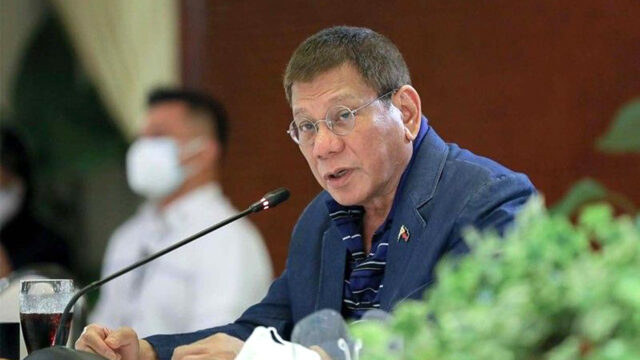
SENATOR and former national police chief Ronald M. dela Rosa on Tuesday said ex-President Rodrigo R. Duterte told him he would attend a Senate hearing next week looking into his deadly war on drugs.

“The former President told me that he is going to attend the Senate hearing regardless of who is presiding,” he told reporters in a Viber message.

Senate Minority Leader Aquilino “Koko” L. Pimentel III told a news briefing on Monday that he is ready to lead a Senate probe into the Duterte government’s anti-illegal drug campaign.

“My hope is that there will be a clear, peaceful and comprehensive exchange of views and providing information that will not lead to any kind of fight, confrontation and hot temper,” Senate President Francis “Chiz” G. Escudero told a news briefing on Tuesday.

He expects the committee to treat Mr. Duterte with the respect due him as a former Philippine President.

The Senate president said he expects close allies of the tough-talking leader like Mr. Dela Rosa and Senator Christopher Lawrence “Bong” T. Go to perform their duties as lawmakers during the investigation despite their ties with Mr. Duterte.

“When it comes to the point (during the investigation) that they will share their personal knowledge related to what is being discussed at the hearing, I will presume that they will be stating these facts on their oaths as members of the Senate, without need of actually taking their oath,” Mr. Escudero said.

Mr. Duterte is also under investigation by the International Criminal Court for alleged crimes against humanity during the state’s drug war. Executive Secretary Lucas P. Bersamin earlier said the presidential palace backs the plan of the Philippine National Police (PNP) to reopen the probe of high-profile killings.

Philippine President Ferdinand R. Marcos, Jr. has ruled out working with the ICC, saying it does not have jurisdiction in the country since the Philippines has a functioning justice system and police force.

The drug war led to more than 12,000 deaths, mostly urban poor, according to Human Rights Watch. It added that at least 2,555 killings have been attributed to the national police.

Also on Tuesday, Davao del Norte Rep. Pantaleon D. Alvarez said congressional investigations should include sitting and former congressmen who supported Mr. Duterte’s campaign.

“The war on drugs would not have happened if it were not… allowed by Congress during the 17th and 18th Congress,” the lawmaker, who served as Speaker at that time, said in a statement. “Most of the members of the House from that time are still here in the 19th Congress. If former President Duterte is guilty, it only means one thing: Congress is also guilty.”

He accused lawmakers of being hypocritical for belatedly investigating alleged extralegal killings after staying mum during the ex-President’s six-year rule.

“Congress had the power to stop this, but it didn’t. Congress shares the responsibility for the collateral damage in human costs that happened,” Mr. Alvarez said.

“Congress didn’t just fund the war on drugs; Congress legitimized it,” he said, noting that Congress continued to give police their budget despite concerns about the anti-illegal drug campaign.

CRIMES AGAINST HUMANITY
In a separate statement, militant group Bayan Muna said the House quad committee hearings should expand its investigation to include the killings of activists who were red-tagged by the country’s anti-communist task force.

“Aside from the fake drug war victims, I believe that it is time that the Congress quad committee start looking into the killings of activists and critics of the Duterte administration who were first red-tagged then were killed,” Neri J. Colmenares, one of Bayan Muna party-list’s nominees in the midterm elections next year, said in the statement.

Meanwhile, the Philippines could still coordinate with the ICC in its probe despite withdrawing from it in 2018, ex-Senator Leila M. De Lima told congressmen at a hearing, citing a 2009 Philippine law that penalizes crimes against humanity.

The Philippine Act on Crimes Against International Humanitarian Law, Genocide and Other Crimes Against Humanity had allowed the Philippines to coordinate with international courts investigating alleged crimes against humanity cases by extraditing suspected personalities under their custody, she said.

“Through this law, we have recognized the jurisdiction of the ICC over crimes against humanity committed in the Philippines, even before we ratified the Rome Statute as a binding treaty,” Ms. De Lima said. “Our own law states that we need to cooperate with the ICC.”

Mr. Duterte withdrew Philippines membership in the ICC in 2018 amid criticisms that his government had systematically murdered drug suspects in police raids. It took effect a year later.

The Philippine government “may dispense with the investigation” of crimes against humanity cases committed in the country if an international tribunal is “already conducting the investigation,” providing the state with an option to surrender or extradite the accused to the tribunal’s custody, according to Sec. 17 of the law.

Ms. De Lima’s position is “viable” only if there is public clamor for ICC cooperation, Josue Raphael J. Cortez, a lecturer at the School of Diplomacy and Governance of De La Salle-College of St. Benilde, said in a Facebook Messenger chat.

“One must bear in mind that despite the fact that we concur to work with international courts should the need arise, countries who are not signatories or have withdrawn from the Rome Statute have the final say on whether they will be collaborating with the ICC or not,” he said.

Allowing the ICC to try the Duterte government’s war on drugs would show to the international community that the Philippines has a “broken legal system,” Michael Henry Ll. Yusingco, a senior research fellow at the Ateneo Policy Center, said via Facebook chat.

The ICC’s jurisdiction is complementary to national criminal jurisdictions, he said, citing jurisprudence. “Complementarity means that the International Criminal Court may only exercise jurisdiction if domestic courts were unwilling or unable’ to prosecute.”

Ms. De Lima urged the Marcos government to rejoin the ICC. “We must return to the fold of the ICC.”

Philippines may cut number of police generals to 25

OFFICIAL FACEBOOK PAGE OF THE PHILIPPINE NATIONAL POLICE

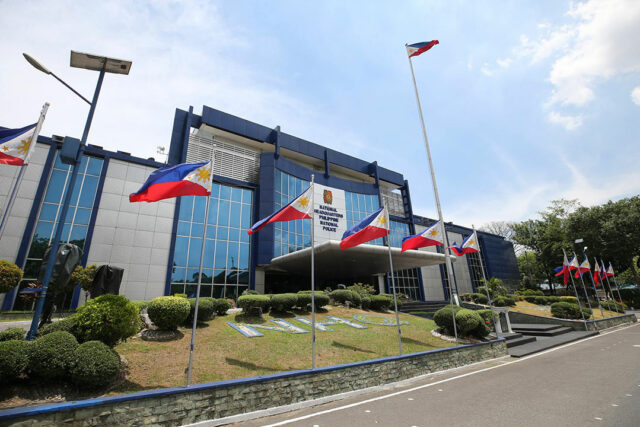
THE PHILIPPINE government on Tuesday said it is seeking to reform the police bureaucracy by trimming the number of its generals to 25 from 133.

The Department of the Interior and Local Government (DILG) said it’s working with the University of the Philippines (UP) College of Public Administration for the reform.

The Philippine National Police (PNP) is “top-heavy,” Interior Secretary Juanito Victor C. Remulla, Jr. told a news briefing after a Cabinet meeting with President Ferdinand R. Marcos, Jr., citing the need to “flatten the administration.”

“I think we have 133 generals, and I want to whittle the number down to 25 to make the organization flat,” he said in mixed English and Filipino. “These are some of the recommendations that we’re going to make together with the UP College of Public Administration.”

Mr. Remulla said the PNP is facing “redundancies,” particularly generals who have no particular commands. He also cited police commanders who don’t even have people under them.

“We have a lot of redundancies that we need to trim down.”

Mr. Remulla said affected general would be encouraged to take early retirement by next year. “They are all soldiers,” he said when asked if the move could demoralize staff. “They follow orders.”

He also said the DILG would work with several government institutions including the Commission on Audit and Union of Local Authorities of the Philippines to cut hours spent on signing documents to as short as an hour per week from the usual 12 hours.

“We want to work with various agencies to cut that down from 12 hours a week to one hour a week for the signing of documents of mayors. It takes a lot of time and it takes a lot of mental energy and it wastes a lot of the leaders’ time and resources to do that,” he said.

He said local governments should boost their digitization efforts to boost efficiency. — Kyle Aristophere T. Atienza

Govt’s role in push for innovation underscored

Words reading “Artificial intelligence AI” of miniature robot and toy hand are pictured in this illustration taken on Dec. 14, 2023. — REUTERS/DADO RUVIC/ILLUSTRATION

VICE-PRESIDENT Sara Duterte-Carpio on Tuesday urged the government to help the business community pursue innovations amid the rise of artificial intelligence (AI).

“Innovation has profoundly transformed the business environment and raised the competitiveness of every industry, here and overseas,” she said at a business conference organized by the Philippine Chamber of Commerce and Industry.

“Embracing new innovation is inevitable, or we will be left behind in the ground, as we are compared to our neighbors and compared to the rest of the world,” she added.

The Philippines ranked 56th out of 132 economies in the recent global innovation index.

It also ranked the lowest in the region after placing 67th out of 83 countries in its debut in The Global AI Index 2024 by Tortoise Media — which assesses countries based on their AI implementation, innovation, and investment — with an overall score of 5.89 out of 100.

Despite the anxiety it has caused globally, AI has also caused excitement “and more and more people are drawn to the opportunity it offers,” said Ms. Duterte, a former Education chief under the Marcos administration.

“The government and the private sector can collaborate to create innovation centers and foster an environment that encourages risk-taking and experimentation,” she said.

Ms. Duterte said the country should aim to become a powerhouse of innovations and go beyond its target of becoming an upper-middle income economy.

“With the ingenuity and creativity of Filipinos, I believe we can do more to create better products and systems that will bring profit and move our industries forward,” she said.

“We just need to do that dream. We don’t want to be middle-income,” she added. “We want to be a superpower, and we can.”

Ms. Duterte has refused to participate in House hearings amid questions on her office’s previous and proposed budgets. Critics and academics earlier said her past and existing confidential funds should have been used for meaningful programs, including workforce development.

She said employees also benefit from innovations, like AI as it simplifies tasks, automates repetitive work, and facilitates collaboration and transparency within an organization; but while that is the case, the vice-president raised the need to reskill and upskill workers amid concerns about job displacement.

“Because the technological revolution has also led to job displacement in certain sectors, we should consider the urgency of reskilling and upskilling our workers and equip them with the new skills in a technologically evolving workplace,” she added.

“By investing in workforce development, we can harness the power of technology to create a more effective and productive future while ensuring that employees are equipped to thrive in this new landscape.” — Kyle Aristophere T. Atienza

Kristine now a tropical storm

PAGASA.DOST.GOV.PH

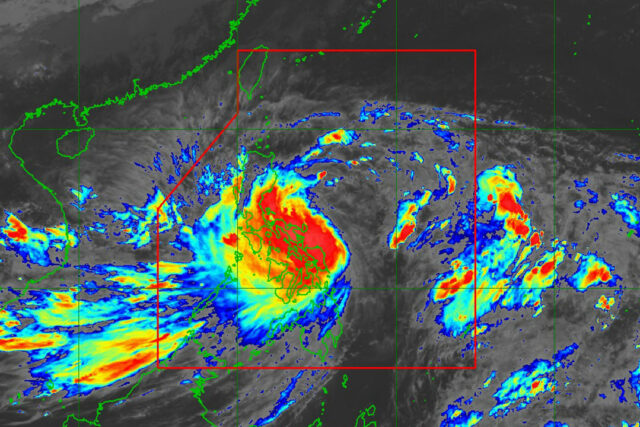
THE STATE weather bureau on Tuesday said that “Kristine” (international name: Trami) has intensified into a tropical storm over the Philippine Sea.

The Philippine Atmospheric, Geophysical and Astronomical Services Administration (PAGASA) said it is forecast to gradually intensify into a severe tropical storm before making landfall over Isabela province.

It said that the storm is expected to make landfall by Wednesday or early Thursday. It may exit the Philippine Area of Responsibility by Friday.

As of 5 p.m., Kristine was last seen 390 kilometers east of Daet, Camarines Norte province, and moving in a west northwestward direction at 15 kilometers per hour (kph).

The storm was packing maximum sustained winds of up to 75 kph near the center and gustiness of up to 90 kph.

PAGASA had raised Tropical Wind signal no. 2 over Catanduanes, the eastern portion of Camarines Norte, the eastern portion of Camarines Sur, the eastern portion of Albay, and the eastern portion of Sorsogon.

The northeastern portion of Northern Samar and the northern portion of Eastern Samar was also under signal no. 2. 

On the other hand, signal no. 1 was hoisted over Ilocos Norte, Ilocos Sur, La Union, Pangasinan, Apayao, Kalinga, Abra, Mountain Province, Ifugao, Benguet, Cagayan including Babuyan Islands, Isabela, Quirino, Nueva Vizcaya, Aurora, Nueva Ecija, Tarlac, Zambales, Bataan, Pampanga, Bulacan, Metro Manila, Cavite, Laguna, Batangas, Rizal, Quezon including Pollilo Islands, Occidental Mindoro including Lubang Islands, Oriental Mindoro, Masbate including Ticao and Burias Islands, Marinduque, Romblon, the rest of Camarines Norte, the rest of Camarines Sur, the rest of Albay, and the rest of Sorsogon.

Areas from Visayas and Mindanao including the rest of Eastern Samar, the rest of Northern Samar, Samar, Leyte, Biliran, and Southern Leyte, Dinagat Islands and Surigao del Norte including Siargao – Bucas Grande Group were also under signal no. 1.

Meanwhile, the weather agency had issued a storm surge warning over the provinces of Albay, Aurora, Cagayan, Camarines Sur, Catanduanes, and Isabela, it had advised all marine activity in the areas to be canceled. — Adrian H. Halili

Quiboloy allowed in Senate probe

PHILSTAR FILE PHOTO

A PASIG regional trial court has granted a Senate committee’s petition to allow televangelist Apollo C. Quiboloy and his cohorts to attend a Senate hearing on Wednesday looking into allegations of child abuse and human trafficking against him and his church.

In a court order dated Oct. 21 and made public on Tuesday, the Pasig City Regional Trial Court Branch 159 Presiding Judge Rainelda H. Estacio-Montesa said that Mr. Quiboloy filed a motion opposing the Senate’s request for him to appear, calling it a “legislative overreach” by the committee on Women, Children, Family Relations and Gender Equality.

Citing previous jurisprudence, it granted the committee’s request since a pending lawsuit would not bar the Senate’s power to conduct these inquiries.

The Philippine National Police and a panel of state prosecutors did not object to the committee’s request saying it was in line with the Senate’s power to conduct inquires in aid of legislation, it said.

The Pasig court also ordered the Senate and Pasay City to “observe maximum security measures to ensure the safety and security” of Mr. Quiboloy and his cohorts.

In April, the court ordered the arrest of Mr. Quiboloy for qualified human trafficking, while a Davao City court issued an arrest warrant for child sexual abuse. The Supreme Court in May ordered the transfer of the Davao child sexual abuse cases to the Quezon City trial court.

Mr. Quiboloy, who claims to be an “appointed son of God,” was arrested after weeks of police search. He is wanted for child sexual abuse and human trafficking in the Philippines.

He was indicted in a California district court on Nov. 10, 2021, and a federal warrant had been issued for his arrest. Mr. Quiboloy is followed by millions of people in the Philippines, where the church has political influence. He is also the spiritual adviser of ex-President Rodrigo R. Duterte.

The Senate committee in March ordered his arrest for failing to attend hearings looking into the crimes.

The celebrity evangelist, who has denied the charges, has filed his certificate of candidacy for senator in next year’s midterm elections. — John Victor D. Ordoñez