Home Blog Page 1942

MSpectrum tapped for Laguna solar project

(L-R) EKPI Country Finance Director Archimedes Angeles, EKPI President Alexander Ong Oh, MSpectrum President and Chief Executive Officer Ma. Cecilia M. Domingo, and MSpectrum Chief Operating Officer Patrick Henry T. Panlilio.

MSPECTRUM, Inc., a wholly owned solar subsidiary of Manila Electric Co. (Meralco), has entered into a partnership with food manufacturer Edward Keller Philippines, Inc. (EKPI) for a solar project in Laguna.

In a statement on Wednesday, the company said it will install a 630-kilowatt-peak (kWp) solar facility at EKPI’s industrial facility in Carmelray Industrial Park, Canlubang, Calamba, Laguna.

Slated for completion in the second quarter of 2025, the project is expected to generate approximately 714,553 kilowatt-hours of clean energy per year.

“This project not only helps us cut energy costs by P1.2 million a year, but also helps us reduce our carbon footprint by 422 metric tons,” said EKPI President Alexander Ong Oh.

EKPI is one of the brands of DKSH Philippines that manufactures ingredients for food, personal care, specialty chemicals, and pharmaceutical industries.

Last month, the Meralco solar unit also formed a partnership with Emperador Distillers, Inc. (EDI), a subsidiary of brandy and whiskey producer Emperador, Inc.

Under the agreement, MSpectrum will put up a 640-kWp solar facility at EDI’s manufacturing plant in Sta. Rosa, Laguna.

MSpectrum offers tailor-fit solar solutions for industrial, commercial, and residential customers “through an in-depth understanding of energy consumption behaviors and strategic partnerships with world-class technology partners.”

Meralco’s controlling stakeholder, Beacon Electric Asset Holdings, Inc., is partly owned by PLDT, Inc.

Hastings Holdings, Inc., a unit of PLDT Beneficial Trust Fund subsidiary MediaQuest Holdings, Inc., has an interest in BusinessWorld through the Philippine Star Group, which it controls. — Sheldeen Joy Talavera

A touch of home at The Giving Café’s new branch

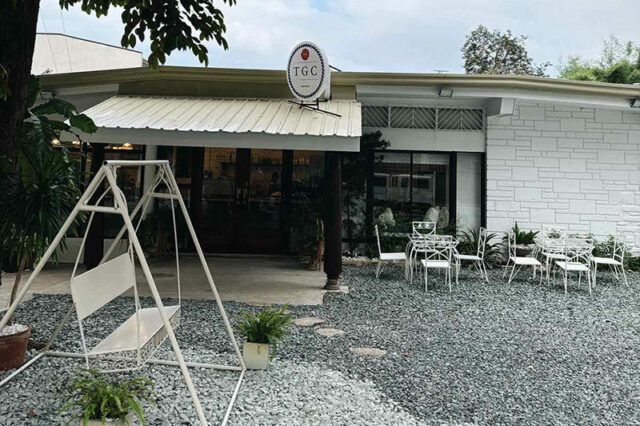
WHILE The Giving Café opened its second branch — in Addition Hills, Mandaluyong — only on Nov. 15, this particular branch has a story reaching all the way back to the 1950s.

It is in a mid-century house built by the grandfather of The Giving Café founder Michael Harris Conlin, the Asian Games Bronze Medalist Juan Bautista Lee. It’s the same home where Mr. Conlin’s mother and her siblings grew up, and during the media tour on Nov. 22, guests were presented with vignettes of what the family could possibly have been doing in different parts of the house — an afternoon tea setup had tea, coffee, and chocolate, and their family’s lumpiang ubod (the spring roll filled with heart of palm was strongly garlicky); while the main living room and dining room boasted of feasts from childhood memory — kaldereta (goat meat stew), their pancit (a noodle dish), and a Chinese-style stuffed roast chicken (Mr. Conlin told us though that since the family favorite is Sweet and Sour Pork — they use this dish to test new cooks).

The Giving Café is the public face for the various coffee businesses under Mr. Conlin’s belt: he’s also the head of Henry & Sons, their roastery which sells coffee to industrial clients; his social enterprises, namely the Foundation for Sustainable Coffee Excellence which helps fund programs for farming communities including educational assistance, sustainable farming practices seminars, and basic health care access; and the Institute for Coffee Excellence, an educational component that trains baristas.

He has the credentials for the latter: he placed 15th at the World Barista Championship Semifinals in 2019, and in 2022, he won a silver for the Latte category Signature Coffee Award, and a bronze for the Brewing category at the Global Coffee Championship. In both cases, he won using coffees from two Filipino farms: one in Benguet and another from Laguna.

GIVING VALUE
“One of my personal advocacies is to give more value to Philippine coffee. One of the best, fastest ways to give value to Philippine coffee is to bring it abroad, and compete with it; be confident in it,” he said in an interview.

By adding value to Philippine coffee, it could be priced correctly. He gives an example of coffee being priced low at P60 a cup: if everybody down the value chain gets a little something from the P60, “How much is the farmer, the first step, getting?” The Giving Café is more than a name: a portion of the proceeds goes towards the Foundation for Sustainable Coffee Excellence, and thus to the farmers.

It’s not all just lip service, too: one of the communities where they source their coffee, in Itogon, Benguet, started out with 60 families yielding five kilograms of coffee each. Now, collectively, the community yielded five tons of coffee. Mr. Conlin said that the coffee was priced at $43 a kilogram, a third of the harvest was bought by businesses in Australia; another third went to Montreal. The final third was bought by them. “It’s not just about indulging in food — it’s indulging in the stories: the people, the lives we touch,” he said.

“What we realized as a social enterprise is, we cannot adopt every community that comes to us,” he said, which is why they opened a second branch.

In the short time it has been open, they’ve got new regulars, and they have booked parties. There’s more giving in this café: while the first branch seats about 70, this one seats about 168 customers.

LOVE OF COFFEE
His love of coffee began when he started working for his family’s abaca export business. He had to wait for partners in different time zones to wake up, so he spent half the working day keeping himself up with coffee. “I loved coffee so much that I decided that since I was roasting my own coffee, I might as well make it into a business.”

More importantly, what’s there to love about coffee is the story. “Coffee has been around for generations. Centuries. It touches so many lives,” he said.

“Coffee contains over 1,000 volatile aroma compounds. Some are positive, some are negative. But like life, just like us, there is good in all. There is no bad coffee. It’s just how you brew it.”

The second branch of The Giving Café is at 858a A. Mabini St., Brgy. Addition Hills in Mandaluyong City. It’s open from Tuesday to Sunday, from 10 a.m. to 8 p.m. The first outlet is on the corner of Sheridan and Pines Streets, Highway Hills, Mandaluyong City. It is open from Monday to Sunday from 7 a.m. to 10 p.m. Follow @tgcsocialentrep on Facebook and Instagram; for reservations call 0927-247-1490, 0985-128-4751 or 8518-9291. — Joseph L. Garcia

Lisa Gokongwei-Cheng steps down as JG Summit’s chief digital officer

LISA GOKONGWEI-CHENG — JGSUMMIT.COM.PH

LISTED conglomerate JG Summit Holdings, Inc. announced on Wednesday that Lisa Gokongwei-Cheng will step down from her role as chief digital officer.

Ms. Gokongwei-Cheng will vacate the role on Jan. 1 next year and will be replaced by Ma. Cristina Bellafor P. Alvarez, JG Summit said in a regulatory filing.

The conglomerate said that Ms. Alvarez will also serve as its chief information officer.

Ms. Gokongwei-Cheng, the sister of JG Summit President and Chief Executive Officer Lance Y. Gokongwei, founded Summit Media in June 1995.

Some of Summit Media’s brands include Esquire Philippines, Cosmopolitan, and Preview.

Ms. Gokongwei-Cheng is also the general manager of the Gokongwei Brothers Foundation.

For the first nine months, JG Summit saw a 16% increase in net income to P17.9 billion, while core profit improved by 39% to P20.3 billion.

The conglomerate’s top line went up by 10% to P277 billion, led by healthy travel and leisure demand, higher preference for value food and beverage products, and increased utilization rates in the group’s petrochemical plants.

On Wednesday, JG Summit shares rose by 0.45% or 10 centavos to P22.20 apiece. — Revin Mikhael D. Ochave

Fun and fizzy Christmas drinks to enjoy this holiday season

JUST in time for all the holiday celebrations, bar executive and mixologist Kentt Earl Yap introduces two new thirst quenchers: Bubbly Grandpa and Not Rudolph’s Nose.

Bubbly Grandpa is a non-alcoholic drink that is a tangy blend of goji berry tea, lemon juice, and soda water, made even better with frozen strawberries. The De La Salle-College of Saint Benilde School of Hotel, Restaurant, and Institution Management professor assures that the mocktail comes with antioxidant qualities that benefit the eyes, skin, and the immune system.

For those who wish to make the gatherings extra exhilarating, Mr. Yap recommends the marriage of tequila and red wine, which he calls Not Rudolph’s Nose. This combines a serving of lemon-lime soda and lemon juice, with frozen blueberries to represent Rudolph’s iconic nose.

“This cocktail is ideal to be made into a punch bowl for group serving – because cocktails for Christmas are supposed to be shared,” he adds.

Mr. Yap served as the group head bartender at EPH518 Cocktail Bar Singapore and the bar executive and supervisor of Park Hotel Group Grand Park Orchard, and worked at many other Singaporean bars and restaurants. He earned the EXSA Star Awardee title, bestowed by the Singapore Hotel Association and the Diamond Service Ambassador recognition from the Park Hotel Group. Mr. Yap is currently the head of Training and Research and Development at Atmos Coffee Co., which recently opened in Quezon City.

BUBBLY GRANDPA
Ingredients:
30 ml goji berry tea
3 wedges lemon juice
2 tbsp white sugar
30 g frozen strawberries
60 ml soda water

Procedure: Muddle frozen strawberry with white sugar, squeeze three wedges of lemon juice, and add in two parts soda water and one part goji berry tea. Serve and enjoy.

NOT RUDOLPH’S NOSE
Ingredients:
30 ml tequila
15 ml lemon juice
15 g frozen blueberries
2 tbsp sugar
60 ml lemon-lime soda
30 ml red wine

Procedure: In a shaker, muddle frozen blueberries with sugar, then add in lemon juice, red wine, and tequila. Shake for five seconds. Pour into a wine glass and add ice. Top up with lemon-lime soda. Garnish with blueberries. Serve and enjoy.

AI-driven ad fraud worries Asia-Pacific marketers

Tinee Cruz, senior sales director of DoubleVerify Philippines, spoke about ad fraud at the DigiCon Revolution 2024 event. — DOUBLEVERIFY PHILIPPINES

OVER 50% of marketers in Asia-Pacific (APAC) are worried about the harmful effects of artificial intelligence (AI)-driven fraud on advertising, according to a report.

“As AI becomes even more widespread, fraudsters have easier access to tools that can amplify fraud schemes,” DoubleVerify (DV), a software platform for digital measurement and analytics, said in its Global Insights: 2024 Trends report. 

The rising adoption of AI technologies in the Philippines has resulted in more sophisticated AI-driven fraud schemes that target high-value media environments, said Tinee Cruz, senior sales director of DV Philippines.

Real-time detection is essential to combat these fraud schemes, according to Ms. Cruz, highlighting tools like fraud and classification AI.

“With AI becoming a key tool in fraudsters’ arsenal, new fraud schemes have seen a significant increase with a 23% growth in 2023. Fraudsters are using machines to emulate human behavior better than before and evading standard detection mechanisms,” DV said.

“Tools that cater to challenges amplified by AI enable brands to detect fraudulent activities quickly and ensure that their digital ads are aligned with media quality as well as with standards in brand suitability. By using these technologies, brands can protect their investments and improve the overall quality of their advertising,” it added.

One of the most extensive Connected TV (CTV) ad fraud schemes unveiled by DV is CycloneBot, a malicious bot that can generate up to 250 million falsified ad requests and imitates around 1.5 million devices daily.

DV said the scheme can cause a $7.5-million monthly financial impact to unprotected advertisers. 

The report said the global ad fraud rate averaged 1.1%.

Still, the fraud/sophisticated invalid traffic (SIVT) violation rate in APAC remained the lowest globally at 0.8%, declining by 22% from the year-ago level. The Philippines had a 0.7% fraud rate, decreasing by 43%, the report showed.

“Despite seeing an 85% decrease in its Connected TV Fraud Rate, CTV remains the device with the highest fraud rate in APAC,” it said.

DV said 37% of fraud/SIVT in APAC happens via mobile apps, with 92% of all adware/malware SIVT in the region driven by mobile apps.

Ms. Cruz said the evolution of AI technology presents an opportunity for brands to enhance their campaign performance while defending against emerging threats to media quality.

According to the report, 60% of APAC marketers said AI-driven campaign optimization has a positive impact on media quality and plan to use AI technologies like data analysis tools over the next 12 months.

“Globally, APAC drives the highest overall attention, with an average Attention Index of 124… The focus on mobile usage in APAC is reflected in its high engagement with mobile web display ads and in-app video ads, which capture, respectively, 65% and 84% more attention than the DV baseline. This suggests that advertisers are optimizing their strategies for mobile environments,” it added. — Almira Louise S. Martinez

Hidden in plain sight

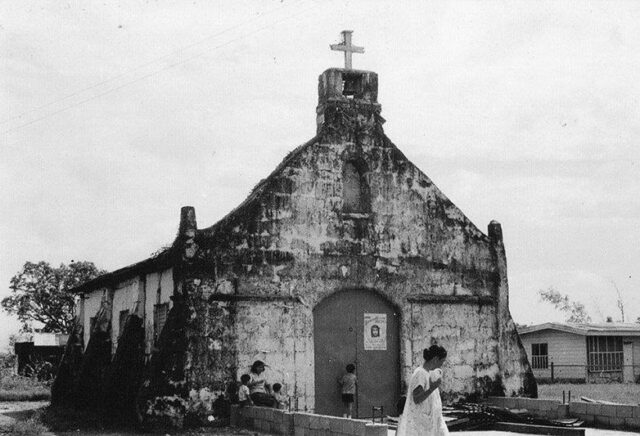
OLD: The church at Krus na Ligas in Diliman, Quezon City. — LAKBAY NG LAKAN

I’m pretty sure it’s not just me. But I have always marveled at the richness of our history, with literature giving us a glimpse of the twists and turns of the fates of key protagonists (to think that historians gush that a whole lot more remains to be written) and providing inspiration and material for indie films.

Each flick like Sakay (1993), Jose Rizal (1998), Heneral Luna (2015), Goyo: The Boy General (2018), and Gomburza (2023) leaves one with a taste for more such narratives on snippets of our story as a people. Every now and then, you even have stories told from opposing perspectives, e.g., our very own Baler (2008) and the Spanish 1898, Los Ultimos De Filipinas (Our last men in the Philippines, 2016). I have not yet watched others like Supremo (2012) and Bonifacio: Ang Unang Pangulo (2014) but look forward to movies about Miguel Malvar, one of the last Filipino generals to surrender to the US (Malvar descendants were divided over one planned in 2019 that would have starred then Sen. Emmanuel “Manny” D. Pacquiao), and Artemio “El Vibora” (The Viper) Ricarte (there was a 1972 film, titled El Vibora). Ricarte — in his hatred for the new western master — threw in his lot with a nascent imperial Japan at a time it was just starting to aspire for dominance in Asia (and even came home nearly four decades later with the Japanese invaders in 1941 as a 75-year-old man dressed in a Japanese officer’s uniform who helped organize Filipino collaborators… so, was he hero or traitor?)

Anyway, before I get carried away: much of our history is necessarily local, since events took place in specific locations or involved several localities across political jurisdictions.

Which makes me wonder why it seems that many local governments have not been integrating local histories into their tourism development plans (I mean, beyond using historical markers).

The travel and tourism sector now accounts for more than a fifth of the Philippine economy at 21.3%. While visitor count, spending, and jobs generated still fell short of pre-pandemic levels as of 2023, the World Travel & Tourism Council (WTTC) said in June that it expects the sector to top 2019 levels this year in terms of all three indicators. This, the WTTC said, shows the sector’s “critical role in supporting the nation and its local communities.”1

And the National Tourism Development Plan 2023-2028 (NTDP) that was launched in March last year states that “domestic tourism drives Philippine tourism.”

Many provinces are not wanting in potential heritage attractions, even as some have more than others. So, I was happy to read in 2019 that the North-South Commuter Railway project involves rebuilding up to 10 Spanish-era train stations (five of them in Bulacan — Balagtas, Calumpit, Guiginto, Malolos, and Meycauayan — which were built in the 1890s) to complement the 36 modern terminals along the planned line that will connect Metro Manila to Clark International Airport in Pampanga to the north, and to Calamba City in Laguna to the south. This is an excellent example of how the restoration and preservation of heritage sites can go hand in glove with infrastructure development.

There is no lack of literature on the role which historical attractions play in promoting tourism.

One paper identified the economic benefits of cultural and heritage tourism: the infusion of new money into the economy, boosting businesses and tax revenues; the generation of new jobs, businesses, events, and attractions, thus helping diversify the local economy; supporting small businesses and enabling them to expand; the active preservation and protection of important local resources; the strengthening of relationships among and within local communities; and the encouragement of the development and maintenance of new/existing community amenities.

Social gains include the preservation of local traditions, customs, and culture; improving the community’s image and pride; and building healthy community relationships and partnerships. Environmental benefits include the development of a culture of preservation as local residents and visitors become more mindful of their impact on their surroundings.2

An article posted on the website of the World Economic Forum noted that while cultural and historical travel accounts for 40% of tourism activities globally and 73% of millennials say they are interested in cultural and historical places, protecting local culture and heritage requires a holistic plan to mitigate negative impacts and policies to ensure that economic gains are shared. Such a plan coordinates interventions across sectors, and guides investments, encourages diversification of livelihoods, and nurtures local knowledge, while ensuring sustainability of tourism initiatives, including support for vulnerable sectors.3

And a recent KPMG study noted that heritage tourism — focused on cultural, historical, and architectural significance of destinations — can foster “a symbiotic relationship between preservation and development.”

“This approach emphasizes the protection and promotion of heritage sites to ensure that cultural values are maintained for future generations, simultaneously driving economic growth… By attracting visitors to heritage and cultural sites, communities can generate revenue to reinvest in conservational efforts, infrastructure improvements and local economic development.”

At the same time, it flags “the susceptibility of heritage sites to degradation under intensive tourism development, often resulting in the deterioration of these sites due to excessive tourist activity.” Hence, the need for well-designed, effective government initiatives; public participation and community development; sustainable use of technology; strategic marketing and promotion; targeting national and international recognition; with sustainability as a core principle, regulation of the heritage tourism market.4

The latest five-year NTDP noted that it is “crucial that tourism, because of its massive impact on income, jobs, and livelihoods, is effectively and efficiently used to revive national and local economies. This in turn emphasizes the need to pursue tourism development competitively, requiring investment in human capital and infrastructure, and innovations in governance and business.”

The latest plan provides a comprehensive road map that takes our historical sites into account. It shows “historical landmarks” as the 7th top item in local tourist demand after “beaches/islands,” “food exploration/cooking class,” “adventurous activities,” “nature/national parks/forests,” “city trips,” and “theme parks” on a list of 21 attractions.

At the same time, however, a study contracted by our Tourism department with market research consultancy Frost & Sullivan showed that the country ranked “poorly in cultural experiences, including historical landmarks, cultural/art activities or museums, religious/places of worship, city trips, as well as food exploration/cooking classes” in the eyes of foreign travelers. “This study demonstrates the need to focus the national strategy on developing our nature-oriented tourism products while emphasizing the need to properly build and enrich our cultural experiences to properly anchor tourism experiences within a Philippine identity and sense of place, thus more effectively standing out from our neighbors in the region.”

But while our historical sites do not seem to be top of mind for foreign visitors, local jurisdictions — especially those that do not have competitive beach, diving, or nature sites — will need to be firing on all cylinders if they are to maximize their tourism potentials. And that means maximizing the lure of any heritage sites they have.

The NTDP itself said “the domestic market must be prioritized to reenergize the industry for recovery” even as “international tourism for the medium to the long term continues to offer significant potential for growth while generating much-needed export revenue… domestic tourism must be recognized as the bedrock of the industry and must be supported and developed accordingly, while international tourism must be nurtured and diversified for long-term growth and resilience.”

Hence it was refreshing to find out that the local government of Mariveles, Bataan, for example, tapped a historian (Ricardo T. Jose) to find out more about a ruin that turned out to be a former key immigration processing site of the Spanish administration just across Corregidor Island.

Even established heritage centers have untapped structures (like the Casa Tribunal de Malolos, built in the 1850s and now all boarded up to keep out squatters) while other areas have isolated markers (e.g., anyone who studied at the University of the Philippines’ Diliman campus knows that the Krus na Ligas barangay there is the same site — with the same name — in which the Katipunan revolutionaries under Andres Bonifacio rested after the August 1896 Battle of Pasong Tamo, and that Katipunan Avenue roughly follows the route these heroes took during the revolution.)

Of themselves, isolated markers risk being largely ignored by local visitors who happen to pass by. But they could form part of a larger tour focused on that part of our history, even involving multiple cities and municipalities.

And this is where experts like historians come in handy. After all, the NTDP noted that “one potential area for dynamic growth is properly engaging the private sector and other industry stakeholders.” Local governments may just be surprised to find heritage tourism prospects that have lain untapped for so long. If you want to take this a step further, localities can also tap historical reenactors on special dates to act out that part of history represented by a site as part of a bigger celebration.

The NTDP also noted that growth of the industry worldwide “has been fueled by a long-term trajectory of rising incomes, increasingly accessible information about destinations through the Internet and social media, cheaper transportation and other tourist services through business and technological innovations, the stabilization and opening of previously closed markets, the progressive reduction of barriers to travel and… the desire for new experiences.”

It cited the need to “[l]ink emerging and potential destinations with key destinations and metropolitan areas through joint promotions, connectivity, cross-regional and cross-provincial collaboration, product, transportation, and inclusive tourism circuit development.” (Countries are doing this — Thailand is proposing joint marketing with the Philippines as diving destinations –  — so why can’t local governments do the same?)

“There are many emerging and potential destinations and tourism sites across the country, providing many different experiences. Efforts must be made, however, to connect them more effectively, not only in terms of roads and transportation but more importantly, in a proper narrative of a place. Collaboration between different local government units to develop coherent tourism plans and products across tourism development areas and tourism clusters will be essential. Appropriate visitor and interpretation centers, information platforms, and trained guides, docents, and tourism officers, are needed.”

Exactly. How many times have we suddenly come across a landmark (practically in the middle of nowhere) in some province and wondered if that represented an isolated event or was part of a larger scheme involving the next town. So, while local tourism information does include major heritage sites (or even smaller ones almost like an afterthought), local governments and tourism planners can do more by finding out more about shared local histories. And then this can be part of a bigger tourism plan involving several localities, employing joint marketing campaigns, co-branded initiatives, referral programs, etc.

This, NTDP said, means there is a need to undertake heritage, culture, arts, and product mapping across provinces and regions. “This effort will then provide the foundation for developing tourism plans, programs, and products that truly reflect both the national and local identities, anchoring our tourism experiences properly within the Philippine experience.”

More can also be done to use digital means to enhance heritage experience: from having a mobile-friendly, user-friendly, and regularly updated website (complete with an online events calendar and maps); to offering engaging content like a virtual tour of attractions with high-quality visuals and detailed information; to putting QR codes on markers that will give visitors access to more information about sites and their significance; to tapping bloggers and encouraging tourists to write more on these landmarks in their social media channels.

I suspect that there is no lack of heritage sites that many localities can tap as part of tourism promotion, even a collective one. At the very least, well-designed and -executed heritage initiatives can bolster comprehensive tourism offerings that promise a multiplier effect if carried out effectively.

The question, of course, is whether local officials themselves see the gems that lie hidden in plain sight before them, and/or can put aside political differences and team up to maximize heritage and other tourism potentials.

1 https://wttc.org/news-article/philippines-travel-and-tourism-sector-set-for-historic-year

2 “How Culture and Heritage Tourism Boosts More Than a Visitor Economy,” Carolyn Childs, mytravelresearch.com, 2018.

3 “Turning Tourism into Development: Mitigating Risks and Leveraging Heritage Assets,” Abeer Al Akel (Acting CEO, Royal Commission for AlUla) and Maimunah Mohd Sharif (former executive director, UN-Habitat), at https://www.weforum.org/stories/2024/02/turning-tourism-into-development/, Feb. 15, 2024.

4 “Heritage tourism as a tool for sustainable tourism: Preservation for development,” KPMG, July 2024.


Wilfredo G. Reyes was editor-in-chief of BusinessWorld from 2020 through 2023.

AC Health to import HIV medicines

PHILIPPINE STAR/ANDY ZAPATA

AYALA Healthcare Holdings, Inc. (AC Health) said it will import medicines and other lifesaving technologies through its subsidiaries IE Medica and MedEthix, to be sold at Generika Drugstore pharmacies, as part of a partnership with the United States Agency for International Development (USAID) to expand human immunodeficiency virus (HIV) care and prevention services in the Philippines.

Under the partnership, AC Health will onboard health service providers on the KonsultaMD telemedicine platform and expand HIV awareness and screening services beyond health facilities, the healthcare company said in an e-mailed statement on Wednesday.

For its part, USAID will support community engagement, provide technical assistance, and introduce private sector models for HIV service delivery. It will also train healthcare providers, share research, expand telehealth access through KonsultaMD, and coordinate with partners to provide free HIV self-testing kits.

“Our mission at AC Health is to make quality and affordable healthcare accessible to more Filipinos. Through our partnership with USAID, our dedicated teams at Healthway Medical Network, KonsultaMD, and Generika Drugstore have been equipped with specialized training to serve key populations affected by HIV,” AC Health Chairman Fernando Zobel de Ayala said.

“This collaboration brings us closer to bridging gaps in HIV prevention and testing, ensuring these critical services reach more communities nationwide,” he added.

The Department of Health (DoH) said the number of HIV cases is expected to hit 215,400 by the end of 2024. According to its recent report, males represent 94% of the 132,776 reported cases of people living with HIV (PLHIV), while females account for the remaining 6%, or 7,876 cases.

DoH Secretary Teodoro J. Herbosa called for collective action to combat the rising HIV cases during the official launch of the DoH’s “Undetectable = Untransmittable Campaign” on the 2024 Philippine World AIDS Day held on Dec. 1.

AC Health, the healthcare unit of Ayala Corp., has various interests in the healthcare sector. Its businesses include Generika Drugstore, St. Joseph Drug, pharmaceutical importer and distributor IE Medica and MedEthix, Healthway Medical Network, and KonsultaMD.

On Wednesday, Ayala Corp. shares fell by 0.15% or P1 to P649 per share. — Revin Mikhael D. Ochave

Japanese brewer hopes UNESCO listing makes sake as popular as sushi

FREEPIK

FUSSA, Japan — At a Tokyo brewery dating back to the days of the samurai, Koichi Maesako drops a three-meter-long wooden paddle into a giant, jade-colored tank and gently stirs the white mixture that will turn into sake in a week’s time.

The sweet-and-sour-smelling brew — of rice, yeast starter, the culinary mold known as koji, and water — has been fermenting for 20 days in what is part of an ancient technique that the United Nations Educational, Scientific, and Cultural Organization (UNESCO) is set to list as Intangible Cultural Heritage this week.

For Mr. Maesako, the 40-year-old chief brewer of Ishikawa Shuzou, or Ishikawa Brewery, the United Nations (UN) agency’s endorsement would be welcome news after a difficult couple of years.

Unseasonably warm weather has hit the rice harvest, not only affecting the quality of the grain but also raising procurement costs, he said.

Traditional sake brewers had already been contending with decades of falling sales at home as consumers acquired a taste for cocktails like highballs and other alcoholic drinks.

“The situation is much tougher compared to previous years,” Mr. Maesako told Reuters last week.

“It’s still quite warm, even though it’s almost December. The price of rice is high and the harvest is poor, which has made sake-brewing (this year) very challenging.”

Mr. Maesako hopes the UN body’s recognition of the traditional brewing technique will turn things around by igniting demand overseas, where sake has slowly gained popularity alongside Japanese cuisine, also in part thanks to UNESCO’s endorsement of washoku as living heritage in 2013.

“After being listed by UNESCO, Japanese traditional cuisine (washoku) has spread all over the world,” Mr. Maesako said.

“I hope that the same thing will happen with sake. Our brewery is seeing a rise in exports, and we hope the UNESCO listing will accelerate this trend.”

The centuries-old method of making sake is unique for its three-step preparation, or “San-Dan-Jikomi,” of allowing multiple fermentation processes to progress simultaneously in a single container.

“It’s really cool just seeing and understanding how it all comes together,” said Robert Brown, an American visitor at the brewery. “Taking a lot of Japan’s history and then turning it into a cultural heritage seems really cool to me.”

While sake has lost ground as a regular drink, Mr. Maesako said it remains impossible to separate from Japanese culture.

“We have sake at celebrations, at New Year’s, and also on sad occasions, like funerals,” he said. “The culture of Japanese sake is the culture of Japan itself.”

The brewing technique is expected to be formally endorsed at a UNESCO committee session in Paraguay this week. It will be Japan’s 23rd entry on the list of Intangible Cultural Heritage. — Reuters

Yields on term deposits drop on strong demand

TERM DEPOSIT YIELDS fell on Wednesday amid strong demand for the offering ahead of the release of Philippine November inflation data.

The Bangko Sentral ng Pilipinas’ (BSP) term deposit facility (TDF) attracted total bids worth P342.937 billion on Wednesday, well above the P260 billion placed on the auction block and the P250.598 billion in bids fetched a week ago for a P280-billion offer.

Broken down, bids for the seven-day term deposits stood at P213.622 billion, above the P150-billion offer as well as the P154.953 billion in tenders for the P160 billion auctioned off a week ago.

Accepted rates were from 5.9755% to 6.06%, narrower than the 5.975% to 6.0815% range a week ago. As a result, the average rate for the one-week deposits fell by 1.59 basis points (bps) to 6.0425% from 6.0584% last week.

Meanwhile, tenders for the 14-day papers reached P129.315 billion, higher than the P110 billion auctioned off by the central bank. It was also above the P95.645 billion in bids for the P120-billion worth of deposits offered last week.

Banks asked for yields ranging from 6% to 6.11%, also narrower than the 6% to 6.125% margin a week earlier. This caused the average rate of the two-week deposits to slip by 0.86 bp to 6.0816% from the 6.0902% quoted the previous week.

The BSP has not auctioned off 28-day term deposits for more than four years to give way to its weekly offerings of securities with the same tenor.

The central bank uses the term deposits and BSP bills to help mop up excess liquidity in the financial system and to better guide market rates.

“The BSP TDF average auction yields mostly eased slightly for the 11th straight week ahead of the latest local inflation data that is expected to remain relatively benign at 2% levels,” Michael L. Ricafort, chief economist at Rizal Commercial Banking Corp., said in a Viber message.

The Philippine Statistics Authority is scheduled to release November inflation data on Thursday (Dec. 5.)

Philippine headline inflation likely picked up to 2.5% in November, according to the median estimate in a BusinessWorld poll of 15 analysts conducted last week.

This is within the central bank’s 2.2% to 3% forecast for the month as well as its 2-4% annual target.

This would also be slightly faster than the 2.3% clip in October but slower than 4.1% in the same month a year ago.

The central bank expects headline inflation to average 3.1% this year. In the first 10 months, the consumer price index averaged 3.3%.

Easing inflation would also make room for further monetary easing by the BSP, Mr. Ricafort said.

BSP Governor Eli M. Remolona, Jr. has said that the Monetary Board could reduce or keep rates steady at its Dec. 19 meeting, its last policy review for the year.

Since August, the central bank has lowered benchmark borrowing costs by 50 bps, bringing the policy rate to 6%. — Luisa Maria Jacinta C. Jocson

A developer’s duty: leading the charge against mobile fraud in the Philippines

GILLES LAMBERT-UNSPLASH

By Jan Sysmans

FOR MANY PEOPLE today, their lives and their smartphones are inseparable. In the Philippines, 54.7% of consumers use mobile apps for purchasing goods and services, according to the 2024 Philippines Consumer Expectations of Mobile App Security survey by App-dome. This is about 13.2% higher than the global figure.

With how central mobile apps are to Filipinos, more than three quarters said they would ditch apps that don’t protect their data. However, the rising threat of mobile fraud backs users into a perilous position, which pushes developers to the frontline of mobile security.

THE MANY METHODS OF MOBILE FRAUD
With the help of emerging technologies like generative artificial intelligence (GenAI), cybercriminals are honing their attack strategies. GenAI enables cybercriminals to create highly personalized attacks and a sense of legitimacy in their fraud tactics, making it tougher for users to distinguish between what’s real and what’s not. Developers are hard-pressed to keep up with the evolving threat landscape, racing to ensure that applications are sufficiently secure to protect users against a variety of threats such as phishing, malware, spyware, and fraud.

Phishing, for example, has been a consistent tactic over the decade and has become more complex in recent years. According to a recent Appdome survey, 36.4% of Filipino consumers say they know someone who has been targeted by social engineering scams.

Variations of this attack — such as voice phishing (vishing) and SMS phishing — are also utilized by bad actors. In the Philippines, vishing scams of people posing as bank representatives was so common that it prompted a warning to be issued by the Philippine National Policy Anti-Cybercrime Group. Consumers were warned to stay vigilant against calls from individuals purporting to be representing a bank. These, along with advanced fraud tactics like overlay malware, work by mimicking legitimate apps, thereby tricking users into volunteering their private information. Sometimes, they may also allow access to their accounts.

Another type of attack is synthetic fraud. Malicious actors may use fake events and false identities to bypass the standard detection tools by sending signals from a seemingly legitimate endpoint. This is especially dangerous given how pervasive mobile use has become for day-to-day transactions, with over half of Filipinos telling Appdome they have a strong preference for mobile apps.

The heavy reliance on mobile apps creates the perfect environment for cybercriminals to commit fraud. Be it spyware, malware, account takeovers, or phishing, bad actors are exploiting the mobile landscape to fool consumers into compromising their device security, leading to data breaches.

CONSUMERS PREFER PREVENTIVE SECURITY
Given Filipinos’ preference for smartphones to perform daily transactions, it’s no surprise that 42.4% of consumers told App-dome they are wary of mobile fraud while 67.6% are concerns about hacking. This is reflected globally as well, with 58% of consumers citing mobile fraud as their number one concern.

This leads to the expectation for mobile fraud prevention to be built into mobile apps. The same survey found that an overwhelming 98.3% of mobile app users in the Philippines expect their mobile applications to have anti-fraud protection. This aligns with findings that 87.5% prefer preventive measures over going through the process of post-fraud reimbursements.

The challenge here is that measures in legacy applications are usually focused on base protections such as root detection/jailbreak and reverse engineering protection. Any anti-fraud measure they do have are lackluster against modern fraud tactics and tools.

Furthermore, legacy apps tend to favor the “crash to protect” method, which forces the app to crash when a security threat is detected. This is frustrating to both users and developers. The former are subjected to a challenging user experience while the latter are impacted by crash free rates.

DEVELOPERS ARE ON THE FRONTLINES
The reality of the rising threat of mobile fraud has spurred the Philippine government to act by enacting specific anti-fraud laws such as the Anti-Financial Account Scamming Act. The fact that such a law was even enacted reflects the escalating problem of mobile fraud in the Philippines. As they have their hands in the backend, developers are the ones who can build a holistic defense against modern fraud threats while also improving user experience.

The Appdome survey found that 47.3% of Filipinos hold app developers primarily responsible for mobile app security, with a whopping 77.5% ready to cancel their accounts and delete apps that fail to protect their data. This should motivate developers to keep pace with cybercriminals or, ideally, be several steps ahead.

The onus is on developers to enhance app security with responsive threat mitigation. As AI and other emerging technologies contribute to the evolution of the mobile fraud landscape, developers can also tap into advanced AI-based mobile app defense automation platforms to protect applications better. This, in turn, will ensure effective protection for mobile businesses and consumers against fraud and other cyber threats.

Developers can do so by offering responsive threat mitigation that is user-friendly. For example, this can be educating consumers about the threats that have been detected or reducing app functionality to mitigate the threat. A responsive threat response that prioritizes user experience will ensure both security and usability.

Ultimately, the approach to security needs to evolve at pace with the advancements of mobile technologies. While mobile users are not entirely defenseless, developers are responsible for fostering a safer environment for users.


Jan Sysmans is a mobile app security evangelist at Appdome.

National serving of rice

FREEPIK

The Philippine Rice Research Institute (PhilRice) is urging Malacañang to issue an executive order setting the standard size for half-cup rice portions in meals sold at government offices. This aims to minimize food waste. PhilRice proposes that government cafeterias serve as testing grounds to determine if private restaurants should also adopt this standard.

Last year, there was already a call for Congress to pass a national law mandating smaller meal sizes, particularly half-cup rice portions. The intent, much like PhilRice’s proposal, is to reduce food waste nationwide. I don’t believe the bill has been passed yet. While its intent is commendable, do we really need a law to regulate rice portion sizes?

In a previous column, I mentioned that in its Food Waste Index Report for 2021, the United Nations Environment Programme (UNEP) noted that the world generated “around 931 million tons of food waste” in 2019, of which 61% came from households, 26% from food service, and 13% from retail. “This suggests that 17% of total global food production may be wasted (11% in households, 5% in food service, and 2% in retail),” the report added.

More recent data indicates that by 2022, at the tail end of the COVID-19 pandemic, approximately 1.05 billion tons of food were wasted globally — about 19% of food available to consumers. Food waste, as a percentage of total food production, increased by two points in just three years. Households accounted for 60% of this waste, with the remainder coming from food services and retail.

In its 2021 report, UNEP stated that “previous estimates of consumer food waste significantly underestimated its scale” and that food waste at the consumer level (household and food service) is more than double earlier estimates. Moreover, “household per capita food waste generation is found to be broadly similar across income groups.”

In short, people in various countries waste nearly a fifth of their food, most of which is generated in households in lower-middle to high-income countries. This highlights a divide: households with surplus waste food, while those experiencing hunger do not. I reckon that in poorer households — which make up the majority of our population — food is not wasted as much.
I am unaware of any country with laws mandating exact portion sizes for restaurant offerings or meals served in government cafeterias or public schools. Some jurisdictions, however, have regulations promoting healthier eating habits. Years ago, New York City tried to ban sugary drinks larger than 16 ounces in restaurants, movie theaters, and mobile food carts. The courts struck down the plan.

There are other ways to make people more conscious of their eating and food waste habits. Governments and health organizations often issue guidelines and recommendations to influence portion control, addressing obesity, diabetes, and food waste. They encourage both consumers and the food industry to adopt practices that promote healthier eating.

Public health campaigns and industry guidelines also encourage healthier portion sizes. The restaurant industry has responded by offering different portion sizes to cater to varying consumer preferences. However, legislating portion control in food and beverage services might be unnecessary, especially if reducing food waste is the primary goal.

Smaller, standardized portions can indeed reduce uneaten food, directly decreasing waste. PhilRice claims to have data supporting this from households, though not from food service settings. Hence, the call for a pilot study involving government food service providers. If the study yields positive results in mitigating waste, a broader policy can be considered.

Controlling portion sizes can also help address overconsumption, promoting healthier eating habits. Less food waste means a smaller environmental footprint, as it reduces the resources used in food production, such as water and energy. Some argue that food waste contributes to greenhouse gas emissions from landfills, so minimizing waste aids climate change mitigation.

Still, do we need “Big Brother” dictating how much we should eat or how much food should be served outside our homes?

Current data shows that most food waste occurs in households rather than in food service and retail. Government mandates on portion control cannot extend to people’s homes.

I see two main issues with legislating portion control. First, the economic impact on food businesses. Implementing and monitoring portion control will result in additional costs, although it might also lead to higher margins. Customer satisfaction could be affected, as value-seekers might be deterred. Unlimited rice offers may have to end.

The second issue is enforcement. Regulating and monitoring compliance across diverse food establishments nationwide will be challenging and costly. Even if monitoring is devolved to local government units, food inspectors will need to be deployed in addition to health inspectors. Will they carry standard measuring cups to check meals coming out of kitchens?

To ensure compliance, penalties like monetary fines would need to be imposed. Standards must also be set for how much rice fits in a government-standard half-cup measure. Moisture content may need monitoring to prevent restaurants from serving overly wet or puffed rice. Cooking standards will have to be established and enforced.

While portion control can reduce food waste, its overall impact may be limited. Given that most food waste occurs in households, legislation targeting restaurants might not address the primary source of the problem. Cultural factors, such as preferences for generous servings, may also hinder the effectiveness of such measures.

Perhaps the government, PhilRice, and the Department of Health should focus on public awareness campaigns educating consumers about the consequences of food waste. Promoting mindful consumption can help reduce waste. Incentivizing food service establishments to donate surplus food is also worth exploring.

These campaigns could be paired with efforts to improve infrastructure, such as cold chains to preserve food quality. Similar facilities could be used for cooked but unsold food. Community refrigeration and vacuum-packing facilities in poorer areas, along with public education on food preservation, can extend food shelf life. The government might also offer benefits or subsidies to businesses and households that reduce food waste.

Food waste is deeply tied to cultural norms and economic conditions. In many societies, large portions symbolize hospitality and value, making portion control measures potentially unpopular. In higher-income countries, the relative affordability of food often leads to undervaluing conservation. There is likely a correlation between food cost, food waste, and obesity.

I doubt legislation or an executive order on portion control is the best way to reduce food waste. Cup size can be arbitrary. As I’ve argued previously, weight is a more accurate measure for good portions. Perhaps food service establishments should sell meals by weight — including rice — not by portion size.

Uncooked rice is sold by weight in markets. This way, consumers might be more particular about how much they order.

The reality is that due to inflation and rising food prices, meal sizes have already become smaller in many establishments. With food costs so high, I believe more people are already mindful of waste, even at home. To maintain profitability, food establishments are also likely minimizing waste.

The next step could be Congress considering penalties for people who don’t finish their food in restaurants and government cafeterias. If the government’s intent is to prevent food waste, shouldn’t it penalize those who waste food? Customers could even be fined for every gram of unfinished food. This may sound ridiculous, but can it be more ridiculous than mandating a national serving of rice?


Marvin Tort is a former managing editor of BusinessWorld, and a former chairman of the Philippine Press Council

matort@yahoo.com

Dining In/Out (12/05/24)


Richmonde Hotel Ortigas offers Filipino holiday favorites

RICHMONDE HOTEL Ortigas has unveiled its selection of holiday treats highlighting classic Filipino flavors. The centerpiece of this year’s menu is the Richmonde Signature Ensaymadas, available in classic plain (P215), ube (purple yam, P245), and the new mango cheese variant (P245), alongside mini versions in gift-ready boxes. Other offerings include its signature Chocolate Cake (4” for P265, 6” for P625, and 8” for P755), chewy Revel Bars (P420 for eight pieces), and Dark & White Chocolate Chip Cookies (P225 per pack). For traditionalists, there’s the Ube Macapuno Cheesecake (P215), savory Adobo Croissant (P225), Banana Walnut Bread (P395), and Cheese Pimiento Loaf (P295). Sweet additions include Silvanas in Classic Cashew and Chocnut flavors (P420 per pair), and the curated Holiday Hamper (P1,998) featuring assorted pastries and treats in a traditional buri box. For larger gatherings, Richmonde Café offers potluck platters like Beef Barbecue Spareribs (P2,650) and Salmon Wellington (P2,840), both serving six to eight people. For more information, message @Richmonde Hotel Ortigas on Facebook and Instagram.


Carmen’s Best offers special holiday ice cream bundles

CARMEN’S BEST, a local gourmet ice cream brand, has special holiday gift bundles. The Festive Classics bundle includes Dark Chocolate and Strawberry. Families can enjoy the Merry Medley, featuring three pints of ice cream: Salted Caramel, Malted Milk, and Brazilian Coffee. Holiday gatherings can be complemented by the Delightful Treats bundle, which combines Salted Caramel, Malted Milk, Strawberry, and Dark Chocolate. There is also the Keep Things Lite bundle with Strawberry, Mango, and Mixed Berries. The Cups of Christmas Flavors and Pints of Christmas Flavors options also feature holiday-inspired selections, including Jolly Ol’ Eggnog, Merry Mint Chocolate, and S’mores The Merrier, making them perfect for gifting or sharing with friends. All of these bundles feature Carmen’s Best gourmet ice cream which is made with 100% fresh milk from their farm in Laguna. These offers come in a limited-edition Christmas bag, all wrapped up to suit the festive season.


Chowking offers Buy 2, Get 1 promo

CHOWKING is offering a Buy 2, Get 1 promo on its popular dishes from Dec. 1 to 12. The promotion includes favorites like Chinese-style Fried Chicken Lauriat, Braised Beef, Imperial Chicken Chop, Wonton Mami and Siopao, and Halo-Halo Supreme, perfect for sharing this holiday season. Also, Chowking’s festive platters promo has been extended from Dec. 13 to 31. Customers can choose a freebie from favorites like Crispy Wonton, Lumpiang Shanghai, and Buchi, which are good for sharing with family and friends. All promos are available in all Chowking branches nationwide.


Jollibee’s Joyful Christmas Stores are back

JOLLIBEE is transforming over 240 of its branches nationwide into Joyful Christmas Stores for the second consecutive year. These stores will feature festive decorations inspired by local flavors and unique design elements from each province or location. The brand is also about to launch the Jolly Christmas Tours, a Google-powered digital map that will showcase all participating stores that have special Christmas displays. Select locations will also feature activations like the JoyZone, an interactive experience that turns smiles into rewards, and Coke Christmas Trucks, done in partnership with Coca-Cola Philippines.