Home Blog Page 1891

First ‘Retail.Next’ BMW showroom in PHL opens

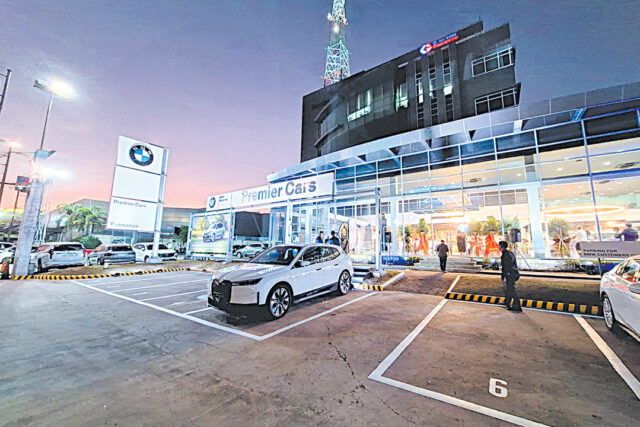
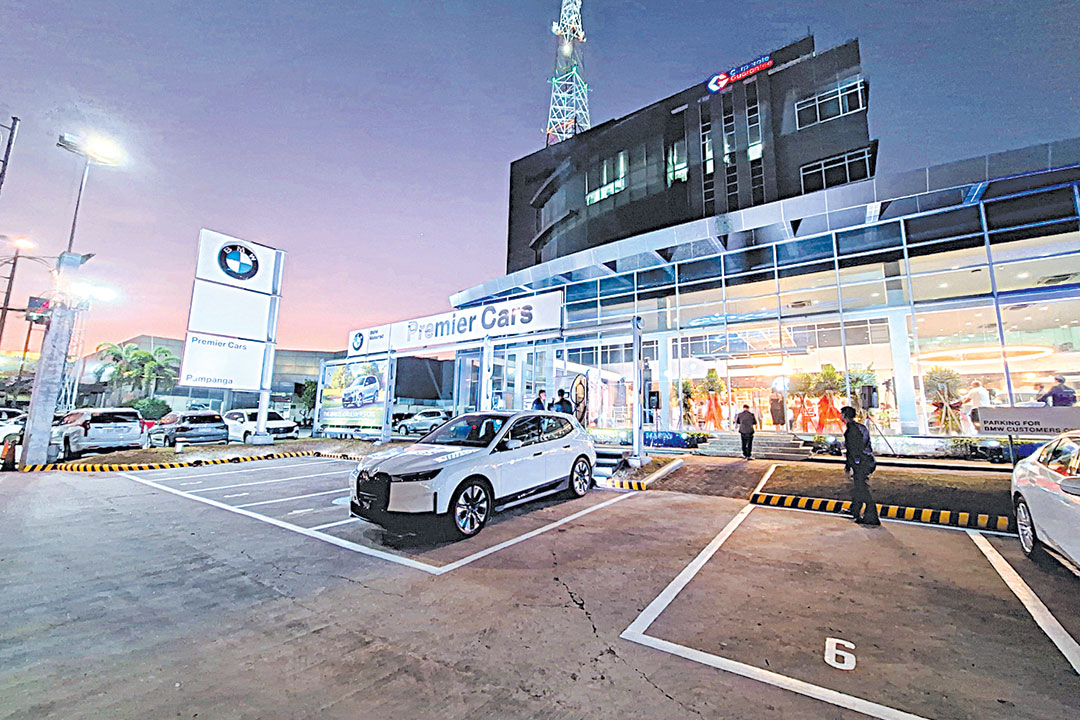
Pampanga Premier Cars is located on the ground floor of CGIC Building along Jose Abad Santos Avenue in San Fernando City, Pampanga. — PHOTO BY DYLAN AFUANG

Solar-powered Pampanga Premier Cars adopts brand’s retail identity

By Dylan Afuang

THE FIRST Philippine BMW showroom that features the German auto marque’s Retail.Next concept which intends to make both the physical and digital buying spaces more convenient and upscale recently opened.

Leading the opening of Pampanga Premier Cars were officials of SMC Asia Car Distributors Corp. (the country’s official importer and distributor of BMW vehicles), and Laus Group of Companies, the former company’s partner for the Northern Luzon city dealer. The business is located on the ground floor of CGIC Building along Jose Abad Santos Avenue in San Fernando City, Pampanga.

The Retail.Next concept applies to all BMW Group brands that include Mini, while Pampanga Premier Cars is also the first local BMW dealership to be powered by solar energy, as boasted by Laus Group Chairman and CEO Lisset Laus-Velasco.

“The Philippines is now the fifth market in the BMW Group Asia region to roll out Retail.Next,” BMW Group Asia Managing Director Lars Nieslen said in a video presented during the inauguration. “In today’s retail landscape, both the physical and digital space remain equally important and need to seamlessly come together, ensuring customers have the best experience possible,” he added.

For his part, SMC Asia Car Distributors Corp. President Spencer Yu said in his message during the event: “By leveraging innovative retail concepts and the latest technologies, we are now able to offer our customers in Pampanga a truly differentiated experience that brings our brand to life in new and engaging ways.”

At Pampanga Premier Cars — which spans 1,256 square meters and can display six cars and the motorcycle line of BMW Motorrad — the Retail.Next concept is apparent through the outlet’s open interior spaces and other design flourishes, and digital tools such as the Emotional Virtual Experience (EVE).

The outlet greets customers “through a unified entrance… With each vehicle thoughtfully staged and oriented toward capturing attention, customers are invited to explore their desired car,” described a release provided by SMC Asia Car Distributors Corp. One vehicle in the showroom can also be thoroughly showcased under a halo-shaped light.

The BMW Café and Customer Hospitality area, where refreshments are served, are designed with warm lighting and comfortable seating arrangements. One wall references Pampanga’s carving traditions with its wood panel featuring hand-carved designs. BMW-branded merchandise, such as luggage, jackets, shirts and scale models, dot the space.

The EVE software, meanwhile, renders a vehicle in 3D so customers can view and customize their desired model during the consultation and sales process. With EVE, customers can also view the dealership’s vehicles in stock and visualize their prospective BMW in various colors, trims, and in different environmental settings.

Customers have the freedom to engage in sales consultations in various areas inside, with a private sales lounge available to them. A multifunction bay can host vehicle handovers and presentations or new product launches. Service consultation lounges, meanwhile, provide comfortable and private settings for transactions between the service advisor and clients.

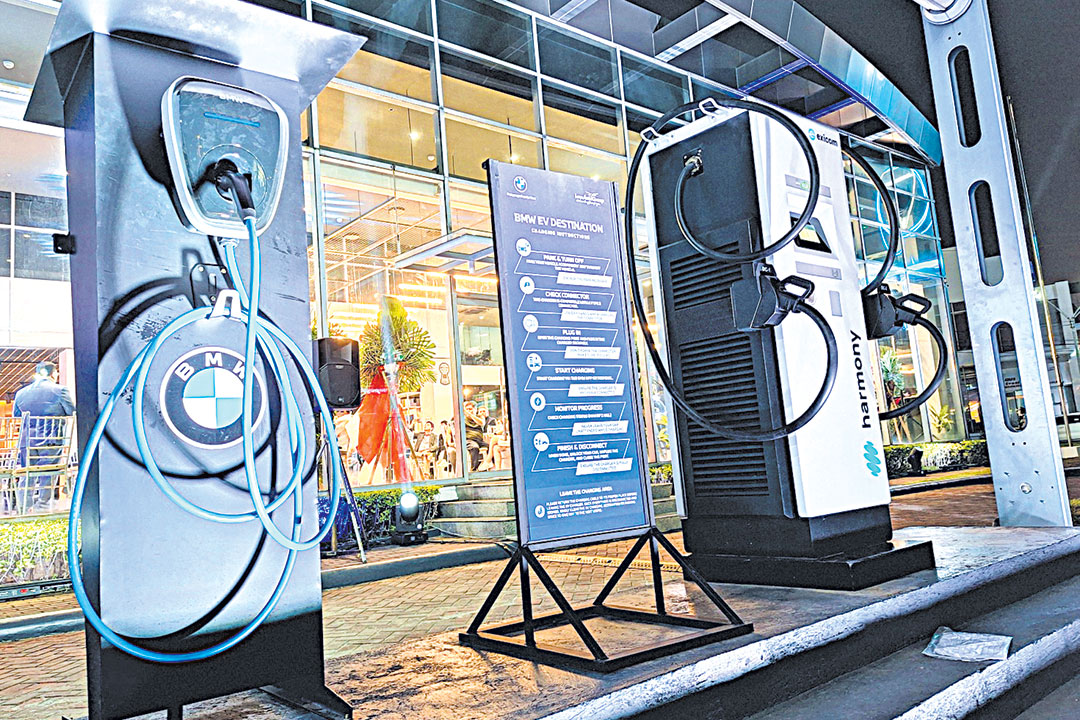
Electrified BMW vehicles can receive charge through the Type 2 charging points installed at the front of the dealership.

The Pampanga Premier Cars showroom and after-sales are open from Monday to Friday, 8:30 a.m. to 5:30 p.m., and on Saturdays from 8:30 a.m. to 5 p.m. The dealership can be reached by e-mail (customercare@premiercarsbmw.com.ph) or phone (045-963-7777).

SEC cancels corporate registration of Ecomamoni

BW FILE PHOTO

THE Securities and Exchange Commission (SEC) has revoked the corporate registration of Ecomamoni Environmental Recyclable Materials Manufacturing, Inc. for allegedly soliciting investments without the proper license. 

The SEC-Enforcement and Investor Protection Department canceled the entity’s certificate of incorporation in an order dated Feb. 25, the commission said in an e-mail statement over the weekend. 

According to the corporate regulator, Ecomamoni violated Section 44 of Republic Act (RA) No. 11232, or the Revised Corporation Code (RCC); Sections 8.1, 26.1, and 28.1 of RA No. 8799, or the Securities Regulation Code (SRC); and Section 11 of RA No. 11765, or the Financial Products and Services Consumer Protection Act (FCPA).

The SEC also ordered Ecomamoni to pay a P1-million fine for offering securities to the public without the required license and registration. The entity and its incorporators were also directed to pay the same amount as administrative sanctions under the SRC. 

Under the RCC, corporations are prohibited from possessing or exercising corporate powers beyond those granted by law or their articles of incorporation.

Meanwhile, the SRC prohibits selling or offering securities without a registration statement approved by the SEC.

Ecomamoni’s solicitation of investments from the public without securing the necessary license constitutes fraud, which is prohibited under the FCPA.

The SEC said Ecomamoni urged the public to invest by purchasing its recycling plans, where investors were instructed to press the start button of their chosen plan daily to receive the promised profit.

The commission issued an investor advisory against Ecomamoni in November last year, stating that the entity was an unregistered corporation. 

Ecomamoni subsequently registered as a corporation in December last year, with its primary purpose listed as manufacturing recyclable materials and converting waste to energy for related works and activities.

However, the SEC said corporate registration does not grant the authority to solicit investments.

“Despite this, the SEC received reports that Ecomamoni presented its certificate of registration with the SEC to convince the public of the legitimacy of its operations. It continuously introduced a new scheme with higher participation fees ranging from P600 to P165,000, with the highest daily earning of P7,000,” the commission said.

BusinessWorld e-mailed Ecomamoni for comment but has not received a response before the deadline. — Revin Mikhael D. Ochave

HelloMoney: Making banking and financial services as easy as saying ‘hello’

AUB PRESIDENT MANUEL A. GOMEZ

By Lourdes O. Pilar, Researcher

“SAY HELLO to a Worry-Free Life!”

This is HelloMoney’s promise to provide Filipinos with secure, fast, and efficient access to integrated digital financial services, emphasizing its commitment to financial inclusion.

HelloMoney is the e-wallet mobile app or a prepaid banking account powered by Asia United Bank (AUB) where customers can operate a convenient and secure 24/7 mobile banking transactions provided with internet connections.

It was launched by AUB in 2019 to enable users to open an account without experiencing the problems encountered in a physical branch.

To improve HelloMoney’s e-wallet market share, the bank will venture on more innovations in the future such as offering microinsurance, digital savings solutions, in addition to further widening its global reach and acceptance network.

It will further enhance the e-wallet’s user experience and streamline its features.

To gain insights into HelloMoney’s plans and developments six years after its launch, BusinessWorld interviewed AUB President Manuel A. Gomez to discuss the e-wallet’s market offerings and future ventures in the Philippines.

As one of the e-wallets in the Philippines and backed by Asia United Bank, what advantages does HelloMoney have over other e-wallets in the country?

HelloMoney has a unique advantage in the Philippine e-wallet space because it’s backed by AUB. This means HelloMoney users can be confident their money and transactions are protected by bank-grade security and regulatory compliance. Being part of AUB’s ecosystem also allows HelloMoney to offer more integrated financial services to its users.

Other advantages of HelloMoney:

• AUB pioneered the country’s first fully digital registration through National ID integration. This means there’s no need for a physical ID to open an account on HelloMoney because the user’s face already serves as their ID.

• Lowest InstaPay fee of P8 and zero convenience fees for billers.

• Partnership with Parañaque Integrated Terminal Exchange to digitalize public transportation and modernize how Filipinos pay for their daily commute.

• Digital partnership with Alipay+ made AUB the first Philippine bank with an e-wallet that can be used for cross-border mobile payments in 2022. This also brought HelloMoney closer to Filipinos in Japan, South Korea, Malaysia, Hong Kong SAR, and Singapore.

What are AUB and HelloMoney doing to reach unbanked and underserved Filipinos?

AUB is deeply committed to financial inclusion. Its strategy involves partnering with reputable institutions across the Philippines to reach the unbanked population. Through these collaborations, AUB is creating easier ways for Filipinos to access basic financial services, especially in areas where traditional banking might be limited.

One of these partnerships is with the Philippine Statistics Authority on the National ID integration in which AUB pioneered the country’s first fully digital registration. Even if the unbanked and underserved do not have a physical ID, they can open an account on HelloMoney and enjoy the benefits of digital banking just by having a digital National ID and having their biometrics done. Soon, they can also open an account in a physical branch of AUB just by looking at a camera.

What ongoing programs of AUB and HelloMoney do customers mostly use for their transactions?

It’s exciting to see how our customers are embracing digital transactions. We’re seeing significant growth in three main areas: InstaPay transfers, mobile load and gaming pin purchases, and bill payments. These services have become essential tools in our users’ daily lives.

AUB has partnered with Alipay+ to enable HelloMoney for cross-country transactions. How does the partnership help the users to get an efficient payment and other transactions experience?

Our partnership with Alipay+ has been transformative for our international capabilities. Our users can now make QR payments across multiple Asian countries including Japan, South Korea, Malaysia, Hong Kong SAR, and Singapore. This has really simplified cross-border transactions for our customers, whether they’re traveling, working, or studying abroad.

What consumer benefits arise from AUB’s partnership with Smart Communications, Inc.?

The collaboration with Smart Communications has been fantastic as it enabled AUB to expand its services. AUB has launched several successful campaigns offering special promos and HelloMoney credits for load purchases. It will continue to roll out more exciting campaigns through the end of the year to bring added value to HelloMoney users.

What security measures have you developed to prevent illicit online banking transactions? What are the preventive tools that are being used to protect its clients from fraud and anti-financial crime?

Security is a top priority at AUB. The bank recently integrated with the National ID’s e-Verify system, which gives it more confidence to verify customer identities. This is just one part of a comprehensive security framework to protect its customers.

What are your plans and innovations in the coming years? What products and services do you plan to offer in the market, and how would you differentiate these offerings from those provided by other e-wallets?

AUB has several exciting projects in the pipeline. Its focus is on creating more value within the HelloMoney app, making banking access even easier and more convenient to users.  The bank is constantly innovating to meet customers’ evolving needs.

To continue growing HelloMoney’s e-wallet market share, the bank will embark on more innovations in the coming years such as offering microinsurance, digital savings solutions, in addition to further widening its global reach and acceptance network.

It is also introducing more enhancements in user experience and simplifying HelloMoney’s features. Ultimately, making banking and financial services more accessible, secure, and simple for Filipinos through HelloMoney should be as easy as saying “hello.”

What do you think are the biggest risks faced by e-wallets and what do you currently doing to eliminate these risks?

In the e-wallet industry, scams and fraud are certainly the biggest challenges. That’s why AUB is continuously enhancing its onboarding process and proper KYC (know your customer) is crucial. It has also made its fraud monitoring systems more robust to review transactions and protect users.

How much did the HelloMoney’s customer base have grown since it was launched in 2019? How about the total volume and value of transactions since the launch? Please provide year-on-year data.

AUB takes pride in HelloMoney’s growth trajectory. As of December 2024, its user base has reached 6.3 million, a 37% increase from 2023. Transaction count hit 51.8 million, up 33% from 2023, while transaction value has grown to P196.5 billion, a 34% increase. These numbers reflect the trust users place on HelloMoney and on AUB’s commitment to serving their financial needs.

To know more about AUB’s HelloMoney, visit https://www.aub.com.ph/hellomoney. You may download the app via App Store (Apple), Google Play (Android), and App Gallery (Huawei).

PhilHealth writes off P20.67B in unreleased appropriations while giving away P89.9B to deadbeat government

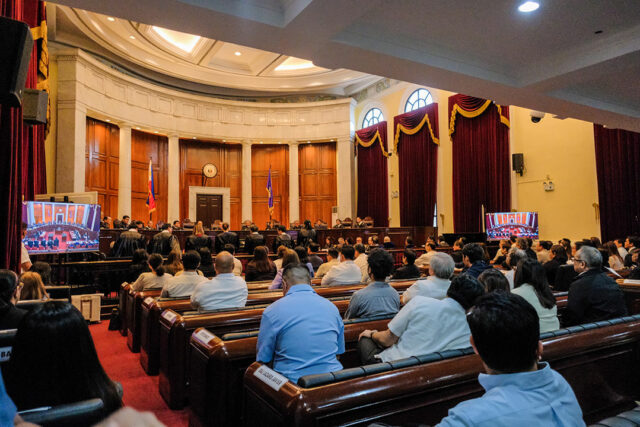
THE Supreme Court convenes for oral arguments on the transfer of PhilHealth’s P89.9 billion excess funds to the national treasury. — PHILIPPINE STAR/RYAN BALDEMOR

The financial statement of the Philippine Health Insurance Corp. Or PhilHealth in September 2024 reflects P20.671 billion as “the Expected Credit Loss is 100% for Due from the National Government for the years 2016 and below.” The breakdown can be seen in Table 1.

The same financial document showed another P56.44 billion remained with the Department of Budget and Management (DBM) as of September 2024. Thus, the amount withheld by DBM as of September 2024 was P77.11 billion. On top of those arrears, the Department of Finance asked PhilHealth to cough up P89.9 billion.

To put things in perspective, P77.11 billion is higher than the budget of the entire judiciary in 2025, which stood at P63.6 billion.

How immoral can a corporation get when it gives in to fraud while claiming financial stability?

The Secretary of Health is the guardian of the people’s health, and he sits as Chair of PhilHealth to assure adequate health financing for their health needs beyond what national and local governments can provide. The Secretary of Finance sees to the efficient management of PhilHealth’s financial resources. The Secretary of Budget and Management assures the legal uses of the funds in its care in the annual appropriations.

Yet it was this trio which forced the PhilHealth board to accept the memo and calculations of Deputy Treasurer Eduardo Mariño that PhilHealth had excess funds of P89.9 billion. Those calculations did not account for DBM’s impounding of PhilHealth’s 2023 appropriations worth P28 billion. The DBM admitted in the last hearing of Senator Bong Go’s Committee on Health, that the impoundment actually totaled P49 billion in 2023. This was reduced to P28 billion, because PhilHealth wrote off P20.671 billion.

The immorality of the actions of the trio has led to the defrauding of more than half the P89.9 billion non-existent “excess fund.” The implementation of the fraud led to a decline in members’ equity to P703.329 billion, a decline of P39 billion from the start of 2024.

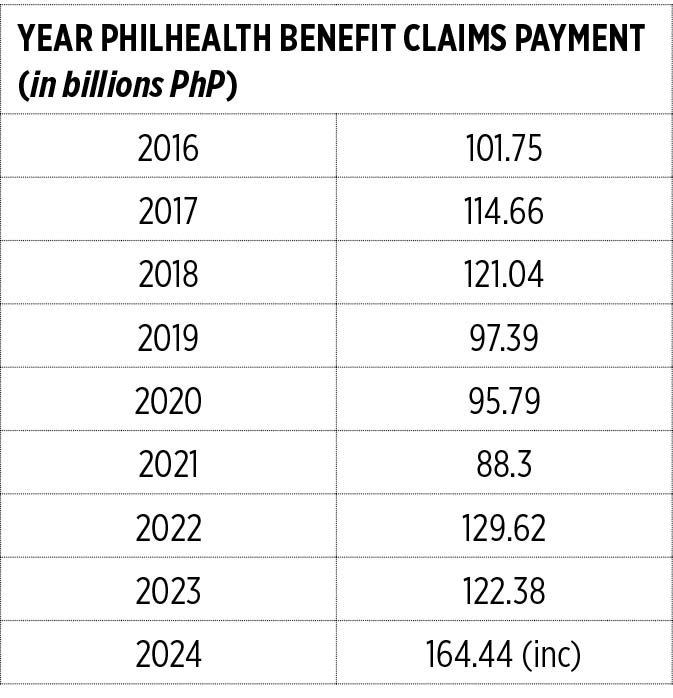
The trio and their defenders continue to double down on the narrative of “excess government funds” in the face of DBM’s admission of the non-release of appropriations. The trio has convinced the Speaker and the Senate President that PhilHealth is awash with funds by harping on the two-year reserve fund of P280 billion, peddling the lie that PhilHealth only spends P140 billion a year. (See Table 2)

Using the 2024 data, the required two-year reserve, including an annual 20% increase in benefits and P10 billion in operations, should now be P420 billion.

The short-sightedness of the trio fails to anticipate the growth of benefit payments for the indirect members and dependents, which far exceeds the growth in benefit payments of the more numerous direct members and their dependents (65 million direct vs 36 million indirect).

The actions of the three are masking the real needs of the health sector and misleading policy makers into thinking there is an excess of funding.

The coming crisis of the health sector from all this fraud can be clearly laid at the feet of the trio of Secretaries and the politicians who crave for more pork, more than equitable healthcare.

While we talk of billions of pesos lost to fraud and pork barrel, our patients in the poorest communities of Metro Manila and rural communities can only endure with the patience of a carabao left out to bake in the sun.

On this year when PhilHealth was given zero budget by the government, let me cite two patients seeking healthcare.

In respiratory distress and after prolonged outpatient treatment and moving from one hospital to another and not getting admitted, my patient Nena (not her real name) was admitted late January this year to one of the major Department of Health hospitals in Metro Manila. When finally admitted, she was found to have aspergilloma in one part of her lung, a fungal infection that is difficult to treat. As an out-of-work canteen worker married to a construction worker, she had been enrolled by her local government unit (LGU) in Medicare para sa Masa, which the LGU subsequently failed to pay for, and the membership lapsed. The Malasakit Center promptly branded her as an unregistered member and asked her to pay two months of premium, otherwise she would pay for her hospital bill: “Kapag di raw naayos ’yung PhilHealth no choice daw magbabayad talaga ng hospital bills.”

My second patient Vangie (not her real name) lives in Cadiz City, Negros Occidental where she has long been complaining of abdominal pain. After undergoing an ultrasound, she was diagnosed with biliary ectasia and multiple gallstones; when advised to have surgery, she adamantly refused, begging for any treatment short of surgery.

She was clearly afraid of hospital costs since she was married to a sacada (sugar field worker) whose only resource is a carabao. Four days ago she had abdominal pain severe enough for her to go to the “emergency” (actually a lying-in clinic). Having been assured that PhilHealth would cover her costs in a government facility, she will be admitted either to the provincial hospital in Silay or the DoH hospital in Bacolod. She is still waiting till today for her procedure to happen.

The failures of PhilHealth come at a time when the country’s health system is deteriorating from the community level up. The Health Secretary only sees the overcrowding happening in DoH hospitals (as noted in the two cases above), but he fails to acknowledge that rolling out a primary care package through PhilHealth can revive the primary care system and ease the burden on hospital systems.

We continue to hope for the best for long-suffering Filipino patients like Nena and Vangie.


Jeepy Perez, a doctor of medicine, specializes in public health administration, primary healthcare, and has worked with nine Health Secretaries and three NEDA Secretaries since 1992. He has worked on community-based health programs, Philippine local health systems, the TB program, health information systems, and public and private reproductive health and family planning programs in the Philippines. He was undersecretary for Population and Development and executive director of the country’s Commission on Population and Development up to Sept. 8, 2022 when he retired. He occasionally writes for Action for Economic Reforms.

BAP looking to open peso interest rate swap mart to foreign investors

THE BANKERS Association of the Philippines (BAP) wants to open the peso interest rate swap (IRS) market to offshore investors as the platform continues to be developed.

Citi Philippines Country Head and Chief Executive Officer and BAP Open Market Committee Chairman Paul Raymond A. Favila said the peso IRS market has seen increased volume since its launch in November.

“I think we’ve seen quite a fair amount of progress in terms of volume already. But there’s still a long way to go in terms of adoption,” Mr. Favila told reporters at an event on Thursday.

“Now, we are also looking at opening up that market as we should, even for offshore investors. Because they need that, right? If you want to invest in the Philippines, you need to have a way to hedge yourself. So, those are very much consistent with everything that we are trying to do,” he said.

The enhanced peso IRS market began operations in November and is being handled by BAP to promote the development of yield curves to further support the pricing requirements of short-term credit instruments, such as loans.

The launch followed the release of the updated International Swaps and Derivatives Association (ISDA) on Nov. 15.

The Philippine Overnight Reference Rate (ORR) was included in the rates published by the ISDA. The BAP had developed the Philippine ORR, which is based on the Bangko Sentral ng Pilipinas’ (BSP) variable overnight repurchase rate.

The BSP has said that the IRS market will deepen the local capital markets, which would enhance savings and investments as well as strengthen the transmission of monetary policy.

Mr. Favila said the market’s operation is paving the way for the availability of data, which could attract potential participants.

“The challenge now as we are creating the historical data is for clients to start looking and saying, ‘I’m comfortable with this. Now I’d like to get engaged.’ So, that’s one step,” he said.

“That’s the next step, actually — getting more clients to actually ask questions, if not actually want to start using it. And then with the BSP, we are anticipating further developments on the repo (repurchase) space.”

The BSP and the BAP earlier said the repo market for government securities will also be expanded to boost trading and provide an alternative benchmark for short-term loan rates.

Mr. Favila added that increased activity would boost the development of the local capital market.

“In general, very positive,” he said when asked about his outlook for the peso IRS market. “We want to make sure that there is more reception coming from the end users. I always stress that this is not a market just amongst the banks. Otherwise, it doesn’t serve a purpose. It becomes speculative.”

“There are many, many legs to this whole thing, but for as long as they are all pointing in the same direction, I think we’re in a good place. So, we continue to track that very closely.” — AMCS

Strong new hair

CLINIQUEDEPARIS.COM

THE BIBLE’S SAMSON lost his strength when he lost his hair — at Clinique de Paris, perhaps one won’t have to worry about that fate.

At Clinique de Paris’ penthouse clinic in Makati, one can see all the way to the water of Manila Bay, but no one else — the clinic had been designed for utmost privacy, and for all we know, there might have been another patient at the hair restoration clinic with us on the afternoon of Feb. 25 when BusinessWorld dropped by for an interview, but clever architecture prevented us from seeing them.

“For a lot of people, hair loss is not painful, but it’s very emotional. Very personal. You don’t realize it until it starts to thin,” said Dr. Rafael Fortus, medical director for Clinique de Paris.

Mr. Fortus outlined the different ways one can lose hair, and the various ways to fix it. Male pattern baldness, for example, starts as hairline recession; the female version begins from the center and radiates outward. Baldness is usually caused by genetics, caused by the abundance of the dihydrotestosterone hormone, which attacks the hair. There can be other causes — lifestyle and stress, for example; but for women, it could be hormonal changes and other such factors.

They offer several solutions including scalp micropigmentation which is a specialized tattoo method that creates the illusion of real hair follicles. One of their highlight treatments is the use of platelet-rich plasma. They take your blood, centrifuge it to separate the blood cells from the plasma, and treat the scalp with this fluid. This encourages hair growth and is ideally done in six sessions.

Then there are their hair transplants: old-fashioned transplants take grafts of skin from the back of your head, or else use hair plugs (clumps of hair from the same donor region). “Even the baldest person you know will still have hair at the back [of their head],” said Mr. Fortus. But, “To me, a bad hair transplant is worse than no transplant.” These old-fashioned hair replacement treatments sometimes come off as artificial: “In cosmetics, I think natural equals nice, which is our mantra.”

Clinique de Paris offers Direct Hair Implantation (DHI), a procedure invented in the 1970s, and one they share with 75 other clinics in the world. “The surgeon will individually pluck each of the follicles,” said Ludovic Branellec, managing director and the clinic’s co-founder (and son of the Branellec family behind Jewelmer; down the hall from the clinic). “I have two hair transplants. You can’t tell. There’s no scar.” Clinique de Paris has the master franchise in the Philippines, which they have already held for 10 years, and the accreditation from DHI International.

Their clinic used to be near Greenbelt, but they moved to the Alveo Financial Tower penthouse late last year. Mr. Fortus told BusinessWorld, “The Philippines is now considered Top 3 in terms of performance and track record.”

The treatments cost from P18,000 (one session) to P88,000 (the full six) for the plasma treatment; and from P200,000 to P600,000 for direct hair implantation. “It’s like buying a watch, or buying a beautiful bag,” said Mr. Fortus. Mr. Branellec meanwhile, noted that they have cheaper options available, but the direct hair implantation is the best option: “But the results — we have a 97% survival rate of all the follicles that are extracted. We know that 97% will grow.” According to him, up to a third of their patients are “people who went for a cheaper rate, and then after a year, regret their choices.”

The pair proceeded to show pictures and testimonials from previous patients, but what better story to tell than your own?

“I was really happily bald,” said Mr. Branellec. “If you know my dad, he’s bald. All the men in my family… they were all bald. I knew as a kid that I would end up bald. It’s really something I accepted, and I thought I could never change.”

When a peer told him about Direct Hair Implantation, he didn’t see why he should bother: “I know what’s waiting for me, and I’m fine with it.”

But after getting the hair transplant, he said people began to notice a subtle change about him that they couldn’t quite pinpoint. They thought he was younger, switching up his and his younger brother’s birth order. “I’m 47,” he said.

He also noted that after his hair grew back, people he knew started to take off their caps in front of him to show their own hair loss. “So many people I know are suffering in silence — and they don’t know their options.”

Mr. Fortus said, “It’s not so much the hair that changes them: it unlocks their confidence they didn’t realize they had.”

For more information, visit https://cliniquedeparis.com/.Joseph L. Garcia

Back rider safety tips from MDPPA

The Motorcycle Development Program Participants Association, Inc. (MDPPA) campaign photo highlights riding safety as a function of love. — IMAGE FROM MDDPA

THE MOTORCYCLE Development Program Participants Association, Inc. (MDPPA) — through its “Tropang MAALAM” campaign — reminds all riders that the key to a safe and enjoyable trip with a passenger starts with the right habits. Transporting a back rider, in particular, requires not just skill but responsibility, awareness, and proper preparation.

First, helmets are not optional; the rider and passenger both need a certified, properly fitted helmet at all times. Loose or oversized helmets won’t provide proper protection, said MDPPA in a release. “If possible, get a full-face helmet for maximum safety,” it declared.

Next, how a passenger sits can make or break a ride. A proper seating position ensures balance, comfort, and safety for both. A passenger should wrap his or her hands securely around the rider’s waist, keeping the grip firm but comfortable. Then the passenger needs to sit as close as possible behind the rider and “move” with the rider — especially when navigating sharp turns or uneven roads — as one for better balance and control. The passenger’s knees should press lightly against the rider’s hips for optimum stability and to reduce sudden shifts in weight. The feet should always be firmly planted on the passenger foot pegs, and the motorcycle’s mirrors should be adjusted to ensure a clear view. The passenger must be aware not to obstruct the rider’s view through the mirrors, particularly when turning and overtaking.

Some don’ts: The passenger shouldn’t shift his or her weight unexpectedly, particularly when turning, or hold on to the rider’s shoulders and arms. The latter can affect steering. Finally, the passenger must never move suddenly as this can throw the motorcycle off balance.

BFAR to set up P1-million fish hatchery in Ifugao

BRUCE WARRINGTON-UNSPLASH

THE Bureau of Fisheries and Aquatic Resources (BFAR) said it will establish a P1-million fish hatchery in Ifugao province by June 2025.

The hatchery, which will rise at a site in Barangay Cawayan, Asipulo, will assist the Cawayan Fisherfolk Association (CFA) with pond-based fingerling production, the BFAR said in a statement.

CFA is beneficiary of BFAR’s National Program Management Support Office, and takes breeders sourced from the BFAR National Freshwater Fisheries Technology Center.

The hatchery will provide rearing ponds and tanks for fry-to-fingerling growth and holding tanks before dispersal.

“This initiative will enable CFA members to supply quality tilapia fingerlings within their community, reducing dependency on external sources and improving income generation,” the BFAR said.

CFA’s income-sharing scheme allocates 50% of individual tilapia gross sales from the 46 beneficiaries for group use.

“This ensures continuous income and capital build-up, which will be reinvested into community-based enterprises such as the hatchery, guaranteeing its sustainability beyond initial funding,” the BFAR said.

The program and the association will draft the hatchery’s structural plans, BFAR said.

The project will proceed to infrastructure development and construction once the plans are finalized.

The procurement of equipment, supplies, and materials is scheduled to begin this month.

“To ensure proper hatchery management, CFA members shall undergo training as part of the livelihood package,” the BFAR said. — Kyle Aristophere T. Atienza

DFNN to push through with CIC partnership this year

FREEPIK

LISTED gaming technology provider DFNN, Inc. said its planned joint venture (JV) with Spain-registered information technology (IT) project development and engineering company Consulting Informático de Cantabria S.L. (CIC) will materialize this year.

DFNN President and Chief Executive Officer Ricardo F. Banaag confirmed the timeline and said the partnership is “pushing forward.”

“We’ll probably come up (with something) in the future. That is ongoing. We have regular collaborative meetings,” he told reporters on the sidelines of a media event in Taguig City last week.

Mr. Banaag said DFNN and CIC have already identified areas for collaboration but declined to provide specific details.

“Our partnership with CIC will touch many areas,” he said.

In March last year, DFNN formalized a strategic JV agreement with CIC to expand the latter’s Asian operations.

The total investment in the JV company is P12.5 million, with 60% or P7.5 million coming from DFNN and the remaining 40% or P5 million from CIC.

CIC provides digital transformation and technology solutions. Its products include the SGRwin network management system for managing complex multi-technology ecosystems and the FIELDEAS multi-device field service management platform, which enables full visibility and control for process digitalization and supply chain management.

Meanwhile, DFNN Executive Chairman Ramon C. Garcia Jr. said the company is seeing a 30% increase in lotto ticket sales following the introduction of the LottoMatik system, which caters to areas without existing lotto outlets.

The LottoMatik platform is a portable point-of-sale device designed to simplify the lotto ticket purchasing process.

“We are expecting at least a 30% increase, just by distribution. With this, we want to make it easier and give people a chance to have a micro-business while also contributing to charity,” he told reporters in a separate interview.

Mr. Garcia said DFNN aims to deploy 120,000 terminals of its LottoMatik platform.

Since its soft launch in November last year, the company has deployed 600 LottoMatik terminals, according to Mr. Garcia.

“We believe that this country, given our size, can accommodate up to 120,000 terminals easily due to our growing population,” he said.

DFNN shares were last traded on March 7 at P2.50 apiece. — Revin Mikhael D. Ochave 

Rate cuts and US economic policy uncertainty fuel markets in Q4

TONODIAZ ON FREEPIK

US ECONOMIC POLICY uncertainties coupled with peso depreciation and policy rate cuts by both the US Federal Reserve and the Bangko Sentral ng Pilipinas (BSP) drove the local financial market in the last quarter of 2024.

These developments, analysts said, were likely to persist this quarter and throughout 2025.

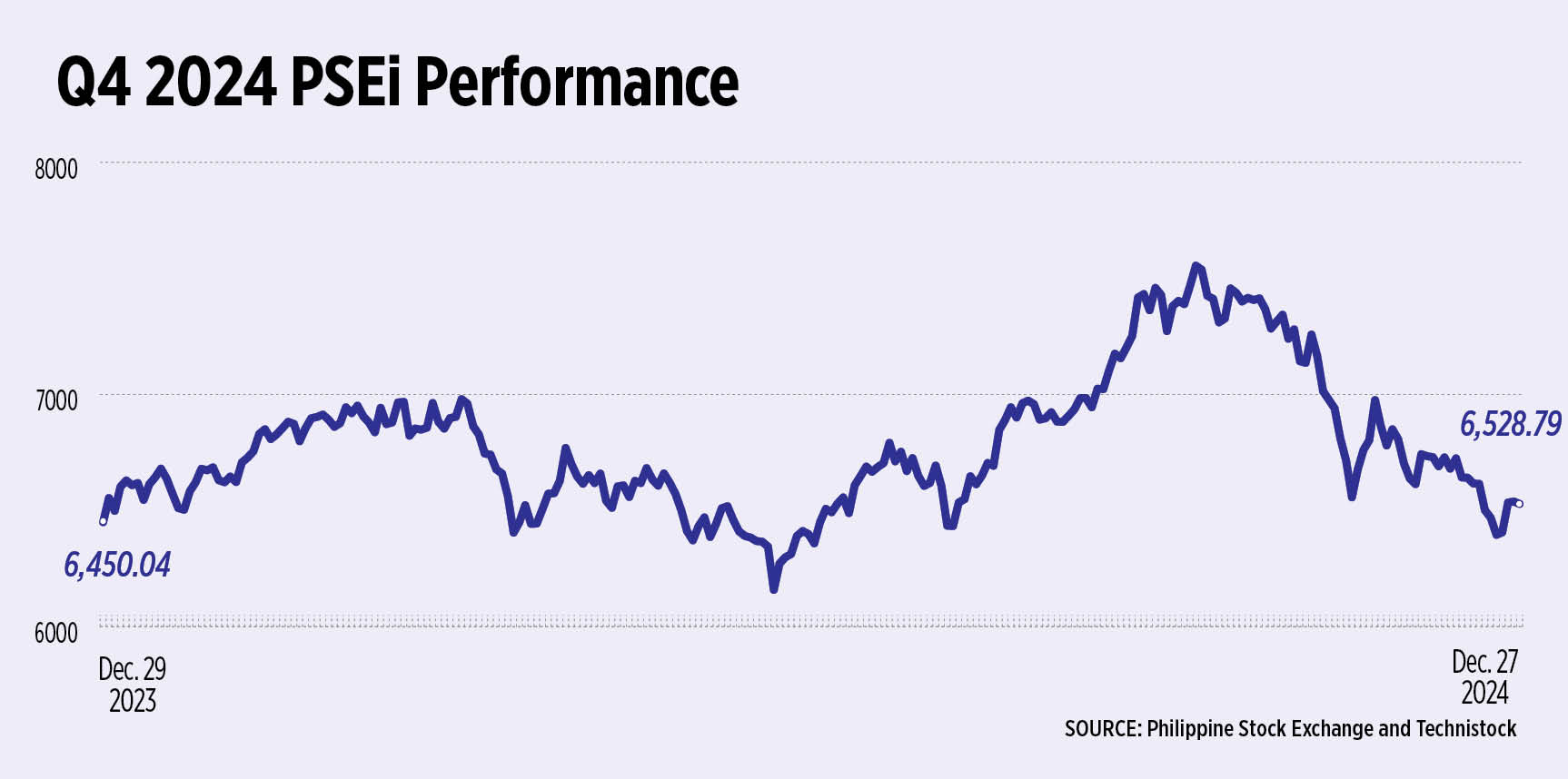
In the fourth quarter, the Philippine Stock Exchange index (PSEi) — the barometer for the country’s stock market — closed at 6,528.79. This was lower by 10.2% from 7,272.65 in the July to September period last year.

A year earlier, the local bourse went up by 1.2% from 6,450.04.

Meanwhile, data from the Bankers Association of the Philippines showed the peso closed at P57.85 to the dollar in the October to December period, weakening by 3.2% and 4.5% from a quarter earlier and a year earlier, respectively.

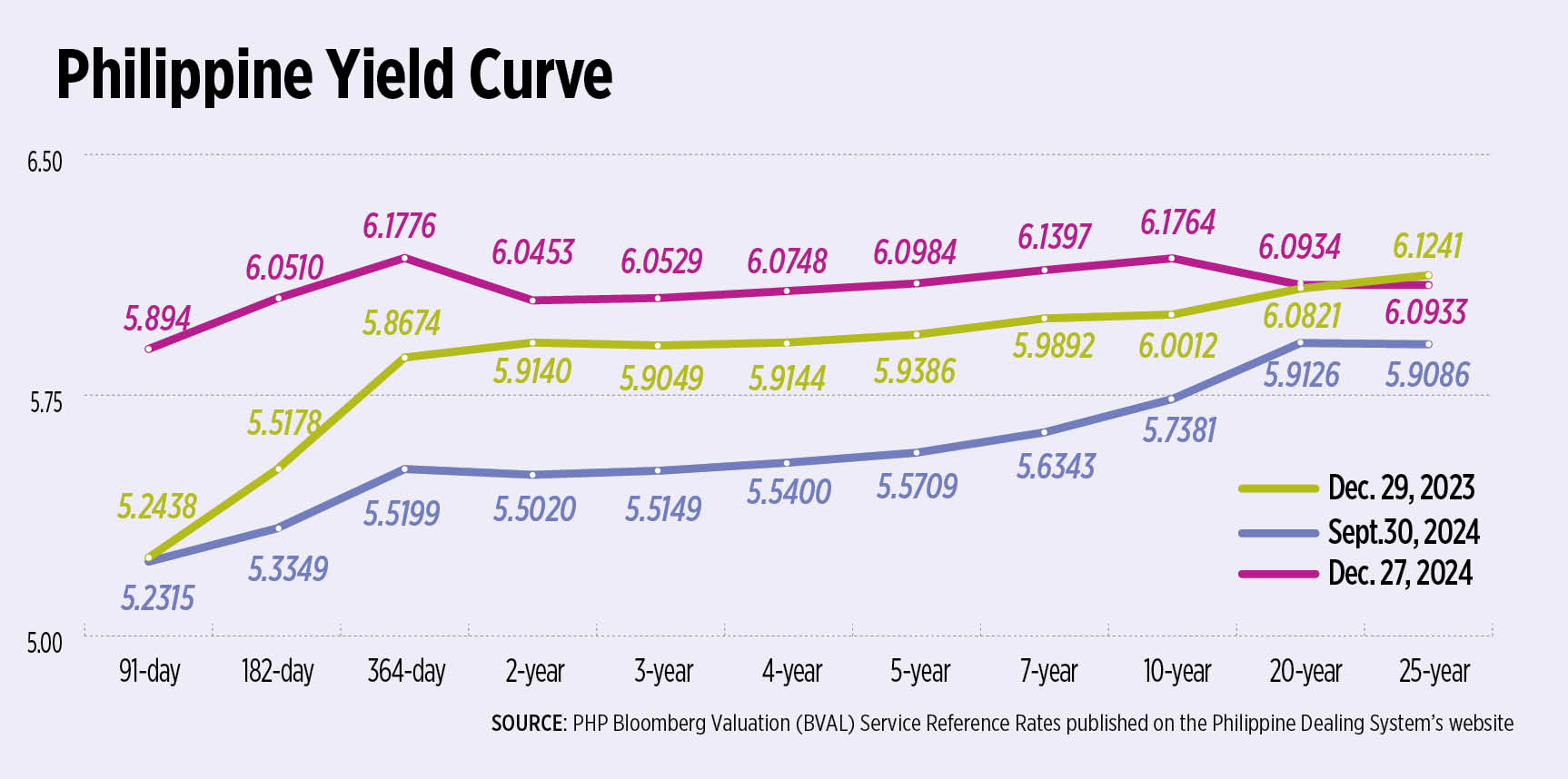
Yields on government securities rose by 49.90 basis points (bps) on average quarter on quarter based on the PHP Bloomberg Valuation (BVAL) Service Reference Rates published on the Philippine Dealing System’s website.

On an annual basis, yields also grew by 21.81 bps.

During the period, domestic markets were influenced primarily by the reduction of interest rates set by the BSP and economic policies of US President Donald J. Trump, analysts said.

Harumi Taguchi, principal economist at S&P Global Market Intelligence, said that market sentiment has been influenced by uncertainties over US economic policy and expectations for fewer and slower policy rate cuts by the US Federal Reserve in the last quarter of 2024 which is still likely to persist this year.

For Nicholas Antonio T. Mapa, chief economist at Metropolitan Bank & Trust Co. (Metrobank), these projected economic policies set by Mr. Trump could have repercussions for global trade, global economic growth, and the direction of US Fed policy rates on the mind of investors.

“The new US administration is set to raise tariffs over the next four years. However, there remains a degree of uncertainty over the pace and magnitude of such tariffs, and whether other trading economies would retaliate by raising their own tariffs,” HSBC ASEAN economist Aris D. Dacanay said in an e-mail.

He added that market players will monitor how protectionism will develop, considering the inflationary risks of tariffs affecting how monetary policy in the US will take effect.

Meanwhile, for Sun Life Investment Management and Trust Corp. economist Patrick M. Ella, optimism surrounding the new US government was a big driver during the period.

Additionally, he said that the Philippine peso weakened alongside other Asian currencies following the win of Mr. Trump in November.

“Fixed income markets were elevated as the prospect of slightly elevated domestic inflation due to the weather-related disruptions to food supply and the seasonal demand,” he said in an e-mail.

He also added that the US Federal Reserve’s signaling a lowered rate cut this year helped keep both foreign and domestic interest rates higher.

Reinielle Matt M. Erece, economist at Oikonomia Advisory and Research, Inc. on the other hand, said that the BSP’s reduction of rates had a significant impact on the financial markets last quarter.

This suggests that further monetary policy easing measures are likely to happen.

However, he noted that uncertainties by Mr. Trump and his campaigns steered a great deal of uncertainty in our capital markets, causing foreign investors to sell and reposition themselves.

Due to this, the local bourse was not able to recover back to its October levels, he said, noting that the stock market rose to above 7,300 levels after the first rate cut of the BSP since the pandemic.

“This level of the PSEi was the highest since the first half of 2022 when the economy started to reopen,” he said.

Looking ahead, he said that interest rates and other economic indicators will fuel market movements this year.

Additionally, he said that economic uncertainty by Mr. Trump’s aggressive raise of tariffs on China and Mexico are still the reason why the stock market has a relatively weaker performance.

Earlier this year, he imposed tariffs on US’ key trade partners namely Canada, China, and Mexico which may have consequences in global trade.

Based on a weekly report by Capital Economics published in February, Mr. Trump has abandoned the idea to impose a flat universal tariff of 10%-20% on all imports to the US and instead favors for a new reciprocal tariff that will be imposed on a country-by-country basis.

A reciprocal tariff is a tax or trade restriction that one country places on another in response to similar actions taken by that country and the idea for this is to create a balance in trade between nations.

If one country raises tariffs on goods from another, the affected country might respond by imposing its own tariffs on imports from the first country.

To explain, governments impose tariffs to increase revenues and protect local industries from foreign competition.

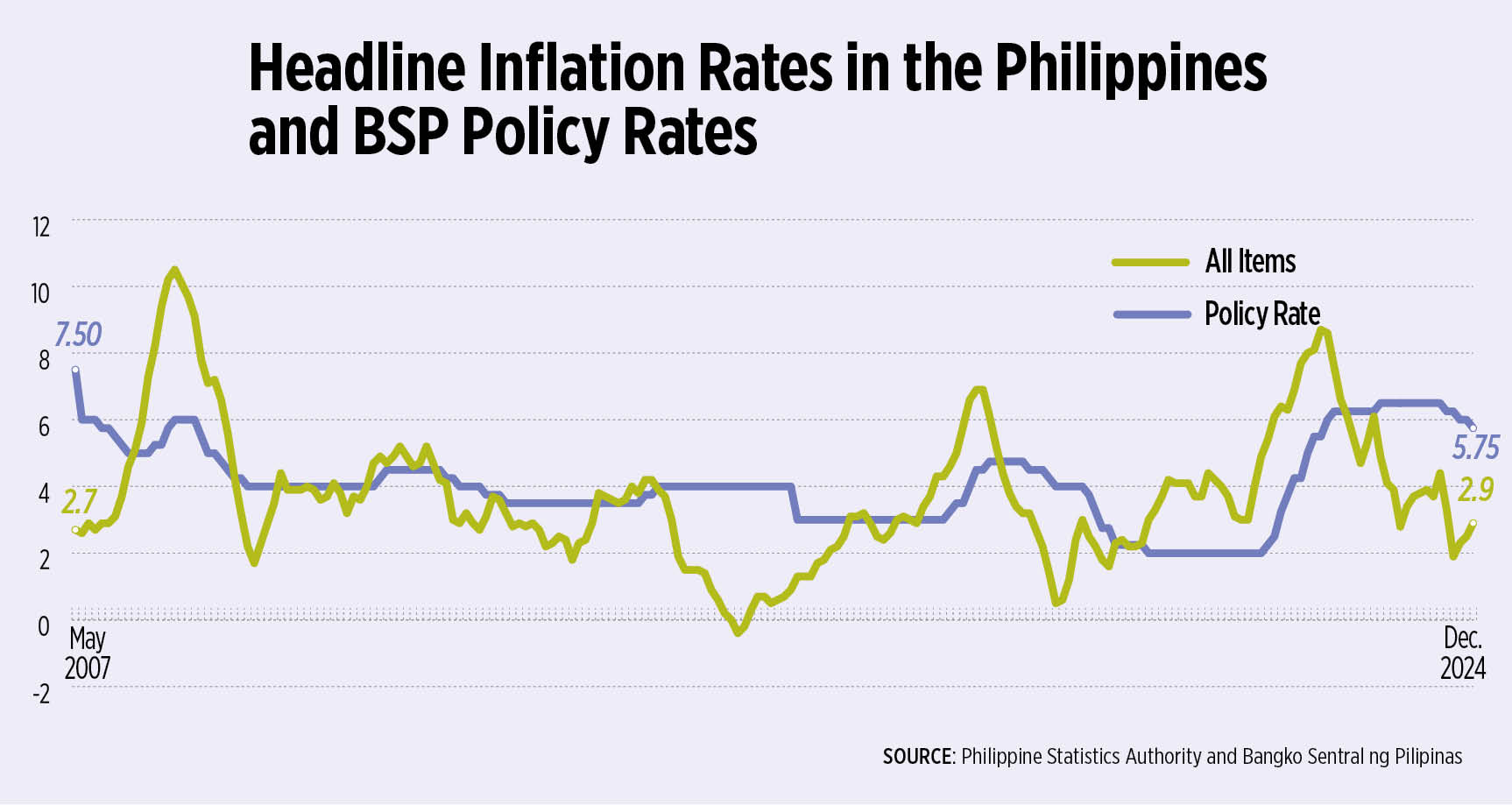
On the other hand, locally, the central bank slashed its key rate by 25 bps to 5.75% in their Monetary Board meeting last December.

Since its easing cycle in August, the BSP has reduced rate by a total of 75 bps.

CENTRAL BANK HOLDS OFF RATE CUTS
But at its first policy meeting this year, the BSP maintained its policy settings, surprising market expectations and at the same time signaled fewer rate cuts this year.

Michael L. Ricafort, chief economist at Rizal Commercial Banking Corp., said that lower local interest rates would lead to decreased borrowing and financing costs.

This would then lead to an increase in the demand for loans and credit, and in turn, would result in more investments in new and expansion projects, improve trade, create more jobs, and boost business and economic activities.

For Mr. Taguchi, he also pointed out that policy rate cuts are likely to boost the economy and attract foreign direct investments in the country.

“This could limit further depreciation and support financial markets,” he added.

“Despite the hawkish stance from the [US Fed], I still see BSP to continue its easing cycle to encourage consumption and investments in the country amid the disappointing GDP growth report for 2024,” Mr. Erece said.

He added that while this may lead to the depreciation of the local unit, stable inflation coupled with weak growth will suffice to continue monetary policy easing.

“The BSP’s accommodative stance aims to ease financial conditions, supporting credit growth and economic activity while maintaining a target-consistent inflation outlook,” the central bank said in an e-mail.

BSP also said that following these rate cuts, credit activity has increased, and demand for government securities has been strong, with interest rates generally trending downward.

Additionally, the BSP highlighted that it remains in easing mode to support growth as well as continue gradual rate reductions.

This, alongside monitoring the impact of previous policy changes on the economy. It added that the future decisions on monetary policy will be data dependent.

WHAT TO CONSIDER IN 2025
Analysts highlighted significant developments that market participants should consider this quarter, and for the entire year, what trends will persist and how the market should take caution

For Mr. Taguchi, rising protectionism as well as geopolitical tensions are what market players should consider in 2025.

For Metrobank’s Mr. Mapa, the influence of Mr. Trump as he sat office will affect global trade, inflation, and geopolitical concerns.

“The full new tariff schedules that the US will impose, and the conditions attached will be a key source of attention for the market,” Sun Life’s Mr. Ella said.

On the other hand, Mr. Ricafort said that increased government spending on infrastructure and election-related expenditures for the May 2025 midterm elections could benefit manufacturers involved in supply chains for various infrastructure projects in which they may also gain from the campaign spending by candidates and their donors or sponsors.

Interest rates, coupled with energy prices and world politics, are factors that should be taken into account this year, Mr. Erece said.

He further explained that as the central bank continues its easing cycle, companies will invest in growth expansion which in turn will increase their capital expenditure.

Additionally, energy prices are seen to stabilize as world oil prices are forecasted to be on a decline.

Moreover, world politics may cause speculation and hesitation in capital markets.

“The ongoing imposition of tariffs by the US and the retaliatory tariffs set by other countries such as Canada will cause inflation expectations to rise,” Mr. Erece said.

Likewise, for the BSP, these external factors will impact domestic financial markets this year.

“In particular, markets will likely continue to be influenced by the protectionist trade policies and fiscal measures of the US, and the resulting policy uncertainty,” BSP said.

These factors, it added could put pressure on foreign exchange, equities, and bond markets, potentially delaying the US Federal Reserve’s easing cycle and affecting global output and inflation.

Additionally, the BSP noted that macroeconomic factors by goods exports, inflows from overseas Filipino workers’ (OFW) remittances and foreign direct investments (FDIs), and the continued implementation of structural reforms are expected to support the markets.

Latest BSP data showed that cash remittances reached $3.38 billion in December bring the full year 2024 level to $34.49 billion.

Meanwhile, FDI net inflows fell $901 million in November, its lowest in two months or since the $368 million in September, latest data from BSP showed.

Additionally, latest government statistical data showed that trade deficit in December narrowed to $4.14 billion, the smallest trade gap in nine months since the $3.35 billion posted in March 2024.

Exports for December 2024 declined 2.2% to $5.66 billion while imports likewise, fell by 1.7% to $9.79 billion.

The aggressive move on tariffs by the US administration will discourage investors from investing in riskier markets and opt for safer investment as central banks brace for the potential rise in inflation, Mr. Erece cautioned.

LOOKING AHEAD IN 2025
Fewer rate cuts this year would mean attracting more investments in the stock market plus encouraging companies to increase capital expenditure to strengthen business operations, Mr. Erece said.

He explained that lower interest rates incentivize business and consumers to spend or invest their money in capital markets instead of putting them in lower yielding government bonds. Moreover, in the long term, this will also help boost activity in the stock market.

For Mr. Taguchi, though the country is somehow insulated from risks looming over global trade, it may still be vulnerable to the Fed repricing and the greenback’s strength.

“The Philippine economy, due to its ongoing infrastructure agenda, is operating in a current account deficit, making it susceptible to risks in foreign exchange volatility,” he said.

Additionally, he noted that the US Federal Reserve puts a floor under how much the BSP can cut rates. If the BSP lowers rates more than the Fed, it could weaken the local unit.

This, in turn, will lead to inflation which is fueled by currency depreciation and will complicate BSP’s easing cycle.

“So, if inflation in the US turns out to be stickier due to tariffs, the BSP’s easing cycle might consequently be shallower, which, in turn, could limit the extent of how much Philippine equities and bonds could rally,” he explained.

FIXED-INCOME MARKET
BSP: The central bank’s shift to a less restrictive monetary policy, driven by easing inflation, is expected to influence bond yields. The BSP’s forward guidance will also impact on the fixed-income market.

Mr. Taguchi: Local bond yields are likely to remain around current levels, as US bond yields are expected to continue affecting local bond yields.

Mr. Mapa: Domestic liquidity and subdued inflation could keep a lid on interest rates in the coming months although supply risk and the direction of global rates could also mean rates could still be pressured higher during bouts of increased supply or uncertainty.

Mr. Erece: Bond yields can see a slow decline as inflation expectations continue to stabilize within targets. Other similar investment instruments will see the same movement for this year.

Mr. Ricafort: Market risk could be managed if the bonds/fixed income securities are held until maturity, or at least to have that flexibility, if market conditions become less favorable, such as if bond yields go up or remain elevated during the investment horizon, with the investor enjoying the effective yields or coupon payments every quarter or year (depending on how often coupon payments are made) that are more predictable (avoiding the risk of losses by not selling when market yields become higher than the yield during the bond’s purchase).

EQUITIES MARKET
BSP: Factors such as the proposed reduction in stock transaction taxes under the Capital Markets Efficiency Promotion Act, improved credit outlook, and higher domestic consumption, could boost trading activity.

Mr. Ella: [It] is cheap and could remain so until a good news story [lifts] prices.

Mr. Erece: As interest rate goes down, the risk-free rate usually goes along with it. Along with the expectation of higher business activity this year, the market risk premium is expected to increase, making stocks a more attractive instrument due to their relatively higher expected returns.

Mr. Ricafort: … Better corporate sales and income reports of the largest local companies and mostly better economic data recently to support investment valuations…. After no more large lockdowns since 2022, and no more lockdowns as a policy priority, going forward, thereby, improving sales or revenues, earnings or net income, employment or jobs, more business or economic opportunities; all of which would help support better investment valuations, though offset by still relatively higher prices and higher borrowing costs.

FOREIGN EXCHANGE MARKET
BSP: … Steady inflows from OFWs remittances, BPO revenues, tourism, and foreign direct investments are expected to support the peso. Additionally, ample gross international reserves will help cushion against global economic uncertainties and exchange rate volatility.

Mr. Taguchi: [We] expect the peso to remain above P58/US$ considering the likelihood of a policy rate cut by the BSP and the lack of change to the Fed’s policy rate.

Mr. Mapa: Taking its cue from the dollar and the direction of Fed policy.

Mr. Ella: [It] could trade sideways.

Mr. Erece: As the BSP is expected to deviate from the Fed’s movement, the peso is seen to depreciate slightly as the US [remains] in a relatively tighter interest rate environment. This will cause the exchange rate to hover around P58-P59 against the dollar.

Mr. Ricafort: Going forward, the performance of the US dollar/peso exchange rate would still be partly a function of intervention or defense as consistently seen for more than two years already amid the need to better manage inflation and inflation expectations to fulfill the price stability mandate that would also require stability in the peso exchange rate, which affects import prices/costs and overall inflation. — Abigail Marie P. Yraola


Distressed jeans and a distressed world

DAVID TRINKS—UNSPLASH

“Why are people still buying ripped jeans?,” the New York Times asked. Ripped jeans, more popularly called “distressed” jeans — “the kind of wear and tear that is artfully, or not so artfully, designed into denim, as opposed to the kind of wear and tear that happens over time — have been with us for more than three decades,” fashion critics at the paper say (nytimes.com, Nov. 4, 2024).

Distressed jeans are here to stay. “I feel the resurgence of more destroyed jeans in the premium and luxury market,” an interviewed fashion designer, Benjamin Talley Smith said.

Distressed jeans have come a long way — to being a fashion statement. For the “in”-look! But Davis and Levi Strauss designed and patented durable denim work trousers in 1873, basically for coal mine and railroad workers, and, of course, for the American cowboys. Levi-Strauss jeans, or simply Levi’s, had proven to be so durable and safe (a shield against bruises and cuts) that other clothing manufacturers replicated the unique product, and made “blue jeans” for work, for play, and for almost anything one might need casual, dependable, low-maintenance clothing for. Blue jeans can last a lifetime.

Blue jeans that have had many years of service show the tears and abrasions in the body-movement and contact areas of the wearer. This badge of honor of old and worn blue jeans has urged the capitalist sellers to create and market “distressed jeans”— new jeans that pretend to be already old but which will still last a lifetime. Stone-washed and chemically bleached, machine-sanded and purposely torn, distressed jeans have become a paradoxical symbol of durability and strength, and, for its wearer, a declaration of enduring self-sufficiency and independence of mind (no more the urgency to conform with formal dress codes).

Distressed jeans are symbolic of integrity and steadfastness, dependability and principles.

It was about this independence of mind, and the awareness of rights, that the youth in America in the 1970s to 1980s defiantly wore torn clothing (remember the Hippies and the punk singers) to cry out at what was happening in their country. Distressed jeans came into fashion for the sympathetic collective consciousness.

The decade after the “Swinging Sixties” was marked by unrest and upheaval. Although the Vietnam War effectively ended with the Fall of Saigon, other conflicts arose, including the Soviet invasion of Afghanistan. The United States faced political turmoil as President Richard Nixon resigned amid the Watergate scandal, and in Chile, Augusto Pinochet overthrew the democratically elected government. Also making news were the massacre at the Munich Olympics and the Iran hostage crisis (britannica.com/story/timeline-of-the-1970s).

Perhaps the angst against conscription into fighting wars not their country’s own (the US involvement in Vietnam and in Afghanistan), and then the disappointment and disillusionment with President Nixon over the incriminating Watergate tapes scandal — could that have affected the American psyche (and collaterally, the total human psyche) to fight to survive and thrive?

“Fashion has been a crucial trigger for a number of social revolutions and societal shifts. Many fashion houses and brands have used fashion, which is frequently described as a form of self-expression, to support and oppose various socio-political agendas. These movements have captured a person’s yearning for equality, their right to live with dignity, their desire for freedom, etc. Race, colorism, faith, religion, and other barriers have all been surpassed thanks to fashion… Clothing may, hence, express a thousand words and offer many people who lack a voice. The ‘hot pink pussy hats’ worn by women all over the world in 2017 during the worldwide Women’s Marches in opposition to Donald Trump’s inauguration and the various looks for the red carpet in 2018 that showcased their support for the Black Lives Matter movement, are examples of the same” (Fashion and Law Journal, https://fashionlawjournal.com/, March 31, 2023).

And we now talk of the complex personality of Donald Trump, the incumbent 47th president of the United States, serving from 2025 to 2029, who had served a first term as the 45th president from 2017 to 2021. His headstrong implementation of his up-front declared agenda not only for the US, but for global politics has alarmed the world.

“A meeting at the White House between Ukraine president Volodymyr Zelenskyy and US president Donald Trump descended into a bitter argument in front of the press in extraordinary scenes as Trump demanded that Zelenskyy show more gratitude to his administration, while accusing him of ‘disrespecting the US.’ Trump told Zelenskyy that he was ‘gambling with World War three’ while US vice-president JD Vance told him he was wrong and ordered him to ‘say thank you’ to Trump,” the Guardian relates (https://www.theguardian.com/, Feb. 28).

The world was aghast at Trump’s outright disrespect of Zelenskyy. Reuters and other news agencies relayed the immediate reaction of prime ministers and presidents from the north, south, east, and west of the continent posted on social media in support of Zelenskyy and Ukraine in the war against Russia’s invasion, following the extraordinary clash. “While they did not directly criticize the US president, their comments made clear they stood by Kyiv — highlighting a major rift between traditional allies the United States and Europe over the war since Trump returned to office” (Reuters, March 1).

Polish Prime Minister Donald Tusk was among the first to show his support for Zelenskyy and Ukraine on social media, telling them: “You are not alone. European Commission President Ursula von der Leyen and European Council President Antonio Costa — the European Union’s two top officials — told Zelenskyy in a joint post: ‘Your dignity honors the bravery of the Ukrainian people’.” (Ibid.)

“There is an aggressor: Russia. There is a people who are under attack: Ukraine,” French President Emmanuel Macron said (Ibid.). “Respect to those who, since the beginning, have been fighting. Because they are fighting for their dignity, their independence, for their children and for the security of Europe,” Macron added.

Trump initially intended to cancel Zelenskyy’s trip to Washington one week beforehand but was persuaded by French president Emmanuel Macron to proceed with it. The Trump administration pressured Ukraine to agree to share revenue from its raw minerals with the United States, and Zelenskyy had reportedly been planning to sign a framework agreement related to raw minerals during his visit. US Senator Lindsey Graham reminded Zelenskyy to focus on the present minerals agreement and to discuss a ceasefire and security guarantees later (CNN, Retrieved March 1). The idea for the agreement was originally proposed by Ukraine to the Biden administration in 2024 (ABC News, Retrieved Feb. 23).

The last 10 minutes of the nearly 45-minute meeting devolved into a tense back and forth between Trump, Vice-President Vance, and Zelenskyy, who had urged skepticism about Russia’s commitment to diplomacy, citing Moscow’s years of broken commitment on the global stage (apnews.com, March 1). And Zelenskyy left the Oval Office by Trump’s command to “Leave!” No deals were signed.

Before the Oval Office meeting devolved into a shouting match, Zelenskyy was asked by a reporter from a right-wing outlet — handpicked by the White House to be in the room during the talks — why he was not wearing a suit in the United States’ highest office. Zelenskyy was in his standard uniform — drab military shirt and pants.

“I will wear a costume after this war will finish, yes,” Zelenskyy said, responding in English. “Maybe something like yours, yes, maybe something better. I don’t know, we will see. Maybe something cheaper. Thank you.” (CNN, March 1).

Zelenskyy presented himself and his cause plainly and sincerely, dressed in his “work clothes” that declared simply that he means business and has no hidden agenda.

Trump and his staff expected Zelenskyy to come dressed in a formal Western business suit in respect for the President of the United States, the perceived mightiest country of the world.

And the vanities of power, even if only by the simple meanings of attire, have distressed the world by this disaster of a failed bid for peace and stability for all.

Maybe that’s why distressed jeans have been in fashion demand for the last three decades.

As the NYT says, “Distressed jeans are the story of a life”— working clothes dignified by the scars and stains from struggling to survive a distressed world.


Amelia H. C. Ylagan is a Doctor of Business Administration from the University of the Philippines.

ahcylagan@yahoo.com

Yields on BSP’s short-term securities end mixed

BW FILE PHOTO

YIELDS on the Bangko Sentral ng Pilipinas’ (BSP) short-term securities ended mixed on Friday even with both tenors going oversubscribed.

The BSP bills fetched bids amounting to P172.312 billion on Friday, above the P130-billion offer and the P141.859 billion in tenders for the same volume auctioned off in the previous week. However, the central bank only awarded P129.228 billion in securities as it capped its acceptance for the one-month papers.

Broken down, tenders for the 28-day BSP bills reached P52.228 billion, higher than the P50-billion offer and the P42.659 billion in bids for the same volume auctioned off the week prior. The BSP made a partial P49.228-billion award of the offer to cap the increase in rates.

Accepted yields ranged from 5.809% to 5.9%, higher than the 5.789% to 5.89% band seen a week earlier. This caused the average rate of the one-month securities to increase by 2.22 basis points (bps) to 5.8474% from 5.8252% previously.

Meanwhile, bids for the 56-day bills amounted to P120.084 billion, above the P80-billion offering and the P99.2 billion in tenders for the same volume offered by the central bank in the previous week. The BSP made a full award of the offer.

Banks asked for yields ranging from 5.85% to 5.9%, narrower than the 5.846% to 5.94% margin seen a week prior. With this, the average rate of the securities declined by 1.03 bps to 5.8763% from 5.8866% logged in the previous auction.

The central bank uses the BSP securities and its term deposit facility to mop up excess liquidity in the financial system and to better guide market rates.

The BSP bills were calibrated to not overlap with tenors of the Treasury bills and term deposits also being offered weekly.

Data from the central bank showed that around 50% of its market operations are done through the short-term BSP bills.

Short-term instruments offer more stability and predictability, the BSP has said. These are also considered high-quality liquid assets, giving banks more flexibility. — Luisa Maria Jacinta C. Jocson

ADVERTISEMENT
ADVERTISEMENT