Home Blog Page 1890

Nissan board to meet on March 11, discuss potential CEO successors, sources say

REUTERS

 – Nissan directors are due to gather on March 11 to discuss potential successors for CEO Makoto Uchida, whose position is seen as increasingly untenable given the Japanese automaker’s weak performance, three people familiar with the matter said.

Candidates being considered include Chief Financial Officer Jeremie Papin and Chief Planning Officer Ivan Espinosa, one of the people and a fourth person said, but neither are seen as a certainty, especially considering their association with current management missteps.

The next CEO could be installed as a temporary or transition leader, an option that would give the board more time to find a permanent replacement, the fourth person said.

The people declined to be identified because the information has not been made public. A Nissan 7201.T representative declined to comment. The March 11 meeting date was first reported by Kyodo.

Uchida’s potential ouster follows the collapse of talks to merge with Honda 7267.T, a development that has raised speculation about an investment from Taiwan’s Foxconn 2317.TW, where former Nissan executive Jun Seki heads the electric vehicle business.

The turmoil at the top of Nissan is the latest turn in a long-running drama that was sparked by the ouster of former Chairman Carlos Ghosn in late 2018 and would mean the fourth CEO in less than six years.

It also comes as Nissan is in a far more precarious position than in the past due to a worsening financial situation and looming debt commitments.

Nissan has previously had interim leaders. In 2019, the automaker installed company veteran Yasuhiro Yamauchi as interim CEO following the ouster of Ghosn’s successor Hiroto Saikawa.

The denouement for Uchida was first flagged by Reuters in December, when a source said that subsequent months would be critical for his and Nissan’s future.

Uchida has said that ending the malaise at Japan’s third-biggest automaker was the most pressing issue for him to tackle, after which he would be willing to bow out. – Reuters

Inclusive leadership in the advertising industry

The 2025 PANA Officers and Board of Directors: (L-R): Bea Martinez of Century Pacific Food Inc., Maye Yao Co Say of Richwell Phils., Julie Balarbar of De La Salle University, Bea Atienza of Colgate-Palmolive, Anna Legarda-Locsin of Procter & Gamble, Emm Ordinanza of Nestle Phils., inducting officer and keynote speaker Emily Abrera, Kathrine Martinez of Unilab Inc., Victor Janolino of Rebisco, Cathy Santamaria of Bank of the Philippine Islands, Chrissy Roa of Ayala Land Inc., and Ricky Salvador of Vouno (Kopiko).

The Philippine Association of National Advertisers (PANA) remains committed to fostering an environment where both men and women thrive in leadership roles. With a history of diverse leadership, the association ensures that gender is never a barrier to realizing its vision of “Building Brands Responsibly through Creative Effectiveness.” This year, the same vision is reinforced with redefined four Ps of marketing as its unified pillars — purpose, passion, performance, and progress.

More than half of PANA’s leadership this term consists of accomplished female executives from the country’s biggest companies.

According to PANA President Christine “Chrissy” C. Roa, women bring unique perspectives that foster innovation and transformational progress.

“A woman is a daughter and potentially, a sister, a wife, and a mother, among other irreplaceable and irreplicable roles that make them the backbone of their families,” Ms. Roa told BusinessWorld. “This diversity of roles is translated to bringing diverse perspectives and transformational innovations to the workplace.”

Advertising benefits from diverse perspectives, and PANA ensures that talent and merit, rather than gender, determine leadership positions and professional growth.

“As leaders in advertising, [women] have a good balance of intelligent quotient and emotional intelligence which is critical to thought leadership in a fast-paced, pressure driven and often times, subject to cutthroat competition,” she added.

The association’s inclusive culture allows its member companies to create campaigns that resonate with a broad audience. This approach is evident in strategic initiatives led by executives who continue to redefine the industry.

Meanwhile, the PANA Foundation (PANAF) continues to lead and support the youth aspiring to enter the advertising and marketing industry.

PANAF Chairperson Mae Yao Co Say stressed the importance of driving meaningful change beyond individual recognition, emphasizing a leadership that values purpose-driven initiatives over personal accolades.

“PANA taught me that what matters most isn’t whether people remember our needs, but whether our actions and principles create a lasting positive impact,” she said. “Together, we can achieve milestones that not only shape our industry but also contribute meaningfully to society.”

This term, PANAF plans to launch programs connecting industry leaders with young professionals. These include the prestigious PANAnaw Awards and the Youth Creativity Festival, both aimed at fostering creativity and excellence among future industry leaders.

The foundation also seeks accreditation from the Philippine Council for NGO Certification to strengthen governance, transparency, and access to funding.

“PANA has always been a champion of responsible and effective advertising. But beyond that, we are also stewards of a more inclusive, fair, and forward-thinking industry — one that thrives on diversity and ensures that gender bias has no place in our decision-making, both within PANA and across the advertising landscape,” Ms. Co Say said.

Empowering women in the industry

Women on PANA’s board have continuously shaped the advertising industry through responsible brand-building initiatives. Their leadership ensures that campaigns align with ethical and creative effectiveness.

With a strong presence in decision-making bodies, female executives in PANA have helped elevate industry standards and drive brand innovation.

“We recognize the power of advertising in shaping perceptions, which is why we advocate for marketing messages that are inclusive, empower individuals, and inspire progress,” said Ms. Co Say.

Anna Legarda-Locsin, PANA president in 2018 and the current board president of the Ad Standards Council (ASC), has championed gender equality and leadership in advertising, setting new benchmarks for women in the industry.

As one of the women to hold the presidency, she promoted responsible advertising and strengthened industry self-regulation. Even after her tenure, Ms. Locsin remained deeply engaged with the association, serving as one of the board directors.

“We take pride in fostering a culture of meritocracy and equal opportunity, where leadership is based on vision, capability, and contribution — not gender,” Ms. Co Say explained. “The presence of strong female executives in PANA, PANAF, and the ASC Board is proof that when women lead, industries evolve and businesses thrive.”

Equality in leadership

PANA’s leadership roles remain open to all based on merit, with gender never a factor in decision-making. The organization has a long history of electing presidents and board members from both genders, proving that talent and expertise define leadership within the association.

PANA’s success and that of the advertising industry stem from seamless collaboration between men and women in leadership. The board and its members continuously advance the organization’s mission of advocating effective, responsive, and enterprise-building marketing communications.

“Men and women have an evident equity and have the same opportunity to take on leadership roles in its different disciplines,” Ms. Roa noted. “PANA, being the organization espousing responsible brand building and creative effectiveness, doesn’t see the relevance of gender in delivering these thrusts.”

The association also recognizes that men and women bring distinct competencies and skill sets to leadership.

“Being in the company of men and women thought leaders who bring in distinct core competencies and skill sets, we are able to harness what everyone has to offer and complement each other. At the end of the day, gender merely becomes a sex or a biological identity rather than a social construct,” Ms. Roa added.

Beyond leadership, PANA promotes ethical and stereotype-free advertising through collaboration with the Ad Standards Council. The association ensures that advertising remains inclusive, empowering, and reflective of society’s diversity.

Ms. Co Say, who has served on the PANA and PANAF boards for over 15 years, emphasizes the culture of mutual respect within the organization.

“Regardless of gender, age, personality, or company size, every board member has a voice that is valued and a role that is respected,” she explained. “While our differences bring diverse perspectives, they do not divide us; instead, they fuel richer discussions and stronger industry initiatives.”

A step change in marketing and advertising

Ms. Roa, who is also group head of marketing and communications for Corporate and Estates at Ayala Land Inc., leads PANA this year. A seasoned advertising and marketing executive, Ms. Roa aims to redefine brand-building strategies to align with evolving consumer behaviors and the digital landscape.

The new PANA president calls an industry-wide commitment to progress by challenging the status quo and pushing beyond traditional boundaries to create a more inclusive advertising landscape.

Joining Ms. Roa on the PANA Board are Cathy Santamaria of Bank of the Philippine Islands as Vice-President; Victor Janolino of Rebisco as Secretary; Kathrine Martinez of Unilab Inc. as Treasurer; Ricky Salvador of Vouno (Kopiko) as Auditor; and Emmanuel Ordinanza of Nestlé Philippines as Public Relations Officer.

The board of directors includes Bea Ballesca-Martinez of Century Pacific Food Inc., Bea Atienza of Colgate-Palmolive Philippines, Julie Balarbar of De La Salle University, Anna Legarda-Locsin of Procter & Gamble, and Maye Yao Co Say of Richwell Phils. Inc.

Meanwhile, Ms. Co Say serves as chairperson of the PANA Foundation (PANAF). Serving PANAF alongside her are Victor Janolino of Rebisco as Vice-Chairperson; Ricky Salvador of Vouno (Kopiko) as Secretary; Cathy Santamaria of Bank of the Philippine Islands (BPI) as Treasurer; and trustees Bea Ballesca-Martinez of Century Pacific Food Inc., Jos Ortega of Havas Ortega, Adi Timbol-Hernandez of McDonald’s Philippines, Marvin Tiu Lim of Mega Prime Foods, Blen Fernando of the Museum Foundation of the Philippines Inc., Gigi Tibi of RadManila Communications Inc., and Jared De Guzman of Watsons Philippines Inc.

For more information about PANA, please visit www.pana.com.ph. You may also send your inquiries at  email@pana.com.ph.

PHL jobless rate hits 6-month high

People attend a job fair inside a mall in Manila, Feb. 7. The unemployment rate stood at 4.3% in January, the highest in six months. — PHILIPPINE STAR/EDD GUMBAN

By Chloe Mari A. Hufana, Reporter

THE PHILIPPINES’ unemployment rate in January rose to its highest level in six months, as hiring declined after the holiday season, the statistics agency said on Thursday.

Preliminary data from the Philippine Statistics Authority’s (PSA) Labor Force Survey showed the jobless rate at 4.3% in January, slightly lower than 4.5% a year ago but higher than  3.1% in December.

This translated to 2.16 million jobless Filipinos in the first month of the year, unchanged from January 2024 but higher than the 1.63 million seen in December 2024.

Philippine Labor Force Situation

January saw the highest unemployment rate since 4.7% in July 2024.

At a news briefing, PSA Assistant Secretary Divina Gracia L. Del Prado said higher unemployment is always seen in January.

“If you look at the series, it always happens — employment shoots up in December, and then suddenly in January, it drops because there’s no longer a demand,” she said in mixed English and Filipino.

Bicol Region recorded the highest unemployment rate with 6.5%, while Zamboanga Peninsula had the lowest with 2.3%.

“While we welcome this development, we also acknowledge that these additional jobs are classified as vulnerable. Therefore, our strategy remains clear: to sustain job creation by fostering a dynamic and investment-friendly economy while preparing our workforce for high-growth and emerging industries that offer high-quality, well-paying jobs,” National Economic and Development Authority (NEDA) Secretary Arsenio M. Balisacan said in a statement.

Meanwhile, underemployment slipped to 13.3% in January, equivalent to 6.47 million from 13.7% in the same month a year ago.

However, January underemployment — the proportion of those already working, but still looking for more work or longer working hours — rose from 10.9% in December.

It was also the highest in nine months or since April 2024 when it hit 14.6%.

“The industry with the largest share of underemployment is agriculture and forestry. Agriculture accounts for 44.5% of total underemployment. Nearly half of those employed in the sector consider themselves underemployed,” Ms. Del Prado said in Filipino.

Soccsksargen (South Cotabato, Cotabato, Sultan Kudarat, and Sarangani) had the highest underemployment rate at 29.5%, while the Davao Region was the lowest at 3.3%.

Job Losses by IndustryPSA data showed the size of the labor force stood at approximately 50.65 million Filipinos aged at least 15 years old, yielding a labor force participation rate (LFPR) of 63.9%. This was higher than the 61.1% in January 2024, equivalent to a labor force of 48.06 million.

The LFPR is the percentage of the population that is economically active.

“This suggests robust employment growth compared to last year… due [to] more money circulating in the economy as a result of election spending by candidates and the flood of aid,” University of the Philippines Diliman School of Labor and Industrial Relations Assistant Professor Benjamin B. Velasco told BusinessWorld in a Facebook Messenger chat.

The youth LFPR rose to 31.8% in January from 29.7% in January 2024.

Finance Secretary Ralph G. Recto is optimistic that youth participation in the labor force will continue to increase amid government efforts to “harness the country’s demographic sweet spot.”

“We have a multifaceted strategy to sustain our dynamic labor market, focusing on education and workforce development, infrastructure, and investments. We are investing heavily in both intellectual and physical infrastructure,” Mr. Recto said in a statement.

PSA data also showed the Bangsamoro Autonomous Region in Muslim Mindanao (BARMM) recorded the highest LFPR with 72.5%, while the Bicol Region recorded the lowest with 59.1%.

CONCERNS
Federation of Free Workers (FFW) President Jose Sonny G. Matula said the latest jobs data raises serious concerns.

“Unemployment, underemployment, and precarious work arrangements continue to rise, underscoring the urgent need for economic reforms that will provide stable, high-paying jobs while ensuring that businesses can sustain growth,” he told BusinessWorld in a Viber chat.

PSA data showed the employment rate, which is the proportion of the employed to the total labor force, stood at 95.7% in January. This was a tad higher than the employment rate of 95.5% in the same month in 2024.

Job Gains by IndustryAbout 48.49 million Filipinos had jobs in January, higher than 45.9 million in the same month last year but lower than 50.19 million in December 2024.

Zamboanga Peninsula had a 97.7% employment rate, the highest in the country, while Bicol Region had the lowest at 93.5%.

The services sector remains the largest employer, accounting for 61.6% of jobs, followed by agriculture and forestry (21.1%) and industry (17.2%).

Most jobs in the services sector are contractual, seasonal, or precarious, Mr. Matula noted.

“Many workers are trapped in labor-only contracting schemes, job orders (JOs) or contracts of service (COS) without security of tenure, and short-term employment cycles that offer no long-term stability,” he said.

Bukluran ng Manggagawang Pilipino President Renecio S. Espiritu, Jr. said the higher underemployment rate shows Filipinos are struggling with insufficient wages or jobs that do not match their background.

“Workers in critical sectors like manufacturing continue to decline due to rampant contractualization and union-busting,” Mr. Espiritu said in Filipino.

He also pointed out the “very low” LFPR for women at 52.9%.

“This means we are either wasting a significant portion of our labor power or failing to recognize the reproductive work that women perform — both of which are simply unacceptable,” Mr. Espiritu said.

Meanwhile, agriculture and forestry had the biggest annual increase in jobs in January, adding 883,000 jobs. This was followed by wholesale and retail trade, repair of motor vehicles and motorcycles (850,000); accommodation and food service activities (533,000); and transportation and storage (141,000).

On the other hand, manufacturing shed 209,000 jobs in January, the highest among subsectors. The professional, scientific and technical activities sector cut 58,000 jobs, followed by arts, entertainment and recreation (29,000), and construction (11,000).

Wage and salary workers accounted for 63% of the workforce in January, followed by self-employed individuals without paid employees (28.2%), and unpaid family workers (6.6%). The smallest share belonged to employers in family-operated farms or businesses at 2.2%.

Working hours averaged 40.4 hours per week in January, lower than the average of 42.2 hours a year ago.

Spiraling food prices muddle Philippine drive vs heart disease

The Philippines is expected to have kept its spot as the seventh-largest market for instant-noodles, having consumed 4.39 billion servings in 2024, according to the World Instant Noodle Association. — REUTERS

By Kyle Aristophere T. Atienza, Reporter

LILY G. TERRENIO, 55, stocks up on instant noodles, powdered milk, canned sardines and other processed foods at the end of each month.

A single woman who has been jobless since she returned to the Philippines in 2021 after working as a chambermaid in the United Arab Emirates for five years, she lives off P25,000 ($435) that her sister from Dubai sends every month.

“That is all I can afford,” Ms. Terrenio, who also takes care of her senior mother, a niece and a two-year-old kid that her niece left with her, told BusinessWorld. “This is better than not eating at all.”

Canned meat and canned fish were among the top commodity items that Filipinos eat in times of need, according to a 2023 survey by business solution firm Pathworks.

Ischemic heart disease, which scientists have linked to high levels of low-density lipoprotein (LDL) cholesterol, was the leading cause of death in the Philippines in 2024, according to the local statistics agency.

From January to August 2024, 60,253 Filipinos died from the ailment, where there is reduced blood flow to the cardiac muscle due to a buildup of atheromatous plaque in the arteries of the heart. The deaths accounted for 19.8% of all deaths.

The Philippines is expected to have kept its spot as the seventh-largest market for instant noodles, having consumed 4.39 billion servings in 2024, according to the World Instant Noodle Association. It expects the global demand for instant noodles to reach 120 billion servings this year, little changed from 120.21 billion in 2024.

Instant noodles are high in sodium, preservatives and other chemicals, making them one of the unhealthiest food choices, according to the World Health Organization (WHO). Regular consumption of instant noodles can lead to health problems such as high blood pressure, it said.

“Unfortunately, it is often difficult to tell the salt content in our food, especially when buying packaged foods,” the WHO said on its website. “Many products in the market, such as instant noodles, have excessive salt content. However, without appropriate nutrient information on the food packaging, it is challenging to assess how much salt the product contains.”

In the Philippines, the estimated daily sodium intake of adults was 4.1 grams in 2022, which is more than double the WHO’s recommendation.

“Let’s be honest: Filipinos love salty food,” Anthony C. Leachon, a doctor and health reform advocate, said in a Viber message. “Most Pinoy dishes use generous amounts of salt, soy sauce, fish sauce, or bagoong (shrimp paste) to achieve full flavor.”

Gene N. Nisperos, a faculty member at the University of the Philippines College of Medicine, said poverty has pushed many Filipinos to consume unhealthy food that is often rich in sodium and unhealthy fats.

“With lower purchasing power, people are forced to buy cheaper food, which is not necessarily healthy,” Mr. Nisperos, who also sits on the board of the Community Medicine Development Foundation, told BusinessWorld in an e-mailed reply to questions. “There is really no such thing as ‘healthy options’ when prices continue to go up while wages remain low.”

“The question is, in an agricultural country rich in natural resources, why is it cheaper to buy processed or junk food than healthy, natural food?” he asked.

Inflation eased to 2.1% in February — the slowest in five months — from 2.9% in January and 3.4% a year earlier, the Philippine Statistics Authority said on Wednesday. Food inflation also slowed to 2.6% from 4% a month earlier and 4.8% a year ago.

Food commodities have been a major driver of inflation in the Philippines, an agricultural nation that heavily relies on imported food.

In January, inflation-adjusted wages were as much as 25% lower than the daily minimum wages across regions in the country. In peso terms, real wages were lower by as much as P131.45 than the daily minimum wages set by the Regional Tripartite Wages and Productivity Board, according to data compiled by BusinessWorld.

Mr. Leachon said ischemic heart disease and other lifestyle diseases cost the national economy about P756.5 billion yearly, equivalent to 4.8% of the country’s annual gross domestic product.

“This figure includes the direct costs of noncommunicable diseases associated with treatment and the indirect hidden costs arising from reduced productivity in the workplace and premature death of workers,” he added.

Despite their risk to the national economy, the government has largely failed to come up with policies against heart disease, Mr. Leachon said. “We don’t have solid long-term programs to curb ischemic heart disease in our country.”

Instead, the state undermines the people’s health by stripping the Philippine Health Insurance Corp. (PhilHealth) of subsidies, he pointed out. The state health insurer did not get a state subsidy in the 2025 national budget as lawmakers flagged inefficiencies in its operations.

Before this, PhilHealth transferred P60 billion of “excess funds” to the National Treasury last year so the government could use the money to fund vital projects. It was supposed to transfer P29.9 billion more to the state before the Supreme Court stopped it from doing so in October based on several lawsuits questioning the move.

President Ferdinand R. Marcos, Jr. said days after signing the national budget that the “zero budget” for PhilHealth should not affect the delivery of healthcare services.

‘POLICY TOOLS’
John Paolo R. Rivera, a senior research fellow at the Philippine Institute for Development Studies, said government programs that seek to promote healthier diets like the national salt reduction initiative of the Health department and Pinggang Pinoy (Filipino Plate) by the Food and Nutrition Research Institute have limited scale and reach.

“Many low-income households still rely on processed and sodium-rich foods due to affordability and accessibility issues,” he said in an e-mailed reply to questions. “The lack of strong enforcement and consumer awareness limits the effectiveness of these programs.”

The Philippines in 2022 passed a law seeking a total ban on industrial trans fats by 2026.

“Policy tools to improve heart health may include stronger enforcement of the Trans Fat Free law and progressive health taxes on high-cholesterol and high-sodium foods,” Mr. Rivera said.

He also sought incentives for local agro-food players to make healthier options cheaper in the face of climate change, which disrupts farm production. He also cited the need for mass education campaigns on the health risks of unhealthy eating habits.

“Alongside policies like sin taxes on sugary drinks, new regulations should be carefully designed to avoid unintended consequences, such as making food more expensive for low-income households,” he said.

“Filipinos with cardiovascular disease will put additional strain on the public health system, increasing demand for medical interventions,” he added.

There was a proposal at the House of Representatives to tax junk food and sweetened drinks back in 2023, but it has not advanced amid opposition from business groups, which said it could burden consumers and discriminate against some companies.

Finance Secretary Ralph G. Recto has also bucked the proposal, which he said is inflationary.

Leonardo A. Lanzona, who teaches economics at the Ateneo de Manila University, said the poor are at a higher risk of developing lifestyle illnesses like heart disease due to the lack of health facilities and poor education.

While the rich also consume high-cholesterol food, they have the means to get treated in case they get sick, he pointed out.

“Education and health are complimentary,” he said. “Poor education leads to unhealthy forms of diet, while poor health reduces the returns from education. This vicious cycle can be causing these unfavorable health outcomes.”

Mr. Lanzona noted that while inflation might be linked to lifestyle illnesses such as heart disease, “the causation goes the other way.”

“Poor health especially among the poor reduces the productivity of workers, which then causes inflation,” he said. “It is about time we think of health not just as an outcome of economic conditions, but more as an input of production.”

Mr. Leachon urged both Houses of Congress to come up with pro-cardiovascular health bills, including a policy on calorie counting in food hubs and preventive health education in the school curriculum.

The government should also prioritize the creation of more parks, bike lanes, walk lanes and “sophisticated transportation infrastructure” to reduce obesity and improve health outcomes, he added.

“Making policies that limit unhealthy food is just one way,” Mr. Nisperos said. “But the approach to health is not just medical. For nutrition, we should not just focus on what goes onto a plate but also on how, if ever, food gets onto that plate.”

“The approach should be multisectoral, beginning with the food producers in the supply chain,” he added.

This article is part of the Unblock Your Heart Health Reporting initiative, supported by the Philippine Press Institute and Novartis Healthcare Philippines, to improve health literacy on cardiovascular diseases. Know your numbers, understand your risks, and consult your doctor — so no Filipino heart is lost too soon. Take control of your heart health today. Visit unblockedmovement.ph for more information.


More room for easing amid slow inflation — analysts

A meat vendor waits for customers at the Arranque Market in Manila, Jan. 14. Inflation eased to 2.1% in February. — PHILIPPINE STAR/EDD GUMBAN

By Luisa Maria Jacinta C. Jocson, Reporter

THE BANGKO SENTRAL ng Pilipinas (BSP) has more room to further reduce interest rates due to an easing inflation outlook, though the need to be cautious remains amid uncertainties.

“The February inflation outturn supports the BSP’s prevailing assessment that inflation will remain within the target range over the policy horizon,” the central bank said in a statement late on Wednesday. 

The February consumer price index (CPI) eased to 2.1% from 2.9% in January and 3.4% a year ago. This was also the slowest inflation print in five months.

The February print was also well below the 2.6% median estimate in a BusinessWorld poll of 18 analysts conducted last week.

“We think February CPI supports, not just a continuation of the BSP’s easing cycle next quarter, but a policy rate cut regardless of the Fed,” HSBC economist for ASEAN Aris D. Dacanay said in a report.

Citi Economist for the Philippines Nalin Chutchotitham said there is “ample room to resume its rate-cutting cycle, especially against a backdrop of growth headwinds.”

She said inflation is expected to stay at the lower end of the BSP’s 2-4% target range for the rest of the year.

Citi revised its full-year inflation forecast to 2.6% this year from 3.2% previously. It expects inflation to settle at 2.2% in March, 2.6% in the second and third quarters and 2.7% in the fourth quarter.

“The modest upward trajectory that we forecast for the rest of 2025 largely reflects base effects from sequential softening in rice and energy prices between April to December, even as we expect inflation momentum to remain subdued, largely on expected decline in crude oil prices.”

“Even so, inflation will stay firmly in the lower half of BSP’s target for the rest of 2025,” Ms. Chutchotitham added.

The BSP expects inflation to average 3.5% this year

Mr. Dacanay said risks to the inflation are tilted to the downside as “retail rice prices still have room to decrease while global energy prices are easing.”

“The pressure to ease policy rates even further has been growing with household consumption slightly stumbling due to today’s high-interest rate environment,” Mr. Dacanay said.

“Given low inflation, we believe the BSP has room to rebalance its risks from FX stability and inflation to supporting growth. And this room to rebalance risks will likely grow larger in the coming months.”

The Philippine economy expanded by a weaker-than-expected 5.2% in the fourth quarter, bringing full-year growth to 5.6% or below the government’s target.

“With the government aiming to boost rice supply in the economy via its buffer stocks, we can expect retail rice prices to continue delivering downward pressure on inflation,” Mr. Dacanay said.

Rice inflation contracted to 4.9% in February, the lowest rice inflation since the 5.7% decline in April 2020.

“The decline in rice prices is particularly important, as historical data show that rice has the greatest influence on consumer behavior,” Bank of the Philippine Islands (BPI) Lead Economist Emilio S. Neri, Jr. said.

“Spending on other items usually deteriorates when rice prices are high. With rice prices now falling, consumer spending may see a notable recovery this year.”

FURTHER EASING?
The central bank said it will continue to monitor headwinds and global uncertainties.

“Nonetheless, uncertainty over global economic policies and their potential impact on the domestic economy continue to warrant close monitoring,” the BSP said.

The central bank said it will “carefully consider all new available information at its April 3 meeting.

BSP Governor Eli M. Remolona, Jr. earlier said that despite keeping rates steady at its February meeting, it is still in easing mode. He signaled the possibility of up to 50 bps worth of rate reductions this year.

For this year, Citi expects the central bank to deliver three rate cuts in increments of 25 bps at each of its April, August and December meetings. This would bring the benchmark to 5% by end-2025.

“Due to the room to absorb FX-induced inflation, we think February CPI builds a case for the BSP to continue its easing cycle regardless of the Fed,” Mr. Dacanay said.

Inflation falling towards the lower end of the target will act as a buffer if the policy rate differential between the BSP and Federal Reserve is too narrow, or if the BSP were to cut even if the Fed does not, he said.

Ms. Chutchotitham likewise said that the Philippines does not need to be in lockstep with the Fed.

“I think that the BSP continues to focus on what’s happening with the domestic economy, their mandate stresses on inflation mainly. And I think that the Fed is one factor to consider… but (that’s) only one factor,” she added.

Last year, the BSP began its easing cycle ahead of the US central bank, delivering its first rate cut in August versus the Fed’s first move in September. 

“Slower inflation keeps the door open for BSP rate cuts this year, especially if the GDP data in May falls short of expectations,” Mr. Neri said. “However, we continue to believe that the space for easing this year remains limited.”

Mr. Neri said global uncertainties could make the peso vulnerable amid the country’s current account deficit.

“Maintaining interest rates at appropriate levels may offset the impact of these uncertainties,” he added.

Customs confident of hitting 2025 target despite tariff cuts

PHILIPPINE STAR/EDD GUMBAN

By Aubrey Rose A. Inosante, Reporter

THE BUREAU of Customs (BoC) is confident it can meet its P1.06-trillion collection goal this year, despite lower tariffs on rice, electric vehicles (EV) and other commodities.

BoC Assistant Commissioner Vincent Philip C. Maronilla told BusinessWorld that the agency will focus on other potential nontraditional revenues to offset the tariff cuts.

This year, the BoC is targeting to collect P1.06 trillion, 14.28% higher than the actual collection of P931.05 billion in 2024.

“It will be a bonus if we exceed the target, so maybe it will be a little higher. It will be at the border of P1.06 trillion,” he said.

He said the BoC has already factored in the lower tariffs from rice, pork and EVs in this year’s collection target.

“Because last year, those collections from those items (rice, pork, EVs) which are some of our main drivers were part of our projected revenue forecasts,” Mr. Maronilla said.

Last year, the BoC missed its full-year target by 0.92%.

Customs collections took a hit after Executive Order No. 62 took effect in July 2024. The order cut import tariffs on rice to 15% until 2028 to tame inflation. It also extended the effectivity of lower rates on pork, corn and mechanically deboned meat for poultry. The same order also extended the zero-tariff policy on electric vehicles and parts through 2028, as well as expanded the coverage to other types of e-vehicles.

“We’ve focused on some other potential nontraditional revenue to offset that (revenue loss from tariff cuts,” Mr. Maronilla said.

The BoC is focusing on plugging revenue leakages, he added.

“Number one, to plug the loopholes and number two, maybe recover some leakages in the revenue that happened during the previous times,” he said.

He noted the BoC is looking at encouraging violators to avail themselves of “certain programs that we have with a little penalty on the side.”

“And of course, we’re looking into updating and beefing up our reference values as a risk management tool to plug revenue leakages in terms of undervaluation or misinvoicing,” Mr. Maronilla said.

Meanwhile, the BoC said preliminary revenue collection reached P79.34 billion in January, exceeding its P78.015 billion target by 1.7%.

Year on year, the January figure was 8.1% or P5.947 billion higher than the P73.397 billion collected in January 2024.

“Our priority is to sustain revenue growth while ensuring seamless trade and robust border protection,” Customs Commissioner Bienvenido Y. Rubio said in a statement on Thursday.

Mr. Maronilla said the agency expects the volume of imports to increase ahead of the midterm elections.

“(There are) projections that volume this year might still come up and spending on importation might be up also because of some activities related to the elections,” he said.

Prospects and challenges for PHL stock market in 2025

Department of Finance Assistant Secretary Neil Adrian S. Cabiles — Photo by Jayson John Mariñas

By Jomarc Angelo M. Corpuz, Special Features and Content Writer

The Philippine Stock Exchange (PSE) has been on a downtrend since peaking at a little over 9,000 points in 2018. Despite periodic rebounds, the index has struggled to regain its previous highs due to global economic uncertainties, inflationary pressures, and the impact of the COVID-19 pandemic. For the first time in years, optimism is building around the PSE, with experts seeing potential for recovery and growth despite past challenges.

At such a background, a BusinessWorld Insights forum, held last Feb. 26 in Dusit Thani Manila, probed the Philippines’ stock market performance in recent years to discover the reasons and factors for the said outcomes.

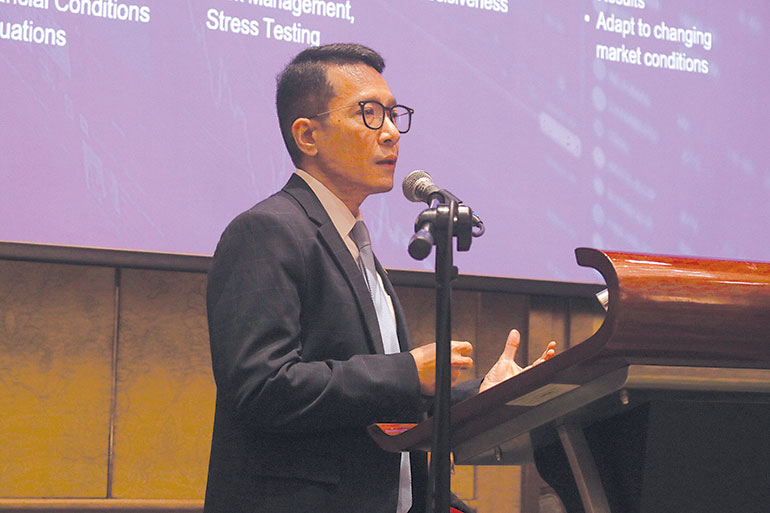
The forum was graced by Department of Finance (DoF) Assistant Secretary Neil Adrian S. Cabiles, who delivered a keynote address on “Strengthening Market Resilience in the Pursuit of Growth in 2025.”

During his speech, Mr. Cabiles highlighted the Philippines’ strong economic performance under President Ferdinand R. Marcos, Jr., improvements in several indicators, the implementation of key reforms, as well as the department’s growth expectations for the country both regionally and globally in 2025.

The assistant secretary revealed that the Philippines remained as one of the best-performing economies in the world, expanding by an average of 6% ever since Mr. Marcos took office. This growth rate ranks second in the ASEAN region, third in Asia, and eighth globally. Mr. Cabiles noted that the economic development can be attributed to public and private construction, household and government consumption, along with activities in the manufacturing, services, and transportation sectors.

He also discussed how inflation has eased after consecutive years of elevated levels. According to data from the DoF, inflation in 2022 reached 5.82% and further increased in 2023 to 5.98%. Last year, the rate returned within the target range of 2%-4%, decreasing to 3.2%.

Additionally, investments both from the government and private sectors are expected to drive growth in 2025 as well. Along with continued monetary leasing, Mr. Cabiles said that investors are taking advantage of reforms from the DoF, such as incentive packages and liberalization on public services, renewable energy, and retail trade. Timely and efficient implementations of the National Budget and flagship infrastructure projects are also viewed as potential growth drivers this year.

Similarly, Mr. Cabiles called the Philippine labor market as “one of the good stories” of the economy in 2024. Last year, unemployment and underemployment rates showed marked improvements compared to 2023 and pre-pandemic levels. He explained that these numbers reflect improved job quality, success of reskilling and upskilling workers, and enhanced labor policies.

Other positive economic indicators touched on by Mr. Cabiles include the resurgence of international tourism, the contributions of the business process outsourcing sector, prudent debt management, strong fiscal external position, and significant improvements in the inflows of foreign direct investments.

Resilience amid risks

However, while these positive developments paint an encouraging outlook for 2025, Mr. Cabiles also underscored the potential risks and challenges that could hinder sustained economic growth. He advised policy makers and investors to remain cognizant of global uncertainties such as the impact of the United States’ (US) policies, external inflationary pressures, continued geopolitical tensions, and increasing trade protectionism.

Given these key concerns, Mr. Cabiles noted that introducing reforms to the ecosystem for investments, both physical and financial, are of great value. Chief among these is the CREATE MORE Act, which enhances tax incentives, improves the ease of doing business, clarifies VAT rules, and reduces administrative burdens for investors.

To end his address, Mr. Cabiles briefly spoke about the much-awaited reclassification of the Philippines to upper middle-income status. According to him, the common diagnosis of a number of studies shows that the country is on track, but subject to, among others, a sustained growth trajectory, implementing policy reforms, a favorable economic environment, and meeting key investments.

“We, as part of the public sector, are committed to meeting these pre-conditions, and we strive to maintain growth and lay down the essential infrastructure to support these. We have and also continue to institute the necessary reforms to foster an enabling environment for more investments,” Mr. Cabiles concluded.

Cautious optimism

During the forum’s first panel discussion, experts from COL Financial Group, Sun Life Investment Management and Trust Corp. (SLIMTC), and First Metro Securities Brokerage Corp. (FirstMetroSec) shared their insights on the realities facing the stock market this year.

L-R: Sun Life Investment Management and Trust Corp. President Michael Gerard D. Enriquez, COL Financial Group Corporate Strategy and Chief Investors Relation Officer April Lyn C. Lee-Tan, First Metro Securities Brokerage Corp. FVP and Equity Research Division Head Reuben Mark Angeles, and Cignal TV News Anchor Dr. Danie Laurel (moderator and forum host) — Photo by Jayson John Mariñas

The conversation panelled by COL Financial Group’s Corporate Strategy and Chief Investors Relation Officer April Lyn C. Lee-Tan, SLIMTC President Michael Gerard D. Enriquez, and FirstMetroSec FVP and Equity Research Division Head Reuben Mark Angeles focused on the Philippine stock market’s underperformance in 2024 and the reasons for their cautious optimism this year.

Ms. Lee-Tan looked beneath the surface of the underperformance of last year’s stock market. Mr. Enriquez shared how he projects the PSE moving forward this year, while Mr. Angeles explained why he is bullish for the first time in two years for 2025’s market.

One key issue raised during the discussion was the impact of trade protectionism, particularly under the policies of US President Donald Trump. With concerns mounting over how restrictions on global trade and investment could affect emerging markets like the Philippines, Ms. Lee-Tan noted that despite initial fears, the country managed to navigate the first Trump presidency without severe disruptions.

“There’s reason to believe that what we’re seeing today is an overreaction to what would happen because of Trump’s presidency,” she said. “It’s a very interesting first month for the administration as the Department of Government Efficiency (DOGE) has been quite aggressive in cutting costs. If they are successful, that would be deflationary and that would mean short-term pain for long-term gains.”

Foreign funds weighed in

The discussion also shifted to another pressing concern — the exodus of foreign funds from the Philippine market. Mr. Angeles believes that there will be a rotation eventually which will allow foreign funds to flow back to the country. He believes that investors will slowly look for opportunities in countries that have less exposure or are less vulnerable to policies by the Trump administration.

“I think for us, we need to demonstrate that we have that underlying theme for the Philippines, not just strong fundamentals. We all know that clearly, fundamentals are not reflective of the equity market levels right now. So, it’s that underlying theme: What would make me buy the Philippines again, compared to other countries?” Mr. Enriquez added.

With global markets closely monitoring central bank policies, the discussion shifted to the Bangko Sentral ng Pilipinas (BSP) and the potential impact of reducing interest rates. Mr. Enriquez believes that the BSP will cut 50 basis points on the reserve requirement ratios, which will be beneficial to banks and free up liquidity in the system. He also mentioned the importance of the strength of the dollar as the PSE index is highly dependent on foreign funds.

“I think we’re the only market that is heavily reliant on foreign funds. That’s why we’ve been talking about, when will foreign funds come in, and it’s more than 50% [of the market] right now. I think it might be much less as local fund managers have taken over the volume, but it’s that dynamics,” Mr. Enriquez said.

More investor participation

Encouraging Filipinos to invest more was also a topic for discussion in the panel. Experts stressed the importance of increasing local investor participation to reduce dependence on foreign funds and create a more stable market.

“It’s all about investment education, trying to encourage them. But again, the problem is, you have other options. It’s still about the market at the moment, unless we see yields come down to a level that maybe [Filipinos] can get more gains in the market,” Mr. Angeles explained.

As investors weigh their options in the PSE, the discussion naturally turned to the upside and downside risks that could shape the stock market’s trajectory in 2025. For Mr. Enriquez, if the market continued at its current level, the market will settle on their conservative projection of 6,608. Meanwhile, for the PSE to reach his upside projection of 8,512, he encouraged investors to look at the US Tenure Bond and the dollar.

The Philippine stock market’s road to recovery has both opportunities and challenges for investors and policy makers alike. While optimism is building, experts from the panel remind investors to stay cautious, considering factors like global trade policies, foreign fund movements, and interest rate adjustments. As 2025 unfolds, it’s all about striking the right balance and making the right decisions — seizing opportunities while staying prepared for the risks ahead.

This BusinessWorld Insights forum was supported by silver sponsors BDO Capital, SM Investments Corp., and Sun Life; bronze sponsors Figaro Coffee Group, Meralco, SM Supermalls, Unicapital Group; partners Asian Consulting Group, American Chamber of Commerce of the Philippines, British Chamber of Commerce of the Philippines, Bank Marketing Association of the Philippines, CCI France Philippines, Management Association of the Philippines, Philippine Chamber of Commerce and Industry, Philippine Franchise Association, and Philippine Retailers Association; and official media partner The Philippine STAR.

Building resilient portfolios in an unpredictable market

L-R: Unicapital Group SVP for Investment Banking Pamela Victoriano, BDO Securities Corp. Head Trader Jasper M. Jimenez, and BusinessWorld Research Head Mark T. Amoguis (moderator) — Photo by Jayson John Mariñas

By Jomarc Angelo M. Corpuz, Special Features and Content Writer

Investors and traders are always on the lookout for different classes of assets and strategies that could make up their winning portfolios. However, amidst global uncertainties and shifting market dynamics, Filipinos building their portfolios must have resilience in mind — balancing risk and reward while staying adaptable to economic shifts.

On Feb. 26, executives from Unicapital Group and BDO Securities Corp. shared their insights on the said topic during the recent BusinessWorld Insights forum themed “Stock Market Outlook 2025.”

Unicapital Group SVP for Investment Banking Pamela Victoriano went through her observations regarding the market last year and gave her expectations for the Philippine Stock Exchange (PSE) in 2025.

Ms. Victoriano cited high inflation, high interest rates, a globally weakening economy, and geopolitical tensions as key factors that shaped the market’s underperformance last year. She also mentioned that Unicapital expects the PSE to hit 7,800 by the end of 2025 on the back of an expectation of about a 10% corporate earnings growth for PSE-listed companies and a 30 times price-to-earnings ratio.

“Opportunities continue to persist. We are cautiously optimistic, we feel that the fundamentals for the Philippines are still there, and this represents good long-term growth prospects for the country. Unfortunately, it’s just not reflected in the market performance at the moment,” Ms. Victoriano said.

BDO Securities Corp. Head Trader Jasper M. Jimenez — Photo by Jayson John Mariñas

Meanwhile, Jasper M. Jimenez, head trader of BDO Securities Corp., revealed the steps in building a winning portfolio that can take advantage and benefit from the Philippines’ projected economic growth of 6% for 2025.

He emphasized the importance of setting objectives hinged on the conditions of the investor and the situation of the market on a given time frame. This is essential as it will be the basis of every decision that an investor can make on their portfolio. Mr. Jimenez also highlighted planning as crucial in building a resilient and well-balanced portfolio. This involves assessing the risks, the condition of the economy, and the companies one is looking at, along with exploring asset classes that they might want to invest in. Finally, he explained the difficulties of implementing a plan, whether to buy or to sell an investor’s assets.

“Based on experience, selling is more difficult when it comes to investors because you sell for two reasons: to make a profit or to take the hit because you want to cut losses and prevent further downside on your investments. So, it’s key to always have a plan when to take profits and when to take losses,” Mr. Jimenez added.

Shield against inflation

With inflationary risks being one of the primary concerns of investors in 2025, the panel discussed how to mitigate them.

Unicapital Group SVP for Investment Banking Pamela Victoriano — Photo by Jayson John Mariñas

Ms. Victoriano noted that the market is in the middle of high interest rates, which leads to investors locking in these high rates with the goal of helping protect against inflationary effects. Mr. Jimenez suggested that investors can diversify and fill their portfolios with different asset classes that can lead to a stable annual yield.

The ideal portfolio

The panel also discussed what the ideal investment portfolio should look like in the Philippines.

“We saw how analysts… are very positive in the Philippine economy. So, how are we, as investors, [going] to take advantage of it and keep money from those prospects? One is to have a way of buying or holding on to stocks that could appreciate,” Mr. Jimenez said.

In Ms. Victoriano’s perspective, it largely depends on the investor’s risk profile. According to her, there are a lot of good opportunities in 2025 both on the debt market and the equities market that could pay out good dividend yields.

“While everybody is fearful, it actually could be a potentially good time to accumulate and see the results from this moving forward,” Ms. Victoriano added.

However, even as investors look for opportunities in the local market, lingering fears of a global recession continue to cast a shadow over investment decisions. Ms. Victoriano believes that while the market is low already, investing in the Philippines can still offer attractive long-term opportunities due to the underlying fundamentals of the economy.

Mr. Jimenez still expects growth in the global economy for 2025 despite its projected slowdown. He also expects high growth on the Philippine market. While the market in the Philippines is currently depressed in terms of pricing, Mr. Jimenez thinks that foreign investors will soon appreciate efforts by both the private and public sector, which could lead to increased prices.

In today’s unpredictable market, resilience in one’s portfolio is an advantage in itself that could lead to better yields and protect from uncertainties. Investors who approach this year with a well-balanced strategy — grounded in diversification, disciplined planning, and a keen awareness of economic fundamentals — will be best positioned to ensure that 2025 becomes a year of strategic gains rather than missed potential.

DoTr studies ‘final termination’ of common station contract

DEPARTMENT OF TRANSPORTATION

THE Department of Transportation (DoTr) said it is evaluating the final termination of its contract with the contractors of the Unified Grand Central Station at North Avenue-EDSA, Quezon City, also known as the common station for the Metro Rail Transit (MRT) and Light Rail Transit (LRT) lines and the Metro Manila Subway.

“Our legal team is now studying the final termination of the contract so we can move on and finally complete this project,” Transportation Secretary Vivencio B. Dizon said in a statement on Thursday.

The contractors — BF Corp. and Foresight Development and Surveying Co. (BFC-FDSC) — signed a P2.8-billion agreement with the government in 2019 for the construction of Area A of the Unified Grand Central Station project.

The project aims to link Metro Manila’s main train lines, including LRT-1, MRT-3, MRT-7, and eventually the Metro Manila Subway.

The project was initially targeted for completion in the first quarter of 2021. It is designed to have three sections, each built separately: Area A by BFC-FDSC, Area B by Ayala Corp., and Area C by San Miguel Corp. (SMC), the concessionaire for the MRT-7 project.

Mr. Dizon said the project’s construction delays are “unacceptable,” as progress has remained idle for more than a year.

“This project should by now have been completed, and the public should already be benefiting from it,” Mr. Dizon said.

BusinessWorld sought comments from BFC-FDSC via e-mail and text messages but had yet to receive a response by the deadline.

Foresight Development and Surveying Co. was formerly registered with the Securities and Exchange Commission on March 25, 1997, as Foresight Surveying Co., with a primary focus on surveying and related geodetic engineering services.

Meanwhile, BF Corp., founded by former Metropolitan Manila Development Authority (MMDA) Chairman Bayani F. Fernando, is primarily engaged in general construction and engineering.

Mr. Dizon also warned that the contractor may face penalties and liquidated damages for failing to complete the project within the agreed timeline.

For now, the DoTr is evaluating all available options under the Government Procurement Act or the Public-Private Partnership Code to expedite project completion.

Further, Mr. Dizon acknowledged that the government also bears responsibility for the project delay, calling it a case of government oversight.

“Classic na pagkukulang ng gobyerno po ‘yan‘yung hindi pagbabayad on time. Iche-check po natin lahat ‘yan. At the end of the day, ibabalanse po natin lahat ‘yan ‘yung pagkukulang ng gobyerno, ‘yung pagkukulang ng contractor — at the end, aabot tayo sa solusyon para sa lahat ng mga ‘yan,” Mr. Dizon said.

Under the agreement, the common station is set to be built at a compromise location near the original 2009 site in front of SM Annex (North EDSA) and the 2014 location near Ayala-owned TriNoma Mall.

The common station features a 13,700-square-meter concourse designed to ensure seamless transfers for rail passengers. It will have an intermodal integrated system to facilitate smooth commuter transfers. — Ashley Erika O. Jose

Ayala sells 40% of AC Logistics to Danish logistics giant

ACLOGISTICS.COM.PH

By Revin Mikhael D. Ochave, Reporter

DENMARK-BASED logistics giant A.P. Moller is acquiring up to 40% of Ayala Corp.’s logistics subsidiary AC Logistics Holdings Corp.

A.P. Moller Capital, through EMIF II Holding III B.V., will acquire the stake in AC Logistics under a share subscription agreement, subject to the final subscription price and the fulfillment of several conditions, including regulatory approvals and the achievement of certain business milestones, Ayala Corp. said in a regulatory filing on Thursday.

Ayala Corp. did not provide further details on the transaction.

A.P. Moller Capital, an affiliate of Danish logistics giant A.P. Moller Holding, is an infrastructure fund manager focused on scaling transport and logistics infrastructure as well as supporting the energy transition.

A.P. Moller Holding is the parent company of the A.P. Moller Group, whose portfolio includes A.P. Moller-Maersk, a global shipping and logistics provider.

“A country of 7,000 islands requires considerable logistics infrastructure, and we would like to help address this need. Working together with partners like A.P. Moller Capital, we believe we can provide real solutions,” Ayala Corp. President and Chief Executive Officer (CEO) Cezar P. Consing said.

Ayala Corp. said A.P. Moller Capital’s entry would strengthen AC Logistics’ ability to meet growing and increasingly complex logistics demands.

“This potential transaction with A.P. Moller Capital reflects Ayala’s strong commitment to growing AC Logistics into an industry leader that will deliver high-quality logistics solutions for the Philippines. We are confident A.P. Moller Capital is the best partner to unlock the many opportunities in this sector,” AC Logistics President and CEO Erry Hardianto said.

The deal comes months after Mr. Hardianto assumed leadership at AC Logistics in July last year, succeeding Jose Rene D. Almendras. Mr. Hardianto previously spent 23 years at Maersk.

Before joining AC Logistics, Mr. Hardianto led Maersk’s Asia-Pacific Regional Logistics Operations, overseeing the company’s businesses in Singapore, Thailand, Indonesia, and the Philippines.

“The entry of A.P. Moller, with its ties to global logistics giant Maersk, is sure to positively impact AC Logistics’ strategy for expanding its logistics business,” AP Securities, Inc. Research Head Alfred Benjamin R. Garcia said in a Viber message when sought for comment.

“While logistics is not considered one of Ayala’s core businesses, the company has identified it as a strategic sector for expansion,” he added.

Established in 2021, AC Logistics provides supply chain solutions, including cold chain services, freight forwarding, national distribution, and contract logistics.

The company operates a nationwide network of distribution centers and has access to a fleet of transportation assets, including temperature-controlled trucks and an extensive network of agents.

Ayala Corp.’s core businesses are in real estate, banking, telecommunications, and renewable energy. It also has a growing presence in healthcare, mobility, and logistics, along with investments in industrial technologies, education, and other ventures.

On Thursday, Ayala Corp. shares rose by 1.40% or P8 to P578 apiece.

Megawide eyes April 14 listing for P6-B share offer

MEGAWIDE.COM.PH

SAAVEDRA-LED Megawide Construction Corp. is eyeing an April 14 listing on the Philippine Stock Exchange (PSE) for its P5.95-billion preferred shares offering.

The latest indicative terms as of March 5 show that the offer period will run from March 26 to April 4.

The Philippine Stock Exchange approved the offer, according to a notice on the market operator’s website on Wednesday. It also received authorization from the Securities and Exchange Commission on Feb. 25.

Megawide’s issuance consists of 30 million Series 6 preferred shares, with an oversubscription option of up to 30 million additional shares, priced at P100 apiece.

The preferred shares are perpetual, cumulative, non-voting, non-participating, non-convertible, and redeemable.

The company will use the net proceeds for the partial financing of pipeline projects, the redemption of shares, and general corporate purposes.

Megawide tapped PNB Capital and Investment Corp., RCBC Capital Corp., and Security Bank Capital Investment Corp. as joint issue managers, joint lead underwriters, and joint bookrunners for the transaction.

Previously, Megawide said it earmarked P1.8 billion for its capital expenditure budget this year to support ongoing projects of its real estate subsidiary, PH1 World Developers, Inc., the first phase of the Cavite bus rapid transit project, and construction contracts under bidding.

On Thursday, Megawide shares dropped 0.44% or one centavo to P2.26 apiece. — Revin Mikhael D. Ochave

ICTSI income up 66% in 2024, driven by operations in Asia

ICTSI.COM

RAZON-LED International Container Terminal Services, Inc. (ICTSI) saw its 2024 attributable net income surge by 66.1% to $849.80 million from $511.53 million a year earlier, driven mainly by its operations in Asia.

“The group has delivered another set of excellent results… giving us the financial strength and flexibility to pursue new opportunities and invest in existing projects. While we continue to be mindful of the complex geopolitical backdrop, these results demonstrate the strength and resilience of our globally diversified origin-and-destination portfolio,” ICTSI Chairman Enrique K. Razon, Jr. said in a regulatory filing on Thursday.

Gross revenues for the period rose by 14.6% to $2.74 billion from $2.39 billion in 2023.

Breaking down the company’s revenue growth, its operations in Asia accounted for the largest share, generating $1.14 billion in 2024, up by 9.6% from $1.04 billion in 2023.

Revenues from its operations in the Americas reached $1.08 billion, up by 26% from $855.62 million in 2023, while revenues from Europe, the Middle East, and Africa (EMEA) totaled $521.02 million, an increase of 6.3% from $490.28 million.

By volume, ICTSI handled a total of 13.07 million twenty-foot equivalent units (TEUs), marking a 2.5% increase from 12.75 million TEUs in 2023.

Asia recorded a total volume of 7.11 million TEUs, 8.2% higher than 6.57 million TEUs in 2023. The Americas handled 3.50 million TEUs, a 4.1% decline from 3.65 million TEUs, while EMEA’s volume fell by 2.4% to 2.46 million TEUs from 2.52 million TEUs.

For 2025, ICTSI is setting aside approximately $580 million in capital expenditures, primarily for the development of Southern Luzon Gateway in the Philippines, as well as planned expansions at ICTSI Rio in Brazil and Mindanao Container Terminal (MCT).

This year’s capital expenditure budget is higher than that of 2024. For the January-to-September period last year, ICTSI said its capital expenditure reached $298.63 million, representing 66.4% of its $450-million allocation for 2024.

The Razon-led port operator said this year’s capital expenditure will also fund the ongoing expansion of Matadi Gateway Terminal (MGT) in DR Congo, the Phase 3B expansion at Contecon Manzanillo (CMSA) in Mexico, and equipment acquisitions and upgrades.

At the local bourse on Thursday, ICTSI shares climbed by P19, or 5.64%, to close at P356 apiece. — Ashley Erika O. Jose