Home Blog Page 1798

TDF yields inch down amid BSP easing hints
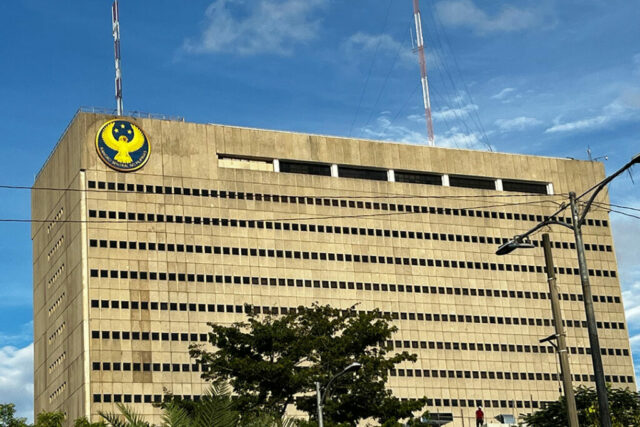
BW FILE PHOTO

YIELDS on the Bangko Sentral ng Pilipinas’ (BSP) term deposits dropped on Wednesday following signals of a potential rate cut next month.

The central bank’s term deposit facility (TDF) fetched bids amounting to P123.926 billion on Wednesday, below the P140 billion placed on the auction block but a tad higher than the P122.771 billion for the P200-billion offer a week ago. The BSP awarded only P113.504 billion in term deposits.

Broken down, tenders for the seven-day papers reached P49.504 billion, lower than the P70 billion auctioned off by the central bank and the P61.127 billion in bids for the P90-billion offer the previous week. The BSP accepted only P43.504 billion in tenders for the tenor.

Accepted yields were from 5.7% to 5.795%, wider than the 5.74% to 5.79% band seen a week ago. This caused the average rate of the one-week deposits to inch down by 0.54 basis point (bp) to 5.7614% from 5.7668% previously.

Meanwhile, bids for the 15-day term deposits amounted to P74.422 billion, higher than the P70-billion offering and the P61.644 billion in tenders for the P110 billion auctioned off on March 19. The central bank made a full P70-billion award of the two-week tenor.

Banks asked for yields ranging from 5.7% to 5.8%, also wider than the 5.748% to 5.79% margin seen a week ago. With this, the average rate for the two-week deposits dropped by 0.77 bp to 5.7646% from 5.7723% logged in the prior auction.

The BSP has not auctioned off 28-day term deposits for more than four years to give way to its weekly offerings of securities with the same tenor.

Both the TDF and BSP bills are used by the central bank to mop up excess liquidity in the financial system and to better guide market rates.

Term deposit yields went down after BSP Governor Eli M. Remolona, Jr. said they could resume their monetary easing cycle as early as next month, Rizal Commercial Banking Corp. Chief Economist Michael L. Ricafort said in a Viber message.

Mr. Remolona said in an interview with Bloomberg Television on the sidelines of the HSBC Global Investment Summit in Hong Kong on Tuesday that there is a “good chance” that the Monetary Board will cut rates by 25 bps at their April 10 meeting, Bloomberg reported.

He reiterated that the BSP remains on an easing cycle and could bring down borrowing costs by as much as 75 bps this year depending on data.

The central bank has reduced benchmark interest rates by a cumulative 75 bps since it began its rate-cut cycle in August last year, with its policy rate currently at 5.75%.

The Monetary Board in February unexpectedly kept rates unchanged in a “prudent” move amid uncertainties stemming from the Trump administration’s policies.

TDF rates also dropped ahead of the latest round of reserve requirement ratio (RRR) cuts that will take effect on Friday, which is expected to infuse about P330 billion in liquidity into the financial system, Mr. Ricafort said.

On Friday, the RRR of universal and commercial banks and nonbank financial institutions with quasi-banking functions will be cut by 200 bps to 5% from 7%.

The reserve ratio for digital banks will go down by 150 bps to 2.5%, while the ratio for thrift lenders will be lowered by 100 bps to 0%.

Rural and cooperative banks’ RRR has been at zero since October, which was the last time the BSP cut reserve requirements. — Luisa Maria Jacinta C. Jocson


Asia’s 50 Best Restaurants 2025

GAGGAN.COM

Here are this year’s winners. Last year’s rankings are in parentheses; asterisks (**) indicate a new entry.

1. Gaggan, Bangkok (3)
2. The Chairman, Hong Kong (4)
3. Wing, Hong Kong (5)
4. Sézanne, Tokyo (1)
5. Mingles, Seoul (13)
6. Nusara, Bangkok (6)
7. Odette, Singapore (10)
8. La Cime, Osaka (9)
9. Chef Tam’s Seasons, Macao (49) — the highest climber
10. Onjium, Seoul (21)
11. Sühring, Bangkok (7)
12. Narisawa, Tokyo (14)
13. Potong, Bangkok (17)
14. Meet the Bund, Shanghai (50)
15. Fu He Hui, Shanghai (19)
16. Sorn, Bangkok (11)
17. Florilège, Tokyo (2)
18. Caprice, Hong Kong (32)
19. Masque, Mumbai (23)
20. Le Du, Bangkok (12)
21. Neighborhood, Hong Kong (16)
22. Den, Tokyo (8)
23. 7th Door, Seoul (18)
24. Mono, Hong Kong (27)
25. Eatanic Garden, Seoul** — the top new entry
26. Logy, Taipei (22)
27. Ling Long, Shanghai (36)
28. Les Amis, Singapore (38)
29. 102 House Shanghai (40)
30. Crony, Tokyo**
31. Gaggan at Louis Vuitton, Bangkok**
32. Estro, Hong Kong **
33. Sushi Saito, Tokyo (60)
34. Sazenka, Tokyo (39)
35. JL Studio, Taichung, Taiwan (33)
36. Goh, Fukuoka (45)
37. Labyrinth, Singapore (30)
38. Burnt Ends, Singapore (15)
39. Meta, Singapore (28)
40. Seroja, Singapore (31)
41. Ando, Hong Kong (37)
42. Toyo Eatery, Manila (24)
43. Maz, Tokyo**
44. Baan Tepa, Bangkok (42)
45. Myoujyaku, Tokyo**
46. Indian Accent, New Delhi (26)
47. Samrub Samrub Thai, Bangkok (29)
48. Euphoria, Singapore (20)
49. August, Jakarta (46)
50. Lamdre, Beijing**
Bloomberg

Shell Pilipinas posts P1.25-B income for 2024, up 5.9%

PHOTO FROM PILIPINAS SHELL

SHELL PILIPINAS CORP. (SPC) recorded a 5.9% increase in net income to P1.25 billion for 2024 from P1.18 billion in the previous year, attributed to operational efficiencies and reduced operating expenses.

Net sales declined by 3.8% to P243.57 billion from P253.32 billion, based on the listed oil company’s financial statement released on Wednesday.

Costs and expenses decreased by 4.3% to P237.51 billion from P248.28 billion in the previous year. 

“Our solid performance in FY2024 demonstrates our capability to consistently deliver value through strategic management and operational excellence,” SPC President and Chief Executive Officer Lorelie Quiambao-Osial said in a media release.

The company attributed its improved performance to operational efficiencies, including P900 million in operating expense savings — nearly half a billion higher than its target. 

“The savings primarily resulted from supply efficiencies, structural cost reductions across the organization, and interest avoidance. While overall volumes declined slightly by 3%, higher demand for premium products across key segments enabled SPC to grow its margins,” the company said. 

SPC’s non-fuel business grew by 13% year-on-year, driven by increased sales in lubricants, vehicle servicing, and convenience retail operations. 

Its commercial business also improved, supported by growth in the construction and road (C&R) sector, lubricants, and commercial fuels.

Commercial fuel volume rose by 3%, backed by stable demand in the mining, power, and manufacturing sectors, along with successful customer acquisitions in other industries. 

Lubricants volume increased by 10%, driven by higher premium penetration, new customer acquisitions, and account recoveries. 

SPC said C&R remained the market leader in Bitumen, “as customers shift towards Shell’s sustainable product, Shell Bitumen FreshAir, which reduces harmful emissions by 40%.”

“We remain dedicated to strengthening our cash position, driving revenue and earnings growth, and expanding our volume across key markets. Through innovative strategies and disciplined financial management, Shell Pilipinas will remain competitive and resilient in a dynamic and fast-paced market environment,” Ms. Quiambao-Osial said. — Sheldeen Joy Talavera

BPI looks to raise at least $300M from planned dollar bond offering

BANK OF THE PHILIPPINE ISLANDS

BANK of the Philippine Islands (BPI) is looking to raise at least $300 million from an offering of dollar-denominated bonds.

The bank has tapped BPI Capital Corp., as sole global coordinator, along with joint bookrunners BofA Securities, Inc., The Hongkong and Shanghai Banking Corp. Ltd., JPMorgan Chase & Co., and UBS AG to arrange a series of fixed income investor meetings starting Wednesday for a potential bond issuance, it said in a disclosure to the stock exchange.

“A US dollar-denominated benchmark-sized Regulation S offering of five-year fixed rate and/or floating rate and/or 10-year fixed rate senior notes may follow, subject to market conditions,” BPI said.

The bonds will be issued out of BPI’s $3-billion medium-term note program, it said.

“With regard to the size, we can only say it will be at least benchmark size (at least $300 million),” BPI Treasurer and Global Markets head Dino R. Gasmen said in a Viber message.

BPI tapped SyCip Salazar Hernandez & Gatmaitan as its legal adviser as to Philippine law, while the joint bookrunners’ counsel is Romulo Mabanta Buenaventura Sayoc & de los Angeles.

Meanwhile, Milbank (Hong Kong) LLP is the legal adviser of the joint bookrunners for English law.

S&P Global Ratings on Wednesday assigned a “BBB+” long-term issue rating to the proposed bond offer.

“We equalize the rating on the notes with the issuer credit rating on Bank of the Philippine Islands (BBB+/Stable/A-2). This reflects our expectation that these notes will always rank equally with other senior unsecured obligations of the Philippines-based bank. The notes will constitute the bank’s direct, unconditional, unsecured, and unsubordinated obligations,” S&P said in a statement.

BPI last issued dollar bonds in March 2024, which marked its return to the offshore market after five years. The bank raised $400 million from its offer of senior unsecured five-year notes, higher than the initial $300-million offer as tenders reached $1.3 billion.

The Regulation S bonds, which were issued out of BPI’s medium-term note program, were listed on the Singapore Exchange Securities Trading Ltd. on March 26, 2024. The notes were priced at 5.25%, with proceeds from the issue set to be used to refinance the bank’s maturing debt and for general corporate purposes.

BPI’s attributable net income rose by 20.04% to a record P62.05 billion last year from P51.69 billion in 2023.

The bank’s shares rose by P2.60 or 1.97% to close at P134.80 apiece on Wednesday. — Aaron Michael C. Sy

Strong data security a must for firms adopting open-source AI

STOCK PHOTO | Image by Gerd Altmann from Pixabay

PHILIPPINE COMPANIES looking to adopt open-source artificial intelligence (AI) solutions like DeepSeek must fortify their data handling policies and infrastructure, analysts said.

“DeepSeek AI’s emergence is expected to expand AI accessibility for Philippine businesses by offering cost-effective and localized capabilities, which could accelerate AI adoption across industries,” Matthew Hardman, chief technology officer for Asia-Pacific at Hitachi Vantara, said in an e-mail.

“As with any hosted AI service, its integration presents risks related to data security, governance, and regulatory compliance.”

DeepSeek is a Chinese AI startup company that mainly develops large language models and other solutions at lower costs, disrupting tech giants that have invested billions in AI.

Its recent rise has prompted data privacy and security concerns, with some countries already blocking access to the app, among other regulatory actions.

A 2024 study commissioned by the International Business Machines Corp. (IBM) said that about 61% of information technology (IT) decision-makers across the globe use open-source ecosystems to source their AI tools. Asia-Pacific countries like Indonesia (73%), South Korea (73%) also showed increased reliance on open-source AI.

“While we have seen that cutting-edge AI models can be developed with limited resources, we believe that businesses need to consider more than just benchmark performance when choosing which AI models will suit their unique needs,” Kitman Cheung, pre-sales engineering leader at IBM ASEAN, said in an e-mail.

“Integrating these models safely and ethically across the entire AI lifecycle is just as critical,” Mr. Cheung added.

When adopting open-source AI solutions, Philippine businesses should evaluate where and how their data are processed to ensure compliance with data privacy regulations and global standards, Hitachi Vantara’s Mr. Hardman said.

Using hosted AI services may compromise data security as these allow third parties to access information, but on-device AI will also require robust infrastructure and in-house expertise, he added.

“To navigate these challenges, companies must strengthen their cybersecurity frameworks, establish robust ethical AI practices, and adopt flexible policies to address regulatory uncertainties,” Mr. Hardman said.

“In this whole AI revolution, trust will continue to remain a crucial factor for organizations in the Philippines and beyond when choosing AI models,” IBM’s Mr. Cheung added. — Beatriz Marie D. Cruz

National Food Month kicks off in Quezon province

THE NEW LOGO for Filipino Food Month features figures of meat, fish, fruit, and vegetables. — ADONIS V. BUHAYAN/DA-AFID/DA.GOV.PH

FILIPINO FOOD MONTH, celebrated each April — due to Proclamation No. 469, which in 2018 designated the month for the celebration — will kick off on April 4 and will feature a variety of activities.

This year’s theme is “Sarap ng Pagkaing Pilipino, Yaman ng Ating Kasaysayan, Kultura, at Pagkatao” (which roughly translates to “The taste of Filipino food; the wealth of history, culture and self”), was announced at a press conference on March 21 at the Manila Prince Hotel. The new logo for Filipino Food Month was also unveiled, featuring figures of meat, fish, fruit, and vegetables. According to a statement by the Department of Agriculture (DA; one of the agencies in charge of the celebration) says that the new logo “embodies the rich agricultural and culinary heritage of Luzon, Visayas, and Mindanao by showcasing key agricultural products from each major island group. It is also inspired by the colors of the Philippine flag, symbolizing unity, pride, and resilience in preserving and promoting Filipino cuisine.”

Its partner agencies include the Department of Tourism, the National Commission on Culture and the Arts, and the non-government organization, the Philippine Culinary Heritage Movement (PCHM).

Kickoff ceremonies will commence on April 4 at the Quezon Provincial Capitol Grounds.

“This year, we’re going down south to Quezon because we also have major food hubs in Quezon,” said DA Assistant Secretary for Agribusiness, Marketing, and Consumer Affairs Genevieve Velicaria-Guevarra during the press conference. “Not many people know that most of our vegetables, especially here in Metro Manila — we think it’s coming from the north, no — most of them are coming from Quezon… that’s what we want to highlight.”

She talked about the tangible effects the festival has had on the food industry since debuting in 2019. “This is a form of market linkage, and right after we do this. We (look) for partners.”

“We look at it as a form of opening the market and telling them that you can get ingredients here, better, or more premium, ingredients that they can also promote. That’s one gauge for us. That’s also giving our farmers better income and better opportunities for them to be able to sell their produce,” said Ms. Velicaria-Guevarra.

“For our farmers to continue planting, we have to show them that (there is a) market.”

PCHM Founder and President Jose Antonio Miguel Melchor, meanwhile, said that one of the food month’s highlight events, the KAINCON Filipino Food Conference, continues to attract academic papers from here and abroad, saying that there were 60 submissions this year.

The month-long celebration will feature various activities including an official opening ceremony at the DA Central Office and Mines Elementary School in Quezon City on April 7; the Department of Trade and Industry’s National Food Fair: Philippine Cuisine and Ingredients Show at SM Megamall’s Megatrade Hall on April 9; the KAINCON Filipino Food Conference on April 12, and the AngSarap! Philippine Food Festival from April 25 to 27 at Ayala Malls. — Joseph L. Garcia

FDC earnings climb 36% to P12.1 billion

FILINVESTGROUP.COM

GOTIANUN-LED Filinvest Development Corp. (FDC) recorded a 36% rise in attributable net income for 2024 to P12.1 billion from P8.9 billion in 2023, reflecting growth across all business segments.

Total revenue and other income rose by 22% to P113.4 billion in 2024 from P92.8 billion in 2023, FDC said in a statement to the stock exchange on Wednesday. 

Consolidated net income grew by 29% to P15.7 billion.

The banking and financial services segment accounted for 39% of FDC’s net income, followed by the power business at 29%, real estate and hospitality at 27%, and other businesses at 5%. 

“2024 was by far Filinvest’s strongest year. As we celebrate our 70th anniversary, this record performance anchors our growth plans and gives us confidence in our continued growth in the years ahead. It is a testament to our ability to adapt to changes over the decades and take advantage of opportunities when they arise,” FDC President and Chief Executive Officer Rhoda A. Huang said. 

The banking business, led by East West Banking Corp., posted a 25% increase in net income to a record-high P7.6 billion, driven by sustained consumer loan growth and strong deposit generation. 

Net interest income rose by 19% to P33.5 billion, while non-interest income expanded by 20% to P8.9 billion.

The real estate segment, comprised of Filinvest Land, Inc. and Filinvest Alabang, Inc., recorded a 3.2% increase in net income contribution to P3.8 billion.

Revenues from the residential segment climbed 9% to P17.6 billion due to a higher percentage of project completion in mid-rise condominiums and housing developments, as well as a growing number of accounts recognized as revenue. 

Mall and rental revenues improved by 11% to P8.5 billion, driven by higher occupancy rates and improved net effective rents.

The power subsidiary, FDC Utilities, Inc., posted a 26% increase in net income contribution to P4.3 billion as revenues grew 40% to P24.5 billion on higher volume and average selling prices. 

Filinvest Hospitality Corp. contributed P266 million in net income as revenue rose 26% to P4.3 billion, supported by stable domestic tourism and higher average room rates across its seven properties. 

The company operates approximately 1,800 rooms across seven hotels in seven cities and five regions under the Crimson, Quest, and Timberland Highlands brands.

“Armed with a strong foundation, we are now ready to embrace change and move forward on this pivotal growth path for the Filinvest group,” Ms. Huang said.

FDC shares rose 1.06% or five centavos to P4.75 per share on Wednesday. — Revin Mihael D. Ochave

UnionBank set to exercise call option on P6.8-billion Tier 2 bonds

BW FILE PHOTO

THE BANGKO Sentral ng Pilipinas (BSP) has cleared Union Bank of the Philippines, Inc.’s (UnionBank) plan to buy back P6.8 billion worth of bonds due 2030.

“Please be informed that the Bangko Sentral ng Pilipinas approved Union Bank of the Philippines’ request to exercise its voluntary redemption option on its P6.8-billion unsecured subordinated debt eligible as Tier 2 capital scheduled on May 24, 2025,” it said.

“All noteholders on record shall be notified of the said voluntary redemption option prior to the voluntary redemption date in accordance with the Manual of Regulations for Banks and the terms and conditions of the notes,” the bank added.

UnionBank in February 2020 raised P6.8 billion from the Tier 2 notes, higher than the initial P5-billion target. The issue was listed on the Philippine Dealing and Exchange Corp. that same month.

The Tier 2 notes have an interest rate of 5.25% per annum, payable in arrears quarterly, and were set to mature on May 24, 2030.

They have a tenor of 10 years and three months and are callable in 5.25 years from the issue date or starting May 24.

UnionBank’s attributable net income rose by 31.5% year on year to P11.93 billion in 2024 from P9.07 billion in 2023 on the back of its strong consumer business, improved margins, and higher revenues.

Its shares went up by 25 centavos or 0.76% to close at P33.25 each on Wednesday. — AMCS

Jollibee to issue $300-M notes with 5.332% coupon

PHILSTAR FILE PHOTO

JOLLIBEE FOODS CORP. (JFC) has set the terms for its $300-million note issuance, with the five-year senior unsecured notes carrying a fixed coupon rate of 5.332%.

The Regulation S notes will carry semi-annual interest payments, JFC said in a regulatory filing on Wednesday.

The company said the transaction had a final orderbook exceeding $2 billion, equivalent to an oversubscription rate of seven times.

The notes will be issued by JFC’s subsidiary, Jollibee Worldwide Pte. Ltd. (JWPL). The notes are unrated and will be listed on the Singapore Exchange Securities Trading Ltd.

“The significant investor demand played a key role in allowing JFC to tighten 35 basis points (bps) from initial price guidance, eventually landing at a spread of 125bps over the five-year US Treasury,” JFC said.

“The notes offering is expected to settle on or about April 2, subject to the satisfaction of customary closing conditions,” it added.

The company will use the proceeds for general corporate purposes and refinancing of JWPL’s existing borrowings. Regulation S issuances are securities offered outside the United States that are not registered under the US Securities Act or any US state securities laws.

“This landmark transaction represents JFC’s first return to the US dollar primary bond market since 2020. JFC is also the first Philippine corporate issuer to access the international bond market in 2025…,” JFC said.

In a separate e-mail statement, financial research firm CreditSights said it sees little room for the new JFC issuance to tighten in the secondary market.

“We expect the new Jollibee bond to price close to where we see fair value, with little room for meaningful spread compression in the secondary market,” it said.

JFC Chief Financial Officer Richard Shin said in a virtual media briefing on Tuesday that the company would convert the planned issuance to senior bonds from perpetual bonds.

“The reason for that is it’s more cost effective as a senior bond versus a perpetual bond. Our covenants are all in a very good place. We want to do best for shareholders by getting the lowest cost,” he said.

“This is our perpetual bond in the amount of $396 million that was due in January… We’ve taken the $96 million out of the $396 million and we converted that into very favorable rate term (peso) loans onshore,” he added.

JFC allotted a capital expenditure budget of P18 billion to P21 billion this year, which will be used to open up to 800 new stores.

As of end-2024, the fast-food giant has 9,766 stores globally, of which 3,382 are in the Philippines and 6,384 are international branches.

JFC shares rose by 0.34% or 80 centavos to P233.60 per share on Wednesday. — Revin Mikhael D. Ochave

Securing democracy in the digital age: how technology safeguards modern elections

PHILIPPINE STAR/ RUSSELL PALMA

By Karthick ChandraSekar

AS TECHNOLOGY continues to become more integral to electoral processes, there is a pressing need to educate voters about how to use new systems effectively. For example, electronic voting can make elections more accessible, especially for overseas voters, but it also raises security concerns and vulnerabilities.

That is why the role of technology in electoral processes cannot be overstated. It has the power to make elections secure, free, and fair. However, if misused, it can compromise a key pillar of a democratically elected government. In this article, we will look at how technology is transforming the way elections are done — and what’s at stake if security measures aren’t properly implemented.

THE IMPORTANCE OF CYBERSECURITY IN ELECTORAL PROCESSES
With the rapid evolution of AI and the emergence of high-quality deepfakes, there’s a heightened risk of misinformation during elections. Cyberattacks such as phishing, denial-of-service, and malware attacks can compromise election integrity by tampering with voter data or disrupting voting processes.

Phishing e-mails are still potent in this day and age. A well-structured e-mail can fool even the most steadfast election official into revealing sensitive information and compromising the security of election databases. With just one security breach, a hacker can gain access to sensitive data and engage in voter suppression (such as removing voters from voter lists and committing identity theft).

Unfortunately, there is real cause for concern, as this has happened before. In 2016, two separate cyberattacks on the same day targeted the Commission on Elections (Comelec), revealing its susceptibility to digital attacks. A website defacement attack was followed by a data breach, in which a link to the Comelec’s entire database was posted online.

Protecting against these cybersecurity threats is a key part of election security, demanding the implementation of multi-factor authentication and strong encryption. These security solutions are essential to keeping official accounts secure and election databases protected. This is why it is important for governments and electoral bodies to work together with cybersecurity experts in establishing protocols that can identify and respond to threats quickly and effectively.

WHAT IT TAKES TO KEEP ELECTIONS SECURE, FAIR, AND FREE
The Philippines has had an automated election system since 2010, utilizing optical scan vote counting machines and the electronic transmission of results. This system has enhanced the speed and accuracy of vote counting, reducing opportunities for manual tampering and expediting the reporting of election outcomes.

Electronic voting machines (EVMs) have significantly reduced the time it takes to count ballots and deliver the results to voters in the Philippines. Voters mark their ballots using devices like touch screens, keyboards, or styluses. The ballots are then scanned and electronically recorded. The results are transmitted digitally, and in some cases, a paper receipt is provided to help voters confirm their choices.

EVMs can then transmit this data from the polling stations to the central servers, allowing election bodies to report the results through live dashboards with real-time updates. Because the information comes in real time, users can view detailed results (by the region and candidate) on special websites set up by election bodies. Some election bodies even allow voters to actually view the counting of their votes in real time so that the process remains transparent.

Transparency is a critical part of building trust in the Philippine electoral process among the general population, especially as the midterm election approaches. By closing security gaps, reducing the potential for errors, and combating misinformation, the government can foster the public’s faith in the electoral process.

ELECTION SECURITY IS THE CORE OF A DEMOCRATIC SYSTEM
Although EVMs and real-time dashboards promise greater speed, accuracy, and public engagement, they also expose electoral processes to cyberthreats such as phishing attacks on officials, database manipulation, and misinformation. Such threats can weaken voter confidence and compromise the fairness of elections.

Evolving technologies like artificial intelligence and quantum computing will further reshape how votes are cast, tallied, and reported. Harnessing these innovations without jeopardizing public trust will require a collaborative approach between governments, electoral bodies, and cybersecurity experts. Failure to do so risks undermining the transparency, stability, and legitimacy of elections, ultimately threatening the core of democratic systems.


Karthick ChandraSekar is the associate director at ManageEngine.

Dining In/Out (03/27/25)


PAL offers Filipino desserts

ON ITS 84th Anniversary, Philippine Airlines (PAL) celebrates its legacy through a special dessert selection which is available until May 31 in select destinations. The special 84th-anniversary desserts include the Trio Bite-Sized Dessert Plate consisting of the Classic Leche Flan Topped with Cantaloupe Syrup, Candied Orange, and Coconut Cream; a Southern Chocolate Ganache Cake Slice (made with premium cacao beans grown and sourced in Davao); and Pacencia with Mango Butter Cream Filling. The Trio Bite-Sized Dessert Plate will be available to business class passengers in North American destinations that include Los Angeles, San Francisco, Seattle, and New York. They can also opt for a halo-halo, another classic Filipino dessert; a mix of sweetened fruits, various toppings, and milk, or have it served with a cheese platter or an ice cream. Passengers flying business class in the Honolulu and Australia destinations, meanwhile, can enjoy the Southern Chocolate Ganache Cake Slice, a cheese platter, or an ice cream. To book a business class flight, visit www.philippineairlines.com or download the Philippine Airlines app.


Culinary Class Wars comes to Solaire

HIT cooking series Culinary Class Wars’ celebrity chef Choi Hyun-seok will visit Solaire in April. Mr. Choi and Solaire Resort will begin their collaboration with back-to-back dinners at Finestra, with five-course dinners prepared by Mr. Choi himself, featuring Italian-Korean fusion cuisine. These will happen at Solaire Resort Entertainment City on April 5 and 7, and on April 6 at Solaire Resort North. Highlights include his Jang Trio Steak, with an assortment of three different Korean jang sauces with one of each complementing its own dish, such as a Korean beef steak, kkakdugi (diced radish kimchi), and white asparagus, as featured on Culinary Class Wars. Alongside this is his critically acclaimed Vongole (with the garlic this time) which became a memorable dish on the show by garnering an excellent ranking despite missing a key ingredient. To spice things up, Mr. Choi brings his Amuse Bouche and dessert dishes with a symphony of flavors exclusively for Solaire Resort diners. For those who are unable to dine with Mr. Choi in person, his signature dishes will be available for a limited time until July 6, exclusively at Solaire Resort. For more details, visit https://www.solaireresort.com/chef-choi-hyun-seok/ or contact 8888-8888.


Grand Hyatt Manila does tea

GRAND HYATT MANILA introduces two afternoon tea offerings at The Lounge: the new Merienda Cena Grand Afternoon Tea menu and Wings of Spring Afternoon Tea. The Merienda Cena Grand Afternoon Tea reimagines the cherished Filipino merienda tradition with an elegant twist. The Merienda Cena Grand Afternoon Tea is available Fridays to Sundays from 2:30 to 6 p.m. It features unlimited servings of Filipino-inspired light bites, bao bun sandwiches featuring lumpia sariwa, pork asado, and chicken adobo, as well as savories such as kinilaw na tuna and shrimp cocktail. The menu also features waffles accompanied by Amarena Fabbri compotes, vanilla chantilly, chocolate sauce, and caramel sauce. Traditional homemade scones are served with strawberry jam, ube jam, and clotted cream. Homemade cakes complete the indulgence, including the Calamansi Tart, Strawberry Chiffon, Cheesecake, and the Grand Hyatt Manila Chocolate Cake. Sweet treats such as Namelaka Chocolate Parfait and Mango Coconut Parfait, complemented by a selection of freshly brewed coffees and premium tea blends, add to the experience. Prices start at P1,850 net per person for the free-flow food menu, P2,600 net per person for the free-flow food menu with rosé wines, and P3,300 for a two-person Afternoon Tea Set. Meanwhile, The Wings of Spring Afternoon Tea celebrates the beauty of Japan’s spring season through a limited time offering available on Fridays to Sundays between 2:30 and 6 p.m. until April 27. This exclusive menu includes bao bun sandwiches inspired by Filipino flavors, alongside Japanese delicacies such as grilled tuna, assorted maki rolls, and chirashi sushi. Desserts inspired by springtime artistry include Cherry Blossom and Yuzu Choux, Cherry Blossom Mousse, Cherry Blossom Cheesecake, and Cherry Blossom Roulade. Traditional homemade scones and affogato are also an option. With an add-on of P1,700 net, both menus also offer Homemade Mango Bingsu, a refreshing Korean treat of shaved condensed milk, fresh mango, and coconut ice cream. For inquiries, call 8838-1234 or e-mail manila.grand@hyatt.com.


KitchenAid unveils heavy-duty mixer collection

KITCHENAID has introduced the all-new Heavy-Duty, 6QT Commercial Stand Mixer Collection. Distributed in the Philippines by Focus Global Inc., the new collection has cutting-edge features including an innovative ½ speed setting allows for gentle mixing of delicate ingredients like blueberries and egg whites without overbeating. It comes with 11 distinct speeds for precise control and power for any mixing need, from whipping cream to kneading tough bread dough. Designed for home cooks with big families and small to medium business owners, the Bowl-Lift design makes it easy to handle larger batches and tougher doughs with ease. Unlike tilt-head mixers, which require tilting the head back to add ingredients or adjust the bowl, the Bowl-Lift design features a lever that raises and lowers the mixing bowl into position. This not only keeps the bowl stable during heavy mixing but also allows for larger ingredient capacity and more powerful mixing without strain. The increased power comes from the mixer’s robust motor, which delivers consistent torque even when handling stiff doughs or thick batters. The mixer has greater capacity thanks to its 5.6L (6QT) bowl that can hold up to 14 cups of flour and produce up to 13 dozen cookies in a single batch — significantly more than the five-quart model, which holds only 7 cups of flour and yields approximately 9 dozen cookies. The new mixer has a soft start technology that gradually accelerates to any of the 11 speed settings. The all-new 6QT Commercial Stand Mixer Collection (5.6L / 6QT) is available now on shop.kitchenaid.ph.


Sub-Zero and Wolf introduce new appliance features

SUB-ZERO AND WOLF are introducing new appliances: Sub-Zero has two new refrigeration collections, the Classic Series and Designer Series, and Wolf offers advancements in oven technology. The Sub-Zero Classic Series features the iconic stainless-steel exterior, while the Designer Series offers a fully integrated, seamless look that blends effortlessly into any kitchen. The refrigerators feature ClearSight LED lighting that illuminates every corner, minimizing shadows and ensuring optimal visibility, and it has a Night Mode which automatically dims the lighting by 90%, offering a gentle glow for late-night snacking without straining the eyes. They come with an intuitive Touch Control Panel which allows users to customize multiple settings from lighting to humidity with a tap. Flexible storage solutions, such as adjustable shelves and a flip-up dairy compartment, make organizing and storing food seamless. There is also a NASA-inspired air purification system, now housed behind a convenient sliding door, that filters out odors and ethylene gas. The new Split Climate Intelligent Cooling System ensures even cooling across two independent zones, providing tailored storage conditions. Enhanced humidity control in crisper drawers further protects the integrity of fresh produce. Meanwhile, Wolf appliances have the new Dual VertiFlow Convection System which transforms how heat circulates in the oven, ensuring even temperature control and eliminating hot and cold spots. Sub-Zero and Wolf are exclusively distributed by Focus Global Inc. For inquiries, call 8705-9999 or visit subzero-wolf.com.ph.


Chivas Regal and Formula 1 driver Charles Leclerc

CHIVAS REGAL has announced that leading Formula 1 driver Charles Leclerc is its Global Brand Ambassador in a multiyear partnership. The partnership will celebrate the achievement of personal goals and creativity along the way, exploring Mr. Leclerc’s passions off the racetrack, with the first being music. As a self-taught pianist and composer, he has been sharing his love of music with fans over the past few years, releasing multiple tracks. The time, precision, and passion he puts into mastering the notes on a piano reflect the craftsmanship required to blend the notes of an iconic whisky. Nick Blacknell, global marketing director for Chivas Regal at Chivas Brothers, says: “It’s no secret Charles has had incredible success in his life, but it is his tenacious spirit, commitment to excellence, and off-track passions that inspired this partnership. The 88 notes of the piano draw perfect parallels with the 85 flavor notes of our iconic Chivas 18-Year-Old expression, showing how both music and whisky blend passion with precision.” Fans can keep up to date with the new partnership by following @ChivasRegal on Instagram or visiting Chivas.com.

US allies get a Signal chat’s worth of red flags

PETE HEGSETH, US SECRETARY OF DEFENSE — AL DRAGO/BLOOMBERG

IF EUROPEANS didn’t already know what the new administration in Washington thinks and wants of them, they now do: “PATHETIC” and cash, respectively. This is thanks to the hard-to-credit decision of President Donald Trump’s top security officials to chat about an imminent military strike against targets in Yemen on a publicly available texting app, and to include a journalist by mistake.

For a continent already worried that Trump may not honor any NATO Article 5 request or would be willing to shake down allies by withholding the spare parts and software upgrades needed to keep their F-35 Joint Strike Fighters flying, the content of this unintentionally leaked discussion has provided confirmation.

In the short term, that may have few real consequences.

Although insulting, the administration’s assessment of Europe’s weak military capabilities is correct. The resulting dependency on US military might has made European states highly vulnerable to extortion by their now-former ally. Longer term, though, the drive to move away from buying US arms and build European will be overwhelming. Charles de Gaulle, the postwar French president who in 1966 pulled France out of the North Atlantic Treaty Organization’s integrated command structures to avoid just such dependencies, has been vindicated from his grave.

US allies in the Asia Pacific and Middle East can only conclude that this might soon be them, too, should Trump and his officials ever decide that they aren’t paying enough for their defense or making sufficient trade concessions.

Russia and China, meanwhile, will also draw conclusions, though viewed from their perspective this offers exploitable opportunities. At least as important as all this is that America’s friends and foes alike are finding out what happens when you get a group of poorly qualified ideologues to run the most powerful military in the world. The short answer is either recklessness or, under a more generous interpretation, a group with a steep learning curve.

John Ratcliffe, director of the Central Intelligence Agency, was on the call. He never thought, however, to question the exposure to potential foreign espionage in discussing the most highly classified subject possible — an imminent military operation — on personal cell phones open to loss or hacking, and while using Signal, a public, albeit encrypted, messaging service.

It’s because of those vulnerabilities that the US government has a dedicated secure communications system. It’s less convenient than a phone chat, but that’s because it’s safe. Ratcliffe, a Texas lawyer, had no intelligence qualifications for the job when he was appointed, either this year or for a brief stint as director of national intelligence in Trump’s first term. It shows.

Mike Waltz, the national security adviser now heavily involved in negotiating an end to the war in Ukraine, set up the Signal chat and included Jeffrey Goldberg, editor-in-chief of the Atlantic magazine, by error. Waltz has an impressive military background as a former special forces officer, and he served as a policymaker in the George W. Bush administration. Yet this isn’t a mistake you could imagine Henry Kissinger, Brent Scowcroft, or Zbigniew Brzezinski making. On Tuesday, Trump backed Waltz, telling NBC News his adviser had “learned a lesson, and he’s a good man.”

Defense Secretary Pete Hegseth, a former major in the National Guard and Fox News commentator, distributed operational plans for the strike to the group, including, inadvertently, to Goldberg. It was Hegseth who described the Europeans as “PATHETIC” for lacking the capabilities required to carry out the coming Houthi strike alone.

Twice in the chat, parts of which Goldberg published on Monday, Hegseth assures his colleagues on this inherently leak-prone forum that he had OPSEC (operational security) firmly under control. Hegseth served tours in Iraq and Afghanistan, if at a relatively low rank, whereas some US defense secretaries have had no military experience at all. Yet concerns over his judgment that were raised in Senate approval hearings now seem relevant.

Trump has said the March 16 air and missile strikes on Yemen were designed to end Houthi attacks on Israel and international shipping lanes once and for all, where numerous less extensive strikes ordered by the Biden administration had failed. More than 50 people were killed in the operation, according to the Houthis, who vowed to continue their campaign and to retaliate.

It’s hard to know whether this strategy of bigger air strikes will succeed. The Houthis had already shown signs of reduced capabilities in recent months as a result of dozens of smaller US attacks, and more might do the trick without a need for boots on the ground. But it’s hard to defeat any enemy with airstrikes alone. It’s also unclear how they might retaliate. What’s more interesting is that the political appointees in charge raised none of these questions of effectiveness and potential blowback. They don’t appear to have been discussed.

Instead, the chat focused on how to persuade US taxpayers that this was the right and necessary thing to do. The conclusion was that messaging should focus relentlessly on Joe Biden’s failures and the Iranian threat, because so few Americans would know who the Houthis are. Vice-President JD Vance’s main concern was whether the strike would send the wrong message, by defending an international seaway through which far more European than US trade passes. Vance said he just didn’t want to be “bailing Europe out again.” If he was aware that European ships and aircraft have taken part in patrols and previous punitive missions against the Houthis, it didn’t show.

I have never served in any military or intelligence agency, so I can’t judge from experience just how unusual or shocking this kind of sloppiness around a mission would seem to those who do serve. But as my colleague Paul Davies reminds me, when employees at some of the world’s leading investment banks used WhatsApp for messaging without authorization just a few years ago, it cost several senior executives their jobs and the banks $200 million in fines each.

Mick Ryan, a retired major general in the Australian army, had this to say in a Substack post: The “shortfall in security is appalling. In normal times, this would see people sacked. I don’t expect that in this case though because these are not normal times.”

That seems about right. Or, to use the US defense secretary’s less careful language, this whole episode was pathetic.

BLOOMBERG OPINION

ADVERTISEMENT
ADVERTISEMENT