Home Blog Page 1766

China carries out live fire drills in East China Sea in escalation of Taiwan exercises
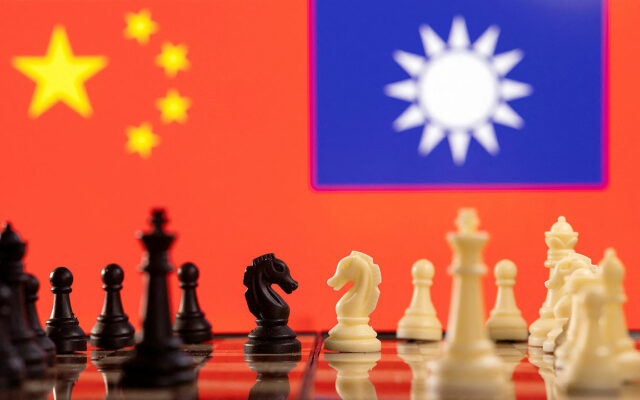
CHESS PIECES are seen in front of displayed China and Taiwan’s flags in this illustration taken Jan. 25, 2022. — REUTERS

BEIJING/TAIPEI — China’s military held long-range live-fire drills in the East China Sea on Wednesday in an escalation of ongoing drills around Taiwan, saying it was practicing precision strikes on port and energy facilities but with no details on the exact location.

The exercises follow a rise in Chinese rhetoric against Taiwan President Lai Ching-te, who China called a “parasite” on Tuesday, and come on the heels of US Defense Secretary Pete Hegseth’s Asia visit, during which he repeatedly criticized Beijing.

China, which views democratically governed Taiwan as its own territory, has repeatedly denounced Mr. Lai as a “separatist.” Mr. Lai, who won election and took office last year, rejects Beijing’s sovereignty claims and says only Taiwan’s people can decide their future.

China’s Eastern Theatre Command said that on Wednesday as part of the Strait Thunder-2025A exercise its ground forces had conducted long-range live-fire drills into the waters of the East China Sea, though it did not give an exact location.

“The drills involve precision strikes on simulated targets of key ports and energy facilities, and have achieved desired effects,” it said, without elaborating.

Taiwan’s benchmark stock index briefly slipped into the red after the announcement, before recovering its losses.

China’s Maritime Safety Administration announced late Tuesday a closed zone for shipping due to military drills until Thursday night in an area off the north part of the eastern province of Zhejiang, more than 500 km (310 miles) from Taiwan.

A senior Taiwan defense official told Reuters that was outside Taiwan’s “response zone.”

China’s military published a video it said was of the live fire drills that showed rockets, rather than ballistic missiles, being launched and hitting targets on land, and an animation of explosions over Taiwanese cities including Tainan, Hualien and Taichung, all home to military bases and ports.

The words “Control energy corridors, disrupt supply routes, block clandestine routes to docks” then appear on the screen.

Taiwan has denounced China for holding the drills.

A senior Taiwan security official told Reuters there were more than 10 Chinese warships in Taiwan’s “response zone” on Wednesday morning, and that China’s coast guard was participating with “harassment” drills.

Taiwan’s defense ministry, detailing China’s movements over the past 24 hours on Wednesday morning, said 76 aircraft and 15 warships were involved.

China’s recent pressure against Taiwan also included a call last week for people to e-mail reports about separatist activity.

Chiu Chui-cheng, head of Taiwan’s China-policy making Mainland Affairs Council minister, said that given the rising risk of visiting China, people should carefully consider whether they need to go, including to Hong Kong and Macau.

WAR GAMES
China had not formally named Tuesday’s drills. China called two rounds of major war games last year around the island Joint Sword-2024A and Joint Sword-2024B.

China’s widely read Global Times, published by the ruling Communist Party’s official People’s Daily, said advanced equipment had been used, pointing to pictures from the military showing YJ-21 air-launched ballistic missiles slung under H-6K bombers.

The H-6K is an extended-range strike aircraft, while the YJ-21 is an advanced anti-ship weapon. H-6 aircraft, some of which are capable of carrying nuclear weapons, have been involved in past drills around Taiwan, and also spotted over the disputed South China Sea.

Previous Chinese war games have also practiced precision strikes and blockading the island.

Taiwan has not reported any travel disruptions because of the drills. Taiwan’s state refiner, CPC Corp., told Reuters that liquefied natural gas imports had been unaffected.

The United States, Taiwan’s most important international backer and main arms supplier despite the lack of formal diplomatic ties, condemned the exercises.

“Once again, China’s aggressive military activities and rhetoric toward Taiwan only serve to exacerbate tensions and put the region’s security and the world’s prosperity at risk,” the US State Department said in a statement.

Japan and the European Union (EU) also expressed concern.

“The EU has a direct interest in the preservation of the status quo in the Taiwan Strait. We oppose any unilateral actions that change the status quo by force or coercion,” an EU spokesperson said.

Taiwan has lived under the threat of Chinese invasion since 1949 when the defeated Republic of China government fled to the island after losing a civil war with Mao Zedong’s communists, though the two sides have not exchanged fire in anger for decades. — Reuters
Buffeted by Trump, WTO hunkers down to plot future

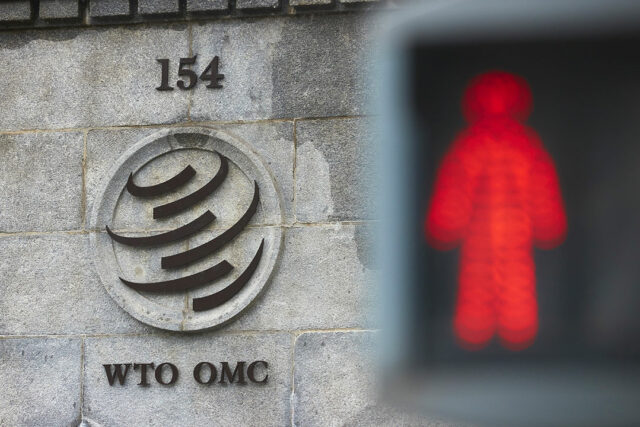
THE World Trade Organization building is seen in Geneva, Switzerland, July 15, 2021. — REUTERS

GENEVA — From its sleek headquarters on the shores of Lake Geneva, the World Trade Organization (WTO) hopes to quietly ride out the aftershocks of Trump administration tariffs whose protectionist intent runs in the face of its free-trade mandate.

For three decades the WTO has worked to maintain a rules-based and obstacle-free trading system as a motor of the global economy. It says the 5.8% average annual increase in trade it has overseen has created jobs and raised living standards.

But now the US determination to double down on tariffs risks sidelining the organization and its ability to regulate trade, enforce rules and negotiate new ones. In a direct blow to the body, Washington has already decided to pause its funding.

Reuters spoke to WTO Director-General Ngozi Okonjo-Iweala and a dozen serving or former officials and delegates to the WTO, who depicted an organization worried about what the future holds under Mr. Trump, but set on continuing its work in the hope that more orderly times eventually return.

“(Members) are saying to me: ‘Yes we are concerned, but at the same time we’re using the system, and we want to continue using it’,” Ms. Okonjo-Iweala said.

“I’m telling you that the bedrock of trade is here and it’s not going anywhere. This is what guarantees stability, predictability, trust, any word you want to use, and members know it – including the US,” she said, citing agreements that govern patents, food safety and the value of goods for customs.

Ms. Okonjo-Iweala said the WTO administers just over 75% of global trade, down from around 80% due to recent tariffs, and continues to attract new membership applications.

The current alarm follows years of paralysis in the WTO’s top dispute settlement arm, the Appellate Body, due to the US blocking new judge appointments during Mr. Trump’s first term, which was not remedied under former President Joe Biden.

CONTINUING TO COPE
For now, there is no obvious sign of upheaval at the WTO’s headquarters, whose modern facilities stand in contrast to more run-down UN institutions nearby.

Black Mercedes saloons with diplomatic license plates linger outside and besuited delegates huddle in small groups in its sunlit atrium. The spacious offices once occupied by judges of its Appellate Body have been taken over by other staff.

Trump officials view the WTO as a body that has enabled China to get an unfair export advantage via massive subsidies without making the country open up to foreign businesses — a criticism the WTO rejects.

One WTO staffer said people were “nervous” about its future but not currently fearful for their jobs. Asked about possible cuts, Ms. Okonjo-Iweala said: “We are making our plans on how to continue to cope. I’m not the type who will let my staff find out from the newspaper what I’m planning.”

Indeed, those staff providing support to the first tier of the WTO dispute system — which remains functional but cannot act on appeals — have seen their workload go up since Mr. Trump’s return, with five disputes filed since January.

“The press depicts a picture that the whole WTO system is falling apart, which, in fact, it is not”, said Thomas Cottier, an arbitrator at the Multi-Party Interim Appeal Arbitration Arrangement (MPIA), a surrogate for the WTO appeals court.

The WTO was set up in 1995 as a successor to the General Agreement on Tariffs and Trade (GATT) to create a better framework for the exchange of goods.

Now worth over $30 trillion, global trade grew briskly following the collapse of the Soviet Union and China’s entry into the WTO in 2001. As a proportion of global GDP, trade leapt from 38% in 1989 to 61% in 2008 when the global financial crisis bit, World Bank data show. Since then it has seesawed.

Still, when Ms. Okonjo-Iweala in February suggested an event to mark the WTO’s 30th anniversary, the US delegate raised budgetary concerns and urged her to make it an occasion for “careful reflection”, meeting transcripts showed.

Ms. Okonjo-Iweala took note and pared back the event, she said. The April 10 event will be members-only and the costs of a reception will be borne by Switzerland.

Asked about the views of the body at 30, a US Trade Representative spokesperson pointed to a report her office published in March listing how the WTO had failed to fulfil its objectives.

WTO delegates are cautious about prospects for new global agreements to reduce trade barriers in the current environment, with all 166 members having to agree by consensus. One silver lining is that a 2022 deal to curb fishing subsidies could soon take effect, with just 17 more ratifications needed.

WTO staff comfort themselves that the Trump administration, which quickly announced its plan to quit the World Health Organization, has not so far said it will leave the trade body.

Looking further into the future, others say the fate of the WTO and the free trade it defends is ultimately down to its members, in particular open economies such as Europe’s.

“It can survive this if the non-US WTO members agree to remain committed to the obligations they’ve made, and decide they can run the system without the US,” Pascal Lamy, who was director-general of the WTO from 2005 to 2013, told Reuters. — Reuters

Israel expands military effort in Gaza, defense minister says

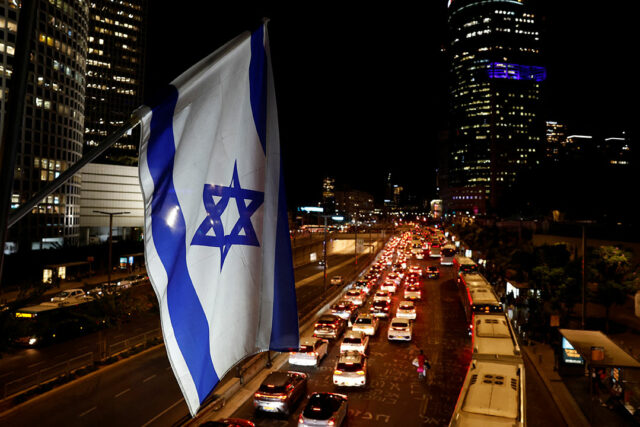
An Israeli national flag flies over a city highway during rush hour, amid the ongoing conflict in Gaza between Israel and Hamas, in Tel Aviv, Israel, Nov. 4, 2024. — REUTERS

Caption: An Israeli national flag flies over a city highway during rush hour, amid the ongoing conflict in Gaza between Israel and Hamas, in Tel Aviv, Israel, Nov. 4, 2024. REUTERS/Thomas Peter

JERUSALEM — Israeli Defense Minister Israel Katz announced a major expansion of the military operation in Gaza on Wednesday, saying large areas of the enclave would be seized and added to the security zones of Israel.

In a statement, Mr. Katz said there would be large-scale evacuation of population from areas where there is fighting, and urged Gazans to eliminate Hamas and return Israeli hostages as the only way to end the war.

He did not make clear how much land Israel intends to seize, however.

It has already set up a significant buffer zone within Gaza, expanding an area that existed around the edges of the enclave before the war and adding a large security area in the so-called Netzarim corridor through the middle of Gaza.

At the same time, Israeli leaders have said they plan to facilitate voluntary departure of Palestinians from the enclave, after US President Donald Trump called for it to be permanently evacuated and redeveloped as a coastal resort under US control.

Israel resumed air strikes on Gaza and sent ground troops back in this month, after two months of relative calm following the conclusion of a US-backed truce to allow the exchange of hostages held by Hamas for Palestinian prisoners in Israeli jails.

Efforts led by Qatari and Egyptian mediators to get back on tracks talks aimed at ending the war have failed to make progress yet.

Israeli Prime Minister Benjamin Netanyahu has said the application of military pressure is the best way to get the remaining 59 hostages back. — Reuters

Trump uses power against foes unlike any other modern US president

REUTERS

WASHINGTON — In just 10 weeks in office, Donald Trump has imposed his will on perceived adversaries in business, politics, the media and allied nations by leveraging power in ways no other modern US president has tried.

His administration has sought the arrest and deportation of student protesters, withheld federal funds from colleges, ostracized law firms tied to his political opponents, threatened judges and tried to pressure journalists. At the same time Mr. Trump has downsized the federal government dramatically and purged it of workers who could stand in his way.

Central to this effort has been Mr. Trump’s use of policy-making executive orders to target opponents as never before. He has been unafraid to employ lawsuits, public threats and the power of the federal purse to bring institutions to heel.

“What unites all these efforts is Trump’s desire to shut down every potential source of resistance to the MAGA agenda and to his personal power,” said Peter Shane, a law professor at New York University.

Some targets have rushed to placate the president, a few have fought back and many are still trying to figure out how to respond. Many of Mr. Trump’s actions are being challenged in courts, where some judges have tried to slow him down.

The stunning speed and breadth of the Republican president’s actions have caught Democrats, public-service unions, CEOs and the legal profession off guard.

Mr. Trump’s supporters say he is simply using the full reach of his presidency to achieve the goals he set as a candidate.

“He’s laid out these broad battle lines, whether it’s with people that he thinks have tried to ruin him personally, whether it’s with people he thinks have tried to ruin Western civilization,” said Republican strategist Scott Jennings, a longtime adviser to Senator Mitch McConnell. “Everything he said he was going to do on the campaign, he’s doing.”

Mr. Trump’s aims are not just political. His actions show he wants to reorder American society with an all-powerful executive at the top, where financial, political and cultural institutions carry his stamp and where opposition is either co-opted or curtailed. With a compliant Congress controlled by his party and a US Supreme Court dominated by conservatives, Mr. Trump is operating with fewer checks on his power than any of his modern-day predecessors.

Mr. Trump has attempted to subdue and cajole his adversaries on an almost-daily basis, backed by the fearsome might of the law enforcement and regulatory agencies at his command. He has often succeeded.

He managed to wring concessions out of several of his targets, including storied Columbia University, powerful law firms and corporate titans such as Meta and Disney. All of them settled with the White House rather than endure the pressure, surrendering some independence and setting what some view as damaging precedents.

Others are taking preemptive measures to avoid Mr. Trump’s wrath.

More than 20 of America’s largest companies and financial firms, including Goldman Sachs, Google and PepsiCo, have rolled back diversity programs that had drawn Mr. Trump’s ire.

Three law firms cut deals with the administration rather than risk losing their lawyers’ security clearances, access to government buildings and perhaps, as a result, clients, while three others targeted by Mr. Trump’s executive orders sued in response.

Mr. Trump’s orders have also been his vehicle to remake the government, deport alleged Venezuelan gang members with little due process and levy tariffs against US trading partners.

He has sued US media corporations and silenced the Voice of America, taken control of the Kennedy Center, a leading arts facility, and sought to put curbs on the Smithsonian Institution, whose mission is to chronicle history.

His administration has detained student protesters whose political views it says are a threat to the country.

Mr. Trump has pushed a mineral-rights deal on Ukraine’s leadership with the veiled threat of ending US support for Kyiv in the Russian war in Ukraine. He has threatened NATO ally Denmark to try to wrest control of Greenland, spoken of annexing Canada and threatened to take the Panama Canal back from its home country.

TAILORED STRIKES
Mark Zaid, a Washington lawyer who represents whistleblowers against the federal government and who himself had his security clearance stripped away by Mr. Trump, said the president’s conduct is like nothing he has seen in his 30-year career.

“Executive orders have never been designed to specifically target individuals nor non-government actors for purposes of retaliation or retribution,” Mr. Zaid said.

The White House and Mr. Trump’s allies deny the president is acting out of revenge.

A White House spokesman said more traditional approaches have failed to bring meaningful change.

“Unconventional is precisely what the American people voted for when they elected President Trump,” White House spokesman Harrison Fields said. “The president is committed to upending the entrenched bureaucracy.”

In his first term from 2017-2021, Mr. Trump was hamstrung by a variety of factors: a federal probe into Russian interference, his aides’ lack of experience and greater Democratic opposition in Congress.

With those roadblocks gone, an emboldened Mr. Trump has demonstrated at the start of his second term that he has learned how to use the resources available to him more fully to get what he wants.

“He really does know how to pull the levers of power this time, more so than last time,” said Rina Shah, a Republican strategist.

Claire Wofford, a political science professor at the College of Charleston, said Mr. Trump has used executive orders not only to push forward a policy agenda, but also to send messages to his political base, as in his attempt to scale back birthright citizenship, and to test the limits of his power, as with his invocation of an 18th century law to designate some migrants as “alien enemies.”

“What strikes me most at this point is how strategic Trump is — but in new ways,” Ms. Wofford said.

FUNDING AND LITIGATION
In cases such as with Columbia University, Mr. Trump has used the federal purse as a cudgel, concluding his targets have financial interests that make them vulnerable to coercion.

In other cases, he has used the courts, forcing companies such as Disney and Meta into favorable settlements after Mr. Trump filed lawsuits against them.

CBS News, another Trump lawsuit target, is under pressure to settle its suit because its parent, Paramount, is eager to have its proposed merger with Skydance Media approved by Trump administration regulators.

But not every institution has bent the knee.

Many of Mr. Trump’s actions, particularly those regarding his cuts in government, remain tied up in federal court. In the last two weeks alone, judges have ruled against Mr. Trump in matters challenging his deportation policies, attacks against law firms and plans to eliminate government agencies.

In response, Mr. Trump and his allies have called for judges who rule against the administration to be impeached and drawn a rare rebuke from Chief Justice John Roberts.

Walter Olson, a senior fellow at the libertarian CATO Institute, said Mr. Trump’s attacks on law firms and judges are without precedent and are reminiscent of other nations with authoritarian regimes.

“Clipping the wings of law firms and the courts,” Mr. Olson said, “is the behavior of an autocrat.” — Reuters

Hakuhodo BCI and Mitsubishi Motors PH win big at the 2025 Araw Values Awards with ‘Taralets Pinas!’

After a five-year hiatus, the Araw Values Awards—one of the Philippines’ most prestigious recognitions for values-driven creativity—returned, showcasing five years’ worth of entries from the country’s top brands and agencies. Amid intense competition, Taralets Pinas, the branded travel series by Mitsubishi Motors Philippines Corp. (MMPC) produced in partnership with Hakuhodo BCI, emerged as a major winner. Two episodes won for Best Cinematography in the Love of Country and Respect for National Customs and Traditions category:

  • Silver for “Dream-bound at Lake Sebu”, a poetic exploration of the sacred traditions of the T’boli dream weavers in South Cotabato;
  • Bronze for “Threaded Tales of the Bagobo Klata”, a heartfelt story of young people reclaiming a forgotten cultural legacy in Davao.

“Dream-bound at Lake Sebu” was also shortlisted in the Araw Values Advertising Awards, alongside “Hide and See Guimaras” (under Concern for and Preservation of the Environment), as well as two other MMPC works: the Life Made Better series and the Xpander airport carousel advertisement.

These honors are more than accolades. They highlight the power of storytelling rooted in Seikatsusha, identity, and human connection. Hakuhodo BCi and MMPC’s long-standing partnership continues to champion meaningful creativity, inspired by the values and passions of the Filipino people.


Spotlight is BusinessWorld’s sponsored section that allows advertisers to amplify their brand and connect with BusinessWorld’s audience by publishing their stories on the BusinessWorld Web site. For more information, send an email to online@bworldonline.com.

Join us on Viber at https://bit.ly/3hv6bLA to get more updates and subscribe to BusinessWorld’s titles and get exclusive content through www.bworld-x.com.

Colorectal cancer: All you need to know

March is National Colorectal Cancer Awareness Month. In this B-Side episode, we dive into everything you need to know about the disease.

Colorectal cancer is the fourth leading cause of cancer-related deaths in the Philippines, with an estimated one in 1,800 Filipinos at risk each year. To help understand its symptoms, treatments, and prevention, Dr. Dave Rennel L. Sebollena, Vice President of the Philippine Society of Gastroenterology, joins the conversation.

We also explore the financial and healthcare support available for patients with Dr. Israel Francis A. Pargas, Senior Vice President for the Health Finance Sector and Spokesperson of PhilHealth.

Interview by Edg Adrian Eva
Audio editing by Jayson Mariñas

Trump to escalate global trade tensions with new reciprocal tariffs on US trading partners

A “tariff” sign is displayed on a laptop screen and an American flag displayed on a phone screen are seen in this illustration photo taken in Krakow, Poland on Feb. 1, 2025. — JAKUB PORZYCKI/NURPHOTO VIA REUTERS CONNECT

WASHINGTON – US President Donald Trump was poised to impose sweeping new reciprocal tariffs on global trading partners on Wednesday, upending decades of rules-based trade, threatening cost increases and likely drawing retaliation from all sides.

Details of Trump’s “Liberation Day” tariff plans were still being formulated and closely held ahead of a White House Rose Garden announcement ceremony scheduled for 4 p.m. Eastern Time (2000 GMT).

The new duties are due to take effect immediately after Trump announces them, White House spokesperson Karoline Leavitt said on Tuesday, while a separate 25% global tariff on auto imports will take effect on April 3.

Trump for weeks has said his reciprocal tariff plans are a move to equalize generally lower US tariff rates with those charged by other countries and counteract their non-tariff barriers that disadvantage US exports. But the format of the duties was unclear amid reports that Trump was considering a 20% universal tariff.

A former Trump first-term trade official told Reuters that Trump was more likely to impose comprehensive tariff rates on individual countries at somewhat lower levels.

The former official added that the number of countries facing these duties would likely exceed the approximately 15 countries that Treasury Secretary Scott Bessent had previously said the administration was focused on due to their high trade surpluses with the US
Bessent told Republican House of Representatives lawmakers on Tuesday that the reciprocal tariffs represent a “cap” of the highest US tariff level that countries will face and could go down if they meet the administration’s demands, according to Republican Representative Kevin Hern.

Ryan Majerus, a former Commerce Department official, said that a universal tariff would be easier to implement given a constrained timeline and may generate more revenue, but individual reciprocal tariffs would be more tailored to countries’ unfair trade practices.

“Either way, the impacts of today’s announcement will be significant across a wide range of industries,” said Majerus, a partner at the King and Spalding law firm.

STACKING TARIFFS
In just over 10 weeks since taking office, the Republican president has already imposed new 20% duties on all imports from China over fentanyl and fully restored 25% duties on steel and aluminum, extending these to nearly $150 billion worth of downstream products. A month-long reprieve for most Canadian and Mexican goods from his 25% fentanyl-related tariffs also are due to expire on Wednesday.

Administration officials have said that all of Trump’s tariffs, including prior rates, are stacking, so a Mexican-built car previously charged 2.5% to enter the US would be subject to both the fentanyl tariffs and the autos sectoral tariffs, for a 52.5% tariff rate — plus any reciprocal tariff Trump may impose on Mexican goods.

Growing uncertainty over the duties is eroding investor, consumer and business confidence in ways that could slow activity and drive up prices.

Economists at the Federal Reserve Bank of Atlanta said a recent survey showed corporate financial chiefs expected tariffs to push their prices higher this year while cutting into hiring and growth.

Rattled investors have sold stocks aggressively for more than a month, wiping nearly $5 trillion off the value of US stocks since mid-February. Wall Street ended mixed on Tuesday with investors stuck in limbo awaiting details of Trump’s announcement on Wednesday.

RETALIATORY MEASURES
Trading partners from the European Union to Canada and Mexico have vowed to respond with retaliatory tariffs and other countermeasures, even as some have sought to negotiate with the White House.

Canadian Prime Minister Mark Carney and Mexican President Claudia Sheinbaum spoke on Tuesday about Canada’s plan to “fight unjustified trade actions” by the US, Carney’s office said.

“With challenging times ahead, Prime Minister Carney and President Sheinbaum emphasized the importance of safeguarding North American competitiveness while respecting the sovereignty of each nation,” Carney’s office said in a statement.

US companies say a “Buy Canadian” movement is already making it harder for their products to reach that country’s shelves.

Trump has argued that American workers and manufacturers have been hurt for decades by free-trade deals that have lowered barriers to global commerce and fueled the growth of a $3 trillion US market for imported goods.

The explosion of imports has come with what Trump sees as a glaring downside: Massively imbalanced trade between the US and the world, with a goods trade deficit that exceeds $1.2 trillion.

Economists warn his remedy – hefty tariffs – would raise prices at home and abroad and hammer the global economy. A 20% tariff on top of those already imposed would cost the average US household at least $3,400, according to the Yale University Budget Lab. — Reuters

BISELCO awards 15-year power supply deal to CIPC to strengthen Palawan’s energy security

The Busuanga Island once faced daily brownouts lasting 4-6 hours, limiting economic activity and hindering development. With the entry of Calamian Islands Power Corporation (CIPC) in 2013, a stable power supply became a catalyst for growth, fueling tourism and local industries. However, the rapid economic expansion has led to increasing energy demand, underscoring the need for additional capacity to sustain progress.

To keep the momentum of progress, Busuanga Island Electric Cooperative Inc. (BISELCO) has signed a new 15-year power supply agreement (PSA) with Vivant Energy’s CIPC. Building on their long-standing partnership that began with their first PSA in 2011, this new agreement secures a 24 MW contracted capacity for Busuanga and Coron—ensuring that homes remain lit, businesses continue to thrive, and communities keep moving forward.

Seated (L-R): BISELCO Board President Segundo Aguilar, BISELCO General Manager Ruth Fortes and CIPC President Erickson Omamalin. Standing (L-R): BISELCO Bid and Awards Committee Chairman Selwin Alili, NEA Project Supervisor Atty. Ivan Zamora, Vivant Energy President Emil Andre Garcia and Vivant Energy Vice President Mark Habana

Set to commence once the necessary approvals have been received, the PSA is a strategic step that will ensure the Calamian Islands to keep pace with growing energy demands driven by a thriving tourism sector and expanding local industries.

The agreement addresses the region’s increasing energy needs, ensuring reliable and sustainable power for residents and businesses.

BISELCO general manager Ruth L. Fortes said, “This new PSA will bring great opportunity for the Calamian Group of Islands for its infrastructure development. It will pave the way for a continuous and reliable power supply, ensuring fully lit households and businesses throughout Calamian.”

CIPC President Eric B. Omamalin emphasized the long-term benefits of the partnership “Vivant Energy is committed to creating solutions to our changing world by delivering reliable energy systems. Our partnership with BISELCO ensures that the Calamian Islands have a stable and sustainable power supply to support economic growth and enhance everyday life. This agreement reflects our dedication to investing in long-term, adaptive solutions that empower communities and drive progress.”

This 15-year PSA is a testament to the power of collaboration between the private and cooperative sectors. By creating long-term energy solutions, this partnership sets a model for future projects that drive progress in underserved areas.


Spotlight is BusinessWorld’s sponsored section that allows advertisers to amplify their brand and connect with BusinessWorld’s audience by publishing their stories on the BusinessWorld Web site. For more information, send an email to online@bworldonline.com.

Join us on Viber at https://bit.ly/3hv6bLA to get more updates and subscribe to BusinessWorld’s titles and get exclusive content through www.bworld-x.com.

US dollar outlook more subdued, but tariffs souring sentiment

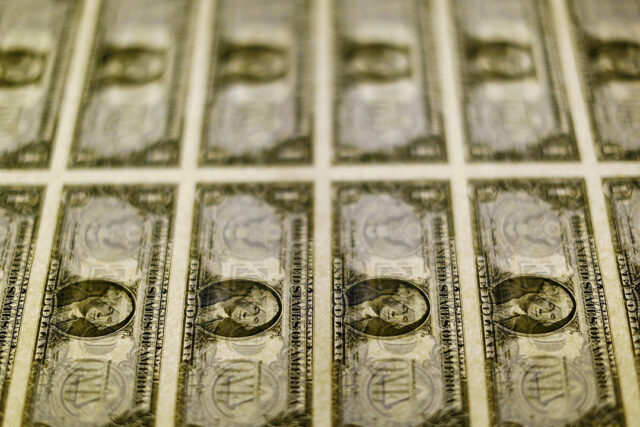
United States one-dollar bills are seen on a light table at the Bureau of Engraving and Printing in Washington in this Nov. 14, 2014 file photo. Dollar reserves stood at $108.5 billion as of end-November, the Philippine central bank said. — REUTERS

BENGALURU – The U.S. dollar is forecast to stabilize over the coming months despite mounting worries about the economic impact of President Donald Trump’s erratic tariff announcements, according to a Reuters survey of FX strategists.

Over one-third of strategists surveyed in the past few days also expressed concern about the greenback’s traditional role in currency markets as a safe haven.

Trump is set to implement tariffs on U.S. trading partners on Wednesday, which in several cases come in addition to tariffs already announced, causing widespread confusion and uncertainty, including on currency trading desks.

Traders offloaded near-decade high long bets in droves the past two months, commodities and futures trading data showed, with positioning flipping to ‘net short’ for the first time since October.

That was partly driven by recent speculation in markets for three more Federal Reserve rate cuts this year compared with just two previously.

Asked how positioning would change by end-April, forecasters provided no clear majority view. That was a marked shift from just two months ago when they expected speculators to keep piling on “long” dollar trades.

“There has been a certain degree of fatigue in trying to navigate U.S. tariffs and their implication for currencies these last few months. Investors don’t want to get caught in the trap of pre-positioning for an outcome where it’s very unclear what that outcome will actually turn out to be,” said Paul Mackel, global head of FX research at HSBC.

Of 35 strategists who responded on month-end positioning in a March 27-April 1 Reuters survey, 17 said there would not be much change, nine called for an increase in net shorts while seven said it would decrease. Just two said there would be a reversal to net longs.
Medians from 69 strategists in the wider survey predicted the euro EUR=, currently around $1.08, would trade at $1.07 in three months and then $1.08 in six months. It was then predicted to rise about 2% to $1.10 in a year.

The dollar index .DXY is down about 4% this year after gaining 7% in 2024, in part on a euro surge driven by optimism Germany’s infrastructure and defence spending plans would revitalise the common currency bloc’s economy.

“We’re very much caught in a wait-and-see mode. While many have thrown in the towel on the dollar, we still believe we don’t have the true ingredients for it to be going down very meaningfully over the next six to 12 months,” Mackel added.

SAFE-HAVEN STATUS SLIPPING?
But some expressed concerns Trump’s isolationist policies would accelerate de-dollarisation in the longer term, on the heels of successive years of dollar outperformance, along with U.S. assets.

Just under 40% of strategists who answered an extra question, 19 of 51, said they were concerned about an erosion in the dollar’s reputation in markets, particularly in the longer-term. The remaining 32 said they weren’t worried.

“There are some tentative risks that the dollar’s safe haven status may be eroding,” said George Saravelos, global head of FX research at Deutsche Bank.

“First, a weakening U.S. outlook reduces the attractiveness of the dollar as a risk-off hedge. Second, a broader challenge to the stability of U.S. institutions and global internal rule of law norms may decrease foreign investor willingness to allocate to dollars at the margin.”

Even some of those who said they weren’t concerned said there could be gradual slippage.

“History teaches us that network effects make it extremely difficult to dislodge reserve currency status in the short-term, but a slower process of erosion can continue for a long time before such a binary shift in the global monetary architecture happens,” said Arindam Sandilya, JP Morgan’s co-head of global FX strategy and head of macro strategy for Asia.

“(It is) more likely we see a continuation of the trends that have been in place for the past two decades – a steady decline in the U.S. dollar’s allocation in central bank reserve holdings, and a search for alternative reserve assets such as gold.” — Reuters

White House says Trump will go ahead with tariffs as nervous world awaits trade war

REUTERS

WASHINGTON – The White House confirmed on Tuesday that President Donald Trump will impose new tariffs on Wednesday, though it provided no details about the size and scope of trade barriers that have businesses, consumers and investors fretting about an intensifying global trade war.

Trump has for weeks trumpeted April 2 as a “Liberation Day” that will see dramatic new duties that could upend the global trade system, with a White House Rose Garden announcement scheduled for 4 p.m. Eastern Time (2000 GMT).

White House spokeswoman Karoline Leavitt said reciprocal tariffs on countries that impose duties on US goods would take effect immediately after Trump announces them, while a 25% tariff on auto imports will take effect on April 3.

Treasury Secretary Scott Bessent told Republican House lawmakers that the reciprocal tariffs Trump will announce represent a “cap” of the highest US tariff level that countries will face and could go down if they meet the administration’s demands, according to Republican Representative Kevin Hern from Oklahoma.

Trump has already imposed tariffs on aluminum and steel imports and has increased duties on all goods from China. But he has also repeatedly threatened to impose other tariffs, only to cancel or postpone them.

Leavitt’s announcement indicated that he plans to plow ahead this time. “The president has a brilliant team of advisors who have been studying these issues for decades, and we are focused on restoring the golden age of America,” she said at a press briefing.

Trump’s determination to press ahead comes amid growing indications that the broad uncertainty being generated by his extensive focus on tariffs is eroding investor, consumer and business confidence in ways that could slow activity and drive up prices.

Economists at the Federal Reserve Bank of Atlanta said a recent survey showed corporate financial chiefs expected tariffs to push their prices higher this year while cutting into hiring and growth.

Hard details of what Trump will unveil on Wednesday remained unclear. According to the Washington Post, aides are considering a plan that would raise duties on products by about 20% from nearly every country, rather than targeting certain countries or products. The administration anticipates the new duties could raise more than $6 trillion in revenue that could be sent on to Americans as a rebate, the paper reported.

Meanwhile, the Wall Street Journal, citing people familiar with knowledge of discussions, reported the US Trade Representative is preparing the option for an across-the-board tariff on a subset of nations that likely would not be as high as a 20% universal tariff option.

A White House aide said any report ahead of tomorrow’s event is “mere speculation.” Trump’s actions have raised tensions with the United States’ largest trading partners.

Canada has vowed to respond with tariffs of its own. “We will not disadvantage Canadian producers and Canadian workers relative to American workers,” Prime Minister Mark Carney said in Winnipeg.

Carney and Mexican President Claudia Sheinbaum spoke on Tuesday about Canada’s plan to “fight unjustified trade actions” by the US, the prime minister’s office said.

“With challenging times ahead, Prime Minister Carney and President Sheinbaum emphasized the importance of safeguarding North American competitiveness while respecting the sovereignty of each nation,” Carney’s office said in a statement.

US companies say a “Buy Canadian” movement is already making it harder for their products to reach that country’s shelves.

Other countries have threatened countermeasures as well, even as they have sought to strike deals with the White House to stave off the tariffs.

It was not clear whether those efforts would succeed ahead Wednesday, but the hope is that they would lead Trump to back down in the coming weeks, according to a person familiar with the conversations.

Trump has argued that American workers and manufacturers have been hurt over the past decades by free-trade deals that have lowered barriers to global commerce and fueled the growth of a $3 trillion US market for imported goods. The explosion of imports has come with what Trump sees as a glaring downside: Massively imbalanced trade between the US and the world, with a goods trade deficit that exceeds $1.2 trillion.

Economists warn his remedy – hefty tariffs – would raise prices at home and abroad and hammer the global economy. A 20% tariff on top of those already imposed would cost the average US household at least $3,400, according to the Yale University Budget Lab.

Signs are already emerging that the US economy is losing momentum due in part to uncertainty fostered by Trump’s chaotic approach to economic policymaking.

A raft of business and household surveys have shown sagging confidence in the economic outlook, citing worries that Trump’s tariffs will lead to resurgent inflation.

Rattled investors have sold stocks aggressively for more than a month, wiping nearly $5 trillion off the value of US stocks since mid-February. Wall Street ended mixed on Tuesday with investors stuck in limbo awaiting details of Trump’s announcement on Wednesday.

The risks are not just isolated to the US
Factories around the world, from Japan to Britain to the United States, saw activity slump in March as businesses braced for Trump’s new tariffs, though some saw a bounce in the race to get goods to consumers before the new measures hit.

US manufacturing activity contracted after two straight months of growth, according to the Institute for Supply Management, and goods producers reported their input costs were the highest in nearly three years. Tariffs were widely cited as the main source of anxiety for factory managers.

“Rising prices while business activity slows imply the economy could be heading into stagflation,” said Jeffrey Roach, chief economist at LPL Financial. — Reuters

Tariff woes depress US manufacturing, erode labor demand

REUTERS

WASHINGTON – US manufacturing contracted in March after growing for two straight months, while a measure of inflation at the factory gate jumped to the highest level in nearly three years amid rising anxiety over tariffs on imported goods.

Anecdotes from the Institute for Supply Management survey on Tuesday offered a gloomy assessment of business conditions, with tariffs cited as a major factor by manufacturers. President Donald Trump’s wave of tariffs has eroded business and consumer confidence.

The survey added to data, including tepid consumer spending, that have raised the specter of lackluster economic growth and higher inflation. That could put the Federal Reserve, which paused its easing cycle in January to allow its policymakers to monitor the impact of the tariffs, in an uncomfortable position.

“Rising prices while business activity slows imply the economy could be heading into stagflation,” said Jeffrey Roach, chief economist at LPL Financial. “The Fed finds themselves in a tough spot because shaky corporate and consumer confidence could slow spending, leading to more than just a slowdown.”

The ISM said its manufacturing PMI dropped to 49.0 last month from 50.3 in February. A PMI reading below 50 indicates contraction in the manufacturing sector, which accounts for 10.2% of the economy. Economists polled by Reuters had forecast the PMI would slip to 49.5.

Manufacturing started turning around at the beginning of the year after a lengthy recession triggered by the US central bank’s aggressive interest rate hikes in 2022 and 2023 to tame inflation. But the nascent recovery appears to have been snuffed out by Trump’s tariffs.

“Demand and production retreated and destaffing continued, as panelists’ companies responded to demand confusion,” said Timothy Fiore, who chairs the ISM’s Manufacturing Business Survey Committee.

Trump, since returning to the White House in January, has announced and delayed tariffs on Canada and Mexico over what he alleges is their role in allowing the opioid fentanyl into the US, set import taxes on goods from China for the same reason, launched hefty duties on imports of steel and aluminum and slapped a 25% levy on imported cars and light trucks.

Trump promised to announce global reciprocal tariffs on Wednesday, which he has dubbed “Liberation Day.” He sees tariffs as a tool to raise revenue to offset his promised tax cuts and to revive a long-declining US industrial base.

But economists have criticized the import duties as inflationary and detrimental to the economy.

Nine industries including textile mills, primary metals, computer and electronic products as well as transportation equipment and electrical equipment, appliances and components grew last month. Among the seven industries reporting a contraction were machinery, wood, paper and chemical products.

Some makers of electrical equipment, appliances and components said there was “no evidence of growing demand,” adding that “tariff impacts and mitigation strategies are a daily conversation.” Machinery manufacturers said “business condition is deteriorating at a fast pace.”

While some makers of fabricated metal products reported better-than-expected orders growth, they noted that customers could be “trying to build inventory at current prices to get ahead of expected tariff and related cost increases.”

Computer and electronic products manufacturers said “customers are pulling in orders due to anxiety about continued tariffs and pricing pressures.” Producers of food and beverages reported they were “starting to see slower-than-normal sales in Canada, and concerns of Canadians boycotting US products could become a reality.”

Stocks on Wall Street were higher. The dollar was steady against a basket of currencies. US Treasury yields fell.

RECESSION ODDS RISING
Economists at Goldman Sachs now see a 35% probability of a recession over the next 12 months, up from 20% previously, reflecting the sharp deterioration in consumer and business confidence as well as “statements from White House officials indicating greater willingness to tolerate near-term economic weakness in pursuit of their policies.”

Domestic manufacturers rely heavily on imported raw materials and could experience a severe disruption in supply chains, economists warned.

The ISM survey’s forward-looking new orders sub-index sagged to 45.2, the lowest reading since May 2023, from 48.6 in February. Production at factories declined. The survey’s measure of prices paid by manufacturers for inputs jumped to 69.4, the highest level since June 2022, from 62.4 in February.

That data suggest goods inflation could continue rising and contribute to elevated price pressures. A measure of underlying inflation increased by the most in 13 months in February.

Suppliers’ delivery performance remained slow last month. The survey’s supplier deliveries index edged down to 53.5 from 54.5 in February. A reading above 50 indicates slower deliveries.

The flow of imports slowed considerably, suggesting the front-loading of raw materials by businesses seeking to avoid higher prices from tariffs was waning. This front-loading had likely accounted for some of the rise in the manufacturing PMI in the prior two months.

Factories continued to shed jobs, which could accelerate as import duties start to bite. The survey’s measure of manufacturing employment fell to 44.7 from 47.6 in February.

The ebbing demand for labor was underscored by a separate report from the Labor Department showing job openings, a measure of labor demand, dropped 194,000 to 7.568 million by the last day of February. The job openings rate fell to 4.5% from 4.7% in January. The retail sector had 126,000 fewer vacancies while unfilled jobs in wholesale trade decreased by 56,000.

There were also fewer job openings in financial activities, healthcare and social assistance, accommodation and food services as well as manufacturing.

But federal government job openings increased by 6,000 despite a hiring freeze imposed by the Trump administration as part of an unprecedented campaign to slash spending.

Layoffs increased 116,000 to a still-low 1.790 million. They were concentrated in the retail and professional and business services sectors. Federal government layoffs rose by 18,000.

The hires rate was 3.4% for a third straight month. With the economy’s outlook shaky and hiring tepid, workers are staying put. Resignations declined by 61,000 to 3.195 million, keeping the quits rate at 2.0%.

“The jobs market remains the economy’s bulwark, and while it’s eroding slowly, it’s not showing cracks that foreshadow recession,” said Robert Frick, corporate economist with Navy Federal Credit Union. “How it holds up to assaults from tariffs’ effects on consumers and businesses is the crucial question.” — Reuters

All local workers, US diplomats to be fired from USAID, sources say

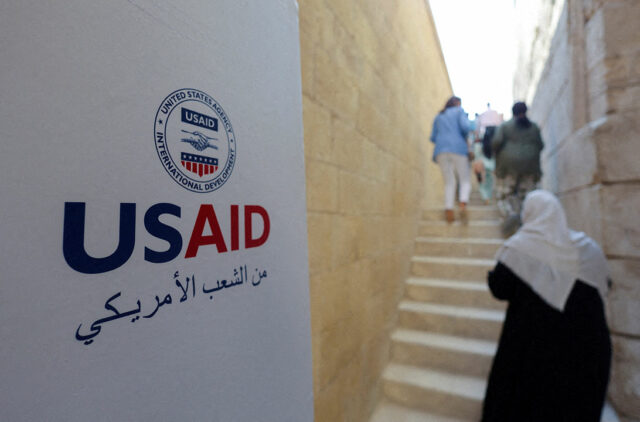
Visitors walk up a stair during the opening of the restoration project at the historic Bimaristan Al-Muayyad Sheikh, one of the oldest hospitals following extensive renovations carried out in partnership between Egypt’s Tourism and Antiquities Ministry and the United States Agency for International Development (USAID) in Old Cairo, Egypt Aug. 18, 2024. — REUTERS

WASHINGTON – Elon Musk’s cost-cutting team is finalizing the dismantlement of the US Agency for International Development, ordering the firing of thousands of local workers and American diplomats and civil servants assigned to the agency overseas, two former top USAID officials and a source with knowledge of the situation said on Tuesday.

On Friday, Congress was notified that almost all of USAID’s own employees are being fired by September, all of its overseas offices shut, and some functions absorbed into the State Department.

The latest move by Musk’s Department of Government Efficiency effectively will eliminate what is left of the agency’s workforce.

“This is definitely the final closing out,” said one of the former senior USAID officials.

President Donald Trump and Musk, his hand-picked adviser to oversee government cost-cutting, in February began the process of shuttering USAID and merging its operations into the State Department to ensure they conformed with Trump’s “America First” policies. The State Department did not immediately respond to a request for comment.

The former officials and source familiar with the situation, speaking on condition of anonymity, said that USAID’s human resources office told regional bureaus in a conference call that layoff notices were going to all of the more than 10,000 locally hired foreign nationals, effective in August.

The first former official said the call took place on Monday, adding that the local staff terminations could run afoul of labor laws in the countries where the fired workers are employed.

Notices also will be sent to US diplomats and civil servants assigned to work abroad for what has been the leading US foreign aid provider for more than 60 years, the former officials and the source said.

Trump has claimed without evidence that the agency was rife with fraud and run by “radical left lunatics,” while Musk falsely accused it of being a “criminal” organization.

Thousands of USAID’s own staff were placed on administrative leave – they received layoff notices on Friday – hundreds of contractors fired and more than 5,000 programs terminated, disrupting global humanitarian aid efforts on which millions depend.

According to the non-partisan Congressional Research Service, USAID maintains missions in more than 60 countries, with most of its funds going to humanitarian aid and health programs.

Top recipients included war-torn Ukraine and Democratic Republic of Congo, US ally Jordan, and the Israeli-occupied West Bank and the combat-shattered Gaza Strip.

A summary of the conference call circulated by one regional bureau and reviewed by Reuters confirmed the terminations of all locally hired foreign nationals and American diplomats and civil servants on assignment with USAID abroad.

It said more than 600 US diplomats are on secondment to USAID overseas, but provided no figure for the number of US civil service members. Most are to be terminated in July, when the intent is to close “all programmatic work.”

“Every position eliminated; 100 percent of the agency is rif’d (Reduction in Force) or will be,” the summary said, and advised personnel that no one would be retained and to “focus on things to make sure you’re getting the right benefits.” — Reuters