Home Blog Page 176

Oracle expects AI boom through at least 2027

STOCK PHOTO | Image by Rawpixel.Com from Freepik

ORACLE on Tuesday predicted that the artificial intelligence (AI) data center boom will power its revenue above Wall Street estimates well into 2027, sending its shares up 8.3% in extended trading.

The results help to allay investor concerns that Oracle’s costly multi-billion dollar push into AI computing would not generate profits quickly enough. Oracle has made a dramatic turn toward building data centers for partners such as OpenAI and Meta, while at the same time enacting layoffs as it uses smaller engineering teams and AI coding tools to roll out new software for its longtime customer base of large businesses.

Remaining performance obligations (RPO), a key indicator of future contracted revenue, grew 325% from last year to $553 billion in the third quarter, ahead of the $540.37 billion estimate from four Visible Alpha analysts. Oracle had reported RPO of $523 billion in the previous quarter.

Most of the increase in RPO in the quarter is related to large-scale AI contracts where Oracle, which has borrowed heavily, “does not expect to have to raise any incremental funds,” the company said in a statement.

The company also raised its revenue forecast for fiscal 2027 to $90 billion, above analysts’ estimates of $86.6 billion, according to LSEG-compiled data.

“Oracle’s quarter is a beat and a stress test result for the AI trade,” said eMarketer analyst Jacob Bourne. “As the most debt-exposed major player in AI infrastructure, Oracle is the canary in the coal mine and this report suggests there’s underlying health in AI spending beyond the hype.”

On a conference call with investors, Clay Magouyrk, one of Oracle’s two CEOs, said that the company’s margins on its cloud business should improve over time. He reiterated the company’s previous guidance, saying that renting out AI chips from partners such as Nvidia would have margins of 30% to 40%.

But he said that 10% to 20% of customer spending with Oracle’s cloud unit would go toward other services, which could also include its database business that has 60% to 80% gross margins.

“When you combine all of these pieces together, the overall margin profile of (Oracle Cloud Infrastructure) continues to strengthen and grows rapidly,” Mr. Magouyrk said.

The company’s strategy to build out data centers is helping it capture a slice of the booming AI market. Oracle has been aggressively spending to expand its cloud infrastructure to support generative AI workloads, competing for customers against hyperscalers such as Amazon’s AWS and Microsoft’s Azure.

On the conference call, Oracle’s co-founder and executive chairman, Larry Ellison, also said that the wave of investor concern that AI coding tools would weaken demand for business software should not apply to Oracle, because the company is embracing those tools by using small teams of engineers to create new software-as-a-service (SaaS) products.

“Thank God we have these coding tools now that allow us to build a comprehensive set of software — agent-based software to automate a complete ecosystem like healthcare, or financial services,” Mr. Ellison said. “That’s why we think the ‘SaaS’-apocalypse applies to others but not to Oracle.”

The company reported total revenue of $17.19 billion for the third quarter ended Feb. 28, compared with analysts’ average estimate of $16.91 billion, according to LSEG data.

For its current fiscal fourth quarter, Oracle predicts adjusted profits between $1.96 and $2.00 in US dollars, above analysts’ estimates of $1.94 per share.

The company expects fiscal fourth-quarter revenue growth of 19% to 21% in US dollars, in line with analysts’ estimates of 20.2% growth to $19.12 billion. Similarly, Oracle forecast cloud revenue growth of 46% to 50% in US dollars, also in line with estimates of 48% growth to $9.98 billion. Reuters

Alternergy plans P5-billion preferred share offer

BW FILE PHOTO

ALTERNERGY Holdings Corp. plans to raise up to P5 billion through a proposed issuance of perpetual preferred shares to support funding for its renewable energy projects.

In a statement on Wednesday, the company said its board approved the filing of a shelf registration covering up to 50 million perpetual preferred shares priced at P100 apiece.

Alternergy plans to issue the shares in one or more series or tranches over five years, to be drawn from its unissued capital stock.

“Alternergy board decision to proceed with a shelf registration is a pivotal move given current market volatility brought about by the Middle East conflict,” Alternergy President Gerry P. Magbanua said.

A shelf registration allows companies to register securities for public offering without selling the entire amount immediately.

“A shelf registration will provide flexibility in future capital raising. We believe this is prudent approach than a full public offering in the near term,” Mr. Magbanua said.

Proceeds from any public offering under the shelf registration will fund the company’s pipeline of projects secured under the fourth Green Energy Auction round.

These projects have a combined capacity of up to 500 megawatts (MW) across Luzon, Visayas, and Mindanao. They include the Liberty floating solar project in Tarlac; the Kalandagan solar-plus-battery energy storage project in Tacurong City, Sultan Kudarat; the Alegri wind project in Cebu; and the Tayabas wind project in Quezon province.

Alternergy aims to expand its renewable energy portfolio to 1,000 MW by 2030. — Sheldeen Joy Talavera

PSE chief says 2026 Maya IPO still a go despite market rout

FINANCIAL TECHNOLOGY (fintech) firm Maya Innovations Holdings, Pte. Ltd.’s planned initial public offering (IPO) in the Philippines this year is still on the table even as volatility has hit global markets amid the conflict in the Middle East, the top official of the bourse operator said.

“As far as the Maya listing is concerned, I think that is still on, I think it is happening by the third quarter. That is their plan,” Philippine Stock Exchange, Inc. (PSE) President and Chief Executive Officer Ramon S. Monzon said in a CNBC interview on Wednesday.

Maya Innovations, formerly Voyager Innovations Holdings, Pte. Ltd., is the parent holding company of Maya Philippines, Inc. and Maya Bank, Inc.

Maya Philippines is registered with the Bangko Sentral ng Pilipinas (BSP) as an electronic money issuer, remittance and transfer company, operator of payment system, and virtual asset services provider.

Meanwhile, Maya Bank is one of the six BSP-licensed digital banks in the country.

Last month, Maya Chairman Manuel V. Pangilinan said it is planning a dual listing for the fintech firm, aiming to list first in the US and then on the PSE by the second half of the year.

The listing is part of the company’s plan to raise new capital while also allowing existing investors to exit and enabling PLDT Inc. to keep its stake.

Maya’s existing shareholders include PLDT and First Pacific, which together hold 39.6%, as well as KKR & Co., Tencent Holdings, and the International Finance Corp.

For this year, the PSE expects four IPOs, which include those of electronic wallet platform GCash and PNB Holdings Corp.

“As for GCash, both the regulators — the PSE and SEC (Securities and Exchange Commission) — have come up with regulations that could make the IPO of GCash possible,” Mr. Monzon said in the same interview, referring to the SEC’s decision to ease minimum free float requirement for large listings. Under the Memorandum Circular No. 11 signed on Feb. 24, the SEC has introduced a tiered public ownership framework.

“I think [what] our market will be watching out is the duration of the conflict in the Middle East…  I think, maybe for all markets, this Iran conflict, markets can recover and damage is transitory, but if the conflict prolongs, all bets are off.”

Hastings Holdings, Inc., a unit of PLDT Beneficial Trust Fund subsidiary MediaQuest Holdings, Inc., holds a majority stake in BusinessWorld through the Philippine Star Group, which it controls. — Ashley Erika O. Jose

Egg yolks for prosperity

Shrimp Chop Fried Rice

WHILE Din Tai Fung’s Lunar New Year dishes from last February are still being served, that does not mean that there are no Lenten specials.

Din Tai Fung, a franchise concept brought here by The Moment Group (179 stores in 15 countries), recently invited BusinessWorld over for lunch to test the lucky goodies and taste their Lenten offering (another spiritual entry).

During Lent, Catholics are expected to abstain from meat, but the modern world has given us ways to still indulge, provided the meal didn’t come from poultry, beef, or pork (fish is still on the table). So Din Tai Fung’s Lenten offering is a Shrimp Chop Fried Rice (P395) — essentially a ground shrimp cutlet bound together by egg. It was strangely familiar (like something we’d have at a Binondo joint), and a bit boring, depending heavily on the sweet-and-sour dip for flavor. This chop rested on a bed of aromatic fried rice, which was useful for the Lunar New Year selections that followed.

The Lunar New Year selections are Salted Egg Yolk Lobster Tail (P985), Salted Egg Yolk Pork Ribs (P545), and Salted Egg Yolk Tofu (P285). Had we known these were the earlier offerings, we’d have marched right into a Din Tai Fung on the Feb. 12 release date. They’re now on limited-time offer, available while supplies last.

The Lobster Tail, a bit more expensive than the restaurant’s usual offerings, used the salted egg yolk as a creamy sauce. Served with its former shell, one can taste the rich seafood merging with the salted egg, texture upon texture of pure indulgence. Salted egg yolks symbolize the moon in Chinese culture (hence its appearance on mooncakes in another moon-related feast), and they also symbolize prosperity, making them perfect for this specific promotion.

The feeling of richness extended into a Salted Egg Yolk Tofu (double-fried for extra crispiness and dusted with the egg yolk in powdered form), and the Salted Egg Yolk Pork Ribs. Afterwards, we kept craving for the tofu, small and very crispy salty bites, and they could be served in a party as appetizers. We conclude, then, that all you need for a great lunch is a hefty dusting of salted egg yolks.

The Salted Egg Yolk dishes are available in all Din Tai Fung stores in the country (while supplies last), while the Shrimp Chop Fried Rice is only available from Feb. 18 to April 5. — JL Garcia

Power at 200 meters

Solar panels on rooftops. Wind turbines on hilltops. Renewables joining a power grid that still runs, at its core, on coal and gas. The targets sound good: 35% clean energy by 2030, 50% by 2040. Meantime, electricity remains expensive and reserves thin for a growing economy.

Perhaps we are looking in the wrong direction. Maybe the answer is not above us, but below. Last December, scientists from the University of the Philippines Marine Science Institute (UP MSI) went deep into the southern Philippine Seas. I believe what they found changes everything.

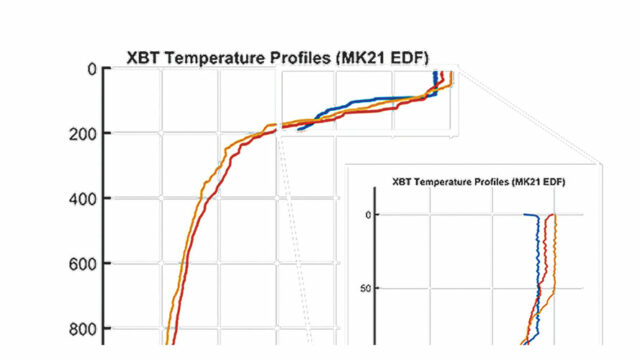
Where they went, the temperature difference between warm surface water and cold deep water is large enough to generate electricity at just 200 meters down. Everywhere else in the world, you need to go maybe 800 to 1,000 meters to get the same result. They got there in a quarter of the distance.

Here is how it works. Warm water sits near the surface, where it gets more exposure to the sun. Cold water sits far below. That temperature difference, at least 20 degrees Celsius between top and bottom, can drive a turbine the same way steam drives an engine. Except the ocean is the boiler, and it never runs out of fuel. This is called Ocean Thermal Energy Conversion, or OTEC.

In reporting on their discovery, Dr. Charina Lyn Amedo-Repollo, who leads the Physical Oceanography and Observation Laboratory at UP MSI, said: “The strong surface-to-deep temperature contrast observed in the southern Philippine Sea meets the thermal requirements for OTEC, indicating high potential for continuous baseload renewable energy.”

That last phrase, “continuous baseload,” is the one that matters most to me. Solar power stops when the sun goes down. Wind power stops when the air is still. Without enormous and expensive batteries, neither can guarantee that the lights stay on around the clock. OTEC can. It can provide baseload power, like plants that run on coal and natural gas. It can run day and night, rain or shine, storm or calm. It is the clean energy source that works like a regular power plant: always on, always producing.

And, from what I have gathered, the 200-meter finding is not a small detail. The pipe that pulls cold water up from the deep is the most vulnerable part of any OTEC system, especially in a country hit regularly by typhoons and earthquakes. A shorter pipe can be a stronger pipe. What was once an engineering problem too expensive and too risky to solve becomes, at 200 meters, a problem we can actually tackle. We would not have to go 1,000 meters deep.

The MSI team found more than just a useful temperature gap. They also mapped unknown earthquake faults off Palawan, an area long thought to be geologically safe, and found underwater volcanoes in the Sulu Sea releasing gases from the seafloor.

In a talk regarding the discovery, Dr. Fernando Siringan, who leads the Geological Oceanography Laboratory, said that “anywhere you have gas seeps and hydrocarbon seeps, the biodiversity is relatively unique, that’s why it’s an area of interest for both geologists and biologists.”

The Palawan fault discovery actually strengthens the case for OTEC. If we are weighing nuclear plants or expanded gas pipelines against the background of hidden earthquake risks, a technology that uses nothing but ocean temperature, with no radioactive fuel and no volatile gas, starts to look not just clean but safe.

Admittedly, OTEC is expensive to build. That is why it has not been commercially pursued. The pipes, platforms, and machinery account for more than half the upfront cost. Studies indicate that the price per unit of electricity has historically been higher than what comes off the current grid.

But at the same time, that cost does not discount the cost of negative externalities such as the health burden of breathing air polluted by coal plants. It does not discount the economic risk of buying coal from other countries at prices we cannot control. And it does not consider the 200-meter advantage the MSI researchers have just discovered.

Factor all of that in, and maybe an OTEC plant will look like a reasonable investment for a country that needs power it can count on. Researchers, energy experts, and policymakers will all have to weigh in on this. But, to date, there are positive indicators that OTEC may now be feasible.

OTEC also produces clean drinking water as a byproduct. Desalination is part of the OTEC process. Warm surface seawater enters a low-pressure vacuum chamber where it flashes to steam, leaving salt behind. The pure steam drives a turbine for power, then condenses using cold deep water, yielding desalinated freshwater alongside electricity.

My understanding is that the cold water OTEC pumps up can also be used for growing high-value seafood. Thus, in remote parts of Mindanao or along the eastern coast, an OTEC plant is not just a power source. It is also a water supply and a food system. OTEC thus becomes a lifeline.

What is holding back OTEC is not the science, not the geography, but the lack of support for more marine science research. To further determine viability, a pilot plant must be established. MSI has done its part by identifying suitable locations. Further research can help generate data that will help policymakers make an informed decision.

Further to this, we need a national pilot program targeting the southern Philippine seas so that we can turn this research into an actual power plant, or a government policy that treats Ocean Thermal Energy Conversion as a strategic national priority rather than just an interesting science project.

Think of it this way: the southern Philippine seas are strategic energy reserves. The power is there, at 200 meters below, waiting to be tapped. The only thing missing is government foresight and the will to go get it. With state policy and support in place, the private sector will not be far behind with funding.


Marvin Tort is a former managing editor of BusinessWorld, and a former chairman of the Philippine Press Council.

matort@yahoo.com

Meta acquires AI agent social network Moltbook

FACEBOOK parent Meta Platforms said on Tuesday it had acquired Moltbook, a social networking platform built for artificial intelligence (AI) agents, bringing the company’s founders into its AI research division.

The development signals an intense race among tech giants to snap up AI talent and technology, as autonomous agents capable of executing real-world tasks move from novelty to the next frontier of the industry.

The deal will bring Moltbook co-founders Matt Schlicht and Ben Parr into Meta Superintelligence Labs, the unit led by former Scale AI CEO Alexandr Wang.

Mr. Schlicht and Mr. Parr are expected to begin at Meta Superintelligence Labs on March 16, according to Axios, which first reported the development.

Meta did not disclose financial terms of the deal.

Moltbook, a Reddit-like site where AI-powered bots appear to swap code and gossip about their human owners, was started as a niche experiment in late January.

It has since become the center of a growing debate on how close computers are to possessing human-like intelligence.

OpenAI CEO Sam Altman played down the site as a likely fad but said the underlying technology offered a glimpse of the future.

“Moltbook maybe (is a passing fad) but OpenClaw is not,” Mr. Altman said.

OpenAI last month hired Peter Steinberger, the creator of OpenClaw, an open-source bot formerly known as Clawdbot or Moltbot that is backing the project’s open-sourcing.

Mike Krieger, Anthropic’s chief product officer, said most people are not yet ready to give AI full autonomy over their computers.

Mr. Schlicht has championed “vibe coding,” building programs with the help of AI, saying he “didn’t write one line of code” for the site.

Mr. Schlicht built Moltbook largely using his own personal AI assistant, Clawd Clawderberg.

Moltbook’s rise also brought risks. Cybersecurity firm Wiz said the approach left a major flaw that exposed private messages, more than 6,000 e-mail addresses and more than a million credentials.

Wiz said the problem was fixed after it contacted Moltbook. Reuters

PITX passenger traffic seen reaching up to 60 million this year

BW FILE PHOTO

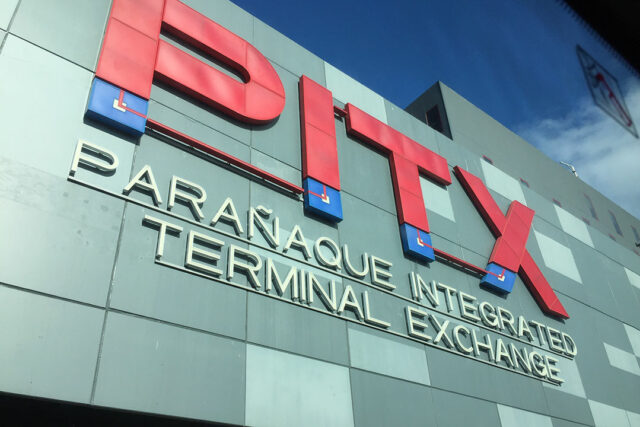
THE PARAÑAQUE Integrated Terminal Exchange (PITX) may accommodate up to 60 million passengers this year as it manages capacity and sustains traffic across existing routes, Megawide Construction Corp. said.

“Right now, we are at 180,000 a day. I think in a year we could reach close to 60 million, [around] 55 million to 60 million. I think we have reached a plateau already. So, unless something new happens, more or less, that is the level,” Megawide Chief Business Development Officer Jaime Raphael C. Feliciano told reporters on Wednesday.

He said the projected passenger volume will mainly depend on how the landport manages capacity within its existing route network.

“The new routes are common; it happens on a regular basis. We are trying to manage the capacity because long-haul passengers are assigned [at a zone that is cramped]. We are trying to manage that,” he said, adding that PITX is not actually getting new routes but is focusing on managing its current capacity.

The landport served 127 million passengers between 2019 and 2023.

PITX is the country’s first landport and is operated by Megawide’s MWM Terminals, Inc. under a 35-year build-transfer-operate contract.

In 2024, PITX added six routes, including destinations such as Tuguegarao City, San Carlos City, and Dagupan City in Pangasinan, as well as San Pedro and Southwoods in Laguna and Guimaras in Western Visayas, expanding its network to about 100 routes. — Ashley Erika O. Jose

CIBI, FinTech Alliance.PH launch fraud intelligence sharing network

PHILSTAR FILE PHOTO

CREDIT BUREAU CIBI Information, Inc. has partnered with the FinTech Alliance.PH to launch the Fraud Intelligence Data Sharing (FIDS) Network starting with nine members.

The nine initial members are BDO Unibank, Inc.; Rizal Commercial Banking Corp.; Salmon Bank (Rural Bank), Inc.; HSBC; GoTyme Bank; UNObank, Inc.; Maya Bank, Inc.; SB Finance, Inc.; and ABUM, which is a micro, small, and medium enterprise (MSME) lending company, FinTech Alliance.PH Chairman Angelito “Lito” M. Villanueva said at a media briefing on Wednesday.

CIBI President Pia L. Arellano said she hopes more institutions, even those outside the financial services sector, join the FIDS network to increase the quality of data in the system.

“The success of FIDS really is dependent on how big an ecosystem of data contribution we can create at this point. The more people join, the more data we contribute, the more we can prevent and detect fraud.”

She added that other industries where fraud is prevalent, such as telecommunications, can contribute data and benefit from the network.

“We don’t want to limit it to just the financial services sector. Fraud is a common enemy for all, regardless of industry. We need the likes of GlobeSmart and all the telcos participating here. We need insurance and other industries as well.”

The FIDS Network uses CIBI’s platform to enable contributing members to detect and prevent fraud through shared real-time data.

Members get real-time alerts if data from an applicant has been flagged elsewhere through a shared database, which is built via the contribution of verified fraud information including confirmed and suspicious activities.

Ms. Arellano said the platform being used for the network has been used in Malaysia and Korea.

“And in Korea, this consortium that they put together has been running for about 10 years already,” she said. “In terms of actual fraud saves, it’s $2 billion in fraud saves since its inception.”

CIBI is offering a free six-month trial period for institutions looking to sign up for the FIDS Network.

“Right now, what we really want to make sure is all of us collectively, all the members as well, find value into it. Value could be in terms of, how much fraud did I stop from happening? How many transactions did not go through because of the consolidated data?” Ms. Arellano said. — Aaron Michael C. Sy

Caviar and comfort food on the menu for A-listers on Oscars night

LOS ANGELES — Celebrity chef Wolfgang Puck has prepared a feast of more than 70 dishes for film stars and moviemakers at Sunday’s Governors Ball, held after the Oscars ceremony.

Mr. Puck and his team, in charge of the official Oscars after-party catering for the 32nd time, have put together a menu that offers 1,500 A-listers tastes from around the world.

A live izakaya station, or Japanese-style pub, and an Italian gelato machine whipping up fresh ice cream will be among the novel offerings, along with popular staples that feature year after year.

“Comfort food is always the people’s favorite food, like our chicken pot pie, smoked salmon pizza, our macaroni and cheese or the mini Wagyu burgers,” Mr. Puck said at a preview event on Tuesday.

Trying to be innovative did not always pay off, he added.

“I did some parties saying, ‘I’m tired of making the pizzas,’ and they ate our stuff and they said, ‘Wolfgang, where’s your pizza station?’”

The glamorous guests are often famished by the time they arrive at the post-Oscars bash, Mr. Puck said.

“It’s all about the quality of the ingredients and the quality of the dishes,” he said. “We have to cook for 1,500 people. We keep it simple. We don’t need 10 sauces with it.”

Putting together the banquet requires 75 savory chefs, 45 pastry chefs, and 325 front of house staff and managers, Mr. Puck added.

They will be responsible for some 600 homemade pizzas, 3,000 artichoke agnolotti, and 2,000 mini chocolate Oscars.

Mr. Puck estimates the kitchen gets through about 200 pounds (91 kg) of dry-aged ribeye, 300 pounds (136 kg) of house-smoked salmon, 30 pounds (14 kg) of Kaluga caviar, 500 pounds (227 kg) of wild mushrooms, 200 pounds (91 kg) of Nishiki rice, and 400 pounds (181 kg) of cheeses.

There’s also two gallons of 24K liquid gold — put to use at a chocolate Oscar spraying station. — Reuters

How Pokémon and Resident Evil rewrote gaming history

PNGIMG.COM

By Gearoid Reidy

IN THE SPACE of just 23 days three decades ago, two initially unassuming releases changed videogames forever.

On Feb. 27, 1996, Pokémon Red and Green first hit Japanese shelves. The role-playing titles were the original entries in a series that would grow to become what is now considered the top-grossing media franchise in the world, worth more than Mickey Mouse or Star Wars.

Just three weeks later, Capcom Co. released Biohazard, better known outside Japan as Resident Evil. There was no cuddly Pikachu here, with the title a bloody experience that sought to make players feel the tension of being hunted by zombies. Almost 30 years on, gamers still can’t get enough. The critically acclaimed latest entry, Resident Evil Requiem, sold 5 million copies in five days after its release last month, the fastest ever pace. The series has shipped more than 180 million units in total.

1996 was a seminal year for gaming, an era of rapid iteration and change that stands in contrast to the tedious yearslong development schedule of today. Yet other franchises that emerged at the same time to dominate the decade, from Crash Bandicoot to Quake to Tomb Raider, have fallen into obscurity. It’s a testament to their patient stewardship — and a lesson to publishers everywhere.

RESIDENTEVIL.FANDOM.COM

As games, they have little in common. Having been in production for six years, an eternity in an era when games were often assembled in months, the kid-focused Pokémon was the last gasp of Nintendo Co.’s Game Boy platform. Resident Evil, meanwhile, was developed by an inexperienced team experimenting on the then-new PlayStation platform, a horror plot that drew inspiration from the movies of Alfred Hitchcock. Both, however, were thought of as long shots.

The influence of both titles extends well beyond games. Pokémon, which wasn’t released outside Japan until 1998, has been described as a “Rosetta Stone” that led directly to today’s anime boom. Initially, it was viewed a curiosity that obsessed kids and baffled adults, as memorably captured in a South Park episode that mocked the late ’90s obsession. But unlike other fads, it endured — and would prove a harbinger of how Japanese pop culture would come to be the lingua franca of Western youth.

Resident Evil drew inspiration from Western movies, particularly the zombie films of George A. Romero, such as Dawn of the Dead. But by the 1990s, zombies had become the stuff of camp and parody, with horror moving toward meta trends like Scream, released later that year. The Japanese game’s success would reestablish the zombie as a horror mainstay, paving the way for everything from 28 Days Later to The Walking Dead. And despite its poorly translated script and legendarily hammy voice acting, it was nonetheless a landmark as games moved from cartoon action to the cinematic experiences targeted at adults.

What is the secret that makes these two so relevant three decades on?

First is a careful shepherding that gives fans what they want, while also updating the template. Resident Evil has fully reinvented itself at least twice, moving toward a more action-based formula, then later leaning further into its horror roots. Pokémon has stuck closer to a tried-and-true formula, and while the most recent major release, Scarlet and Violet, may have received mixed reviews, they became the second-best selling of the series. But it experiments, too: The latest spinoff, the Animal Crossing-like Pokémon  Pokopia, is attracting rave reviews since its release on the Switch 2 last week, reigniting the franchise ahead of the launch next year of the newest mainline entries, Winds and Waves. Nintendo’s shares surged more than 10% in Tokyo on Wednesday as the market took note of Pokopia’s success.

They also show the importance of a multimedia strategy. Comics, anime and trading cards were crucial to Pokémon’s early success, making the series unavoidable and creating familiarity with the characters. And while the schlocky Resident Evil movies might have borne little resemblance to the games, they were still profitable and increased awareness of the brand. A new take helmed by acclaimed horror director Zach Cregger will hit movie theaters later this year.

And for all their success, both have left money on the table. In their quest to constantly juice the next quarter’s earnings, many publishers give gamers too much of a good thing.* But both Pokémon and Resident Evil have staggered their mainline releases — the major chapters of the franchise — with just nine entries in three decades, while using spin-offs, remakes and side adventures to keep players (and investors) engaged.

Pikachu and flesh-eating zombies might seem to have little in common. But they show that great ideas, if handled with care, don’t get old.

*Consider how Ubisoft Entertainment SA has milked Assassin’s Creed with 14 mainline titles in just 18 years, leaving audiences bored and the firm in increasing trouble.

BLOOMBERG OPINION

NLEX sees traffic decline as fuel prices rise

PHILIPPINE STAR/ MICHAEL VARCAS

NLEX CORP., a unit of Metro Pacific Tollways Corp. (MPTC), expects its traffic volume to decline by about 1% due to rising fuel prices linked to the conflict involving Iran.

“In the previous cases during the oil price hikes, there is usually a slowdown in traffic, probably around 1% to 1.5%,” NLEX President and General Manager Luis S. Reñon told reporters on Wednesday during an inspection of Metro Manila Skyway Stage 3 (MMSS3).

He said the tollway operator expects average daily traffic of around 350,000 vehicles but noted that the company may fall short of its projected volume if fuel prices continue to increase.

“Hopefully, we are going to work with the DoTr (Department of Transportation) in the hope of giving haulers, truckers (some relief). We are looking into the possibility of probably providing them some kind of rebates,” he said.

Meanwhile, the Department of Public Works and Highways (DPWH) said the P2.82-billion Section 2A of the MMSS3 project is expected to be completed by the second quarter of next year.

The MMSS3 project is an elevated toll road connecting Makati City to the North Luzon Expressway (NLEX) in Balintawak, Quezon City. Its elevated roadway structure will link to the NLEX-SLEX Connector Road project.

“The commitment of San Miguel and Metro Pacific is by the second quarter or the latest is the middle of next year, it is finished,” Public Works Secretary Vivencio B. Dizon said.

According to the Public-Private Partnership (PPP) Center, the skyway project’s concessionaires are Citra Central Expressway Corp. and Metro Manila Skyway Corp. Meanwhile, the NLEX-SLEX Connector project is being undertaken by NLEX Corp., a unit of Metro Pacific Tollways Corp.

MPTC is the tollway unit of Metro Pacific Investments Corp., one of three Philippine subsidiaries of Hong Kong-based First Pacific Co. Ltd., alongside Philex Mining Corp. and PLDT Inc.

Hastings Holdings, Inc., a unit of the PLDT Beneficial Trust Fund subsidiary MediaQuest Holdings, Inc., holds a majority stake in BusinessWorld through the Philippine Star Group, which it controls. — Ashley Erika O. Jose

AT&T outlines $250-billion US investment plan to boost infrastructure in AI age

AT&T will spend more than $250 billion over five years in the US to expand its network infrastructure and will hire thousands of technicians this year, it said on Tuesday, as telcos ramp up investments to support surging data demand.

Rapid adoption of artificial intelligence (AI), cloud computing and connected devices has prompted telecom operators to invest heavily in fiber and 5G networks as they also seek to fend off intensifying competition from cable broadband providers.

AT&T, which has about 110,000 employees in the US, said the new hires will help build and maintain its infrastructure.

The outlay includes capital expenditure and other spending, the company said.

The spending will focus on expanding its fiber and wireless networks, including accelerating deployment of fiber broadband, 5G home internet and satellite connectivity to extend coverage across urban, suburban and rural areas.

“It has to spend hard, but it also has to spend smart … and its partnership with AST SpaceMobile is something investors will be keeping a close eye on,” said Danni Hewson, head of Financial Analysis at AJ Bell.

AT&T invested more than $145 billion in its wireless and wireline networks between 2019 and 2023 as telecom operators raced to expand high-speed connectivity.

The spending push comes alongside federal broadband initiatives created under the 2021 infrastructure law, including the $42.5-billion Broadband Equity, Access, and Deployment Program.

However, the rollout of funding has faced delays due to a combination of implementation challenges and policy changes under the Trump administration. 

AT&T has secured the largest share of BEAD funding for fiber build‑outs, winning about $1.06 billion, according to New Street Research.

Fiber broadband has become a key battleground between carriers and cable providers as they jostle to cater to demand from home internet customers.

Comcast, a key AT&T rival, is defending its subscriber base while undergoing strategic changes. The company on Tuesday began a $5.9-million network‑expansion project in Greater Hartford and Middletown, set to finish later this year.

Meanwhile, Verizon has accelerated its fixed‑broadband expansion after completing its acquisition of Frontier Communications earlier this year and is rolling out limited‑time discounted bundles to attract customers.

AT&T is also working with satellite partner AST SpaceMobile to expand connectivity to remote regions where traditional network infrastructure is difficult to deploy.

The company said it would continue spending on the FirstNet network built for first responders and bolster investment in network security and artificial intelligence-driven threat detection. — Reuters

ADVERTISEMENT
ADVERTISEMENT