Home Blog Page 175

Where higher growth can come from

The country’s GDP growth of 4% in the third quarter (Q3) was low by recent Philippines growth standards, although modest to high by global growth trends. The causes for such low growth are generally understood, espe-cially the ongoing corruption scandals and the series of strong and damaging storms. The big question now in the minds of many people is: Can we sustain growth of 5.5% or higher, and when?

I asked myself that question too, so I devised ways and metrics to help answer it. First, I wanted to know what sectors the largest contributors to GDP are, and their share of the total. Second, I wanted to know their growth performance in recent years and this year. Third, I will be making some proposals on certain growth drivers that can be prioritized.

Gross Domestic Product (GDP) is measured in two ways, the demand side via consumption expenditure, and the supply side via industrial or sectoral origins.

On the demand side, the largest component is household and corporate consumption at 72% of GDP, followed by investment or gross capital formation (including construction) at 23% of GDP. Government consumption (ex-cluding construction) is around 15% of GDP.

On the supply side, the largest contributors are the services sector at 63% of GDP, particularly the sub-sectors wholesale and retail trade plus repair of vehicles at 29% of GDP, and finance-insurance activities at 11% of GDP. The second largest contributor is industry at 29% of GDP, with the manufacturing sub-sector making up 18% of GDP.

Now, the largest components of GDP on the demand side, household consumption and investment, have seen growth deceleration, while the smaller component, government consumption, is showing high growth.

On the supply side, industry and manufacturing are decelerating, which is not good. Agriculture, fishery and forestry remain crawling although they grew 4% this year (see the table).

So, to attain high and sustained growth, there should be expansion in investment or gross capital formation, particularly in construction, both private and public. The investment/GDP ratio should increase from the current 23% to at least 25% by 2028 and rise further onwards.

But government construction is slowing this year and will also slow next year due to the ongoing corruption scandals at the Department of Public Works and Highways (DPWH). This means private construction should pick up big time — both private projects, and public infra via Public-Private Partnership (PPP), like more toll roads, more big airports and seaports, more long bridges like the Cavite-Corregidor-Bataan bridge and the Iloi-lo-Guimaras-Negros bridge. Government should focus on the usual hurdles like right of way problems and valuation.

Our exports of goods and services should catch up with imports. In particular, our merchandise exports which are low by regional standards. Our average exports from January to September this year came to only $7 bil-lion/month while Vietnam’s was $39.3 billion/month — larger than the average of Australia, Russia, Spain, Poland, Brazil, India, Indonesia, Malaysia, Thailand, and many other countries.

An abundant electricity supply (regardless of source, with no favoritism towards renewables) will greatly reduce power and electricity prices, which will in turn encourage big manufacturing and export locators to come here. This plus good road infrastructure from the industrial zones to the modern seaports and airports.

Most of all, the implementation of the rule of law is important. The law should apply equally to unequal people, to governors and the governed, administrators and the administered, government and private individuals. This will substantially reduce corruption and waste because the restrictions on ordinary citizens will automatically apply to those in power.

There are many ways to sustain growth, the above are just a few of those. We should focus on attaining growth and prosperity while the government should focus on enforcing the rule of law.


Bienvenido S. Oplas, Jr.. is the president of Bienvenido S. Oplas, Jr. Research Consultancy Services, and Minimal Government Thinkers. He is an international fellow of the Tholos Foundation. minimalgovernment@gmail.com
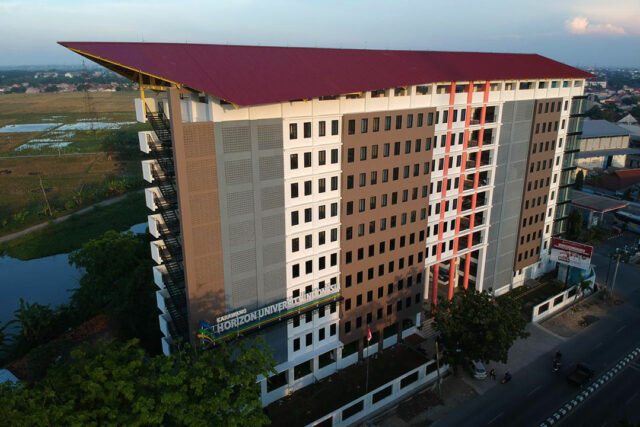

PHINMA Education boosts capacity in Indonesia with 10-story Horizon University building

PHOTO COURTESY OF PHINMA EDUCATION

PHINMA Education Holdings, Inc. expanded its footprint in Indonesia with the completion of a 10-story building at Horizon University Indonesia in Karawang, West Java, boosting student capacity by 7,000 to bring the total to nearly 10,000 and making it the tallest university structure in the city.

“Across the PHINMA Group, our mission has always been to unlock opportunities for underserved families: by providing homes, building better infrastructure, creating jobs through hospitality, and opening doors through education,” PHINMA Chief Executive Officer Ramon R. del Rosario, Jr. said in a statement on Tuesday.

The Horizon East building, inaugurated on Nov. 12, will allow the university to add new programs in Education and Social Sciences to its current Health, IT, and Business courses.

PHINMA Education began operations in Indonesia in 2019 through partnerships with the Triputra Persada Horizon Education Foundation to manage Horizon University Indonesia in Karawang and Kalbis University in Jakarta.

Horizon University Indonesia’s Nursing, Accounting, and Management programs hold top accreditation from the Indonesian Ministry of Education, and the university recently won the Best Passing Rate Award for the Indonesian Professional Nursing Competency Exam in West Java, with a 100% pass rate in nursing and midwifery and an overall employment rate of 86%.

“Our next step is East Java. By establishing a campus in Surabaya, we will open our doors to serve a market of 100,000 graduating SHS students. With campuses in both West and East Java… Horizon Education will be well-positioned to broaden its reach and make quality education even more accessible,” PHINMA Education Country Head for Indonesia Dr. Raymundo Reyes said.

PHINMA Education is also eyeing expansion into Vietnam by 2027 to widen its international presence.

For the January to September period, PHINMA Education recorded a revenue of P5.27 billion and consolidated net income of P1.42 billion, following a record-high enrollment of 177,851 students in the first semester of the 2025-2026 school year.

PHINMA Corp., the listed parent company, posted consolidated revenues of P16.31 billion and net income of P376.04 million for the first nine months of 2025, as strong results from PHINMA Education offset weaker results from its other business units.

PHINMA Corp. shares were last traded on Nov. 4, unchanged at P16.40 apiece. — Alexandria Grace C. Magno

Why AI-fueled layoffs will backfire

STOCK PHOTO | Image from Freepik

By Gautam Mukunda

RIGHT NOW there seem to be only two types of business headlines: Those dedicated to the eye-popping investments and valuations of the ever-expanding AI boom, and those chronicling a stream of layoff announcements. Strikingly, you’ll often see the same company names appearing in both.

It makes sense, I suppose. Employers in thrall to the possibilities of this powerful new technology are betting it will drive productivity — meaning fewer humans are needed. (And the post-layoff stock bump doesn’t hurt.) But ultimately, many of these cuts will likely prove unwise. In fact, they may undermine the very thing companies are so focused on: the ability to use AI to its fullest potential.

If the current downsizing is indeed a mistake, it’s one a lot of employers are making: Last month, US companies made more job cuts than they have in any October for the last two decades. Meanwhile, many of the companies involved look healthier than ever. Amazon.com, Inc., which has announced plans to shed as many as 30,000 corporate jobs, is enjoying record-high share prices, while Microsoft, which is undertaking its biggest layoffs in two years, recently reported a 12% increase in profit.

So if not hardship, what is driving these layoffs? In at least some cases, AI is certainly a factor. Accenture PLC, for example, announced a cut of 11,000 workers in September, declaring that these employees “could not be retrained for an AI-driven workforce.” And with AI fever sweeping corporate America, expect the technology to inspire more cuts soon. They may actually be an economic necessity: Geoffrey Hinton, the Nobel Prize-winning godfather of AI, claims the scale of capital investments made in AI is so large that the only way they can pay off is via massive job destruction.

One problem: However promising AI tools appear, they don’t always pay off for the businesses that use them. This isn’t an argument that, as some prominent AI critics allege, that the technology is useless — I’m a ChatGPT convert myself. But a Massachusetts Institute of Technology survey of 300 publicly announced corporate AI initiatives found that the executives overseeing them reported that 95% had “zero” return on investment.

When you think about it, that’s not so surprising. These tools aren’t just drop-ins that seamlessly replace workers. Most companies don’t know how to exploit their full potential — it’s not clear anyone really does. Utilizing them properly is going to require significant changes in how work is done. This is a technology that’s only a few years old and is changing by the day. With no clear roadmap to follow, companies are going to need to become more creative and innovative if they hope to adapt to an AI world and get the most out of the technology.

The current wave of job cuts is likely to make that harder. That’s because layoffs don’t just harm the people who leave — they also traumatize those who survive, hurting their morale and commitment and increasing stress. No wonder management research has also found that companies that conduct layoffs during a period of prosperity have worse financial performance than competitors who don’t reduce headcount.

What’s more, these negative effects are strongest in the most innovative and rapidly-growing industries. A study of more than 2,000 Spanish companies, for example, found that when downsizing is combined with significant changes in equipment, techniques, or processes (e.g., the type of transformation required to take advantage of AI), innovation declines because employees feel threatened and become less willing to take risks. A similar study of British firms found that although small- and medium-sized layoffs don’t significantly hinder innovation, large downsizing does. (Such unexpected effects may be one reason rehiring rates are going up.)

This isn’t to say that layoffs are all bad for the companies that do them; when organizations have too much slack, cuts may actually push them to become more innovative. But even there the path is fraught. If organizations are resource constrained (and given the scale of investment the AI arms race demands, even the wealthiest company could be), the effects of layoffs quickly turn negative once again.

The paradox of innovations that are as transformative as AI is supposed to be is that they are never just plug-and-play. Inventing the technology is only the first step; learning how to use it is just as hard, and just as important. It requires employees who are ready to learn, take risks, and embrace change — not ones left traumatized and fearful after their colleagues have been brushed aside. Laying off people now in anticipation of AI’s effects might seem very tempting to today’s CEOs, but most of those who do will end up regretting it.

BLOOMBERG OPINION

BPI offers free cash withdrawals at Robinsons Retail stores 

BANK of the Philippine Islands (BPI) has partnered with Robinsons Retail Holdings, Inc. (RRHI) to allow the bank’s clients to withdraw cash for free using its mobile app from the latter’s store network.

BPI app users can now withdraw cash at select stores of brands under RRHI’s portfolio, including The Marketplace, Shopwise, Robinsons Supermarket, Robinsons Easymart, and No Brand by generating a barcode. This will also be available at Robinsons Department Store and Toys “R” Us soon.

There is a limit of five barcodes daily, with minimum and maximum withdrawal amounts of P100 and P10,000, respectively, per code.

The withdrawal service is currently available at 373 RRHI partner stores. BPI said it expects this number to increase to 460 by yearend.

“The added advantage to this is that customers today don’t have to make an extra trip to go and do their banking. When they do their shopping, when they do their groceries, when they go to the department store, when they do the necessary and fun things in life like shop, they can also do their banking. That is what I call a true partnership between BPI and Robinsons,” BPI President and Chief Executive Officer Jose Teodoro K. Limcaoco said at the launch event on Tuesday.

“We’re also proud to be the first supermarket to offer BPI withdrawal service. Using the BPI app, customers can withdraw cash in-store — fast, secure, and convenient. And soon, we’ll be adding cash deposit services to make the experience even more complete,” Robinsons Supermarket Corp. Managing Director Christine O. Tueres said.

Mr. Limcaoco said the cost of facilitating an in-store withdrawal is lower compared to deploying an automated teller machine (ATM), and this also expands BPI’s touchpoints while making transactions easier for its clients.

“Actually, the beauty of this is because it’s purely variable here. The cost to transact at Robinsons for the customer is free. But for us, our cost is actually cheaper when it’s done at Robinsons than if you were to do it at a branch or an ATM because a branch or an ATM has infrastructure and cash costs because we have to keep cash in that. At Robinsons, we don’t have infrastructure, and we don’t need to keep the cash,” he said. — AMCS

Pope Leo to host Hollywood stars including Blanchett, Pine at Vatican

POPE LEO XIV waves as he leaves the basilica of Saint Paul Outside the Walls in Rome, Italy, May 20, 2025. — REUTERS

VATICAN CITY — Lights, camera, action, pope?

About three dozen Hollywood stars will meet Pope Leo this weekend, including actors Cate Blanchett, Chris Pine and Adam Scott, the Vatican said on Monday.

Also joining a special audience at the Vatican with Leo, the first pope from the United States, will be Oscar-winning directors Spike Lee, George Miller, and Gus Van Sant.

The pope “has expressed his desire to deepen dialogue with the World of Cinema… exploring the possibilities that artistic creativity offers to the mission of the Church and the promotion of human values,” the Vatican said in a statement.

Papal events often feature high-ranking Catholic cardinals but rarely include Hollywood stars.

The late Pope Francis, however, hosted an event at the Vatican in June 2024 for comedians, including US late night hosts Conan O’Brien, Stephen Colbert, and Jimmy Fallon.

Among others set to take part in Saturday’s event with Pope Leo are actors Alison Brie, Dave Franco, and Viggo Mortensen and directors Joanna Hogg, Tony Kaye, and Julie Taymor.

Ahead of the new event, the Vatican shared four of the pope’s favorite films: It’s a Wonderful Life (1946); The Sound of Music (1965); Ordinary People (1980); and Life Is Beautiful (1997).

Saturday’s event is being organized by the Vatican’s culture office as part of the Church’s ongoing Holy Year. — Reuters

DoST calls for higher funding for startup law

STOCK PHOTO | Image by Tirachardz from Freepik

A LAW designed to provide research support and incentives to Philippine startups remains underfunded, with officials citing the need for more resources to support startups’ research, design, and market expansion.

In a briefing on Tuesday, Department of Science and Technology (DoST) Undersecretary Leah J. Buendia said Republic Act No. 11337, or the Innovative Startup Act (ISA) of 2019, has not received sufficient funding six years after it was signed into law.

“We do not have the luxury of the funds, but all we can do is tap other resources that we have… it’s not a reason to not do anything,” she said during the opening of Philippine Startup Week.

The law creates the Philippine Startup Development Program, which consists of programs, benefits, and incentives to support local startups and startup enablers. Under the Act, the program aims to assist startups through research and development, capacity building, exchange programs, grants-in-aid, and participation in local and international events.

Section 11 of the law mandates that each of the lead agencies — DoST, Department of Information and Communications Technology (DICT), and Department of Trade and Industry (DTI) — “shall propose and include in its respective budget under the annual General Appropriations Act the initial and succeeding appropriations for the creation and replenishment of its Startup Grant Fund (SGF).”

In July 2024, DICT opened applications for the Startup Grant Fund Cohort 2, offering grants of P500,000 to P1 million, while DoST provided funding of up to P5 million per startup under its 2025 Startup Grant Fund program. The DTI, in partnership with the National Development Co., manages a P250-million Startup Venture Fund launched in November 2021 for seed-to-Series B startups, which included an P11-million investment in SolX Technologies, Inc. in June 2024.

The ISA Steering Committee, composed of DoST, DICT, and DTI, has mobilized P2.1 billion in state funding to support 212 startups, the Philippine Startup Week organizing committee said in a press release on Tuesday. It has also incubated 2,233 additional startups through a national network that has grown to 158 technology business incubators and innovation hubs.

The law authorizes full or partial subsidies for registration and business permit costs, as well as the use of government or private facilities, office space, equipment, and services. It also establishes Philippine Startup Ecozones.

On the sidelines of the briefing, Ms. Buendia told BusinessWorld that more funding is needed to support startups in research and design, infrastructure, and scaling their operations.

“In the case of DoST, we only fund startups that need to be polished through research and development,” she said, noting that funding for startup grants and aid comes from the department’s annual budget.

Ms. Buendia also highlighted a key challenge for the Philippine startup ecosystem: the “colonial mindset,” or the perception that foreign products are superior.

“We do not patronize our startups enough. Maybe because there’s still mentality that products abroad are better,” she said.

Philippine startups received $86.4 million in equity funding in the first half of 2025, 55% lower than in the same period in 2024, according to a report by Kickstart Ventures, Inc. and the Singapore-based business news platform DealStreetAsia. — B.M.D. Cruz

Giuseppe Garofalo takes helm at Italpinas as developer targets growth cities

PH.LINKEDIN.COM
PH.LINKEDIN.COM

LISTED real estate developer Italpinas Development Corp. (IDC) has appointed Giuseppe Garofalo as chief executive officer (CEO) as it pushes to expand in high-growth cities in the Philippines.

“His technical background as an engineer and his extensive experience in construction and operations management have been central to IDC’s record of delivering high-quality, environmentally responsive developments,” IDC said in a regulatory filing on Tuesday.

Mr. Garofalo, who previously served as chief operating officer, said: “I look forward to leading our talented team as we continue to grow responsibly, create value for our shareholders, for the environment and for the communities and deliver thoughtfully designed certified green developments to our clients.”

He replaces co-founder Romolo V. Nati, who will remain chairman of the board and serve as chief design officer. “In my new role, I will continue to guide our design philosophy and long-term strategy, ensuring that our developments remain thoughtful, resilient, and responsive to the evolving needs of our communities,” Mr. Nati said.

IDC President and co-founder Jojo Leviste added that Mr. Garofalo’s appointment “marks a natural and well-deserved progression. His deep operational knowledge, strong leadership, established community relationships, and engineering expertise make him the ideal person to lead IDC into its next phase of growth.”

The company reported a 109% jump in net income to P335.45 million in 2024 from P165.27 million a year earlier, while revenues climbed to P604.23 million.

“This leadership transition and financial performance underscore IDC’s strong organizational foundation and its continued expansion across high-growth cities in the Philippines,” the company said.

Shares of IDC last closed at P0.93 apiece on Nov. 10. — Beatriz Marie D. Cruz

Partner with Taiwan: A path for the Philippines to break the cycle of climate disaster loss

PHILIPPINE STAR/RYAN BALDEMOR

By Wallace Minn-Gan Chow

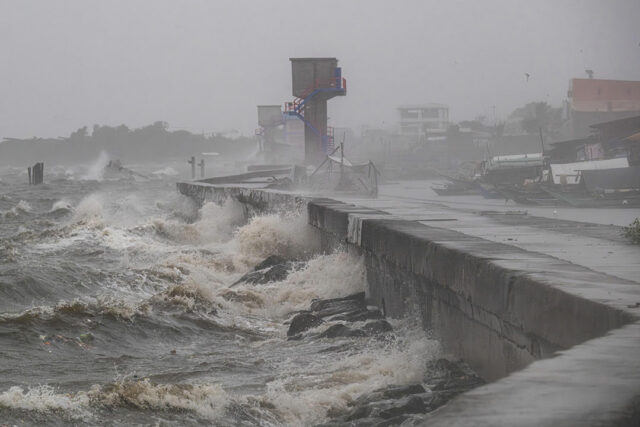
THIS YEAR ALONE, the Philippines has endured a relentless procession of storms. Wipha (Crising) in July submerged entire communities in Northern Luzon. Ragasa (Nando) and Bualoi (Opong) arrived back-to-back in late September and brought heavy flooding, forcing thousands into evacuation centers across Eastern Visayas. And just last week, Kalmaegi (Tino) triggered landslides and flooded swaths of the central Philippines, which reportedly killed hundreds of people, with hundreds of thousands displaced. Homes were swept away, rice fields nearing harvest were drowned, and local governments once again scrambled to source relief, rebuild roads, and restore electricity, among others. (This piece was submitted before Typhoon Fung-wong, known locally as Uwan, hit northern Luzon this past weekend. — Ed.)

This story in the Philippines repeats so often that it risks becoming background noise. Yet the cost is staggering, not only in monetary terms or disrupted livelihoods, but also in the exhaustion of constant rebuilding. The 2025 World Risk Index Report has named the Philippines the most disaster-prone country in the world, and its adaptation capacity is struggling to keep pace with the speed of global warming.

Across the Bashi Channel, Taiwan experiences these same typhoons, floods, and landslides, but Taiwan has systematically built a more robust resilience that it can share with the Philippines.

TAIWAN IS A RELIABLE DISASTER RESILIENCE PARTNER
Disasters are natural, loss is not. Rain, earthquakes, and typhoons are normal in our region — what turns natural events into national tragedies is insufficient preparation and systemic fragility.

Over the decades through repeated climate impact, Taiwan has forged battle-tested mechanisms such as a nationwide emergency response system, strict seismic and flood-resilient building standards, advanced warning systems, and annual disaster preparedness drills.

Furthermore, the international outreach has proven Taiwan’s strengths in disaster preparedness and response:

• Taiwan’s search-and-rescue teams assisted in global disaster zones, including the 2023 Türkiye earthquake.

• Through APEC, Taiwan has spent nearly two decades advancing emergency preparedness across the Asia-Pacific region.

• The Global Cooperation and Training Framework (GCTF) hosted by Taiwan has facilitated disaster resilience workshops with over 30 participating countries.

• Taiwan’s National Science and Technology Center for Disaster Reduction has helped implement flood early-warning systems in Belize, Palau, India, and Indonesia, combining river sensors, forecasting, evacuation planning, and community drills.

Climate change is a pressing problem that requires concerted, collaborative action. The Philippines needs the technical cooperation, training networks, and standardized disaster governance models that Taiwan has already refined. And Taiwan is willing to share with the Philippines its operational, technology-backed, community-rooted expertise.

SUPPORTING TAIWAN’S PARTICIPATION AT COP30 MATTERS
As the world prepares for the 30th United Nations Framework Convention on Climate Change Conference of the Parties (UNFCCC COP30) in Belém, Brazil this November, Taiwan remains excluded from this major climate governance mechanism.

Taiwan has voluntarily aligned its climate commitments with the Paris Agreement; it operates the world’s most advanced climate monitoring satellites and has enforceable legislation supporting its 2050 net-zero transition. A climate summit that excludes Taiwan, a country that demonstrates climate solutions, is a summit weakened.

SHARED RISK REQUIRES SHARED ACTION
Taiwan and the Philippines are neighbors not only in geography but in climate destiny. Supporting Taiwan’s meaningful participation in global climate governance is not geopolitics. It is practical climate survival.

If the Philippines is to break the cycle of destruction and rebuilding, it needs partners who understand not just the science, but the storm. Taiwan is one of those partners, and we stand ready to help.

Storms do not ask for visas, floods do not stop at borders, resilience is always stronger when it is shared. I therefore call on our Filipino friends to support Taiwan’s bid to participate in COP30, and to join hands with Taiwan in building a climate-resilient future for our region.


Wallace Minn-Gan Chow is the representative of the Taipei Economic and Cultural Office in the Philippines.

Peso slips with US shutdown nearing end

BW FILE PHOTO

THE PESO slipped against the dollar on Tuesday as the market awaited updates on the possible reopening of the US government.

The local unit closed at P58.985 per dollar, dipping by 2.5 centavos from its P58.96 finish on Monday, Bankers Association of the Philippines data showed.

The peso opened the session flat at P58.96 against the greenback. Its intraday high was at P58.865, while its worst showing was at P59.005 versus the dollar.

Dollars traded increased to $1.47 billion on Tuesday from $1.38 billion on Monday.

“The dollar-peso moved sideways but closed a tad higher as players await developments on the potential resolution of US government shutdown,” a trader said in a phone interview.

The US Senate passed a deal on Monday that would restore US federal funding and end the longest shutdown, Reuters reported.

It now heads to the House, where Speaker Mike Johnson has said he would like to pass it as soon as Wednesday and send it on to President Donald J. Trump to sign into law.

Prediction markets, such as the online Polymarket, have reopening nearly fully priced in for the end of the week.

The nearly six-week shutdown will have likely already knocked somewhere between 0.4 and 1 percentage points from fourth-quarter gross domestic product, said UBP economist Carlos Casanova in Hong Kong.

Fears that damage caused by recent typhoons could further weaken Philippine economic growth weighed on the peso, Rizal Commercial banking Corp. Chief Economist Michael L. Ricafort said in a Viber message.

He added that the stock market’s weakness also affected sentiment. The Philippine Stock Exchange index closed at a fresh over five-year low of 5,629.07 on Tuesday.

For Wednesday, the trader said the peso could move between P58.80 and P59.10 per dollar, while Mr. Ricafort sees it ranging from P58.85 to P59.10. — A.M.C. Sy with Reuters

Louvre Museum will need years to fix security issues, state auditor finds

A TIARA adorned with pearls worn by French Empress Eugenie, which was among the items stolen by thieves during a heist at Paris’ Louvre Museum on Oct. 19, on display in this undated still frame from a video. — LOUVRE MUSEUM/HANDOUT VIA REUTERS

PARIS — France’s Louvre Museum began a security audit a decade ago but the recommended upgrades will not be completed until 2032, the state auditor said in a report on last Thursday compiled before a spectacular heist there last month.

The daylight robbery, in which four robbers made off with jewels worth $102 million, raised doubts over the credibility of the world’s most-visited museum as a guardian for its myriad works. Officials have admitted security was not up to scratch.

While investigators have charged four suspects for involvement in the raid, the treasures have yet to be recovered.

Excerpts from the report, which was published on Thursday by the national audit office, known as the Cour des Comptes, had already leaked in the media days after the raid.

Only 39% of the museum’s rooms had cameras as of 2024, the report said, and a security audit begun in 2015, which found the museum was not sufficiently monitored or prepared for a crisis, only led to a tender for security works at the end of last year.

“It will take several years to complete the project, which, according to the museum, is not expected to be finished until 2032,” the report said.

It said the museum’s inability to update its infrastructure was exacerbated by excessive spending to buy artwork, only a quarter of which is exposed to the public, and post-pandemic relaunch projects, as well as inefficiencies and ticket fraud.

Even the development initiatives it announced this year were not based on feasibility studies, whether technical or financial, and did not consider staffing needs, the report said.

The report provided 10 recommendations including a drop in the number of acquisitions by the museum, an increase in its ticket prices and a refurbishment of its digital infrastructure and governance.

In the face of a “chronic under-investment in information systems,” the auditor said, “the museum must strengthen its internal control function, which remains underdeveloped for an institution the size of the Louvre.”

The theft only reinforces some of the considerations made in the report, the auditor’s head Pierre Moscovici told journalists on Thursday.

“The theft of the crown jewels was without a doubt a deafening alarm bell: this pace [of security upgrades] is far from sufficient,” Mr. Moscovici said. “The authorities are now realizing that they have heard these alarm bells.”

He said the Louvre has sufficient funds for the upgrades needed, and “now it must do so without fail.”

After the robbery, French officials said the Louvre would introduce extra security, including anti-intrusion devices and anti-vehicle ramming barriers on nearby public roads, by the end of the year.

In January, amid growing complaints about disarray at the museum, France launched an ambitious development project involving a new space dedicated to Leonardo’s Mona Lisa, the world’s most famous painting, and new security steps to protect its visitors and precious exhibits.

In written remarks published by the audit office, Culture Minister Rachida Dati said she agreed on the urgency of the technical work and reiterated calls for swift corrective measures.

Louvre director Laurence des Cars said in the same document she supported most of the auditor’s recommendations but insisted the museum’s long-term transformation plan is essential to address its structural challenges. — Reuters

Philippines ranks 33rd in organized crime list

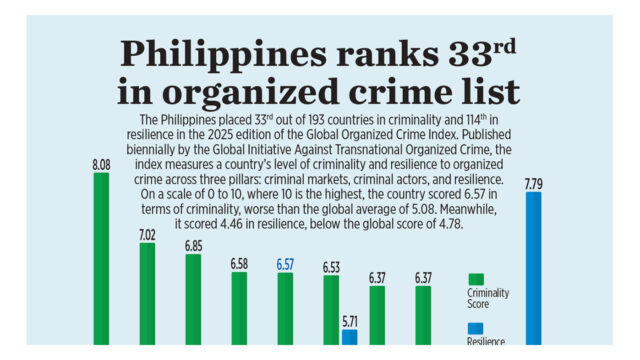
The Philippines placed 33rd out of 193 countries in criminality and 114th in resilience in the 2025 edition of the Global Organized Crime Index. Published biennially by the Global Initiative Against Transnational Organized Crime, the index measures a country’s level of criminality and resilience to organized crime across three pillars: criminal markets, criminal actors, and resilience. On a scale of 0 to 10, where 10 is the highest, the country scored 6.57 in terms of criminality, worse than the global average of 5.08. Meanwhile, it scored 4.46 in resilience, below the global score of 4.78.

Philippines ranks 33<sup>rd</sup> in organized crime list

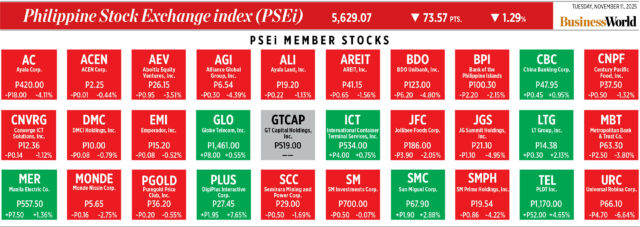
How PSEi member stocks performed — November 11, 2025

Here’s a quick glance at how PSEi stocks fared on Tuesday, November 11, 2025.