Home Blog Page 1743

SB Capital changes name to Security Bank Capital and Investment Corp.

THE WHOLLY OWNED investment banking arm of Security Bank Corp. has changed its name to Security Bank Capital and Investment Corp. from SB Capital Investment Corp.

The investment house’s corporate name change has been approved by the Securities and Exchange Commission and took effect on Nov. 12, Security Bank said in a statement on Monday.

“This change aligns the firm with the BetterBanking brand of its parent company and aims to further enhance its corporate identity in the industry,” it said.

“Security Bank Capital will continue to provide the same level of excellence and comprehensive investment banking services to our valued clients. We are excited about this development and remain dedicated to supporting our clients’ financial goals with renewed vigor and a unified brand presence,” Security Bank Capital President and Chief Executive Officer Virgilio O. Chua said.

Incorporated in 1995, Security Bank Capital offers investment banking products and services like underwriting of equity and debt securities, project finance, mergers and acquisitions, loan syndications, and advisory services to public and private sector clients.

Security Bank Capital’s subsidiaries are leasing firm SB Rental Corp. and stock brokerage SB Equities, Inc.

Its listed parent Security Bank’s net income rose by 13.58% year on year to P3.01 billion in the third quarter amid higher revenues.

This brought its nine-month net profit to P8.45 billion, up by 11.62% from a year ago.

Security Bank’s shares went down by P1.80 or 2.12% to end at P83.20 apiece on Monday. — A.M.C. Sy

mySTAY targets 80% occupancy, growth in direct bookings for 2025

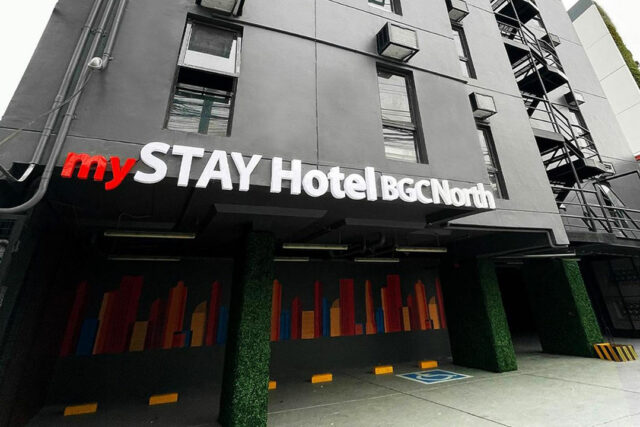
MYSTAY.PH

BUDGET hotel chain mySTAY Hotels is targeting to increase direct bookings and maintain an 80% occupancy rate next year, according to its chief executive officer (CEO).

“We’re actually maintaining around 80% occupancy…, which I believe is relatively higher in the industry regardless of star rating,” Reigine Valerie S. Banaag, CEO and general manager of mySTAY Hotels, told BusinessWorld on the sidelines of a Philippine Hotel Owners Association event on Nov. 18.

“We are actually increasing more of our direct market. Right now, we have different sources. The majority is, of course, online travel agencies,” she added.

mySTAY has four branches: mySTAY Hotel BGC East, which opened in September 2022; mySTAY Hotel BGC West, which opened in November 2022; and the last two branches, mySTAY BGC North and South, which opened in January and May last year, respectively.

mySTAY is set to release its own membership program next year, which is expected to increase bookings on its website.

Currently, most of mySTAY Hotels’ bookings come from third-party websites like Agoda and Booking.com, according to Ms. Banaag.

mySTAY Hotels features a modern-minimalist style, catering to budget-conscious millennials and Gen Z travelers.

The majority, or 80%, of its visitors are from the domestic market, while 20% are foreigners. Most of its bookings are for leisure, particularly for those who wish to visit BGC in Taguig City, Ms. Banaag said.

Guests can choose from different room options. The Deluxe Queen and Deluxe Twin rooms both measure 12 square meters (sq.m.), while the Loft Bunk room has an area of 10 sq.m. The Garden Suite, measuring 22 sq.m., is only available at mySTAY Hotel BGC South.

Room rates at mySTAY Hotels start at around P1,499 per night.

The four properties also include additional facilities such as a café, a co-working space, and a gym.

While the company has no concrete plans for expansion, Ms. Banaag said this could still be possible due to its high occupancy rate.

“For now, there are no concrete plans for expansion, but for me, with how it is looking with mySTAY, I can only be optimistic about the expansion of the brand,” she said.

mySTAY Hotels is the hotel brand of the Philippines Urban Living Solutions, Inc. (PULS), a rental housing development company catering to young professionals on a budget. In 2017, Sy-led SM Investments Corp. acquired a 61.2% stake in PULS. — Beatriz Marie D. Cruz

Entertainment News (12/10/24)


Facebook Live event for pet parents

BOEHRINGER INGELHEIM is set to host The Uninvited: Guard our Furkids from the Next Parasites, a Facebook Live event on Dec. 12, 6 p.m. The event will provide pet owners with expert advice on protecting their pets from parasites such as fleas, mites, and heartworms.  Featuring a veterinarian from the Philippine Animal Hospital Association as a special guest, the session will include practical tips, interactive games, and prizes. Influencers Angel Dei and Adrian Insigne, along with pet communities and partner veterinarians, will also join the discussion to share insights and experiences.


Armi Millare, Ena Mori to perform at Newport

NEWPORT WORLD RESORTS presents the show Sips & Sounds at El Calle Food and Music Hall on Dec. 13, 8 p.m. Solo singers Armi Millare and Ena Mori will deliver a night of live music celebrating OPM hits, good food, and drinks. Armi Millare is known for songs like “Oo,” “Tadhana,” and “Unti-Unti” and her latest singles “Roots” and “Say It Again.” Filipino-Japanese pop singer Ena Mori, whose hits include “Fall Inlove!” and “King Of The Night!,” recently won the Rule Breaker Award at the 2024 Billboard Philippines Women in Music event and topped NME Asia’s Best Albums in 2022 with Don’t Blame The Wild One!. Admission to the concert is free.


Jungkook docuseries premieres on Disney+

BTS member Jungkook’s three-part docuseries, Jungkook: I Am Still – The Original, is now streaming on Disney+. The series chronicles Jungkook’s evolution from being a BTS member to solo artist, capturing eight months of his journey as he records, performs, and films for his debut solo album, Golden. Set in New York, London, and Seoul, the series highlights Jungkook’s artistry, offering fans an intimate look at his whirlwind promotional tour. An extended cut of the theatrical release, The Original features 55 minutes of exclusive content, including performances of tracks like “Still With You” and “Shot Glass of Tears,” interviews with his dancers, and behind-the-scenes footage.


The Itchyworms returns to Japan for 2025 tour

FILIPINO BAND The Itchyworms is returning to Japan with their Akin Ka Na Lang… Japan! Tour which will run from Jan. 17 to 19, 2025. The tour will feature performances at Mr. Back in Saitama, Heaven’s Door in Sangenjaya, and Gamuso in Asagaya. The band promises a fresh setlist featuring more English-language tracks from their early catalog and surprises for fans. Following the Japan shows, the band plans to expand their international reach with tours across Europe, the UK, Australia, New Zealand, and Canada.


Unis unveils exclusive photocards for Filipino fans

SOUTH KOREAN girl group Unis has announced the release of exclusive photocards for their Filipino fans. Fans can now purchase a special bundle featuring two CURIOUS albums — Glow-Z and New-Z — for P1,499. Each album includes a photobook, CD-R, envelope, stickers, one random photocard, one special photocard, and a folded poster. Also, fans will receive two extra random, Philippine-exclusive photocards only available through this bundle via Universal Records’ Lazada and Shopee accounts.

The silent epidemic: HIV in the Philippines

FREEPIK

I’VE BEEN LOOKING at the HIV (human immunodeficiency virus) numbers here in the Philippines, and it’s both alarming and frustrating that they’re mostly ignored by the media and government departments that should be addressing the issue. HIV is the silent stalker that is coming for the Filipino youth.

The epidemic, once described as “low and slow,” has transformed into the fastest-growing in the Western Pacific. From just four new cases per month before 2010, the country now sees 58 new cases every day — a staggering 43,000% increase in daily incidence over the past 15 years.

While global HIV cases and AIDS-related deaths are declining, the Philippines is bucking the trend. Late presentation in care remains a concern, with 29% of new cases in January 2023 already showing advanced HIV disease at the time of diagnosis. Fear of a positive diagnosis, stigma, lack of confidentiality, judgmental healthcare providers, and lack of resources to get tested perpetuate this problem.

It’s young people who are getting HIV. Over 75% are under the age of 35 — not good from an economic or health perspective. It also means that if these young people don’t know their status, they have a long time to infect others.

Almost all people with HIV (PWH) in the country are contracting HIV from unprotected sex. Ninety six percent. Sure, Cebu has an issue with sharing needles, but it’s just 2% of all known cases.

The vast majority of people getting the virus are men who have sex with men (MSM). And before you think it’s just an issue for MSM, you know what else is increasing in the Philippines? Teenage pregnancy and sexually transmitted infections.

Research has shown that there is a lag — one to two years —between when Filipino teens start having sex and when they start using condoms. And even after that, many don’t use condoms consistently.

Given that HIV and teen pregnancy are two sides of the same coin, you’d expect the Department of Education (DepEd) would be teaching young people comprehensive sexuality education (CSE) as mandated by the 2012 Responsible Parenthood and Reproductive Health Act and the 2018 HIV and AIDS (acquired immunodeficiency syndrome) Policy Act. Sadly not. DepEd isn’t training teachers to do so.

You’d also expect the Department of Health (DoH) to be promoting condoms at every opportunity, but its website does not even mention condoms on the HIV page. The current prevention strategy is test and treat. Wild, when you consider that HIV is still incurable. Surely prevention is better.

But let’s give the DoH the benefit of the doubt and take a look at the test and treat strategy.

The HIV and AIDS Law (RA 11166) expanded access to HIV testing and treatment, allowing minors aged 15 to 17 to be tested without parental consent and introducing community-based and self-testing options.

More people tested means more positive cases found. The number of treatment hubs and primary HIV care facilities continues to increase but, according to the DoH, a third of all diagnosed individuals are not getting life-saving antiretroviral therapy.

PhilHealth reimbursements for HIV treatment are inconsistent, leaving facilities underfunded and care disrupted. As of mid-2023, the estimated cost to provide basic care (medicines, treatment of non-opportunistic infections, and hospitalizations, etc.) for all known cases was P3.5 billion annually, with additional billions needed for new cases. Like a snowball, the cost will continue to compound.

At the local level, non-government organizations like Roots of Health are stepping up to fill the gaps.

To prevent transmission, we’ve partnered with DepEd Palawan and Sanguniang Kabataan (SK) and taught sex ed to 100,000 young people. We partnered with the DoH and the Commission on Population and Development and reached 60 million on social media with reliable sexual and reproductive health information. We also distributed over 200,000 condoms across the province over the years.

To support testing and treatment, we directly trained 600 community-based screeners and collaborated with community-based organizations and SKs to screen 5,000 at-risk individuals. We linked those who tested positive to care.

Honestly, it’s not enough. We need the adults to put their discomfort aside and do better. We need teachers to teach students about the risks. We need health workers to cut the judgment and give young people condoms without having to provide IDs. Nobody wants young people having sex before they are ready, but that ship has sailed. It’s happening. The best we can do is prepare them and keep them as safe and protected as we can.

If HIV were a regular disease, the focus would be on prevention. But because adults are uncomfortable talking about sex, especially with young people, HIV is left to spread amongst the unwitting. Let’s hope the DoH under Dr. Teddy Herbosa takes it seriously.

In the meantime, talk to the young people in your life about consent, condoms, and contraception. It could literally save their life.


Marcus Swanepoel is the deputy director of Roots of Health, a reproductive health NGO in Palawan.

Filinvest Land plans P12-B bond issuance

FILINVESTLAND.COM

GOTIANUN-LED Filinvest Land, Inc.’s (FLI) executive committee has approved the issuance of up to P12 billion in bonds as part of the property developer’s fundraising plans, the company said on Monday.

The issuance will consist of peso-denominated fixed-rate bonds with a maturity period of up to ten years, FLI said in a regulatory filing.

FLI said the issuance will be the second tranche of its P35 billion shelf-registered peso-denominated bonds that was approved by the Securities and Exchange Commission in October last year.

In December last year, FLI raised P11.4 billion from the issuance of 3.5-year retail bonds with an interest rate of 6.983% per year. This was the first tranche of the P35-billion bonds program.

The proceeds from the issuance were earmarked for the property company’s capital expenditure program as well as to repay existing debts.

For the first nine months, FLI saw an 8% increase in attributable net income to P2.65 billion as total consolidated revenue and other income grew by 17% to P18.44 billion, led by higher booked residential real estate sales.

FLI shares were unchanged at 76 centavos apiece on Monday. — Revin Mikhael D. Ochave

UA&P economists’ book about PHL universal, commercial banks published by Palgrave MacMillan

UNIVERSITY of Asia and the Pacific (UA&P) professor Dr. Jovi C. Dacanay and her research associates Ella Mae O. Leonida and Michaela Nicole Meriño, both masteral graduates of the UA&P School of Economics, have achieved a breakthrough into international publishing with their book Bank Competition and the Effects on Financial Stability: Insights into the Emerging Banking Markets of the Philippines. Carefully peer-reviewed, Palgrave Macmillan recently published the book as part of its series on Studies in Banking and Financial Institutions.

The book explores the stability and efficiency of Philippine universal and commercial banks with an industrial organization framework and application of econometric methods. The authors find broad stability and efficiency among Southeast Asian banks but focus more on Philippine banks. The book shows that the top 20 Philippine banks have sufficient market power, efficiency and stability that enabled them to withstand economic disruptions like the recent coronavirus pandemic. It is the result of five years of research by the authors on the topic.

How minimum wages compared across regions in November

(After accounting for inflation)

In November, inflation-adjusted wages were 17.6% to 25% lower than the current daily minimum wages across the regions in the country. In peso terms, real wages were lower by around P74.48 to P125.15 from the current daily minimum wages set by the Regional Tripartite Wages and Productivity Board.

How minimum wages compared across regions in November

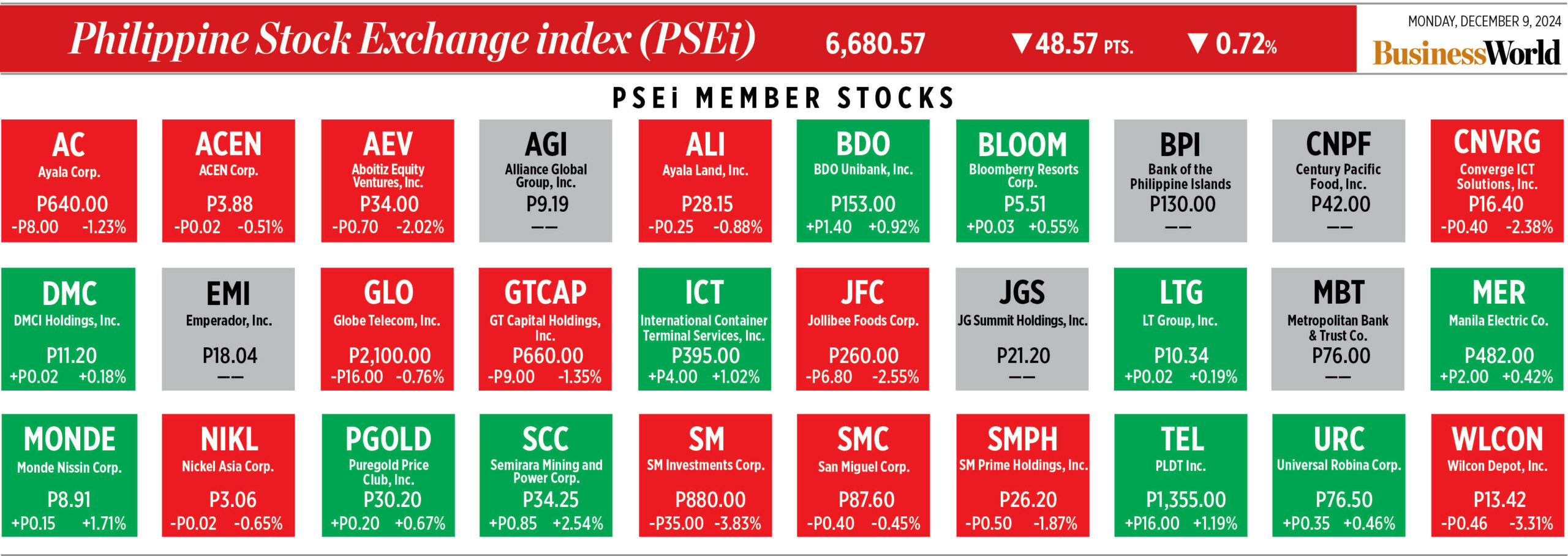
How PSEi member stocks performed — December 9, 2024

Here’s a quick glance at how PSEi stocks fared on Monday, December 9, 2024.


Denmark eyes more energy projects in Philippines, keen on defense deals

Danish Foreign Minister Lars Løkke Rasmussen — PHILIPPINE COAST GUARD PHOTO

By John Victor D. Ordoñez, Reporter

DENMARK is keen on boosting onshore and offshore energy investments in the Philippines, according to its foreign minister, which could boost the Southeast Asian nation’s efforts to diversify its power mix amid a global push for renewable energy (RE).

The Nordic country is also interested in exploring defense partnerships with Manila, Danish Foreign Minister Lars Løkke Rasmussen told a news briefing in Makati City near the Philippine capital on Monday.

“The fact that the main infrastructure partners have quite big investments, offshore investments in the Philippines, I think there’s even bigger potential also onshore,” he said. “Your government has made very good conditions for offshore wind investments in the Philippines and if you copy-paste that to onshore, you could unlock a huge potential.”

Last year, Copenhagen Infrastructure New Markets Fund, an affiliate of Copenhagen Infrastructure Partners (CIP), became the first fully foreign-owned entity awarded with wind energy service contracts by the Department of Energy (DoE) after the Philippines opened up the RE sector to full foreign ownership.

The offshore wind projects are in Camarines Norte and Camarines Sur, with capacity projected at 1,000 megawatts (MW); in Northern Samar (650 MW); and Pangasinan and La Union (350 MW).

“Again, Danish businesses are keen to invest and will drive your green transition,” Mr. Rasmussen said. “It’s about avoiding corruption… and the Philippines has made a lot of progress regarding all these issues.”

“Denmark is a leader in wind energy,” Calixto V. Chikiamco, Foundation for Economic Freedom president, said in a Viber message. “Danish companies are already investing in the Philippines due to the liberalization of RE projects, opening the sector to 100% foreign ownership.”

Denmark’s top envoy said his country backs negotiations between the European Union (EU) and the Philippines on a free trade agreement, which is expected to wrap up by 2027.

Trade Undersecretary Allan B. Gepty has said the government’s internal target is to conclude trade negotiations with the EU by 2026. This is to ensure that there would be no gap in trade privileges should the Philippines lose EU concessions by graduating to upper middle-income status.

The Philippines is part of the EU’s Generalized Scheme of Preferences Plus (GSP+), a special incentive for low and lower middle-income countries. The country enjoys zero duty on more than 6,274 Philippine-made products.

CIP in May launched its light detection and ranging (LIDAR) system, which uses laser technology to measure wind speeds to assess an area’s capacity to generate wind energy, for its planned offshore wind project in Camarines Sur.

The Board of Investments had given CIP’s projects green lane certificates of endorsement to fast-track the processing of permits.

Denmark Ambassador to the Philippines Franz-Michael Mellbin has said the Philippines could develop robust renewable energy projects due to its diverse natural resources such as wind, solar and biomass.

The Philippines is under pressure to find other sources of indigenous energy with the imminent depletion of the Malampaya gas field, which supplies power plants accounting for a fifth of all power generated in the Philippines. The gas field is expected to run out of easily recoverable gas by 2027.

The government aims to raise the share of renewable energy in the country’s energy mix to 35% by 2030 and to 50% by 2040 from 22% now.

“The potential for sustained Philippine economic growth is immense,” Mr. Rasmussen said. “I commend the government’s effort to continuously improve the business environment and we want to assist and help to drive this growth.”

MARITIME TIES
At the same briefing, Philippine Foreign Affairs Secretary Enrique A. Manalo said both countries are eyeing more cooperation between their defense industries.

“I also raised the hope that we could collaborate more on the maritime area in terms of maritime security, promoting international law… and we also consider the possibility of defense cooperation in the future,” he said.

Mr. Rasmussen said he wants both countries’ defense industries to carve out long-term ties. “Talking about defense, I think we have a business community and defense industry that have certain competencies and strongholds, which are probably needed in the Philippines to build up the necessary capacity.”

Philippine and Chinese coast guards have repeatedly clashed in the South China Sea, accusing each other of aggressive behavior involving their ships and of damaging the marine environment.

China claims almost the entire sea, a conduit for more than $3 trillion of annual ship-borne commerce. The Permanent Court of Arbitration in 2016 said China’s claims had no legal basis, a ruling Beijing rejects.

The EU is keen on boosting ties with the Philippines in diplomatic efforts to uphold international law in the South China Sea amid its dispute with Beijing, EU External Action Service Managing Director for Asia and the Pacific Niclas Kvarnström told a news briefing in Manila last week.

Last week, the Philippines filed a diplomatic protest against China after a Chinese Coast Guard vessel fired water cannons at a Philippine ship carrying supplies for troops stationed around Scarborough Shoal.

China has controlled the shoal, which falls within the Philippines’ exclusive economic zone and is claimed by several other countries, since 2012 after maintaining constant coast guard presence there, according to the Asia Maritime Transparency Initiative.

“Minister Rasmussen’s clear expression of solidarity with the Philippines and support for our position on the South China Sea indicates Denmark’s principal status on security and stability,” Mr. Manalo said.


Bill vs chemical weapons approved on final reading

FREEPIK

THE PHILIPPINE Senate on Monday approved on final reading a bill that seeks to bar the production and development of chemical weapons in the country, in line with its commitments to an international treaty banning these.

Twenty-two senators unanimously approved Senate Bill No. 2871, which bars the manufacture and stockpiling of chemical weapons.

Under the measure, the Anti-Terrorism Council, which will be designated as the Philippine National Authority on the Chemical Weapons Convention, will ensure that chemical weapons are not produced.

The executive secretary will head the council, which is tasked to look into entities engaged in developing chemical weapons.

The Philippines ratified the Chemical Weapons Convention treaty in 1995, which bans the stockpiling and large-scale development of chemical weapons.

The bill defines chemical weapons as “toxic chemicals, munitions and devices designed to cause death or other harm through the release of toxic properties.”

“Today, this institution demonstrates its dedication to global disarmament and nonproliferation of weapons of mass destruction, and strengthens existing regulatory policies to prevent utilization and diversion of chemicals for terrorism and nonpeaceful purposes,” Senate President Pro-Tempore Jose “Jinggoy” P. Estrada, Jr. told the Senate floor after the bill’s approval.

The measure will ban the domestic and cross-border transfer of chemicals linked to chemical warfare and without permits.

People found guilty of developing, acquiring, stockpiling, retaining and transferring chemical weapons may face life in prison.

People who finance the development of these weapons may face at least 20 years of jail time and a fine of P500,000 to P1 million.

“[That] It is imperative for our country to boost our legislative efforts through measures that will ensure prosecution against those who violate the convention, is an understatement,” Senator Ronald M. dela Rosa said in a speech after the bill’s passage.

The Philippine Senate in 2021 ratified the United Nations Treaty on the Prohibition of Nuclear Weapons, making the Philippines the 53rd nation to adopt it. The treaty, signed by 86 countries, took effect after it was ratified by at least 50 states.

The treaty bars nations from developing, testing, producing, manufacturing, transferring, possessing, stockpiling, using or threatening to use nuclear weapons.

Philippine Foreign Affairs Secretary Enrique A. Manalo earlier said Manila’s global peace-building efforts makes it qualified to pursue a nonpermanent seat in the 15-member United Nations Security Council.

Elections for new council members will be held in 2026.

“Finally, we are one step closer to fulfilling our commitment of enacting national legislation to fully implement provisions under the Chemical Weapons Convention, and to join the international community in the ongoing efforts to completely eliminate chemical weapons,” Mr. Estrada said. — John Victor D. Ordoñez

House bill that seeks to criminalize troll farms, disinformation campaigns filed

DFY_SEOUL/UNSPLASH

A BILL that seeks to combat election-related disinformation by outlawing the operations of troll farms has been filed at the Philippine House of Representatives.

Filed on Dec. 5, House Bill No. 11177 imposes a jail term of as long as 12 years and a fine of as much as P2 million on violators, while also disqualifying candidates who willingly benefit from disinformation campaigns.

Groups found operating troll farms face fines of as much as P10 million and will have their business permits and licenses revoked. 

The measure mandates the creation of a task force dedicated to investigating and monitoring troll farms and prosecuting those behind them.

“Troll farms are… systematic tools designed to deceive voters and distort democracy,” Party-list Rep. Margarita B. Nograles-Almario, who authored the bill, said in a statement. “This bill is our commitment to ensuring that the voice of the Filipino people remains genuine and untainted by lies.” 

The World Economic Forum in a 2024 report cited disinformation as the “most severe global risk” in the next two years because it could undermine the legitimacy of newly elected governments and lead to a highly politically polarized citizenry.

Social media companies that fail to remove deceptive content from verified complaints on their platforms within a day could get fined P1 million to P5 million per violation, according to the bill.

“Technology should be a force for empowerment, not manipulation,” Davao Oriental Rep. Cheeno Miguel D. Almario, a co-author of the bill, said in the same statement. “The bill is a proactive step to ensure that innovation strengthens, rather than weakens, our democracy.”

Informants who report troll farm activities and their locations will be protected under a 2021 Whistleblower Protection law, according to the bill.

Schools should also implement education programs to promote voter awareness and critical thinking, preventing students from falling victim to disinformation, it added.

“Education is a long-term solution. By equipping the public with the tools to recognize and combat disinformation, we can nurture a more informed and responsible electorate,” Ms. Almario said. — Kenneth Christiane L. Basilio

Gov’t told to uphold UN Bangkok Rules ahead of Mary Jane Veloso’s repatriation

Filipino death row inmate Mary Jane Veloso shows her handicraft during a workshop at Wirogunan prison in Yogyakarta, Indonesia, April 12, 2016. — REUTERS FILE PHOTO

THE Commission on Human Rights (CHR) reminded the government to uphold the United Nations (UN) Bangkok Rules as the country anticipates the return of Mary Jane F. Veloso, who has spent the last decade in an Indonesian prison for drug trafficking.

The Bangkok Rules, or the UN Rules for the Treatment of Women Prisoners and Non-custodial Measures for Women Offenders, sought to protect and uphold the dignity of women from their incarceration up to their reintegration, according to the UN.

“This is to ensure that all efforts needed for constitutional actionable steps towards the reformation and possible reintegration of Veloso and the rest of the PDLs (persons deprived of liberty) to mainstream society are actualized,” it said in a statement on Monday.

The commission welcomed her expected return, and lauded President Ferdinand R. Marcos, Jr. and the Department of Foreign Affairs (DFA), noting that “promoting and protecting the dignity of every Filipino will always include our migrant workers, parallel to our foreign policy which also prioritizes the welfare of Filipinos overseas.”

The Filipino overseas worker was sentenced to death in October 2010 and was granted a stay of execution in April 2015. Ms. Veloso, who was caught smuggling 2.6 kilograms of heroin hidden in the lining of a suitcase, was a victim of human trafficking, according to her lawyers.

On Nov. 19, Mr. Marcos and the DFA said the government reached an agreement with its Indonesian counterparts on Ms. Veloso’s return to the Philippines to serve her remaining sentence.

Justice spokesman Jose Dominic F. Clavano IV on Monday said it seems Ms. Veloso’s return gives the Philippines legal and physical custody. 

“We think from the actuation and practical agreement signed between the PH government and Indonesian government, there seem to be no conditions imposed…It is up to us to decide on whether or not there should be other steps taken,” he told reporters in mixed English and Filipino.

“Before we thought that legal custody was in Indonesia, it was only physical custody for us, but it seems right now, both legal and physical custody are now with the Philippines,” he added, noting they are eyeing Ms. Veloso’s return to Manila before Christmas.

Indonesia and the Philippines last week signed an agreement on the repatriation of a Philippine woman who was sentenced to death for drug trafficking, an Indonesian government minister said.

Indonesia’s senior minister for law and human rights affairs Yusril Ihza Mahendra and Philippines Justice Undersecretary Raul Vasquez signed the agreement for the repatriation of Ms. Veloso.

Mr. Yusril noted in a Reuters report that Indonesian President Prabowo Subianto instructed to have Ms. Veloso’s case resolved before Christmas, if possible, and have her transferred likely around Dec. 20.

Mr. Yusril said the Philippines agreed on several terms proposed by Indonesia, including respecting the Indonesian court’s sentencing of Ms. Veloso and her status as prisoner in Indonesia.

Indonesia would respect any decision made by the Philippines, including if she was given clemency.

She will be banned from returning to Indonesia, Mr. Yusril added.

Indonesia also said that the agreement was “reciprocal.”

Mr. Yusril said that Philippines had told Indonesia that it would change Ms. Veloso’s death sentence to life imprisonment. — Chloe Mari A. Hufana with Reuters