Home Blog Page 174

Banks back Prime Infra hydro projects with P273.5-B financing

The Upper Wawa Dam in Rizal — PRIMEINFRA.COM

By Sheldeen Joy Talavera, Reporter

RAZON-LED Prime Infrastructure Capital, Inc. (Prime Infra) has secured financing support from local and international banks for the development of its 2,000-megawatt (MW) pumped storage hydropower projects in Laguna and Rizal through loans totaling P273.5 billion.

In a statement on Thursday, Prime Infra said it entered into a P214.87-billion project financing agreement with an eight-member bank syndicate.

The consortium includes Bank of the Philippine Islands, BDO Unibank, Inc., China Banking Corp., Land Bank of the Philippines, Metropolitan Bank & Trust Company, Philippine National Bank, Security Bank Corp., and Union Bank of the Philippines.

Prime Infra said the financing will be classified as a green loan with the assistance of MUFG Bank, Ltd.

The company also secured a P58.6-billion dual-currency equity standby letter of credit facility from foreign lenders MUFG Bank, Mizuho Bank, Ltd., and Sumitomo Mitsui Banking Corp.

“This historic financing reflects the confidence of local and international banks in Prime Infra’s capability to deliver large-scale, critical infrastructure,” Prime Infra President and Chief Executive Officer Guillaume Lucci said.

Mr. Lucci said the banks’ support would help finance the company’s pumped storage projects, which require significant capital.

“These agreements will accelerate critical infrastructure investments and strengthen energy security and reliability, which are the foundations of the Philippines’ sustained economic growth,” he added.

The funding will support the ongoing construction of the 1,400-MW Pakil Pumped Storage Hydropower Plant of Ahunan Power, Inc. in Laguna and the 600-MW Wawa Pumped Storage Hydropower Plant of Olympia Violago Water & Power, Inc. in Rizal.

Both projects, which have been certified as energy projects of national significance, are targeted to begin operations by 2030.

Pumped storage technology generates power during peak demand by storing energy by pumping water to an upper reservoir during off-peak hours.

Prime Infra is partnering with First Gen Corp. of the Lopez group to develop the projects. First Gen will invest P61.88 billion for a 33% equity interest in both projects.

COLOMBIA OIL DEAL
Separately, analysts said the planned acquisition by Prime Infra of Colombia’s largest independent oil and gas exploration and production firm could help reduce the Philippines’ dependence on oil imports as the Middle East war raises fuel supply concerns.

Global investment firm Carlyle has agreed to sell its entire stake in SierraCol Energy Ltd. to Prime Infra, complementing the latter’s power and energy infrastructure assets.

Carlyle and Prime Infra have entered into an agreement that is expected to close “within the following months,” SierraCol said in a statement on Wednesday.

The planned buyout has circulated since last year, with Carlyle seeking around $1.5 billion (P89.25 billion) for the Colombian firm, Reuters reported, citing industry sources.

The deal comes at a time when the Iran war has caused disruptions in a strategic waterway, raising oil supply concerns and pushing fuel prices higher.

“Prime Infra’s acquisition is timely and strategically attractive both commercially and geopolitically for Philippine energy security,” said Peter Louise D. Garnace, an equity research analyst at Unicapital Securities, Inc.

He said the major energy player’s acquisition of SierraCol could reduce the country’s dependence on oil-producing countries in the Middle East.

With SierraCol having a “structurally advantaged operation” given its proximity to processing, storage and transportation infrastructure, the Colombian firm is capable of producing high-quality and low-cost oil, he said.

SierraCol produces 77,000 barrels of oil equivalent per day, equivalent to 10% of Colombia’s total oil production. The company sources its oil from the country’s most prolific basins, including two giant fields — Caño Limón and La Cira Infantas.

“SierraCol could supply up to one-fifth of Philippine refinery demand, positioning it as the first Filipino-controlled international upstream oil producer and a huge strategic buffer in instances of oil crisis similar to the ongoing global supply shock amid US-Iran War,” Mr. Garnace said.

Marky Carunungan, an investment analyst at F. Yap Securities, said Prime Infra’s move to secure overseas production helps “diversify supply away from the Middle East and offers a natural hedge against oil price volatility, particularly amid current geopolitical tensions.”

Tony Hayward, executive chairman of SierraCol, said Prime Infra is expected to provide the company access to long-term capital.

“This acquisition strengthens our oil and gas expertise and complements our existing asset base in the Philippines,” Mr. Lucci said.

“Together, these capabilities position us to operate across the oil and gas value chain — from upstream to downstream, onshore and offshore — and to participate in the sector’s growth against the backdrop of a broader commodities supercycle,” he added.

Prime Infra is an infrastructure developer and operator focused on building and operating assets in energy, water, and waste management. Its energy portfolio includes gas-fired power plants, the Philippines’ only indigenous gas production facility, and large-scale pumped storage projects designed to support grid stability.


Several financial institutions now offering fully online process to open PERA

BW FILE PHOTO

SEVERAL financial institutions are now offering a fully online application process for opening a Personal Equity and Retirement Account (PERA) under the Bangko Sentral ng Pilipinas’ (BSP) open finance pilot, making the voluntary retirement saving and investment program more accessible.

In a statement on Thursday, the central bank said customers of G-Xchange, Inc., the operator of e-wallet GCash, Union Bank of the Philippines (UBP), Philippine National Bank (PNB), and Rizal Commercial Banking Corp. (RCBC) who tap ATRAM Trust Corp. as their PERA administrator can open accounts digitally.

Previously, opening a PERA required customers to fill out forms manually and submit supporting documents such as identification cards to PERA administrators.

“By participating in the project, G-Xchange, UBP, PNB, and RCBC can now securely share customer information — with the customer’s consent — to ATRAM,” the BSP said.

“Customers only need to register with ATRAM and open a PERA account via ATRAM’s online platform.”

UnionBank clients can also apply through ATRAM using the bank’s mobile application, it added.

“The BSP continues to work with financial institutions to further expand the network and ensure that a seamless and secure retirement planning ecosystem is within reach of every Filipino,” the central bank said.

PERA, created under Republic Act No. 9505 in 2016, is a voluntary retirement saving program which supplements benefits from the Social Security System, Government Service Insurance System, and employer-provided plans.

The BSP launched the Open Finance for PERA Pilot in July last year to encourage more Filipinos to open accounts by streamlining the onboarding process as well as improving access to the program.

This initiative leverages the BSP’s Open Finance framework, which allows secure, consent-based sharing of customers’ financial data across institutions, for increased choices and convenience.

Contributors aged 18 and above with a tax identification number are allowed to open a PERA. Self-employed and locally employed contributors may contribute P200,000 annually, while overseas Filipino workers may invest up to P400,000. The PERA Law also offers incentives to contributors, such as tax exemptions and credits.

The latest BSP data showed that accumulated PERA contributions reached P571.08 million at end-September 2025, rising by 21.34% year on year from P470.63 million. Bulk of these came from employee contributions (P396.54 million).

Meanwhile, the total number of PERA contributors also went up to 6,334 in the same period from 5,774 a year prior. — Katherine K. Chan

Seoul to toughen security for massive BTS comeback concert

SEOUL — A free comeback concert for boy band BTS in central Seoul next week is expected to draw up to 260,000 people, the Ministry of the Interior and Safety said on Wednesday, making it one of the largest public gatherings in the area since the 2002 World Cup.

The chart-topping K-pop group is marking the release of its first new album in more than three years with the free concert on March 21, before it embarks on a global tour in April.

The one-hour event, stretching from Gwanghwamun Square to City Hall in the heart of South Korea’s capital, will be streamed live on Netflix to 190 countries, drawing global attention amid heightened domestic scrutiny over crowd safety.

Some 22,000 holders of free tickets will attend the concert, but the area will be open for non-ticket holders who want to come, Interior Minister Yun Ho-jung said.

Authorities plan to deploy around 4,800 police officers and 3,400 officials from the city of Seoul and related organizations to manage crowd flow, emergency response, and anti-terrorism measures, local media reported.

Mr. Yun emphasized a “safety-first” approach, including pre-event structural inspections, real-time joint command operations, and immediate post-event cleanup.

“This event will showcase not just K-culture, but K-safety,” he said.

Police have said camping out overnight cannot be stopped but large tents will not be allowed, according to local media. Multilingual guides and medical stations will be set up and Seoul has secured 894 toilets that are open to the public in nearby buildings.

Since the deadly 2022 Halloween crush that killed 159 in Seoul, South Korea has remained on high alert for mass-gathering risks. — Reuters

SBCorp plans P12-B lending to support exporters, MSMEs

STOCK PHOTO | Image from Freepik

THE SMALL BUSINESS Corp. (SBCorp), the financing arm of the Department of Trade and Industry (DTI), is targeting P12 billion in loan releases this year.

“P12 billion is our target loan releases for the year,” SBCorp President and Chief Executive Officer Robert C. Bastillo told reporters on the sidelines of an event late Wednesday.

If realized, the amount would exceed last year’s P11.2-billion target, he said.

Of the P12-billion target, about P3 billion will be allocated for exporters, P2 billion for overseas Filipino workers (OFWs), and P2 billion for women-owned and women-led enterprises.

SBCorp may extend additional loans if demand remains strong and repayment rates stay high, Mr. Bastillo said.

“If we exceed that, we have to ask the permission of the DBM (Department of Budget and Management) to release [additional funding,]” he noted.

Mr. Bastillo said larger borrowers such as exporters, wholesale partners, cooperatives, and financial institutions have a repayment rate of nearly 100%.

Microenterprises, however, typically show lower repayment rates.

Mr. Bastillo said many online loan applicants are engaged in manufacturing, services, industrial activities, and trading.

Most SBCorp borrowers are microenterprises, which employ no more than nine workers and have assets of up to P3 million.

Mr. Bastillo also noted rising demand from women-led enterprises, which account for about 60% of the agency’s borrowers.

“Naturally, our micro segment is dominated by women entrepreneurs,” he said.

Mr. Bastillo said the launch of SBCorp’s mobile application last year and its engagement with women’s groups helped increase the number of female borrowers.

SBCorp is also looking to extend more loans to OFWs affected by the escalating war in the Middle East.

Separately, Trade Secretary Ma. Cristina A. Roque said loan support for exporters remains important as the Philippines pursues free trade agreements with other countries.

The move also comes as tensions in the Middle East raise concerns about potential impacts on Philippine exporters.

“We don’t have the numbers yet, but of course if this continues, definitely, it will affect [exporters],” she told reporters separately.

Ms. Roque noted, however, that the Middle East accounts for about 1% of the country’s total exports. — Beatriz Marie D. Cruz

What makes a workplace great? Leaders from ‘Best Places to Work’ in PHL share their stories

Organizations that truly invest in their people create workplaces where employees feel valued, supported, and inspired to do their best work.

The inaugural BusinessWorld Best Places to Work recognition highlighted companies that did just that: cultivate strong cultures, meaningful employee experiences, and environments where individuals can thrive.

The following leaders shared their reflections on what this recognition means for their organizations and the impact it has had on their employees and culture.

SLI Consulting: Gabriel Cervantes, President

It has been a privilege to be selected as one of WorkL and BusinessWorld’s Best Places to Work. This recognition is not only a great honor for us but it also helps us internally look into how we can make our company and workplace even better for our people through seeing where we can improve and where we are strong. I’m proud of our employees who continuously support one another, do great work, and uphold our core values. This award not only thanks the team, but it also inspires us to do better and reach higher with insight and direction.
LSERV Corp.: Kendi Tawano, Chief People Officer

Participating in the BusinessWorld Best Places to Work Awards was a deeply empowering experience for us at LSERV Corp. While the process itself was straightforward, its impact was profound. It gave our employees a voice and reaffirmed a core belief we hold close: when we genuinely care for our people, service excellence naturally follows. This recognition marks a meaningful milestone in our 30-year journey of uplifting lives through meaningful employment and inclusive growth.

What truly sets LSERV apart is the scale and sincerity of our commitment to our people. With over 10,000 employees nationwide, we strive to ensure that every worker, whether deployed on the ground or based at our head office, experiences dignity, fairness, and support. Our ISO 9001:2015 certification, our transition to tech-enabled service delivery, and our investments in learning and wellness platforms are all anchored on one constant: people. This award affirms that our culture of malasakit is not only embedded internally, but genuinely felt, seen, and valued by our workforce.

Since receiving this recognition, we have observed a noticeable increase in job applications, particularly from young professionals and seasoned workers who are drawn to our reputation for fairness, care, and employee support. More importantly, it has boosted morale across the organization — reminding our people that their work matters and that they are part of something bigger than themselves. 

We have embraced this moment as both an affirmation and a responsibility. As we move forward, we are doubling down on our transformation — digitally, culturally, and operationally — to continue building a workplace where employees can thrive with purpose, clarity, and care.

PNB Holdings Corp.

Being recognized as a 2025 BusinessWorld Best Place to Work is an honor that reinforces the people‑first culture we are cultivating at PNB Holdings. From a communications standpoint, the entry process was both straightforward and insightful. It allowed us to meaningfully assess our internal strengths, listen more deeply to our employees, and identify opportunities to further refine the way we support and engage our people.
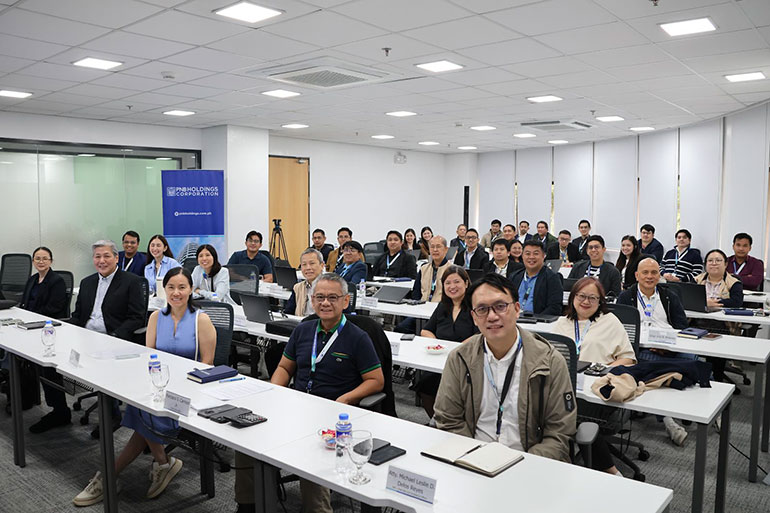
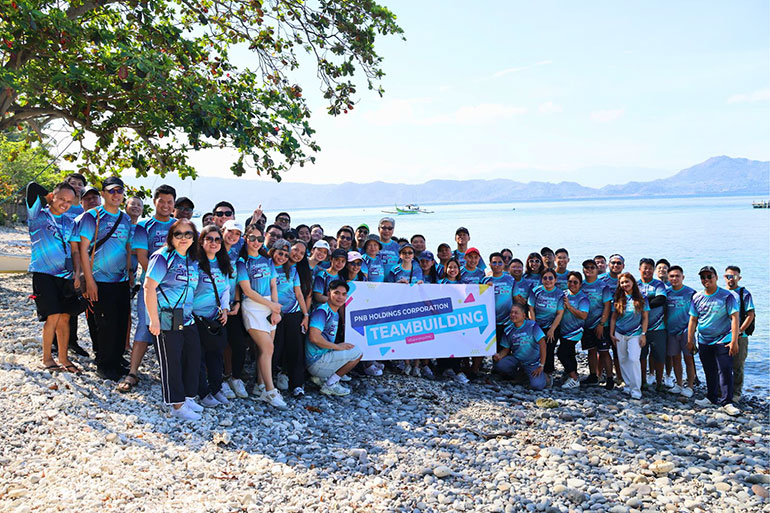

What truly sets PNB Holdings apart is our disciplined focus on excellence, rooted in integrity, collaboration, and a genuine respect for the individuals who drive our organization forward. This recognition has significantly bolstered our employer reputation. Since the announcement, we have observed stronger interest from top‑tier talent and increased confidence among current team members who take pride in contributing to an award‑winning workplace.

In response to survey insights, we have implemented enhancements that strengthen our employee experience: more structured learning pathways, improved wellness and engagement programs, and deeper communication platforms to ensure every employee feels heard, valued, and connected. These initiatives reflect our broader commitment to continuously raising the bar in the work we do and in the environment we create for our people.

This recognition affirms that we are on the right path, and it inspires us to keep building a workplace where excellence is lived every day.

‘Best Places’ now on its second run

Building on the success of its inaugural run, BusinessWorld, in partnership with global employee experience platform WorkL, is once again opening the search for the Best Places to Work in the Philippines for 2026. Organizations are invited to take part in this initiative to gain valuable insights into employee engagement, well-being, and overall workplace satisfaction.

To learn more about the program and how to join this year’s search, visit: https://workl.com/business/workplace-awards/businessworld-best-places-to-work-awards-powered-by-workl/.


Spotlight is BusinessWorld’s sponsored section that allows advertisers to amplify their brand and connect with BusinessWorld’s audience by publishing their stories on the BusinessWorld Web site. For more information, send an email to online@bworldonline.com.

Join us on Viber at https://bit.ly/3hv6bLA to get more updates and subscribe to BusinessWorld’s titles and get exclusive content through www.bworld-x.com.

Philippine bond market shrinks at end-2025

BW FILE PHOTO

THE PHILIPPINE bond market shrank further in the fourth quarter of 2025 due to reduced issuances by the central bank.

The ADB’s March 2026 Asia Bond Monitor report showed that outstanding Philippine local currency (LCY) bonds shrank by 0.7% to $233 billion (about P13.89 trillion) at end-2025 from $237 billion as of September 2025. This was equivalent to 48.9% of gross domestic product.

This was worse than the 0.1% contraction in the previous quarter.

Year on year, the Philippine bond market expanded by 6%.

The ADB said the quarter-on-quarter (q-o-q) decline was mainly due to the 43.6% contraction in the stock of outstanding central bank securities to $6 billion amid reduced issuances.

“Issuance of central bank securities declined 23.3% q-o-q as the BSP discontinued its 56-day securities since November,” it said.

Meanwhile, outstanding Treasury and other government bonds and corporate bonds increased by 1.2% and 2.1% from the prior quarter to $203 billion and $24 billion, respectively, as issuance volumes exceeded maturities in the period.

The ADB said bond sales declined across all segments in the fourth quarter of 2025, with overall issuances dropping by 39.8% to $30 billion (P1.7 trillion) from P50 billion (P2.9 trillion) in the third quarter. Year on year, this was down by 26.2%.

Issuances of Treasury and other government bonds totaled $9 billion, down by 56.4% from the previous quarter as the government fulfilled most of its annual financing target earlier in the year.

Corporate bond issuances were at $2 billion, down by 51.5%, while central bank securities sold totaled $19 billion.

“The investor profile remained largely stable in 2025. Banks and investment houses remained the largest investor group in the Philippines’ LCY government bond market, with their share rising to 46.4% at the end of December from 45.3% a year earlier,” the ADB said.

“The Philippines’ outstanding sustainable bonds totaled $16 billion at the end of 2025. The total sustainable bond stock increased 41.9% y-o-y (year on year) in 2025, up from $11.3 billion in 2024. This lifted the Philippines’ market share in emerging East Asia’s total sustainable bond market to 2.1% from 1.6%. The expansion was supported by strong investor demand, with total sustainable issuance tallying $5.9 billion, about the same as the previous year’s volume. Both the private (53.3%) and public (46.7%) sectors were active market participants, with over 90% of sustainable bonds from the public sector carrying tenors of more than five years,” it added.

The Philippines was the sole bond market in the Emerging East Asia region to record a quarterly decline at end-2025.

Overall, the region’s LCY bond market grew by 2.1% quarter on quarter to $30.588 trillion last year, slowing from the 3.2% expansion in third quarter of 2025, mainly due to an 11% decline in issuances to $2.9 trillion. Vietnam’s bond market recorded the fastest expansion in the period at 10.5%, followed by Hong Kong at 6.3%, and People’s Republic of China (PRC) at 2.2%.

Meanwhile, in terms of value, the People’s Republic of China had the biggest bond market at end-2025 at $25.002 trillion, followed by Japan’s $9.037 trillion and Korea’s $2.428 trillion.

“Regional financial markets are expected to remain broadly resilient as upside and downside risks appear balanced. On the upside, the region’s generally solid macroeconomic fundamentals and accommodative monetary policies should help cushion external shocks,” the ADB said. “Meanwhile, several downside risks warrant close monitoring… Uncertainty about the US monetary policy path — including the upcoming leadership transition at the Fed, the pace of future interest rate adjustments, and possible quantitative tightening — could contribute to fluctuations in asset prices and global capital flows.”

“Unexpected trade policy and geopolitical developments could also heighten uncertainty. Rising trade fragmentation poses both risks and opportunities for regional financial markets. On the downside, increased tariffs, export controls, and policy uncertainty can weigh on export-oriented sectors and heighten earnings volatility for firms integrated into global value chains, potentially leading to capital flow volatility and weaker investor sentiment.” — AMCS

UNESCO fears for fate of historical sites during Iran war

Palais du Golestan, Téhéran, Iran — COMMONS.WIKIMEDIA.ORG

PARIS — The United Nations Educational, Scientific and Cultural Organization (UNESCO) said it is deeply concerned about the fate of world heritage sites in Iran and across the region, after Tehran’s Golestan palace, often compared to Versailles, and a historic mosque and palace in Isfahan were damaged in the war.

The United Nations’ cultural agency on Wednesday urged all parties to protect the region’s outstanding cultural sites, saying four of Iran’s 29 world heritage sites had been damaged since the start of the US and Israeli war with Iran.

“UNESCO is deeply concerned by the first impact that the hostilities are already having on many world heritage sites,” Lazare Eloundou Assomo, director of the World Heritage Centre, told Reuters, adding he was also concerned for sites in Israel, Lebanon, and across the Middle East.

Tehran’s Golestan palace, damaged in US-Israeli strikes, is testimony to the grandeur of Iran’s civilization in the 19th century, he said.

The palace was chosen as the Persian royal residence and seat of power by the Qajar family and shows the introduction of European styles in Persian arts, according to the UNESCO website. The last Shah of Iran, Mohammad Reza Pahlavi, held a coronation ceremony there in 1969.

“We sometimes even compare it with the Versailles Palace in France, for instance, and it has suffered, unfortunately, some damage. We don’t know the extent for the moment. But clearly, with the images that we have been able to receive, we can confirm … it has been affected,” Mr. Eloundou Assomo said.

Photos of the interior of the palace have shown piles of smashed glass and shards of wood on the floor, and shattered woodwork.

Isfahan was one of Central Asia’s most important cities and a key point on the Silk Road trading route. Its Masjed-e Jame (Jameh Mosque) is more than 1,000 years old and shows the development of Islamic art through 12 centuries.

Buildings close to the buffer zone of the prehistoric sites of the Khorramabad Valley have also been damaged, UNESCO said.

UNESCO has shared coordinates of key cultural sites to all parties, Mr. Eloundou Assomo said, and was monitoring damage.

“We are calling for the protection of all sites of cultural significance … everything that tells the history of all the civilizations of the 18 countries in the region,” he said. — Reuters

AirAsia backs DoTr fee cut plan; analyst calls it ‘stopgap’

PHILIPPINES STAR/WALTER BOLLOZOS

THE Department of Transportation (DoTr) is evaluating a possible reduction in airport landing and takeoff fees to help stabilize airfares as global fuel prices rise.

Low-cost carrier AirAsia Philippines expressed support for the potential fee reductions, saying the move could help keep air travel affordable amid rising operating costs.

“AirAsia welcomes initiatives that aim to help cushion the impact on both airlines and travelers, including the possible review of certain airport-related fees,” it said in a statement on Thursday.

The airline added that maintaining industry stability remains important.

“Any measure that supports operational sustainability while helping keep air travel affordable for passengers is a positive step for the industry. AirAsia Philippines will continue to closely monitor developments and work with relevant government agencies and industry stakeholders.”

Nigel Paul C. Villarete, senior adviser on public-private partnerships at the technical advisory group Libra Konsult, described the DoTr proposal as a “stopgap measure,” noting that such fees are important for airport operations.

“Aerodromes don’t make much money and the truth is, except for a select few, most are actually subsidized… Cutting those would redound to the government having to subsidize these costs — for both publicly- and privately (PPP)-run aerodromes,” he added.

“But aviation is not a daily work activity for people, it’s generally a more business-oriented transportation, where subsidies may not be necessary.”

While the DoTr explores possible relief measures, the New NAIA Infrastructure Corp. (NNIC) has already started collecting higher landing and takeoff fees from airlines since 2024.

These charges for international air traffic movements are scheduled to increase gradually throughout the NNIC concession period. — Ashley Erika O. Jose

The power of being relentless

In boardrooms and classrooms alike, we celebrate brilliance. We admire the visionary, the gifted speaker, the prodigy with effortless command of numbers. But in my experience, it is not brilliance that finishes important work. It is relentlessness.

Years ago, I worked with a mentor on a case-writing project on management and finance in ASEAN, funded by an international organization. The proposal alone took nearly three years to get approved. Three years of revisions, clarifications, tightened frameworks, reworked budgets, and refined objectives. There were moments when abandoning the effort would have seemed rational. After all, opportunity cost is real.

But my mentor would not let go. He kept urging us: revise again, sharpen the logic, make the value proposition undeniable. When approval finally came, the harder part began — field interviews, validation, rewriting, editing. The work stretched on. We finished not because we were the most brilliant team in the room, but because he was relentless.

Psychologist Angela Duckworth’s research on “grit” — defined as perseverance and passion for long-term goals — suggests that sustained effort over time predicts achievement beyond raw talent. In a widely cited 2007 study, grit helped explain why some individuals persisted and succeeded in demanding environments even after controlling for ability. The effect sizes are not magical. But they are real. Relentlessness compounds.

At the same time, later research cautions against oversimplifying grit as a cure-all. Structural barriers matter. Resources matter. Context matters. Perseverance alone cannot fix broken systems. Still, within the zone of control we possess — our habits, discipline, and response to setbacks — relentlessness remains a decisive advantage.

History is full of accomplishments that would not have existed without it.

Before SpaceX became synonymous with private space travel, its Falcon 1 rocket failed three consecutive launches between 2006 and 2008. The company was reportedly near collapse before the fourth launch finally succeeded. Had the team stopped at failure number three, there would have been no turnaround story to tell.

J.K. Rowling’s manuscript for Harry Potter was rejected multiple times before being accepted. Thomas Edison famously reframed thousands of unsuccessful attempts at inventing the light bulb as data points — ways that would not work.

These stories risk becoming clichés. But their lesson is not romance. It is iteration. Progress often sits just beyond the point where most people quit.

Relentlessness is not stubbornness for its own sake. It is disciplined persistence anchored on purpose. It is the ability to endure boredom after excitement fades. It is the maturity to accept feedback without losing conviction.

So how does one cultivate a relentless spirit — especially in professional life, where fatigue and distraction are constants?

First, anchor yourself to a clear “why.” Goals without meaning collapse under pressure. When you know who benefits from your work — students, clients, institutions, communities — quitting becomes costlier than continuing.

Second, institutionalize iteration. Treat Version 12 not as embarrassment but as improvement. Many projects fail not because the idea was weak, but because the team was unwilling to refine.

Third, pre-decide your response to obstacles. Behavioral research on implementation intentions shows that specifying “If X happens, I will do Y” improves follow-through. If a proposal is rejected, revise within 72 hours. If a chapter stalls, write 300 words anyway. Relentlessness thrives on structured response, not emotional reaction.

Fourth, seek feedback early. Relentless professionals are not defensive. They are data-driven. Critique is information, not insult.

Fifth, protect stamina. Sleep, health, and rhythm are not indulgences. They are infrastructure. You cannot finish well if you cannot return tomorrow.

Finally, surround yourself with accountability. Relentlessness is easier in community. A team that refuses to let each other quit multiplies individual resolve.

In business, finance, and public life, we often overvalue flashes of genius and undervalue quiet endurance. Yet organizations are built by those who stay with difficult reforms, who keep refining policy proposals, who pursue long-term transformation despite early resistance.

Relentlessness does not guarantee success. But its absence almost guarantees unfinished work.

When I think back to that ASEAN case-writing project, I do not primarily remember the grant approval letter. I remember the character formed in the process — the discipline to revise, the humility to improve, the refusal to abandon a worthy objective because it was taking too long.

In a culture increasingly addicted to speed and instant results, perhaps the real competitive advantage is not brilliance at all.

It is the capacity to stay — to refine, to endure, to finish.

Relentlessness, in the end, is less about force and more about fidelity: fidelity to purpose, to standards, and to the quiet promise that what we begin, we will see through.

The views expressed herein are his own and do not necessarily reflect the opinion of his office as well as FINEX.


Benel Dela Paz Lagua was previously EVP and chief development officer at the Development Bank of the Philippines. He is an active FINEX member and an advocate of risk-based lending for SMEs. Today, he is independent director in progressive banks and in some NGOs.

Brace for the Summer of ’26

From all indications, it looks like we are in for a summer to remember.

The months of March to June (or even July) have always been precarious for the power sector in the country. This is often called the “colorful” season, one that is marked by red and yellow alerts indicating the level of supply margin (or lack thereof) in the grid. It can also be the “black” season when temperature rises above the forecast and demand soars leading to power outages in some areas of the country. Such outages would occur on a regular or rotating basis due to lack or insufficiency of the power supply or the unavailability of fuel, especially in off-grid areas where more than 90% of power generation still comes from diesel or bunker fuel-fired generators. When the private power producers use up all their fuel inventory, or the National Power Corp. runs out of funds to purchase fuel, the islands go dark until new fuel deliveries arrive.

WHAT THE DATA TELLS US ABOUT SUMMERS-AS-PER-USUAL
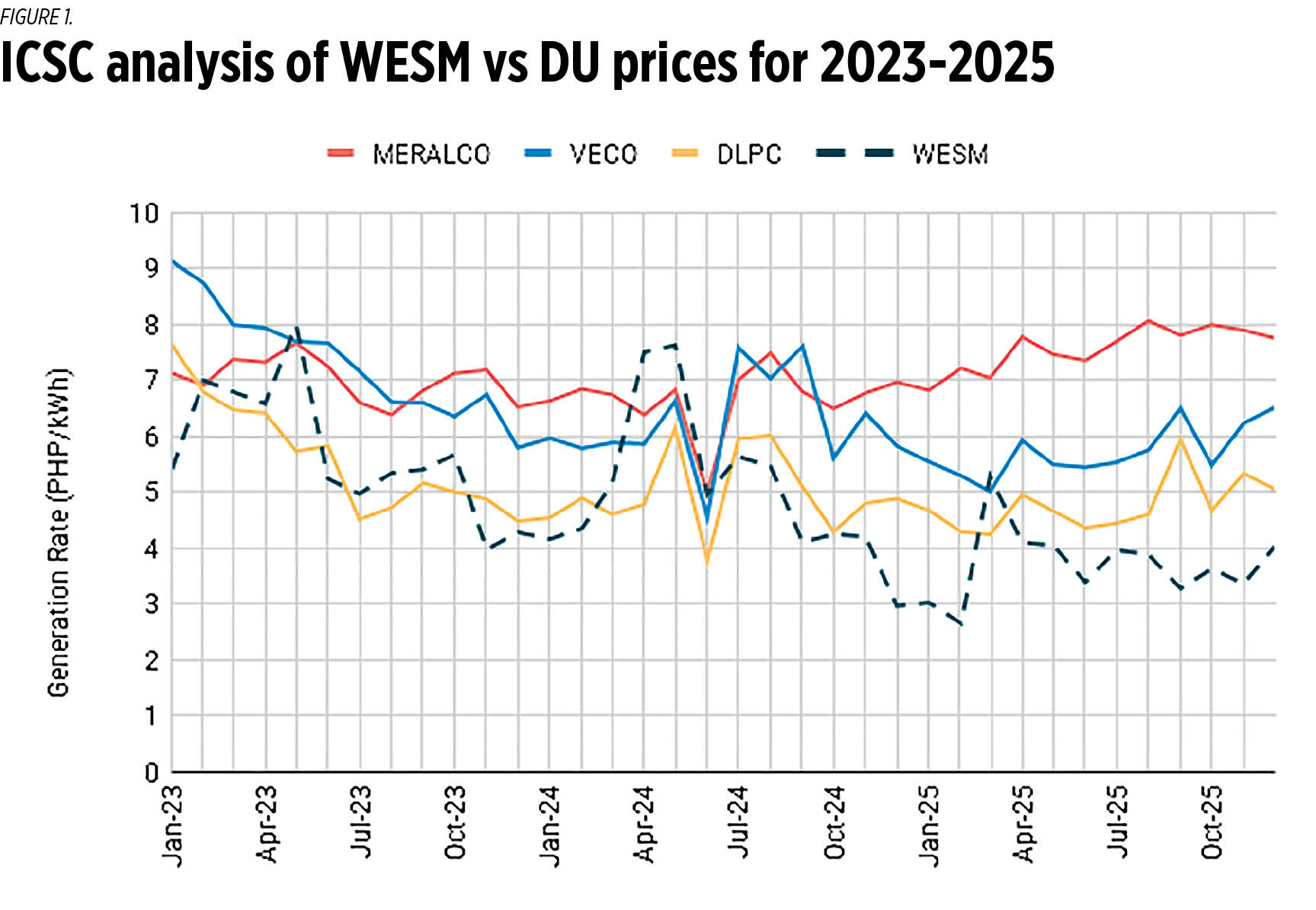
Based on data from the Department of Energy (DoE) and the Independent Electricity Market Operator of the Philippines (IEMOP), the operator of the wholesale electricity spot market (WESM), there has been a steady increase in the supply margin (the difference between available generation and demand) in the country from 2023 to 2025, more importantly during the high temperature months of March until August. It is, therefore, noticeable that after the unusually high temperatures during the El Niño year of 2024, resulting in more than almost 100 hours of red alert and more than 330 hours of yellow alert (cumulative for Luzon, Visayas, and Mindanao), there were no red alerts and around 16 hours only of yellow alerts declared in 2025.

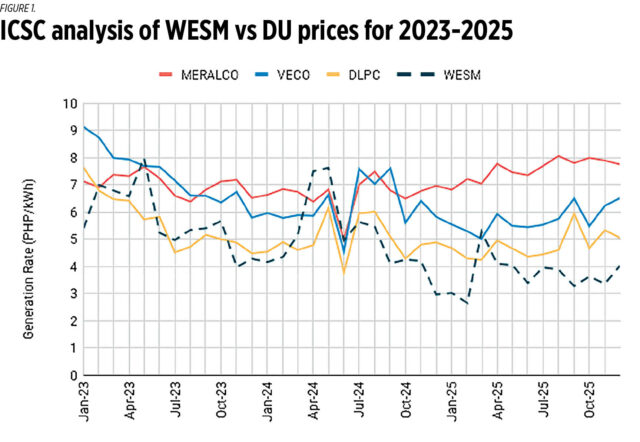
In terms of pricing, consumers are always advised to prepare for price increases during the high temperature-high demand summer months. Data from the IEMOP and from the websites of Distribution Utilities (DUs), as processed by the analysts of the Institute of Climate and Sustainable Cities (ICSC), showed a general divergence between the WESM prices and the generation costs that end up being charged by DUs to customers. In some instances, for some DU customers, the difference between the WESM price and the DU charges could be as much as P4 to P5 per kilowatt-hour. The figure in Table 1 shows the generation costs charged in 2023-2025 by the three largest private DUs in the country — Meralco in Luzon, Visayan Electric in Visayas, and Davao Light and Power in Mindanao — as against the average WESM prices for the same period.


WHAT IS DIFFERENT FOR THE SUMMER OF ’26
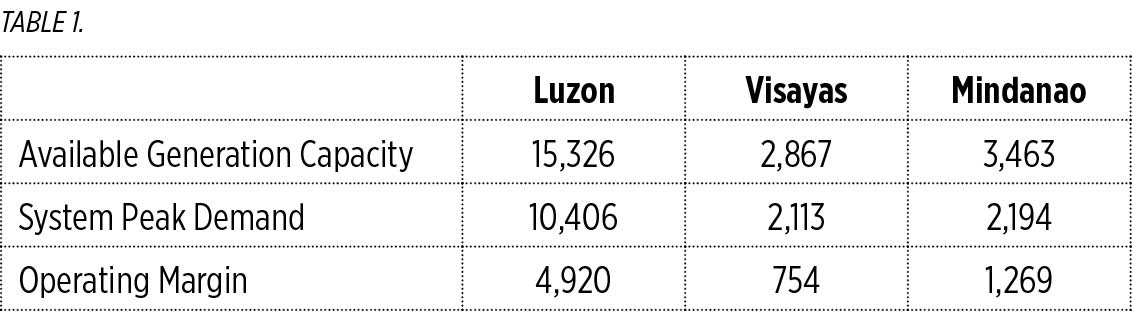
As of March 12, data from the system operator, the National Grid Corp. of the Philippines (NGCP), showed a healthy supply margin (see Table 1).

The weather service, PAGASA, has also reported that neutral (neither El Niño or La Niña) conditions are expected for the months of June-August, so there appears to be no reason to expect an unusual spike in demand without the occurrence of unusually high temperatures.

Without the conflict in the Middle East, therefore, we would have been in a very secure and comfortable position in terms of the power supply for the summer of 2026.

In terms of pricing, considering that DU generation costs are predominantly dependent on the contracted supply instead of WESM prices, the trend established toward the end of 2025 would have continued for 2026 or for the duration of the power supply agreements. With the increasing price of fuel, particularly liquefied natural gas (LNG), and the indirect effect on the price of coal, we should also prepare ourselves for the impact of these rising costs for the near term.

BRACING FOR IMPACT
There is no doubt that we need to brace ourselves for very turbulent times. While it may feel like we are fully exposed and unprepared as this crisis lands upon us, we need to keep our focus and recall what we need to do whenever there is a sudden drop in altitude or when we encounter severe turbulence in our journey.

1. Seatbelts on, life vests ready. Just as in long journeys by air, land, or water, there are protective gear or equipment in place that must be used or activated to prevent injury or death in case accidents happen. In the economic system — or at least in the power sector — there are also guardrails that have been set up in law, regulations, and contracts. We need to use and activate them for the purposes for which these are intended.

DoE policies governing the scheduled maintenance outages for generation plants should be strictly observed, and violations should be penalized quickly and appropriately to underscore the consequences of non-compliance. Observance of the DoE rules on the maintenance of 60-day fuel inventory for coal plants should be closely monitored not only to secure continuity in power supply, but also to ensure faithful recording of pricing of deliveries given the volatility in global coal prices.

There are also rules in the WESM prohibiting and penalizing the physical and economic withholding of capacities by power generators. On previous occasions, the Philippine Electricity Market Corp. (PEMC) — as the governance arm of the market — has conducted investigations based on observations by the Market Surveillance Committee of certain behavior that could amount to withholding of capacities and violation of the Must Offer Rule requiring all generation facilities to offer their available capacity to the market for scheduling and dispatch.

The results of DoE’s monitoring of compliance with the Grid Operating and Maintenance Program (GOMP) as well as those of PEMC’s investigations on compliance with the Must Offer Rule should be studied and reported.

ERC’s orders and decisions approving Power Supply Agreements (PSAs) entered into by DUs and generator-suppliers, particularly for supply coming from coal, oil, and natural gas plants, also have consumer protection mechanisms which are useful in ordinary times, but more important during times of volatile pricing or perilous fuel supply situations. Since 2022, following the temporary ban on coal exports imposed by Indonesia and the onset of the war in Ukraine that disrupted the global supply chain for petroleum products, the PSA approvals have included conditions for the submission of coal and LNG supply contracts so that the ERC can verify the terms, particularly pricing conditions that are passed on to consumers.

2. Put on your own oxygen masks first. The current situation puts a spotlight on this ongoing shift of strategies among States, from global trade based on multilateral agreements to one of reconfigured trading blocs or bilateral ties to secure one’s needs above all else.

In the local scene and in a smaller scale, we see a version of this happening among electricity end-users in the Philippines. I call this “the imperative to self-provide.” It has been building up for some time now: first, among the generation companies choosing to build and spend for their own dedicated transmission facilities to connect their power plants to the grid given the challenges and delays in grid expansion and connection; then, among consumers choosing to install or put up their own diesel generators or solar home systems to secure their power supply in areas where the DU service is unreliable, or to lower their electricity costs in areas where the DU generation charges are too high. Based on ERC records, as of March, there are now more than 22,200 customers all over the country producing their own power from the sun for their own needs, realizing savings from power bills and exporting their excess power to support the supply requirements of the system under the Net Metering Program. In fact, the number of new registrations of Net Metering customers has steadily increased by at least 100% every year since 2021 to the end of 2025.

Solar providers have also responded positively to this indisputable interest among consumers to self-provide. There are now more solar home system providers offering deferred payment facilities for solar installation, some without requiring any downpayments.

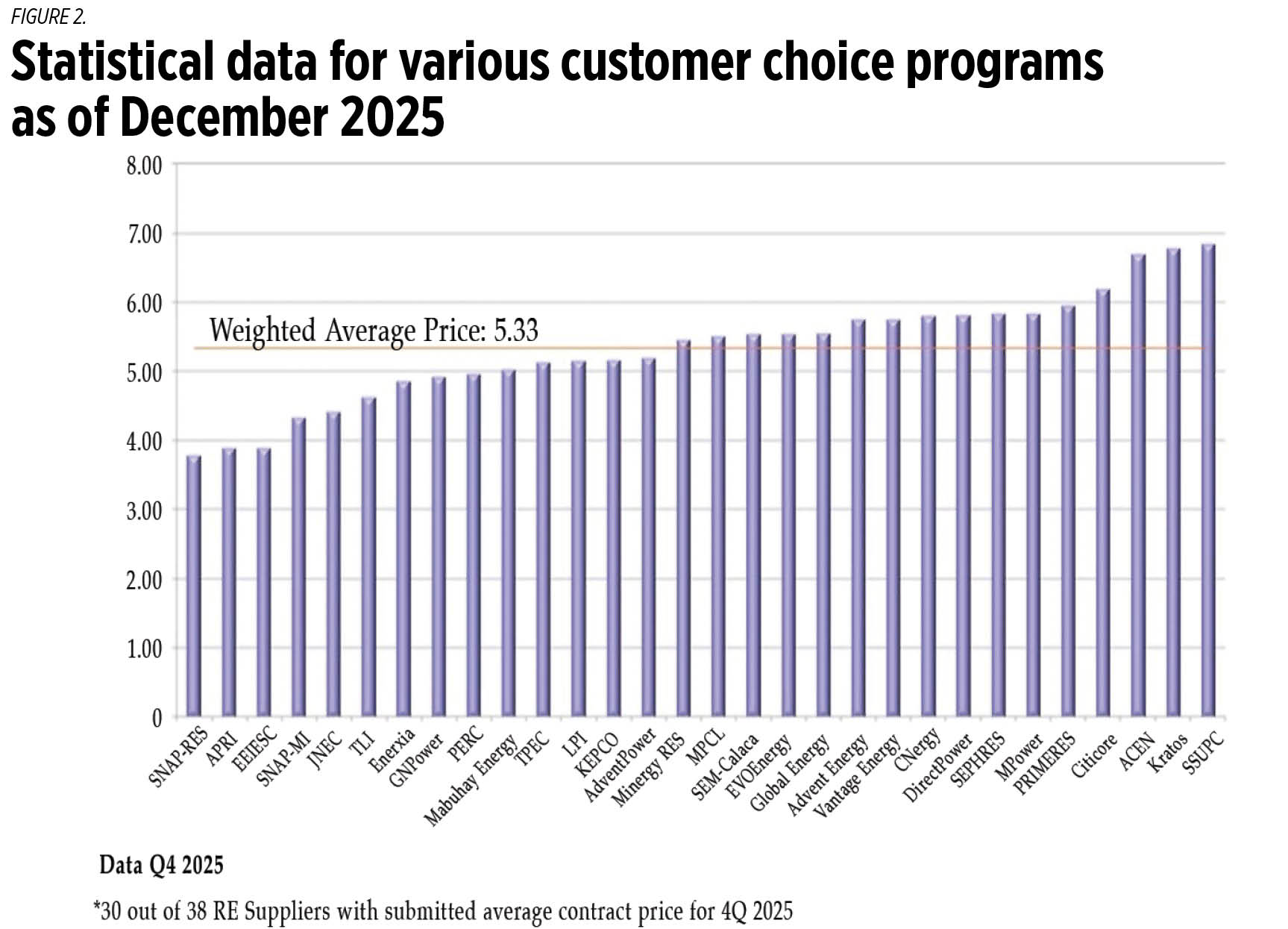
More recently, consumers who cannot self-provide physically are self-defining financially. They now source their power supply directly with more reasonable generation rates (on the average, at least P2/kilowatt-hour (kWh) cheaper than DU-supplied generation) by forming their own “trading bloc,” so to speak, via the Retail Aggregation Program (RAP). Through RAP, smaller consumers (households, MSMEs, schools, churches) can consolidate demand, choose their own supplier, and negotiate their own rate under the Retail Competition and Open Access (RCOA) system pursuant to the Electric Power Industry Reform Act (EPIRA) of 2001. Consumers can practically go shopping for the lowest rates based on the quarterly report that ERC publishes on the retail market at https://buyyourelectricity.erc.ph/. As of December 2025, the ERC reported the average prices by the respective suppliers (see Figure 2).

3. Be careful when you open the overhead bins because articles may have shifted during flight. In these volatile times, one should always remain alert about the changing conditions. Government agencies may not have all the solutions needed for unprecedented situations, but by adhering to principles of transparency and providing access to relevant information they already equip stakeholders with some tools needed to craft solutions. There is real value to open discussions and regular communication during a crisis. It is an exercise of trust-building that allows government to mobilize private sector resources when needed to augment limited public funds. More importantly, the predictability alone of these engagements and flow of information provide an anchor that steadies the ship until land is clearly in sight.


Monalisa C. Dimalanta is a senior partner at Puyat Jacinto & Santos Law (PJS Law). She was the chairperson and CEO of the Energy Regulatory Commission from 2022 to 2025, and chairperson of the National Renewable Energy Board from 2019 to 2021.

KPop Demon Hunters is headed to the Oscars — live on stage

A SCENE from KPop Demon Hunters.

LOS ANGELES — The lead vocalists behind KPop Demon Hunters — Netflix’s most‑watched animated film of all time — are headed to the Oscars stage for the first time. EJAE, Rei Ami, and Audrey Nuna will perform “Golden” during Sunday’s ceremony, executive producer and showrunner Raj Kapoor and executive producer Katy Mullan announced Tuesday.

The ceremony will be televised live on ABC and streamed live on Hulu.

The trio’s performance in Los Angeles will showcase music from the Oscar-nominated film’s chart-topping soundtrack and feature “a fusion of traditional Korean instrumentalists and dance” — a tribute to the Korean cultural roots that shaped the movie’s sound and story.

The singers from the fictional group, HUNTR/X, will deliver the Oscar‑nominated original song co‑written by EJAE, marking a milestone moment in their careers.

Directed by Maggie Kang and Chris Appelhans, KPop Demon Hunters has become a global sensation, with its music continuing to trend worldwide.

The story follows three demon hunters who double as K‑pop idols, battling supernatural forces while captivating fans onstage.

Also making his Oscars performance debut is American musician and actor Miles Caton, known for his breakout role as Sammie in Oscar-nominated director Ryan Coogler’s Oscar‑nominated horror film Sinners.

Mr. Caton will join Raphael Saadiq to perform the film’s Oscar‑nominated original song “I Lied To You.”

The performance will expand into a sweeping, blues‑driven tribute featuring Misty Copeland, Eric Gales, Buddy Guy, Brittany Howard, Christone “Kingfish” Ingram, Jayme Lawson, Li Jun Li, Bobby Rush, Shaboozey, and Alice Smith.

The Warner Bros. feature film — celebrated for its rich exploration of blues music and Black culture in the segregation‑era US South — leads all films this year with a record‑setting 16 Oscar nominations, the most of any film.

Sinners follows twin brothers, both played by Oscar nominee Michael B. Jordan, who open a juke joint in 1930s Mississippi, only to encounter a community of vampires. The supernatural peril becomes a powerful allegory for segregation and racism. — Reuters

Aboitiz, HI seal JV for 184-ha TARI Estate expansion

WITH ITS FIRST 90-hectare phase fully sold and developed, subsequent phases are being rolled out. — HOUSE OF INVESTMENTS

ABOITIZ Economic Estates and House of Investments (HI) have finalized a joint venture (JV) through Tarlac Terra Ventures, Inc. to develop an additional 184 hectares (ha) at TARI Estate in Tarlac City to support manufacturing and logistics growth in Central Luzon.

“We see TARI Estate as a compelling long-term investment that aligns with our strategy of supporting developments that contribute to economic growth,” House of Investments President and Chief Executive Officer Lorenzo V. Tan said in a disclosure on Thursday.

“Through this partnership, we are participating in the creation of an industrial ecosystem that can support manufacturing, logistics, and supply chains for decades to come,” he added.

TARI Estate is a 384-hectare Philippine Economic Zone Authority (PEZA)-registered special economic zone in Tarlac City. The site sits near major expressway intersections and is close to Clark International Airport and key seaports, supporting industrial, commercial, and institutional developments.

The partnership combines Aboitiz Economic Estates’ industrial estate development capabilities with HI’s investment resources to support the estate’s expansion.

Rafael Fernandez de Mesa, president and chief executive officer of Aboitiz Land and Aboitiz Economic Estates, said integrated industrial ecosystems are becoming increasingly important for manufacturing.

“Industrial competitiveness increasingly depends on ecosystems rather than standalone sites,” he said.

“As more companies establish operations here, we expect the estate to become an important node within Central Luzon’s evolving industrial corridor,” Mr. De Mesa added.

TARI Estate’s development is progressing toward full locator-ready status, Aboitiz Equity Ventures, Inc. (AEV), the listed holding company of the Aboitiz Group, said.

The estate’s first 90-hectare phase has been fully sold, with locators advancing facility construction and operational planning. Subsequent phases are progressing in parallel to meet rising demand for industrial land in Central Luzon.

The project is also rolling out key infrastructure, including roads linking to Luisita Road, power and water systems, fiber connectivity, and utilities to support continuous industrial operations. PEZA and Bureau of Customs facilities are expected to be operational by the first quarter of 2027.

Early locator activity at TARI Estate is building operational momentum, with manufacturers such as Coca-Cola Europacific Aboitiz Philippines (CCEAP) and Ajinomoto Philippines Corp. establishing facilities and moving toward operations.

Their commitments signal confidence in the estate’s location for large-scale manufacturing, while additional companies are in advanced stages of negotiation, the company said.

Once fully developed, TARI Estate is expected to generate more than 60,000 jobs in Tarlac province and the wider Central Luzon region. The estate officially broke ground in May 2024. — Alexandria Grace C. Magno

ADVERTISEMENT
ADVERTISEMENT