Home Blog Page 1738

PHL stocks rebound as investors pick up bargains

REUTERS

PHILIPPINE SHARES rebounded on Tuesday, with the bellwether returning above the 6,000 mark, as investors bought bargains following the market’s slump and on expectations that the Bangko Sentral ng Pilipinas (BSP) to cut rates on Thursday.

The Philippine Stock Exchange index (PSEi) surged by 3.15% or 183.49 points to close at 6,006.34, while the broader all shares index rose by 2.46% or 86.03 points to end at 3,582.80.

The stock market is closed on April 9 (Wednesday) for a holiday in commemoration of the Day of Valor (Araw ng Kagitingan).

“The local market bounced back as investors hunted for bargains following three straight days of decline,” Philstocks Financial, Inc. Senior Research Analyst Japhet Louis O. Tantiangco said in a Viber message.

“Hopes of a rate cut by the Bangko Sentral ng Pilipinas in their upcoming meeting this week helped in the market’s rise,” he added.

A BusinessWorld poll last week showed that all 17 analysts surveyed expect the Monetary Board to slash its target reverse repurchase rate by 25 basis points to 5.5% from the current 5.75% at its policy meeting on April 10 (Thursday).

“Philippine shares made a furious return after falling to its lowest since October 2022, as many countries came to the negotiating table to resolve the tariff war ignited by US President Donald J. Trump,” Regina Capital Development Corp. Head of Sales Luis A. Limlingan said in a Viber message.

World markets won a reprieve on Tuesday after three days of heavy selling that wiped trillions of dollars off the value of shares, but the mood was cautious with a focus on whether Washington might negotiate on some of its aggressive tariffs, Reuters reported.

Asia stocks bounced off 1-1/2 year lows, European shares opened broadly higher and US stock futures pointed to a positive open for Wall Street where shares fell to their lowest in over a year on Monday, before steadying.

All sectoral indices closed in the green on Tuesday. Services increased by 5.51% or 100.14 points to 1,916.38; financials surged by 4.04% or 92.10 points to 2,370.54; industrials jumped by 3.17% or 259.56 points to 8,438.05; mining and oil went up by 1.80% or 154.18 points to 8,714.54; holding firms rose by 1.10% or 53.51 points to 4,890.07; and property climbed by 0.22% or 4.94 points to 2,158.07.

“Century Pacific Food, Inc. was the top index gainer for the day, surging 9.06% to P34.90. DMCI Holdings, Inc. was the worst index performer, dropping 4.55% to P10.50,” Mr. Tantiangco said.

Value turnover went down to P6.42 billion on Tuesday with 1.22 billion shares exchanged from the P13.23 billion with 1.36 billion issues traded on Monday.

Advancers beat decliners, 127 versus 75, while 60 names closed unchanged.

Net foreign selling went down to P427.75 million on Tuesday from P3.24 billion on Monday. — R.M.D. Ochave with Reuters

Peso climbs on tariff talk hopes

BW FILE PHOTO

THE PESO recovered against the dollar on Tuesday on hopes for negotiations on the Trump administration’s reciprocal tariffs.

The local unit closed at P57.31 per dollar on Tuesday, rising by 12 centavos from its P57.43 finish on Monday, Bankers Association of the Philippines data showed.

The peso opened Tuesday’s trading stronger at P57.35 against the dollar. It traded better than Monday’s close the whole session as its worst showing was at just P57.38, while its intraday best was at P57.145 versus the greenback.

Dollars exchanged went down to $1.97 billion on Tuesday from $2.17 billion on Monday.

The peso rose amid broad dollar weakness amid prospects of tariff talks between the United States and its trading partners, Rizal Commercial Banking Corp. Chief Economist Michael L. Ricafort said in a Viber message.

The US dollar fell on Tuesday on hopes that US President Donald J. Trump will enter negotiations over his sweeping tariffs that have roiled markets for three days, Reuters reported.

The dollar was last down 0.4% against the Japanese yen, traditionally seen as a safe haven at times of market stress, at 147.28 yen to the dollar. The US currency touched a six-month low against the yen on Friday.

Meanwhile, the US dollar index, which measures the currency against six peers, was 0.3% lower at 103.11.

It has fallen around 0.7% since Mr. Trump announced the tariffs on April 2, as investors have weighed up the hit to the US economy against the currency’s typical role as a shield from market slumps.

Investors on Tuesday gleaned some positive signs from the Trump administration about tariff talks. Treasury Secretary Scott Bessent said on Monday he hoped negotiations would bring levies down.

Mr. Trump said Japan was sending a team to start negotiations, helping Japanese equities rally sharply overnight.

However, China dug in and criticized what it called “blackmail” from the United States over Mr. Trump’s threat of additional 50% tariffs in response to China’s initial retaliation. Meanwhile, the European Union floated 25% counter-tariffs on US goods.

“Locally, unemployment data came out lower, strengthening the peso. In the afternoon, there was some demand for the dollar due to uncertainties with tariffs and positioning ahead of US inflation data,” a trader said in a phone interview.

Preliminary data from the Philippine Statistics Authority’s Labor Force Survey showed that the jobless rate was at 3.8% in February, slightly higher than 3.5% a year ago but lower than 4.3% in January.

For Thursday, the trader expects the peso to move between P57.10 and P57.50 per dollar, while Mr. Ricafort said it could range from P57.20 to P57.40. — Aaron Michael C. Sy with Reuters

Farmers warn of tariff disruptions causing dumping of agri products

REUTERS

By Kyle Aristophere T. Atienza, Reporter

FARMERS said the Philippines could be targeted by exporters of agriculture goods if their access to other markets is disrupted by the US tariffs as well as any measures taken in retaliation.

Raul Q. Montemayor of the Federation of Free Farmers said via Viber that the Philippines should be ready to impose anti-dumping duties if the Philippines is flooded by surplus farm goods.

To do so successfully, “We need to set up real-time import monitoring,” he said.

He noted that under World Trade Organization (WTO) rules, a member country can impose additional tariffs on imports if the landed price falls below the price in the source country.

According to the WTO, dumping results when the export price is less than the price charged in the home market.

Mr. Montemayor said the Philippines can also undertake “safeguard” action in the event of a surge in imports that result in harm or potential harm to a local industry.

The US has imposed a 17% tariff on the exports originating in the Philippines.

The US trade deficit with the Philippines was $4.9 billion in 2024, up 21.8%.

One of the potential sources of dumped products is US producers locked out of China, animal feed industry officials said.

In 2024, the Philippines imported about two and a half times more agricultural products than it exported both to the US and the world, according to the Federation of Free Farmers.

The US market accounted for around 17% of total Philippine agricultural trade.

PHL urged to prepare supplier networks as production bases shift

REUTERS

THE PHILIPPINES will need to lay the groundwork for receiving manufacturers exiting China by ensuring that the relocators have adequate supplier networks here, a retail industry official said.

Philippine Retailers Association President Roberto S. Claudio on Tuesday said that the tariffs imposed by US President Donald J. Trump will result in a shift in the production.

“I think the Philippines should be in a good position to take advantage of this mess or the confusion going,” he said on the Money Talks with Cathy Yang program on One News.

He said businesses should take advantage of movement out of China by improving supply and raw material availability.

He said the availability of steel, leather and textiles will be key to attracting manufacturing relocators.

“Some Chinese companies are starting to look at the Philippines and other Asian countries,” he added.

“For retailers, there’s another positive effect… because some goods from China destined for the US (may not end up being shipped there),” he said.

“Asia will be flooded with Chinese products that used to go to the US… the Philippines in particular can take advantage of all these products coming in,” he added.

Separately, the Philippine Chamber of Commerce and Industry (PCCI) said the 17% tariff imposed on the Philippines will ensure continued competitiveness for Philippine goods, though it is wary of the potential impact on some product categories.

“The US has yet to announce the exact coverage, but we remain vigilant as such tariffs typically target specific categories of goods such as food and agri products and electronics, which are our major exports,” the PCCI said in a statement on Tuesday.

The PCCI cited the risk, however, of actions taken by other countries in response to the US tariffs.

“Retaliatory measures can disrupt global supply chains, increase costs, and create uncertainty for businesses and consumers, bringing about a broad negative effect on economic growth. And more so for a remittance- and consumer-driven economy like ours,” it said. 

“The ripple effect of having to absorb extra costs will be hardest on small businesses, particularly those in agriculture and food processing. We note, too, that our neighbors are already preparing to negotiate with the US to offer lower tariffs and better concession arrangements,” it added.

The Department of Trade and Industry on Monday said that it is open to lowering tariffs on US goods in response to the reciprocal tariff.

Trade Secretary Ma. Cristina A. Roque has yet to meet with her US counterparts.

PCCI Chairman George T. Barcelon said that the Philippines should consider lowering tariffs in consultation with the private sector. — Justine Irish D. Tabile

PHL growth forecast maintained at 6.1% by ESCAP; chip boom seen continuing

PHILIPPINE STAR/WALTER BOLLOZOS

THE United Nations Economic and Social Commission for Asia and the Pacific (ESCAP) has maintained its Philippine economic growth forecast for this year, citing Southeast Asia’s sustained electronics boom.

Philippine gross domestic product (GDP) is expected to expand by 6.1% this year, ESCAP said in its Economic and Social Survey of Asia and the Pacific 2025 report, unchanged from its April report last year.

For 2026, the Philippines is expected to grow 6.3%, ESCAP said.

Both projections are within the government’s official 6%-8% target band for the 2025-2028 period.

ESCAP expects the Philippines to be the second-fastest growing economy in Southeast Asia this year, behind Vietnam (6.5%).

In 2026, the Philippines is expected to share the top spot for growth with Vietnam (6.3%).

Last year, growth was a weaker-than-expected 5.7%, as revised, exceeding the 5.5% in 2023. It fell short of the government’s revised 6-6.5% target.

“The (report) highlights how domestic and external pressures, including relatively high interest rates, persisting sovereign debt risks and rising trade tensions and fragmentation, are testing the economic resilience of the region,” Under-Secretary-General of the United Nations and ESCAP Executive Secretary Armida Salsiah Alisjahbana said in the report. 

ESCAP also maintained its 4.7% projection for the region in 2025, and 4.6% next year.

“The strong economic performance of Southeast Asia is expected to continue, benefiting from ongoing manufacturing value chain diversification, a boom in global demand for electronics and semiconductors, and robust domestic consumption,” ESCAP said. 

For the Asia-Pacific, ESCAP raised its forecast to 4.5% from 4.4% previously. It also expects the region to grow by 4.4% in 2026. 

“The macroeconomic outlook for 2025 and 2026 is cautiously optimistic. The region’s GDP growth is likely to remain largely stable at lower inflation rates despite growing external pressures and continuing internal structural challenges,” it said.

However, this projection did not account for the sweeping tariffs imposed by US President Donald J. Trump on April 2.

Philippine goods will be charged a 17% tariff on entering the US.

ASEAN economies were assigned some of the highest tariffs, which will take effect on April 9. Cambodia is facing a 49% tariff, followed by Laos (48%), Vietnam (46%), Myanmar (44%), Thailand (36%), Indonesia (32%), Malaysia (24%), and Brunei (24%).

“These are new projections which were completed a month ago, or more than that in fact, so the latest developments are not reflected here, simply because we simply don’t have the data at the moment to try and quantify the impact of latest developments, which are literally almost less than a week old only,” according to Hamza Malik, director of ESCAP’s Macroeconomic Policy and Financing for the Development Division.

In the report, ESCAP noted three risks to its baseline projections, including the intensification of the tariff hikes in the US and retaliation by other economies.

Other risks include the inflationary impact of trade policy shifts as well as rising economic uncertainty that “could keep global interest rates at a high level for a longer-than-expected period.”

In the same report, ESCAP also lowered its inflation forecast for the Philippines in 2025 to 3.3% from 3.8%. Its 2026 projection is 3.5%. — Aubrey Rose A. Inosante

Miners see no direct impact from US tariffs, more worried trade war will lead to slowdown

NICKELASIA.COM

GLOBAL DEMAND for minerals may slow if the US tariff regime leads to economic slowdowns, the Chamber of Mines of the Philippines (CoMP) said.

The 17% tariff imposed on Philippine exports to the US is “unlikely to have a direct significant impact” on the mining industry, which primarily exports mineral ore to Asian customers, CoMP Executive Director Ronald S. Recidoro said via Viber.

“However, indirect effects could occur if global trade tensions lead to economic slowdowns, affecting demand for minerals and metals,” he added.

A decline in mineral exports will in turn affect government revenue, he added.

Several minerals have been exempted from President Donald J. Trump’s fresh tariffs, including copper, zinc, rare earths, germanium, antimony, and uranium, according to S&P Global.

It said lithium, cobalt, tungsten, platinum group metals, and some forms of ferromanganese and coal are also exempt.

“The exemptions cover many refined and raw forms of the materials,” it said.

According to a White House fact sheet, reciprocal tariffs will not apply to semiconductors, pharmaceuticals, gold, and “certain minerals that are not available in the US.”

The Philippines is the biggest exporter of nickel ore concentrate, accounting for more than one-fourth of the global supply. Over 98% of Philippine exports go to China, with 1% shipped to Japan.

China has retaliated by placing several critical minerals on an export control list.

“We don’t see any impact at the moment, but it might at some point in the future if the commodity prices generally drop as a result of the tariffs,” Philippine Nickel Industry Association President Dante R. Bravo said in an e-mail.

Mr. Toledo of CoMP said for mining contractors, the impact may be minimal unless they rely heavily on imported equipment or materials subject to tariffs. 

“Foreign corporations operating in the Philippines might face challenges if global economic conditions deteriorate, but the Philippine mining sector is not a primary target of Mr. Trump’s tariffs,” he added. — Kyle Aristophere T. Atienza

Malaysia-accredited halal certifying body expected to start operating in PHL this year

DOST

A HALAL-CERTIFYING organization accredited in Malaysia is expected to start operating in the Philippines this year, the Department of Trade and Industry (DTI) said.

The certifying organization is accredited with Jabatan Kemajuan Islam Malaysia (JAKIM).

“The certifying body will be an add-on to the list of halal certifying bodies and conform to global and international standards,” the DTI said in a statement on Tuesday.

The DTI and JAKIM representatives met on Monday.

“JAKIM, a leading authority in Halal certification, aims to collaborate with the Philippines to align with international standards and open new market opportunities for Filipino products in the global Halal industry,” the DTI said.

During the meeting, Trade Secretary Ma. Cristina A. Roque asked JAKIM to provide assistance in marketing Philippine products and to serve as a consolidator of such products.

“With public and private partnerships, we can expect to ensure the support needed for the halal sector to flourish,” she said.

“We take advantage of the support of President Ferdinand R. Marcos, Jr. for the halal industry. He has three years remaining (in his term), and we should take advantage of the support he is giving. That’s why this is a priority for us,” she added. — Justine Irish D. Tabile

PHL factory output down 2.4%, weakest in 3 months

RIO LECATOMPESSY-UNSPLASH

MANUFACTURING OUTPUT sank to a three-month low in February due to slowing markets and reduced consumer spending, the Philippine Statistics Authority (PSA) reported on Tuesday.

Citing preliminary results from the Monthly Integrated Survey of Selected Industries, the PSA said factory production in February, as measured by the volume of production index (VoPI), declined 2.4% year on year in February, reversing the revised 3.2% from a year earlier and the revised 2.3% reported in January.

The February reading was the weakest since the 4.2% contraction in November.

Month on month, the manufacturing VoPI fell 4.6%, from a reading of 0.7% growth in January. Stripping out seasonal factors, output contracted 3.5%.

In the first two months, factory output declined 0.1%, well behind the year-earlier 1.4% average expansion.

The Philippine S&P Global Manufacturing Purchasing Managers’ Index (PMI) eased further to 51 in February from 52.3 in January, the weakest since the 50.9 reading in March 2024.

PMIs are a gauge of the volume of raw material orders, which will be turned into manufactured goods later. A PMI reading below 50 points to a contraction in future manufacturing activity, while expansions are signaled by PMIs above 50.

Leonardo A. Lanzona, Jr., an economics professor at the Ateneo de Manila, said decreased factory output during February lines up with the slowing markets, contributing to the decline in inflation in the same period.

Headline inflation eased in February to 2.1% from 2.9% in January, the lowest level in five months, driven by a deceleration in food prices.

“As aggregate demand decreased due to low incomes and productivity, the overall level of prices also slowed down,” Mr. Lanzona said via Messenger.

“While unemployment seems to be decreasing, these are all low-quality types of jobs found in the service and informal sectors.”

Mr. Lanzona also said that the Philippines became dependent on imports, particularly food imports, and debt to push consumption.

“The Trump tariff threats constitute now an opportunity to restructure our industries.  We cannot rely anymore the existing global value chains since these will be restructured by US policies.”

US President Donald J. Trump announced baseline tariffs of 10% for all US trading partners last April 2. Starting April 9, Philippine goods will be subject to a 17% tariff.

The average capacity utilization rate was 75.9% in February, above the 74.4% from February 2024, but less than the revised January reading of 76%

Seventeen out of 22 industry categories posted average capacity utilization of at least 70%. — Pierce Oel A. Montalvo

PSALM disbursements to RE developers top P455M

THE Power Sector Assets and Liabilities Management Corp. (PSALM) said it disbursed P455.45 million in cash incentives to renewable energy (RE) developers operating in remote areas last year.

PSALM, as the administrator of the Universal Charge for Missionary Electrification (UCME), allots a portion of the collections to the Missionary Electrification-Renewable Energy Developers’ Cash Incentive (REDCI).

Since the Energy Regulatory Commission (ERC) set the rules on availing of the incentive in 2014, PSALM said it disbursed P1.51 billion to six qualified RE developers, PSALM said in a statement on Tuesday.

Under the Renewable Energy Act of 2008, RE developers are entitled to cash generation-based incentive per kilowatt-hour (kWh) generated, equivalent to 50% of the UC for power needed to service areas, to be chargeable against the UCME.

The UC ME-REDCI is billed and collected from all electricity-end users, which are intended to incentivize RE developers serving renewable energy solutions to missionary areas and contribute to rural electrification.

As of February, the UC ME-REDCI rate increased to P0.0044 per kWh from P0.0017 per kWh approved in 2014.

At the time the rate was approved, there were only three RE developers availing of the cash incentive.

“PSALM’s disbursement of cash incentives has had a significant impact on these RE developers, helping them cover operational expenses and ensure the financial viability of their projects,” the firm said.

Citing data provided by RE developers, PSALM said that the cash incentives have benefited approximately 325,000 households across the Philippines. — Sheldeen Joy Talavera

Trade center association sees expanded trade with France

REUTERS

THE World Trade Centers Association (WTCA) said it is expecting bilateral trade and investment to grow between the Philippines and France.

“(WTCA) sees opportunities for growing trade and investments between the Philippines and France through deeper economic cooperation, particularly with Mediterranean port cities such as Marseille,” it said in a statement on Tuesday.

WTCA Vice-President for Asia-Pacific Scott Wang said that the 4th Political Consultations last month between the two countries are “a step in the right direction.”

During the talks, “both countries committed to strengthening bilateral relations across several key sectors, such as trade and investment, energy, health, climate change, science and technology, defense, and people-to-people exchanges,” he added.

According to the WTCA, the two countries noted the opportunities presented by the resumption of direct flights between Manila and Paris.

“France also reaffirmed its support for the early conclusion of negotiations toward a comprehensive Philippines-European Union Free Trade Agreement,” it added.

Philippines-France trade grew to $1.8 billion in 2022.

“In terms of Philippine exports to France, the Mediterranean region is a strategic gateway for Philippine investors looking to strengthen their presence and expand trading opportunities in the Europe, Middle East, and Africa markets,” he said.

He added that the ongoing WTCA Global Business Forum taking place in Marseille serves as a platform for countries such as the Philippines to capitalize on trade opportunities while leveraging new technologies in port operations.

“Seaport expansion remains a focus for the Philippines, which is strategically positioned along key Asia-Pacific shipping routes, and technological shifts are needed to streamline trade flows into the region,” Mr. Wang said. — Justine Irish D. Tabile

PHL, Japan explore ways to deepen security ties, eye joint military drills

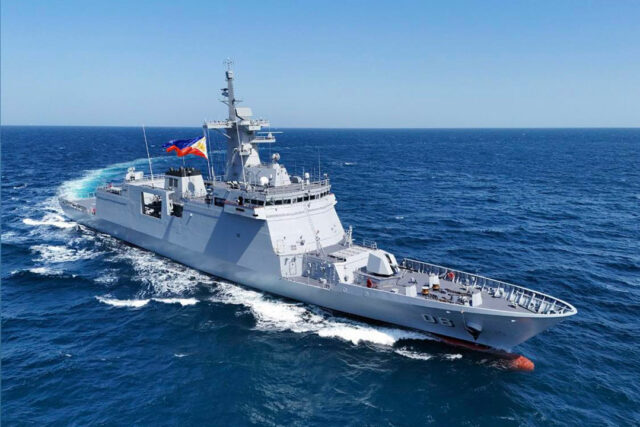
BRP MIGUEL MALVAR — EN.WIKIPEDIA.ORG

By Kenneth Christiane L. Basilio, Reporter

THE PHILIPPINES and Japan’s top military officials met on Monday to discuss defense cooperation and efforts to keep regional peace, including potential joint military drills.

Armed Forces of the Philippines (AFP) Vice Chief of Staff Jimmy D. Larida met with Japan Self-Defense Force Vice-Chief of Staff Matsunaga Koji during his courtesy visit to Camp Aguinaldo, the military’s headquarters in the Philippine capital, on April 7, according to an AFP statement late Monday.

Their meeting centered on ways to advance their security partnership, including future joint military exercises between Philippine and Japanese forces to improve interoperability and combat readiness.

“During the meeting, both leaders expressed appreciation for the significant progress in bilateral military ties,” the Philippine military said.

The Philippines is forging deeper security ties with western countries and regional allies like Japan and Australia amid tensions with China over disputed features in the South China Sea. Japan has been at odds with China over the uninhabited Senkaku Islands.

Philippine forces have repeatedly sparred with Chinese ships and aircraft in the South China Sea over competing claims on Spratly Islands and Scarborough Shoal, among other sea features. Beijing asserts sovereignty over almost the entire sea based on a 1940s nine-dash line map that overlaps with the maritime zones of the Philippines, Brunei, Malaysia, Taiwan and Vietnam.

A United Nations-backed arbitration court voided China’s expansive claim in 2016 for being illegal.

BRP MIGUEL MALVAR
Also on Tuesday, Defense Secretary Gilberto C. Teodoro, Jr. led the arrival ceremony for the Philippine Navy’s newest corvette from South Korea at the Philippine Naval Operating Base in Subic, Zambales province.

The 118-meter warship is armed with missiles and torpedo systems and is fitted with sonar, radar and electronic warfare capabilities. BRP Miguel Malvar, the namesake of its ship class, left South Korea in late March.

BRP Miguel Malvar is here today not only to serve as a deterrent and protector of our waters, but also as an important component in joint and combined operations as we work alongside allies and uphold the norms of international law,” Mr. Teodoro said in a statement.

The Philippine government in 2021 contracted Hyundai Heavy Industries Co. Ltd. to build two Miguel Malvar-class corvettes worth a total of P28 billion. It also awarded a P32-billion contract to the South Korean company in 2022 to build six offshore patrol vessels, set to be delivered by 2028.

Manila has turned to Seoul as its trusted supplier of warships. It bought two guided missile frigates worth P16 billion from the same South Korean shipbuilder back in 2016.

Mr. Teodoro said the arrival of BRP Miguel Malvar would help the Philippines develop its so-called blue economy, making the most out of its rich marine resources.

The Philippines’ exclusive economic zone is ecologically rich and a vital source of food for Filipinos, according to a 2019 report by think-tank Stratbase-ADR Institute.

MORE MILITARY HARDWARE
Meanwhile, Philippine Navy Rear Admiral Roy Vincent T. Trinidad said they are looking at boosting maritime domain awareness capabilities by pushing the purchase of land-based, air-based, ship-based and space-based sensors.

“This will support all comprehensive archipelagic defense operations,” he told a news briefing.

The military might buy more modern equipment to help elevate its capabilities against the backdrop of China’s military might in the region, eyeing additional missile systems from India and at least two submarines, AFP Chief of Staff Romeo S. Brawner, Jr. said in February.

Also on Tuesday, the presidential palace said President Ferdinand R. Marcos, Jr. is concerned about the near-collision between vessels of the Chinese Coast Guard and Philippine Coast Guard near Zambales province at the weekend.

“Of course, the President is concerned about these incidents,” Presidential Communications Office Undersecretary Clarissa A. Castro told a news briefing. “However, we continue to maintain a level of professionalism combined with a fearless spirit of patriotism.”

The Chinese Embassy in Manila did not immediately reply to a Viber message seeking comment.

In a statement on April 5, the Philippine Coast Guard (PCG) said it had issued a radio challenge to the Chinese ship to stop it from approaching the coast of Palauig, Zambales.

PCG spokesman Commodore Jay Tristan Tarriela told a news briefing on Monday that the presence of the Chinese vessel showed Beijing’s strategy of trying to normalize its presence in the South China Sea.

The incident happened on Sunday after the 44-meter BRP Cabra nearly collided with the 99-meter Chinese Coast Guard vessel 3302.

“Through the seamanship skills of the Philippine Coast Guard sailors, we were able to prevent such collision from happening,” Mr. Tarriela said.

At a House of Representatives hearing on Tuesday, Mr. Tarriela said they have seen an uptick in disinformation campaigns targeting the country’s claims in the South China Sea.

The PCG has compiled a report covering the past two years and came up with a three-tiered framework of how disinformation against the Philippines’ South China Sea claim spread, he told congressmen.

“We have seen a high number of fake news, disinformation and misinformation when it comes to the West Philippine Sea,” he said, referring to areas of the South China Sea within the Philippines’ exclusive economic zone.

The House launched an investigation in January into online disinformation campaigns, with lawmakers proposing measures to curb their spread, including the creation of a social media regulatory body.

China and the Philippines have been at loggerheads over disputed features in the South China Sea, with Manila accusing China’s coast guard of aggression and Beijing furious over what it calls repeated provocations and incursions.

More than $3 trillion worth of trade passes yearly through the South China Sea, which China claims almost in its entirety. A United Nations-backed tribunal in 2016 voided its claim for being illegal.

The Philippines is in the third phase of its modernization program called Horizons. It has earmarked $35 billion for the military buildup in the next decade as it seeks to counter China’s military might in the region. — with John Victor D. Ordoñez


Australia donates P34M worth of drones to PHL

PHILIPPINE Coast Guard Commandant Admiral Ronnie Gil L. Gavan and Australian Ambassador Hae Kyong Yu led the turnover of 20 drones from the Australian government in Mariveles, Bataan on April 8, 2025. — PHILIPPINE STAR/RYAN BALDEMOR

THE AUSTRALIAN government on Tuesday handed over P34 million worth of drones to the Philippine Coast Guard (PCG), equipment that could help bolster the Philippines’ maritime awareness capabilities amid growing tensions with China.

Canberra’s coast guard assistance package comprises 20 aerial drones and training for 30 PCG personnel to operate them, Australia’s Ambassador to the Philippines Hae Kyong Yu said during a livestreamed turnover ceremony in Bataan province in northern Philippines.

The drones consist of a mix of short, medium and long-range models.

Ms. Yu said the drones adhere to Australia’s security framework, ensuring minimal “foreign influence risk” in the drones provided to the Philippines.

“Australia is committed to working with our partners to enhance maritime security, uphold international law and manage marine resources,” she told PCG officials and personnel.

“This package will bolster PCG’s maritime domain awareness capabilities and assist in meeting [its] operational demands,” she added.

The PCG serves as the Philippines’ primary agency for asserting its sovereignty in the South China Sea, where it has repeatedly clashed with China over disputed maritime features.

China claims more than 80% of the South China Sea based on a 1940s map, which a United Nations-backed arbitration court voided in 2016 for being illegal.

Manila has been at the forefront of efforts to contest Beijing’s expansive sea claim, organizing joint sails into the South China Sea with western countries while broadening its security alliances with regional allies like Australia and Japan.

“This support further boosts our ability to pursue more precisely, appropriately and sustainably our complex rights and obligations from being both a maritime and archipelagic country,” PCG Commandant Ronnie Gil L. Gavan said at the event. — Kenneth Christiane L. Basilio

ADVERTISEMENT
ADVERTISEMENT