Home Blog Page 170

Filinvest Land settles P5-billion bonds

Filinvest City, Alabang, Muntinlupa — FILINVESTLAND.COM

GOTIANUN-LED Filinvest Land, Inc. (FLI) said it has redeemed P5 billion worth of four-year fixed-rate bonds that matured on Dec. 21.

In a stock exchange disclosure on Friday last week, FLI said the bond proceeds were invested in its residential projects in Quezon City and Mandaluyong City amid strong demand.

Projects financed by the bond issuance include the 34-storey One Filinvest tower in the Ortigas area and the Activa mixed-use development in Cubao, Quezon City, which is scheduled to begin operations in 2026.

Bond proceeds were also allocated to the Studio 7 tower in Quezon City, which houses the 8,120-square-meter office of the Department of Information and Communications Technology.

The Philippine Depository & Trust Corp. facilitated the bond redemption as registrar and paying agent, with payment made on Dec. 22, it said.

FLI Chief Operating Officer and Chief Financial Officer Ana Venus A. Mejia said the redemption reflects the company’s continued financial discipline and alignment with its long-term capital strategy.

“This shows our unwavering commitment to financial prudence and demonstrates our ability to manage obligations and to invest in our core developments nationwide,” she said.

FLI’s portfolio includes office towers, mid-rise and high-rise residential developments, townships, mixed-use developments, malls, and leisure projects.

The company has also developed large-scale townscapes, including the 300-hectare (ha) Havila; 677-ha Timberland Heights; and 60-ha Manna East in Rizal; 335-ha Ciudad de Calamba in Laguna; 51-ha Palm Estates in Talisay City, Negros Occidental; and the 58-ha City di Mare in Cebu City.

FLI is developing two townships in Clark, Pampanga — the 288-ha Filinvest New Clark City within the Clark Freeport Zone, and the 201-ha Filinvest Mimosa+ Leisure City, which it is developing in partnership with its sister firm, Filinvest Development Corp.

In the first nine months, FLI posted a 5% increase in consolidated net income to P3.64 billion, driven by the strong performance of its real estate and leasing segments.

FLI shares last closed at 74 centavos apiece on Dec. 23. — Beatriz Marie D. Cruz

AI and Philippines’ economic strategic directions

STOCK PHOTO | Image from Freepik

By Cesar Polvorosa, Jr.

(Part 2)

Transcending the existing roadmap requires a grounded and adaptive national strategy.

The first and most important pillar is human capital. The Philippines must invest heavily in producing AI engineers, data scientists, cloud architects, cybersecurity specialists, computational modelers, and machine learning researchers. This demands a coordinated national talent initiative that spans scholarships, graduate programs, industry mentorships, and international partnerships designed to build an AI-capable workforce within a decade. The universities cannot carry this burden alone; they need sustained funding, industry integration, and curricular modernization.

The second pillar is infrastructure. A national AI ecosystem requires reliable broadband, energy stability, data center capacity, and secure cloud environments. Without addressing high electricity costs and grid vulnerabilities, large-scale AI adoption — especially in manufacturing, data analytics, and AI model training — will remain constrained. Investments in renewable energy, intelligent grids, and regional connectivity are thus inseparable from any credible AI strategy.

The third pillar is industrial alignment. The Philippines must prioritize sectors that yield the greatest productivity gains and strategic leverage: IT-BPM, manufacturing, agriculture, transport and logistics, financial services, and health. AI applied in these sectors can increase resilience, expand exports, enhance food security, and reduce economic vulnerabilities. Philippine Industrial Policy should therefore work in tandem with AI policy, offering incentives for technology upgrading, targeted industries, workforce reskilling, and AI-enabled enterprise transformation.

A fourth pillar is MSME — micro, small, and medium-sized enterprises — integration. MSMEs account for 99.6% of Philippine firms, meaning AI adoption confined to large enterprises is exclusionary. A responsive strategy must include MSME AI adoption grants, pooled professional services, and simplified access to cloud tools and technical support. Otherwise, AI adoption will remain shallow and geographically imbalanced.

Finally, regulatory readiness must be strengthened. AI requires clear rules regarding transparency, accountability, data protection, algorithmic fairness, and safety. The Philippines must move from voluntary ethical principles to enforceable standards and sector-specific guidelines. A national AI governance authority modeled after successful country cases would streamline regulation, harmonize standards, and build public trust.

VULNERABILITIES AND OPPORTUNITIES
The rise of AI will redefine Philippine economic structures, creating both winners and losers. Understanding industry-level vulnerabilities and opportunities is crucial for policy and strategy.

The most vulnerable industries are those dependent on routine, rules-based, and repetitive tasks. First among these is the voice-based segment of the Information Technology and Business Process Management (IT-BPM) sector like call centers, where conversational AI and automated customer service systems have already begun replacing first-level support functions. Unless the industry shifts rapidly toward higher-value analytics, cybersecurity, and augmented professional services, job displacement could intensify. Second, clerical and administrative work in both the public and private sectors faces pressure from automation tools capable of handling documentation, record management, and transactional processing. Third, segments of retail, banking, and insurance reliant on manual verification and standardized processes may experience accelerated automation unless they innovate toward AI-augmented decisioning and customer intelligence.

On the other hand, several industries possess exceptional potential for AI-driven growth. The IT-BPM sector remains well positioned to evolve into a hub for AI operations, data annotation, machine learning model monitoring, and knowledge-intensive professional services. Manufacturing, particularly electronics, automotive components, semiconductors, and food processing, can benefit from AI-driven quality control, predictive maintenance, and supply-chain optimization. Agriculture, long constrained by low productivity, offers some of the highest national returns on AI adoption through precision farming, climate modeling, disease surveillance, and logistics intelligence. Healthcare presents major opportunities through AI-assisted diagnostics, telemedicine, pharmaceutical analytics, and hospital workflow optimization. Logistics and e-commerce can achieve significant efficiency gains through route optimization, inventory prediction, and intelligent warehousing.

The distribution of opportunities and vulnerabilities underscores a central truth: AI is not inherently job-destroying or job-creating; its effects depend on effective adaptation. With the right strategy, the Philippines can transition vulnerable industries into higher-value segments while expanding opportunity sectors into engines of economic transformation.

GOVERNANCE, ETHICS, AND THE STATE’S ROLE
A competitive AI system requires not only technological capability but strong governance. The Philippines must articulate a coherent regulatory framework that protects data privacy, and mandates transparency in automated decisions. The government also has a responsibility to ensure that AI adoption does not exacerbate inequality. Public institutions must invest in accessible digital services, inclusive training programs, and community-based digital literacy. AI should enhance, not undermine, democratic governance and social equity.

Public-sector AI capacity is central to this vision. Government agencies need skilled personnel, interoperable systems, and modern procurement processes. AI can revolutionize disaster response, healthcare delivery, tax administration, transportation planning, and social protection — but only if government institutions themselves become AI-ready.

CONCLUSION
The National AI Strategy Roadmap provides an important foundation, but the Philippines must transcend planning and visioning to comprehensive execution. The global race toward AI-driven productivity, competitiveness, and innovation is accelerating, and the country cannot be stifled by incremental progress. A responsive strategy — one rooted in talent development, infrastructure upgrading, industrial alignment, MSME integration, and strong governance — will determine whether AI becomes a missed opportunity that widens existing economic gaps with neighboring countries or a catalyst for inclusive and accelerated national progress.

(Read Part 1 here: AI and Philippines’ economic strategic directions https://tinyurl.com/2729j69f)


Cesar Polvorosa, Jr. is professor of Economics and International Business at a Canadian University. He is an occasional contributor to current affairs publications including the Philippine Star and Interaksyon. His literary publications in North America and Asia have been anthologized.

Metro Manila Film Festival 2025: A boring apocalypse

By Joseph L. Garcia, Senior Reporter

Movie Review
Rekonek
Directed by Jade Castro
Produced by Reality MM Studios
MTRCB Rating: PG

PLANES DROPPING OUT of the sky, families becoming insolvent, fires breaking out everywhere; the world coming undone. These are our predictions as to what would happen should the internet ever go away globally in a flash: and yet Rekonek thinks this 21st century apocalypse could be a comforting scenario. The film thinks that the collapse of the digital world simply means going back to analog and spending time with your feelings. Not only do we think that notion is naive, this film doesn’t even execute the (wrong) vision well.

The internet around the world fizzles out right in the middle of the Christmas season (in a country purported to spend Christmas for three months, that could mean anything). An internet couple played by Angel Guardian and Kokoy de Santos has their spark sputter along with the data signal; the vlogging family Crowder (played by the real life Villarroel-Legaspi acting family: dad Zoren, mom Carmina, grown-up twins Mavy and Cassy) have to find new things to do. In the case of Mr. De Santos and Ms. Guardian, I had to look their names up and match their faces: a fate reserved for many members of the cast. However, the cast is sufficiently stacked in star power: Gloria Diaz plays a feminine Scrooge, Gerald Anderson and Charlie Dizon play a couple whose breakup is interrupted by the internet shutdown, Bela Padilla and Andrea Brillantes play OFWs (overseas Filipino workers) of differing economic statuses, in the same boat (at one point quite literally), both stranded in Thailand and trying to make it home.

The film is composed of several interconnected story arcs, a plot device also seen in the beloved Christmas movie Love Actually. However, the vignettes these characters appear in within Rekonek are badly paced. Scenes ended and moved to the next arc before I could make an emotional connection, making this feel like an overlong doomscroll. The timelines are messed up: what is a day in one arc is a number of days in another, making the story hard to track.

The actors don’t help much either. I zoned out in the scenes with the young and new actors. Ms. Diaz played this like a Sunday lunch, and Mr. Anderson did the same (though we wished Ms. Dizon’s character was fleshed out more; we’ve seen her brilliance somewhere else). Mr. Legaspi and his wife play archetypes like in their commercials, though we have to say that their twins have a twinkling of some acting skill in them: unfortunately, it only comes out when the twins are acting next to each other, and no one else. We have some affection for Alexa Miro’s Paula arc (an online scammer who has to start from scratch), but only because we love a good tart-with-a-heart tale. The only person on set who looked like she did her homework was Ms. Padilla, who, incidentally, looked like the only one who actually saw the internet outage as the crisis that it was.

Whatever lessons this film may have had are lost to me in the ending (family? friendship? Don’t open unfamiliar links?), which only reminded me that I DO need the internet. So, I guess skip the movie, unplug your Wi-Fi router, and spend time with your family instead.

BSP securities fetch higher average rate

BW FILE PHOTO

THE CENTRAL BANK’S one-month securities saw its average rate go up on Friday, even as the offering was oversubscribed.

Total bids for the Bangko Sentral ng Pilipinas’ (BSP) 29-day bills reached P86.74 billion, exceeding the P80 billion auctioned off and the P80.828 billion in tenders for the P90 billion in 28-day securities offered the previous week.

This was equivalent to a bid-to-cover ratio of 1.0843 times, higher than the 0.8981 ratio seen the prior week.

As a result, the central bank made a full award of its offering.

Accepted yields were from 4.65% to 5%, narrower than the 4.5% to 5% seen in the previous auction. This caused the weighted average accepted rate of the one-month securities to go up by 3.41 basis points to 4.7842% from 4.7501%.

The BSP has not auctioned off the 56-day bills for nearly two months or since Nov. 3. Meanwhile, the tenor offered on Friday was adjusted from the usual 28-day maturity due to a holiday.

The central bank uses the BSP securities and its term deposit facility to mop up excess liquidity in the financial system and to better guide short-term market yields towards its policy rate.

The BSP bills also contribute to improved price discovery for debt instruments while supporting monetary policy transmission.

In August, BSP Governor Eli M. Remolona, Jr. said they are gradually shifting away from the issuance of short-term papers to manage liquidity as they want to boost activity in the money market.

The central bank started auctioning off short-term securities weekly in 2020, initially offering only a 28-day tenor and adding the 56-day bill in 2023.

Data from the central bank showed that around 50% of its market operations are done through its short-term securities. — Katherine K. Chan

Advancing the Philippines’ transition to clean energy

The DoE brought a solar-powered mobile energy system to a school in Balabac Island, Palawan. — Photo from facebook.com/DOEgovph

The Philippines’ energy transition is gaining tangible momentum as the Department of Energy (DoE) advances policies that are reshaping how power is generated, traded, and consumed.

In 2025, the agency’s push for clean energy adoption and carbon reduction has moved beyond long-term ambition into measurable progress, marked by accelerated growth, increased consumer participation, and stronger private sector confidence.

At the heart of the DoE’s strategy is the commitment to increase the share of renewable energy (RE) in the power generation mix to 35% by 2030 and 50% by 2040. These targets, outlined in the Philippine Energy plan, are designed not only to reduce greenhouse gas emissions but also to strengthen energy security in an economy highly exposed to fuel price volatility and climate risks.

Green energy auctions

One of the DoE’s flagship instruments for catalyzing renewable adoption has been the Green Energy Auction Program (GEAP).

Earlier in September, the Fourth Green Energy Auction (GEA-4) attracted overwhelming interest from energy developers and investors. Preliminary results showed over 9.4 gigawatts (GW) of renewable capacity subscribed against a 10.6-GW target, with final approvals pushing past 10 GW across solar, wind, and integrated energy storage systems.

Such volumes of capacity gather not only for project pipelines but also perspective capital flows, job creation, and localized supply-chain activity.

Moreover, these contracted projects carry long-term implications for carbon emissions, estimated to avoid hundreds of millions of metric tons of carbon dioxide equivalent over the lifetime of power purchase contracts.

Unlocking new financing channels

Last October, the department issued a landmark departmental circular establishing general guidelines for generation, management, and monitoring of carbon credits within the energy sector.

This framework is intended to unlock economic and environmental benefits by enabling stakeholders, especially private investors, to participate in high-integrity carbon markets while ensuring emission reductions are real, measurable, and verifiable.

Under the circular, carbon credit projects will follow rules that prevent double counting and align with international best practices, enhancing trust in the Philippine energy carbon market.

The DoE also convened public consultations with over a hundred energy sector stakeholders to refine the policy and foster inclusive participation.

These developments coincide with broader initiatives such as the piloting of transition credits to facilitate the early retirement of coal-fired plants by monetizing future emissions, a novel carbon market mechanism being tested in partnership with international organizations and investors.

Institutionalizing resilience and disaster-ready solutions

Energy resilience in a typhoon-prone archipelago like the Philippines is integral to sustainable development. The DoE, in collaboration with the United States Agency for International Development (USAID), has delivered mobile energy systems (MES) powered by solar and battery storage to off-grid and disaster-vulnerable communities.

These systems are designed to provide reliable, decentralized power during emergencies, reducing dependence on fossil fuels and strengthening community resilience.

Challenges and opportunities

Despite these strides, the DoE acknowledges that challenges remain. Infrastructure bottlenecks, grid integration complexities for variable renewables, and refining non-price criteria for success in the upcoming auctions persist as issues requiring continued collaboration between regulators, grid operators and investors.

Moreover, the journey to carbon reduction is not solely in power generation. Programs encompassing biofuels and energy efficiency, microgrid provisioning for underserved areas, and innovating financing mechanisms such as blended finance and carbon finance are essential complements.

By aligning regulatory clarity with investor confidence and climate commitments, the DoE is positioning the country to further harness sustainable technologies, unlock capital flows, and reduce greenhouse gas emissions. — Krystal Anjela H. Gamboa

Suzuki Dzire, Fronx excel in Department of Energy fuel run

Posing with the Suzuki Dzire, Fronx and the Department of Energy certifications on the vehicles’ fuel economy are Suzuki Philippines (SPH) Automobile Division General Manager Norihide Takei (right) and SPH Homologation, Pre-delivery Inspection, Warehouse, and External Affairs Group Head Joey Ang. — PHOTO FROM SUZUKI PHILIPPINES, INC.

SUZUKI PHILIPPINES, INC. (SPH) recently reported that the Suzuki Dzire Hybrid GLX CVT and Suzuki Fronx Hybrid SGX AT posted “strong performances” at the recently concluded Department of Energy (DoE) 2025 Fuel Eco-Run (FER) held at the Tarlac-Pangasinan-La Union Expressway (TPLEX).

The DoE Fuel Eco-Run aims to promote fuel-efficiency awareness among motorists and encourage automotive manufacturers to develop vehicles that help reduce fuel consumption and emissions. Suzuki participated under the internal combustion engine (ICE) category, showcasing “two of its fuel-efficient hybrid models” in the Philippine market.

Based on the official results released by the DoE, the Suzuki Dzire Hybrid GLX CVT achieved 36.10-kpl gasoline-equivalent fuel economy, highlighting its class-leading efficiency for daily city and long-distance driving. Meanwhile, the Suzuki Fronx Hybrid SGX AT recorded 24.69kpl.

“These results affirm Suzuki’s philosophy of delivering practical and efficient vehicles that respond to real-world driving conditions,” said SPH Automobile Division General Manager Norihide Takei. “The DoE Fuel Eco-Run is an important platform that objectively measures fuel efficiency, and we are proud that both the Dzire Hybrid and the Fronx Hybrid demonstrated strong performance under standardized testing.”

He added, “Fuel efficiency is not just about savings, it is about sustainability and responsible mobility. Through models like the Dzire Hybrid and Fronx Hybrid, Suzuki continues to support the government’s efforts toward energy conservation while providing Filipinos with reliable, economical vehicles they can depend on every day.”

Suzuki Philippines also expressed its appreciation to the DoE for recognizing the brand’s participation and support in promoting energy-efficient transportation. The company said it remains committed to offering vehicles that combine efficiency, reliability, and value, aligned with the evolving needs of Filipino motorists.

For more information, check out any authorized Suzuki Auto dealership nationwide or visit https://suzuki.com.ph/auto/. For daily updates on Suzuki, like Suzuki Auto PH’s Facebook page (SuzukiAutoPH), follow SuzukiAutoPH on X, and @suzukiautoph on Instagram.

Suntrust shares rise amid Megaworld stake sale

SUNTRUSTRESORTHOLDINGS.COM

SHARES of Suntrust Resort Holdings, Inc. (SUN) rose last week, buoyed by heightened investor interest and sentiment-driven buying following Megaworld Corp.’s disposal of its stake.

The integrated resort developer ranked as the third most actively traded stock last week, with 1.56 billion shares worth P945.78 million changing hands from Dec. 22 to 26 on the local bourse.

Suntrust shares closed at P0.76 apiece, up 26.7% from the previous week. The stock outperformed the property sector’s 3.6% gain and the Philippine Stock Exchange index’s (PSEi) 2.4% increase.

Year to date, however, the stock has declined by 15.6%, underperforming the property sector’s 3.2% contraction and the PSEi’s 7.1% drop.

Wendy B. Estacio-Cruz, head of equity research at Unicapital Securities, Inc., said the rally was “largely driven by technical and sentiment factors rather than fundamentals.”

“Megaworld’s disposal of more than 23% of Suntrust’s shares initially posed a potential overhang, but because the sell-down was executed at a clear price level of P0.60 and did not push the stock lower, the market interpreted it as largely priced in,” she said.

Juan Alfonso G. Teodoro, equity trader at Timson Securities, Inc., echoed this view, noting that the ownership shift prompted heightened trading activity and drew significant investor interest as the market adjusted to the change.

In a Dec. 19 disclosure, Megaworld said it disposed of 900 million common shares in Suntrust Resort Holdings, Inc. through the open market. The shares, which accounted for a 12.4% stake in Suntrust, were sold at P0.60 per share for a total of P540 million.

This was followed by a separate disclosure on Dec. 23 stating that Megaworld disposed of 814.67 million common shares in Suntrust through the open market at the same price level. The shares represented an 11.2% interest in the resort developer.

“Megaworld’s large share sales increased the supply of Suntrust shares in the market and led to heavier trading during the week, which usually puts some pressure on the stock in the short term,” said Mr. Teodoro.

Ms. Estacio-Cruz said reduced selling pressure allowed buyers to lift the stock, sparking a modest recovery driven by sentiment rather than fundamentals.

For the coming week, Mr. Teodoro advised that “investors should watch out for any new company announcements or PSE disclosures, keep an eye on any further Megaworld share sales, follow updates on the Westside City resort project, and monitor SUN’s daily stock price and trading activity.”

Meanwhile, Ms. Estacio-Cruz said investors should also watch whether the P0.60 level holds, as a breach below this threshold may indicate renewed selling pressure.

Suntrust posted a P26.28-billion attributable net loss in the third quarter, widening by 7,966.4% year on year and bringing its nine-month attributable loss to P26.59 billion.

For the nine-month period ended September, total revenues fell by 7% to P8.84 million from P9.50 million a year earlier.

Mr. Teodoro expects a fourth-quarter net loss of about P10.30 billion and a full-year net loss of approximately P1.05 billion.

“This reflects the continuing losses seen over the past few years, though the large Q3 loss may possibly make the figure higher than usual,” he said.

He placed next support levels between P0.70 and P0.75, with resistance between P0.85 and P0.90. Ms. Estacio-Cruz pegged key support between P0.58 and P0.60, with resistance at P0.65 and stronger resistance between P0.68 and P0.70. — Heather Caitlin P. Mañago

Honoring unfamiliar people

If only Soliman Santos, Jr. pursued a career path in history — he’s a lawyer and a retired judge (his last stint being the Regional Trial Court Judge of Naga City) — he could have been the most eminent historian chronicling and interpreting the re-established Communist Party of the Philippines (CPP) and its movement.

Sol or Booj (as he is fondly called) has written several books and numerous articles about the different aspects of the revolutionary movement. He has the creds. He was part of the movement and experienced its flow and ebb. He became an activist more than 50 years ago, when he was still a high school student at the Philippine Science High School. He later became a propagandist and a cadre. And his loyalty is to a “militant and groovy” mass organization called Samahang Demokratiko ng Kabataan.

Although Sol can be described as an amateur historian (he has a Bachelor of Arts degree in History, cum laude, from the University of the Philippines), he writes his narratives with objectivity, intellectual honesty and rigor, and a healthy dose of skepticism. What Sol lacks in the inimitable craft of an Agoncillo, De la Costa, or Ileto, he compensates with “labor of love” (his words).

Sol has a huge collection of documents authored by the CPP. These documents, together with other memorabilia, eats up space in the cozy Santos home located in a small, quiet village in Canaman, Camarines Sur. His wife, Doods, has threatened to dump them. But for Sol, this is not stuff that belongs to the garbage heap of history. Good or bad artifacts are kept as a reminder of a “continuing past.”

“Continuing past,” a term borrowed from the title of Renato and Letizia Constantino’s book, can likewise describe Sol’s activism. He left the national-democratic movement long ago in the aftermath of the fall of the Marcos dictatorship and the restoration of democratic space. But Sol’s activism is alive yet done differently. And he continues to follow the CPP with keen interest.

Sol regularly sends his friends links and files about the CPP and the peace negotiations. Recently, he sent an e-mail, asking us to “do another protracted read” of the 57th anniversary statement of the CPP. (The CPP of Jose Maria Sison was founded on Dec. 26, 1968). I had to oblige Sol, and I did some speed reading. What I gather from the anniversary statement is that the CPP is doing “rectification,” and it has embarked on a study movement.

I then thought that it would be good for the CPP to reference other books for its study movement — books that offer historical lessons to guide both old members and young recruits. This thought led me to return to Sol’s latest book, Tigaon 1969 (Ateneo de Manila University, 2023). I see its relevance.

In Tigaon 1969, Sol narrates the “untold stories of the CPP,” but focuses on how the CPP and its armed wing, the New People’s Army (NPA), was formed in Bicol. It was in Tigaon that five activists planted and grew the CPP movement in the Bicol region. Tigaon is a poor agricultural town in Camarines Sur. Big landlords owning large haciendas and exploiting poor peasants dominated Tigaon’s economy. Dynastic politicians controlled the local government structure.

Rereading Tigaon 1969, I observe the similarity of the conditions during the period preceding Ferdinand Marcos, Sr.’s declaration of martial law in 1972 and the current political crisis faced by Ferdinand Jr.

In 1969, the nation was astir. The public denounced the 1969 elections, which Marcos Sr. won, despite a weak rival, through “guns, goons, and gold.” The “gold” or the massive election spending led to a higher government deficit and a spike in the inflation rate. In turn, the deteriorating economic situation fueled protests, which increasingly became political because of fears that Marcos Sr. wanted to extend his power beyond the constitutional limit of two terms.

The movement, with the youth at the forefront, snowballed, culminating in the First Quarter of 1970. The radical youth got the support of the middle forces and anti-Marcos politicians. All these forces relentlessly sustained the protest actions. Politically isolated but with backing from the military, Marcos Sr. declared martial law in September 1972.

Today, the administration of Marcos Jr. is battered by big protests. Gross greed, whopping corruption, and bad governance are driving the protests. Between 2023 and 2025, Congress, with the President signing on, violated budget laws and processes and moved a trillion pesos of the budget to fund unprogrammed projects. This enabled unprecedented massive corruption and brazen political patronage.

The nation is awakened and angry. The whole spectrum of society is involved in the protests. Again, like in the late 1960s and early 1970s, the youth and students constitute the main force of the protest actions.

The protests have been generally peaceful. But the threat of military intervention and the emergence of spontaneous and anarchist acts of violence can turn the country into a tinderbox.

Like the situation that immediately preceded the declaration of martial law in 1972, the political ruling elite today is fractured. The breakup between the Marcoses and the Dutertes is beyond repair. And within the Marcos circle, the antagonism between factions is getting sharper. The House Speaker Martin Romualdez and the Senate President Chiz Escudero were forced to resign. Key members of the body investigating the corruption, (Independent Commission of Infrastructure) have resigned. Their resignations further undermine the credibility of the administration.

It is this comparative political backdrop — the situation prior to the declaration of martial law in 1972 and the present crisis — that influences my rereading of Tigaon 1969.

I appreciate Tigaon 1969 for the salient lessons that can guide the movement (any movement) today. Sol’s principal intention in writing the book is to tell the history of the founding of the Bicol CPP. Sol’s narration, a convincing one based on primary evidence, challenges the official version.

But the key messages for me from reading Sol’s book are the following:

First, the importance of a narrative that can arouse the people. This narrative, in the language of the Left, is the political line.

The “first five” of Tigaon — those who planted the seeds of armed revolution in Bicol — did so with minimal guidance from the national leadership. The names of the “first five” are Marco Baduria, Nonito Zape, David Brucelas, Francisco Portem, and Ibarra Tubaniosa. When they went to Tigaon as their base for expansion, they were inexperienced in armed struggle; they did not possess arms in the beginning; they were not doctrinaires. What they had was sheer commitment, a commitment to return to their local community and arouse and organize the masses. What they fully grasped — their weapon — was a narrative or a political line most convincing to the masses. That narrative — most apt during those times — was the necessity of armed revolution to end the oppression of the masses; improve their well-being; and resist the violence of the State.

Second, the recognition of nameless people. The “first five,” were “molecules” in the movement. Their names are unfamiliar to many. They do not have the cachet of Joma Sison or Ed Jopson or Popoy Lagman. Yet, they made history in Tigaon and the whole of Bicol. The nameless comrades deserve far greater recognition.

To quote Sol, “I have consciously sought to redress the absence of small voices (’molecules’) in the grand narrative of history writing typical of ’The Leader’s View’ (Sison’s words) — lest their stories be forever shut out.”

I hope we will be able to absorb these two lessons — shaping a narrative that captures the people’s present mood and being confident in the capacity of ordinary people to lead change.

Nowadays, the ones with a narrative that capture mass sentiments are the Dutertes and Marcoses. The revolutionaries and liberals on the other hand have been stuck with tired narratives. Further, the different movements for change are fragmented and are bereft of unifying leaders. We are searching for a new Cory, a new Cardinal Sin or a Leni. Yet, as shown in Tigaon 1969, ordinary people, young people, but deeply committed and inspired, can rise to lead.


Filomeno S. Sta. Ana III coordinates the Action for Economic Reforms.

www.aer.ph

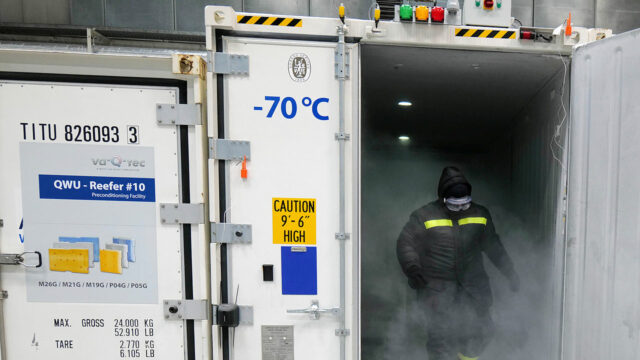
Manila, Subic, Davao cold inspection facilities set for construction in 2026

REUTERS

THE Department of Agriculture (DA) said it is planning to build three cold examination facilities in agriculture (CEFA) next year in Manila, Subic, and Davao.

Agriculture Secretary Francisco P. Tiu Laurel, Jr. said at a briefing last week that operations are expected to commence by 2027.

Mr. Laurel said a budget of P1.2 billion has been approved by the bicameral conference committee.

CEFAs are intended to prevent the entry of plant pests and economically significant animal diseases, with advanced testing laboratories on site.

Earlier plans had included a CEFA in Angat, Bulacan, but the DA is now prioritizing locations near ports to minimize logistics and operational costs.

Mr. Laurel said the current Angat facility, which includes a laboratory, will be used for rendering and destruction of goods.

“If we identify problematic containers, we’ll bring them there for destruction,” he said. — Vonn Andrei E. Villamiel

Gov’t debt yields end higher on hawkish Fed bets

YIELDS on government securities (GS) mostly climbed last week as investors took a defensive stance amid the holidays and amid bets on a hawkish US Federal Reserve following the release of key US economic data.

GS yields, which move opposite to prices, went up by an average of 2.86 basis points (bps) week on week at the secondary market, according to PHP Bloomberg Valuation Service Reference Rates as of Dec. 26 published on the Philippine Dealing System’s website.

Rates at the short end of the curve closed mixed. Yields on the 91- and 364-day Treasury bills (T-bills) slipped 0.62 bp to 4.8434% and 1.3 bps to 5.0317%, respectively. Meanwhile, the rate of the 182-day tenor edged up by 0.48 bp to 4.9725%.

At the belly, rates of the two-, three-, four-, five-, and seven-year Treasury bonds (T-bonds) climbed by 5.31 bps (5.3502%), 5.01 bps (5.4984%), 5.09 bps (5.6393%), 4.84 bps (5.7502%), and 4.26 bps (5.8883%), respectively.

Yields on long-term bonds also went up across the board, with the 10-, 20-, and 25-year debt papers climbing 7.49 bps (6.0539%), 0.54 bp (6.4123%), and 0.34 bp (6.4076%), respectively.

GS volume traded dropped to P25.45 billion last week from P44.87 billion previously. The market was closed on Dec. 24 and 25 for the Christmas holidays.

“Year-end holidays significantly reduced market liquidity, delaying portfolio rebalancing and positioning adjustments,” Lodevico M. Ulpo, Jr., vice-president and head of fixed income strategies at ATRAM Trust Corp., said in a Viber message.

He said benchmark yields climbed by 5-10 bps, led by the belly of the curve, last week as a “supply-driven knee-jerk reaction” the first-quarter domestic borrowing plan released by the Bureau of the Treasury (BTr).

“The market repriced near-term supply risk amid thin liquidity.”

The BTr said on Tuesday that the National Government plans to borrow up to P824 billion from domestic sources in the first quarter of 2026, or P324 billion from the issuance of T-bills and up to P500 billion via T-bonds.

“Hawkish signals from the Fed reinforced a defensive tone in local rates. Combined with illiquid year-end conditions, global yield pressure kept participants sidelined, preventing meaningful demand for duration and contributing to modest upward bias in yields,” Mr. Ulpo added.

“The upside surprise in US growth supported a bear-steepening bias, as expectations for further policy easing were pushed out. This prompted caution on the long end, with investors reassessing reflation risks and the sustainability of an easier policy path.”

Hawkish sentiment from the Fed could also affect the Bangko Sentral ng Pilipinas’ (BSP) policy path, Reinielle Matt M. Erece, an economist at Oikonomia Advisory and Research, Inc., said in an e-mail.

“While monetary policy remains on the easing path, inflation concerns may spike yields given that monetary policy may reverse its direction,” he said.

BSP Governor Eli M. Remolona, Jr. has left the door open to one final cut in 2026 to support the economy if needed, with inflation expected to remain manageable.

The US economy grew at its fastest pace in two years in the third quarter, fueled by robust consumer spending and a sharp rebound in exports, though momentum appears to have faded amid the rising cost of living and recent government shutdown, Reuters reported.

Gross domestic product (GDP) increased at a 4.3% annualized rate last quarter, the fastest pace since the third quarter of 2023, the Commerce department’s Bureau of Economic Analysis said in its initial estimate of third-quarter GDP. Economists polled by Reuters had forecast GDP would rise at a 3.3% pace. The economy grew at a 3.8% pace in the second quarter.

The Fed this month cut its benchmark overnight interest rate by another 25 basis points to the 3.5%-3.75% range, but signaled borrowing costs were unlikely to fall in the near term as policymakers await clarity on the direction of the labor market and inflation.

Investors are preparing for 2026 focused on when the US Federal Reserve might cut rates and by how much. Traders are pricing in at least two cuts over the year, but they do not expect the Fed to move before June.

The central bank has projected one more cut next year but divisions among decision makers has left investors on edge about the policy outlook.

For this week, Mr. Ulpo said the GS market may continue to move sideways as volume remains thin.

“With a shortened trading week, we expect range-bound consolidation and continued defensiveness. Investors should monitor liquidity conditions, offshore rate movements, and any signals on auction demand ahead of normalization in January,” he said.

“Next year, we should closely monitor inflation movements as well as employment. Further rate cuts may cause yields to fall, but inflation concerns may cause investors to anticipate tighter policy,” Mr. Erece added. — Isa Jane D. Acabal with Reuters

Mandatory ESG disclosure seen to raise credibility; foreign investor impact minimal

BW FILE PHOTO

By Alexandria Grace C. Magno

THE SECURITIES and Exchange Commission’s (SEC) push for mandatory environmental, social, and governance (ESG) disclosures aligned with international standards could enhance credibility and modest trading for some companies, while broader governance and external risks may limit changes in foreign investment, analysts said.

“The reporting alignment to international standards could bring select companies an extra layer of credibility that could have been initially overlooked by ESG investors,” AP Securities, Inc. Equity Research Analyst Shawn Ray R. Atienza said in a Viber message.

He noted that companies achieving compliance may experience a modest uptick in trading volume once the changes take effect.

However, the true outcome is unclear, according to Mr. Atienza, since foreign investors could be focused on broader issues fueling recent repatriation of funds.

“At best, we see minimal to no material change on foreign investors’ perception,” he said.

Rizal Commercial Banking Corp. (RCBC) Chief Economist Michael L. Ricafort said the commission’s move would increase transparency for local listed companies and “further uphold the best interest of the investing public.”

He noted that if anti-corruption measures, reforms, and policy priorities for improving governance standards are taken seriously, this could be the missing link to boosting investor confidence in the economy and financial markets and potentially alter foreign investors’ views of Philippine Stock Exchange index (PSEi) companies.

The commission has issued a memorandum adopting the Philippine Financial Reporting Standards (PFRS) on sustainability disclosures, setting clear guidelines to help covered companies prepare and submit sustainability reports in line with international standards.

Memorandum Circular (MC) No. 16, Series of 2025, implements PFRS S1, which sets general requirements for disclosure of sustainability-related financial information, and PFRS S2, which covers climate-related disclosures, repealing the Commission’s MC No. 4, Series of 2019, which had required only publicly listed companies (PLCs) to submit sustainability reports.

“The adoption of the PFRS on sustainability disclosures underscores our commitment to high-quality, comparable, and globally aligned sustainability reporting,” SEC Chairman Francisco Ed. Lim said in a statement on Friday.

“By elevating the standards of sustainability reporting in the Philippines, we hope to enable more companies and stakeholders to better understand the financial impacts of sustainability-related risks and opportunities, supporting long-term value creation and improved capital allocation decisions,” he added.

Under the memorandum circular, PLCs and large non-listed companies (LNLs) under Section 17.2 of Republic Act No. 8799 must attach board-approved sustainability reports to their annual reports, while other LNLs submit them with audited financial statements.

Adoption of PFRS S1 and S2 will be phased in starting fiscal year 2026. Tier 1 PLCs with market capitalization over P50 billion as of Dec. 31, or listing date thereafter, must start PFRS-based sustainability reporting in 2027 for fiscal year 2026.

Tier 2 PLCs with market capitalization from over P3 billion to P50 billion as of Dec. 31, or listing date thereafter, adopt PFRS in 2028 for fiscal years beginning on or after Jan. 1, 2027.

Tier 3 includes PSE-listed PLCs with market capitalization of P3 billion or less, PLCs with debt-only listings on the Philippine Dealing & Exchange Corp., and LNLs with over P15 billion in prior fiscal year revenue from ordinary activities, consolidated for parent companies, which will adopt PFRS in 2028 for fiscal years beginning on or after Jan. 1, 2028.

Covered companies may also use other recognized international frameworks alongside PFRS S1 and S2, provided they do not conflict with these standards, obscure material information, and are properly disclosed.

“They also implement a mandatory limited assurance on Scope 1 and 2 greenhouse gas (GHG) emissions by an independent assurance practitioner two years after the implementation of PFRS S1 and S2 for each tier, in line with the International Standard on Sustainability Assurance (ISSA) 5000, to ensure a consistent and high-quality sustainability assurance engagement,” the commission said.

To ease compliance, the SEC issued transitional reliefs through the memorandum circular.

“MC 4 remains in force until a PLC reaches its adoption year, while companies may continue using any recognized framework for their submission of sustainability reports for fiscal year 2025,” it said.

Tier 1 and 2 companies have one year to disclose climate-related risks and opportunities, while Tier 3 companies have two years.

“All covered corporations will be given one year to submit their sustainability report after the publication of their related financial statements, at the same time as their next second-quarter or half-year interim financial statements, or within nine months from the end of the reporting period, if there are no interim financial statements issued,” the SEC added.

“All tiers will also not be required to disclose comparative information and will be allowed to use methods other than the GHG Protocol: a corporate accounting and reporting standard for one year. Covered corporations will not be required to submit Scope 3 GHG emissions for two years.”

Metro Manila Film Festival 2025: Slick but shallow

Shake, Rattle & Roll: Evil Origins (2025)

By Joseph L. Garcia, Senior Reporter

Movie Review
Shake, Rattle & Roll: Evil Origins
Directed by Shugo Praico, Joey de Guzman, and Ian Loreños
Produced by Regal Entertainment
MTRCB Rating: R-13

This 17th installation of Shake, Rattle, & Roll delivers good ol’ jumpscares (I screamed twice) and passable plots, but sputters towards the end.

The first two stories of the anthology (which have a plot point in common) titled “1775” and “2025,” prove immediately why the horror franchise has become a staple in Philippine cinema’s Christmas diet. As for the third: eh.

The first, “1775,” opens with some very beautiful nuns. We don’t exaggerate: the cast includes the Ortega sisters Ysabel and Ashley. The nuns’ wimples and veils charmingly frame the faces of Carla Abellana, Janice de Belen (she’s a star for a reason; her face can still fight against much younger actresses), and even sexy star Ara Mina (from Mano Po’s butt-crack dress to a complete nun’s habit, she’s still something to watch on the big screen. Kudos!).

A mysterious chest arrives at the convent, which the nuns theorize in Spanish as coming from Mexico (the period film is set during the height of the Galleon Trade). Meanwhile, Ms. Abellana’s character is locked away in the cellar for her nightly fits and visions. The chest tempts the nuns one by one, while Ms. De Belen’s character rules over the nuns with frightening tyranny.

We commend this segment for the wonderful set and production design, not to mention the gorgeous costumes (yes, they are nuns’ habits, but they’re made with such care). The plot leaves so much room to make this segment into its own movie (the chest’s manipulations leave room for so much more), and the actresses play their roles so well. The gothic setting in a convent is a bit too easy, but it works in bringing suspense. We suppose our only gripes about this segment are the cheap jump-scares and one or two too-easy deaths.

The “2025” segment is for a certain generation: younger millennials and Gen Z. It’s an old-fashioned slasher (teens are stalked by masked creeps during a rave) but my, oh my: it looks and sounds VERY good. The fact that it’s set in a rave means they have paid extra care to the music, and we’re already looking forward to the soundtrack to play at our next party. The cinematography is, as the kids once said, “lit,” and it is shot as smoothly as a music video. The experience is hypnotic, and visually delightful: never mind that half the segment is a gore-fest, but so wonderfully choreographed.

The third segment, “2050” follows the same slick production values of the first two, and offers an evocative view of a post-apocalyptic Philippines. We’re not super onboard with the plot though: the entity in the damned chest from the first segment, which made an appearance in the second, has gained strength and has won — taking over the country. Richard Gutierrez and his merry band have to defeat the entity and the thing inside the box. It’s shot more like a first-person video game than a movie, and shares the same fast pace.

(Spoilers!)

The third segment shows the film’s big baddie as a cheap copy of Harry Potter villain, Voldemort. Imagine our distress after the build-up from the first two segments, because in our heads: maybe the enemy is corruption. Think about it: in “1775” it arrives in the Philippines through colonialism, thrives in the church, tempts with comfort. In its death throes, it brings down the church with it (literally). In the second segment, “2025,” it is worshipped and protected and fed blood by a select few, while thriving inside a playground of the rich. In “2050,” it has finally won, leaving the country a desolate place; its people left to pick refuse.

The first two segments are a must-watch for horror fans, and even give a wink by casting Shake, Rattle, & Roll vets Ms. De Belen and Manilyn Reynes. The film taken as a whole is good for a scream or three, and overall a visual feast. Just don’t overthink it like I did.