Home Blog Page 1692

Tariff uncertainty clouds PHL growth outlook

Dark clouds hover over Metro Manila in this file photo. — PHILIPPINE STAR/MIGUEL DE GUZMAN

THE University of Asia and the Pacific (UA&P) trimmed its first-quarter Philippine growth forecast amid worries over US President Donald J. Trump’s aggressive tariff policy.

In its latest The Market Call, UA&P said it cut its first-quarter gross domestic product (GDP) projection by 0.2% to 6%.

“Uncertainty surrounding Trump’s tariffs have mildly lowered our Q1-2025 GDP forecast to 6%,” it said.

If realized, this would be slightly faster than the revised 5.9% expansion in the January-to-March period last year.

Finance Secretary Ralph G. Recto and National Economic and Development Authority Secretary Arsenio M. Balisacan both expect first-quarter GDP growth to have settled at 6%.

The Philippine Statistics Authority will release first-quarter GDP data on May 8.

Mr. Trump disrupted the global trade system with his “Liberation Day” tariffs, including a 10% duty on goods from all countries.

The Philippines has been hit with 17% tariffs on its exports to the US but these, along with most of the reciprocal tariffs, have been suspended for 90 days.

However, global uncertainty remains elevated amid Mr. Trump’s erratic tariff policies and retaliatory measures by China and the European Union.

UA&P noted election spending could provide a “hefty boost” to the economy. The midterm elections are scheduled for May 12.

“Strong infrastructure spending in Q1 should see a softening in Q2 when election-related restrictions would mostly play out,” it added.

However, National Government spending “may modestly slow down (in the second half) as what happens during election years but still add to positivity.”

UA&P noted that slowing inflation and further rate cuts by the Bangko Sentral ng Pilipinas (BSP) could boost the economy.

“Below-target inflation of 1.8% year on year in March and sharp declines in crude oil and rice prices, slower GDP growth in the second half of 2024 should coax BSP to make another 25-bp rate cut in June and stimulate more consumer and investment spending,” UA&P said.

In the first quarter, inflation averaged 2.2%, well within the 2-4% target range of the central bank.

The BSP on April 10 cut rates by 25 bps to 5.5% from 5.75% previously.

“With the plunge in crude oil prices amid an expected global economic slowdown and abundant supply and lower international rice prices, inflation will likely average 2.2% in Q2 and Q3,” UA&P said.

“Thus, we expect BSP to cut its policy rates by another 25 bps in June regardless of what the Fed does,” UA&P said. — A.R.A.Inosante


UBS sees Philippines as ‘safe haven’ amid trade war

MANILA INTERNATIONAL CONTAINER TERMINAL — ICTSI.COM

THE IMPACT of global trade uncertainties amid sweeping retaliatory tariffs on the Philippines will likely be minimal enough that it is not cause for concern, UBS Investment Bank said.

“We maintain our view that the Philippines’ direct and indirect exposure to trade and global gross domestic product (GDP) growth remains negligible,” UBS Senior ASEAN (Association of Southeast Asian Nations) and Asia Economist Grace Lim and analyst RJ Aguirre said in a commentary.

“This market may be considered a relative safe haven in the face of the ongoing trade war and global recessionary risks,” they added.

Countries have been scrambling to forge agreements, negotiate lower tariffs or even retaliate against the United States after President Donald J. Trump slapped a minimum 10% tariff on the majority of its trading partners.

However, Mr. Trump suspended the higher reciprocal tariffs for 90 days starting April 9.

The Philippines’ 17% reciprocal tariff is the second lowest in Southeast Asia, just after Singapore’s baseline 10% rate.

The UBS economists project a “significant growth downside” of around 50 basis points (bps) to 100 bps globally and a 30-bp to 120-bp drag on the region from the tariffs.

They noted the impact to the Philippines will be among the lowest in the region (30 bps), “as the risks appear to be comparatively smaller given the domestic-oriented nature of the economy.”

The UBS economists said the Philippines is among the least exposed to the US in terms of goods exports in the region, accounting for about 2% of GDP.

“The country’s total trade-to-GDP ratio is at (around) 66%, which shows that the country is still exposed if a broader global slowdown were to take place.”

On the other hand, the Philippine economy will likely be supported by expectations of further rate cuts and easing inflation this year, the UBS economists said.

“Our expectation of three more rate cuts this year and low inflation (2.4%) could be a boon to this market,” they said.

UBS projects the Bangko Sentral ng Pilipinas (BSP) to cut rates again at the Monetary Board’s policy meetings in August, October and December, in step with the US Fed.

The central bank resumed its rate-cutting cycle earlier this month, delivering a 25-bp cut to bring the key rate to 5.5%.

The BSP also this month slashed its risk-adjusted inflation forecasts to 2.3% in 2025 from 3.5% previously and to 3.3% in 2026 from 3.7%.

SUPPLY CHAINS
In a separate commentary, Moody’s Senior Director Choon Hong Chua flagged the impact of the anticipated supply chain disruption on the Asia-Pacific.

“Exporters in the Asia-Pacific region will bear the brunt of the recent developments as they now face increased costs and uncertainty in bringing their products to the US market,” he said.

“Exporters could face a decline in US demand, loss of competitive edge and shrinking market share should they increase consumer costs to cushion the impact of tariffs.”

The tariffs will put “immense” pressure on revenues, Mr. Chua said, pointing out that these will be even more damaging for “those who are unable to pivot swiftly to new markets.”

“A diminished access to the US market for companies that also serve Asia and Europe could have a domino effect on supply-chain disruptions that could destabilize businesses,” he added.

Mr. Chua advised exporters to study and analyze their supply chain and third-party businesses.

This would “enhance risk resilience that can be the difference between being caught off guard by a supply chain breakdown and being able to manage potential disruptions proactively.”

“Supply-chain visibility and agility are crucial for resilience amid tariffs and other shocks. Businesses that adapt quickly to changing trade landscapes and mitigate risks will better navigate uncertain times.” — Luisa Maria Jacinta C. Jocson

MacroAsia Corp. to conduct virtual Annual Stockholders’ Meeting on May 15


Spotlight is BusinessWorld’s sponsored section that allows advertisers to amplify their brand and connect with BusinessWorld’s audience by publishing their stories on the BusinessWorld Web site. For more information, send an email to online@bworldonline.com.

Join us on Viber at https://bit.ly/3hv6bLA to get more updates and subscribe to BusinessWorld’s titles and get exclusive content through www.bworld-x.com.

Maalaala Mo Kaya returns as a limited series

CHARO SANTOS-CONCIO in the teaser for the new season of MMK.

THE popular drama anthology series Maalaala Mo Kaya, which has depicted true-to-life Filipino stories for over 30 decades on television, is back as a limited series on streaming platform iWantTFC.

Often referred to by the abbreviation MMK, the show’s new season will consist of 13 episodes, one airing each week starting April 24.

Its last run concluded in 2022.

Charo Santos-Concio, the series’ iconic host, hopes that this edition will “resonate with both younger audiences and longtime viewers.”

Masyado akong nalungkot noong nag-last-day taping kami two and a half years ago (I was so sad on our last day of taping [of the series] two and a half years ago),” she told press at the sidelines of the Film Development Council of the Philippines’ (FDCP) Parangal ng Sining on April 11.

Ms. Santos-Concio was there to receive a Lifetime Achievement award for her impactful contributions as an actress-producer.

She said that MMK is “one of the many things she is proud of in her career.”

One of the first episodes of the upcoming season will feature the inspiring story of Sofronio Vasquez III, the Filipino who won the recent season of reality singing competition The Voice USA.

Another episode will depict the story of one of the members of the P-pop girl group BINI.

“I manifested that the show will be back,” Ms. Santos-Concio said. “In my heart, sabi ko isang araw bibigyan ako ng pagkakataon muli na maglahad ng magagandang kwento ng ating mga kapwang Pilipino (I said that one day I’ll be given the chance again to share the wonderful stories of our fellow Filipinos).”

KEEPING BUSY
Alongside taping MMK episodes, Ms. Santos-Concio has been busy working on the action-drama series FPJ’s Batang Quiapo, where she plays Tindeng.

She will also return to the big screen this year, in the upcoming Star Cinema drama Only We Know. Based on a short teaser released early in April, it appears that she and Dingdong Dantes will have a May-December romance in the film.

“It’s a story about love. That’s all I can say about it,” she told the press. “Dingdong is very professional. It’s a joy to work with him.”

In her acceptance speech for the Lifetime Achievement award, Ms. Santos-Concio recalled her days as a movie fan who also loved to listen to radio dramas and read Liwayway magazine.

Nakatulong iyon sa pagkahubog sa akin na magbigay ng mga kwento na magugustuhan ng mga manonood. (It all helped shape me into someone who can relay stories that will be enjoyed by viewers),” she said.

Her career as an actress and producer has spanned the arthouse films of the Experimental Cinema of the Philippines, the mainstream movies of Regal Entertainment, the big-budgeted films of Bancom Audiovision, the small indies of her own production house Vision Films, and her previous executive role at media company ABS-CBN.

Maalaala Mo Kaya will begin streaming episodes weekly on iWantTFC starting April 24. It will also air on Kapamilya Channel, Kapamilya Online Live, and A2Z on Saturdays at 8:30 p.m., starting April 26. — Brontë H. Lacsamana

ICTSI eyes growth in Brazil with new acquisition

ICTSI.COM

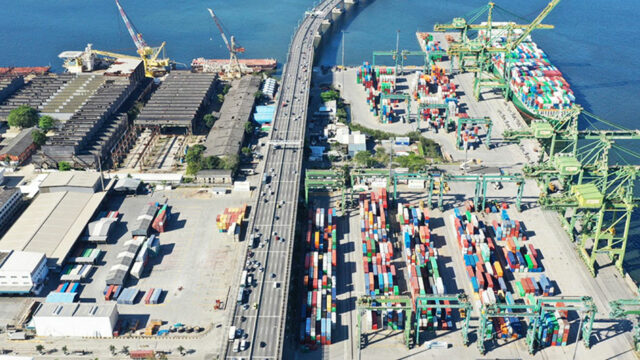
INTERNATIONAL CONTAINER Terminal Services, Inc. (ICTSI) is set to expand its operations and capacity in Brazil after acquiring a stake in a marine property in Rio de Janeiro.

The listed port operator, through its wholly owned subsidiary ICTSI Americas B.V., has acquired a 47% interest in FII Inhaúma (Inhaúma Fundo de Investimento Imobiliário – FII), which holds perpetual rights to a property where ICTSI plans to develop a terminal, ICTSI said in a regulatory filing on Monday.

ICTSI said FII Inhaúma’s property is adjacent to its Rio Brazil terminal. The property spans approximately 32 hectares of an inactive shipyard, which will be used by the port operator to expand its capacity for existing operations.

“The acquisition of this property represents an investment opportunity for ICTSI for the development of the area and, thus, the potential expansion of the total operational and logistics capacity of the port region of Rio de Janeiro,” ICTSI said.

Rio Brazil Terminal is located in Brazil’s economic region, serving the import-export hubs in the area, ICTSI said.

Established in 1987, ICTSI operates 33 terminals in 20 countries across six continents.

For 2025, ICTSI has allocated approximately $580 million in capital expenditures, primarily for the development of Southern Luzon Gateway in the Philippines, as well as planned expansions at ICTSI Rio in Brazil and Mindanao Container Terminal (MCT).

This year’s capital expenditure budget is higher than that of 2024. For the January-to-September period last year, ICTSI said its capital expenditure reached $298.63 million, representing 66.4% of its $450-million allocation for 2024.

The Razon-led port operator said this year’s capital expenditure will also fund the ongoing expansion of Matadi Gateway Terminal (MGT) in the Democratic Republic of the Congo, the Phase 3B expansion at Contecon Manzanillo (CMSA) in Mexico, and equipment acquisitions and upgrades.

In 2024, ICTSI saw its attributable net income climb by 66.1% to $849.80 million from $511.53 million a year earlier, driven mainly by its operations in Asia.

Gross revenues for the period rose by 14.6% to $2.74 billion from $2.39 billion in 2023.

Breaking down the company’s revenue growth, its operations in Asia accounted for the largest share, generating $1.14 billion in 2024, up by 9.6% from $1.04 billion in 2023.

Revenues from its operations in the Americas reached $1.08 billion, up by 26% from $855.62 million in 2023, while revenues from Europe, the Middle East, and Africa (EMEA) totaled $521.02 million, an increase of 6.3% from $490.28 million.

At the local bourse on Monday, shares in ICTSI fell by 20 centavos, or 0.06%, to end at P340 apiece. — Ashley Erika O. Jose

An exhilarating blues-fueled vampire horror

PHOTO FROM WARNERS BROS. PICTURES

By Brontë H. Lacsamana, Reporter

Movie Review
Sinners
Directed by Ryan Coogler

THE PULSATING force of blues music sets the tone for one of the best blockbusters of the year, Ryan Coogler’s Sinners, which brings together the gruesomeness of vampire lore and the real horrors of so-called black assimilation in the Jim Crow South.

With this movie, Coogler successfully adds another feather to his cap of genre films exploring African American stories, coming from superhero favorite Black Panther and boxing action hero Creed — arguably even exceeding those two movies.

It presents a visceral alignment of cultures, from the takeover of a vampiric evil to the almost demonic, celebratory pull of blues music for black communities, grounded in voodoo folklore. All of this comes together to bring forth a nightmare of epic proportions set in 1930s Mississippi.

Sinners stars Michael B. Jordan in a dual role, as twin brothers Smoke and Stack, who open a jazz bar in their hometown down south as a fresh start coming from their troubled lives as gangsters in Chicago. Jordan plays the two well thanks to his intentional sense of physicality, illustrating with ease how Smoke is uptight while Stack is impulsive (a triumph akin to Robert Pattinson’s recent foray as Mickeys 17 and 18 in the sci-fi film Mickey 17).

Coogler uses the first hour of the film to build up their story and the context of the black community it’s set in, particularly through the lens of the twins’ young cousin Sammie (played by newcomer Miles Caton). His is a perspective that adds another layer, being a preacher’s son who defies the rigid confines of the church by exploring his true passion: blues music. The entire film is anchored in its reputation as something too powerful, too dangerous, as it challenges the false sense of safety that religion offers. Sammie’s brilliant guitar playing, showcased at various points, is a force of its own, backed by a riveting blues score by Ludwig Göransson (worth the price of admission to see and hear on the big screen with a solid sound system).

Everything kicks into full gear when the twins and their young cousin set up the bar, open all night for the local black community, unaware of an evil waiting to attack. Its cast of characters is just as memorable as the narrative — for one, Hailee Steinfeld shines as Mary, a white woman in love with Stack yet kept at a distance lest her 1/8 black heritage be discovered. Steinfeld is also 1/8 black in real life, through her grandfather — this is her only role to ever showcase it.

There’s also Wunmi Mosaku as Smoke’s lover Annie, who is immersed in local voodoo magic; Delroy Lindo as scene-stealing soulful blues musician (and drunkard!) Delta Slim; and Jack O’Connell as the Irish-born vampire Remmick, who leads a steadily growing pack to invade the juke joint. The scores of black bargoers who come in trucks from picking cotton on the farms have beautiful scenes of their own, the film highlighting their plight even as they are already considered “free” at this point in history.

Sinners has an enthralling pace, especially as night falls, when the music becomes relentless and the characters gradually meet their gruesome fates. Vampires and bloodshed aside, there’s one scene where the celebratory cultural landscape feels as if it pops out of the screen. The 1930s jazz bar becomes a stage for generations of music and dance, intermingling with the fascinating folkloric elements told in black history, reaching across time to grip your heart and awaken your spirit. It’s pulse-pounding, nightmarish, and reverent to the deep lineage of communities held together by music and spirituality.

The Asian characters, represented mainly by Chinese-American couple Bo and Grace Chow (played by Yao and Li Jun Li), show an oft-forgotten aspect of the times. They are a well-researched tidbit of decades-old Asian American presence in the south, speaking in southern accents and immersed in black communities as an overlooked minority. An underrated scene is when the cameras follow them walking to and from the “black side” of the road, where they live and keep goods, and the “white side,” where they run a grocery store.

Overall, Sinners is a film with a lot to say but doesn’t outright say any of it. Instead, it takes you through all the beats and the rhythms of its characters’ day-to-day lives, until everything escalates into a nightmare where racially fueled terror is transplanted by a supernatural evil. It’s a blockbuster that will actually get you feeling things, your pulse pounding with the music.

It can be described as a cautionary tale about how assimilation was a lie told so that blacks could continue to be exploited. It can also be described as an action-packed thriller where a badass group of people fight against an unstoppable evil. It’s a very American tale, driven forward by a boy’s passion for music that vampiric forces want to take for themselves. Exhilarating stuff.

MTRCB Rating: R-16

Gov’t fully awards Treasury bills at mixed rates as demand shifts

WIKIPEDIA/JUDGE FLORO

THE GOVERNMENT made a full award for the Treasury bills (T-bills) it offered on Monday at mostly higher rates as the ongoing offering of new 10-year benchmark bonds affected market demand.

The Bureau of the Treasury (BTr) raised P25 billion as planned from the T-bills it auctioned off on Monday as total bids reached P73.913 billion or nearly thrice the amount on offer. However, the demand seen was slightly below the P74.512 billion in tenders recorded on April 14.

Broken down, the Treasury borrowed the programmed P8 billion via the 91-day T-bills as tenders for the tenor reached P13.67 billion. The three-month paper was quoted at an average rate of 5.546%, rising by 12.4 basis points (bps) from the 5.422% seen at the previous auction. Tenders accepted by the BTr carried yields of 5.425% to 5.625%.

The government likewise made a full P8-billion award of the 182-day securities as bids for the paper amounted to P25.863 billion. The average rate of the six-month T-bill was at 5.675%, 1.8 bps higher than the 5.657% fetched last week, with accepted rates ranging from 5.62% to 5.696%.

Lastly, the Treasury raised P9 billion as planned via the 364-day debt papers as demand for the tenor totaled P34.38 billion. The average rate of the one-year T-bill slipped by 2.3 bps to 5.691% from 5.722% previously, with bids accepted having yields of 5.684% to 5.7%.

At the secondary market before Monday’s auction, the 91-, 182-, and 364-day T-bills were quoted at 5.4133%, 5.6308%, and 5.6841%, respectively, based on PHP Bloomberg Valuation Service (BVAL) Reference Rates data provided by the Treasury.

“The latest Treasury bill average auction yields were mostly slightly higher amid the ongoing 10-year Treasury bond offering that could siphon off some excess peso liquidity from the financial system,” Rizal Commercial Banking Corp. Chief Economist Michael L. Ricafort said in a Viber message.

Mr. Ricafort also noted that the T-bill auction yields were higher versus comparable short-term BVAL yields, as well as the policy rate of 5.5%.

“I think the average rate for the three-month paper is bound for correction as it has been awarded below the Bangko Sentral ng Pilipinas’ overnight rate for quite some time,” a trader added.

The BTr raised an initial P135 billion from the new 10-year fixed-rate Treasury notes it auctioned off last week, more than four times the initial P30-billion offering, as tenders reached P197.3 billion.

The new 10-year bonds fetched a coupon rate of 6.375%. Accepted yields ranged from 6% to 6.4%, resulting in an average rate of 6.286%.

The public offer period for the 10-year bonds, which are targeted towards institutional investors, is scheduled to end on April 24, unless closed earlier by the government.

US inflation concerns due to the Trump administration’s tariff policies also drove up debt yields, Mr. Ricafort added.

Federal Reserve Chair Jerome H. Powell and other Fed officials last week said they believe US President Donald J. Trump’s aggressive tariffs could put them in a bind with the potential for them to push up inflation while harming overall economic growth and labor markets, Reuters reported.

The Fed, after a series of rate cuts late last year, has left its benchmark policy rate on hold in the range of 4.25% to 4.5% since December. Mr. Powell last week signaled that with uncertainty elevated about what effects will arise from the tariffs and other administration policies, he and his colleagues are in no rush to change their wait-and-see posture.

The BTr is looking to raise P215 billion from the domestic market this month, or P125 billion via Treasury bills and P90 billion through T-bonds.

The government borrows from local and foreign sources to help fund its budget deficit, which is capped at P1.54 trillion or 5.3% of gross domestic product this year. — A.M.C. Sy with Reuters

PRIME Philippines plans Asia-Pacific expansion

JETTSON P. YU, Prime Philippines founder and chief executive ofificer

By Beatriz Marie D. Cruz, Reporter

PRIME PHILIPPINES, a homegrown real estate consultancy, plans to expand its advisory and brokerage services to the property sectors across the Asia-Pacific markets, according to its founder.

Founded in 2013 by Jettson P. Yu, the company specializes in providing market insights and solutions for the Philippine real estate sector.

“Our dream for PRIME Philippines is to be the first fully local, homegrown real estate consulting brokerage research firm to go global,” Mr. Yu told BusinessWorld last week.

“For many decades, it’s always been foreign consulting firms going to the Philippines, conquering our business landscape, telling us what to do. But for the next 10 years, our goal is to go overseas and provide them our advisory services,” he said in mixed English and Filipino.

PRIME Philippines aims to update local and foreign investors on the latest developments in the country’s real estate sector, focusing on the office, retail, and industrial segments.

The company’s key services include landlord and tenant representation, research and advisory services, property acquisition and disposal, project management, and design and construction.

Now recognized as one of the fastest-growing real estate consultancy firms in the country, Mr. Yu acknowledged that PRIME Philippines faced a challenging start, particularly in an industry dominated by established veterans and multinational firms.

“When I started the company at the age of 23, I was doing door-to-door [meetings] almost every day,” he said. “I was knocking on five to eight meetings per day, introducing myself and my company to property owners around Quezon City.”

“People who were twice or thrice my age told me, ‘Jet, you’re in the wrong business.’ That’s what inspired me to push further,” he said.

“But when I turned 30 years old, I realized that my age was actually an advantage. When you’re young, you have more energy, and you can work longer hours.”

UNTAPPED AREAS
PRIME Philippines’ beginnings trace back to the early 2010s, when Quezon City — Mr. Yu’s home city — had few, if any, call centers.

At the time, most commercial real estate developments were concentrated in the central business districts of Metro Manila, while Quezon City was largely regarded as a residential area. This imbalance contributed to worsening traffic congestion across the region, Mr. Yu said.

“That’s why you have traffic, because in the morning, all the people from Quezon City were traveling to Makati and Ortigas. In the afternoon, everyone’s going home,” he said in Filipino.

With the prominent gap in commercial real estate in Quezon City, Mr. Yu founded PRIME Philippines to promote the former Philippine capital as a potential commercial hub.

“While nobody noticed Quezon City, I saw the opportunity. There’s a city, but it’s not fully enabled.”

Another challenge Mr. Yu saw was that PRIME would be up against established multinational brokerage and consulting firms.

“When I was about 25, and my company was beginning to establish its credibility and trust, I was told, ‘You won’t be able to beat the international [brokers].’”

To be competitive, Mr. Yu’s response was to “challenge tradition” by expanding its services outside the capital region to emerging locations like Davao and Cebu.

“Almost all the [real estate] offers were in Metro Manila. So, we gave them a broader perspective by providing data from certain provinces.”

PRIME also sought to highlight the country’s industrial real estate sector, which led to the opening of its industrial brokerage team in 2017.

“We were able to make the broader, neglected areas of the Philippines marketable and known to investors.”

As a young chief executive officer, Mr. Yu noted that starting a business today is more challenging for the youth than it was in his time.

“During the time of the millennials, everything was bullish, so I think the chances of failure if you started a business or a development were lesser.”

“But for Gen Zs now, especially post-pandemic, starting a business is much more challenging,” citing global headwinds like the ongoing trade wars.

With this, Mr. Yu called on the need for young people to utilize today’s trends such as artificial intelligence and remote work, while also cultivating adversity quotient amid personal and external uncertainties.

“There’s an adage that says it’s not the strongest nor the most intelligent that survives the test of time    it’s the most adaptable to change. So, that’s one of the things I always say to our fresh graduates.”

Allied Care Experts (ACE) Malolos Doctors, Inc. opens nominations for Board of Directors ahead of Annual Stockholders’ Meeting on June 24


Spotlight is BusinessWorld’s sponsored section that allows advertisers to amplify their brand and connect with BusinessWorld’s audience by publishing their stories on the BusinessWorld Web site. For more information, send an email to online@bworldonline.com.

Join us on Viber at https://bit.ly/3hv6bLA to get more updates and subscribe to BusinessWorld’s titles and get exclusive content through www.bworld-x.com.

BPI net profit rises 9% in Q1

BANK OF THE PHILIPPINE ISLANDS

BANK of the Philippine Islands (BPI) saw its net income increase by 9% year on year in the first quarter as it booked higher revenues.

The bank’s net profit rose to P16.6 billion in the quarter ended March 31 from P15.3 billion in the comparable year-ago period, it said in a disclosure to the stock exchange on Monday. This was also 18.3% higher than its fourth-quarter net earnings.

“We reported our first-quarter earnings of P16.64 billion, driven by a very strong net interest income and growth in expenses that were slightly lower than our growth in revenues,” BPI Chief Executive Officer Jose Teodoro K. Limcaoco said  at a media briefing on Monday.

The bank’s first-quarter performance translated to a return on equity of 15.35% and a return on assets of 2.05%. Its financial statement was unavailable as of press time.

BPI’s revenues climbed by 13.1% year on year to P44.7 billion in the first quarter.

This was driven by the 15.3% increase in its net interest income, which it said came amid an 8.6% increase in its average earning asset base and a 30-basis-point (bp) expansion in net interest margin to 4.49%.

The bank’s non-interest income rose by 6.3% to P10.3 billion in the first quarter as higher credit card fees and transaction-based service charges more than offset the drop in  its foreign exchange and trading income.

Meanwhile, BPI’s operating expenses grew by 12.7% year on year to P20.3 billion in the period amid higher manpower, technology, and business volume-related expenses.

Its provisions for losses also stood at P3 billion.

Still, its cost-to-income ratio improved by 16 bps to 45.4%.

BPI’s gross loans expanded by 13.2% to P2.3 trillion at end-March as it saw “strong growth” across all segments, especially non-institutional loans, it said.

Its nonperforming loan (NPL) ratio stood at 2.26%, while its NPL coverage ratio was at 100.11%.

On the funding side, deposits with the bank increased by 6.3% year on year to P2.6 trillion.

This brought the loan-to-deposit ratio to 89.4%.

BPI’s assets grew by 6.9% year on year to P3.3 trillion at end-March.

Total equity also rose by 11.3% to P448.6 billion.

It recorded an indicative common equity Tier 1 ratio of 14.69% and a capital adequacy ratio of 15.43% in the period.

Mr. Limcaoco said BPI targets faster net income growth this year versus the 2024 pace as it continues to increase the share of non-institutional loans — which stood at 28.8% as of the first quarter — in its portfolio.

BPI’s attributable net income rose by 20.04% to a record P62.05 billion last year from P51.69 billion in 2023.

“Our plan is to have net income this year that will exceed last year’s net income, and if you take a look at our first-quarter results, I think we should be fairly on track,” he said.

“My personal feeling is that the institutional book could be dampened by global tariffs. But I think our non-institutional book, for several reasons, could show fairly strong resilience this year.”

BPI wants non-institutional loans to make up 30% of its lending portfolio eventually, Mr. Limcaoco said, as this could help boost their margins.

He added that for this year, BPI expects its institutional loans to grow by roughly 10% and non-institutional loans to expand by about 20%.

“Non-institutional will carry higher NPLs, but they also carry higher margins. And that’s why our NPL has gone from 1.8% last year to now 2.2%,” Mr. Limcaoco said, but added that they do not expect asset quality to worsen further

“There shouldn’t be a deterioration in the NPL from here. I’m seeing risk here, but it’s managed risk,” he added.

BPI Chief Finance Officer and Chief Sustainability Officer Eric Roberto M. Luchangco said the bank’s loans are expected to grow by 12% to 13% this year.

He added that the bank aims to increase its sustainability loan portfolio to P1 trillion by 2026 from P880 billion at end-2024.

“I think we’re tracking ahead of that goal, and so I’m quite comfortable to say that we’ll probably meet that goal ahead of our target. It continues to be something that’s of interest to us,” Mr. Luchangco said.

BPI shares rose by P3.10 or 2.35% to close at P135.10 apiece on Monday. — A.M.C. Sy

Life and legacy of National Artist Nora Aunor honored in public necrological service

NORA AUNOR

THE National Commission for Culture and the Arts (NCCA) and the Cultural Center of the Philippines (CCP) will be commemorating the life and contributions of National Artist for Film and Broadcast Arts Nora Cabaltera Villamayor, better known as Nora Aunor, in a necrological service on Tuesday, April 22, at the Metropolitan Theater in Manila.

Arrival honors will begin at 8:30 a.m., followed by a tribute program at 9 a.m. The state funeral rites will continue at the Libingan ng mga Bayani in Taguig City.

The public is invited to attend the necrological service, but limited seats are available. The registration link can be found on the official social media pages of the CCP and NCCA.

The necrological service will be livestreamed on both the CCP and NCCA Facebook pages.

The National Artist, who passed away on April 16 at the age of 71, was a distinguished film, television, and theater actor, a renowned singer, and a film producer. Her career began in amateur singing competitions, eventually gaining national attention when she won the television talent show Tawag ng Tanghalan in 1967. Her successful stint in the popular TV show along with her appearance in Darigold Jamboree, led to her phenomenal rise earning the iconic title of the Philippine film industry’s “Superstar.”

Among her acclaimed films are Bona (1980), which was the closing film of Cinemalaya 2024, as well as Himala (1982), Bulaklak sa City Jail (1984), and The Flor Contemplacion Story (1995), all of which were featured at the CCP Cine Icons program.

She was conferred the Order of National Artist (Orden ng Pambansang Alagad ng Sining) by the Office of the President in 2022. This is the highest national recognition given to Filipino individuals who have made significant contributions to the development of Philippine arts.

Alternergy secures initial P3.3B from RCBC for Alabat Wind

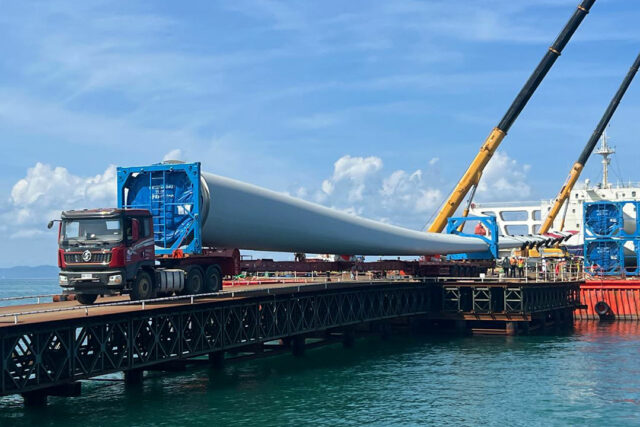
ALTERNERGY Holdings Corp. has drawn P3.256 billion from its P5.3-billion project loan facility with Rizal Commercial Banking Corp. (RCBC) to partially fund the development of its 64-megawatt (MW) Alabat Wind Power Project in Quezon province, the energy company said on Monday.

“We are grateful to RCBC for this initial release of project funding for our Alabat Wind Project, coming soon after RCBC’s release last month of P800 million for our Balsik Solar project,” Alternergy President Gerry P. Magbanua said in a media release on Monday.

The drawdown is part of the P5.3-billion project finance facility the company secured from RCBC last year.

Under the transaction, Puyat Jacinto & Santos Law acted as the lender’s counsel, while Tantoco Villanueva & De Guzman Law Offices (Tavidell) served as the borrower’s counsel. AFRY Philippines, Inc. (AFRY) was the lender’s technical advisor, and AON was the borrower’s insurance broker, assisting in the successful execution of the drawdown.

The P7.1-billion power project is scheduled for completion by the end of the year, “possibly the first wind project to be completed” under the Department of Energy’s (DoE) Green Energy Program held in 2023.

The Alabat Wind Project is one of five renewable energy projects currently under construction by Alternergy, aligned with its goal of expanding its capacity portfolio to 500 MW by 2026.

Last month, the company said its wind sub-holding company, Alternergy Wind Holdings Corp., was awarded a certificate of authority by the DoE, allowing it to undertake the exploration and assessment of wind resources for the project.

Spanning 6,318 hectares, the prospective project is expected to generate at least 150 MW, forming part of Alternergy’s pipeline of projects beyond its 500-MW target by 2026.

At the local bourse on Monday, shares in the company declined by 0.96% to close at P1.03 apiece. — Sheldeen Joy Talavera

ADVERTISEMENT
ADVERTISEMENT