
How PSEi member stocks performed — March 16, 2026
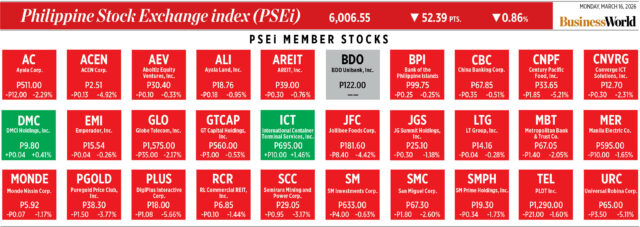
Here’s a quick glance at how PSEi stocks fared on Monday, March 16, 2026.


Here’s a quick glance at how PSEi stocks fared on Monday, March 16, 2026.

THE Philippines said on Monday it rejected Beijing’s assertion over the entire South China Sea (SCS), defending Manila’s “indivisible, incontrovertible and longstanding sovereignty” over Scarborough Shoal and Kalayaan Island Group.
“This claim has no basis in fact, no basis in history, and no basis in international law,” Maritime Affairs spokesman Rogelio E. Villanueva, Jr. told a news briefing at the Department of Foreign Affairs.
“China must be reminded that maritime and territorial claims are subject to established international legal procedures and dispute settlement mechanisms, not through unilateral proclamations or social media posts.”
The remarks are the latest in a war of words between Philippine officials and the Chinese Embassy in Manila over disputes in the South China Sea. China’s embassy did not immediately respond to a request for comment.
The Philippines and China both lay claims to the Scarborough Shoal, which is effectively under Beijing’s control through continuous deployment of its coast guard. Sovereignty over the atoll has never been formally established.
Mr. Villanueva was responding to a weekend social media post by the embassy that said a former Philippine ambassador had told a German radio station that Scarborough Shoal did not fall within Manila’s territory.
Located 200 kilometers (124 miles) off the Philippines and inside its exclusive economic zone, the strategic shoal is located close to major shipping lanes and is coveted for its fish stocks and a turquoise lagoon that provides safe haven for vessels during storms.
“Sovereignty is not merely claimed, it is exercised,” Mr. Villanueva said.
He added that the Philippines has exercised continuous, uninterrupted sovereignty and jurisdiction over the maritime feature, through detailed hydrographic surveys, official government correspondences, along with acts of administration.
The Foreign Affairs official also clarified that the resumption of dialogue mechanisms with China does not mean that the Philippines concedes its claims over the disputed waterway.
“Our pursuit of dialogue reflects a calibrated and principled commitment to peaceful dispute settlement — it does not, in any manner, dilute or qualify the Philippines’ firm, unequivocal positions in the West Philippine Sea,” he added.
The vital waterway has become a flashpoint between Beijing and Manila, where officials have reported incidents involving Chinese coast guard and maritime militia vessels, including harassment and dangerous maneuvers such as the use of water cannons near features Manila considers part of its exclusive economic zone.
“The Philippines must file a diplomatic protest in response to the allegations presented by the Chinese Embassy as it seems to be yet another instance of narrative twisting aimed to debilitate the country’s claims,” Josue Raphael J. Cortez, a diplomacy lecturer at De La Salle-College of St. Benilde, said in a Facebook Messenger chat.
He also called on the Philippine government to operationalize the Bilateral Consultation Mechanism for further dialogues between Manila and Beijing.
Mr. Cortez said that the Association of Southeast Asian Nations’ ongoing meeting to craft a binding code of conduct in the South China Sea could be used as a platform to address the Philippines’ sentiments.
“If left unaddressed (this) might become more harmful towards our claim and that of our neighbors who are also state claimants to the maritime territory,” he added. — Adrian H. Halili with Reuters

By Chloe Mari A. Hufana, Reporter
PHILIPPINE President Ferdinand R. Marcos, Jr. continued to face widespread disapproval and distrust even as his ratings improved in the first quarter, Pulse Asia reported, while Vice-President (VP) Sara Duterte-Carpio maintained majority support despite a decline.
A nationwide survey by Pulse Asia Research, Inc., conducted from Feb. 27 to March 2, found that 45% of Filipino adults disapprove of Mr. Marcos’ performance while 44% distrust him. This is despite improvements in his approval and trust ratings, which climbed by 11 percentage points to 36% and 10 percentage points to 35%, respectively.
In contrast, Ms. Duterte posted a 55% approval rating against 27% (up 11 points) disapproval, maintaining a narrow majority of public support despite rising criticism over the past year.
The Vice-President also maintained a high public trust of 54%, compared with 26% (up 10 points) of Filipino adults saying they have little to no trust in her.
The results offer an early snapshot of the political balance ahead of the 2028 presidential race, showing how public sentiment is diverging between the country’s top two officials as their alliance continues to fray.
Ms. Duterte’s continued majority approval gives her a potential advantage as she prepares for her presidential bid, while Mr. Marcos’ plurality disapproval underscores the policy and economic pressures facing his administration, particularly on inflation and corruption, that could shape both his remaining years in office and his influence over the next national election.
“I am always grateful to our fellow Filipinos for their continued support and trust in my colleagues at the Office of the Vice-President… For me, whether there is a survey or not, I remain thankful because the trust and belief of the people in me are still there,” Ms. Duterte told reporters in Filipino on Monday, according to a transcript from her office.
The survey suggested the President is facing lingering skepticism nationwide, as distrust stood at 44%, exceeding the 35% who said they trust him. Ms. Duterte’s distrust rating was 26%, compared to 54% who trust her.
A majority of people living in Luzon approved of Mr. Marcos, posting a 54% approval rating in the region, while disapproval dominated in the Visayas (61%) and Mindanao (73%). The Vice-President also retained strong approval ratings in her bailiwicks of Visayas and Mindanao, where she garnered 72% and 95%, respectively.
“Overall public assessment of the performance and trustworthiness of the President and the Vice-President is essentially constant between December 2025 and March 2026 but notable changes occur year on year,” a statement from Pulse Asia read.
Public opinion on the administration and the Vice-President may be shaped as much by political roles and media influence as by policy performance, according to political science lecturer at the Ateneo de Manila University Hansley A. Juliano.
“A bulk of these satisfaction results are very much tied to the nature of their job and their visibility,” he said via Facebook Messenger, noting that presidents in the Philippines rarely maintain strong popularity in the second half of their term.
He added that the continued reach of networks linked to former President Rodrigo R. Duterte has helped sustain support for the family’s political brand.
“For good and bad, the Dutertes continue to control disinformation networks, and unfortunately they are not being prosecuted or dismantled by the Marcos administration,” he said. “Hence, not only are they able to continue spreading their content, they also continue to hold their audiences captive.”
The Vice-President’s standing may also stem from her position outside the cabinet of Mr. Marcos effectively allowing her to act as a “lightning rod” for a loyal opposition.
“By virtue of being ousted from a cabinet post and not being given a chance to, essentially, ‘make mistakes,’ the VP now has the means to perform the role of ‘lightning rod’ for ‘loyal opposition’ to the government,” Mr. Juliano added.
POLICY PRESSURES
The survey also underscored the economic and governance pressures facing the administration as Filipinos aired their most urgent national concerns.
Almost six in 10 Filipinos (59%) said the national government must take urgent steps to control the rising costs of goods as the inflation accelerated to 2.4% in February 2026 from 2% a month prior.
Inflation is followed by graft and corruption in government (47%) amid a widening flood control scandal and workers’ pay (36%) as labor groups push for a legislated wage increase to keep up with rising costs.
Filipinos showed low concern for some national issues, including responding to calamity-hit areas (8%), reducing taxes (7%), supporting small entrepreneurs (5%), protecting overseas Filipino workers (3%), safeguarding national territorial integrity (2%) and countering terrorism (1%).
Across regions and socioeconomic classes, only inflation (53% in the Visayas; 62% in Luzon and Mindanao; 57-63% across classes) and government graft and corruption (58% in Luzon outside Metro Manila; 64% in Class ABC) register as majority priorities.
Conversely, the least cited concerns remain the welfare of overseas Filipino workers (1-4% by region; 1-3% by class), national territorial integrity (near zero to 4% by region; virtually none to 2% by class), and terrorism (1-3% by region; almost zero to 2% by class).
The survey fieldwork was conducted from Feb. 27 to March 2, 2026, using face-to-face interviews, sampling 1,200 representative adults aged 18 and above with a ±2.8% error margin at the 95% confidence level; subnational estimates for Metro Manila, the rest of Luzon, Visayas and Mindanao carry a ±5.7% margin of error.

VICE-PRESIDENT (VP) Sara Duterte-Carpio on Monday asked a House of Representatives committee to dismiss the impeachment charges against her, saying the allegations lacked evidence and were based on speculation.
The two complaints that the House Justice Committee passed in its preliminary review “recycle the same accusations” against Ms. Duterte from last year’s impeachment and lacked any statement of “ultimate facts” that she could respond to, according to a copy of her 13-page response shared with reporters.
“Since no wrongdoing has been established with proof by the complainants, they simply cannot rush to the conclusion that the Vice-President is ultimately responsible for them,” she said.
In early March, the committee found two of four complaints against Ms. Duterte sufficient in substance, moving them to the next stage of the impeachment process that will determine whether the charges have merit and should be discussed further by the 39-member panel.
The Vice-President faces a range of accusations, including claims she misused hundreds of millions of pesos in secret funds under the Office of the Vice-President and the Education department during her time as its secretary.
The complaints also include accusations she amassed wealth disproportionate to her income, efforts to destabilize the government and plotting to assassinate President Ferdinand R. Marcos, Jr., his wife and former Speaker Ferdinand Martin G. Romualdez, charges which she has denied.
“Aside from self-serving assertions and sweeping legal conclusions, the impeachment complaints contain nothing anchored in any concrete, established facts supported by law,” Ms. Duterte said.
She also said lawmakers applied “double standards” in handling the complaints against her, arguing they were biased compared with the dismissal of similar ouster complaints earlier filed against Mr. Marcos.
“The committee failed to observe the basic tenets of fair play and due process, where double standards were employed in dealing with the impeachment complaints against President Marcos, Jr. and the Vice-President, resulting in arbitrary government action,” she said.
Mr. Marcos in February survived an impeachment bid which accused him of corruption, violation of the Constitution and betrayal of public trust after the Justice committee dismissed the allegations as lacking merit.
The dismissed complaints alleged that Mr. Marcos had benefited from questionable government contracts linked to defective infrastructure projects, receiving kickbacks and institutionalized corruption through a budget allocation formula for congressional districts.
“It appears… that the serious accusations against the President and other high-ranking public officials were summarily disregarded,” Ms. Duterte said. “This unequal treatment reflects an uneven application of standards and scrutiny in the determination of sufficiency in form and substance of the complaints against the Vice-President.”
Party-list Rep. Terry L. Ridon, a member of the Justice committee, said Ms. Duterte did not directly respond to the charges against her.
“Instead of responding directly to the charges, it attempts to challenge the impeachment proceedings itself based on a confused interpretation of due process and the concept of ultimate facts in impeachment cases,” he said in a statement.
“The submission does not specifically and completely rebut the material allegations raised in the complaints,” he added.
The renewed impeachment effort against Ms. Duterte comes as she declared her intention to run for President in 2028, a move that could put her political standing to the test. She is the daughter of former President Rodrigo R. Duterte, whose strong support base remains influential.
Impeachment proceedings against the Vice-President were revived after the Supreme Court blocked attempts in 2025 for violating procedural rules. — Kenneth Christiane L. Basilio
By Kenneth Christiane L. Basilio, Reporter
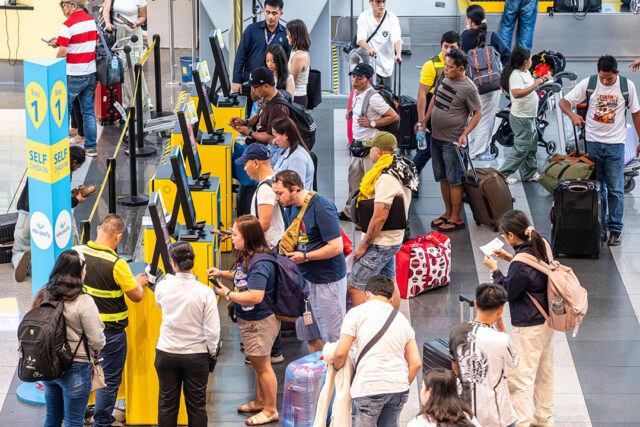
The House of Representatives on Monday evening approved on final reading a bill scrapping travel tax, which lawmakers consider as a nuisance for Filipinos traveling abroad.
With 257 votes in favor, one against, and one abstention, the chamber passed the proposal to scrap the decades-old duty originally designed to curb overseas travel when the Philippines sought to conserve its foreign currency reserves and promote local tourism.
“The travel tax belongs to a different era, when flying was mostly seen as a privilege for an opulent few,” Majority Leader and Ilocos Norte Rep. Ferdinand Alexander “Sandro” A. Marcos III said in a statement. “Many Filipinos travel because they have to, for business, for family, for school, or to seize livelihood opportunities, and government should not keep treating that necessity as if it were still a luxury.”
Filipino travelers pay a P1,620 tax when flying economy and P2,700 tax in first class under a 1970s law that lawmakers say has outlived its purpose and now hampers overseas travel.
It was first imposed by Republic Act No. 1478 in 1956 and later amended through Presidential Decree No. 1183 in 1977. Exempt from travel tax are overseas Filipino workers, Filipino permanent residents overseas who stayed less than a year in the Philippines, and children aged two years and below.
President Ferdinand R. Marcos, Jr. has made scrapping the travel tax a priority measure of his administration.
Lawmakers should have reviewed the travel tax system rather than scrapping it outright, Michelle Guerrero Taylan, president of the Global Tourism Business Association, said.
She said the levy helps fund agencies working to shore up the tourism sector and removing it could jeopardize infrastructure projects aimed at improving the domestic travel experience.
“We also have to know that with this travel tax that we are paying, our local tourism is also benefiting,” she said in a phone call.
Under the current law, 50% of the proceeds from travel tax collections go to the Tourism Infrastructure and Enterprise Zone Authority, while 40% go to the Commission on Higher Education for its education programs.
The remaining 10% share goes to the National Commission for Culture and the Arts.
Agencies tasked with collecting the travel tax must immediately refund payments upon enactment, according to the measure, adding that government offices relying on the levy as a steady revenue source will be provided with alternative funding.
“We recommend a rate reduction, transparency reforms, expanded exemptions and implementing a tax structure based on destination or travel class,” Ms. Taylan said.
IBON Foundation Executive Director Jose Enrique “Sonny” A. Africa said moves to scrap the travel tax “seem to be just a populist move” aimed at projecting that the Philippines is aligned with international standards.
“I don’t think the impact will be that great in terms of encouraging more to go abroad,” he said in a Viber message.
“International tourism demand is much more sensitive to family incomes, exchange rates, and perceived convenience and safety of travel than the travel tax per se, which is a small part of overall travel expenses,” he added.
Also on Monday, lawmakers also approved on final reading House Bill No. 8468, which seeks to promote digital payment systems for government transactions while seeking to boost the adoption of private merchants.
In a 257-3-0 vote, the measure seeks to promote the use of “safe, efficient and inclusive digital payments” in transactions with government agencies, as it also urged local government units to grant incentives to shops to boost its adoption.
“The lines are long and the waiting time is lengthy, especially in government offices,” Mr. Marcos said in a statement. “The eBayad Act brings government transactions closer to the daily rhythm of people’s lives by making payments faster, easier, and more practical.”
The bill requires all government agencies to adopt digital payments for disbursements and collections, either through in‑house systems or by engaging payment service providers, giving them three years to fully implement the measure.
For merchants, the bill orders local government units to encourage and incentivize merchants via reduced fees, as well as assist small and micro-merchants in becoming more capable of adopting digital payment systems.
The push for the measure comes as the Philippines risks falling short of its 2028 digitalization target under the Philippine Development Plan, with BSP Governor Eli M. Remolona, Jr. noting the transition is progressing more slowly than expected.

THE Department of Health (DoH) on Monday pushed for the total ban on electronic cigarettes and other vape products as regulation falls short.
“According to the current policies, the restriction on the use of vape is 18 years old, but we can see that young people are still able to buy it. There are also products that are not registered,” DoH Health Promotion Bureau Director Maria Kristina May L. Marasigan told a Senate hearing, in Filipino.
A total ban on vape products is also expected to simplify enforcement, she added, noting that they will no longer need to separate legal nicotine products from illegal ones.
While waiting for a total ban, the DoH recommended imposing a unified tax to discourage youth from purchasing e-cigarettes.
The Health department backed proposals to impose a unified tax rate with nonnegotiable 5% annual indexation as well as an increase in the age restriction to 25 years old from 18, according to a manifestation, read by Ms. Marasigan.
Out of 11 ASEAN countries, eight nations, namely Brunei, Cambodia, Laos, Singapore, Thailand, Timor-Leste, Vietnam, and Myanmar, have implemented a total vape ban.
Should a total ban be impractical, the Philippine Legislators’ Committee on Population and Development Foundation, Inc. (PLCPD) has called for the return of vape and heated tobacco products (HTPs) regulation to the DoH and Food and Drug Administration (FDA).
“Transfer back the regulation of vape and HTPs to the DoH and FDA because this is a health issue and these products should be treated as health hazards, not as regular consumer products,” Aurora O. Quilala, executive director of PLCPD, said in a mix of English and Filipino during the hearing of the Senate Committee on Health and Demography.
At present, the Department of Trade and Industry is the lead agency regulating said products. It has so far confiscated P519 million worth of HTPs since August 2024, Trade Assistant Secretary Marcus N. Valdez II said.
The PLCPD also pushed for the increase of age restriction to 21 years old. — Kaela Patricia B. Gabriel

NEARLY eight in 10 Filipinos trust Japan, perceiving the Philippines and Japan relations as stable and strong, a December 2025 survey by OCTA Research has shown.
In a poll on the public sentiment on Filipino-Japanese relations, 75% of Filipinos have been shown trusting Japanese people while 70% say the relations between the two countries are “very good.”
Only 4% had expressed distrust in Japan, while 6% said they distrust the people of Japan.
According to OCTA, these results also demonstrate that the Filipinos’ perception of Japan extends to the social and interpersonal level, beyond government-to-government relations.
“These results suggest that Japan enjoys one of the highest levels of international trust among Filipinos in recent surveys conducted by OCTA Research, reflecting a broadly favorable perception of Japan as a dependable and constructive partner of the Philippines,” OCTA said.
Among the factors contributing to Filipinos’ trust in Japan, as cited in the study, are Japan’s reliability as an economic partner and their contribution to the development of the Philippines’ infrastructure, technology, and trade.
“This alignment between policy cooperation and public sentiment strengthens the strategic foundation of Philippines-Japan relations and supports the long-term sustainability of bilateral engagement,” OCTA said. The Philippines and Japan are set to mark 70 years of friendship.
OCTA also attributed the trust in Japanese people to the growing community of Filipinos in Japan alongside cultural exchanges, tourism, and educational partnerships.
OCTA surveyed a total of 1,200 respondents, aged 18 and above, from Dec. 3 to Dec. 11, 2025 nationwide. — Kaela Patricia B. Gabriel

The Senate on Monday approved on third and final reading a measure aimed at preventing unreasonable remittance fees for overseas Filipino workers (OFWs) and to strengthen transparency in their cash transfers.
With 21 affirmative votes, no negative vote, and no abstentions, Senators approved Senate Bill No. 1917, which aims to streamline remittance charges and requires full disclosure of fee structures for OFWs. It also mandates stakeholder consultations before any adjustments to fees are made.
“The passage of this bill brings us one step closer to a more just and protective system for our OFWs,” Senator Joel J. Villanueva, who sponsored the measure, told the plenary floor.
The measure orders remittance providers to clearly disclose their fees, charges, and foreign exchange rates.
Penalties for violation may include imprisonment between six months to six years and or a fine ranging from P50,000 to P750,000.
The bill also seeks to create a free mandatory financial literacy program for OFWs and their families through the Department of Migrant Workers and the Overseas Workers Welfare Administration.
“The passage of this bill is timely because it reinforces our commitment and duty to protect the fruits of their sacrifice and ensure that their hard-earned income reaches their families in full,” the senator added. — Adrian H. Halili

THE House of Representatives’ second-largest political party will oppose moves to impeach Vice-President (VP) Sara Duterte-Carpio unless a congressional panel uncovers new evidence linking her to corruption, its chairman said on Monday.
In a statement, Deputy Speaker and Antipolo Rep. Ronaldo V. Puno said the House Justice Committee must find proof that Ms. Duterte benefitted from alleged corruption tied to secret fund spending by her office and the Education department, warning that the 41-member National Unity Party (NUP) would vote against impeachment without such evidence.
“If this evidence does not surface, the NUP will vote to dismiss this complaint,” he said. “The committee hearings must produce specific evidence from the Anti-Money Laundering Council or similar authorities, showing confidential funds being deposited or used by the Vice-President for personal consumption.”
He said the use of secret funds bars public disclosure of details, urging stronger evidence to establish that Ms. Duterte benefited from those.
“Allegations of misuse must be supported by evidence that clearly establishes that public funds were diverted from their lawful purpose,” said Mr. Puno, who heads the NUP.
The Vice-President faces a range of accusations, including claims she misused hundreds of millions of pesos in secret funds under the Office of the Vice-President and the Education department during her tenure as its secretary.
Filings made also include accusations she amassed wealth disproportionate to her income, efforts to destabilize the government and plotting to assassinate President Ferdinand R. Marcos, Jr., his wife and former Speaker Ferdinand Martin G. Romualdez, charges which Ms. Duterte has denied.
The Justice committee must craft a case that is “legally sound and evidentially compelling,” warning that the charges must withstand scrutiny in the Senate, which would convene as an impeachment court if the complaints were endorsed, he added.
“The House carries the responsibility of ensuring that the record developed during the committee’s proceedings rests on clear, direct, and corroborated evidence rather than conjecture or conflicting narratives,” he said. — Kenneth Christiane L. Basilio
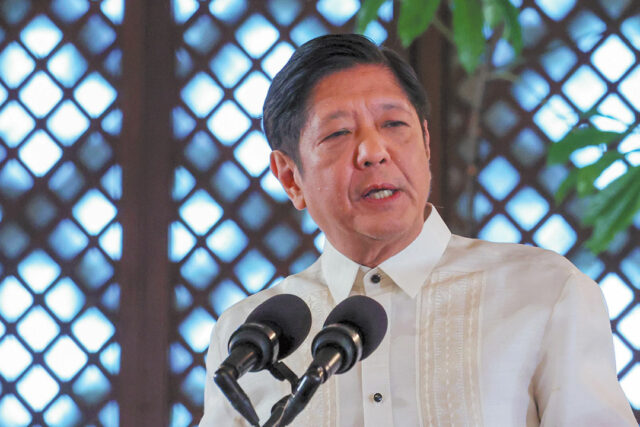
PRESIDENT Ferdinand R. Marcos, Jr. on Monday ordered government agencies to review licensing, permit, and certification requirements as part of a broader effort to cushion consumers and businesses from the economic impact of the war in the Middle East.
In a video message, he directed agencies to reassess existing rules on licenses, permits, clearances, and certifications to determine which fees could be reduced or suspended to ease financial pressures on the public.
The review is aimed at cutting regulatory costs that add to operating expenses for businesses and, ultimately, consumer prices.
The directive forms part of a wider set of government measures designed to blunt the ripple effects of higher fuel costs across the economy.
Mr. Marcos earlier announced cash assistance and fuel subsidies for transport workers, farmers, and fisherfolk, alongside legislative efforts to reduce excise taxes on petroleum products and amend the biofuels law to allow the use of cheaper bioethanol blends. — Chloe Mari A. Hufana
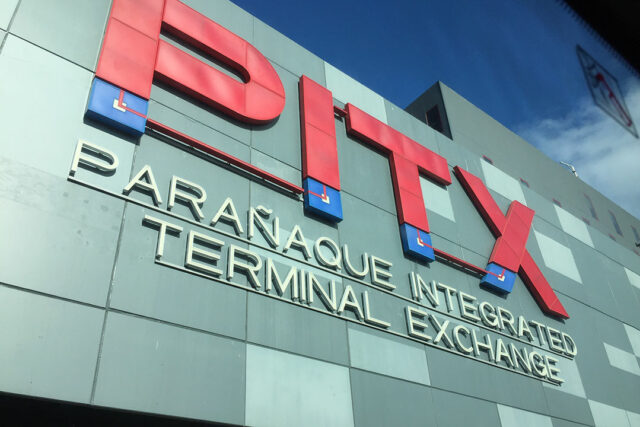
THE Parañaque Integrated Terminal Exchange (PITX) has added a point-to-point (P2P) bus service to Clark International Airport to enhance connectivity from Metro Manila.
“This is important because it gives a connection to Southern Metro Manila which is a big population. This connection opens that area to try (Clark),” LIPAD Chief Executive Officer Noel F. Manankil told reporters on Monday.
Starting on Tuesday, Genesis Transportation Service, Inc. will operate the new service with its deluxe buses, said Genesis Transport, Inc. President Riza A. Moises, noting that initially it will deploy 10 buses which it plans to increase based on the demand.
“By linking PITX directly to Clark International Airport, we are making it easier for travelers to access one of the country’s major aviation gateways while enjoying the convenience of a reliable point-to-point land transfer,” said MWM Terminals, Inc. Mohit Malhi.
The Clark International Airport-PITX service is being offered at P520 for the JoyBus Executive Coach or the premium transport service of Genesis, while regular deluxe is at P480.
For this year, PITX said it expects to accommodate up to 60 million passengers in 2026 as it manages capacity and sustains traffic across existing routes.
PITX is the country’s first land port and is operated by Megawide’s MWM Terminals, Inc. under a 35-year build-transfer-operate contract. — Ashley Erika O. Jose
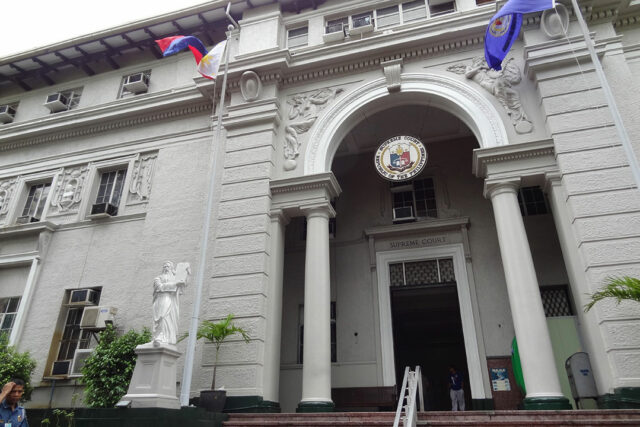
THE Supreme Court (SC) has dismissed a petition challenging the legality of Manila City Ordinance No. 9151, which implements a revised schedule for city-wide garbage collection fees.
The Court ruled that John Barry T. Tayam, a resident of Las Piñas, failed to establish legal standing as he is not among the persons covered by the ordinance who would suffer direct injury.
“Undoubtedly, the Court is not a trier of facts,” the en banc said in its 5-page resolution. “Hence, the Court must dismiss petitions directly filed before it when they involve factual issues that must be resolved first for the case’s proper disposition.”
The tribunal added that the petitioner violated the doctrine of hierarchy of courts by failing to seek relief from the appropriate regional trial court before escalating the matter to the high court.
The dismissal effectively denies the prayer for a temporary restraining order, upholding the city’s right to regulate waste management fees for Manila-based businesses and residential units. — Chloe Mari A. Hufana
