House passes bill abolishing travel tax on final reading
By Kenneth Christiane L. Basilio, Reporter
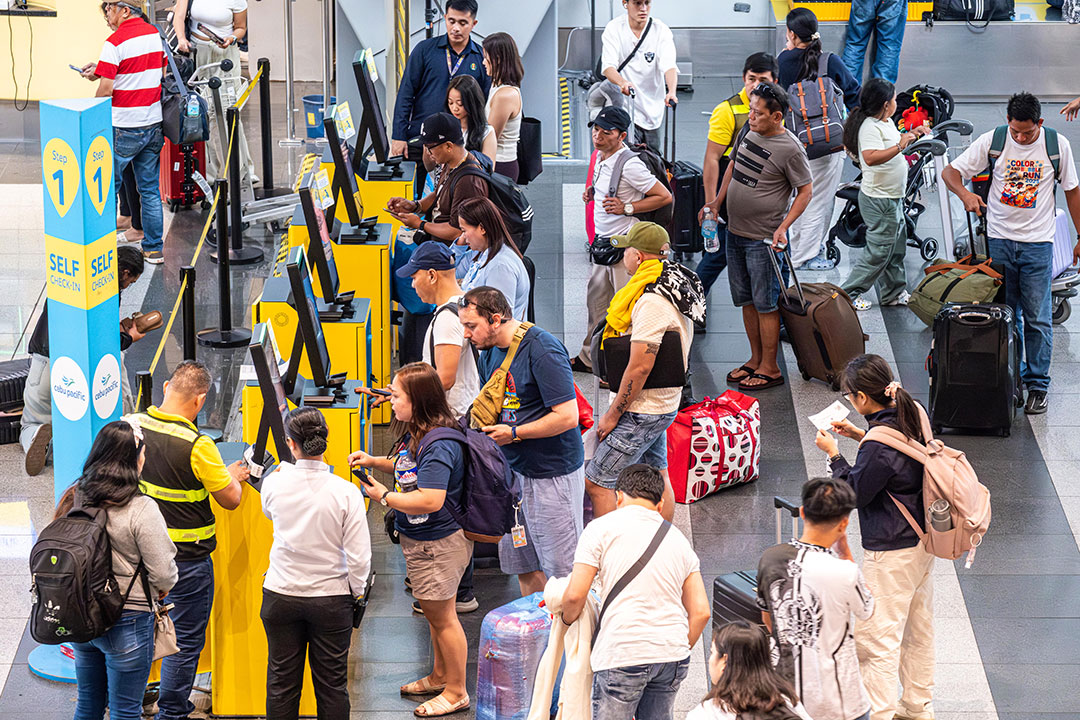
The House of Representatives on Monday evening approved on final reading a bill scrapping travel tax, which lawmakers consider as a nuisance for Filipinos traveling abroad.
With 257 votes in favor, one against, and one abstention, the chamber passed the proposal to scrap the decades-old duty originally designed to curb overseas travel when the Philippines sought to conserve its foreign currency reserves and promote local tourism.
“The travel tax belongs to a different era, when flying was mostly seen as a privilege for an opulent few,” Majority Leader and Ilocos Norte Rep. Ferdinand Alexander “Sandro” A. Marcos III said in a statement. “Many Filipinos travel because they have to, for business, for family, for school, or to seize livelihood opportunities, and government should not keep treating that necessity as if it were still a luxury.”
Filipino travelers pay a P1,620 tax when flying economy and P2,700 tax in first class under a 1970s law that lawmakers say has outlived its purpose and now hampers overseas travel.
It was first imposed by Republic Act No. 1478 in 1956 and later amended through Presidential Decree No. 1183 in 1977. Exempt from travel tax are overseas Filipino workers, Filipino permanent residents overseas who stayed less than a year in the Philippines, and children aged two years and below.
President Ferdinand R. Marcos, Jr. has made scrapping the travel tax a priority measure of his administration.
Lawmakers should have reviewed the travel tax system rather than scrapping it outright, Michelle Guerrero Taylan, president of the Global Tourism Business Association, said.
She said the levy helps fund agencies working to shore up the tourism sector and removing it could jeopardize infrastructure projects aimed at improving the domestic travel experience.
“We also have to know that with this travel tax that we are paying, our local tourism is also benefiting,” she said in a phone call.
Under the current law, 50% of the proceeds from travel tax collections go to the Tourism Infrastructure and Enterprise Zone Authority, while 40% go to the Commission on Higher Education for its education programs.
The remaining 10% share goes to the National Commission for Culture and the Arts.
Agencies tasked with collecting the travel tax must immediately refund payments upon enactment, according to the measure, adding that government offices relying on the levy as a steady revenue source will be provided with alternative funding.
“We recommend a rate reduction, transparency reforms, expanded exemptions and implementing a tax structure based on destination or travel class,” Ms. Taylan said.
IBON Foundation Executive Director Jose Enrique “Sonny” A. Africa said moves to scrap the travel tax “seem to be just a populist move” aimed at projecting that the Philippines is aligned with international standards.
“I don’t think the impact will be that great in terms of encouraging more to go abroad,” he said in a Viber message.
“International tourism demand is much more sensitive to family incomes, exchange rates, and perceived convenience and safety of travel than the travel tax per se, which is a small part of overall travel expenses,” he added.
Also on Monday, lawmakers also approved on final reading House Bill No. 8468, which seeks to promote digital payment systems for government transactions while seeking to boost the adoption of private merchants.
In a 257-3-0 vote, the measure seeks to promote the use of “safe, efficient and inclusive digital payments” in transactions with government agencies, as it also urged local government units to grant incentives to shops to boost its adoption.
“The lines are long and the waiting time is lengthy, especially in government offices,” Mr. Marcos said in a statement. “The eBayad Act brings government transactions closer to the daily rhythm of people’s lives by making payments faster, easier, and more practical.”
The bill requires all government agencies to adopt digital payments for disbursements and collections, either through in‑house systems or by engaging payment service providers, giving them three years to fully implement the measure.
For merchants, the bill orders local government units to encourage and incentivize merchants via reduced fees, as well as assist small and micro-merchants in becoming more capable of adopting digital payment systems.
The push for the measure comes as the Philippines risks falling short of its 2028 digitalization target under the Philippine Development Plan, with BSP Governor Eli M. Remolona, Jr. noting the transition is progressing more slowly than expected.