Home Blog Page 1600

In custody in the Hague, on ballot at home: Philippines’ Duterte runs for mayor By Eloisa Lopez and Karen Lema
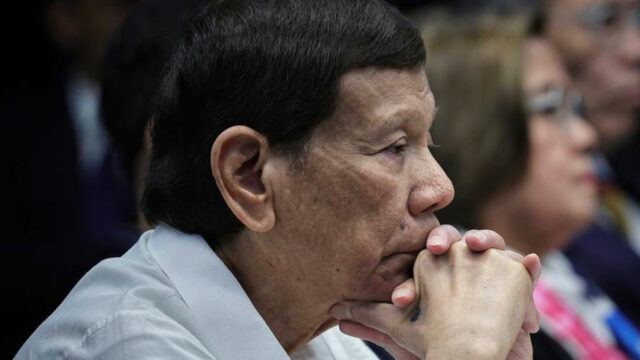
FORMER PRESIDENT Rodrigo R. Duterte — OFFICIAL FACEBOOK ACCOUNT OF THE SENATE OF THE PHILIPPINES

DAVAO CITY, Philippines – Former Philippine President Rodrigo Duterte spends his days in a small, spartan room in detention at the Hague, awaiting trial for a bloody war on drugs that killed thousands during his time in office.

But halfway around the world, in his hometown of Davao City, Duterte is on the ticket for mayor in midterm elections on Monday that he is widely expected to win, riding on support in the family stronghold, though it may not translate nationwide.

“I’ve seen what he accomplished as both mayor and president, from his fight against drug lords to what he did for the country,” said Jennifer Maumbas, 28, a worker in a small cafe that displayed Duterte’s visage on a banner.

“No matter what happens, we’re solidly for Duterte.”

Duterte’s arrest in March, following a request by the International Criminal Court, was a major blow to his powerful family, whose popularity surged after he swept to power in 2016 from his position as a maverick, crime-busting mayor.

As president, the tough-talking Duterte upended Philippine foreign policy and launched a “war on drugs” that rights groups say killed significantly more than a police estimate of 6,000, for which he is being tried in the Netherlands.

Yet his influence beyond Davao is far less certain, as the polls shape as a test of how far incumbent President Ferdinand Marcos Jr has managed to subdue the Dutertes’ political machine, born in the southern city.

The Duterte name has a kind of mythic status in Davao, but perhaps less nationwide, said Ederson Tapia, a specialist in public administration at the University of Makati.

“All indications are that they still have a solid base,” he added. “Whether that’s enough to carry a serious campaign in 2028 remains to be seen – especially with the vice president now facing an impeachment complaint.”

Duterte’s daughter, Vice President Sara Duterte, is seen as a potential contender in the 2028 presidential elections, but is besieged by political woes of her own.

She faces an impeachment trial on charges including a threat to assassinate Marcos, whose key ally she was in a 2022 team hailed as a powerhouse union of political dynasties.

But policy disagreements, power struggles and competing ambitions shattered the alliance, raising the stakes for both camps ahead of Monday’s elections, in which more than 18,000 positions are up for grabs.

These include 317 congressional seats and thousands of local posts, but the fiercest contest centers on a dozen spots in the upper house Senate, which wields outsize influence on national affairs, its 24 members being jurors in impeachment proceedings.
Marcos’ candidates remain ahead in polls and appear poised to dominate the Senate race, despite the sympathy generated for the Duterte camp by his arrest and detention.


DRAMATIC ARREST

As president from 2016 to 2022, Duterte has long defended his drugs crackdown, saying it was meant to make the Philippines safer and that police were ordered to shoot only in self-defense.

His arrest only cemented support for him in Davao, a city of 1.8 million, where he was mayor for more than two decades before becoming the first president from the Mindanao region.

“We cried. We could not sleep for three days,” said Joel Sagosoy Valles, who runs a small restaurant plastered with pictures documenting Duterte’s career, while he recounted how he and his family watched footage of the arrest.

A win on May 12 could prove a critical asset in achieving Sara Duterte’s ambitions, as a strong regional base ensures a loyal bloc of voters, offering leverage in power struggles and a launchpad for national ambition.

“Duterte would then continue to have power from which to launch his attacks against the Marcos administration,” Jean Franco, a professor of political science at the University of the Philippines, said of the former president.

“They can use their power in Davao and the Mindanao area to help elect the next president.”

If he does win, however, Duterte would be unable to take office, Philippine officials say, so the role would pass to the winning vice mayor, probably his youngest son, Sebastian.
Some in Davao wear T-shirts with slogans demanding Duterte’s return.

“We believe he still has much to offer, not just for Davao, but for the country,” said Dennis Archie Jabutay, 38, who travelled 300 km (186 miles), to join Duterte’s 80th birthday rally in March.

Not all residents want Duterte to return as mayor, however, with some turning to his main rival, Karlo Nograles, a former cabinet secretary and Davao congressman who hails from another Philippine political dynasty.

“We need some change,” said Arlene Noyney, 50. “I just want things to be peaceful. No fights, no killings.” – Reuters

Allied Care Experts (ACE) Medical Center-Palawan to hold Annual Stockholders’ Meeting on June 23 via Zoom


Spotlight is BusinessWorld’s sponsored section that allows advertisers to amplify their brand and connect with BusinessWorld’s audience by publishing their stories on the BusinessWorld Web site. For more information, send an email to online@bworldonline.com.

Join us on Viber at https://bit.ly/3hv6bLA to get more updates and subscribe to BusinessWorld’s titles and get exclusive content through www.bworld-x.com.

Globe Connectivity Visionary Awardee Buds Wenceslao: Elevating urban spaces with digital infrastructure

Buds Wenceslao, D.M. Wenceslao and Associates, Inc. President and CEO

In an era where fast and reliable connectivity is no longer a luxury but a necessity, Delfin Angelo “Buds” C. Wenceslao is redefining what it means to build an intelligent, connected city.

As President and CEO of D.M. Wenceslao and Associates, Inc., Wenceslao sees digital infrastructure as an absolute necessity to urban development, as essential as roads and utilities.

His commitment to integrating advanced connectivity solutions in his projects, particularly Aseana City— a 107-hectare mixed-use district along Manila Bay envisioned as the Philippines’ premier entertainment and lifestyle hub— has earned him the Connectivity Visionary Award in Globe’s inaugural Connectivity Champions initiative.

The award recognizes real estate developers who advocate for connectivity as a basic service, implement internet-ready infrastructure, and support policy reforms.

“Our vision for Aseana City is to create a connected urban space where technology enhances the quality of life of our residents. From digital homes, and innovative office buildings, to real-time traffic management and energy-saving systems, we want residents to experience the benefits of connectivity in their daily lives. Our goal is a city that is not only smart but also centered on the needs and well-being of its people,” he shared.

Building an intelligent city, he added, requires an ecosystem that prioritizes seamless communication, digital access, and modern infrastructure. The importance of this approach became even clearer during the pandemic when connectivity proved to be a lifeline.

“By investing in resilient and inclusive connectivity infrastructure today, we ensure that these benefits are accessible to everyone, creating a healthier, more efficient, and convenient environment for the future,” Wenceslao said.

As a developer, he also understands the value of strong partnerships to meet evolving consumer needs.

“Connectivity is a non-negotiable requirement for tenants and customers. A strong telco partner like Globe helps us deliver on this expectation by providing robust and scalable solutions and ensuring that our developments remain attractive and competitive,” he noted.

A Master of Science in Real Estate Development (MSRED) graduate from the Massachusetts Institute of Technology, Wenceslao continues to drive urban development, highlighting the important role infrastructure and technology play in creating connected, resilient communities.

He recently served as a Global Governing Trustee of the Urban Land Institute (ULI), is an executive council member of the Filipinos in Institutional Real Estate (FIIRE), a member of the Philippine Association of Real Estate Boards (PAREB), and the MIT Education Council.

Globe’s Connectivity Champions recognizes individuals and groups who promote equitable internet access and digital inclusion. It also supports Globe’s push for the removal of fees charged by developers and building owners for the installation of in-building solutions and telecom infrastructure, ensuring more accessible and affordable telco services.

To learn more about Globe, visit www.globe.com.ph.


Spotlight is BusinessWorld’s sponsored section that allows advertisers to amplify their brand and connect with BusinessWorld’s audience by publishing their stories on the BusinessWorld Web site. For more information, send an email to online@bworldonline.com.

Join us on Viber at https://bit.ly/3hv6bLA to get more updates and subscribe to BusinessWorld’s titles and get exclusive content through www.bworld-x.com.

Tax treaty fairness for Filipinos and the Philippines’ partners

The great American baseball pitcher Satchel Paige once said, “Don’t look back. Something might be gaining on you.” That’s great advice for life but not when it comes to increasing our competitiveness in comparison to ASEAN peers.

There, the Philippines is always wise to look back, look around, and find ways to expand our international trade in goods and services, and attract foreign investment, all to drive economic growth. Sometimes, even highly technical issues can have an outsized impact in promoting or deterring our country’s growth. Here’s one example that can be easily solved to show the Philippines treats its foreign partners fairly.

As with most countries, the Philippines has a series of treaties with our major trading partners designed to avoid the payment of double tax. Among other provisions, the treaties typically provide that payments made by customer residents here in the Philippines for services rendered by a foreign company should not be subject to Philippine tax, specifically, a withholding tax. That is fair and a standard provision in these tax treaties.

Right now, though, the process of receiving this treaty benefit is cumbersome, burdensome, and exceptionally slow. Under Revenue Memorandum Circular (RMC) No. 77-2021, domestic taxpayers must file a Request for Confirmation (RFC) if the treaty rate has been applied, or a Tax Treaty Relief Application (TTRA) if the regular rate has been used — then apply for a refund. The documentation burden is heavy, and refund claims can take years to resolve.

The solution is simple: the BIR should follow international best practices by removing the need for prior approval to access tax treaty benefits. Countries like Thailand and Australia require no approval. Alternatively, the process could be moved online and replaced with a straightforward notification (rather than approval) system, similar to the approaches used in Singapore and Indonesia. These streamlined systems reduce barriers for investors — a model the Philippines urgently needs to adopt.

The current manual approval process in the Philippines requires numerous documents — some requiring notarization — in-person meetings, and other requirements as provided in Revenue Memorandum Order No. 14-2021  and then doing the process all over again customer-by-customer rather than having one certificate for one foreign taxpayer for all income payments, all to obtain a benefit that the foreign company should be automatically entitled to under the tax treaty. It discourages companies from investing here when the treaty benefits can be obtained automatically elsewhere. An upside with simple notification is it highlights precisely who is claiming the benefits.

The Philippines stands out in ASEAN for imposing an excessively burdensome and documentation-heavy process to access tax treaty benefits. This not only delays legitimate claims but can also trigger additional audits, discouraging investment. While safeguards against abuse are necessary, entitled taxpayers should be able to access treaty benefits simply and efficiently.

Our tax treaty partners, including the United States and Japan, deserve straightforward access to the benefits of the treaties they have signed with the Philippines.

These onerous requirements harm both foreign investors and their Filipino partners, many of whom choose to absorb the tax rather than endure a slow, complex process or face potential audits. This uncertainty denies them rightful benefits and raises the cost of doing business in the country for everyone involved.

Indonesia is now experiencing record levels of foreign investment, with Thailand’s applications rising sharply. In the digital sector, our English-speaking competitor Malaysia is reaching new heights. The Philippines did see an increase in overall investment in 2024, but this followed a decline in 2023 — a sign there’s still room for improvement. In today’s competitive landscape, removing barriers for investors is more important than ever.

The BIR should act quickly through new regulations to simplify access to treaty benefits. Withholding tax relief should be automatic for those entitled — just as Philippine companies enjoy abroad. Streamlining this process will support local firms, attract technology investment, and strengthen the broader economy.

_______

Daniel A. Witt is the President of the International Tax and Investment Center (ITIC), a global organization promoting pro-investment tax and economic reforms in over 85 countries. With more than 30 years of experience, he has led policy dialogues across frontier markets and co-founded major regional tax forums in Asia, Africa, and the Middle East. Recognized for his work in Kazakhstan and other transitioning economies, he continues to advise governments, industry leaders, and global institutions on tax and investment policies.

Mon Abrea, CPA, MBA, MPA is the Founder and CEO of the Asian Consulting Group (ACG) and the Philippines’ foremost advocate of genuine tax reform. A Harvard graduate who also completed an executive program on Climate Policy at Oxford, he advises governments, multinational corporations, and global institutions on tax policy, governance, and sustainable investment. He has delivered investment and tax briefings in over 50 countries and states across Asia, North America, Europe, Australia, and the Middle East. He also hosts the podcast Thought Leaders and Game Changers, where he speaks with global experts on taxation, sustainability, and innovation. Follow him: @askthetaxwhiz.


Spotlight is BusinessWorld’s sponsored section that allows advertisers to amplify their brand and connect with BusinessWorld’s audience by publishing their stories on the BusinessWorld Web site. For more information, send an email to online@bworldonline.com.

Join us on Viber at https://bit.ly/3hv6bLA to get more updates and subscribe to BusinessWorld’s titles and get exclusive content through www.bworld-x.com.

Rural VisMin uses YouTube as the ‘new TV’, study says

photo by Almira Louise S. Martinez, BusinessWorld

Market research firm Kantar Media reported that households in socioeconomic classes D and E in rural Visayas and Mindanao see YouTube as the ‘new television’ (TV) to watch TV shows and segments. 

The study revealed that one out of two Filipinos in these rural areas said streaming TV shows online is similar to watching traditional TV.  

Among those who watch TV/online programs on the streaming platform, 76% said they use smartphones, while 54% use TVs. Media networks, like One Sports, were hailed as one of the top channels on the platform, with over 384 million video views and 41.8 million watch time hours. 

“It’s just a different screen, a new way for them to experience their favorite programs,” Google Southeast Asia Data and Insights chief Nikki del Gallego said at an event. 

She added that despite the ‘spotty’ mobile signals, 88% of the participants accessed YouTube in the last four weeks through “Piso WiFi”. 

“This discovery made us believe that it truly has shifted the way their media habits are in the new era of media,” Ms. Del Gallego said. “It’s a shift we need to keep up with. It’s a new definition of how they see TV.” 

The survey was conducted from January 24 to February 18, 2025. 


Unskippable ads on TV networks’ channels 

Google also announced its partnership with the media giants in the Philippines to run limited unskippable advertisements on their channels for $20,000/month per network pack. 

The six network packs include entertainment, news, movies, food and cooking, sports, and music. The slots for each content pack are limited to only five each month.  

“Non-skips are right now the strongest in driving effectiveness across all brand campaigns, across all channels,” said Ben Jern Loh, country video lead of YouTube Philippines and Malaysia at Google.  

“The moment they upload their content on YouTube, whether it’s a livestream or whatever it may be,  your brand will stand to own up to 100% share of voice (SOV) during those campaign period,” he added. 

The Google executive noted that unskippable ads can reach up to 95% viewability among users and 2x ad recall, awareness, and consideration. Almira Louise S. Martinez

[B-SIDE Podcast] How important is the revival of the Bataan Nuclear Power Plant?

Follow us on Spotify BusinessWorld B-Side

As the Philippines transitions towards a green economy, the need to upskill its workforce to fill green jobs becomes even more important.

“High electricity costs this summer are re-opening the conversation of reviving the Bataan Nuclear Power Plant (BNPP). In this B-Side episode, the 2nd District Representative of Pangasinan and House Committee on Nuclear Energy Chairperson Mark O. Cojuangco share the challenges and benefits of rehabilitating the mothballed power plant.

Interview by Almira Martinez
Edited by Jayson Mariñas

Related article: https://www.bworldonline.com/bataan-nuclear-power-plant-the-promise-of-power/

Follow us on Spotify BusinessWorld B-Side

Star Health hacker says they sent death threats, bullets to India executives

PIXABAY

 – The hacker who leaked sensitive personal data held by Indian health insurer Star Health last year has taken responsibility for sending death threats and bullets to the company’s chief executive and finance head.

The hacker, who goes by the alias “xenZen”, described their reprisals against Star Health and Allied Insurance Company in a March 31 email to Reuters. The news agency is reporting them for the first time.

Star Health, India’s biggest health insurer, has faced criticism from customers and data security experts since Reuters reported last September that xenZen had leaked sensitive client data, including medical reports. At the time, xenZen told Reuters in an email they possessed 7.24 terabytes of data related to over 31 million Star Health customers and was speaking to potential buyers for the data.

The news agency hasn’t independently confirmed the identity or location of xenZen, the accuracy of the facts laid out in the March 31 email or the hacker’s motive for targeting Star Health and its executives, which the email ascribed to the company’s denial of medical claims to certain customers.

In response to questions from Reuters, Star Health’s chief legal officer said in a statement the company could not comment “due to an ongoing, highly sensitive criminal investigation” related to its data leak.

XenZen said they had concealed bullet cartridges in two packages sent to Star Health’s head office in the southern Indian city of Chennai, in Tamil Nadu state, in February.

The email included photographs that showed the packages addressed to Chief Executive Anand Roy and Chief Financial Officer Nilesh Kambli and a note inside which read: “next one will go in ur and ur peoples head. tik tik tik.”

Roy did not respond to a phone call requesting comment, while Kambli told Reuters Star Health’s public relations team would respond on his behalf. The company did not respond to further requests for comment.

The New Indian Express on Saturday reported that police in Tamil Nadu were investigating the threats and had linked them to xenZen.

Tamil Nadu police did not respond to Reuters queries.

Three Indian police sources confirmed an investigation was underway. They declined to be named as the matter is confidential.

One police source said a man from the neighboring state of Telangana, who the source did not name, has been arrested in recent days for allegedly helping courier the packages to Star Health on behalf of xenZen.

Reuters was unable to identify the individual or the status of his detention.

Globally, health care companies have been reassessing the risks for their top executives after UnitedHealthcare Chief Executive Brian Thompson was murdered in a targeted attack in December. The killing also called fresh attention to deepening patient anger over health insurance.

In the March 31 email to Reuters, xenZen referred to the killing of Thompson and said the death threats to the Star Health executives were sent after the hacker was contacted for help by customers of Star Health who had been denied claims on medical bills despite coverage plans with the company.

Star Health did not comment on what xenZen described as their motive, the claims of dissatisfied customers being denied or the police investigation into the threats.

Star Health launched internal investigations into last year’s data leak, which the company said followed a ransom demand of $68,000 from the hacker.

Star Health last September sued xenZen and messaging app Telegram for hosting the sensitive customer data on its chatbots, court papers show. The chatbots hosting the stolen data have since been deleted and the case is ongoing. – Reuters

Pakistan launched multiple attacks along India’s western border, India says

STOCK IMAGE | AdobeStock

 – Pakistan’s armed forces launched “multiple attacks” using drones and other munitions along India’s entire western border on Thursday night and early Friday, the Indian army said, as conflict between the nuclear-armed neighbors intensified.

The old enemies have been clashing since India struck multiple locations in Pakistan on Wednesday that it said were “terrorist camps” in retaliation for a deadly attack in its restive region of Kashmir last month, in which it said Islamabad was involved.

Pakistan denied the accusation but both countries have exchanged cross-border firing and shelling and sent drones and missiles into each other’s airspace since then, with nearly four dozen people dying in the violence.

The army also said Pakistani troops had resorted to “numerous cease fire violations” along the countries’ de-facto border in Kashmir, a region that is divided between them but claimed in full by both.

“The drone attacks were effectively repulsed and befitting reply was given to the CFVs (ceasefire violations),” the army said, adding all “nefarious designs” would be responded to with “force”.

There was no immediate response from Pakistan to the Indian statement.

Islamabad had earlier denied attacking Pathankot city in India’s Punjab state, Srinagar in the Kashmir valley, and Rajasthan state’s Jaisalmer, saying the accusations were “unfounded” and “politically motivated”.


SIRENS IN AMRITSAR

A “major infiltration bid” was “foiled” in Kashmir’s Samba region on Thursday night, India’s Border Security Force said, and heavy artillery shelling persisted in the Uri area on Friday, according to a security official who did not want to be named.

“Several houses caught fire and were damaged in the shelling in the Uri sector…one woman was killed and another injured in overnight shelling,” the official said.

Sirens blared for more than two hours on Friday in India’s border city of Amritsar, which houses the Golden Temple revered by Sikhs, and residents were asked to remain indoors.

Ansab, a student at the Sher-e-Kashmir University of Agriculture, Science and Technology in Jammu city, which was among the places where blasts were heard overnight, said the explosions were “more violent and louder” around 4 a.m. (2230 GMT Thursday).

“For two to three minutes it became very loud, windows started shaking as if they will break,” she said, adding the air was “smoggy” later – a mixture of smoke and fog.

World powers from the U.S. to China have urged the two countries to calm tensions, and U.S. Vice President JD Vance on Thursday reiterated the call for de-escalation.

“We want this thing to de-escalate as quickly as possible. We can’t control these countries, though,” he said in an interview on Fox News show “The Story with Martha MacCallum.”

The relationship between Hindu-majority India and Islamic Pakistan has been fraught with tension since they became separate countries after attaining independence from colonial British rule in 1947.

Kashmir, a Muslim-majority region, has been at the heart of the hostility and they have fought two of their three wars over the region. – Reuters

China’s exports, imports beat expectations in April

REUTERS

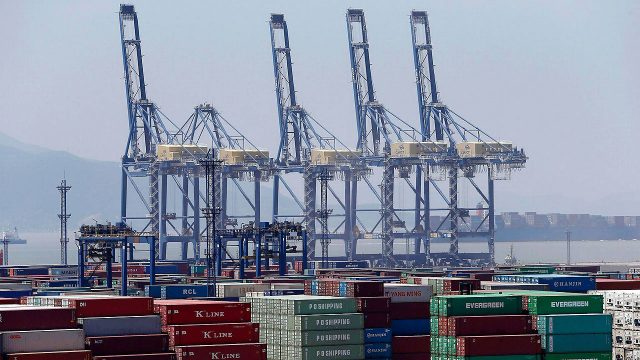
 – China’s exports rose faster than expected in April, while imports narrowed their declines, customs data showed on Friday, giving Beijing some relief ahead of ice-breaker tariff talks with the U.S. this weekend.

Outbound shipments from the world’s second-largest economy rose 8.1% year-on-year, beating the 1.9% growth expected in a Reuters poll of economists but slowing from the 12.4% jump in March, when exporters scrambled to get their shipments out before the 145% U.S. tariffs on Chinese goods took effect.

Imports slowed a slide that began at the start of 2025, falling 0.2%, from a 4.3% year-on-year drop in March and below the 5.9% drop expected by analysts.

The new trade data comes with China and the United States locked in a heated trade war, which saw both sides ratchet up tariffs on each other’s goods to over 100% in early April.

The Trump administration has since exempted items including smartphones and computers, imported largely from China, from the 145% tariffs. Beijing has also created a list of U.S.-made products that would be exempted from its 125% tariffs and is quietly notifying companies about the policy, Reuters previously reported.

Chinese and U.S. officials will meet this weekend in Switzerland to start trade negotiations.

But an immediate lowering of trade barriers seems a long shot, with Trump saying on Wednesday he was not willing to cut U.S. tariffs to get Beijing to negotiate, and China’s foreign ministry insisting that Washington should “stop threatening and pressuring” it.

The U.S. tariffs could deal a heavy blow to China’s economy, which has relied on exports to drive growth as it struggles to recover from the pandemic shocks and a protracted property market slump. Domestic demand remains weak and investor confidence fragile.

Beijing has in the past few months reiterated its confidence that China could achieve the “around 5%” growth target for the year, and rolled out measures to bolster consumption and support the country’s exporters.

A slew of monetary stimulus measures, including liquidity injections and cuts to policy rates, were announced on Wednesday in a bid to ease tariff hits on the economy.

China’s April surplus came in at $96.18 billion, down from the $102.64 billion the previous month. – Reuters

China says it has full confidence in ability to manage US trade issues

REUTERS

 – China has full confidence in its ability to manage U.S. trade issues, Vice Foreign Minister Hua Chunying said on Friday, a day before officials from both sides are set to meet in Switzerland to discuss the tariffs they have imposed on each other.

“We have no fear,” Ms. Hua told a small group of reporters at a middle school in a rural county in southwestern China, adding that the trade policy of the U.S. administration cannot be sustained.

The weekend talks involving top U.S. and Chinese economic and trade officials are widely seen as a first step towards resolving a trade war that has disrupted the global economy. President Donald Trump said on Thursday that the U.S. tariffs on Beijing of 145% would likely come down.

“We have full confidence,” Ms. Hua said during a Beijing-organized trip to Malipo county to showcase China’s efforts to build up rural economies.

“We do not want any kind of war with any country. But we have to face up to the reality. As you can see, people have full confidence in our capability to overcome all the difficulties.”

Mr. Trump’s tariffs on many of the United States’ trading partners, including China, are increasingly weighing on a world economy which for decades had benefited from predictable and relatively free trade.

Many economists are calling the Mr. Trump tariffs a “demand shock” to the world economy which, by making imports more expensive for American businesses and consumers, will sap activity elsewhere.

“What the United States is doing cannot be sustained,” Ms. Hua said. “Ordinary people in the U.S. already feel suffering from the tariff war.”

The U.S. administration will come back to “normal”, she said. – Reuters

Pope Leo XIV: Why the College of Cardinals chose the Chicago native and Augustinian to lead the church after Francis

Pope Leo XIV | Screenshot from Vatican Media Livestream

The Conversation

by Professor Emerita of Religious Studies, College of the Holy Cross


When the 69-year-old Cardinal Robert Francis Prevost on May 8, 2025, appeared on the main balcony of St. Peter’s Basilica for the first time as Pope Leo XIV, he was cheered loudly by the huge crowd of pilgrims, tourists, local Catholics and other onlookers, who had waited hours for the first sign of white smoke and the official announcement.

As a specialist in Catholic history and ritual, I know how important this moment was for Catholics and others all over the world. A new pope brings with him a sense of excitement often mixed with uncertainty.

But the choice of the College of Cardinals came as a surprise to some. Prevost is the first pope from the United States, and, traditionally, the European-dominated College of Cardinals has had reservations about choosing a cardinal from the U.S. for fear of too much American influence in the church.

So, who is Prevost and what might have influenced the cardinals’ vote?

Early experiences

Born in Chicago, Illinois, Prevost joined a Catholic religious order at the age of 20: the Order of St. Augustine, called Augustinians, founded in the 13th century. Instead of withdrawing from the world in isolated monasteries, members of this order traveled as mendicants to aid the poor as well as serve as missionaries and teachers.

Prevost studied theology both in the U.S. and in Rome and, as a newly ordained priest, spent a year in Peru. After a short return to the U.S. as an official of the Augustinian order in Illinois, he returned to Peru as a seminary professor to teach canon law, the legal structure of the Catholic Church. He would stay in Peru for the next 10 years.

In 1999, he became the prior – that is, the head – of the local Augustinian province in Chicago, and was later elected prior of the worldwide Augustinian order. This gave him a truly global experience, since the Augustinians had some 50 communities spread across every continent.

In 2015, Pope Francis appointed him bishop for the diocese of Chiclayo in Peru. In 2019, Francis appointed him a member of several important Vatican dicasteries, or departments, where he became very familiar with the central church administration. Most importantly, he served as prefect – or chairman – on the Dicastery for Bishops.

In fact, because of his lengthy pastoral experience in Peru and service at the Vatican, some commentators had noted before Prevost was chosen that, if the cardinals were to elect an American pope, it would be him. His service on the Dicastery for Bishops was considered especially important, since members play a key role in selecting new bishops.

Global church

During the 20th century, especially after the Second Vatican Council – a series of meetings of the world’s bishops to modernize the church, ending in 1965 – the popes began to name cardinals from other parts of the world that were previously considered to be on the periphery of the Catholic Church.

And this led to popes being chosen from outside of Italy for the first time in centuries. Pope St. John Paul II was Polish and the first non-Italian pope since the 16th century. Pope Benedict XVI was another non-Italian, born in Germany, who had served as a Vatican official. Pope Francis was born in South America to parents who were Italian-born immigrants to Argentina.

The College of Cardinals, which had few representatives from other continents until recently, is now much more international. Some 80% of the cardinal-electors were named by Francis, many from countries that had never before had a cardinal.

In reviewing his record, the cardinal-electors might have taken a number of factors into account. Prevost would be an effective administrator as head of the church, and was an expert in church canon law. He had decades of experience doing pastoral work in South America, as well as in North America. And as prior general of the entire Augustinian Order, he would likely have traveled widely to visit many of the communities he supervised.

Papacy under Leo

The new pope appeared on the Vatican balcony wearing the traditional papal garments: white cassock, short red cape, decorated red and gold stole, and golden cross hanging around his neck. Francis, on the other hand, had appeared dressed in the plain white cassock of a pope.

Certainly, he had not chosen the simplicity of Francis. Was this a sign that he would be more of a traditionalist?

His choice of a papal name, I believe, could indicate a different point of view. Pope Leo XIII wrote a groundbreaking encyclical in 1891, “Rerum Novarum,” subtitled “On Dignity and Labor.” In this he stressed the rights of workers to unionize and criticized the conditions in which they worked and lived. He also championed other rights the ordinary worker deserved from their bosses and from their government.

In his first remarks from the balcony, offering a glimpse into the direction of his papacy, Leo XIV stressed the role of Catholics and the church as peacemakers and bridge-builders, in dialogue with other religious traditions and cultures. His first words were “Peace be with you all,” describing this peace as “a disarmed peace, a disarming peace.” He further urged Catholics to act together “without fear … united with one another … to build bridges” through dialogue and outreach – to bring peace to the world.

He may not follow exactly in Francis’ footsteps, but he will likely continue walking in the same direction. – Reuters

New Zealand to increase redress payments for victims of abuse in state care

STOCK PHOTO | Image by Kerin Gedge from Unsplash

 – The New Zealand government said on Friday it would spend NZ$774 million ($457 million) in its 2025 budget for redress and compensation for hundreds of thousands of children, young people and vulnerable adults who were abused in state care.

A public inquiry last year found some 200,000 children and vulnerable adults in state and faith-based care experienced some form of abuse from 1950 to 2019, forcing Prime Minister Christopher Luxon in November to offer an historic national apology to victims and their families.

“We know there is nothing we can do to take away the pain of survivors,” Erica Stanford, the lead coordination minister for the government’s response to the inquiry, said in a statement.

“But the government has committed a significant investment … to improve the redress system and strengthen the care system to prevent, identify, and respond to abuse in the future.”

The average compensation payment for new claims will be raised to NZ$30,000 ($17,703) from NZ$19,180, and more money will be provided for survivors who suffered extreme abuse, while processing of claims will be sped up from 2027 to cut wait times, the statement said.

The redress does not include claims that sit with school boards, faith-based organizations, or other non-state providers, it said, adding the government will be receiving further advice on those later in the year.

Those from the Indigenous Maori community in state and foster care institutions were especially vulnerable to abuse, findings in the public inquiry noted last year.

The inquiry commissioned in 2018 was expanded to include churches and other faith-based institutions, following calls from victims and others.

Pope Francis, who died last month, had met abuse victims in several parts of the world during his 12-year papacy and made addressing the issues a priority after historical revelations of abuse from Chile to New Zealand.

Francis created the Vatican’s first anti-abuse commission, became the first pope to expel a cardinal from the priesthood for sexual abuse and installed a global system for Catholics to report suspicions of abuse or cover-ups by bishops.

The Catholic church on Thursday elected Cardinal Robert Prevost, who has spent most of his career as a missionary in Peru, as a successor to Francis, becoming the first U.S. pope and taking the name Leo XIV.

In an interview with the Vatican News website in 2023, Prevost said the Church must be transparent and honest in dealing with abuse allegations.

But SNAP, a US-based advocacy group for victims of clerical sex abuse, expressed “grave concern” about his election, renewing accusations that Prevost failed to take action against suspected predatory priests in the past in Chicago and in Peru. – Reuters

ADVERTISEMENT
ADVERTISEMENT