Home Blog Page 1593

PHL industry welfare ‘central’ to US tariff negotiating stance

A worker uses a microscope at an electronics manufacturing assembly plant in Biñan, Laguna, April 20, 2016. — REUTERS

SECRETARY Frederick D. Go said the Philippine delegation to Washington pursued tariff negotiations with the US with an eye towards ensuring the welfare of Philippine industries.

Mr. Go, the Special Assistant to the President for Investment and Economic Affairs, said in a statement that last week’s talks “went very well,” adding that the Philippine delegation “made sure to put the welfare of local industries at the center of our negotiations.”

“We are hopeful that these discussions mark the beginning of a process toward arrangements from both sides that will not only strengthen US-Philippines trade ties but also help diversify our country’s export markets,” he added.

The Philippine delegation met with the US Trade Representative (USTR) on May 2 to negotiate tariff rates for Philippine goods.

US President Donald J. Trump imposed reciprocal tariffs on most trading partners, with Philippine goods assigned a 17% tariff, the second-lowest rate in Southeast Asia.

The reciprocal tariffs were subsequently put on hold until July, with Mr. Trump announcing a 90-day pause while charging most trading partners the 10% baseline rate in the interim.

“Our goal for this meeting is a partnership that benefits both sides and supports the growth of our industries at home,” Mr. Go said. 

The Philippine delegation also included Trade Secretary Ma. Cristina A. Roque and Philippine Ambassador to the US Jose Manuel D. Romualdez. 

“We were able to clearly convey to the USTR our local industries’ asks and concerns, and we are hopeful this will yield our desired results,” Ms. Roque said.

Prior to the Philippine delegation’s visit to the US, Ms. Roque had expressed the hope for zero tariffs on Philippine exports. — Justine Irish D. Tabile

US expands funding for rail pre-feasibility study

THE US Trade and Development Agency (USTDA) has increased funding for the pre-feasibility study of the Subic-Clark-Manila-Batangas (SCMB) railway to $3.8 million, according to the Office of the Special Assistant to the President for Investment and Economic Affairs (OSAPIEA).

“The US has ramped up its support for the Philippines’ ambitious infrastructure drive, approving a major grant increase for the pre-feasibility study of the SCMB Freight Railway — a flagship project of the Luzon Economic Corridor,” OSAPIEA said in a statement over the weekend.

“The USTDA boosted its funding for the project from $2.5 million to $3.8 million, signaling a strong commitment to fast-track transformative projects that will connect key business hubs and strengthen the country’s economic position,” it added.

According to the OSAPIEA, the USTDA officially informed the Philippine government of the grant approval on April 28.

“The increase in funding follows a competitive consultant selection and negotiation process. The USTDA is set to announce the selected US consultant soon, pending final due diligence checks,” it said.

Secretary Frederick D. Go, who heads the OSAPIEA, is set to meet with the DoTr and the US Embassy this week to discuss the signing of the beneficiary agreement for the SCMB railway.

“This development is a critical step toward the realization of the Luzon Economic Corridor, which aims to connect key economic hubs — Subic Bay, Clark, Manila, and Batangas — through high-impact infrastructure projects, including the SCMB railway,” OSAPIEA said.

“The railway is expected to streamline logistics, reduce transportation costs, and generate significant employment opportunities for Filipinos,” it added.

Meanwhile, the Philippine government is also working with Swedfund on a separate grant of $1.2 million for the project.

The Luzon Economic Corridor, being undertaken via a trilateral agreement among the Philippines, the US, and Japan, is part of a broader collaboration supported by the G7 Partnership for Global Infrastructure and Investment.

“This milestone demonstrates that Philippines-US economic ties are stronger than ever. The increased USTDA grant for the SCMB Rail pre-feasibility study signals renewed investor confidence and will translate to more job opportunities along the corridor,” Mr. Go said. — Justine Irish D. Tabile “

Maynilad may proceed with P49-B IPO this year — chairman

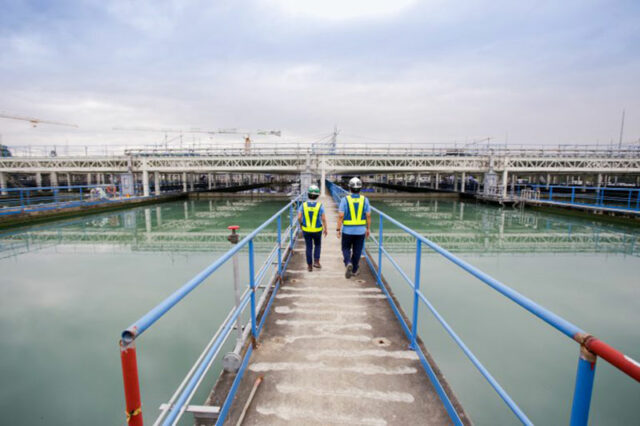
MAYNILADWATER.COM.PH

By Revin Mikhael D. Ochave, Reporter

WEST ZONE water concessionaire Maynilad Water Services, Inc. may proceed with its planned P49-billion initial public offering (IPO) this year despite prevailing tariff uncertainties, according to its chairman.

“If we can (do the IPO) this year, yes, so that it will be finished and we can comply (with the law),” Maynilad Chairman Manuel V. Pangilinan told BusinessWorld on the sidelines of a media event last week.

“We have to go public by the early part of 2027. We just want to probably finish and comply with the franchise law of Maynilad. I’d like to encourage them to proceed,” he added.

This comes as e-wallet giant GCash said that the Trump administration’s tariffs have introduced significant uncertainty to its listing plans.

The US initially imposed a 17% reciprocal tariff on Philippine goods. However, these were suspended for 90 days, with most US trading partners paying 10% during the period.

Maynilad is mandated under its legislative franchise to offer at least 30% of its outstanding capital stock to the public by January 2027.

The Philippine Stock Exchange (PSE) is expecting six IPOs in 2025. However, the local bourse has seen only one IPO so far — the P732.62-million market debut of Cebu-based fuel retailer Top Line Business Development Corp. in April.

According to its latest prospectus dated March 14, Maynilad is aiming for a pricing date of June 20, with the final offer price notice to be submitted to regulators on June 24.

The IPO offer period will run from June 25 to July 2, with a listing date set for July 10.

Maynilad’s IPO will comprise up to 2.46 billion common shares to be offered at a maximum price of P20 per share.

The offer includes 1.78 billion primary common shares, an overallotment option of up to 266.31 million primary common shares, an upsize option of up to 379.29 million common shares, and 36.31 million primary common shares to be offered to Pangilinan-led, Hong Kong-based investment holding firm First Pacific Co. Ltd.

Maynilad’s IPO could be the country’s largest if the indicative terms remain unchanged, exceeding the P48.6-billion market debut of food manufacturer Monde Nissin Corp. in June 2021.

The water provider will use the IPO proceeds for its capital expenditure program covering water, wastewater, customer service, and information system projects through 2026. It may also allocate proceeds for general corporate purposes.

BPI Capital Corp., HSBC, Morgan Stanley, and UBS were appointed joint global coordinators and joint bookrunners, while BPI Capital Corp. was also named the domestic lead underwriter for the IPO.

Metro Pacific Investments Corp., which holds a majority stake in Maynilad, is one of three Philippine units of Hong Kong-based First Pacific Co. Ltd., alongside Philex Mining Corp. and PLDT Inc.

Hastings Holdings, Inc., a unit of PLDT Beneficial Trust Fund subsidiary MediaQuest Holdings, Inc., has an interest in BusinessWorld through the Philippine Star Group, which it controls.

Chinabank eyes sale of Mactan property acquired from PH Resorts

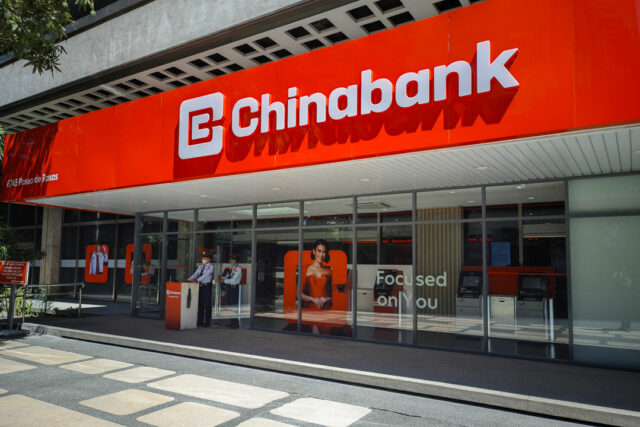
BW FILE PHOTO

SY-led China Banking Corp. (Chinabank) is planning to sell the Mactan, Cebu property it acquired from Dennis A. Uy’s PH Resort Group Holdings Inc., following interest from potential buyers.

“We have it already. We will start opening it up to people to show interest. There are a couple of interested parties,” Chinabank Chairman Hans T. Sy told reporters last week.

“It’s about 14 hectares. It is a very valuable property. We will open it up for sale,” he added.

In October 2023, Chinabank signed a sale and leaseback agreement with PH Resorts for the land for the latter’s planned Emerald Bay casino project. However, Mr. Sy said Chinabank has no plans to renew the leaseback agreement, which expired in March.

“It’s expired now. We’re not renewing anymore. We always do things with a heart. We gave them a chance,” Mr. Sy said.

Mr. Sy said this as Chelsea Logistics and Infrastructure Holdings Corp., also an Uy-led company, executed a Dacion-En-Pago transaction with Chinabank involving part of its real estate property in Brgy. Ligid-Tipas, Taguig City to divest non-productive assets and reduce debt.

Dacion-En-Pago refers to the transfer of asset ownership to settle a debt.

Chelsea Logistics said in its annual report that it signed a deed of assignment with Chinabank last year that assigned rights and ownership to a certain portion of the property to the Sy-led bank for P1.63 billion.

“The consideration was applied as full payment to the outstanding loan and unpaid interest of the group amounting to P1.013 billion and partial payments to unpaid interest on loans of Chelsea Shipping Corp. and Trans-Asia Shipping Lines Inc. with Chinabank amounting to P620 million,” Chelsea Logistics said.

In a separate regulatory filing, Chelsea Logistics said it acquired the property in 2019 for the warehousing operations of its subsidiary Worklink Services, Inc. (WSI).

Chelsea Logistics and WSI entered into a loan agreement with Chinabank to buy the property for P800 million, and to build a warehouse facility on the property for P450 million. However, Chelsea Logistics decided to stop the construction of the warehouse in 2022.

“Pursuant to the plan of the group to venture into the e-commerce business, the management has deemed that the use of the properties is currently undetermined,” Chelsea Logistics said.

Chinabank shares were last traded on May 2, when the company’s stock dropped by 1.21%, or P1.10, to P89.90 per share. — Revin Mikhael D. Ochave

SM Prime shares rise after Q1 results, cash dividends

SM City J Mall in Mandaue City — BW FILE PHOTO

SY-LED SM Prime Holdings, Inc. was one of the most actively traded stocks last week following the release of its first-quarter (Q1) earnings report and declaration of cash dividends.

Data from the Philippine Stock Exchange (PSE) showed that SM Prime was the eighth most traded stock during the week, with a value turnover of P1.16 billion from a total of 48.71 million shares traded from April 25 to May 2.

Financial markets were closed on May 1 in observance of Labor Day.

The property developer’s shares rose by 6.1% week on week, outperforming the 1.7% gain of the property index and the 2.3% increase of the PSE index (PSEi).

Year on year, SM Prime shares declined by 13.4%, steeper than the property sector’s 6.7% contraction and the PSEi’s 3.5% drop. Year to date, the stock price has fallen by 26.4%.

Analysts attributed SM Prime’s active trading last week to the company’s positive disclosures.

Jash Matthew M. Baylon, an analyst at First Resources Management and Securities, said in an e-mail that SM Prime’s movement was mainly driven by its first-quarter report and forward-looking guidance, which boosted investor optimism.

“SM Prime’s strong move last week is based on its first quarter of 2025 earnings report which is up by 11% to P11.7 billion fueled by its robust malls and residential business segments,” said Mr. Baylon.

Mr. Baylon also said that SM Prime announced a dividend of P0.48 per share, with a yield of 2.1%, which further supported the stock’s strong price action.

“In addition, the forward-looking guidance of the firm, based on its first-quarter performance, also added optimism among investors as the firm showed confidence and potential growth for the rest of the year,” he added.

“Two things that made SM Prime active for the week. Aside from the lowering of interest rates by the Bangko Sentral ng Pilipinas (BSP), the company reported a net income of P11.9 billion for the first three months of 2025, up 11%,” Jeff Radley C. See, head trader at Mercantile Securities Corp., said in an e-mail.

In a disclosure last week, SM Prime reported a consolidated attributable net income of P11.7 billion in the first quarter of 2025, up 11% from P10.5 billion in the same period last year. The double-digit growth was driven by steady revenue expansion, margin improvement, and disciplined cost management.

The company also posted a consolidated net income of P11.9 billion in the first quarter of 2025, up 11% from P10.7 billion in the same period last year.

Revenues likewise rose by 7% year on year to P32.8 billion from P30.7 billion, driven by higher rental income, revenue recognition from real estate sales, and other income sources.

“Our forecast for SM Prime’s full-year 2025 revenue is at P153.88 billion, up by 9.61% from last year, while the second-quarter revenue is projected at P37.28 billion, up by 9.62%,” Mr. Baylon said.

In a separate disclosure, the company’s board approved the declaration of a regular cash dividend amounting to 25%, plus an additional 5% special dividend, of the company’s 2024 net income. The total dividend amounts to P0.48 per share, with a record date of May 14 and payment date of May 28. The declared cash dividends total approximately P13.86 billion.

At its most recent Monetary Board meeting, the BSP continued its rate-cutting cycle, delivering a widely expected 25-basis-point cut. This brought the target reverse repurchase rate down to 5.5% from 5.75%.

Rates on the overnight deposit and lending facilities were also reduced to 5% and 6%, respectively.

“For next week, we expect SM Prime’s stock to trade within the range of P23–P24.50 ahead of the upcoming ex-dividend date. We consider P23 as the support level, confluencing with the 50-day EMA (exponential moving average), and P24.50 as the resistance level,” said Mr. Baylon.

Mr. See gave support levels at P24 and P23.25 per share, while resistance levels are at P25.30 and P26 per share. “The stock might revisit its support levels before trending upwards.” — Lourdes O. Pilar

Aboitiz InfraCapital’s LIMA Tower One secures 5-Star BERDE rating

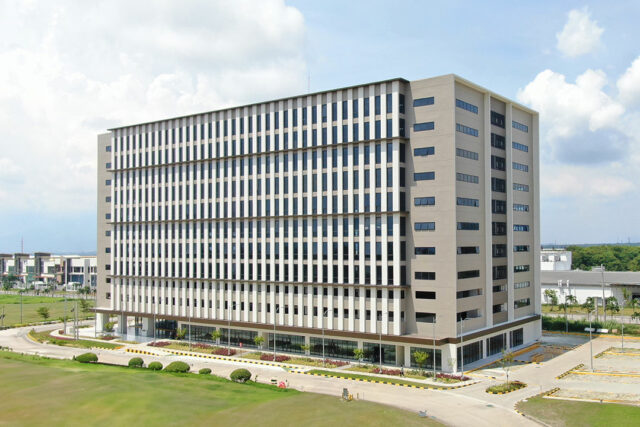
ABOITIZ InfraCapital (AIC), the infrastructure arm of the Aboitiz Group, said its LIMA Tower One in Batangas has been awarded a 5-Star BERDE Certification.

“It affirms our deep and ongoing commitment to responsible development — where economic progress, environmental stewardship, and community upliftment move forward hand in hand,” said Rafael Fernandez de Mesa, president of LIMA Land, Inc. and head of Aboitiz InfraCapital Economic Estates, in a statement.

The certification sets a new benchmark for sustainable office developments in Batangas and across key regional growth centers, the company said.

The BERDE Green Building Rating System, developed by the Philippine Green Building Council (PHILGBC), assesses, measures, monitors, and certifies the country’s green building projects above and beyond national and local standards.

A 5-Star BERDE Certification is the highest rating granted by PHILGBC, indicating that a project meets the highest standards of sustainability and performance.

LIMA Tower One is the first premium office building in Batangas, designed to address the growing demand for high-quality workspaces in provincial locations amid the shift to a work-from-home setup.

The 11-story tower provides flexible, high-performance spaces designed to meet global standards and is expected to house IT-BPM (information technology-business process management) and knowledge-based industries.

The development has already secured significant tenants, including global IT-BPM firm Conduent, which has leased three floors for its inaugural provincial office.

LIMA Tower One serves as the centerpiece of LIMA Estate’s Biz Hub, a 30-hectare master-planned business district within the estate.

The Biz Hub’s 40-hectare expansion, scheduled for completion by 2027, will include commercial, retail, residential, and mixed-use spaces. 

LIMA Estate, spanning 1,000 hectares, is one of four key developments under Aboitiz InfraCapital Economic Estates, the Philippines’ only industrial estate developer with all operating estates holding a BERDE Certification.

Aboitiz InfraCapital Economic Estates’ portfolio also includes the 384-hectare TARI Estate in Tarlac City, the 63-hectare Mactan Economic Zone 2 Estate in Lapu-Lapu City, Cebu, and the 540-hectare West Cebu Estate in Balamban, Cebu. — Beatriz Marie D. Cruz

Trump’s first 100 days spark global messaging battle

RAWPIXELS

By Peter Apps

WASHINGTON — As the Trump administration marked 100 days in office on April 30, China’s state broadcaster described what it called “100 days of chaos” and said the government in Beijing was providing “stability to a changing and turbulent world.”

Throughout the rollercoaster of the first weeks in office of the administration, state-backed Chinese channels and social media feeds have increasingly pushed the narrative that the US under Donald Trump is abandoning its allies, with a particular focus on Taiwan and US Asian partners.

It is a narrative the Pentagon has sometimes attempted to push back against. “America First does not mean America alone,” Defense Secretary Pete Hegseth said in a speech at the US Army War College earlier.

More broadly, however, the administration’s rhetoric has often been aggressively triumphalist.

In Beijing, the US Embassy described the opening of the new administration as “100 years of victory” on its social media channels, particularly infuriating Chinese officials.

While some in the US military and State Department clearly retain some concerns about alienating too many US allies, many of Trump’s supporters argue that his actions — including his trade war and associated rhetoric, treatment of Ukraine, and demand that US allies do more in their own defense — represent exactly what he said he would do when he was elected.

On other areas, there can be little clarity.

When Trump’s new chairman of the Joint Chiefs of Staff, US Air Force General Dan Caine, was asked at his Senate confirmation hearing whether Washington would continue to provide NATO’s top military officer — regarded as a key indicator of US commitment to Europe — he simply said he did not yet know what the president would order.

When it comes to defense and national security, the new administration has explicitly placed much greater priority on securing the US border in the short term and delivering longer term protection against foreign ballistic missiles through what Trump has termed the “Golden Dome” defense shield.

That alone has unsettled US allies, who worry that future US administrations may turn inwards even more.

Already, there are signs both Moscow and Beijing see that as an opportunity — although they are approaching it in different ways. While China has touted the notion that it will fill the gap left by US disengagement abroad, Russian media outlets have often simply looked to feed the chaos and division.

This has included refocusing the attention of Russian channel RT — previously known as “Russia Today” — on Arabic Middle East audiences after it was shut down in most European nations. That has allowed RT to fan anti-Western feelings already fueled by US support for Israel over the Gaza war.

Such sentiment has risen across the wider Global South, particularly in Islamic nations such as Malaysia and Indonesia.

Having largely gutted what had been US government-backed media platforms like Radio Free Europe and Radio Free Asia targeting foreign audiences, the current administration appears largely uninterested in public opinion across many such regions.

But while the Trump administration is sticking firmly to its messaging that Europe must do more to defend its own continent, the last few weeks have seen a concerted outreach by Washington to its important allies in Asia, many of whom have become more nervous about their security since Trump returned to power.

AWKWARD ALLIANCE MESSAGING
The outreach included a visit to Japan and South Korea by new Navy Secretary John Whelan. During his trip, Whelan began negotiations on using Japanese and South Korean shipyards not just to maintain and fix US military vessels, but also to construct civilian shipping that could be used by the US military and allies in the event of a major conflict such as one sparked by a Chinese invasion of Taiwan.

Trump has made it clear he will not be repeating predecessor Joe Biden’s assertions that the US would definitely back Taiwan if the island were attacked, reverting to the long-running US position of “strategic ambiguity.” Those in Taiwan, however, appear to have taken some heart from a leaked Pentagon report which stated that deterring a Chinese invasion was now the top US priority globally — and have also been encouraged by the appointment of the pro-Taiwan David Perdue as ambassador to Beijing.

In Poland — which in Trump’s 2017-21 term prided itself on keeping relations relatively good — influential centrist newspaper Rzeczpospolita noted that Trump had indeed kept his pledge to swiftly bring down US migration numbers. But it said he had also “upended the world order” and “sided with Putin.”

Other Polish media outlets struck a similar tone, some describing US efforts to make Ukraine sign a critical minerals deal as “neocolonial” and damaging to wider US alliances.

Ukraine finally signed that deal on Wednesday, giving the US preferential access to new Ukrainian minerals deals and providing for it to fund investment in Ukraine’s reconstruction.

Whether the damage from Trump’s heavy-handed dealings with allies can be undone remains another question.

This week saw Liberal leader Mark Carney win Canada’s general election, heavily swayed by anti-Trump sentiment generated by the president’s talk of making Canada another US state, which wiped out the Conservatives’ big lead in the polls.

In Australia, Labor Prime Minister Anthony Albanese has also received an unexpected poll boost ahead of elections this weekend as popular Australian dislike of Trump undermined his more conservative rival.

To what extent those developments will worry the current White House team remains unclear.

As Albanese stressed last month in a podcast interview, Australia “made its decision a long time ago” which side it was on when it came to the US and China.

The same is true of many other US allies, not least Britain, Japan, South Korea and others outside the European Union.

Within mainland Europe, the schism with Washington looks more permanent. But in the short term at least, Europe’s failure to be able to generate even a small force of perhaps 25,000 troops to secure post-war Ukraine acts as a reminder that the continent remains far from ready to defend itself.

In the Baltic states, where media and pundits are now voicing more concern over the potential for a future Russian invasion than at any point since independence from Moscow in 1991, Trump’s first 100 days were described as “destructive” on many levels.

UKRAINE, BALTIC WORRIES
Those dynamics may continue to get messier.

In some of those nations now most dependent on the US for support, anti-Trump comments have become increasingly widespread — with pro-Kremlin media already working hard to turn this into broader anti-US sentiment.

According to BBC Monitoring, that included amplifying stories of a handful of Ukrainian coffee shops renaming “americano” coffee as “europeano” or “ukrainiano.”

In parallel, Ukraine’s state-run TV broadcast “marathon” that has combined the output of all new stations since Vladimir Putin’s full-scale invasion of Ukraine in 2022 has acquired its own periodic anti-American tone.

“This America is broken, give us another one,” said one character on a satirical news show, while other voices within Ukraine have warned that turning against the US would simply make it easier for Russia to overrun the country.

Some of those around Ukrainian President Volodymyr Zelensky, and perhaps even the man seen as his primary political rival, former military chief and now ambassador to London Valeriy Zaluzhnyi, appear to have permanently lost patience with Trump.

At the start of March, Zaluzhnyi told a public event at Chatham House in London that the new US administration was “destroying” the world order.

With his own eye on re-election, Zelensky himself must walk an awkward path between not looking weak to his own voters while not wrecking what is left of US-Ukrainian relations.

Some of Zelensky’s own supporters have suggested Ukraine should even consider cutting off diplomatic relations with the United States — although most, more mainstream voices fear that could prove disastrous.

For more cautious voices, the Zelensky-Trump meeting and photo opportunity at Pope Francis’ April 26 funeral in Rome – and the tougher approach to Russia the US has taken in communications since then — have offered only limited relief.

“Trump is not known for his consistency of statements,” Latvian pundit Bens Latkovskis warned in a local newspaper, saying the idea that the US was “a reliable guardian and defender is illusory at best.”

In some quarters, that is already fuelling a narrative of outright despair, or at the very least betrayal.

In 2004, then-Latvian President Vaira Vike-Freiberga described her small nation’s NATO entry as the only guarantee Baltic citizens had they would not one day wake up to a Russian knock on the door or deportation to Siberia.

Two decades later, she called the most recent US-led, top-level peace talks with Ukraine “grotesque and a mockery of diplomacy.”

“We have to live for three and a half years under this (Trump) regime,” she told Latvian television. “I do not know how the world is going to survive this.”

REUTERS

The opinions expressed here are those of the author, a columnist for Reuters.

PwC unveils new brand identity

PRICEWATERHOUSECOOPERS (PwC) has unveiled a refreshed brand positioning and identity, emphasizing its commitment to harnessing technology to better support clients worldwide.

The new brand positioning, along with updated visual and verbal elements, will be promoted through PwC’s global advertising campaign, “So You Can,” developed in partnership with FutureBrand and McCann.

The campaign will be rolled out globally in the coming months.

As part of the rebranding, PwC has redesigned its logo, incorporating a new “momentum mark,” a distinctive orange signature color, and updated visual elements. The company has also adopted a refreshed verbal identity, defined by a tone that is “bold, collaborative, and optimistic.”

The brand repositioning aligns with PwC’s ongoing initiatives to assist clients in adopting artificial intelligence (AI) at the enterprise level.

“As technology and other megatrends continue to transform the economy, it is important that our identity provides the right platform for the future,” said Antonia Wade, PwC Global chief marketing officer, in a statement on Friday.

PwC employs approximately 6,400 people in the Philippines, with 2,900 serving local clients and 3,500 catering to global clients. The company operates offices in Makati, Pasig, and branches in Cebu, Iloilo, and Davao. — Beatriz Marie D. Cruz

From the ashes (literally)

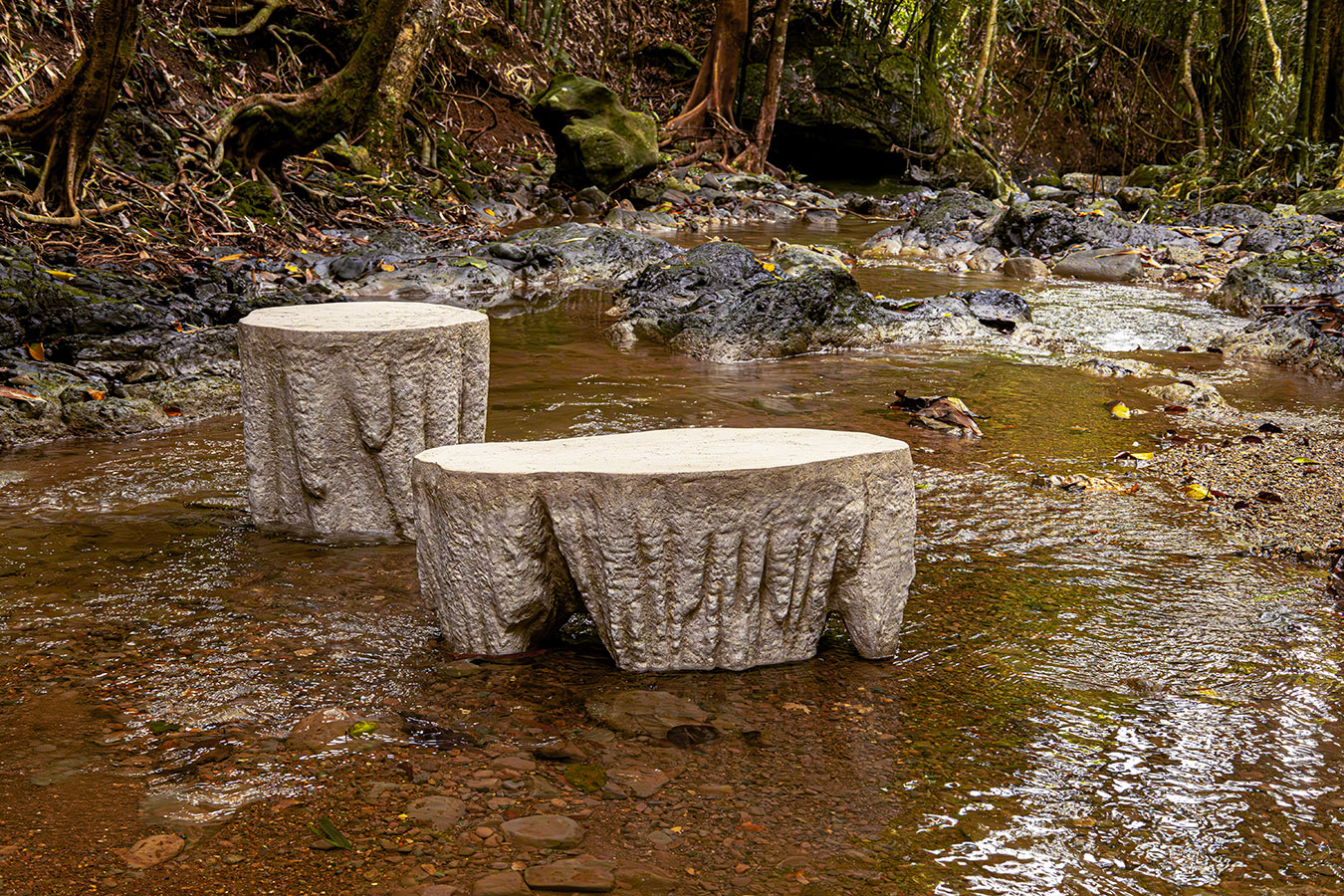
ORGANIC LOUNGE CHAIR and Riverstone Bench

THE 1991 ERUPTION of Mt. Pinatubo was one of the largest the world had ever seen. It spewed mountains’ worth of ash and stone, radically changing the landscape of Central Luzon. People and places were rubbed off the map, and those that survived had to make do.

Back then, Sydney Dy, co-founder of Destonos, owned a piggery with her husband in Tarlac. In the aftermath of the eruption, the farm was awash with ash. During an April 29 media lunch in Makati, she remembered asking what she would do with all of the ash around her — 30 years later, all that ash is now an upscale furniture brand.

To be fair, this wasn’t the first time Ms. Dy had to make difficult decisions: she had started out in banking, but a knowledge of style made her resign and work in fashion. After a few years of designing for a store (and seeing her collections sell out), she moved on to designing for the home.

She discussed with us how she made furniture out of the ash: resin, volcanic ash (or pumice stone ground to the consistency of ash), and fiberglass are mixed together and formed into a stone cast. They then turn into wall panels, coffee tables, and benches. From afar, the porosity makes it appear like an exotic coral — when touched, they are quite smooth, and very heavy. No one piece is the same due to the nature of the product.

Asked about durability, she says that they go through weathering and weight tests to prove to their foreign clients how well they’ll do during shipping: prior to the April launch event, Destonos only sold to the export market.

She recalls that she was largely ignored the first four years that she started the business, until a French catalog paid attention to her, placed a large order, and gave her a break: soon, clients from other countries started coming to the Tarlac factory. “I’m still here,” she said in a speech.

Asked what it’s like to “come home” (selling to the Philippines instead of abroad), she said, “It feels very good. Now is the perfect time. Before, I didn’t do it because I didn’t think the Philippines was ready, and they will not accept what I do. This time it’s different. People are more open.

“I create something different: from nothing, to something.”

To inquire about owning a Destonos creation or to schedule a private viewing, visit www.destonos.com. — Joseph L. Garcia

Metro Retail direct-to-market tie-up with small farmers set for expansion

METRO RETAIL Stores Group, Inc. said it is seeking to expand its direct-to-market partnership with smallholder farmers beyond a current ongoing program in Cebu province.

The partnership with Gulay Farmers Cooperative is helping supply produce to eight retail stores in Cebu, the company said in an e-mail.

Metro Retail said the arrangement provides a “structured and reliable” supply chain with a direct-to-stores model that cuts out middlemen and gives farmers access to mainstream markets.

The cooperative, meanwhile, assists with regulatory compliance, logistics, and quality control, allowing farmers to focus on increasing productivity and crop quality.

Since its launch in 2020, the program has directly benefited 500 farmers, supplying about 60,000 tons of produce to Metro Retail stores, the company said.

It said smallholder farmers typically struggle with bringing their produce to large retailers due to strict documentation requirements, fluctuating market prices, and logistical constraints.

“Many farmers are unable to secure business permits or tax registrations, limiting their access to formal retail markets,” it said.

“Additionally, the lack of an efficient distribution system means that much of their produce goes to waste before it even reaches consumers,” it added.

Metro Retail said the model allows it to offer fresher, high-quality produce at competitive prices while ensuring fair compensation for growers.

Metro Retail operates 71 locations across Luzon and the Visayas under the brands Metro Supermarket, Metro Department Store, Super Metro Hypermarket, Metro Value Mart, and Metro Home and Lifestyle. — Kyle Aristophere T. Atienza

Treasury bills, bonds may end mixed amid market volatility

BW FILE PHOTO

RATES of the Treasury bills (T-bills) and Treasury bonds (T-bonds) on offer this week could end mixed as market volatility and recession fears due to US trade policy uncertainties continue to affect global yields.

The Bureau of the Treasury (BTr) will auction off P25 billion in T-bills on Monday, or P8 billion each in 91- and 182-day papers and P9 billion in 364-day papers.

On Tuesday, the government will offer P30 billion in reissued 10-year T-bonds with a remaining life of seven years and four months.

T-bill and T-bond rates could mirror the mixed movements seen in secondary market yields as markets recalibrate their expectations amid ongoing uncertainties, analysts said.

The T-bills on offer on Monday may fetch mostly higher yields following the increase in comparable secondary market benchmark rates, Rizal Commercial Banking Corp. Chief Economist Michael L. Ricafort said in a Viber message.

Mr. Ricafort added that yields on the reissued 10-year bonds to be auctioned off on Tuesday may inch down to track secondary market rate movements amid growing expectations of a Federal Reserve rate cut following weak US economic data recently.

The bonds may fetch rates ranging from 6.04% to 6.075% and see decent demand, a trader said in an e-mail.

The trader added that the local bond market mostly consolidated last week amid the release of several key US economic reports.

At the secondary market on Friday, the 91- and 182-day T-bills rose by 5.88 basis points (bps) and 6.24 bps week on week to end at 5.5146% and 5.6713%, respectively, based on PHP Bloomberg Valuation Service Reference Rates data as of April 25 published on the Philippine Dealing System’s website. Meanwhile, the 364-day T-bill’s yield went down by 1.79 bps to 5.7183%.

On the other hand, the 10-year bond decreased by 8.01 bps week on week to yield 6.2603%, while the seven-year debt, the tenor closest to the remaining life of the T-bonds to be offered on Tuesday, went down by 4 bps to 6.0528%.

Federal Reserve policymakers on the alert for possible cracks in the labor market as businesses adjust to President Donald J. Trump’s erratic trade policy got some reassurance on Friday that so far there’s little weakness, and no reason to rush on rate cuts, Reuters reported.

US employers added a more-than-expected 177,000 jobs in April, the Labor department reported, and the unemployment rate was unchanged at 4.2%. Both are signs the labor market remains in balance during a month when Mr. Trump announced the steepest tariffs in a century, sending stocks downward and convulsing the bond market before the administration paused many of those levies until July.

With the job market holding up and inflation still running above their 2% target, Fed policymakers are expected to stick to their plan to leave short-term borrowing costs where they are while they wait to see how the tariffs affect prices and economic growth.

Traders are now betting the Fed will wait until July to start cutting interest rates; earlier they had thought a June move was more likely. And they now see the Fed delivering a total of three quarter-point interest rate cuts by yearend, one fewer than previously.

Shortly after the report, Mr. Trump reiterated his own call for the Fed to lower rates.

Fed policymakers, who say it will be the economy’s needs, not the president’s desires, that will dictate their moves, want to be sure that inflation won’t resurge. They have signaled that to do so they’ll keep the policy rate in the current 4.25%-4.5% range, as long as the job market doesn’t crumble.

Last week, the BTr raised P25 billion as planned from the T-bills it auctioned off as total bids reached P80.265 billion or more than thrice the amount on offer.

Broken down, the Treasury borrowed the programmed P8 billion via the 91-day T-bills as tenders for the tenor reached P22.025 billion. The three-month paper was quoted at an average rate of 5.546%, steady from the previous auction. Tenders accepted by the BTr carried yields of 5.494% to 5.608%.

The government likewise made a full P8-billion award of the 182-day securities as bids for the paper amounted to P29.21 billion. The average rate of the six-month T-bill went up by 2 bps week on week to 5.655%, with accepted rates ranging from 5.6% to 5.684%.

Lastly, the Treasury raised P9 billion as planned via the 364-day debt papers as demand for the tenor totaled P29.03 billion. The average rate of the one-year T-bill inched down by 0.3 bp to 5.688%, with bids accepted having yields of 5.684% to 5.7%.

Meanwhile, the T-bonds to be offered on Tuesday were last auctioned off on March 11, where the government raised P30 billion as planned at an average rate of 6.143%, lower than the 6.75% coupon.

The Treasury plans to raise P260 billion from the domestic market this month, or P100 billion via T-bills and P160 billion through T-bonds.

The government borrows from local and foreign sources to help fund its budget deficit, which is capped at P1.54 trillion or 5.3% of gross domestic product this year. — A.M.C. Sy with Reuters

Auto Shanghai 2025: Jetour-ing beyond roads

Jetour International President Ke Chuandeng with the G700 at Auto Shanghai — PHOTO FROM JETOUR

Chinese brand ventures into ‘luxury hybrid off-road’ segment

AT A JETOUR convention in Fuzhou, China last November, Jetour International President Ke Chuandeng told members of the media (with “Velocity” in attendance) that the brand’s aspiration is to be to China what Land Rover is to the United Kingdom, and what Jeep is to the United States. Of course, the aforementioned brands are off-road specialists which have built a reputation for an ability to go where the pavement ends.

To be sure, the releases rolling out or are set to emerge from the Jetour production lines are certainly looking to give credence to this declaration of intent. Following the T2 and T1 off-roaders (with the latter slated for launch in the Philippines in September, according to Jetour Auto Philippines, Inc. Managing Director Miguelito Jose), Jetour took advantage of the recent Auto Shanghai 2025 state to feature its new, so-called GAIA Intelligent Off-Road Architecture, expressed in two hulking off-roaders in the G700 and G900.

In a release, Jetour said it is among the “fastest-growing automotive startup brands globally,” with sales of over 560,000 units in 2024 — translating to a huge 80.3% jump year-on-year. The brand is now present in 67 countries and regions, boasting a network of “over 2,000” sales and service outlets.

With the reveal of the G700 and G900, Jetour is opening the third “era” of its journey, with the first defined by “family-focused” releases such as the X70, X90, and Dashing; the second was the “off-road” era as evidenced by the T1 and T2.

So, what does the “3.0 era” mean? For Jetour, it means “signaling deeper investment in off-road technology and a clear shift toward hybridization, intelligence, and premium in off-road mobility.”

Through GAIA, Jetour now presents two “advanced power systems.” The iDM-O Super Hybrid System, upon which the G700 is built, is designed for “high-efficiency off-road performance,” said to deliver strong power while being mindful of fuel economy. Meanwhile, the iEM-O Amphibious Range Extender System is claimed to be able to provide “tank-level propulsion with up to 18,000Nm of wheel torque and 2,500Nm of thrust, enabling seamless driving across both land and water.” Yes, you read that right: water. The Jetour G900 is fitted with a vector quad-motor drivetrain and “marine-grade navigation,” to go along with an “intelligent oxygen cabin,” smart cockpit, and “seamless connectivity.”

Back to the Jetour G700, it is positioned as a premium all-terrain SUV and will get a “groundbreaking 2.0TD engine with an industry-leading 45.5% thermal efficiency.” It receives the world’s first dual-speed hybrid DHT system, said the company, and is expected to deliver up to 210kW of power and 6,446Nm of wheel torque.

The GAIA platform promises adjustable suspension travel of up to 150mm and a maximum ground clearance of 350mm. “Capabilities include tank-turning, crab-walk mode, and integrated marine-grade functions for full amphibious performance. Further enhancing the platform are six core innovations: low-orbit satellite communication, onboard oxygen generation, an immersive AI-powered cockpit, advanced terrain navigation and parking assistance, vehicle-cloud integration, and continuous intelligent system upgrades via over-the-air updates,” reported Jetour.

If it all sounds very incredible and fantastic, well, that seems to be the goal for Jetour brass: to impress and get the attention of a market that has never before seen such a glut of brands. “GAIA is more than an architecture — it’s the cornerstone of Jetour’s vision for the future of intelligent off-road mobility,” said Mr. Chuandeng. “With GAIA, Jetour is redefining what off-road vehicles can achieve — delivering not only extreme performance but a smarter, safer, and more sustainable way to explore the world.”

Our dispatch from Shanghai continues next week.