Home Blog Page 1577

Another deadly surprise destination

TEO BRIONES and Kaitlyn Santa Ana as siblings Charlie and Stefanie Campbell-Reyes.

By Brontë H. Lacsamana, Reporter

Movie Review
Final Destination Bloodlines
Directed by Zach Lipovsky,
Adam B. Stein
MTRCB Rating: R-16

FINAL DESTINATION BLOODLINES brings back the warm, fuzzy feeling that kids and teenagers in the 2000s got from watching grisly, shocking deaths unfold in the first few Final Destination movies (which we were definitely way too young to be seeing), each one building on the creativity of the last. Physically far-fetched kills? Unexpected narrative twists? Extreme paranoia over going outside? This installment, coming 14 years after the fifth one in 2011, delivers on those fronts.

What sets this addition to the franchise apart is how it makes you care about the characters, despite knowing most of them will die. It follows college student Stefanie (played by Kaitlyn Santa Juana), who is inexplicably suffering from a violent recurring nightmare about a gruesome accident. She goes home to find out the truth behind this and discovers that her family is fated to die gory deaths, one by one.

It doesn’t help that she is a bit estranged from her family, having lived away for a bit, so she also seeks to reestablish her connection with her little brother, Charlie (played by Teo Briones). This very human motivation at the core of the film helps the audience root for these two characters.

Unlike the previous films, this one has a sort of period piece in it — Stefanie’s nightmare, making up the opening 20 minutes of the movie. It shows a gruesome accident on a restaurant dance floor atop a tower, first experienced by her grandmother Iris in a premonition back in 1968. Aside from providing context to why their family is on death’s list, the entire scene is a showstopper, and the film never lets up from there.

As a casual fan of the Final Destination franchise, which has shocked, entertained, and traumatized a generation of millennials, Bloodlines is awesome in that it doesn’t resort to pandering to Gen Z audiences. It trusts that the kids now are just like the kids back then — inherently curious about gore — and it therefore doesn’t subject us to modern slang or social media-related plot points. It truly felt like a Final Destination film from the mid-2000s, down to the farfetched insanity of each death becoming ultra cheesy by the time the back half rolls in.

For the weirdos who find schlock like this kind of comforting, it’s cozy to see that the central event that kicks off the deaths for the family is a backyard barbecue with a bunch of cousins, uncles, and aunts. There’s just no better way to say it than that it just feels very 2000s. Another standout character, the spiky-haired emo tattoo artist cousin Erik (played by Richard Harmon), exemplifies this. It’s a stereotype that we don’t see as much anymore in its full glory these days. Not to mention his close connection with his younger brother Bobby (played by Owen Patrick Joyner), lending even more heart to the story.

There’s even a little in there about trauma being passed down through generations, from the grandmother Iris (played by Brec Bassinger in the premonition/nightmare scenes and by Gabrielle Rose in the present-day) to Stefanie’s estranged mother Darlene (Rya Kihlstedt). Perhaps what feels most “current” or “trendy” about the story is Stefanie’s heroism as a young woman grappling with — and actively fighting against — the literal and metaphorical fatalities that trauma has dealt on her family.

The movie also plays up more than ever that there’s a formula to death’s uncanny attempts to kill off those on his list. The characters make a big deal about trying to stave off death, with grandmother Iris having an ominous notebook recording her obsessive findings on it, but the components of this formula seem random at best. Stefanie is shown to have become a natural at predicting death’s attempts at their lives, but it only feels like a plot device with no thought put into it. Sure, an out-of-control leaf blower can blow leaves into the eyes of some boys playing soccer, leading to one kicking the ball into a cousin who falls into the chute of a passing garbage truck to be crushed to death inside — but other than Stefanie pointing out those elements minutes prior, no successful plan is really formed from that ability to piece things together.

As with all Final Destination films, the deaths often come across as a relieving punchline to a suspenseful scene, many in the audience watching by peeking tentatively between their hands covering their face. But this one does it with glee at times. One character, who supposedly kicks off a deathly chain of events by being annoying and rude, is later killed off gruesomely to the roaring applause and satisfaction of most of the audience. It’s corny as hell, but the people behind the film know that people are easily pleased by violent comeuppance, which says a lot about humanity, I guess.

It’s a testament to the lasting impact of the franchise that the fleeting appearance of a pick-up truck with heavy logs loaded on the back is enough to make one’s breath hitch. Of course, they don’t repeat deaths, so Stefanie changes lanes to avoid driving behind the truck — and fans love this. Most importantly, the brief role of William Bludworth (played by the late Tony Todd, this being his last gig) ties together this new film with the ones he appeared in before. His final send-off in the film warranted great applause.

Overall, Final Destination Bloodlines combines palpable dread with campy insanity and grisly gore. It makes you want to stay away from glass towers, trampolines, lawnmowers, septum piercings, ceiling fans, and MRI machines. While it all gets stale and boring by the final act (simply because the bloodshed was already amped up to the maximum level before that) and the loose ends are tied up very lazily and predictably, the film is a fun end to this iconic collection of generational paranoia. It comes 14 years late, but you almost don’t feel it.
May 12 elections: Progressive thoughts have an audience

PHILIPPINE STAR/MIGUEL DE GUZMAN

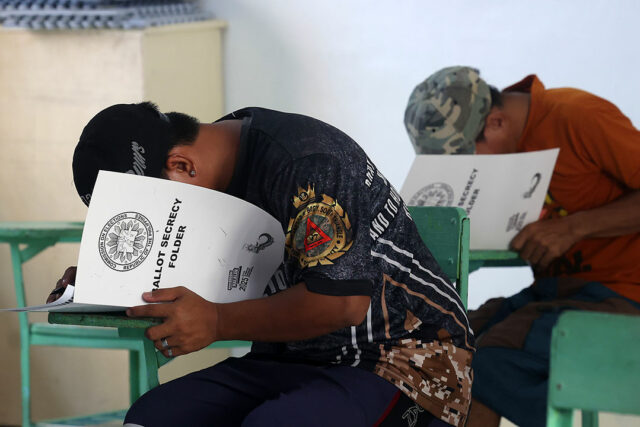
It’s all in the numbers! My good friend, Dr. Corina Gochoco-Bautista of the UP School of Economics sent me a resibo showing that it was not the members of the ruling dynasties in key areas in the National Capital Region that topped the senatorial elections. It was Bam Aquino. Kiko Pangilinan was not far behind. And if I may add, fighting against all odds with limited resources and exposure, Heidi Mendoza and Luke Espiritu proved that issues-based political campaigns are making some initial breakthroughs in the mindsets of the Filipino electorate.

Progressive thoughts have an audience.

As we wrote in our recent report for GlobalSource Partners, a quick assessment of the results of the Philippines’ May 12 mid-term elections demonstrates that the Filipino electorate has started repudiating movie stars and game show hosts, political dynasties, deadwood, and those suspected of plunder and corruption. The formula of name recall, political machinery, and using public money to win elections, or whatever drives survey after survey, does not seem to hold much water anymore, or at least is no longer as deterministic.

Pulse Asia’s voter preference survey in early May indicated nine out of President Ferdinand “Bongbong” Marcos, Jr.’s 12 senatorial candidates were likely to land in the “magic 12,” including six current and former senators (Pia Cayetano, Ping Lacson, Lito Lapid, Imee Marcos, Bong Revilla, and Tito Sotto), a current city mayor and former congresswoman (Makati’s Abby Binay), and two current members of the Lower House of Congress (Camille Villar and Erwin Tulfo). Only two of former President Rodrigo Duterte’s candidates (Senators Bong Go and Bato de la Rosa) and one radio and TV personality and public service host (Ben Tulfo, running as an independent) completed the magic 12 in the survey. In general, many similar surveys predicted a rerun in the Senate.

But did these surveys’ results really reflect the popular vote on who finished among the top 12 in the senatorial elections?

As of 10:14 p.m. last Tuesday, partial and unofficial results seem to be telling us a different narrative.

Of the nine Marcos’ candidates in the Pulse Asia survey’s winning 12, two were edged out with the most surprising surge of former Senators Bam Aquino (2nd place) and Kiko Pangilinan (5th). Go and De la Rosa kept their positions among the Top 5. The number of Duterte candidates actually rose from two in the surveys to three, with Party-list Rep. Rodante Marcoleta coming in strongly at the expense of the Administration bet Binay and the independent Ben Tulfo.

This mid-term electoral exercise is also a referendum of how President Marcos Jr. is faring in his first three years in Malacañang. The Filipino electorate does not appear to be impressed by his economic management. True, inflation continues its downtrend, but prices remain elevated especially food commodities. Such a downtrend may not be sustained because it was achieved by extending the food subsidy, which is good only for several months. Reducing tariff duties on rice imports could also impinge on government revenues and, obviously, this measure was expedient for political reasons. Previous Supreme Court hearings disclosed that public health and public education have been invariably de-prioritized. More funds were allocated to so-called critical infrastructure consisting of road widening and river dredging for flood control. The budget continues to bloat, and National Government debt now stands at over P16.6 trillion. Unconditional transfers were authorized to win votes, but they turned out to be a big, big turn off especially for young voters. They are now likely going for issues-based campaigns and platforms.

Senators, after all, are elected to make laws, rather than learn to make laws when they are already elected.

This mid-term senatorial election is inarguably a numbers game, but much more so when the new Senate convenes, organizes itself, and prepares for the possible prosecution of Vice-President Sara Duterte for the alleged culpable violation of the Philippine Constitution, betrayal of public trust, graft and corruption, and other so-called high crimes. Based on Senate President Chiz Escudero’s pronouncement, Sara Duterte’s impeachment proceedings could start by end-July.

Based on partial and unofficial election results, anti-impeachment senators will definitely include Senators Go and De la Rosa who are assured of reelection. Along with incumbent Senator Robin Padilla, Sara Duterte would have three solid supporters. Marcoleta could be the fourth. If their refusal to sign the articles of impeachment in the House were to be a guide to their prospective position in the Senate should they win, Erwin Tulfo and Villar could be the sixth and seventh votes against impeachment.

It is also possible that the Cayetano siblings (Pia and Alan Peter) plus Imee Marcos could tilt the balance in favor of the Vice-President. Alan Peter Cayetano was President Rodrigo Duterte’s running mate in 2016 and his first Foreign Affairs Secretary, and, later, House Speaker.

Unless Malacañang flexes it muscles and mobilizes all the resources at its disposal, the Vice-President stands a good chance of keeping her office. Nothing else seems to stand in the way of her taking Malacañang in 2028.

But before anyone rejoices and concludes that such a turn is a certainty, we should sober up and take to heart one commentary about the possible dissipation of the Duterte magic.

It claims that while the Dutertes won Davao City, they lost the rest of the big Davao Region which consists of five provinces: Davao de Oro, Davao del Norte, Davao del Sur, Davao Oriental, and Davao Occidental. The results show either Marcos Jr. allies or independent families and groups are set to dominate the five provinces of the region. As the commentary concluded: “The Dutertes may rule in Davao City. But it looks more like a walled city surrounded by an unfriendly political landscape.”

Between now and 2028, we should not rule out the emergence of a promising young leader, with great competence and ability, full of integrity and honesty, and, despite his youth, with experience and an unassailable track record. He could be one in stark contrast to what Sara Duterte stands for. He could be one who will not fail to speak for the people, against foreign countries with deepest intent to usurp Philippine sovereignty in the West Philippine Sea, against plunder and corruption. The political dynamics in 2028 could still follow a different trajectory.

In fact, one other possible scenario could also happen. If the Vice-President as well as Go and De la Rosa are arrested by the International Criminal Court, having been impleaded at The Hague, the Senate impeachment could still proceed and oust Sara Duterte. If the Senate rules allow remote testimony and hearing, a conviction will disqualify her from running for the presidency in 2028. In her absence and that of the former president, it would be rather difficult to muster the same level of support in the Senate and push back conviction. The May 12 midterm elections affirm the public’s growing demand for accountability.

Meanwhile, President Marcos Jr. will have to outdo himself and focus more on building a legacy of good economic, political, and social governance by pursuing strategic policy and structural reforms in order to invest the Philippine economy with greater potential and resiliency. Rooting out corruption in public offices is a must to assure the Filipino electorate his candidates in 2028 are worth voting for. Otherwise, the President could kiss goodbye his desire to rewrite history and absolve the Marcos family from various charges of plunder and mismanagement. This is a wake-up call!

For the progressive segment of the population — and I would include here politically aware faith-based organizations including churches and church groups — it is clear to them that the election results continue to favor political dynasties, political machinery, and political myths. But some breakthroughs have become more evident, and, to reiterate, progressive thoughts have an audience.

1Sambayan and the recent coalition of the religious and the citizenry for good governance, a broad alliance of forces from left to right, against both the ruling families, could be the start.

Uniting against the Administration’s budget scandal and the Davao camp’s violation of human rights and the rule of law, for a start, should be easier to consider in order to establish inclusiveness. There should be no room for what some would describe as “political purity” because the imperative of the moment requires massive support for justice, righteousness, and the people’s access to both political and economic power.

It’s about time that we asserted the centrality of moral choices to human dignity.

They have three years starting now to build their political base and machinery, widen their network, and deepen their roots. It is this kind of spade work that wins, rather than loses, electoral exercises for the sake of the people and the country.


Diwa C. Guinigundo is the former deputy governor for the Monetary and Economics Sector, the Bangko Sentral ng Pilipinas (BSP). He served the BSP for 41 years. In 2001-2003, he was alternate executive director at the International Monetary Fund in Washington, DC. He is the senior pastor of the Fullness of Christ International Ministries in Mandaluyong.

Filinvest Q1 profit climbs to P3.6B on strong banking, real estate

FILINVESTGROUP.COM

GOTIANUN-LED conglomerate Filinvest Development Corp. (FDC) recorded a 25% increase in its first-quarter (Q1) attributable net income to P3.6 billion from P2.9 billion last year, led by its banking, real estate, hospitality, and sugar segments.

First-quarter consolidated net income rose 21% to P4.5 billion from P3.7 billion a year ago, FDC said in a statement to the stock exchange on Thursday.

Total revenue and other income increased 11% to P29.3 billion.

FDC said revenue and other income from the banking segment rose 18% to P13.9 billion; real estate improved 13% to P6.8 billion; hospitality grew 21% to P1.2 billion; and sugar increased 7% to P2.4 billion.

The power segment saw a 7% drop in revenue and other income to P5 billion.

“We started the year with a strong performance by all business units. We look forward to sustaining this momentum for the remainder of the year despite emerging challenges in some business segments,” FDC President and Chief Executive Officer Rhoda A. Huang said.

Revenue growth of banking subsidiary East West Banking Corp. was driven by a 15% increase in consumer loans, resulting in a 13% rise in net interest income to P9.3 billion during the period.

The real estate segment generated 13% higher revenues from increased residential sales and mall rentals.

Residential sales rose 9% due to higher demand from the middle-income segment in key areas such as Cavite, Laguna, Batangas, Rizal, Visayas, and Mindanao. Mall and rental revenues climbed 19% on higher occupancy and foot traffic.

The property business includes subsidiaries Filinvest Land, Inc., Filinvest Alabang, Inc., and Filinvest REIT Corp.

Revenue from hotel operations under Filinvest Hospitality Corp. increased 21%, led by higher occupancy, better room rates, and improved contributions from the food and beverage segment. Its portfolio includes seven hotels with 1,800 rooms and two 18-hole golf courses in Clark, Pampanga.

Meanwhile, the power business, led by FDC Utilities, Inc., posted P1.2 billion in net income contribution and P5 billion in revenue on lower average prices and volume sold during the period, due to the extended colder season in the first two months of the year. 

FDC shares rose 2.71%, or 12 centavos, to P4.54 apiece on Thursday. — Revin Mikhael D. Ochave

It’s not Max, it’s HBO Max: Streaming service flips name again

TWO YEARS AGO Warner Bros. Discovery, Inc. ditched the HBO brand from the title of its flagship streaming service, counting on the name Max to convey the media company’s broad reach of programming.

On Wednesday, the company decided the globally known name behind shows like The Last of Us and Game of Thrones has appeal after all.

“Today, we are bringing back HBO, the brand that represents the highest quality in media, to further accelerate that growth in the years ahead,” Warner Bros. Chief Executive Officer (CEO) David Zaslav said in a statement, reversing his own decision from 2023.

The return to HBO Max also marks an “implicit promise” by the company to deliver unique and premium content, Warner Bros. Discovery (WBD) said on Wednesday.

The switcheroo puts HBO, the network behind some of the most-praised and talked-about shows on TV, front and center in efforts to attract a worldwide audience to the company’s paid streaming service. With millions of TV viewers shutting off their cable subscriptions, streaming has become the future for media giants like Warner Bros. and Walt Disney Co.

Leading up to the service’s launch in the spring of 2020, there was much internal debate about the name. Eventually, executives decided to name it HBO Max, a way of incorporating the storied HBO cable brand — known for popular, edgy hits like The Sopranos — while positioning the new product as a premium service that would cost more than rivals Netflix or Disney+.

This followed Warner Bros. Discovery’s move to merge HBO dramas and top franchises like Harry Potter with lifestyle-focused content from Discovery under one service.

But from the outset sign-ups were sluggish, and many consumers were confused by the branding and how HBO Max differed from the company’s existing streaming products, HBO Go and HBO Now.

In 2023, following WarnerMedia’s merger with Discovery Inc., Mr. Zaslav announced the HBO name would be dropped in favor of a more generic brand that would appeal to a broader audience in theory. The goal was to offer a more appealing product and to help retain viewers who typically canceled their subscriptions after watching the latest season of their favorite show.

The re-branding left many observers scratching their heads. Critics derided the move, saying it jettisoned a brand famous for prestige television to promote shows like Dr. Pimple Popper and 90 Day Fiancé alongside its more upscale programming.

Even Ted Sarandos, co-CEO of Netflix, called the move a surprise. “I would have never guessed HBO would have gone away. They put all that effort into one thing that they can tell the consumer — it should be HBO,” he said in a Variety interview in March.

Recently, much of the streaming service’s buzz has come from HBO shows, including the third season of The White Lotus, which was a massive hit. Max is also home to franchises like Harry Potter, A24 films, and iconic broadcast-TV shows like Friends.

Warner Bros.’s streaming business has added 22 million subscribers over the past year and the company expects to have more than 150 million by the end of 2026. Shows including The White Lotus and The Pitt helped it amass 5.3 million streaming subscribers in the January-March quarter, taking its total to 122.3 million and an adjusted profit of $339 million.

A key driver of that growth has been international expansion. After rolling out Max in over 70 countries last year, WBD plans to launch the service in the UK, Ireland, Italy and Germany.

The company announced the latest change, which will be effective this summer, at its annual presentation to advertisers in New York. In other words, the Max experiment is over. — Bloomberg/Reuters

G20 is too elite. There’s a way to fix that though — economists

WIKIMEDIA.ORG

The G20 claims to be “the premier forum for international economic cooperation.”

But is it?

As scholars of global economic governance, we are skeptical of this claim. Here are our main reasons.

• The G20 is insufficiently representative of the 193 member states of the United Nations plus the small number of non-member states.

• It is a self-selected group of 19 countries and the European and African Unions.

• It has no mandate to act or speak on behalf of the international community.

• It has no transparent or formal mechanisms through which it can communicate with actors who do not participate in the G20 but have a stake in its deliberations and their outcomes.

The growing tensions in the world make it more urgent to improve the efficacy of the G20. Firstly, because there is growing evidence of the loss of interest in global cooperation. Secondly, because rich states are cutting their official development assistance and are failing to meet their commitments to help countries deal with loss and damage from climate impacts and make their economies more resilient to shocks.

And thirdly, because rich countries are also reluctant to discuss financing sustainable and inclusive development in forums like the upcoming Fourth Financing for Development Conference or the UN, where all states can participate. They prefer exclusive forums like the G20.

Here, after briefly describing the structure of the G20, we argue that its lack of representation is a major problem. We offer a solution and argue that, as chair of the G20 this year, South Africa is well placed to promote this solution.

WHAT IS THE G20 AND HOW DOES IT FUNCTION?
The G20 was established in the late 1990s in the wake of the East Asian financial crisis. Its members were invited by the US and Germany based on a proposal from the Canadian government. Initially only finance ministers and central bank governors of major advanced and emerging economies were involved. After the financial crisis of 2008-2009 it was upgraded to summit level with the same membership.

A summit is held annually, under the leadership of a rotating presidency.

The group accounts for 67% of the world’s population, 85% of global GDP, and 75% of global trade. The membership comprises 19 of the “weightiest” national economies plus the European Union and the African Union. The 19 national economies are the G7 (the US, Japan, Germany, the UK, France, Italy, Canada), plus Australia, China, India, Indonesia, the Republic of Korea, Russia, Turkey, Saudi Arabia, South Africa, Mexico, Brazil, and Argentina. These countries are permanently “in.” The remaining 90% of countries in the world are excluded unless invited as “special guests” on an ad hoc basis.

Representatives of a select group of international organizations including the International Monetary Fund, the World Bank, the Organization for Economic Cooperation and Development (OECD) and the World Trade Organization also participate, together with those from some UN entities.

The G20’s work is managed by a troika consisting of the current president with the assistance of the past president and the incoming president. In 2025 this troika consists of South Africa as the current chair, Brazil as the past chair, and the US, which will become the G20 president in 2026. The G20 has no permanent secretariat.

The consistency in G20 membership has proven to be an advantage because it helps foster a sense of familiarity, understanding and trust at the technical level among the permanent members. This is helpful in times of crisis and in dealing with complex problems.

But its exclusivity and informal status have limited its ability to address major challenges such as the global response to the economic and health consequences of the COVID-19 pandemic. This is because an effective response required agreement and coordinated action by all states and not just those in the G20.

A SOLUTION
We think that the governance model of the Financial Stability Board offers a solution.

The Financial Stability Board was established under the umbrella of the G20 in 2009. Its job is to coordinate international financial regulatory standard-setting, monitor the global financial system for signs of stress, and to make recommendations that can help avert potential financial crises.

It is also an exclusive club. Its membership consists of the financial regulatory authorities in the G20 countries plus those in a few other countries that are considered financially systemically important.

However, unlike the G20, the Financial Stability Board has made a systematic effort to learn the views of non-members. It has established six Regional Consultative Groups, one each for the Americas, Asia, the Commonwealth of Independent States, Europe, the Middle East and North Africa, and sub-Saharan Africa.

The objective is to expand and formalize the Financial Stability Board’s outreach activities beyond its membership and to better reflect the global character of the financial system.

The regional consultative groups operate in a framework which promotes compliance within each region with the Financial Stability Board’s policy initiatives. The framework enables the group members to share among themselves and with the board their views on common problems and solutions and on the issues on the board’s agenda.

Importantly, each regional group is co-chaired by an official from a Financial Stability Board member and an official from a non-member institution.

Applying this model to the G20 would allow the current G20 membership to continue, while obliging the members to establish a consultation process with regional neighbors. This would create a limited form of representation for all the world’s states.

It would also empower the smaller and weaker members of the G20 because it would enable them to speak with more confidence and credibility about the challenges facing their region.

This arrangement would also establish a limited form of G20 accountability towards the international community.

NEXT STEPS
As chair of the G20 chair for 2025, South Africa is well placed to promote this solution to the group’s representation problem. It should work with the African Union to establish an African G20 regional consultative group. South Africa and the African Union could invite each African regional organization to select one representative to serve on the initial consultative group.

South Africa could also commit to convey the outcomes of G20 regional consultative group meetings to the G20.

South Africa can then use this example to demonstrate to the G20 the value of having a G20 regional consultative group and advocate that other regions should adopt the same approach.

THE CONVERSATION VIA REUTERS CONNECT

Danny Bradlow is a professor/senior research fellow at the Centre for Advancement of Scholarship, University of Pretoria. In addition to his position at the University of Pretoria, is the senior G20 advisor, South African institute of International Affairs.

Robert Wade is a professor of Political Economy and Development at the London School of Economics and Political Science.

Citicore Renewable Energy’s Q1 net income rises 15.4% to P137.89M

CREC.COM.PH

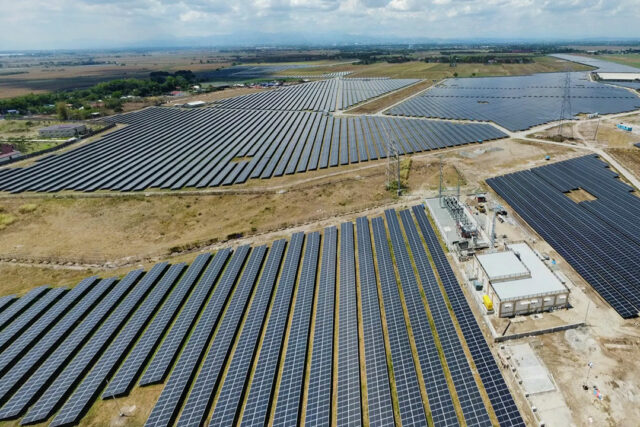
LISTED renewable energy developer Citicore Renewable Energy Corp. (CREC) booked an attributable net income of P137.89 million for the first quarter (Q1), up 15.4% from the previous year, driven by higher electricity sales.

Revenues grew by 40.7% year on year to P1.41 billion, buoyed by the increase in electricity sales and service fees, based on the company’s financial report.

For the first three months, electricity sales increased by 46.7% year on year to P1.21 billion due to an expanded customer base.

“Our double-digit growth in electricity sales is a testament to the market’s belief in Citicore’s ability to deliver end-to-end renewable energy solutions for our climate-conscious customer base,” CREC President and Chief Executive Officer Oliver Tan said in a media release on Thursday.

Service fees more than doubled to P1.21 billion, while lease income remained at the same level as last year at P162.34 million.

Operating expenses, on the other hand, increased by 16% to P31.81 million versus last year’s P27.36 million due to some outside services procured during the period.

CREC, directly and through its subsidiaries and joint ventures, manages a diversified portfolio of renewable energy generation projects, power project development operations, and retail electricity supply services.

At present, the company holds a combined gross installed capacity of 285 megawatts from its solar facilities across the Philippines.

The company is expecting its first gigawatt (GW) of projects to come online this year. This goal is part of the company’s vision to energize 5 GW of renewable energy within five years. 

The company is currently constructing solar projects in Batangas, Pangasinan, Pampanga, Quezon, and Negros Occidental.

“The energization of our first gigawatt is a game changer for CREC, solidifying our role as a major force in the Philippine renewable energy sector,” Mr. Tan said.

Shares of the company climbed 1.07% to P3.79 apiece on Thursday. — Sheldeen Joy Talavera

Overseas Filipinos’ Cash Remittances

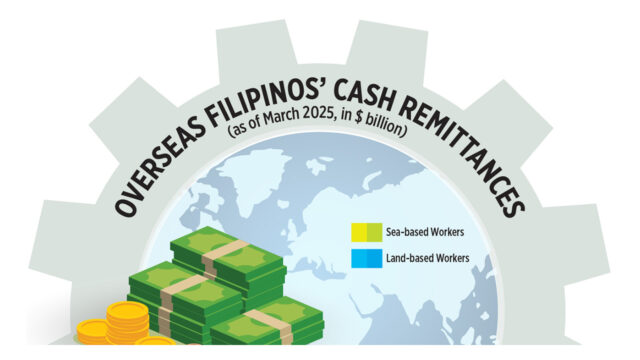
MONEY SENT HOME by migrant Filipinos rose 2.6% in March from a year earlier, the Bangko Sentral ng Pilipinas (BSP) said on Thursday, though this was the slowest growth in nine months. Read the full story.

Overseas Filipinos’ Cash Remittances

CNN revisits streaming with new subscription service this fall

THREE YEARS after canceling the short-lived CNN+ streaming service, Warner Bros. Discovery, Inc. is launching a new online offering built around its 24-hour news network.

The service shown to advertisers on Wednesday in New York will deliver on-demand and live programming to paying subscribers. It will be included within a new subscription level called All Access and debut this fall. Viewers will be able to access the programming on mobile apps, TV, and online. Existing cable-TV subscribers won’t be charged, according to a statement from the company.

CNN Chief Executive Officer Mark Thompson also said the company is planning a free weather app called CNN Weather.

Like other TV networks, CNN is trying to find new ways to attract viewers and generate revenue as customers switch to streaming and drop traditional pay-TV subscriptions.

It’s been there before. The company poured $300 million into building a streaming platform called CNN+ in 2022, but the service shut down after only a month because of low viewership. CNN currently has live news and select programming on Warner Bros.’s Max streaming app, which is being renamed HBO Max.

The new service will be linked to a digital news subscription that CNN introduced in October, charging $4 a month for unlimited access to articles.

In the first quarter, CNN ranked third among the major cable news networks in prime-time viewers and total-day audience, trailing No. 1 Fox News and MSNBC.

In January, CNN laid off 6% of its workforce, or around 200 people, as part of a plan to focus more on digital audiences and go deeper into streaming. — Bloomberg

BAP partners with BAIPHIL to upskill banking industry workforce

THE BANKERS Association of the Philippines (BAP) has partnered with the Bankers Institute of the Philippines (BAIPHIL) to help upskill its member banks’ employees and management.

Under the memorandum of understanding (MoU), BAP and BAIPHIL will hold capacity-building sessions on topics including banking laws, rules and regulations; risk management; investment and trust banking; treasury operations; cybersecurity; and sustainable finance, among others.

“As the banking industry continues to evolve due to changes in the operating environment, there is a need for the industry’s workforce to develop their capabilities to stay ahead. The MoU with BAIPHIL serves to achieve this objective by ensuring each individual in the industry can maximize their potential in their respective lines of work,” BAP President Teodoro K. Limcaoco said in a statement.

“With this MoU, we are aligning our learning and development initiatives with the real and emerging needs of the industry. It is grounded in resilience, digital fluency, and ethical leadership. This is not just about skills training. It is about shaping a generation of professionals who can lead with clarity and purpose in an increasingly complex world. We are proud to work with BAIPHIL in turning this vision into a concrete and sustained program,” BAP Education Committee Chair Jerry G. Ngo said.

BAP and BAIPHIL will also collaborate to do research on banking, finance and economic-related matters and for projects on digital finance, financial literacy, financial inclusion, and sustainable finance.

“The need to upskill one’s capabilities is greater than before, given the ongoing trend of further disruption that would take place in the banking industry. It is likely that the industry five to ten years from now may be entirely different from what it is today. Therefore, BAIPHIL looks forward to working with BAP to ensure the success of the MoU — ensuring Philippine banks remain one step ahead of the curve,” BAIPHIL President Iñigo L. Regalado III said. — AMCS

Your car shouldn’t look like it pumped iron at the gym

WIKIMEDIA.ORG

By Chris Bryant

SMALLER CARS are an obvious fix for crowded cities, limited resources and a warming planet. Yet they’ve become an endangered species, as tougher regulations made them uneconomical to produce and we gravitated towards muscular SUVs.

A continent that built iconic, utilitarian, and wildly popular city cars, like the Fiat Cinquecento and Mini in the 1950s, needs to make tiny cars appealing and affordable again. Smarter rulemaking and financial incentives can help.

In Europe, the market share of small “A-segment” cars (like the Fiat Panda and Hyundai i10) has shrunk to the lowest in at least 20 years, according to figures shared with Bloomberg Opinion by data provider JATO Dynamics.

Automakers axed their smallest vehicles to protect profit margins and focused on larger, heavier, and more expensive models, thereby denying their youngest and elderly clients a new ride.

In the birthplace of autos, Germany, the average cost of a new car has soared to around €57,000 (more than the average gross income); prices in Italy, Spain, and France aren’t far behind.

Larger, more expensive cars are partly a consequence of stricter safety and pollution rules, and hence all the technology modern vehicles must contain. (The number of people killed in road traffic accidents fell 16% in the past decade, so tougher regulation has also been beneficial.) 

And of course, they’re also a result of the trend for high-riding SUVs, which now account for more than half of European car sales; this has created a vicious cycle whereby car buyers worried about the consequences of colliding with an SUV buy one to protect themselves.

For readers in the US, where a variety of ill-conceived fuel economy and tax incentives spurred the rise of gargantuan pickup trucks, the notion that Europe’s cars are oversized must seem quaint.

But the upshot of bigger, pricier wheels is a shrinking market: Just 13 million new vehicles of all sizes were registered across the European Union, the UK, Switzerland, and Norway in 2024, or around 3 million fewer than prior to the pandemic.

Manufacturers have threatened to close car plants or have outsourced production to less expensive countries; meanwhile, consumers who can’t afford a new vehicle are making do with an older, dirtier one, hampering the goal of reducing emissions. The average age of vehicles on the EU’s roads has risen to 12.5 years.

Speaking to French newspaper Le Figaro last week, Renault SA Chief Executive Officer Luca de Meo made a worthwhile suggestion to revive Europe’s car market: less onerous regulation for small vehicles.

“There are too many rules designed for larger and more expensive cars, which does not allow us to make small cars under acceptable profitability conditions,” he said.

“Is lane-departure warning absolutely necessary in cars that spend 95% of their time in the city?” De Meo asked. He was referring to the so-called GSR-2 standards, a package of measures that came into force last year, mandating features like autonomous emergency braking and speed warnings in all new vehicles. These require sensors and on-board cameras that further inflate the cost of building a car.

De Meo also bemoaned how in crash tests compact models also have “to react like a high-end sedan with a hood three times longer.”

I’m wary of the safety implications of a regulatory carveout but his idea shouldn’t be dismissed out of hand.*

Europe already has less onerous rules for so-called quadricycles like the Citroën Ami and Fiat Topolino whose speed is limited to 45 km/hour; both cost less than €10,000.

In Japan so-called kei cars that have a maximum 3.4 meter length, small engines, and weigh only a few hundred kilos account for almost 40% of new sales.

Their success is explained by a variety of purchasing, maintenance, and parking incentives, but in case you’re wondering, these diminutive vehicles are also surprisingly safe and fun to drive.

Establishing another regulatory category in Europe would likely be time-consuming, but there’s no reason why Europe shouldn’t consider similar financial incentives for buyers of small cars or penalize those who opt for a large SUV, or both.

France has introduced weight-adjusted car taxes and parking charges, for example. Revising carbon-pollution targets to better reflect lifecycle emissions (in other words, including those generated in manufacturing and recycling) would also drive uptake of smaller cars.

From a consumer standpoint, it’s regrettable that Europe’s tariffs on Chinese EVs have stifled a potential source of cheap imports.

So it’s imperative European automakers find efficiencies and sell vehicles consumers can afford — if necessary by cooperating with Chinese manufacturers or seeking outside software expertise, as Stellantis NV and Volkswagen AG have done. 

Batteries are getting cheaper, and these efforts are beginning to bear fruit. The Renault 5 E-Tech, which costs around €25,000 for the basic version, is a great example of the affordable yet stylish vehicles Europe needs (albeit as part of the slightly larger B-segment).

There’s even a 540hp “mini-supercar,” the Renault 5 Turbo 3E costing €155,000, which deep-pocketed owners are encouraged to customize to the max.

Smaller and much cheaper EVs are in the offing, including the Renault Twingo E-Tech and VW ID. Every1, which are expected to cost less than €20,000 when they go on sale in 2026 and 2027, respectively. Both will be produced in Europe.

In other words, small cars look poised for a comeback. But they might need a push.

BLOOMBERG OPINION

*See this study for how such a new regulatory category might be designed — https://www.gerpisa.org/system/files/acte_43_gerpisa_0.pdf

Incoming legislators urged to work on living wage

PHILIPPINE STAR/ANDY G. ZAPATA JR.

By Adrian H. Halili, Reporter

NEWLY ELECTED legislators need to work on measures that ensure a living wage and security of tenure, labor analysts said.

Benjamin B. Velasco, assistant professor at the University of the Philippines (UP) Diliman School of Labor and Industrial Relations, said members of the 20th Congress need to respond to the labor market’s wish list.

“Surveys before and during the elections consistently reveal two burning demands. One is wages and prices, another is jobs and livelihoods,” Mr. Velasco told BusinessWorld via Messenger.

The Philippines elected 12 new Senators in the 24-seat Senate and hundreds of new members of the 315-seat House of Representatives on Monday. They are set to take office in July, when the 20th Congress officially begins.

Mr. Velasco said legislators need to ditch the regional wage system and set national minimum wage.

He cited “the Constitutional mandate for a living wage rather than confusing and contradictory 10-point criteria of the existing Wage Rationalization Act.”

Federation of Free Workers President Jose G. Matula called for wages sufficient to sustain families.

“This is the first step toward establishing a National Living Wage and moving away from the outdated and fragmented regional wage system under Republic Act (RA) 6727, which has institutionalized wage inequality across the country,” Mr. Matula said via Viber.

RA 6727, or the Wage Rationalization Act, tasks Regional Tripartite Wages and Productivity Boards to determine wage levels in their respective jurisdictions.

In his Labor Day address, President Ferdinand R. Marcos, Jr. supported regional wage increases instead of a legislated wage hike, citing the potential impact of a uniform national wage on businesses, jobs, and the economy.

Labor groups have argued that a legislated wage hike is needed to help workers deal with rising costs. Wage hike bills have stalled in Congress.

Last year, the Senate approved a bill for a P100 daily wage increase for all minimum wage earners in the private sector, regardless of region or industry.

On the other hand, the House of Representatives, in January, endorsed a consolidated bill proposing a P200 across-the-board daily wage increase for private sector workers.

Mr. Matula urged the 20th Congress to ban contractualization both in the private and public sectors, ensuring workers have regular and permanent employment status.

“Workers in government also deserve security of tenure, just like those in the private sector. Labor-only contracting, contracts of service, job orders, and agency work should no longer be the norm,” he added.

UP’s Mr. Velasco said that a law on security of tenure needs to regulate all forms of contractual employment and make regular work the norm instead of the exception.

In contractual schemes, employment is terminated before six months, the period which by law triggers regular employee status.

Mr. Matula said that the government should allocate P100 billion to fund micro, small, and medium enterprises in rural areas to support employment.

“Supporting small businesses is key to generating sustainable and decent employment across the regions,” he added.

MSpectrum to power Landers Quezon City, Cebu with new solar rooftops

In photo are (L-R) MSpectrum Chief Operating Officer Patrick Henry T. Panlilio, MSpectrum President and Chief Executive Officer Ma. Cecilia M. Domingo, Southeast Asia Retail Chief Financial Officer Noel Niño S. Utanes, and Southeast Asia Retail Chief Operating Officer Pieter Dhoni Lukman.

MSPECTRUM, Inc., a wholly owned solar subsidiary of Manila Electric Co. (Meralco), is set to install two new solar rooftop projects at Landers Superstore retail chains in Quezon City and Cebu City.

The solar firm will install a 600-kilowatt-peak (kWp) solar rooftop project at Landers Cebu, projected to generate approximately 960,000 kWh of power annually.

Meanwhile, MSpectrum will develop a 930-kWp solar rooftop facility at Landers Fairview, expected to generate 1.19 million kWh of power each year.

“These installations will significantly help reduce carbon emissions, optimize energy consumption, and generate cost savings that can be reinvested into enhancing customer experiences and operational efficiency,” MSpectrum President and Chief Executive Officer Ma. Cecilia M. Domingo said.

MSpectrum said it has worked with Southeast Asia Retail over the past year by installing solar rooftop systems across multiple Landers locations.

“This solar initiative is not only about reducing operational costs, but also about contributing to the country’s efforts in promoting clean energy,” Southeast Asia Retail Chief Operating Officer Pieter Dhoni Lukman said.

With eight years in the industry, MSpectrum has installed more than 80 megawatts of solar rooftop projects, estimated to power around 40,000 households.

Meralco’s controlling stakeholder, Beacon Electric Asset Holdings, Inc., is partly owned by PLDT Inc.

Hastings Holdings, Inc., a unit of PLDT Beneficial Trust Fund subsidiary MediaQuest Holdings, Inc., has an interest in BusinessWorld through the Philippine Star Group, which it controls. — Sheldeen Joy Talavera

ADVERTISEMENT
ADVERTISEMENT