Home Blog Page 1566

BSP’s net profit up on higher interest income

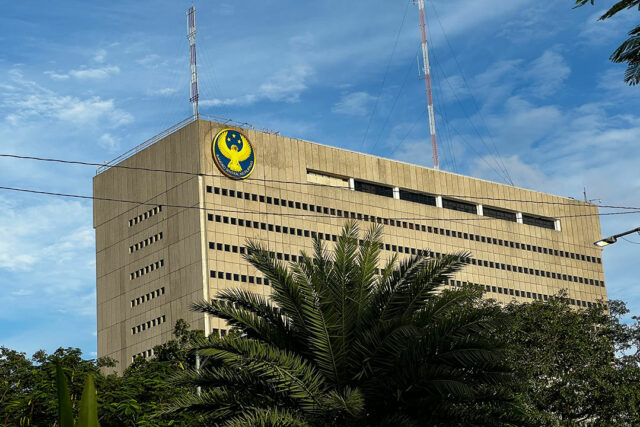
BW FILE PHOTO

THE BANGKO SENTRAL ng Pilipinas’ (BSP) net income grew by more than five times to P113.1 billion in the first 10 months of 2024 as its revenues surged amid higher interest earnings.

The central bank’s net profit surged to P113.1 billion in the January-October period from P21.6 billion a year prior, preliminary data posted on its website showed.

Broken down, the BSP’s revenues jumped by 49.5% year on year to P264.1 billion from P176.6 billion.

Interest income, which accounted for the bulk or 76% of the central bank’s revenues, climbed by 23.1% to P200.7 billion from P163 billion a year prior.

Miscellaneous income, which includes fees, penalties and other operating income, increased by 366.2% to P63.4 billion from P13.6 billion.

Meanwhile, the central bank’s expenses declined by 11.5% to P182.3 billion in the 10-month period from P206 billion in the previous year, according to the data.

This came as other expenses, which include net trading losses, fell by 37.1% to P42.3 billion from P67.2 billion.

On the other hand, its interest expenses inched up by 0.9% to P140 billion in the period from P138.8 billion a year prior.

This brought the BSP’s net income before foreign exchange (FX) gains, tax and capital reserves to P81.8 billion in the January-October period, a turnaround from the P29.4-billion loss in the prior year.

The central bank also posted a P31.4-billion net FX gain from its foreign currency-denominated transactions, which boosted its bottom line for the first 10 months of 2024.

Meanwhile, separate BSP data showed that the regulator’s total assets stood at P8.19 trillion at end-October 2024. This was 9.5% higher than the P7.48 trillion in the same period the year prior.

On the other hand, the central bank’s liabilities increased by 7.6% to P7.93 trillion in the same period from P7.36 trillion.

BSP data showed that currency in circulation stood at P2.38 trillion, while deposits with the central bank were at P2.71 trillion.

The BSP’s net worth rose to P266.2 billion at end-October from P119.8 billion from a year prior.

Rizal Commercial Banking Corp. Chief Economist Michael L. Ricafort said the increase in the central bank’s January-October net income came amid the elevated interest rate environment.

“This could be brought about by higher interest income in most of 2024 and other investment income amid rate cuts that started in the latter part of 2024, though offset by some market volatility amid the Trump factor that emerged starting around October,” he said.

The BSP began its easing cycle in August last year, cutting by a total of 75 basis points thus far to bring its policy rate to 5.75%.

The increase was “also partly due to some forex gains amid the higher US dollar in 2024 amid US dollar holdings with higher value when converted to pesos,” Mr. Ricafort added.

The peso closed at P58.10 per dollar at end-October 2024, weakening from its P56.73 finish a year prior.

The local unit mostly traded at the P55 to P58 level in the first 10 months of 2024. In the same period in 2023, it ranged from P54 to P56. — Luisa Maria Jacinta C. Jocson

Elon Musk and the narratives of decadence that link all anti-democratic movements

“It’s the birthrates. It’s the birthrates. It’s the birthrates,” echoed the introduction line in the manifesto of the Christchurch shooter who killed 51 people in a mosque in 2019. His claim was that white people are being “replaced” by other races and won’t survive without action.

A few years later, the same obsession with birthrates has become a catchphrase of Elon Musk’s daily social media activism.

Don’t get me wrong, Elon Musk is neither a white supremacist nor a right-wing terrorist. Yet, like other people with extremist opinions, he promotes the view that society is in decline and that action is needed to prevent a related apocalypse. These rhetorical overlaps are hardly coincidental. They stem from a reactionary philosophy that has a long history of going viral.

Anxiety that low birthrates inevitably lead to population collapse has been haunting the west since mass consumption became its dominant lifestyle. This flips the older Malthusian fear of exponential population growth that will outpace our ability to produce food. Seen in the bigger picture, both are variations of a generic narrative known as decadence.

The idea of decadence — moral decline triggered by excessive indulgence — informs many parts of everyday sense-making, especially cultural criticism.

Ever read American historian Christopher Lasch’s famous bestseller about the contemporary culture of narcissism? Ever come across the popular meme that claims “weak men create hard times”? Ever followed the Cultural Tutor’s tweets about the loss of beauty in architecture? Ever doomscrolled through Jordan Peterson’s 1,293 YouTube videos? The detail varies, but the overarching theme of decadence is the same every time.

Decadence is a useful double-edged sword as a narrative. It frames the masses as sluggish and in need of discipline. The corrupt elites, meanwhile, simply need to be replaced. It bemoans the erosion of authority and draws on the premise that every society rests upon eternal hierarchies. Too much freedom, fun, and flexibility, the story goes, jeopardizes order and, thus, prosperity.

Hence, some rules for life: men must subordinate and obey for the sake of the greater good. Women must breed to secure the existence of our people and a future for our children. A new nobility shall replace the liberal elites and recreate culture. Otherwise, civilization, or at least nations, are at stake. Does this sound familiar?

Ever since the biblical legends of Sodom and Gomorrah and the Hindu myth of Kali Yuga, adversaries of equality and the rule of law accused societies of being decadent.

From ancient populists in the Roman empire to Italian fascists, decadence is the transhistorical scaffolding that binds together the branches of anti-liberal philosophy.

Today, neoreactionary philosopher and advocate of a “dark enlightenment,” Curtis Yarvin, declares in the New York Times that democracy is “dead.” He longs to replace it with an American monarchy. Political scientist Patrick Deneen’s claim of a “nearly complete disassociation of the governing class and a citizenry without a cives” equally draws on a decadence narrative.

All these ideas rest on a cyclical perception of time. Rise and fall. Blossom and decay. Apocalypse and palingenesis, meaning a national or ethnic rebirth.

In my research, I’ve analysed hundreds of German and French neo-fascist magazines. In the end, the data was the same endless repetition of decadence and apocalypticism. I dubbed it conservative crisis narratives.

THE POLITICS OF CRISIS
In most cases, there’s no need to worry. Decadence is just a cliché. But that is why everybody can so easily sell their own versions of this story — as long as they recap the grand narrative. Facts don’t matter and the devil isn’t in the detail.

“If I have to create stories so that the American media actually pays attention to the suffering of the American people, then that’s what I’m going to do,” Donald Trump’s vice-president J.D. Vance frankly admitted during the 2024 campaign. His confession reveals a sociological truth about the function of crisis narratives.

According to American anthropologist Janet Roitman, who delved into what she calls the “politics of crisis,” such a narrative “cannot be taken as a description of a historical situation nor can it be taken to be a diagnosis of the status of history.” Instead, she elaborates, it is a “necessarily political denunciation.”

Every crisis narrative necessarily strengthens the call for redeemers. “The 2024 election is the last shot to save America,” claims Donald Trump. “Only the AfD can save Germany,” reposts Musk. It’s a scalable story.

ELON MUSK’S PHILOSOPHY
In France, the far-right philosopher Guillaume Faye, who inspired the identitarian movement, invented a reactionary philosophy called “archeofuturism.” It aims to combine skyrocketing technical progress and a medieval morality of heroism and hierarchies. That’s not far from how Musk answers the decadence narrative with a call to radical long-termism.

The “digital town square” that X claims to be, for instance, is a signifier of the feudal public sphere. Musk’s digital reenactment of ancient Rome’s aesthetics reflects the far-right desire for an American Caesar. Oswald Spengler’s Decline of the West, the most influential book in pre-fascist Germany, promoted the very same idea.

Musk’s philosophy appears to be that men shall submit to the CEO-king’s long-term ambition. To conquer space, colonize Mars, and merge human brains into one singular artificial intelligence, the individual and its needs become negligible. And that’s what the decadence narrative is all about in the first place.

THE CONVERSATION VIA REUTERS CONNECT


Felix Schilk is a research assistant in the Faculty of Philosophy of the University of Tübingen. He received a scholarship from Hans Böckler Foundation.

JFC launches first Milksha concept store in PHL

JOLLIBEE Foods Corp. (JFC) launched the first standalone concept store of Taiwanese milk tea brand Milksha in the Philippines on Jan. 20.

The new store is located at Level 2, Main Building of SM North EDSA in Quezon City, JFC said in an e-mailed statement on Thursday.

JFC said the new Milksha store offers more than 30 premium specialty beverages, from milkteas to fruit-infused drinks.

Each drink is brewed using traditional Taiwanese methods, using imported ingredients.

“Milk tea has become such a big part of Filipino daily lives. What makes Milksha well-positioned for this market is its dedication to using fresh and premium natural ingredients and crafting unique, refreshing flavors that can capture the evolving taste buds of Filipino milk tea lovers,” JFC Philippines Chief Executive Officer Joseph Tanbuntiong said.

Milksha has 336 stores across Taiwan, Hong Kong, the United Kingdom, and Australia. The Jollibee Group bought a majority stake in Milksha in 2021.

Earlier this month, JFC announced that its subsidiary Milkshop International Co., Ltd., which is behind Milksha, is acquiring a 70% stake in Taiwanese wellness soup brand Moon Moon Food for NT$103.8 million as part of bolstering its position in the tea segment.

JFC shares rose by 1.47% or P3.60 to P248.60 per share on Thursday. — Revin Mikhael D. Ochave

Netflix shares hit record as subscriber growth defies odds once again

SHARES of Netflix soared 13% to an all-time high on Wednesday after the streaming giant’s big bet on sports helped add a record 18.9 million subscribers in the holiday quarter, ballooning its already sizeable advantage over other players.

The company also unveiled price hikes on Tuesday in markets including the US, aiming to boost revenue just as it shifts focus from subscriber growth to other performance metrics such as sales.

“We thought it was a typo. Netflix defied the odds once again, delivering subscriber additions far beyond even the most unreasonable subscriber bogey,” Bernstein analyst Laurent Yoon said.

The company’s global subscriber base now exceeds 300 million, giving it a commanding lead in the streaming wars and more leverage in talks with marketing firms as it looks to grow its ad-supported business.

Netflix, already worth more than the combined valuations of rivals Disney, Comcast, Paramount, and Warner Bros. Discovery, was set to add more than $50 billion to its market capitalization of about $370 billion, if gains hold.

The stock hit a record high of $988 during early morning trading on Wednesday, paving the way for a potential stock split.

Its shares soared more than 80% last year, driven by Netflix’s expansion into live sports with content including a boxing match between Jake Paul and Mike Tyson, as well as the debut of popular National Football League games on Christmas Day — which included a half-time performance from popstar Beyoncé.

The Nov. 15 Tyson-Paul bout was the most-streamed sporting event ever and drove the most sign-ups for Netflix for any event since Antenna started tracking this data in 2019. Its strong content slate in the quarter also included the second season of Squid Game and the hit streaming movie Carry-On.

“Sports rights can be incredibly expensive and it makes sense that Netflix has opted to go with special events. Such events are also perfect for attracting advertisers keen to reach a large audience,” said Dan Coatsworth, analyst at AJ Bell.

Mr. Coatsworth, as well as several other analysts, said Netflix would now inevitably start bidding for other major sports rights. The company has already secured US broadcast rights for the 2027 and 2031 editions of FIFA Women’s World Cups.

NARROW REVENUE BEAT
The strong report, however, masked one concern: the subscriber surge did not translate into a similar spike in revenue. Sales rose 16% and were only around $100 million above estimates, while the subscriber growth was about twice the expected number.

The narrow beat could be attributed to both subscriber growth from lower average revenue per user (ARPU) countries and the significant number of sign-ups for the ad-supported tier, said Ben Barringer, technology analyst at Quilter Cheviot.

But he added that the already announced price hikes and those expected to roll out over the course of 2025 should boost sales.

This year, Netflix is expected to showcase new seasons of highly popular shows such as Stranger Things and Wednesday. It has already started streaming WWE RAW.

At least 24 analysts raised their price targets on the stock, bringing the median target to $1,025, according to LSEG data. The stock’s 12-month forward price-to-earnings ratio stands at 35.43 compared with Walt Disney’s 19.19. — Reuters

Central bank drafts guidelines for inquiries, account information sharing under AFASA

THE BANGKO SENTRAL ng Pilipinas (BSP) has released draft rules of procedure on the conduct of inquiry into financial accounts and the sharing of financial account information as part of the implementation of Republic Act (RA) No. 12010 or the Anti-Financial Account Scamming Act (AFASA).

In a draft circular posted on its website, the central bank said the rules are in line with the AFASA, which seeks to prevent and penalize financial cybercrime.

The BSP has the authority to investigate and inquire into financial accounts involved in prohibited acts or offenses under the AFASA, which was signed on July 20, 2024. These acts include money mule activities and social engineering schemes, which could be considered economic sabotage if it involves three or more people as perpetrators or victims, mass mailers, or human trafficking.

The central bank also has the authority to issue rules on information-sharing and disclosure with law enforcement and other competent authorities related to its inquiry and investigation of financial accounts under this law. These information shall be used solely to investigate and prosecute cases involving violations of the AFASA.

The central bank said in the draft rules that the BSP’s Consumer Account Protection Office (CAPO) is the body authorized to investigate and inquire into financial accounts and share financial account information with authorities for the implementation of the AFASA.

Under the rules, competent authorities — which refers to the Philippine National Police, National Bureau of Investigation, Department of Justice, Anti-Money Laundering Council, Cybercrime Investigation and Coordinating Center, or any government agency authorized to investigate or prosecute prohibited acts under the AFASA, as well as financial regulators authorized to investigate crimes or offenses related to their respective regulatory functions and adjudicate financial consumer complaints — must enter into an agreement with the BSP for the sharing of financial account information.

These financial account information include the account number, the account owner’s personal information, transaction records, and the documents submitted for opening or maintaining accounts, among others.

“The Consumer Account Protection Office (CAPO) shall only receive request to inquire into financial account from, and disclose financial account information to, a competent authority which has an existing information sharing agreement with BSP,” the central bank said.

“Any financial account information shared by BSP to a competent authority pursuant to these rules and duly-executed information sharing agreement shall be used solely to investigate and prosecute criminal cases for violations of a prohibited act, or, as may be applicable, to adjudicate financial consumer complaints.”

The information sharing agreement between the BSP and a competent authority must be in writing and notarized and contain the terms for the sharing of account information, measures to ensure data security and protection, and how parties can access the information, among others.

Institutions must also register the e-mail accounts they will use to communicate with CAPO.

The BSP also outlined the process for requesting an inquiry into financial accounts.

“An inquiry into a financial account may be initiated by a competent authority by filing with CAPO a request, upon its own determination that, based on the facts and pieces of evidence that it gathered, there is a reasonable ground to believe that a prohibited act has been committed and that a financial account was utilized or involved in its commission,” the central bank said.

A request for inquiry must include facts related to the suspected commission of a prohibited act under the AFASA, including but not limited to the date and time of the violation, details of the respondents and complainants or victims, the financial accounts involved, and information on how the account was used to commit a prohibited act. Requests should also include affidavits of the victims and witnesses and other evidence gathered by the competent authority during its investigation of an incident.

“The CAPO shall evaluate the request and its supporting documents. Upon determination that, based on the information and evidence provided in the request and supporting documents, there is sufficient ground to engender a well-founded belief that a prohibited act has been committed and that the financial account subject of the request was probably involved or utilized in its commission, CAPO shall forthwith issue an inquiry order indicating therein the financial account/s and financial account information subject of the inquiry; and directing the concerned institution to disclose the financial account information, and to allow the authorized personnel of CAPO full and immediate access to all records related to the financial account subject of the inquiry within a specified period of time.”

The CAPO will serve the inquiry order to the concerned institution electronically via their registered e-mail address, or via personal service, registered mail, or courier. Within three days from receipt of the inquiry order, the institution must submit to the CAPO a return providing all the financial information required in the order, along with other relevant documents. The institution must also immediately grant the CAPO full access to all records related to the subject financial account upon receipt of the inquiry order.

“Upon gathering all necessary information and receipt of the return from the concerned institution, CAPO shall furnish the competent authority its response to the request for inquiry into financial account containing the financial account information gathered by CAPO,” the BSP said.

Meanwhile, if the CAPO finds that a request for inquiry failed to establish sufficient ground on the involvement of the financial account in the commission of the violation, it will issue a notice to the concerned competent authority to correct or amend their submission within 10 days for reevaluation.

Failure to comply with an inquiry order or unauthorized disclosure of financial account information obtained for the investigation of violations of the AFASA shall be subject to criminal and administrative liabilities, the BSP said.

The CAPO also has the authority to apply for cybercrime warrants and/or to issue preservation orders related to the electronic communications involved in the commission of the prohibited acts under the AFASA, it added. — Luisa Maria Jacinta C. Jocson


Birthright citizenship stunt is classic Trump

JAKOB OWENS-UNSPLASH

ON TUESDAY, his first full day as president, Donald Trump attended an inaugural service at Washington National Cathedral. Episcopal Bishop Mariann Budde pleaded with the new president.

“In the name of our God, I ask you to have mercy upon the people in our country who are scared now,” she said. The vast majority of immigrants are not criminals, Budde said, but pay taxes and are good neighbors.

Trump scarcely looked at her. Trump is eager for a fight over immigration and has been for years. He has made no secret of his desire to restrict entry to this country and he won both the Electoral College and the popular vote.

A flurry of executive orders signed shortly after his inauguration on Monday aim to do just that. Among the most chilling: an attempt to override the 14th Amendment, limit birthright citizenship, and create a subclass of children who were born here, but who, through a cruel trick of timing, are not Americans.

The executive order takes effect in less than a month. Babies born in the US after that to undocumented parents would, Trump said, no longer be recognized by the federal government as US citizens.

Altering birthright citizenship has been high on Trump’s agenda for years. Nevertheless, it is shocking to see the scope. The order not only includes undocumented immigrants, but also includes legal immigrants whose status is considered temporary.

Hundreds of thousands who entered the US legally on student visas, the H-1B program for skilled foreign workers, or through refugee programs such as Temporary Protected Status would be subject to the same restrictions. No permanent status, no American citizen children.

Yes, the H-1B program needs a major overhaul. So do other temporary programs. But this ugly, punitive approach is hardly the way.

Ultimately, of course, this will be a matter for the Supreme Court. Trump, his hubris notwithstanding, lacks the power to alter the 14th Amendment, which explicitly states that “All persons born or naturalized in the United States, and subject to the jurisdiction thereof, are citizens of the United States.”

Intended to guarantee citizenship for newly freed slaves, the amendment has long been interpreted as establishing birthright citizenship. That principle was affirmed in US v. Wong Kim Ark, the 1898 case of a Chinese American man born in San Francisco, but to Chinese citizens. The precedent set in that ruling has stood for well over a century.

Perhaps Trump thinks there is no way a Supreme Court with a conservative 6-3 majority — three of whom he appointed — would defy him on one of his signature obsessions. Maybe he thinks the longstanding precedent will matter little to the court that overturned Roe v. Wade in 2022, robbing women of reproductive rights guaranteed by the Constitution for almost 50 years.

Or perhaps he expects to fail — as many legal scholars anticipate — but still feels the gambit gives him a talking point and another way to blame opponents for thwarting him.

Forces are already gathering to oppose him. Twenty-two Democratic-led states are filing suit and injunctions will be sought. The American Civil Liberties Union has filed its own lawsuit.

They will be busy. The birthright citizenship ploy is just one part of Trump’s frontal assault on immigration. He has suspended the entire US Refugee Resettlement Program, believing that Biden admitted far too many refugees. Another executive order requires a plan that assigns the Defense department’s US Northern Command to seal the borders. Other actions canceled thousands of appointments with asylum seekers.

And although Trump’s border czar, Tom Homan, said before Trump took office that the administration would prioritize the removal of criminals, on Monday Trump specifically broadened enforcement beyond that narrow charge and removed earlier guidelines against conducting raids in schools, hospitals, churches, shelters, and more.

Trump clearly intends to wage a brutal campaign of “shock and awe” against immigrants, believing that the brutality itself sends the message to “keep out.” But more than immigrants will be brutalized as this unfolds.

After Bishop Budde’s plea to Trump went viral, Representative Mike Collins, a Republican from Georgia, posted on X that “The person giving this sermon should be added to the deportation list.” Budde, for the record, was born in New Jersey.

Trump has never understood or believed that immigrants are part of what makes America exceptional. Each wave of immigration has made its contributions, creating a mosaic of cultures that enliven this nation and expose us to new ways and new thinking. Have there been rough spots? Certainly. Do we need immigration reforms? Undoubtedly. Many Americans are frustrated with levels that seem to be rising beyond this nation’s capacity to adapt.  But this is not the thoughtful, humane reform many Americans seek.

I am a daughter of naturalized immigrants, and my father believed to his last day that this was the greatest country in the world and that his greatest gift to me was my American citizenship.

It saddens me to think that Trump’s America may well become a smaller, meaner place that turns its back on what makes this country truly great — its generous and welcoming spirit, constantly refreshed by the sweat and toil of newcomers seeking freedom.

BLOOMBERG OPINION

Arthaland infusing P710M into unit Zileya Land

ARTHALAND CENTURY PACIFIC TOWER — ARTHALAND.COM

ARTHALAND Corp. is infusing P710 million into subsidiary Zileya Land Development Corp. as part of acquiring a property for a new project.

The company is subscribing to 7.1 million preferred shares of Zileya Land at P100 apiece, Arthaland said in a regulatory filing on Thursday.

Zileya is in the process of completing the acquisition of a property that will serve as the location of a new unnamed sustainable development, Arthaland said.

The share subscription, approved by Arthaland’s board on Jan. 22, will be issued from Zileya Land’s proposed increase of its authorized capital stock by 20 million preferred shares at a par value of P1 per share, which is awaiting approval from the Securities and Exchange Commission.

Currently, Zileya’s authorized capital stock is P200 million, consisting of 1.5 million common shares with a par value of P100.00 each and 500,000 preferred shares with a par value of P100.00 apiece.

Arthaland will pay its subscription in full on or before March 31 and this will be recorded as deposit for future subscription in the meantime.

In its 2023 annual report, Arthaland said that Zileya Land is the investment vehicle used by the company to acquire 47.4% of a property, which will be the site for a residential project in Legazpi Village, Makati City.

Meanwhile, Arthaland said its board approved to lower its authorized capital stock by P10 million to P3.016 billion from P3.026 billion.

“The foregoing decrease in the authorized capital stock corresponds to the preferred shares Series C redeemed by the corporation on June 27, 2024,” Arthaland said.

Arthaland is a boutique real estate developer that has business interests in the development of residential, commercial, and leisure properties.

Some of its projects include the Arya Residences, Arthaland Century Pacific Tower, Cebu Exchange, Savya Financial Center, Sevina Park, and Lucima.

Arthaland shares were unchanged at P0.345 per share on Thursday. — Revin Mikhael D. Ochave

Berlin Film Festival organizers unveil 2025 competition lineup

BERLIN — Richard Linklater’s new feature about a Broadway composer, a documentary about young people in war-torn Ukraine, and a homage to 1960s’ spy films were among the films unveiled on Tuesday as part of the 2025 Berlin Film Festival’s competition line-up.

“This is a major A-list festival with a thriving market,” said new festival director Tricia Tuttle, with guests from more than 150 countries coming to the 75th edition of the festival.

The 19 films in contention for the festival’s Golden Bear top prize feature several directors making their return to the German capital, including Romania’s Radu Jude, with his new dark comedy Kontinental ‘25, and South Korea’s Hong Sang-soo with his languorous family comedy What Does that Nature Say to You.

Mr. Linklater, the US director known for Before Sunrise, makes a buzzy return to the festival after more than a decade with Blue Moon, about composer Lorenz Hart — the other half of famous songwriting team Rodgers and Hart — with an all-star cast including Ethan Hawke, Margaret Qualley, and Andrew Scott.

Reflection in a Dead Diamond is Belgium-based duo Helene Cattet and Bruno Forzani’s maximalist spy feature, while Dreams stars Jessica Chastain as an heiress who falls in love with a Mexican ballet dancer, and If I Had Legs I’d Kick You about a child’s mysterious illness features Rose Byrne along with late-show TV host Conan O’Brien and rapper ASAP Rocky.

Timestamp is Kateryna Gornostai’s observational documentary about life in Ukraine after Russia’s 2022 invasion marks one of the more overtly political entries this year.

POLITICS AS USUAL?
The Berlin Film Festival, which this year runs from Feb. 13 to 23, is considered more political than its peers — Cannes, Venice, Sundance, and Toronto.

“We do not shy away from this. It’s arguably in the DNA of the city itself and also in the festival itself,” US-born Ms. Tuttle told reporters.

The festival ends on the day of Germany’s national election, though Ms. Tuttle said it does not plan to mark the event in any way other than encouraging people to vote.

Outside the competition, Oscar-winning Parasite director Bong Joon-ho’s sci-fi Mickey 17 with Robert Pattinson will have its German premiere during the festival, as will James Mangold’s Bob Dylan biopic with Timothée Chalamet A Complete Unknown.

Ms. Tuttle took charge amid financial uncertainty at the festival, which had to slim down its program last year, and Berlin slashed its 2025 culture budget by millions of euros.

However, ahead of Tuesday’s news conference, Germany’s culture ministry said it would contribute an extra €1.9 million ($1.97 million) to the festival for its 75th anniversary.

That boost “allows us to deliver the festival with a balanced budget this year and… to relive the festival in the way that we want to in this anniversary year,” said Ms. Tuttle.

US director Todd Haynes heads the international jury that will award this year’s top prize. Run Lola Run director Tom Tykwer’s new film The Light will open the festival. — Reuters

K-12 graduates confront job growth hurdles — PBEd

PHILIPPINE STAR/ MIGUEL DE GUZMAN

GRADUATES of the K-12 program are encountering obstacles to career growth, highlighting the need to further align education with industry demands, the Philippine Business for Education (PBEd) said Thursday.

“Many individuals enter the workforce only to face limited opportunities for career growth. Even those with degrees often face dead ends in their careers and struggle to adapt to the evolving demands of the workplace,” PBEd Vice-Chairman Aurelio R. Montinola III said at a forum in Makati City.

PBEd has introduced the JobsNext program to equip participants with the skills needed for future jobs, focusing on fields like Information Communications Technology, digital marketing, cybersecurity, the green economy, and project management.

According to PBEd Executive Director Justine B. Raagas, K-12 graduates and even workers already in the labor force still find difficulty advancing in their careers due to the lack of skills necessary to rise to the “next level.”

To address this, she cited the need to tap training opportunities through upskilling programs and the gathering of micro-credentials while still working.

“This is happening in many global models and in many countries. People can learn while they’re earning and then they build their credentials. It becomes stackable. In fact, in other global models, it can be a diploma or it can be a higher-level certification,” she told reporters.

Additionally, Ms. Raagas said industries must also participate in recognizing and training students and workers for career growth.

A shift in mindset is also crucial to allow them to move up the ladder, she added.

She cited a PBEd survey that indicated that the share of employers willing to hire non-college graduates was initially only 40%.

“But then, with a lot of intervention and advocacy and getting them to take in senior high school students and graduates, it improved; it became 60%,” she said, noting that a mindset shift will only take place with the demonstration of a proof of concept.  

“The challenge now is that the current mindset has always been perpetuated because of an oversupply also of college graduates…But the mindset has also been perpetuated because it’s the easiest thing to do,” she added.

The JobsNext bill (House Bill No. 945), filed by Quezon City Fifth District Representative Patrick Michael D. Vargas, is currently going through the legislative process.

The measure aims to transform JobsNext into a nationwide upskilling initiative, including the introduction of a skills voucher program to motivate and support the upskilling and reskilling of the workforce.

According to the World Economic Forum, about 92 million jobs could be displaced by 2030 due to the emergence of artificial intelligence.

In the Philippines, 68% of workers will need training to keep up with evolving skill demands, but only 38% have received such training so far — significantly lower than the global average of 50%. — Chloe Mari A. Hufana

PhilFirst bullish on growth

PHILIPPINES First Insurance Co., Inc. (PhilFirst) is bullish on its growth prospects for this year, even as the nonlife insurance market remains “very competitive,” a top official said.

“We went through organizational changes with a new setup. I think this year is going to be a good year for us. With the changes and the new products that we have developed, I think growth is an assured thing,” PhilFirst Chairman Eusebio H. Tanco said on the sidelines of the nonlife insurer’s 119th anniversary celebration on Wednesday.

Mr. Tanco said he was “not very satisfied” with PhilFirst’s growth in 2024.

“Maybe because of my other companies. My other companies are all doing extremely well. Compared with the industry, we’re okay. But compared with my other companies, it was lagging behind. But it’s not doing bad. It can do much better,” he said.

PhilFirst is part of the Tanco Group of Companies’ Philippines First Insurance Group, along with life insurer Philippines International Life Insurance Co., Inc. (PhilLife), pre-need firm Philplans First, Inc. (PhilPlans), and health maintenance organization PhilhealthCare, Inc. (PhilCare).

The Tanco Group’s other businesses include Asian Terminals, Inc. and STI Education Systems Holdings, Inc.

Mr. Tanco said they hope PhilFirst’s two new nonlife insurance products will boost sales this year.

The insurer on Wednesday launched cyber and travel insurance products to mark its 119th anniversary.

“Our new initiatives continue the legacy of protection that PhilFirst has given to several generations of Filipinos,” PhilFirst President Jaeger L. Tanco said in a statement. “Celebrating 119 years is not just about looking back at our achievements. It’s about looking forward — adapting, innovating, and meeting the ever-changing needs of our countrymen.”

“The Personal Cyber Insurance is our way of safeguarding the online lives of Filipinos, while our Travel Insurance aims to make their adventures worry-free, especially as travel becomes more accessible and integral to many Filipinos,” the younger Mr. Tanco said.

PhilFirst Cyber Insurance covers identity theft, electronic fund transfer fraud, and online retails scams, the company said.

Meanwhile, PhilFirst Travel Insurance is targeted towards modern Filipino travelers, it said.

“The product comes at an opportune time as the World Travel and Tourism Council projects at least 25% annual growth in travel. PhilFirst partnered with a seasoned and stable provider to ensure a seamless claims process for its clients, making its Travel Insurance an essential companion for any wanderlust.”

The older Mr. Tanco said the nonlife insurance sector will continue to be “very competitive” as supply continues to exceed demand, with capacity way bigger than insurable assets.

“What’s scary about nonlife is natural calamity. There’s no market for it… But people will tend to look for natural calamity together with, say, attendant to fire, typhoon and flood and earthquakes,” he said.

“Premium will be a challenge because if people cannot get the cover that they want, even if they go abroad, it will be difficult for them. They have to pay a ridiculous premium.”

Mr. Tanco said they are also looking at cross-selling to boost their growth, as well as potential partnerships.

“Insurance is never a luxury. It’s a necessity.”

PhilFirst posted a net loss of P17.75 million in 2023, according to Insurance Commission (IC) data based on companies’ annual statements. Gross premiums written stood at P380.11 million, while net premiums written were at P178.31 million. Premiums earned totaled P170.35 million.

Meanwhile, the Philippine nonlife insurance sector booked a combined net income of P6.406 billion in the first nine months of 2024, up from P5.468 billion in the same period in 2023, IC data showed.

Gross premiums written were at P96.79 billion, while net premiums written stood at P53.13 billion. Combined premiums earned stood at P49.02 billion.

By line of business, bulk of the net premiums written by the industry in the period were for motor products, followed by fire and other casualty insurance. — A.R.A. Inosante

Beyond contrasting oceans

ANDREA FERRARIO-UNSPLASH

On a distant continent that spans the Pacific on the west and the Atlantic on the east, one can compare the constantly changing moods of the sea and sky.

Marvelous colors of the oceans inspire new visions and seascapes.

The autumn weather is capricious.

A late Indian summer’s day shows the northern Pacific as it shimmers silver-blue with white caps that race to the craggy cliffs of the coastline. The haze veils the distant island. Seagulls swoop and circle like flying acrobats. Sailboats and yachts skim as wave runners crisscross the wakes on the smooth surface of the water.

From the terrace of a cliff, one sees a splendid panorama of floating cumulus clouds on the cobalt sky.

One inhales the intoxicating sea air mingled with the fragrance of delicate roses and pine trees. The palm fronds sway and the chili bushes rustle in the breeze. On such a clear day, one can see beyond forever.

In the late afternoon, the hot yellow sun begins its descent against a canvas backdrop with splashes of orange, magenta, copper, and streaks of violet. A stunning river of gold ripples as the glowing orb dips into the sea. On some evenings, the stunning sun turns red as if a magic wand has transformed it into a ball of fire.

The luminous crescent moon rises gently to reign as queen of the velvet indigo sky.

Stars blink and twinkle into cosmic constellations.

The temperature drops 20 degrees, and the wind turns chilly.

The last vestige of summer is gone.

On the other coast, thousands of miles away, the southern Atlantic is a turbulent dark green and ultramarine with angry heaving waves.

The menacing mega storm bypassed the southern cities, but the fringe winds bring heavy rains with strong gusts.

The slate gray sky has charcoal clouds that unleash a torrential waterfall on the ocean. On the deserted beach, brave stragglers attempt to take photographs of the hurricane. Despite double red flag warnings, a few foolhardy surfers race precariously on surfboards atop 15-foot waves.

Trees tilt and are uprooted. Branches snap. Twigs and leaves fly haphazardly like lost arrows. The rain pours and collects in pools and puddles. It is wise to seek shelter and keep warm on such a wet and windy afternoon.

The next day, the sunshine brightens the beach. It acquires a different personality.

Seagulls and terns timidly emerge from their nests among the eaves, roof tops, and treetops. They circle tentatively low over the sea to catch their fish. Then they tiptoe on the sand, leaving prints and pointed patterns.

The once pewter sky is now a light cerulean blue with powder puff clouds floating above. The breeze smells like citrus eau de cologne.

A big wave suddenly rushes to shore. It topples and drenches a kneeling beachcomber. The dashing lifeguard rushes to rescue the damsel in distress. People stroll briskly along the shoreline. Gone are the debris and pools of yesterday’s storm. The beach has been swept clean by efficient service staff. The sand is almost spotless.

The gleaming Atlantic has translucent stripes of light emerald, jade, turquoise and sapphire. Jewel colors in the dazzling sunlight. Little kids build sandcastles, fly kites, as dogs chase rubber balls. The clear water is still so cold. Swimmers choose to stretch on colorful pareos to sunbathe.

On a lazy weekend, “Life is a beach” in this semi-tropical paradise. The only phenomenon missing is a rainbow after the storm.

The afternoon sky is turning dark blue with tinges of pale peach, brush strokes of copper, pink purple, and silver gray. The fading sun is veiled in the gauze of clouds as it sets gently on the horizon. This sunset is a muted wash of colors. It is a stark prelude to a magnificent moonrise.

At twilight, the full moon is a luminous white sphere that illuminates the sky. It has an eerie halo of light lavender clouds that radiate for miles around. A solitary star appears as a counterpoint — far from the circle. Close to midnight, one can discern the texture and terrain of the moon. Its craters and valleys resemble an abstract woven tapestry.

Moon bathing is energizing and nourishing for dreamers. It is like having a shower of stardust that makes one float to another dimension.

On another night, an orange harvest moon rises over the rooftops to claim the sky. Elongated shadows appear like phantoms in the dark corners of the park.

People gaze at the sky for celestial signs and falling stars.

The radiant, vibrant climate of the south has a positive effect on people. Where the sun shines, people are not prone to the Winter syndrome SAD (Seasonal Affective Disorder).

Nature displays her best colors and moods every season. And the symphony of the sea beckons.


Maria Victoria Rufino is an artist, writer and businesswoman. She is president and executive producer of Maverick Productions.

mavrufino@gmail.com

Ayala Corp. says Larrazabal to step down as CFO, names Juan Syquia as successor

JUAN CARLOS “JOHN-C” L. SYQUIA

AYALA Corp. announced that Alberto M. de Larrazabal will step down as its chief financial officer (CFO) effective Jan. 1 next year.

Mr. Larrazabal, who is set to retire, will be replaced by seasoned banker Juan Carlos “John-C” L. Syquia, Ayala Corp. said in a regulatory filing on Thursday.

Ayala Corp. also appointed Mr. Syquia as deputy CFO effective May 1 this year. He will support Mr. Larrazabal before taking over the role next year.

“Mr. Syquia will be elected as deputy CFO of Ayala Corp. at the organizational board meeting following the annual stockholders meeting on April 25,” Ayala Corp. said.

Mr. Larrazabal became Ayala Corp.’s CFO in April 2021.

“We are pleased to have John-C join us at Ayala Corp. His extensive banking experience, strong financial acumen, and proven leadership give us great confidence that Ayala’s financial leadership will remain in very capable hands,” Ayala Corp. President and Chief Executive Officer Cezar P. Consing said.

Mr. Syquia is the current executive vice president and head of institutional banking at the Bank of the Philippine Islands (BPI). He has three decades of experience in corporate and investment banking.

Before joining BPI in 2016, Mr. Syquia held leadership roles at ING and Standard Chartered in strategy and business development, and running corporate finance and relationship management businesses.

Mr. Syquia has a Master of Business Administration in Finance and International Business from Fordham University and a Bachelor’s degree in Management Economics from the Ateneo de Manila University.

“I am very honored to join Ayala Corp. I look forward to working closely with Albert and the rest of the senior leadership team to drive Ayala’s pursuit of growth, innovation and nation-building,” Mr. Syquia said.

Ayala Corp. also confirmed the change in designation of Jose Rene Gregory D. Almendras to public affairs principal from senior managing director and public affairs group head, effective Jan. 1.

On Thursday, Ayala Corp. shares climbed by 0.35% or P2 to P572 per share. — Revin Mikhael D. Ochave