Home Blog Page 152

Regulator approves PUV fare hikes on oil price surge

A traditional Philippine jeepney plies Taft Avenue in Manila. — PHILIPPINE STAR/RYAN BALDEMOR

COMMUTERS will face higher transportation costs starting Thursday after the Land Transportation Franchising and Regulatory Board (LTFRB) approved fare increases for public utility vehicles (PUVs) amid soaring pump prices, a move that could add to inflationary pressures.

“It is the sense that every week, we see substantial, not just minimal changes (in oil prices). With the board’s permission, and the facts we have considered, there will be changes in transport fares. This (fare adjustment) will be permanent,” LTFRB Chairman Vigor D. Mendoza II said in a media briefing on Tuesday.

PUV operators can implement the adjusted fares on March 19, or as soon as they secure the new fare matrices and post them in their units, Mr. Mendoza said, adding that the fare hike will be permanent by June.

Michael L. Ricafort, chief economist at Rizal Commercial Banking Corp., in a Viber message, said higher transport costs could lead to faster inflation.

“Higher transport fares lead to risks of petitions for higher wages that would also lead to higher prices of goods and services. The effect could lead to higher inflation expectations,” Mr. Ricafort said in a Viber message. 

The LTFRB approved a P1 increase in the base fare for traditional public utility jeepneys (PUJs) to P14, and a 20 centavo-hike for every succeeding kilometer to P2.

For modern PUJs, the LTFRB greenlit a P2 increase in the base fare to P17, and 20-centavo increase for every succeeding kilometer to P2.40.

For ordinary city buses, the base fare will increase to P15 from the current P13, while succeeding fare per kilometer will increase by 24 centavos to P2.49 from P2.25.

The base fare for air-conditioned city buses will rise to P18 from P15, while the succeeding fare per kilometer will jump to P2.98 from P2.65.

The LTFRB said the approval of the new fare matrix comes after the rising fuel costs triggered by the ongoing US-Israel war on Iran, although it approved the petition that was filed in 2023.

“This decision that covers all modes of land public transportation is proof of the National Government’s genuine concern on the welfare of those in the transport sector too while protecting the interest of the general commuting public,” Mr. Mendoza said.

The LTFRB also approved a P40 increase in the flag-down rate for airport taxis to P115 for the first 500 meters, from P75, but there was no increase in the P4 fare per 300 meters or per two minutes.

Transportation network vehicle services were also allowed to raise their base fare by P20 to P65 for sedans; P75 for AUV and SUV units; P55 for hatchback units; and P165 for premium units.

Over the weekend, the LTFRB approved an increase of up to P1 for provincial public utility buses effective March 14.

Under the approved fare adjustments, the provisional increase for provincial air-conditioned, deluxe, and super deluxe buses is set at 35 centavos per kilometer.

For provincial luxury buses, the approved provisional increase is set at 45 centavos per kilometer, while ordinary provincial buses will see a P1 increase on the base fare and 30 centavos per succeeding kilometer.

The LTFRB also greenlit a 15% increase of the existing fares for point-to-point bus services. The LTFRB said it calculated the fare adjustment based on the fuel prices in 2022 until 2025 which were at the P80-per-liter range.

The cost of fuel is the regulator’s biggest consideration in approving the fare hike petition, Mr. Mendoza said, adding that the agency has also factored in the prices of spare parts and maintenance of vehicles which climbed by 14%.

Mar S. Valbuena, chairman of transport group Manibela, said the P1 fare increase for PUJs is not enough given the surge in oil prices.

“They claimed they have carefully studied it, but the P1 fare increase for traditional jeepneys is an insult because of the current diesel prices,” Mr. Valbuena said in a Viber message.

On Tuesday, gasoline prices increased between P12.90 to P16.60 per liter, while diesel jumped by P20.40 to P23.90 per liter. Based on the monitoring of the Energy department, gasoline prices may go as high as P91.60 per liter while diesel may surge to P114.90 per liter.

Bus operators’ group Mega Manila Consortium Corp. Spokesperson Juliet de Jesus told reporters that they are studying to file another fare increase petition if fuel prices reach more than P100 per liter.

Pinagkaisang Samahan ng mga Tsuper at Operators Nationwide said the group will still be seeking a P5 fare increase.

Meanwhile, Mr. Mendoza said that taxis and motorcycle taxis have also sought fare hikes, although he declined to give details on the petition as the regulator is still studying the petition. — Ashley Erika O. Jose


Moody’s sees no imminent PHL rating downgrade

A 3D-printed oil pump jack and a map showing the Strait of Hormuz and Iran appear in this illustration taken March 2, 2026. — REUTERS

By Katherine K. Chan, Reporter

MOODY’S RATINGS is unlikely to downgrade the Philippines’ credit rating in the near-term despite emerging risks from the Middle East war considering the country’s strong external position and reserves buffer, its analysts said.

However, Young Kim, associate vice-president and analyst at Moody’s Sovereign and Sub-Sovereign Risk Group, said a prolonged conflict in the Middle East could imperil the Philippines’ credit rating amid potential inflation acceleration, a wider current account deficit and a slowdown in remittance flows.

“So, in our view, at least on the baseline, we don’t see (an) imminent rating action downgrade or negative type of action on the Philippines, per se,” he said in a virtual media briefing on Tuesday. “But that really depends on, again, the severity and duration of the conflict, as well as some of the government’s responses to the crisis.”

Mr. Kim said that they expect the war to be short-lived and will likely have minimal impact on the global economy.

Moody’s Ratings last affirmed the Philippines’ investment-grade “Baa2” rating and “stable” outlook in August 2024.

A stable outlook means the debt watcher’s rating for the Philippines will likely remain unchanged over the next 12 to 18 months.

In the coming months, Moody’s Ratings will turn its focus on uncertainties surrounding the Middle East war as the Philippines’ heavy reliance on imported oil from the region exposes the country to more risks, Mr. Kim said.

“The key thing we are looking (at) is around how long the severity and duration of the impact from this conflict, because if you look at the Philippines, it is, you know, one of the countries that are vulnerable to a supply shock from the conflict, as we mentioned in our downside scenario,” he said.

Local pump prices have surged to above P100 per liter three weeks into the war involving Iran, Israel and the United States.

The Philippines imports about 98% of its oil from the Middle East, making it highly vulnerable to the ongoing oil trade disruptions in the region and the partial closure of the Strait of Hormuz, where around a fifth of the global oil supply passes through.

Domestic oil firms have imposed oil price increases for three consecutive months, with gas prices climbing anew by P12.90 to P16.60 a liter, diesel by P20.40 to P23.90 a liter and kerosene by P6.90 to P8.90 a liter this week.

Mr. Kim noted that Philippine inflation could accelerate above 4% or the upper bound of the Bangko Sentral Pilipinas’ (BSP) target if global oil price holds above $100 per barrel.

“(I)f it were to spur the oil prices hovering above $100 and that further impact the broad inflation expectations beyond the energy prices to broad import prices, obviously, we (will) likely have inflation that is above 4% in that scenario,” he said.

This will likely tighten financial conditions and complicate the BSP’s monetary policy, he added.

In February, inflation picked up to an over one-year high of 2.4% as costlier oil weighed on consumer prices.

This marked the third straight month of acceleration and second consecutive month that the headline print fell within the central bank’s 2%-4% goal.

BSP Governor Eli M. Remolona, Jr. earlier said that inflation could push past 4% if oil prices hit $100 a barrel, which may force the Monetary Board to reverse its policy path and raise the key rate. 

The central bank delivered its sixth straight 25-basis-point (bp) cut at its first policy review of the year, bringing the benchmark interest down to 4.25%. It has so far reduced borrowing costs by 225 bps since August 2024.

For Moody’s, significant inflationary pressures might push the BSP to hike rates, noting that it was one of the first central banks to tighten amid price shocks from the Russian invasion of Ukraine in 2022.

“If… the broad import prices were to be much more inflationary based on whatever the data at that point, we do expect, you know, there could be some reversal in the policy direction,” Mr. Kim said.

Meanwhile, Moody’s also kept its Philippine growth forecast for this year at 5.5% as it sees BSP’s recent easing providing some boost.

“I think at this current point, our (growth) expectation is around 5.5% for 2026,” Chong Jun Wong, assistant vice-president and analyst for financial institutions at Moody’s Ratings, said. “And at the same time, the reduction in interest rates over the past, let’s say, two years will also support the repayment capacity of borrowers.”

If realized, gross domestic product growth would be faster than the pre-pandemic low of 4.4% last year and will be within the government’s 5%-6% target for 2026.

Airfares to soar in April as fuel surcharges more than double

A Japan Airlines plane takes off as a Philippine Airlines Airbus plane taxis on the runway of the Ninoy Aquino International Airport (NAIA) in Pasay City in this file photo. — REUTERS

AIRFARES are set to surge in April, after the Civil Aeronautics Board (CAB) raised the passenger fuel surcharge to Level 8 for the first half of April, the highest level in two years.

In an advisory on Tuesday, the CAB said it will implement a Level 8 fuel surcharge for flight tickets booked from April 1 to 15, up from Level 4 this month.

This is the highest level imposed by the CAB since the Level 6 in August 2024. However, the peak surcharge was recorded at Level 12 in August 2022.

At Level 8, airlines are allowed to impose a fuel surcharge ranging from P253 to P787 for domestic flights, significantly higher than the P117 to P342 fuel surcharge under the current Level 4.

For international flights from the Philippines, the Level 8 fuel surcharge may range from P835.05 to P6,208.98, more than doubling from P385.70 to P2,867.82 under Level 4.

Fuel surcharges are variable fees collected by the airline on top of the base fare to offset the volatility of jet fuel costs. It is adjusted based on movements in jet fuel prices using the Mean of Platts Singapore benchmark.

For airlines collecting the surcharge in foreign currency, the applicable conversion rate is P58.11 to the dollar, CAB said.

President Ferdinand R. Marcos, Jr. on Monday evening announced that CAB has shortened its one-month review of the fuel surcharge to just 15 days to allow the regulator to quickly adjust rates if jet fuel prices change.

This is the first time that CAB is implementing a 15-day price monitoring and implementation cycle for the imposition of fuel surcharge for domestic and international flights.

“The shorter cycle of 15-days during this extraordinary period of high volatility in fuel prices shall allow faster response to market changes, reducing the lag between actual fuel costs and applicable fuel surcharge,” CAB said in an advisory.

It said that the move will help cushion the impact of volatile fuel prices and rising costs.

“The more gradual and incremental implementation of fuel surcharge to be collected from passengers can be a way of softening the impact of higher fuel surcharge increases, and enable faster reduction when fuel prices decline,” CAB said.

CAB said it will announce the next applicable level of fuel surcharge at least three days before its effectivity. This interim measure will remain in place until global oil prices stabilize, it added.

According to monitoring by the International Air Transport Association, jet fuel prices climbed 11.2% week on week to $175 per barrel as of March 13. On a yearly basis, jet fuel prices surged by 94.4%, data from the airline trade association showed.

“We acknowledge the recent announcement by the CAB setting the interim fuel surcharge to Level 8. We understand that any increase in travel costs may affect passengers,” AirAsia Philippines said in a statement.

The low-cost carrier said it will continue to implement operational efficiency measures to help offset the impact of rising costs on travelers. BusinessWorld also sought comments from Philippine Airlines and Cebu Pacific but has yet to receive a response by the deadline.

Mr. Marcos also earlier directed the Civil Aviation Authority of the Philippines to reduce passenger service charge, or the terminal fee, landing and take-off fees and other airport-related fees as the ongoing war between US-Israel and Iran continues to drive up global oil prices.

Meanwhile, Clark International Airport operator LIPAD Corp. said it may trim its passenger forecast for the year if the war in the Middle East continues.

LIPAD Chief Executive Officer Noel F. Manankil told reporters that it is expecting a 15% increase in its total passenger volume for 2026 to 3.1 million mainly driven by the transfer of turboprops from Ninoy Aquino International Airport.

“We are hopeful the mix would be 50:50 (international and domestic). Last year, I think we closed 60:40 in favor of international passengers,” Mr. Manankil said.

Since the conflict ensued, which led to cancellation of flights to Middle East, he said LIPAD is expecting a reduction of 20,000 passengers a month, or about 120,000 passengers in six months.

LIPAD logged a total of 2.75 million passengers in 2025, 15% higher than the 2.40 million in 2024. — A. E.O. Jose

DMCI raises capex to P24.6B, keeps bulk for property unit

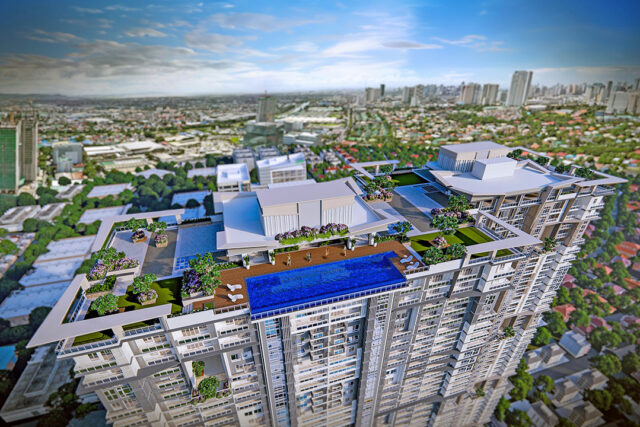
THE VALERON TOWER along the C-5 Ortigas Corridor. — DMCI HOMES

DMCI HOLDINGS, INC. is increasing its capital expenditure (capex) budget for its subsidiaries to P24.6 billion this year, up 11% from P22.2 billion in 2025, to support residential construction, expand its off-grid power capacity, and upgrade its cement operations.

For 2026, DMCI Holdings is allocating P15.5 billion, or 65% of the capex, to its property arm DMCI Project Developers, Inc. (DMCI Homes), the company said in a statement on Tuesday.

DMCI Homes’ budget for this year is lower than P17.9 billion in 2025 and will fund ongoing and new project construction as well as land banking, depending on market conditions.

The company has earmarked about P3.3 billion for DMCI Power to fund 44 megawatts (MW) of new capacity in Palawan, Occidental Mindoro, and Calapan.

It has also allocated P2.9 billion for Concreat Holdings Philippines for plant capacity improvements, operational upgrades, and preventive maintenance; P1.9 billion for Semirara Mining and Power Corp. mainly for power plant maintenance; P675 million for DMCI to re-fleet construction equipment and meet project requirements; and P300 million for DMCI Mining Corp.’s mine development initiatives.

For 2025, DMCI Holdings reported a 20% decline in consolidated net income to P15.1 billion from P19 billion a year earlier, mainly reflecting normalizing contributions from its integrated energy business and losses from integrating its cement segment.

Stronger performance from real estate, construction, water, nickel mining, and off-grid power partly offset the decline, the company said.

Semirara Mining and Power Corp. remained the group’s largest contributor with P7.3 billion, down 33% from P11.1 billion, due to softer energy prices, reduced shipments, and higher production costs.

Record coal production, power generation, and energy sales helped temper the impact of price normalization.

Associate Maynilad contributed P3.7 billion, up 11% from P3.3 billion, driven by approved tariff adjustments, stable billed connections, and improved network efficiencies.

DMCI Homes posted P3.3 billion, up 14% from P2.7 billion, supported by higher residential revenues, increased rental and finance income, and a one-off gain from the settlement of a claim involving a previous investment.

DMCI Power delivered a record contribution of P1.3 billion, up 1% from P1.2 billion, supported by record energy sales and capacity expansions in Palawan and Antique.

DMCI Mining contributed P924 million, up 276% from P246 million, driven by a recovery in nickel prices, higher output from its Zambales operations, and initial operations of the Long Point mine. The company also achieved record nickel ore production of 2 million wet metric tons during the year.

D.M. Consunji, Inc. reported P284 million, slightly higher than P247 million, driven by higher construction accomplishments from new projects, partly offset by increased costs related to project delays.

Meanwhile, Concreat Holdings Philippines posted a net loss of P1.9 billion due to higher financing expenses and lower average selling prices, although the company has implemented operational improvements to support recovery.

For the fourth quarter, DMCI’s consolidated net income stood at P3.3 billion, down 14% from P3.8 billion, as lower contributions from its integrated energy business and cement operations weighed on results, alongside the dilution of the group’s effective ownership in Maynilad following its November initial public offering.

At the stock exchange on Tuesday, shares in DMCI Holdings fell by 1.94% to close at P9.61 apiece. — Alexandria Grace C. Magno

NGCP proposes P23.9-billion Batangas-Mindoro subsea cable

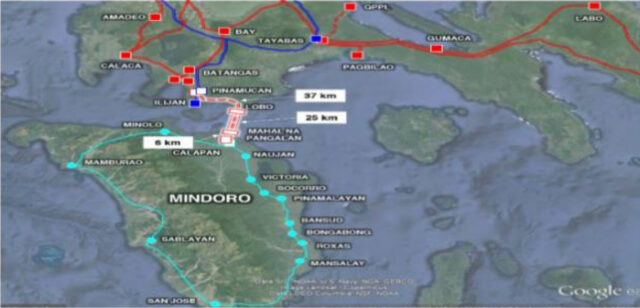
Batangas-Mindoro Interconnection Project — NGCP.PH

THE NATIONAL Grid Corp. of the Philippines (NGCP), the country’s sole grid operator, is proposing to develop a P23.9-billion submarine cable to allow Batangas to export much-needed electricity to Oriental Mindoro.

In a filing with the Department of Environment and Natural Resources, NGCP said it is seeking to install a 500-kilovolt (kV) subsea cable crossing the Verde Island Passage between Lobo, Batangas, and Calapan City, Oriental Mindoro.

The 28.5-kilometer submarine cable will consist of six operational cables and one spare cable. The cables will be buried at a depth of two meters in shallow waters.

NGCP is targeting completion of the proposed project by January 2028. The Department of Energy has certified the project as an energy project of national significance.

The submarine cable system will serve as the central link for Stage 1 of the P90.6-billion Batangas-Mindoro 500-kV Interconnection and Backbone Project (BMIBP).

The Energy Regulatory Commission approved the proposed project last year as an “upgraded” version of the Batangas-Mindoro Interconnection Project.

NGCP has been directed to complete the entire project by the end of 2030.

Currently, Mindoro Island is not connected to the national grid and depends on diesel-based generation, making it vulnerable to unstable supply and higher generation costs.

“The Mindoro Island is expected to benefit from the proposed project through improved access to power from the main Luzon Grid, reduced reliance on diesel power plants, and the development of renewable energy plants within and offshore Mindoro Island,” the company said.

The subsea cable project is scheduled for public scoping on March 25. The activity is an early stage of the environmental impact assessment process, during which the project proponent will present an overview of the development and gather feedback from stakeholders.

Under a congressionally granted 50-year franchise, NGCP has the right to operate and maintain the transmission system and related facilities, and to exercise the right of eminent domain as needed to construct, expand, maintain, and operate the transmission system. — Sheldeen Joy Talavera

DigiPlus net income flat at P12.6B in 2025

DIGIPLUS.COM.PH

LISTED digital gaming company DigiPlus Interactive Corp. said its net income was steady at P12.6 billion in 2025.

Revenue rose 12% to P84.2 billion from P75.2 billion in 2024, as first-half performance offset a slowdown in activity after the third-quarter delinking of electronic wallet in-app access to licensed online gaming platforms, the company said in a statement on Tuesday.

Earnings before interest, taxes, depreciation, and amortization (EBITDA) increased 2% to P14.2 billion in 2025.

“Despite a challenging and evolving industry landscape, DigiPlus delivered a resilient performance in 2025, reflecting the strength of our platforms, disciplined execution, and the trust of our users. As we look ahead, we remain optimistic about our growth trajectory and are confident in our ability to continue innovating responsibly while creating long-term value,” DigiPlus Chairman Eusebio H. Tanco said.

For the fourth quarter, DigiPlus’ net income fell 36% to P2.5 billion, while revenue declined 27% to P17.3 billion, amid partial regulatory effects. EBITDA rose 52% from P2 billion, supported by improved cost controls and operations.

DigiPlus ended the year with P23.4 billion in cash and cash equivalents, while debt stood at P745.8 million. The company declared dividends for the third consecutive year.

In 2025, DigiPlus subscribed to HK$1.6 billion, or about P12 billion, in convertible notes issued by Hong Kong-listed International Entertainment Corp., which owns the Philippine Amusement and Gaming Corp.-licensed New Coast Hotel Manila. The investment provides DigiPlus an option to acquire a 53.89% stake and build an offline platform to complement its digital operations.

The company also pursued initiatives related to regulatory compliance, player protection, and operational scalability.

To support its international expansion, DigiPlus established a Singapore hub for partnerships and operations, advanced its entry plans in Brazil, and submitted a license application to South Africa’s Western Cape Gambling and Racing Board.

At the local bourse on Tuesday, shares in DigiPlus fell by 3.89% to close at P17.30 each. — Alexandria Grace C. Magno

Apex Mining profit rises 77% on higher metal prices

APEXMINES.COM

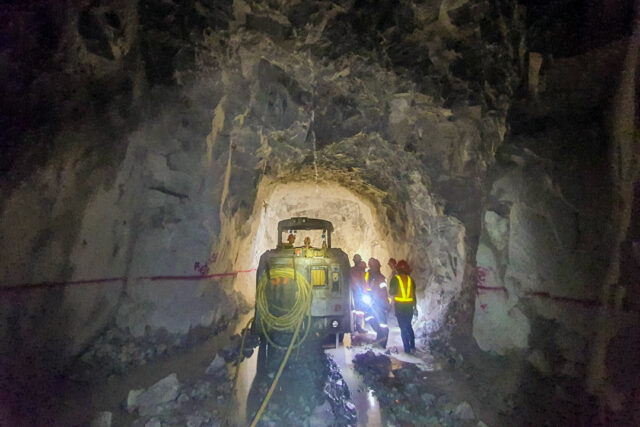
APEX MINING Co., Inc. reported a 77% increase in consolidated net income to P7.66 billion for 2025 from P4.32 billion a year earlier, driven by higher gold and silver prices.

In a statement on Tuesday, the listed miner said consolidated revenue rose 41% to P21.34 billion from P15.1 billion in 2024.

Gold sales volume declined 4% to 100,425 ounces in 2025. However, the average realized price rose 45% to $3,531 per ounce from $2,436, offsetting the drop in volume.

The company said its silver performance improved, with sales volume increasing 4% to 365,007 ounces from 350,151 ounces a year earlier. The average realized price of silver also rose 50% to $43.04 per ounce from $28.63 in 2024.

The company also doubled its cash dividend payout rate to 20% of consolidated net income from the previous 10%.

Apex Mining President and Chief Executive Officer Luis R. Sarmiento said the higher dividend reflects the company’s commitment to delivering value to shareholders.

“Through the years, we have focused on strengthening and stabilizing our balance sheet while reinvesting earnings into mining operations, exploration, and the development of new ore sources, as well as the acquisition of machinery and equipment,” he said.

Mr. Sarmiento said the company’s expansion plans remain on track despite global uncertainties, adding that Apex continues to exercise prudent spending to protect and strengthen its cash flow position.

Shares in Apex Mining rose 40 centavos, or 2.7%, to close at P15.20 on Tuesday. — Vonn Andrei E. Villamiel

MGEN considers minority stake in planned Semirara partnership

SEMIRARAMINING.COM

PANGILINAN-LED MERALCO PowerGen Corp. (MGEN) is considering taking a minority stake if it proceeds with a planned partnership with Consunji-led Semirara Mining and Power Corp. (SMPC) to operate the country’s largest coal mining site.

“If ever, we would be taking a minority position. They (SMPC) are the ones who know the business well,” MGEN President and Chief Executive Officer Emmanuel V. Rubio said on the sidelines of the Philippine Stock Exchange’s InvestPH conference on Tuesday.

He said MGEN is focused on securing a stable and reliable fuel supply.

He added that the company is conducting due diligence to assess how the coal mining site on Semirara Island in Antique could support its thermal power facilities.

“We’re still exploring… We’re trying to determine how much of the coal we can use in our coal plants. We don’t have that data yet. Those are the reasons and the criteria of us participating,” he said.

When asked about the timeline, Mr. Rubio said no firm schedule has been set and added that the parties have agreed on a flexible arrangement.

“There’s an arrangement regarding whether they can go in first and then we can come in later. We haven’t had that discussion yet because we’re still doing the due diligence. We really want to make sure that we understand what’s there,” Mr. Rubio said.

MGEN is the power generation arm of Manila Electric Co. (Meralco), which operates a diverse portfolio of power assets, including more than 1,200 megawatts of coal-fired capacity in Luzon and the Visayas.

Meralco Chairman Manuel V. Pangilinan earlier said the group is open to taking over operations, noting that it could develop a mine-mouth power project near the mining site.

He said this setup could help localize the fuel supply chain and reduce freight costs.

Semirara Island, located in Antique, covers about 55 square kilometers and can produce at least 16 million metric tons of coal annually.

SMPC has held the contract to operate the mining site for nearly 50 years and accounts for about 97% of domestic coal production.

However, the company’s operations at the site face uncertainty as the contract is scheduled for auction this year after the government denied its renewal request.

Last year, SMPC reported record coal production of 19.9 million metric tons, although this was offset by weaker prices.

Meanwhile, MGEN continued to post strong performance, contributing higher earnings to Meralco, supported by its gas and thermal assets.

Meralco’s controlling shareholder, Beacon Electric Asset Holdings, Inc., is partly owned by PLDT Inc. Hastings Holdings, Inc., a unit of PLDT Beneficial Trust Fund subsidiary MediaQuest Holdings, Inc., has an interest in BusinessWorld through the Philippine Star Group, which it controls. — Sheldeen Joy Talavera

Global art market returns to growth, upbeat for 2026, UBS report says

VISITORS LOOK at an artwork displayed at Art Basel in Basel, Switzerland, June 17, 2025. — REUTERS/MARLEEN KAESEBIER=

THE GLOBAL art market returned to growth in 2025 for the first time in three years, and the industry is gaining in optimism, an annual report by Swiss bank UBS Group AG and Art Basel showed on Thursday.

After the market’s sales grew 4% in 2025 to an estimated $59.6 billion, 43% of dealers expect turnover to rise in 2026, compared with 33% during the previous year, the study showed.

Still, art dealers face significant operational pressures due to growing complexities in cross-border transactions amid US tariffs, it said.

The report’s author Clare McAndrew, founder of research and consultancy firm Arts Economics, said 2025 was a welcome turnaround for the art market.

“However, it continued to operate in a volatile geopolitical environment, particularly regarding cross-border trade, the full implications of which are still unfolding in 2026,” she said.

Driving growth in 2025 was an increase in public auction sales and activity in the United States, the top market. Growth was more subdued in the two next biggest, China and Britain.

And while sales in both Switzerland and Austria jumped 13% year on year, they fell 10% in Germany.

Ms. McAndrew said a shift toward protectionism and more focus on domestic sales could pose longer-term risks to the art market, which relies heavily on international circulation and access to global audiences. — Reuters

D&L sees limited impact from proposed biofuel suspension

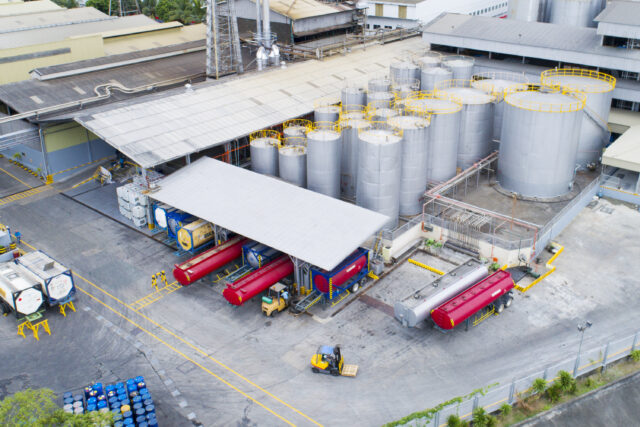
D&L’s biodiesel operations are conducted through Chemrez Technologies, Inc. — CHEMREZ.COM

LISTED specialty food ingredients and oleochemicals manufacturer D&L Industries, Inc. said a proposed temporary suspension of biofuel blending is not expected to have a material impact on its business under current market conditions.

“Based on prevailing market conditions, the price differential between biodiesel-blended diesel and pure diesel remains well below the five percent threshold indicated in the proposed legislation. As such, we do not expect any material impact under current market conditions,” D&L President and Chief Executive Officer Alvin D. Lao said in a statement on Tuesday.

The company said the price differential currently stands at about 1.33%, with diesel priced at approximately P90 per liter.

The Senate is debating a bill, certified as urgent by President Ferdinand R. Marcos, Jr., that would allow the President to suspend the biofuel blending mandate under the 2006 Biofuels Act for up to one year during periods of abnormal fuel price increases.

The proposed measure would allow the government to manage pump prices amid volatility in global oil markets. The suspension would apply only if blended fuel costs at least 5% more than pure fuel.

D&L’s biodiesel operations are conducted through Chemrez Technologies, Inc., a Philippine producer of coconut-based biodiesel.

“The proposed measure is intended as a temporary price stabilization mechanism and does not repeal the Biofuels Act or alter the country’s long-term policy direction toward renewable fuels. We therefore expect the long-term fundamentals of the biodiesel industry to remain intact,” he said.

“Chemrez has the flexibility to redirect production toward higher-value coconut-based oleochemical exports should domestic biodiesel demand temporarily soften. Global demand for sustainable specialty ingredients remains robust. The operational flexibility and resilience we have built over the years allow us to navigate evolving market conditions while continuing to deliver stable growth,” Mr. Lao added. 

He said the company supports efforts to balance fuel price management with the continued development of the domestic biofuels value chain, including its role in supporting coconut farmers and advancing sustainability and energy security.

“We remain committed to engaging constructively with policymakers and industry stakeholders as discussions on the proposed measure progress,” Mr. Lao added. — Alexandria Grace C. Magno

The stars of A Chorus Line make the stage their home

JYLLAN BITALAC/THEATER GROUP ASIA

By Brontë H. Lacsamana, Reporter

KARLA PUNO GARCIA poured her heart and soul into directing and choreographing Theater Group Asia’s production of A Chorus Line — and it shows.

“I think that the talent of the people that we found to tell this story is just incredible and undeniable,” Ms. Puno Garcia told the media during a press conference preceding the gala night at the Samsung Performing Arts Theater in Circuit, Makati, on March 11. “It’s all very, very exciting.”

For the New York-based Filipino-American Emmy winner, bringing a landmark Broadway title to the Philippines meant tapping into the enviable triple-threat-level skill that Filipino performers had to offer. Adding to that is the fact that A Chorus Line just celebrated its 50th anniversary.

THE ENSEMBLE
The Manila production sees Ms. Puno Garcia place ensemble dancers center stage, all united by their Filipino heritage. She said that it was “wild seeing everyone come together from all corners of the globe.”

“There’s like this incredible synchronicity and richness where you don’t really know where anybody’s from when you watch it,” she explained, “But when they come together and do this material, it’s like they all were born from the same person. I think that’s something that feels very Filipino. We’re all intersections of different experiences.”

Because it is a show about dancers who want to dance, the actors are the best part of the musical, with the entire line technically principals since the point of the play is highlighting them all as stars.

Christina Glur’s Diana gives a solid rendition of “What I Did For Love,” while Brie Chappell’s Val commands the room with her riotous personality in “Dance: Ten; Look: Three.” Mikaela Regis’ Sheila is another standout who manages to flesh out the character with subtle acting choices here and there, while Sam Libao’s Kristine wonderfully leans into the comedic aspects of her role.

What we could have seen more of was Universe Ramos’ Paul, who somehow blends in with the rest of the cast until he emerges out of nowhere and delivers the most emotionally charged part of the musical. It’s a decent raw performance, albeit lacking build-up to fully make its mark.

Lissa de Guzman, who plays Cassie, was definitely the star of the night.

Having played Elphaba in Wicked on Broadway, it’s no surprise she’s well-equipped to handle the stage presence and visceral, emotional desperation that sets Cassie apart. Her powerful vocals and killer dance moves shine in “The Music and The Mirror,” the one piece which I could say fully captivated the audience.

“There’s obviously so many Cassies who’ve graced the stage and are incredible, but specifically the legacy here, the talent here, is unreal,” Ms. De Guzman said, when asked about how she viewed her role in the musical. “It’s so special to be in the room and it’s so elevating to watch everyone do their parts every day. It’s not just Cassie, but the legacy of all the stories that are being told.”

HOMECOMING
For Filipino-American actor and Tony winner Conrad Ricamora, who takes on the role of director and choreographer Zach, it was fulfilling to finally come home to the Philippines — not for the food or the sights, but for the people.

“My dad was born in Cebu. He left when he was 10 years old and never came back, never brought us back,” Mr. Ricamora said at the press conference. “From growing up in the US with not a lot of Filipino representation and fighting through this industry where you get marginalized a lot of times as a Filipino performer in Hollywood and on Broadway, to now being a part of this gorgeous all-Filipino cast, is so healing for me personally.”

Even Miguel Urbino’s set design renders the single setting of the rehearsal room as a full celebration of the bodies on stage, with movable mirror panels that shift around the dancers. It’s a choice that does the music and storyline justice, as Cha See’s lighting design compounds to provide a sense of spectacle and texture to the characters telling, singing, and dancing out their stories.

Of course, Ms. Puno Garcia’s choreography work gives each dancer a chance to play out their arcs through movement. Mr. Ricamora told BusinessWorld that working with her as a director, encouraging and honing the Filipino cast to better serve the material, felt like “coming home in a way.”

On a personal note, being in the Philippines was also a chance for him to reconnect. He went to drag shows at the drag club Rampa, brought his American husband Peter to Intramuros, and watched local theater productions like About Us But Not About Us and Spring Awakening.

“In every new city I’m in, I have to take it all in,” he explained. “The drag scene in Manila is the best. It’s a full show. It feels like you’re watching a Broadway-level show. They’ve got characters, they’ve got costumes, they’ve got choreography.”

His husband took it even further by reading Noli Me Tangere, to fully immerse in the Philippine culture alongside him. “It’s great because he’s white, and it’s good to see him really learning about it all. We’ve been eating Filipino food, too. It makes me emotional,” he added.

While A Chorus Line doesn’t have any Filipino cultural inflections as Theater Group Asia did last year with its production of Into the Woods, the talent onstage reflected a passion, desperation, and heart that was in essence Filipino enough.

Mr. Ricamora’s portrayal of Zach, which starts out as a disembodied voice and figure that is professional and unfeeling, eventually unravels to reveal an emotional core with just as much hunger and compassion as the other characters. He moves from one part of the theater to another, prompting the audience to look around and find where he’s delivering his lines from this time.

This all-Filipino production of A Chorus Line has a similar, probing energy as that small choice. This is a cast of people from different parts of the world, from different walks of life, coming home to a stage where they are searching for something. Whether it’s through song or dance or scenes of confrontation, we as viewers get the feel that the performers eventually learn something from the experience.

For us, the takeaway may be as simple as walking out of the theater with “One (Singular Sensation)” stuck in your head — all the way home! — but for Karla Puno Garcia and this strong Filipino cast, there’s a sense of belonging that will surely stay.

A Chorus Line has performances until March 29 at the Samsung Performing Arts Theater at Circuit Makati. Tickets are available through TicketWorld with prices ranging from P900 to P5,500.

Treasury partially awards reissued T-bonds

BW FILE PHOTO

By Aaron Michael C. Sy, Reporter

THE PHILIPPINE GOVERNMENT partially awarded reissued 10-year Treasury bonds (T-bonds) on Tuesday, as investors stayed cautious amid rising inflation risks linked to the Middle East war.

The Bureau of the Treasury (BTr) borrowed P10.2 billion, falling short of the P20-billion offer even as bids reached P23.3 billion. The move brings the outstanding volume for the series to P308.2 billion.

The bonds, with a remaining term of nine years and 11 months, were awarded at an average yield of 6.786%, with accepted bids ranging from 6.775% to 6.8%.

The rate was 89.3 basis points (bps) higher than the 5.893% recorded at the series’ last auction on Feb. 23 and 86.1 bps above the 5.925% coupon.

Yields also surpassed secondary market quotes: 4.7 bps above the 6.739% fetched for the same series and 4.4 bps above the 6.742% indicative yield before the auction, according to PHP Bloomberg Valuation Service reference rates data supplied by the BTr.

“Demand was weak as markets remained defensive amid potential inflationary effects from the US-Iran conflict,” a trader said by telephone.

Economists warned that surging oil prices could push inflation past 7% this year while slowing economic growth by up to 0.3 percentage point.  Arsenio M. Balisacan, secretary of the Department of Economy, Planning and Development, earlier said the oil shock is the primary external risk facing the economy.

Heightened expectations of monetary tightening further dampened demand.

Michael L. Ricafort, chief economist at Rizal Commercial Banking Corp., said supply shocks from the war could push inflation above the central bank’s 2-4% target.

Bangko Sentral ng Pilipinas (BSP) Governor Eli M. Remolona, Jr. has flagged the possibility of raising policy rates if higher oil prices spill over into broader inflation.

The last rate hike was on Oct. 27, 2023, when the Monetary Board lifted the policy rate by 25 bps to a 17-year high of 6.5%. Since August 2024, the BSP has cut rates by 225 bps, with the reverse repurchase rate now at 4.25%.

“Note that the BTr can afford to reject aggressive bids as borrowing is ahead of schedule,” another trader said in a text message.

The Treasury plans to raise P248 billion from the local market in March, comprising P108 billion in Treasury bills and P140 billion in T-bonds.

The government relies on both domestic and foreign borrowing to fund a fiscal deficit capped at P1.647 trillion, equivalent to 5.3% of GDP this year.

ADVERTISEMENT
ADVERTISEMENT