Road accidents continue to claim more lives each year, with official data showing a sharp rise in fatalities. From January to November 2024, the Metropolitan Manila Development Authority (MMDA) recorded 62,723 incidents. These crashes killed 332 people.
Four-wheeled vehicles remain the most involved in road accidents, making up 54% of total cases, followed by motorcycles at 22.03%, and trucks at 7.41%. Traffic-related deaths remain the top cause of mortality among those aged 15 to 29, according to the Philippine Statistics Authority (PSA).
Beyond the human cost, road crashes create a major economic burden. In fact, the World Health Organization (WHO) estimated that road traffic injuries cost the Philippines about 2.6% of its gross domestic product, which includes medical expenses, emergency services, loss of productivity, and vehicle damage.
With the current pace of road-related deaths and injuries, the government and the private sector face growing pressure to address the issue not just as a transport challenge, but as a national public health and economic problem that demands urgent attention.
The government is taking a big step to make roads safer with the Philippine Road Safety Action Plan that aims to reduce road traffic deaths by 35% by 2028. The Department of Transportation (DoTr) is leading the rollout from how roads are built to how crash victims are treated.
The DoTr is currently strengthening its coordination across government agencies through road safety management. The department wants to improve how crash data is collected and analyzed while supporting more research on traffic incidents.
The government also intends to push for better land-use planning and improve access to public transport. Part of the plan involves aligning policies with international safety standards and involving more stakeholders in both planning and execution.
The government is also putting safety when planning, constructing, and maintaining roads. Future road designs are mandated to give equal attention to all road users, not just cars, to make streets more accessible and safer for the most at-risk groups.
Under vehicle safety, the DoTr is tightening the rules on vehicle registration and inspection to make sure all units meet proper safety requirements. Public utility vehicles and private fleets are undergoing stricter monitoring by a new audit team.
On road user behavior, government agencies are launching larger information drives to promote safer driving and raise awareness about traffic rules. At the same time, enforcement of existing laws will be stepped up, with particular attention to issues such as speeding, driving under the influence, distracted driving, and the use of helmets by motorcyclists.
Private companies and nongovernment organizations are also stepping up efforts to make the country’s roads safer. For instance, Toyota Motor Philippines is teaming up with nonprofit group ACTION to push for safer roads through “Tamang Ride,” a road safety advocacy program designed to educate the public and improve driving behavior across the country.
The initiative aims to tackle long-standing safety issues on Philippine roads by backing programs that teach proper road use and responsible driving. Toyota will fund the development and production of safety materials and driving education programs under the campaign.
In some cases, Toyota is offering a free vehicle safety inspection. The inspection typically includes checking of lights, tires, brakes, and fluids. — Mhicole A. Moral
GOKONGWEI-LED property developer Robinsons Land Corp. (RLC) is infusing nine malls into its real estate investment trust, RL Commercial REIT, Inc. (RCR), under a P30.67-billion property-for-share swap.
The malls, with a combined gross leasable area (GLA) of 324,107.75 square meters (sq.m.), will be exchanged for 3.83 billion primary common shares of RCR priced at P8 apiece.
The malls to be infused include Robinsons Dasmariñas, Robinsons Starmills, Robinsons General Trias, Robinsons Cybergate Cebu, Robinsons Tacloban, Robinsons Malolos, Robinsons Santiago, Robinsons Magnolia, and Robinsons Tuguegarao.
The transaction, supported by an accredited appraiser and a third-party fairness opinion, is subject to regulatory approvals and will be presented during a special shareholders’ meeting on Aug. 13.
RLC and RCR approved the transaction in separate board meetings on Thursday, the companies said in separate disclosures.
Trading of RCR shares was suspended for one hour on Thursday afternoon following the announcement of the asset infusion.
The transaction will add to RCR’s existing portfolio, which currently consists of 828,000 sq.m. of GLA — comprising 12 mall assets with 289,000 sq.m. of GLA and 17 office assets with 539,000 sq.m. of GLA.
In 2023, RLC infused 13 mall and office properties worth P33.9 billion into RCR.
DragonFi Securities, Inc. Equity Research Analyst Jarrod Leighton M. Tin said in a Viber message that the transaction will expand the geographic footprint of RCR’s mall portfolio.
“With this addition, RCR’s mall count will rise from 12 to 21, and its mall GLA will grow 112% to over 613,000 sq.m. — now exceeding its office GLA,” he said.
“This marks another step in RCR’s transformation into a multi-asset REIT, bringing in high-yielding retail assets to support long-term dividend-per-share growth,” he said.
Mr. Tin said the infusion may bolster RCR’s prospects for inclusion in the Philippine Stock Exchange Index (PSEi), which features the 30 most actively traded and capitalized local stocks.
He added that the P8 share price in the transaction reflects a 13.3% premium over RCR’s last traded price of P7.06 per share as of Thursday.
“The enlarged asset base and public float further strengthen RCR’s case for PSEi inclusion. RCR is optimizing its portfolio with more retail exposure instead of office exposure, which has been facing some weakness with the office oversupply,” Mr. Tin said.
China Bank Capital Corp. Managing Director Juan Paolo E. Colet said the asset infusion will diversify RCR’s portfolio and reinforce its position as “one of the country’s top REITs.”
“Mall assets are seen as attractive given favorable consumer trends. The valuation is fair and we expect the deal to be dividend-accretive,” he said in a Viber message.
AP Securities, Inc. Research Analyst Cholo Miguel C. Ramirez said the transaction is expected to lead to higher rental income and dividend payouts for RCR.
“The continued dividend growth supports the management’s goal of tripling its market cap from P100 billion to P300 billion. The current market capitalization is at P112 billion, from P92 billion by end-2024,” he said in a Viber message.
Meanwhile, Unicapital Securities, Inc. Research Head Wendy B. Estacio-Cruz said in a Viber message that RCR’s public float will increase to 34% following the transaction, exceeding the 33.33% minimum public ownership requirement under the law.
“Given the strong earnings growth of shopping malls over the past two years, malls are expected to make up the bulk of RLC’s future asset infusions into RCR,” she said.
Last month, RLC said it is targeting P25 billion in net income by 2030 as part of its Vision 5-25-50 roadmap, which coincides with its 50th anniversary. One of the roadmap’s key strategies is to leverage RCR to grow its portfolio.
For the first quarter, RCR’s net income rose by 47% to P1.66 billion, supported by steady occupancy rates and last year’s asset infusion. RLC’s attributable net income increased by 4% to P3.48 billion, driven by the growth of its malls, offices, hotels, and logistics segments.
On Thursday, RLC shares rose by 1.57% or 20 centavos to P12.96 apiece, while RCR shares gained 0.86% or six centavos to close at P7.06 each.
VIVANT CORP. plans to invest around P46 billion to expand its renewable energy (RE) capacity portfolio by 2030, the company’s top official said.
“Looking ahead, we aim to significantly expand our generation portfolio with a substantial portion coming from renewable energy sources. To date, we remain on track to reach our target of 30% RE capacity by 2030,” Vivant Chief Executive Officer Arlo G. Sarmiento said during the company’s annual stockholders’ meeting on Thursday.
“To bring this portfolio to life, we are projecting a cumulative project investment of roughly P46 billion between now until 2030,” he added.
The planned investments will support project development, joint ventures, and the continued expansion of the company’s clean energy footprint, he said.
Among its pipeline projects, Vivant expects its 22-megawatt-peak (MWp) solar power project in San Ildefonso, Bulacan to commence commercial operations within the year. Mr. Sarmiento said major construction activities are underway at the site.
The company is also preparing for the development of the 206-megawatt (MW) Lihangin Wind Energy project in Northern Samar, which is scheduled to begin commercial operations by 2027.
The wind project is a joint venture among Vivant Energy Corp., Aboitiz Renewables, Inc., and Vena Energy.
“As we move toward 2030, our 30 by 30 target will support the country’s 50 by 50 energy transition, while enabling us to grow with responsibility and resilience,” Mr. Sarmiento said.
For 2024, the company has allocated P4.5 billion in capital expenditures, with the bulk of the funding intended for RE projects, including solar and wind developments.
Vivant has investments in power generation, power distribution, and the retail electricity supply business. It also has a presence in the water sector, with projects in bulk water supply, wastewater treatment, and water distribution.
The company posted a 3% year-on-year increase in attributable net income to P2.4 billion in 2024, driven by double-digit earnings growth in its energy business.
Consolidated revenues rose by 48% to P12.2 billion, primarily due to higher sales volumes from certain power generation assets, the retail electricity supply business, and solar rooftop operations. — Sheldeen Joy Talavera
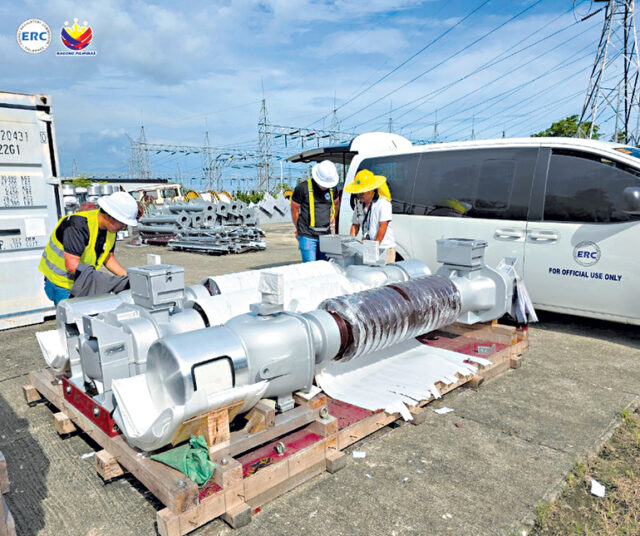
Energy Regulatory Commission (ERC), through its Consumer Affairs Service—Mindanao Area Operations Division, conducted testing and calibration of the National Grid Corporation of the Philippines’ instrument transformers in Davao City. — www.facebook.com/ERCgovPH
Since being established in June 2001, under the Electric Power Industry Reform Act (EPIRA), the Philippine Energy Regulatory Commission’s (ERC) value to the Filipino people has been inestimable, guiding the nation’s electricity landscape toward competition, affordability, and sustainability, way before it was common practice.
For over 24 years, it has implemented landmark reforms and has authored crucial rulings governing today’s energy market while leading the digital transition at the energy sector.
Before the passing of EPIRA, the energy sector in the Philippines was operated and maintained by the Philippine government through the National Power Corp., which practically controlled the whole of the industry. From this, EPIRA divided the electric power industry into four, namely, generation, transmission, distribution, and supply. This led to the founding of three key institutions: the quasi-judicial ERC, the National Transmission Corp. (TransCo), and the Wholesale Electricity Spot Market (WESM).
Under the EPIRA, power generation was opened to competition and made accessible to the energy giants supplying power to Filipinos today. The transmission and distribution of electricity remained regulated activities, falling under the rate-setting authority of the ERC. Furthermore, supplying electricity to the contestable market was no longer classified as a public utility function, which meant that suppliers were not required to obtain a national franchise. In a sense, the founding of the ERC in itself laid the foundation for the competitive and highly sustainable energy sector in the present.
Once established as a regulatory body, the ERC began to promote competition, encourage market development, ensure customer choice, and penalize abuse of market power. One of the first regulatory acts carried out by the commission was to unbundle power rates and promulgate grid and distribution codes. These efforts created a more transparent and accountable energy sector by allowing consumers to see the true cost of electricity generation, transmission, and distribution.
In 2009, the ERC implemented a regulatory approach and procedure for resetting the rates of power distribution utilities and the National Grid Corporation of the Philippines (NGCP) based on a “performance-based regulation” (PBR) framework. At present, both distribution utilities and the transmission operator use this same framework when submitting applications for their revenue requirements or during rate reviews. Essentially, the PBR framework encourages regulated entities to operate more efficiently and competitively by tying their performance to the rates they are allowed to charge.
By 2010, the ERC rolled out the country’s first Feed‑in Tariff (FiT) rules pursuant to the Renewable Energy Act of 2008. FiTs are mechanisms designed to encourage the development and use of renewable energy sources by guaranteeing a set price, usually higher than the market price of electricity from conventional sources, for electricity generated from renewable sources like solar, wind, or hydro.
ERC Chairperson and CEO Atty. Monalisa C. Dimalanta joined one of the panels at the BusinessWorld Economic Forum last May. — The Philippine Star/Russel Palma
The mechanism laid out by the ERC 15 years ago enabled the country, in part, to become the second-most attractive emerging market for renewable energy (RE) investment, according to the 2024 Climatescope report by BloombergNEF. This also led to booming investments like the Northwind Power Phase II located in Bangui, Ilocos Norte and the MW Sevilla Mini-Hydro located in Bohol.
Three years later, the commission adopted ERC Resolution 09, Series of 2013, approving the Rules Enabling the Net-Metering Program for Renewable Energy. Another step toward sustainability, the resolution allowed customers of distribution utilities (DUs) to install an on-site RE facility, usually solar panels on roofs, not exceeding 100 kilowatts (kW) in capacity so they can generate electricity for their own use. Furthermore, any electricity generated that is not consumed by the customer is mandated to be automatically exported to the DU’s distribution system which is then converted to peso credits deducted to the customer’s electricity bill.
Right before the pandemic, the Supreme Court ordered the ERC to revise its methodology and calculations stemming from a petition filed by the National Association of Electricity Consumers for Reforms that sought the courts to assail ERC’s approval of Manila Electric Co.’s (Meralco) unbundled rates in 2003. The Court highlighted that determining “just and reasonable rates” involves striking a balance between the interests of consumers and those of investors.
Recently, challenges brought about by the coronavirus disease 2019 (COVID‑19) and urgent climate goals prompted the ERC to revamp regulations for modern sector demands. One of the immediate responses by the commission was to ensure continuous and reliable electricity service during lockdowns, while also protecting consumers from sudden rate hikes and service disruptions. This included issuing advisories on deferred billing, staggered payments, and ensuring that distribution utilities were providing the appropriate lifeline and subsidy rates to vulnerable customers.
Data- and sustainability-driven governance
One of the few silver linings of the pandemic was that it accelerated the shift toward digital services across industries, including the ERC. In 2023, the commission launched “ERC LINKod,” an internal system designed to improve efficiency in processing applications and monitoring cases. This platform has helped streamline regulatory operations by providing automated updates, enabling better coordination among stakeholders, and increasing transparency in regulatory processes.
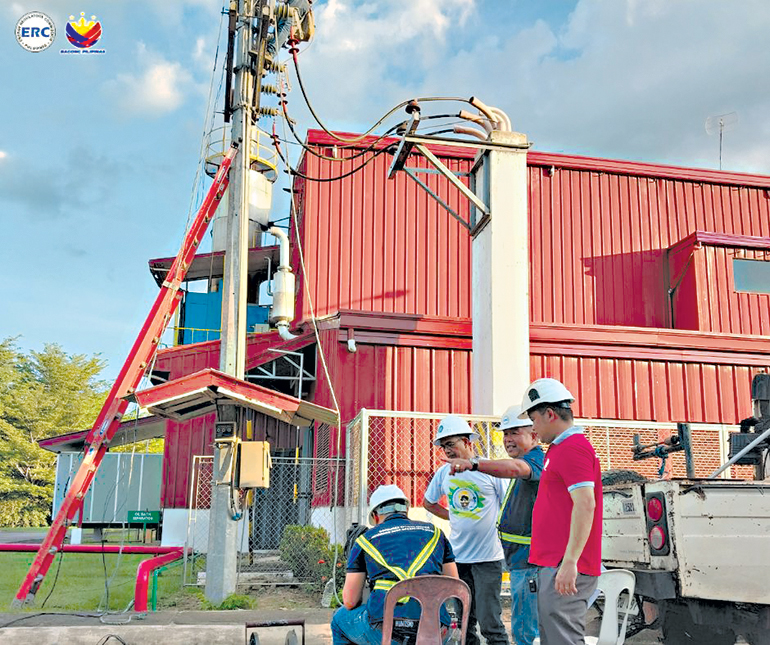
The ERC conducted a series of inspections, surveillance activities, and testing and calibration procedures last April to verify the compliance of several distribution utilities or electric cooperatives with technical standards and regulatory requirements. — www.facebook.com/ERCgovPH
To further its effort to digitalize services, the ERC unveiled a suite of new digital tools aimed at improving transparency and consumer empowerment just last year. Among these was the Energy Virtual One-Stop Shop (EVOSS) Dashboard, which consolidates critical data on compliance, licensing, and project status. This tool has reduced red tape and enabled investors and developers to track their applications in real time.
Additionally, the ERC Procurement PH platform was launched to give the public access to bidding information, procurement contracts, and notices, effectively reinforcing accountability within the organization. The dashboard provides data on procurement documents like bid bulletins, purchase orders, and notices of award, as well as ERC’s audit trail and project publishing.
Meanwhile, BuyYourElectricity (BYE), a consumer-facing platform, helps end-users compare power suppliers and understand their billing better, thus encouraging informed consumer choices in the retail electricity market. Launched just six months ago, the website aims to empower consumers with tools to make informed decisions about their Retail Electricity Suppliers (RES).
These digital advancements reflect ERC’s broader shift toward data-driven governance, which aligns with international best practices and the Philippines’ commitment to a cleaner, more inclusive energy future.
Another major area of regulatory innovation has been the implementation and expansion of Retail Competition and Open Access (RCOA). As mandated by EPIRA, RCOA allows eligible end-users to choose their own supplier instead of being limited to their local distribution utility. By enabling more competitive procurement of electricity, RCOA aims to lower electricity costs and promote efficiency among power producers.
Aside from feed-in tariffs and net-metering, the ERC has supported the rollout of other initiatives advancing sustainability in the energy sector, namely the Renewable Portfolio Standards (RPS) and the Green Energy Option Program (GEOP). While not a program directly under the commission, the ERC enforces compliance with these programs and ensures that the associated costs are fairly and transparently reflected in electricity rates.
Under RPS, electricity suppliers are required to source a specific portion of their energy from renewable sources. This creates a steady demand for clean energy and ensures a diversified energy supply. GEOP, on the other hand, allows eligible consumers to choose renewable energy as their power source from licensed suppliers.
With its ongoing digital transformation, deepening of technical expertise, and strengthened institutional independence, the ERC is well-positioned to steer the country’s power sector into a future that is cleaner, more competitive, and more inclusive. — Mhicole A. Moral
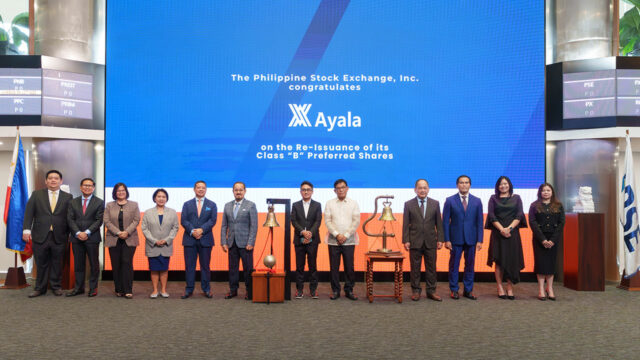
IN PHOTO (L-R): Ayala Corp. Head of Corporate Strategy and Business Development Mark Robert H. Uy, Treasurer Estelito C. Biacora, Chief Legal Counsel Franchette M. Acosta, Comptroller Josephine G. De Asis, Deputy CFO Juan Carlos L. Syquia, CFO Alberto M. de Larrazabal, SEC Commissioner McJill Bryant T. Fernandez, SEC Chairperson Francis Edralin Lim, PSE President and CEO Ramon S. Monzon, COO Roel A. Refran, PSE Head of Issuer Regulation Division Marigel Baniqued-Garcia, and PSE General Counsel Veronica V. Del Rosario. — Ayala Corp.
LISTED conglomerate Ayala Corp. raised P20 billion from a preferred share offering that was listed on the Philippine Stock Exchange (PSE) on Thursday.
The offering consisted of the re-issuance of five million preferred Class “B” shares, with an overallotment option of up to five million shares, both priced at P2,000 per share.
The preferred shares are payable quarterly with an initial dividend rate of 6.2903% per annum.
“The successful re-issuance and listing amidst global market uncertainties of our preferred Class ‘B’ shares reflects the enduring support of the investing public in both Ayala and the Philippine capital markets,” Ayala President and Chief Executive Officer Cezar P. Consing said in a pre-recorded message during the listing ceremony.
“The Ayala Group accounts for 24% of the total outstanding preferred shares in the domestic market,” he added.
Ayala Corp. will use the proceeds from the offering to repay short-term bank loans, fund general corporate purposes, and finance capital expenditures.
“This issuance underscores the continued ability of Philippine corporate issuers like Ayala Corp. to access capital markets effectively, supporting their growth and optimizing capital despite uncertain and volatile market conditions,” Ayala Corp. Chief Finance Officer Alberto M. de Larrazabal said.
Meanwhile, PSE President and Chief Executive Officer Ramon S. Monzon said during the listing ceremony that Ayala Corp.’s follow-on offering of preferred shares was oversubscribed by 1.87 times.
“This is a testament that offerings will continue to attract capital if the issuer is known and proven to be responsible, relevant, and sustainable, generating not only profit for its shareholders but creating value for all its stakeholders,” he said.
For the first quarter, Ayala Corp. reported a 4% decline in net income to P12.6 billion due to weaker contributions from its power and telecommunications units.
Shares of Ayala Corp. were unchanged at P558 apiece on Thursday. — Revin Mikhael D. Ochave
The ERC conducted testing and calibration of Instrument Transformers and Electronic kWh Meters for contestable customers transitioning to the Competitive Retail Electricity Market in Mindanao. — www.facebook.com/ERCgovPH
As a quasi-judicial and independent regulatory body, the Energy Regulatory Commission (ERC) is mandated to issue and approve rules, guidelines and policies that govern power rates, service quality and licensing. But more than technical regulation, the commission is focused on educating the public about their rights as consumers and ensuring they are not at a disadvantage in the electricity market.
The ERC enforces consumer protection through the Magna Carta for Residential Electricity Consumers to ensure fairness, accountability, and transparency in the delivery of electricity services to households.
The charter guarantees that residential consumers have access to a continuous and secure power supply. It also sets clear rules for fair pricing, proper billing procedures, and the timely investigation of complaints.
Utility companies, on the other hand, must treat all customers with courtesy and without discrimination. Monthly billing statements are required to follow the ERC-approved format that must be itemized, delivered on time, and made payable at authorized payment centers.
The ERC mandates that all meters must be tested, certified, and sealed before installation. These meters must fall within an acceptable range of accuracy. Consumers are entitled to one free meter test every two years. Should the meter be found defective or fast, the consumer is entitled to a refund for any overbilling that occurred.
To avoid sudden service disconnections, utilities are required to issue a disconnection notice at least 48 hours before power is cut off. Power cannot be disconnected after 3 p.m., on weekends, or during holidays. In cases where a death occurs in the household or there are documented medical reasons, disconnections are not permitted.
The Magna Carta allows households to pay under protest while disputing their bill. This method ensures their electricity remains active while the issue is under investigation. Consumers may also file complaints directly with the ERC if their utility fails to address issues adequately.
In 2023, the ERC launched LINKod, a digital platform aimed at reducing delays in processing complaints and increasing transparency in the energy sector. The platform includes a Consumer Complaints Ticketing System (CCTS), an Online Filing and Application System (OFAS), and a Billing and Revenue System-Cashiering System (BRS-CS) to allow consumers and industry players to file documents, monitor complaints, and complete transactions without going to the ERC’s offices.
Electricity companies are also expected to benefit from LINKod, as the system provides an online channel for submitting regular reports and taking part in the Competitive Retail Electricity Market.
Last March, the commission officially adopts the Alternative Dispute Resolution (ADR) Policy through Resolution No. 5, Series of 2025 to allow more efficient options for resolving conflicts between consumers and providers. The ADR policy provides structured processes such as mediation, negotiation, arbitration, and expert evaluation to avoid lengthy legal proceedings.
Meanwhile, the ERC issued new omnibus rules to strengthen consumer choice and promote a more competitive energy market. These updated guidelines merge several key consumer programs under one framework, including the Retail Competition and Open Access (RCOA), the Retail Aggregation Program (RAP), the Green Energy Option Program (GEOP), and rules on Distributed Energy Resources.
Under RCOA, qualified electricity users can choose their power suppliers to create more competitive prices and better services. The RAP, on the other hand, allows two or more users within the same franchise area to combine their electricity demand and register as one customer.
The omnibus rules also revise the requirements for Retail Electricity Suppliers. To ensure financial stability, suppliers must now meet a minimum tangible net worth of P15 million before they can apply for a license. In addition, the ERC will evaluate license applications using performance indicators such as customer satisfaction, adherence to rules, and service efficiency. — Jomarc Angelo M. Corpuz
CITICORE RENEWABLE Energy Corp. (CREC) has completed a $120-million (P6.8 billion) share subscription agreement with Indonesia’s state-owned PT Pertamina Power Indonesia (Pertamina NRE), the renewable energy developer said on Thursday.
The transaction involves Pertamina NRE’s subscription to a 20% interest in CREC, the company said in a media release.
Under the partnership, the two companies will jointly explore renewable energy investments in Indonesia, including the potential development of solar and wind power projects, as well as collaboration on carbon credit development and trading.
“With Pertamina NRE, we can view the energy transition through a different lens and create responsive, collaborative solutions for clean energy in the Philippines and Indonesia,” CREC President and Chief Executive Officer Oliver Tan said.
CREC, directly and through its subsidiaries and joint ventures, manages a diversified portfolio of renewable energy generation assets, power project development operations, and retail electricity supply services.
At present, the company has a combined gross installed capacity of 287 megawatts (MW) from its solar facilities in the Philippines. It also has four wind power projects with a total planned capacity of 803 MW.
“We are leading the charge in Indonesia’s renewable energy transition, and our partnership with Citicore, with their expertise and experience in RE development, is a way to elevate our capability in RE development, as well as a big step in accelerating our clean energy goals,” Pertamina NRE Chief Executive Officer John Anis said.
Mr. Anis said the company is committed to supporting CREC and the Philippines with its “own expertise, technology, and best practices.”
Energy Assistant Secretary Mylene C. Capongcol, who witnessed the signing, said the partnership will not only help advance clean energy targets but also signals the need for active support for energy cooperation and sustainable development in Southeast Asia.
“Both Indonesia and the Philippines share common energy concerns, being dependent on coal-fired power plants and seeking an orderly transition to cleaner technologies,” Ms. Capongcol said.
“A heightened level of cooperation between our countries offers potential benefits across economic, environmental, and geopolitical dimensions through collaboration on energy transition and renewable energy,” she added.
Pertamina NRE is a wholly owned subsidiary of Indonesia’s state-owned energy company Pertamina. It is responsible for managing all power generation and new and renewable energy development, focusing on gas-based power generation, geothermal energy, other renewable sources such as solar and wind, and green initiatives such as nature-based solutions and carbon-related businesses. — Sheldeen Joy Talavera
ST. LUKE’S Medical Center (SLMC) plans to complete its P12-billion hospital in Parañaque City by 2030 as part of efforts to expand its portfolio of healthcare facilities in the Philippine capital.
“We will start (building) in the latter part of this year or early next year, and we are hoping to open the door of that hospital to patients by 2030,” SLMC President and Chief Executive Officer Dennis P. Serrano told reporters on Thursday.
The planned St. Luke’s Aseana will be SLMC’s third hospital in Metro Manila. It currently operates facilities in Quezon City and Bonifacio Global City.
“The structure itself is going to be around P12 billion, that is just for the structure. It does not include the costs for the Magnetic Resonance Imaging machines, CT scans, or beds,” Mr. Serrano added.
He said the project was delayed to 2030 due to the need to integrate “smart readiness” into the hospital’s design. The original target for completion was 2029.
“Our need for smart readiness, we had to go back to the design,” he said when asked about the cause of the delay.
Mr. Serrano said the 500-bed hospital will be equipped with the latest technology to make patient care more convenient.
He said patients will be able to schedule blood tests via their mobile devices to avoid queueing.
“All the laboratory tests are automated, and giving out the results will also be automated,” he added.
He said patient monitoring will be centralized in the new facility, allowing doctors and nurses to monitor the vital signs of more patients simultaneously. — Adrian H. Halili
AFTER a two-year hiatus, the International Silent Film Festival (ISFF) in Manila will once again be bringing together cultural institutions, musicians, and film lovers in a celebration of cinema, music, and international collaboration.
Scheduled for July 11 to 13 at the Shangri-La Plaza in Ortigas, Mandaluyong City, the festival will showcase five films from Spain, Italy, Japan, Austria, and Germany. They have each been paired with five sets of Philippine musicians who will perform live scoring at the screenings.
This year’s edition has the exclamation point as its central symbol.
“In the spirit of silent film, where expression is everything and every gesture is heightened, the exclamation point becomes a fitting emblem for a festival that seeks to amplify its voice in silence,” said the festival’s film programmer, Eunice Helera, at the June 17 press conference.
“It signals a bold return, a shared declaration: we’re back,” she added.
UNIQUE COLLABORATIONS For the Spanish-language film this year, Instituto Cervantes selected Gigantes y Cabezudos (1936), which follows a young man returning from a war tour in the Philippines to meet his lover in Spain.
Its festive atmosphere, since it centers on the lovers at a folk parade, will be given a contemporary twist thanks to the scoring by jazz-hip hop-electronic-pop band Psychic Surgeons, delivering something “cinematically Spanish but musically Filipino,” according to Instituto Cervantes de Manila Director Francisco Javier López Tapia.
For Psychic Surgeons band member Gabriel Lazaro, the band’s style is “perfect for the film.”
“It’s visually stunning and very surreal, which is something we’re personally attracted to,” he told BusinessWorld.
Fra Diavolo (1925) is the selection provided by the Philippine Italian Association, specifically chosen by their musician collaborator, Pepe Manikan. He and his Progharmonic Orchestra also provided live music at the last ISFF in 2022.
“I chose the film because it’s fun and has a lot of action and adventure. We’ll also be doing live foley sound effects,” Mr. Manikan said. “The film is actually about trying to stop an invasion, which is a theme that’s very relevant now, that fight for sovereignty.”
He added that people can expect a “fusion of genres,” from jazz and progressive rock to more traditional film score elements.
Meanwhile, the Goethe-Institut Philippinen is bringing in Wie sich das Kino rächt (1912), a comedy about a film censor being pranked by various filmmakers. The live scorers for it will be experimental duo Ma.Ma, made up of sound artists Alyana Cabral and Joee Mejias.
INCLUSIVE SELECTIONS Japan Foundation Manila’s film this year is The Scent of Pheasant’s Eye (1935), about a high school girl who falls in love with her sister-in-law. It is adapted from Nobuko Yoshiya’s stories about romantic female friendships titled Tales of Flowers, published from 1916 to 1924, a pioneer of lesbian sexuality in Japanese literature.
“We found this film at the National Film Archive of Japan. A person told me about this and its relation to queer cinema, and I enjoyed finding out about its history and wanted to share it with more people,” said Eisuke Matsuda, assistant director of the Japan Foundation.
In line with the film’s themes, they invited three female Filipino musicians — Teresa Barrozo, Pat Sarabia, and Mariah Reodica — to do the live scoring for the film. They will also be joined by a female benshi, or Japanese silent film narrator, Nanako Yamaguchi, providing a rare cultural experience.
Finally, The Life of Beethoven (1927) is the selection from the Austrian Embassy. The biopic on Ludwig van Beethoven will be live scored by an orchestra assembled by Hearlife Verein, a non-profit foundation for deaf children in the Philippines.
Nina “Tosh” Jacob-Soliven, Hearlife’s program director, said that Mariel Ilusorio will lead the musicians, including a string quartet, teenage sopranos from the Association of Royal Schools of Music in the UK, and a partially deaf pianist who has a cochlear implant.
“Our NGO (non-governmental organization) works with deaf children, and we all know Beethoven himself became deaf. We have a deaf musician, and we’ll have a sign language translator for the deaf community we invited to come,” she said. “It’s a silent film, so it will be more inclusive in all aspects.”
The festival runs from July 11 to 13 at Shangri-La Plaza, with a pocket screening taking place on July 14 at Cine Adarna, UP Film Center, in Quezon City. Admission is free. — Brontë H. Lacsamana
Spotlight is BusinessWorld’s sponsored section that allows advertisers to amplify their brand and connect with BusinessWorld’s audience by publishing their stories on the BusinessWorld Web site. For more information, send an email to online@bworldonline.com.
Join us on Viber at https://bit.ly/3hv6bLA to get more updates and subscribe to BusinessWorld’s titles and get exclusive content through www.bworld-x.com.
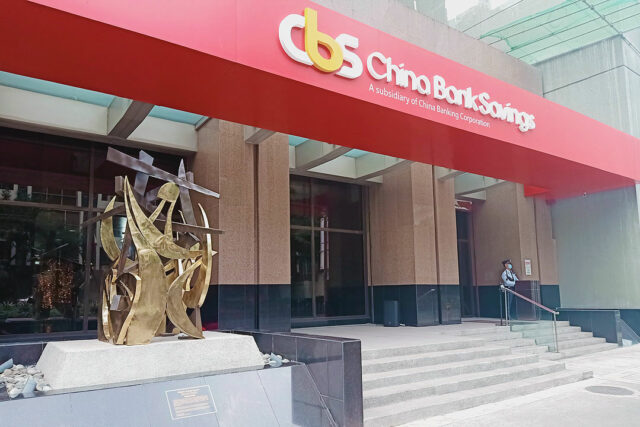
CHINA BANK Savings, Inc. (CBS), the thrift banking arm of listed China Banking Corp. (Chinabank), is aiming to grow its loan book by 20% this year and double its net income in the next five years, driven by the retail sector and its target to expand its lending to small and medium businesses.
“For this year, we’re aiming to grow our loan portfolio by approximately 20% from our December 2024 numbers. Our drivers are mostly on the retail side… We aim to double our income in five years’ time,” CBS President James Christian T. Dee said at a media briefingfollowing their annual stockholders’ meeting on Thursday.
CBS’ net income grew by 22.51% year on year to P566 million in the first quarter from P462 million a year prior, based on the quarterly report of its listed parent.
Its balance sheet for the period showed that its gross loan portfolio expanded to P145.93 billion at end-March from P135.51 billion at end-December 2024, while its net loan portfolio rose to P143.61 billion from P133.04 billion.
Meanwhile, deposits grew to P170.73 billion at end-March from P166.79 billion at end-December 2024.
In 2024, the bank booked a net profit of P2.17 billion, rising by 18.75% year on year from P1.83 billion in 2024, its audited financial statement posted on its website showed. This translated to a return on assets of 1.25% and a return on equity of 12.96%.
Mr. Dee said this was the first time that CBS booked a net income above P2 billion. “On top of that, the bank also grew its customer base by 20%, reaching the 1 million customer mark for the first time.”
Earnings growth was mainly driven by higher interest income as the bank’s loans rose by 21.19% year on year to P133.69 billion, driven by home, auto, and payroll loans.
Mr. Dee said CBS wants to expand its small and medium enterprise (SME) loan book this year.
“CBS was the product of a few acquisitions, and we had to clean up a certain part of our loan portfolio from years back. I think it’s about 10 years ago with the acquisition of Plantersbank (Planters Development Bank). So, since then, we’ve cleaned the shop and so far, [our SME portfolio] is nice and shiny and we’re ready to grow it properly going forward,” he said.
CBS’ parent Chinabank took over Plantersbank in 2014. The SME-focused thrift bank was merged with CBS in 2015, with the latter as the surviving entity.
The bank will also launch the CBS Deloitte Environmental and Social Resilience Tool within the year to help both their corporate and SME clients gauge their sustainability risks.
Mr. Dee added that they are “cautiously optimistic” on their outlook for this year amid slowing economic growth and global trade uncertainties.
“We are very confident the BSP (Bangko Sentral ng Pilipinas) will be able to navigate these unfolding circumstances and guide the banking system in promoting economic growth. We do remain concerned on what higher tariffs mean for Philippine manufacturing, but we also remain confident in the Philippine government’s ability to bolster local industries. Overall, we must remain vigilant,” he said.
Meanwhile, CBS Chairman Ricardo R. Chua said the entry of BDO Network Bank, Inc. into the thrift banking space is unlikely to affect their own long-term targets.
BDO Network Bank in May received central bank approval for its conversion into a thrift bank from a rural bank. It had assets worth P124.05 billion at end-2024.
Meanwhile, CBS was the second-largest thrift bank in the country in asset terms in 2024 with P189.78 billion.
Both banks are part of the SM Group.
“The Philippines has been growing because of the consumer market. Consumer spending has been a major driver of the economy. So, we think that the consumer side of the business is going to grow significantly. We have a very young population; everybody wants to work, everybody wants to be productive. So, we thought it’s a growing market. Having BDO is a welcome development, but it will not derail us from whatever plans we have in growing the bank,” Mr. Chua said.
“We are happy to welcome them into the thrift banking space as there is a real need for more players to service the financial needs of the unbanked. Despite all the advances in banking, from policy to technology, we continue to encounter communities that are underserved. Our company vision to become the leading savings bank preferred by the market we serve is rooted in service. But that goal is secondary to fulfilling the mandate given to us by the BSP of providing financial services to all Filipinos. Thus, we view the entry of more reputable and stable banking institutions into the thrift banking space as an opportunity for collaboration between competitors for the benefit of the unbanked and all financial consumers,” Mr. Dee added.
CBS also aims to add five more branches this year from the current 170, mostly in Visayas and Mindanao, he said.
“We noted a huge potential in the southern part of the Philippines… We do want to strengthen our network in the southern part of the Philippines.” — A.M.C. Sy
The other day, we were one of the three panelists during the 6th General Membership Meeting of the Financial Executives Institute of the Philippines or Finex. The other two were Finance Assistant Secretary Neil Adrian S. Cabiles and Metrobank Chief Economist Nicholas Mapa, a former colleague at the Bangko Sentral ng Pilipinas’ Department of Economic Research. Their presentations focused on the economic and financial aspects of the theme “Philippine Economic Outlook: Policy Shifts and Market Reactions After the 2025 Elections.”
Mr. Cabiles was more than convincing in saying that the Philippine Government is moving heaven and earth to invite foreign investors to invest in the Philippines, get the infrastructure projects completed as scheduled, and ensure that business processes do not pose any obstacles to doing business in this country. Mr. Mapa sounded his well-crafted five calls in the Philippines, particularly on monetary policy, adaptation to the US tariff policy, and the direction of the Philippine peso — ingenious and to the point.
Let me share my brief presentation with some edits for publication.
My proposition is that the 2025 mid-term elections were not exactly a game-changing political event, whether in terms of policy shift or market reaction. We need to learn from history.
First, notwithstanding what appears to be a mild repudiation of the Marcos administration’s senatorial candidates, with two opposition candidates emerging in the top five, and some unknown but qualified candidates surpassing the votes obtained by some candidates of both the Administration and former President Rodrigo Duterte’s PDP Laban, the change in the Cabinet was far from a revamp. There was no cosmetic surgery done, there was only a slight tweak in the shade of the foundation and a little powdering on the surface. “Not business as usual” might be a misnomer.
Second, based on that, we don’t expect that there will be a critical rethink of economic policy moving forward. Economic management is to continue despite the fact that the Administration candidates suffered something of a rebuke in the polls because of issues on political governance and economic management. We recall that in the recent Pulse Asia survey, respondents rated economic issues like inflation, lack of jobs, poverty, and wages to be the most urgent national issues. One good affirmation of this survey was the result of another survey. The Stratbase-SWS reported in late April, a month before the May 2025 mid-term elections, that over 14 million Filipino families considered themselves poor. This is around 55% of all Filipino families. This is concerning, to say the least. To be sure, there have been improvements in these metrics but their pace is more glacial than urgent.
Third, we differ from the view that the arrest of former President Duterte was an important determinant in the final outcome of the senatorial elections. True, prior to the arrest, more Administration candidates dominated the top 12 slates in polls, but the final outcome showed only a handful of them kept their standing and more Duterte candidates made it to the winning circle. The fact that two opposition candidates finished the race with a very impressive No. 2 and No. 5 in part disproves such a proposition. Such an arrest was correct and in keeping with justice and a repudiation of the culture of impunity in this country. This was also long overdue. What would be earth-shaking would be the provisional release of the former president by reason of his advanced age. That could very well license every senior official of governments around the world to commit crimes against humanity.
Our own take is that troll farms managed to turn it around and shaped it into a rallying cry for justice, claiming the International Criminal Court (ICC) move with the Marcos administration’s cooperation, as being an assault to our independence and sovereignty. Troll farms were unrelenting in proclaiming — and some senators of the Republic chiming in ahead of the impeachment of Vice-President Sara Duterte — that the arrest was wrong. Obviously, some failed to discern between facts and fiction, fake news and real news. Duterte supporters virtually weaponized the ICC case to deflect close scrutiny of his policy on drugs and his administration’s corruption especially during the pandemic. If left unchecked, some social destabilization is bound to ensue, something that discourages, rather than inspires, business confidence.
Fourth, the impeachment of the vice-president could have been an excellent opportunity to demonstrate to the world that there is rule of law in the Philippines and that justice prevails. She has been accused of serious high crimes that justify impeachment. What is sad is that even President Ferdinand Marcos, Jr. seems to be vacillating. The President should remain neutral and allow the wheel of justice to roll, whoever would be on trial. Instead, if the President himself does not believe that Sara should be impeached, then there is a tacit admission that the Articles of Impeachment hold no water. Some people could be manipulated into believing that this could imply that the former President must also be innocent.
As proof, we have seen the proliferation of AI-generated videos shared by no less than a senator of the Republic showing students expressing dissent against the impeachment of Sara Duterte. What is most appalling is that the senator himself was quoted to have agreed with the message of the AI-produced videos. He himself sponsored on the Senate floor that the Articles of Impeachment submitted by the House of Representatives be dismissed. Yes, only in the Philippines can judges lawyer for the accused.
Contrary to what is being peddled that impeachment will not do any good to the people, and that impeachment is not something that the people can eat, justice, the rule of law, and good governance cannot likewise be eaten but they are the fundamental bedrock of our democracy. This is not exactly appealing to investors; what they are seeing is a soft republic driven by some vested interests.
Fifth, the results of the 2025 mid-term elections did not seem to hit the President strongly enough for him to make the necessary pivot to ensure policy review, economic reform, and political stability. Instead of a cabinet revamp, we had a tweak; instead of political decisiveness, we had political indecision.
But recently, the President himself admitted that he has been receiving false accomplishment reports on government projects. “These fools are taking me for a ride. That’s when you realize, these people aren’t reliable, so we need to find someone else,” the President was quoted as saying.
No wonder, the President announced that the entire government is on probation! That should call for an appropriate policy shift that should be announced in the State of the Nation address this July.
The last three years should mark a difference in investor confidence in the medium-term and long-term prospects of the Philippine economy. No more “business as usual.”
What we have today is economic growth that is considered decent enough to be one of the fastest in the world. But actually, given the enormous economic scarring of the pandemic starting in 2020, and the considerable, serious incidence of poverty and income inequality in the Philippines, we should be growing beyond the official target of 6-6.5%. But what is this that we hear, that the Development Budget Coordination Committee is about to review the macroeconomic assumptions of the National Government for a possible downward adjustment in the growth targets?
Thus, investors see a mixed picture.
As the ASEAN Briefing recently emphasized, we may have a fundamentally strong economy, but we are also faced with political headwinds and structural challenges. We need stronger leadership in the economy, one that adheres to the tenets of good governance and eschews corruption such that it pays to do business here. We badly need fiscal consolidation to avoid a large fiscal deficit and overreliance on public debt. Introducing technology-driven innovation in all economic sectors could minimize productivity drag and achieve higher economic efficiency and growth. Such structural transformation could ensure durable, low, and stable inflation while the financial system continues to be supportive of economic growth. If they see that infrastructure is being enhanced for greater connectivity, that public health and education are being upgraded for a highly skilled human capital, and that social services are being expanded, investors can see their profitable future in the Philippines.
Otherwise, if investors fail to see this critical mass of economic changes happening, we will continue to remain just at the threshold of economic progress and prosperity as in the last few decades, our dream of breaking out of the lower middle-income trap would remain in our deep sleep.
Finally, it pays to be reminded of a quote from Otto Von Bismarck who said that: “What we learn from history is that no one learns from history.” This is existential because as George Santayana also warned us, “Those who do not learn from history are doomed to repeat it.”
Diwa C. Guinigundo is the former deputy governor for the Monetary and Economics Sector, the Bangko Sentral ng Pilipinas (BSP). He served the BSP for 41 years. In 2001-2003, he was alternate executive director at the International Monetary Fund in Washington, DC. He is the senior pastor of the Fullness of Christ International Ministries in Mandaluyong.