Home Blog Page 1398

Airlines suspend more flights to Middle East

STOCK PHOTO | Image from Freepik

COMMERCIAL airlines around the world on Monday were weighing how long to suspend Middle East flights as a conflict which has already cut off major flight routes entered a new phase after the US attacked key Iranian nuclear sites and Tehran vowed to defend itself.

The usually busy airspace stretching from Iran and Iraq to the Mediterranean has been largely empty of commercial air traffic for 10 days since Israel began strikes on Iran on June 13, as airlines divert, cancel and delay flights through the region due to airspace closures and safety concerns.

New cancellations of some flights by international carriers in recent days to usually resilient aviation hubs like Dubai, the world’s busiest international airport, and Qatar’s Doha, show how aviation industry concerns about the region have escalated.

However, some international airlines were resuming services on Monday.

Leading Asian carrier Singapore Airlines, which described the situation as “fluid,” was set to resume flying to Dubai on Monday after canceling its Sunday flight from Singapore.

Similarly, Flightradar24 departure boards show British Airways, owned by IAG, was set to resume Dubai and Doha flights on Monday after canceling routes to and from those airports on Sunday.

Air France KLM cancelled flights to and from Dubai and Riyadh on Sunday and Monday.

With Russian and Ukrainian airspace also closed to most airlines due to years of war, the Middle East had become a more important route for flights between Europe and Asia. Amid missile and air strikes during the past 10 days, airlines have routed north via the Caspian Sea or south via Egypt and Saudi Arabia.

Added to increased fuel and crew costs from these long detours and cancellations, carriers also face a potential hike in jet fuel costs as oil prices rise following the US attacks.

AIRSPACE RISKS
Proliferating conflict zones are an increasing operational burden on airlines, as aerial attacks raise worries about accidental or deliberate shoot-downs of commercial air traffic.

Location spoofing and GPS interference around political hotspots, where ground-based GPS systems broadcast incorrect positions which can send commercial airliners off course, are also a growing issue for commercial aviation.

Flightradar24 told Reuters it had seen a “dramatic increase” in jamming and spoofing in recent days over the Persian Gulf. SkAI, a Swiss company that runs a GPS disruption map, late on Sunday said it had observed more than 150 aircraft spoofed in 24 hours there.

Safe Airspace, a website run by OPSGROUP, a membership-based organization that shares flight risk information, noted on Sunday that US attacks on Iran’s nuclear sites could heighten the threat to American operators in the region.

This could raise additional airspace risks in Gulf states like Bahrain, Kuwait, Oman, Qatar, Saudi Arabia and the United Arab Emirates, it said.

In the days before the US strikes, American Airlines suspended flights to Qatar, and United Airlines and Air Canada did the same with flights to Dubai. They have yet to resume.

While international airlines are shying away from the region, local carriers in Jordan, Lebanon and Iraq are tentatively resuming some flights after widespread cancellations.

Israel is ramping up flights to help people return home, and leave. The country’s Airports Authority says that so-called rescue flights to the country would expand on Monday with 24 a day, although each flight would be limited to 50 passengers.

From Monday, Israeli airlines will start to operate outbound flights from Israel, the authority said.

Israeli airline El Al on Sunday said it had received applications to leave the country from about 25,000 people in about a day. — Reuters

New Zealand’s ‘golden visa’ scheme lures US investors

STOCK PHOTO | Image by Kerin Gedge from Unsplash

SYDNEY — New Zealand said on Monday there has been a rush in applications for its new foreign investor migrant visa as the center-right government looks to lure more high net-worth individuals to the country to stimulate economic growth.

The government in April relaxed rules for the visa, including lowering the minimum required funds for the category that focuses on higher-risk investments to NZ$5 million ($3 million) from NZ$15 million, and removing the English language requirement.

“(There has been) a flood of formal interest in the new ‘golden’ visa,” Immigration Minister Erica Stanford said.

“New applications under the scheme represent a potential NZ$845 million ($503 million) of new investment in New Zealand business.”

In a statement, Stanford said the government had received 189 applications in less than three months for the Active Investor Plus visa, compared with 116 submissions over more than two-and-a-half years under the previous settings.

Eighty-five of those applications, or just under half of the total, were submitted by US citizens, followed by China with 26 and Hong Kong with 24.

New Zealand’s economy grew faster-than-expected in the first quarter, official data showed last week, providing some relief for policymakers keen to put the economy back on a solid footing after it sank into a technical recession last year.

The two-quarter gross domestic product decline was the worst since the sharp downturn of 1991, excluding the pandemic. — Reuters

Indonesia weather agency revises outlook, shorter dry season in 2025

Irawan Karnoto, 56, a Tenggerese farmer, handles his crop as he makes repairs on his spring onion farm in Ngadisari village in East Java, Indonesia, June 19, 2024. — REUTERS/WILLY KURNIAWAN

JAKARTA — Most areas in Indonesia will see a shorter-than-expected dry season this year due to higher-than-normal precipitation thus far, the country’s weather agency said, which is expected to boost the rice crop in Southeast Asia’s largest economy.

Indonesia’s Meteorology and Geophysics agency previously predicted a normal dry season this year, beginning in April in most areas, reaching its peak in June until August.

“Our prediction shows that there was an anomaly of higher-than-normal precipitation… this becomes the main basis to predict the delayed dry season this year,” the agency’s head Dwikorita Karnawati said in a statement over the weekend.

The longer wet season is expected to benefit rice farmers because water supply would remain available, Dwikorita said, adding that, as of early June, only 19% of the archipelago has seen the dry season begin.

Indonesia’s rice output in the January to July period is estimated to rise by 14.93% annually to 21.76 million metric tons (MT), the statistics bureau said. Indonesia targeted rice output to reach 32 million MT this year, higher than last year’s at 30.62 million MT.

Higher-than-normal rainfall is expected in the southern part of Sumatra island, Java island, Bali, East Nusa Tenggara and West Nusa Tenggara provinces, Dwikorita said.

Some parts of Sumatra island and provinces in Borneo island would be the first to face the dry season, she added.

The agency urged all stakeholders, including local government, to plan for uncertain climate patterns due to climate change.

Heavy rain fell in some parts of Indonesia from January to March, the agency had said. Torrential rain in early March triggered floods of up to 3 meters in and around Indonesia’s capital Jakarta and forced thousands to be evacuated. — Reuters

Operation ‘Midnight Hammer’: US bombing of Iran started with a fake-out

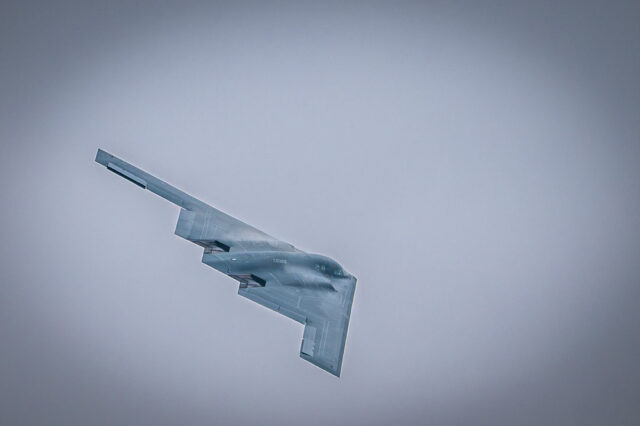
US Air Force B-2 Spirit bomber performs a fly-over during the Speed of Sound Airshow, at Rosecrans Air National Guard Base in St. Joseph, Missouri, US, Sept. 14, 2024. — US AIR NATIONAL GUARD/MASTER SGT. PATRICK EVENSON/HANDOUT VIA REUTERS

WASHINGTON — As Operation “Midnight Hammer” got underway on Saturday, a group of B-2 bombers took off from their base in Missouri and were noticed heading out toward the Pacific island of Guam, in what experts saw as possible pre-positioning for any US decision to strike Iran.

But they were a decoy. The real group of seven bat-winged, B-2 stealth bombers flew east undetected for 18 hours, keeping communications to a minimum, refueling in mid-air, the US military revealed on Sunday.

As the bombers neared Iranian airspace, a US submarine launched more than two dozen Tomahawk land attack cruise missiles. US fighter jets flew as decoys in front of the bombers to sweep for any Iranian fighter jets and missiles.

The attack on Iran’s three main nuclear sites was the largest operational strike ever by B-2 stealth bombers, and the second-longest B-2 operation ever flown, surpassed only by those following the Sept. 11, 2001, attacks on the United States by al-Qaeda.

The B-2 bombers dropped 14 bunker-busting GBU-57 Massive Ordnance Penetrators, each weighing 30,000 pounds. The operation involved over 125 US military aircraft, according to the Pentagon.

From the US military’s perspective, the operation was a resounding tactical success. The Iranians were unable to get off a single round at the American aircraft and were caught completely flat-footed, General Dan Caine, the chairman of the Joint Chiefs of Staff, told reporters at the Pentagon on Sunday.

“Iran’s fighters did not fly, and it appears that Iran’s surface to air missile systems did not see us throughout the mission,” Mr. Caine said. “We retained the element of surprise.”

Mr. Caine said initial battle damage assessments indicated that all three sites targeted sustained extremely severe damage and destruction, but he declined to speculate whether any Iranian nuclear capabilities might still be intact.

US Defense Secretary Pete Hegseth was more confident.

“It was clear we devastated the Iranian nuclear program,” he said, standing alongside Mr. Caine in the Pentagon briefing room.

Midnight Hammer was highly classified, Mr. Caine said, “with very few people in Washington knowing the timing or nature of the plan.” Many senior officials in the United States only learned of it on Saturday night from President Donald J. Trump’s first post on social media.

Mr. Hegseth said it took months of preparations to ensure the US military would be ready if Mr. Trump ordered the strikes. Mr. Caine said the mission itself, however, came together in just a matter of weeks.

What happens next is unclear.

Gulf states, home to multiple US military bases, were on high alert on Sunday as they weighed the risks of a widening conflict in the region.

Guarding against blowback, the US military also dispersed US military assets in the Middle East and heightened force protection for US troops.

Mr. Hegseth said the US military was positioned to defend itself in the Middle East, but also to respond against Iran if it goes through with long-standing threats to retaliate.

The Trump administration said it is not looking for a wider war with Iran, with Hegseth saying private messages had been sent to Tehran encouraging them to negotiate.

But Mr. Trump has also warned Iran that the US is prepared to hit additional targets if needed, using far greater force.

“Iran would be smart to heed those words. He said it before, and he means it,” Mr. Hegseth said. — Reuters

Baliuag University, Unilab Education partner to embed industry experience in academic programs

In picture (from L-R): Elizabeth Roxas, Baliuag University Dean of the College of Nursing and Allied Health Sciences; Atty. Jose Maria Ochave, Unilab Education President and Chief Operating Officer; Patricia Bustos Lagunda, President of Baliuag University; and Maria Teresa R. Santos, Unilab Education Director for Academic Affairs

Responding to the call for creating better pathways to career and employment, Unilab Education (UniEd) and Baliuag University (BU) have forged a partnership centered on strengthening skills-based learning and addressing the evolving needs of industry and the workforce.

Working closely with UniEd, Baliuag University aims to align its academic offerings with industry practice and focus on competencies that are in-demand within both the local and international labor market. The partnership, in particular, will concentrate on developing the practical skills of students through internships, clinical rotations, and other hands-on learning experiences, as well as incorporating advanced technologies into their various curricula.

The partnership also coincides with Baliuag University’s centennial anniversary and marks another historic milestone in the university’s storied reputation of building a proud community
of leaders, educators and lifelong learners.

During the partnership launch, Baliuag University President Dr. Patricia B. Lagunda remarked, “As we commemorate 100 years of academic excellence, this partnership advances us toward a future marked by innovation, collaboration, and a deep commitment to student success. Together, we are creating new opportunities for our learners to thrive in an increasingly changing world.”

In photo (seated from L-R): Elizabeth Roxas, Baliuag University Dean of the College of Nursing and Allied Health Sciences; Atty. Jose Maria Ochave, Unilab Education President and Chief Operating Officer; Patricia Bustos Lagunda, President of Baliuag University; and Maria Teresa R. Santos, Unilab Education Director for Academic Affairs; (standing from L-R): Ramon Miguel M. Barredo, Unilab Education Director for Strategic Partnerships; Lourdes Policarpio, College Secretary of CNAHS; Atty. Susan Jacinto, BU Legal Counsel; Monina Santos, Vice-President for Finance and Administration; Nancy de los Reyes, Director of Center for Academic Development and Assessment; Marie Paul Rosuello, Chief-of-Staff; and Christian Vicmudo, Med Tech Program Chair

“Through this partnership, we stay true to UniEd’s focus on skills readiness, particularly in preparing graduates for the workforce and addressing rapidly changing labor market demands.
This involves equipping students with practical skills, knowledge, and attitudes to thrive in their chosen fields,” said Unilab Education President Atty. Jose Maria Ochave.

About Unilab Education

Unilab Education, Inc. (UniEd) is the education pillar of Filipino-owned Unilab Group. UniEd’s mission is to enable social mobility through quality education. It focuses on ensuring that graduates have relevant jobs and rewarding careers. UniEd partners with existing universities, colleges, and trade schools, and is guided by the principle of providing affordable and accessible quality education.

About Baliuag University

Baliuag University (BU), founded in 1925, is the first autonomous higher education institution in Region III. As it celebrates its 100th year in 2025, BU continues to offer quality education from kinder, elementary, high school, college to graduate levels, focusing on innovation, research, and global connections. With modern facilities and a strong commitment to student success, BU prepares learners and future leaders committed to nationbuilding and global citizenship.


Spotlight is BusinessWorld’s sponsored section that allows advertisers to amplify their brand and connect with BusinessWorld’s audience by publishing their stories on the BusinessWorld Web site. For more information, send an email to online@bworldonline.com.

Join us on Viber at https://bit.ly/3hv6bLA to get more updates and subscribe to BusinessWorld’s titles and get exclusive content through www.bworld-x.com.

Australia says it supports US strike, calls for return to diplomacy

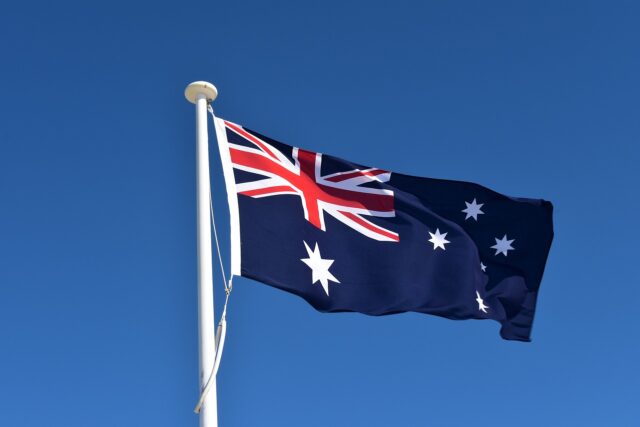
STOCK PHOTO | Image by Rebecca Lintz from Pixabay

 – Australia’s Prime Minister Anthony Albanese said on Monday that Canberra supported the United States strike on Iran and called for de-escalation and a return to diplomacy.

“The world has long agreed that Iran cannot be allowed to get a nuclear weapon and we support action to prevent that,” Mr. Albanese told reporters in Canberra on Monday.

Mr. Albanese said “the information has been clear” that Iran had enriched uranium to 60% and “there is no other explanation for it to reach 60, other than engaging in a program that wasn’t about civilian nuclear power”.

The International Atomic Energy Agency, the U.N. nuclear watchdog that inspects Iran’s nuclear facilities, reported on May 31 that Iran had enough uranium enriched to up to 60%, if enriched further, for nine nuclear weapons.

“Had Iran complied with the very reasonable requests that were made, including by the IAEA, then circumstances would have been different,” said Albanese, referring to limitations on enrichment.

In a series of television and radio interviews on Monday, Foreign Minister Penny Wong said the strike was a unilateral action by its security ally the United States, and Australia was joining calls from Britain and other countries for Iran to return to the negotiating table.

“We support action that the U.S. has taken to prevent Iran from obtaining a nuclear weapon,” Wong said in a television interview with Seven Sunrise.

“We do not want to see escalation,” she told reporters in Canberra.

There are around 2,900 Australians in Iran and 1,300 in Iran who are seeking to leave.

Australia closed its embassy in Tehran on Friday, after Wong spoke with U.S. Secretary of State Marco Rubio.

Australia has suspended bus evacuations from Israel after the U.S. strike on Iran’s nuclear facilities, but is making preparations for potential evacuations if air space in Israel re-opens, Wong said.

Australia said it has sent two defense planes to the Middle East in non-combat roles to assist civilian evacuations.

New Zealand’s Foreign Minister Winston Peters said on Sunday he was examining the evidence surrounding Iran’s nuclear enrichment program, while Prime Minister Christopher Luxon called for a return to dialogue, Radio New Zealand reported. – Reuters

World awaits Iranian response after US hits nuclear sites

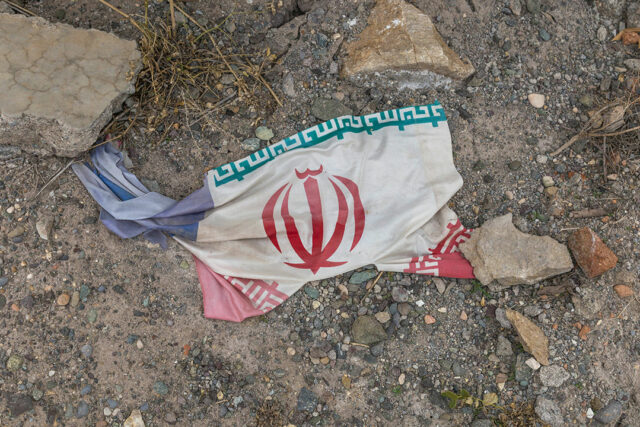
STOCK PHOTO | Image by Javad Esmaeili from Unsplash

 – The world braced on Sunday for Iran’s response after the U.S. attacked key Iranian nuclear sites, joining Israel in the biggest Western military action against the Islamic Republic since its 1979 revolution.

Iran vowed to defend itself a day after the U.S. dropped 30,000-pound bunker-buster bombs onto the mountain abovIran’s Fordow nuclear site while American leaders urged Tehran to stand down and pockets of anti-war protesters emerged in U.S. cities.

In a post to the Truth Social platform on Sunday, U.S. President Donald Trump raised the idea of regime change in Iran. “It’s not politically correct to use the term, ‘Regime Change,’ but if the current Iranian Regime is unable to MAKE IRAN GREAT AGAIN, why wouldn’t there be a Regime change??? MIGA!!!” he wrote.

Iran and Israel continued to trade volleys of missile attacks. An Israeli military spokesperson said Israeli fighter jets had struck military targets in western Iran. Earlier, Iran fired missiles that wounded scores of people and flattened buildings in Tel Aviv.

The U.S. Department of Homeland Security warned of a “heightened threat environment” in America, citing the possibility of cyber attacks or targeted violence. Law enforcement in major U.S. cities stepped up patrols with a focus on religious, cultural and diplomatic sites.

The U.S. State Department issued a security alert for all U.S. citizens abroad that warned of the potential for demonstrations against Americans and travel disruptions due to closed airspace across the Middle East, calling on them to “exercise increased caution.”

Tehran has so far not followed through on its threats of retaliation against the United States – either by targeting U.S. bases or trying to choke off global oil supplies – but that may not hold.

Speaking in Istanbul, Iranian Foreign Minister Abbas Araqchi said his country would consider all possible responses. There would be no return to diplomacy until it had retaliated, he said.

“The U.S. showed they have no respect for international law. They only understand the language of threat and force,” he said.

Trump, in a televised address, called the strikes “a spectacular military success” and boasted that Iran’s key nuclear enrichment facilities had been “completely and totally obliterated.”

Commercial satellite imagery indicated the U.S. attack on Iran’s subterranean Fordow nuclear plant severely damaged or destroyed the deeply-buried site and the uranium-enriching centrifuges it housed, but the status of the site remained unconfirmed, experts said.

The U.N. nuclear watchdog, the International Atomic Energy Agency, said no increases in off-site radiation levels had been reported after the U.S. strikes. Rafael Grossi, the agency’s director general, told CNN that it was not yet possible to assess the damage done underground.

A senior Iranian source told Reuters that most of the highly enriched uranium at Fordow had been moved elsewhere before the attack. Reuters could not immediately corroborate the claim.

Satellite imagery from the U.S. space technology company Maxar Technologies showed a long line of vehicles waiting outside an entrance of the facility on Thursday and Friday.

Mr. Trump, who veered between offering to end the war with diplomacy or to join it before moving ahead with the biggest foreign policy gamble of his career, called on Iran to forgo any retaliation. He said the government “must now make peace” or “future attacks would be far greater and a lot easier.”

In a step towards what is widely seen as Iran’s most effective threat to hurt the West, its parliament approved a move to close the Strait of Hormuz. Nearly a quarter of global oil shipments pass through the narrow waters that Iran shares with Oman and the United Arab Emirates.

Iran’s Press TV said closing the strait would require approval from the Supreme National Security Council, a body led by an appointee of Iran’s Supreme Leader Ayatollah Ali Khamenei.

Attempting to choke off Gulf oil by closing the strait could send global oil prices skyrocketing, derail the world economy and invite conflict with the U.S. Navy’s massive Fifth Fleet, based in the Gulf and tasked with keeping the strait open.

Brent crude and U.S. crude futures rose to the highest levels since January on Sunday, with Brent crude increasing $3.20 to $80.28 and U.S. crude $2.89 to $76.73.

U.S. Secretary of State Marco Rubio told CBS’s “Face the Nation” that there were no other planned military operations against Iran “unless they mess around.”

The U.N. Security Council met on Sunday to discuss the U.S. strikes as Russia, China and Pakistan proposed the 15-member body adopt a resolution calling for an immediate and unconditional ceasefire in the Middle East.

U.N. Secretary-General Antonio Guterres told the Security Council the U.S. bombings in Iran marked a perilous turn in the region and urged a halt to fighting and return to negotiations over Iran’s nuclear program.


DIVERGING WAR AIMS

Israeli officials, who began the hostilities with a surprise attack on Iran on June 13, have increasingly spoken of their ambition to topple the hardline Shi’ite Muslim clerical establishment that has ruled Iran since 1979.

Israeli Prime Minister Benjamin Netanyahu told Israeli reporters that Israel was very close to meeting its goals of removing the threats of ballistic missiles and the nuclear program in Iran.

U.S. officials, many of whom witnessed Republican President George W. Bush’s popularity collapse following his disastrous intervention in Iraq in 2003, have stressed that they were not working to overthrow Iran’s government.

“This mission was not and has not been about regime change,” Defense Secretary Pete Hegseth told reporters at the Pentagon, calling the mission “a precision operation” targeting Iran’s nuclear program.

Anti-war activists organized demonstrations on Sunday in New York, Washington and other U.S. cities, with signs carrying messages such as “hands off Iran.”

Meanwhile, some Iranians said they feared the prospect of an enlarged conflict involving the U.S.

“Our future is dark. We have nowhere to go – it’s like living in a horror movie,” Bita, 36, a teacher from the central city of Kashan, said before the phone line was cut.

Much of Tehran, a capital city of 10 million people, has emptied out, with residents fleeing to the countryside to escape Israeli bombardment.

Iranian authorities say more than 400 people have been killed since Israel’s attacks began, mostly civilians. Israel’s bombardment has decimated much of Iran’s military leadership with strikes targeted at bases and residential buildings where senior figures slept.

Iran has been launching missiles back at Israel, killing at least 24 people over the past nine days.

Air raid sirens sounded across most of Israel on Sunday, sending millions of people to safe rooms.

In Tel Aviv, Aviad Chernovsky, 40, emerged from a bomb shelter to find his house had been destroyed in a direct hit. “It’s not easy to live now in Israel (right now), but we are very strong,” he said. “We know that we will win.” – Reuters

China says US attack on Iran has damaged its credibility

COLLECTIONS - GETARCHIVE

 – China said the U.S. attack on Iran’s nuclear facilities has damaged Washington’s credibility and Beijing was concerned that the situation “may go out of control”, its state broadcaster reported, following a U.N. Security Council meeting on Sunday.

President Donald Trump said the U.S. had “obliterated” Tehran’s key nuclear sites, joining Israel in the biggest Western military action against the Islamic Republic since its 1979 revolution.

The U.N. Security Council met on Sunday to discuss U.S. strikes on Iran’s nuclear sites as Russia, China and Pakistan proposed the 15-member body adopt a resolution calling for an immediate and unconditional ceasefire in the Middle East.

China’s U.N. Ambassador Fu Cong said parties should restrain the “impulse of force, avoid exacerbating conflicts and adding fuel to the fire,” according to the state broadcaster CCTV.

Fu said parties, especially Israel, “should immediately cease fire to prevent the situation from escalating and avoid the spillover of war.”

Iran was hurt “but the United States credibility was also damaged- both as a country and as a participant in any international negotiations,” Mr. Fu said.

State media commentary late on Sunday said the U.S. move was extremely dangerous and provocative. The Global Times newspaper in an opinion piece, said external military interference would never bring peace, and only “deepen regional hatred and trauma.”

Separately China’s embassy in Iran said late on Sunday that most Chinese citizens in Iran had been evacuated safely, and those remaining were not in high-risk areas. – Reuters

Philippine water company Maynilad delays IPO listing to October

BW FILE PHOTO

MANILA/SINGAPORE – Maynilad Water Services Inc has postponed the listing date of its IPO on the Philippines’ stock exchange that could net up to P37.41 billion ($654.86 million) to no later than the end of October from an initial schedule of July 17 to accommodate potential cornerstone investors.

In a statement late on Sunday, the Philippine water services company said that it has updated its proposed IPO timetable in response to robust potential demand from strategic cornerstone investors.

“These investors have conveyed strong and sustained interest in participating in the offering, but requested additional time to complete their internal approval processes,” it added in the statement. — Reuters

Israel starts ‘rescue’ flights as airlines reroute across Middle East

JOHANNES SCHENK-UNSPLASH

Israel briefly reopened its airspace on Sunday and is expanding flight operations on Monday, aiming to help tens of thousands of travelers stranded by widespread cancellations across the Middle East after the U.S. attacked Iran.

An organization that monitors flight risks warned on Sunday that U.S. strikes on Iran’s nuclear sites could heighten the threat to American operators in the region.

With Russian and Ukrainian airspace also closed due to war, the Middle East has become a more important route for flights between Europe and Asia, but flight tracking website FlightRadar24 showed empty space over Iran, Iraq, Syria and Israel. Airlines have chosen routings such as north via the Caspian Sea or south via Egypt and Saudi Arabia, even if these mean higher fuel and crew costs and longer flight times.

Air France KLM said it has cancelled flights to and from Dubai and Riyadh on Sunday and Monday. Singapore Airlines said it cancelled flights from Singapore to Dubai following a security assessment and British Airways cancelled flights to and from Dubai and Doha. Those cancellations were only for Sunday, but Singapore said other flights between Singapore and Dubai may be affected as the situation remains “fluid”.

BA, owned by IAG, said customers scheduled to travel between now and June 24 to Dubai and Doha can rebook up to and including July 6, free of charge.

Israel meanwhile is starting to find ways for citizens stranded abroad to get home and for foreign tourists to leave, if slowly. Israeli airline El Al on Sunday said it had received applications to leave the country from about 25,000 people in about a day.

Israel’s Airports Authority said so-called rescue flights to the country would expand starting on Monday with 24 a day from various destinations, although each flight would be limited to 50 passengers. El Al said it would start servicing eight international destinations on Monday after getting the massive wave of requests to leave the country. Following an early barrage of Iranian missiles, Israel also reopened its airspace for six hours on Sunday to bring back those stranded abroad since the conflict with Iran began on June 13.

Safe Airspace, a website run by OPSGROUP, said the U.S. attacks on Iran may increase risks to U.S. operators in the region.

“While there have been no specific threats made against civil aviation, Iran has previously warned it would retaliate by attacking U.S. military interests in the Middle East – either directly or via proxies such as Hezbollah,” Safe Airspace said.

Missile and drone barrages in a growing number of conflict zones represent a high risk to airline traffic.

In the nine days since Israel attacked Iran, carriers have suspended flights to destinations in the affected countries, though there have been some evacuation flights from neighboring nations and some bringing stranded Israelis home.

Airlines are also concerned about a potential spike in oil prices following the U.S. attacks, which will increase the cost of jet fuel. O/R

In the days before the U.S. strikes, American Airlines suspended flights to Qatar and United Airlines did the same with flights to Dubai.

Safe Airspace said airspace risks could now extend to Bahrain, Kuwait, Oman, Qatar, Saudi Arabia and the United Arab Emirates.

Israeli authorities opened the country’s main airport, Ben Gurion near Tel Aviv, for rescue flight landings on Sunday between 1100 and 1700 GMT. The small Haifa Airport serving Israel’s north was also open from 1100 to 1700 GMT.

Tens of thousands of Israelis and others who had booked tickets to Israel are stuck abroad and nearly 40,000 tourists in Israel are looking to leave, some of whom are going via Jordan’s borders to Amman and Aqaba and others via Egypt and by boat to Cyprus. – Reuters

UN Security Council meets on Iran as Russia, China push for a ceasefire

SANJITBAKSHI-FLICKR

 – The U.N. Security Council met on Sunday to discuss U.S. strikes on Iran’s nuclear sites as Russia, China and Pakistan proposed the 15-member body adopt a resolution calling for an immediate and unconditional ceasefire in the Middle East.

“The bombing of Iranian nuclear facilities by the United States marks a perilous turn,” U.N. Secretary-General Antonio Guterres told the Security Council on Sunday. “We must act – immediately and decisively – to halt the fighting and return to serious, sustained negotiations on the Iran nuclear program.”

The world awaited Iran’s response on Sunday after President Donald Trump said the U.S. had “obliterated” Tehran’s key nuclear sites, joining Israel in the biggest Western military action against the Islamic Republic since its 1979 revolution.

Russia and China condemned the U.S. strikes.

“Peace in the Middle East cannot be achieved by the use of force,” said China’s U.N. Ambassador Fu Cong. “Diplomatic means to address the Iranian nuclear issue haven’t been exhausted, and there’s still hope for a peaceful solution.”

But acting U.S. Ambassador to the U.N. Dorothy Shea told the council the time had come for Washington to act decisively, urging the Security Council to call upon Iran to end its effort to eradicate Israel and terminate its drive for nuclear weapons.

“Iran long obfuscated its nuclear weapons program and stonewalled our good-faith efforts in recent negotiations,” she said. “The Iranian regime cannot have a nuclear weapon.”

Russia’s U.N. Ambassador Vassily Nebenzia recalled former U.S. Secretary of State Colin Powell making the case at the U.N. Security Council in 2003 that Iraqi President Saddam Hussein constituted an imminent danger to the world because of the country’s stockpiles of chemical and biological weapons.

“Again we’re being asked to believe the U.S.’s fairy tales, to once again inflict suffering on millions of people living in the Middle East. This cements our conviction that history has taught our U.S. colleagues nothing,” he said.


COST OF INACTION ‘CATASTROPHIC’

Iran requested the U.N. Security Council meeting on Sunday.

Iran’s U.N. Ambassador Amir Saeid Iravani accused Israel and the U.S. of destroying diplomacy, said all U.S. allegations are unfounded and that the nuclear non-proliferation treaty “has been manipulated into a political weapon.”

“Instead of guaranteeing parties’ legitimate rights to peaceful nuclear energy, it has been exploited as a pretext for aggression and unlawful action that jeopardize the supreme interests of my country,” Mr. Iravani told the council.

Israel’s U.N. Ambassador Danny Danon praised the U.S. for taking action against Iran, saying: “This is what the last line of defense looks like when every other line has failed.” He accused Iran of using negotiations over its nuclear program as camouflage to buy time to build missiles and enrich uranium.

“The cost of inaction would have been catastrophic. A nuclear Iran would have been a death sentence just as much for you as it would have been for us,” he told the council.

It was not immediately clear when the council could vote on the draft resolution. Russia, China and Pakistan have asked council members to share their comments by Monday evening. A resolution needs at least nine votes in favor and no vetoes by the U.S., France, Britain, Russia or China to pass.

The U.S. is likely to oppose the draft resolution, seen by Reuters, which also condemns attacks on Iran’s nuclear sites and facilities. The text does not name the United States or Israel.

Military action alone cannot bring a durable solution to concerns about Iran’s nuclear program,” Britain’s U.N. Ambassador Barbara Woodward told the council. “We urge Iran now to show restraint, and we urge all parties to return to the negotiating table and find a diplomatic solution which stops further escalation and brings this crisis to an end.”

U.N. nuclear watchdog chief Rafael Grossi said that while craters were visible at Iran’s enrichment site buried into a mountain at Fordow, “no one – including the IAEA – is in a position to assess the underground damage.”

Mr. Grossi told the Security Council that entrances to tunnels used for the storage of enriched material appear to have been hit at Iran’s sprawling Isfahan nuclear complex, while the fuel enrichment plant at Natanz has been struck again.

“Iran has informed the IAEA there has been no increase in off-site radiation levels at all three sites,” said Mr. Grossi, who heads the International Atomic Energy Agency.

Britain to cut companies’ energy bills in new industrial strategy

MACROVECTOR-FREEPIK

 – Britain will aim to cut the electricity bills of thousands of companies under a new industrial strategy to be published on Monday, heeding calls from business to lower high energy costs that they say have damaged competitiveness and hindered growth.

Under an industrial strategy for the decade 2025-2035, the government plans to cut the bills of electricity-intensive manufacturers by up to 25% from 2027, a move it said could benefit more than 7,000 businesses.

The government has made boosting Britain’s anemic growth a key priority. But lawmakers and business leaders had highlighted the sky-high energy costs many companies face as a hindrance to that aim, with industry body Make UK saying government should scrap climate levies imposed on firms.

Britain has been under pressure to do more to support its key industries and bolster competitiveness as the United States and the European Union also seek to do likewise, in a trade landscape upended by U.S. President Donald Trump’s tariffs.

Alongside the strategy, five sectoral plans for areas such as advanced manufacturing, creative industries and clean energy are also set to be published. The Industrial Strategy focuses on eight previously identified sectors of strength for Britain, which also include defense and financial services.

The government said it would exempt energy-intensive manufacturers from levies like the Renewables Obligation to boost their international competitiveness.

“Tackling energy costs and fixing skills has been the single biggest ask of us from businesses and the greatest challenge they have faced – this government has listened,” Business Secretary Jonathan Reynolds said in a statement.

The government said the energy measures would be funded through reforms to the energy system, without raising household bills or taxes. The scope and eligibility for the scheme will be finalized after a consultation.

Make UK said the industrial strategy was a “giant and much needed step forward” that also tackled a skills shortage in Britain’s workforce and access to capital. The Confederation of British Industry said it was an “unambiguous, positive signal” that would provide a “bedrock for growth”

The industrial strategy, Britain’s first in eight years, will expand the state-owned British Business Bank’s capacity to channel investment into smaller companies, and provide an extra 1.2 billion pounds ($1.61 billion) a year on skills by 2028-29.

The government added it would cut regulatory burdens on businesses, spend more on research and development and speed up planning processes. – Reuters

ADVERTISEMENT
ADVERTISEMENT