Home Blog Page 1367

Why Metro Clark is poised to become C. Luzon’s modern industrial powerhouse

Metro Clark, encompassing strategic parts of Pampanga and Tarlac, has swiftly transformed from a former US air base into one of the Philippines’ most dynamic growth corridors. Geographically positioned at the center of Luzon, Metro Clark provides extensive access to adjacent provinces, particularly toward northern provinces such as Nueva Ecija, La Union, Zambales and Ilocos Norte. Furthermore, Central Luzon, excluding Metro Manila, is the second most populous region in the country, offering a substantial talent pool that fuels its economic growth.

Clark Development Corp. recorded a 22-fold increase in approved investments in 2024 compared to 2023

This momentum is evident in the remarkable investment performance of Clark Development Corporation (CDC). In 2024, CDC recorded investments amounting to P77 billion. An estimated 60% to 70% of these commitments are expected to catalyze significant construction activities, directly benefiting sectors such as renewable energy, semiconductors, electronics, pharmaceuticals, medical devices, green minerals, agriculture, and steel. CDC further secured P35.6 billion in investment pledges in 2024, a 22-fold surge in approvals, reflecting sustained investor confidence in Clark’s economic potential.

The government has facilitated world-class infrastructure and unparalleled connectivity in Metro Clark

Infrastructure has played a foundational role in shaping Metro Clark’s competitive advantage. The government, led by the Bases Conversion and Development Authority (BCDA), has strategically partnered with the private sector to accelerate development. This is exemplified by collaborations with Filinvest, South Korea’s National Agency for Administrative City Construction (NAACC), and Japanese entities including Kansai Electric, Chubu Electric, and Marubeni Corporation — key contributors to New Clark City’s planning and development.

Clark International Airport, managed by the LIPAD consortium (Filinvest Development Corp., JG Summit Holdings, Changi Airports Philippines, and Philippine Airport Ground Support Solutions), further strengthens the region’s world-class infrastructure. Its modern facilities — featuring contactless check-ins, efficient baggage systems, and award-winning design — position Clark as a gateway of choice for international and domestic travelers.

Complementing air access is robust land connectivity. The Subic–Clark–Tarlac Expressway (SCTEX) directly links Clark to the Subic Bay Freeport Zone, forming a vital corridor for manufacturing and logistics activities. Southbound, North Luzon Expressway (NLEX) enables direct expressway access from Metro Clark to Bulacan and Metro Manila. Forthcoming projects like the Subic-Clark Railway and Malolos-Clark Railway are expected to significantly improve freight mobility and open new investment corridors along their routes as well.

Various investment promotion agencies facilitate a business-friendly environment with a heavy arsenal of incentives

This connectivity and infrastructure backbone is matched by a highly competitive business environment. Investors in Metro Clark benefit from minimal bureaucracy, with no local political interference and streamlined administrative procedures. In its economic zones, foreign enterprises are granted 100% leasehold ownership and operational control. Further bolstering its appeal are fiscal incentives from investment promotion agencies such as CDC, Philippine Economic Zone Authority (PEZA), and Board of Investments (BoI), including income tax holidays, duty-free importation, VAT zero-rating, and deductions for labor, training, and R&D.

Pampanga and Tarlac commanded 32% of warehousing requirements in Q1 2025

Supporting this confidence is the area’s notable performance in warehousing demand. Pampanga and Tarlac accounted for 32% of national warehousing requirements in the first quarter of 2025, underscoring the shift toward Central Luzon’s strategic location. Pampanga alone represented nearly 20% of total demand, surpassing even Metro Manila due to multiple large-scale requirements ranging between 25,000 and 77,000 square meters (sq.m.).

Within Metro Clark, northern cities such as Mabalacat and Angeles have emerged as high-priority locations for locators. Strategically situated along NLEX, both cities offer direct connectivity to Metro Manila, Subic Bay, and Northern Luzon.

Expanding pipeline underscores market optimism for Clark’s industrial future

A robust supply pipeline underscores continued market optimism. Notable developments include the 8-hectare Mabalacat Industrial Park and a 10,000-sq.m. warehouse in Bundagul, Mabalacat.

Moreover, specialized industrial estates are expanding Clark’s appeal to heavy manufacturing and logistics operations. The recently opened Filinvest Innovation Park – Phase 1 offers tailored facilities for logistics and export-focused firms. Concurrently, in New Clark City, the BCDA is establishing a 100-hectare sustainable, innovation-driven industrial hub. Additionally, a pharmaceutical manufacturing hub of 15 hectares, developed in partnership with the Department of Trade and Industry (DTI), will cater to both local and international pharmaceutical and medical device companies.

Clark’s industrial surge moves in step with broader urban development

Parallel to industrial expansion, Metro Clark’s residential, retail, and leisure sectors are experiencing significant growth. Upcoming residential projects such as BCDA’s affordable housing in New Clark City and SM’s Now Residences condominium in Angeles highlight increasing livability. Retail developments featuring global brands like Uniqlo and Nike, alongside the anticipated opening of Filinvest Mimosa Mall, enhance the region’s urban sophistication. Additionally, major hospitality investments — including the presence of international-standard hotels such as Marriott, Swissôtel, and Hilton, as well as expansions from Hann Casino Resort, InterContinental Clark at Hann Reserve, Banyan Tree, Wyndham Garden Clark, and Belle Corp. — underline Metro Clark’s growing reputation as a premier destination for business and leisure. These flourishing sectors collectively position Metro Clark as an integrated economic ecosystem poised for sustained, long-term prosperity.


Jet Yu is the founder and chief executive officer of PRIME Philippines, a commercial real estate advisory firm.


Apple’s F1: The Movie roars to top of US, Canada box office; worldwide receipts exceed $88M

Brad Pitt in F1: The Movie (2025) — IMDB

LOS ANGELES — Apple’s high-octane racing film F1: The Movie roared to the top of the US and Canadian box office this weekend, fueled by star-power and a finely tuned marketing campaign, according to Comscore.

The movie, which stars Brad Pitt as a Formula 1 racer who returns to the track after an accident nearly ends his career, brought in $55.6 million in ticket sales in the two countries. That tally edged past the $45 million to $55 million pre-weekend domestic forecast from the Boxoffice Company.

Worldwide receipts topped $88 million, propelled by the sport’s strong fan base in Europe and Latin America.

Racing films typically sputter in theaters, according to Daniel Loria, senior vice-president of the Boxoffice Company, a theatrical ecommerce and data services firm. The most successful of the genre, the widely acclaimed Ford v Ferrari, opened to a modest $31 million in November 2019.

“We haven’t had that many movies about car racing that have broken through,” Mr. Loria said.

One notable outlier is the Fast & Furious action series that expanded beyond its street racing roots to include heists, espionage, and an improbable moon shot.

F1 had several factors weighing in its favor, helping to broaden its appeal beyond racing enthusiasts.

The film’s director, Joseph Kosinski, brought the same high-intensity cinematic treatment of Formula 1 racing that he lent to the fighter jet sequences in his 2022 movie, Top Gun: Maverick. Moviegoers who were polled by CinemaScore gave F1 an A rating, signaling their approval.

Netflix’s Formula 1: Drive to Survive series helped fuel the popularity of Formula 1 racing, particularly in the US.

Apple also put marketing muscle behind its movie, an Apple Original Films production that Variety reported cost in excess of $200 million to make.

The tech giant touted F1 during CEO Tim Cook’s keynote address at this year’s Worldwide Developers Conference, and offered a movie discount to iPhone users. Apple Music also amplified the film’s soundtrack.

Warner Bros., which marketed and distributed the movie, developed a bespoke campaign that emphasized the participation of Formula 1 world champion Lewis Hamilton in Europe and Latin America, while focusing on Mr. Pitt in the US.

“It’s very much like a perfectly coordinated pit crew in a race,” said Paul Dergarabedian, senior media analyst with Comscore, an information and analytics company. “They shot this thing off the starting line with great success.”

F1 represents the biggest opening weekend for Apple, whose previous cinematic efforts, such as director Martin Scorsese’s Killers of the Flower Moon, garnered critical acclaim but achieved modest results at the box office.

“The film’s outstanding debut reflects both the excitement of Formula 1 and the deeply emotional and entertaining story crafted by the entire cast and creative team,” Zack Van Amburg, Apple’s head of worldwide video, said in a statement. — Reuters

Favila joins UnionBank as independent director

PETER B. FAVILA — GTCAPITAL.COM.PH

UNION BANK of the Philippines, Inc. (UnionBank) has appointed former Monetary Board member and Trade Secretary Peter B. Favila as independent director.

Mr. Favila will serve the unexpired term of office of Francisco Ed. Lim starting July 3, UnionBank said in a disclosure to the stock exchange on Monday. His appointment was approved by the bank’s board of directors at a meeting on June 27.

At the same meeting, the bank’s board also okayed Mr. Favila’s appointment to various committees, including as chairman of its corporate governance and related party transaction committees and as member of its non-executive board and its operations risk management, market risk, and audit committees.

“Mr. Favila is a distinguished executive with extensive leadership experience in banking, trade, treasury, and public policy,” UnionBank said. “Mr. Favila presently serves in distinct leadership and advisory capacities within the financial and public sectors.”

He served as Trade secretary from 2005 to 2010 and was a member of the Bangko Sentral ng Pilipinas’ (BSP) policy-setting Monetary Board from 2008 to 2014 and again from 2017 to 2023.

He also held various leadership roles in private companies, including being president and chief executive officer of Philippine National Bank, president of Security Bank Corp., and chairman of the Philippine Stock Exchange, Inc. (PSE).

Mr. Favila is currently an independent director at the PSE, the Securities Clearing Corporation of the Philippines, GT Capital Holdings, Inc., Credit Information Bureau Inc., Sunlife Grepa Financial, Inc., and Malayan Insurance. — A.M.C. Sy

MREIT partners with Common Ground to launch ‘digital park’

COMMONGROUND.WORK

LISTED MREIT, Inc., the real estate investment trust of Megaworld Corp., has partnered with coworking space provider Common Ground to launch a workspace for startups and other tenants within the McKinley Hill estate in Taguig City, as well as in other Megaworld townships.

The workspace, called Common Ground Digital Park McKinley Hill, will offer nearly 2,000 square meters of office space in the Intellectual Property Center building, MREIT said in an e-mail statement on Monday.

The facility will feature event spaces, conferencing facilities, work areas, dedicated function rooms, meeting rooms, and brainstorming zones. It will also offer membership options such as day passes, hot-desking, and dedicated desks.

“This collaboration aims to support the growth of the entire startup ecosystem, while also enabling local startup companies and those based in other parts of the region and the world to establish their presence in the Philippines,” MREIT said.

Startup firms and other current office tenants in McKinley Hill will have access to the Digital Park’s facilities at discounted rates. The park will also host pitch sessions and incubator programs to connect startups with potential partners and investors.

“Aside from providing an important platform to support startup companies, the Digital Park at McKinley Hill will also serve as a common space for people living or working in McKinley Hill who are looking to find the right place to grow their businesses,” MREIT President and Chief Executive Officer Jose Arnulfo C. Batac said.

MREIT said McKinley Hill is the pilot site for the Digital Park, which will also be rolled out in other Megaworld townships, including Eastwood City in Quezon City, Iloilo Business Park in Iloilo City, Southwoods City in Biñan, Laguna, and Capital Town in San Fernando, Pampanga.

“We are incredibly proud to partner with MREIT, Inc. to build beautiful workspaces for the creators of the Philippines to connect, collaborate, and grow their networks and businesses. This is a key growth market for us and we are incredibly excited to leverage our partnership over the next few years to develop flexible workspaces in the Greater Manila Area and across the country,” said Chris Edwards, chief executive officer of The Flexi Group, parent company of Common Ground.

In 2022, Common Ground merged with Hong Kong-based the Hive and Australia’s the Cluster to form The Flexi Group, now one of the largest operators of flexible workspaces in the Asia-Pacific region.

The Flexi Group currently operates more than 45 locations across eight countries, including Singapore, Hong Kong, Malaysia, Thailand, Taiwan, Vietnam, Australia, and the Philippines.

MREIT shares rose by 0.58% or eight centavos to P13.90 apiece on Monday. — Revin Mikhael D. Ochave

Expanding our GDP size and nuclear development

Last week, on June 26, the Energy Institute (UK) released its annual Statistical Review of World Energy (SRWE) 2025. This has been among my favorite databases and sources of Excel files for many years.

So, I start by comparing the power generation of major economies with large gross domestic product (GDP) size at purchasing power parity (PPP) values, which comes from the IMF World Economic Outlook (WEO) 2025 database.

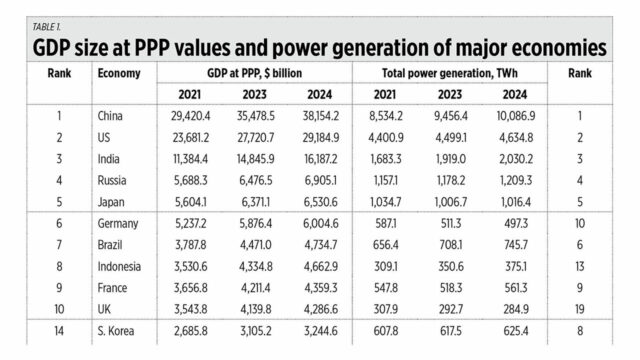
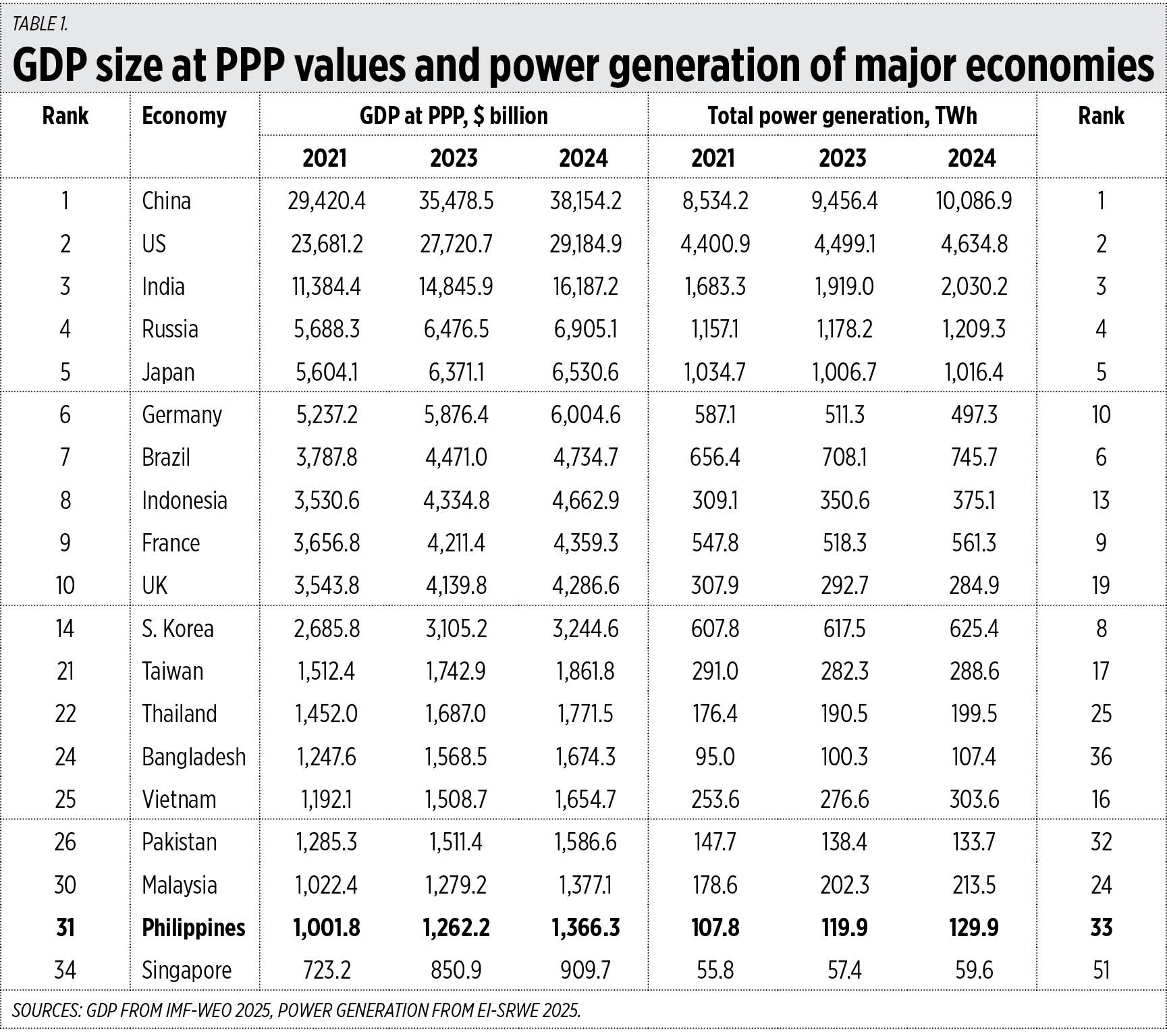
The top five largest economies in the world in GDP size in 2024 were also the top five in power generation. In GDP size, China is 1.3 times larger than the US, 5.8 times larger than Japan, 6.4 times larger than Germany, 8.9 times larger than the UK, and 27.9 larger than the Philippines.

China’s electricity production in 2024 was two times larger than the US, 10 times larger than Japan, 20 times larger than Germany, 35 times larger than the UK, and 78 times larger than the Philippines. One way to look at it is that our total power generation in one year is equivalent to only five days generation in China. Notice also the declining trend in power generation of Japan, Germany, and the UK (see Table 1).

This is clear proof that energy is development. A bigger energy supply sustains more economic activities and business expansion. That is why our main goal in energy policies should be the continued expansion of power generation, regardless of where the power comes from — thermal or renewable, fossil fuels or intermittent sources.

From 2017 to 2023, the average increase in Philippine power generation was 4,200 gigawatt-hours (GWh) a year while Vietnam’s was 13,650 GWh a year. But from 2023 to 2024, the Philippines increased its power generation by 10,000 GWh while Vietnam grew by 27,000 GWh. This is the highest increase in a year that the Philippines has attained, and it largely explains why the Philippines’ GDP size has jumped from an average of $70 billion a year from 2017 to 2023 to $104 billion from 2023 to 2024. We need to keep expanding our power generation plus the necessary modernization in power transmission, distribution, and supply infrastructure.

Along with this policy and the passage of the PhilAtom bill in both Houses of Congress, I saw one good report the other day: “CSP could be waived for first nuclear project” (BusinessWorld, June 29).

There are many countries in the world that continue to use nuclear energy for the production of electricity, along with industrial, agricultural, and healthcare applications. Four of the top 10 nations when it comes to nuclear generation are Asian nations.

While Germany shut down all its nuclear plants in 2024 and Taiwan did the same this year, other countries are ramping up their nuclear generation led by China, South Korea, India, Japan, and the United Arab Emirates (UAE). The latter has had the most surprising expansion of its nuclear power capability, from none at all until 2019 to 40,600 GWh in 2024 (see Table 2).

Countries whose power mix in 2024 included at least 10,000 GWh from nuclear energy were Argentina, Brazil, Mexico, Belarus, Bulgaria, Hungary, Romania, and Slovakia. Other countries whose power mix included less than 8,000 GWh from nuclear generation in 2024 were Iran, the Netherlands, Slovenia, and South Africa.

Denuclearized and decarbonizing Germany has had a GDP performance of between -0.3% and zero over the past eight quarters (Q2 2023 to Q1 2025). Their expensive electricity — relying mainly on intermittent solar-wind plus costly battery — contributed to the trend towards degrowth and deindustrialization.

The Philippines’ shortest route to going nuclear is to refurbish and revive the Bataan Nuclear Power Plant — which can potentially produce 620 megawatts (MW) — and start its operation within four years. Otherwise, build new conventional nuclear plants of 600-1,200 MW. It would be better if both were done.

Meralco is the energy company that is most prepared to go nuclear. They have already sent Filipino scholars to study graduate-level nuclear engineering in at least five countries — the US, China, France, South Korea, and Japan, I think. Aboitiz Power has expressed early interest in going nuclear while San Miguel Global Power and Prime Energy, I think, have their own plans to go nuclear.

This could mean an abundant energy supply, stable and reliable running 24/7 at competitive prices even without taxpayers’ subsidy. We should go for this to help sustain our high GDP growth trajectory.


Bienvenido S. Oplas, Jr. is the president of Bienvenido S. Oplas, Jr. Research Consultancy Services, and Minimal Government Thinkers. He is an international fellow of the Tholos Foundation.

minimalgovernment@gmail.com

Ayala Land eyes to finish 2,600-sq.m. Makati park by 2028

AYALA LAND, INC.

LISTED property developer Ayala Land, Inc. (ALI) said it aims to complete a 2,600-square-meter (sq.m.) park in Makati City by the fourth quarter of 2028.

To be called the Dela Rosa Gardens, the park is intended to improve walkability, connectivity, and community life within the Makati central business district (CBD), ALI said in a statement.

“Set for completion by Q4 2028, the Dela Rosa Gardens is surrounded by cultural, educational, and commercial institutions, making it a natural hub for both everyday routines and weekend escapes,” it said.

ALI said the park reflects its commitment to sustainability.

“From energy-efficient buildings and water conservation systems to waste management and native plant prioritization, Ayala Land integrates eco-conscious practices into every layer of development,” it said.

The park is located near landmarks such as Ayala Triangle Gardens, Legazpi Active Park, and Washington SyCip Park.

Dela Rosa Gardens is situated next to the BPI Civic Plaza and is within walking distance of BPI Tower and other key offices in the CBD.

“It also connects directly to the elevated walkways, making it accessible and seamlessly integrated into Makati’s urban core,” ALI said. “These walkways link straight to the MRT, Greenbelt, and Glorietta malls, adding even more convenience and walkability to the area.”

The park also forms part of the Makati CBD’s Emerald Network, a plan to connect parks and public spaces through pedestrian-friendly pathways and green corridors.

Dela Rosa Gardens is designed to support passive cooling, reduce urban heat, and encourage low-impact mobility through elevated walkways, ALI said.

ALI reported a 10% increase in its first-quarter net income to P6.9 billion, driven by leasing operations and property development revenue.

On Monday, ALI shares rose by 4.65% or P1.20 to close at P27 apiece. — Beatriz Marie D. Cruz

Denis Villeneuve to direct the next James Bond movie

Denis Villeneuve poses on the red carpet during the Oscars arrivals at the 97th Academy Awards in Hollywood, Los Angeles, California, U.S., March 2, 2025. — REUTERS/MARIO ANZUONI/FILE PHOTO

OSCAR-NOMINATED Denis Villeneuve will direct the next James Bond film, Amazon’s MGM Studios said on Wednesday, taking charge of one of Hollywood’s most enigmatic spies and longest-running movie series.

Mr. Villeneuve, the Canadian film director and writer, has earned critical acclaim for films such as Sicario, Dune, Dune: Part Two, Blade Runner 2049, and Arrival.

He was nominated for Best Director at the 2017 Oscars for sci-fi film Arrival, which starred Amy Adams and Jeremy Renner, and for Best Adapted Screenplay for Dune, based on author Frank Herbert’s highly acclaimed 1965 novel of the same name, at the 2022 Oscars.

“I’m a die-hard Bond fan. To me, he’s sacred territory. I intend to honor the tradition and open the path for many new missions to come. This is a massive responsibility,” Mr. Villeneuve said in a statement.

The upcoming Bond movie will be the first under Amazon’s MGM Studios, which took creative control of the film franchise under a new joint venture with longtime rights holders Michael Wilson and Barbara Broccoli earlier this year.

The franchise is yet to name a new lead actor following Daniel Craig’s departure after No Time to Die in 2021, which earned nearly $800 million in global box office collections.

Inspired by Ian Fleming’s novels, the Bond franchise has spanned over 60 years, grossing more than $7 billion at the global box office, making it one of the most successful ever.

Producers Amy Pascal and David Heyman will produce the next Bond movie. — Reuters

Americans cash out on gold bars and coins as Asian investors bulk up

AMERICANS who once snapped up gold bars and coins are offloading the assets while their Asian counterparts show no letup in bullion buying, a sign investors on opposite sides of the world have different outlooks on the global economy.

The divergence suggests US residents who stash bars and coins at home or in safe deposit boxes — akin to stock market day traders — are more at ease about US President Donald J. Trump’s tariffs, rising government debt and geopolitical tensions. And, they’re ready to cash in after the metal’s stunning rally over the past two years.

Known as retail investors, these Americans are bucking broader market trends in which more wealthy investors continue to aggressively buy the haven asset as do sovereign funds and central banks. Meanwhile, Asian gold buyers are eschewing jewelry for bars and coins.

In the US, “A lot of the retail investors tend to be Republican-leaning. And whatever we say about the policy of tariffs, they like the idea of how Trump’s doing,” said Philip Newman, managing director at research consultancy Metals Focus Ltd. “So from their point of view, there’s less reason to buy gold.”

The US market is so awash with bars and coins that some precious metals dealers have slashed their premiums to the lowest in six years to spur sales. And when investors sell, they’re now looking at paying dealers a fee to offload gold.

Bullion dealer Money Metals Exchange LLC currently charges buyers of one-ounce American Eagle gold coins $20 over spot prices, compared with $175 four years ago. And sellers now need to pay about $20 for the online exchange to take the metal, whereas in 2021 they would have received an extra $121 for selling.

The glut has led to a collapse in sales of newly minted bullion products, with the US Mint’s American Eagle gold coins — a proxy for retail demand — tumbling more than 70% in May from the prior year.

The demand for gold bars and coins has been falling for the past three years in North America and Western Europe while rising everywhere else in the world, with last year marking the biggest divergence on record in data going back to 2014, according to Metals Focus. That gap continued into the first quarter of 2025, driven predominately by the sell-off in the US market, according to the consultancy.

Meanwhile, demand for bars and coins rose 3% in the Asia-Pacific region in the first quarter, with the Chinese market registering a 12% year-on-year increase, according to the latest data from the World Gold Council, a trade body representing gold miners. South Korea, Singapore, Malaysia and Indonesia all posted gains of more than 30%.

Initial worries of China and Asia getting hit the hardest by Mr. Trump’s tariffs led to “super strong” demand for gold in the region, said Kenny Hu, a commodity strategist at Citigroup, Inc. Concerns about local currency depreciation also means gold remains the go-to asset for Asian investors who played a key role in the metal’s rally since 2024.

Investors in Southeast Asia lacking other investment options have started recognizing gold as a strategic asset, said Brian Lan, managing director of GoldSilver Central, a Singapore-based precious metals dealer.

“Southeast Asians who have memories of the war understand that gold is a form of insurance during periods of uncertainty,” he said.

In the US, profit taking is part of the equation given gold’s stunning climb — up 59% since the beginning of 2024 to $3,274.33 an ounce Friday. But Wall Street banks are split over whether the rally has ended. Goldman Sachs Group, Inc. reaffirmed a $4,000-an-ounce forecast by next year and Morgan Stanley expects $3,800 by the end of this year, while Citigroup, Inc. sees prices dipping below $3,000 next year.

“When there’s fear, they own more gold and less risk assets,” said Hu of Citigroup. “And now maybe they’re thinking things are actually fine. Tariffs are not that bad. Things will get negotiated out. Geopolitics eventually will de-escalate and US growth may be not that bad. — Bloomberg

RLC to open first Grand Summit Hotel in Luzon by 2027

ROBINSONS LAND CORP.

GOKONGWEI-LED Robinsons Land Corp. (RLC), through its hospitality unit Robinsons Hotels and Resorts (RHR), will open the first hotel under its upscale lifestyle Grand Summit brand in Luzon by 2027.

In a statement on Monday, RLC said the planned Grand Summit Pangasinan — located along the Dagupan-Urdaneta Road in Calasiao — will break ground on July 7. The hotel will cater to both leisure and business travelers.

The seven-story hotel will be integrated into the Robinsons Pangasinan Mall complex. It will feature 100 rooms, including 93 standard rooms, four junior suites, and three executive suites ranging from 38 to 116 square meters in size.

Amenities will include an all-day dining restaurant, lobby lounge, pool bar and outdoor dining area, ballroom, meeting rooms, gym, spa, and outdoor swimming pool.

The upcoming hotel is positioned between Dagupan City, Lingayen, and San Carlos City, offering a central base for exploring Pangasinan and Northern Luzon. It joins the Grand Summit portfolio, which includes the flagship property in General Santos.

Grand Summit is an upscale lifestyle hotel brand designed for local and international travelers seeking comfort, culture, and authentic experiences.

According to RLC, the launch of Grand Summit Pangasinan reinforces its presence in Northern Luzon, where it has investments across multiple sectors.

“Our developments across Northern and Central Luzon reflect RLC’s long-term vision of inclusive growth. By seamlessly integrating our businesses across retail, residential, hospitality, offices, and logistics, we aim to foster thriving communities and contribute to broader national progress,” RLC President and Chief Executive Officer Mybelle V. Aragon-GoBio said.

“The expansion of our Grand Summit brand is a key part of our growing hotel portfolio and further bolsters RLC’s leadership position in the Philippine hospitality sector,” she added.

RLC’s footprint in Northern Luzon includes Robinsons Malls in Pampanga, Tarlac, La Union, and Ilocos Norte; residential communities in Ilocos Norte; and office spaces in Ilocos Norte, Tarlac, and Nueva Ecija.

It is also developing the 216-hectare Montclair Destination Estate in Porac, Pampanga, a mixed-use estate featuring homes, offices, retail hubs, open spaces, hotels, and a logistics and industrial park under Robinsons Logistix and Industrials, Inc.

“Northern Luzon continues to evolve as a dynamic hub for travel and commerce, and Calasiao stands out as a place where local character and regional connectivity come together,” RLC Senior Vice-President Barun Jolly said.

“We purposefully design our hotels to reflect the unique energy of the places they rise in — and in Calasiao, we saw the perfect opportunity to create something that speaks to both leisure and business travelers. We’re proud to bring the Grand Summit experience to Northern Luzon, offering travelers a thoughtfully designed destination that reflects the vitality of the region,” he added.

On Monday, RLC shares declined by 0.58% or eight centavos to close at P13.60 apiece. — Revin Mikhael D. Ochave

At a Crossroads: Progress or more of the same?

By Jesus Felipe, Mariel Monica Sauler, Gerardo Largoza, Susan Kurdli, Alellie Sobreviñas, and Christopher James Cabuay

(Second of three parts)

II. HOW FAR CAN WE GO?

We all dream of a better country as stated in Ambisyon Natin 2040: “Filipinos enjoy a strongly rooted, comfortable, and secure life. In 2040, we will all enjoy a stable and comfortable lifestyle, secure in the knowledge that we have enough for our daily needs and unexpected expenses, that we can plan and prepare for our own and our children’s future. Our family lives together in a place of our own, and we have the freedom to go where we desire, protected and enabled by a clean, efficient, and fair government” (https://tinyurl.com/249ngsr4). We need to be realistic: this will not materialize. Still in 2040, not everybody will enjoy a stable and comfortable lifestyle, not everybody will be able to meet daily needs and unexpected expenses, and we will not be an advanced nation in 2040, 15 years from today.

At a meeting in Milan in early May, the economic team announced that the Philippines’ GDP will reach $2 trillion in 2050. We beg to disagree. The presentation indicated that today’s GDP is $392 billion. This implies that to go from today’s GDP to the one in 2050 (that is, in 25 years) requires an annual growth rate of 6.7%. This will not happen. It is too high. Historically, only a few countries have grown at almost 7% for 25 years. These countries are in Asia but they did it in a different world context, and their growth was manufacturing-cum-export-led.

For years, we have worked with a model of the Philippine economy. This is a very complex structure that relates hundreds of variables and that allows us to understand how the economy operates. We used it to project our GDP in 2050 (version run at the end of 2024, before the current tariff turmoil). This will be about $1.7 trillion. Average growth during the period of 2025-2050 will be 4.8%, with a slight declining trend until 2050, when growth will be 3.6%. This is just the result of “progress.” We cannot become richer and grow as fast as today.

We also question the claim made in other government presentations, that the Philippines will be a $6.6 trillion economy by 2075, the 14th largest economy in the world. This exercise was not done by the government but taken from very suspicious estimates concocted by Goldman Sachs for a large number of countries. It is another extrapolation, in this case assuming (guessing) some figures for labor force growth, investment rates, productivity convergence, and PPP-based exchange rate adjustments. This is wrong economics and wrong thinking. Don’t we have in the country the capabilities to estimate future GDP properly without taking it from an investment bank?

Our models do not reach 2075 but we are certain that this estimate is too high. The Goldman Sachs 2075 estimate implies an average growth rate of GDP of 5.6% for the next 50 years, 2025-2075. It takes an understanding of growth to refute this claim: supposedly (according to the government rhetoric) we would be an advanced economy by then, like Japan, Korea, or the European nations. Check what their actual growth rates have been for the last decades. Much lower than in the 1970s. The reason? Their potential growth is much lower — the contribution is labor force growth zero in some cases (even negative); all growth is the result of productivity growth, but since these economies are on the technological frontier, productivity growth is low. That’s why their growth rates are so low (but they have a very high per capita income).

We could certainly be wrong, but we are willing to bet that our economy will not register an average growth rate of 6.7% for the next 25 years, or 5.6% for the next 50. Using our models, we have estimated that in 2050 the share of work in agriculture will have declined significantly (this is good news). The bad news is that our major employer will be Wholesale and Retail Trade. This means low wages. Hence, our income per capita will be much lower than the $18,000 announced in Milan last May (not clear how this figure was calculated).

Our estimate is that our GNI per capita will be about $12,500 to $13,000, three times today’s (under a very favorable scenario of no major shock in 25 years). This shows progress but much less than what the administration claims. To do better, we need a very different economy. Unfortunately, our workers will not be engineers who design (or providing consulting services for) high-speed trains, airplanes, robotics equipment, satellite systems, intelligent buildings, submarines, dams, luxurious yachts and cruise liners, or nuclear power plants; and who earn P1 million/month, because we do not have such companies. We are very far from that. The government does not create these jobs and the government cannot tell the private sector what jobs it has to create and what wages to pay. Yes, our companies hire engineers but they do not create the products mentioned above. Most of the jobs being created in our country (by firms) are in low-productivity service activities. Let’s please stop the rhetoric about “quality jobs.”

Development happens in firms, in the productive sphere of an economy. This is what allows citizens to consume as wages increase. Our “industrial policy” initiatives should focus on the creation of the companies that will eventually manufacture such products, not on giving tax breaks. This industrial policy requires firm-level effort, especially crucial for developing organizational capabilities, as this process requires continuous adjustments in firm structure, entails adjustment costs, and often encounters internal resistance. We insist: this requires an industrial policy centered on firms’ learning so that they reach international standards and can compete by exporting high-quality products.

The government highlights tourism and Artificial Intelligence (AI) as new sources of growth. Yet, the reality is that neither one will be a game changer. Tourism, like any other activity that contributes to the nation’s GDP, is certainly welcome. But this will not be the “industry” that will make us a first-world nation. Advanced nations are not high-income economies because of this sector, which is a “follower” service of low productivity by its own nature (very labor intensive). The predictions about the sector are far-fetched and unrealistic: we have read that the government expects the value added of the sector to reach 20% of GDP — really? This is a very large share.

It is important to understand that tourism is a business of the advanced economies: with a few exceptions, virtually all major tourist destinations in the world, by country and by city, are advanced economies. Think of Paris, London, Rome, New York, Madrid, Bangkok, or Istanbul. People do not travel there because of their beaches (which many countries have too) but because of the “package” these places offer: culture (monuments, museums, opera), parks, restaurants, and public transportation to commute. We do not have these.

Likewise, people do not travel to those cities as tourists because receptionists and waiters smile. We need much better infrastructure but, more importantly, we have to upgrade our tourism package to compete with Thailand or Mexico first… then think about competing with the world’s largest tourist destinations, France and Spain. Let’s get the story right: tourism can be a springboard to develop infrastructure, to bring in foreign income, and to help create decent employment — hotel managers, receptionists, accountants, and chefs. This will help us reach upper middle income. High income requires much more than tourism.

We have also read as we finish this letter that the government, together with local industry groups, is aiming to boost sales of sari-sari (sundry) stores in the country to P2.4 trillion by 2030 as part of a strategy to develop the country’s wholesale and retail sector. If this is true, we are wordless. First, because this is incompatible with the objective of becoming an advanced economy. These stores (of low productivity and low wages) will have to disappear from our streets, the same as jeepney drivers, and the still large number of domestic helpers and security guards, amongst other professions that still exist in the Philippines. Why? Sari-sari stores are inefficient places to shop, the graphic sign of the nation’s poverty. People in developed countries shop in well-organized, very large, and cheap, supermarkets. And to become an advanced nation, wages will have to increase dramatically, for everyone. Who will hire a helper or a guard when their salaries reach P70,000/month (of course, these will have to be formal jobs, and with a contract that includes benefits, paid holidays, etc.). There is a second reason why this objective does not make any sense: P2.4 trillion in 2030 would represent, depending on whether this figure refers to nominal or real pesos, between 5% and 8% of our GDP in five years, a ridiculously large percentage.

Summing up: at least 25% of our GDP will come in the next few years from tourism and sari-sari stores. We implore the Economic team to put some order here.

Artificial Intelligence (AI) matters but it will not be either the game changer of the Philippine economy at large because we are very far from the technological frontier, because 10 million workers are still employed in backward agriculture, and because 19 million Filipinos are functionally illiterate. Certainly, many of our companies (surely the large ones) will use it and see some benefits. Indeed, using AI in chatbots, to detect fraud in banks, as voice assistants, to generate text and images, or to manipulate big data, is a step forward and important in order not to be left behind. At this level, AI is already being used everywhere. AI can also help companies in manufacturing. Yet, we doubt this will revolutionize the Philippine economy, as long as we do not have the capabilities to generate the advanced technologies of the so-called Fourth Industrial Revolution, including robotics.

What we should care about is aggregate productivity, and this is much more than using ChatGPT to summarize meetings or to do a quick search. For a particular technology to have a significant impact on society, including an improvement in productivity, it has to become a general-purpose technology (GPT), that is, it has to be used across a wide range of industries and activities, it evolves over time, it leads to complementary innovations, and it alters how people live, work, and interact. Electricity, indoor plumbing (the best invention ever), penicillin, and airplanes are examples of GPTs of the 20th century that changed our lives.

Time will tell us if AI becomes a GPT. Recall what economist Nobel Prize winner Robert Solow said in 1987: “You can see the computer age everywhere but in the productivity statistics.”

(To be continued.)


Jesus Felipe, Mariel Monica Sauler, Gerardo Largoza, Susan Kurdli, Alellie Sobreviñas, and Christopher James Cabuay are Faculty at De La Salle University (DLSU). This letter represents the views of the authors and not necessarily those of DLSU.

GreatWork to open 3 new branches in 2026, including first overseas site

GREATWORKGLOBAL.COM

LOCAL flexible workspace provider GreatWork Global Workspaces plans to open three new branches in 2026, including its first international location, the company’s top official said.

“Next year, we have three in the pipeline, but we are, of course, timing the market,” GreatWork Founder Jettson P. Yu said in an interview with BusinessWorld.

“We are timing a lot of factors, including global uncertainties and the sentiments of companies regarding the expansion of their footprint around the world,” Mr. Yu said.

The company is eyeing its first overseas expansion in the Asia-Pacific region, alongside two new domestic branches — one in the Visayas-Mindanao area and another in Central Luzon.

GreatWork offers build-to-suit private offices, coworking spaces, meeting rooms, and virtual office addresses.

At present, the company operates three branches in Metro Manila. Its first regional site, located in Bacoor, Cavite, is scheduled to open by yearend.

GreatWork ended the first half of the year with an 88% to 89% occupancy rate, driven by new signups from government and business process outsourcing tenants.

Mr. Yu said the company aims to open at least one new branch every six months.

Founded in 2018, GreatWork was established to meet demand for affordable, high-quality shared workspaces suited for smaller companies.

“In 2018, many office spaces were occupied, and many companies with 100 employees or less wanted to be in nice buildings, but they couldn’t get in,” he said in mixed English and Filipino. “That’s why I started GreatWork to bridge that gap.”

He added that many companies are outsourcing their workspace requirements to focus on business growth and innovation.

Tenant rates are expected to remain stable, Mr. Yu said.

“We work with office building owners with excess space in their building, and we come up with a partnership that’s designed to still make GreatWork competitive in pricing,” he said.

Mr. Yu noted that one of the key challenges for a homegrown workspace brand is overcoming the perception that its furnishings and services are inferior to those of global providers.

“When I started GreatWork, I already made sure that it would eventually become a global brand,” he said.

“What we did, branding-wise, is position GreatWork to focus on quality furnishings, fit-outs, and services. At the same time, we embraced competitive pricing compared to multinationals.” — Beatriz Marie D. Cruz

Mission: Impossible composer Lalo Schifrin, 93

Lalo Schifrin is best known for composing the theme of Mission Impossible, which was used for the original TV show and the subsequent film series. — IMDB

ARGENTINE MUSICIAN Lalo Schifrin, composer of the memorable Mission: Impossible theme and the scores for dozens of Hollywood movies and TV shows, has died at age 93, media outlets reported on Thursday.

Mr. Schifrin’s son, William, confirmed his father’s death, The Hollywood Reporter said. An agent for Mr. Schifrin did not immediately respond to an e-mail from Reuters.

Born in Buenos Aires, Mr. Schifrin became a fan of American jazz in his teens. He was also a pianist and conductor.

Mr. Schifrin received six Oscar nominations for movie scores that included the 1967 film Cool Hand Luke and The Amityville Horror in 1979.

He won four Grammys, including one for the Mission: Impossible theme set to an unconventional 5/4 time signature. The song was written for the CBS television spy drama that debuted in 1966 and became a blockbuster film franchise still running today.

Mr. Schifrin received an honorary Oscar for his lifetime of work in 2018. Clint Eastwood presented him with the award. — Reuters

ADVERTISEMENT
ADVERTISEMENT