Home Blog Page 1328

Globe hailed in TIME and Statista’s World’s Most Sustainable Companies 2025

Globe has earned a coveted spot in the World’s Most Sustainable Companies 2025 list by TIME Magazine and Statista – the sole Philippine telco on the list. This recognition reinforces the company’s position as a sustainability leader both locally and internationally and places Globe among a select group of global frontrunners redefining how business is done through sustainable practices.

Joining the prestigious list of 500 global organizations leading the charge in environmental, social, and governance (ESG) excellence, this recognition underscores Globe’s commitment to embedding sustainability across its operations and driving impact through measurable action. The global ranking evaluated over 5,700 companies worldwide through a rigorous assessment covering more than 20 performance indicators—which excludes non-sustainable businesses, and incorporates external ratings and commitments,   reporting and transparency, and environmental and social stewardship.

“For Globe, sustainability is essential to our strategy in delivering long-term value to our stakeholders,” said Globe President and CEO Carl Cruz. “This global recognition reinforces our sustainability leadership in the country. At the heart of our business is our customers as we create meaningful impact for them, our value chain, and the communities we serve.”

Globe’s sustainability milestones include an AA rating from MSCI ESG Research, verified net-zero science-based target by 2050 with the Science Based Targets initiative, and an active Participant in the UN Global Compact and in the UNFCCC Race to Zero campaign.

Committed to transparency and accountability, the company publishes an Integrated Report aligned with global frameworks containing information on how it creates value over time. This annual integrated report is assured by a third party and has, for two consecutive years, included an Independent Verification Statement for its Scope 1, 2, and 3 greenhouse gas emissions.

In 2024, 24.34% of its electricity was sourced from renewables, with plans to green more than 150 sites over the next two years through various clean energy initiatives. Globe has also deployed over 38,000 green solutions, including using cleaner fuel with lower emissions and consuming less fuel and electricity.  These highlight the company’s innovative approach to environmental stewardship.

On the social front, Globe continues to champion Diversity, Equity, and Inclusion as a fundamental pillar to its vibrant workforce. With women representing 44% of its workforce and the provision of same-sex benefits for employees, Globe cultivates an environment where every individual feels valued and empowered. The demonstrable decline in its non-disabling injuries further highlights the effectiveness of Globe’s ISO 45001:2018-certified Occupational Health and Safety system in protecting the well-being of its employees and the communities it serves.

“Being part of this esteemed global list reflects our progress—but more importantly, our purpose,” said Yoly Crisanto, Chief Sustainability and Corporate Communications Officer. “We remain steadfast on driving inclusive growth at scale, doing business with integrity, proving that profitability and purpose can go hand-in-hand and inspire a more sustainable future for all.”

More on Globe’s sustainability journey can be found at https://www.globe.com.ph/about-us/sustainability/integrated-report.

To learn more about Globe, visit https://www.globe.com.ph/.


Spotlight is BusinessWorld’s sponsored section that allows advertisers to amplify their brand and connect with BusinessWorld’s audience by publishing their stories on the BusinessWorld Web site. For more information, send an email to online@bworldonline.com.

Join us on Viber at https://bit.ly/3hv6bLA to get more updates and subscribe to BusinessWorld’s titles and get exclusive content through www.bworld-x.com.

Brighten the season this July with a brand-new Toyota

This rainy season, drive home a Toyota Tamaraw 2.4 Dropside Diesel M/T and enjoy up to P80,000 in savings — plus exciting deals and exclusive benefits on other models

Toyota Motor Philippines (TMP) is making the rainy season brighter with a lineup of unbeatable deals and exclusive promotions on its popular vehicle range this July.

Attractive Financing Options

Gear up for the rainy season with confidence behind the wheel of the all-new Toyota Tamaraw 2.4 Dropside Diesel M/T with a low downpayment of just P140,550 under our Pay Low option. That’s only 15% down, plus enjoy FREE 1st year insurance, FREE 3-year LTO registration, and zero chattel mortgage – all over a flexible 60-month term.

Prefer to pay in full? Enjoy up to P80,000 in savings on the Tamaraw Dropside Diesel M/T when purchased via straight cash.

Looking for something compact and fun to drive? The Toyota Wigo 1.0 G CVT is perfect for you! Drive it home for just P110,250 downpayment with the Pay Low plan, or for as little as P7,636 monthly under the Pay Light plan with a 50% downpayment and 60 months to pay.

For those seeking efficiency with a hybrid edge, the Corolla Cross 1.8 G HEV CVT is available at only P12,617 per month under the Pay Light option.

Other great financing deals include:

  • Zenix 2.0 Q HEV CVT: Save up to P150,000 in straight cash or drive for just P18,249/month under Pay Light.
  • Vios 1.3 XLE CVT: Own it with just P8,340 monthly under Pay Light or enjoy P75,000 savings in straight cash!

Free Periodic Maintenance for Toyota Models

As the wet, rainy season approaches, keeping vehicles in optimal condition is essential to ensure safety on the road wherever you go.

As part of Toyota’s commitment to road safety, Toyota is offering a FREE periodic maintenance service (PMS) until the 20,000 KM check-up for all brand-new Raize, Veloz, and select variants of the Vios, Fortuner, Hilux, Innova, and Avanza.

This offer is valid for 36 months from the vehicle’s release date, as long as all scheduled maintenance from 1,000 to 20,000 km is completed on time.

Discounted Service for Tamaraw, Rush, Corolla Altis and Wigo Owners

Owners who purchased a Toyota Tamaraw between July 7–31, 2025, will receive a P1,200 Service Discount Voucher, applicable to nine periodic maintenance services from 1,000 km to 40,000 km. The voucher is valid at all Toyota dealerships nationwide within 48 months of vehicle release.

Additionally, owners who bought a Rush, Corolla Altis, or Wigo within the same period will also receive a P1,200 Service Discount Voucher, covering PMS visits from 1,000 km to 30,000 km, valid for 36 months from release date.

Trade-in Rebates

Get a P25,000 rebate when you trade in your old Vios, Innova, Fortuner, or Hilux for a brand-new Vios, Wigo, Yaris Cross V CVT/G CVT, or Zenix V CVT! Alternatively, get a P15,000 rebate when you trade in your old Vios, Innova, Fortuner, or Hilux for a brand-new Rush, Raize, Avanza, Veloz, Fortuner, or Hilux.

A P15,000 rebate is also available for those who will trade in their old Wigo, Rush, Raize, Veloz or Avanza for a brand-new Wigo or Vios, or P10,000 rebate when you trade in your old Wigo, Rush, Raize, Veloz or Avanza for a brand-new Rush, Raize, Avanza, Veloz, Fortuner and Hilux.

Wanting to go electrified? Get a P30,000 rebate when you trade-in any old Toyota vehicle, for a brand-new Corolla Cross HEV, Yaris Cross HEV, and Zenix HEV.

Free 1-year Insurance and 5-year Warranty

Customers who bought selected variants of the Vios, Wigo, Avanza, Veloz, Innova, Fortuner and Hilux are also entitled to a free one-year comprehensive insurance provided by Toyota Insure when purchased during the promo period.

The free one-year insurance covers 24/7 personal accident, passenger auto personal accident, three-year CPTL, own damage (OD), loss/theft, excess bodily injury (EBI), property damage (PD), acts of nature (AON), and includes emergency roadside assistance.

Customers who bought a new Toyota vehicle comes with a 3-year or 100,000-kilometer Manufacturer Warranty, whichever comes first. In addition, Toyota vehicles sold from January 1, 2025, onwards may be eligible for an Additional 2-Year Service Loyalty Warranty, extending the coverage by up to 40,000 kilometers beyond the standard Manufacturer Warranty.

Promo runs from July 7 to 31, 2025 only. Check out the full mechanics, offers, and participating models here: https://toyota.com.ph/promos/JulyRainySeasonDeals 

DTI Fair Trade Permit No. FTEB-230548 Series of 2025

Follow Toyota Motor Philippines on Facebook, Instagram and X, and join the ToyotaPH community on Viber to get the latest updates on products, services, and promos.


Spotlight is BusinessWorld’s sponsored section that allows advertisers to amplify their brand and connect with BusinessWorld’s audience by publishing their stories on the BusinessWorld Web site. For more information, send an email to online@bworldonline.com.

Join us on Viber at https://bit.ly/3hv6bLA to get more updates and subscribe to BusinessWorld’s titles and get exclusive content through www.bworld-x.com.

EastWest clinches four major wins at Asian Banking & Finance Awards 2025

EastWest representatives at the 2025 Asian Banking & Finance Awards in Singapore: (from L-R) Carlo Mariano, Head of Regional Sales, Financial Markets Distribution Group; Gerald Abrogar, Head of Investment Banking; Ivy Uy, Head of Branch Banking Group; Jacqueline Fernandez, President; Martin Reyes, Head of Marketing and Cash Management; and Gio Cruz, Head of Corporate Sales, Cash Management

EastWest earned four major awards at the 2025 Asian Banking & Finance (ABF) Awards in Singapore, its strongest performance at the regional stage to date. The Bank received distinctions across multiple areas of banking and finance, ranging from retail banking to investments. These honors recognize EastWest’s consistent delivery of services that are practical, relevant, and forward-looking.

“We’ve always believed that innovation only matters if it improves lives,” said Jacqueline S. Fernandez, President. “These recognitions validate the work of our teams, who keep raising the bar for what easy, accessible banking should look like.”

EastWest was named Mid-Sized Retail Bank of the Year — Philippines following strong performance in 2024. The Bank recorded a net income of Php 7.6 billion, driven by growth in consumer loans, a 5.8 percent increase in low-cost CASA deposits, and a digitally active customer base through its EasyWay mobile app. This growth was backed by 389 EastWest Stores nationwide, based on the Bank’s footprint as of end-2024.

“We’ve redefined the EastWest Store experience to focus on everyday value,” said Fernandez. “By combining personalized service with digital ease, we’re building relationships that last.”

The Bank also won Analytics Initiative of the Year — Philippines for an in-house data solution that enhances how foreign exchange (FX) transactions are reviewed and assessed. Built with regulatory alignment in mind, the system strengthens compliance by identifying transaction patterns that require closer attention.

In the wholesale category, EastWest was named Philippines Domestic Technology & Operations Bank of the Year, recognizing the success of EasyBiz, its cash management platform for businesses. Since its launch in March 2024, EasyBiz has facilitated business payments, driven deposit growth, and onboarded a significant number of small and medium enterprise (SME) clients.

EastWest also won Blue Bond of the Year — Philippines for co-leading Maynilad Water Services’ Php 15-billion issuance, the first SEC-registered blue bond in the country. The deal was oversubscribed by 2.47 times and supports long-term investments in water sustainability, aligned with global ESG frameworks.

EastWest’s four awards reflect the strength of its core businesses, combining scale with agility and reach with relevance. “Across the Bank, from our relationship managers to our electronic channels officers, our people share one goal: to deliver value where it counts,” concluded Fernandez. “These wins belong to them.”


Spotlight is BusinessWorld’s sponsored section that allows advertisers to amplify their brand and connect with BusinessWorld’s audience by publishing their stories on the BusinessWorld Web site. For more information, send an email to online@bworldonline.com.

Join us on Viber at https://bit.ly/3hv6bLA to get more updates and subscribe to BusinessWorld’s titles and get exclusive content through www.bworld-x.com.

InfiniVAN launches Home Premium fiber plans in PHL

Japan-affiliated digital solutions and telecommunications company InfiniVAN, Inc. officially launched its residential business unit, InfiniVAN Home Premium, in the Philippines on July 1 in ORE Central, Bonifacio Global City, Taguig City.

InfiniVAN Home Premium offers “ultra-fast, reliable” fiber internet designed to meet the high-speed demands of modern Filipino households, including streaming, gaming, remote work, and the like.

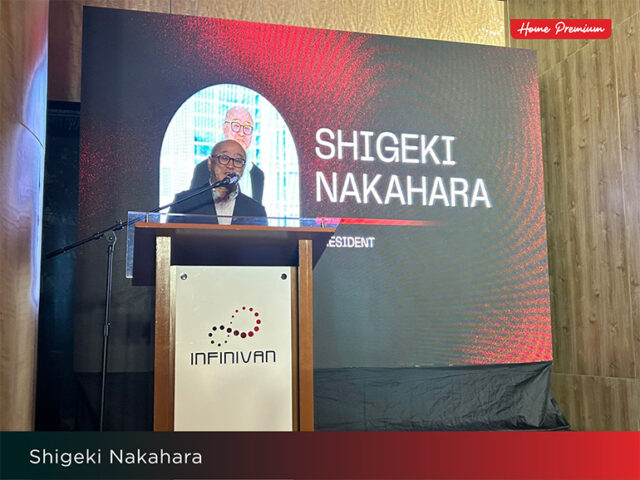
“We are excited to offer a service that brings forth several results to more halls, especially condominiums in Metro Manila and beyond. More than just brand and product, this launch marks the beginning of new relationships with our customers,” InfiniVAN President Shigeki Nakahara said during the media launch.

Currently, InfiniVAN’s “Japan-grade internet” is only available in vertical units around Metro Manila.

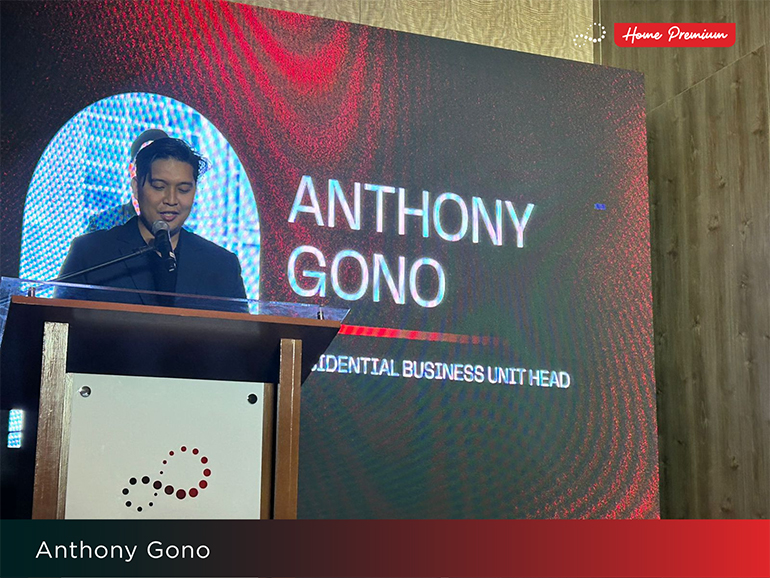
“We will go to the horizontals and other locations beyond Metro Manila. That’s the vision. We’re looking at Metro Cebu and Metro Davao because we have installations there, too,” InfiniVAN Residential Business Unit Head Anthony Gono said.

InfiniVAN Home Premium offers three ULTRA internet plans: up to 350 megabits per second (Mbps) for P1,499, up to 700Mbps for P1,999, and up to 1 gigabits per second (Gbps) for P3,999.

To mark its launch in the country, InfiniVAN is offering promotional discounts for new subscribers. Customers who switch from other providers will receive a 50% discount on their monthly fee for the first three months.

Additionally, subscribers are also eligible for additional discounts by leaving feedback online. A 10% discount is available for those who post a review on either Facebook or Google, while a 15% discount is given to those who leave reviews on both platforms.

For more information on InfiniVAN Home Premium, its promotions, and offerings, visit https://homepremium.infinivan.com/.


Spotlight is BusinessWorld’s sponsored section that allows advertisers to amplify their brand and connect with BusinessWorld’s audience by publishing their stories on the BusinessWorld Web site. For more information, send an email to online@bworldonline.com.

Join us on Viber at https://bit.ly/3hv6bLA to get more updates and subscribe to BusinessWorld’s titles and get exclusive content through www.bworld-x.com.
Chinese state-sponsored contract hacker arrested in Italy at US request, DOJ says

REUTERS

 – The U.S. Department of Justice said on Tuesday a Chinese state-sponsored contract hacker was arrested last week in Italy at the request of Washington, but the arrested man claimed he is a victim of mistaken identity.

Xu Zewei, 33, was arrested on July 3, the Justice Department said, adding a nine-count indictment was unsealed on Tuesday in the Southern District of Texas alleging the involvement of that individual and a co-defendant in computer intrusions between February 2020 and June 2021.

Mr. Xu was arrested in Milan, Italy, and will face extradition proceedings, the DOJ said in a statement.

It alleged China’s ministry of state security had directed theft of COVID-19 research and the exploitation of Microsoft MSFT.O email software vulnerabilities.

The Chinese government has previously denied allegations of being involved. Liu Pengyu, a spokesperson for China’s embassy in Washington, said on Tuesday China opposes all forms of cyber crimes, adding that “China has neither the need nor the intention to acquire vaccines through so-called theft.”

Mr. Xu’s lawyer said on Tuesday that he is a victim of mistaken identity, that his surname is quite common in China and that his mobile phone had been stolen in 2020.

The 33-year-old IT manager at a Shanghai company appeared on Tuesday before an appeals court in Milan, which will decide whether to send him to the United States. The man was arrested last week after he arrived at Milan’s Malpensa airport for a holiday in Italy with his wife.

U.S. authorities allege that he was part of a team of hackers who tried to access a COVID-19 vaccine being developed by the University of Texas in 2020.

The DOJ also says that in 2021, he was part of a cyber-espionage group known as Hafnium, which has alleged ties to the Chinese government and which “exploited zero-day vulnerabilities in U.S. systems to steal additional research.”

Hafnium targeted over 60,000 U.S. entities, according to the DOJ.

The charges listed on the arrest warrant were wire fraud and aggravated identity theft, conspiracy to commit wire fraud and unauthorized access to protected computers. – Reuters

Trump says US to impose 50% tariff on copper imports, copper futures jump

STOCK PHOTO | Image by Alexa from Pixabay

 – President Donald Trump said he will announce a 50% tariff on copper on Tuesday, hoping to boost U.S. production of a metal critical to electric vehicles, military hardware, the power grid and many consumer goods.

U.S. Comex copper futures jumped more than 12% to a record high after Mr. Trump announced the planned tariffs, which came earlier than the industry had expected, and the rate was steeper.

Mr. Trump told reporters at a White House cabinet meeting that he planned to make the copper tariff announcement later in the day but he did not say when the tariff would take effect.

“I believe the tariff on copper, we’re going to make 50%,” Mr. Trump said.

After Mr. Trump spoke, U.S. Commerce Secretary Howard Lutnick said in an interview on CNBC that the copper tariffs would likely be put in place by the end of July or August 1. He said Trump would post details on his Truth Social media account sometime on Tuesday.

Mr. Trump had yet to formally announce the tariffs by Wednesday evening and several countries, mining companies and trade groups said they were awaiting firm details.

Analysts with RBC Capital Markets said they expect short-term volatility in copper prices and shares of copper companies should the tariff be implemented.

In February, the administration announced a so-called Section 232 investigation into U.S. imports of the red metal. The deadline for the investigation to conclude was November, but Mr. Lutnick said the review was already complete.

“The idea is to bring copper home, bring copper production home, bring the ability to make copper, which is key to the industrial sector, back home to America,” Mr. Lutnick said.

The National Mining Association declined to comment, saying it preferred to wait until details were released. The American Critical Minerals Association did not immediately respond to requests for comment.

Copper is used in construction, transportation, electronics and many other industries. The U.S. imports roughly half of its copper needs each year and only has three copper smelters.

Major copper mining projects across the U.S. have faced strong opposition in recent years due to a variety of reasons, including Rio Tinto and BHP’s Resolution Copper project in Arizona and Northern Dynasty Minerals’ Pebble Mine project in Alaska.

Shares of the world’s largest copper producer, Phoenix-based Freeport-McMoRan, shot up more than 5% at one point in Tuesday trading. The company, which produced 1.26 billion pounds (571,530 metric tons) of copper in the U.S. last year, did not immediately respond to a request for comment.

Freeport, which would benefit from U.S. copper tariffs but worries that the duties would hurt the global economy, has advised Trump to focus on boosting U.S. copper production.

Countries set to be most affected by any new U.S. copper tariff would be Chile, Canada and Mexico, which were the top suppliers to the U.S. of refined copper, copper alloys and copper products in 2024, according to U.S. Census Bureau data.

Chile, Canada and Peru – three of the largest copper suppliers to the U.S. – have told the administration that imports from their countries do not threaten U.S. interests and should not face tariffs. All three have free trade deals with the U.S.

Mexico’s Economy Ministry and Canada’s Finance Ministry did not immediately respond to requests for comment, while Chile’s Foreign Ministry said it had not received any formal communication about the tariffs.

Chile’s Mining Ministry declined to comment. Chairman Maximo Pacheco of Codelco, the country’s top copper miner, told Reuters the company wanted to know which copper products would be included and if the tariff would hit all countries.

Pierre Gratton, president of the Mining Association of Canada, said the tariff is concerning for copper smelters such as Glencore’s Horne facility in Quebec. Gratton added he was waiting for the 232 report from Trump officials.

A 50% tariff on copper imports would hit U.S. companies that use the metal because the country is years away from meeting its needs, said Ole Hansen, head of commodity strategy at Saxo Bank.

“The U.S. has imported a whole year of demand over the past six months, so the local storage levels are ample,” Hansen said. “I see a correction in copper prices following the initial jump.” – Reuters

Trump, Netanyahu meet a second time as gaps said to narrow in Gaza ceasefire talks

CHUTTERSNAP-UNSPLASH

 – U.S. President Donald Trump on Tuesday met for a second time in two days with Israeli Prime Minister Benjamin Netanyahu to discuss Gaza as Trump’s Middle East envoy said Israel and Hamas were closing their differences on a ceasefire deal.

The Israeli leader departed the White House on Tuesday evening after just over an hour’s meeting with Trump in the Oval Office, with no press access. The two men also met for several hours during a dinner at the White House on Monday during Netanyahu’s third U.S. visit since the president began his second term on January 20.

Mr. Netanyahu met with Vice President JD Vance and then visited the U.S. Capitol on Tuesday, and is due back in Congress on Wednesday to meet with U.S. Senate leaders.

He told reporters after a meeting with the Republican House of Representatives Speaker Mike Johnson that while he did not think Israel’s campaign in the Palestinian enclave was done, negotiators are “certainly working” on a ceasefire.

“We have still to finish the job in Gaza, release all our hostages, eliminate and destroy Hamas’ military and government capabilities,” Mr. Netanyahu said.

Shortly after Mr. Netanyahu spoke, Mr. Trump’s special envoy to the Middle East, Steve Witkoff, said the issues keeping Israel and Hamas from agreeing had dropped to one from four and he hoped to reach a temporary ceasefire agreement this week.

“We are hopeful that by the end of this week, we’ll have an agreement that will bring us into a 60-day ceasefire. Ten live hostages will be released. Nine deceased will be released,” Mr. Witkoff told reporters at a meeting of Trump’s Cabinet.

A delegation from Qatar, which has been hosting indirect talks between Israeli negotiators and the Hamas Palestinian militant group, met with senior White House officials for several hours before Netanyahu’s arrival on Tuesday, Axios reported, citing a source familiar with the details.

The White House had no immediate comment on the report.

The Gaza war erupted when Hamas attacked southern Israel in October 2023, killing around 1,200 people and taking 251 hostages, according to Israeli figures. Some 50 hostages remain in Gaza, with 20 believed to be alive.

Israel’s retaliatory war in Gaza has killed over 57,000 Palestinians, according to the enclave’s health ministry. Most of Gaza’s population has been displaced by the war and nearly half a million people are facing famine within months, according to United Nations estimates.

Mr. Trump had strongly supported Mr. Netanyahu, even wading into domestic Israeli politics by criticizing prosecutors over a corruption trial against the Israeli leader on bribery, fraud and breach-of-trust charges that Netanyahu denies.

In his remarks to reporters at the U.S. Congress, Mr. Netanyahu praised Mr. Trump, saying there has never been closer coordination between the U.S. and Israel in his country’s history. – Reuters

UK should limit trial by jury to reduce record criminal backlog, report says

 – Britain must radically reform its criminal justice system, including by removing the right to trial by jury for certain offences, to help tackle a record-high backlog of cases, a government-commissioned report recommended on Wednesday.

The report recommends removing the right to choose a jury trial where a defendant faces a maximum of two years in jail and proposes that complicated fraud cases should be tried by a judge alone.

Brian Leveson, formerly the head of criminal justice in England and Wales, also called for greater use of “out of court resolutions” for low-level crime.

The backlog of cases in the Crown Court, where more serious cases are heard by a judge and a jury, is over 75,000 – more than double the number in 2019 – and trials are currently being listed to take place as far away as in 2029.

Defendants, victims and witnesses are often waiting years for justice to be done, with defendants in custody before trial taking up limited prison places, which has recently prompted Britain to release prisoners early.

Mr. Leveson further recommended the creation of a new branch of the Crown Court, where less serious offences could be tried by a Crown Court judge and two other judges instead of a jury.

Justice Secretary Shabana Mahmood said the government will “consider all his recommendations and will respond, in full, ahead of legislating” later this year.

Lawyers’ professional bodies broadly welcomed the recognition of the problems in the criminal justice system, but expressed concern about some recommendations, particularly relating to trial by jury.

Richard Atkinson, president of the Law Society, which represents solicitors in England and Wales, said that limiting jury trials would effectively just move the Crown Court backlog to lower courts and that a permanent solution required sustained investment to address “decades of neglect”.

Barbara Mills, chair of barristers’ body the Bar Council, said “there is no need to curtail the right to trial by jury”, echoing the Law Society’s call for greater investment. – Reuters

US tariffs to take center stage as ASEAN meets in Malaysia

REUTERS

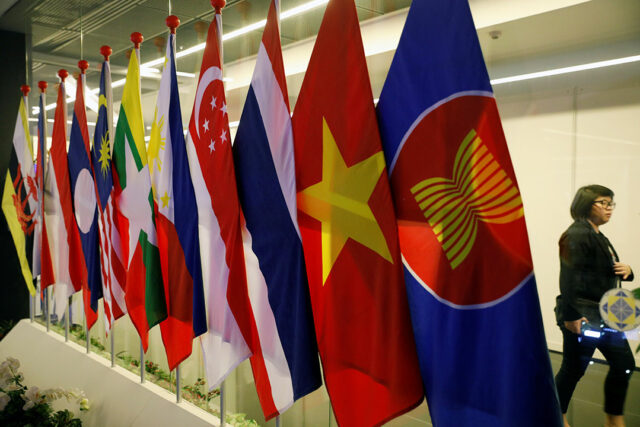
 – Southeast Asian foreign ministers will meet on Wednesday as the region grapples with renewed uncertainty over U.S. trade tariffs and as a simmering territorial dispute between Thailand and Cambodia threatens to disrupt the bloc’s unity.

The gathering in Malaysia of the 10-member Association of Southeast Asian Nations will be followed by a flurry of meetings on Thursday and Friday between the group and its major trade partners, including the United States, China, Japan, Russia, India and the European Union.

China’s Foreign Minister Wang Yi and Russian counterpart Sergei Lavrov are expected to join the Kuala Lumpur meetings, as will U.S. Secretary of State Marco Rubio, who makes his first trip to Asia looking to smooth over relations with allies and partners rattled by President Donald Trump’s tariff strategy.

Mr. Trump on Monday announced hefty levies of between 25% and 40% on six Southeast Asian countries, despite concerted efforts by some to offer broad concessions and negotiate lower rates.

The export-reliant ASEAN is collectively the world’s fifth-biggest economy, with some members beneficiaries of supply chain realignments from China. Only Vietnam has secured a deal, which lowers the levy to 20% from 46% initially.

Indonesia, Thailand and Malaysia said they would seek further talks ahead of the tariff implementation on August 1.


TARIFFS ‘COUNTERPRODUCTIVE’

ASEAN foreign ministers will express “concern over rising global trade tensions and growing uncertainties in the international economic landscape, particularly the unilateral actions relating to tariffs,” according to a draft joint communique seen by Reuters.

The draft, dated July 7 and before the latest tariff rates were announced, did not mention the United States and used language similar to an ASEAN leaders’ statement in May. Both said tariffs were “counterproductive and risk exacerbating global economic fragmentation”.

The bloc in April said it would not impose retaliatory measures and its leaders have pledged any bilateral deals they strike with Washington would not harm fellow ASEAN members.

OCBC senior ASEAN economist Lavanya Ventakeswaran said countries including Vietnam face additional uncertainty over tariffs targeting transshipments, a measure aimed at products largely from China, with questions remaining over enforcement and implementation.

“The bottom line is that it’s going to be quite complicated moving forward,” Ms. Ventakeswaran said.

The issue has also been complicated by Mr. Trump’s initial threat of an additional 10% on tariffs on countries aligned with the BRICS grouping. Indonesia is a member, while Malaysia, Thailand and Vietnam are partner countries.

ASEAN will promote a treaty on a nuclear weapons-free zone in Southeast Asia and the meeting could also see Thailand and Cambodia seek to ease a dispute that led to a mobilization of their troops at their border and a crisis for a Thai government now hanging by a thread.

Thai Prime Minister Paetongtarn Shinawatra has since been suspended pending a court case over her leaked phone call with Cambodia’s influential former leader, Hun Sen, a conversation her opponents say undermined Thailand’s sovereignty and integrity.

The dispute puts more pressure on ASEAN to maintain a united front, amid other unresolved issues including an intensifying civil war in Myanmar and a protracted drafting of a code of conduct with Beijing for the South China Sea, a key source of geopolitical tension. – Reuters

Trump considers taking over D.C. government, chides New York

REUTERS

 – U.S. President Donald Trump said on Tuesday his administration was considering taking over governance of Washington, D.C., and suggested he could take similar action in New York because of his distaste for the leading candidate for mayor there.

Mr. Trump has made a similar threat regarding Washington before, but has not followed through even as he criticized crime rates and bashed other institutions there.

The president, speaking during a cabinet meeting at the White House, said his chief of staff, Susie Wiles, was in close touch with Mayor Muriel Bowser, who favors making the city a U.S. state.

“We have tremendous power at the White House to run places when we have to. We could run D.C. I mean, we’re … looking at D.C.,” Mr. Trump said. “Susie Wiles is working very closely with the mayor.”

Ms. Bowser’s office declined to comment.

The District of Columbia was established in 1790 with land from neighboring Virginia and Maryland. Congress has control of its budget, but voters elect a mayor and city council, thanks to a law known as the Home Rule Act. For Trump to take over the city, Congress likely would have to pass a law revoking that act, which Trump would have to sign.

Becoming the 51st state would give Washington’s roughly 700,000 residents voting representation in Congress. Democrats support that plan, while Republicans, who are reluctant to hand Democrats any politically safe seats in the House of Representatives and Senate, oppose it.

Mr. Trump suggested his administration would run the city better with an appointed leader than the democratically elected government.

“We would run it so good, it would be run so proper. We’d get the best person to run it,” he said. “The crime would be down to a minimum, would be much less. And you know we’re thinking about doing it, to be honest with you.”

While Mr. Trump said his administration had a good relationship with Bowser, he had less complimentary words for Zohran Mamdani, the democratic socialist who won the race to be the Democratic Party’s nominee in New York’s November mayoral election.

Mr. Trump described Mr. Mamdani as a “disaster.” A representative for Mr. Mamdani did not immediately respond to a Reuters request for comment.

“We’re going to straighten out New York… Maybe we’re going to have to straighten it out from Washington,” Mr. Trump said. “We’re going to do something for New York. I can’t tell you what yet, but we’re going to make New York great again also.” – Reuters

Jobless rate drops to 3.9% in May

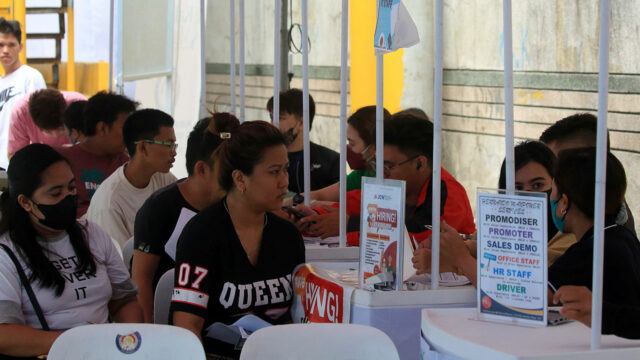
Sta. Mesa residents attend a job fair in Manila. — PHILIPPINE STAR/EDD GUMBAN

By Adrian H. Halili, Reporter

THE PHILIPPINES’ unemployment rate went down to 3.9% in May from 4.1% in April, with the number of individuals in the labor force hitting an all-time high, the government reported on Tuesday.

The number of jobless Filipinos declined to 2.03 million in May from 2.06 million in April and 2.11 million a year earlier, according to the results of the Philippine Statistics Authority’s (PSA) latest Labor Force Survey released on Tuesday.

Year on year, the jobless rate likewise went down from 4.1% in May 2024.

The country’s unemployment rate averaged at 4% in the first five months of 2025, unchanged from the same period last year.

National Statistician Claire Dennis S. Mapa attributed the drop in the May unemployment rate to a “substantial” growth in the ranks of Filipinos aged 15 years and older in the labor force.

“The increase in our labor force participation is substantial — there was a 1.35 million increase year on year,” he told a news briefing. “Usually, when labor force participation increases, unemployment also goes up. But this time is different — almost everyone was absorbed, and unemployment declined.”

“Our only concern is that underemployment increased (year on year),” he added. “Our underemployment rate last year was only 9.9%, it increased by 1.79 million to 13.1%. Those who entered the labor market, while they were employed, not all of them were full-time employees. So, they also contributed to the underemployment rate.”

PSA data showed that 52.32 million Filipinos were part of the labor force in May, rising from 50.74 million in April and the 50.97 million working Filipinos recorded in May 2024.

This was the highest recorded number since April 2005, which was when the PSA began tracking the data, it said.

The labor force participation rate (LFPR), or the proportion of the working-age population (15 years old and over) that is part of the labor force, rose to 65.8% in May from 63.7% in April and 64.8% in the same month last year.

Meanwhile, the underemployment rate — those who want longer working hours or an additional job — eased to 13.1% in May from 14.6% in April but climbed from 9.9% in the same month last year.

This translated to 6.6 million Filipinos looking for additional jobs or longer working hours, 489,000 lower than the 7.09 million in April. Year on year, this was up from 4.82 million in May 2024.

For the five-month period, the underemployment rate averaged 12.9%, up from 12.3% last year.

Department of Economy, Planning, and Development (DEPDev) Secretary Arsenio M. Balisacan said the increase in labor force participation in May indicated a “healthy and competitive” job market.

“Generally, a larger workforce can lead to increased economic output and potentially higher GDP (gross domestic product) growth, as more people contribute to the economy,” Mr. Balisacan said in a statement.

“This also reflects growing confidence in the labor market and the impact of ongoing efforts to expand access to employment opportunities across sectors,” he added.

The Philippines is targeting a GDP growth of 5.5%-6.5% for 2025.

The DEPDev added that the Philippine’s unemployment rate remains lower than those in China (5%) and India (5.6%), but higher than Malaysia (3%) and Vietnam (2.2%).

Finance Secretary Ralph G. Recto said in a statement that higher labor participation shows that more Filipinos are seeing better work opportunities and is a sign of economic development.

Mr. Balisacan said the government’s planned infrastructure projects can help attract job-generating investments.

He added that efforts to equip Filipinos with in-demand skills and competencies can help our workforce remain agile amid a competitive labor market

“We will leverage recently enacted policy reforms to improve upskilling and reskilling initiatives.”

EMPLOYMENT RATE

The PSA also reported that the employment rate inched up to 96.1% in May from 95.9% in both April 2025 and May 2024.

The number of Filipinos with jobs grew to 50.29 million in May from 48.67 million the previous month and 48.87 million in the same month last year.

By sector, services remained the top employer for the month, accounting for 61.8% of total employed persons, followed by agriculture (21.1%) and the industry sector (17.1%).

Wholesale and retail trade; repair of motor vehicles and motorcycles saw the largest annual increase in jobs during the month, adding 489,000 jobs. This was followed by agriculture and forestry (469,000), administrative and support service activities (371,000), accommodation and food service activities (365,000), and other service activities (175,000).

On the other hand, manufacturing posted the biggest annual decline in employment (374,000). This was followed by construction (298,000); mining and quarrying (82,000); public administration and defense and compulsory so-cial security (54,000); and water supply and sewerage, waste management and remediation activities (50,000).

By class of worker, wage and salary workers accounted for 62.8% of the workforce in May, followed by self-employed individuals without paid employees (27.9%), unpaid family workers (7.5%), and employers in family-operated farms or businesses (1.8%).

Working hours averaged 39.8 hours per week in May, slightly lower than the 39.9 hours in April. Average working hours also fell year on year from the 40.6 hours per week recorded in May 2024.

INFLATION WOES

However, analysts said the increase in labor participation seen in May was likely a result of inflation concerns.

“High inflation, uncertainties, and insufficient employment opportunities made people, including those that were initially part of the labor force, go out and contribute to the financial resources of the family. Having just one earner in the family is no longer enough — not even two earners,” Maria Ella Calaor-Oplas, an economics professor who specializes in human capital development research at De La Salle University, said in a Facebook Messenger chat.

She added that the midterm elections likely boosted employment opportunities.

“The LFPR is plausibly increasing because family incomes are so low, and prices of basic goods and services are so expensive, that more household members are driven to more actively seek work,” IBON Foundation Executive Director Jose Enrique “Sonny” A. Africa likewise said in a Viber message. “Unpacking this seemingly favorable increase shows more and more Filipinos trying to scrape out a living from whatever informal and poor-quality work they can find from an economy that is failing to create regular and decently paying work.”

Mr. Africa said the government should focus on developing the agriculture and industrial sectors to boost employment.

Federation of Free Workers President Jose Sonny G. Matula also said that the government should focus on domestic-led job creation by supporting small businesses and cooperative and rural enterprises and providing better wages, as the year-on-year increase in underemployment shows that many jobs in the country are “still low-paying or insecure.”

Dollar reserves inch up to $105.32 billion in June

UNSPLASH

By Aubrey Rose A. Inosante, Reporter

THE PHILIPPINES’ dollar reserves inched up to $105.32 billion as of end-June on the back of the National Government’s foreign currency deposits and the central bank’s investment earnings.

Preliminary data from the Bangko Sentral ng Pilipinas (BSP) released late on Monday showed that the end-June gross international reserves (GIR) edged up by 0.14% from the $105.18 billion recorded as of May.

This marked the first month-on-month increase since February.

The central bank said the rise was “mainly due to foreign currency deposits by the National Government with the Bangko Sentral ng Pilipinas and income from BSP investments.”

Year on year, dollar reserves also inched up by 0.13% from $105.19 billion.

International reserves are foreign assets of the BSP held mostly as investments in foreign-issued securities, monetary gold, and foreign exchange. These are supplemented by claims to the International Monetary Fund (IMF) in the form of reserve position in the fund and special drawing rights (SDRs).

Ample reserves help protect the country from market volatility and external shocks and ensure that it is capable of financing its imports and paying its debt obligations, as well as stabilizing the currency, in the event of an economic downturn.

The BSP said the end-June GIR level covers about 3.3 times the country’s short-term external debt based on residual maturity.

It is also equivalent to 7.2 months’ worth of imports of goods and payments of services and primary income, providing a “robust” liquidity buffer.

Broken down, the BSP’s foreign exchange holdings surged by 73.89% to $1.24 billion at end-June from $712.2 million as of May. Year on year, it climbed by 54.36% from $802.2 million.

Meanwhile, foreign investments slipped by 0.55% to $85.66 billion as of June from $86.13 billion the month prior. It likewise went down by 4.81% from $89.99 billion in the same period last year.

The value of the central bank’s gold holdings inched up by 0.56% to $13.8 billion at end-June from $13.73 billion as of May. Year on year, it climbed by 39.3% from $9.91 billion.

The country’s reserve position in the IMF rose by 2.32% to $732.4 million in the period from $715.8 million a month earlier but was down by 1.08% from $740.4 million a year ago.

SDRs — or the amount which the Philippines can tap from the IMF’s reserve currency basket — was unchanged month on month at $3.89 billion at end-June. Year on year, it went up by 3.85% from $3.75 billion.

Meanwhile, net international reserves increased by 0.29% to $105.3 billion at end-June from $105 billion as of end-May. Net international reserves refer to the difference between the GIR and reserve liabilities, including short-term foreign debt, and credit and loans from the IMF.

“The strong demand for government securities was one of the factors for the strong inflow of dollars,” said Reinielle Matt M. Erece, an economist at Oikonomia Advisory and Research, Inc.

“Apart from relatively stable macroeconomic conditions, the reaffirmation of the country’s credit rating by major credit rating agencies also helped in making the country an attractive destination especially for foreign funds.”

Rizal Commercial Banking Corp. Chief Economist Michael L. Ricafort said the country’s dollar reserves rose at end-June after declining for three consecutive months, reflecting improved sentiment amid the volatility caused by the Trump administration’s protectionist policies and geopolitical concerns.

He added that the increase was also driven by elevated world gold prices, which drove up the value of the BSP’s holdings of the precious metal.

“World gold prices hovered near record highs recently after some demand for safe havens due to geopolitical risks during the month, particularly the Israel-Iran attacks,” Mr. Ricafort said.

The Philippines’ improved economic and credit fundamentals are expected to help further boost reserves moving forward, he added.

The BSP expects dollar reserves to reach $104 billion this year.