Home Blog Page 1312

Integrating sustainability in the entire value chain

“Epson’s headquarters develops products with sustainability features such as low power consumption and paper-saving functions, says Masako Kusama, president and director of Epson Philippines Corporation.

Its manufacturing facility in Batangas, Philippines, meanwhile, operates on 100% renewable energy. The company is also on track to reducing its total emissions in line with the 1.5-degree Celsius scenario by 2030, Ms. Kusama told BusinessWorld.

In this interview, she shares how Epson embeds sustainability in its value chain. She also talks about the heightened awareness Filipino c-suite executives have in combatting climate change.

Interview by Patricia Mirasol
Video editing by Jayson Mariñas

Data, dialogue, and direction: FEU Public Policy Center joins women leaders in shaping a more inclusive future

What does it take to shape a future where leadership is equitable, inclusive, and sustainable in our social and institutional systems?

That was the central question at “Breaking Barriers: Women Leading in Business and Beyond,” a forum organized by the Nextgen Organization of Women Corporate Directors (NOWCD) on June 23 at the BPI Wealth Lounge in Makati City. The event brought together leaders from business, government, and academia to reflect on the progress of women’s leadership and the structural changes needed to support it.

At the forefront of the conversation was the Far Eastern University (FEU) Public Policy Center, whose participation affirmed the University’s long-standing commitment to research, inclusion, and future-ready leadership.

Julia Andrea Abad, executive director of the FEU Public Policy Center, moderated a dynamic panel discussion with Mariana Zobel de Ayala of Ayala Land, Robina Gokongwei-Pe of Robinsons Retail, Col. Francel Margareth Padilla of the Armed Forces of the Philippines, and Political Science Professor Dr. Jean Franco of UP Diliman. Together, they explored the lived realities of women in leadership, the role of mentorship, and how institutions can evolve to foster greater diversity at the top.

“Sustainability includes building systems that empower people equitably and evolve with the times,” Ms. Abad noted. “True progress requires dismantling the barriers that keep leadership from reflecting the diversity of our society.”

A key moment in the forum was the research presentation delivered by Patricia Thea Basilio, data analyst at the FEU Public Policy Center. Drawing from their 2024 College Experience Survey, Basilio shared findings on gender attitudes among Filipino college students. The study revealed that sexist views remain prevalent among young people, especially males, and are often linked to higher interest in leadership roles. These raise important concerns for the country’s future leadership landscape.

“We found that many of those aspiring to lead still hold beliefs that could limit the very inclusivity they are meant to champion,” Ms. Basilio said. “This calls for deeper reflection on how we cultivate both skills and values in our future leaders.”

Representing FEU’s senior leadership at the event was Gianna Montinola, consultant for external affairs, who introduced keynote speaker Mariana Zobel de Ayala. Ms. Montinola’s involvement highlighted FEU’s broader institutional advocacy for diversity, equity, and inclusion across sectors.

“Inclusive leadership doesn’t happen by accident. It requires intention, investment, and collaboration,” Ms. Montinola said. “As an academic institution, FEU takes this responsibility seriously, both in what we teach and in the research we pursue.”

Bringing the lone academic research voice to the table, FEU contributed a unique perspective that blended empirical insights with practical recommendations for cultivating inclusive leadership in a changing world. The event closed with a call to continue building networks that support women not only in reaching leadership roles, but in thriving within them.

As for the university, the work continues: generating data that matters, fostering dialogues that challenge norms, and preparing students to lead with both competence and values.


Spotlight is BusinessWorld’s sponsored section that allows advertisers to amplify their brand and connect with BusinessWorld’s audience by publishing their stories on the BusinessWorld Web site. For more information, send an email to online@bworldonline.com.

Join us on Viber at https://bit.ly/3hv6bLA to get more updates and subscribe to BusinessWorld’s titles and get exclusive content through www.bworld-x.com.

UK scheme to help exploited migrant carers is failing, charity says

STOCK PHOTO | Image by 🆓 Use at your Ease 👌🏼 from Pixabay

 – A multi-million-pound British government scheme to help exploited migrant care workers find new work has largely failed due to barriers including high visa costs, research showed on Thursday.

The research by the London-based Work Rights Center comes after the charity found last month that only 3.4% of the more than 27,000 carers who were contacted through the so-called rematching scheme had found work.

Nearly a third of carers in England – workers who support the elderly and other vulnerable people – are migrants. Many have faced abuse or exploitation since arriving to fill severe labor shortages following Britain’s exit from the EU.

Charities have called on the government to reform work visas, which are tied to employers or “sponsors”, which they say creates a power imbalance that leads to exploitation, including fraudulent fees being charged, debt bondage and modern slavery.

The government launched the 16 million pounds ($22 million) scheme last year to support migrant care workers who found themselves out of a job after sponsorship licenses were revoked from care firms amid a crackdown on exploitation. The government had no specific target set for how many workers would be helped.

The Work Rights Centre said that exploited migrant workers, often facing financial constraints, were unable to afford the high visa costs required to move into a new job through the scheme, or meet the expectation from employers that they have access to a car in order to visit private homes.

“A slim chance at obtaining a new job cannot be the only thing this government offers in compensation for the exploitation and debt victims have suffered due to ministers’ refusal to reform this flawed visa scheme,” said Work Rights Centre Policy Manager Adis Sehic.

Other barriers to finding jobs through the scheme included a lack of awareness of its existence, the inability of workers to get references from employers with revoked licenses and strict English-language requirements from employers, the charity said. – Reuters

Cyber crime and real-world crime are converging in a dangerous new way – here’s how to stay safe

STOCK PHOTO | Image from Freepik

THE CONVERSATION

Disclaimer: This asset – including all text, audio and imagery – is provided by The Conversation. Reuters Connect has not verified or endorsed the material, which is being made available to professional media customers to facilitate the free flow of global news and information.

By Jongkil Jay Jeong, Senior Fellow, School of Computing and Information System, The University of Melbourne, Ashish Nanda, Research Fellow, Deakin Cyber Research and Innovation Centre, Deakin University, and Peter Thomas, Director, Centre for Future Skills and Workforce Transformation, RMIT University


It starts with a call from someone claiming to be your bank. They know your name. They know your bank. They even know your credit card number. There’s been “unusual activity” on your account, they say – and they just sent you a one-time passcode to verify your identity so they can assist.

You read out the code and feel reassured. Moments later, your funds are gone and the bank refuses reimbursement, citing a breach of terms because you voluntarily shared your passcode.

This is not a niche or isolated scam. It’s part of a growing pattern we’re seeing across Australia and beyond: cyber criminals are merging digital and real-world tactics in ways that make these frauds more convincing, harder to stop, and far more damaging.


It starts with stolen data

These scams don’t begin with a phishing email or fake app. They begin with data – your data – stolen in one of countless breaches, such as the latest Qantas incident that exposed the details of up to 5.7 million customers.

Sometimes the personal data has been sold through third-party data brokers. Names, phone numbers, emails, even card details are routinely leaked and traded online.

Once they have this information, scammers get to work. The phone call mimics a real interaction with a bank, perhaps with a spoofed caller ID. Victims are pressured in urgent language to “verify” their identity, often by reading out a one-time passcode that, unbeknownst to them, is authorizing a transaction using their own card details.

We refer to this as a “convergence scam” – where online data leaks, psychological manipulation and weak enforcement come together. It’s a sophisticated hybrid of digital theft and physical-world exploitation, and it’s on the rise.


Devastating and personal

These scams are deeply personal and can be financially devastating. But what makes them even more alarming is the system-wide failure surrounding them.

For starters, many credit card fraud insurance policies contain clauses that exclude coverage when the customer “voluntarily” provides account credentials – including one-time passcodes – even if they did so under duress or deception.

One victim we spoke to lost nearly A$6,000 after a scammer posing as their bank prompted them to read out a passcode over the phone. The transaction was verified using that code, and the bank later refused to reimburse the loss.

In a formal response, the bank stated that by voluntarily sharing the one-time passcode, the customer had breached the e-payments code, even though they were manipulated into doing so. As a result, the customer was held liable and ineligible for a chargeback.


Law enforcement may not help

Even when the criminals leave a physical trail, follow-up is rare. Law enforcement rarely investigates. In the cases we’ve seen, reports are acknowledged but not pursued. Officers don’t explicitly say the case is too small or not worth the effort, but their inaction suggests it, especially given how resource-intensive most cyber-crime investigations tend to be.

In many instances, particularly when the total loss isn’t deemed significant, victims are simply told to follow up with their bank, based on the assumption they’ll be reimbursed.

In one case we reviewed, stolen card details were used in-store at major Australian retailers such as Woolworths and Coles – indicating that a cloned card had been physically used. These purchases could, in theory, be tracked back to in-store CCTV footage. But no investigation was launched.

This reluctance to act, even when the evidence is tangible, sends a dangerous message: that scammers can operate with near-impunity.

Meanwhile, banks and regulators are slow to update verification systems. One-time passcodes are still widely used, even though scammers now exploit them routinely. There’s little recourse for victims, and minimal accountability for data brokers whose records fuel these scams.


What can we do to protect ourselves?

For individuals, the first line of defense is simple but vital:

  • never share a one-time passcode or security code over the phone, even if the caller seems legitimate
  • if in doubt, hang up and call the bank directly using the number on your card
  • be cautious about where and how you share your personal information, especially online through websites or social media. Only disclose what personally identifiable information you have to.


The true answer is systemic change

Banks and other institutions need to put into place stronger identity verification systems that don’t rely solely on SMS codes. We need greater transparency and regulation of data brokers.

Crucially, we also need active enforcement of cyber-enabled fraud, especially when there’s physical evidence, such as in-store purchases and CCTV footage.

Banks should also reassess their policies and procedures on how they communicate with customers. If scam calls closely mimic real ones, it’s time to change the script. More proactive education, clearer warnings, and redesigned verification processes can all help prevent harm.

The real danger of these convergence scams isn’t just financial loss. It’s the erosion of trust: in our banks, in our security systems, and in the institutions meant to protect us. – Reuters


 

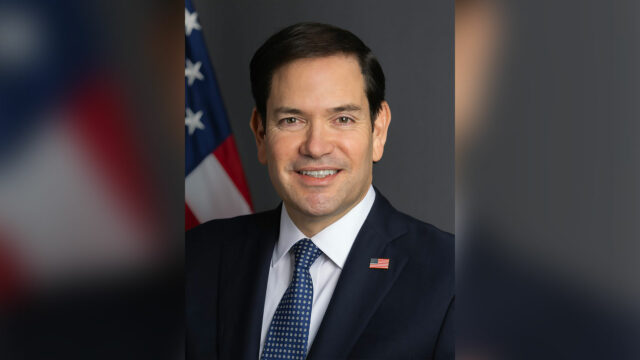
Rubio makes first visit to Asia as Trump tariffs loom

Photo By U.S. Department of State - https://www.flickr.com/photos/statephotos/54295399868/, Public Domain, https://commons.wikimedia.org/w/index.php?curid=160957686
Photo By U.S. Department of State – https://www.flickr.com/photos/statephotos/54295399868/, Public Domain, https://commons.wikimedia.org/w/index.php?curid=160957686

 – U.S. Secretary of State Marco Rubio will meet with Southeast Asian counterparts on Thursday in his first visit to Asia since taking office, and will try to reassure them the region is a priority for Washington, even as President Donald Trump targets it in his global tariff offensive.

Washington’s top diplomat will meet foreign ministers of the 10-member Association of Southeast Asian Nations gathered in Kuala Lumpur, and also hold talks with Russian Foreign Minister Sergei Lavrov who is in the Malaysian capital, according to the U.S. State Department.

Mr. Rubio’s trip is part of an effort to renew U.S. focus on the Indo-Pacific and look beyond the conflicts in the Middle East and Europe that have consumed much of the Trump administration’s attention, with Mr. Rubio balancing dual responsibilities as secretary of state and national security adviser.

However, Mr. Trump’s global tariff strategy is likely to cast a shadow over the trip, after the president announced steep tariffs to take effect on August 1 on six ASEAN members, including Malaysia, as well as on close Northeast Asian allies Japan and South Korea.

Mr. Rubio will nevertheless seek to firm up U.S. relationships with partners and allies, who have been unnerved by the tariffs, and is likely to press the case that the United States remains a better partner than China, Washington’s main strategic rival, experts said.

“This is significant, and it’s an effort to try to counter that Chinese diplomatic and economic offensive,” said Victor Cha, president of the geopolitics and foreign policy department at Washington’s Center for Strategic and International Studies.

Mr. Rubio will also meet with Mr. Lavrov later on Thursday, according to the U.S. State Department schedule. It would be the second in-person meeting between Mr. Rubio and Mr. Lavrov, and comes at a time when Mr. Trump has grown increasingly frustrated with Russian President Vladimir Putin as the war in Ukraine drags on.

China’s Foreign Minister Wang Yi is also expected to join talks from Thursday, but it was unclear if Rubio would meet with him.


‘BETTER LATE THAN NEVER’

A senior U.S. State Department official told reporters on Monday that among Mr. Rubio’s priorities on the trip was reaffirming Washington’s commitment to the region, not just for its sake but because it promotes American prosperity and security.

“It’s kind of late, because we’re seven months into the administration,” Mr. Cha said of Mr. Rubio’s trip. “Usually, these happen much sooner. But then again, it is extraordinary circumstances. But I guess better late than never.”

Security cooperation is a top priority, including the strategic South China Sea, and combating transnational crime, narcotics, scam centers, and trafficking in persons, said the State Department official, speaking on the condition of anonymity.

As well as their unease about Mr. Trump’s tariff policies, many in the Indo-Pacific have doubts about the willingness of his “America First” administration to fully engage diplomatically and economically with the region.

Mr. Trump said this week he would impose a 25% tariff on Japan and South Korea and also took aim at ASEAN nations, announcing a 25% levy on Malaysia, 32% on Indonesia, 36% on Cambodia and Thailand, and 40% on Laos and Myanmar.

Mr. Trump has also upset another key Indo-Pacific ally, Australia, which said on Wednesday it was “urgently seeking more detail” on his threat to raise tariffs to 200% on pharmaceutical imports.

According to a draft joint communique seen by Reuters, ASEAN foreign ministers will express “concern over rising global trade tensions and growing uncertainties in the international economic landscape, particularly the unilateral actions relating to tariffs.”

The draft, dated Monday, before the latest U.S. tariff rates were announced, did not mention the United States and used language similar to an ASEAN leaders’ statement in May. Both said tariffs were “counterproductive and risk exacerbating global economic fragmentation.”

The State Department official said Rubio would be prepared to discuss trade and reiterate that the need to rebalance U.S. trade relationships is significant.

The export-reliant ASEAN is collectively the world’s fifth-biggest economy, with some members beneficiaries of supply chain realignments from China. Only Vietnam has secured a deal with Mr. Trump, which lowers the levy to 20% from 46% initially. – Reuters

Nine months in, Starbucks CEO faces tall order in turnaround

STOCK PHOTO | Image by H&CO from Unsplash

Starbucks CEO Brian Niccol earned a reputation on Wall Street as a miracle worker for wounded restaurant brands like Taco Bell and Chipotle. Nine months into his Starbucks tenure, investors are unsure if lightning will strike a third time.

Shares jumped more than 21% on August 13, the day Mr. Niccol was named CEOon hopes he would inject the company with new vitality after several quarters of falling sales and pressure from activist investor Elliott Investment Management. But demand has not yet reversed, Mr. Niccol has not shared any financial targets, and the stock remains sluggish. Starbucks shares closed up 0.3% on Wednesday.

Mr. Niccol’s “Back to Starbucks” initiative emphasizes a simplified menu, freshly baked goods, cups with handwritten messages, and speedier service. “The experience of the coffeehouse defines our brand,” Mr. Niccol told an audience of 14,000 store managers and leaders at a packed Las Vegas stadium in June. He said the company’s previous removal of around 30,000 seats in stores as it prioritized mobile orders hurt the business and would be reversed.

Starbucks’ global same-store sales declined 1% for the quarter ending March 30, the fifth straight quarterly contraction.

Analysis from research firm Placer.ai shows regular customers are coming in less often than before Niccol took over, said RJ Hottovy, head of analytical research. A Reuters review of the company’s analysis derived from tens of millions of cell phone location points shows average monthly visit frequency has declined in every month of 2025 compared to 2024.

The average customer visited 2.4 times in February, compared to 2.48 last February. Even a small decrease spread over millions of visitors is meaningful, Placer.ai said“You have to win that trust back,” Mr. Hottovy said. Starbucks did not comment on Placer.ai’s analysis.


‘RESULTS WILL FOLLOW’

Mr. Niccol is accelerating staffing increases to all 10,000-plus Starbucks-owned U.S. stores by the end of the summer, rather than to just a third of U.S. stores, and he describes his changes as “cleaning up some things that have been done in the past while investing in what I think needs to happen,” he told Reuters in Las Vegas. “The earnings results will follow.”

Staffing increases will vary by store, with details to be revealed at an investor day “at some point in 2026.”

The lack of clarity is making investors hesitant. Shares have stagnated since his August 13 appointment, while the broad-market S&P 500 is up 15%. The stock’s forward price-to-earnings ratio is 33.2, a higher valuation than McDonald’s or Yum Brands YUM.N.

Dan Ahrens, portfolio manager of AdvisorShares Restaurant ETF, said his fund is currently avoiding Starbucks because of the uncertainty around the turnaround. “We’re in a ‘show-me’ stage,” he said.

When Mr. Niccol started on September 9, a narrow majority of analysts recommended buying Starbucks stock. Now, more recommend holding or selling. TD Cowen analyst Andrew Charles downgraded shares to “hold” on May 29, expecting fiscal 2026 earnings to fall short of Wall Street’s consensus.

“What the Street is trying to figure out is, what’s the lift in sales I’m going to get from this?” he said.

Bernstein analysts said on July 2 that the staffing surge will cost $1.5 billion to $2 billion in the next two years, but it expects it to reduce turnover and improve same-store sales.


TURNAROUND ARTIST

Greg Flynn, a restaurant franchisee whose company owns more than 300 Taco Bells, said Niccol “gets the credit for turning that momentum forward with a relentless parade of new product innovations and exceptional advertising and promotion” as Taco Bell CEO from 2015 to 2018.

At Chipotle, same-store sales rose from 2.2% year-over-year in March 2018 when he took over to 31% roughly three years later.

Mr. Flynn said “Back to Starbucks” follows that playbook. “Figure out what people really loved about your brand from the beginning and embrace that,” he said. “It takes discipline, it takes expenses, and it always meets a lot of opposition.”

There are critics in Starbucks’ union, Starbucks Workers United, which represents workers at more than 600 locations.

Unionized baristas staged walk-outs at dozens of stores in June to protest new dress code restrictions Mr. Niccol introduced. Michelle Eisen, a 15-year Starbucks barista who now works for the union full-time, criticized moves such as requiring visitors to pay to use the restrooms or get water, “neither of which promote a welcoming coffeehouse atmosphere.”

Starbucks said changes to its policies came out of discussions with employees and customers.

One notable Niccol fan? Former CEO Howard Schultz, who has a history of criticizing those who succeeded him. He physically embraced Niccol on stage in Las Vegas. “I have never, in my entire life at Starbucks, been more optimistic than I am today,” he said. – Reuters

Japan seeks US tariff talks during Bessent visit, Yomiuri reports

PHILIPPINE STAR/EDD GUMBAN

 – Japan is seeking talks between tariff negotiator Ryosei Akazawa and U.S. Treasury Secretary Scott Bessent when the U.S. official visits Japan for the World Expo next week, Yomiuri newspaper reported on Thursday citing Japanese government sources.

Prime Minister Shigeru Ishiba has said Japan would continue tariff negotiations with the U.S. to reach a mutually beneficial deal after U.S. President Donald Trump raised tariffs on Japanese imports to 25% starting August 1.

Japan aims to host the first ministerial-level tariff talks with the U.S. in Japan ahead of a new negotiation deadline of August 1, the Yomiuri reported.

Japan and the U.S. previously held ministerial tariff talks seven times in Washington.

Mr. Bessent is scheduled to attend the U.S. “National Day” event on July 19 at the World Expo 2025 in Osaka, western Japan, with the U.S. delegation.

Japan is likely to seek a telephone conversation between Mr. Akazawa and Mr. Bessent before the latter arrives and an in-person meeting during the U.S. official’s stay, the Yomiuri reported. It may also seek a meeting between Mr. Ishiba and Mr. Bessent as well, the newspaper reported.

Mr. Ishiba has instructed Mr. Akazawa to focus on tariff negotiations even during the campaign period for an upper house election on July 20, Yomiuri reported. – Reuters

5 reasons why Pico de Loro Cove belongs on every eco-traveler’s radar

Pico de Loro Cove stands as a model for sustainable coastal development, where thriving biodiversity and eco-conscious design come together in perfect harmony.

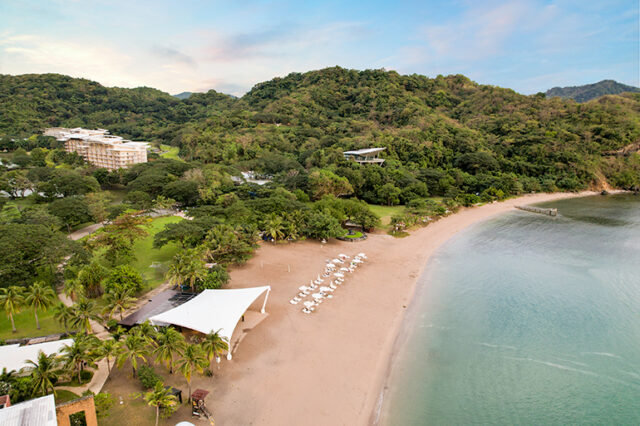
Nestled within the Hamilo Coast in Nasugbu, Batangas, Pico de Loro Cove, the premier beach resort destination, is a haven for eco-conscious travelers. Known for its stunning landscapes and commitment to sustainability, this destination also offers the perfect blend of nature, adventure and relaxation.

Here’s why Pico de Loro should be on your eco-travel bucket list:

1. A Sanctuary for Marine Biodiversity

Pico de Loro Cove is one of the 13 coves in Hamilo Coast, where 30% of the coastline is designated as a marine-protected area. These sanctuaries safeguard coral reefs and marine life, making the cove an ideal spot for snorkeling and diving. Tropical fish such as Moorish idol, clown fish, among others, can be seen underwater. And when in season, even green and hawkbill sea turtles lay eggs on the beach.

In partnership with the local government and World Wide Fund for Nature (WWF), Pico de Loro Cove actively monitors and preserves its marine protected areas, reinforcing its commitment to safeguarding marine ecosystems for generations to come.

2. Sustainable Practices at Its Core

Sustainability is embedded in Pico de Loro Cove’s operations. Eco-friendly initiatives include rainwater harvesting that is utilized in the Pico lagoon and landscape irrigation; solid waste management to properly dispose different kinds of trash to preserve the nature; and renewable energy integration to save usage of electricity in the area.

Adding to these green efforts is the resort’s sea turtle hatching and release program, which protects endangered marine species and raises awareness among guests about ocean conservation.

Over 60% of the land is also allocated for green spaces and open areas, fostering a harmonious balance between luxury and environmental responsibility.

3. Nature Trails for the Adventurous Soul

Adventure seekers will love the scenic nature trails that wind through Pico de Loro Cove’s lush landscapes. These trails invite visitors to hike up Mount Pico while enjoying panoramic views and encounters with the region’s rich flora and fauna.

As part of its biodiversity conservation efforts, Pico de Loro Cove also runs programs dedicated to protecting local wildlife. The area is home to a variety of bird species — including tarictic hornbills, brahminy kites, woodpeckers, kingfishers, and orioles — making it a vibrant birdwatching destination for nature lovers.

4. Community Engagement and Livelihood Support

Pico de Loro Cove’s commitment extends beyond preserving nature — it also uplifts local communities by hiring 80% of all the workers from Batangas. By prioritizing local employment and supporting small businesses, the development ensures that tourism benefits the communities creating sustainable livelihood opportunities.

5. Eco-Friendly Leisure and Luxury

Guests can enjoy premium amenities while embracing sustainability. The Pico de Loro Beach and Country Club offers swimming, dining and recreational activities designed with eco-conscious principles. The architecture maximizes natural light and ventilation, reducing energy consumption while enhancing the guest experience when they play pickleball and tennis. Pico de Loro Cove’s varied residential properties such as Freia, Sola and Pico Terraces foster eco-friendly designs and practices, and yet offers seclusion, security and serenity.

Whether seeking an adventure-filled getaway or a tranquil retreat, Pico de Loro Cove offers an eco-friendly escape where sustainability and comfort coexist. It’s the perfect destination for eco-travelers who want to leave a positive impact while enjoying a slice of paradise.


Spotlight is BusinessWorld’s sponsored section that allows advertisers to amplify their brand and connect with BusinessWorld’s audience by publishing their stories on the BusinessWorld Web site. For more information, send an email to online@bworldonline.com.

Join us on Viber at https://bit.ly/3hv6bLA to get more updates and subscribe to BusinessWorld’s titles and get exclusive content through www.bworld-x.com.

Philippines plans to negotiate with US to lower tariffs, envoy to Washington says

MANILA – The Philippines is planning to negotiate with Washington to lower tariffs after the United States moved to impose higher 20% duties on goods imported from Manila, its ambassador to the United States said on Thursday.

“We are still planning to negotiate that down,” Jose Manuel Romualdez said in a phone message.

US President Donald Trump on Wednesday issued August 1 tariff notices to several trading partners including the Philippines, which he slapped with a 20% duty, higher than the previously announced 17%.

Asked what rate the Philippines is looking at, he said: “Will see.”

US goods trade with the Philippines reached an estimated $23.5 billion in 2024, according to data from the Office of the United States Trade Representative.

US exports to the Philippines stood at $9.3 billion, a 0.4% increase from 2023, while imports from the Philippines totalled $14.2 billion, up 6.9% year-over-year.

The resulting US goods trade deficit with the Philippines widened to $4.9 billion in 2024, marking a 21.8% increase from the previous year.

There was no immediate comment from the office of the Philippine president. — Reuters

Trump raises tariff rate on Philippines to 20%

US President Donald J. Trump announced he will impose a 10% baseline tariff on all imports to the United States. — REUTERS

WASHINGTON/BRUSSELS – US President Donald Trump issued final tariff notices to seven minor trading partners on Wednesday as his administration inched closer to a deal with its biggest trading partner, the European Union.

Trump said in posts on his Truth Social media platform that starting August 1 he would impose a 20% tariff on goods from the Philippines, 30% on goods from Sri Lanka, Algeria, Iraq, and Libya, and 25% on Brunei and Moldova.

No letter was issued to the EU, but Trump had said late on Tuesday that he would issue “a minimum of seven” tariff notices on Wednesday morning and more in the afternoon.

The latest letters add to 14 others issued earlier in the week including 25% tariffs for powerhouse US suppliers South Korea and Japan, which are also to take effect August 1 barring any trade deals reached before then.

They were issued a day after Trump said he was broadening his trade war by imposing a 50% tariff on imported copper and would soon introduce long-threatened levies on semiconductors and pharmaceuticals. Trump’s rapid-fire tariff moves have cast a shadow over the global economic outlook, paralyzing business decision-making.

NEGOTIATIONS WITH THE EU

Trump said trade talks have been going well with China and the European Union, which is the biggest bilateral trading partner of the US.

Trump said he would “probably” tell the EU within two days what rate it could expect for its exports to the US, adding that the 27-nation bloc had become much more cooperative.

“They treated us very badly until recently, and now they’re treating us very nicely. It’s like a different world, actually,” he said.

EU trade chief Maros Sefcovic said good progress had been made on a framework trade agreement and a deal may even be possible within days.

Sefcovic told EU lawmakers he hoped that EU negotiators could finalise their work soon, with additional time now from the extension of a US deadline to August 1 from July 9.

“I hope to reach a satisfactory conclusion, potentially even in the coming days,” Sefcovic said.

However, Italian Economy Minister Giancarlo Giorgetti had earlier warned that talks between the two sides were “very complicated” and could continue right up to the deadline.

HIGHEST TARIFF LEVELS SINCE 1934

Equity markets shrugged off the Republican president’s latest tariff salvo on Wednesday, while the yen remained on the back foot after the levies imposed on Japan.

Following Trump’s announcement of higher tariffs for imports from the 14 countries, US research group Yale Budget Lab estimated consumers face an effective US tariff rate of 17.6%, up from 15.8% previously and the highest in nine decades.

Trump’s administration has been touting those tariffs as a significant revenue source. Treasury Secretary Scott Bessent said Washington has taken in about $100 billion so far and could collect $300 billion by the end of the year. The United States has taken in about $80 billion annually in tariff revenue in recent years.

The Trump administration promised “90 deals in 90 days” after he unveiled an array of country-specific duties in early April. So far, only two agreements have been reached, with Britain and Vietnam. Trump has said a deal with India was close.

Massachusetts Governor Maura Healey, a Democrat, blasted Trump for his “failed trade war”.

“President Trump was elected to lower costs, and all he is doing is raising prices and hurting our businesses,” she said in a statement. — Reuters

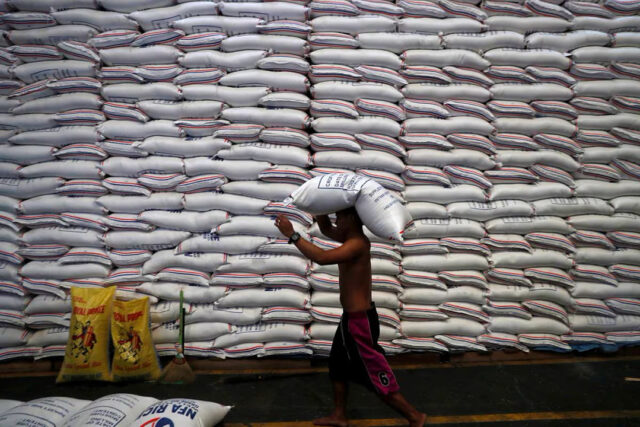
Rice tariff stays at 15% till November

REUTERS

THE 15% TARIFF on imported rice will remain unchanged at least until November, according to the Department of Economy, Planning, and Development (DEPDev), as the government seeks a “win-win” solution that balances inflation control with protecting local farmers.

“Not in the immediate [term], but most likely by November,” DEPDev Undersecretary for Policy and Planning Rosemarie G. Edillon told a news briefing on Wednesday. “After four months, we will submit the study to the President.”

The lower tariff was introduced through Executive Order (EO) No. 62, which took effect in July 2024 and slashed the import duty on rice to 15% from 35% until 2028. The EO mandates a review every four months to assess its impact.

The announcement comes amid a petition from farmer groups, including the Samahang Industriya ng Agrikultura, to go back to the original 35% duty to shield local producers from the influx of cheaper rice imports.

The Department of Agriculture, meanwhile, said it would recommend a gradual tariff increase during the next harvest season.

Ms. Edillon said they met to discuss the review and petition, and they agreed that the periodic review is meant to report on what has happened, not to make recommendations at this stage.

The lowered tariff appears to be achieving its inflation-control goals. Rice prices dropped by 14.3% in June, improving from the 12.8% decline in May, according to the local statistics agency. It was the sharpest drop since 1995.

Rice supply also appears to be stable. As of June, the country’s rice inventory reached 2.24 million metric tons (MT), 3.5% more than a year earlier. “Most of them are still in the warehouses. And we had the bumper harvest, actually, for the first half,” Ms. Edillon said.

She added that the rice import volume would be capped at 3.5 million MT for the year.

The government is also exploring more measures to support farmers, including enhanced access to the Rice Competitiveness Enhancement Fund, which provides planting assistance.

The DEPDev is also participating in discussions on whether to restore the regulatory powers of the National Food Authority (NFA), which was stripped of many functions following the Rice Tariffication Law.

Speaker Ferdinand Martin G. Romualdez said the House of Representatives is ready to act on a draft bill that seeks to reinstate the NFA’s market functions once it reaches the chamber.

The Agriculture department has said the draft legislation includes provisions for the NFA to manage buffer stocks, regulate rice marketing and set floor prices for rough rice.

“I think at that time, the context was different. So NFA was so much in debt. It was really bleeding, hemorrhaging,” Ms. Edillon said, referring to the agency’s former monopoly on imports. “It was not really fulfilling its mandate… What we need to consider now is how the market has adjusted to the new regime.”

She also acknowledged the challenges in setting floor prices. “It will be very tricky though, operationalizing it and even estimating it. But yes, that’s something that we’re studying as well.” — Aubrey Rose A. Inosante

Income-price gap keeps Filipino families from owning homes — ULI

PHILSTAR FILE PHOTO

By Beatriz Marie D. Cruz, Reporter

HOME OWNERSHIP in the Philippines remains out of reach for many households due to the wide gap between residential property prices and income, particularly in urban areas like Metro Manila and Davao, according to the Urban Land Institute (ULI).

In the 2025 ULI Asia-Pacific Home Attainability Index, the Philippine capital was identified as one of the most expensive livable cities in the Asia-Pacific region.

How affordable are Metro Manila’s home prices compared with its peers in the region?Condominium prices in Metro Manila are now 19.8 times the median annual household income, far exceeding affordable levels, the Washington, DC nonprofit research and education group said. Townhouses are even more unattainable at 33.4 times the average income.

“Home attainability is still a problem in Metro Manila, to the extent that many families, even those working in one of the capital’s business districts, choose to buy a landed home on the outskirts of the city and commute,” ULI said in the report.

To be considered attainable, median home prices should not exceed five times a household’s annual income, while median monthly rents should take up no more than 30% of their monthly income. Metro Manila and Davao, however, both far exceed these thresholds.

ULI said the average rent for a Metro Manila apartment consumes about 141% of a household’s monthly income. In Davao, rents take up 94% of earnings, still significantly above the affordability benchmark.

While Davao fares better than Metro Manila, home prices are still about 14 times the median income, which ULI described as “scarcely more attainable.”

Data from the Bangko Sentral ng Pilipinas showed that in the first quarter, condominium prices rose 10.6% year on year, while house prices climbed 4.5%.

Amid rising property prices, ULI noted that the development of major railway infrastructure projects has made living outside the capital more attractive to working families, even as commuting remains a challenge.

Ironically, despite high prices, Metro Manila is also grappling with a supply glut of condominiums due to a wave of new projects launched from 2019 to 2023.

Many of these unsold units are in areas outside business districts that were affected by the government’s crackdown on Philippine offshore gaming operators.

“The oversupply is mainly noticeable in the lower-mid segment, where units typically cost between P3 million and P7 million,” ULI said, citing data from real estate consultancy KMC Savills, Inc.

For a studio or one-bedroom condo in this price range, monthly mortgage payments may run from P20,000 to P40,000 ($354 to $708) — a significant burden for Filipino families earning P50,000 to P60,000 monthly.

At the same price, a three- to four-bedroom house outside Metro Manila could be bought, according to the report. “The problem is that many of these condominiums were targeted at middle-class families who prefer a more distant home to a city condo,” it pointed out.

While developers have introduced more flexible payment terms to drive sales, high land acquisition and construction costs have limited their ability to offer significant price cuts.

“Some observers believe this will lead more to explore alternatives such as co-living or multifamily rental use for unsold projects,” ULI said.

To improve affordability, the group urged property developers to cut construction costs and use less expensive land.

“Developers could look at using modular construction to reduce development costs and focus on simple, repeatable designs to ensure faster delivery and therefore lower costs,” Mark Cooper, senior director for thought leadership at ULI Asia-Pacific, said in an e-mailed reply to questions.

“They should consider partnering with local governments to access land more cheaply in return for developing public or affordable housing,” he added.

Across the Asia-Pacific region, ULI said home attainability remains a widespread issue. Only seven of 51 market segments studied offered homes priced within five times the median income. In contrast, rental homes were generally more affordable, with 41 of 51 markets offering rents below 30% of monthly income.

ULI noted that key factors influencing home demand include population growth, aging demographics, household formation, urbanization, immigration, income growth, financing availability and transaction costs.