Home Blog Page 131

Japanese governor set to approve restart of world’s biggest nuclear plant

STOCK PHOTO | Image by Vwalakte from Freepik

TOKYO — The Japanese governor overseeing the region that is home to the world’s largest nuclear power plant is set to give the approval this week for its restart, the Kyodo news agency reported on Wednesday.

The approval will clear one of the remaining milestones in Tokyo Electric Power Co’s (TEPCO) quest to bring the Kashiwazaki-Kariwa plant back online, more than a decade after the Fukushima nuclear disaster led to its shutdown.

Niigata Prefecture Governor Hideyo Hanazumi is set to announce his approval to partially resume Kashiwazaki-Kariwa as early as Friday, Kyodo said, citing multiple unnamed sources in the prefecture government.

TEPCO is planning to bring online the two biggest units of the plant, No. 6 and No. 7, which can together produce 2,710 megawatts (MW) of electricity, and possibly decommission some of the remaining five units. Kashiwazaki-Kariwa’s total capacity is 8,212 MW.

In October, TEPCO finished checks at reactor No. 6 after fuel loading, saying at the time it had confirmed that the main systems required for reactor startup were operating properly.

The company has also pledged ¥100 billion ($644 million) to support local communities to gain support for the restart, which TEPCO has sought for many years despite some local opposition.

If approved, the restart would be in line with new Prime Minister Sanae Takaichi’s plans to support more nuclear restarts to strengthen energy security.

Partial restoration of the Kashiwazaki-Kariwa plant would also help to cut liquefied natural gas (LNG) import costs for Japan, the world’s second-biggest LNG buyer after China, as Ms. Takaichi’s government is prioritizing bringing down the cost of living.

As of the end of October, Japan has restarted 11 reactors with a total capacity of 10,647 MW. Prior to the Fukushima disaster, Japan’s utilities operated 54 reactors in total. TEPCO continues to pay out large amounts of compensation following the reactor meltdown in 2011. ($1 = 155.2700 yen). — Reuters

Ultra-processed foods are danger to global public health — experts

FREEPIK

LONDON — Ultra-processed foods (UPFs) are a major public health threat that must be urgently addressed, according to a new series of papers authored by 43 global experts in the Lancet medical journal.

The scientists, including the Brazilian professor who coined the term with colleagues around 15 years ago, argue that UPFs are now increasingly common worldwide and linked to a decline in diet quality and a number of diseases, from obesity to cancer.

“It’s about the evidence we have today about… Ultra-processed foods and human health,” Carlos Monteiro, professor at the University of São Paulo, said at an online briefing on Tuesday. “What we know right now justifies global public action.”

PROCESSING AND POLITICS
UPFs are a class of food or drink made using processing techniques, additives and industrial ingredients, and mostly containing little whole foods. Examples include carbonated soft drinks or instant noodles.

While the term UPF has been used widely in recent years, some scientists, and the food industry, argue it is too simple, and the fight has become increasingly politicized.

The authors acknowledge criticisms in the Lancet series, saying more evidence is needed, particularly on why and how UPFs cause ill health, as well as on products with different nutritional values within the UPF class. But they say the signal is already strong enough for governments to take action.

In a systematic review of 104 long-term studies done for the series, 92 reported greater associated risks with one or more chronic diseases linked to UPF dietary patterns, and significant associations for 12 health conditions including Type 2 diabetes, obesity and depression. 

Most of these studies were only designed to show links, rather than direct causality, which the authors acknowledged. But they said the situation needed to be addressed while more data was gathered, not least because consumption of UPFs is rising worldwide as a share of the diet, to above 50% in countries like the United States.

The three papers in the series, funded by Bloomberg Philanthropies, also outline ways to tackle the problem, such as adding UPFs into national policies on foods that are high in fat, sugar or salt. But they cautioned that the UPF industry is the biggest barrier to tackling the issue.

The International Food and Beverage Alliance, an organization representing major multinational food and beverage companies, said its members also wanted to improve global health outcomes through diet quality, and food companies should be part of policymaking.

“The policy and advocacy recommendations of this series go far beyond the available evidence,” said Secretary-General Rocco Renaldi, arguing there was a risk of reducing the availability of affordable, shelf-stable options globally. — Reuters

Nano ProTech: Revolutionizing protection technology with innovative eyewear solutions — embraced by media and bloggers

From navigating vast oceans to steering a groundbreaking company, Capt. Roy Rivera has always been guided by vision and purpose. Once a Ship Captain, Capt. Rivera is now at the helm of Nano ProTech, a company redefining how science and technology can protect and enhance everyday living. Alongside two of his most trusted officers — Arjean Reyes, COO and VP for Administration and Finance; and Jit Enano, EVP for Business Development & Marketing Capt. Rivera leads a dynamic team determined to bring innovation closer to every Filipino home and community, empowering lives through nature-inspired innovation, advanced technology, and science-driven solutions.

This shared leadership was on full display during the special media event themed “See the World in Style, Shielded by Science” held at Nano ProTech’s headquarters in Mandaluyong City. The event unveiled the company’s latest innovation, the Nano ProTech Eyewear Line, and gave a glimpse of its first anniversary celebration this December, aptly titled “Breakthrough 1.0: The Nano ProTech Anniversary.”

Designed for today’s fast-paced and visually demanding world, the Nano ProTech Eyewear Line showcases how science and style can seamlessly come together. Each pair fuses advanced nanotechnology and natural components embedded in the frame — including Germanium Stones, Negative Ions, Far Infrared (FIR), Silver Ions, and Multi-Minerals. Working in synergy, these elements create a subtle natural interaction that promotes balance, comfort, and a relaxing wearing experience.

“We believe innovation should empower everyday living,” said Capt. Rivera, CEO and president for Sales and Product Management. “Our mission has always been to make advanced science accessible and meaningful — integrating protective technology into the products people use every day.”

Much like a well-coordinated crew, Capt. Rivera, Ms. Reyes and Mr. Enano each play vital roles in navigating Nano ProTech toward growth and excellence. Ms. Reyes oversees the company’s operations, ensuring its systems run efficiently and sustainably, while Mr. Enano drives business expansion and nurtures strategic partnerships. Together, they steer Nano ProTech toward a future where protection is not only smart but also stylish, practical, and people-centered.

The eyewear line is just one of the many innovations in Nano ProTech’s expanding portfolio. Since its founding, the company has been pioneering products that embody its philosophy of smart protection through science. Beyond eyewear, its proprietary Nano ProTech technology powers an ecosystem of solutions designed to protect, preserve, and perform. Each product reflects the brand’s dedication to research, innovation, and its goal of enhancing modern living through technology.

As Nano ProTech celebrates Breakthrough 1.0, the company marks a year of milestones, partnerships, and achievements that have established it as a trusted name in nano-protection. The celebration kicked off with “Beats of Hope: Music for a Cause” held last Nov.7, 2025, at their Mandaluyong headquarters. The company turned passion into compassion by directing proceeds from the concert to fund its corporate social responsibility initiatives.

“With Breakthrough 1.0, we want to highlight not just how far we’ve come, but how much further innovation can take us,” said Mr. Enano. “This is just the beginning of our journey to make protection smarter, sleeker, and more sustainable.”

Guided by Capt. Rivera’s steady leadership, Ms. Reyes’ strategic management, and Mr. Enano’s forward-thinking vision, Nano ProTech continues to chart new territories in protection technology — proving that with science, style, and synergy, every breakthrough brings us closer to a safer, smarter world.


Spotlight is BusinessWorld’s sponsored section that allows advertisers to amplify their brand and connect with BusinessWorld’s audience by publishing their stories on the BusinessWorld Web site. For more information, send an email to online@bworldonline.com.

Join us on Viber at https://bit.ly/3hv6bLA to get more updates and subscribe to BusinessWorld’s titles and get exclusive content through www.bworld-x.com.

WHO to shed over 2,000 jobs by mid-2026, document shows

THE World Health Organization (WHO) logo is seen on the exterior of entry door at WHO Headquarters in Geneva, Switzerland, on July 19, 2023. — WHO/PIERRE ALBOUY

GENEVA — The World Health Organization said its workforce would shrink by nearly a quarter – or over 2,000 jobs – by the middle of next year as it seeks to implement reforms after its top donor, the United States, announced its departure.

US President Donald Trump’s administration withdrew from the body upon taking office in January, prompting the agency to scale back its work and cut its management team by half.

Washington is by far the UN health agency’s biggest financial backer, contributing around 18% of its overall funding.

The Geneva-based WHO projects that its workforce will shrink by 2,371 posts by June 2026 from 9,401 in January 2025 due to job cuts as well as retirements and departures, according to a presentation set to be shown to its member states on Wednesday.

It does not include all the temporary staff and consultants which UN sources say have been made redundant.

A WHO spokesperson confirmed the total number of staff leaving the organization and said the workforce would shrink by up to 22%, depending on how many vacant posts are filled.

While the global health agency said in August that hundreds of staff had departed, this is the first time it has given the full scale of the expected change to its global staff.

“This year has been one of the most difficult in WHO’s history, as we have navigated a painful but necessary process of prioritization and realignment that has resulted in a significant reduction in our global workforce,” said Director-General Tedros Adhanom Ghebreyesus in a message to staff on Tuesday seen by Reuters, adding that the process was now nearing an end.

“We are now preparing to move forward with our reshaped and renewed Organization,” he added.

The slides also showed that the Geneva-based body has a $1.06 billion hole in its 2026-2027 budget, or nearly a quarter of the total required, down from an estimated gap of $1.7 billion in May.

That excludes some $1.1 billion of expected funding that includes deals at various stages of negotiation, the slides showed, without giving details.

The WHO spokesperson said that the portion of the two-year budget currently unfunded was lower than in previous years, attributing that to a smaller budget; the launch of a fund-raising round; and an increase in member states’ mandatory fees. — Reuters

Ayala Group lands historic WELL building certifications for workplace well-being

L-R: Ayala Land Offices Business Development Head Gail Y. Samaniego, Ayala Land Offices Vice President and Head Carol T. Mills, International WELL Building Institute Senior Vice President and Head of Asia Pacific Jack Noonan, Ayala Corporation People Experience Head Sherry M. Gosiengfiao, and Ayala Corporation Employee Support Services Manager Christopher Edward S. Sandoval

The Ayala Group has been conferred prestigious workplace certifications by the International WELL Building Institute (IWBI), affirming its commitment to health, well-being, productivity, and sustainability in its developments.

Ayala Corporation received a WELL v2 Platinum Certification for its headquarters at the Ayala Triangle (ATG) Tower Two in Makati City, the highest certification level under IWBI’s WELL v2, the latest version of the WELL Building Standard. It is the first head office in the Philippines and one of the few in Southeast Asia to receive such honor.

Ayala Land, meanwhile, was given a WELL Gold Certification for ATG Tower Two, its newest premier office development that hosts offices of top Philippine companies including Ayala Corporation, local offices of international firms, and embassies. The achievement is Ayala Land’s first WELL Gold for an office development.  

In ceremonies on Nov. 12 at the Ayala Corporation headquarters, IWBI Senior Vice President and Head of Asia Pacific Jack Noonan conferred the historic WELL certifications for Ayala Corporation and Ayala Land with senior leaders in attendance, including Ayala Corporation Chairman Jaime Zobel de Ayala, President and CEO Cezar P. Consing, Corporate Resources Group Head and Chief Human Resources Officer Francisco Romero Milán, and People Experience Head Sherry M. Gosiengfiao, with Ayala Land Offices Vice President and Head Carol T. Mills and Business Development Head Gail Y. Samaniego.

“These certifications reflect the importance we place on creating workspaces that promote well-being and sustainability.  Superior workspaces foster productivity, creativity, teamwork and a sense of purpose,” said Consing.

“The WELL certification strengthens our commitment to building not just world-class developments, but places that uplift people and communities. Ayala Triangle Gardens Tower Two exemplifies our goal of integrating wellness into every aspect of the built environment,” added Mills.

WELL is the leading global rating system for buildings and organizations committed to advancing human health and well-being through evidence-based design and operational practices. Offices and developments conferred with WELL certifications are evaluated across IWBI’s core concepts of building performance, including air, water, nourishment, light, fitness, comfort, and mind.

“We’re delighted to celebrate the Ayala Group for its inspiring leadership in championing health and well-being in the workplace,” said Noonan.

“Achieving WELL Certification at the Platinum level for its own headquarters at ATG Tower Two, and at the Gold level for its building that supports other organizations, reflects Ayala’s deep belief that people’s health is at the heart of business success. By creating spaces where employees and partners can truly thrive, Ayala is not only shaping a healthier workplace for its own community but also setting a powerful example for organizations across the Philippines and the Asia Pacific region,” he said.

The WELL certifications affirm the Ayala Group’s leadership in people-centered design, shaping healthier, more resilient, and future-ready developments. 

To learn more, visit ayala.com.


Spotlight is BusinessWorld’s sponsored section that allows advertisers to amplify their brand and connect with BusinessWorld’s audience by publishing their stories on the BusinessWorld Web site. For more information, send an email to online@bworldonline.com.

Join us on Viber at https://bit.ly/3hv6bLA to get more updates and subscribe to BusinessWorld’s titles and get exclusive content through www.bworld-x.com.

Pag-IBIG Fund offers payment moratorium, housing loan insurance following recent calamities

Pag-IBIG Fund is offering a one-month payment moratorium and reminding borrowers of their Housing Loan insurance coverage to help members recover from the devastation caused by recent typhoons and earthquakes, officials announced on Nov. 18.

Department of Human Settlements and Urban Development Secretary and Pag-IBIG Fund Board Chairman Jose Ramon P. Aliling said the measures reflect Pag-IBIG Fund’s continuing commitment to provide responsive support to Filipino workers affected by disasters, in line with President Ferdinand R. Marcos, Jr.’s directive to accelerate recovery efforts in calamity-hit areas.

“Guided by President Marcos’s directive for a whole-of-government response to help those affected by calamities, we are offering Housing Loan borrowers a payment moratorium and insurance coverage for damaged homes under our Housing Loan program, as well as providing all our members with affordable loan options to help them recover and rebuild,” Mr. Aliling said.

Pag-IBIG Fund Chief Executive Officer Marilene C. Acosta said that the agency’s home loans include built-in insurance that provides protection and helps cover repair costs. She added that they are offering a one-month payment moratorium for Housing Loan borrowers in areas declared under a state of calamity due to typhoons Nando, Opong, Ramil, Tino and Uwan, as well as recent earthquakes in Cebu and Davao.

“We understand that our members need immediate help when disasters strike, and we at Pag-IBIG Fund are always ready to respond,” Ms. Acosta said. “Housing Loan borrowers whose homes were damaged can take comfort in knowing that their homes are insured, and we are reaching out to help them avail of their benefits as soon as possible. We are likewise offering a one-month payment moratorium so they may prioritize the safety and recovery of their families. They may conveniently apply online through Virtual Pag-IBIG.”

In addition to the insurance and moratorium, Pag-IBIG Fund is also offering Calamity Loans and Home Improvement Loans at affordable rates.

Under the Pag-IBIG Calamity Loan Program, eligible members residing in areas declared under a state of calamity may borrow up to 90% of their total Pag-IBIG Regular Savings at a low interest rate of 5.95% per annum, the lowest among comparable programs. The loan is payable for up to three years, with an automatic three-month grace period before the first payment.

Through the Pag-IBIG Home Improvement Loan, qualified members can borrow up to P300,000 for repairs or home upgrades. The loan is payable within five years and is currently offered at a promotional rate of 3% per annum for the first 10,000 borrowers.

“We know that rebuilding after a disaster takes time and resources,” Ms. Acosta said. “That is why we are providing multiple ways to help through our payment moratorium for financial relief, our Calamity Loan for immediate needs, the Housing Loan insurance for protection, and our Home Improvement Loan to help members restore their homes to safety and comfort. Pag-IBIG Fund is here to make recovery easier, faster and more affordable for our members.”


Spotlight is BusinessWorld’s sponsored section that allows advertisers to amplify their brand and connect with BusinessWorld’s audience by publishing their stories on the BusinessWorld Web site. For more information, send an email to online@bworldonline.com.

Join us on Viber at https://bit.ly/3hv6bLA to get more updates and subscribe to BusinessWorld’s titles and get exclusive content through www.bworld-x.com.

Lost billions from flood control scandal could have funded health, education, says advocate

AER representatives Filomeno Sta. Ana III (left) with Sofia Beatriz “Pia” Rodrigo (right). — EDG A. EVA

The billions of pesos that may have been lost to alleged graft-ridden flood control projects could have funded social services, including the health and education sectors, helping to address the country’s glaring inequality between the rich and the poor, according to Action for Economic Reforms (AER). 

“The billions of pesos could have saved so many lives if they had gone to our public hospitals and to our PhilHealth (Philippine Health Insurance) benefits,” Sofia Beatriz “Pia” Rodrigo, advocacy and communications lead of AER, told BusinessWorld at the sidelines of its report launch in partnership with Oxfam Pilipinas on Tuesday. 

“It could have saved so many young children from dying of malnutrition and funded their education,” she added. 

The report titled “Inequality at a Breaking Point: A Call to Embed Equality in the Philippines’ Economic Agenda” found that the Philippines ranked 15th out of 63 countries in income inequality, based on the World Bank’s 2021 report. 

It also noted that the country remained one of the most unequal in the Southeast Asian region. 

The report also cited findings of the Philippine Statistics Authority (PSA), which showed that the richest 10% of the population earned more than double, or 115% more, than the poorest 40% in 2023. 

“So for every peso earned by the poorest Filipinos, the richest earn around 150 pesos,” Mai Lagman, policy advocacy and communications manager of Oxfam Pilipinas, said during the event. 

Among the key drivers of the country’s prevailing inequality are the lack of quality jobs—meaning permanent, skills-based jobs—as well as limited access to education and healthcare, Ms. Rodrigo said. 

She pointed out that in terms of health, Filipinos’ out-of-pocket (OOP) expenses remain the third highest in the Southeast Asian (SEA) region at 45.5% as of 2021. 

Filipino students are also lagging behind, with 76% to 84% scoring below the minimum proficiency level in science, reading, and math, Ms. Rodrigo said, citing the Programme for International Student Assessment (PISA) 2022 report. 

To close the inequality, Filomeno Sta. Ana III, executive director of AER said that the pursuit of economic growth is not enough. 

“While high growth has contributed to poverty reduction in East Asia, the Philippine experience highlights that growth alone is insufficient without equitable access to opportunities and strong redistributive policies,” Mr. Sta. Ana said. 

The Action for Economic Reforms (AER) is also pushing for higher sin taxes on alcoholic beverages, cigarettes, and vapes to help generate additional funding for the health sector. 

The group said the government may likewise explore the imposition of wealth taxes on the country’s top richest. 

Ms. Rodrigo added that the Philippines must venture into new industries that harness emerging technologies such as artificial intelligence (AI), instead of relying solely on manufacturing. 

Also, Oxfam and AER called for the full accountability of those involved in the alleged flood control project anomalies, saying the scheme has robbed the nation of public funds and opportunities. — Edg Adrian A. Eva

GCash unlocks Google Pay for millions of Filipinos

Ren-Ren Reyes, President and CEO of GCash mobile wallet operator G-Xchange, Inc., joins other industry players led by the FintechAlliance.Ph and Visa, along with officials from the Bangko Sentral ng Pilipinas (BSP) and Department of Information and Communications Technology (DICT), at the launch of Google Pay in the Philippines.

No card, no problem! Here’s how GCash users can link their accounts to Google Pay.

Following the official launch of Google Pay in the Philippines, GCash, the country’s biggest cashless ecosystem, can now be fully integrated with Google’s secure and widely accepted payment system.

The integration is now available to select GCash users and will be rolling out to more customers soon. It will enable millions of Filipinos to link their GCash wallets to Google Pay for fast, secure, and seamless transactions.

To link GCash accounts to Google Pay, users need to download the Google Wallet App from the Google Play Store, open the GCash app, and tap on their Profile. From there, they should go to My Linked Accounts and select Google Pay. After reviewing the information, users must agree to bind and proceed with biometric verification. Once complete, a prompt will appear that will redirect them to the Google Pay app, where they need to sign in.

By combining the unmatched local scale and trust of GCash with Google Pay’s global infrastructure, the integration redefines how users move through digital and physical commerce. With the integration, users can easily activate GCash as a fund source for Google Pay for various transactions.

Moreover, activating GCash on Google Pay provides a more seamless and secure experience, since it eliminates the need for manual card entry, without storing or sharing card numbers with merchants.

“This integration empowers our users to move through digital and physical spaces with greater ease, security, and reach, anchored in our purpose of making the everyday lives of Filipinos better,” said Ren-Ren Reyes, President and CEO of G-Xchange, Inc., the mobile wallet operator of GCash.

“We’re proud to work with GCash to bring faster, convenient, and more secure payments to the Philippines. This launch underscores our enduring commitment to accelerating financial inclusion and fueling the next chapter of the Philippines’ dynamic digital economy,” said Prep Palacios, Country Manager, Google Philippines.

As digital ecosystems evolve, GCash leads with accessibility, security, and relevance. The integration with Google Pay is more than a feature; it shows how GCash is shaping the future of payments, making them fast, secure, and widely accepted. With GCash Tap to Pay or linking your GCash account to Google Pay, Filipinos can make seamless, secure payments anytime, anywhere.

For more information, please visit www.gcash.com.


Spotlight is BusinessWorld’s sponsored section that allows advertisers to amplify their brand and connect with BusinessWorld’s audience by publishing their stories on the BusinessWorld Web site. For more information, send an email to online@bworldonline.com.

Join us on Viber at https://bit.ly/3hv6bLA to get more updates and subscribe to BusinessWorld’s titles and get exclusive content through www.bworld-x.com.

BIR to review audit authorization rules amid ‘weaponization’ claims

BW FILE PHOTO

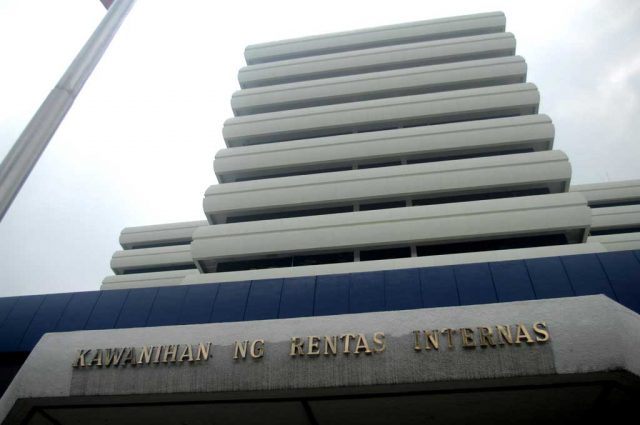
The Bureau of Internal Revenue (BIR) is reviewing rules on documents that authorize tax audits after reports that some officials have been using them to pressure businesses, according to a lawmaker.

These documents — known as letters of authority (LoA) — allow revenue officers to open an investigation into a taxpayer’s liabilities and are required before any audit can proceed.

Senator Sherwin T. Gatchalian told the Senate plenary on Monday that newly appointed BIR Commissioner Charlito Martin R. Mendoza intends to examine both the basis for issuing the audit authorizations and the broader policy behind them.

“The new commissioner mentioned to me that he will also review the policy of issuance of LoAs,” he said. “Because all of these documents are supposed to be submitted by the taxpayer, the LoA should have a basis.”

Business groups have long complained that inconsistent audit practices create uncertainty and expose firms to potential abuse. The BIR has yet to release details of the review or say whether it plans to issue revised guidelines.

A BIR communications staffer said in a Viber message that the agency has yet to receive a formal directive from Mr. Mendoza regarding a review of the policy on the issuance of LoAs and their basis.

Senator Joseph Victor “JV” G. Ejercito told the Senate plenary the excessive use of LoAs have raised concerns with foreign investors.

Mr. Ejercito cited complaints about excessive LoAs from ambassadors and members of both the American Chamber of Commerce and European Chamber of Commerce.

“Such practice, if not carefully regulated, may create an atmosphere of uncertainty among businesses and discourage foreign investors who may perceive it as a sign of unpredictability or overreach in tax administration,” he said. — AMCS

Japan counts cost of China’s travel boycott as tensions flare

PEOPLE walk on Shibuya crossing in Tokyo, Japan on April 23, 2021, in this photo taken by Kyodo. — KYODO/VIA REUTERS

TOKYO — Within days of China urging its citizens not to travel to Japan due to a diplomatic dispute, Tokyo-based tour operator East Japan International Travel Service had lost 80% of its bookings for the remainder of the year.

The small firm, which specializes in group tours largely for Chinese clients, is at the sharp end of a backlash that threatens to deal a sizeable blow to Japan’s economy, the world’s fourth largest.

The travel warning – triggered by Japanese Prime Minister Sanae Takaichi’s remarks about Taiwan, the democratically governed island claimed by China – has seen a wave of flight cancellations and battered tourism-related stocks in Japan.

“This is a huge loss for us,” said Yu Jinxin, vice president of East Japan International Travel Service.

Tourism accounts for around 7% of Japan’s overall gross domestic product, according to the World Travel & Tourism Council, and has been a major driver of growth in recent years. Visitors from mainland China and Hong Kong account for around a fifth of all arrivals, official figures show.

The boycott could result in a loss of around 2.2 trillion yen ($14.23 billion) annually, Nomura Research Institute estimates. Tourism-related stocks in Japan have sunk since the warning was issued on Friday.

Already more than 10 Chinese airlines have offered refunds on Japan-bound routes until December 31, with one airline analyst estimating around 500,000 tickets have already been cancelled.

NO SIGNS OF IMMINENT BREAKTHROUGH
Ms. Takaichi sparked the most serious diplomatic dispute in years between Asia’s top two economies when she told Japanese lawmakers this month that a Chinese attack on Taiwan threatening Japan’s survival could trigger a military response.

A wave of vitriolic responses by a Chinese diplomat in Japan and Chinese state media aimed at Ms. Takaichi prompted Japan to warn its citizens in China on Monday to step up safety precautions and avoid crowded places.

Beijing has demanded Ms. Takaichi retract her remarks, though Tokyo has said they are in line with the government’s position, suggesting no breakthrough is imminent.

China has also suspended the screenings of upcoming Japanese films, and Japanese celebrities popular there have tried to pre-empt any potential backlash.

“China is like my second homeland to me and all my friends in China are my cherished family—I will always support One China,” Japanese singer MARiA wrote on Weibo on Tuesday.

Tour operator Ms. Yu says her company has been able to weather past flare-ups between the neighbors, such as Tokyo’s decision to nationalize disputed islands in 2012 that triggered mass anti-Japan protests across China.

But a protracted crisis this time could be devastating, she said.

“If this lasts for one or two months, we can manage, but if the situation continues to worsen, it will obviously have a major impact on our business.” — Reuters

New Philippine finance minister expected to retain policies, rating firms say

Frederick Go Photographer: LISA MARIE DAVID/ BLOOMBERG

The Philippines’ credit profile is expected to be unaffected under the new finance minister with rating agencies, which rank the nation as investment grade, expecting policy continuity.

Moody’s Ratings said the reshuffle in President Ferdinand Marcos Jr.’ economic team and Secretary Frederick Go’s appointment as finance chief isn’t expected “to materially change our assessment of the Philippines’ economic or fiscal strength or its overall credit profile.”

“We expect broad policy continuity under the Marcos administration,” said Young Kim, Moody’s assistant vice president in Singapore. Moody’s rates the Philippines two levels above junk.

S&P Global Ratings also said the political events are unlikely to impact the country’s overall policy direction. “We do not expect the ongoing events related to flood-control projects to lead to political instability,” said YeeFarn Phua, director at S&P in Singapore.

Mr. Marcos earlier this week announced changes to his Cabinet after the resignations of his executive secretary and budget chief who were embroiled in a widening corruption scandal that’s taken the nation by storm. Mr. Go was named finance head to replace Ralph Recto, who was appointed new executive secretary.

S&P said its outlook on the Philippines’ sovereign rating remains positive, adding it expects the “significant enhancement” in credit metrics achieved in the past 10 years to continue.

Under Mr. Recto, the Philippines has raised additional taxes to boost revenue as it targets a narrower budget deficit by 2028.

In his first comments since the appointment, Mr. Go had pledged to promote fiscal strength and growth. — Bloomberg

EastWest leads the way with Google Pay™

Among the first Philippine banks to champion secure, seamless mobile payments

EastWest takes another bold step in digital innovation as it becomes one of the first Philippine banks to launch Google Pay™, enabling EastWest Visa and Mastercard Credit cardholders to make faster, safer, and more convenient payments using their Android devices.

This milestone is part of EastWest’s deliberate strategy to redefine how Filipinos pay by leveraging technology to make everyday transactions simpler, smarter, and more secure. Through Google Wallet™, customers can easily add their EastWest cards and enjoy tap-to-pay convenience at any contactless-enabled terminal, or checkout online without manually entering card details.

Every transaction is safeguarded by advanced tokenization technology backed by EastWest’s trusted security systems, which replaces actual card numbers with unique digital codes. Merchants never see or store real card information; giving customers confidence and control every time they pay.

“EastWest has always championed innovations that make life easier for Filipinos. With Google Pay™, we’re empowering our cardholders to pay with confidence anytime, anywhere — the easier way to pay,” said Jerry G. Ngo, EastWest CEO. “This is our ongoing commitment to bring world-class, secure, and intuitive payment experiences to our customers.”

The introduction of Google Pay™ further strengthens EastWest’s position as a trailblazer in contactless and digital payments, following the success of its own EWPay contactless platform. It also highlights the Bank’s competitive edge as it leads the way ahead of major players still preparing to join the platform.

“We’re proud to work with EastWest to bring faster, convenient, and more secure payments to the Philippines. This launch underscores our enduring commitment to accelerating financial inclusion and fueling the next chapter of the Philippines’ dynamic digital economy,” said Prep Palacios, Country Manager, Google Philippines.

Cardholders can begin using Google Pay™ by adding their EastWest Visa or Mastercard Credit cards to the Google Wallet™ app on any compatible Android device. EastWest Visa Debit cards will be enabled for Google Pay™ soon.

This launch marks just the beginning of a suite of innovative payment solutions EastWest is set to roll out as part of its continuing mission to make banking easier, safer, and more empowering for every Filipino.

About East West Banking Corporation:

East West Banking Corporation (EastWest) is a Filipino-owned universal bank. EastWest is a subsidiary of Filinvest Development Corporation (FDC), one of the country’s leading conglomerates with a diverse range of interests including real estate, banking, hospitality & tourism, infrastructure power generation, and sugar. It is not affiliated with any foreign financial institution which may bear the same name. For more information, visit www.eastwestbanker.com.

Google Pay and Google Wallet are trademarks of Google LLC.


Spotlight is BusinessWorld’s sponsored section that allows advertisers to amplify their brand and connect with BusinessWorld’s audience by publishing their stories on the BusinessWorld Web site. For more information, send an email to online@bworldonline.com.

Join us on Viber at https://bit.ly/3hv6bLA to get more updates and subscribe to BusinessWorld’s titles and get exclusive content through www.bworld-x.com.