Home Blog Page 1301

Bubble tea giant embodies Starbucks’ China dilemma

COMMONS.WIKIMEDIA.ORG

By Ka Sing Chan

HONG KONG — Fast-food provider Mixue’s success is adding a bitter taste to Starbucks’ attempts to sell a stake in its business in the People’s Republic. The Chinese company has grown into the world’s biggest food and beverage chain by selling sub-$1 drinks and adapting quickly as domestic consumers spend less. That’s hard for the $107-billion premium-brand US coffee icon to compete with.

Both Mixue and Starbucks opened their first stores in China in 1999. For the latter, the challenge was to introduce coffee culture to a nation obsessed with tea. This turned out to be a smooth blend. Chinese consumers have become more picky and cost-conscious of late, though, and the Seattle-based heavyweight’s market share has dropped to 14% from 34% in 2019, per market data provider Euromonitor.

Starbucks is trying to fight back. It announced its first-ever price cut in China last month, although its offerings are still far more expensive than those from Mixue and other rivals like Luckin Coffee.

But Starbucks cannot compete on pricing alone. Its problems run deeper than that. Amid all the talks about China’s weak consumer demand, some of the best-performing stocks in the past year have been the so-called new consumption plays, which include trendy toy maker Pop Mart International and handcraft jewelry retailer Laopu Gold. These are brands that resonate deeply with the shifting spending preferences of young Chinese to focus on intangibles such as convenience, experience, or personalization.

Mixue’s robust supply chain, for instance, allows it to reduce costs and introduce new beverages — or even new interior designs — to its more than 45,000 outlets within weeks. The same process may take much longer for Starbucks’ 7,800 stores in China. And a similar strategy caused problems at its US stores in the past. Boss Brian Niccol even told shareholders in March that Starbucks can learn from “several lessons” in its China supply chain and improve its North American business.

Shareholders have rewarded Mixue’s strategy: its market value has soared almost 80% to some $25 billion since its Hong Kong listing in March.

Starbucks China, meanwhile, may be worth several billion dollars, Bloomberg reported in May, citing sources. Its same-store sales have at least leveled off recently, halting the earlier slump. And Niccol has emphasized the need to find ways to grow. That would seem to require having a local partner — and buyer — with a Mixue-style understanding of how to take advantage of China’s new consumer logic.

CONTEXT NEWS
Starbucks has received “a lot of interest” in the sale of a stake in its China business as it explores a partnership with an outside investor to restore growth there, CEO Brian Niccol told the Financial Times in an interview published on June 11. As of the end of March the Seattle-based coffeehouse chain was operating 7,758 stores in China.

Mixue has surpassed Starbucks and McDonald’s as the world’s largest food and beverage company by store count, with 46,479 in 11 countries by December, according to the bubble tea retailer’s listing prospectus. The company went public in Hong Kong on March 3.


Ka Sing Chan is a Reuters Breakingviews columnist. The opinions expressed are his own.
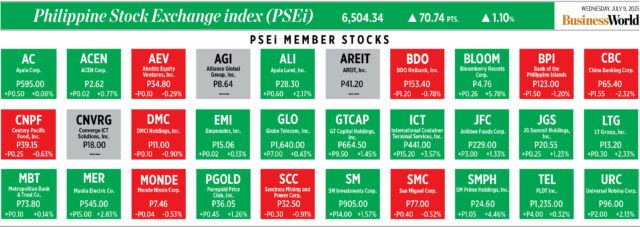
How PSEi member stocks performed — July 9, 2025

Here’s a quick glance at how PSEi stocks fared on Wednesday, July 9, 2025.


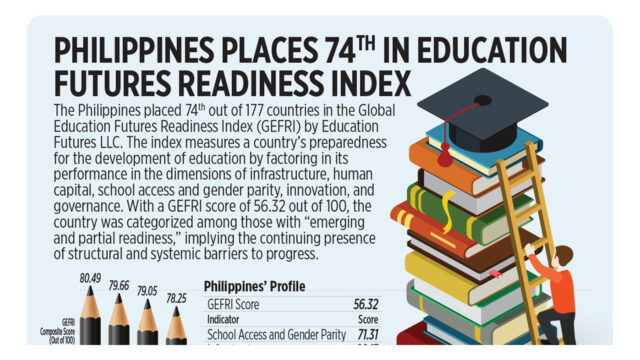
Philippines places 74th in Education Futures Readiness Index

The Philippines placed 74th out of 177 countries in the Global Education Futures Readiness Index (GEFRI) by Education Futures LLC. The index measures a country’s preparedness for the development of education by factoring in its performance in the dimensions of infrastructure, human capital, school access and gender parity, innovation, and governance. With a GEFRI score of 56.32 out of 100, the country was categorized among those with “emerging and partial readiness,” implying the continuing presence of structural and systemic barriers to progress.

Philippines places 74<sup>th</sup> in education futures readiness index

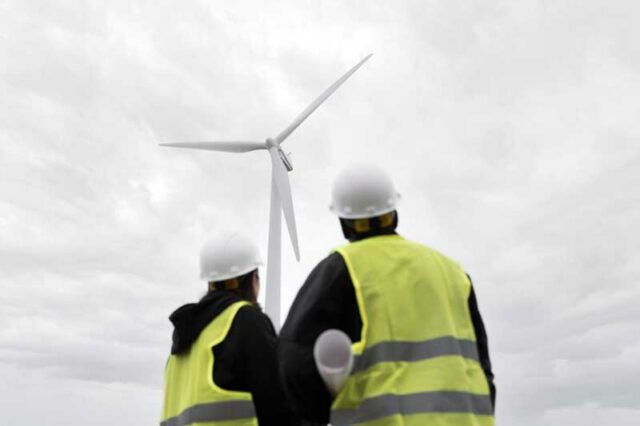
Philippines expected to require 350,000 more workers for RE

STOCK PHOTO | Image from Freepik

THE PHILIPPINES needs to have about 350,000 more workers available to service pending renewable energy (RE) projects in the pipeline by 2030, according to the International Labor Organization (ILO).

The Philippines has the largest RE development pipeline in the region, with the current RE workforce estimated at only 120,000, ILO Philippines head Khalid Hassan told reporters on the sidelines of a green jobs forum in Makati City.

Mr. Hassan noted that the Philippines has obtained major RE investment commitments, including a deal with the United Arab Emirates government-owned Masdar (Abu Dhabi Future Energy Co.) for 10 gigawatts solar, wind, and storage by 2040.

He also noted Terra Solar is building a 3,500-megawatt RE project, which is expected to be the world’s largest solar plant by 2026.

Southeast Asia in general is projected to gain six million RE jobs by 2050, he said.

Mr. Hassan noted that skills gaps are crippling the growth of RE projects in the Philippines, with companies reporting a 75% shortage of skilled workers.

Training systems are outdated, fragmented, and not responsive to market needs, he added.

“Investments are being delayed or compromised due to a lack of ready, qualified workers,” he said.

He added that safety is also a major concern,  with young workers most at risk, especially in the construction and installation of RE projects involving wind and solar.

The ILO noted that current technical and vocational education and training systems in the Philippines are government-driven, with employers “missing from the design and delivery” of the training.

Trainers often lack exposure to modern technology, Mr. Hassan said.

He also cited the absence of formal apprenticeships and the lack of a system to forecast skills needs.

“This disconnect is slowing returns on investment and affecting project quality,” he said.

The ILO is currently helping the Philippines establish a system that will offer quality apprenticeships in RE.

The program seeks to define industry standards and core competencies, establish certified apprenticeships linked to real jobs, promote occupational safety and health standards, and provide a direct voice to government on policy reform.

The platform is expected to shape policy on skills financing, labor mobility, and tax and regulatory incentives.

It seeks to help the Philippines establish “brand visibility” as a “green jobs leader.”

The platform aims to have 10,000 workers trained, half of them women, by 2029.

By that year, there should also be 2,400 certified apprentices with 80% job placement within six months, and 25 pilot training systems across the solar, wind, hydro, biomass, and geothermal industries.

By 2029, there should be at least 240 supervisors and 180 vocational instructors certified, the ILO said. — Kyle Aristophere T. Atienza

US tariff letter still pending; Go tapped to make announcement

Office of the Special Assistant to the President for Investment and Economic Affairs Secretary Frederick D. Go — PHILIPPINE STAR/KRIZ JOHN ROSALES

THE PHILIPPINES continues to await its own tariff letter from the US after Washington announced rates for many Asian neighbors, the Palace said, adding that Secretary Frederick D. Go will make the announcement when Washington notifies Manila.

“There is still (no tariff rate),” Palace Press Officer Clarissa A. Castro told reporters at a briefing, in response to a query about a tariff letter from Washington.

She said Mr. Go, the special assistant to the President for investment and economic affairs will explain the deal negotiated with the US once the letter arrives.

“Once there is a letter, (Mr. Go) will make the announcement and explain it to the media,” Ms. Castro added.

Many regional neighbors have received tariff letters from Washington, notifying them of their negotiated tariff rate, many of which were little changed from the initial reciprocal tariffs announced in early April.

Trade negotiations with Washington, in which Mr. Go served as the co-leader of the Philippine delegation, are subject to a confidentiality agreement.

US President Donald J. Trump sent out tariff letters to Japan and South Korea earlier this week, announcing both their rates on social media as 25%. He also sent similar letters to Myanmar (40%), Laos (40%), Indonesia (32%), Malaysia (25%), and Thailand (36%).

On April 2, the White House initially announced “reciprocal” tariffs of 24% on Japan, 25% on South Korea, 44% on Myanmar, 48% on Laos, 36% on Thailand, 32% on Indonesia and 24% on Malaysia. The Philippines had initially been assigned a rate of 17%.

The reciprocal tariffs were suspended pending negotiations with various trade delegations, while a 10% tariff was applied in the interim to most trading partners, including the Philippines.

Vietnam has since been assigned 20% as one of the first two countries to conclude a trade deal with the US, alongside the UK.

Mr. Trump said changes to the tariffs charged on trading partners take effect on Aug. 1, though he was open to further negotiations. — Chloe Mari A. Hufana

PHL ‘stands to benefit’ after US barely budges on region’s tariffs

By Justine Irish D. Tabile, Reporter

THE PHILIPPINES may benefit from the tariffs the US announced on Monday for some Asian trading partners, with Manila possibly being treated more favorably when its own tariff rate is announced, ING said.

“President Trump’s new tariffs are higher than expected for most Asian economies. Moreover, most countries will face additional tariff rates on transshipments,” Deepali Bhargava, ING regional head of Research for the Asia-Pacific, said in a note issued on July 8.

“The new announcements are silent on Singapore, India, and the Philippines, which might stand to benefit from tariff concessions if negotiations progress favorably,” it added.

On Monday, US President Donald J. Trump said the US sent letters to 14 countries regarding their updated tariff rates, which will take effect on Aug. 1.

These are Japan (25%), South Korea (25%), South Africa (30%), Kazakhstan (25%), Laos (40%), Malaysia (25%), Myanmar (40%), Tunisia (25%), Bosnia and Herzegovina (30%), Indonesia (32%), Bangladesh (35%), Serbia (35%), Cambodia (36%), and Thailand (36%).

“While there is some respite in terms of reciprocal tariffs being pushed out by about three weeks, most countries are now facing higher or similar rates than those announced on Liberation Day,” ING said, referring to the reciprocal tariffs initially announced in Washington in early April.

ING noted that only three of the countries covered in the latest announcement received lower tariffs compared to Liberation Day levels. Many of them range from 35-40%, against the 20% Vietnamese goods are set to be charged after it became one of only two countries to conclude an early trade deal, the other being the UK.

“These tariffs may reflect Trump’s growing frustration with stalled negotiations with certain countries like Japan, South Korea, Thailand, and Malaysia, which all received a higher or unchanged tariff rate,” ING said.

ING sees the announcement as a signal of a broader strategy targeting Asia’s trade links with China.

“The letters indicate that transhipped goods will be subject to higher tariffs, but there’s no mention of the rate that’ll be applied,” it said.

“Interestingly, countries like India, Singapore, and the Philippines, which are not on the new tariff list, may be closer to finalizing trade deals with the US, potentially giving them a competitive edge,” it added.

According to ING, the Philippines’ tariff concessions from the US will be key to growth of its electronics exports, noting that the US accounted for 17% of its total exports last year.

“A significant portion — about 53% — of these exports are electronic products, a sector in which the Philippines competes directly with countries like Vietnam and India for US market share,” ING said.

“Given this context, any reduction or concession on the current 17% reciprocal tariff rate would give the Philippines a competitive edge, particularly in electronics, and strengthen its position against regional peers,” it added.

Asked to comment, Semiconductor and Electronics Industries in the Philippines Foundation, Inc. President Danilo C. Lachica said: “Most of our neighbors have higher reciprocal tariffs except for Singapore at 10%.”

Last month, he said semiconductor and electronics exports have been improving and may match 2023 levels, to about $46 billion by year’s end.

In the first five months, electronics exports increased 0.9% to $17.798 billion, according to preliminary data from the Philippine Statistics Authority.

Electronics Industry Association of the Philippines President Earl Lawrence S. Qua said even though the higher rates imposed on other countries in the region could give the Philippines a competitive edge, the 20% rate Vietnam received from the US remains a concern.

“The bigger the delta is between the Philippines and Vietnam, the better. Vietnam is the country we are compared to the most,” he said via Viber.

When it concluded its trade deal, Vietnam’s 20% rate was much lower than the initial 46% announced in April.

The US-Vietnam deal also set a 40% tariff on transshipped goods, reflecting the use of Vietnam as a point of origin by Chinese manufacturers.

Foreign Buyers Association of the Philippines President Robert M. Young said that if the Philippines is able to secure a tariff lower than its competitors, it will help attract investment from countries with higher tariffs.

“This is a plus point for the Philippines, not so much in selling price competition (as the Philippines will still be on the higher price level), but more on the possibilities of these economies relocating their production to the Philippines, thus creating jobs and livelihood,” he said.

He added that a low US tariff could serve as a “growth engine” for many ailing industries.

Asked which other sectors could benefit from lower tariffs, he said, “other manufactured products that need to import most of their raw materials… needing more advanced machinery and more technology.”

“The food sector can benefit as well, I think … Textiles and wearables will have a breather if we stay at 10%. But with a 17% tariff, it will be uphill to compete,” he said.

After the tariffs announced in early April were suspended, most trading partners were assigned a provisional 10% tariff pending the outcome of negotiations.

“Cambodia and Bangladesh have lower costs than Vietnam. Therefore, we can see that even with their tariffs of 36% and 35%, it remains a challenge for us,” he added.

Zambales, Pangasinan set for hydrogen resource exploration

DOE

THE Department of Energy (DoE) said sites in Zambales and Pangasinan have been designated for possible hydrogen exploration, pending the President’s approval for the award of the first service contracts.

At a briefing on Wednesday, Demujin F. Antiporda, assistant director at the DoE’s Energy Resource Development Bureau, announced plans for initial surveys of two pre-determined areas (PDAs).

The surveys will generate baseline geological and environmental data to guide explorers.

“By screening these areas, the survey will help guide service contractors in prioritizing locations for more comprehensive exploration,” Mr. Antiporda said. “In essence, it lays the groundwork for what approaches to take in the pursuit of developing clean and sustainable energy resources.”

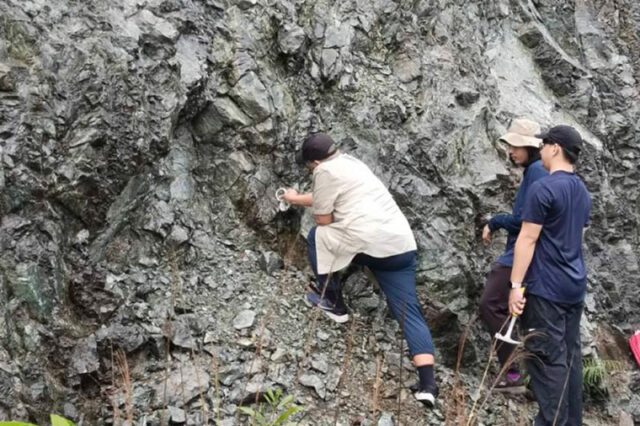
He said the surveys will seek to detect surface indicators like hot springs, ophelitic rocks, and permeations associated with natural hydrogen generation.

“The DoE aims to reduce exploration risks, streamline technical studies, and ensure alignment with safety and environmental standards,” Mr. Antiporda said.

The DoE considers hydrogen a clean alternative fuel that can be used as an energy carrier to store, move, and deliver energy from other sources.

The DoE’s technical team conducted field assessments of the Mangatarem Hot Spring in Pangasinan, and the Botolan Hot Spring and the Nagsasa Seeps in Zambales.

The survey also seeks to support ongoing research by the Philippine Nuclear Research Institute (PNRI), which identified San Antonio, Zambales as having “the highest natural hydrogen gas seep ever recorded.”

The PNRI study found that the Nagsasa seep in San Antonio, Zambales emits over 800 tons of natural hydrogen annually, with the potential for even greater subsurface reserves.

The two PDAs were part of the 2024 Philippine Bid Round, covering an estimated 134,096 hectares and 96,439 hectares, respectively.

“The Philippines is the first country to introduce a policy framework for the exploration of native hydrogen,” Mr. Antiporda said.

“(The service contracts are with) the Office of the President right now, and we are in constant communication with them regarding all the requirements,” he said.

Meanwhile, the DoE said it will conduct training on native hydrogen exploration, a specialized course for technical participants, later this year.

“We also want to build the country’s technical capacity to explore and develop (our own) energy resources,” Mr. Antiporda said. “This means equipping our scientists, engineers, and technical personnel with the skills, tools, and training needed to conduct advanced research and fieldwork in emerging energy frontiers such as the native hydrogen.” — Sheldeen Joy Talavera

Organic pesticide developed by D&L unit approved for cocolisap

PHILSTAR FILE PHOTO

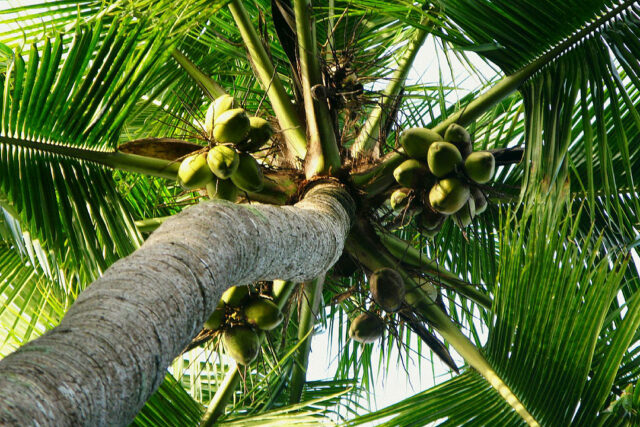
THE Philippine Coconut Authority (PCA) said it approved the use of a domestically developed organic pesticide against the Coconut Scale Insect, also known as cocolisap.

Chemrez Technologies, Inc., said its CropGuard spray offers an alternative to the trunk injection of systemic insecticides, particularly neonicotinoids.

“While effective in the short term, trunk injection entails significant risks, including long-term tree damage, disruption of beneficial insects, and potential chemical residues in coconut products,” according to Chemrez, a unit of D&L Industries.

It noted that the use of trunk-injected synthetic pesticides may invalidate the organic certification of coconut farms.

“This not only disqualifies farmers from accessing the premium organic market but also jeopardizes livelihoods and disrupts entire rural economies that depend on organic coconut production for income, sustenance, and export revenue.”

The PCA said that as of May 30, 516,962 coconut trees were affected by cocolisap in the Calabarzon, Bicol, Western Visayas, Eastern Visayas, Zamboanga Peninsula, Northern Mindanao, Caraga, and Bangsamoro regions.

In tests conducted in collaboration with the PCA and the University of the Philippines-Los Baños, Chemrez said CropGuard is recommended for two sprays 15 days apart.

“CropGuard also acts as an insect repellent, discouraging feeding and egg deposition,” it said. — Kyle Aristophere T. Atienza

Council announces seizure of smuggled rice in Talisay, Cebu

BUREAU OF CUSTOMS FACEBOOK PAGE

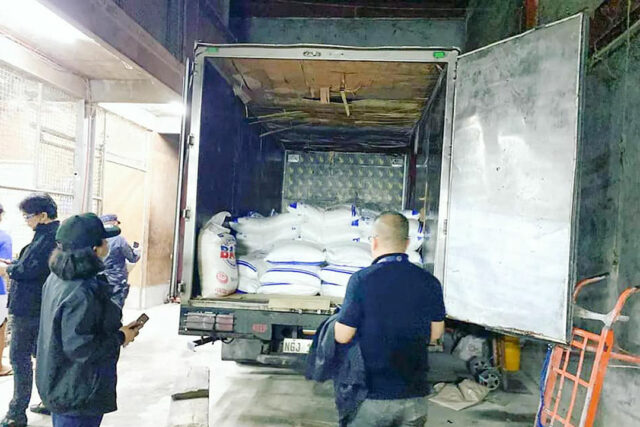
THE Anti-Agricultural Economic Sabotage (AAES) Council said 20,526 sacks of smuggled rice valued at P38 million have been apprehended in Talisay City, Cebu.

The council said its enforcement group had inspected warehouses at a site known as the Kimba compound on suspicion of containing smuggled agricultural products in violation of the AAES Law.

On June 20, the group discovered that the area occupied by River Valley Distribution, Inc. (RVDI) contained substantial stocks of rice.

“The RVDI failed to account for about 20,526 sacks weighing approximately 863,345 kilos with an estimated value of P38 million,” the council said in a statement on Wednesday.

As such, the Court of Tax Appeals issued a seizure order on July 8.

“The goods were inspected, examined, and found to be illegal,” according to the AAES Council Chairman, Secretary Frederick D. Go.

“This decisive action sends a strong and clear message to economic saboteurs: the government stands united and shall be relentless in its efforts against such illegal activities,” according to Mr. Go, who is also a senior presidential economic adviser.

According to the council, the Department of Justice’s Special Team of Prosecutors is planning to file economic sabotage charges in connection with the Cebu operation.

“This operation underscores President Ferdinand R. Marcos, Jr.’s strong commitment to safeguarding food security and upholding the rule of law,” it added. — Justine Irish D. Tabile

LGUs ordered to develop coastal ‘greenbelt’ zones

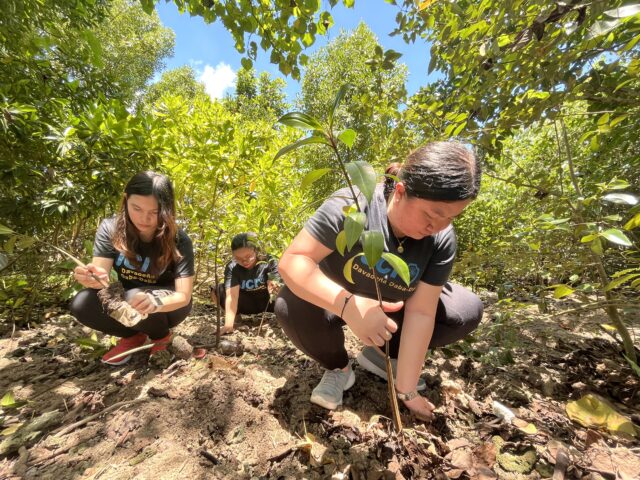
Volunteers from JCI Davaoeña Daba-Daba — a leadership organization of young Davaoeña achievers and active citizens — are immersed in mangrove planting at the Aboitiz Cleanergy Park.

THE Department of Interior and Local Government (DILG) has issued a memorandum directing local government units (LGUs) to create or rehabilitate coastal greenbelt zones.

In a memorandum circular, the DILG said LGUs are in the best position to implement localized strategies to establish and manage coastal greenbelts as “frontliners in disaster risk reduction and climate adaptation.”

LGUs were tasked with assessing areas that can be declared coastal greenbelt zones and working with civil society groups in rehabilitation plans.

Coastal towns should lead to the removal of illegal structures within easement areas, according to the circular.

Coastal greenbelt zones are natural or planted strips of mangrove and beach forest vegetation. They serve as the first line of defense against coastal hazards, according to Oceana Philippines.

“The necessary tools and frameworks are now in place, and it is up to those on the frontlines to implement them,” Oceana Philippines Vice-President Rose-Liza Eisma Osorio said. — Kyle Aristophere T. Atienza

CAB seeks expanded air deal with Australia

REUTERS

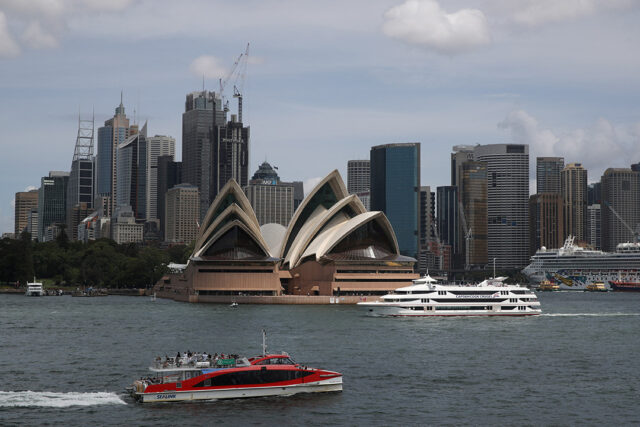
THE PHILIPPINES is seeking to expand its bilateral air service agreement with Australia, the Civil Aeronautics Board (CAB) said.

CAB Executive Director Carmelo L. Arcilla said the Philippines has requested to double its current seat allocation to 60,000.

Mr. Arcilla said the air talks between the Philippines and Australia are scheduled for Friday.

The Department of Transportation has said it is working to expand air service agreements with Australia, the US, Thailand, the UK, Uzbekistan, Qatar, Ethiopia, India, Oman and the Seychelles.

The government plans to expand airline operations and serve new destinations in response to growing travel demand.

Last year, budget carrier Cebu Pacific put Australia on its wish list for a possible air service agreement expansion due to strong demand.

Cebu Pacific has said that seat entitlements to Australia are fully allocated among the Philippine carriers, hindering airlines from expanding services to Sydney, Melbourne, Perth, and Brisbane.

Both Cebu Pacific and flag carrier Philippine Airlines operate flights to Australia.

The CAB said in June that it is also working on code-sharing agreements with South Korean and Japanese carriers to expand connectivity between Manila and the US.

A third-country code-sharing agreement involves carriers in two countries selling flights on a third country’s airline.

It is also working to obtain a third-country code-sharing agreement with Japan to make it possible for US airlines to operate in the Philippines. — Ashley Erika O. Jose

DEPDev calls 10% tariff positive outcome, but sees retention of 5-6% as best case

DEPDEV.GOV.PH

A 10% US tariff for the Philippines will be a “good scenario,” though an even better one where the US charged some Philippine goods even lower rates would be the best case, the Department of Economy, Planning and Development (DEPDev) said.

“Right now, it’s a 10% rate for all. If that is retained, that will still be a good scenario for us. But if we can go back to the previous one where we were enjoying 5 to 6%, then of course that would be best,” Undersecretary for Policy and Planning Rosemarie G. Edillion told reporters Wednesday.

The Philippines had been assigned a 17% tariff on April 2, though the US has since suspended the “reciprocal tariff” pending negotiations. In the interim, a 10% rate applies to most trading partners.

On Monday, US President Donald J. Trump started sending tariff letters to 14 countries, with the new rates taking effect on Aug. 1.

Japan and South Korea were assigned tariffs of 25%. Also notified were Myanmar (40%), Laos (40%), Indonesia (32%), and Malaysia (25%)

Ms. Edillion said it is “difficult to ascertain” the new Philippine rate after mixed results for Asian trading partners in the initial round of tariff letters.

“We have determined that there will be a small net gain for us (at the 17% reciprocal tariff),” she said. We hope (the new rate) will still be favorable.”

Vietnam has since concluded a trade deal at a  20% tariff, making it one of two countries to conclude a trade deal with the US, the other one being the UK.

Palace Press Officer Clarissa A. Castro has described the Philippine position in tariff negotiations as “good.” — Aubrey Rose A. Inosante