Home Blog Page 1257

Cebu BRT partial launch targeted for September

PHILSTAR FILE PHOTO

THE Department of Transportation (DoTr) said the Cebu Bus Rapid Transit (BRT) system is expected to operate partially by September, with the capacity to serve about 70,000 commuters.

At least three stations of the transit system will be operational by September, Transportation Secretary Vivencio B. Dizon said in a statement on Wednesday.

The three stops are Fuente, Cebu Normal University, and Cebu South Bus Terminal stations, the DoTr said.

It said expedited construction of the mass transit system is underway.

The DoTr said the construction of Cebu Capital station will also begin after partial operations start, adding that its detailed engineering design has been finalized.

The remaining phases of the Cebu BRT, designated 2A and 3A, cover 13 stations and 62 stops. These are due for completion by the end of 2028.

The government broke ground on the first package of the project in 2023. It was initially scheduled for full operations this year but was pushed back to 2028.

Once completed, the Cebu BRT system is expected to serve up to 169,000 passengers per day.

According to the World Bank’s implementation status and research report, the pace of Cebu BRT construction has slowed down, and major civil works packages are yet to be launched.

“Considering the age of the project, it may be more appropriate to restructure the project to address the activities that can be completed within the closing date,” it said. — Ashley Erika O. Jose

GSIS keen to prove ‘integrity’ of investment decision-making

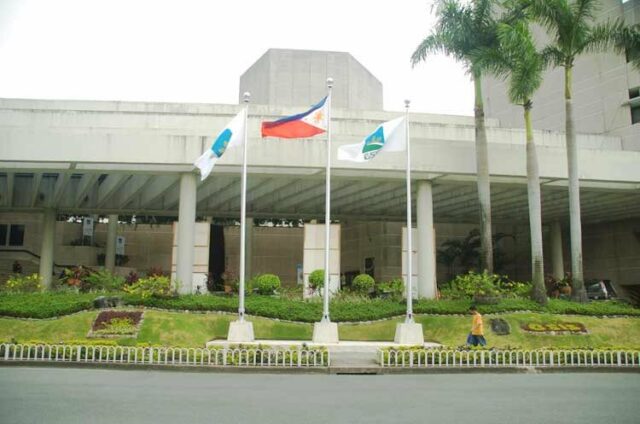
The Government Service Insurance System headquarters in Pasay, Philippines. May 28, 2012. — BW FILE PHOTO

THE Government Service Insurance System (GSIS) hopes to demonstrate the soundness of its investment process in the course of an investigation into its purchase of a stake in Alternergy Holdings Corp., its suspended president said.

“We acknowledge the Office of the Ombudsman’s inquiry into GSIS’s Alternergy investment and are cooperating fully with the investigation. We welcome this opportunity to affirm the integrity of GSIS’s investment decisions and will provide further updates once the process concludes,” according to suspended GSIS President and General Manager Jose Arnulfo A. Veloso.

The Department of Finance has also signaled plans to launch its own investigation into GSIS.

Along with six other officials, Mr. Veloso was placed under preventive suspension without pay for six months by the Office of the Ombudsman in connection with the pension fund’s purchase of preferred Alternergy shares via private placement for P1.45 billion.

Mr. Veloso has said that he is waiting for the Ombudsman to acknowledge the counter-affidavit he has filed.

The Ombudsman said its preliminary findings indicate that the shares, acquired on Nov. 7, 2023, were purchased without the approval of the GSIS board of trustees, or the endorsement of the assets and liabilities and risk oversight committees.

The investigation also found that the perpetual preferred shares were not listed with the Philippine Stock Exchange at the date of the transaction.

Other suspended officials were GSIS Executive Vice-Presidents Michael M. Praxedes and Jason C. Teng, Vice-Presidents Aaron Samuel Chan and Mary Abigail V. Cruz-Francisco, Officer II Jaime Leon K. Warren, and Acting Office IV Alfredo Pablo.

The pension fund on Tuesday appointed Executive Vice-President for Support Services Juliet M. Bautista as its officer in charge. — Aaron Michael C. Sy

Gov’t urged to focus reform effort on power, foreign investor lease laws

A VIEW of residential condominium buildings in Mandaluyong, Metro Manila, Aug. 22, 2016 — REUTERS

BUSINESS GROUPS, including the Joint Foreign Chambers of the Philippines said they support a reform agenda led by amendments to the Electric Power Industry Regulation Act and Foreign Investors’ Long Term Lease Act.

In a statement, the groups said such reforms will accelerate growth and significantly enhance the investment climate.

“While both domestic and global challenges persist, the Philippine economy has continued to demonstrate its underlying strengths and growth capabilities, and we see clear opportunities for sustained economic expansion,” they said in a joint statement. “To harness this potential, bold and decisive policy action is required.”

They also recommended that the government pass reform measures like the Cybersecurity Act, E-Governance Act, Digital Economy Act, Konektadong Pinoy Act, Freedom of Access to Information Act, the National Single Window System, and National Land Use Act.

They also sought priority action on the Artificial Intelligence Act, Blue Economy Act, and Holiday Rationalization Act, as well as amendments to the charters of the Civil Aviation Authority and the Philippine Ports Authority.

They also recommended executive measures that “significantly bolster investor confidence.”

“These include improving the implementation of the Ease of Doing Business Act and Corporate Recovery and Tax Incentives for Enterprises to Maximize Opportunities for Reinvigorating the Economy Act and streamlining travel requirements for foreign tourists,” they said.

They also asked for the review and suspension of taxes on non-resident foreign corporations, as well as the review of the Food and Drug Administration’s revised registration fees and the Extended Producers’ Responsibility Act.

“These measures form a unified reform agenda that reflects the business community’s commitment to supporting national development,” they said.

“Collectively, these measures will help attract quality investments, generate meaningful employment, and strengthen the country’s economic foundation for long-term, inclusive growth,” they added.

These recommendations were sent to President Ferdinand R. Marcos, Jr. ahead of his fourth State of the Nation Address.

Among the signatories of the statement were the American Chamber of Commerce of the Philippines, the Canadian Chamber of Commerce of the Philippines, the European Chamber of Commerce of the Philippines, the Japanese Chamber of Commerce and Industry of the Philippines, Inc., and the Korean Chamber of Commerce of the Philippines, Inc.

Other signatories are the Association of International Shipping Lines, Inc., the Confederation of Wearable Exporters of the Philippines, the Financial Executives Institute of the Philippines, the Management Association of the Philippines, the Philippine Association of Multinational Companies Regional Headquarters, Inc., and the Semiconductor and Electronics Industries in the Philippines Foundation, Inc. — Justine Irish D. Tabile

US healthcare group pledges $500-M hospital investment

US HEALTHCARE GROUP Bon Secours Mercy Health (BSMH) has committed to invest up to $500 million to develop a hospital in the Philippines, a presidential adviser said.

“This is a strong vote of confidence in the Philippines and a transformative opportunity for our healthcare and services sectors. We will work closely with BSMH to help turn their plans into reality,” according to Secretary Frederick D. Go, who heads the Office of the Special Assistant to the President for Investment and Economic Affairs (OSAPIEA).

In a statement issued on Wednesday, Mr. Go said the proposed investment “will generate meaningful jobs and help deliver world-class facilities, advanced medical equipment, and high-quality healthcare.

OSAPIEA said that BSMH is also planning to expand its Global Business Services operation in the Philippines.

“From a current team of about 170, BSMH shared plans to expand its GBS operations in Manila to approximately 1,200 professionals, creating more high-quality jobs,” OSAPIEA said.

“This center will operate alongside BSMH’s US-based teams to enhance the organization’s non-patient-facing capabilities and deliver upon its mission,” it added.

Cincinnati-based BSMH runs a 50-hospital US network. Affiliated with the Catholic church, its precursor organizations date back 150 years. BSMH itself was formed in a 2018 merger.

“As a $13-billion integrated Catholic health delivery system based in the US, we’re proud to expand our global reach and deepen our existing commitment in the Philippines,” Bon Secours Mercy Health President and Chief Executive Officer John M. Starcher, Jr. said.

“After meeting with President Marcos, Jr., we are excited to begin the aggressive exploration of developing state-of-the-art healthcare delivery services,” he added. — Justine Irish D. Tabile

E-gambling ban could drive industry underground — study

PHILIPPINE STAR/EDD GUMBAN

A BAN on online gambling could lead to illicit activity moving underground, out of sight of regulators, research firm The Fourth Wall reported, citing the results of a study.

The study found that 53% of respondents oppose such a ban, with 75% saying it would not deter unhealthy behavior, leading gamblers to turn to unregistered sites.

“There is an understanding among them that an outright ban won’t stop online gambling, but instead push it underground, increasing risks like scams and addiction through unregulated channels,” John Brylle L. Bae, research director at The Fourth Wall, said in a statement.

“This suggests their call for regulation is rooted in safer options and better consumer protection.”

Stricter regulation was supported by 18% of respondents, who cited age restrictions, including protections for seniors, facial recognition and real-time ID checks.

The Fourth Wall also noted the prevalence of scams linked to online gambling on social media platforms.

“Support for banning unregulated platforms stems from concerns about addiction — particularly among youth and low-income groups — and the wider impact on mental health, families, and finances,” The Fourth Wall said, after finding that the typical online gambler in the Philippines is a low-income, low-stakes casual player.

It profiled such gamblers as staking P5,000 a month, playing a few times a week and breaking even on most occasions.

It also found high levels of trust in digital wallets, with 73% citing the wallets’ robust age and identity verification processes, and 64% saying such platforms help them manage their spending effectively.

GCash (92%) emerged as the most-used e-wallet app, cited by 92% of respondents, followed by Maya (6%). Only 2% use over-the-counter payment outlets.

Most of respondents said they have gambled on cockfights or bet on social media, while only 7% have gambled in physical casinos.

The Fourth Wall noted that resistance to a ban was pronounced among cockfighting bettors, pointing to a “desire for continuity over restriction.”

Earlier this month, President Ferdinand R. Marcos, Jr. said he is open to imposing a tax on e-gambling and reviewing bills and other policies to regulate the practice as long as they are backed by research.

This comes after the central bank, the Department of Finance and legislators lobbied measures back-to-back amid the growing scrutiny on the country’s e-gambling industry.

The study found that 61% consider the Philippine Amusement and Gaming Corp. (PAGCOR) to be performing its duties, though 34% said they lack full understanding of PAGCOR’s mandate.

“This finding points to a need not only for regulation, but for clearer public education and transparent communication from regulators,” The Fourth Wall said.

The study collected input from 1,250 current online gamblers between July 17 to 18 in and around Metro Manila, Metro Cebu, Metro Davao, and other major cities. — Katherine K. Chan

Farm damage tally rises to P323.15 million

PHILIPPINE STAR/CESAR RAMIREZ

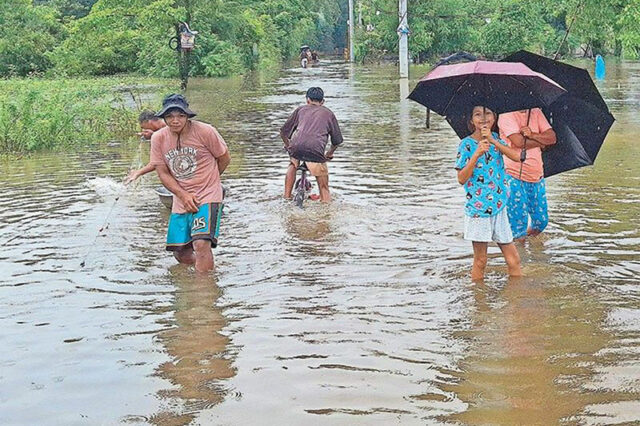
DAMAGE to agriculture caused by Tropical Storm Wipha (Philippine designation: Crising) and the southwest monsoon hit P323.15 million, according to the Department of Agriculture (DA).

Rice accounted for 66% of the damage, coming in at P212.60 million, across 14,842 hectares of cropland. Lost production was estimated at 6,703 metric tons, DA spokesman Arnel V. de Mesa said at a briefing.

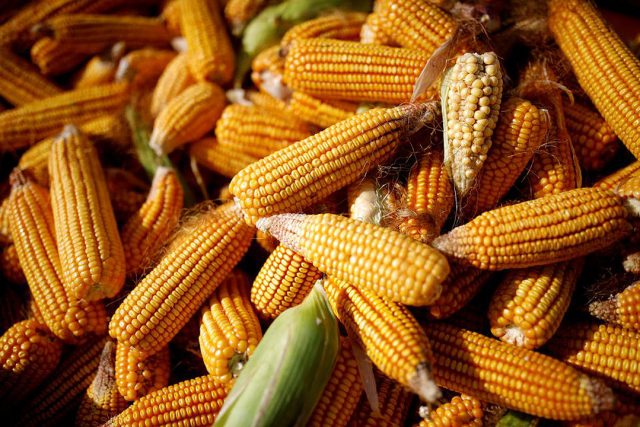
High-value crops accounted for 26% of the damage, and corn 6.85%, he added.

The DA Disaster Risk Reduction and Management Operations Center said in a separate statement that livestock and poultry accounted for 1.66%, and fisheries 0.01% of the losses.

Mimaropa incurred the most damage at P121 million, of which P65 million was recorded in Occidental Mindoro and P56 million in Palawan, Mr. De Mesa said.

He said Cotabato sustained P58 million in agriculture damage.

In Central Luzon, Tarlac and Nueva Ecija posted P13.6 million and P11.4 million in agricultural losses, respectively.

The government weather service, known as PAGASA, said on Wednesday that it is monitoring two tropical storms that are likely to enhance the southwest monsoon. — Kyle Aristophere T. Atienza

Balisacan says PHL well-placed to leverage AI

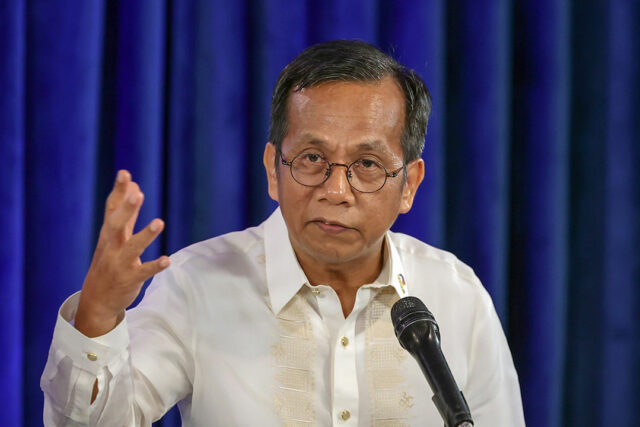
ARSENIO M. BALISACAN — PHILIPPINE STAR/KRIZ JOHN ROSALES

THE PHILIPPINES can leverage artificial intelligence (AI) to improve jobs and boost economic growth, the Department of Economy, Planning, and Development said.

“The Philippines is well-positioned to take advantage of fast-evolving technologies — if we adopt a strategic, well-coordinated approach that balances innovation with effective governance and responsible use,” Economy Secretary Arsenio M. Balisacan said in a speech on Wednesday.

“AI is rapidly becoming part of our daily lives. Today, three out of four workers around the world use AI on the job — a trend many of us may recognize firsthand, with 86% of Filipino knowledge workers reporting AI use at work.”

The Philippines climbed nine places to 56th out of 188 countries in the 2024 edition of the Government AI Readiness Index published by Oxford Insights.

The Philippines scored 58.51 out of a possible 100 points, exceeding the global average of 47.59.

Mr. Balisacan said AI has the potential to “boost productivity and drive economic growth in the short term.” However, he noted the long-term impact is “far less certain.”

“Some studies foresee substantial gains, while others point to modest returns and mixed outcomes — highlighting risks such as job displacement, widening inequality, and a decline in incentives for original content creation due to AI.”

With the rapid digital transformation of the Philippines, Mr. Balisacan said there is a need for safeguards and inclusive policies.

The digital economy grew to P2.1 trillion in 2024 from P1.6 trillion in 2018.

To maximize the opportunities from AI, the Mr. Balisacan cited the need to build an AI-ready workforce.

“While AI opens up new opportunities, it also brings the risk of disruption — especially for certain types of jobs. Some roles are more exposed to automation, while others stand to benefit more from AI support.”

“That’s why we must act quickly: reskilling workers in sectors where AI is less of a complement, and expanding opportunities in areas where humans and AI can work hand in hand.”

There is also a need for “strong and resilient digital infrastructure,” he said.

“The internet remains one of the most critical enablers of digital transformation. To unlock the full potential of AI and other technologies, we need to ensure that connectivity reaches every corner of the country — consistently, and at a cost people can afford.”

“But bridging the digital divide isn’t just about access. It’s about keeping the country competitive, ensuring everyone can participate in the digital economy, and opening doors to flexible work that improves people’s quality of life.”

Mr. Balisacan also noted the need for a forward-looking regulatory framework that “enables innovation while ensuring accountability.“

“Moving forward, building an inclusive and resilient AI ecosystem will require a whole-of-society approach.”

“This means tackling long-standing constraints with stronger legal and institutional support, sound governance, and close collaboration across sectors.” — Luisa Maria Jacinta C. Jocson

Livestock industry seen benefiting from lower tariffs on US soy, wheat imports

REUTERS

By Kyle Aristophere T. Atienza, Reporter

THE trade deal with the US will lower the cost of key inputs used in animal feed, to the advantage of the livestock industry, while also boosting food security, according to the Department of Agriculture.

“The zero tariff on US agricultural imports could support the goal of President Ferdinand Marcos, Jr. of achieving a food-secure Philippines by lowering the cost of key inputs — especially for livestock production,” Secretary Francisco Tiu Laurel, Jr. was quoted as saying.

President Ferdinand R. Marcos, Jr.  announced plans to increase imports of soy and wheat from the US in the course of negotiating a one-percentage-point reduction in US tariffs for Philippine products, to a rate of 19%.

The US supplies for 80% of Philippine soybean meal demand.

The US Department of Agriculture has projected that Philippine soybean meal imports growing 3.1% to 3.35 million metric tons (MMT), citing the hog industry’s recovery from African Swine Fever. It also noted increasing demand from the broiler, layer, aquaculture, and pet food segments.

The USDA also projected a decline in Philippine wheat imports of 3% to 7.2 MMT as the animal feed industry turns to corn over wheat.

The Philippines does not produce wheat, importing milling wheat for human consumption and feed wheat for animal feed.

Feed wheat is typically substituted for feed corn when the global price of wheat is more competitive than that of corn.

Mr. Laurel said it is too early to assess how the trade deal will affect Philippine agricultural exports.

“Whether the Philippine agriculture sector will gain or not from this trade deal with the US remains to be seen, especially as many of our competitors are still negotiating better terms,” he said.

US President Donald J. Trump has said Mr. Marcos agreed to allow the entry of some US goods to the Philippines tariff-free, with Philippine negotiators obtaining a 19% tariff rate on exports to the US.

The 19% tariff rate is higher than the 17% rate imposed on the Philippines in early April but less than the 20% rate Mr. Trump assigned two weeks ago.

Among Philippine competitors, Indonesia obtained a 19% rate in its trade agreement with the US, with Vietnamese goods being charged 20%, escalating to 40% for goods transshipped via Vietnam.

Thailand and Cambodia have yet to finalize their own deals. By Aug. 1, their goods will be charged 36% tariffs, unless they agree to their own trade deals in the interim.

Joseph Purugganan of Trade Justice Pilipinas said Philippine exports will have a hard time competing with goods from Vietnam.

“The cost of materials and other inputs is cheaper in Vietnam,” he said via Messenger chat, adding that Vietnam is better integrated into regional supply chains.

“We need to seriously examine the deals made by Vietnam and Indonesia and what tradeoffs and concessions they made to the US,” Mr. Purugganan said.

“The last thing we need is a race to the bottom where we lower our own standards and protection for domestic industries, sacrificing strategic interests for these concessions,” he added.

He noted that the US deal with Indonesia guarantees US access to Indonesia’s critical minerals.

“We’re concerned that a similar concession was made by the Philippines.”

“If the whole plan was to achieve a food-secure Philippines by lowering the cost of inputs through lower or zero tariffs, we should not have waited for the US to demand that we cut out tariffs on their exports to 0%,” Federation of Free Farmers National Manager Raul Q. Montemayor said via Viber.

“We could have just unilaterally set all our tariffs to zero.  But we did not do so because we knew that equally sensitive sectors will be affected, especially our small farmers,” he added.

The farming industry considers food security to also “depend on a robust, competitive and productive local sector, and not simply rely on cheap imports,” Mr. Montemayor said.

Mr. Purugganan said farmers should challenge the deal by demanding full disclosure of the trade concessions.

“What exactly did we give up in this deal — beyond automotive? What sectors or safeguards were quietly traded away?”

“We are calling for a full impact assessment and public consultations. These are crucial to identify which workers and industries will be affected and to develop appropriate responses and safety nets,” Mr. Purugganan said.

Low rates, agriculture seen key to boosting growth, economist says 

BW FILE PHOTO

THE PHILIPPINES must lower interest rates and improve inclusivity in agriculture by raising productivity and incomes, an economist said.

“These two moves will promote higher GDP growth and more than offset the Trump tariffs,” University of Asia and the Pacific Economist Victor A. Abola said.

In a presentation delivered during the university’s 2025 Midyear Business Economics, Mr. Abola said the Philippines is expected to grow 5.5% this year.

His forecast matches the lower bound of the government’s 5.5-6.5% official target.

He called for a sharp reduction in policy rates saying the monetary authorities have room to ease .

“Our central bank has kept  policy rates too high. It reached 6.5%. Now, it’s at 5.25%. I’d like to see it at 2.4%, 3%,” he said.

Bangko Sentral ng Pilipinas (BSP) Governor Eli M. Remolona, Jr. has signaled two more rate cuts in 2025, citing inflation’s decline to within the 2-4% target and expectations of slower economic growth.

At its June 19 meeting, the monetary authorities delivered a second straight 25-basis-point cut this year, bringing its policy rate to 5.25%.

Mr. Abola projects inflation to settle at 1.6% this year.

Meanwhile, he said US tariffs could shave between half and a full percentage point off gross domestic product (GDP).

“It gives us only about something like $6 billion in exports. Likely, that may result… in a one percentage point reduction in GDP growth,” he said.

US President Donald J. Trump announced a 19% tariff on Philippine goods, with the Philippines conceding zero tariffs on selected US imports. — Aubrey Rose A. Inosante

APECO revives 10 infra projects worth P800M

NEW.APECO.GOV.PH

THE Aurora Pacific Economic Zone and Freeport Authority (APECO) said it revived 10 previously abandoned infrastructure projects valued at nearly P800 million.

In a statement on Wednesday, APECO said the projects include underground power distribution lines, water systems, sanitation facilities, and public buildings.

“(They) are now either completed, inaugurated, or under active construction under the leadership of APECO President and CEO Gil G. Taway IV,” APECO said, noting that the projects were inherited from the past administration.

Among the completed projects are the first phase of the P60-million Central Water Supply and Reservoir (CWSR), the first phase of the P28-million Sewage Treatment Plant (STP), and the P12-million APECO Fire Station.

APECO said that the first phase of the Underground Power Distribution Line (UPDL) is currently 98% complete. Combined with UPDL Phase 2, the project is 78% complete. They are worth P70 million overall.

Other ongoing projects are the second phase of the P30-million CWSR and the P15-million acquisition of fire trucks and ambulances. These are 87% and 50% complete, respectively.

One project in pre-construction is the P47-million STP Phase 2. — Justine Irish D. Tabile

Dante, Emong interaction may boost southwest monsoon, bring more rain

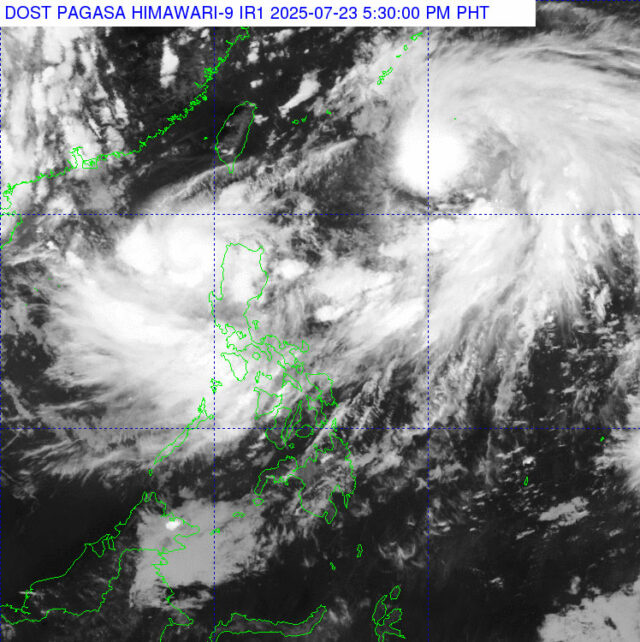
SATELLITE photo of Tropical Storms Dante and Emong. — PAGASA

By Kyle Aristophere T. Atienza, Reporter

TWO TROPICAL cyclones in the Philippines were beginning to interact as they drew closer to each other, a weather phenomenon that could enhance the southwest monsoon and bring heavier rains, according to the state weather bureau.

Emong, which had intensified into a tropical storm, was seen 120 kilometers (km) west of Laoag City in Ilocos Norte in northern Philippines as of 4 p.m. on Wednesday, the Philippine Atmospheric, Geophysical and Astronomical Services Administration (PAGASA) said in a 4 p.m. report.

It added that Dante, another tropical storm, was last spotted 845 km east-northeast of extreme northern Luzon.

Dante and Emong were close enough to trigger a binary interaction as they were only about 1,100 km apart, PAGASA said earlier in the day, calling the phenomenon the “Fujiwhara effect.” It said a binary interaction could happen if the distance between two storms is less than 1,500 km.

“Based on their tracks, we are seeing a possible interaction between the two,” the agency said in Filipino.

PAGASA said Dante, which was moving north toward Taiwan, might pull Emong along as the latter was initially looping on the western side of Ilocos Norte.  Dante could become the dominant system because it is stronger, it added.

“So, instead of Emong moving toward the West Philippine Sea, it will follow Dante’s path,” PAGASA said. The two storms would likely have the closest interaction near Taiwan as Dante leaves the Philippine area of responsibility.

“They will not necessarily combine into one, but this will be their closest interaction.”

The combined strength of the two cyclones could enhance the southwest monsoon, it said. It added that parts of northern Luzon might experience heavy rains due to the circular movement of Emong.

Dante and Emong both had maximum sustained winds of 65 kilometers per hour (kph) near the center and gustiness of up to 80 kph. Dante was moving north-northwestward at 25 kph, while Emong was moving southwestward at 20 kph, PAGASA said.

PAGASA said the southwest monsoon was affecting central and southern Luzon, the Visayas and Mindanao.

More than 3,000 villages across 15 provinces in Bicol, Cagayan Valley, Mimaropa and Western Visayas were “very highly susceptible” to rain-induced floods and landslides, the Department of Environment and Natural Resources-Mines and Geosciences Bureau (DENR-MGB) said in a separate statement, citing PAGASA’s rainfall forecast.

Almost 5,000 villages in 22 provinces including the Cordillera Administrative Region, Ilocos Region, Calabarzon and Central Luzon were “highly susceptible,” it added.

In the National Capital Region, 1,403 villages faced “high susceptibility risks,” that needed urgent precautionary measures.

DENR-MGB said its forecasts highlight Occidental Mindoro, Antique and Zambales as areas expected to experience the highest rainfall, with over 80% of villages there likely to be affected in the next three days.

“These conditions necessitate prompt action from local government units to mitigate risks to residents.”

The Philippines has been dealing with heavy flooding for days largely triggered by the southwest monsoon.

The disaster agency on Wednesday put the death toll at seven, up from six a day earlier, after recording a death in Metro Manila.

Two of the reported deaths have been confirmed, while five were still being verified, the National Disaster Risk Reduction and Management Council (NDRRMC) said in a morning report. 

The agency previously reported three deaths in Northern Mindanao and one each in the Davao Region, Caraga Region and Mimaropa. It said seven people had been injured and eight were still missing.

About 1.41 million people from more than 401,000 families have been affected. More than 141,000 people were staying at 537 evacuation sites.

In a separate statement, the Department of Public Works and Highways (DPWH) said damage to public infrastructure from the southwest monsoon and recent tropical cyclones had reached P3.75 billion.

The agency said the Bureau of Maintenance recorded the most significant losses in flood control structures at P3.24 billion. Damage to national roads was estimated at P483.68 million, and national bridges suffered P24.48 million in losses.

The agency said the estimates include infrastructure losses in Central Luzon, Ilocos Region, Mimaropa (Mindoro, Marinduque, Romblon and Palawan), Western Visayas and the Negros Island Region.

The damage was attributed to the southwest monsoon and the effects of tropical cyclones Crising, Dante and Emong, which brought widespread rains and flooding across several provinces.

As of July 23, the DPWH said 27 national roads remained partially passable due to flooding, precautionary closures, collapsed slope protections, road slips and washed-out detour roads.

These affected road sections were in the National Capital Region, Ilocos Region, Central Luzon, Calabarzon, Bicol Region and the Zamboanga Peninsula.

Despite the extensive impact, the agency said it had reopened 35 national road sections affected by the storms. However, five roads remained impassable including Kennon Road, the Urdaneta Junction–Dagupan–Lingayen Road via Tarlac, Urdaneta Junction–Dagupan–Lingayen Road via Zambales, Paniqui–Camiling–Wawa Road and Talisay–Laurel–Agoncillo Road.

The DPWH is proposing a P150-billion budget for its flood control projects next year, lower than this year’s budget, as the agency plans to carry out its own dredging activities, Public Works Secretary Manuel M. Bonoan told “Storycon” on One News.

The heavy flooding that severely hit parts of Metro Manila and nearby provinces in recent days happened just a few days before Philippine President Ferdinand R. Marcos, Jr. holds his fourth address before Congress.

Greenpeace Philippines urged the President to make climate injustice a major issue in his state of the nation address

He should “demonstrate real climate leadership in his upcoming SONA by making the biggest contributors to the climate crisis pay their fair share,” Virginia Benosa-Llorin, a senior campaigner at Greenpeace Philippines, said in a statement.  “We call on President Marcos to use his SONA platform to push for bold climate action.”

Greenpeace noted that communities pay the price for a crisis they didn’t cause “while huge corporate polluters — giant oil and gas companies — rake in trillions [of pesos].”

“The climate crisis is an unfair burden on communities and on taxpayers who are shouldering the costs and burden of the never-ending response and relief activities,” she added.

The statement was also made ahead of the International Court of Justice’s release of an advisory opinion on “the obligations of states in respect of climate change” on July 23. “It is expected to serve as a guide for governments to put people and the planet as top policy priorities,” Greenpeace said.

In its formal submission to the international court, the Marcos administration said the “Philippines is committed to shaping a global framework that ensures justice for those most affected by the climate crisis and secures a sustainable future for all.”

“We want more than speeches,” Ms. Benosa-Llorin said. “We want action. Support stronger climate policies, end support for fossil fuel expansion and fast-track the passage of the CLIMA bill.”

The bill seeks to hold corporations responsible for climate damage and secure justice for affected communities. “It will raise the bar for climate policy in the Philippines and around the world.” — with Ashley Erika O. Jose


‘No alliance discount’ on tariffs raises questions; PHL-US ties seen holding

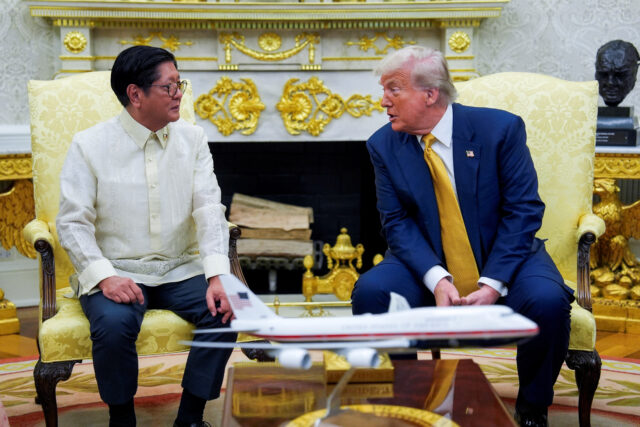
US PRESIDENT Donald J. Trump and Philippine President Ferdinand R. Marcos, Jr. met in the Oval Office at the White House in Washington, DC on July 22, 2025 — REUTERS/KENT NISHIMURA

By Kenneth Christiane L. Basilio, Reporter

US PRESIDENT Donald J. Trump might have placed little emphasis on Washington’s decades-old alliance with the Philippines when he modestly cut tariffs on Filipino goods, political analysts said on Wednesday, but ties between the two nations are unlikely to unravel over the trade deal.

Manila’s inability to secure a larger tariff cut from the US could raise concerns over Washington’s willingness to provide concessions and economically reward its allies, said Justin Keith A. Baquisal, a national security analyst at FACTS Asia.

As this developed, the US Embassy in Manila, citing the US State department, said the Philippines would get at least P3 billion ($53 million) worth of funding from the US to support its energy, maritime and economic growth programs.

Mr. Trump on Wednesday said the US had reached an agreement with the Philippines to set a 19% tariff on the country’s exports, a percentage point lower than the 20% that he dangled ahead of the Aug. 1 deadline. The Philippines was initially levied a 17% rate in April.

“Trump missed an opportunity to reward or put a premium on its most agreeable partner in ASEAN (Association of Southeast Asian Nations),” Mr. Baquisal said in a Viber message. “There seems to be no alliance discount.”

Manila and Washington are long-time allies, and their security ties are anchored on a 1950s Mutual Defense Treaty that obligates both nations to come to each other’s aid in case of an armed attack in the Pacific, including         the South China Sea.

President Ferdinand R. Marcos, Jr. last week left the Philippines for an official trip to the US, where he held investment talks, security discussions and trade negotiations on the tariff placed by Washington on the Southeast Asian nation.

Mr. Trump’s aggressive tariff policy is part of Washington’s toolkit to reinforce US global influence and curb the rise of rival economies like China, said Josue Raphael J. Cortez, who teaches diplomacy and governance at De La Salle-College of St. Benilde in Manila.

“With the imposition of new tariff schemes, Washington is clearly trying to ensure that it would still have the upper hand,” he said in a Facebook Messenger chat.

The Philippines, US and their allies have been boosting cooperation by holding joint naval drills and patrols in the South China Sea to counter Beijing’s increasing assertiveness in the waterway.

China claims nearly the entire South China Sea through its so-called nine-dash line, a sweeping assertion that overlaps with the exclusive economic zones of Southeast Asian nations such as the Philippines, Vietnam, Malaysia and Brunei.

In 2016, a United Nations-backed arbitral tribunal in The Hague voided China’s expansive claims, ruling in favor of the Philippines. China, however, has rejected the ruling.

‘ALLIANCE CARD’
The outcome of the tariff negotiation suggests that Manila’s strategic alliance with Washington carried little weight at the bargaining table, said Chester B. Cabalza, founding president of Manila-based think tank International Development and Security Cooperation.

“The alliance card did not work, but the Philippines must continuously cultivate its own economic security to maintain the momentum of its fast-growing economy,” he said via Messenger chat.

“Washington has its own economic prerogatives and policies to protect its own domestic market and international economic interests,” he added.

Despite the deal’s outcome, Philippine-US military relations are expected to remain ironclad, Victor Andres C. Manhit, president of think-tank Stratbase-ADR Institute, said in a Viber message.

Mr. Trump said in a Truth Social post that the two nations would work together militarily, as they are set to celebrate 80 years of diplomatic relations next year. Mr. Marcos said at the start of their meeting at the White House that the US is Manila’s “strongest, closest, most reliable ally.”

“He was affirming the commitment of the US to the region… as the Indo-Pacific is America’s priority theater,” Mr. Manhit said, noting that Mr. Trump’s statement could pave the way for greater deployment of US assets and increased investment in the country’s defense sector, alongside an expansion of joint exercises and maritime patrols in the region.

The US Embassy announcement came after the July 21 meeting between Mr. Marcos and US Secretary of State Marco Rubio in Washington, DC.

The US State department was also looking for congressional approval of about P825 million ($15 million) to bolster private sector development in the Luzon Economic Corridor, it said.

“If approved, this funding will support investments in the areas of transport, logistics, energy and semiconductors that will help create jobs and drive economic growth in the country,” it added.

The Luzon Economic Corridor is a trilateral agreement among the Philippines, US and Japan that seeks to boost the connectivity in key Luzon sites such as Metro Manila, Batangas, Subic and Clark.

It is also part of a broader collaboration supported by the G7 Partnership for Global Infrastructure and Investment.

The embassy added that the P3-billion allocation was the “first announcement of new foreign assistance for any country since the Trump administration began its review and realignment of foreign assistance in January.

Also on Wednesday, Philippine Defense Secretary Gilberto C. Teodoro, Jr. said the Philippines and US are looking at “nuancing” the annual Balikatan (shoulder-to-shoulder) war games to boost interoperability and make it better aligned with regional security threats.

“A major part of the takeaways from this trip [was] enhanced cooperation, including assurance of support for our continuing modernization of the military, our armed forces through the Philippine sectors,” he told a news briefing after the Philippine delegation’s meeting with Mr. Trump, based on a transcript from the Presidential Communications Office.

The Balikatan has in recent years grown in scale and increasingly featured advanced weaponry, as Manila and Washington seek to strengthen security cooperation and enhance force interoperability in response to China’s growing military presence in the region. — with Adrian H. Halili

ADVERTISEMENT
ADVERTISEMENT