Home Blog Page 1233

Philippines eyes podium finish in Para Chess Olympiad

PHILSTAR FILE PHOTO

THE Philippines will have a shot at replicating, if not eclipsing, its impressive bronze medal effort in the inaugural Chess Olympiad for People with disabilities two years ago in Belgrade, Serbia.

This after FIDE, the sport’s governing body, recently awarded one of the 34 spots to the Filipinos in the second edition of this biennial meet scheduled Oct. 19-26 in Astana, Kazakhstan.

“We hope to make the country proud again,” said ASEAN and Asian Para Games gold medalist Henry Lopez, who was part of that national squad that shocked the world with that sensational podium finish in the Serbian capital.

Also with Lopez in that historic moment were FIDE Master Sander Severino, a former world champion for people with physical disability, Darry Bernardo, Cheyzer Mendoza and playing team captain James Infiesto.

Poland ruled the event while IPCA (International Physically Disabled Chess Association) took the silver.

The meet will gather the planet’s top chessers with visual, hearing, and physical impairments with each team consisting of four players including at least one female representative plus one captain/reserve. — Joey Villar

Teener Ivan Travis Cu closes in on GM title

FILIPINO teenage chess sensation Ivan Travis Cu is slowly but surely realizing his Grandmaster (GM) potential.

The 16-year-old FIDE Master (FM) gave a glimpse of it by dominating the blitz section in the premier Under-18 event of the 9th Eastern Youth Championships in Zhuhai, Guangdong, China Monday.

The 11th-grader from Xavier finished unbeaten with 8.5 points out of the possible nine on eight victories, including a final-round triumph over Mongolian Chuluuntuul Erkhembayar, and a draw.

It was an impressive effort for a player whose biggest feat so far came in last year’s International Master Closed tilt in Hanoi, Vietnam where he came a last-round win short of the title and eventually ended up second.

It also came a day after he fell short of a podium finish and wound up fourth in the standard event that was topped by countryman FM Christian Gian Karlo Arca.

On this one, Mr. Arca finished tied for No. 2 with Chinese Chen Kailin with seven points each but lost on tiebreaks and settled for the bronze. — Joey Villar

Suzuki’s HOF induction

Of all the moments in Ichiro Suzuki’s Hall of Fame (HOF) induction the other day, it was the soft jab that stuck. In a speech laced with gratitude and quiet wit, he took aim at the lone scribe who denied him a consentient vote: “The offer for the writer to have dinner at my home has now expired.” It was precise, playful, and unmistakably Ichiro: delivered with the same control he brought to a 28-year career that straddled continents, languages, and traditions. He could have left it unsaid. But even as he embraced triumph in Cooperstown, he reminded all and sundry that he never let anything slip — not a pitch, not a base runner, not a detail, not a grudge.

What made the instant resonate beyond the delivery was the contrast. Ichiro had done everything right: Rookie of the Year and Most Valuable Player in the same season, 3,089 hits in the majors, 4,367 across his professional career, 10 Gold Gloves, two batting titles, and a work ethic that bordered on monastic. And still, universal acclaim eluded him. All the same, he refused to rail against the disrespect. He didn’t have to, of course; the smile and the deadpan timing were enough to show a rare public flare from someone who built his reputation on restraint.

Certainly, the speech was fitting of Ichiro’s character, as well as for the circumstance. He spoke for nearly 20 minutes in English, his longest address in the language, and moved easily between reverence and humor. He thanked teammates, coaches, and, needless to say, his wife Yumiko Fukushima, who kept him anchored through his decades in the spotlight. He acknowledged legends Rod Carew, George Brett, and Tony La Russa, noting that “I am a rookie again… so easy on the hazing.” He even slipped in a crack about signing with the Marlins in 2015: “Honestly, when you guys offered me a contract, I had never heard of your team.”

For all the measured tone, there could be no discounting Ichiro’s historic induction. He became the first Japanese-born player to enter the Hall, and only the second to receive over 99% of the vote. The symbolism was impossible to ignore. A generation of players from the Land of the Rising Sun had followed him to the majors, but none managed to match his scale, his consistency, or his gravitas. What he represented — discipline without ego, excellence without spectacle — has become increasingly rare in a sport that now trades on pomp. His success was as much structural as personal, a singular offshoot of mastery within tight margins.

The Mariners will retire Ichiro’s No. 51 next month, but his legacy requires no formal ceremony; it’s already stitched into the fabric of two baseball cultures that once seemed worlds apart. He arrived with equal parts precision and flair, but the substance of his remarkable career was borne of the intangible: the way he prepared, the way he endured, the way he made himself, well, inevitable. Even that lone ballot — unanimity spoiled by anonymity — serves only to affirm it.

No doubt, the Hall was always going to be a destination for Ichiro. It also happened to be a journey, and the manner of his arrival, like he himself, was exacting, composed, and unmistakably his own.


Anthony L. Cuaycong has been writing Courtside since BusinessWorld introduced a Sports section in 1994. He is a consultant on strategic planning, operations and human resources management, corporate communications, and business development.

From dream to doorstep, Global Dominion makes homeownership achievable

By Jay Ann Bonghanoy

For many Filipinos, owning a home is more than a milestone; it’s a lifelong dream. Yet, the path toward homeownership is often paved with challenges: rising property prices, strict bank requirements, and the realities of urban living make it difficult, especially for young families, overseas Filipino workers (OFWs), and first-time buyers.

Recognizing these obstacles, Global Dominion Financing, Inc. introduced its Real Estate Financing (REF) program, a practical and empowering solution designed to bring more Filipinos closer to homeownership.

Unlike traditional housing loans that are often lengthy, rigid, and intimidating, Global Dominion’s REF program provides a faster, simpler, and guided path to acquiring a home. Whether the goal is to purchase a townhouse, a house and lot, or a condominium unit, the program offers full support from application to property acquisition.

According to the Bangko Sentral ng Pilipinas, real estate loan exposure reached a staggering P2.95 trillion by the end of 2024. Despite this, homeownership in Metro Manila hovers just over 52%, significantly below the 62% national average, a clear indicator of the housing gap in urban centers.

REF was built with three core pillars in mind:

✅ Fast — faster approval than traditional bank loans
✅ Secured — transparent processing with full documentation and customer care
✅ Guided — dedicated assistance from initial inquiry to move-in

REF is ideal for startup families, OFWs, young professionals, and even long-time renters who are now ready to invest in a permanent residence. In a time when extreme weather, traffic congestion, and inflation affect everyday life, many are choosing homes strategically located near workplaces, schools, and transport hubs. Others view property as a long-term investment, recognizing real estate as a stable and appreciating asset.

Through its Real Estate Financing program, Global Dominion is not just providing a loan, its helping people build a future. By offering flexible terms, hands-on guidance, and a simplified process, REF empowers more Filipinos to take that first big step toward a home they can truly call their own.

In the journey to homeownership, Global Dominion is proving to be a partner that makes dreams more reachable, one Filipino family at a time.


Spotlight is BusinessWorld’s sponsored section that allows advertisers to amplify their brand and connect with BusinessWorld’s audience by publishing their stories on the BusinessWorld Web site. For more information, send an email to online@bworldonline.com.

Join us on Viber at https://bit.ly/3hv6bLA to get more updates and subscribe to BusinessWorld’s titles and get exclusive content through www.bworld-x.com.

Trump eyes 15-20% ‘world tariff’ for most US trading partners

REUTERS

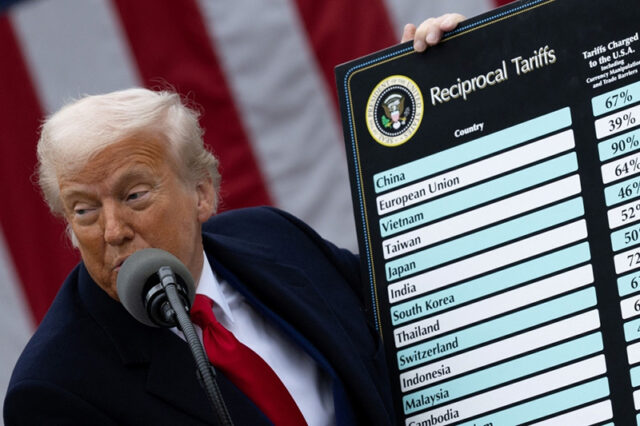
TURNBERRY, Scotland — President Donald J. Trump said on Monday most trading partners that do not negotiate separate trade deals would soon face tariffs of 15% to 20% on their exports to the United States, well above the broad 10% tariff he imposed in April.

Mr. Trump told reporters his administration will notify some 200 countries soon of their new “world tariff” rate.

“I would say it’ll be somewhere in the 15 to 20% range,” Mr. Trump told reporters, sitting alongside British Prime Minister Keir Starmer at his luxury golf resort in Turnberry, Scotland. “Probably one of those two numbers.”

Mr. Trump, who has vowed to end decades of US trade deficits by imposing tariffs on nearly all trading partners, has already announced higher rates of up to 50% on some countries, including Brazil, starting on Friday.

The announcements have spurred feverish negotiations by a host of countries seeking lower tariff rates, including India, Pakistan, Canada, and Thailand, among others.

The US president on Sunday clinched a huge trade deal with the European Union (EU) that includes a 15% tariff on most EU goods, $600 billion of investments in the US by European firms, and $750 billion in energy purchases over the next three years.

That followed a $550-billion deal with Japan last week and smaller agreements with Britain, Indonesia, and Vietnam. Other talks are ongoing, including with India, but prospects have dimmed for many more agreements before Friday, Mr. Trump’s deadline for deals before higher rates take effect.

Mr. Trump has repeatedly said he favors straightforward tariff rates over complex negotiations.

“We’re going to be setting a tariff for essentially, the rest of the world,” he said again on Monday. “And that’s what they’re going to pay if they want to do business in the United States. Because you can’t sit down and make 200 deals.”

Canadian Prime Minister Mark Carney said on Monday trade talks with the US were at an intense phase, conceding that his country was still hoping to walk away with a tariff rate below the 35% announced by Mr. Trump on some Canadian imports.

Mr. Carney conceded this month that Canada — which sends 75% of its exports to the United States — would likely have to accept some tariffs. — Reuters

Enough apologies: How Japan is shaking its price hike phobia

CONSUMER price inflation has remained above 2% for three years in Japan as food prices continued to rise. — CATHY ROSE A. GARCIA/BUSINESSWORLD

TOKYO — When Japanese ice pop maker Akagi Nyugyo raised its prices a meager 10 yen in 2016, its somber-faced management appeared in a one-minute commercial, bowing silently in apology as a melancholy folk song lamented the inevitability of price hikes.

Almost a decade later, the Saitama-based company has changed its tune — a tongue-in-cheek advertising campaign last year promised in a series of photos to bow successively deeper for each of its next three price hikes.

The lighter-hearted spin comes as Japanese firms, after decades of deflation, find a rare moment that allows them to raise prices without triggering the intense public backlash that once made such moves taboo.

“Compared to when we raised prices in 2016, I’d say there’s more of a sense now that the public is more accepting of price hikes,” the company’s marketing team leader Hideyuki Okamoto said. “The sentiment that price hikes are evil is receding.”

That shift in consumer mindset is driven by the biggest pay hikes in three decades and has given companies more confidence to pass on rising costs — something they long avoided for fear of losing customers.

If sustained, the change could embolden the central bank to further raise interest rates, though that is dependent on just how much more households can absorb. The Bank of Japan is expected to keep its benchmark rates unchanged at this week’s policy meeting but could signal its intention to resume rate hikes later in the year.

Japan’s consumer inflation has stayed above 2% for three years, driven largely by rising food prices, a sharp departure from the decades of near-zero inflation that followed the asset bubble collapse in the early 1990s.

Nearly 200 major food makers expect to hike prices for 2,105 items in July — up fivefold from year-before levels — by an average 15%, a private think tank survey showed recently.

“A few years ago, people would make a fuss over one or two items going up. Now it’s dozens, even hundreds. You can’t keep track anymore. There are just too many to remember,” said Fusako Usuba, a 79-year-old pensioner.

“But there’s no way around it, because we all need to eat to survive,” she added.

WAGE GROWTH
Japan’s wave of price hikes initially began in 2022, triggered by external shocks such as post-pandemic supply chain disruptions, the war in Ukraine and the yen’s subsequent depreciation.

But economists say it is consumers’ greater tolerance for higher prices — underpinned by three straight years of robust wage growth — that has kept the trend going.

“Japanese consumers have come to realize they are now living in an era of persistent price increases,” said Tsutomu Watanabe, emeritus professor of economics at the University of Tokyo.

He said consumers are beginning to shift their focus from low prices to higher wages, as intensifying labor shortages give workers more bargaining power.

According to a survey led by Mr. Watanabe, Japanese consumers were the most resistant to price hikes among five major countries four years ago, with a majority saying they would switch supermarkets if prices rose by 10%.

But in the same survey last year, most said they would continue shopping at the same stores and buying the same items, bringing them in line with consumers in other countries.

The key question now is whether the trend is sustainable.

Meiji, Japan’s top chocolate maker, has launched nine price hikes since 2022, reflecting soaring cocoa costs.

“Back in 2022, we met resistance from retailers asking us to hold off a bit longer,” said Akira Yoshida, general manager at Meiji’s cacao marketing division. “Nowadays, they accept our price hikes more smoothly, so we assume their customers are also reluctantly going along.”

But Meiji, which holds a 25% market share and effectively sets industry prices, is now seeing signs of price fatigue.

A 20% price hike in June, the biggest in recent years, led to a more than 20% drop in sales volume at some retailers, unlike in previous rounds where volume declines were smaller than the scale of price hikes.

“We’re increasingly concerned. There’s only so much more we can raise prices,” Mr. Yoshida said. “I think we’ll need to change how people view chocolate — not as a commodity, but as a luxury.”

Rei Ihara, food sector analyst at UBS Securities, said the scope for further price hikes is narrowing, as Japan’s Engel coefficient, the share of household spending on food, hit 28.3% in 2024, the highest in 43 years.

“With prices rising year after year, consumers appear to be adjusting their purchasing habits, opting for less expensive options like chicken instead of beef, for example. For inflation to be sustainable, it must be supported by solid wage growth,” he said.

Inflation has outpaced nominal pay gains, pushing real wage growth into negative territory for months, fueling frustration among voters that led to a major defeat of Prime Minister Shigeru Ishiba’s coalition in recent house elections.

The outlook for wage growth is increasingly uncertain due to sweeping US tariffs. Japanese exporters have so far avoided major price hikes in the US to stay competitive, sacrificing profits. If that continues, it could limit their ability to raise wages next year.

“We’re at a turning point now,” professor Watanabe said. “If this wage-driven price momentum fails, we may not see another opportunity like this in our lifetime. This moment is that rare.” — Reuters

Gunman’s deadly spree in midtown Manhattan spawns evening of fear in New York City

A NEW YORK Police Department officer at the scene of a shooting. — VICTOR J. BLUE/BLOOMBERG

WORK was winding down at 345 Park Avenue on Monday when a man strode across the public plaza just outside the Midtown Manhattan tower with an assault rifle in his hand.

Within minutes, at least four people were dead, as well as the gunman, in a mass shooting in the epicenter of American finance. The harrowing scene unfolded in the 44-story, dark-glass tower that houses the offices of private equity giant Blackstone Inc., consultant KPMG, the National Football League (NFL) and building landlord Rudin Management.

Shane Tamura, a 27-year-old who last resided in Las Vegas, shot and killed a uniformed police officer in the lobby and made his way to the 33rd floor before dying of an apparent self-inflicted gunshot wound, authorities said. The attacker previously worked as a security guard at a Las Vegas casino and held a concealed carry permit for Nevada, according to law enforcement officials.

Mr. Tamura, who has a documented history of mental-health troubles, drove across the country before entering New York City earlier Monday, Police Commissioner Jessica Tisch said at a press briefing, adding that officials are still working to figure out his motive.

The shooting shut down a large stretch of Midtown Manhattan and drove employees at several nearby firms — including hedge fund Citadel and investment bank Jefferies Financial Group, Inc. — to go into lockdown. Park Avenue now houses more major financial firms than actual Wall Street, with JPMorgan Chase & Co.’s massive new headquarters a few blocks south of Blackstone’s base.

Videos from inside the tower showed people huddled in cramped rooms, some crying in fear, and workers leaving with their hands in the air as police cleared floors. Blackstone employees described sharing and receiving conflicting information on what was happening, while some scrambled to barricade doors and entry points.

Workers streamed out of 345 Park Avenue to a chaotic scene of flashing police cars. One was crying and embracing another. Meanwhile, Blackstone sent staff a flurry of texts asking them to confirm they were safe.

A Blackstone employee was among those killed, according to a person briefed on the matter. The company is the world’s largest private markets firm, with more than $1.2 trillion in assets under management and roughly 5,000 employees.

One Blackstone employee shared a photo that showed couches piled close to the ceiling as a barricade. Two of the firm’s employees told friends they were hiding in the office pantries, according to people who received the messages. When they got the all-clear sign, some refused to leave spaces where they had barricaded themselves, petrified that they were still in danger.

Blackstone declined to comment while awaiting further details on the status of employees. Representatives for the NFL and Rudin, a 100-year old real estate firm that owns major office buildings in the city, had no immediate comment or didn’t respond to messages.

The slain police officer, Didarul Islam, was an immigrant from Bangladesh who had been on the job for three years, authorities said.

“He was a true blue New Yorker,” Mayor Eric Adams said at the briefing late Monday. “He was a hero, and we admire him for putting his life on the line.”

The attack — fewer than eight months and five blocks from the fatal shooting of a UnitedHealth Group executive on a Midtown Manhattan street — prompted questions about the gunman’s motive and his ability to get so far into the building.

A surveillance video shows the gunman left a black BMW doubled-parked and entered the building carrying a rifle, Police Commissioner Tisch said.

He then opened fire in the lobby, hitting several people including the police officer. A security guard taking cover at a desk near the elevator bank was also shot.

The gunman made his way to an elevator, where he let a woman exit. He then rode up to the 33rd floor, which is occupied by Rudin. There, he fired more rounds, killing a woman, authorities said. He then turned the gun on himself.

“The city is in mourning for the innocent lives lost,” Ms. Tisch said, adding that one person who was shot in the lobby is being treated.

As the chaos subsided, employees who work in Midtown Manhattan wondered about the status of their offices on Tuesday. A text message sent to JPMorgan employees said their campus is expected to operate under normal conditions on Tuesday, but employees should anticipate some disruption in near the Midtown office. — Bloomberg

Global hunger falls but conflict and climate threaten progress, UN says

PALESTINIANS wait to receive food cooked by a charity kitchen amid shortages of food supplies in Rafah in the southern Gaza Strip, Jan. 16, 2024. — REUTERS

ADDIS ABABA — The number of hungry people around the world fell for a third straight year in 2024, retreating from a COVID-era spike, even as conflict and climate shocks deepened malnutrition across much of Africa and western Asia, a United Nations (UN) report said on Monday.

Around 673 million people, or 8.2% of the world’s population, experienced hunger in 2024, down from 8.5% in 2023, according to the State of Food Security and Nutrition in the World report, jointly prepared by five UN agencies.

They said the report focused on chronic, long-term problems and did not fully reflect the impact of acute crises brought on by specific events and wars, including Gaza.

Maximo Torero, the chief economist for the UN Food and Agricultural Organization, said improved access to food in South America and India had driven the overall decline but cautioned that conflict and other factors in places such as Africa and the Middle East risked undoing those gains.

“If conflict continues to grow, of course, if vulnerabilities continue to grow, and the debt stress continues to increase, the numbers will increase again,” he told Reuters on the sidelines of a UN food summit in Ethiopia.

“Conflict continues to drive hunger from Gaza to Sudan and beyond,” UN Secretary-General Antonio Guterres said in remarks delivered by video link to the summit. “Hunger further feeds future instability and undermines peace.”

In 2024, the most significant progress was registered in South America and Southern Asia, the UN report said.

In South America, the hunger rate fell to 3.8% in 2024 from 4.2% in 2023. In Southern Asia, it fell to 11% from 12.2%.

Progress in South America was underpinned by better agricultural productivity and social programs like school meals, Mr. Torero said. In Southern Asia, it was mostly due to new data from India showing more people with access to healthy diets.

The overall 2024 hunger numbers were still higher than the 7.5% recorded in 2019 before the COVID pandemic.

The picture is very different in Africa, where productivity gains are not keeping up with high population growth and the impacts of conflict, extreme weather and inflation.

In 2024, more than one in five people on the continent, 307 million, were chronically undernourished, meaning hunger is more prevalent than it was 20 years ago.

Africa is projected to account for nearly 60% of the world’s hungry people by 2030, the report said.

The gap between global food price inflation and overall inflation peaked in January 2023, driving up the cost of diets and hitting low-income nations hardest, the report said.

Overall adult obesity rose to nearly 16% in 2022, from 12% in 2012, it added.

The number of people unable to afford a healthy diet dropped globally in the past five years to 2.6 billion in 2024 from 2.76 billion in 2019, the report said. — Reuters

Two rights groups are first Israeli voices to accuse Israel of genocide

Supporters of bereaved family members and the families of hostages who were kidnapped during the deadly Oct. 7 attack by Palestinian Islamist group Hamas, protest on a Day of Disruption by anti-government protest groups outside the Knesset, Israel’s Parliament in Jerusalem, May 20, 2024. — REUTERS

JERUSALEM — Two Israeli human rights organizations said on Monday Israel was committing genocide against Palestinians in Gaza, the first major voices in Israeli society to level the strongest possible accusation against the state, which vehemently denies it.

Rights group B’Tselem and Physicians for Human Rights Israel released their reports at a press conference in Jerusalem, saying Israel was carrying out “coordinated, deliberate action to destroy Palestinian society in the Gaza strip.”

“The report we are publishing today is one we never imagined we would have to write,” said Yuli Novak, B’Tselem’s executive director. “The people of Gaza have been displaced, bombed and starved, left completely stripped of their humanity and rights.”

Physicians for Human Rights Israel focused on damage to Gaza’s healthcare system, saying: “Israel’s actions have destroyed Gaza’s healthcare infrastructure in a manner that is both calculated and systematic.”

Israel has fended off accusations of genocide since the early days of the Gaza war, including a case brought by South Africa at the International Court of Justice in the Hague that Prime Minister Benjamin Netanyahu condemned as “outrageous.”

Israel has consistently said its actions are justified as self-defense, and Hamas is to blame for harm to civilians, for refusing to release hostages and surrender, and for operating in civilian areas, which the militant group denies.

A spokesperson for the Israeli government called the allegation made by the rights groups on Monday “baseless.”

“There is no intent, (which is) key for the charge of genocide… it simply doesn’t make sense for a country to send in 1.9 million tons of aid, most of that being food, if there is an intent of genocide,” said spokesperson David Mencer.

Israel’s military also rejected the reports’ findings as “baseless.” It said it abides by international law and takes unprecedented measures to prevent harm to civilians while Hamas uses them as “human shields.”

Israel launched its war in Gaza after Hamas-led fighters attacked Israeli communities across the border on Oct. 7, 2023, killing 1,200 people, mostly civilians, and taking 251 hostages back to Gaza. Israel has often described that attack, the deadliest day for Jews since the Holocaust, as genocidal.

Since then, Israel’s offensive has killed nearly 60,000 people in Gaza, mostly civilians, according to Gaza health officials, reduced much of the enclave to ruins, and displaced nearly the entire population of more than two million.

Accusations of genocide have particular gravity in Israel because of the origins of the concept in the work of Jewish legal scholars in the wake of the Nazi Holocaust. Israeli officials have in the past said using the word against Israel was libelous and antisemitic.

When Amnesty International said in December that Israel had committed genocidal acts, Israel’s foreign ministry called the global rights group a “deplorable and fanatical organization.”

The 1948 Genocide Convention, adopted globally after the mass murder of Jews by the Nazis, defines genocide as “acts committed with intent to destroy, in whole or in part, a national, ethnic, racial or religious group.”

PALESTINIAN PLIGHT GAINING ATTENTION
At a Jerusalem cafe, Carmella, a 48-year-old teacher whose grandparents survived the Holocaust, said she was distressed over the suffering an hour’s drive away, inside Gaza.

“It feels difficult to me as an Israeli, as a Jew, to watch those images and feel anything but tremendous compassion and horror, to be honest. I feel horror.”

International attention to the plight of the Palestinians in Gaza has intensified in recent weeks, with United Nations (UN) agencies saying the territory is running out of food.

Israel, which controls all supplies in to Gaza, says it has let enough food in, and blames the UN for failing to distribute it.

Israel shut off all supplies in March for nearly three months, reopening the territory in May but with restrictions it says are needed to prevent aid from ending up in the hands of fighters. Since then, its forces have shot dead hundreds of Gazans trying to reach food distribution sites, according to the UN.

Israel has announced measures in recent days to increase aid supplies, including pausing fighting in some locations, allowing airlifts of food and safer corridors for aid.

Throughout the conflict, Israeli media have tended to focus mainly on the plight of Israeli hostages in Gaza. Footage widely broadcast in other countries of destruction and casualties in Gaza is rarely shown on Israeli TV.

That has been changing, with recent images of starving children having a little more impact, said Oren Persico from The Seventh Eye, a group that tracks trends in Israeli media.

“It’s very slowly evolving,” he said. “You see cracks.”

But he did not expect the genocide allegation would spark a major shift in attitudes: “The Israeli perception is: ‘what do you want from us? It’s Hamas’ fault, if it would only put down its weapons and (release) the hostages this could all be over.’”

In an editorial in the Jerusalem Post on Sunday, Dani Dayan, the chairman of Israel’s Yad Vashem Holocaust memorial, said it was not accurate to accuse Israel of committing genocide.

“But that does not mean we should not acknowledge the suffering of civilians in Gaza. There are many men, women, and children with no connection to terrorism who are experiencing devastation, displacement, and loss,” he wrote. “Their anguish is real, and our moral tradition obligates us not to turn away from it.” — Reuters


DigiPlus, BingoPlus Foundation deepen commitment to crisis relief, support DSWD’s new satellite center

DSWD Assistant Secretary Paul Ledesma receives the donation of 1,034 chairs and 204 long tables from DigiPlus and BingoPlus Foundation for use in the DSWD Crisis Intervention Unit new satellite office in Commonwealth, Quezon City.

DigiPlus Interactive Corp., through its social development arm BingoPlus Foundation, has once again extended support to the Department of Social Welfare and Development (DSWD) by helping expand its reach to individuals in urgent need. As the DSWD opened a new Crisis Intervention Unit (CIU) satellite office in Quezon City, BingoPlus Foundation contributed essential furniture and logistical support to enhance the agency’s capacity to deliver fast, inclusive, and compassionate services.

Located at Paragon Place along Commonwealth Avenue, the new satellite CIU office was established to better accommodate beneficiaries of DSWD’s Assistance to Individuals in Crisis Situations (AICS) and Ayuda para sa Kapos ang Kita Program (AKAP). These programs offer immediate financial relief to Filipinos affected by natural disasters, medical emergencies, displacement, and other life-altering events. The expanded facility allows for greater accessibility and a safer, more comfortable experience for clients.

The DSWD Crisis Intervention Unit in Commonwealth, Quezon City facilitates assistance for clients in need due to disasters and disadvantaged circumstances. 1,034 chairs and 204 long tables donated by DigiPlus and BingoPlus Foundation are in place to support the agency’s services.

Ahead of the center’s opening on June 26, 2025, the Foundation donated 1,034 chairs and 204 tables, which now serve as vital equipment for waiting areas, consultation rooms, and administrative functions. The donation was formally received by DSWD Assistant Secretary Paul Ledesma.

“At DigiPlus, we believe that support shouldn’t just be available, but should also feel accessible,” said Angela Camins-Wieneke, executive director of BingoPlus Foundation. “We’re glad to contribute to this expansion and help create a space that truly meets Filipinos where they are, especially during their most difficult moments.”

This is not the first time that DigiPlus has partnered with the DSWD. In 2024, BingoPlus Foundation supported the agency’s disaster response efforts through major rice donations and a P37-million emergency relief following Typhoon Kristine, one of the strongest storms to hit the country that year. The Foundation has also worked with regional DSWD units to serve vulnerable sectors through feeding programs, medical aid, and digital learning support.

BingoPlus Foundation, in partnership with DigiPlus Interactive’s BingoPlus retail branches, donate 1,034 chairs and 204 long tables for the new satellite office of the DSWD Crisis Intervention Unit in Commonwealth, Quezon City. The donations support the bureau’s operations, including assessing and serving clients and beneficiaries of the DSWD for the agency’s AICS and AKAP programs.

The new CIU donation forms part of the Foundation’s P150 million commitment for 2025, which spans four core pillars: Technology Education, Accessible Healthcare, Community Resilience, and Responsible Digitalization. These initiatives are made possible by the continued success of DigiPlus’ leading digital entertainment brands, BingoPlus, ArenaPlus, and GameZone, which help fuel lasting social impact at scale.

“This isn’t just about providing tables and chairs. It’s about making sure people in crisis feel seen, served, and supported,” added Ms. Camins-Wieneke. “Every Filipino deserves a system that works for them. Through our work with the DSWD and other agencies, we’re doing our part to build that system.”


Spotlight is BusinessWorld’s sponsored section that allows advertisers to amplify their brand and connect with BusinessWorld’s audience by publishing their stories on the BusinessWorld Web site. For more information, send an email to online@bworldonline.com.

Join us on Viber at https://bit.ly/3hv6bLA to get more updates and subscribe to BusinessWorld’s titles and get exclusive content through www.bworld-x.com.

US airlines oppose new limits on facial recognition at airport checkpoints

STOCK PHOTO | Image by Tumisu from Pixabay

 – Groups representing major U.S. airlines, travel companies and airports on Monday urged the Senate to reject a bill that would limit the ability of the Transportation Security Administration to use facial recognition software at security checkpoints.

The Senate Commerce Committee is set on Wednesday to consider bipartisan legislation to protect Americans’ ability to opt out of TSA facial recognition screenings at airports and prevent abuse of passenger data.

Airlines for America, which represents American Airlines, United Airlines, Delta Air Lines, Southwest Airlines and others, along with U.S. Travel and two airport groups, opposed the bill in a letter seen by Reuters saying it could “increase wait times considerably by slowing down identity verification at every airport security checkpoint.”

Democratic Senator Jeff Merkley and Republican John Kennedy, two of the bill’s sponsors, did not immediately respond to a request for comment.

“The TSA subjects countless law-abiding Americans to excessive facial recognition screenings as they travel, invading passengers’ privacy without even making it clear that they can opt out of the screening,” Mr. Kennedy said in May.

Mr. Merkley said in May “folks don’t want a national surveillance state, but that’s exactly what the TSA’s unchecked expansion of facial recognition technology is leading us to.”

The bill would restrict TSA’s current authority to use biometrics and facial recognition technology. TSA would be required to provide passengers with the option to have their identity verified without use of facial recognition and prohibit TSA from subjecting travelers choosing not having their faces scanned to discriminatory treatment or less favorable screening conditions.

“Restricting TSA’s use of biometrics is a step backward for our national security,” the airlines and others said, adding it would “prevent TSA from achieving staffing efficiencies through technology automation by requiring officer-based interactions – forcing 75% of TSA’s budget to remain tied to staffing rather than technology investment.”

The airlines also said it could obstruct innovation in the aviation system like automated e-gates and TSA PreCheck Touchless ID and “create an overwhelming and chaotic environment at every airport security check.” – Reuters

China unveils childcare subsidies in push to boost fertility

STOCK PHOTO | Image by dongyun bai from Pixabay

 – China rolled out on Monday an annual childcare subsidy of 3,600 yuan (about $500) until age three, as authorities look to spur a flagging birth rate with fewer young people choosing to have children.

The high cost of childcare and education as well as job uncertainty and a slowing economy are among the concerns that have discouraged many young Chinese from getting married and starting a family.

Subsidies will start from this year, with partial subsidies for children under three born prior to 2025, in a policy expected to benefit more than 20 million families of toddlers and infants, the official Xinhua news agency said.

The plan is an “important national livelihood policy” and direct cash subsidies would help “reduce the cost of family childbirth and parenting”, the National Health Commission said.

Demographers and economists said while the move was positive, the amount was likely to small to incentivize people to have children.

China’s population fell for a third consecutive year in 2024, with experts warning of a worsening downturn, after decades of falling birth rates following a one-child policy adopted from 1980 to 2015, coupled with rapid urbanization.

In the past two years provinces nationwide have started handing out childcare subsidies in amounts that vary considerably, from 1,000 yuan a child to up to 100,000 yuan, including housing subsidies.

The central government will fund the new national policy instead of local authorities, Xinhua said. Authorities are expected to announce more details on Wednesday.

Zichun Huang, China Economist at Capital Economics, said the sums involved were too small to have a near-term impact on the birth rate or consumption.

“But the policy does mark a major milestone in terms of direct handouts to households and could lay the groundwork for more fiscal transfers in future.”

Citi Research estimates a total lump-sum payout of 117 billion yuan in the second half of this year through the plan, saying the scheme is more meaningful as a consumption policy than as a population policy.

“As a population policy, it remains to be seen whether the national program can move the needle on fertility rate,” the research house said in a note.

Authorities in China unfurled a series of “fertility friendly” measures in 2024 to tackle the coming decade’s challenge of the entry into retirement of roughly 300 million people, equivalent to almost the entire U.S. population.

A nationwide scheme may offer some coordination and signal greater central commitment, said demographer Emma Zang, a professor at Yale University, but called for greater efforts.

“Without sustained structural investment in areas like affordable childcare, parental leave, and job protections for women, the effect on fertility is likely to remain minimal,” she added. – Reuters

ADVERTISEMENT
ADVERTISEMENT